
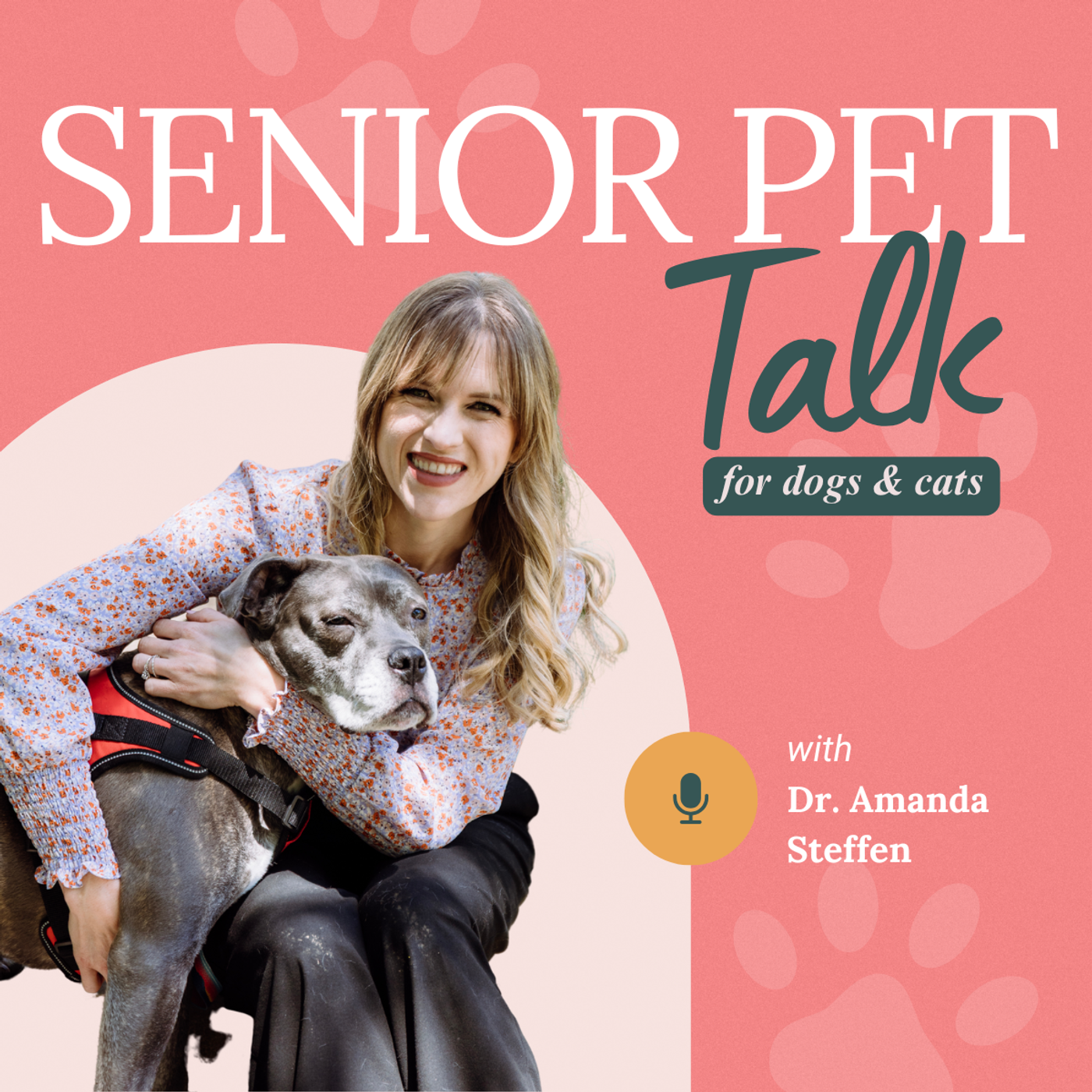
Senior Pet Talk
Dr. Amanda Steffen
1
Senior Pet Talk is a podcast that helps pet owners become informed advocates for their senior pets. Hosted by integrative veterinarian Dr. Amanda Steffen, it covers topics like recognizing changes in aging pets, understanding integrative medicine, and navigating end-of-life care. The show blends Western and Eastern approaches, including acupuncture, Chinese herbs, and nutrition. Each episode provides practical advice for vet visits and care decisions.
Épisodes
-
 23. Diet for Brain Health in Senior Pets 01.10.2026 38minDid you know that 28% of dogs and cats over the age of 11 have dementia? That's what Dr. Amanda is talking about today, focusing on nutrition and supplementation as practical ways to support brain health.She covers:Prescription diets for dogs, including Hill's Brain Diet and Purina Pro Plan NeuroCareWhich ingredients matter mostResearch showing improvements in learning, memory, and dementia-related signs, while noting results aren't identical for every petFor cats, the more limited brain-diet options availableWhy cats have different nutritional needs, and why home-cooked diets for cats require careful formulation and veterinary guidanceA review of common supplements used for cognitive supportListen in for more on nutrition and diet as it relates to brain health for your pet.LINKSWant to learn more about DISHAALV? Listen to the episode!Sign up for Dr. Steffen’s email list and grab the freebies here: http://www.seniorpetconnection.com/freebiesFollow Senior Pet Talk and find Dr. Amanda on Instagram at @dramandasteffen.Website: http://seniorpetconnection.comBook your personalized virtual consultation: https://bit.ly/SPTConsultTRANSCRIPTTIME STAMPS0:00 - Brain health in senior pets1:18 - Nutrition for senior minds5:16 - Prescription brain diets8:29 - Key ingredients in brain diets18:41 - Fresh food and what the research shows21:58 - Cognitive diet options for cats25:15 - Supplementing senior brain health29:59 - Omega-3s and MCT support33:26 - CBD, milk thistle, and more36:02 - Tailoring care to each petDisclaimer: Senior Pet Talk is not a substitute for professional veterinary care or the clinical judgment of a licensed veterinarian. This podcast is for educational purposes only and should not be used to diagnose, treat, or make medical decisions for your pet. Always consult your veterinarian regarding your pet's specific health needs.
 -
22. 7 Reasons I'm Wary of "Longevity Medicine" and What to Ask Instead 24.09.2026 43minIf someone said they could scan your 11-year-old pet, hand you a "biological age," and slow down their aging, would you buy it? In this episode, Dr. Amanda talks about longevity medicine in senior pets, walking through 7 reasons to be careful with anyone using the term "longevity medicine," and 6 questions you can ask instead to get to what will actually help your pet.She discusses:Why we should be careful with the term "longevity medicine"Why the goal should be healthspan, not just lifespanWhy the term itself is unclearHow marketing can move ahead of the evidence, especially when studies get simplified or overstatedThe lack of FDA-approved drugs or supplements proven to extend a pet's lifespanThe risk of over-testing and over-treating when age gets treated like a disease6 questions to ask when you hear a longevity claimWhy it's worth focusing on the basics that actually matterListen in for a reminder to focus on giving your senior pet a good life, not just a longer one.LINKSSign up for Dr. Steffen’s email list and grab the freebies here: http://www.seniorpetconnection.com/freebiesFollow Senior Pet Talk and find Dr. Amanda on Instagram at @dramandasteffen.Website: http://seniorpetconnection.comBook your personalized virtual consultation: https://bit.ly/SPTConsultTRANSCRIPTTIME STAMPS0:00 - The longevity medicine debate03:38 - Reason 1: Why healthspan matters more than lifespan06:25 - Reason 2: There's no clear definition of longevity08:13 - Reason 3: Evidence trails the marketing12:28 - Reason 4: Why there's no proven lifespan drug17:25 - Reason 5: Testing age as a disease24:15 - Reason 6: Simple tactics you can do27:08 - Reason 7: The longevity guilt trap29:06 - 6 questions to ask before buying longevity claims34:17 - Focus on the basicsDisclaimer: Senior Pet Talk is not a substitute for professional veterinary care or the clinical judgment of a licensed veterinarian. This podcast is for educational purposes only and should not be used to diagnose, treat, or make medical decisions for your pet. Always consult your veterinarian regarding your pet's specific health needs.
-
21. Love Your Senior Pet the Way They Need 17.09.2026 43minHow do I love my senior pet the way they need? Today, Dr. Amanda talks about how caring for senior dogs and cats means adapting the way we show affection as their bodies, brains, and preferences change.She gets into:The grief and guilt that can come up when pets can no longer do the activities they once loved, and how to keep the bond in new waysRespecting their boundaries and staying connected through gentler interactionPractical ways to support senior pets, including sniff walks, stroller walks, rehab exercises, and moreEnrichment tools like lick mats and snuffle mats for mental stimulation and a sense of purposeWhy it's important to check for other causes of behavior changes, like pain or anxiety, before assuming it's just aging or dementiaPredictable routines, especially in the evening, to help reduce stress and support pets with cognitive changesIf you're a pet caregiver, listen in for some encouragement to stay present, and a reminder that loving a senior pet well may look different than it used to.LINKSSign up for Dr. Steffen’s email list and grab the freebies here: http://www.seniorpetconnection.com/freebiesFollow Senior Pet Talk and find Dr. Amanda on Instagram at @dramandasteffen.Website: http://seniorpetconnection.comBook your personalized virtual consultation: https://bit.ly/SPTConsultTRANSCRIPTTIME STAMPS00:00 - Why senior pet care is emotional, not just tactical04:28 - Her personal experience with her heart dog, Floyd09:49 - Gentle ways to bond with a senior pet17:57 - Massages can be quality time together21:40 - Brain games for senior pets28:30 - Why predictable bedtime routines can help35:29 - Loving a senior pet well doesn't mean loving them the same way you always have40:53 - Cherishing the moment and staying presentDisclaimer: Senior Pet Talk is not a substitute for professional veterinary care or the clinical judgment of a licensed veterinarian. This podcast is for educational purposes only and should not be used to diagnose, treat, or make medical decisions for your pet. Always consult your veterinarian regarding your pet's specific health needs.
-
20. The Real Uncensored Answers About Librela 10.09.2026 44minIs Librela safe for my pet? In this episode, Dr. Amanda talks about Librela for senior dogs, including what the drug is, how it works, and why it's such a debated topic.She discusses:What Librela isOsteoarthritis and why it's so common in senior pets, and why pain management decisions can be difficultHow we approach Librela treatment in practice, usually starting with other options first and using a multimodal planThe studies behind Librela, including placebo-controlled trials and head-to-head comparisons with Meloxicam and GalliprantSafety concerns and reported adverse events, including neurologic signs, increased drinking and urination, and moreHow we use Librela in specific cases, especially when other options aren't enough or aren't appropriateListen in if you want to make an informed decision and learn more about the risks and benefits of Librela so you can choose what's best for your dog.LINKSSign up for Dr. Steffen’s email list and grab the freebies here: http://www.seniorpetconnection.com/freebiesDid you miss the move it or lose it episode? Listen in here!Follow Senior Pet Talk and find Dr. Amanda on Instagram at @dramandasteffen.Website: http://seniorpetconnection.comBook your personalized virtual consultation: https://bit.ly/SPTConsultTRANSCRIPTTIME STAMPS00:00 Introducing Librela02:47 What Librela actually is08:52 Human trials and FDA history13:16 Does Librela work?19:27 Librela safety concerns30:04 Hidden conditions and side effects32:38 Multimodal pain management33:44 Dr. Amanda's approach to Librela40:37 What are your thoughts on Librela?Disclaimer: Senior Pet Talk is not a substitute for professional veterinary care or the clinical judgment of a licensed veterinarian. This podcast is for educational purposes only and should not be used to diagnose, treat, or make medical decisions for your pet. Always consult your veterinarian regarding your pet's specific health needs.
-
19. Move It or Lose It - Safe Exercises for Senior Pets 03.09.2026 24minWhat are some safe exercises for my senior pet? In this episode, Dr. Amanda talks about how to help senior dogs and cats stay active and keep moving safely as they age.She explains:Why movement still mattersThe importance of maintaining a healthy body condition and monitoring muscle condition over timeHow in-person rehabilitation evaluations can help, especially for pets with mobility issuesSimple, safe exercises for both senior dogs and senior catsWhat types of movement or activity to avoidIntegrative and rehabilitation approaches that can support long-term mobilityMuscle wasting and frailty in senior pets can be improved, and adding safe exercises into your pet's daily routine can make a real difference in their comfort and mobility. If this sounds like your senior dog or cat, this episode is for you.LINKSSign up for Dr. Steffen’s email list and grab the freebies here: http://www.seniorpetconnection.com/freebiesDid you miss the protein episode? Listen in here!Follow Senior Pet Talk and find Dr. Amanda on Instagram at @dramandasteffen.Website: http://seniorpetconnection.comBook your personalized virtual consultation: https://bit.ly/SPTConsultTRANSCRIPTTIME STAMPS00:00 Quick check-in and getting started on safe senior pet movement04:12 Why arthritis and muscle loss are so common05:59 Protecting joints and muscle as pets age09:12 Simple exercises for dogs17:05 Simple exercises for cats20:18 Setting up your home to support movement for cats21:20 Integrative options for mobility22:50 Wrapping upDisclaimer: Senior Pet Talk is not a substitute for professional veterinary care or the clinical judgment of a licensed veterinarian. This podcast is for educational purposes only and should not be used to diagnose, treat, or make medical decisions for your pet. Always consult your veterinarian regarding your pet's specific health needs.
-
18. Is This Lump a Problem? 01.09.2026 32minIs this lump a problem? Today, Dr. Steffen covers how to evaluate skin masses, lumps, and bumps on senior pets, and why you shouldn't assume a mass is harmless based on appearance alone.She explains:Why terms like "tumor" or "mass" don't automatically mean cancer, but a meaningful number of skin masses can be cancerous and should be checkedWhat pet parents can monitor at home, including how keeping a monthly record with photos and notes can help track changes and give your vet better informationThe rule of ones for dogsThe 3-2-1 rule for catsThe usual diagnostic steps, starting with a fine needle aspirate and, if needed, a biopsyWhy early testing can make treatment easierHow integrative options like herbs or other supportive therapies may come into playListen in if you have questions about lumps and bumps on your dog or cat.LINKSSign up for Dr. Steffen’s email list and grab the freebies here: http://www.seniorpetconnection.com/freebiesFollow Senior Pet Talk and find Dr. Amanda on Instagram at @dramandasteffen.Website: http://seniorpetconnection.comBook your personalized virtual consultation: https://bit.ly/SPTConsultTRANSCRIPTTIME STAMPS00:00 Quick check-in and getting started on pet lumps and bumps05:12 Why wait and see can backfire08:32 Where integrative medicine fits in09:40 Red flags to call your vet11:00 The rule of ones and 3-2-1 for cats13:35 More on mast cell tumors15:44 Removing a new mass, starting with FNA19:33 What a biopsy is and how it's done23:06 4 things you can check at home28:52 Integrative and holistic treatment options30:49 Wrapping up and recapDisclaimer: Senior Pet Talk is not a substitute for professional veterinary care or the clinical judgment of a licensed veterinarian. This podcast is for educational purposes only and should not be used to diagnose, treat, or make medical decisions for your pet. Always consult your veterinarian regarding your pet's specific health needs.
-
17. The 10-Minute Monthly Checkup That Could Add Years to Your Pet's Life 27.08.2026 39minWhat should I check on my aging pet every month? In this episode, Dr. Steffen shares a once-a-month, 10-minute senior pet checkup she calls her Aging Gracefully checklist, something you can do at home to catch changes earlier in dogs and cats.She covers:Why small changes can be easy to miss unless you track them over timeWeight and body conditionEating, drinking, and gastrointestinal signs, and why trends matter more than single isolated eventsLitter box and bathroom changes, and how shifts in frequency, location, or amount of urination and defecation can be early signs of diseaseMobility changes, including stiffness, difficulty with stairs, and trouble risingGum and dental checksEye cloudiness, ear discharge, skin and coat changes, lumps and bumps, nail changes, and lymph node checksResting breathing rate and cognitive changes such as wandering, staring, getting lost, pacing, and altered recognitionListen in for the simple things that can help you catch problems early, and help give your pet a longer, happier, healthier life.LINKSSign up for Dr. Steffen’s email list and grab the freebies here: http://www.seniorpetconnection.com/freebiesFollow Senior Pet Talk and find Dr. Amanda on Instagram at @dramandasteffen.Website: http://seniorpetconnection.comBook your personalized virtual consultation: https://bit.ly/SPTConsultTRANSCRIPTTIME STAMPS00:00 Why monthly checkups matter more than you think03:18 The key health indicators worth tracking04:27 Rusty's diabetes diagnosis08:02 Watching for weight and muscle loss11:25 When appetite and eating habits start to change14:32 Drinking, urination, and GI signs to watch17:53 Litter box and movement changes in cats22:38 Signs your pet might be uncomfortable or have mobility issues27:09 Dental health and how to check their mouth31:33 Checking breathing rate and respiratory health34:03 Spotting cognitive changes and signs of dementia35:18 Where to grab the free checklist and get supportDisclaimer: Senior Pet Talk is not a substitute for professional veterinary care or the clinical judgment of a licensed veterinarian. This podcast is for educational purposes only and should not be used to diagnose, treat, or make medical decisions for your pet. Always consult your veterinarian regarding your pet's specific health needs.
-
16. How to Make Your Home Senior Pet Friendly 25.08.2026 36minIs your home set up for your senior pet? Today, Dr. Steffen focuses on how a senior pet's home environment affects daily comfort and mobility. Senior pets spend most of their time at home, so layout and surfaces around the house can really improve their quality of life.She talks about:Ways to make floors safer, especially hardwood and laminate surfacesRamps, stairs, and stair treads for access to couches, beds, and different levels of the homeBedding recommendations and tips on where to place themWhy furniture changes should be kept to a minimum, especially as vision changesThe benefits of nightlights in dark areas, raised food and water bowls, and keeping essentials available on each floorFor senior cats: low-entry litter boxes and other small home changes worth makingListen in if you're ready to make some small home changes that can make a meaningful difference, are fairly inexpensive, and help support your senior pet's comfort and easy access around the house.LINKSFollow Senior Pet Talk and find Dr. Amanda on Instagram at @dramandasteffen.Website: http://seniorpetconnection.comBook your personalized virtual consultation: https://bit.ly/SPTConsultTRANSCRIPTTIME STAMPS00:00 - Introduction to the senior pet home environment02:20 - Orthopedic beds and flooring considerations06:01 - How flooring affects senior pets' confidence08:20 - Using rugs, mats, and traction aids13:21 - Training stairs and ramps for safe mobility17:14 - Choosing the right beds and where to place them20:02 - Safety tips for stairs, falls, and vision changes25:32 - Lighting, accessibility, and home layout29:21 - Litter box and feeding station setup32:15 - Recap of key home modifications for senior petsDisclaimer: Senior Pet Talk is not a substitute for professional veterinary care or the clinical judgment of a licensed veterinarian. This podcast is for educational purposes only and should not be used to diagnose, treat, or make medical decisions for your pet. Always consult your veterinarian regarding your pet's specific health needs.
-
15. Age Is Not a Disease: Rethinking Senior Pet Care with Dr. Hunter (Part 2) 20.08.2026 54minAge is not a disease. We're back with Part 2 of our conversation with Dr. Steffen and Dr. Hunter, where they continue digging into senior pets, sharing takes on tools, quality of life, integrative medicine, and common misconceptions.They discuss:The practical challenges that come with aging dogs and catsThe need for more at-home support, especially for larger petsHow senior status is often met with denial from pet parents, and why it helps to prepare early for changes in mobility and lifestyleMore quality-of-life conversations, including how owners define their non-negotiables and why their own limits matter tooIntegrative medicine, and how their views on it have changed over timeHow pain often shows up as subtle behavior changesThoughts on clinic setup for senior appointments, including easier access and more time for examsListen in to hear their thoughts on managing aging pets and improving their well-being.LINKSFollow WAG Vet on InstagramWAG Vet WebsiteWant a deeper dive on supplements? Listen to the episode hereFollow Senior Pet Talk and find Dr. Amanda on Instagram at @dramandasteffen.Website: http://seniorpetconnection.comBook your personalized virtual consultation: https://bit.ly/SPTConsultTRANSCRIPTTIME STAMPS00:00 - Why senior pets need more at-home support05:34 - Talking through quality of life with pet owners11:31 - Dr. Hunter's thoughts on integrative medicine17:55 - Choosing supplements you can actually trust23:21 - The biggest misconceptions senior pet owners walk in with27:29 - Why dental pain is such a big source of discomfort34:22 - Setting up the clinic for senior pets37:37 - One thing to start doing tomorrow for your senior pet40:24 - Wishing for a magic wand for dementia and arthritis49:34 - Clinic memories and closing outDisclaimer: Senior Pet Talk is not a substitute for professional veterinary care or the clinical judgment of a licensed veterinarian. This podcast is for educational purposes only and should not be used to diagnose, treat, or make medical decisions for your pet. Always consult your veterinarian regarding your pet's specific health needs.
-
14. Senior Pet Care in General Practice with Dr. Hunter (Part 1) 18.08.2026 46minWhat vets wish pet parents knew about senior pet care. In this first part of a 2-part series, Dr. Steffen is joined by one of her best friends and general practice vet, Dr. Terrence Hunter, who now owns his own practice, WAG Vet. They share experiences from veterinary medicine, explore senior pet care, and why thorough exams and client communication matter so much.They chat about:Personal memories from their time in practice togetherSeeing senior pets in general practice, and how much of what he sees now is senior animalsWhat senior pet parents often come in too late forCommon senior pet problems not to be alarmed byRecognizing quality of life changesEnd-of-life conversations, cost discussions, and why senior appointments need more timeThis is a great episode for hearing some common misconceptions pet owners have about aging pets, and the things vets wish you knew when it comes to caring for your senior pet.LINKSFollow WAG Vet on InstagramWAG Vet WebsiteFollow Senior Pet Talk and find Dr. Amanda on Instagram at @dramandasteffen.Website: http://seniorpetconnection.comBook your personalized virtual consultation: https://bit.ly/SPTConsultTRANSCRIPTTIME STAMPS00:00 - Introduction to Dr. Hunter04:05 - Stories Dr. Steffen and Dr. Hunter share about working together12:17 - Animal care stories involving goats and chickens15:22 - What it's like seeing senior pets17:11 - Subtle signs owners often miss20:25 - What senior pet parents come in too late for25:40 - Recognizing quality of life changes28:38 - Normal aging signs vs. when to seek veterinary advice32:59 - The hardest conversations to have with pet parents40:21 - Making time for seniors in a practice setting45:36 - Part one wrap-upDisclaimer: Senior Pet Talk is not a substitute for professional veterinary care or the clinical judgment of a licensed veterinarian. This podcast is for educational purposes only and should not be used to diagnose, treat, or make medical decisions for your pet. Always consult your veterinarian regarding your pet's specific health needs.
-
13. Is My Senior Dog Having an Emergency? What to Watch For 13.08.2026 38minHow do I know if my dog is having a medical emergency? Last week was all about common cat emergencies, and today we're focusing on dogs. Dr. Amanda walks through 5 common emergencies she sees and the signs to watch for, so you can feel more prepared as a pet parent.Including:Sudden collapse (fainting, internal bleeding, hemangiosarcoma): what it can mean and what to check firstBloat (GDV) and the warning signsPreventive gastropexy for high-risk breedsPain flare-ups from arthritis, disc disease, or dental issues, and why having a "flare plan" with your vet mattersLabored breathing and neurologic emergencies like seizures and vestibular diseaseHow to check resting respiratory rate, spot abnormal gums, and recognize signs like head tilt or stumblingListen in for practical tips, warning signs, and why proactive care matters so much so that you can prepare and respond effectively for your pet.LINKSMissed the cat emergencies episode? Listen in here!Follow Senior Pet Talk and find Dr. Amanda on Instagram at @dramandasteffen.Website: http://seniorpetconnection.comBook your personalized virtual consultation: https://bit.ly/SPTConsultTRANSCRIPTTIME STAMPS00:00 - Senior pet emergencies and why they matter02:12 - Understanding sudden collapse and its causes05:15 - Hemangiosarcoma13:21 - Bloat (Gastric Dilatation-Volvulus, GDV) in large breeds21:18 - Recognizing pain and managing flare-ups25:43 - Breathing emergencies28:56 - Neurologic emergencies: seizures and vestibular disease34:52 - Preparing for emergencies and why quick action mattersDisclaimer: Senior Pet Talk is not a substitute for professional veterinary care or the clinical judgment of a licensed veterinarian. This podcast is for educational purposes only and should not be used to diagnose, treat, or make medical decisions for your pet. Always consult your veterinarian regarding your pet's specific health needs.
-
12. 5 Common Senior Cat Emergencies Every Owner Should Know 11.08.2026 39minHow do I know if my cat is having a medical emergency? In today's episode, Dr. Amanda Steffen walks through 5 common senior cat emergencies. If you've ever found yourself wondering whether you needed to rush to the emergency hospital or get to your family vet urgently because something felt off with your cat, this one's for you.She covers:Respiratory distress, including heavy breathing, belly breathing, or pantingKidney disease is common in older cats and can present with vomiting, lethargy, and changes in urinationWhy cats not eating for more than 24 hours becomes serious quicklySaddle thrombus (aortic thromboembolism), where a cat suddenly can't use one or both back legs and may cry out in painDiabetic ketoacidosis, especially in diabetic or newly diagnosed cats, which can cause vomiting, weakness, appetite loss, and more.How to have open conversations with your vet about symptoms, testing, and budget, and why quick action can make a major differenceThis is a great way to know what to watch for and what to expect if you ever end up at the emergency vet with your senior cat.LINKSFollow Senior Pet Talk and find Dr. Amanda on Instagram at @dramandasteffen.Website: http://seniorpetconnection.comBook your personalized virtual consultation: https://bit.ly/SPTConsultTRANSCRIPTTIME STAMPS00:00 - Why senior cats need their own care considerations02:20 - Signs and urgency of respiratory distress in cats04:53 - Understanding normal vs. abnormal breathing rates07:44 - Common causes of respiratory distress in senior cats11:18 - What to expect if your cat is hospitalized for breathing issues14:28 - Kidney failure symptoms and emergency response17:13 - Diagnostic testing for kidney disease and GI issues21:55 - Preventing kidney failure22:23 - Inappetence and vomiting as emergency signs27:21 - Saddle thrombus symptoms and emergency treatment32:13 - Diabetic ketoacidosis in senior cats and its urgencyDisclaimer: Senior Pet Talk is not a substitute for professional veterinary care or the clinical judgment of a licensed veterinarian. This podcast is for educational purposes only and should not be used to diagnose, treat, or make medical decisions for your pet. Always consult your veterinarian regarding your pet's specific health needs.
-
11. Are You Exhausted as a Senior Pet Parent? 06.08.2026 42minCaregiver burden and exhaustion are real, even for pet parents. Today, let's talk about the impact caregiving has on you, not just your pet.Dr. Amanda covers:The impact senior pet caregiving has on us as pet parentsThe caregiver burden in practical terms: missing social events, work interruptions, and the constant worry about leaving your pet aloneAnticipatory grief, guilt, and hindsight bias, including how hard it is to make treatment decisions without knowing the outcomeThe challenge of deciding when it's time to let a pet go, and why that decision feels emotionally difficult even when it's made with care5 ways to support yourself and your pet better, including making a flare planIdentifying end-of-life red flags in advanceCaregiving is hard, but no one has to do it alone, and that support can make the process more manageable. Listen in if you want to feel less alone and more understood in what you're going through.LINKSFollow Senior Pet Talk and find Dr. Amanda on Instagram at @dramandasteffen.Website: http://seniorpetconnection.comBook your personalized virtual consultation: https://bit.ly/SPTConsultTRANSCRIPTTIME STAMPS00:00 - The emotional impact of caring for senior pets02:23 - Understanding caregiver burden and its effects05:04 - What research says about stress and depression in pet owners06:36 - Assessment tools for caregiver burden10:26 - Why self-care and recognizing stress matters13:17 - Understanding anticipatory grief and its effects17:17 - Deciding when to consider euthanasia21:32 - Living in the moment: your pet's perspective on pain and suffering22:55 - The role of veterinary support and planning25:09 - Creating a flare plan for emergencies29:23 - Recognizing red flags in pet health32:01 - Talking openly with your vet about end-of-life care35:23 - Self-care tips for pet owners38:24 - Asking for help and building your support team40:07 - Final encouragement and self-compassionDisclaimer: Senior Pet Talk is not a substitute for professional veterinary care or the clinical judgment of a licensed veterinarian. This podcast is for educational purposes only and should not be used to diagnose, treat, or make medical decisions for your pet. Always consult your veterinarian regarding your pet's specific health needs.
-
10. Why Your Senior Pet Might Need More Protein, Not Less 04.08.2026 28minHow much protein should my senior pet get? In this episode, Dr. Amanda discusses a common misconception: that protein should automatically be reduced as pets age. In reality, a lot of the time we actually need to be giving our seniors more protein, not less.She covers:Why protein restriction isn't supported by current research for most healthy senior pets, and how it can contribute to muscle loss, frailty, and a shorter lifespanHow muscle wasting impacts senior pets, such as reduced mobility, slower recovery, and moreWhy cats and dogs can lose significant muscle mass with age, and why early nutrition changes matterProtein needs for senior pets, including gram-per-kilogram guidelines and how they shift for dogs and catsHow to read food labels and why dry matter calculations matter, especially for wet, homemade, or fresh dietsListen in to learn more about senior pet protein needs, and how muscle loss can be improved through diet changes, easier-to-digest protein sources, and other supportive care.LINKSMissed the first episode? Listen in here!Follow Senior Pet Talk and find Dr. Amanda on Instagram at @dramandasteffen.Website: http://seniorpetconnection.comBook your personalized virtual consultation: https://bit.ly/SPTConsultTRANSCRIPTTIME STAMPS00:00 - Introduction to senior pet nutrition and common misconceptions02:19 - How muscle wasting affects lifespan and quality of life03:05 - Reevaluating protein restriction in healthy senior pets06:07 - Specific dietary needs for senior dogs08:27 - Specific dietary needs for senior cats09:15 - Reading pet food labels11:39 - Recommendations for dry food, wet food, and more15:30 - Muscle loss in cats and how protein can help19:23 - Easier proteins for senior pets21:39 - Muscle loss affects more than mobility23:18 - The exception to adjusting protein25:00 - Final thoughts on restricting protein in senior petsDisclaimer: Senior Pet Talk is not a substitute for professional veterinary care or the clinical judgment of a licensed veterinarian. This podcast is for educational purposes only and should not be used to diagnose, treat, or make medical decisions for your pet. Always consult your veterinarian regarding your pet's specific health needs.
-
9. How to Choose a Good Supplement for Your Pet 30.07.2026 23minHow do you choose a good supplement for your pet? Today, Dr. Amanda talks about why pet supplements can be so confusing for senior dog and cat parents, especially since many products make big claims without much behind them.She covers:Why terms like "natural," "organic," and "holistic" aren't regulated in veterinary supplements, so they shouldn't be taken as proof of quality or effectiveness3 things to actually look for in a supplement, including the NASC seal and a certificate of analysis (COA), plus why to watch out for proprietary blends, missing lot numbers, and products without matching test results.Why it's worth involving your veterinarian before starting supplements, especially for pets with conditions like diabetes, pancreatitis, or thyroid disease, or those already on medicationsListen in if you're curious about what to look for and what to ask for when it comes to pet supplements.LINKSFollow Senior Pet Talk and find Dr. Amanda on Instagram at @dramandasteffen.Website: http://seniorpetconnection.comBook your personalized virtual consultation: https://bit.ly/SPTConsultTRANSCRIPTTIME STAMPS00:00 - Understanding the confusion around pet supplements05:26 - Key things to consider when choosing supplements5:51 - What the labels really mean9:10 - Certificates of analysis, explained12:22 - Why you should tell your vet everything16:22 - Your supplement checklist18:03 - Choosing the right supplement22:07 - Final thoughts on pet supplementsDisclaimer: Senior Pet Talk is not a substitute for professional veterinary care or the clinical judgment of a licensed veterinarian. This podcast is for educational purposes only and should not be used to diagnose, treat, or make medical decisions for your pet. Always consult your veterinarian regarding your pet's specific health needs.
-
8. What to Ask at Your Senior Cat's Vet Visit 28.07.2026 35minWhat should a senior cat vet visit include? Today, Dr. Amanda is back with another vet visit episode, but this time all about cats and what to ask for during your appointments.She discusses:Why senior pet care is an investment, and why routine monitoring often means blood work, urine testing, and other diagnostics every 6-12 monthsCommon early clues: weight loss, reduced activity, litter box changes, changes in appetite or drinking, and more.The key routine checks to request, starting with body condition score and muscle condition scoreBasic diagnostics, including CBC, chemistry panel, urine testing, and blood pressure measurementThyroid testing, SDMA for earlier kidney screening, and ProBNP for heart muscle injuryIntegrative exam approaches, including Chinese medicine assessments like tongue, skin, heat, trigger points, and overall demeanorListen in so that when you go in for a veterinary visit with your cat, you'll know what to ask, what to advocate for, and what tests you should be running.LINKSFollow Senior Pet Talk and find Dr. Amanda on Instagram at @dramandasteffen.Website: http://seniorpetconnection.comBook your personalized virtual consultation: https://bit.ly/SPTConsultTRANSCRIPTTIME STAMPS00:00 - Senior cat care basics02:40 - What to ask at vet visits09:53 - Key routine checks: body and muscle scores15:17 - Blood tests to request18:19 - Urine and blood pressure checks23:03 - Thyroid and kidney screening26:05 - Imaging for cancer detection28:34 - Advocating for your cat at the vet32:04 - Eastern medicine exam approachesDisclaimer: Senior Pet Talk is not a substitute for professional veterinary care or the clinical judgment of a licensed veterinarian. This podcast is for educational purposes only and should not be used to diagnose, treat, or make medical decisions for your pet. Always consult your veterinarian regarding your pet's specific health needs.
-
7. How to Prepare for Your Senior Dog's Vet Visit 23.07.2026 40minWhat to bring with you and your dog to the vet. In this episode, Dr. Amanda talks all about what to expect at a senior dog veterinary visit and how to prepare for one.She discusses:Prepping for the visit, including bringing a complete history, diet, supplements, written questions, and any videos or notes on changes you've seen at homeTwo things to always ask about: body condition score and muscle condition scoreMuscle loss and frailty, and how diet, calories, and rehab exercises can helpSenior wellness panel, including CBC, chemistry panel, urinalysis, blood pressure, thyroid testing, and SDMA, and what we're actually looking for in these testsWhen more testing is needed, such as heart evaluation, ProBMP, and cancer screeningThe cost of all of this, and how to think it throughRemember that senior pet care should be a shared plan between you and your veterinarian, based on your pet's needs and your family's budget. If you have questions on what to bring, listen in!LINKSFollow Senior Pet Talk and find Dr. Amanda on Instagram at @dramandasteffen.Website: http://seniorpetconnection.comBook your personalized virtual consultation: https://bit.ly/SPTConsultListen to the episode on choosing a good supplement for your pet, here.TRANSCRIPTTIME STAMPS00:00 - Preparing for your senior pet vet visit02:03 - What to bring to your dog’s vet visit06:04 - Cost considerations and understanding veterinary care10:17 - The testing that goes into caring for a senior pet12:01 - Question 1: Body condition score13:52 - Question 2: Muscle condition score, and what to do about it20:17 - Senior wellness panel: bloodwork, chemistry panel, urinalysis, blood pressure, thyroid panel, SDMA27:22 - What we're actually looking for in these tests28:44 - Testing for common cancers in dogs, plus other testing if something's off32:30 - Imaging: X-rays and specialist tests35:33 - The costs of some of these tests, and how to think it through36:07 - Recap and being your pet's best advocateDisclaimer: Senior Pet Talk is not a substitute for professional veterinary care or the clinical judgment of a licensed veterinarian. This podcast is for educational purposes only and should not be used to diagnose, treat, or make medical decisions for your pet. Always consult your veterinarian regarding your pet's specific health needs.
-
6. Weight Loss in Senior Cats Is Never Normal 21.07.2026 23minMy cat's losing weight. Should I be worried? That's exactly what Dr. Amanda focuses on in this episode - senior cat weight loss and why any unexplained changes should be taken seriously.She covers:Why weight loss isn't normal unless it's intentional, and why weighing your cat monthly helpsThe main causes of weight loss in senior catsHyperthyroidism, which can cause a ravenous appetite along with weight lossDiabetes, especially in cats eating more but still losing weight, and when oral medication can work instead of insulinFor cats losing weight with a reduced appetite: dental disease, kidney disease, and GI disease.Cats are pros at hiding illness, muscle loss matters even when weight looks normal, and catching things early gives your cat the best shot at a long, good life. Listen in now!LINKSFollow Senior Pet Talk and find Dr. Amanda on Instagram at @dramandasteffen.Website: http://seniorpetconnection.comBook your personalized virtual consultation: https://bit.ly/SPTConsultTRANSCRIPTTIME STAMPS0:00 - Senior cat weight loss (why it matters and monthly weigh-in tips)3:07 - Why cats lose weight, including muscle wasting4:05 - Watch for subtle changes4:54 - Red flag: weight loss with a good appetite7:17 - High thyroid in cats9:43 - Diabetes clues to watch for13:58 - Red flag: poor appetite16:56 - Muscle loss in cats and kidney concerns20:48 - Why catching problems early mattersDisclaimer: Senior Pet Talk is not a substitute for professional veterinary care or the clinical judgment of a licensed veterinarian. This podcast is for educational purposes only and should not be used to diagnose, treat, or make medical decisions for your pet. Always consult your veterinarian regarding your pet's specific health needs.
-
5. What Integrative Veterinary Medicine Actually Means (And What It Doesn't) 16.07.2026 38minWhat does integrative veterinary medicine actually mean? That's what Dr. Amanda digs into today, including the buzzwords you'll hear that don't really mean much in the world of medicine, and how to make sure whoever you're seeing is practicing evidence-based care.She covers:The difference between integrative care, alternative care, and labels like "holistic" or "natural"A real case example: Fonzie, a 15-year-old cat whose care involved a Western veterinarian, acupuncture, internal medicine, and rehabilitationFour questions to ask before choosing an integrative or alternative practitionerThe role of evidence-based medicine, including acupuncture studies in dogsHer own patient stories using acupuncture, herbs, or rehab for conditions like dementia, arthritis, seizures, anxiety, and mobility issuesListen in if you're ready to ask the right questions when choosing a practitioner for your senior pet.LINKSFollow Senior Pet Talk and find Dr. Amanda on Instagram at @dramandasteffen.Website: http://seniorpetconnection.comBook your personalized virtual consultation: https://bit.ly/SPTConsultIf you don’t already, follow Dr. Ale on Instagram at ComPAWssionate Care VetTRANSCRIPTTIME STAMPS00:00 - Introduction to integrative veterinary medicine and Fonzie the senior cat04:10 - Fonzie's acupuncture and whole medical team story08:21 - Understanding holistic and alternative medicine, and why Dr. Amanda chose integrative medicine11:24 - 4 questions to ask when choosing an integrative practitioner12:06 - Licensing and certification in integrative medicine14:25 - What does the evidence actually say15:58 - How will you know when it's working and by when21:36 - More on Chinese and Western medicine28:38 - The future of collaborative care31:46 - Success stories with acupuncture and Chinese medicine36:12 - Final reflectionsDisclaimer: Senior Pet Talk is not a substitute for professional veterinary care or the clinical judgment of a licensed veterinarian. This podcast is for educational purposes only and should not be used to diagnose, treat, or make medical decisions for your pet. Always consult your veterinarian regarding your pet's specific health needs.
-
4. How Do I Know If My Pet Has Dementia? 14.07.2026 24minHow do I know if my dog or cat has dementia? Today, Dr. Amanda is talking all about how to recognize the early signs of cognitive decline in senior dogs and cats.She gets into:How pets can develop this condition as they age, and why catching changes early helps support their quality of lifeWhy there's no single test that confirms dementia and the importance of ruling out other causes firstDISHAALV framework for recognizing signsHow these changes can affect caregivers tooSimple home adjustments that can help, plus integrative optionsDementia signs do not mean nothing can be done; listen in for more ways to support your senior pet.LINKSFollow Senior Pet Talk and find Dr. Amanda on Instagram at @dramandasteffen.Website: http://seniorpetconnection.comBook your personalized virtual consultation: https://bit.ly/SPTConsultMissed the episode about Nuclear sclerosis? Listen in here!TRANSCRIPTTIME STAMPS00:00 - Pet dementia and why it matters01:47 - Understanding dementia in pets03:16 - Why early recognition and intervention matter04:34 - Common signs of dementia in senior pets05:32 - DISHAALV protocol for recognizing signs06:33 - D: Disorientation07:35 - I: Interaction changes09:22 - S: Sleep-wake cycle changes11:32 - H: House soiling13:23 - A: Activity changes16:13 - A: Anxiety in senior pets18:20 - L: Learning and memory changes19:34 - V: Vocalization signs20:28 - Treatment options and hope for senior petsDisclaimer: Senior Pet Talk is not a substitute for professional veterinary care or the clinical judgment of a licensed veterinarian. This podcast is for educational purposes only and should not be used to diagnose, treat, or make medical decisions for your pet. Always consult your veterinarian regarding your pet's specific health needs.
Podcasts similaires


Populaire dans
Ce podcast figure aussi dans les classements de podcasts de ces pays.
