
Galaxy Brain
The Atlantic
0
Galaxy Brain, hosted by Charlie Warzel, explores how the internet has transformed public life, politics, and the economy. Each week, the show delves into new conspiracy theories, memes, and online phenomena, examining their impact on our attention and reality. The podcast aims to make sense of the constant digital fire hose and its effects on society.
Épisodes
-
 An Argument Against AI Doom 02.10.2026 59minThe flood of reports about AI agents escaping and hacking websites can feel scary. But is this actually just a matter of needing better security to match the evolving technology? Zack Korman, the CEO of Embroidery, thinks so. He works in cybersecurity and argues that “rogue” AI agents are less frightening and complicated than they may seem. “Galaxy Brain” host Charlie Warzel talks to Korman about how companies and institutions should up their cyber defenses, why the so-called AI doomers are frustrating him. - - - Get more from your favorite Atlantic voices when you subscribe. You’ll enjoy unlimited access to Pulitzer-winning journalism, from clear-eyed analysis and insight on breaking news to fascinating explorations of our world. Atlantic subscribers also get access to exclusive subscriber audio in Apple Podcasts. Subscribe today at TheAtlantic.com/Listener. Learn more about your ad choices. Visit podcastchoices.com/adchoices
 -
 We’re All Being Recorded. What Do We Do About It? 25.09.2026 54minMeta has been selling millions of its camera-equipped glasses, making all of us fodder for content creation—when we’re on the street, at the store, and in our workplaces. Host Charlie Warzel talks with Verge reporter Mia Sato about how regular people are being impacted as these glasses increase in use, the backlash to Flock cameras, and what happens in a world where we’re always being recorded. Get more from your favorite Atlantic voices when you subscribe. You’ll enjoy unlimited access to Pulitzer-winning journalism, from clear-eyed analysis and insight on breaking news to fascinating explorations of our world. Atlantic subscribers also get access to exclusive subscriber audio in Apple Podcasts. Subscribe today at TheAtlantic.com/Listener. Learn more about your ad choices. Visit podcastchoices.com/adchoices
 -
 Lina Khan on the AI-Safety Panic 18.09.2026 34minAs “rogue” AI agents hack systems and leaders warn of catastrophe, who should be held responsible? The former FTC Commissioner Lina Khan argues that the United States already has a lot of the regulatory tools needed. In this live episode from The Atlantic Festival, the “Galaxy Brain” host Charlie Warzel talks with Khan about why the AI-alarmism conversation feels a little off, how money affects politics and regulation, and some of the ways she would be dealing with AI if she were still the head of the FTC. - - - Get more from your favorite Atlantic voices when you subscribe. You’ll enjoy unlimited access to Pulitzer-winning journalism, from clear-eyed analysis and insight on breaking news to fascinating explorations of our world. Atlantic subscribers also get access to exclusive subscriber audio in Apple Podcasts. Subscribe today at TheAtlantic.com/Listener. Learn more about your ad choices. Visit podcastchoices.com/adchoices
 -
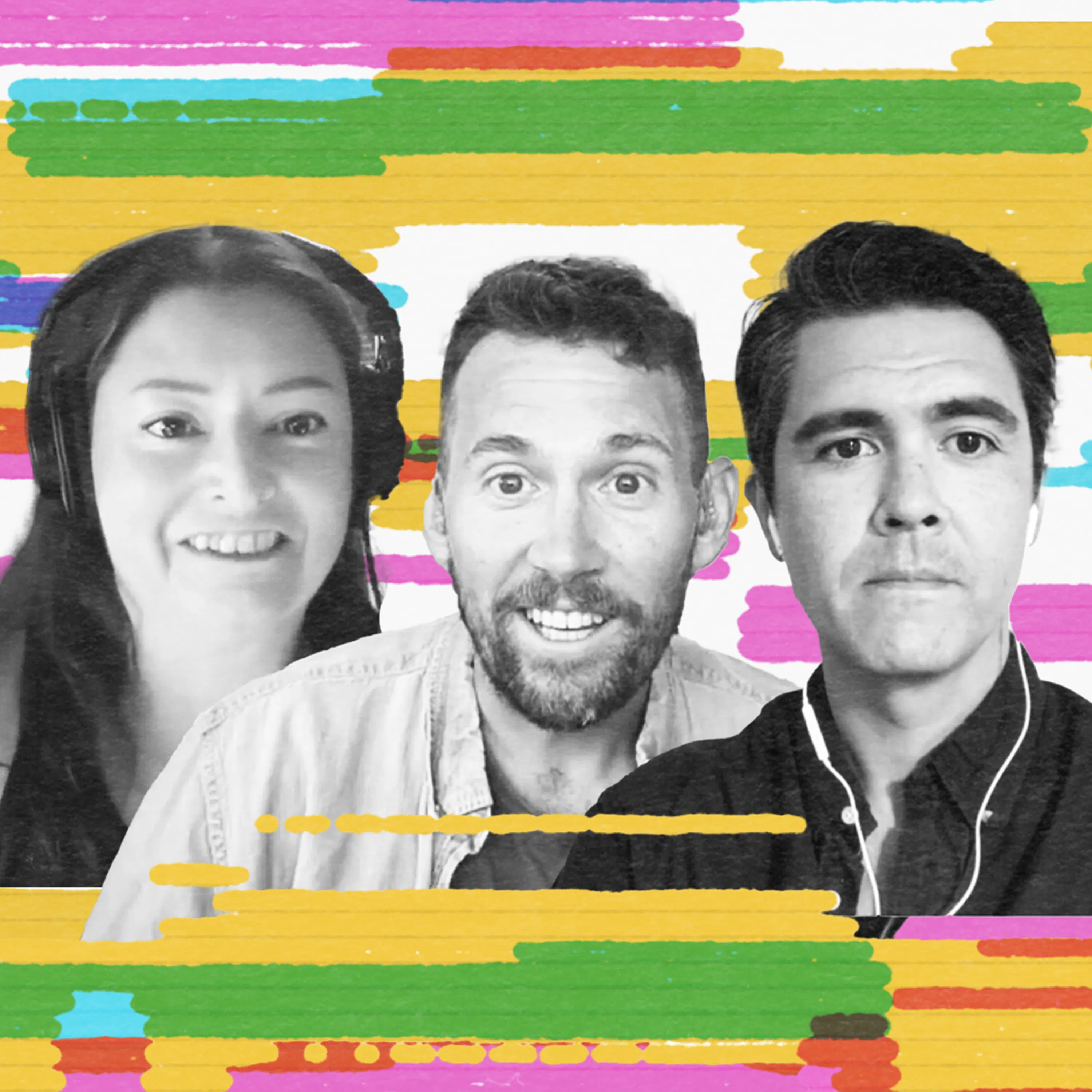 Is AI Writing Inevitable? 11.09.2026 46minAI-infused writing is suddenly everywhere: not just in automated email responses or meeting summaries, but in books and even the pages of mainstream newspapers. When an editor at The Wall Street Journal recently defended an op-ed that was 100 percent written by AI, it felt like a possible turning point, at which people are no longer apologizing. So is AI-assisted writing in its post-shame era? What does that mean for the way we process, communicate, and think? Host Charlie Warzel talks to the journalists Elizabeth Spiers and Teddy Brown about being a writer when the robots are coming for you, and how technology does not have to be inevitable. Get more from your favorite Atlantic voices when you subscribe. You’ll enjoy unlimited access to Pulitzer-winning journalism, from clear-eyed analysis and insight on breaking news to fascinating explorations of our world. Atlantic subscribers also get access to exclusive subscriber audio in Apple Podcasts. Subscribe today at TheAtlantic.com/Listener. Learn more about your ad choices. Visit podcastchoices.com/adchoices
 -
 The Singularity Is Not What It Seems 07.09.2026 19minWhatever the AI future is, we’re in it right now. What if the singularity is not some technological tipping point, brought about by human genius, but a human tipping point? An unforced error, driven by hubris, greed, and the fear of missing out? Galaxy Brain host Charlie Warzel shares the latest reporting from him and Atlantic staff writer Matteo Wong. Learn more about your ad choices. Visit podcastchoices.com/adchoices
 -
 Why So Many Men Are Unraveling 04.09.2026 50minJon Ronson had never really thought about the term “masculinity” until a strange series of events led him down a rabbit hole involving castles, cage fights, and an actor playing a horse. Host Charlie Warzel talks to Ronson about the disinhibited men who are looking for purpose in all the wrong places. Get more from your favorite Atlantic voices when you subscribe. You’ll enjoy unlimited access to Pulitzer-winning journalism, from clear-eyed analysis and insight on breaking news to fascinating explorations of our world. Atlantic subscribers also get access to exclusive subscriber audio in Apple Podcasts. Subscribe today at TheAtlantic.com/Listener. Learn more about your ad choices. Visit podcastchoices.com/adchoices
 -
 Welcome to the Scrolling Backlash 28.08.2026 1h 9minA lot of people are getting tired of their phone—sick of the algorithms and overwhelmed by what can feel like a loss of control. The Atlantic staff writer Julie Beck was a part of a team that dug into why and how people are trying to renegotiate their relationships with technology. They just released a five-part podcast series called “How to Touch Grass,” and in this episode, Galaxy Brain host Charlie Warzel talks to Beck about why people are nostalgic for pre-Internet days, how our brains are changing, and the good that can come from getting lost. Listen to the full “How to Touch Grass” series at The Atlantic, or wherever you get your podcasts. Get more from your favorite Atlantic voices when you subscribe. You’ll enjoy unlimited access to Pulitzer-winning journalism, from clear-eyed analysis and insight on breaking news to fascinating explorations of our world. Atlantic subscribers also get access to exclusive subscriber audio in Apple Podcasts. Subscribe today at TheAtlantic.com/Listener. Learn more about your ad choices. Visit podcastchoices.com/adchoices
 -
 How Social Media Makes Our Lives Smaller 07.08.2026 51minMost people spend more time than you think agonizing over their social-media posts. Kathryn Jezer-Morton wanted to understand their thinking—and when she dug deeper, she learned that redemption and optimization narratives are what the algorithm rewards, and therefore what drive the stories we tell. What does that mean for how we all think about ourselves? Charlie Warzel talks to Jezer-Morton about how “authentic” has become something different from “true,” and how people’s arcs on social media tend to only point upward. Learn more about your ad choices. Visit podcastchoices.com/adchoices
 -
 The Former ‘Voice of Google’ Speaks Out 31.07.2026 52minTech companies like Google famously started with a culture and psychology centered on doing good and changing the world. But as Google expanded, it had to adapt to its growing money, power, and influence, and Claire Stapleton, who worked there during this hinge point, describes how that felt from the inside. In this episode, Stapleton talks through her perspective about what happened to the company—and how for her, the work went from being inspiring and mission-driven to what she came to feel was a “bullshit job.” Learn more about your ad choices. Visit podcastchoices.com/adchoices
 -
 Why AI Is Making Things More Expensive 24.07.2026 41minElectronics are getting more expensive—and the culprit has a lot to do with generative AI. Amid all the talk of AI taking over people’s jobs, automating people’s workflows, and doing people’s homework, we’re learning that actually scaling this technology is a lot harder, and more expensive, than it seems. On this week’s episode, “Galaxy Brain” host Charlie Warzel talks to his Atlantic colleagues Hana Kiros and Alex Reisner about why AI is such an engineering disaster, and how this memory shortage is impacting everything from MRI machines to smart fridges to kids’ access to technology in schools. Get more from your favorite Atlantic voices when you subscribe. You’ll enjoy unlimited access to Pulitzer-winning journalism, from clear-eyed analysis and insight on breaking news to fascinating explorations of our world. Atlantic subscribers also get access to exclusive subscriber audio in Apple Podcasts. Subscribe today at TheAtlantic.com/Listener. Learn more about your ad choices. Visit podcastchoices.com/adchoices
 -
 How the World Cup Finally Won Over America 17.07.2026 33minWhy does the World Cup endure in an age of fractured attention? Is FreddyLA7 a real person? Charlie Warzel speaks with Men in Blazers founder Roger Bennett to chart how the World Cup has become far more than a sporting event and how this year’s tournament marks a turning point for soccer in the United States. They talk about how social media is transforming fandom into an endless thread of storytelling—amplifying goals, celebrations, memes, local rituals, and fan “bits” around the world. On the eve of the final, Bennett breaks down what the World Cup has taught us about national pride, collective memory, and the internet in 2026. Get more from your favorite Atlantic voices when you subscribe. You’ll enjoy unlimited access to Pulitzer-winning journalism, from clear-eyed analysis and insight on breaking news to fascinating explorations of our world. Atlantic subscribers also get access to exclusive subscriber audio in Apple Podcasts. Subscribe today at TheAtlantic.com/Listener. Learn more about your ad choices. Visit podcastchoices.com/adchoices
 -
 The Hidden Cost of Optimizing Everything 10.07.2026 45minModern life is built to make things easier, faster, and more efficient. But what if, in smoothing away life’s everyday frictions, we’ve also lost something essential? This week on “Galaxy Brain,” Charlie Warzel talks with The Atlantic’s Ian Bogost about his new book, “The Small Stuff,” and why the tiny rituals, sensory pleasures, and routine interactions we tend to overlook may be the very things that make us feel connected—to one another, to the world around us, and to ourselves. Get more from your favorite Atlantic voices when you subscribe. You’ll enjoy unlimited access to Pulitzer-winning journalism, from clear-eyed analysis and insight on breaking news to fascinating explorations of our world. Atlantic subscribers also get access to exclusive subscriber audio in Apple Podcasts. Subscribe today at TheAtlantic.com/Listener. Learn more about your ad choices. Visit podcastchoices.com/adchoices
 -
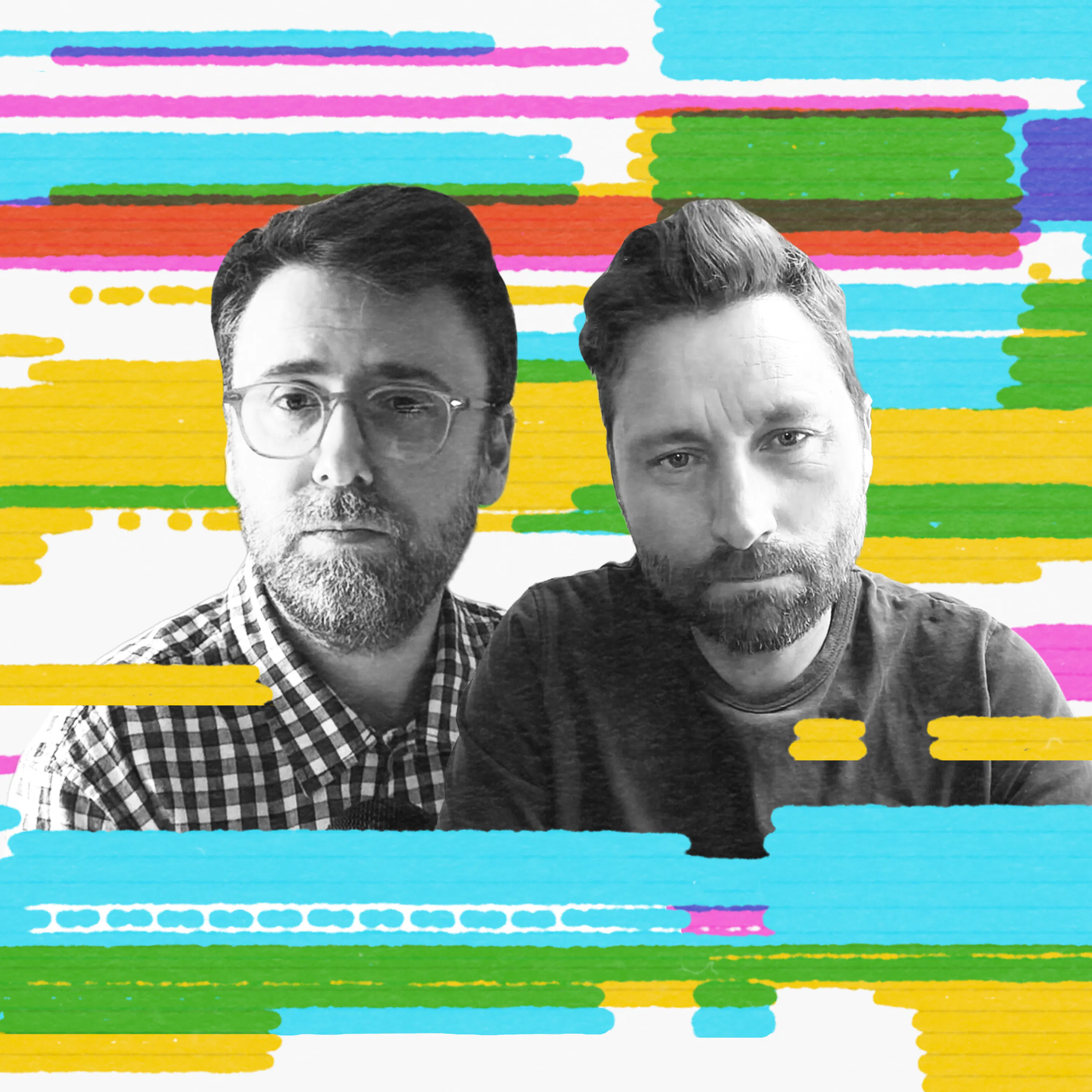 What Do We Do About Elon Musk? 03.07.2026 49minElon Musk isn’t just the world’s richest man—he’s one of the most influential people alive. His companies have transformed industries, his wealth has shattered records, and his politics now shape governments and public debate. But how did he become this powerful? And is his dominance really inevitable? This week on “Galaxy Brain,” Charlie Warzel talks with the historian Quinn Slobodian and the technology writer Ben Tarnoff, the authors of “Muskism: A Guide for the Perplexed,” about the ideas driving Musk’s rise. They unpack the mythology of the billionaire genius, the ideology behind his politics, and whether the world’s most powerful CEO is stronger—or more vulnerable—than he appears. Get more from your favorite Atlantic voices when you subscribe. You’ll enjoy unlimited access to Pulitzer-winning journalism, from clear-eyed analysis and insight on breaking news to fascinating explorations of our world. Atlantic subscribers also get access to exclusive subscriber audio in Apple Podcasts. Subscribe today at TheAtlantic.com/Listener. This episode of “Galaxy Brain" was produced by Renee Klahr and engineered by Miguel Carrascal. Our theme is by Rob Smierciak. Hadley Robinson is our senior supervising producer. Claudine Ebeid is the executive producer of Atlantic audio, and Andrea Valdez is our managing editor. Learn more about your ad choices. Visit podcastchoices.com/adchoices
 -
 Why Reading Feels So Hard Now 26.06.2026 46minDo you wish you could read more books? You’re not alone. These days, fewer people are reading for pleasure, and even those who do tend to struggle with distractions. Is this a literacy crisis, or has our attention just been warped? And what can we do? In this episode of “Galaxy Brain,” John Paul Brammer joins Charlie Warzel to talk about how he managed to ditch the allure of his screens and social media and rewild his attention. This is a conversation about how to reignite your curiosity, what deep reading does to your mind, and how anyone can learn to love to read again. Get more from your favorite Atlantic voices when you subscribe. You’ll enjoy unlimited access to Pulitzer-winning journalism, from clear-eyed analysis and insight on breaking news to fascinating explorations of our world. Atlantic subscribers also get access to exclusive subscriber audio in Apple Podcasts. Subscribe today at TheAtlantic.com/Listener. This episode of “Galaxy Brain” was produced by Renee Klahr and engineered by Miguel Carrascal. Our theme is by Rob Smierciak. Hadley Robinson is our senior supervising producer. Claudine Ebeid is the executive producer of Atlantic audio, and Andrea Valdez is our managing editor. Learn more about your ad choices. Visit podcastchoices.com/adchoices
 -
 How to Think About AI Before It’s Too Late 19.06.2026 48minCory Doctorow has a refrain: “The most important thing about a gadget isn’t what it does; it’s who it does it for and what it does it to.” In this episode of “Galaxy Brain,” he sits down with Charlie Warzel to talk about the AI boom, making the case that the hype, vision, and dreams of endless growth are unsustainable. Doctorow expands on his viral “enshittification” thesis: a critique of AI based around power and whether we are using AI tools or being used by them. Get more from your favorite Atlantic voices when you subscribe. You’ll enjoy unlimited access to Pulitzer-winning journalism, from clear-eyed analysis and insight on breaking news to fascinating explorations of our world. Atlantic subscribers also get access to exclusive subscriber audio in Apple Podcasts. Subscribe today at TheAtlantic.com/Listener. Learn more about your ad choices. Visit podcastchoices.com/adchoices
 -
 Jomboy on Robot Umpires and the Future of Baseball 12.06.2026 38min“Baseball” has never been synonymous with “change.” But in recent years, Major League Baseball has transformed radically, and this season it has embraced technology via the ABS pitch-tracking system (also known as “robot umpires”). Has the experiment worked? Can baseball evolve in the 21st century without losing a piece of itself? Does the tech make the game less human? On this week’s Galaxy Brain, Charlie Warzel brings on Jimmy O’Brien, founder of Jomboy Media, to talk about baseball’s overhaul, how to become a lip-reading legend on YouTube, and why Americans love slow sports. Audience survey: http://theatlantic.com/survey Get more from your favorite Atlantic voices when you subscribe. You’ll enjoy unlimited access to Pulitzer-winning journalism, from clear-eyed analysis and insight on breaking news to fascinating explorations of our world. Atlantic subscribers also get access to exclusive subscriber audio in Apple Podcasts. Subscribe today at TheAtlantic.com/Listener. Learn more about your ad choices. Visit podcastchoices.com/adchoices
 -
 How to Win Elections in the Attention Economy 05.06.2026 43minHow do you build a winning campaign for the era of AI? In the aftermath of the 2024 race, Democrats have been struggling to adapt to the new logic of the attention economy. On this episode of “Galaxy Brain,” Rob Flaherty, deputy campaign manager for Kamala Harris’s campaign, joins Charlie Warzel to talk about what went wrong and how Democrats need to embrace a new theory of attention. They discuss AI’s collision course with electoral politics ahead of the midterms and how to identify candidates who can use the internet to their advantage. Get more from your favorite Atlantic voices when you subscribe. You’ll enjoy unlimited access to Pulitzer-winning journalism, from clear-eyed analysis and insight on breaking news to fascinating explorations of our world. Atlantic subscribers also get access to exclusive subscriber audio in Apple Podcasts. Subscribe today at TheAtlantic.com/Listener. Learn more about your ad choices. Visit podcastchoices.com/adchoices
 -
 Why Everyone Hates AI Data Centers 29.05.2026 42minData centers are quickly becoming the most polarizing buildings in America. On this episode of Galaxy Brain, Charlie Warzel speaks with the reporter Jael Holzman about the backlash to the buildings powering the AI boom. Why have data centers become controversial? What are the environmental, economic, and political impacts? How does the backlash track along left/right party lines? This episode demystifies the data-center fight. Get more from your favorite Atlantic voices when you subscribe. You’ll enjoy unlimited access to Pulitzer-winning journalism, from clear-eyed analysis and insight on breaking news to fascinating explorations of our world. Atlantic subscribers also get access to exclusive subscriber audio in Apple Podcasts. Subscribe today at TheAtlantic.com/Listener. Learn more about your ad choices. Visit podcastchoices.com/adchoices
 -
 How Dropout Cracked Internet Comedy 22.05.2026 42minHow do you build a streaming service from scratch? On this week’s “Galaxy Brain,” Charlie Warzel speaks with Sam Reich, the CEO of Dropout, a comedy streaming platform that’s found success eschewing the growth-at-all-costs model of the mega streamers. The two discuss the pre-YouTube days of online video and how Reich acquired Dropout, formerly known as the internet site CollegeHumor, for $0. They talk about how comedy has evolved online, how to build a cinematic universe of content, and whether Reich sees Dropout as a feeder for places like “Saturday Night Live.” Reich shares his philosophies on how to make things that people love and why he steers away from the venture-capital and big-media playbooks. Get more from your favorite Atlantic voices when you subscribe. You’ll enjoy unlimited access to Pulitzer-winning journalism, from clear-eyed analysis and insight on breaking news to fascinating explorations of our world. Atlantic subscribers also get access to exclusive subscriber audio in Apple Podcasts. Subscribe today at TheAtlantic.com/Listener. Learn more about your ad choices. Visit podcastchoices.com/adchoices
 -
 Chris Hayes on Calibrating Your AI Anxiety 15.05.2026 47minHow should you feel about the AI boom? In this episode of Galaxy Brain, Charlie Warzel speaks with Chris Hayes about how to emotionally calibrate our response to this dizzying AI moment. Hayes describes why AI gives him “The Bad Feeling,” and how it led him to report on AI like an anthropologist would. The two discuss why AI is described as “the jagged frontier,” and they explore the distinction between using AI for creative thinking versus grunt work. Get more from your favorite Atlantic voices when you subscribe. You’ll enjoy unlimited access to Pulitzer-winning journalism, from clear-eyed analysis and insight on breaking news to fascinating explorations of our world. Atlantic subscribers also get access to exclusive subscriber audio in Apple Podcasts. Subscribe today at TheAtlantic.com/Listener. Learn more about your ad choices. Visit podcastchoices.com/adchoices
Podcasts similaires


Populaire dans
Ce podcast figure aussi dans les classements de podcasts de ces pays.


