
You Are Not A Frog
Dr Rachel Morris | Burnout Podcast
0
The podcast for GPs, hospital doctors and other professionals in high-stakes, high-stress jobs who want to thrive rather than just survive. Host Dr Rachel Morris, a GP turned Executive Coach, offers practical strategies to combat burnout and regain control of your work life. Each episode provides simple changes that can make a huge difference to stress levels and help you enjoy life again.
Épisodes
-
 Doing Nothing Feels Safe - That's What Makes It Dangerous 15.09.2026 19minNote: This is a re-release of one of our most-listened to episodes — originally recorded Autumn 2025. We've given it a new edit because it's more relevant than ever.If you know you need to do something about how you're feeling — but you keep telling yourself "not yet" — this is for you. We are very good at spotting danger in other people. Sepsis, red flags, a patient or client deteriorating. We act fast. With ourselves, we don't. We wait until it becomes catastrophic — a patient or client complaint, an error because our brain isn't working properly, our health going — before we give ourselves permission to act. This episode is about why doing nothing feels safer, why it isn't, and how to make the next step small enough you can actually take it. Not handing in your notice. One doable thing.Download the free Burnout Self-Assessment Toolkit — work through it as you listen: https://youarenotafrog.com/toolkit/We cover:• Why we spot burnout and overwhelm in everyone else but not in ourselves• The three psychological traps that keep high achievers stuck: status quo bias, loss aversion, and sunk cost — including the thought "I've given 10 or 20 years to this, I can't stop now"• Why our ingrained programming tells us the misery we know is safer than the uncertainty we don't — and how that will affect your next decision, and the one after that• Why waiting has a cost too — your health, your relationships, your character — and why that cost keeps going up and can be devastating• How to decide your line before burnout decides it for you — your "kill criteria" — so you don't wait for catastrophe• How to make the next step small enough you can actually take it: one conversation you've been avoiding, one boundary, one phone call to a trusted person — shame shrinks when you speak itThis episode is for you if you are a high achiever in a leadership role who has to have the conversation nobody else will, has to make the call someone disagrees with, or lies awake replaying a decision you had to make — and you can feel the heat building, but you keep telling yourself to keep going.Hosted by Rachel Morris | You Are Not a Frog - for high achievers who want to care deeply and carry less.Get weekly tools and episode notes by email: https://youarenotafrog.com/welcomeMore resources: https://youarenotafrog.com/Burnout Self-Assessment Toolkit: https://youarenotafrog.com/toolkit/#burnout #burnoutrecovery #highachieversMentioned in this episode:🟦 [FREE WEBINAR] How to Beat Burnout and Escape Burnout on Repeat
 -
 Try Softer, Not Harder 08.09.2026 1h 9minEvery high-achieving leader has a to-do list that doesn't end — it just refills. And the only response most of us were ever handed for that is push harder. Grip tighter. Muscle through. In this episode, Rachel talks to Ellen Coomber, co-founder of the Softness Revolution, about why that instinct — the one we were trained into from exams onward — stops working, and what she does instead. Ellen has a genetics degree from Cambridge; she is not someone who arrived at this by avoiding rigour. She arrived at it because pushing harder had genuinely stopped working, and she had to find something else. This conversation is about that something else: working with less effort, not more, and learning to tell the difference between an instinct worth trusting and fear wearing an instinct's clothes. Getting that distinction wrong is how we end up saying yes to the thing that breaks us, and it will affect the next decision too, and the one after that.We cover:Why "work harder" is the only tool most high achievers were ever handed for pressure — and where that training actually startedThe Softness Revolution: what "soft" means when it isn't the opposite of capableWhat solo-sailing a 40-foot boat taught Ellen about the difference between soft and weakWhat horses know about force that most leadership training never mentionsHow to tell your actual instinct apart from fear when they feel identicalWhy more effort is not always the effective option, and what to do with the effort you're not usingThis episode is for you if......you're looking at a to-do list that never actually shrinks, and your automatic response is to push harder, focus more, try again — even though that's the exact same plan you had last week, and the week before. If some part of you already suspects that working harder isn't the answer but you don't yet have a working alternative, or a language for it, this one's for you.📩 Join 20,000 professionals: https://youarenotafrog.com/welcome/🐸 Get exclusive episodes and resources by joining FrogXtra: https://youarenotafrog.com/members🐸 Learn more about Ellen: https://thepowerofsoftness.com Mentioned in this episode:🟦 Permission to Thrive⭐️ Book Your FrogFest Ticket Now
 -
 Going Back After Burnout When Nothing Has Changed 01.09.2026 19minNearly one in three people who take time off for burnout are off again within a year - and over half of them work in healthcare. This episode is about why that keeps happening, and it isn't because anyone's weak.You go back to the same poisoned water, you carry the same responsibility you carried before, and now there's something extra on top of it - a shame tax, the pressure to prove you're fine, to prove the time off wasn't a mark against you. Rachel walks through the Bent Tent Pole - why the same load bends you faster the second time round - and makes the case that the fix was never more resilience. It's changing what you believe is actually yours to carry.We cover:Why nearly 3 in 10 people relapse into burnout within a year of returningThe poisoned water analogy - why rest alone can't fix a toxic systemWhy dropping hours or changing roles often doesn't touch the real problemThe Responsibility Trap: picking up what everyone else dropsThe Bent Tent Pole - why the same weight bends you faster the second timeThe Shame Tax: the extra load you carry just for having needed the breakWhy waiting for the system to fix itself keeps you stuckThe Performance Zone - what boundaries actually look like in practiceThis episode is for you if...You're a high achiever in a leadership role who's been back at work for a while now and can feel it building again - the same tightness, the same countdown to the next break. You're the one who has to pick up what someone else dropped, who has to say yes because no one else has the whole picture, who lies awake replaying whether you're actually cut out for this. Hard as that is to admit, it's not a character flaw. It's physics, and there's a different way to carry it.The tent pole bent because of the load, not because you were weak. You can do the work without being responsible for all of it.📩 Join 20,000 professionals: https://youarenotafrog.com/welcome/🐸 Get exclusive episodes and resources by joining FrogXtra: https://youarenotafrog.com/membersMentioned in this episode:⭐️ Book Your FrogFest Ticket Now
 -
 The 12-Minute Method for Getting Stuff Done 25.08.2026 48minThere's a project you've been meaning to start, a conversation you've been meaning to have, or a change you've been meaning to make. You know that you can do it, but what you can't quite find is the moment, the time, or the right conditions…and so it waits.Robbie Swale is a coach and author who has spent years thinking about why capable, intelligent, hard-working people don't start the things they most want to do, and what it takes to change that. In this conversation, we explore the idea that the problem isn't time; it never really was.We cover:The 12 Minute Method: how Robbie wrote 80,000 words in three years by dedicating twelve minutes a week, and why that's not as absurd as it soundsWhy time management is largely choice management, and what that means for the things you keep deprioritisingWhy the internet makes it harder to start, and how to stop comparing your beginning to someone else's middleHow to protect a new idea before it's ready to be criticisedHow to approach a big change without betting everything on it going right the first timeThis episode is for you if you are the person who does the hard things, who shows up and delivers, but who also has that specific project or version of your life that keeps moving slightly out of reach. This episode may give you a slightly different question about what's actually in your way.📩 Join 20,000 professionals: https://youarenotafrog.com/welcome/🐸 Get exclusive episodes and resources by joining FrogXtra: https://youarenotafrog.com/membersMentioned in this episode:🟦 [FREE WEBINAR] How to Beat Burnout and Escape Burnout on Repeat🐸 Enquire Now About Our Training
 -
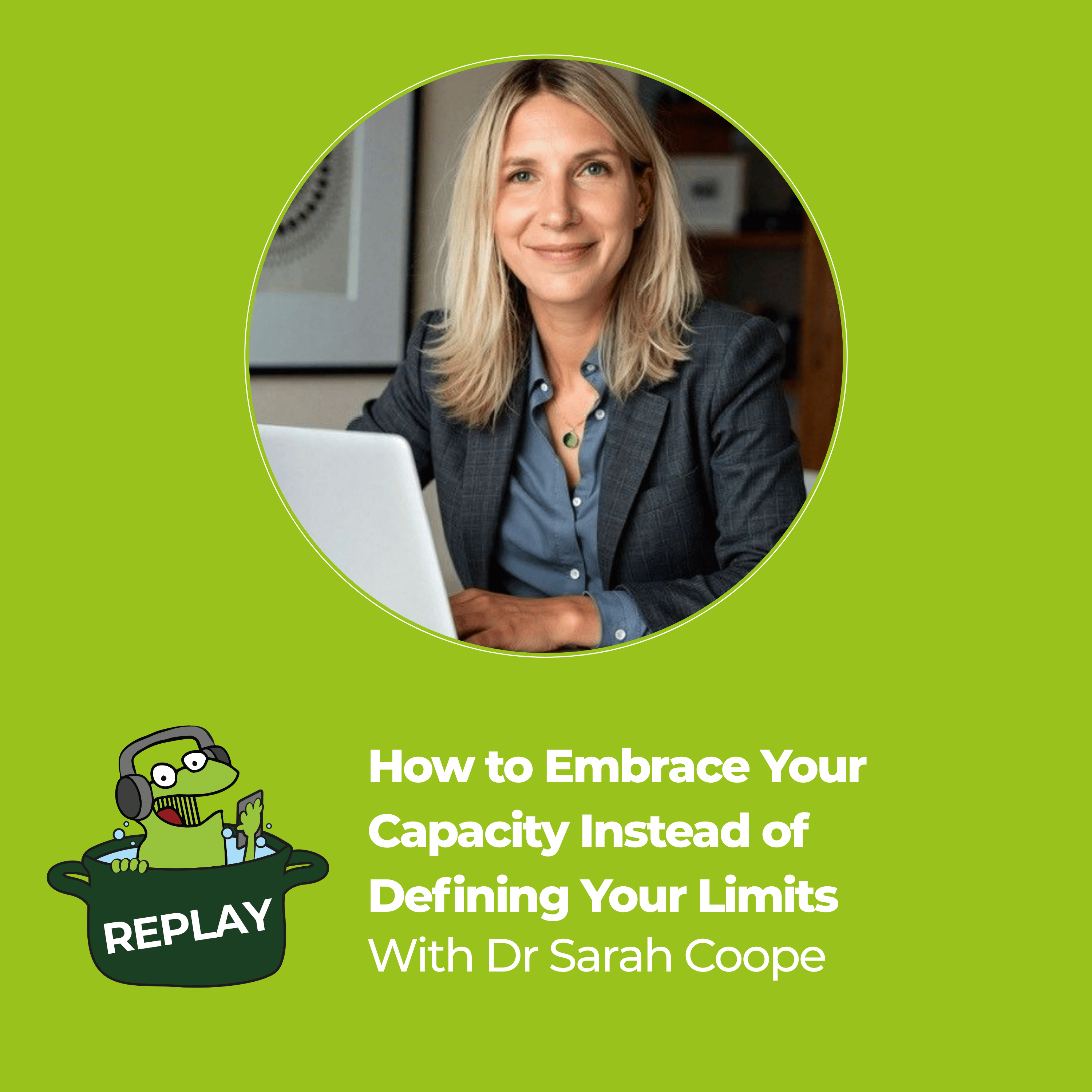 How to Embrace Your Capacity Instead of Defining Your Limits 18.08.2026 51minMost of us were taught that having limits is a weakness - something to push through, not something to honour. And if you're a doctor, a nurse, a vet, or anyone in a high-stakes role, that message arrived early and arrived hard. The result is a profession full of people operating at full stretch capacity without realising it, because full stretch became the new normal so gradually that we stopped noticing.In this conversation with Sarah Coope - former GP, CEO of Wild Monday, and executive coach - we explore what happens when we stop thinking about limits altogether, and start thinking about capacity instead.We cover:Why the word "limits" triggers guilt, and what happens when you replace it with "capacity"The TEAM model: Time, Energy, Attention, and Money - the four dimensions of our capacity, and why overstretching one always costs you somewhere elseThe elastic band analogy: what it looks like when one corner of your square gets pulled too far, and what it takes to come backWhy operating at the edge of burnout can blunt your awareness of how stretched you really areMicro-recovery and third spaces: small, practical ways to build recovery into a day that leaves no room for it"Guilt with an i" - why the discomfort of saying no isn't a sign you're doing something wrong. It may be a sign you're doing something right for the first timeHow to communicate your capacity to colleagues and managers without apologising for being humanThis episode is for you if you know intellectually that you can't keep running this hard, but the alternative feels selfish, or like letting people down, or just not who you are. It may help you understand why what you call a "limit" is actually something worth knowing about yourself, and why caring for your own capacity is not the opposite of caring for your patients or clients - it may be the condition for it.📩 Join 20,000 professionals: https://youarenotafrog.com/welcome/🐸 Get exclusive episodes and resources by joining FrogXtra: https://youarenotafrog.com/membersAbout Sarah Coope: Sarah Coope is a former GP, medical educator, and executive coach who works with healthcare professionals and high achievers on burnout, resilience, and sustainable performance. Her own experience of burnout is what drives her work - she coaches from the inside, not from aboveMentioned in this episode:🐸 Enquire Now About Our Training🟦 [FREE WEBINAR] How to Beat Burnout and Escape Burnout on Repeat
 -
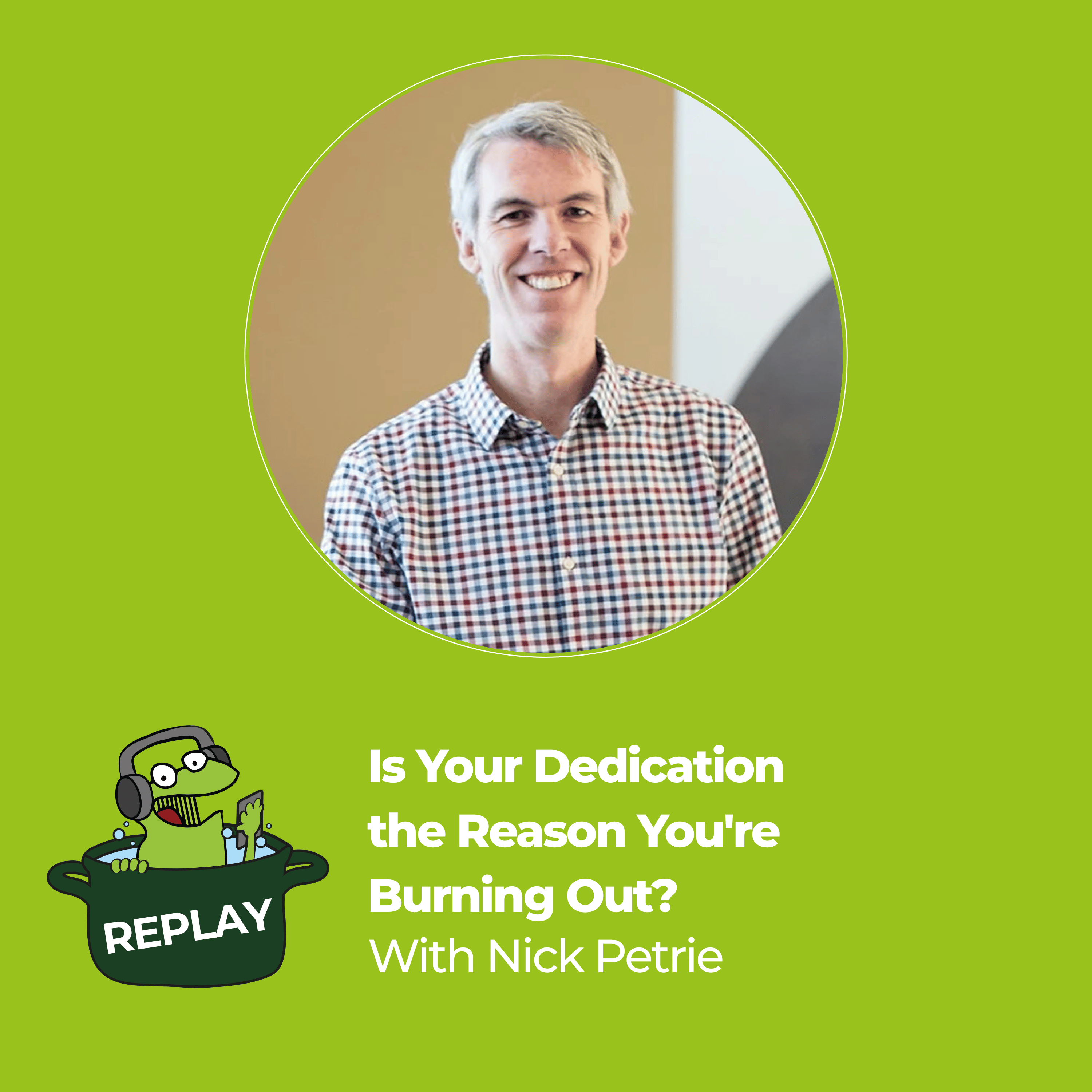 Is Your Dedication the Reason You're Burning Out? 11.08.2026 58minMost of us have been told that burnout is caused by overwork and that the solution is to rest, take a break or slow down. Set some boundaries. But what if that's only part of the picture? What if the very thing that made you good at your job - your values, your drive, your commitment to never letting anyone down - is exactly what keeps burning you out? And what if rest, on its own, isn't enough to get you out?In this conversation with Nick Petrie, author, leadership researcher and burnout specialist, we go deeper than the usual burnout conversation. Nick has interviewed hundreds of leaders across high-stakes professions, and his findings challenge almost everything we think we know about why burnout happens and what recovery actually requires.We cover:Why high values alignment is a burnout risk, not a protection - and why caring deeply about your work can mean you have no brakeThe "outdated success formula" - the beliefs and behaviours that got you here, and why they stop working as the stakes get higherThe burnout curve: first, second, and third degree - and how to recognise which stage you're at before your body decides for youThe 1-1-1 mechanism: a simple, pre-scheduled way to build recovery into a life that otherwise never stopsWhat post-burnout growth actually looks like, and why the version of you on the other side of burnout can be more sustainable than the one before itThis episode is for you if the drive that makes you good at what you do is also the thing that makes it impossible to stop. This episode may help you understand why our ingrained programming - the one that says delivering, caring, and never letting people down is what makes us safe - is something we can actually look at and decide whether to keep.📩 Sign up for our weekly newsletter: https://youarenotafrog.com/welcome/ 🐸 Get exclusive episodes and resources by joining FrogXtra: https://youarenotafrog.com/members/ 💬 Join the conversation: share this with someone who needs to hear itMentioned in this episode:🐸 Enquire Now About Our Training🟦 [FREE WEBINAR] How to Beat Burnout and Escape Burnout on Repeat
 -
 The Analytical Brain Trap: Why Smart People Can’t Switch Off 04.08.2026 55minEvery doctor and high-achieving professional knows what it feels like to lie awake with a brain that refuses to stop - replaying a decision made that afternoon, running tomorrow's list at midnight, scanning ahead for what might go wrong. Our ingrained programming tells us that more thinking keeps us safe and keeps things running. But there is a cost to that, and our analytical brains (the very thing that makes us good at our jobs) may be the reason we can't rest.In this conversation with Giles Croft, former NHS surgeon and coach, we explore what happens when the brain's analytical, planning, threat-scanning part takes over completely - and what your right brain already knows how to do that most of us have never been properly introduced to.We cover:The difference between left-brain and right-brain consciousness, and why doctors and high achievers are trained to default to the analytical modeGiles's own experience of a TIA - and what the temporary loss of his left brain revealed about the default state that sits underneath all the thinkingWhy "just stop overthinking" is advice that doesn't reach the actual problemHow the brain "pre-lives" the future, and why this feels like vigilance but functions like anxietyWhat it actually feels like to step out of left-brain dominance - and the small, practical ways to do itWhy our default state is not stress - it only feels that way because we've been away from calm for a long timeThis episode is for you if you lie awake replaying a conversation with a colleague, a patient or a client; if you find yourself planning three weeks ahead on a Sunday evening, or even on holiday, your mind is running its usual commentary. What we discuss may help you understand what is really beneath all that noise, and whether the calm you're looking for has been there the whole time.📩 Join 20,000 professionals: https://youarenotafrog.com/welcome/🐸 Get exclusive episodes and resources by joining FrogXtra: https://youarenotafrog.com/membersAbout Giles Croft:Giles is a former NHS surgeon and coach who works with individuals and organisations on the human experience of work. His firsthand encounter with a transient ischaemic attack gave him a unique, embodied understanding of how the brain's different modes of consciousness shape our wellbeing. He helps people understand how they are experiencing the world - and who they really are. Find Giles at https://www.gilespcroft.com/.Mentioned in this episode:🟦 [FREE WEBINAR] How to Beat Burnout and Escape Burnout on Repeat🐸 Enquire Now About Our Training
 -
 Why Every Doctor Should Learn to Coach 28.07.2026 34minBoundaries aren't walls. They're fences. A wall keeps everyone out. A fence has a gate, and it's yours to open or close, if you're willing to hold it when someone pushes.That idea comes from this conversation with Dr Sarah Coope, recorded for the Your Coaching Journey podcast. Sarah talks about her own route into coaching, what twenty years of coaching doctors has taught her about self-worth, and why so many of us try to fix things that were never ours to fix.In this episode:How a magazine advert led Sarah to her first coaching session, and the moment she realised she had different values to the people around her"Fruit stapling" — Sarah's analogy for behaviour change that skips the real work underneathWhy boundaries are fences, not walls, and what actually gets in the way of holding themThe difference between being a rescuer and being a coach, and what it costs doctors to be the formerWhy Sarah tells every doctor thinking about a coaching qualification: "it starts with you"Sarah Coope is a former GP, leadership coach and mediator who leads the training behind the podcast. Helen Leathers is a Coach, Trainer and Facilitator for Your Coaching Journey - an organisation providing transformational coaching training for doctors. Find out more about their upcoming courses here and use the code FROGSPAWN to get 20% off a live coaching course.NOTE: We're affiliate partners with Your Coaching Journey, which means we get a small commission if you use our code. We wouldn't pass this on if we didn't think it was genuinely worth itMentioned in this episode:🐸 Enquire Now About Our Training🟦 [FREE WEBINAR] How to Beat Burnout and Escape Burnout on Repeat
 -
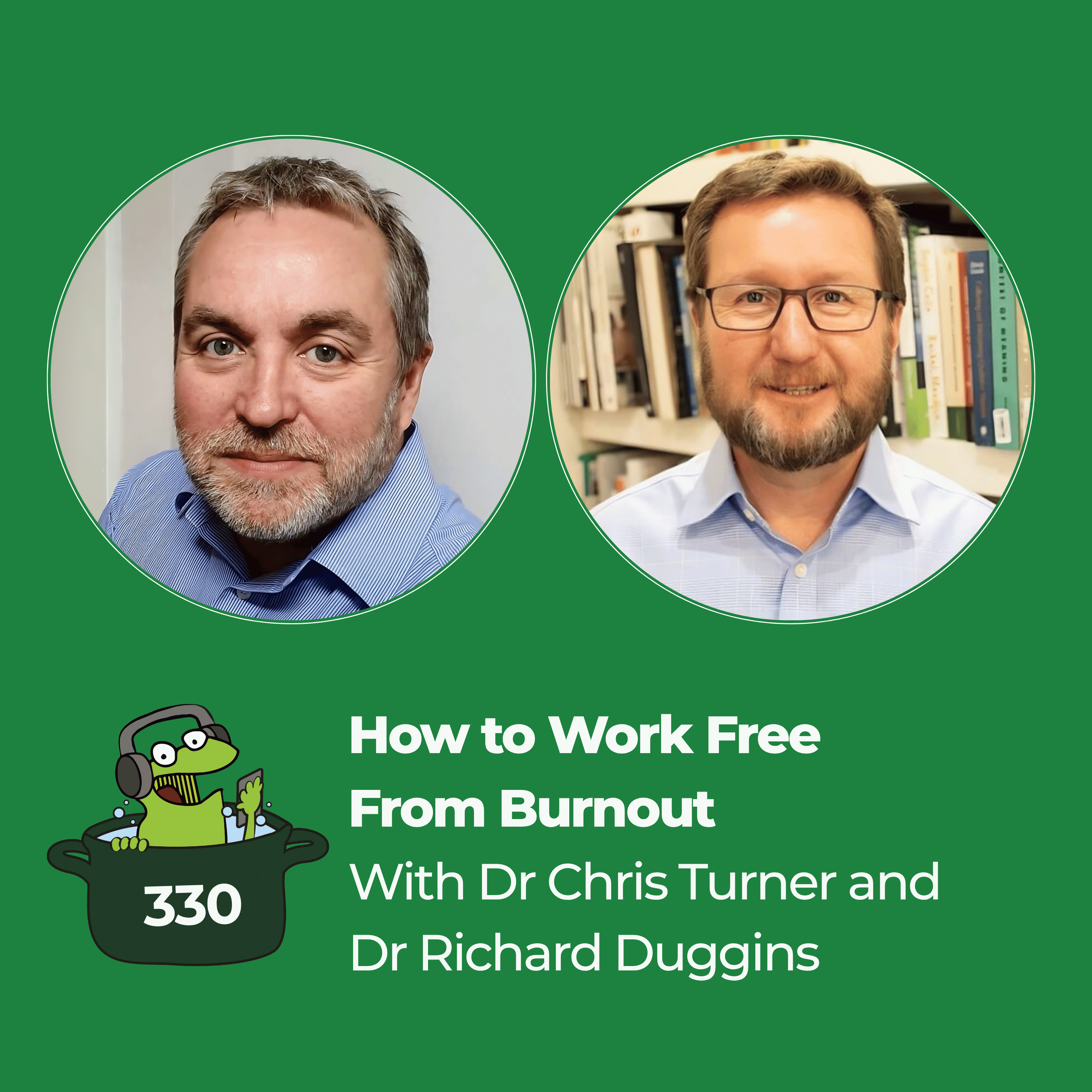 How to Work Free From Burnout 21.07.2026 42minThere is one belief that keeps high achievers stuck in burnout long after they should be recovering - the belief that burning out means they failed.This is a live panel discussion from the Burnout Free Working Conference — an unscripted conversation about what burnout recovery actually requires, why the self-blame makes it impossible to start, and the single reframe that changes how you see every struggling colleague, including yourself.We cover:Why burnout is not a personal failing — and what the evidence actually says about where it startsThe clinical difference between burnout and depression, and why the label matters less than most people thinkWhy asking struggling colleagues to "reach out" puts the burden in exactly the wrong place - and what "reaching in" looks like insteadThe shift from "difficult colleague" to "colleague in difficulty" - and why that single reframe changes how you respondWhat the fear of saying no looks like versus what actually happens when you doWhy bearing witness, without trying to fix, is itself a genuine interventionWhat burnout recovery actually requires — and why it can't start until the self-blame doesThis episode is for you if…You're a high achiever in a high-stakes role who has started to wonder whether the exhaustion you're carrying is something more than tiredness - or whether the reason you can't seem to recover is that somewhere, underneath the fatigue, you've decided the burnout was your fault. This conversation will give you permission to put down the belief that you’ve been carrying, and the language to start again.About Dr Richard DugginsDr Richard Duggins is a consultant psychiatrist in medical psychotherapy and the author of Burnout Free Working. He has spent his career working with clinicians and high achievers in burnout - exploring not just the exhaustion, but the shame and self-blame that makes recovery so much harder. Get Richard’s book here: Burnout-Free Working: Your Expert Guide to Thriving in a Stressful Workplace.About Dr Chris TurnerDr Chris Turner is an emergency medicine consultant, co-founder of Civility Saves Lives, and a TEDx speaker whose work on culture, behaviour, and psychological safety in healthcare has reached hundreds of thousands of people worldwide. Learn more about Chris’s work with Civility Saves Lives here: https://www.civilitysaveslives.com/📩 Sign up for our weekly newsletter: https://youarenotafrog.com/welcome/🐸 Get exclusive episodes and resources by joining FrogXtra: https://youarenotafrog.com/members/💬 Join the conversation: share this with someone who needs to hear itMentioned in this episode:⭐️ Book Your FrogFest Ticket Now🟦 Permission to Thrive
 -
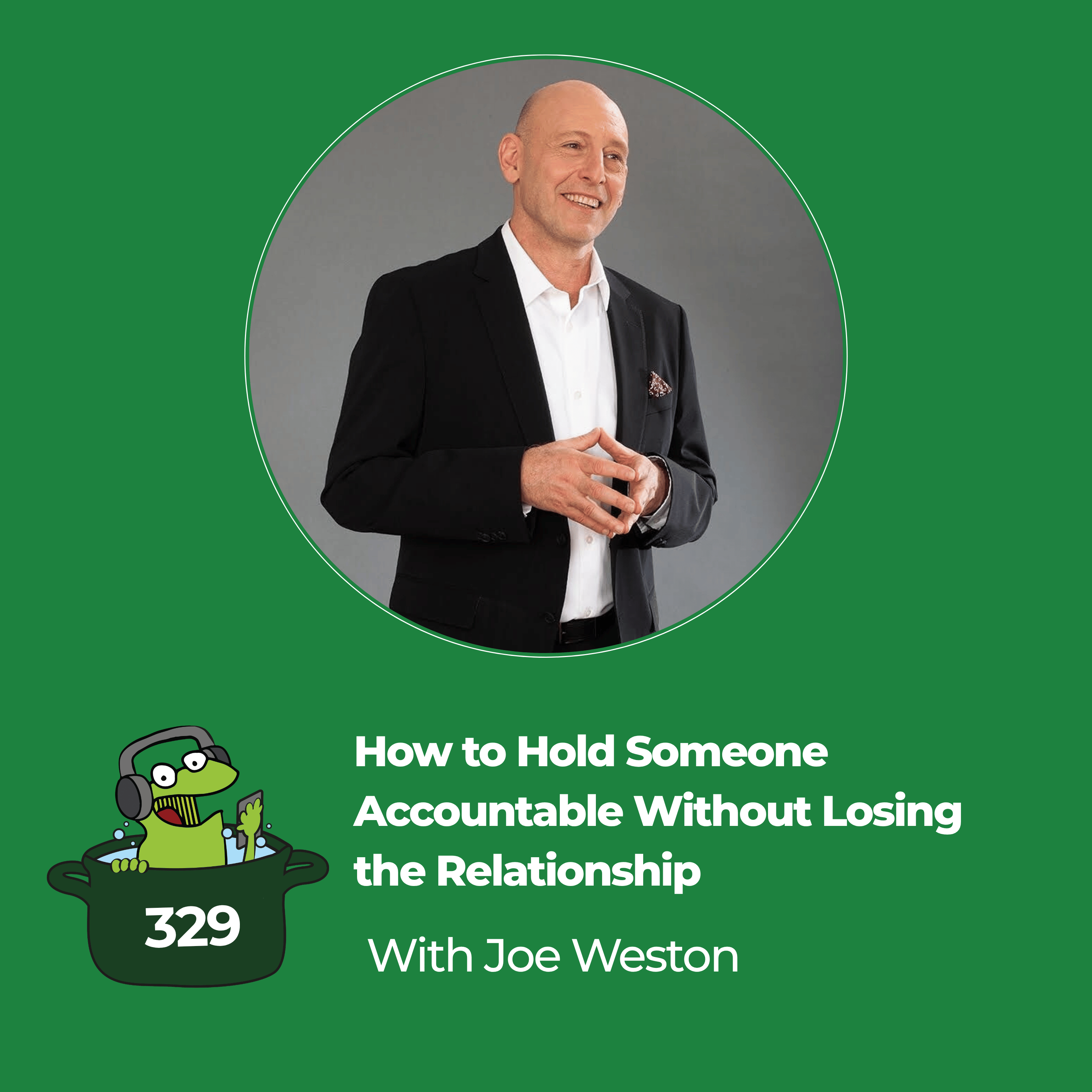 How to Hold Someone Accountable Without Losing the Relationship 14.07.2026 50minThere's something most leaders do - we avoid the conversation that needs to be had. We care too much about the wrong things: how the other person will react, whether it will make things awkward, whether we'll be the one blamed if they go off sick. Our ingrained programming tells us that keeping the peace is the same as keeping the relationship, but it isn't.In this episode, Joe Weston is back for round two to explain why conflict avoidance - the silence, the corridor moaning, the feedback we give and immediately want to apologise for - is itself a form of conflict. And what it actually sounds like to hold someone accountable without becoming someone you don't like.We cover:Why avoiding difficult conversations feels kind but functions as a form of conflictThe difference between confrontation (which can deepen a relationship) and conflict (which breaks one)How to hold someone accountable without triggering their fight-flight-freeze responseWhy focusing on behaviour — not the person — changes everything, and exactly what to say insteadThe "difficult middle bit": what to do when someone gets defensive, and you want to back downWhy doctors, nurses, vets, and other professionals already have the skills for hard conversations — just not yet with their colleaguesHow small, intentional acts of relationship-building change the culture around accountability over timeThis episode is for you if... you're a senior manager, doctor, nurse, vet, dentist, or any high-achieving leader who has rehearsed the conversation in your head, convinced yourself it wasn't the right moment, and watched the problem get worse instead. You know something needs to be said. You just haven't found the version of yourself that can say it yet. This episode may help.📩 Sign up for our weekly newsletter: https://youarenotafrog.com/welcome/🐸 Get exclusive episodes and resources by joining FrogXtra: https://youarenotafrog.com/members/💬 Join the conversation: share this with someone who needs to hear itMentioned in this episode:⭐️ Book Your FrogFest Ticket Now🟦 Permission to Thrive
 -
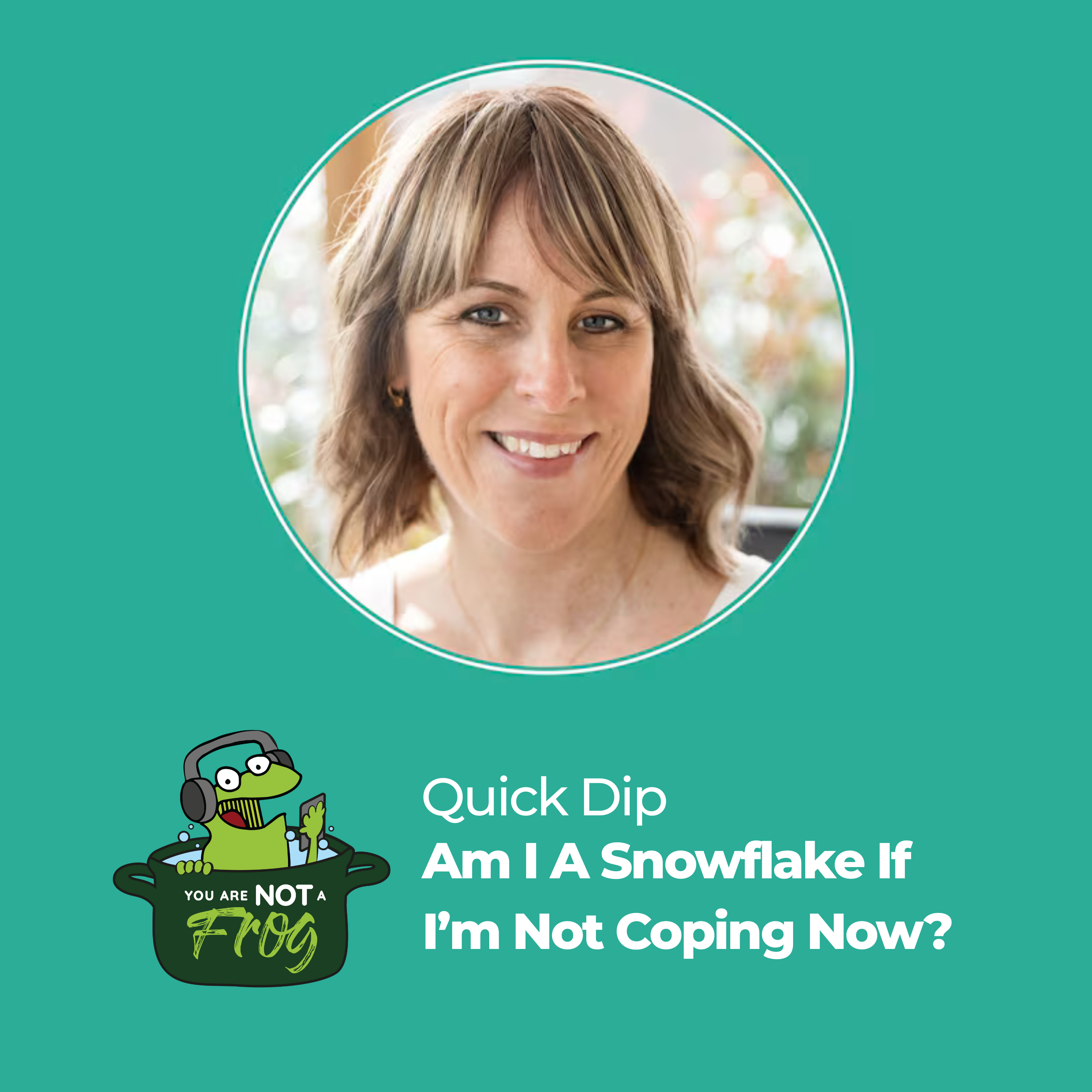 Am I a Snowflake If I’m Not Coping Now? 07.07.2026 16minA doctor emailed me recently, she's been in medicine for 25 years, and the question she asked was one I've heard in a hundred different ways: "Am I a snowflake?"She felt a great deal of shame about finding things hard - something I see time and time again in high achievers. Like the feeling that not coping is proof of something wrong with you. A character flaw. A sign you've gone soft.But the data tells a different story. In a survey we did of over 600 health and social care professionals, nearly one in three worried about whether they or their team would cope with rising workloads. One in three. That's not a snowflake problem - that's a system problem.In this Quick Dip, I unpack why the shame about not coping is often more damaging than not coping itself. Why our ingrained programming tells us that we have to cope with everything, all the time, to feel good enough. And why protecting the appearance of coping - keeping the show on the road at all costs - will cost you more than any boundary ever could.We cover:• The "Am I a Snowflake?" question and what it really means• Why not coping is a sign of an empty tank, not a character flaw• The Superhero Delusion and how it keeps you trapped• Biscuit Boundaries and the Responsibility Trap• Why shame thrives when you believe you're the only one struggling• The stress curve and what it reveals about your limits• Why conflict feels more frightening than burnout for high achievers• The two stories of not coping - and which one costs you moreThis episode is for you if you've ever wondered whether you're the weak one. If you've been holding it together at work while feeling like you're falling apart underneath. If you've told yourself you just need to be more resilient, push harder, cope better - and it isn't working. You are not a snowflake. You never were.📩 Sign up for our weekly newsletter: https://youarenotafrog.com/welcome/🐸 Get exclusive episodes and resources by joining FrogXtra: https://youarenotafrog.com/members/💬 Join the conversation: share this with someone who needs to hear itMentioned in this episode:⭐️ Book Your FrogFest Ticket Now
 -
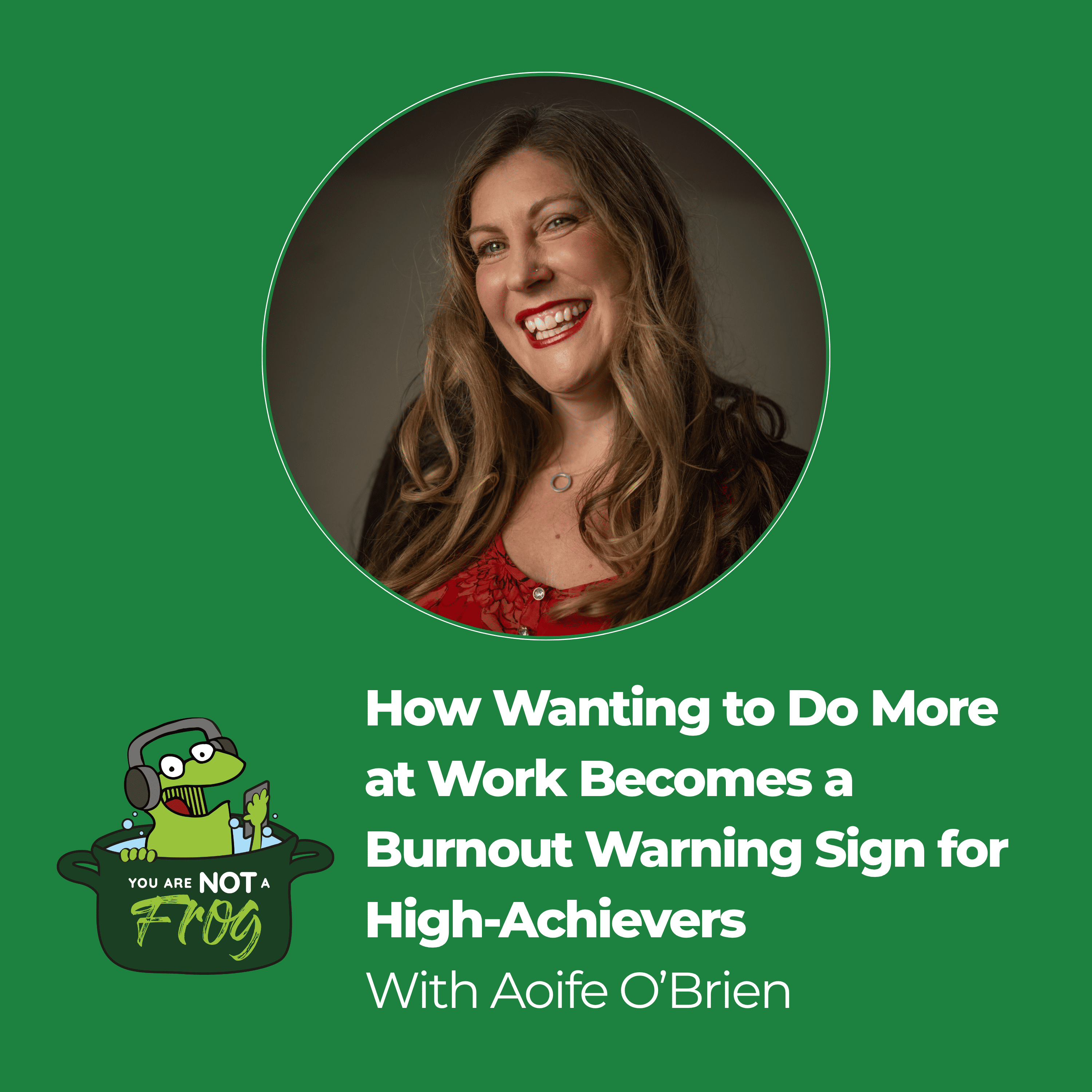 How Wanting to Do More at Work Becomes a Burnout Warning Sign for High Achievers 30.06.2026 59minWhen Aoife O'Brien is close to burnout, she doesn't want to stop. She wants to do more. One more task. One more thing to get through before she can stop. She says that's how she knows now - not the exhaustion, not the breaking point, but the acceleration. If you recognise that feeling, this conversation names what's actually happening. Not to add to your list. To give you a cleaner way to read what your own system is telling you.We cover:Why the urge to do more work is a signal, not a coping strategyImposter syndrome as a systemic trap - the beliefs you're swimming in so completely you don't know they're thereThe difference between burnout symptoms and burnout driversWhat happens when a leader decides to go home on time - and what that single act does to the people around themHow to start reading what your system is actually telling youThis episode is for you if you've been telling yourself you're coping fine - and some part of you knows that story is getting harder to believe. If you're a high achiever in a demanding role who has always mistaken acceleration for resilience. If you've never stopped to ask what the urge to just keep going is actually telling you.📩 Join 20,000 professionals: https://youarenotafrog.com/welcome/🐸 Get exclusive episodes and resources by joining FrogXtra: https://youarenotafrog.com/members/Aoife can be found here:https://www.instagram.com/happieratwork.ie/ https://happieratwork.ie/happier-at-work-podcast/https://thrivingtalentbook.com/Mentioned in this episode:🟦 Permission to Thrive⭐️ Book Your FrogFest Ticket Now
 -
 Why Summer Makes Your Burnout Worse (And It's Not Your Fault) 23.06.2026 20minYou may have been counting down to summer all year, telling yourself that you just need to survive until your next holiday. You may have been looking forward to taking a pause and getting a chance to finally breathe.But when you get to your holiday, instead of feeling rested, you feel more exhausted, more overwhelmed, and more behind. And somewhere underneath the busyness, you might be thinking: what's wrong with me? Everyone else seems fine.Nothing is wrong with you - you just fell into the summer Urgency Trap - one of the seven Overwhelm Amplifiers that keeps high achievers stuck in the Responsibility Trap.In this episode, we break down exactly why summer increases pressure instead of relieving it, why you end up covering everyone else's work while your own recovery gets sacrificed, and the one practical shift that changes everything: time-blocking your rest as if it were as important as your most urgent patient or client.We cover:The Urgency Trap: how "urgent but not important" tasks hijack your recoveryThe long-term fix (the Responsibility Trap) vs. the quick fix you can start todayHow to time-block rest, recovery, and buffer slots into your diary - and treat them as non-negotiable📩 Join 20,000 professionals: https://youarenotafrog.com/welcome/🐸 Get exclusive episodes and resources by joining FrogXtra: https://youarenotafrog.com/membersMentioned in this episode:🟦 [FREE WEBINAR] How to Beat Burnout and Escape Burnout on Repeat
 -
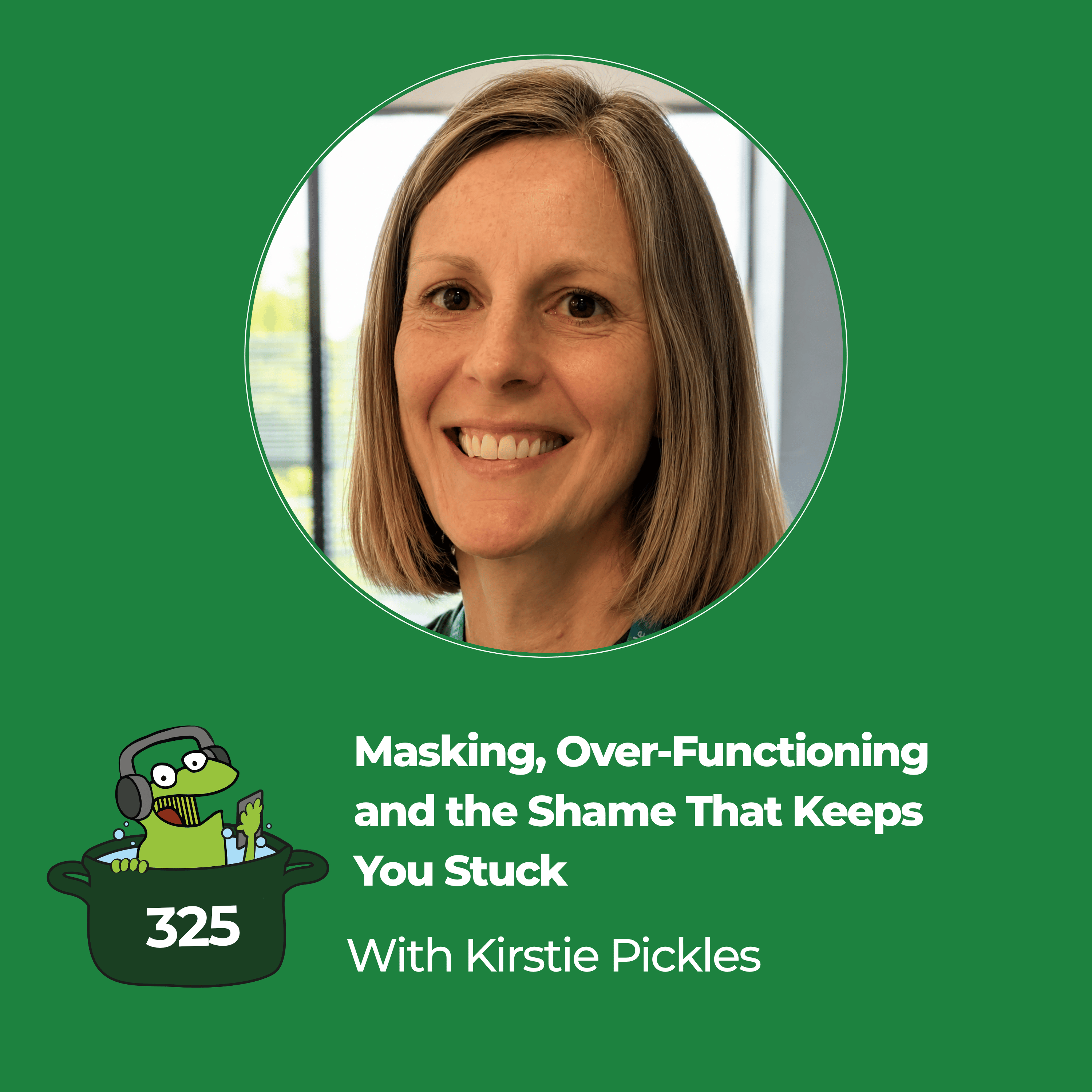 Masking, Over-Functioning and the Shame That Keeps You Stuck 16.06.2026 1h 8minIf you've always felt like everyone else got an unwritten handbook about how to behave at work - and you've had to figure it out yourself, one interaction at a time - this episode is for you.This week, Rachel’s in conversation with Kirstie Pickles: vet, autistic ADHD professional, and EDI advocate. Kirstie was diagnosed as an adult - after years of masking in a high-stakes clinical role, performing competence while running on empty underneath.We talk about:What masking really costs - not just after one hard day, but across a careerNeurodivergent burnout: why it is different from regular burnout, and why the usual advice doesn't workThe shame of late diagnosis - and what it means to finally have a name for itWhat colleagues and leaders can do to make workplaces work for everyoneYou don't need a diagnosis to recognise yourself here. A lot of us in high-achieving, high-pressure roles have neurodivergent traits we have never had a name for. We just learned to mask through it.Our ingrained programming tells us to keep performing, keep adapting, keep looking like we're coping fine. But that performance has a cost - and it will affect your next decision, and the one after that.Different is not defective.🎙️ Listen to the full podcast: http://youarenotafrog.com/episodes/324📩 Join 20,000 professionals: https://youarenotafrog.com/welcome/🐸 Get more episodes and resources by joining FrogXtraMentioned in this episode:🐸 Enquire Now About Our Training🟦 [FREE WEBINAR] How to Beat Burnout and Escape Burnout on Repeat
 -
 Why You Can't Switch Off (And It's Not About Workload) 09.06.2026 19minBurnout in high stress jobs isn't always about doing too much; sometimes it's about a belief you were never taught to question.You finished your day, finished (most) of your tasks, and you still can't switch off. Most people assume that's a workload problem, but the reason people in demanding roles like medicine can't genuinely rest isn't about how much they've done - it's about what they've been conditioned to believe about rest itselfIn this episode, Rachel introduces the Superhero Delusion: the conviction that the rules about rest apply to other people. Not to you. She explores how that belief was built, why burnout recovery starts with understanding rest differently, and what sustainable work actually requires.We cover:Why you can't switch off - and why workload isn't the real reasonThe Superhero Delusion: the conviction that the rules about rest apply to other people, not youHow the belief that rest has to be earned gets installed - and who installed itWhat sustainable work actually requires (and it isn't more discipline)This episode is for you if you're the person who has to be on even when you're officially off. Who takes annual leave and spends the first two days mentally finishing the handover. Who lies awake replaying the list of things that didn't get done - and is still asking whether any amount of done would ever feel like enough.📩 Join 20,000 professionals: https://youarenotafrog.com/welcome/Mentioned in this episode:🟦 [FREE WEBINAR] How to Beat Burnout and Escape Burnout on Repeat
 -
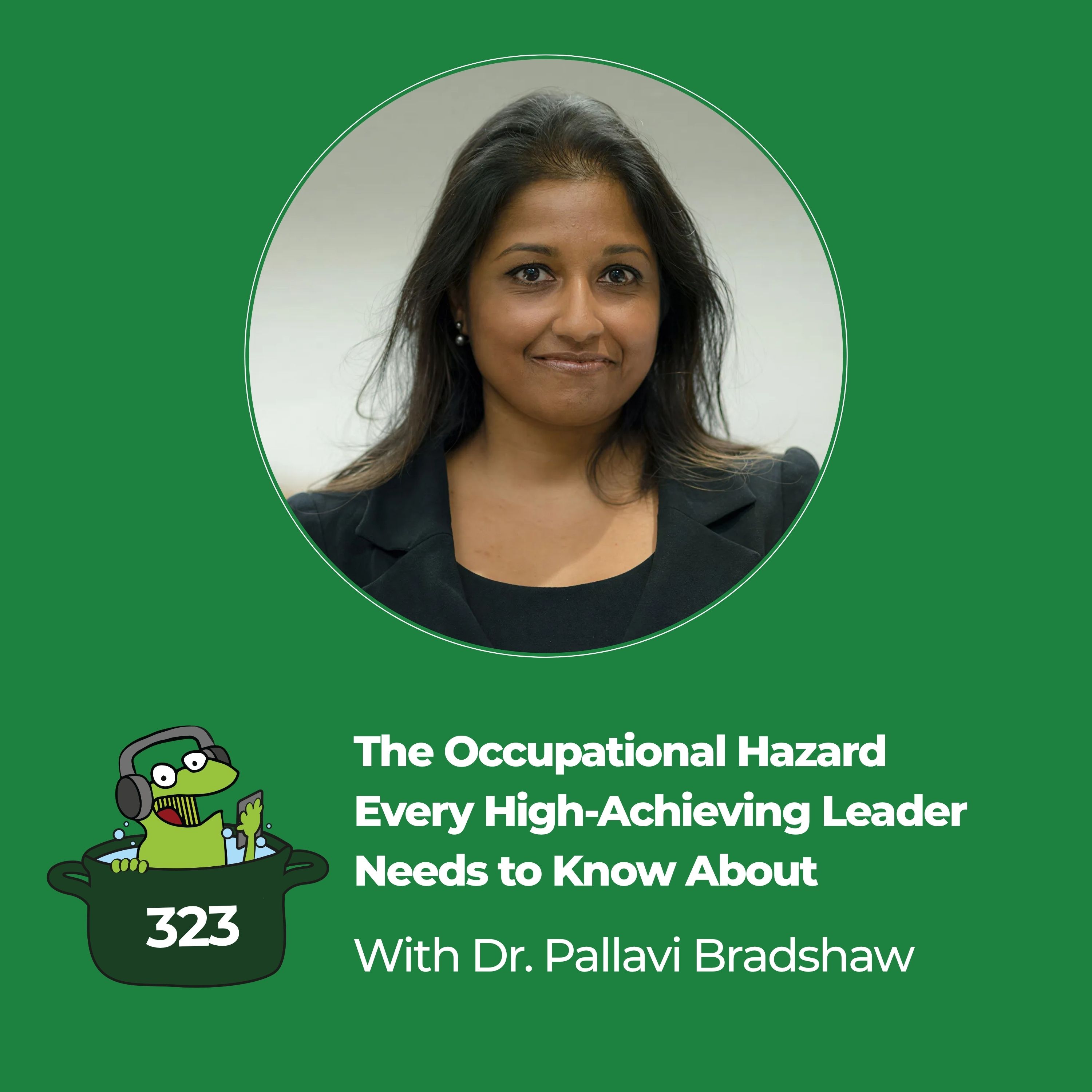 The Occupational Hazard Every High-Achieving Leader Needs to Know About 02.06.2026 54minGetting a complaint from a colleague is one of the most destabilising things that can happen to a high-achieving leader. Not because of the process, but because of what it makes you ask about yourself.In this episode, I'm joined by Dr. Pallavi Bradshaw, Medical Director at the MPS, to talk about something that doesn't get named nearly enough: a complaint from a colleague isn't a patient or client complaint. It feels very different and can be devastating if our ingrained programming tells us that we have to please everyone all the time to feel good enough. And so unless you start to frame it differently, it will affect your next decision, and the one after that.This conversation genuinely produced an a-ha moment for me. It may change how you carry the next time it happens.We cover:Why colleague complaints feel categorically different - and why that makes complete senseThe question underneath the complaint that drives so many decisions afterwardsWhat Dr Bradshaw has learned about supporting doctors through formal grievances at the MPSHow to stop a complaint from becoming something you carry permanentlyThis episode is for you if you're the person who had to have the conversation nobody else would. Who had to make the call that someone disagreed with. Who lies awake replaying a decision you had to make - and is still asking what it says about you.🎙️ Listen to the full podcast: https://youarenotafrog.com/episodes/323/📩 Join 20,000 professionals: https://youarenotafrog.com/welcome/🌐 More resources: https://youarenotafrog.com/Dr Pallavi Bradshaw is Medical Director at the Medical Protection Society (MPS), supporting doctors navigating complaints, grievances, and the more challenging parts of medical leadership.Get more episodes and resources by joining FrogXtraMentioned in this episode:🟦 [FREE WEBINAR] How to Beat Burnout and Escape Burnout on Repeat🐸 Enquire Now About Our Training
 -
 Why Imposter Syndrome Isn't a Confidence Problem 26.05.2026 27minImposter syndrome is something we often don’t talk about openly, and the standard advice - build your confidence, reframe your thinking, remember your achievements – rarely addresses the real cause.In this Quick Dip, Rachel shares a piece of feedback she received years ago that still stings and uses it to unpick what imposter syndrome really is: it’s not a confidence gap, it’s not a skills deficit, but something much more personal.She talks about why working on your confidence alone will never be enough, what's actually driving that voice that says you're about to be found out, and the one thing that actually shifts it.Key TakeawaysImposter syndrome isn't always about competence or confidence - it can be the system gaslighting you, impossible self-imposed standards, or just the very human experience of feeling not good enough.A 2025 meta-analysis found that 62% of healthcare professionals experience imposter syndrome - this is a profession-wide pattern, not a personal failing.What actually moves the needle is saying it out loud to someone who responds with empathy and recognition.Get more episodes and resources by joining FrogXtraMentioned in this episode:🟦 [FREE WEBINAR] How to Beat Burnout and Escape Burnout on Repeat
 -
 Why Your Workload Keeps Growing Without You Agreeing To It 19.05.2026 1h 1minIf you constantly find yourself picking up tasks that nobody else will do, staying late to cover gaps, or slowly absorbing more and more without anyone asking you to - this episode is going to name exactly what's happening.Occupational psychologist Leanne Elliott joins Rachel to unpack why over-responsibility isn't a personality flaw; it's what happens when you don’t have absolute clarity on what tasks are definitely part of your role – and, more crucially, what tasks aren’t.They explore why conscientious professionals in under-resourced settings are most at risk, how the 'if I don't do it, who will?' question keeps people stuck, and what you can actually do this week to start auditing what belongs on your plate and what doesn't.Key TakeawaysRole clarity is a recognised psychosocial risk factor, and when it's absent, taking on extra work feels like the only option, even when it's pushing you towards burnout.A simple daily audit - writing down tasks that drained you, that weren't in your role, or that you did out of fear rather than responsibility – can give you the data to have important but calmer and less personal conversations with your team about your roles.Rest and recovery are not the same thing. Knowing your recovery activities and protecting time for them is a skill, not a luxury.Resources Mentioned:The Twenty Questions: How do I know if I’m a workaholic?Get more episodes and resources by joining FrogXtraMentioned in this episode:🐸 Enquire Now About Our Training🟦 [FREE WEBINAR] How to Beat Burnout and Escape Burnout on Repeat
 -
 What to Do When Your Career Map No Longer Fits 12.05.2026 31minYou know something needs to change, but you just have no idea what, how, or where to begin, and your lack of a plan may be starting to feel like failure.In this Quick Dip, Rachel unpacks why the belief that you need everything mapped out before you're allowed to move is the very thing keeping you stuck, and introduces the AB-Z method: a simple framework that replaces the impossible task of knowing your whole future with a far more manageable one.This episode is about how to craft your work, not how to leave your job completely or blow everything up, but how to get a genuine say in the shape of your working life - one honest step at a time.Key TakeawaysYou don't need the whole career plan - you need A, a sense of Z, and B - the very next step.Z is not a job title. It's how you want to be: internally, and with the people you love.Recovering from burnout is not the same as arriving at Z. The absence of burnout is a step, not a destination.Comparing your Z to someone else's is one of the most reliable ways to stay stuck.Crafting your work and career can happen alongside your current role, not instead of it - and it can start at any grade, any stage.Get more episodes and resources by joining FrogXtraMentioned in this episode:🟦 [FREE WEBINAR] How to Beat Burnout and Escape Burnout on Repeat
 -
 How to Break the People-Pleasing Cycle That's Burning You Out 05.05.2026 1h 8minIf you have ever ended a clinical day exhausted not from the medicine itself but from the weight of everybody else's feelings, this episode might hit home.Josh Connolly, resilience coach and author of ‘It's Them Not You’, joins me to explore why many healthcare professionals take on so much of the emotional load for everyone - and how that pattern almost always began long before medical school.Key TakeawaysPeople-pleasing at work usually has roots in family roles from childhood. The 'high achiever', the 'mascot' and the 'scapegoat' all carry those patterns into adult professional life.Holding space for someone is not the same as absorbing their emotions. The moment you start feeling what they feel, you have crossed a boundary - and your ability to help them actually decreases.When you are about to say yes under pressure, ask: 'Who have I become right now?' If the answer is your childlike self desperately seeking approval, that is the moment to pause.Get more episodes and resources by joining FrogXtraResources mentioned:It's Them, Not You: How to Break Free From Toxic Parents and Reclaim Your Story by Josh ConnollyThe Shapes AcademyMentioned in this episode:🟦 [FREE WEBINAR] How to Beat Burnout and Escape Burnout on Repeat🐸 Enquire Now About Our Training
Podcasts similaires


Populaire dans
Ce podcast figure aussi dans les classements de podcasts de ces pays.


