
The AMI Podcast
Al-Mahdi Institute
0
The AMI Podcast explores a range of topics including cutting-edge research in Islamic Studies, book reviews by prominent authors and academics, and discussions among scholars of diverse faiths and denominations within Islam.
Épisodes
-
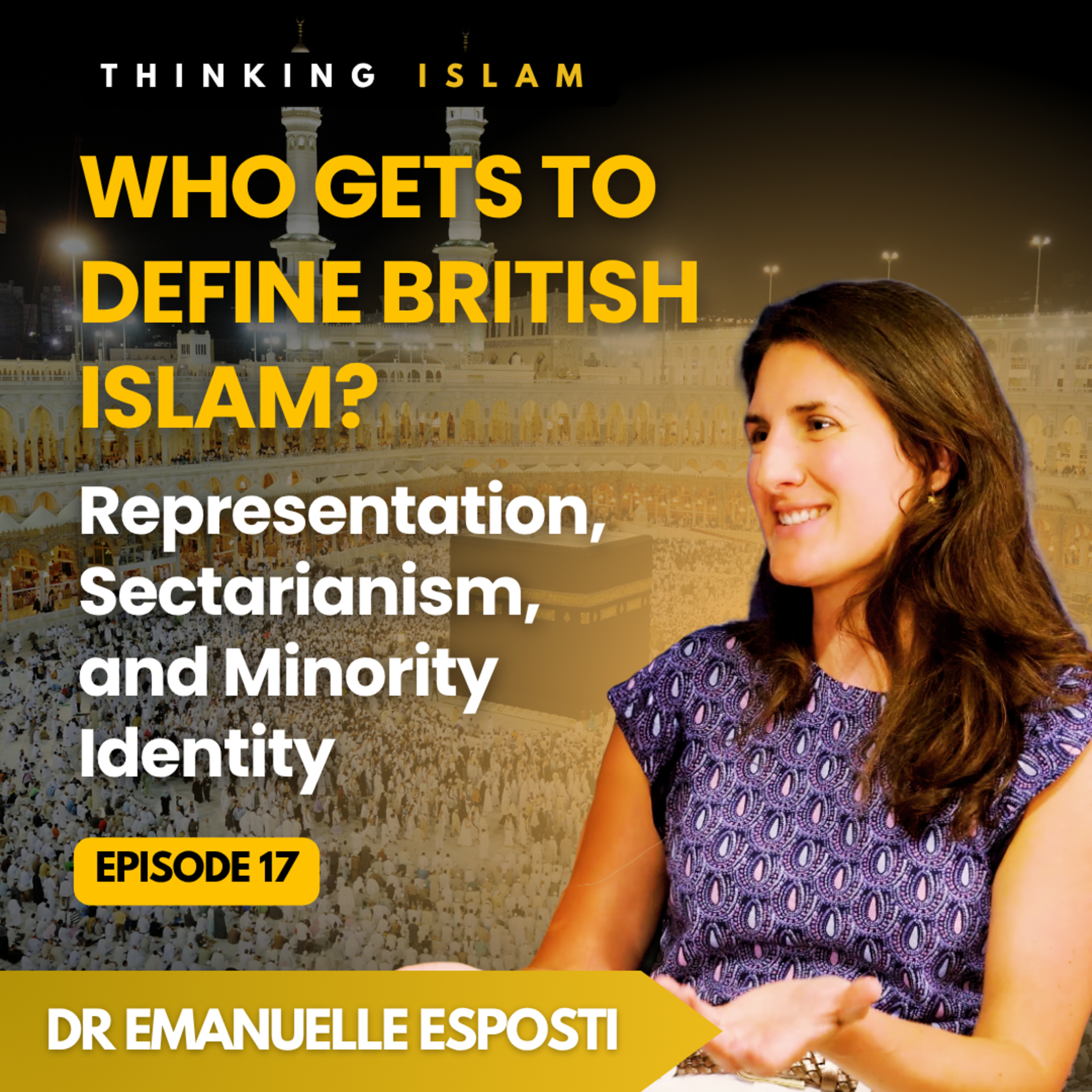 Shi'a Identity and Belonging in Britain with Dr Emanuelle Degli Esposti | Thinking Islam Ep.18 27.08.2026 1h 24minWhat happens when a community feels present in Britain but absent from the public story of British Islam? In this episode of Thinking Islam, we explore what it means to be Shi'a in Britain today with Dr Emanuelle Degli Esposti. Drawing on her ethnographic research into Shi'a Muslim communities in the UK, Dr Degli Esposti examines questions of diaspora, minority identity, sectarianism, and belonging. The conversation begins with her own route into the field — from learning Arabic in Paris and reporting on the Arab Spring to marrying into an Iraqi Shi'a family and discovering a community that was largely absent from the academic and public accounts of British Islam she had encountered. We trace the emergence of a specifically British Shi'a identity among a generation that increasingly meets across Iraqi, Pakistani, Khoja, and Lebanese lines, finding forms of shared belonging their parents did not necessarily possess. The discussion explores how British multiculturalism helped make religion a public marker of identity; how Najaf and Karbala came to carry greater emotional and symbolic weight than Baghdad for some younger Shi'a; and how the Karbala paradigm was reworked into a language of justice that now intersects with movements such as Black Lives Matter and Me Too. Along the way, we consider university campuses as spaces of identity formation, the commercialisation of belonging through hoodies, hashtags, and symbols, and Dr Degli Esposti's provocative idea of "ethical sectarianism": that constructing a positive minority identity can also produce an implied counter-identity. Dr Emanuelle Degli Esposti is an independent researcher who holds a PhD and MSc from SOAS, University of London, and a BA from the University of Oxford. Her research explores Shi'a diaspora, ritual, activism, sectarianism, and belonging, and is developed at length in her forthcoming book Not That Kind of Muslim: Sectarian Belongings and the Making of British Shi'ism.Audio Chapters: 0:00 – Highlights 1:36 – An Outsider's Route into the Field 7:36 – Catholic Parallels & the Limits of Observation 9:13 – "Not That Kind of Muslim" 11:33 – Who Is the Audience? Anxiety & Pride 14:07 – Still Under-Researched: "What's a Shia?" 17:10 – The Good Muslim / Bad Muslim Trap 18:28 – Forging a British Shi'a Identity 23:14 – The Shi'a Subject Explained 28:39 – Iraq Disappearing: Exile & Nostalgia 34:28 – After 2003: "Never Felt More English" 37:35 – Najaf, Karbala & Sacred Geographies 42:18 – Religious Authority & Multiple Shi'a Subjects 44:59 – The Karbala Paradigm & Social Justice 48:08 – Ritual, Performance & Belonging 49:51 – Mapping Shi'a London 52:04 – Multiculturalism & the Ethnicisation of Religion 57:33 – "Shi'a Rights" & Coming Out as Shia 1:01:27 – The University Campus as a Crucible 1:04:25 – "Woke Shi'ism" & the Depth of Religious Feeling 1:06:43 – Victimhood, Backlash & the Shadow Side 1:13:11 – Hoodies, Hashtags & Brand Shi'ism 1:17:19 – What Academia Still Misses 1:19:43 – Reflexivity, Faith & a Moment in Mashhad 1:24:08 – Thinking Islam Question
 -
 The Tug of War over Imāmī Creed & ʿIlm al-Rijāl | Dr Syed Ali Hur Kamoonpuri | Research Seminar 18.08.2026 42minʿIlm al-rijāl is often treated as a technical, almost mechanical science — a matter of chains, dates and verdicts. But the criteria by which a narrator is praised or discredited are themselves shaped by theology, and theology changes.In this research seminar, Dr Syed Ali Hur Kamoonpuri (Aligarh Muslim University) traces that entanglement across a thousand years. He argues that the Baghdad school of the Buyid period evaluated transmitters against a firm and uncompromising stance on ghulūw, with Ibn al-Ghaḍāʾirī's Kitāb al-Ḍuʿafāʾ as its most rigorous expression — a work still rated highly by scholars including Grand Ayatollah al-Sistani. After the Safavid era, however, beliefs once treated as marks of exaggeration came to be counted among the essential doctrines of the Twelver school, and later scholars reopened the earlier rijāl verdicts in order to rehabilitate transmitters previously criticised as ghālī figures.Dr Kamoonpuri sets this trend against a contemporary counter-current — Ayatollah al-Burūjirdī, Grand Ayatollah al-Sistani and Ayatollah Muḥammad Bāqir al-Ṣadr — which holds that the early authorities read the ghulāt more soundly. His conclusion is a dialectic: doctrinal change rehabilitates transmitters, and the narrations of those rehabilitated transmitters then become fresh evidence for the very theology that rehabilitated them.Dr Syed Ali Hur Kamoonpuri specialises in Qurʾānic studies, Islamic intellectual history, Arabic language and literature, and Shīʿī studies. He holds Bachelor's and Master's degrees in Arabic and Islamic Studies from Aligarh Muslim University, graduating with distinction and university medals, and was awarded his PhD in 2019 for a four-volume dissertation on the exegesis of Nahj al-Balāgha in the late ʿAbbāsid period. He has published more than twenty-five peer-reviewed articles and lectures internationally.
 -
"The Definition of Ghulāt" by Tabriz Gasimov 07.08.2026 16minIn this presentation, Tabriz Gasimov revisits the meaning of ghulāt through hadith literature, tracing it to the concept of "lie" (kadhib) — understood as betraying a trust or disclosing confidential teachings — rather than divinization alone. He shows how this reframing suggests some narrators dismissed as ghulāt may in fact be reliable, with implications for re-evaluating core Shi'i doctrines on Tawḥīd and Imamate.
-
"Traces of the Ghulāt in Shīʿī Hadith Literature: A Computational and Thematic Analysis of Ghulāt-Affiliated Traditions in al-Kulaynī's al-Kāfī" by Peyman Ünügür Tekin 06.08.2026 27minIn this presentation, Peyman Ünügür Tekin combines classical rijāl criticism with computational analysis to trace narrations transmitted by ghulāt-affiliated narrators in al-Kulaynī's al-Kāfī. She asks whether their presence reflects incidental infiltration or a deliberate transmission strategy concentrated on particular doctrinal themes.
-
"The Historical Link between Jesus and Ghuluww: Jesus's Function in Ghulāt Thought and its Impact on Shi'a Hadith" by Hossein Barati & Sobhan Ranjbarzadeh 06.08.2026 20minIn this presentation, Hossein Barati and Sobhan Ranjbarzadeh trace how various ghulāt sects appropriated Jesus's ascension and extraordinary attributes to legitimize claims about ʿAlī, Ḥusayn, and the Hidden Imam. They show how Shi'i Imams and later Qom theologians responded directly to these Christological analogies in shaping mainstream doctrine.
-
"Esotericism Embodied: Traces of Ghulāt Thought and Symbolic Expression in Yemeni Islamic Architecture" by Mohamed Enab 06.08.2026 20minIn this presentation, Mohamed Enab shifts the study of ghulāt currents from hadith and polemic to material culture, reading Yemeni mosques and inscriptions from the Ṣulayḥīd and Qāsimī periods as a visual archive of Shi'i esoteric authority. He shows how architecture became a site where reverence, legitimacy, and accusations of religious excess were negotiated.
-
"Between Bāṭin and Sharīʿa: The Druze as Ghulāt in Formative Shiism" by Wissam H. Halawi 06.08.2026 21minIn this presentation, Wissam H. Halawi situates Druze doctrine within the long-running tension between esoteric knowledge and legal normativity in early Shi'ism. Rather than a radical break, he argues the Druze intensify existing ghulāt dynamics — hierarchical knowledge, a divinized guiding figure, and the suspension of exoteric law — reframing them as a distinct legal school.
-
"Tracing the Legacy of the Mufawwiḍa Ghulāt in Imami Shi'a Theology" by Mohsen Kadivar 06.08.2026 26minIn this presentation, Mohsen Kadivar distinguishes rubūbī ghuluww (attributing lordship to the Imams) from tafwīḍī ghuluww (attributing supra-human but non-divine status), tracing how the latter — though initially contested by the Imams' own companions — gradually became mainstream Imami theology from the fourth century onward, sidelining its early opponents.
-
"Ghulāt in the Sunnī Tafsīr Tradition: The Historical Trajectory and Function of the Concept from the Classical to the Contemporary Period" by Ayşe Uzun 06.08.2026 18minIn this presentation, Ayşe Uzun traces how the term ghulāt functioned in Sunni tafsīr — originally a broad marker of "excessiveness" applied well beyond Shi'ism, before narrowing and intensifying in 20th-century works like Tafsīr al-Manār. She shows how this shift reflects changing sectarian, political, and ethical concerns rather than a purely doctrinal one.
-
"The Ghulāt and Abbasid Culture Polemics in Kitāb al-Ṣirāṭ" by Mushegh Asatryan 06.08.2026 20minIn this presentation, Mushegh Asatryan examines Kitāb al-Ṣirāṭ, a rare ghulāt text that engages directly with the surrounding world rather than staying purely cosmological. He unpacks its polemics against the Caliphate, mainstream Imami Shi'ism, and Abbasid "exoteric" scholarship, situating the ghulāt's esoteric epistemology within the wider intellectual landscape of their time.
-
"Juridical Esotericism: Ghuluww, the Palāsī–Ibn Miʿmār Network, and the Mamluk Criminalization of Shīʿī–Sufi Metaphysics" by Seyed Amir Asghari 06.08.2026 20minIn this presentation, Seyed Amir Asghari treats ghuluww not as a doctrine but as a historically produced accusation, tracing its use in 14th-century Mamluk Syria through Ibn Taymiyya's writings and the Damascus execution narratives. Set against an Ilkhanid-Iranian Shi'i Sufi network, he shows how a juridical apparatus converted esoteric Shi'i-Sufi thought into a criminal offence.
-
"The Docetic Doctrine and the Image of the Imām in Early Ghulāt Literature" by Abdullah Ansar & Mohammad Al Mosawi 06.08.2026 19minIn this presentation, Abdullah Ansar and Mohammad Al Mosawi trace a docetic Imamology within early Ghulāt literature — the idea that the Imām, as a timeless theophany, never truly dies, with death serving only as a veil over an enduring divine reality. Drawing parallels to early Christian Gnostic docetism, they show how these motifs were later reshaped into more familiar Twelver concepts, including the Hidden Imām.
-
"Ghulūw and Esoteric Qur'anic Interpretation in the Early Islamic Centuries: Jābir ibn Yazīd al-Juʿfī as a Case Study" by Mohammad Khalil Tarraf 06.08.2026 25minIn this presentation, Mohammad Khalil Tarraf critically examines the esoteric (bāṭinī) interpretive method attributed to Jābir ibn Yazīd al-Juʿfī, questioning its coherence against established linguistic and contextual frameworks of exegesis. He explores how the concepts of ẓāhir and bāṭin were used to construct alternative layers of Qur'ānic meaning within early ghulāt-linked tradition.
-
"The Jewish Convert as Ghulāt Architect: Abd Allah ibn Saba and the Construction of Heterodoxy in Early Shiism" by Iqbal Akhtar 06.08.2026 10minIn this presentation, Iqbal Akhtar traces how allegations of Abd Allah ibn Saba's Jewish origins became a recurring polemical device in Sunni and Shi'i heresiography, used to cast early esoteric Shi'i currents as foreign infiltration rather than internal doctrinal development. He shows how this narrative served to police the boundaries of orthodoxy while embedding deeper anxieties about religious purity and conversion.
-
"Verificatory Inconsistency and the Accommodation of Ghulūw-Adjacent Idioms in Imāmī Literature" by Arif Abdul Hussain 06.08.2026 27minIn this presentation, Shaykh Arif Abdul Hussain examines how doctrines now central to mainstream Shi'i theology and piety — such as wilāya takwīniyya, the Imams' knowledge of the unseen, and tawassul — sit within a broader Qur'ānic definition of ghuluww. He traces this to an inconsistency in how verification standards are applied across different genres of Imāmī literature, and argues that applying the Imams' own criteria consistently exposes these ghulūw-adjacent idioms.
-
"Navigating the 'Mid-Sized Cushion': Defining Ghuluww Through Qur'ānic Parameters within Contemporary Twelver Scholarship" by Syed Ali Hur Kamoonpuri 06.08.2026 17minIn this presentation, Syed Ali Hur Kamoonpuri develops a Qur'ānically grounded definition of ghuluww (religious exaggeration), challenging reductionist readings that limit it only to claims of divinity or prophethood for the Imams. Engaging the views of scholars like Grand Ayatullah Sistani and Ayatullah al-Muhsini, he argues for a rigorous, evidence-based standard — one anchored in the Imams' own call to be like "mid-sized cushions," neither excessive nor deficient in belief.
-
"Literary Analysis of Polemical Anecdotes: A Neglected Source for the Study of the Early Ghulāt" by Ammaar Muslim 06.08.2026 22minIn this presentation, Ammaar Muslim turns to the biographical work Rijāl al-Kashshī as an underused source for studying the early ghulāt, focusing on the contested profile of the Kufan narrator Mufaḍḍal b. ʿUmar al-Juʿfī. Reading the competing reports as polemical literary creations rather than historical record, he shows what they reveal about early ghulāt attitudes toward antinomianism and the true status of the Imams.
-
"From Remembrance to Insight: Hudur al-Qalb and Basirah in Salat and Dhikr" by Mishaal Javed and Miguel Farias 29.07.2026 26minIn this presentation, Mishaal Javed and Miguel Farias present original qualitative research into how practitioners of salat and dhikr experience heart-centred insight and clarity. Comparing Islamic devotional practice with mindfulness meditation, and situating their findings alongside neuroimaging research, they show how classical concepts like ḥuḍūr al-qalb and yaqeen map onto lived, reported experiences of spiritual discernment today.
-
"Fiṭra and Presential Consciousness: Qur'anic Ways of Knowing Beyond Physicalism" by Syed AmirHossein Asghari 29.07.2026 26minIn this presentation, Syed AmirHossein Asghari develops a Sufi account of fiṭra — humanity's innate God-orientation — as a genuine mode of non-conceptual, presential knowledge. Drawing on Qur'anic verses and later thinkers like Mullā Ṣadrā and ʿAllāmah Ṭabāṭabāʾī, he connects this classical framework to modern debates on consciousness, near-death experience, and the limits of physicalism.
-
"Sufism as 'Mysticism': A Global Religious History Approach" by Liana Saif 29.07.2026 25minIn this presentation, Liana Saif interrogates the now-automatic pairing of Sufism with the word "mysticism." Tracing this label back through Orientalist, Traditionalist, and Perennialist thinkers, she argues that "mysticism" obscures more historically grounded frameworks like al-bāṭiniyya, and reveals it instead as a modern, Western-inflected construct.
Podcasts similaires


Populaire dans
Ce podcast figure aussi dans les classements de podcasts de ces pays.
