
Business Stories
Business Stories
0
Business Stories tells true, dramatic tales of money, power, and big business. Each episode breaks down the stories behind the world's biggest brands and billionaires — how they made fortunes, the battles they fought, and the mistakes that brought them down. The show avoids boring economics and jargon, instead offering exciting, simple storytelling about ambition, success, and epic failures. Listeners are welcomed into a world of big money and massive stories.
Épisodes
-
 How De Beers Rigged the Diamond Market 24.09.2026 25minThe story of De Beers reveals how one company helped transform diamonds from relatively ordinary gemstones into symbols of wealth, romance, and eternal love. Under Cecil Rhodes, the company consolidated South African diamond mines and gained extraordinary control over global supply, using scarcity as a powerful tool to influence prices and maintain its dominance.De Beers went beyond controlling diamonds in the ground—it helped shape how the world perceived them. Through highly effective psychological marketing, diamonds became deeply associated with romance, marriage, and everlasting love, creating enormous demand for a product whose perceived value was carefully cultivated.But behind the glitter was a much darker history. The diamond industry became entangled with human rights abuses, apartheid, exploitation, and conflict diamonds, exposing the devastating consequences of the pursuit of profit and control.Over time, De Beers’ once-dominant position weakened as competitors emerged, antitrust pressure increased, and lab-grown diamonds challenged the traditional idea of scarcity. The company’s history ultimately raises a provocative question: how much of a diamond’s extraordinary value comes from the stone itself—and how much was created by decades of strategic control, marketing, and manufactured scarcity?
 -
 The forty seven billion dollar WeWork collapse 23.09.2026 24minWeWork’s story is one of the most spectacular rises and collapses in modern startup history. Once valued at an astonishing $47 billion, the company was built around co-founder Adam Neumann, a charismatic entrepreneur who presented a real estate business as a revolutionary, technology-driven community platform.With enormous financial backing from SoftBank, WeWork embarked on an aggressive global expansion, entering new industries and spending heavily despite massive financial losses. Behind the impressive growth was a controversial corporate culture and an increasing obsession with lofty valuations rather than sustainable profitability.The turning point came when WeWork attempted to go public. Its financial reality was exposed, investors lost confidence, and the highly anticipated IPO collapsed. Neumann was eventually pushed out, while the company’s valuation plunged and billions of dollars in perceived wealth disappeared.WeWork ultimately entered bankruptcy, becoming a cautionary tale about unchecked growth, charismatic leadership, excessive spending, and the dangers of confusing investor enthusiasm with a sustainable business. Yet despite the company’s devastating collapse, Neumann managed to negotiate a remarkably wealthy exit, making the WeWork saga an enduring symbol of corporate excess and the darker side of the startup world.
 -
 Sole Sisters: The Bitter Rivalry of Adidas and Puma 22.09.2026 22minThe story of Adidas and Puma began with two German brothers, Adolf and Rudolf Dassler, who turned a small family shoe business into a growing sports empire. But their relationship eventually collapsed into a bitter feud, transforming a family partnership into one of the most intense rivalries in business history.Their conflict intensified during World War II, ultimately forcing the brothers to separate and establish their own competing companies. Adidas and Puma soon became fierce rivals, battling for athletes, endorsements, customers, and global influence. Their competition even divided their hometown, where people were often identified by the brand of shoes they wore.The rivalry reached legendary heights through high-profile sponsorship battles involving athletes such as Jesse Owens and Pelé, while accusations of corporate sabotage added another layer to the feud. Although the Dassler family eventually lost control of both companies to private investors, Adidas and Puma survived financial crises and grew into globally recognized sports brands.Perhaps the most striking symbol of their lifelong rivalry is that Adolf and Rudolf were ultimately buried at opposite ends of the same cemetery. Their story remains a powerful example of how personal resentment between two brothers helped create two of the most influential brands in the history of sports.
 -
 How Ty Warner Rigged Beanie Babies 21.09.2026 24minThe Beanie Baby craze of the 1990s became one of the most extraordinary collectible bubbles in modern history. Created by Ty Warner, the inexpensive plush toys were transformed into highly sought-after commodities through carefully engineered scarcity, limited releases, and the strategic “retirement” of certain designs.As the internet expanded and platforms like eBay created a booming secondary market, collectors began treating Beanie Babies less like toys and more like speculative investments, believing rare pieces could eventually make them wealthy. Prices soared, fueled by hype, fear of missing out, and the belief that scarcity would guarantee future value.But the strategy eventually backfired. Overproduction, changing consumer behavior, and increasingly obvious marketing gimmicks destroyed confidence in the market, causing the bubble to burst and enormous amounts of perceived value to disappear almost overnight.Beyond the toys themselves, the Beanie Baby phenomenon offers a fascinating lesson in human psychology, greed, speculation, and financial bubbles. It also sheds light on the eccentric life and legal controversies surrounding Ty Warner, the billionaire who turned simple $5 plush toys into a cultural and financial obsession.
 -
 The World's Most Controversial Restaurant 20.09.2026 21minThe story of Hooters is a fascinating and controversial chapter in the history of the American restaurant industry. Founded in 1983 by six inexperienced friends, the chain built its identity around a provocative business model that combined casual dining, attractive female servers, and distinctive revealing uniforms.The concept quickly became a major commercial success, but it also generated legal battles, discrimination lawsuits, and criticism over workplace culture. Hooters defended its hiring practices by arguing that the appearance and personality of its servers were fundamental parts of the entertainment experience being sold.The company also ventured far beyond restaurants with bizarre experiments such as Hooters Air, an airline that attempted to turn the brand into an entertainment experience in the sky. Despite the novelty, high operating costs and the stigma surrounding the brand contributed to its eventual failure.In recent years, Hooters has faced a changing cultural landscape, declining appeal among some younger customers, and growing competition from similar restaurant chains. In response, the company has experimented with more family-friendly concepts, alternative restaurant formats, and food delivery.Hooters’ story ultimately shows how a business built around a provocative cultural trend can achieve enormous success—but also how difficult it can be to remain relevant when social attitudes, consumer preferences, and competition begin to change.
 -
 How 2 Bullied Kids Became Ice Cream Millionaires 19.09.2026 27minThe story of Ben & Jerry’s is an unconventional tale of friendship, creativity, and social responsibility. Childhood friends Ben Cohen and Jerry Greenfield transformed a series of failed career attempts into a multibillion-dollar ice cream empire, opening their first shop inside a renovated Vermont gas station after learning the basics through a simple correspondence course.Their ice cream became famous for its unconventional style, packed with large chunks, bold flavors, and unusual combinations. Ben’s limited ability to taste and smell played an unexpected role in shaping the brand, pushing the company toward an emphasis on texture and distinctive ingredients.As the business grew, Ben & Jerry’s faced powerful corporate competitors while deliberately refusing to follow traditional corporate conventions. The company became equally known for its social activism, supporting community projects, limiting executive compensation, and using its platform to promote causes it believed in.Even after being acquired by Unilever, the brand fought to preserve its independence and social mission by maintaining an independent board capable of protecting its core values.Ben & Jerry’s ultimately demonstrates that friendship, creativity, and social responsibility can become powerful business advantages—and that a company can pursue enormous commercial success without completely abandoning the principles on which it was built.
 -
 The Most HATED Airline In The World 18.09.2026 21minThe story of Ryanair is a remarkable example of how an airline can achieve extraordinary success by making low prices its entire business strategy. Under the leadership of Michael O’Leary, Ryanair transformed itself into an ultra-low-cost carrier by relentlessly cutting expenses and eliminating anything that could increase ticket prices.The airline’s model relies on secondary airports, a standardized fleet, minimal onboard amenities, and aggressive fees for additional services. By operating a largely uniform fleet, Ryanair reduces maintenance, training, and operational costs, while its no-frills approach allows it to offer some of the cheapest flights in Europe.But Ryanair’s strategy extends beyond operations. The company has embraced controversial advertising, provocative publicity, and social media trolling to generate enormous attention without spending heavily on traditional marketing.Despite its reputation for uncomfortable experiences, hidden fees, and poor customer service, the model has proven remarkably profitable. Ryanair demonstrates that by relentlessly prioritizing rock-bottom prices and operational efficiency over comfort and luxury, a company can turn an unpopular customer experience into one of the most successful business models in European aviation.
 -
 The Insane World of John McAfee 17.09.2026 20minThe story of John McAfee is one of the most bizarre and turbulent journeys in the history of the technology industry. After pioneering one of the world’s best-known antivirus companies and accumulating a substantial fortune, McAfee abandoned his conventional life and descended into an increasingly chaotic world of paranoia, controversy, and legal trouble.His move to Belize marked a dramatic turning point. He became associated with armed security forces and unconventional activities, while becoming a prime suspect in the murder of his neighbor, allegations he consistently denied. From there, his life became a series of legal battles, political controversies, and increasingly extraordinary public appearances.McAfee later faced accusations involving tax evasion and cryptocurrency fraud, while continuing to use the media to cultivate a larger-than-life persona. He frequently relied on fear, provocation, and sensational claims to keep himself in the spotlight and shape the public narrative around his life.His eventual arrest in Spain brought the extraordinary story closer to its end. McAfee died in a Spanish prison before being extradited to the United States, leaving behind a legacy filled with technological innovation, criminal allegations, media manipulation, and conspiracy theories surrounding the circumstances of his death.Ultimately, John McAfee’s life reads less like the biography of a software pioneer and more like a descent from technology entrepreneur to fugitive celebrity, leaving behind more questions than definitive answers about the man behind the legend.
 -
 The World's Greatest Showman: The Rise of P.T. Barnum 16.09.2026 21minThe story of P.T. Barnum is the remarkable rise of a struggling merchant who transformed himself into one of the most influential entertainment entrepreneurs of the 19th century. Barnum understood the power of public curiosity, spectacle, and publicity, often using hoaxes and deceptive attractions such as Joice Heth and the “Fiji Mermaid” to generate enormous crowds and media attention.His career was anything but stable. Barnum endured multiple bankruptcies and devastating fires that destroyed his American Museum, yet he repeatedly rebuilt his fortune by developing increasingly creative advertising and promotional techniques. His partnerships with famous performers such as General Tom Thumb and Jenny Lind further established him as a master of turning personalities into global attractions.Barnum eventually transformed the circus industry itself, using railroads to transport performers, animals, equipment, and audiences across the country, creating a traveling spectacle on a scale that had never been seen before.Yet his legacy remains deeply controversial. The same showmanship and marketing genius that made him extraordinarily successful was often built upon deception, exploitation, and animal cruelty. Barnum’s life ultimately illustrates both the extraordinary power of entertainment and the uncomfortable ethical price that can accompany turning human curiosity into a business.
 -
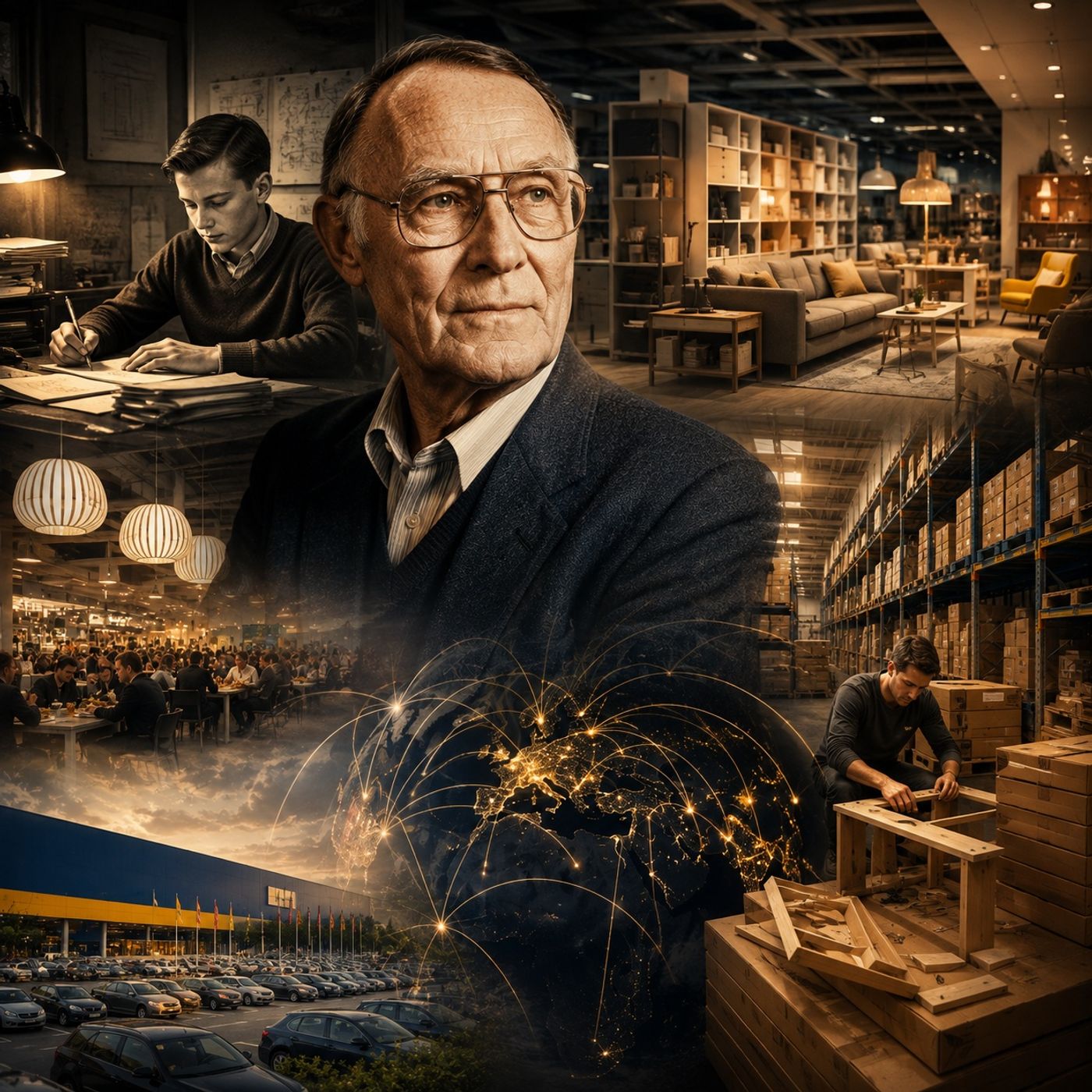 The Architect of IKEA: Genius, Shadows, and Strategy 15.09.2026 23minThe story of IKEA is an extraordinary journey from a small mail-order business to one of the world’s most recognizable furniture empires. Founded by Ingvar Kamprad, the company grew from his early entrepreneurial ambitions into a global retail revolution built around affordability, efficiency, and unconventional thinking.IKEA transformed the furniture industry through innovations such as flat-pack design, allowing products to be transported and stored more cheaply while shifting part of the assembly process to customers. Its carefully engineered store layouts encouraged shoppers to explore entire showrooms, while the addition of in-store restaurants became an unexpected but highly effective part of the customer experience.Behind the success, however, lies a more complicated history. Kamprad’s past associations with Nazi movements have remained a major controversy, while IKEA’s sophisticated corporate structure and international tax strategies have also attracted criticism.Despite these controversies, IKEA’s rise demonstrates the power of extreme efficiency, persistence, and unconventional retail strategy. By fundamentally changing how furniture is designed, transported, displayed, and purchased, IKEA turned a simple idea into a global business phenomenon.
 -
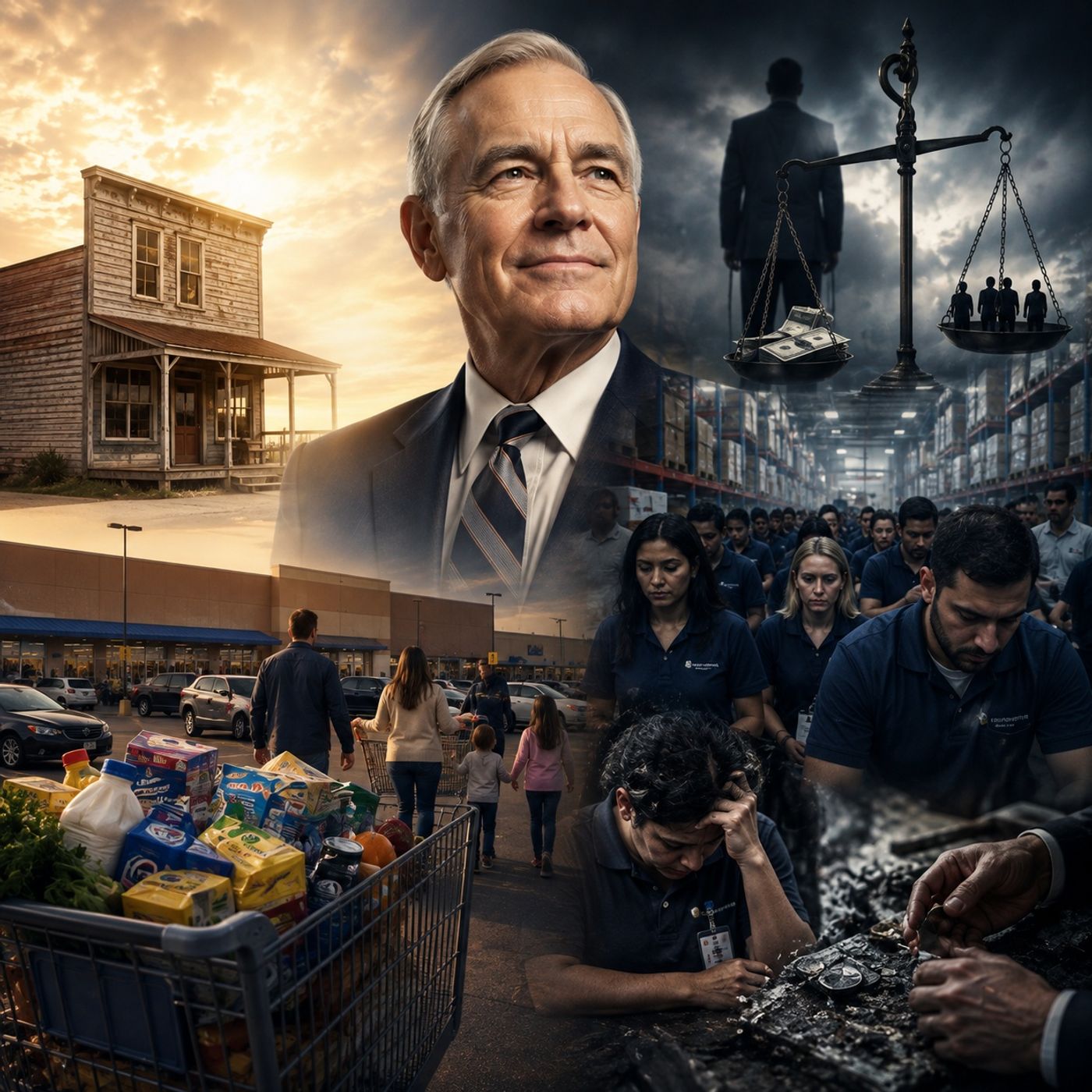 The High Cost of Low Price: The Walmart Story 14.09.2026 25minThe story of Walmart traces the extraordinary rise of Sam Walton, from an impoverished childhood during the Great Depression to building one of the largest retail empires in history. His early experiences with financial hardship profoundly shaped his business philosophy: keep prices as low as possible, sell enormous volumes, and relentlessly eliminate unnecessary costs.Walton’s strategy proved incredibly powerful. By combining aggressive cost-cutting, massive scale, and low consumer prices, Walmart expanded rapidly from small-town stores into a global retail powerhouse, fundamentally changing the way millions of people shop.But Walmart’s success also came with a controversial side. The company has faced allegations of predatory pricing, aggressive anti-union practices, poor labor conditions, and international bribery scandals, raising questions about the human and social costs of its relentless pursuit of market dominance.Walmart’s story ultimately represents a complicated duality: a company whose efficiency and low prices transformed global retail, while its aggressive business practices generated decades of ethical and social controversy.
 -
 YouTube Is A Game, These Are The Cheat Codes 13.09.2026 21minYouTube can be viewed as a massively multiplayer online game, where creators gradually level up by mastering the skills required to attract and retain an audience. Instead of treating the platform as a simple place to upload videos, successful creators learn to understand the algorithm by understanding human psychology—what makes people click, watch, and come back.A major part of this process is using a content scorecard to evaluate elements such as titles, thumbnails, storytelling, and overall viewer appeal. The goal is to create “purple cow” content—videos that offer something distinctive enough to stand out in an increasingly crowded marketplace.Rather than chasing short-term viral success, the strategy emphasizes building a long-term library of evergreen videos that can continue generating views and revenue over time. As the channel grows, creators can scale by developing systems and eventually building a professional team.Ultimately, the biggest mindset shift is to stop thinking of YouTube as a hobby and start treating it as a strategic media business. With the right content, systems, and long-term approach, a channel can become a valuable digital asset capable of creating both financial freedom and professional opportunities.
 -
 The Dark Truth About PayPal 12.09.2026 24minThe story of PayPal is one of the most turbulent success stories in Silicon Valley, beginning with the unlikely rivalry between Peter Thiel’s Confinity and Elon Musk’s X.com in 1999. Both companies recognized the potential of email-based payments, eventually merging to create a business that would transform online commerce.But the merger was anything but peaceful. Internal disagreements over strategy, technology, and leadership eventually erupted into a fierce power struggle, culminating in a corporate coup that removed Musk as CEO. Despite the chaos, PayPal survived intense competition with eBay and rapidly became one of the most important payment platforms on the internet.In 2002, eBay acquired PayPal for $1.5 billion, cementing the company’s extraordinary financial success. Yet PayPal’s influence extended far beyond the acquisition. Many early employees went on to create or lead major technology companies, forming what became known as the “PayPal Mafia” and helping shape the next generation of Silicon Valley.However, PayPal’s modern reputation is far more complicated. Long-time users have criticized the company over high fees, frozen accounts, customer-service disputes, and various controversies.Ultimately, PayPal’s story is a combination of ruthless competition, internal power struggles, extraordinary entrepreneurial talent, and lasting technological influence—a company born from chaos that helped redefine how the world moves money online.
 -
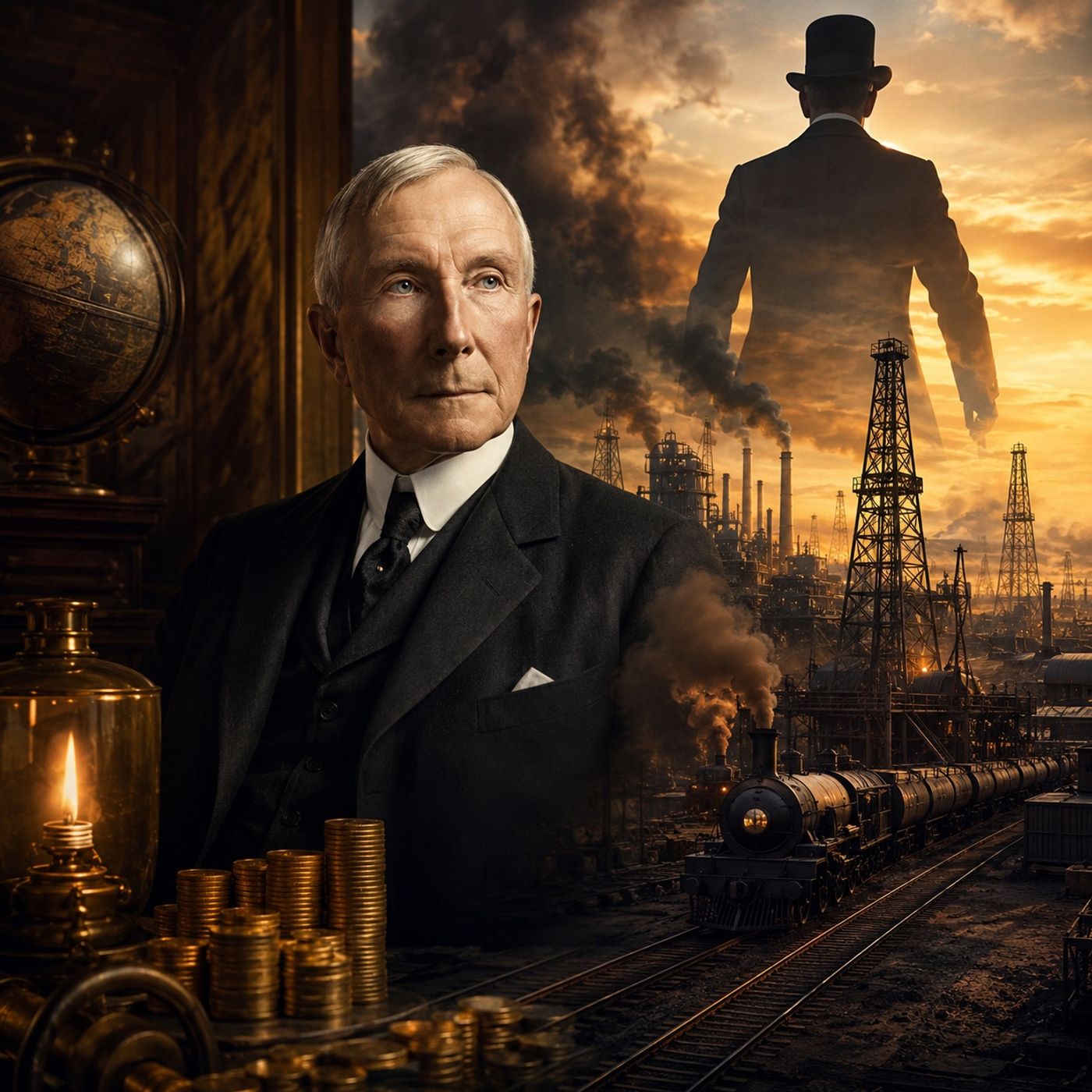 Rockefeller: The World’s First Billionaire 11.09.2026 14minThe story of John D. Rockefeller is one of the most extraordinary and controversial transformations in business history. Born into poverty with a father who frequently deceived others, Rockefeller developed an extraordinary level of discipline, financial focus, and ambition, eventually becoming the world’s first billionaire.His greatest achievement was Standard Oil, which grew into a dominant force in the American oil industry. Rockefeller used aggressive strategies such as secret railroad rebates, ruthless price competition, and vertical integration to control nearly every stage of the oil business, from production and transportation to refining and distribution.His enormous power attracted fierce criticism and intense competition, including his rivalry with Andrew Carnegie. Eventually, the U.S. government pursued a landmark antitrust case that forced Standard Oil to break apart into dozens of independent companies.Ironically, the breakup did not destroy Rockefeller’s fortune. The newly separated companies became extremely valuable, and his personal wealth ultimately increased dramatically. With his business empire behind him, Rockefeller devoted much of his later life to philanthropy, funding education, medicine, scientific research, and establishing institutions such as the Rockefeller Foundation.His legacy remains deeply complicated: a man whose extraordinary ambition and ruthless pursuit of power helped create one of history’s greatest fortunes, yet who later used that fortune to leave behind a vast and lasting philanthropic legacy.
 -
 The Digital Front Page: The Scandalous History of Reddit 10.09.2026 25minThe story of Reddit is the unlikely rise of a failed startup idea into what became known as the “front page of the internet.” Founded by college friends Alexis Ohanian and Steve Huffman, Reddit began as a simple link-sharing platform after their original mobile food app failed to gain traction.As the platform expanded, its defining feature became its decentralized community structure. The creation of subreddits allowed users to build their own communities around virtually any subject, while thousands of unpaid moderators kept these communities organized. This gave Reddit an enormous amount of user-driven content and created a powerful culture that could also be fiercely resistant to corporate control.Reddit’s history has been filled with controversy, leadership struggles, and tragedy, including the story of early contributor Aaron Swartz. The platform has also found itself at the center of major real-world events, from the Boston Marathon bombing investigation to the extraordinary GameStop short squeeze.Its community-driven nature has repeatedly created conflicts with the company itself. One of the most dramatic examples came when proposed API pricing changes triggered massive user protests and widespread subreddit blackouts.Reddit ultimately represents a unique contradiction: its community is its greatest asset, generating the content and culture that make the platform valuable, but that same community can become its greatest challenge when corporate decisions clash with the values and expectations of its users.
 -
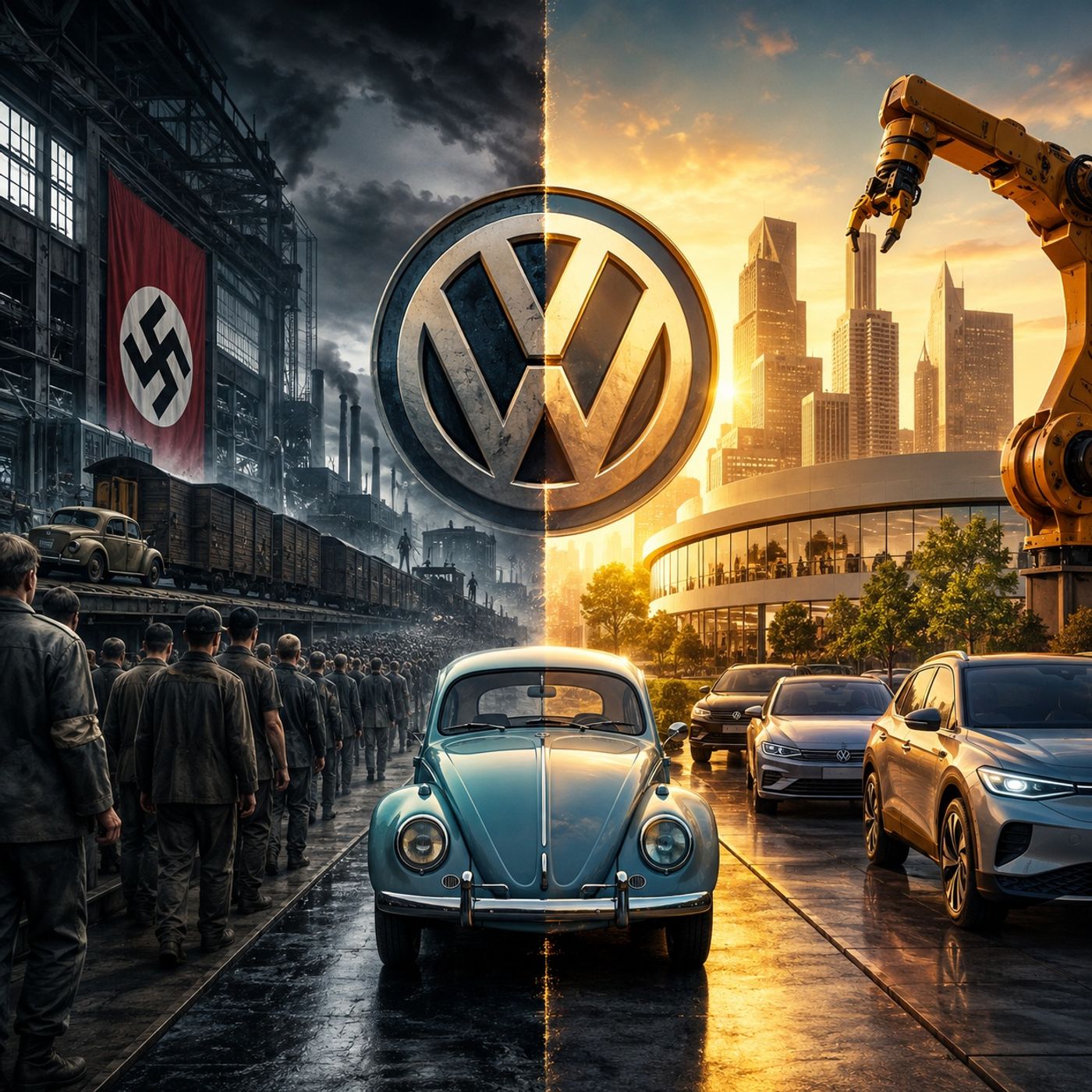 The Evil Crimes of Volkswagen 09.09.2026 22minThe story of Volkswagen is one of the most complicated transformations in modern corporate history, beginning with its origins in Nazi Germany as a state-backed project designed to create an affordable “people’s car.”During World War II, Volkswagen entered one of the darkest chapters of its history. The company relied heavily on forced labor, while conditions at its facilities became so horrific that hundreds of infants died from neglect and inadequate care. After the war, Volkswagen narrowly avoided destruction when a British officer recognized the potential of the factory and helped keep it operating, setting the stage for its remarkable transformation.The Volkswagen Beetle eventually became an international symbol of affordable transportation, helping turn the company from a product of wartime Germany into a symbol of post-war economic recovery and global manufacturing.Decades later, Volkswagen became involved in another extraordinary corporate battle when Porsche attempted to take control of the much larger company. The strategy ultimately backfired, with Volkswagen gaining control of Porsche instead and expanding its already enormous automotive empire.Then came “Dieselgate,” one of the largest corporate scandals in the automotive industry. Volkswagen was exposed for deliberately using software designed to manipulate emissions tests, allowing vehicles to appear significantly cleaner during testing than they were under normal driving conditions.Despite its deeply controversial history, Volkswagen survived war, corporate power struggles, enormous legal consequences, and major reputational crises. Today, the group remains one of the largest and most influential forces in the global automotive industry, making its history a striking example of how corporate power can survive—and repeatedly reinvent itself—despite extraordinary controversy.
 -
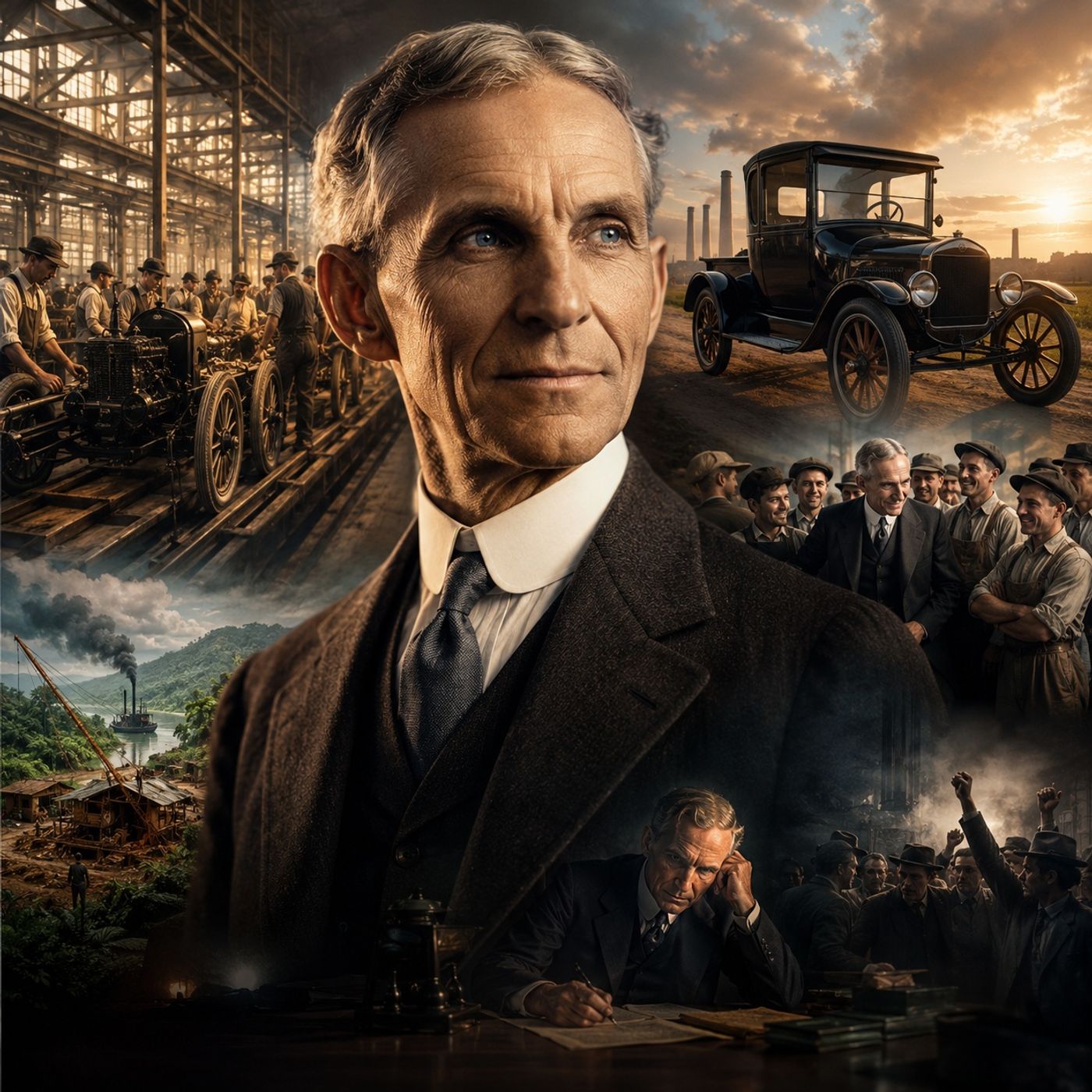 Henry Ford: The Architect of Modern Industry 08.09.2026 23minThe story of Henry Ford is the complex journey of a farm boy with an obsession for machinery who transformed himself into one of the most influential industrialists in history. His vision went far beyond building automobiles—he sought to completely reinvent how products were manufactured and make them affordable to ordinary people.Ford revolutionized industry through the introduction of the moving assembly line, dramatically reducing production time and costs. He also introduced the famous five-day workweek and higher wages, helping reshape modern industrial labor while making factory work more attractive and efficient.But Ford’s career was filled with major failures and controversy. His ambitious Fordlandia project in the Amazon became a disastrous experiment, while his aggressive opposition to labor unions created intense conflict with workers.The darkest part of Ford’s legacy was his virulent anti-Semitism and his publication of material promoting antisemitic conspiracy theories. His ideas and writings gained international attention and were later associated with the ideological environment surrounding Nazi Germany, severely damaging his historical reputation.Henry Ford ultimately remains a deeply contradictory figure: a brilliant industrial innovator who transformed manufacturing and transportation, but also a man whose prejudices, political influence, and personal failures created a lasting shadow over his extraordinary achievements.
 -
 How Zoom REALLY Took Over The World 07.09.2026 24minThe story of Zoom is an inspiring journey of persistence, innovation, and the power of solving a simple but universal problem. Founded by Eric Yuan, the company grew from his childhood dream of making long-distance communication easier into a global technology powerhouse.Yuan’s determination was shaped by personal experiences and later by his frustration with corporate management at WebEx. Despite facing eight visa rejections and widespread skepticism from investors who believed the video-conferencing market was already dominated by giants such as Skype and Microsoft, Yuan refused to give up.Instead of trying to overwhelm competitors with complexity, Zoom focused on simplicity, reliability, and customer satisfaction. That philosophy allowed the platform to gain a loyal user base and eventually become a household name during the global pandemic, when millions of people suddenly depended on video communication for work, education, and personal connections.The explosive growth also brought serious challenges, including security and privacy concerns and increasingly intense competition from companies such as Google. Yet Zoom’s rise demonstrates how persistence and a relentless focus on the user can allow a newcomer to challenge much larger competitors.Ultimately, Eric Yuan’s story is a powerful example of entrepreneurial perseverance—showing that identifying a real problem and obsessing over solving it well can sometimes matter more than having the biggest company or the most established technology.
 -
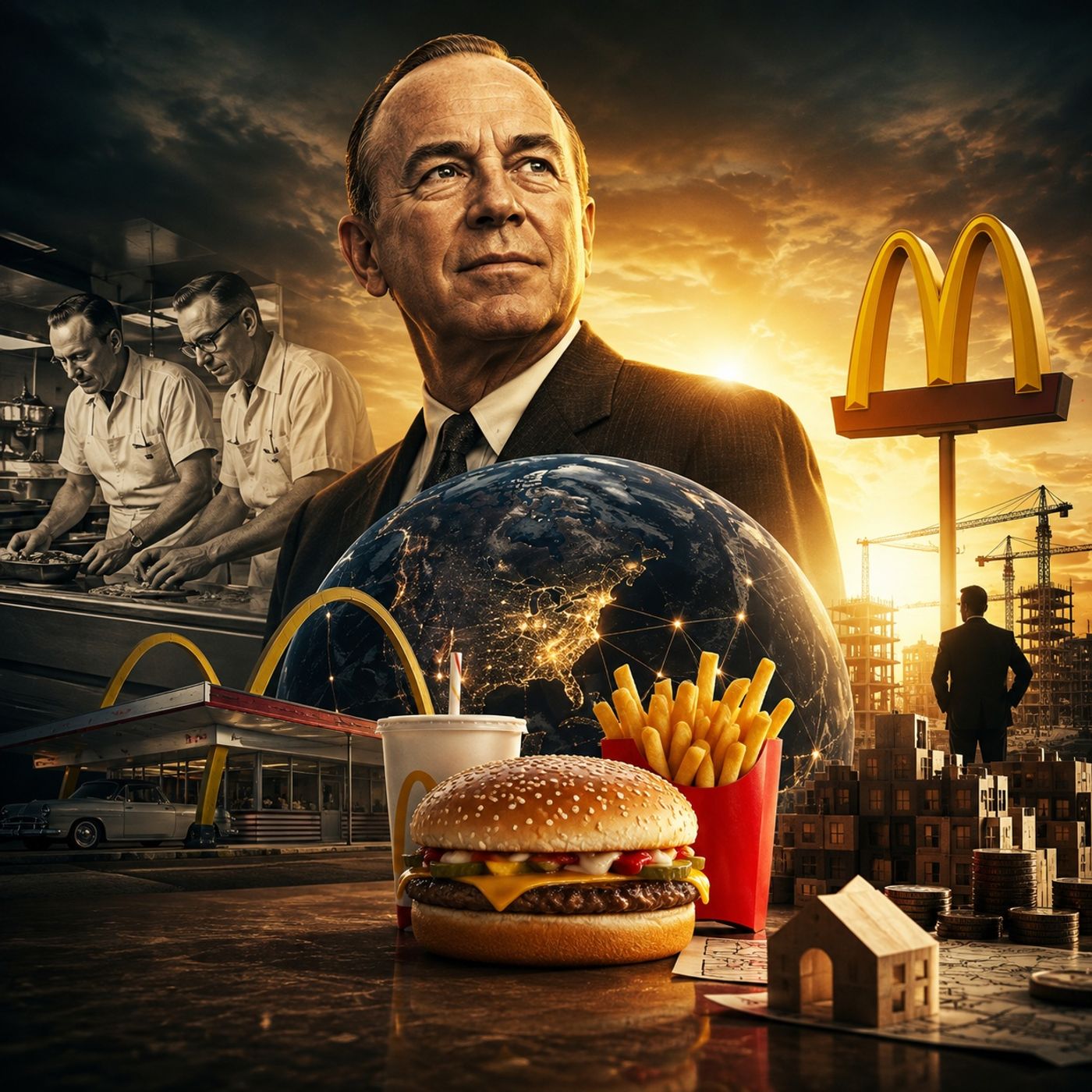 The Real Estate Empire Behind McDonald's 06.09.2026 22minThe story of McDonald’s is the extraordinary transformation of a small drive-in restaurant into one of the most powerful global business empires. The McDonald brothers pioneered the revolutionary Speedy Service System, streamlining food preparation to deliver meals faster, more consistently, and at lower prices.But it was Ray Kroc who recognized the enormous potential of their concept and transformed it through an aggressive franchising strategy. His greatest innovation was not simply selling burgers—it was building a business model centered around franchising and real estate, allowing McDonald’s to expand rapidly while creating a powerful and highly scalable revenue structure.The rise of the empire also came with ruthless business decisions. Kroc eventually gained control of the company, leaving the original McDonald brothers behind despite their foundational role in creating the system.Over the decades, McDonald’s faced numerous controversies, including the infamous Monopoly fraud scandal, which involved a criminal network exploiting the promotional game. The company has also faced persistent criticism over its influence on global eating habits and public health.Ultimately, McDonald’s became far more than a fast-food chain. Its true power lies in the combination of standardized operations, aggressive franchising, real estate, and world-class marketing, turning a simple restaurant concept into a global commercial powerhouse.
 -
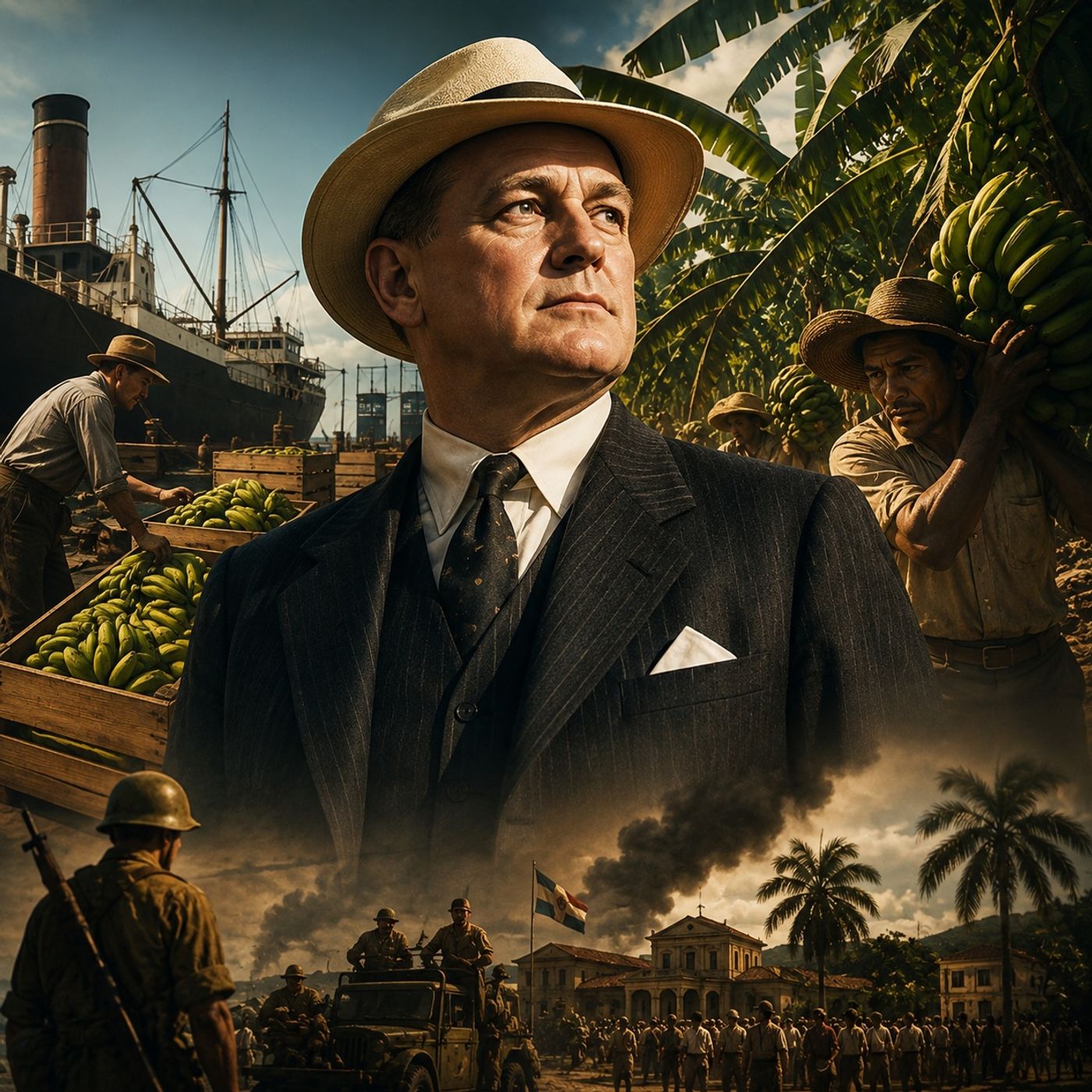 The Banana Billionaire: The INSANE True Story 05.09.2026 22minThe story of Sam Zemurray, famously known as the “Banana King,” is a remarkable rise from poverty to immense wealth and influence. Arriving as an impoverished immigrant, Zemurray built his fortune by spotting an opportunity that larger companies overlooked: selling discarded ripe bananas that were considered too undesirable for the established market.Rather than simply running a trading business, Zemurray immersed himself in the industry from the ground up. He acquired land in Honduras, worked alongside local laborers, and learned every stage of the banana supply chain, giving him an intimate understanding of how the business actually operated.His rise was fueled by extraordinary risk-taking and relentless ambition. Zemurray took on expensive loans, expanded aggressively, and used political influence—including bribery—to challenge the far more powerful United Fruit Company.But his story eventually takes a much darker turn. The same determination that helped him build an enormous business empire became intertwined with political manipulation, government overthrows, and violent corporate struggles in Central America.Sam Zemurray’s life ultimately illustrates the complicated reality behind many great business fortunes: vision, courage, and relentless ambition can create extraordinary success, but unchecked power can also produce devastating consequences far beyond the business itself.
Podcasts similaires


Populaire dans
Ce podcast figure aussi dans les classements de podcasts de ces pays.
