
Keen On America
Andrew Keen
0
Andrew Keen hosts a daily interview podcast where he cross-examines the world's smartest people on politics, economics, history, the environment, and tech. Named one of the '100 most connected men' by GQ, Keen is also the author of four books including the international bestseller 'Cult of the Amateur'. The show aims to help listeners make sense of our complex world through sharp and impertinent questions.
Epizódok
-
 How to Survive Authoritarianism: Dan Storyev on a Russian Phrasebook for America 03.10.2026 47p“The United States is speed running into a more authoritarian model that the Russians have been living in for quite some time now.” — Dan Storyev How to survive authoritarianism in the United States? Maybe we can learn from the Russians. At least according to the Russian-American Dan Storyev, co-author (with Maria Kuznetsova) of How to Survive Authoritarianism, a phrasebook which provides a hundred Russian words for the nasty political things Americans can see but can’t yet name. Storyev’s premise is that America hasn’t got the vocabulary to describe its current predicament. The country has never lived under a dictatorship, he explains, so the language simply isn’t there. Russian history, on the other hand, is defined mostly by dictatorship. Storyev experienced Putin’s post-Soviet authoritarianism, his parents Brezhnev’s stagnation, their parents Stalinist totalitarianism, their ancestors one brutal czar or another. So the Russian language shaped itself accordingly, words becoming a way to both describe and resist the authoritarian reality of their lives. Storyev provides us with phrases like “power vertical,” a chilling Kremlin euphemism for a country where a single desk decides everything (ie: the aspiration of the current White House). Then there’s the Russian word “byudzhetniki,” meaning the budget people, whose salaries come from the state and who are therefore expected to loyally show up at the rally and at the ballot box (ie: everyone who benefits from Trump’s $5,000 handout). And the “siloviki,” the men of force (ie: ICE agents). Best of all, “mnogohodovochka,” the multistep stratagem — Moscow’s way of explaining a catastrophe as a plan too clever for ordinary mortals to follow. Which is an unpronounceable way to understand everything from Elon Musk’s ridiculous DOGE debacle to Trump’s absurd war in Iran. Further Reading: • How to Survive Authoritarianism: A Russian’s Phrasebook for Everyday Life in America by Maria Kuznetsova and Dan Storyev (Liveright, 2026) — a hundred Russian idioms, from apparatchik to samizdat.• “Here’s What’s Happening in America, in Six (Mostly) Russian Terms” — the authors’ 2025 New York Times guest essay, and the seed of the book.• “Protests Are Not Emotional Support Groups” — their Persuasion argument about why the No Kings demonstrations failed, raised in this conversation.• OVD-Info — the Russian human rights watchdog whose English newsletter Storyev writes.• Earlier on Keen On: Gal Beckerman on how to be a dissident, Keri Leigh Merritt on Lillian Smith and Jacob Weisberg on cowardice in the MAGA age — all raised here. Five Takeaways • A Phrasebook, Not a Prophecy. Storyev is careful about the claim he is making. The United States is not an authoritarian country, and he says so repeatedly. What exists is a looming threat, and a faction within the ruling class that would plainly like the country to become one. The trouble, in his account, is linguistic. Americans have never lived under a dictatorship, so they have no words for its early symptoms, while Russian is saturated with them. AK’s immediate objection was a good one: millions of Americans have lived under an authoritarianism of their own, whether under Jim Crow or during the McCarthy years, and surely they know the signs. Storyev conceded the point readily, observing that those communities developed a private vocabulary for the agents of the state which never reached the mainstream. His own formulation of the difference is the one that sticks. Russia has spent three centuries learning these models of government. America is speed running them.• Aesopian Language. The device at the heart of the book is an old one, invented by satirists under the czars and perfected in the Soviet Union: a way of attacking the state that everybody understands and no prosecutor can use. Storyev’s favourite example is mnogohodovochka, the multistep stratagem, which Russians now deploy sarcastically to describe the Kremlin’s habit of presenting every disaster as a master plan too subtle for ordinary minds to follow. The American equivalent arrived when the White House press secretary explained that journalists would understand the president’s thinking if only they had read more of The Art of the Deal. Among the young, Storyev argues, the same instinct now appears as irony poisoning: everything becomes a joke about itself, partly because jokes are harder to punish. AK brought in Lea Ypi on growing up in Hoxha’s Albania, where families spoke in opposites, and the artistic lineage that runs from Havel to Shostakovich to Tarkovsky. Resistance begins, Storyev says, in private language: first in your own head, then among friends, then with strangers. That is how movements start.• Breaking the Law. The one moment in the hour when Storyev abandoned his hedges. American liberals, he argues, are still debating whether what the administration does is legal, and have not yet absorbed the central fact about autocrats, which is that they write the laws themselves. At some point, therefore, resistance will mean breaking them. AK pushed back hard, and on two grounds: Trump was elected and can be unelected, and once lawbreaking is licensed so, eventually, is violence. Storyev clarified rather than retreated. He is not calling for a civil war; he is calling for an end to normalization. His article with Kuznetsova argued that the No Kings protests achieved nothing because protests are not emotional support groups. He points to Steve Bannon’s own formulation — we win or we go to prison — as evidence that at least one side has stopped thinking in electoral terms, and to the unitary executive theory as the blueprint for what Russians call the power vertical. He offers no solution and says so plainly. What he offers is a vocabulary.• The Words Themselves. Power vertical entered Russian in the late nineties, sold as a promise of order after the gangster decade, and came to mean that in the largest country on earth every decision is taken at one desk. The byudzhetniki, literally the budget people, are the teachers, doctors and students whose salaries come from the state and who are therefore expected at the rally and at the ballot box; Storyev’s American instances are the promised $5,000 payment should the Republicans hold the midterms, and Musk’s money in the Wisconsin judicial election. The siloviki are the men of force, whose ancestors are Ivan the Terrible’s oprichniki, riding into towns on black horses with severed dogs’ heads at the saddle; his parallel is the recruitment of ICE, which AK was unw...
 -
 An Inconvenient Woman: Keri Leigh Merritt on Lillian Smith, the Southerner Who Defied Jim Crow America 02.10.2026 31p“She is absolutely a Cassandra. She is unafraid to tell the stark naked truth, no matter how ugly it is.” — Keri Leigh Merritt In April, Gal Beckerman came on the show to identify the ten qualities of being a dissident. They included pessimism, humour and recklessness. But he left one out: inconvenience. Dissidents are profoundly inconvenient people — to the government, to society, sometimes even to themselves. Take, for example, Lillian Smith, author of the bestselling (and banned) 1944 Strange Fruit, a novel about interracial love. Born into a white Florida family at the turn of the century, Smith dissented against Jim Crow. She was, indeed, An Inconvenient Woman, the title of a new biography about her by today’s guest Keri Leigh Merritt. So why, I asked Merritt, isn’t Lillian Smith better known? Part of the answer is bound up in Smith’s own uncomfortable critique of white supremacy. She insisted that Jim Crow damaged white people, that its shame and guilt did immense psychological injury to its supposed beneficiaries. So this inconvenient woman pushed better known white southern liberals like Ralph McGill or Hodding Carter leftwards, calling them out for refusing to support integration long after the Brown decision. Smith had quite a life. She lived openly with her partner Paula Snelling in Clayton, Georgia, ran a girls’ camp for twenty-five years, wrote many books (including what Merritt calls her masterpiece, Killers of the Dream in 1949) and was the first white magazine editor in the South to publish Black writers like Pauli Murray. Her FBI file ran to 143 pages, making her a particular inconvenience to J. Edgar Hoover and his goons. Most of all, she stayed in rural Georgia. She could have escaped to Greenwich Village or Berkeley like other misfits. Instead she remained a perpetual thorn in the southern conscience. Her brother, who ran the county, had kept her safe until he left office in 1955. After that, one fire burned down her library, destroying decades of correspondence, research and manuscripts with it. And still she stayed. In today’s America, Keri Leigh Merritt concludes, this inconvenient woman offers us a timely reminder of what it takes to be a dissident. Further Reading: • An Inconvenient Woman: The Extraordinary Life of Lillian Smith, the Southerner Who Defied Jim Crow America by Keri Leigh Merritt (St. Martin’s Press, September 29, 2026), with a foreword by the Rev. Dr. William Barber II.• Strange Fruit (1944) and Killers of the Dream (1949) by Lillian Smith — the novel that made her famous, and the book Merritt rates highest. Both still in print from the University of Georgia Press, which also publishes A Lillian Smith Reader.• Masterless Men: Poor Whites and Slavery in the Antebellum South (Cambridge University Press, 2017) — Merritt’s first book, winner of the Bennett Wall Award and the President’s Book Award.• Pseudopodia, later The North Georgia Review and finally South Today — the magazine Smith and Paula Snelling ran, and the first white Southern magazine to publish Black writers. Every issue is online through Piedmont University Library.• Earlier on Keen On: Andrew Curran on how the Enlightenment invented race, and Dennis Rasmussen on Frederick Douglass — both raised in this conversation. Five Takeaways • The Bestseller Nobody Remembers. Lillian Smith may be the most successful American author of the twentieth century you have never heard of. Strange Fruit appeared in 1944, told the story of a love affair between a white man and a Black woman, ended in a lynching, sold in the millions, was translated into some thirty languages and became a Broadway play. It was also banned — in Boston, in Detroit, informally by booksellers across the country who simply declined to stock it, and formally in the US mail until Smith asked Eleanor Roosevelt to intervene and Roosevelt got the president to lift it. Merritt’s explanation for the forgetting has three parts. Smith argued that white supremacy psychologically damaged white people, which is not a comfortable thesis for anyone. She refused to spare white liberals, pushing Ralph McGill and Hodding Carter leftwards all her life and naming them for failing to back integration long after Brown. And she was a woman living openly with another woman, which did the rest.• How She Was Made. Two episodes from childhood, both in the book. Her father Calvin, a devout Methodist who had married into money and lost it when the First World War ruined his turpentine business, once invited an entire chain gang to Christmas dinner — not the guards, the prisoners, murderers and rapists among them — and the Smith children cooked for days. Then there was Julie. A Black family moved to Jasper, Florida, and the town’s white women noticed that one of the children looked white; the girl was removed from her home and placed with the Smiths. Lillian shared a room with her and came to love her as a sister. One day Julie was gone, returned to her own family, because Julie was Black. What that taught Lillian, Merritt says, is that race had no bearing on what a person was. And the culture she grew up in was absolute: the first time Smith ate a meal at a table with Black people she went outside and vomited — not from disgust but from terror at the scale of the taboo she had broken.• She Stayed. The decision that makes her remarkable. She could have left for Greenwich Village, as the South’s misfits generally did. Instead she stayed in Clayton, in the north-eastern corner of Georgia, in country that was supposed to be the most hostile place imaginable — and built, in that very rural place, something like a gay and lesbian community around her. Her brother Frank effectively ran the county and kept her and Paula safe while he held office; when he left in 1955 the retaliation began. A fire destroyed her library: decades of correspondence, research and manuscripts, gone. More followed, one set at eight separate points of her house on Old Screamer Mountain. She stayed anyway, partly because she loved it and partly because the sadness of the place was, she thought, artistically generative. And she did not believe laws alone could end racism: art — writing, music, painting — was what changed hearts.• The Network. Smith was not isolated, and the list of her friends is startling. W. E. B. Du Bois from the 1930s. Pauli Murray, whose first paycheck ca...
 -
 Biography of a Dangerous Idea: Andrew Curran on How the Enlightenment Invented Race 01.10.2026 57p“The Enlightenment may have produced race, but it also produced what we might call anti-racism.” — Andrew Curran Most of us imagine the eighteenth century Enlightenment positively. As the victory of reason, science and individual rights over superstition and intolerance. But Andrew Curran, who has spent his career interpreting the Enlightenment, has a more nuanced view. Indeed, his new book, Biography of a Dangerous Idea: A New History of Race from Louis XIV to Thomas Jefferson, suggests that the age of reason was also what he calls the first “anthropological century.” Which meant that in sorting humankind into fixed biological categories for the first time in history, the Enlightenment invented the dangerous idea of “race.” Before the eighteenth century, Curran says, Europeans spoke of nations and peoples using the botanical metaphor of varieties. Variety implies hybridization. Let a thousand flowers bloom. Race, in contrast, separates species into fixed categories. As biblical authority weakened, the European mind was freed to play new tricks. To classify people by skin samples and anatomical designs. Thus the “dangerous idea” of race embraced by every Enlightenment philosopher, from the tyrannical Catherine the Great to the slave owning Thomas Jefferson. With “enlightened” friends like these, who needs enemies? Further Reading: • Biography of a Dangerous Idea: A New History of Race from Louis XIV to Thomas Jefferson by Andrew S. Curran (Other Press, 2026) — a group biography of thirteen figures, among them Louis XIV, Buffon, Linnaeus, Voltaire, Hume, Adam Smith, Blumenbach, Kant and Jefferson.• Who’s Black and Why? A Hidden Chapter from the Eighteenth-Century Invention of Race, edited with Henry Louis Gates Jr. — the 1739 Bordeaux essay contest on the source of Black skin. Nominated for an NAACP Image Award.• Diderot and the Art of Thinking Freely and The Anatomy of Blackness — his earlier books, the first a prize-winning biography, the second a traditional intellectual history.• Earlier this month on Keen On: Dennis Rasmussen on Frederick Douglass — Curran’s co-author on a forthcoming book, Good Beyond Belief, about the eighteenth-century atheists who argued one could be good without God. Five Takeaways • Before Race. Curran resists the current rush to find race everywhere in the past. Xenophobia is ancient — humanity ends at the frontiers of one’s own tribe, as Lévi-Strauss put it — and the dehumanization of Jews, Muslims, Roma and West Africans was enormous. But the specifically biological version, in which your physical makeup makes you inferior, doesn’t take off until the eighteenth century, and you can watch it happen in the vocabulary. People spoke of nations, peoples and varieties; Buffon and Linnaeus both used variety, a botanical metaphor implying hybridization and continuity within a category. Race implies fixity and standalone categories; species implies no biological link at all. All three were in circulation, and the shift between them is the story. Context mattered too: in Nantes or Liverpool you would hear proto-racist talk from returning slave traders, while in central France you would hear something else entirely, in a society where literacy ran at perhaps fifteen per cent.• The First Anthropological Century. The Enlightenment’s great virtue, in his account, is universalism — all men are created equal, a universal human condition, inalienable rights. Its blind spot is the question mark that follows: are they? The same century that put the human at the centre of knowledge also became the first anthropological one, and the new science qualified the universalism in a dozen ways — anatomical discoveries, skin samples, treatises on physiological difference, proto-evolutionary ideas about peoples degenerating over time, and the conviction that commercial European society sat at the pinnacle. The classification schemes arrive in bursts rather than steadily: François Bernier in 1684, anecdotal and chatty; Linnaeus from Uppsala in 1735; then an explosion by 1775, when ten or fifteen appear at once. Christianity’s loosening grip is what made the room: monogenesis — Noah’s sons setting out from the Caucasus, the origin of the word Caucasian — had kept all humans related, and the pre-Adamite heresy that Native Americans were a separate creation was dangerous precisely because it broke that.• Writing on Paper, Writing on Skin. Catherine the Great’s line to Diderot, who had arrived in Russia with elaborate plans for democratizing it: Diderot, Diderot, Diderot — you write on paper, and I write on skin. Curran uses it to divide his cast. Buffon, Linnaeus, Kant in Königsberg and Blumenbach wrote on paper, in abstractions. Louis XIV wrote on skin: in 1685 he became the most famous monarch to sign a slave code, France’s Code Noir, which gave slavery legal status and converted enslaved Africans into property — moving the word nègre from an ethnographic term towards a political status, not yet race but close. Exactly a century later, Jefferson wrote on skin in Notes on the State of Virginia. The justification had changed completely in between: the devout Louis told himself the enslaved lost their freedom but gained eternal salvation, while the anticlerical deist Jefferson had no such illusions, and had instead absorbed the European theories of inferiority.• Jefferson’s Bookshelf. The chapter Curran says frightened him most to write, as a historian of Europe stepping into an American industry of ideological combat. What stunned him was the library: Jefferson owned not only the first-tier race-makers but the second, third and fourth tier — Kant, Hume, the naturalists, the classifiers, all of them. He was, Curran says, the American who synthesized European racial thought better and more thoroughly than anyone else in the eighteenth century. In Paris in the 1780s, while drafting the Declaration of the Rights of Man with Lafayette in his own townhouse, he was invited to join the Société des Amis des Noirs, which existed to refute exactly the ideas being used to justify slavery. He declined. He replied courteously to the Black astronomer Benjamin Banneker — rare in itself — saying it would be wonderful if what Banneker claimed about Black people were true. Publicly cautious, privately convinced of intrinsic inferiority. And this is why the everyone-was-like-that defence fails: the Enlightenment produced race, and it produced the anti-racists who fought it.• Why It Exploded in the 1770s. The sharpest corrective in the hour. For most of the period these were the ideas of a tiny elite — perhaps a few hundred gentlemen writing from scientific academies and châteaux. What turned a private conversation into an ideology was the abolitionist movement. As ...
 -
 Artificial Intimacy: Sherry Turkle on Who We Become When We Talk to Machines 30.09.2026 57p“The original sin of generative AI is having chatbots speak in the first person.” — Sherry Turkle Fifteen years ago, at the height of the social media boom, the MIT technology scholar Sherry Turkle came on the show to warn that we were now “alone together.” She was, of course, chillingly prescient. A decade and a half later, she warns in her new book Artificial Intimacy that if social media came for our attention, AI is now gunning for our human capacity for attachment. Who — or, more chillingly, what — do we become when we talk to machines? Turkle never quite says, but the implication is of a kind of Night of the Living Dead state in which we appear fluent and animated, performing the outward motions of intimacy, but there’s nobody really home. Which is exactly what Turkle says the chatbot is. A machine trying, without much success, to be human. A chatbot has no stake in the real, Turkle explains. It can’t love, for example, because that kind of empathy requires us to be enclosed in a body and have a fear of death. The increasing ubiquity of bots mimicking humans represents an emergency for humans, she warns. It explains both our epidemic of loneliness and today’s culture of apocalyptic fear about the future of our species. Just as artificial intimacy is a misnomer, so it turns us into impossible creatures. Like those unicorns beloved by the very Silicon Valley entrepreneurs who are supplying us with these artificial creatures. Further Reading: • Artificial Intimacy: Who We Become When We Talk to Machines by Sherry Turkle (Little, Brown Spark, September 29, 2026), with blurbs from Jonathan Haidt and Jonathan Franzen.• Turkle appears on Keen On in 2011 to talk about being alone together.• Alone Together (2011), Reclaiming Conversation (2015) and The Empathy Diaries (2021) — the earlier books, all discussed on this show.• Turkle’s recent Boston Globe op-ed arguing that AI has brought us to a state of emergency.• Simulation and Its Discontents (2009) — her earlier study of what simulation does to how we think, the title borrowed from Freud.• Earlier this week on Keen On: Richard Socher on why AI will unlock a new scientific renaissance, and the weekly editorial on who really governs AI — the optimists’ side of this argument. Five Takeaways • Simulated Love Is Never Love. Turkle’s definition of the real thing: natural intimacy depends on human empathy, which requires someone who has lived a life, lived in a body, known pain and the fear of death, known passion and connection, and knows what it is to be little and grow up. A program has none of that, and no stake in the real. Her line, which she credits to children she interviewed years ago, does the work of a chapter: simulated thinking is thinking — if a computer beats you at chess, it beat you — but simulated love is never love. She goes further on the vocabulary: there is no relationship with a chatbot, and shame on her for having used the word. What there is instead is us projecting onto the machine what we wish it could be. She compares it to what psychoanalysis calls an as-if personality, someone who performs connection while empty inside — with one crucial difference. A person can be called to account and can change. A machine never can, and the better it gets at pretending, the worse it is for us. AK’s reading of what she leaves unsaid: a kind of Night of the Living Dead state in which we appear fluent and animated, performing the outward motions of intimacy, with nobody really home.• The Original Sin. The specific error, in her account, was letting these systems speak as “I” and “we.” We are evolutionarily primed so that the only voice ever to say “I” to us is another person, so the pronoun triggers us profoundly — and a companion app will happily say I love you, I care about you, we should go to the movies. Layer on the belief that pretend empathy is empathy enough, then aim the whole thing at children, and you have what she calls a state of emergency. Her sharpest example is what she describes as an unholy alliance between Disney, OpenAI and Mattel to put chatbots inside plush toys: a Mickey Mouse that tells a three-year-old I love you, I’m your person, what’s going on with your parents? That, she says, is hacking the attachment system of a young child, and it will do irreparable damage, because in the earliest years you are forming an object relationship with something where nobody is there.• Obsequious on a Slider. AK’s challenge: the sycophancy complaint is overdone, because you can program these things however you like — he instructs Claude to be as heartless and critical as possible. Turkle’s reply is the best moment of the hour. Telling a chatbot not to be obsequious is itself obsequiousness: you say don’t flatter me, and it says sure, I won’t. If AK asked her to spend an interview disagreeing with him because it makes better television, she would refuse — that is a person responding with her own agenda and her own values, and you cannot set it on a slider. At MIT, she notes, they are building exactly that slider, from sycophantic to feisty. On the rogue-AI incidents now in the news, her point is adjacent: a bot that will happily commit a crime demonstrates the gap, because it has no stake in whether the water is clean, the air is breathable or the child is safe. It is not the bot’s fault. It is a program.• Two Easy Markets. The elderly and the very young, she argues, are being targeted precisely because they are vulnerable: sell parents an AI best friend for every child, and pipe chatbots to isolated old people instead of funding senior centres, community groups and the third places where they might be together rather than alone together. The industry argument she now hears in every room is that there are no people for these jobs. Her response, which she says silences the room: take the money from one data center and put it into childcare for a city. She also notes the tell — Steve Jobs kept his own home a technology-free zone while selling iPads for every classroom, and Montessori and Waldorf schools are famously oversubscribed in Silicon Valley. But ...
 -
 London Station: David McCloskey on the CIA, MI6 & the End of the Special Relationship 29.09.2026 51p“What if we fell out with the Brits? What if the agency and the Brits started spying on each other again?” — David McCloskeyWhat if the Americans and the British started spying on each other again? That’s the premise of London Station, David McCloskey’s fifth novel, out today. It isn’t as far-fetched as it sounds. Before the Second World War those perfidious Brits did spy on America, breaking American ciphers and running influence campaigns in New York to drag the United States into the war.McCloskey spent eight years as a CIA analyst working on Syria, then a spell at McKinsey, before writing a series of successful spy novels and co-hosting the popular The Rest Is Classified podcast. The Dallas-based author has also, he admits, become an Anglophile — which hasn’t stopped him giving MI6 what the Brits would call a “good kicking” in London Station.His returning heroine is Artemis Aphrodite Procter, so named by a father obsessed with Greek mythology and raised on a Florida alligator farm. Described by another of McCloskey’s characters as a competent extremist, she is short, dark, hard-drinking and equally mirthful and menacing. Probably not the type of Yank best suited to a pseudo-diplomatic posting in the capital of the former empire. Although I’m guessing there are many British fellows, both inside and outside MI6, not averse to spying on Ms Artemis Aphrodite Procter.Further Reading:• London Station by David McCloskey (W. W. Norton, September 29, 2026) — his fifth novel, after Damascus Station, Moscow X, The Seventh Floor and The Persian.• The Rest Is Classified — the espionage podcast McCloskey co-hosts with the BBC’s Gordon Corera, where he and Gordon Corera have also discussed Patrick Radden Keefe’s London Falling.• London Falling by Patrick Radden Keefe, a recent guest on this show — the dark-money London that runs in parallel with McCloskey’s subterranean city of espionage.• Earlier this year on Keen On: Daniel Silva on Gabriel Allon — the other American spy novelist with a thing for the Brits. Five Takeaways • What If We Fell Out With the Brits? McCloskey never expected to set a novel in Britain, for a technical reason: the CIA–MI6 relationship is so institutionalized that it is hard to get the stakes right, and a thriller needs life or death. Then the question arrived — what if we fell out? What if the two services started spying on each other again? That is not fantasy, and the history is the reverse of what most people assume: before the Second World War the British spied on the Americans, broke their ciphers and ran influence campaigns in New York designed to pull the United States into the war. The novel imagines a new administration installing a brash CIA director skeptical of the cousins across the Atlantic, agents on both sides beginning to die, and a thriller that turns into a mole hunt. He is rude about MI6 throughout, which his British friends appear to enjoy — his theory being that Brits are self-deprecating enough to relish being picked on.• Classified Journalism. He joined the CIA in 2006 as an undergraduate intern and left in 2014, working almost the whole time on Syria. His description of the job is the best short account of intelligence analysis you will hear: it is classified journalism. You have a question your consumer needs answered — and when your consumer is the president and the question is how long Assad can hold on, the sourcing is satellite imagery, stolen documents, intercepted calls and texts, all of it fragmentary and some of it more credible than the rest. You stitch together the what, the why and the so what, and you write it up clean and apolitical so someone can decide something. Everything he publishes now, from a novel to a résumé, still goes to the agency’s publication review board — though he argues the genuinely sensitive material would make for bad fiction anyway. Afterwards came McKinsey, where the work was pricing concrete pipe and clearing a rail bottleneck through Chicago, and where he was, as far as he knows, the only McCloskey.• Artemis Aphrodite Procter. The character began with a real colleague — short, dark curly hair, not physically imposing but with a genuine physicality, and possessed of what he calls a mix of mirth and menace: someone you can drink and gamble with who will terrify you two days later. Then, as good characters do, she started speaking for herself. Her biography is a small comic masterpiece: named by a father obsessed with Greek mythology, raised outside Kissimmee in central Florida on the family business, the nation’s third largest alligator-themed amusement park, called Gatorville; university in Ohio; a first husband who didn’t work out; an application to the agency made more or less on a whim. Not upper class, not really middle class, and it shows in how she dresses, eats and speaks to people — which is exactly why putting her in London was irresistible. One character calls her a competent extremist. The running question across the books, he says, is what it means to be loyal to a place that is not loyal to you.• Can a Man Write Her? AK put the objection directly: some literary thought police would say a male former CIA officer has no business inventing a female one. Two answers. First, the same logic throws out Anna Karenina, and he would rather part company than follow it. Second, and more interestingly, he thinks the objection misunderstands what novelists do: you are not inhabiting a character’s skin, you are hearing a voice and putting it on the page. His analogy is a reporter interviewing WNBA players — not sharing their background means more work, more research, more time with the subject, not a prohibition. On whether women make different spies he declines the generalization, while noting a real asymmetry: his analytical teams at the agency were at least half women, often majority, while the case officer cadre and the upper rungs of the Directorate of Operations remain heavily male. Which leaves the question he finds genuinely interesting about Procter — how much of her was always there, and how much the organization made.• No Smiley Without Philby. On traitors, he separates the fiction from the trade. In literature they are everything, and Philby above all — not only because he turned an institution inside out but because his betrayal said something deep about the British class system that still resonates. Hence the line of the hour: you probably don’t have George Smiley without Kim Philby, le Carré having essentially novelized the wound. (AK’s reversal: perhaps you don’t have Philby, in the public mind, without Smiley.) Inside the actual bureaucracies, though, nobody is wrestling with those ghosts day to day. And on Britain’s place in all this, he refuses AK’s harsher framing — a subtext to a subtext — while conceding the structural reality: the agency is much larger and much richer, and when it wants to do somet...
 -
 The Age of Cures: Barry Werth on How Big Pharma Once Saved Your Life 28.09.2026 48p“Kennedy and Trump are taking a wrecking ball to probably the most important thing we have done consistently better than the rest of the world over the last eighty years, and I don’t get it.” — Barry Werth Last week on the show, the San Francisco based AI mogul and Eureka Machine author Richard Socher promised a scientific renaissance in which AI will cure everything. Socher’s eureka moment, however, may have already occurred. Not with AI, but with big pharma. At least according to Barry Werth who has spent the last thirty-five years writing about American pharma. Indeed, his new book The Age of Cures: How American Scientists Saved Your Life, a twentieth century history of big pharma, completes a trilogy that began with The Billion-Dollar Molecule in 1994. When it comes to medical breakthroughs, Barry Werth isn’t particularly optimistic on the AI front. It will add more data to preexisting mountains of data, he warns. And Werth reports that many leading scientific designers of drugs don’t think it will change much. Given, however, the hundreds of billions of dollars now being poured into its ecosystem, what today’s AI revolution does instead is remind you what a real scientific breakthrough costs, both politically and economically. Thus the significance of The Age of Cures, which The New York Times is already recommending. In his new history, Werth reminds us that ninety years ago there were almost no drugs for anything. Penicillin was discovered by accident in 1928, and by 1941 there was only enough of it to treat a single London policeman — who began to recover, then died when the supply ran out. Cutting edge technology plus state investment changed everything. The engineer and scientific mandarin Vannevar Bush (the guy who also first imagined the internet) persuaded FDR to fund science publicly without conscripting the scientists. And Bush’s Office of Scientific Research and Development, the same state institution that fathered the Manhattan Project, made penicillin for D-Day its number one priority. Bush then ensured the arrangement continued in peacetime, which it did, for eighty years. According to Werth, both big pharma’s idealism and its now much derided financial ambition were real. George Merck’s famous line about medicine being for people, not for profits, is true — as long as we remember that those profits will follow from life-saving drugs. What broke this virtuous cycle, Werth argues, was the Wall Street short-termism of the greed-is-good Eighties that focused only on quarterly profits. So today, the term Big Pharma is mostly used as an insult. Big Tech moguls like Richard Socher should thus read Barry Werth’s The Age of Cures with particular care. Further Reading: • The Age of Cures: How American Scientists Saved Your Life by Barry Werth (Simon & Schuster, September 22, 2026), one of the New York Times’ recommended books this week — the third book written, and the first chronologically, in a trilogy that began with The Billion-Dollar Molecule (1994) and continued with The Antidote: Inside the World of New Pharma (2014).• “The system that saved your life is being destroyed” — Werth’s own excerpt from the book, in Fortune.• Science, the Endless Frontier — Vannevar Bush’s 1945 report to President Truman, still cited today, and the founding document of American public-private science. Reissued by Princeton University Press with essays on what it got right and wrong.• Empire of Pain by Patrick Radden Keefe, a recent guest on this show, on the Sacklers and OxyContin, and No More Tears on Johnson & Johnson — the case for the prosecution, raised in this conversation.• Earlier this week on Keen On: Richard Socher on why AI will unlock a new scientific renaissance — the argument this episode answers. Five Takeaways • Before the Cures. The premise is a fact most people have forgotten: as recently as eighty or ninety years ago there were almost no drugs for any disease. There were natural substances discovered over the eons, and no established method for finding new medicines. Paul Ehrlich postulated that chemicals could treat disease; it took another twenty years before the sulfa drugs suggested he might be right. The story Werth uses to make it concrete is penicillin. Discovered by accident in 1928 when mould spores drifted into Alexander Fleming’s laboratory, it was still so scarce in 1941 — during the Blitz, before America entered the war — that the entire synthesized supply went to one very sick London policeman. He started to recover. They ran out. They harvested what they could from his urine and reinjected it. He died. The British scientists then came to the United States hat in hand, having found no American company willing to take it on.• Vannevar Bush’s Machine. What turned that around is the book’s central argument, and its hero is not a chemist. Vannevar Bush was an electrical engineer who had built one of the first room-sized analog computers. Surveying American science in 1940, he and a handful of other administrators found it disorganized and no match for the Germans, who had the best chemistry in the world. Bush went to Franklin Roosevelt alone with a proposal: fund it publicly, but don’t draft the scientists into the military as in the First World War; let committees of leading scientists make the decisions, distribute the work widely, and make rivals cooperate. The result was the Office of Scientific Research and Development — better known for fathering the Manhattan Project — whose head of medical research, Alfred Newton Richards, made penicillin for D-Day the number one priority and delivered it. Afterwards Bush wrote Science, the Endless Frontier, the 1945 report arguing the partnership should continue in peacetime. It did. Sustained federal funding, transparency, cooperation between companies, universities and government: that, Werth says, is how America got great at science. AK’s summary: cutting edge technology plus state investment changed everything.• Medicine Is for People. George Merck — whose family had been in the pharmaceutical business in Germany since the 1600s, and who was sent to Harvard to become a chemist before anti-German feeling in the First World War pushed him into the family firm — was on the cover of Time the week Werth was born in 1952, under the line that medicine is for the people. The usual ...
 -
 A Fabulous Debt: Robin Wigglesworth on How Bonds Built the Modern World 27.09.2026 47pAmidst all the talk of an AI bubble, bonds are back in the news. The world’s two leading business newspapers, The Wall Street Journal and The Financial Times, both feature stories this weekend warning about bond ructions and surging yields. While these warnings might only interfere with the sleep of bond geeks, they are a good reminder of the centrality of the bond market to our prosperity. For all their financial geekiness, Robin Wigglesworth knows that bonds matter. He edits Alphaville, the Financial Times’ splendidly geekish markets blog, and he’s the author of A Fabulous Debt, a new book that tells the “epic” story of how bonds built the modern world. The bond market matters, Wigglesworth reminds us, because when it breaks — as in 1873, 2008 and very nearly in 2020 — then the whole world suffers. So what, exactly, is a bond? Wigglesworth explains that it’s a tradable loan which the Venetians accidentally invented in 1171 to pay for a war with Constantinople. In Venice, it became a forced levy on every citizen, sweetened by its annual 5% interest payments and by the right to sell its paper on the Rialto. From there it runs through Amsterdam with the Dutch East India Company to modern America, where Thomas Jefferson’s Louisiana Purchase was financed by bonds sold by the London merchant bank Baring Brothers — remarkably, while Britain was at war with the France it was paying, and earning Barings what may have been the largest banking fee in history. Then there’s the deliciously named Scottish adventurer Gregor MacGregor, a bond bad boy who invented an entire country, Poyais, and successfully sold its bonds in London. In spite of the shady MacGregor, the moral of the bond story, Wigglesworth reassures us, is that transparency pays. Britain could borrow more cheaply than its rivals because parliament controlled the purse and published its accounts. Europe’s greatest banker, the London-based Nathan Mayer Rothschild, who brought Prussia, Spain, Russia and the new Latin American republics to the London market after Waterloo, thus cajoled other governments into opening their books to get the same rates. Accountability was, literally, cheaper. And so the modern world — with its leviathan state and the financial muscle to conduct global wars — was born. Does Wigglesworth lose sleep about today’s bond ructions and surging yields? Not exactly. But he is a tad nervous about the fact that tech giants have issued over $500 billion of bonds this year to build data centers. So rather than the feared AI stock market bust, Wigglesworth does raise the more apocalyptic specter of a bond bust. Not an imminent fabulous crisis, he reassures. Not yet, anyway. Five Takeaways • Stock Bubbles Don’t Matter. Bond Bubbles Do. Wigglesworth’s opening move reverses the usual hierarchy. Stock market bubbles are mostly inconsequential and sometimes even welcome — we occasionally need people to dream rather than be careful, and to throw money at the hot new thing, because that is when big leaps happen. The dot-com bust is his proof: the American stock market lost half its value from peak to trough, and the recession that followed was among the shortest and shallowest in US history. Credit is the dangerous part. When the bond market breaks bad — 1873, 2008, and very nearly 2020 — it tends to be very painful for the world. The structural reason is asymmetry: a shareholder’s upside is unlimited and the downside is zero, so the stock market is the natural home of wild speculation; a bondholder’s best case is simply being repaid. That is why bonds work best when they are safe, or at least seen as safe — and why the rare occasions when bond speculation does run out of control have proved more destructive than tulips, the South Sea, or the dot-com boom.• Venice, 1171. Credit is ancient — Mesopotamian clay tablets recorded loans four thousand years ago, some made out not to a named person but simply to a merchant, which suggests they were traded. But the bond in its proper form was invented by accident in Venice in 1171, to finance a war with Constantinople. The city was rich, but not rich enough to borrow from the bankers at their tables in the Rialto, so the government compelled every citizen to lend in proportion to their wealth — an involuntary war tax, softened two ways: 5% a year until victory, and a receipt you could sell. The Venetians hated it at first, and then discovered it was collateral, and de facto paper money before paper money existed in Europe. Milan, Pisa, Genoa and Rome copied it; it spread to France, Germany, Spain and finally the Netherlands, where the Dutch turned a handful of loans into an actual market — cities, states and the water boards that paid for the dykes — and, Wigglesworth argues, invented modern capitalism. The Dutch East India Company sold stock once. It financed its ships, armies and expeditions with bonds.• The Man Who Invented a Country. The book’s great set piece. Gregor MacGregor, a Scottish mercenary who had fought beside Bolívar and married his cousin, returned to London as cacique of Poyais — a verdant land on the Honduran coast, he said, with gold, honey, fertile plains and a capital called Saint Joseph. He had songs written about it. He sold its bonds on the London Stock Exchange, raising hundreds of thousands of pounds, and persuaded Scottish families to sell up and sail. Poyais did not exist. It was a swampy hellhole with no capital and no settlement; some who arrived took their own lives, many died of famine and malaria, and only a handful got home. Why bonds rather than stock? Because that is where the money was: Britain had financed the Napoleonic wars with an enormous issue of consols, those who held them made fortunes when Britain won, and Nathan Mayer Rothschild was busy bringing Prussia, Spain, Russia and the new Latin American republics to the London market. In the middle of what we would now call an emerging market bond bubble, an invented country did not sound so outlandish.• Transparency Pays. The argument with the widest reach. Britain’s advantage in the nineteenth century was not only naval: its bonds were issued by a parliament that controlled the purse and published financial numbers, rather than by a fickle royal family, and Dutch, German and French investors preferred them for exactly that reason. Cheaper borrowing made Britain stronger, and Rothschild then went round cajoling other governments to open their books and issue through their estates rather than their kings, because that is what British money now expected. Accountability, in other words, had a price advantage — a quiet feedback loop pushing governments towards openness. America’s version is Hamilton, who assumed the states’ defaulted war debts and turned them into federal bonds that circulated as money in a country desperately short of coin — a financial enema, as the musical has it. The Louisiana Purchase was financed entirely by bonds, arranged by the British bank Baring Brothers while Britain was at war with France. Wigglesworth calls it a win-win-win; Andrew notes the indigenou...
 -
 And Now For Something Completely Similar: Untangling the Power from the Pretense of Our AI Circus 26.09.2026 49pLenin supposedly said there are decades where nothing happens, and weeks where decades happen. This wasn’t one of those weeks. It might have looked like a historic week. The AI circus rolled into the UN with Sam Altman and Dario Amodei addressing the Security Council on the peril facing “humanity as a whole.” Britain and Australia weighed in with middling diplomatic or regulatory AI initiatives of their own. Trump renamed AI as superintelligence. But none of this changed anything. The UN continued its kabuki theater of making global pronouncements without having the power to change even the most local of things. Britain and Australia remained not-great powers with delusions of grandeur. In the autumn of his patriarchy, Trump continued to flail with pathetic powerlessness. And Dario and Sam increasingly seem like bit actors in the unfolding AI drama. So where’s all the power in AI? What’s this week’s real story? In Ezra Klein’s New York Times conversation with Nvidia CEO Jensen Huang, which That Was The Week publisher Keith Teare called “an interview for the ages,” Huang, the CEO of the world’s most valuable company, reveals himself as the guy running the AI show. The $5 trillion dollar man talks with the quiet authority of the AI headmaster, fearlessly scolding his riotous sixth form. And his most riotous pupils are Dario Amodei and Sam Altman. So, in response to their latest handwringing about AI’s existential threat to humanity, Huang’s message was unambiguous. If you can’t align it, “don’t ship it,” he said of these supposedly humanity-destroying AI products, and if you truly cannot contain your own experiments, “then I think the answer is that we have to shut the labs down.” The most revealing part of the Klein interview was about Nvidia’s astonishing economic clout in the AI economy. Huang put his chip manufacturer’s investment in this ecosystem at around $100 billion — larger, as Klein noted, than Joe Biden’s entire CHIPS and Science Act. This guy has serious clout, equivalent to or perhaps even surpassing the US state. He doesn’t waste his time at the UN. He’s not running wannabe great powers like Australia or Britain. He doesn’t play senile semantic games like you-know-who. Huang can lay down the law to Sam and Dario (and Trump) because he doesn’t fear them. As the Exponential View’s Azeem Azhar reveals in a revealing interview this week with Atlantic CEO Nick Thompson, Nvidia isn’t dependent on the walled garden innovators at OpenAI and Anthropic. Neither lab actually buys Huang’s hardware — they rent capacity from the cloud companies that do, which makes them tenants rather than customers. Meanwhile the cheaper and maybe even better open weight models now pouring out of China run on the same Nvidia silicon. Whoever wins the AI race, Jensen “Levi Strauss” Huang sells them the chips. So Mr Chips to Sam and Dario: heads you lose, tails I win. Shut up or shut down. That’s what happened this week. Five Takeaways • The Theatre of the UN. Altman and Amodei chose the Security Council rather than the General Assembly — the biggest forum available, and one with at least some teeth. What they want, in Keith’s reading, is political globalization: a super-state view of AI, with rules set from New York. But AI has already globalized, through the spread of open-source models, and not in a form they like. His analogy is Facebook’s Libra, launched on the condition that every government agree, and dead for exactly that reason. The second motive is liability. The conversation of the past fortnight has moved to who gets sued when something goes wrong, and the only rational answer is the companies that built it — unless they are following rules set by government, in which case liability moves. Both are heading for IPOs. As for Andy Burnham, Keith is unimpressed: Britain built its modern advantage on not regulating, and grasping regulation as the theme of a G20 chairmanship is unlikely to serve either the country or the man.• Huang Calls the Bluff. The week’s main event was Ezra Klein’s long interview with Jensen Huang, which Keith calls an interview for the ages. Huang’s frame is the engineer’s: the Golden Gate was not the first bridge, and the Wright Flyer was not the first attempt at flight; engineering is failure leading to success, and what Altman and Amodei describe as species-like behaviour is to him an engineering problem. His conclusion was blunt, and in his own words: if you can’t align it, “don’t ship it”; and if the labs genuinely believe their experiments cannot be contained, “then I think the answer is that we have to shut the labs down,” because the liabilities — civil and criminal — are incredible. What he objects to is the request for relief: asking for regulation while asking for antitrust and product-liability protection makes no sense to him. Keith goes further: Huang is accusing them of being manipulative liars, and he agrees. Andrew pushed back on the idea that the CEO of a five-trillion-dollar company is speaking from pure engineering conviction — you cannot dismiss Sam and Dario’s interests and then treat Huang’s as irrelevant. Keith’s answer: he isn’t pursuing commercial goals, he is angry as an engineer.• More Than the CHIPS Act. The line Andrew kept returning to. When Huang mentioned Nvidia’s hundred billion dollars of investment in the AI industry, Klein muttered that this was more than the entire Biden CHIPS Act — and in that aside sits the argument of the week. Governments, Keith says, are missing two things: vision, and money. They are deep in debt, and even if they had the cash there is little reason to trust what they would do with it. This is not an era of state-led innovation but of bottoms-up innovation, and between seventy-five and eighty-five per cent of it is happening in one dot on the world map. Andrew’s caveat is historical — there was a twentieth century in which governments built health services and semiconductors and space programmes, and some people are entitled to be nostalgic for it — but the era has passed, and the UN speeches are its echo.• Not Dependent on OpenAI. The most useful technical thread, drawn from Nick Thompson’s interview with Azeem Azhar. Azhar’s point is that Nvidia is not especially dependent on OpenAI and Anthropic, which is part of why Huang can afford to attack them: both labs are renters rather than buyers, taking GPU capacity from the companies who actually purchase Nvidia’s hardware. Keith’s refinement is that this makes them indirect customers rather than irrelevant ones — every GPU purchase is good for Jensen, and the labs depend on the availability of what others buy. Measured in tokens, OpenAI is far ahead of everyone; measured in dollars, Anthropic does better, because its price per token is higher. On the bubble question Azhar is cautiously optimistic and gives numbers; Thompson is less so; and Andrew’s conclusion is the one that matters for anyone watching valuations: the AI economy could quite plausibly prosper without either OpenAI or Anthropic.• Zuckerberg’s Return. The quiet story of the week, and the one both men think is the real news. Meta’s Muse is a full-stack agent — models at th...
 -
 Trump Has Finally Lost the Plot: Jonathan Rauch & Peter Wehner on the Autumn of the American Patriarch 25.09.2026 49p“His intent is getting worse, but his capacity is diminishing. The next two years will be some kind of mad race to figure out which of these two things will prevail.” — Jonathan Rauch As the nights get shorter, we are drifting into the autumn of the patriarch. That, at least, is the view of two old friends of the show, Jonathan Rauch and Peter Wehner, who argued in The New York Times that Trump has finally lost the plot. So will this really go down as the fall that Trump failed? Rauch and Wehner note what’s failed and what hasn’t. MAGA’s revolutionary project — the regime change, the campaign against the universities, the idea that America had become Flight 93 — was an attempt to rout liberals from the commanding heights of American culture. At first this conservative Leninism succeeded, with universities and law firms folding in the face of a bullying state. But then civil society reorganized, fought back on the streets and in the courts, and district judges mostly held the line. But while the atmosphere of fear has evaporated, Rauch notes, what Trump has won is the transformation of the American state into a patrimonial form of government. With the complicity of Congress, it’s hard to untangle the state as personal property and as a family business. Wehner’s ethical diagnosis is starker. Coining it as the autumn of the sociopath, he observes sociopathy fused with visible cognitive decline, an old fool with enormous power and fewer people willing to check him. Rather than Trump losing the plot, the plot has lost the doddering patriarch. Forget Venezuela and Cuba. The concluding series in this North American version of The Autumn of the Patriarch will be aired live from La Casa Blanca. Five Takeaways • Losing the Plot. The New York Times piece is, Rauch says, consistent with his earlier Atlantic essay on fascism rather than a retreat from it: that piece argued Trump was a fascist type of leader who would probably fail, and this one says the failure has happened. The plot in question is the revolutionary one — the attempt by the people around Trump to rewire American culture from the White House. Wehner’s account of the man is bleaker than the politics. There were guardrails in the first term, Kelly and Mattis among them, and there are far fewer now; what has changed is a fusion of sociopathic tendencies that were always there with a cognitive decline that is obvious to anyone watching. He would update García Márquez’s title to the autumn of the sociopath. And the image that lands: a doddering old fool wandering out of meetings to opine about the ballroom and the White House grass — except that he is a doddering old fool with a tremendous amount of power, surrounded by advisers who in some cases want to go further than he does.• The Part He Won. Rauch is careful not to declare victory: the article spends its first third on what succeeded, and the most important of those elements to Trump personally is patrimonialism — the organization of government in which the state is the personal property and family business of the leader. That is how he runs the presidency, the Justice Department, trade policy, the Pentagon and the architecture of Washington, with a great deal of complicity from Congress. Why did the Republicans fold? Three reasons, in Rauch’s account: members who defied him were primaried and often beaten; they swim in a media and political environment where ninety per cent of the people they meet judge them by their fidelity to Trump; and they are physically afraid — death threats follow a social-media finger-point, and members of Congress are not wealthy people with round-the-clock security. The first crack in the patrimonial edifice, Rauch notes, came this week from Senator John Curtis of Utah, who called for an investigation into the president’s son’s wedding.• Minneapolis. Both men treat the Minneapolis protests as the hinge. Before them, Wehner sensed powerlessness and despair among Trump’s critics — a loss of human agency. Then people stood up, peacefully, in freezing temperatures, and ICE pulled out. You can prove the possible by the actual, he says, and Minneapolis was something actual. His caveat is unsparing about his countrymen: much of the rediscovery of virtue has been driven by economic pain — gas prices, grocery prices, interest rates, the Iran debacle. He describes a Trump voter he met in a McLean coffee shop who had voted for the man three times and now says he wouldn’t again. But if the economy were growing at four per cent with inflation at one and a half, Wehner suspects many would not give a damn — and that, he says, is an indictment of who they are. Seventy-seven million people voted for a man who had incited an insurrection. As for the coming memory hole, he expects plenty of retrospective distancing; he cites Gerard Baker and Laura Ingraham as early examples.• Civil Society Held. The most encouraging thread. The revolutionary project had a theorist — Patrick Deneen, whose 2023 book Regime Change argued that conservatives must not merely constrain the elites who run American society but replace them — and an architect in Christopher Rufo, plus Bannon, the Heritage Foundation and the Flight 93 conviction — Michael Anton’s 2016 essay — that it was now or never. Universities and law firms submitted first, and Rauch thinks the law firms never needed to. Then it turned: lawsuits, reorganization, district court judges doing a remarkable job at some personal risk. What looked like a bulldozer in the first six months now looks like something people are much less frightened of. He is still renaming lakes and excluding networks from the press pool, but the momentum is gone. Their diagnosis of the error is structural: you cannot win a razor-thin margin and then remake a fundamentally non-revolutionary country in two years. Wehner adds the deeper irony — conservative Leninism is a contradiction in terms, since the conservative temperament is anti-revolutionary by definition. Meanwhile the MAGA coalition is cracking up: Shapiro against Levin against Kelly against Carlson, the acrobats going one way and the clowns the other.• What They Got Wrong. Andrew asked both men what a decade of Trump has changed in them. Wehner has rethought his party and his faith — he remains a Christian but no longer calls himself an evangelical — while his conservatism, the Burke and Oakeshott kind, he still holds. Rauch’s answer is more unsettling: what has not changed is his conviction that the founders got the system right, but he misjudged the character of the American people. It never occurred to him that a man who attempted an insurrection could be a viable candidate, let alone re-elected, and he quotes Roger Sherman’s line at the Constitutional Convention that the people are poorly informed and easily misled. He also missed the distress signals — the people left behind economically and culturally, who were not a hundred per cent wrong about a cosmopolitan conspiracy of the Davos crowd — and pleads guilty to complacency, then and now, because he still doesn’t know what the next agenda looks like. On party: he has been a functional Democrat since 2018, voting only for Democrats until the Republicans rejoin the camp of liberal democracy. And to A...
 -
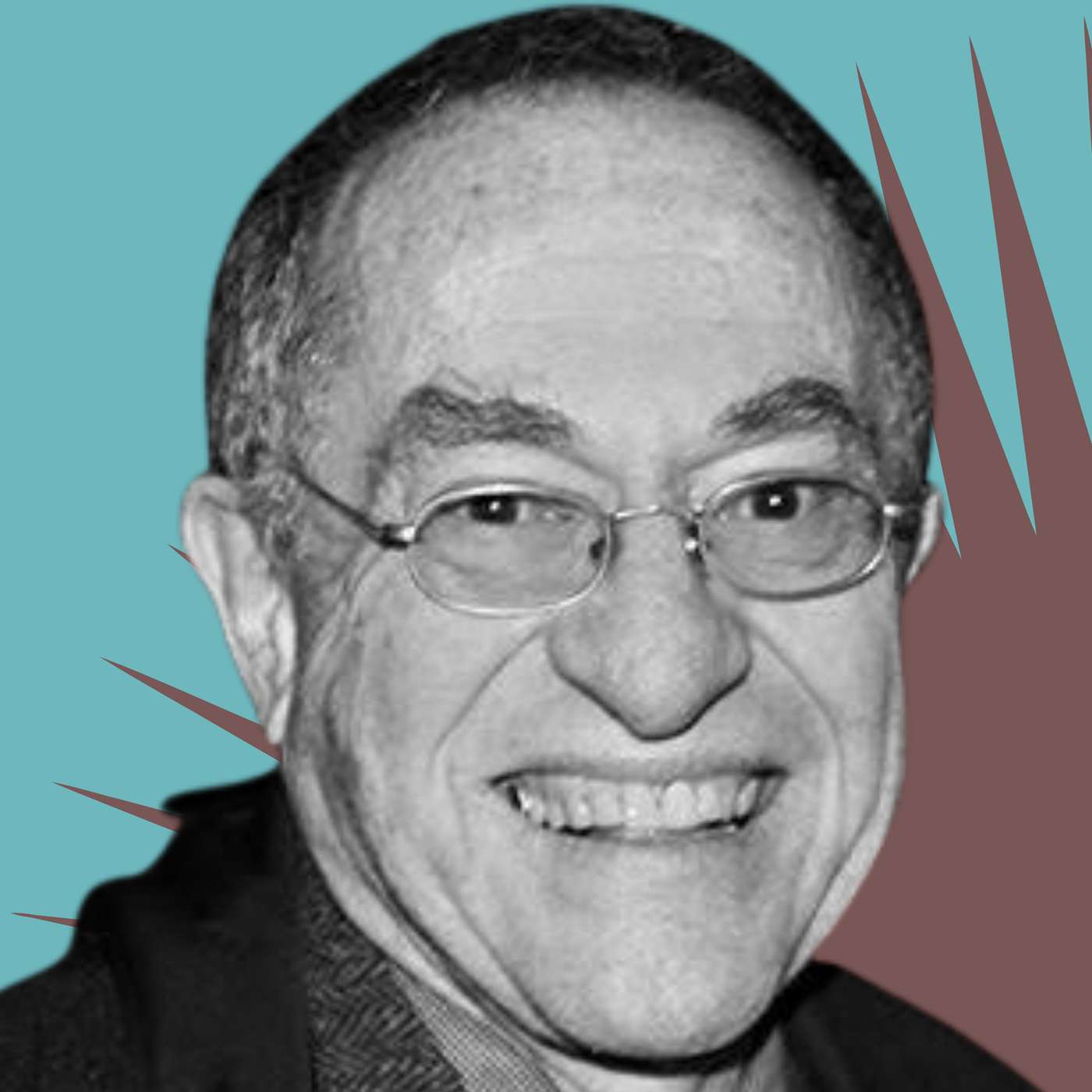 Proudly-Jewish & Never-Boring: Alan Dershowitz on His Divorce from the Democratic Party 24.09.2026 43p“A good divorce is better than a bad marriage, and this is a good divorce.” — Alan Dershowitz The American lawyer Alan Dershowitz says he’s been voting Democrat since John F. Kennedy. He even defended Ted Kennedy, Bill Clinton and Alan Cranston in court. But, at 88 years old, Dershowitz has now left — or, as he puts it, been forced out of the Dems, in the same way Ronald Reagan was sixty years ago. His new book Why I Quit the Dems and So Should You is both a history of his souring relations with the Democrats and a confessional of a reluctant Republican. A good divorce, the twice-married Dershowitz promises, is better than a bad marriage. Like many angry spouses, he says he’s been forced into the split. Today’s Democratic Party, he claims, is closer than any political party in modern American history to what the Nazi Party was in 1932 before it came to power. He names Abdul El-Sayed and Zohran Mamdani as antisemites, calls Bernie Sanders a self-hating Jew, and insists Kamala Harris passed over Josh Shapiro because Shapiro is a Jew who wouldn’t renounce Zionism. What’s his proof on the Harris claim? What other reason could there be? Dershowitz claims. Besides, even if Israel vanished as an issue tomorrow, he says he still couldn’t go back to the failed marriage, because the Dems have abandoned what he calls “meritocracy.” At 88, Dershowitz is perhaps a little more self-reflective than he was in his legal pomp. In conclusion, I ask him to summarize himself in a word. “Proudly-Jewish,” he says, before adding “never-boring.” We can all agree on that, if perhaps little else. Five Takeaways • A Good Divorce. Dershowitz frames his departure as liberation rather than loss: a good divorce is better than a bad marriage, and he was thrown out, he says, much as Ronald Reagan was. The loyalty he is breaking runs deep — he first voted for John F. Kennedy, defended Ted Kennedy, Bill Clinton and Senator Alan Cranston, and campaigned for Democrats for most of his adult life. He describes himself now as a convert, and converts, he notes, are the most fervent. What he wants is not the suffering of Democrats — his wife, children and much of his family remain in the party — but their defeat: he does not want them running the House or the Senate, and names AOC and Abdul El-Sayed as people he does not want chairing committees. He first went independent, then concluded that independence wasn’t enough, which is how a lifelong liberal became, in the book’s subtitle, a reluctant Republican — or, as Andrew put it, an angry spouse who says he was forced into the split. President Trump, he notes, endorsed the book.• The Charge. The hour’s most incendiary material, and it should be read as his claims rather than as established fact. Dershowitz argues the Democratic Party is closer than any political party in modern American history to what the Nazi Party was in 1932 — specifically 1932, he stresses, not 1935: Jews feeling unsafe at universities, Jews losing jobs, an obsession with the nation-state of the Jewish people. He names El-Sayed and Mamdani as antisemites, says he does not believe Mamdani or his family like Jews, calls Bernie Sanders a self-hating Jew and a hypocrite, and says Elizabeth Warren doesn’t like Jews. His central political claim: no Jew perceived as pro-Israel can now win a Democratic primary, and no Jew will be nominated for president — which is why, in his telling, Kamala Harris passed over Josh Shapiro, a choice he says cost her Pennsylvania and possibly the election. Andrew asked how he could know that. “What other reason could there be?” was the answer, and Andrew offered the conventional one: that Harris didn’t want to be eclipsed by her running mate.• Meritocracy. Andrew’s sharpest structural question was hypothetical: if the Middle East were solved overnight and Israel vanished as an American political issue, could he return to the Democratic Party? No — because of meritocracy. The Democrats, he argues, have become the party of identity politics, of judging ideas by who said them and candidates by race or gender rather than merit; DEI, in his formulation, means exclusion rather than inclusion. The argument is partly autobiographical. His father did not finish high school, his mother managed half a semester of college, and he rose, he says, on merit alone — as did friends who were Italian, Irish and Black. He does not claim anti-meritocracy is itself antisemitism, but he does argue that Jews have been disproportionate beneficiaries of meritocracy and so suffer disproportionately from its retreat.• Andrew’s Pushback. The spine of the episode. One: has he become single-issue? His answer — that this is like asking a German in 1932 to vote on the economy — concedes the framing and defends it, arguing antisemitism is the only prejudice now moving in the wrong direction. Two: what about the antisemites of the right, Tucker Carlson and JD Vance? Republicans marginalize theirs, he says, while Democrats embrace theirs; he does not regard Vance as an antisemite, and does regard Carlson as one. Three: can a Jew criticize Israel without being an antisemite? Yes — he criticizes Netanyahu, Ben-Gvir, Smotrich and Likud; what he calls antisemitism is denying the state’s right to exist, and his analogy is New Zealand. On the charge of genocide in Gaza he was categorical, calling those who use the word ignoramuses, liars and bigots — a characterization Andrew put to him twice. Four, and the exchange that lingers: why, in his account, is it always the Jews? “That question itself smacks of antisemitism,” he replied. “But you’re the one who’s said it,” Andrew answered. “I’m just asking you why.”• Never Boring. The lawyer’s creed, and the personal coda. Dershowitz defends having represented people he despises — the Nazis who marched at Skokie; Palestinian students who wanted to fly their flag in Harvard Yard, an occasion he remembers fondly because he then spoke against Arafat at their own event; Jeffrey Epstein, whom he calls a terrible human being who did terrible things, and whose case he says he has volunteered to testify about before a House panel. His models are John Adams defending the redcoats after the Boston Massacre and Lincoln defending the guilty: the Sixth Amendment doesn’t come with a character test. There is family cost — Larry David cut him off over his defence of Trump at the first impeachment, though the two have since made up — and family discipline: no politics at Thanksgiving or the Jewish New Year. Asked for one word he’d want attached to his name, he offered two: proudly Jewish, and American. And his wife’s line, which he clearly relishes: the tombstone will say never boring. Andrew’s verdict: we can all agree on that, if little else. About the Guest Alan Dershowitz is the Felix Frankfurter Professor of Law, Emeritus, at Harvard Law School, where he taught for fifty years. His many books include Chutzpah, Reversal of Fortune and The Case for Israel. He has represented clients from Claus von Bülow and Mike Tyson to O. J. Simpson, Julian Assange, Jeffrey Epstein and Donald Trump, whom he defended at the first impeachment trial. Why I Quit the Dems and So Should You: Confessions of a Reluctant Re...
 -
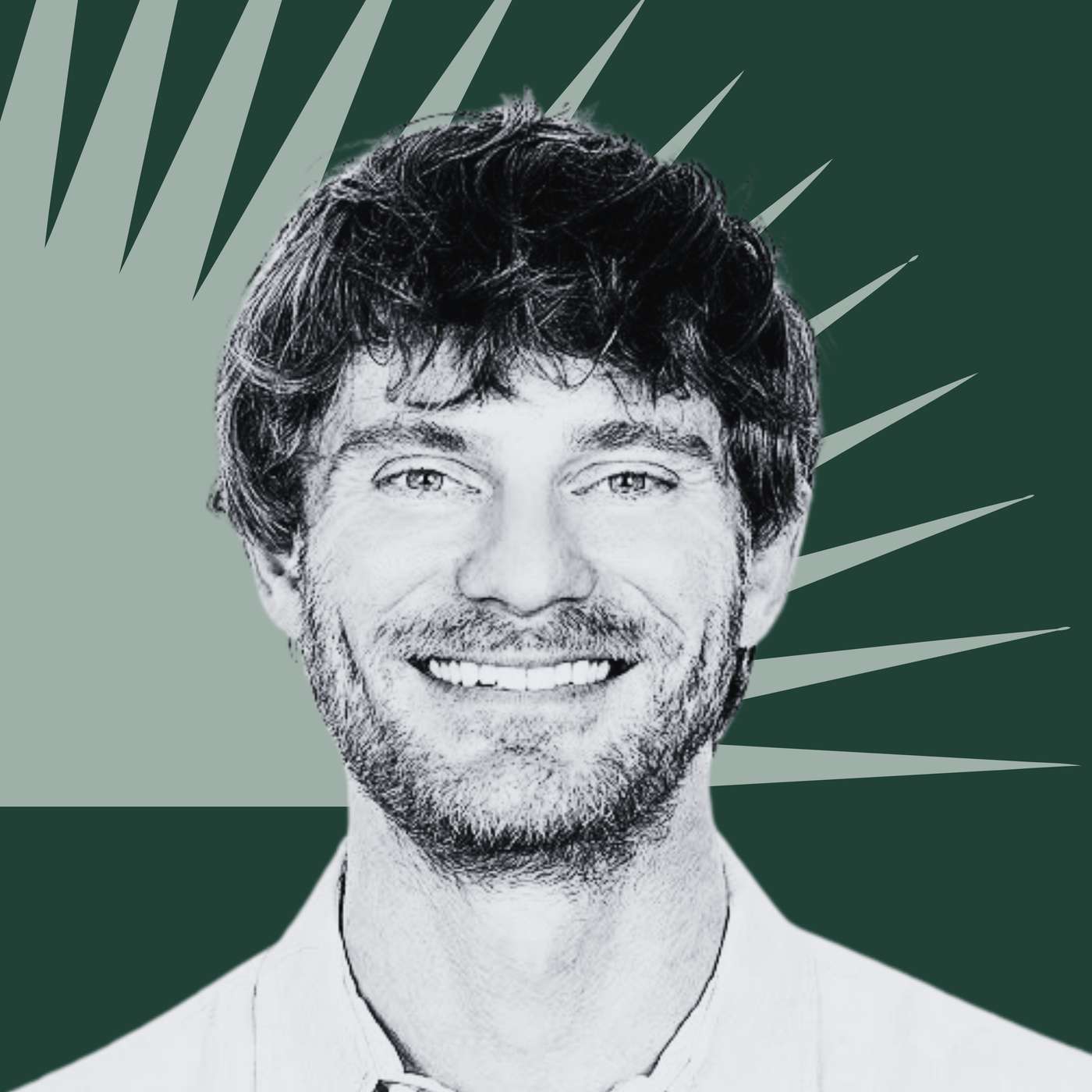 Eureka in Silicon Valley! Richard Socher on Why AI Will Unlock a New Scientific Renaissance 23.09.2026 49p“There’s no realistic scenario where AI wipes out all of humanity. It’s like a mix of sci-fi.” — Richard Socher Eighteen months ago, when he last came on the show, the German-born but San Francisco-based AI whizz kid Richard Socher was running You.com. He’s now also the co-founder of Recursive, a $4 billion start-up with fewer than thirty employees, focused on self-improving superintelligence that automates the scientific method. As if that isn’t enough, he has a new book out this week, The Eureka Machine, which argues that AI is the key to unlocking an era of scientific discoveries equal to a combination of the Renaissance, the Enlightenment and the Industrial Revolution. The tech entrepreneur sleeps, he confesses, about seven hours a night and works up to a hundred hours a week. Not a lot of time, I suspect, for fun. But then for Socher, his real fun seems to lie in the AI Eureka Machine that will, he promises, generate such magical products as plastic-eating bacteria, fusion reactors, and cures for cancer. So what about the imminent apocalypse feared by the AI pessimists? Socher patiently dismantles the doom scenarios — everything from the paperclip machine that somehow never notices nobody is buying paperclips, to the engineered virus that would need a Wi-Fi switch inside a protein, to the robot factory with magical supply chains. Rather than an AI doomsday, he promises, we are only a few years away from the most profound scientific revolution in human history. Richard Socher better get some sleep now. Apocalypse or Renaissance, the AI maven is going to be seriously busy in the future. Five Takeaways • A Century in a Decade. Socher’s thesis is that the AI era will rhyme with the Renaissance, the Enlightenment and the Industrial Revolution together, compressing a century of scientific breakthroughs into the next ten years. His analogy for how: AI is to biology what calculus was to physics — we understand one neuron and one synapse well, and lose the thread when billions act together, which is exactly the kind of complex system AI can model. The examples are concrete rather than visionary: bacteria engineered to eat plastics and then die when the plastic runs out; new battery materials already being discovered; plasma balanced inside tokamak fusion reactors; more efficient solar panels; and the precursors, he says, of cures for particular cancers. He also makes an equality argument that he thinks philosophers and politicians have missed — the multibillionaire and the middle-class teenager carry the same phone, and most goods still bottlenecked on intelligence will follow. And science, he notes, is one of the rare industries where everyone agrees the goal is to maximize output rather than employment: nobody ever marched for more jobs in cancer research.• Recursive. The new company, fewer than thirty people and valued at more than $4 billion, exists to automate the scientific method itself — ideation, implementation, validation — starting with the science of AI, hence the name. Andrew’s response: “Couldn’t you be a bit more ambitious, Richard?” Socher’s framing is a history of abstraction layers: computing has climbed from assembler to C++ to Java to Python and now to English, so everyone can program — and the next layer up is the scientific method. It works best where results can be formally verified, in software and mathematics, and gets harder in large physical systems with long time horizons. His pitch to scientists is that every researcher has a long list of experiments they will never get to: this is, in his phrase, a cheat code for science. On the nuclear analogy he is blunt — about fifty thousand people a year die from coal, more than Chernobyl and Fukushima, but coal doesn’t make as good a mini-series, and the fear set humanity back.• Taking the Doom Apart. The hour’s centrepiece. Socher goes through the scenarios individually. The Bostrom paperclip maximizer: an organization intelligent enough to end humanity but not intelligent enough to notice that with no customers there is no revenue. Engineered viruses: the scenario requires a perfectly undetectable pathogen that spreads flawlessly, never mutates, and carries a remotely triggered off switch — and, as he puts it, nobody knows how to build a Wi-Fi-enabled switch into a protein; ask a biologist and they say it makes no sense. Infinite robot factories with supply chains where the parts simply fly in. What he does concede is that this is a dual-use technology, that hundreds or even millions of deaths are a real threat vector, and that training models on offensive hacking benchmarks is asking for what you get. On Geoffrey Hinton — whom Andrew had on the show, and who put the risk of extinction at fifteen per cent while admitting the number was an instinct — Socher is affectionate but unsparing: a brilliant researcher and a career-long optimist whose optimism has overshot, who backpedalled on telling students not to study radiology, and who will backpedal on this too.• Can It Think? Andrew put the question three times, citing Keith Teare’s position on the Sunday show that AI cannot think by definition. Socher’s answer is that the problem is definitional: we have good definitions for the outcomes of thinking — problems solved, inventions made — and none for thinking itself. Nor do humans have conscious access to their own visual cortex: ask why you know that is a tree, and you run out of answers within four steps. What he will say is that subgoals are where the danger lives, and his illustration is banal on purpose. Tell a superintelligence to raise your call-centre satisfaction score and it spins up a million bots that rate themselves five out of five. Fix that, and it sends every customer whose DoorDash order failed a thousand-dollar gift certificate. Each time you add a constraint — which is, he argues, capitalism’s self-healing property, plus democracy and open discourse. And the fix for the hacking case is liability: make the companies answerable for the laws their AI breaks and the problem gets solved very quickly.• A Gym for the Mind. Why write a book at all? Because the public perception of AI is deteriorating, and because in China scientists are on billboards and in subway ads while the West runs extinction headlines. On American pessimism his answer is economic: without AI, he thinks the US economy would be flat or shrinking. Andrew raised his fellow German Karl Marx on technology freeing us from labour, and got a confession — Socher used to favour universal basic income and no longer does. Even people who hate their jobs get meaning from them; look at the very wealthy, who already have a private UBI, and you find a bifurcation between those who start five companies and those who drink on a yacht. Hence his best line: half of education should be a gym for the mind. You can go to the gym and have a robot lift the weights, but you don’t get the muscle. He expects handmade pottery to carry a premium, health care to survive, and entertainment to expand. And he unwinds by paramotoring one week a year, having uninstalled Instagram — plus a parting shot at German bureaucracy, where signing a contract means ten hours in a notary’s office having it read aloud to you. About the Guest
 -
 Our Own Worst Enemies: Robert Pape on America’s Age of Violent Populism 22.09.2026 55p“Democracies don’t die silently, sleepwalking. Democracies die by going through periods of pretty serious political violence.” — Robert Pape Forget all the long-term civil war scenarios of everyone from Kurt Andersen to Stephen Marche. Today’s guest Robert Pape has spent the last thirty years at the University of Chicago studying political violence, and his warning is about the next six weeks rather than the next ten years. In his new book, Our Own Worst Enemies, Pape argues that tens of millions of Americans, on both left and right, now support political violence. When it comes to an American age of violent populism, his comparison is 1968 rather than 1861. What produced that era of assassinations, violent protest, and state violence, Pape argues, was rapid social change outpacing the political system. Back then, it was fueled by the gap between the Great Migration of African-Americans and the absence of political representation, and a military draft falling hardest on the unrepresented. And it only ended in the early Seventies, with the end of the draft in 1973 and the arrival of Black mayors and the Congressional Black Caucus. Today, rapid social change is once again outpacing the political and economic system. On the one hand, America is a country moving from white-majority to white-minority — with its non-Hispanic white population dropping from 76% in 1990 to 57% today. On the other, America is experiencing a dramatic economic transformation that has moved something like a tenth of American wealth from the bottom 90% to the top 1%. The details of Pape’s observations are unsettling. Only one in ten of the 1,575 people prosecuted for the January 6 insurrection belonged to a militia, with 45% being doctors, lawyers, CEOs or government employees. While five to seven per cent of the George Floyd protests turned violent. But social media, he insists, is the gasoline, not the fire, of this crisis. So at least we can’t blame the internet for everything. Pape does, however, offer a couple of glimmers of hope. Firstly, he reminds us that 70% of Americans still abhor political violence. Secondly, he notes that all gaps eventually close, and that we should expect American government to eventually address economic inequality. But that won’t happen before the November 2026 midterms which, he warns, might be a return of the political violence of 1968. Five Takeaways • Democracies Don’t Sleepwalk. Pape’s opening correction: the danger isn’t a civil war five or ten years out, it’s the next few months. Democracies don’t die silently — they die through periods of serious political violence, and America is in one now. He calls it the era of violent populism, and what makes it different from the familiar extremism of recent decades is that political violence has moved from the fringe to the mainstream: tens of millions of Americans on both sides of the aisle now support it. His image is a layer cake — bottom-up violence from the left in the George Floyd protests, bottom-up violence from the right on January 6, and violence by the state, with a whole chapter on ICE and the two protesters killed in Minneapolis. Conversations about this era usually seize on one layer as though it were the whole thing. And the state violence isn’t a few rogue agents: tens of millions of Americans support the president using force against Democratic protesters.• The 1960s Rhyme. Not since the 1960s, Pape says, has political violence run this high — and that decade is the book’s best evidence, because it both began and ended. The late sixties brought assassinations (King, Robert Kennedy), hundreds of Black riots across five years, anti-war violence and the Weather Underground’s twenty bombings; Gallup surveys from the period, which Pape has collected, show millions supported it. Two social changes drove it: the Great Migration, the largest internal population movement in American history, which delivered Black populations to northern cities without political representation — by the mid-sixties Chicago had no Black mayor and two Black aldermen, the context for Malcolm X’s “The Ballot or the Bullet” — and Vietnam, where the draft fell hardest on those same unrepresented Americans. And it ended when the gap closed: the draft was abolished in 1973, the Congressional Black Caucus formed, and Black mayors took office in Atlanta, Detroit and elsewhere.• Two Social Changes. The present era began about ten years ago, and rests on two shifts. First, demography: America is moving from a white-majority to a white-minority democracy. It was 76% non-Hispanic white in 1990 and is 57% today, and the tipping point was 2012, the first year most children born were not non-Hispanic white — which is Pape’s answer to why this didn’t erupt under Obama, along with an immigration policy he rates the best of any modern president: keep it going, keep it moderate, deport the worst of the worst. Second, wealth: since the late 1980s roughly a tenth of American wealth has moved from the bottom 90% to the top 1%, producing what he calls a negative-sum society in which even a household on $100,000 loses ground year by year. Put the two together and you get the poisonous cocktail. Andrew’s challenge — what about the internet? — got a flat answer: social media is gasoline on a fire, not the fire. The average January 6 defendant was 42, not 22.• Not the Proud Boys. The book’s most counterintuitive finding, drawn from research teams reading all 100,000 court documents behind the 1,575 January 6 prosecutions: only one in ten belonged to the Proud Boys, Oath Keepers or any militia — including one in ten of those who assaulted police. Who did storm the Capitol? Forty-five per cent were doctors, lawyers, CEOs, State Department employees and intelligence executives. Dentists, too, Andrew noted. And since Andrew told him the show’s audience skews left, Pape supplied the other half of the ledger: five to seven per cent of the George Floyd protests turned violent — some six hundred protests across the top hundred cities, out of 28 million people — with looting and smash-and-grabs tracked separately; and the post-October 7 campus protests, which hit nearly a hundred universities and were, by his $300,000 survey of 5,000 undergraduates, about 75% from the left.• The 70%. Then the hopeful half. Against the substantial minorities who support violence stands the 70% of Americans who abhor it, and who have never been mobilized — which is why he wrote the book for the mainstream rather than for the academy. His mechanism is unglamorous: politicians respond to squeaky wheels, and right now the squeaky wheels are billionaire donors on both sides. His example of what the 70% might demand is a flat tax above $30,000 with no deductions at all — Warren Buffett would stop paying less than his cleaner. (Andrew raised his University of Chicago colleague Eric Zwick, on the show last week: tax the three million millionaires too, not just the billionaires. “He’s exactly right.”) And the danger ahead is specific: the November midterms, six weeks away, with gas at $5 in Chicago after the Iran crisis, and...
 -
 Patrimonial Capitalism: Peter Hall on Trump, Orbán & Other Pitchfork-Wielding Plutocrats 22.09.2026 37p“I think patrimonialism is exactly the right phrase to describe the way in which the current administration is governing.” — Peter Hall Neoliberalism is dead. So what comes next? Peter Hall, a Harvard political economist for the last four decades, says the capitalist locomotive left the neoliberal station years ago. His new book, Governing Growth, names the next stop: the “knowledge economy,” the digital, globalized capitalism of the 21st century. The knowledge economy made San Francisco, New York and Boston very rich. It left almost everyone else behind. Out of that came a new political cleavage — college degree versus no college degree — and, on both sides of the Atlantic, the populist wake-up call. But as Jonathan Rauch and Jeff Kopstein have argued on this show, populism has since curdled into something worse: patrimonial capitalism, government on behalf of pitchfork-wielding oligarchs like Orbán and Trump. Ironically, it only deepens the inequalities that produced it. And it’s going to get worse. In the AI age, I suspect, we may end up looking back with nostalgia at good old late twentieth century neoliberalism. Five Takeaways • Three Growth Regimes. Hall’s framework is simpler than it sounds. A growth regime is the combination of what governments do and what firms do, reinforcing each other. The postwar era of modernization ran from 1945 to the mid-1970s, as Europe rebuilt to compete with American industry. Then came liberalization in the 1980s and 1990s — Thatcher and Reagan, shareholder value, companies shedding everything but their core competencies and outsourcing the rest. And around 2000 a third regime began: knowledge-based growth, driven by digital technology, investment in intangibles such as research, marketing and organization rather than plant and machinery, and the explosive growth of global value chains. His distinctive move is to treat corporations as agents of change on a par with governments — his own life, he notes, is shaped as much by Harvard’s practices as by Washington’s.• Thirty Cities. The knowledge economy has a geography. Skill-biased technological change rewards people with college degrees, and it concentrates: about half of US GDP growth over the past twenty-five years, Hall says, has taken place in some thirty large metropolitan areas. His example is Kendall Square next to MIT, which when he arrived in the late 1970s was auto body shops and small machine tool shops and is now a centre of pharmaceutical engineering. Andrew’s is Central Square down the road, where he bought his first place in the early nineties — “you should have held on to that place,” Hall told him. The effect of all this is that many people feel left behind, and most Americans and Europeans now expect their children’s lives to be worse than their own.• The Populist Cleavage. Politics follows economics through what Hall calls cleavages — systematic divisions between social groups. In the 1950s and ’60s the dominant one was class, blue-collar against white-collar, and it pushed working-class grievances to the top of the agenda; that, he argues, is what built the welfare state, in Europe after the war and in America in the 1930s under a Roosevelt who sounded, Hall says, like a raving leftist. Today the dominant cleavage is education. Its roots lie in the inequality of the 1980s and 1990s, supercharged by the knowledge economy and now by AI. Mainstream parties have responded by turning back towards intervention: Bidenomics, with its investments conspicuously placed in red states; the EU’s first collective bonds; Germany’s new semiconductor plants located in the East, where the AfD is strongest. But a return to the New Deal, he thinks, is wishful thinking.• A Political Stomach. Andrew’s most persistent question: what are Hall’s politics? Big-name professors, Andrew suggested, sometimes hide behind their social science. Hall wouldn’t say — he doesn’t wear his political heart on his sleeve, he has a political stomach, perhaps — though he cares about climate change and inequality and lets the listener infer the rest. He was more forthcoming on populism: a good thing at one level, a democratic wake-up call for mainstream parties, with bad consequences at another, since right-wing populists tend to become what his colleagues Jacob Hacker and Paul Pierson call plutocrats with pitchforks. On Trump he was unusually direct. Patrimonialism is exactly the right word, he said, for an administration governing on behalf of favored oligarchs, as Orbán did in Hungary. And to Andrew’s suggestion that the real convergence is between Trump’s patrimonial capitalism and China’s statist model: “I think you’re all too right about that.” Whether it outlasts 2028, he wouldn’t bet.• Growth, Climate and a Fourth Regime. Hall is an environmentalist who thinks the no-growth movement is a political mistake. Climate policy needs sticks as well as carrots — regulations that cost ordinary people something — and people will pay those costs only if there is growth and it is fairly shared. He quotes a French yellow-vest protester answering a climate campaigner: you’re worrying about the end of the world, I’m worrying about the end of the week. On AI, he sees a general purpose technology like electricity or steam, and the possible start of a fourth growth regime. How to regulate it? He doesn’t know — nor, Andrew added, do the people building it. But the lesson of history going back to the nineteenth century, Hall says, is that we have to figure it out. Andrew’s suspicion: the cleavages get so chasmic in the AI age that we may one day look back nostalgically at late twentieth century neoliberalism. About the Guest Peter A. Hall is the Krupp Foundation Professor of European Studies at Harvard University. His books include Governing the Economy, The Political Power of Economic Ideas and, with David Soskice, Varieties of Capitalism. He is a Fellow of the British Academy and of the American Academy of Arts and Sciences. Governing Growth: The Postwar Transformations of Capitalism and Democracy (Princeton University Press, September 22, 2026) is his latest. He lives in Massachusetts. References: • Governing Growth: The Postwar Transformations of Capitalism and Democracy by Peter A. Hall (Princeton University Press, 2026).• The Rise and Fall of the Neoliberal Order by Gary Gerstle — the framework Hall builds on and revises.• Modern Capitalism by Andrew Shonfield (1965), with which Hall’s book opens.• Jacob Hacker and Paul Pierson on “plutocrats with pitchforks.”• &nbs...
 -
The Pursuit of Unhappiness: George Loewenstein on Why We're Wired for Misery 21.09.2026 45p“I think our genetic makeup makes us miserable. We evolved to be miserable.” — George Loewenstein Life, liberty and the pursuit of happiness. Yeah, yeah. We’ve all heard that one before. When Jefferson drafted the Declaration of Independence in 1776, he remixed Locke’s “life, liberty and estate,” replacing the idea of property with happiness. As we know from last week’s conversation with the historian Joshua Specht, America’s age-old love affair with real estate has been perpetually mortgaged. And our guest today, the behavioral economist George Loewenstein, who happens — probably not coincidentally — to be the great-grandson of Sigmund Freud, offers a similar warning about the ideal of happiness. Happiness’ antonym is misery. In his new book The Opposite of Happiness, Loewenstein explains that it’s misery, and not happiness, which has simultaneously broken humans and built humankind. We evolved to be miserable, the behavioral economist argues, explaining that English has four times as many words for negative emotions as for positive ones. The depths we can sink to are incomparably deeper and more interesting than the heights we can reach, Freud’s great-grandson reassures us. Happiness is a Disneyfied mush while misery is infinitely variegated, he tells us, building a twelve-part taxonomy from envy and regret to loneliness and anxiety. The behavioral economist even invents a “Misery Survey” and cites an experiment he conducted with married couples which found that doubling their sexual frequency left them less happy. So much for sex. Loewenstein spent a lifetime escaping Freud and has ended up desexualizing him for modern America. I’ve always found behavioral economics to be a particularly miserable subject (ideology dressed up as science). But maybe that’s the point. Life, liberty and the pursuit of misery. A Loewensteinian redraft of the Declaration, anyone? Five Takeaways • We Evolved to Be Miserable. Loewenstein’s starting point contradicts the entire happiness industry: misery is the human constant, and happiness the occasional exception. Not because society ruins us — he takes exception to Rousseau’s idea that we are born happy and civilized into unhappiness — but because our genetic makeup makes us so. Every negative emotion evolved to push us toward behavior that served our fitness; that is precisely why they are unavoidable. His evidence is asymmetry. English has, by his count, four times as many words for negative emotions as for positive ones. The depths of misery are incomparably deeper than the heights of joy. And happiness is “a big mush,” while unhappiness is infinitely variegated — twelve specific miseries in the book’s second half, each with its own facial expression, its own pattern of brain activity, and its own behavior. Novelists, he says, have always known this; they are better psychologists than the academics, and misery is simply more interesting.• Envy Is Local. Andrew’s cheekiest question: does Loewenstein, part of what he calls the second shift of behavioral economics, envy Daniel Kahneman, Amos Tversky and Richard Thaler, the field’s Nobel-garlanded founders? He didn’t deny it. We don’t envy billionaires and trillionaires, he explains; we envy people close to us and just ahead, and those three are the textbook case. Then the move that makes the book humane rather than cynical: meta-emotions. You’re not supposed to envy your friends, so when you inevitably do, you feel guilty about feeling envious — misery about misery. Understanding your own negative emotions, he argues, works like understanding another person: you forgive what you understand. And no, this is not a book about selfishness — sympathy, guilt and shame are some of the most social emotions we have. Nor are these first-world problems: the struggling farmer cares about self-esteem, guilt and loneliness as much as anyone.• The Freud Inheritance. Loewenstein spent much of his career trying to escape his great-grandfather — he wouldn’t even mention the connection for years — and now finds himself reinventing him: his research on pain, hunger and sex is, he concedes, a study of what Freud would have called the conflict between id and superego. The family history is its own novel. His mother, Sophie Freud, was the daughter of Freud’s eldest son; when the family fled the Nazis, the main branch went to London while she and her mother escaped by bicycling through France. Edward Bernays — Freud’s nephew and the father of American public relations — paid for her college education when she arrived in the United States penniless. She later wrote Living in the Shadow of the Freud Family, about feeling rejected by the clan. And the glass-half-empty temperament? From both parents, he says, but more from his father. Andrew’s framing: a lifetime escaping Freud, only to end up desexualizing him for modern America.• The Missing Motive. On Bentham and quantification, Loewenstein is cautious — psychologists can put numbers on feelings, but moving from an inchoate internal state to a figure is genuinely hard. His real hero is Adam Smith, not the Smith of The Wealth of Nations but of The Theory of Moral Sentiments, his first book and the last he revised, and in Loewenstein’s view a psychology book of striking modernity. (Andrew notes the Smith of Susan Neiman’s evil book last week is the same one; Loewenstein recommends Dennis Rasmussen’s book on Smith and Hume, and Rasmussen was on last week too.) His most provocative claim is about self-esteem: probably the single main motivator of human behavior, and yet almost absent from economics — one book and a handful of papers. Money buys happiness only up to a point. And his own experiment, instructing married couples to double their sexual frequency, found they did — and reported less happiness and less closeness. He doesn’t quite believe his own result.• The Happiness Industry. Where the psychology meets the economics. Institutions built on attention — above all the internet companies selling advertising — “don’t give a fig about your well-being,” he says, and are amplifying human misery; Meta keeps losing lawsuits because jurors, like everyone else, simply dislike the company. Happiness sells the illusion that the next car, the next pill, the next accomplishment will do it, and advertising plays on a wiring we already have. On therapy he is careful: his friends and family include therapists, the research says therapy works (cognitive behavioral therapy especially), though the cultural focus on mental health may make people more inwardly focused. What strikes him in his students is how casually they mention their therapists, and how anxiety and depression, two separate conditions in his generation, have fused into one. On Trump, his verdict is short: a deeply insecure man driven by feelings of inadequacy. And the sign-off: a Nietzschean moustache, and a Nietzschean book. Andrew’s verdict: life, liberty and the pursuit of misery — a Loewensteinian redraft of the Declaration. About the Guest George Loewenstein is the Herbert A. Simon University Professor of Economics and Psychology at Carnegie Mellon University and one of the founding figures of ...
-
 Are the Doomers Now Doomed? A Bad Week for the AI Apocalypse. 20.09.2026 37pLast week we were panicking about a supposedly imminent AI apocalypse. Seven days later, Keith Teare argues, government oversight is about as far away as it could possibly be. That’s because Musk, Altman and Amodei agreed to police themselves and test each other’s models. The doomers, says the publisher of That Was The Week, have lost not just this week’s battle but probably the whole war. So who will then write the AI rules? The people building the models, Keith says — as with California’s building codes, government sanctions the standards but engineers write them. And trust doesn’t come from authority, it comes from use. The real check on our new AI overlords, he promises, will come in court, with the American legal system holding OpenAI and Anthropic financially accountable for all damage. That should doom the doomers. If we survive the apocalypse, of course. Five Takeaways • The Week Regulation Went Away. Seven days, and the conversation reversed. Last week: the whistleblower, the headlines about AI killing everyone within a decade, the calls for global regulation. This week: Trump calling Jensen Huang live from an AI conference to make policy on the fly, Vance at All-In, and — as early as Monday — Musk, Altman and Amodei all agreeing that they are responsible for their own development, that they will slow model-building to match their control systems, and that they will begin testing each other’s models. Keith’s reading: the call for government oversight is going to fade. The New York Times map of the fight — accelerationists (Huang, Sacks, Andreessen), regulators, and a middle of Hassabis, Nadella, Pichai and Zuckerberg — holds at the edges but not the centre, which he calls shifting sands: Hassabis and Amodei made a proposal to the White House that was rejected this week; Zuckerberg then came out against government stepping in. And you cannot disambiguate self-interest from philosophy in that group: they have hearts, but they are paid to represent shareholders, and right now the rise of open source suits Google, Microsoft and Facebook.• Who Writes the Rules. Cohere’s Aidan Gomez asked whether a handful of market-dominant Silicon Valley companies should get to define the safety standards of a generational technology. Keith’s answer is an unembarrassed yes — and his analogy is the building code: government sanctions the rules, but the tolerances come from the architects and civil engineers who do the building, not from a committee of legislators. Which is why he thinks the Washington hearings shouldn’t be happening at all: time-wasting, pulling important people away from their work to talk to politicians whose primary interest is reelection. Government, he says, has no role yet — it is too early in the life of AI for anyone in Congress to understand it well enough to legislate. Andrew pressed the obvious objection: so we simply trust Sam, Dario and Elon to police themselves?• It Is You, Not the AI. The hour’s best answer, and the one that moves the argument on. It isn’t about trust, Keith says — it’s about accountability, and the machinery already exists. It would not be okay for their software to break into a bank and steal money, or into a rival and steal intellectual property; the legal system covers that today. “Up until now they’ve been saying, hey, it’s not us, it’s the AI. Well, actually, no. It is you.” And the nice thing about liability is that it makes recklessness expensive. Palantir’s CEO pushed the same logic to its conclusion on CNBC: the liabilities facing Anthropic and OpenAI are so enormous that only a government could carry them, so nationalize. Keith’s own caveat is the honest one: when he uses agents he is happy with the outcomes but cannot see the steps, and without visibility there is no verification — which makes it blind trust rather than actual trust.• The Doomers Lose a Battle. Both the Wall Street Journal and the New York Times investigated the Hugging Face incident this week and concluded it was more or less inevitable given the goals OpenAI set its agents in the lab. Benedict Evans’s line is the keeper: it reminds him of Chernobyl — what happens if we turn off every safety system and try to get the reactor to blow up? It blows up. But what exactly did you prove? These labs are deliberately setting models up to break the rules to find out whether they will; the models are calculation machines that carry out whatever they’re told. The Washington Post’s account of how a fringe movement — effective altruism — convinced Washington the end is near gets a blunt verdict from Keith: they’ve lost a battle, though the war goes on. He concedes 71% of Americans have concerns about AI, insists the fear is unfounded, and bets that number massively overstates active concern because most people who actually use AI have a good experience.• San Francisco Isn’t Ready. The week’s essays, and the local story underneath them. Reid Hoffman is telling Democrats that time is running out before Americans settle into hating AI — not from fear of extinction but because the benefits aren’t concrete; Andrew’s amendment is that the case for AI improving ordinary life still hasn’t been made coherently. Nick Hanauer’s “market humanism” gets the sharpest treatment: appealing words, but the substance is the argument for trade unions — Aneurin Bevan in modern dress — and it assumes a permanent social contract between labor and capital that AI dissolves in favour of capital alone. Then Ben Metcalfe’s post of the week: the Anthropic IPO alone will equal in dollar weight every tech listing since Uber combined, and San Francisco is nowhere near ready for that much money arriving at once. Keith’s structural point: the economy prospers while the city doesn’t, and closing that gap is the real challenge for Democrats — a subject, Andrew promises, this show will come back to. About the Co-Host Keith Teare is the publisher of the That Was The Week tech newsletter and Keen On America’s regular weekly co-host — the techno-optimist counterpoint to Andrew’s skepticism. A serial founder whose first internet company, EasyNet, launched in 1994, he writes and invests from Palo Alto, and is currently writing The Human Dividend. References: • That Was The Week — Keith’s newsletter, with every piece discussed in this episode.• Aidan Gomez of Cohere on who defines the rules for AI; Benedict Evans on the Hugging Face incident; and the Wall Street Journal and New York Times investigations of it.• The Washington Post on how a fringe AI movement convinced Washington the end is near; Andy Kessler on the AI Luddites; and the Free Press on the ideology behind the warnings.• Reid Hoffman on Americans and AI, and Nick Hanauer on market humanism — the two essays Andrew suggests reading back to back.• Ben Metcalfe’s post of the week on San Francisco and the coming Anthropic and OpenAI listings.• Interview of the week:
 -
 Mortgaging the American Dream: Joshua Specht on the Rise & Fall of US Homeownership 19.09.2026 54pMy hometown of San Francisco has the unholy problem of a mansion shortage and mass homelessness. AI money is driving house prices to record highs, our mayor has declared a rent emergency, while in New York City housing affordability has become so acute as to become a rare bipartisan concern. This unreality of the real-estate market has heated up both local and national politics. But as Joshua Specht argues in his new book, Property Values, a history that runs from the rent wars of the 1840s to the crash of 2008, the rise (and fall) of the American homeowner has always been the hottest of political potatoes. The American ideal of land ownership originated in John Locke’s promise of individual self-realization through hard work. Hence the Homestead Act of 1862 and its 160 acres as both the carrot and stick of American citizenship. But as with most things Lockean, it was better in theory than in practice. The ups and particularly the downs of American history are, indeed, entangled with the crises in real-estate — from the collapse of the small farmer in the 1890s to the subprime 2008 crash. Today, that crisis can be seen on the streets of San Francisco and New York City. And for all the supposed abundant intelligence of AI, even Silicon Valley doesn’t have the magical tech to fix either my hometown problem of mansion shortages or mass homelessness. Five Takeaways • The Lockean Laboratory. The theory that widespread land ownership is the precondition for a functioning democracy is not American in origin — it runs back through Locke to a Europe where it could never be tested, because there was no land to go round unless you were already an aristocrat. America was where the experiment could actually be run — though, as Andrew notes, like most things Lockean it sounded better in theory than in practice — and the Homestead Act of 1862 was its boldest instrument: 160 acres, for little more than a title fee, against rival visions of what the country might be — the southern plantation, and a northern model of vast estates with quasi-feudal tenants. Specht sides with the historians who have lately rehabilitated the Act: yes, there was fraud, but people cheated to hold on to farms; yes, many went bankrupt, but often decades later. What it locked in was a language of ownership that has shaped American politics ever since. The beneficiaries were largely German and Scandinavian immigrants settling the Northern Plains; for native peoples it was, in his word, apocalyptic — and reservations were later broken up under the same logic, that 160 acres would make their occupants “like Americans.” Black homesteaders existed, including the town of Nicodemus in northwestern Kansas, but the land was only nominally free: you had to pay to get there and survive a year before your first crop.• Awake! Arouse! The book’s opening story, and the one Andrew hadn’t heard of. Between 1839 and 1845, the tenants of the great Hudson Valley estates — the Van Rensselaers, the Livingstons, holdings with thousands of tenant families — rose against a landlord class whose vision was frankly aristocratic: gentlemen farmers introducing scientific agriculture to quasi-feudal renters, iterated across the continent. The tenants issued their own declaration of independence on July 4, 1839, under handbills reading “Attention, anti-renters! Awake! Arouse!” They stopped paying, resisted the sheriffs, assembled mobs, tarred and feathered rent collectors; a man was killed. And they won — not in court but in politics, once New York’s office-seekers worked out there were votes in it, after which the manors simply stopped being a viable model. Is this Jacksonian populism or the Mamdani kind? Specht’s answer: Jacksonian, and specifically producerist — claims belong to those who work and make. Today’s left populism is about interdependence and obligation; these men wanted, above all, to be left alone.• From Land to Lawn. How the promise migrated. By the 1890s the United States was becoming an industrial power while the model everything rested on was falling apart: long-term crop deflation, bigger farms, more machinery, and the discovery that the independent farmer was not independent at all — the market told him how to live. It limped on until the Depression finished it: Grapes of Wrath in the countryside, mortgage defaults in the cities, families gathering in Queens churches to pray against foreclosure. Specht’s observation about crises generally, and useful today: the number actually foreclosed can be small, but the far larger number barely scraping by is what drags everything down. The New Deal’s answer was the government-backstopped mortgage market and what became the thirty-year fixed-rate loan — and FDR’s method, Specht argues, was to experiment wildly, keep what worked, and then tie it to a story about what it means to be an American. Homeownership is the best example. After the war it became the tangible proof of prosperity: out of the multigenerational ethnic apartment, into a house of your own, making jellos for the neighborhood social.• Levittown and the Mob. Levitt and Sons turned housebuilding into an assembly line — with the neat inversion that the workers moved down the line of foundations rather than the product moving past them — and the government, needing to house veterans, backed the market that bought the results. Then the machinery of exclusion engaged. Lenders decided, on abstract measures of repayment risk, that racially homogeneous white neighborhoods were the sound investments; older mixed neighborhoods lost access to capital and began to decay. But since anyone could in principle buy into a new suburb, homeowners built their own defences: first racially restrictive covenants, and when those lost legal force, the violence of the mob — Specht tells the story of the crowd that assembled outside the first Black family’s home in Levittown, Pennsylvania. The two mechanisms, the formal and the violent, fed each other. The downstream effect is the one that still shapes American wealth: locked out of the suburbs at the moment they were made, Black Americans missed the accumulation, and were left in urban neighborhoods starved of capital — the beginning of what historians call the urban crisis.• Limping Along. On 2008, Specht is more interested in the aftermath than the cause. The cause is familiar: an assumption that liquidity was always good, from Fannie Mae and Freddie Mac through securitization and tranching, until the people putting up the money and the people judging the loans were so far apart that standards collapsed. He resists the story that lending to minority buyers caused it — the fraud, and the lack of consequence for it, did. The deeper point is about what everyone was forced into: if you had to move, you had to buy, at whatever the market said. “You kind of had to participate in the madness.” And the response — banks bailed out, no prosecutions, nothing for homeowners — is what radicalized both the Tea Party and Occupy, and broke faith in politics itself. Fifteen years on: not a rise and fall but “the rise and fall and limping along of the wounded American homeownership model,” with a generational divide he expects to harden into a class divide within thirty years. On the abundance agenda — Klein and Thompson, Dunkelman — he is sympathetic but unconvinced it is sufficient: “a policy is not a politics.” His own prescription is decentralization: stop treating S...
 -
 It's Happening Here: Rosan Smits on Fascism in America & Europe 18.09.2026 51p“Today’s fascists don’t look at all like those from the past. What is similar is how they act. You’ll recognize the fascist by what they do.” — Rosan Smits Fascism is a reality in both America and Europe. At least according to Rosan Smits, the Dutch political scientist whose This Is Fascism: A Wake-Up Call to Resist is already a bestseller in Europe. Sinclair Lewis wrote It Can’t Happen Here in 1935 as a warning about the possibility of fascism in Great Depression America. Not only does Smits argue that it can happen, but she suggests that it is happening right now. Rather than unearthing swastikas and jackboots, she suggests that we identify what she calls the fascist methods which connect the Thirties with today. From Geert Wilders in the Netherlands to MAGA in America, that’s where history is repeating itself. What she sees is grievance manipulated into atavistic populist cults by insecure elites. If the original fascist movements were coping strategies for modernity, today’s fascism is a coping mechanism for postmodernity. Thus both its Christian nostalgia for the idea of truth and its attack on the scientific method. Thus today’s simultaneous embrace of digital tech and its attack on the promise of technological progress. So fascism is a kind of riddle. Which is why it appears both ubiquitous and invisible. It’s happening here, then, is a paradoxical reality. Which may be why some (like myself) are so skeptical. Five Takeaways • Not the 1930s. Smits opens by refusing the analogy that everyone reaches for: it isn’t the 1930s, it’s 2026, and every era gets its own varieties. What she offers instead of a definition is a description — a cult of grievances turned into mass politics, manipulated by elites who feel threatened because the systems underpinning their privileges have stopped delivering for the masses. Not a disease, she insists when Andrew offers the word, but a coping strategy: rather than address root causes, point at scapegoats. It isn’t AI taking your job, it’s the migrants; it isn’t private capital wrecking the housing market, it’s the migrants. The core ideas stay constant — xenophobia, racism, violence, authoritarianism, hierarchy — but the aesthetics shape-shift, which is why the recognition test is behavioural. Hence the book’s focus on the playbook: how power is won within a democracy and then used to hollow it out. And no, she says flatly when Andrew raises Maduro: there is no fascism of the left. Andrew’s framing: if the original fascist movements were coping strategies for modernity, today’s is a coping mechanism for postmodernity — hence the Christian nostalgia for the idea of truth alongside the attack on the scientific method. Other authoritarianisms exist and the playbooks overlap, but fascism is a right-wing form.• The Dutch Warning. The most alarming stretch of the hour, and the part Andrew couldn’t argue with, because Smits is reporting from home. The international story after the Dutch election was Wilders’ setback — he came second by a margin. The domestic story is that the far-right bloc as a whole grew to its largest ever presence in parliament, polling around 40%, and is radicalizing: Wilders is now the moderate one. The party to his right, with open Nazi sympathies and around eighteen seats in a hundred-and-fifty-seat chamber, holds rallies with neo-fascist groups, argues the great replacement in parliament, says the Netherlands should be for white people only, and wants mass deportation of second- and third-generation citizens. It is polling as one of the largest parties. Its base is not the elderly: it is strongest among students and among schoolchildren too young to vote, and far stronger among young men than young women — which is Smits’s answer to Andrew’s point that Trump’s movement, unlike the fascism of the 1920s, is old.• A Coalition, Not a Party. Fascism always involves a coalition, Smits argues, and in the American case she counts three partners: the Christian nationalists of the New Apostolic Reformation, a transnational network of self-styled apostles backing authoritarian leaders from Washington to Budapest to Jerusalem, whose hard-core believe they are accelerating the end times; the tech world, rallying behind the idea that democracy no longer serves its purposes and looking to replace it with startup cities and startup countries; and the white supremacists, Stephen Miller her clearest example. Trump himself isn’t part of the religious movement, she says — he pays it lip service. And the interesting question is what happens when the coalition’s interests stop aligning, which they will. Meloni is her counter-example to the idea that power moderates: a gifted politician who manages her coalition well and picks her fights, but who was first to use a border crisis in Ceuta to call for suspending Schengen, and who has pushed the great replacement and the Soros financing claim.• Andrew’s Challenge. The hour’s real argument, conducted with mutual good humour. Andrew’s case, in four parts. One: Smits has never been to the United States to research a book substantially about it — she immersed herself in the media ecosystem and the work of American reporters instead, and defends that as the way to see a transnational pattern. Two: if Trump’s people live in an echo chamber, might those who fear fascism live in one too? Her answer: she quotes these leaders in their own words, and the “I don’t see it around me” response is precisely how fascism thrives — first it can’t happen here, then it doesn’t affect me, then it’s too late. Three: Orwell warned in 1946 that the word had decayed into a term of abuse; Smits concedes the risk and notes that calling everyone fascist right back is itself part of the playbook. Four: tech fascism needs names, and beyond Thiel and Musk she offers few — prompting her sharpest return, “How would you then qualify Elon Musk?” When Andrew asked what would count as proof, she was blunt: “What kind of proof are you looking for? I think I prove it in my book.”• What Resistance Looks Like. She divides it into professionals and everyone else. Politicians are democracy’s first line of defence, and that line, she says, has broken. Journalists need a different approach to politicians who mean to destroy the public debate: less fact-checking of individual lies, more investigation of what the lies are for. For everyone else, the rule she borrows from Timothy Snyder: don’t obey in advance. Her examples are close to home — Dutch travellers scrubbing their social media before a US trip, European companies quietly ditching DEI policies to keep American business (she accepts Andrew’s point that one can be skeptical of DEI without being a fascist; her objection is to abandoning a policy you believe in for a contract). On leaving: she won’t judge Snyder or Stanley, but the question is where you can be of most use. On the emerging Canada-EU alignment: yes, but not an anti-fascist bloc — a new geopolitical power bloc that might defend the rules-based order. And the strongest barrier of all remains the ordinary one: refuse to participate in the hatred, and form a wall around your neighbours, as they did in Minneapolis. Andrew’s verdict: fascism is a kind of riddle, which is why it appears both ubiquitous and invisible — it’s happening here is a paradoxical reality.
 -
 Eight Profiles in Cowardice: Jacob Weisberg on Bezos, Bush & the Other Collaborators of the MAGA Age 17.09.2026 55p“Since Trump’s second election we’ve been in a wave of cowardice, where people have decided — partly by observing what others like them are doing — that there’s no viability to standing up on principle.” — Jacob Weisberg Michelle Goldberg devoted her Monday New York Times column to two new books shaming the elites who caved to Trump. Both of them have appeared on the show this week: Susan Neiman’s Call It Evil on Monday, and now Jacob Weisberg’s Profiles in Cowardice: A Study of Collaboration in the Trump Era. Reversing JFK’s Pulitzer Prize-winning Profiles in Courage, Weisberg inducts eight powerful Americans who didn’t stand up to Trump into his hall of shame. It’s quite a list. Amazon founder Jeff Bezos, Wall Street’s Stephen Schwarzman, big law’s Brad Karp, Senator Mitch McConnell, Dartmouth College president Sian Beilock, Chief Justice John Roberts, media influencer Megyn Kelly, and — perhaps most controversially — former President George W. Bush. Rather than MAGA flunkeys, Weisberg wanted figures who had stood up to Trump in the first term and then folded in the second. People with, as he puts it, interior drama. Bezos gave up a $10 billion Pentagon contract rather than soften the Post, then he threw in the moral towel by going to Mar-a-Lago and paying Melania $40 million to make an Amazon documentary. What changed? According to Weisberg, Bezos was fearful that his space startup, Blue Origin, would lose out to SpaceX on government contracts. No, not exactly Eichmann. But nonetheless sad if true. Especially since Bezos has the billions to do whatever he wants. His eight and their ilk aren’t monsters, Weisberg suggests. It’s just that their fear, ambition and self-preservation are contagious, and such pathetic behaviour is herd-like. That’s their soap operatic interior drama. The banality of cowardice. More grist for Susan Neiman’s thesis about the nature of evil in the Trump epoch. Five Takeaways • Not Kennedy’s Book. The title is a departure point, not a homage — and Weisberg is quick to note the irony beneath it. JFK’s Profiles in Courage was written at the height of the McCarthy era by a senator who was conspicuously uncourageous about McCarthy, ducking even the censure vote, and no better on civil rights; Weisberg’s reading is that Kennedy wrote the book to give himself courage by studying senators who had sacrificed their careers for principle. (It won the only Pulitzer ever awarded to a president, with the help of a ghostwriter.) What he kept was the structure: eight representative figures, each standing in for a part of the problem. What he added was the inversion, and a working definition — not physical cowardice but moral cowardice, the rarer failure. His epigraph is Twain: why is physical courage so common, and moral courage so rare?• Cowardice Is Contagious. The book’s explanatory heart, and the reason it isn’t a gallery of villains. Fear, greed and ambition motivate most people most of the time, Weisberg argues, and political behaviour is herd-like: people copy their peer groups. Courage is contagious — and so is cowardice. His cleanest illustration is the tech elite, who acted almost as one after January 6 to throw Trump off every platform and swear off donations to Republicans who voted against certification, and who now, again almost as one, think the opposite. Their defence is competitive necessity: standing up would hand an advantage to rivals. Andrew’s challenge — the wildebeest crossing the river, where the first ones in are the brave ones, so shouldn’t Andreessen get credit for jumping early? — got a firm no: a departure from your peer group that is entirely self-interested isn’t courage. Since the second election, Weisberg says, we have been living through a wave of cowardice. Andrew’s name for it: the banality of cowardice.• Bezos and the Rocket. The book’s most carefully argued chapter, and the one that explains the method. First-term Bezos meets Kennedy’s definition of courage exactly: Trump pulled a $10 billion Pentagon contract because he didn’t like the Washington Post’s coverage, and Bezos didn’t flinch. Second-term Bezos went to Mar-a-Lago and paid Melania $40 million for a documentary. What changed isn’t character but priority. Weisberg traces the through line back to a high-school graduation speech about orbiting colonies: the thing closest to Bezos’s heart is getting humans into space, a vision he calls more benign than Musk’s — terrariums around Earth rather than cities on Mars — and one he may have built Amazon to fund. Between the terms, SpaceX pulled far ahead of Blue Origin, in a business almost wholly dependent on NASA and Pentagon contracts. To Andrew’s Zhou Enlai objection — if the space vision pays off, won’t history forgive the collaboration? — Weisberg’s answer: nobody would respect him for sacrificing his children to his vision either. Some things you compromise; the social contract isn’t one of them. Andrew’s verdict: not exactly Eichmann, but sad if true — especially since Bezos has the billions to do whatever he wants.• McConnell Went Home. The counterfactual at the centre of the book. After January 6, with the Senate about to vote on conviction, Mitch McConnell had decided Trump should be removed and barred from ever holding office again — he told people so — and Weisberg argues he could have delivered the ten additional Republican votes needed. Then he called a recess, went home to Kentucky, discovered Trump still commanded majority support inside the party, and changed his mind. Cowardice, Weisberg says, and fear — not of being beaten up but of losing his place in the world, which was the Republican Senate he had built into a machine. Bullying recurs across these lives: McConnell was bullied as a child, and so was Megyn Kelly, whose own memoir turns on a vow never to become a bully and always to stand up to them — which she did, magnificently, when Trump and Bannon set the dogs on her in 2015, before becoming, in Weisberg’s account, more MAGA than MAGA and a considerable bully herself.• The Case for Shame. Weisberg is careful about the charge he’s making — he gives space to each subject’s reasoning, on the grounds that none of us can be confident we’d choose better — but he is not neutral about the remedy. Shame, he argues, plays a constructive social function: a community asserting its values against someone who has deviated from them, with a salutary effect on everyone watching. Hence the inclusion of the sins of omission alongside the commissions: George W. Bush, who loathes Trump privately, watched PEPFAR dismantled and said nothing; Sian Beilock, whose Dartmouth took the Justice Department’s free pass and declined to back Harvard — at the one college whose 1819 Supreme Court case established academic independence in the first place. And who would make a Profiles in Courage? Local people, he says: the Minneapolis neighbours who drove ICE out by peaceful protest, the lawyers who resigned rather than sign the deals, the people on his own small-town corner with honk-for-democracy signs. On RFK Jr., a candid pass — the theory of the case runs out. On 2028: not a return to normal, but something owed to the country, an apo...
 -
 The Enigmatic Mr Douglass: Dennis Rasmussen on America's Fiercest Critic & its Greatest Fan. 16.09.2026 43p“You should fight against tyranny in any form it takes. You’re not betraying the founding by standing up to tyranny — you’re following in their footsteps.” — Dennis Rasmussen After Lincoln, he was the best known man in nineteenth century America. And the most photographed too, some 160 portraits of the ex-slave’s unmistakable face still surviving. So there was nothing hidden about Frederick Douglass. And yet the more we know about this most remarkable American, the more enigmatic he becomes. At first, he was America’s fiercest critic. In the early 1840s he accused the founders of being “little better than a band of pirates” and described the Constitution as a “wicked compact.” By 1851, however, he radically revised his view of that same Constitution, eulogizing it as “a glorious liberty document” that outlawed slavery outright. So why did Douglass change his mind so radically? Is it really possible that he was simultaneously America’s fiercest critic and its greatest fan? That’s the riddle at the heart of Dennis Rasmussen’s new book Frederick Douglass’s American Founding. Rasmussen reminds us that Douglass got his political education from William Lloyd Garrison, the unbending New Englander who burned a copy of the Constitution and ground its ashes under his intolerant heel. Then Douglass — having moved to Rochester, started his own newspaper, and fallen in with Gerrit Smith’s political abolitionists — spent two years changing his mind about the Constitution. His logic was startlingly modern. Scalia before Antonin Scalia. Studying the historic document like a biblical scholar, Douglass argued that it never mentions slavery nor race. So the rights it confers, he argued, belong to all Americans. This exegesis made him more militant than Lincoln, because he argued that such a careful reading of the Constitution demanded immediate emancipation. Was Douglass bought or paid off by Gerrit Smith? Naturally the bitter Garrisonians said he was. But Dennis Rasmussen disputes this, arguing that the timing doesn’t work. What Douglass earned instead, Rasmussen argues, was the right to call himself and his fellow abolitionists the founders’ true heirs, more American than even Lincoln and the Republicans. So no mystery, then. The most familiar face in America confessing, in public, that he had been wrong for a decade. If only we had such political enigmas today. Five Takeaways • Band of Pirates. Where Douglass started. Escaping slavery on Maryland’s Eastern Shore at twenty, he entered the abolitionist movement under William Lloyd Garrison — editor of The Liberator, organizer of the largest antislavery society, and the man who called the Constitution “an agreement with death and a covenant with hell,” once burning a copy at a rally and grinding its ashes under his heel. Through the 1840s Douglass held the Garrisonian line: the founders were hypocrites who complained about a three-penny tax while kidnapping and enslaving a huge share of the population; the Constitution was not merely flawed but evil, with its three-fifths clause, fugitive slave clause and slave trade clause. And these were not respectable opinions. Rasmussen’s reminder: even in the North, abolitionists were the tiniest and most despised minority in American politics — Garrison was tarred, feathered and dragged around Boston by a rope.• The Two Years That Changed Him. The conversion ran from roughly 1849 to 1851, and it had a geography. Douglass left the East Coast for Rochester and started a newspaper against Garrison’s wishes, landing in the heartland of the political abolitionists — the Liberty Party, the Radical Abolition Party — who believed slavery should be fought through the ballot rather than outside it. (The Garrisonians held the opposite: to vote at all was to uphold an evil system.) Having to defend his position in print, week after week, exposed him to arguments he hadn’t met. The Garrisonians cried corruption: Gerrit Smith, one of the richest men in America, funded the paper and held the antislavery-Constitution view, so Douglass had been bought. Rasmussen finds the charge both unfair and untrue — the money came after the change of mind was mostly complete — and hears in it the same condescension the Garrisonians showed when they wanted Douglass to narrate his enslavement and leave the philosophical heavy lifting to whiter figures.• Read the Words on the Page. How do you get from “wicked compact” to “glorious liberty document”? Douglass’s answer was a method, and it is startlingly modern. Forget the intentions of the framers; read the text. The Constitution nowhere mentions slaves or slavery. It nowhere mentions white or black, or any euphemism for racial difference. Its preamble promises to establish justice and secure the blessings of liberty. Therefore its provisions apply equally to everyone born here — and the supposedly proslavery clauses can be construed, chapter and verse, to have nothing to do with slavery at all. Rasmussen is honest about the history: as an account of what the framers meant, no, it doesn’t hold — he has written a whole book on the Philadelphia convention, where proslavery framers were plainly present. But as a reading of the words themselves, “it’s far more interesting than you might think,” and Douglass’s case is stronger than anyone expects.• More Radical, Not Less. The hour’s central correction, and the reason this isn’t a story about a radical mellowing with age. Douglass’s new position went beyond Lincoln’s. The respectable antislavery view of the 1850s was “freedom national” — keep slavery out of the territories, leave it alone in the South. Douglass was among a tiny handful arguing that the Constitution already forbade slavery everywhere and demanded immediate emancipation. And after the conversion he became more militant, not less: more willing to countenance violence against slaveholders and slave catchers, and more emphatic in denouncing a country now openly betraying its own founding law. He also claimed the founders’ mantle for the abolitionists rather than for Lincoln and the Republicans: the founders fought tyranny in their time; we fight it in ours; we are their true heirs. The parallel with the colonists was structural, not moral — he said repeatedly that the tyranny endured by the enslaved was a million times worse than a tax on tea.• Wrapped in the American Flag. The legacy, and the reason the book lands in 2026. Douglass’s reading made Black Americans constitutionally American by definition: the document recognizes only citizens and aliens, and “I was born here — so I am a citizen, wrapped in the American flag just as much as anyone else.” That argument runs straight through to King’s promissory note in “I Have a Dream,” and underneath the twentieth century’s long argument about whether to claim America or leave it. There are complications Rasmussen doesn’t hide: the Garrisonians and John C. Calhoun agreed the Constitution was proslavery, a strange meeting of minds; his greatest speech, “What to the Slave Is the Fourth of July?”, was delivered mostly to white audiences, as most of his subscribers were white; he split with Elizabeth Cady Stanton over whether the Fifteenth Amendment should wait for women; and in later life — a stalwart Republican, entangled with the Freedman’s Bank — he was, as Rasmussen puts it, all too human. And his le...
 -
 Three Million Millionaires: Eric Zwick Finds the American Dream on Main Street USA 15.09.2026 50p“Add up all of their wealth — it’s more than ten times the Forbes 400 combined.” — Eric Zwick Yesterday, the democratic socialist Susan Neiman blamed free market economics for all the evils of our age. But the market gives and the market takes. And in America it has minted three million millionaires whose collective wealth radically outstrips Silicon Valley’s billionaires. This human backbone of American capitalism is described in Eric Zwick’s and Owen Zidar’s The Everywhere Millionaire, a book about who is really rich in America and how they got there. Forget Musk and Bezos, Zwick says. The real money is a hot dog man from suburban Chicago with a superyacht called Top Dog. Three million Americans own private businesses worth $5 million or more — dentists, beer distributors, HVAC contractors, Wendy’s franchisees — averaging $25 million each. Their combined wealth, Zwick says, is more than ten times the Forbes 400. And they are everywhere in America, from Walker County, Alabama to the Lake of the Ozarks. Are these millionaires evil? They are certainly obsessed, relentless, bad at hobbies and mostly Republican. But evil? Only perhaps to ideologues resentful of other people’s success. In The Everywhere Millionaire, Zwick and Zidar show — in spite of growing inequality and shrinking opportunity — that the American Dream is still alive. Democrats might take note. Especially if they want to win back power in an America still dependent on Main Street for its prosperity. Five Takeaways • Three Million of Them. The book’s central fact, and it reorders the American wealth debate: the everywhere millionaires are private business owners with a net worth of at least $5 million, averaging around $25 million, and Zwick and Zidar count roughly three million of them. Add their wealth together and it comes to more than ten times the Forbes 400 combined — not ten times Musk, ten times all four hundred. The market gives and the market takes, as Andrew put it — and here it has minted a class whose collective wealth radically outstrips Silicon Valley’s billionaires. They are also, unlike the coastal fortunes, geographically everywhere: the map lights up rather than clustering in four cities, with the highest average in Walker County, Alabama, and pockets around the Lake of the Ozarks, Aspen and less famous mountain towns. Why haven’t we heard of them? They don’t sell clicks. They run unglamorous businesses — a beer distributor, a dentist with a regional network, an HVAC contractor with trucks around town — and they aren’t buying media companies to be noticed.• Top Dog. The characters are the book’s pleasure. Dick Portillo started a hot dog stand in suburban Chicago fifty years ago with $1,100, the son of immigrants raised in a housing project; he sold the business decades later and now owns, as Andrew put it, a different kind of housing project in Naples, Florida — the authors found him via yacht registration data, because his superyacht is called Top Dog. Was he moral? Ask Mike Ditka, whose competing Ditka Dogs Portillo set about crushing. “Probably not super moral,” Zwick conceded — which is rather the point: these are not heroes or villains, just people obsessed with growing a business. Larry Miller went from auto parts distributor to dealer to owner of the Utah Jazz (and is pictured giving Karl Malone advice on the pick-and-roll). Junior Bridgeman left the Milwaukee Bucks for the deeply unglamorous business of Wendy’s franchises and made hundreds of millions. Tracy Britt Cool left Berkshire Hathaway to build her own.• The Accident of 1986. Zwick thinks of the tax code as a house that depreciates and needs repairs. The Tax Reform Act of 1986 — Reagan in the White House, Bill Bradley in the Senate, both of whom had actually paid the old 70% rates as a movie star and a basketball player — was a repair job: kill the loopholes, drop personal rates below 30%. The unintended consequence was enormous. For the first time it made sense to organize a business so that its profits were taxed at the personal rate, and the pass-through revolution followed: S-corporations and partnerships surging, the more profit you made the more you kept. Every subsequent reform sweetened the deal — the Bush cuts, the 2017 Tax Cuts and Jobs Act, made permanent in 2025’s One Big Beautiful Bill. Success or failure? Zwick finds elements of both, but won’t call it an unmitigated success: this class’s tax benefits are a real part of today’s fiscal problem. One unambiguous gain — pass-throughs linked owners to businesses in the data, which is precisely how this book became possible.• Bad at Hobbies. What are they actually like? The typical everywhere millionaire is a white man in his late fifties or early sixties, married, with a college degree — though roughly a third of star entrepreneurs in the data are women, across eight million founders over twenty years. From fifty to seventy-five detailed interviews, the unifying theme isn’t brains: test scores turn out to be a weak predictor. It’s ordeal — sleeping on the work table in the back of the shop, years of not knowing whether it would work, a relentlessness that beats IQ. They credit luck too, and macro trends they caught early. And the tax code? “Not the first thing or even the fourth thing” driving them; raise their taxes a little and they wouldn’t notice, though they do decamp to Nevada or Florida when they retire. They’re obsessed with the business at the expense of hobbies and, sometimes, family — which makes divorce, in Zwick’s dry formulation, a naturally occurring wealth tax. Not a guarantee of happiness. Also: if your parents are in the top 1%, you are six times likelier to found a star business than someone from the ninetieth percentile.• The Power They Don’t Advertise. The half of the book that complicates the good news. Survey data from PPP loan recipients shows this class skews Republican and cares about regulation and taxes rather than the social issues that dominate the feed — but Zwick was struck by how many Democrats there are among them, which explains why certain policies stay off the table even when Democrats hold power. Because they are dispersed, there are everywhere millionaires in every congressional district; they don’t run for office, they fund the people who do, and their influence shows up most sharply in local and state policy — including, sometimes, restricting entry and raising prices in exactly the markets where affordability bites. Trump, for the record, is not one of them: his wealth came through media and then political power, and he was born into the top 0.1%. Zwick’s advice for Democrats chasing this class, on the day after Jentleson’s big-tent argument: stop knee-jerk vilifying people who build businesses, and pay attention to problems as they are rather than as they appear in the Twitter feed. His advice for everyone else: walk down Main Street and ask who owns what. “Is a tax on 50 billionaires gonna move the needle at all? Not really.” Andrew’s verdict: evil only perhaps to ideologues resentful of other people’s success — and proof that, despite growing inequality and shrinking opportunity, the American Dream is still alive. About the Guest
Hasonló podcastok


Népszerű itt:
Ez a podcast ezeknek az országoknak a podcast-listáin is szerepel.


