
Drop Site News
Drop Site News
0
Drop Site News is an independent news outlet delivering in-depth reporting on war, politics, and global affairs. Hosted by journalists Jeremy Scahill and Ryan Grim, the podcast covers critical stories from the U.S. and around the world. Each episode features investigative journalism and analysis of current events.
Epizódok
-
 Washington Is About to Make the Energy Crisis a Whole Lot Worse 28.09.2026 51pEight months into the US-Iran war, the Strait of Hormuz is still contested—and the oil shock nearly everyone predicted never arrived.Gregory Brew, senior energy analyst at Eurasia Group and a historian of modern Iran, explains why crude sits in the $90–$110 band instead of $250: alternative pipeline routes, high global inventories, a steep cut in Chinese imports, and an oil market practiced at absorbing shocks. He also breaks down the US escort operation moving 9 to 10 million barrels a day through the strait—supertankers running dark through the Omani channel—and why he calls it a Band-Aid.Also: the attack on Saudi Arabia's East-West pipeline, Iranian production down to 2 million barrels a day, record US diesel prices ahead of the midterms, and why Brew expects Tehran to escalate rather than capitulate.Drop Site News is an independent news outlet covering war and politics. Support our work: https://www.dropsitenews.com/subscribeChapters:0:00 Intro: Gregory Brew on the Oil War0:22 Why the $250 Oil Catastrophe Never Came4:59 7-Day Regional Oil Exports Average ~17 Million Barrels9:18 Supertankers Going Dark Through the Omani Channel11:41 How Long Can US Navy Keep Up Its Escort Operation Through Strait?15:08 Qatar's LNG Problem17:46 Yemen and the Attack on the East-West Pipeline22:47 Iran's Oil Is Running Out — Will It Capitulate?30:42 How Iran May Escalate35:13 Diesel at Record Highs and PossibleExport Ban39:37 Global Economy: Can it Absorb Another Year of This?43:55 The Future of US-Iran Relations48:55 A Divided GCC and the Case for Accommodating Iran51:25 Closing➡️ FOLLOW Drop Site News for more independent news on war and politicsStay INFORMED on our latest reporting: DropSiteNews.comLISTEN to the show as a podcast on Apple, Spotify, RSS, or wherever you get your podcasts.SUBSCRIBE to Drop Site News. Our reporting is FREE, and we are committed to keeping it that way. To help support our work, please consider upgrading to a paid subscription, it’s what fuels our reporting: https://www.dropsitenews.com/subscribeDONATE to support Drop Site's independent journalism. Help us continue our work with a tax-deductible contribution at donate.dropsitenews.com.Don’t like social media? We’ve got you covered. We launched a daily weekday newsletter, Drop Site Daily, which compiles the top stories our team is tracking throughout the day on social media, into one convenient, place: https://www.dropsitenews.com/s/drop-site-daily Get full access to Drop Site News at www.dropsitenews.com/subscribe
 -
 Trump Hiding the Real Death Toll; Why the Saudi Military Can’t Fight; and AI’s Role in Killing Minab Children: The War Brief 21.09.2026 1ó 19pIn this week’s episode of The War Brief Murtaza Hussain and Sarmad discuss the steady stream of leaks coming out of the War Department, the real number of deaths to U.S. personnel, the high and ongoing price of war against Iran, Saudi Arabia potentially turning to Israel for aid, how Ansarallah managed to shoot down a F-15A fighter jet, and more. Murtaza then discusses why Saudi Arabia, and the Gulf Arab states, cannot put together an effective fighting force.Subscribe on YouTube and wherever you get podcasts. Get full access to Drop Site News at www.dropsitenews.com/subscribe
 -
 Top Yemeni Journalist: Saudi Arabia Could Lose Territory to Ansarallah 16.09.2026 43pRyan Grim interviews Yemeni journalist Hussain Al-Bukhaiti on the state of the conflict in Yemen. Al-Bukhaiti told Drop Site that Saudi-backed forces in eastern areas of Al-Jawf are essentially driving around empty desert for the cameras and presenting it as an advance.“They just go to an open area and keep shooting at a hill or a small mountain, and there’s no one there,” he said, adding that the forces are also “sitting ducks” for Ansarallah fighters who hold all the key high ground in the west of the province.Albukhaiti also predicted that oil- and gas-rich Marib province will fall “exactly like Mocha,” saying it “could be easier” because Ansarallah has already sharply limited Saudi air cover.Subscribe on YouTube and wherever you get podcasts.00:00–01:01 — Saudi Arabia and Ansarallah Escalate01:02–03:09 — Advice for MBS & Why Saudi Arabia Broke the 2022 Truce03:10–05:52 — Ansarallah’s New Demands for Riyadh05:53–09:22 — What’s Happening in Al-Jawf09:23–16:10 — Why Saudi-Backed Forces Collapsed on Yemen’s West Coast16:11–20:41 — Why Ansarallah Went on the Offensive20:42–26:00 — The Battle for Marib and Ansarallah’s Strategy26:01–34:39 — Could Saudi Arabia Lose Territory? 34:40–35:52 — Iran, the U.S. and Ansarallah’s Regional Strategy35:53–38:19 — Red Sea Shipping and Bab al-Mandab38:20–43:17 — Why Ansarallah Is Detaining UN Aid Workers43:18–43:42 — Journalism and Closing Remarks Get full access to Drop Site News at www.dropsitenews.com/subscribe
 -
 The War Brief: China COURTING Iran? Trump Threatens Tactical Nukes—and How Ansarallah STORMED Yemen 14.09.2026 48pIn the first episode of War Brief, Murtaza Hussain and Sarmad Jawad dig into the latest military updates from around the world, including China's positive overtures to Iran, Donald Trump once again threatening Iran with tactical nuclear weapons, Iran's successful attack on a U.S. military base in Jordan, and more.We then deep dive into what went into making Ansarallah's drive to capture western Yemen successful. The War Brief is a new show by Drop Site News that covers all things related to major armed conflicts and wars around the world.Subscribe on YouTube and wherever you get podcasts.FOLLOW Drop Site News for more independent news on war and politicsStay INFORMED on our latest reporting: DropSiteNews.comWATCH our weekly live show, streaming every TUESDAY morning, on Substack, YouTube, and XSUBSCRIBE to Drop Site News. Our reporting is FREE, and we are committed to keeping it that way.To help support our work, please consider upgrading to a paid subscription, it’s what fuels our reporting: https://www.dropsitenews.com/subscribeDONATE to support Drop Site's independent journalism. Help us continue our work with a tax-deductible contribution at donate.dropsitenews.com. Get full access to Drop Site News at www.dropsitenews.com/subscribe
 -
 Saudi-Backed Forces ROUTED in Yemen as Oil Surges and War Spirals 11.09.2026 1ó 2pTwenty-five years after 9/11, the United States is again fighting a major war in the Middle East. Drop Site’s Ryan Grim and Murtaza Hussain speak with Vali Nasr, professor of international affairs and Middle East studies at Johns Hopkins SAIS and a former senior adviser in the Obama administration, and Rob Malley, a senior fellow at Yale’s Jackson School of Global Affairs, former U.S. special envoy for Iran, longtime Middle East peace negotiator, and head of the Middle East program at the International Crisis Group.The conversation covers Ansarallah’s advance in Yemen, the battle over the Strait of Hormuz, Iran and the US duel strategies of economic pressure, the future of U.S. military bases in the Gulf, the collapse of the JCPOA, Iran’s nuclear calculations, and whether Washington has learned the lessons of Iraq, Afghanistan and the broader post-9/11 wars.0:00 Intro: Oil Tops $105, Saudi-Backed Forces Collapse in Yemen2:35 How Ansarallah Swept Western Yemen, and Why Now5:23 Vali Nasr: Iran Will Break Trump’s “New Normal” Before the Midterms10:50 Can Trump Sustain a Low-Grade War for Two More Years?17:05 Gulf Disillusionment, From the Iraq War to the JCPOA20:45 Is American Protection in the Gulf Breaking Down?23:17 The Gulf’s Two Failed Wagers: U.S. Bases and Détente With Iran28:55 The Lessons of Losing Wars: Vietnam, Iraq, Afghanistan, Iran30:05 Who Warned Trump? A Broken Decision-Making Process33:44 What Iran Would Accept to End the War39:16 Why the 14-Point MOU Collapsed42:53 Malley: Failed Wars Have Heavier Consequences47:16 25 Years After 9/11: Has Washington Learned Anything?52:22 Malley: Why Iran May Now Want a Bomb54:45 Nuclear Debate Inside Iran 58:06 Is the U.S. Basing System in the Gulf Coming to an End?1:03:23 Closing Thoughts and Book Recommendations Get full access to Drop Site News at www.dropsitenews.com/subscribe
 -
 Jeffrey Sachs: America’s “Legacy of Delusion” Fueling Financial Bubble & Iran Failure 04.09.2026 1ó 6pJeffrey Sachs joins Drop Site’s Ryan Grim and Murtaza Hussain to discuss how Washington’s delusions about American power are fueling wars abroad and a financial bubble at home.Drawing on his firsthand experience advising Russia at the Soviet Union’s collapse and decades studying Asia’s economic rise, Sachs traces the roots of America’s belief that it can dominate the world. He explains why efforts to isolate Iran and Russia are failing, how U.S. sanctions are pushing countries toward alternatives to the dollar, and what he saw on a 15,000-kilometer road trip from Rome to Hong Kong this summer.Sachs also argues that soaring U.S. stock valuations rest on a dangerous assumption: that American technological supremacy will endure. With China challenging that dominance, he warns of a “major financial correction” as Washington’s “geopolitical bubble” fuels a financial bubble that he argues is destined to burst.0:00 Sitting Across From Yeltsin in 19911:44 The Gap Between Washington and Reality6:00 European Dominance: A 200-Year Fluke15:15 Yeltsin and the Unipolar Moment17:00 Watching Asia Catch Up: From Rome to Hong Kong32:07 Why Europe Rose & America’s Inherited Grandiosity38:10 You Can’t Isolate Iran or 42% of the World47:23 The Weaponized Dollar Is a Wasting Asset58:07 The Global Bond Selloff: Where Is the Money Going?1:00:13 The Geopolitical Bubble and the Coming Financial Correction Get full access to Drop Site News at www.dropsitenews.com/subscribe
 -
 Imran Khan’s Health, Iran Under Sanctions 26.08.2026 1ó 26pPakistan’s imprisoned former prime minister Imran Khan was recently taken from prison to hospital for medical treatment amid reports of his failing health in custody, including continued loss of eyesight in his right eye. The fate of Khan, the country’s most popular politician, has held politics in limbo in the nuclear-armed country of 240 million for the past three years. While the ruling military junta has expanded its ties with Washington, and begun building new alliances with Saudi Arabia and Turkey, domestic political and economic conditions continue to deteriorate within Pakistan itself—including brutal military crackdowns on protests in the province of Kashmir, insurgencies in Balochistan and Khyber Pakhtunkhwa, and rampaging inflation nationwide triggered in part by the ongoing Iran War.On this week’s episode of the Drop Site News livestream, host Murtaza Hussain discusses the fate of Khan and the future of Pakistan with Drop Site reporter Waqas Ahmed.Later in the episode, Murtaza is joined by Esfandyar Batmanghelidj, head of the Bourse and Bazaar Foundation economic think tank to discuss the status of the Iran War, including the dueling blockades over the Strait of Hormuz and economic impact of U.S. sanctions on civilians in Iran. Batmanghelidj also provides a prognosis on the future of the conflict, which has shifted to an economic siege amid the U.S. Treasury declaration of an “Economic D-Day” against Iran this week, while giving an analysis of whether these measures will lead to compromise or escalation in the current standoff. Get full access to Drop Site News at www.dropsitenews.com/subscribe
 -
 Gaza Talks, Florida Primaries, and ICE Detention 18.08.2026 1ó 26pPresident Trump’s son-in-law Jared Kushner traveled to the region for high level meetings with Hamas leader Khalil al-Hayya in Cairo on Sunday followed by Israeli prime minister Benjamin Netanyahu on Monday to discuss the next stages of the so-called ceasefire plan that was announced by President Donald Trump last month.Kushner emerged with no concrete commitments from Israel to the U.S. proposal that Hamas agreed to and instead issued Hamas a 60-to-90-day ultimatum to surrender its weapons before Israel withdraws from Gaza or takes any steps in return. Meanwhile, settlers backed by the Israeli military are increasingly rampaging across the occupied West Bank, attacking Palestinian families and forcing them from their homes. Drop Site’s Sharif Abdel Kouddous is joined by Diana Buttu a Palestinian human rights attorney and former adviser to the negotiating team of the PLO, to talk about the latest.Then, Drop Site’s Julian Andreone is joined by two candidates running in Florida’s primary races today: Elijah Manley and Oliver Larkin, both are challenging entrenched pro-Israel Democratic incumbents, Rep. Jared Moskowitz and Rep. Debbie Wasserman Schultz respectively. The polls close at 7 p.m. ET today.And Sharif speaks with Tala Alfoqaha and Maria Kari, two members of the legal team for Maryam Tahmasebi, who was arrested by ICE agents in April along with her husband, Eissa Hashemi, and their 16-year-old son. They are all legal permanent residents of the U.S. with valid green cards but they have been held in immigration detention for the past four months allegedly because of something a relative was involved with nearly 50 years ago in Iran. Get full access to Drop Site News at www.dropsitenews.com/subscribe
 -
 Hormuz at Breaking Point and Remembering Journalists Killed in Gaza 11.08.2026 1ó 33pThe U.S. war against Iran has transformed into a form of economic siege as U.S. ships blockade Iranian ports and Trump promises a prolonged naval confrontation aimed at forcing Iran to relinquish its control over the Strait of Hormuz. At the same time, Iran is imposing its own retaliatory siege aimed at the U.S. and its allies by striking ships attempting the pass the strait without its permission—vowing not to relent until the U.S. concedes a list of demands including economic compensation to Tehran and military withdrawal from the region.On this week’s episode of the Drop Site News livestream hosts Murtaza Hussain and Ryan Grim discuss the economics of this war of blockades and its impact on the global economy with financial expert Brett Erickson. In the following segment Murtaza and Ryan are joined by colleagues Sharif Abdel Kouddous and Abubaker Abed to discuss the one year anniversary of the assassination of Palestinian journalist Anas al-Sharif and five of his colleagues on August 10, 2025, and the ongoing targeting of Palestinian journalists covering the genocide in the Gaza Strip. Get full access to Drop Site News at www.dropsitenews.com/subscribe
 -
 The Gaza “Ceasefire” Farce and the Battle for Michigan 04.08.2026 1ó 14pLast week, Hamas and President Donald Trump’s so-called Board of Peace announced they had formally agreed to terms addressing the weapons held by the Palestinian resistance. Sources from within Hamas told Drop Site that the issue was contentious and hotly debated internally, but ultimately the group moved forward with a strategy that the ball would now be in the court of Israel, the U.S., and regional mediators to uphold the deal. Almost immediately after the agreement was announced, Prime Minister Benjamin Netanyahu said he would not withdraw Israeli forces, as required by the deal, and intended to continue striking Gaza. Israel has killed more than 1,200 Palestinians since the October 2025 ceasefire was announced and has extended its occupation in total violation of the terms Israel signed and Trump guaranteed. This is part of a longstanding pattern that plays out after Palestinian negotiators accept terms that the U.S. claims will end the war and occupation.On the Drop Site News livestream, Jeremy Scahill speaks with Palestinian academic and analyst Sami Al-Arian about why Hamas agreed to the terms, which include a decommissioning of heavy weapons and military infrastructure in Gaza. They also discuss the future of Palestinian resistance and the upcoming elections, in which Europe and the U.S. have worked with Palestinian Authority President Mahmoud Abbas to create a framework for banning Hamas and other pro-resistance factions from participating.Then, Jeremy and Ryan Grim discuss Tuesday’s primary elections in Michigan and Missouri, including the closely watched race between Abdul El-Sayed and Rep. Haley Stevens. Later, they discuss the 2028 campaign, and the difficulty that could be faced by potential candidate Rep. Alexandria Ocasio-Cortez, who passed on an opportunity to be the leading moral voice of opposition to Israel’s genocide, a decision that continues to be a headwind for her.Subscribe at dropsitenews.com Get full access to Drop Site News at www.dropsitenews.com/subscribe
 -
 West Bank Settler Terrorism and India’s Gen Z Protest Movement 28.07.2026 1ó 5pArmed Israeli settlers backed by the military and government have continued to escalate attacks on Palestinians living in the West Bank in recent weeks, attacking villages and towns amid an ongoing push to assert Israeli sovereignty over the territory. At the same time, there are indications that the “wall of fear” among Palestinians in the West Bank has begun to crumble—as individual Palestinians have engaged in increasingly bold efforts to defend their homes and communities against armed attacks.On this week’s stream, Murtaza Hussain and Maysa Mustafa discuss the situation in the West Bank with Abdaljawad Omar, a professor at Birzeit University in the West Bank.Later in the show, Murtaza discusses the youth-led, “Cockroach Movement” protests in India against corruption and economic inequality with guests Akshay Marathe, former national spokesperson for India’s Aam Aadmi Party, and journalist Meghnad Bose. Get full access to Drop Site News at www.dropsitenews.com/subscribe
 -
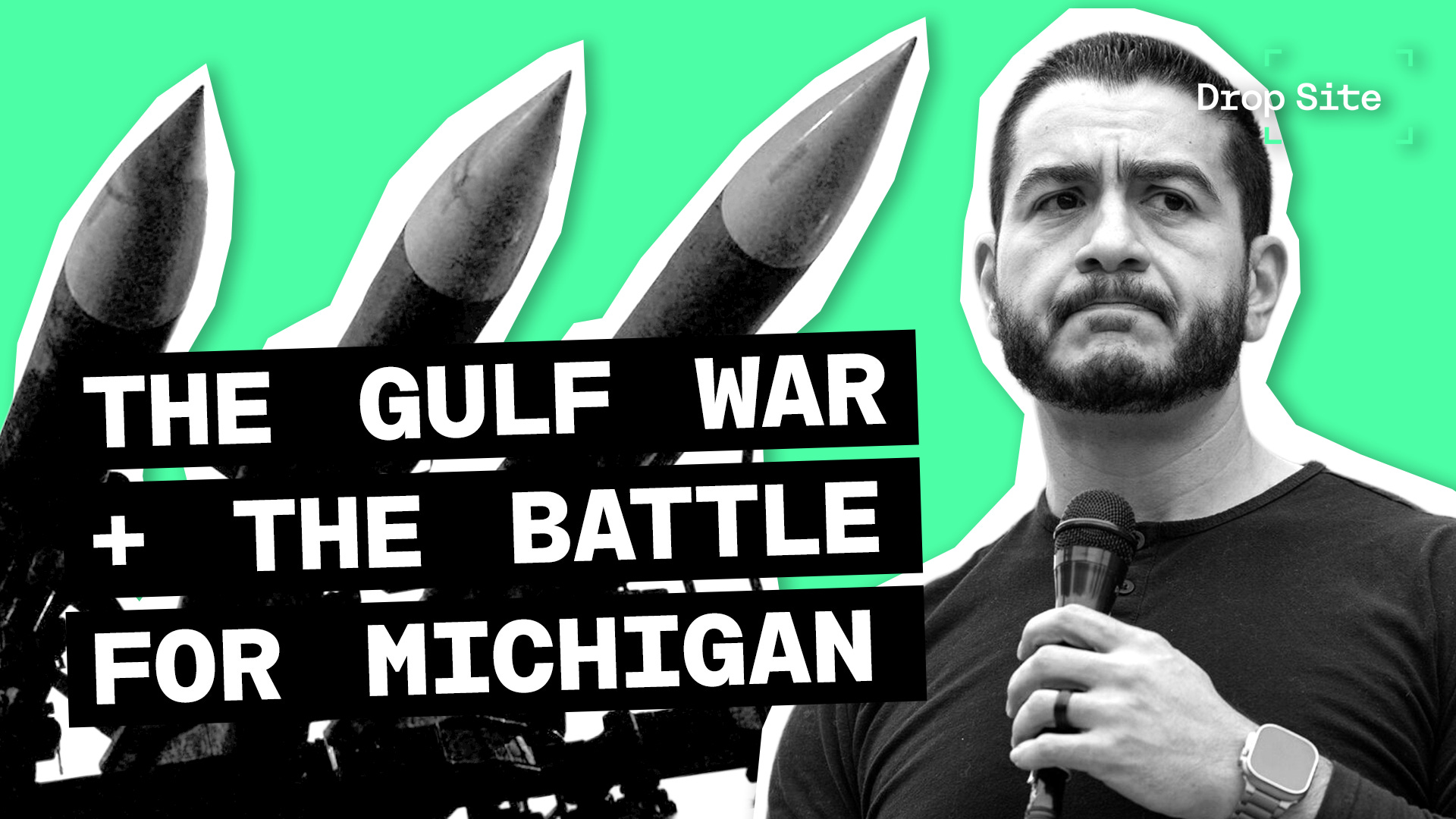 The Gulf War and the Battle For Michigan 21.07.2026 1ó 19pAs the U.S. continues to carry out an air campaign against Iran and attempts to wrest back control of the Strait of Hormuz, the war is already reshaping the future of Gulf Arab states that rely on the critical waterway as well as the protection of U.S. military bases in the region.On this week’s stream, Ryan Grim and Murtaza Hussain discuss the impact of the war on the GCC states with Amir Handjani, an analyst on the region and board member at the Quincy Institute.Grim and Hussain also discuss the upcoming Democratic primary races in Michigan with progressive 7th Congressional District candidate Will Lawrence, as well as Michigan political reporter Sam Robinson.Read and subscribe at www.dropsitenews.com. Get full access to Drop Site News at www.dropsitenews.com/subscribe
 -
 Ro Khanna and Israeli Apartheid, the Iran War, and the Politics of the World Cup 14.07.2026 1ó 37pOn this week’s stream, Rep. Ro Khanna describes being detained by Israeli settlers backed by the Israeli army in the West Bank earlier this month—and talks about his meetings with Palestinians in the occupied West Bank. Khanna and Drop Site co-founder Jeremy Scahill debate Palestinian armed resistance, the Iron Dome, and Congress’s role.Then: As the FIFA World Cup enters its final week, visiting teams and fans have been subject to discriminatory treatment or bans by the U.S. FIFA has been accused of increasingly corrupt practices, poor officiating in matches has grown into accusations of systemic bias, and the issue of Palestine has been raised. Drop Site’s Sharif Abdel Kouddous speaks with Abdullah Al-Arian, a professor of history at Georgetown University in Qatar and editor of the book “Football in the Middle East: State, Society, and the Beautiful Game” about the politics of the World Cup.Subscribe to all our journalism at dropsitenews.com. Get full access to Drop Site News at www.dropsitenews.com/subscribe
 -
 Beyond the Battlefield: What Comes Next for the Iran and Gaza Wars 07.07.2026 1ó 5pSince October 7, 2023 and the launch of the genocidal war on Gaza, the U.S. and Israel have manufactured a reality in the Middle East—a new reality in which ceasefires have been redefined as a diplomatic cudgel to incapacitate any resistance to Israel’s wars and force surrender. Israel can continue its attacks, claiming self defense, while local, indigenous forces or resistance groups must adhere to not only the terms of the so-called agreements, but also to submit to new and evolving demands.Nowhere has this dynamic this been more pronounced than in the case of the Gaza ceasefire signed in October 2025. On the Drop Site News livestream, Diana Buttu, Palestinian human rights lawyer and a former legal advisor and negotiator for the Palestine Liberation Organization, speaks to Jeremy Scahill about the state of negotiations with Trump’s Board of “Peace.” Buttu and Scahill analyze the latest developments, including Israeli media predictions that Prime Minister Benjamin Netanyahu—currently campaigning for re-election—may launch another massive military operation in Gaza.Meanwhile, as millions of people gather in Iran for the multi-day funeral procession for the slain Supreme Leader Ayatollah Ali Khamenei, the future of the fragile Memorandum of Understanding between Tehran and the Trump administration hangs in the balance. President Donald Trump expressed surprise at the size of the crowds in Iran, saying he thought people hated Khamenei. For Iran’s leaders, the funeral has served as both an act of defiance and a warning to the U.S. and Israel.Vali Nasr, Professor of International Affairs and Middle East Studies at Johns Hopkins, joins Scahill and Murtaza Hussain for a wide-ranging discussion on Khamenei’s life and legacy. Nasr, whose latest book is “Iran’s Grand Strategy: A Political History,” also discusses the state of the Iran MOU, the prospects for a broader agreement and how Iran’s government would navigate attempts by the White House to strip Iran of its negotiating leverage.Subscribe to Drop Site News. Get full access to Drop Site News at www.dropsitenews.com/subscribe
 -
 Lebanon’s Surrender Agreement: Hezbollah Expert Amal Saad on Beirut’s “Framework” With Israel 02.07.2026 59pIn mid-June, the U.S. and Iran signed a memorandum of understanding that was formally intended to bring a halt to the war and open a path for negotiations on a range of issues, including the future of Iran’s nuclear program. Tehran, however, made clear that it would not proceed to any long-term deal unless the U.S. compelled Israel to end its war against Lebanon. Since the signing of the MOU, Israel has maneuvered to ensure its forces can remain entrenched in Lebanon and worked with the Trump administration to delink Hezbollah from the Iran deal. Hezbollah formally entered the war on March 2 and Iran has insisted that the ceasefire must apply not only to Iran, but to southern Lebanon as well. Israel and the U.S., however, embarked on an alternative path aimed at enlisting the Lebanese government as their local partner in a campaign aimed at disarming and dismantling Hezbollah.A subsequent “framework,” signed on June 26, between Israel and Lebanon appears to have succeeded in laying the foundations. The text portrays Hezbollah as an illegal insurgent movement and enables Israeli forces to remain indefinitely in Lebanon until Lebanese Armed Forces enact the “successful disarmament of non-state armed groups and dismantlement of their infrastructure.” Only after this is accomplished, would Israeli occupation forces “progressively redeploy out of the Lebanese territory.”As the U.S. and Iran continue indirect technical talks, there are mounting concerns in Tehran that Trump is simply using the negotiations to prepare for a resumption of the war. Tehran has also said that it will not stand idly by as Israel continues its attacks on Lebanon, pointing out that the MOU explicitly commits the U.S. to end the war.Drop Site’s Jeremy Scahill spoke with Amal Saad, a lecturer on international relations and politics at Cardiff University in the UK who is writing a book on Hezbollah and the Axis of Resistance. In a wide-ranging discussion, Saad offers a comprehensive analysis of the U.S.-Israeli campaign to co-opt the Lebanese government into the war against Hezbollah. They also discuss Iran’s regional and global position in the post-October 7 world, and Saad explains why she believes another war on Iran is inevitable.To subscribe to all our journalism, visit https://www.dropsitenews.com.Support us at https://givebutter.com/support-dropsite. Get full access to Drop Site News at www.dropsitenews.com/subscribe
 -
 From Lake Lucerne to Lebanon, U.S.-Iran Talks Stumble Forward 23.06.2026 1ó 13pThe United States and Iran continue to push forward with talks building on their recently signed MOU to end the current war and resolve outstanding differences between the two countries related to sanctions and the Iranian nuclear program. Following the failure of the joint U.S.-Israeli attack against Iran, Tehran has put forward what amount to victors’ terms in ongoing negotiations; including full relief from the U.S. sanctions regime, a recognized right to uranium enrichment, and a permanent ceasefire and Israeli withdrawal from Lebanon. Despite ongoing attempts at foiling the negotiations and restarting the war by Israel and neoconservatives in Washington, the Trump administration has pressed ahead with talks led by Vice President JD Vance. The negotiations now underway are taking place effectively on Tehran’s terms, with the U.S. forced back to the negotiating table after a weeks-long air campaign failed to suppress Iranian ballistic missile strikes and allowed Tehran to to take control of the Strait of Hormuz. Drop Site’s Ryan Grim, Jeremy Scahill, and Murtaza Hussain discuss the recent round of talks in Switzerland, the emerging strategic landscape in the Middle East after the war, and the prospects for a settlement in Lebanon. Additionally, Grim and Hussain discuss today’s primary election in New York and growing challenges to the influence of pro-Israel lobby groups in U.S. domestic politics. Get full access to Drop Site News at www.dropsitenews.com/subscribe
 -
 The State of War and Diplomacy: Iran, Lebanon, and Gaza 16.06.2026 1ó 4pThe United States and Iran reached an initial agreement early Monday to extend the ceasefire for 60 days and open the Strait of Hormuz. The text of the memorandum of understanding (MOU) has not been released, but Iran has publicly indicated that the deal includes a permanent cessation of military operations across all fronts, including Lebanon specifically. The signing of the agreement is set for Friday in Switzerland, with U.S. Vice President JD Vance saying he plans to attend and leaving open the possibility President Donald Trump could as well. In the first 24 hours after the MOU was formally announced, the Israeli military carried out drone strikes, artillery fire, ground incursion attempts, and road demolitions across south Lebanon, killing at least three civilians and wounding several others. Despite this, thousands of displaced Lebanese have begun making their way south looking to return to their homes.Drop Site’s Ryan Grim, Jeremy Scahill, Murtaza Hussain, and Sharif Abdel Kouddous discuss the MOU between the U.S. and Iran, its geopolitical implications, how Lebanon is a pivotal part of the deal, and why Palestine is not specifically named in the agreement. Get full access to Drop Site News at www.dropsitenews.com/subscribe
 -
 Erratic Fury: Trump and Iran—On the Precipice of More War or a Return to Diplomacy 09.06.2026 1ó 20pPresident Donald Trump has repeatedly claimed over the past two months that a deal with Iran is imminent. Following an exchange of military attacks between Iran and Israel this week, Trump is treading in familiar narrative waters. Iran has made clear it remains open to a deal and charges that the basic contours of an agreement were in place weeks ago. Trump, Iranian officials charged, sabotaged an agreement by continuing the military blockade of the Strait of Hormuz, striking Iran and allowing Israel to intensify its scorched earth attacks in southern Lebanon. After Iran hit back, launching missiles at Israel in retaliation for Israeli attacks on Beirut, Trump’s tone shifted back to diplomacy.On the Drop Site live stream, Jeremy Scahill and Ryan Grim speak to Mohammad Ali Shabani, editor of Amwaj.Media, about the state of diplomacy and war, as well as Israel’s covert operations in Iran and whether Tehran will continue to define a ceasefire in Lebanon as a red line for any deal. Then, international law expert Maryam Jamshidi and political analyst Negar Mortazavi discuss the future of Iran’s control of the Strait of Hormuz and how international law has been attacked since the Gaza genocide began. Get full access to Drop Site News at www.dropsitenews.com/subscribe
 -
 Why the Iran Talks Now Hang on Lebanon 02.06.2026 1ó 34pTehran suspended ceasefire negotiations over Israel’s escalating attacks in Lebanon and U.S. strikes on Iranian shipping, as any prospect of a deal grows increasingly remote. Iran’s Foreign Ministry says a permanent Lebanon ceasefire is now a prerequisite for any agreement, while Strait of Hormuz closures send fertilizer and diesel prices soaring.At the same time, Israel is pursuing a systematic campaign to empty entire communities across southern Lebanon and has destroyed approximately 60 villages near the southern border. Amnesty International warns the displacement orders “don’t constitute lawful advance warnings” and amount to the war crime of unlawful transfer.* Drop Site’s Ryan Grim and Maysa Mustafa kicked off this week’s livestream speaking with Dr. Adam Hamawy, a plastic surgeon and U.S. veteran who performed surgeries in Gaza, and is now the frontrunner in New Jersey’s 12th congressional district in a primary where U.S. support for Israel’s wars in the Middle East have been defining issues.* Trita Parsi of the Quincy Institute joined to break down whether the Iran deal is collapsing in real time.* Sean Vitka of Demand Progress discussed Rashida Tlaib’s Lebanon War Powers Resolution and Democratic Party inaction on the war.* And Drop Site contributor Lylla Younes also joined live from Beirut, speaking on her reporting of the ethnic cleansing of southern Lebanon—including her latest report on the Ain Arab village, where soldiers went door to door telling residents: “You either leave right now or you die.”Stay INFORMED on our latest reporting: DropSiteNews.comWATCH our weekly live show, streaming every TUESDAY morning, on Substack, YouTube, and FacebookLISTEN to the show as a podcast on Apple, Spotify, RSS, or wherever you get your podcasts.SUBSCRIBE to Drop Site News. Our reporting is FREE, and we are committed to keeping it that way.To help support our work, please consider upgrading to a paid subscription, it’s what fuels our reporting: https://www.dropsitenews.com/subscribeDONATE to support Drop Site's independent journalism. Help us continue our work with a tax-deductible contribution at donate.dropsitenews.com. Get full access to Drop Site News at www.dropsitenews.com/subscribe
 -
 U.S.-Iran Negotiations in the Balance, Israel Escalates Attacks Against Gaza and Lebanon 26.05.2026 1ó 12pIran on Tuesday denounced U.S. strikes a day earlier as a sign of “bad faith and unreliability” as negotiations for a framework for a deal to end the war hang in the balance. The U.S. military confirmed that it had struck vessels near the southern Iranian port city of Bandar Abbas on Monday in what called “self-defense strikes,” while Iran’s Islamic Revolutionary Guard Corps said it shot down a MQ-9 Reaper drone that entered Iranian airspace. Meanwhile, Iran’s Foreign Minister Abbas Araghchi, Parliament Speaker Mohammad Bagher Ghalibaf, and Central Bank Governor Abdolnaser Hemmati traveled to Doha on Monday evening for continued talks with mediators.A senior Iranian official told Drop Site on Friday that Tehran had put forward a set of terms as a framework for a deal, including the provisional reopening of the Strait of Hormuz—contingent on an end to the U.S. blockade of Iranian ports, the release of billions of dollars in frozen Iranian assets, and a plan to compensate Iran for damages incurred in the war. The official also stated that the Iranian framework would require an agreement to permanently end the war first, followed by immediate negotiations to reach a deal over the nuclear program.Drop Site’s Jeremy Scahill speaks with Dr. Foad Izadi, professor of American studies and international relations at University of Tehran, about the latest. Sharif Abdel Kouddous and Jeremy also speak with Eyad Amawi of the Gaza Relief Committee in Deir al-Balah about the escalating Israeli assault on Gaza and the growing hunger crisis. Sharif also discusses the latest in Lebanon as Israeli Prime Minister Benjamin Netanyahu escalates Israeli attacks, and Jeremy outlines how President Donald Trump’s Board of Peace has unilaterally rewritten the Gaza ceasefire agreement in an effort to compel Palestinians to surrender their liberation cause and institutionalize Israeli domination over the future of the Gaza Strip. Get full access to Drop Site News at www.dropsitenews.com/subscribe
Hasonló podcastok


Népszerű itt:
Ez a podcast ezeknek az országoknak a podcast-listáin is szerepel.


