
Inspired with Alexa von Tobel
Inspired Capital
0
Inspired with Alexa von Tobel is a podcast that features in-depth conversations with ambitious individuals. Host Alexa von Tobel, founder of Inspired Capital, explores guests' pivotal childhood moments and the advice that shaped their life paths. The show aims to uncover what it takes to be a visionary who tackles challenges with grit and resilience.
Epizódok
-
 Boris Sofman Went from Leading Autonomous Trucking at Waymo to Building Bedrock Robotics 03.06.2026 44pBoris Sofman has spent his entire career at the forefront of physical AI. He co-founded Anki, shipping more than 3.7 million consumer robots globally, before leading autonomous trucking at Waymo, where he helped pioneer the world's most advanced driverless vehicle program. Now he's applying everything he learned to the machines that build our world. Boris is the co-founder and CEO of Bedrock Robotics, valued at $1.75 billion, which retrofits existing construction equipment into fully autonomous machines at a moment when demand is skyrocketing and the industry faces a shortage of more than 500,000 workers. What You'll Learn: How leading autonomous trucking at Waymo shaped Boris's vision for the future of physical AI Where autonomous trucking is headed and what the next decade looks like for the industry Why the construction industry is at a breaking point and what autonomy does about it What it actually takes to make a machine driverless outside of a test environment How autonomous heavy machinery will fundamentally change the way we build What the world looks like when physical AI works at scale across the entire economy Chapters: 2:16 Introduction4:40 Boris's Time at Waymo9:35 The Future of Autonomous Trucking13:19 What Autonomous Trucking Looks Like in Practice18:15 How Self-Driving Changes Our Cities20:40 The Birth of Bedrock Robotics24:55 What Bedrock Actually Does26:10 Why Retrofit Instead of Build From Scratch28:23 The Role of Humans on the Autonomous Job Site30:45 The Advantages of Going Autonomous34:05 Big Predictions for Physical AI36:48 The Contrarian Take on Humanoids38:50 What Excites Boris Most39:59 Quick Fire Round Follow Boris Sofman and Bedrock Robotics: Website: https://bedrockrobotics.com/ LinkedIn: https://www.linkedin.com/company/bedrock-robotics/ X: https://x.com/BedrockRobotics Boris's LinkedIn: https://www.linkedin.com/in/bsofman Boris's X: https://x.com/bsofman Follow Inspired: Website: https://www.inspiredcapital.com/ LinkedIn: https://www.linkedin.com/company/inspired-capital-partners X: https://x.com/InspiredCap Instagram: https://www.instagram.com/inspiredcapital/ Substack: https://alexavontobel.substack.com/
 -
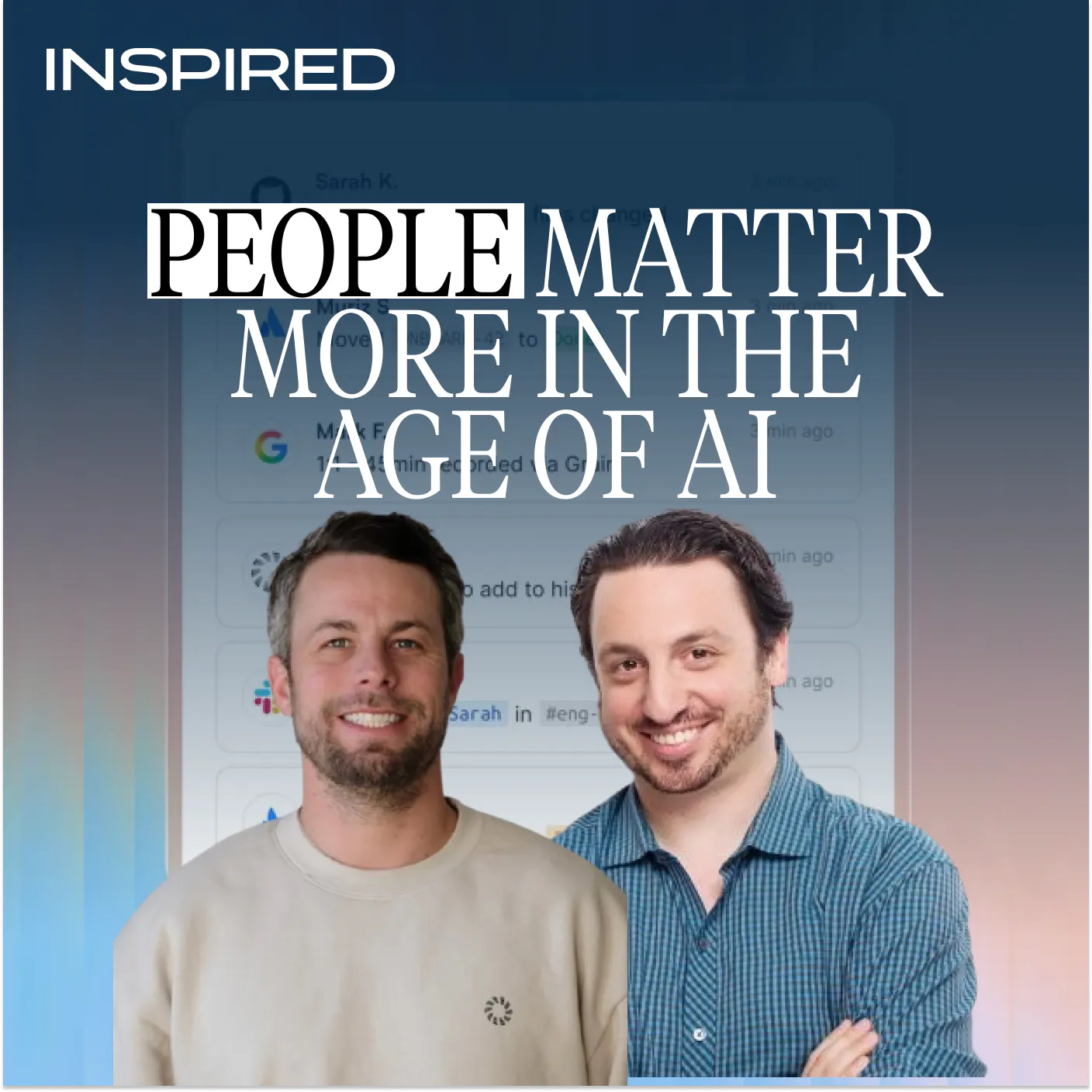 Max Shaw and Brian Distelburger on Reinventing People Management with Windmill 20.05.2026 52pWindmill co-founders Max Shaw and Brian Distelburger are building the AI-powered people platform for how companies develop and manage their talent. Founded alongside Mark Tanner, Windmill replaces the broken, once-a-year performance review with something faster, smarter, and that employees actually love. Since launching in November 2025, they've reached more than 100 customers including Kalshi, The Farmer's Dog, and Rho, and Inspired is so proud to have led their recent seed round. As AI makes every employee more powerful, the companies that win will be the ones that put the best talent in exactly the right role. What You'll Learn: Why the current state of performance management is broken How AI will change the relationship between managers and their teams What the future of work looks like as companies grow more complex Why skills assessment is about to become one of the most important things a company can do Why Max and Brian are optimistic that AI will benefit people at work Chapters: 00:00 Introduction 02:33 Meet Max and Brian 03:44 What Is Windmill 05:38 The State of Performance Reviews 09:20 Where Windmill Is Headed 13:20 AI Coaching for Every Employee 16:15 Why They Chose This Problem 18:33 The Biggest Change Management Moment of Our Lives 24:15 Early Traction and What's Working 27:30 Where the World of Work Is Going 34:55 The IKEA Example 36:16 Skills Assessment and Workforce Redeployment 41:18 Why New York 43:35 Quickfire Follow Max, Brian, and Windmill: • Website: https://gowindmill.com/ • LinkedIn: https://www.linkedin.com/company/gowindmill/ • X: https://x.com/trywindmill • Max's LinkedIn: https://www.linkedin.com/in/max-shaw-82287025/ • Brian's LinkedIn: https://www.linkedin.com/in/briandistelburger/ Follow Inspired: • Website: https://www.inspiredcapital.com/ • LinkedIn: https://www.linkedin.com/company/inspired-capital-partners • X: https://x.com/InspiredCap • Instagram: https://www.instagram.com/inspiredcapital/ • Substack: https://alexavontobel.substack.com/
 -
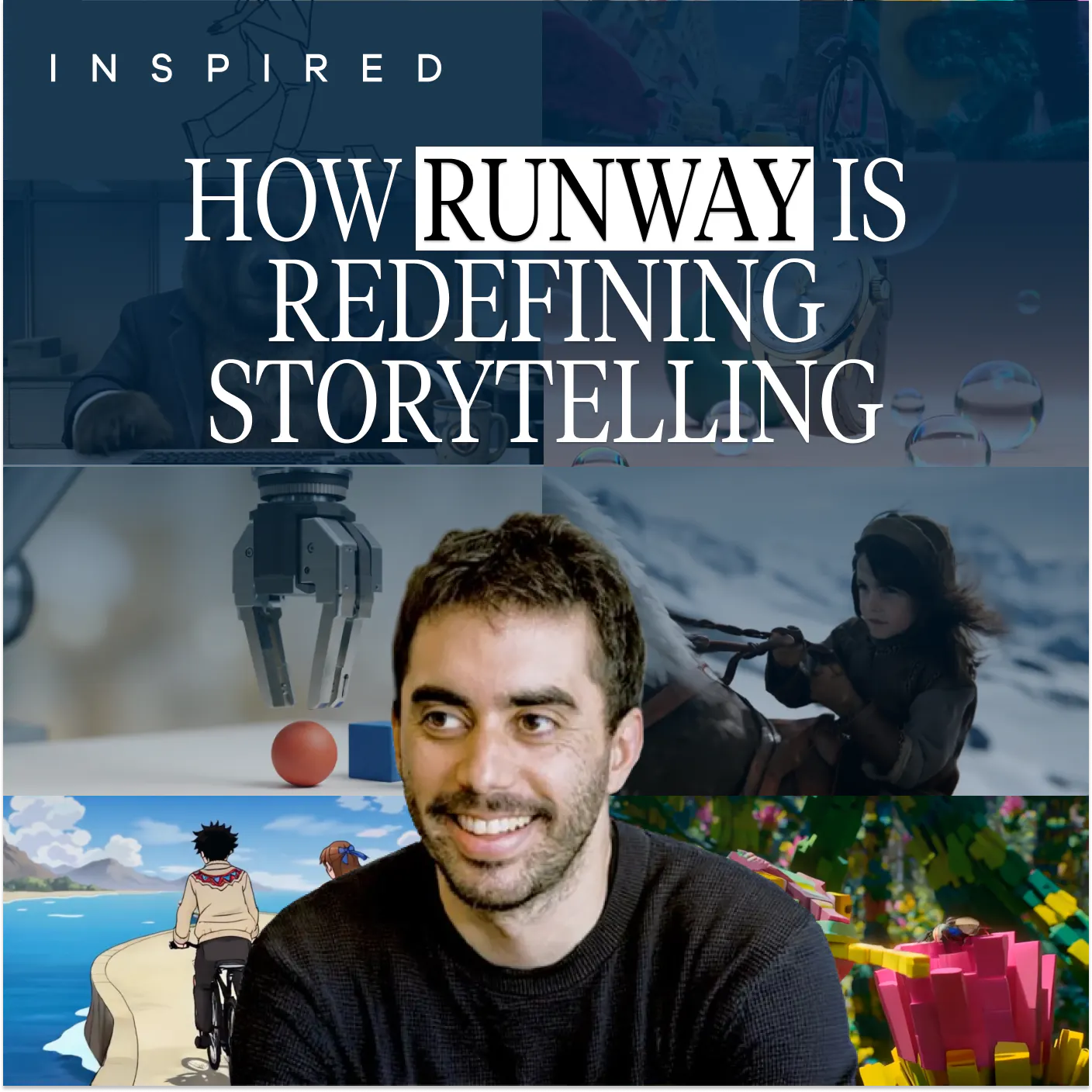 Cristóbal Valenzuela on How Runway's World Models Are Changing Storytelling 06.05.2026 52pRunway founder and CEO Cristóbal Valenzuela grew up in Chile before moving to New York to study at NYU's ITP program, where the seeds of Runway were planted. Since co-founding the company in 2018, he has built it into one of the leading generative video AI companies in the world, having raised more than $500M in funding and pioneered some of the first widely used text to video and video to video models. Runway is now pushing toward what Cristóbal calls world models, systems that can understand and simulate reality in ways that are reshaping film, advertising, gaming, and beyond. The next era of human creativity is just getting started. What You'll Learn: Why world models represent a fundamental shift in how we create and consume content How the democratization of storytelling will change culture as we know it What real time video generation means for the future of entertainment and gaming How AI is poised to transform the advertising industry from the ground up Why optimism, not fear, is the right response to AI and the future of work Chapters: 00:00 Introduction01:30 Growing Up in Chile04:20 What Is Runway06:38 Real World Use Cases10:25 The Technology Behind the Breakthrough12:00 Underestimating the Speed of Progress14:55 If Content Is Free Does It Lose Value20:10 How Runway Makes Money24:05 The Real-Time Generation Revolution29:15 Gaming and Interactive Experiences33:00 The Future of Advertising35:45 The Consequences of Infinite Content37:20 Why Billions of Stories Are Waiting41:00 Will AI Kill Jobs44:00 Quickfire Follow Cristóbal and Runway: Instagram: https://www.instagram.com/runwayapp LinkedIn: https://www.linkedin.com/company/runwayml/ X: https://x.com/runwayml Youtube: https://www.youtube.com/runwayml Cristóbal's LinkedIn: https://www.linkedin.com/in/cvalenzuelab/ Cristóbal's X: https://x.com/c_valenzuelab Follow Inspired: Website: https://www.inspiredcapital.com/ LinkedIn: https://www.linkedin.com/company/inspired-capital-partners X: https://x.com/InspiredCap Instagram: https://www.instagram.com/inspiredcapital/ Substack: https://alexavontobel.substack.com/
 -
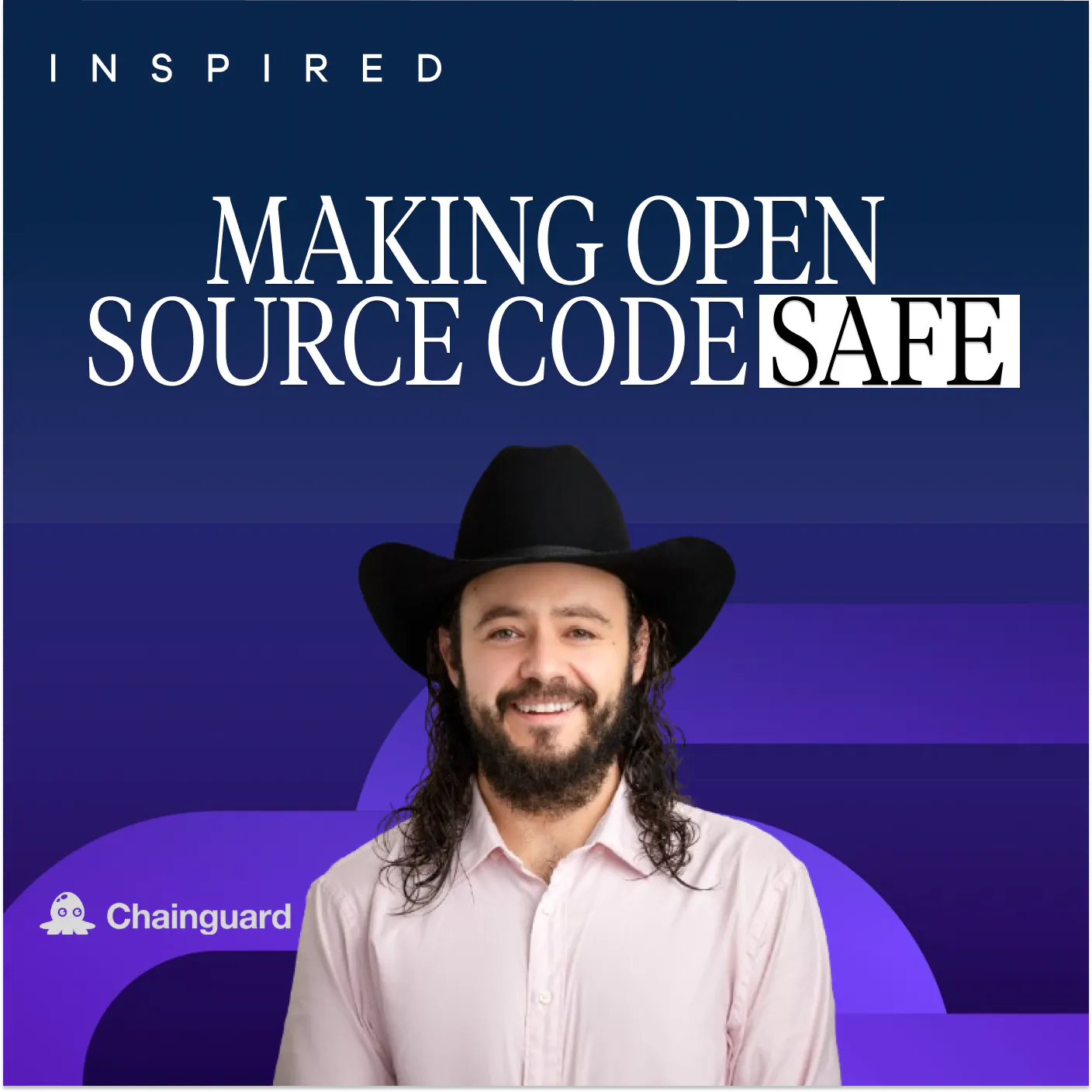 Dan Lorenc on Building Chainguard into a $3.5B Open Source Security Company 22.04.2026 50pChainguard founder and CEO Dan Lorenc is building the security layer the entire software industry should run on. After nearly a decade at Google working on open source infrastructure, Dan co-founded Chainguard in 2021 to solve a problem hiding in plain sight. 90 to 95 percent of the code powering the world's software is open source, free, and largely unsecured. Now leading a $3.5B+ company with more than 600 customers, Dan shares his unfiltered take on where software security, AI, and the future of engineering are all headed. What You'll Learn: How Chainguard is securing the open source software the world runs on Why the AI coding boom is making software security harder, not easier What the future of software engineering actually looks like Why CISOs can't afford to say no to AI, even when it scares them Whether we've already hit AGI in the software space How to think about your own digital security right now Chapters: 00:00 Introduction01:30 Growing Up a Builder04:22 The Origin of Chainguard08:20 How Chainguard Works and Who It's For13:20 How Chainguard Cleans and Secures the Code15:20 How Dan Decides Where to Expand17:15 The Future of Software and Software Engineers25:30 Where Chainguard Goes From Here26:48 Are We Already at AGI?28:30 The Security Crisis No One Talks About31:27 Why CISOs Can't Afford to Say No33:25 Biggest Trade-Offs and What's Next for Chainguard38:00 What Disappears in an AI World39:22 What Shocked Dan Most and What Scares Him42:30 When Security Becomes Part of Engineering44:39 QuickfireFollow Dan and Chainguard: Website: https://www.chainguard.dev/ LinkedIn: https://www.linkedin.com/company/chainguard-dev/ Youtube: https://www.youtube.com/@chainguard X: https://x.com/chainguard_dev Dan’s LinkedIn: https://www.linkedin.com/in/danlorenc/ Dan’s X: https://x.com/lorenc_dan Follow Inspired: Website: https://www.inspiredcapital.com/ LinkedIn: https://www.linkedin.com/company/inspired-capital-partners X: https://x.com/InspiredCap Instagram: https://www.instagram.com/inspiredcapital/ Substack: https://alexavontobel.substack.com/
 -
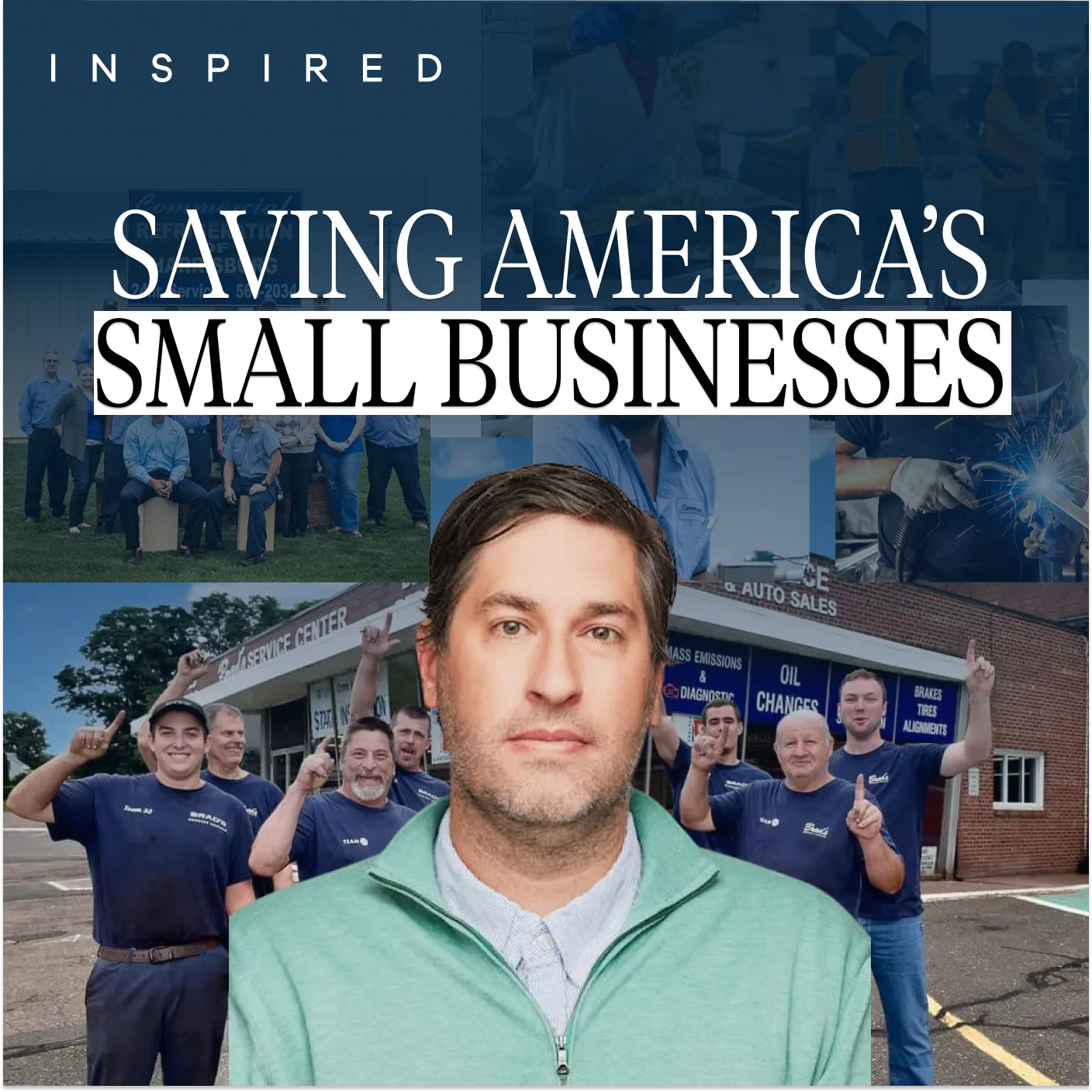 Teamshares CEO Michael Brown on Why Going Public Is Just the First Inning 10.04.2026 48pTeamshares CEO Michael Brown is on a mission to address one of the biggest problems in the American economy. Millions of small businesses are owned by Boomers and Gen X approaching retirement, and most will never find a buyer. Teamshares buys these businesses from retiring owners. With more than 90 companies acquired across 30 states, over 500 million in revenue, and a Nasdaq listing on the horizon, Michael is proving that the small business economy deserves a better solution. What You'll Learn: How Teamshares actually works and why the model gets stronger as it scales What nearly 100 acquisitions have taught Michael about small businesses that most people don't see Why going public changes everything for Teamshares and why Michael says it's still the first inning How he built through COVID and the 2022-2023 rate shock without losing conviction The long-term mindset behind building a company with a 200-year plan Chapters: 01:30 Michael's Childhood 04:04 What Is Teamshares 07:44 Why Going Public Is Just the Beginning 15:30 Lessons from 90 Acquisitions 18:50 The Future of Teamshares 28:19 The 200-Year Mindset 32:25 Building Culture at Scale 36:00 Leading Through Market Shocks 37:55 Quickfire Follow Teamshares: Website: https://www.teamshares.com/ LinkedIn: https://www.linkedin.com/company/teamshares/ X: https://x.com/Teamshares Follow Inspired: Website: https://www.inspiredcapital.com/ LinkedIn: https://www.linkedin.com/company/inspired-capital-partners X: https://x.com/InspiredCap Instagram: https://www.instagram.com/inspiredcapital/ Substack: https://alexavontobel.substack.com/ Important Disclosures and Disclaimers This podcast episode features a discussion with Michael Brown, Co-Founder and CEO of Teamshares, Inc. (“Teamshares”), and Alexa von Tobel, Founder and Managing Partner of Inspired Capital. Ms. von Tobel and Inspired Capital are existing investors in Teamshares and may have a direct financial interest in the outcome of the proposed business combination described below. Proposed Business Combination. Teamshares has entered into a definitive agreement for a business combination with Live Oak Crest Acquisition Corp. (“Live Oak”), a special purpose acquisition company. In connection with the proposed transaction, a registration statement on Form S-4 (the “Registration Statement”) has been filed with the U.S. Securities and Exchange Commission (the “SEC”). This podcast does not constitute an offer to sell or the solicitation of an offer to buy any securities. For important information about the proposed transaction, including where to find the Registration Statement and other legal disclaimers, please refer to the press release available at https://www.businesswire.com/news/home/20260403515446/en/Teamshares-and-Live-Oak-V-File-S-4. Clarifications. References to Operating EBITDA throughout refer to Pro Forma Operating EBITDA, which includes pre-acquisition results of acquired businesses as if they had been owned for the full year. References to “Corporate EBITDA” throughout the episode refers to 2025 Pro Forma Adjusted EBITDA. Investors should review the full set of assumptions and risk factors accompanying these metrics in the Registration Statement, including a full reconciliation of any non-GAAP measures.
 -
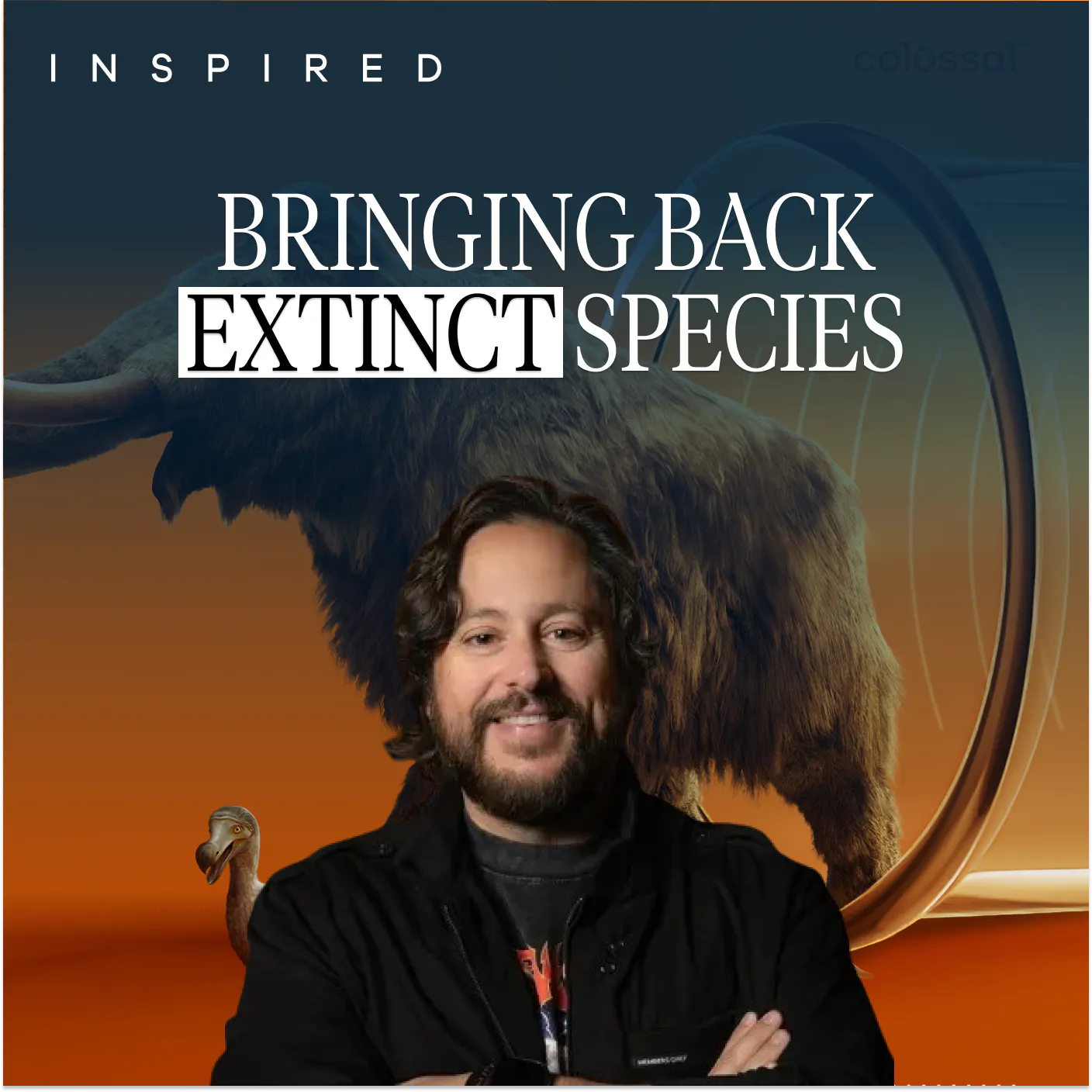 Replay: How Ben Lamm (Colossal Biosciences) is Bringing Back Extinct Species 25.03.2026 58pWhat happens when humanity faces the sixth mass extinction event in Earth's history? Serial entrepreneur Ben Lamm believes we need a backup plan. With a track record of building and exiting companies across AI, gaming, and conversational intelligence, Ben took on his most audacious venture in 2021: co-founding Colossal Biosciences with Harvard geneticist Dr. George Church to bring extinct species back to life. The company has already successfully de-extincted the dire wolf and aims to return woolly mammoths to the Arctic by 2028. In this episode, Ben shares how his self-described "unemployable" streak became his entrepreneurial superpower, why asking naive questions helps him tackle impossible challenges across industries, and how Colossal's breakthrough technologies represent humanity's essential insurance policy for planetary survival. Follow Inspired: Website LinkedIn X Instagram Substack
 -
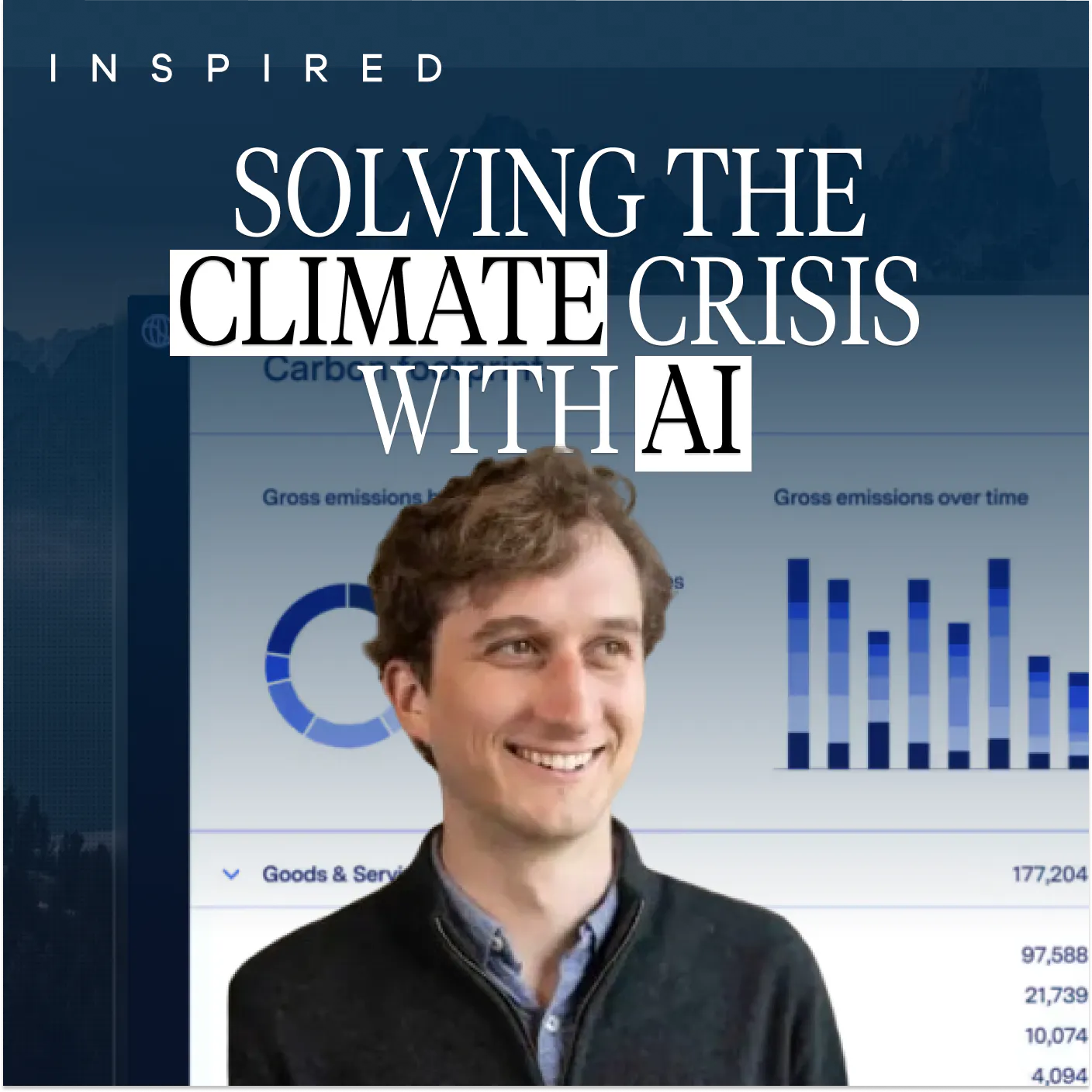 Taylor Francis on How Watershed Is Solving the Climate Crisis 11.03.2026 47pWatershed CEO Taylor Francis is building the infrastructure for companies to decarbonize at scale. After building Stripe's climate program, he saw how technology could move the needle faster than policy alone and set out on his journey as a founder. With a 500 million ton CO2 reduction goal by 2030 and customers like FedEx, Walmart, Airbnb, and Spotify, Taylor is proving that climate action can be both urgent and profitable. What You'll Learn: Taylor's journey from An Inconvenient Truth to founding Watershed What he learned at Stripe about scaling impact and building mission-driven companies How supply chain collaboration is the real lever for decarbonization (and why it matters more than you think) What the next decade of climate actually looks like and why the world is winning faster than predicted The frameworks and principles that attract the best people to solve the hardest problems Chapters: 1:57 Growing Up and An Inconvenient Truth 5:35 From Princeton to Policy 7:40 What Stripe Taught Him About Scale 9:54 The Origin of Watershed's 500 Megaton Mission 13:09 Breaking Down Scope One, Two, and Three Emissions 16:00 How Watershed Works With Fortune 500 Companies 18:50 The Story Behind the Name Watershed 21:00 Why Network Effects Matter in Decarbonization 23:15 What the Best Investors Taught Him 28:15 The Truth About Climate Today 33:10 Where the World Is Actually Headed 36:20 Product Footprints and AI Done Right 39:42 Why Domain-Specific AI Beats Generic Models 41:00 Quick Fire Follow Watershed and Taylor: Watershed Website Watershed LinkedIn Taylor Francis LinkedIn Follow Inspired: Website LinkedIn X Instagram Substack
 -
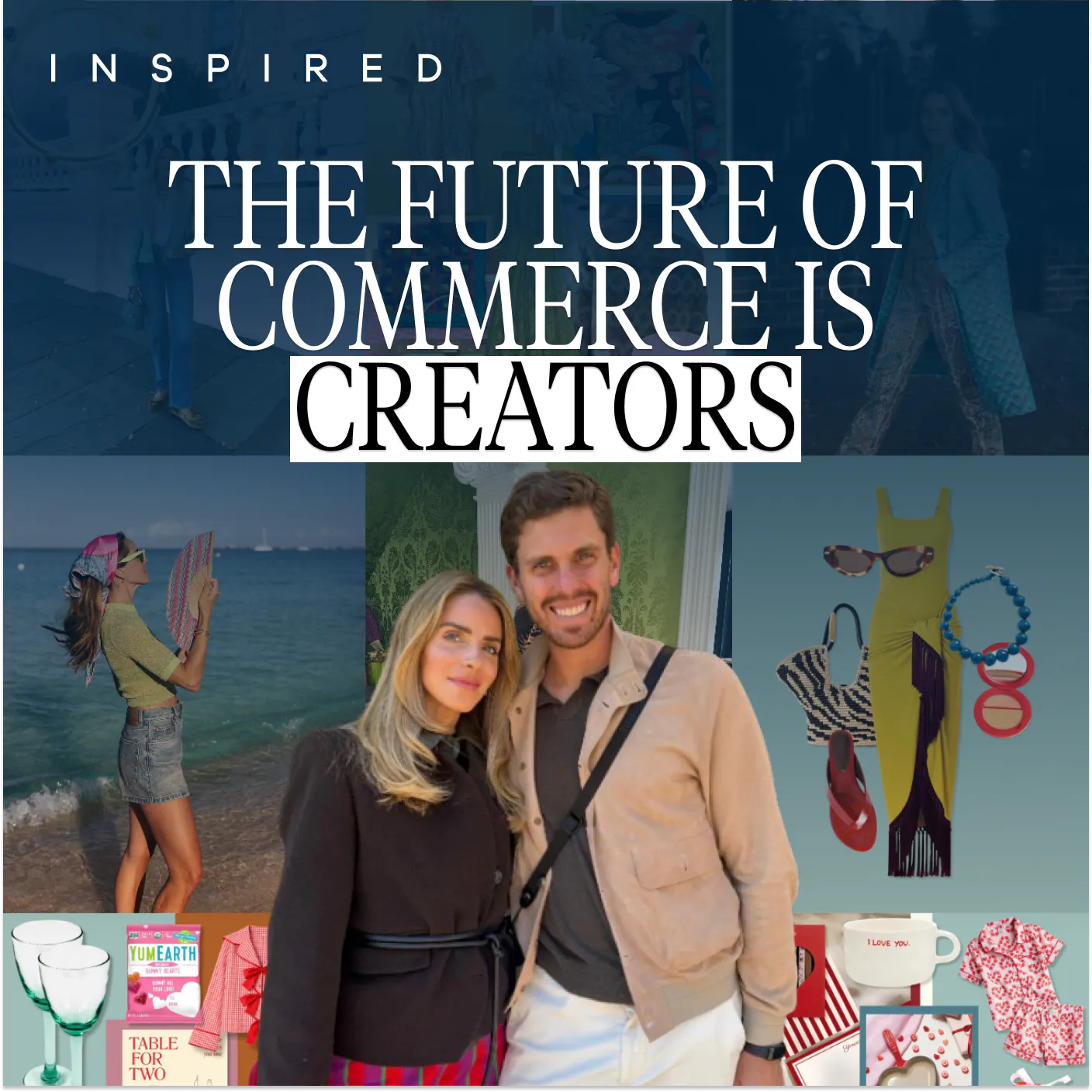 Julia and Thomas Berolzheimer on Why the Future of Shopping Will Run Through Creators 25.02.2026 42pJulia Berolzheimer and Thomas Berolzheimer have spent 15 years turning a fashion blog into one of the most powerful e-commerce brands in the creator economy. What started with a camera and an idea in 2011 has grown into a multi-platform empire spanning a blog, Instagram, Substack, ShopMy, Amazon, and their newest venture, Coreli. What You'll Learn: How Julia and Thomas built one of the most trusted brands in the creator economy Why curation beats creation when it comes to driving real commerce How they think about managing content, platforms, and technology as a team Where AI fits in and where it doesn't for creators who've built on authenticity What the next decade of the creator economy actually looks like Chapters: 01:52 Intro 02:35 The Beginning of Julia and Thomas's Journey 04:45 Milestones and Evolution of Gal Meets Glam 06:41 Curation and How Julia Starts Every Morning 11:30 Managing Content Across Different Platforms 15:34 ShopMy 20:25 Tools and Technology 25:20 How Julia and Thomas Work Together 29:00 The Future of the Creator Economy 31:05 Using AI for Influencer Content 35:45 Quickfire Round Follow Julia and Thomas Berolzheimer: Julia Berolzheimer Blog Julia's Instagram Thomas' Instagram Substack Coreli Follow Inspired: Website LinkedIn X Instagram Substack
 -
 Solace Founder Jeremy Gurewitz Raises $130M to Transform Healthcare Advocacy 11.02.2026 51pSolace founder and CEO Jeremy Gurewitz is building a marketplace that connects patients with healthcare advocates—covered by insurance. After losing his mother to pancreatic cancer and witnessing firsthand how difficult it was to navigate the US healthcare system, Jeremy founded Solace to help every American manage the overwhelming complexity of healthcare, from finding the right doctors to dealing with insurance. Now, after raising $130 million in a Series C led by IVP, Solace is expanding into commercial insurance and scaling nationally. With a patient NPS of 90 and data showing improved outcomes and lower costs, Jeremy shares how he is building for a future where healthcare advocacy becomes as standard as having a primary care physician. What You'll Learn: Jeremy's personal journey from losing his mother to building Solace How healthcare advocacy works and why patients achieve a 90+ NPS Why the US healthcare system is so broken and how advocates fix it Where Jeremy sees healthcare heading in the next decade Chapters:02:00 Growing Up with a Doctor Mother06:45 From Quantitative Finance to Healthcare09:00 What Solace Does for Patients11:38 Why Inspired Invested in Solace12:45 Real Stories of Solace Saving Lives17:35 Why the US Healthcare System Is So Broken20:35 Building a Marketplace of Healthcare Advocates22:45 Measuring What Matters: Outcomes and Costs28:50 Announcing Solace's $130M Series C30:31 Building Culture at Scale33:00 Where Solace Is Headed36:30 When AI Helps and When Humans Are Essential40:20 Jeremy's Predictions for Healthcare in 2035 Follow Solace and Jeremy: • Solace Website • Solace LinkedIn • Jeremy Gurewitz LinkedIn Follow Inspired: • Website • LinkedIn • X • Instagram • Substack
 -
 Kevin Ryan, the Godfather of NYC Tech, on AI in the Decade Ahead 28.01.2026 48pKevin Ryan is known as the godfather of New York City tech. Over three decades, he's founded or backed companies worth more than $40 billion combined, including DoubleClick (acquired by Google), MongoDB (now valued at $30 billion), Business Insider (sold for $450 million), and Gilt Group. As founder of AlleyCorp, Kevin has spent his career building category-defining companies and correctly predicting major technology shifts before they happened. From betting on the internet in 1996 to understanding AI's trajectory today, Kevin shares his framework for seeing what's next and why speed executed properly changes everything. What You'll Learn: How Kevin spotted the internet would change everything in 1996 and the patterns he uses to see what's next The two categories Kevin is betting on: vertical AI applications and deep science breakthroughs Why winning the first four years matters more than anything else How to compete for top 0.1% talent in today's market Kevin's 2036 predictions for work, NYC vs SF, and where technology is headed Chapters: 00:00 Introduction02:10 Kevin's Childhood 05:00 Reflecting on His Entrepreneurship Journey08:30 Speed Matters11:15 The Feeling When You Know a Company Is the One14:58 Why You Need Top 0.1% Talent17:00 Two Categories Kevin Is Betting On20:00 Drawing the Defensibility Line in Vertical AI22:22 Thinking About the Product23:10 Acceleration of Science and When Kevin's Antenna Goes Up25:08 What the World Looks Like in 203627:00 Job Loss and AI Displacement32:00 San Francisco vs New York City38:18 What Kevin Hopes for NYC Tech40:50 Interesting Topics Kevin Is Exploring42:36 Quickfire Round Follow AlleyCorp and Kevin: AlleyCorp Website AlleyCorp LinkedIn Kevin Ryan LinkedIn Follow Inspired: Website LinkedIn X Instagram Substack
 -
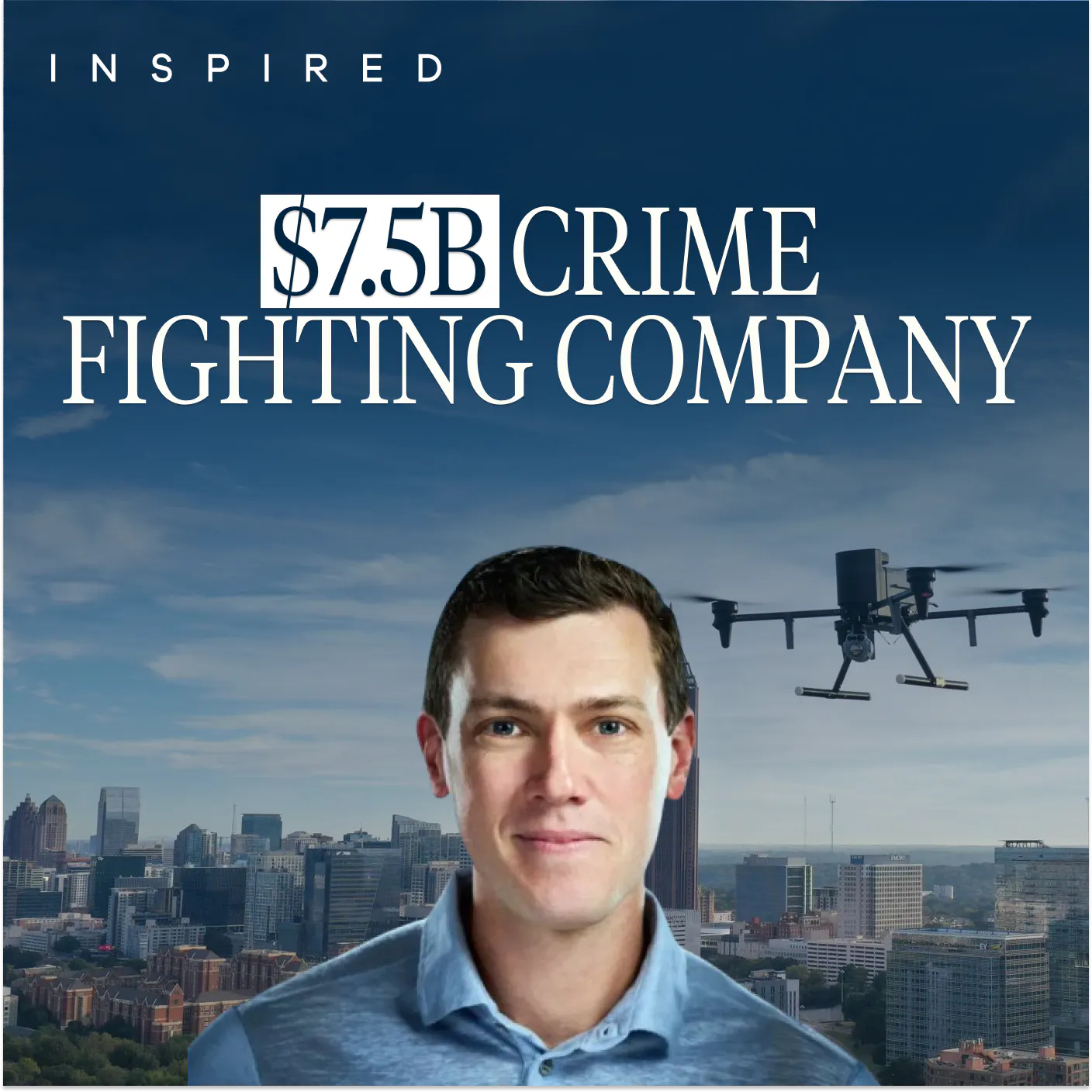 How Flock Safety Became a $7.5B Crime-Fighting Company with Founder Garrett Langley 14.01.2026 38pFlock Safety founder and CEO Garrett Langley is building the technology infrastructure to eliminate crime in America. A repeat entrepreneur who previously built and sold two companies for over $200 million each, Garrett now leads a $7.5 billion company serving more than 6,000 communities, 5,000 law enforcement agencies, and 1,000 businesses while helping achieve nearly a million arrests annually. He shares his conviction that safety drives economic prosperity, the surprising fact that drones arrive on scene 94% of the time before officers, and how AI will free police officers from paperwork to focus on community relationships. What You'll Learn: Why it's getting easier to commit serious crimes in America and what's driving that trend How technology creates precision in law enforcement that's never existed before Why drones are transforming emergency response and saving cities money How AI will reshape policing by eliminating paperwork and doubling community presence Why safety is the foundation for economic prosperity and job growth Chapters: 00:00 Introduction 02:08 Why Team Is the Only Thing That Matters 04:40 Growing Up in Atlanta: Learning Sales from His Father 06:45 What Is Flock Safety and How Does It Work? 11:20 The Crime Crisis No One Talks About 14:33 Serving Neighborhoods, Businesses, and Law Enforcement 17:00 Real Cases: From U-Hauls to Black SUVs 19:55 The Future of Policing in 10 Years 23:30 Building Technology While People's Lives Are at Stake 25:38 How Drones Are Changing Emergency Response 28:09 Scaling to $300M ARR at 70% Growth 29:38 Why Safety Drives Economic Prosperity 32:30 The "Do the Work" Culture at Flock 33:48 Quickfire Round Follow Flock Safety and Garrett: Flock Safety Website Flock Safety LinkedIn Flock Safety Instagram Flock Safety X Garrett’s LinkedIn Garrett’s X Follow Inspired: Website Instagram LinkedIn X Substack
 -
 2026 Predictions: Physical AI, Quantum Computing & the Future of Work 07.01.2026 6pAlexa is sharing her bold predictions for 2026, from physical AI transforming our crumbling infrastructure to quantum computing breakthroughs that will reshape innovation. With her signature focus on walking into the office "in 2035," she explain why AI won't destroy jobs but will instead free us from mundane work, how autonomous vehicles will give suburban parents their time back, and why smart machines are finally taking us out of the Roman times. Chapters: 00:09 Prediction #1- Physical AI 02:06 Prediction #2- Quantum 03:00 Prediction #3 - Jobs 05:04 Prediction #4 - Autonomous cars Follow Inspired: Website Instagram LinkedIn X Substack
 -
 Mikey Shulman on Building Suno into a $2.5B AI Music Platform 17.12.2025 56pSuno founder and CEO Mikey Shulman is building the future of music creation. A Harvard PhD physicist who led machine learning at Kensho before it was acquired by S&P Global, Mikey had a realization in 2022 that audio was a backwater in machine learning—despite being everywhere in human life. He turned that realization into $2.5B company Suno, which grew from zero to over 100 million users. Mikey shares how Suno scales to users generating seven million tracks a day, why music's format will change as dramatically in this era as it did in the shift from vinyl to streaming, and how AI is democratizing creativity for billions of people who never thought they could make music. What You'll Learn: How growing up in a loving, stable environment with parents who encouraged following your passions shaped Mikey's leadership style Why audio was overlooked in machine learning and how Suno made it a first-class citizen How Suno went from zero users to 100 million and zero revenue to $200 million in under three years Why a quarter of songs on Suno are remixes of other songs on the platform The difference between creation and consumption in music and why that boundary is disappearing How Suno is growing the entire pie of music rather than just splitting existing revenue Why the business model for music will change when the format becomes interactive What Mikey learned about speed versus craft when building for billions of users Chapters:01:52 Growing Up: Following What You Love03:45 From Physics to a PhD at Harvard05:30 Kensho and the Path to Machine Learning09:30 Teaching Machine Learning at MIT Sloan12:10 The Birth of Suno15:30 Why Audio When Everyone Chose Text16:25 Zero to 100 Million Users in Three Years18:55 Xania Monet: The First AI Billboard Artist21:55 Stories That Keep the Team Going24:15 Music Was Invented to Be Social27:27 The Business Model for Interactive Music29:44 Reshaping the Music Industry32:45 New Boundaries of Music Creation35:00 The Future: Interactive Albums and Fan Fiction37:35 Growing the Pie for All Creators40:00 Will There Be Agentic AI Stars?41:15 Building Teams That Move Fast43:30 Speed and Craft: The Cultural Balance45:30 What's Coming Next at Suno46:30 Guardrails in a Lower Stakes Domain47:47 Managing Chaos as a First-Time CEO at Scale49:55 Quickfire Round Follow Suno and Mikey: Suno Website Suno Instagram Mikey's LinkedIn Mikey's Twittter Follow Inspired: Website Instagram LinkedIn X Substack
 -
 Dylan Taylor on Building Voyager Technologies and the Future of Space Innovation 03.12.2025 49pDylan Taylor, founder and CEO of Voyager Technologies, is building the infrastructure that will define humanity's future in space. Through defense, space solutions, and Starlab, Voyager is working on some of the most ambitious aerospace projects of our generation. In this conversation, Dylan takes us from watching Star Trek as a kid in Idaho to becoming a publicly traded space company CEO. He shares what it's actually like to reach space aboard Blue Origin, why we're living through the biggest space boom in human history, and how space will transform our global economy. What You'll Learn: Why space isn't an industry but humanity's eighth continent His experience going to outer space How perfect real-time information about Earth will create trillions in economic value Projects that Voyager is working on How ambition shifted from personal glory to reflected glory through leadership Predictions for the space industry The frontier innovations that will enable humans to live and work in space Chapters:01:52 From Star Trek Dreams to Space Reality04:37 What is Voyager Technologies?07:02 Winning the Contract to Build Starlab09:40 Going to Space on Blue Origin16:36 The Overview Effect and What Astronauts Feel20:10 How Space Shifted Dylan's Perspective on Risk and Ambition22:40 The Henry Crown Fellowship and Leadership Transformation23:40 Inside Voyager Technologies' Projects26:50 The Purpose of Starlab as a Microgravity Laboratory31:00 Space Predictions35:23 Space as the Eighth Continent36:55 Perfect Real-Time Information About Earth38:50 What Keeps Dylan Up at Night About Space's Future41:07 Frontier Innovations in Quantum Computing and Beyond45:15 Quick Fire Round47:52 Outro Follow Voyager Technologies and Dylan: Voyager Website Voyager LinkedIn Voyager X Voyager Insta Dylan's LinkedIn Follow Inspired: Website Instagram LinkedIn X Substack
 -
 Axion Founder Daniel First on Solving the $4 Trillion Manufacturing Problem with AI 24.11.2025 46pAxion founder Daniel First is building the command center for American manufacturing that detects product failures before they reach customers. His AI-powered observability platform links IoT data, technician reports, and customer feedback across aerospace, medical devices, and consumer products to identify emerging issues manufacturers don't even know exist. Born from watching enterprise AI pilots fail at McKinsey, Axion is architecting customer-centric manufacturing where products iterate in real time based on what's breaking in the field. What You'll Learn: The trillion-dollar quality crisis plaguing American manufacturing and how AI is solving it Why most enterprise AI fails and what makes the rare successes different The future of American manufacturing competing on speed of customer learning How real-time field data is transforming product development cycles Unconventional founder habits that enable exceptional speed and deep thinking Chapters: 2:00 From Orthodox Debates to Independent Thinking3:00 Neuroscience, Philosophy, and Human Flourishing6:00 The Pivot from Academia to Industry7:20 Predicting AI as the Next Cultural Mania8:10 What Axion Actually Does for Manufacturers10:35 The Invisible Quality Crisis Costing Trillions13:30 Surprising Multi-Department Platform Adoption16:02 Surgery Equipment Failure With Two Root Causes16:47 Why Axion's Organization Looks Different18:00 Building an Ecosystem Across Product Lifecycle20:28 How Quality Data Drives Product Innovation21:58 American Manufacturing Winning on Empathy26:00 How Axion Succeeded Where 95% Fail28:50 Why Robotics Will Create More Quality Issues31:10 What Enterprise Leaders Think About AI32:50 Data Centers and Manufacturing Tailwind34:09 The Experimental Mindset Driving Speed36:30 Why 2010s Advice No Longer Applies38:40 The Vertical AI Revolution39:55 Quick-fire Questions Follow Axion and Daniel: • Axion Website• Axion LI • Daniel LI Follow Inspired:• Website• Instagram• LinkedIn• X• Substack
 -
 Nate Berkus on What It Takes to Become the Best at Your Craft 12.11.2025 59pInterior designer Nate Berkus is one of the most recognizable names in design. He started his firm at 24 with nothing but authenticity and hustle, building an empire spanning TV, books, product lines, and high-end interiors that's landed him on the AD100 list for a decade. His journey includes 12 years as Oprah's design expert, surviving the 2004 tsunami, and building a life with Jeremiah Brent as one of TV's first openly gay families. With his new book Foundations releasing November 18th, Nate reflects on what it takes to stay creatively obsessed for 30 years and build a household name in design. What You'll Learn: • How he started his firm at 24 and convinced clients to take a chance on him • Working with Oprah and his strategic approach to media • How surviving the 2004 tsunami fundamentally changed him and his reflections on that experience • Why he believes design is part magic, part alchemy, and part sociology • How he and Jeremiah Brent collaborate as both partners and business collaborators • The future of design and how AI will reshape the industry Chapters: 02:30 Intro 03:15 The Origin of His Design Obsession 06:10 Why Design Is Sociology 08:27 Starting a Firm at 24 With Nothing But Authenticity 14:28 How Surviving the 2004 Tsunami Changed Everything 19:50 The Strategy Behind Using TV as a Platform 23:00 A Funny Oprah Story 24:46 Why TV Was Always a Means to an End 28:40 How He Stays Creatively Obsessed After 30 Years 32:38 Never Stop Learning and Do What Feels Effortless 34:07 Partnership With Jeremiah as Parents and Business Partners 39:30 Why He Wrote Foundations and What It Means 42:15 How AI Will Impact the Future of Design 46:44 His Approach to Curation in the Creator Economy 50:05 Reflecting on His Biggest Life Moments 52:02 Quick-fire Round Follow Nate Berkus: • Nate's Website • Nate's Instagram Follow Inspired and Alexa: • Website • Instagram • LinkedIn • X • Substack
 -
 May Habib on Building Writer into a $2B+ Enterprise AI Platform 29.10.2025 46pWriter CEO May Habib is building the future of enterprise AI. Born in Lebanon as the oldest of eight kids, May grew up navigating chaos, multiple languages, and cultures, skills that shaped her into a founder willing to challenge assumptions. After pivoting from Qordoba, she built Writer's own foundational models and spent a decade solving real AI problems for Fortune 500 companies. Now leading a $2B+ company, May shares her bold vision for where AI is headed, from self-evolving LLMs that proactively guide us to why work in 2030 will be unrecognizable. What You'll Learn: How growing up as the oldest of eight in a Lebanese family shaped May's leadership style Why Writer focuses on highly regulated industries like healthcare and financial services The critical difference between generative AI and agentic AI How self-evolving AI will proactively prompt you instead of waiting for commands Why execution is going from scarce and expensive to abundant and on-demand What the average knowledge worker's job will look like in 2030 Why narrow job specs are dead and career lattices are the future The two disruptive forces that will make work unrecognizable in 30 years Why May believes there's no AI bubble Chapters: 00:00 Introduction01:50 Growing Up as the Oldest of Eight in an Immigrant Family05:30 Why Language Shapes Who We Become09:05 The Decision to Leave Finance and Start Qordoba12:05 The Risky Pivot from Qordoba to Writer17:45 What Problem Writer Actually Solves for Enterprise21:05 Building Trust at Scale in Regulated Industries24:30 How Writer Stays Maniacally Focused28:10 Writer's Vision for Self-Evolving AI35:00 Why Narrow Job Specs Are Dead37:30 What Work Looks Like in 2030 and the Two Unknowns Shaping the Future39:26 What Most People Misunderstand About AI41:44 The Book That Changed May's Life43:06 Is There an AI Bubble?43:15 May's One-Word Mantra: Forward43:49 How May Manages Stress44:00 Beyond AI: What Excites May the Most Follow Writer and May: • Writer Website • Writer LinkedIn • May's LinkedIn Follow Inspired: • Website • Instagram • LinkedIn • X • Substack
 -
 Rebuilding Healthcare from Scratch with Founder Alan Tisch of Atria Health Institute 08.10.2025 55pAtria Health Institute founder Alan Tisch is rebuilding America's healthcare system from the ground up. After two near-death experiences in his mid-20s revealed how broken preventive care truly is, Alan made it his life's mission to tackle a system designed to profit from sick people rather than keep them healthy. With a multidisciplinary team of 15 medical specialties and cutting-edge diagnostics, Atria is pioneering the preventive healthcare movement to extend not only lifespan but healthspan. What You'll Learn: Why the healthcare system profits from keeping you sick instead of healthy How a $150 test can prevent heart attacks 20 years before they happen The difference between healthspan and lifespan and why it matters Why team-based care across specialties beats the traditional siloed approach How to think about preventive diagnostics like whole body MRIs and genetic testing Why now is the most exciting time for healthcare Chapters:00:00 Intro02:40 Early Influences and Family Background06:38 Lessons from Building Spring10:25 The Birth of Atria Health Institute16:07 Why Healthcare Incentives Favor Sick Care20:20 What It's Like to Be an Atria Patient23:50 The Four Step Framework for Disease Prevention25:49 Health Fads: Overhyped vs Underhyped28:50 Genomics and Full Body MRI Scans for Everyone34:50 The Two Sides of Atria: Clinical Care and Research39:07 The Future of Healthcare43:58 Healthspan vs Lifespan47:03 One Thing You Should Do Tomorrow49:05 AI in Preventive Care52:00 Book That Changed Alan's Life52:46 Health Habit Alan Has Adopted Follow Atria: Atria Website: https://www.atria.org/ Atria LinkedIn: https://www.linkedin.com/company/atria-institute/ Follow Inspired and Alexa: Website: https://www.inspiredcapital.com/ Substack: https://alexavontobel.substack.com/ Instagram: https://www.instagram.com/inspiredcapital/ LinkedIn: www.linkedin.com/company/inspired-capital-partners/ X: https://x.com/inspiredcap
 -
 How ShopMy is Revolutionizing Commerce Through Authentic Recommendations with Harry Rein and Tiffany Lopinsky 24.09.2025 55pShopMy co-founders Harry Rein and Tiffany Lopinsky are building the most sophisticated three-sided commerce platform that revolutionizes how creators monetize authentic recommendations, how brands scale through trusted advocates, and how consumers discover products through curated networks they actually trust. Powered by intricate product graph technology and advanced data infrastructure that maps millions of products across retailers, they're architecting the future of commerce driven by intentional curation rather than algorithmic impulse buying. What You'll Learn: Why the "curator economy" matters more than the "creator economy" How their Circles feature creates personalized shopping through trusted networks The product philosophy of minimizing "calories" in user experience design How they thought through scaling ShopMy’s audience Why authentic recommendations outperform traditional performance marketing How complementary co-founder skills drive success The "sweep the floors" mentality that keeps leadership embedded in daily work Chapters:01:53 Intro03:30 From Boston Foodies to Engineering Complementary Backgrounds10:08 The ShopMy Genesis Solving Creator Monetization14:18 Breaking Down ShopMy Three Core Constituencies18:39 Introducing Circles Personalized Shopping Through Trust25:27 The Three Phases of Building ShopMy26:35 Product Philosophy Minimizing Calories in User Experience32:38 Cutting Through the Noise Where Shopping Journeys Begin34:32 Opportunities Scaling Creator Performance Marketing36:25 The Role of AI in Taste and Personalization37:49 From Creator Economy to Curator Economy44:10 Funding Strategy Building for the Long Term46:10 Building the Team The Sweep the Floors Leadership Philosophy52:20 Personal Discoveries What the Founders Buy Through Circles Follow ShopMy: • ShopMy Website: https://shopmy.us/home • ShopMy Linkedin: https://www.linkedin.com/company/shopmy-/ • ShopMy Instagram: https://www.instagram.com/shopmy/ Follow Inspired and Alexa: • Instagram: https://www.instagram.com/inspiredcapital/ • Linkedin: www.linkedin.com/company/inspired-capital-partners/ • X: https://x.com/inspiredcap • Website: https://www.inspiredcapital.com/
 -
 The Race to Build the First Scaled Quantum Computer with Jeff Thompson from Logiqal 10.09.2025 44pWorld quantum expert and professor Jeff Thompson, founder of Logiqal, shares his journey from academia (at Yale, Harvard, MIT, and Princeton) to now building the first scaled quantum computer. He explains why the world needs this breakthrough, how Logiqal’s neutral atom technology makes it possible, and what it could unlock for medicine, materials, and the future of innovation. What You’ll Learn: What is quantum? Why the world needs a scaled quantum computer Jeff’s journey through Yale, Harvard, MIT, and now running a lab at Princeton Why failure drives scientific discovery How Logiqal is using neutral atom technology and ytterbium What quantum could unlock for medicine and materials How Jeff balances academia and entrepreneurship How he sees the global race for quantum computing Chapters:01:58 Intro 08:04 Quantum 101: Bits, Qubits, and Schrödinger’s Cat09:40 The State of Quantum Today: Early Days, Big Potential13:19 What Really Counts as a Quantum Computer?14:35 How Many Qubits Does It Take to Change the World?19:11 The Quantum Hardware Wars24:00 Why Yttrium is the Chosen Atom26:33 Rydberg Gates: Turning Interactions On and Off28:39 Founding Logiqal: The Challenge of a Lifetime31:01 Unlocking Quantum: From Pharma to Materials to Mars37:05 Quantum + AI: Partners, Not Competitors40:28 What Gets Jeff Out of Bed Every Morning41:07 Books That Shaped a Quantum Founder42:17 The Time for Quantum is Now Follow Jeff and Logiqal: Jeff Linkedin: http://bit.ly/46fkFav Logiqal Linkedin: http://bit.ly/48aizLA Follow Inspired and Alexa: Instagram: https://www.instagram.com/inspiredcapital Linkedin: https://www.linkedin.com/company/inspired-capital-partners X: https://x.com/InspiredCap Website: https://www.inspiredcapital.com/
Hasonló podcastok


Népszerű itt:
Ez a podcast ezeknek az országoknak a podcast-listáin is szerepel.

