
The Legal Lens Podcast
Angela Reddock-Wright
0
The Legal Lens Podcast, hosted by Angela Reddock-Wright, extends her weekly radio show on KBLA Talk 1580 in Los Angeles. With nearly 30 years of experience as an employment and Title IX law mediator, Angela brings insightful conversations on legal and policy issues affecting everyday life. Topics include civil rights, employment discrimination, criminal law, and more, featuring leading attorneys and policymakers.
Epizódok
-
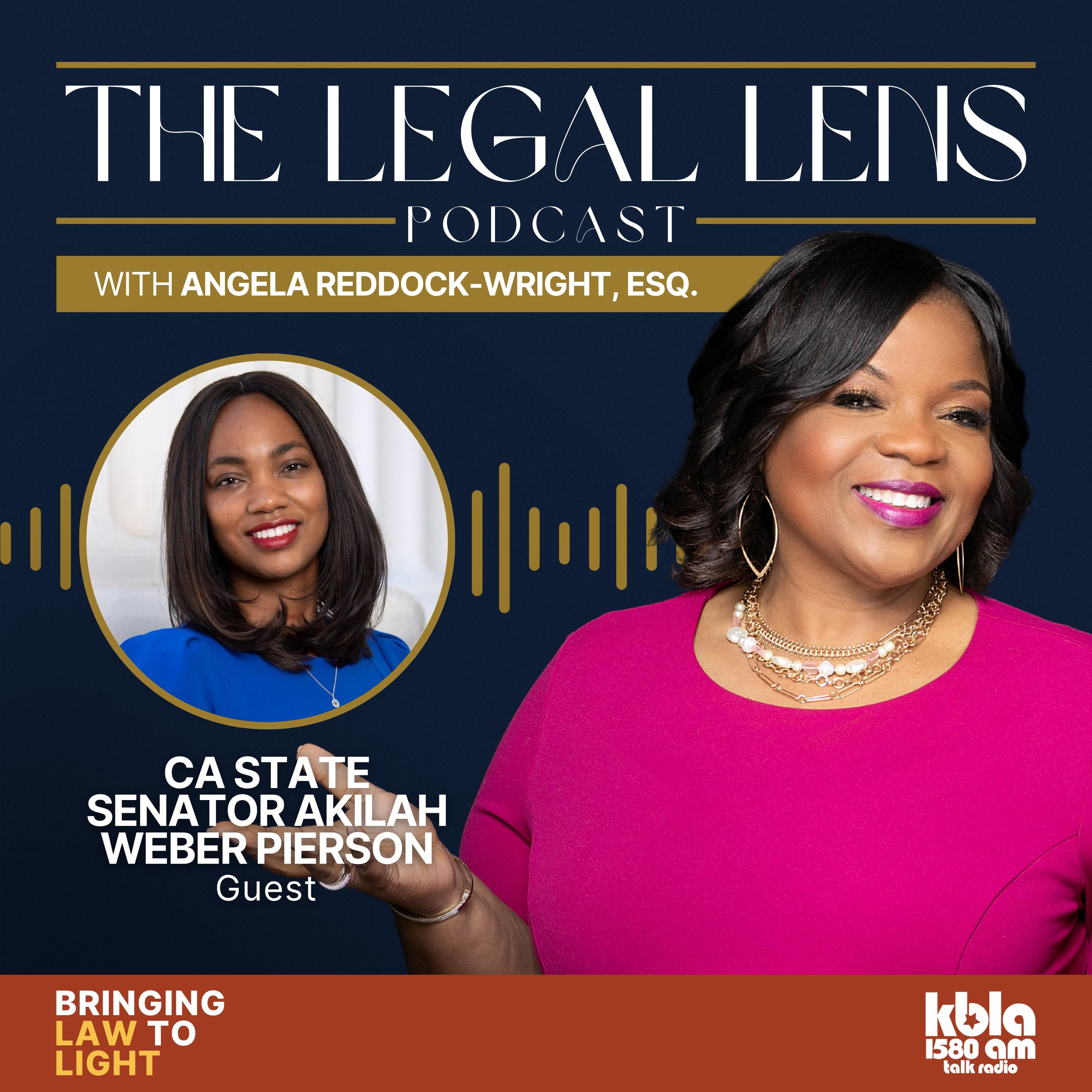 233. CA State Senator Akilah Weber Pierson on Social Determinants of Health, Reparations, and Legislating from a Doctor's Lens 30.09.2026 37pAngela Reddock-Wright sits down with Dr. Akilah Weber Pierson, California State Senator, OB-GYN, chair of the California Legislative Black Caucus, and daughter of CA Secretary of State and past Legal Lens guest Dr. Shirley N. Weber, for a wide-ranging conversation on what it means to bring a physician's lens to public policy. From her path from Xavier University and UCSD to San Diego City Council, the CA State Assembly, and now the CA Senate, Dr. Weber Pierson explains how healthcare trained her to see housing, education, food access, and environmental justice as health issues — not separate silos. She walks through the landmark reparations bills forwarded by the Black Caucus, two major bills awaiting Governor Newsom's signature, and why she believes the California Legislature must now play both offense and defense as the current federal administration dismantles programs Black communities depend on.
 -
 232. Dr. Sydney McKinney on Pushout and the Criminalization of Black Girls in Schools 16.09.2026 38pAngela Reddock-Wright sits down with Dr. Sydney McKinney, executive director of the National Black Women's Justice Institute (NBWJI), for a data-driven and deeply personal conversation on the criminalization of Black girls in schools and the lifelong consequences that follow. Marking NBWJI's 10th anniversary, Dr. McKinney unpacks her organization's groundbreaking research — from its Black Girls Pushout and Criminalization in Schools Dashboard to its Sisters in Solidarity Re-entry Network — tracing the through-line from school discipline disparities in kindergarten to adult incarceration, and from gender-based violence to failed re-entry systems.
 -
 231. Rev. Lennox Yearwood Jr., Founder & CEO of Hip Hop Caucus, on Climate Justice, the Consequences of Not Voting, and Using Culture to Change the World 26.08.2026 39pAngela Reddock-Wright sits down with Rev. Lennox Yearwood Jr., Founder and CEO of the Hip Hop Caucus, for a sweeping conversation that connects environmental justice, litigation, voting rights, and the power of culture as organizing tools. Raised in Cancer Alley — the 85-mile stretch between New Orleans and Baton Rouge with the highest cancer rates in the world — Rev. Yearwood traces the thread from his Louisiana roots and Air Force chaplaincy through the founding of Hip Hop Caucus in 2004 and its 18-year-old Respect My Vote campaign. He shares a moving tribute to his late mother, whose dying words were a call to keep fighting for democracy, and closes with a 100-year challenge to every listener: the work we do today will be the legacy that a generation not yet born will either thank us for, or not.
 -
 230. Nadine Smith on AI Surveillance, Algorithmic Discrimination, and 20 Years of Color Of Change 19.08.2026 38pAngela Reddock-Wright sits down with Nadine Smith, President and CEO of Color Of Change — the nation's largest online racial justice organization — for a conversation about Florida as the testing ground for Project 2025, the "sand in the gears" resistance strategy that has quietly racked up wins against the current conservative agenda, and what it means to organize Black power in the digital age. Drawing on 20 years of Color Of Change history, Smith breaks down how algorithmic discrimination and AI surveillance are compounding racial inequity in everyday life — from hiring to grocery store pricing to school safety systems — and connects criminal justice reform, voting rights, and tech accountability as expressions of the same political power.
 -
 229. Skye Perryman on the Generational Setback to Voting Rights and What We Must Do to Protect Democracy 12.08.2026 39pAngela Reddock-Wright sits down with Skye Perryman, President and CEO of Democracy Forward and one of Time Magazine's 2025 100 Most Influential People in the World, for a sweeping conversation on the state of American democracy at a critical inflection point. Perryman explains what democracy actually means at its foundation, how anti-democratic actors deliberately stoke polarization as a power strategy, and how Democracy Forward has filed hundreds of cases against the current presidential administration — from blocking a $1.776 billion presidential slush fund to challenging the use of a DHS database to purge eligible voters. She also previews her new book "Ordinary People, Extraordinary Times: How to Reclaim Your Power, Fight For Freedom, and Reimagine Democracy" and the organization's 100 Days of Action campaign leading to the November 2027 primary elections in the U.S., closing with a call to reimagine, not just restore, American democracy.
 -
 228. Qasim Rashid on the Fight for Human Rights, Climate Justice, Civil Discourse, and Democracy 05.08.2026 38pAngela Reddock-Wright sits down with human rights lawyer, author, and activist Qasim Rashid — founder and president of the consulting company “Just Win” and author of the leading substack “Let’s Address This” — for a wide-ranging conversation on the state of democracy, human rights, and civic engagement in 2026. Drawing on a lifetime of mentorship from civil rights elders from at a South Side Chicago mosque, Rashid connects the dots between the gutting of the Voting Rights Act, the launch of the 1,000 Miles to Memphis voter registration march, and the urgent need for a mass movement to counter the current social and political climate. He also addresses climate justice, the decimation of local media, and what it truly means to rebuild civil discourse at the community level — closing with a direct call to show up, register, and get to work.
 -
 227. Atty Jehan Crump-Gibson on Estate Planning as an Act of Love: Wills, Trusts, and Building Generational Wealth 29.07.2026 39pAngela Reddock-Wright sits down with Attorney Jehan Crump-Gibson, founder and managing partner of Michigan-based Great Lakes Legal Group, for a candid and accessible breakdown of estate planning and probate avoidance for everyday people and families. Drawing on 17 years as an attorney and representing clients in probate court, Crump-Gibson dismantles the myth that estate planning is only for the wealthy, walks through the real-world consequences of dying without a plan, and explains why the federal One Big Beautiful Bill Act actually underscores the urgency of planning for the average person — not just the ultra-rich. From the dangers of relying on that one chosen family member to do the right thing, to why AI-generated wills can leave critical gaps, this episode is a practical, no-nonsense guide to protecting family, assets, and legacy.
 -
 226. Thomas Saenz on MALDEF’s Advocacy Against Racial Profiling, Voting Rights Rollbacks, and Diminishment of the Rule of Law 22.07.2026 37pAngela Reddock-Wright sits down with attorney Thomas Saenz, president and general counsel of MALDEF — the Mexican American Legal Defense and Educational Fund — for a sweeping conversation regarding MALDEF’s work on the frontlines of civil rights litigation in 2026. Saenz traces MALDEF's 58-year history, its founding connection to the NAACP Legal Defense Fund, and its current collaboration with a 12-organization voting rights coalition. He walks through three landmark Supreme Court decisions gutting the Voting Rights Act, MALDEF's Federal Tort Claims Act cases challenging racial profiling during immigration enforcement surges in Los Angeles, Chicago, and Minneapolis, twenty-five consumer discrimination cases against private entities, and ongoing litigation defending tuition equity laws for undocumented students across multiple federal circuits — closing with a direct call for Latino communities to increase their voting power and work toward closing the voter participation gap in time for the mid-term elections in November 2026.
 -
 225. Alec Karakatsanis on the "Punishment Bureaucracy": Inside the Fight Against Mass Incarceration 15.07.2026 38pAngela Reddock-Wright speaks with Alec Karakatsanis, founder and executive director of the Civil Rights Corps, marking the organization's 10-year anniversary. Karakatsanis explains why he rejects the term "criminal justice system" in favor of what he calls the "punishment bureaucracy," walking through landmark victories on cash bail in places like California and Houston, Texas, the organization's new “Right to Hug” campaign challenging family-visitation bans in jails. He argues that the data consistently show wealth-based detention and mass incarceration increase crime rather than prevent it, and closes with a call for collective action and connection as the antidote to authoritarian control.
 -
 224. Virginia Kase Solomón on the Work of Common Cause: Gerrymandering, Civic Engagement, and the Fight to Save Voting Rights 24.06.2026 41pAngela Reddock-Wright sits down with Virginia Kase Solomón, President and CEO of Common Cause, for a wide-ranging conversation tracing the throughline from a deeply personal voting-rights story to the structural forces reshaping American democracy today. Solomón explains how her foster mother's experience facing discrimination at the voting polls in Hartford, Connecticut shaped a 30-plus-year career in civic engagement, and uses that lens to unpack the Supreme Court's Louisiana v. Callais decision, the wave of mid-cycle redistricting battles in Texas, California, and Alabama, and the outsized role money plays in elections since Citizens United. She closes with a practical voter-readiness checklist and a call for community-driven media literacy, framing this moment as one that requires sustained civic engagement rather than despair.
 -
 223. CA Assemblymember Sade Elhawary (D-57) on Wellness, Equity & Restorative Justice: The Keys to Building Sustainable Communities 17.06.2026 38pIn this episode of The Legal Lens, Angela Reddock‑Wright sits down with CA Assemblymember Sade Elhawary, an educator, organizer, foster mom, and first‑term representative for California’s 57th Assembly District, which includes South Central, Downtown LA, Skid Row, and Exposition Park. Sade shares how a spontaneous “I’m with the Blacks” speech at LA City Hall propelled her from organizing behind the scenes at the well-regarded community organization Community Coalition into elected office, and why she’s determined that her largely Black and Latino, working‑class district doesn’t just survive but truly thrives. She breaks down her “Safer Communities Through Opportunities Act” diversion bill, her push to end endless probation for youth, and the messy reality of negotiating with moderates, across the aisle, law enforcement, and the governor—while offering a candid look at what it really takes to move bold justice legislation and why she still loves the work.
 -
 222. Jenn Stowe on Championing the Rights and Dignity of Private Domestic Workers 10.06.2026 35pIn this episode of The Legal Lens, Angela Reddock‑Wright sits down with Jenn Stowe, executive director of the National Domestic Workers Alliance (NDWA) and head of Care in Action, to talk about how domestic workers are organizing for dignity, better working conditions, and real political power. Now based in Richmond, Virginia, Jenn shares her journey as the granddaughter of a domestic worker growing up in Atlanta, Georgia, and explains how honoring foremothers like her grandmother and Dorothy Bolden, the mother of the private domestic workers’ movement, fuels her fight for gender justice, immigrant rights, and Black women’s leadership. Through stories like that of Adriana—a former nanny turned full‑time organizer—Jenn shows how care workers are at the heart of our society and economy, and why people power and community are the antidotes to crisis.
 -
 221. Ashley Allison and Jasmine Browley on The Role of Black Media and the Importance of Telling Our Own Stories 03.06.2026 38pIn this episode of The Legal Lens, Angela Reddock‑Wright is joined by Ashley Allison—CNN commentator, publisher of The Root (originally founded by the renowned scholar Dr. Henry Louis Gates), and founder of Watering Hole Media—and Jasmine Browley, a Forbes contributor, former business editor at Essence, and writer and contributor with BET, to explore why Black‑owned and Black‑led media are essential in this political moment.
 -
 220. Part II: From Louisiana to CA: Attorneys Stephen King and Carmen‑Nicole Cox on Fighting Back After the SCOTUS Louisiana v. Callais Voting Rights Decision 20.05.2026 34pIn Part II of The Legal Lens series on the Supreme Court’s Louisiana v. Callais decision, Angela Reddock‑Wright is joined by Attorney Stephen King, civil‑rights trial lawyer and newly installed 50th president of the California Association of Black Lawyers (CABL), and Attorney Carmen‑Nicole Cox, “liberation attorney,” CABL boardmember, and 2026 CABL Lawyer of the Year. Building on the legal analysis from Part from guest Dr. T. Anansi WilsonI, they break down what it means to replace proof of discriminatory impact with proof of discriminatory intent under Section 2 of the Voting Rights Act, why “alarm bells should be ringing” about efforts to dismantle majority‑minority districts nationwide, and how similar tactics are already showing up in a California ballot initiative that could dilute Black voting power. They also share their personal “whys”—from Stephen’s experience fleeing a coup in Liberia to Carmen‑Nicole’s legal advocacy work after her father died in federal prison—and discuss how CABL and partner organizations plan to mobilize lawyers and communities in the wake of the Callais decision and ahead of the next election.
 -
 219. Part I: Voting Rights at Stake: Understanding the SCOTUS Decision in Louisiana v. Callais with Dr. T. Anansi Wilson 13.05.2026 38pIn Part I of this two‑part series on the Supreme Court’s decision in Louisiana v. Callais, Angela Reddock‑Wright is joined by returning guest Dr. T. Anansi Wilson—public defender, constitutional law scholar, and Supreme Court expert—to unpack how the Court’s 6–3 ruling reshapes the Voting Rights Act and minority political power. Dr. Wilson explains the structure and timing of the Supreme Court term, the concept of “opportunity seats”, why Louisiana’s refusal to add a second majority‑Black district matters, and how Justice Kagan’s forceful dissent contrasts with the majority’s opinion. They also connect the decision to a broader pattern of Voting Rights Act “gutting,” detailing how redistricting and racially polarized voting can dilute Black and Latino representation and, over time, push the United States back toward Jim Crow–era dynamics.
 -
 218. Attorney Elizabeth “Paige” White: “Movement Lawyering” and Representing Clients in Civil Rights, Criminal Defense, and High-Impact Cases 06.05.2026 36pIn this episode of The Legal Lens podcast, Angela Reddock‑Wright sits down with Attorney Elizabeth “Paige” White, a Washington, D.C.–based criminal defense and civil rights lawyer, to trace her journey from service‑oriented parents and an early sense of right and wrong to becoming a public defender, working with Attorney Ben Crump, and taking on high‑impact cases. Paige talks about how law school reshaped her view of the criminal legal system, why she left her initial dream of prosecution for public defense, and how working with Attorney Crump on cases like the Tyre Sampson and ASTROWORLD cases, along with excessive force and police‑brutality, hair‑relaxer mass tort, and class‑action sexual‑harassment litigation with other firms and her own firm, convinced her that one case can change a community and even the underlying policies that drive systemic change. She also reflects on what “movement lawyering” means today and offers practical encouragement to young Black lawyers who want to use the law in service of real change.
 -
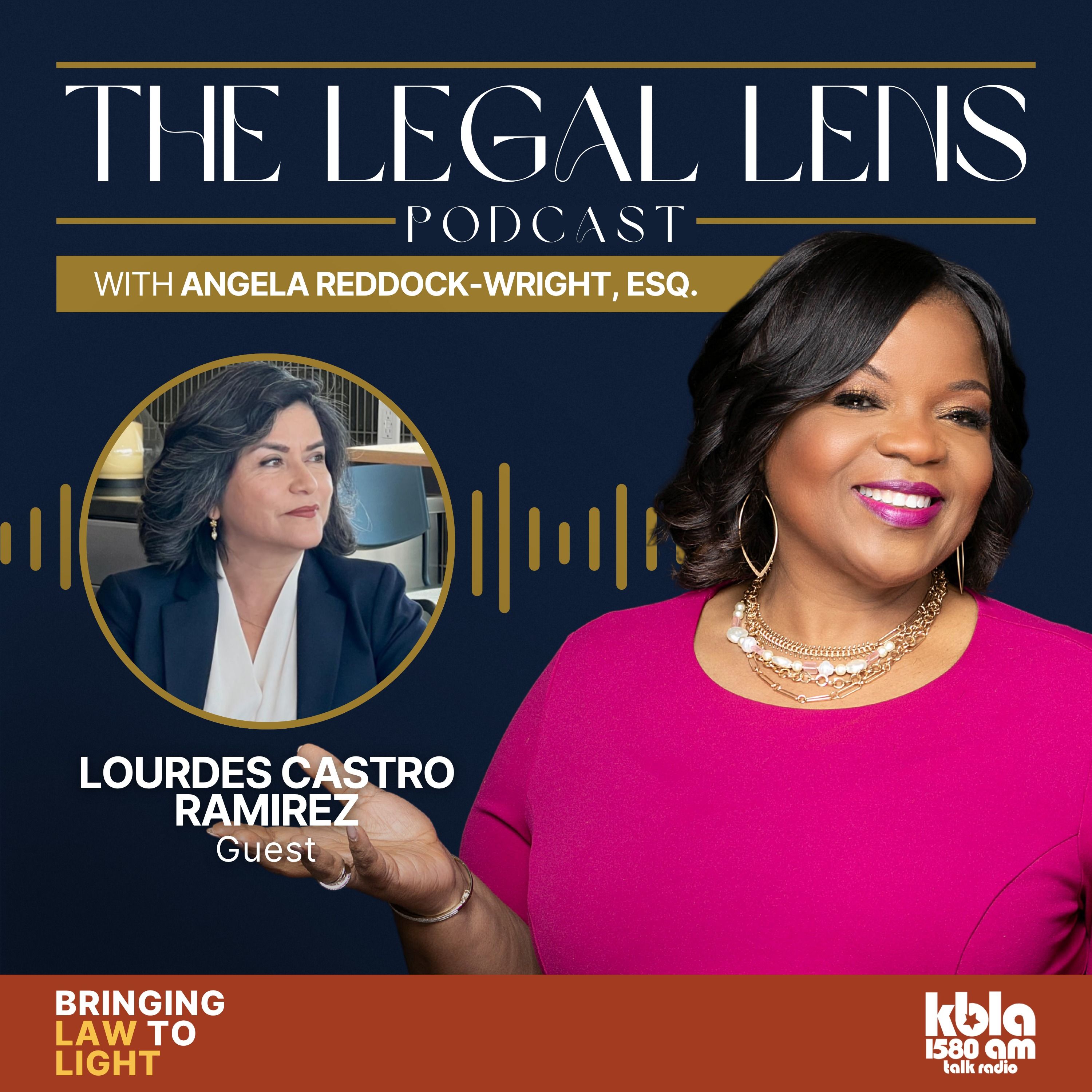 217. Lourdes Castro Ramírez on The State of Housing in Los Angeles & Beyond 29.04.2026 34pIn this episode of The Legal Lens, Angela Reddock‑Wright talks with Lourdes Castro Ramírez, President and CEO of the Housing Authority of the City of Los Angeles (HACLA) under the leadership of Mayor Karen Bass, which serves more than 200,000 residents and is the second‑largest public housing authority in the nation. As she explains, HACLA’s work rests on three core pillars: preventing people from falling into homelessness, providing and preserving stable affordable housing, and creating pathways to opportunity for the individuals and families it serves. Ramirez shares her journey as the eldest of nine children, immigrating from Mexico at age four, quickly becoming a language “bridge” and advocate for her parents and siblings, and discovering how responsive, accessible public institutions—and a stable place to call home—shape a person’s development and sense of purpose.
 -
 216. Twyla Carter: The Legal Aid Society Reimagining Justice in New York and Beyond 22.04.2026 38pIn this episode of The Legal Lens, Angela Reddock‑Wright talks with Twyla Carter, Attorney‑in‑Chief and CEO of the Legal Aid Society of New York City, the nation’s oldest and largest nonprofit public defense and civil legal‑services provider. Twyla shares what it means now to lead Legal Aid at a moment she describes as “the civil rights war of our lifetime.” Twyla also walks listeners through Legal Aid’s 150‑year legacy, from the Willowbrook case on abusive state institutions to current litigation over Rikers Island and the right to shelter, and closes with a powerful reminder that while other institutions may be “folding,” Legal Aid is “built for this” and not going anywhere.
 -
 215. Attorney Lauren Barnes on the Work of Public Justice: Litigation & Advocacy that Tackles the Biggest Systemic Threats to Justice in the U.S. 15.04.2026 37pIn this episode of The Legal Lens, Angela Reddock‑Wright talks with attorney Lauren Guth Barnes, Acting Chief Executive Officer of Public Justice, about her journey from complex and class action litigation against drug companies to leading a national legal‑advocacy organization focused on “unrigging” the civil justice system. Now, as acting CEO, she helps guide Public Justice’s work across its core advocacy areas—access to justice and fighting forced arbitration, abusive practices in the criminal legal system (including exploitative jail phone and video‑visitation policies), environmental and consumer protection, workers’ and students’ rights, and civil rights—while elevating the organization’s lawyers, communications professionals, development staff, and partners so their cases can expand the impact of the law and make the country better for everyone.
 -
 214. State of Black Women in California: Kellie Todd Griffin on Equity, Advocacy, and Change 01.04.2026 40pIn this episode of The Legal Lens, Angela Reddock‑Wright sits down with Kellie Todd Griffin, CEO of the California Black Women’s Collective Empowerment Institute, to talk about the resilience, joy, and systemic challenges facing Black women in California. Kellie shares her personal story—growing up with a single mother who navigated domestic violence, job instability, mental health struggles, and addiction, moving through eight schools for herself and ten for her brother—before passing away at 42 from undiagnosed diabetes. Motivated by her mother’s hardships, Kellie, joined by other leading California women, founded the Collective in 2018 with the first State of Black Women in California report, leading to a state‑funded think tank at Cal State Dominguez Hills and the Black Women’s Empowerment Institute in 2023. She celebrates how Black women “still smile, still laugh, still dance, still fellowship, still vote, and hold the culture down” amid inequities, and explains the Collective’s focus on total well‑being for Black women.
Hasonló podcastok


Népszerű itt:
Ez a podcast ezeknek az országoknak a podcast-listáin is szerepel.
