
Raise The Bar
One Coach
0
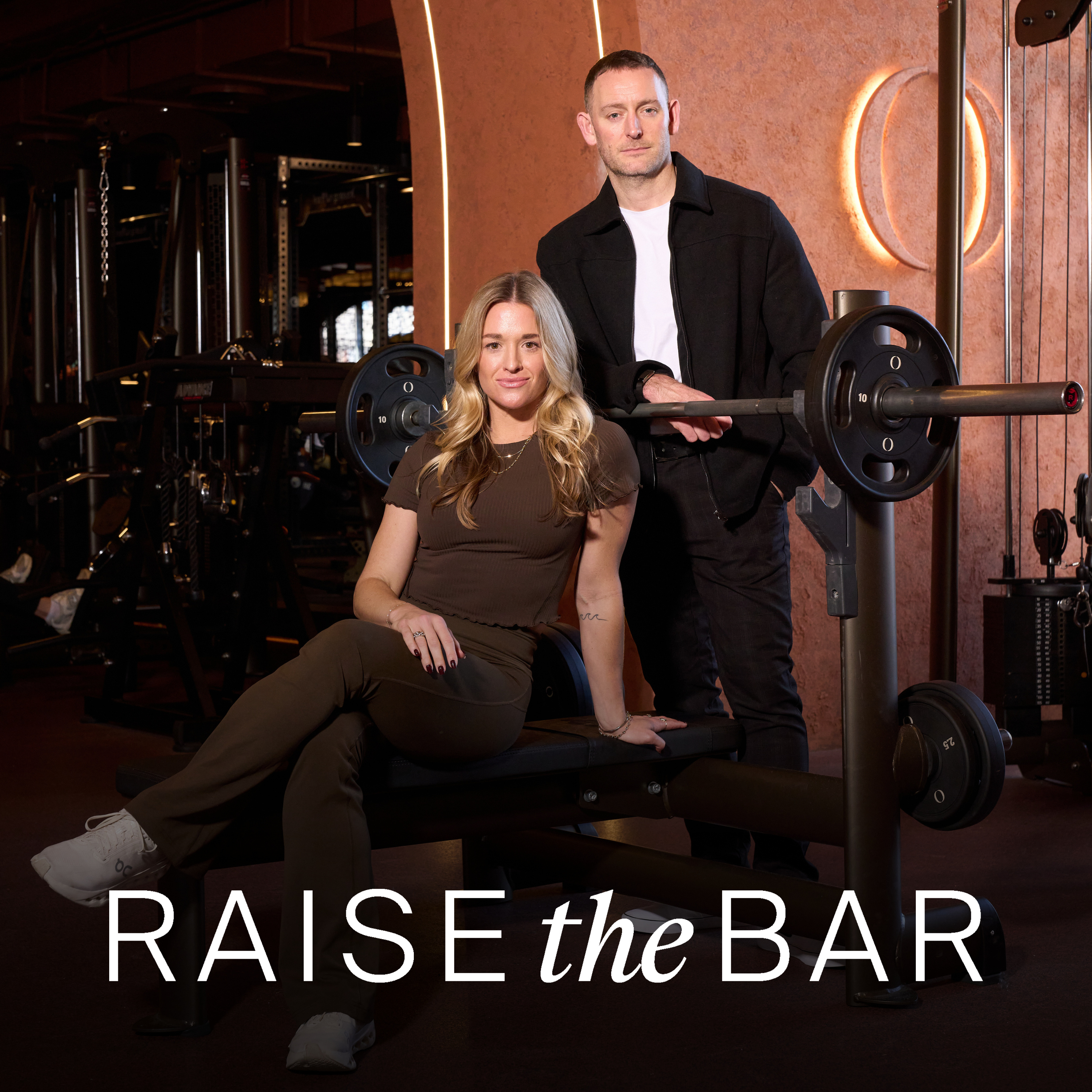
Raise the Bar is a podcast that explores health, fitness, and high performance through honest conversations. Hosts Ariel Comeau and Matt Duncan, experienced coaches, discuss research, lessons, and the realities of personal transformation with experts and high performers. The show aims to cut through noise and conflicting advice to provide actionable tools and mindset shifts.
Epizódok
-
 Exercise Physiologist: The Cardio You Need for Longevity | Rob Lyon 04.10.2026 1ó 36pTraining can be about more than numbers on a scale. In this episode, exercise physiologist Rob Lyon joins Raise the Bar to discuss his unique training approach and why he's chosen to focus on lifestyle changes and longevity over aesthetically based results. He explains the importance of family history and how to use it to build an effective training routine. Rob has spent more than 20 years in the fitness industry, training all types of people. He’s delivered over 10,000 personal training sessions, but his work as a cardiac stress testing technician shifted his mindset. Today, his work is dedicated to special populations and at-risk clients such as those with diabetes and cardiovascular disease. In this conversation, he makes the case for approaching health with the same energy as fitness. He covers topics like heart screenings and how to break unhealthy diets and exercise habits and shares the simple tests he uses to measure fitness. He also gives listeners the scoop on the interval work that earned him a two-minute HYROX PB with almost no running.In This Episode You Will Learn:(00:03:14) What an exercise physiologist does that a typical personal trainer does not(00:12:04) What a US cardiology practice taught Rob about waiting to act(00:26:43) The family history questions that tell you how early to get screened(00:40:14) Why the cholesterol in egg yolks is less of a worry than you were told(00:47:41) The one "lead domino" change that makes every other habit easier(01:12:36) Why lifters need an aerobic base too, and how supersets help build one(01:26:43) How living in the middle heart rate zones leaves you tired without getting fitter(01:30:01) Two simple fitness tests you can run yourself and repeat in six weeksResources: Connect with Raise the Bar Podcast:Experience OneCoach: https://one.coach/Visit One Playground: https://oneplayground.com.au/Follow Raise the Bar: https://www.instagram.com/raisethebarpodcast/Follow Ariel: https://www.instagram.com/arielcomeau_/Follow Matt: https://www.instagram.com/mattduncancoach/Connect with Rob LyonInstagram: @lyon__health
 -
Discipline or Control? What a World Champion Got Wrong About Winning: Coach’s Corner 30.09.2026 14pAfter speaking with Hattie Boydle, professional bodybuilder and world champion fitness model, Ariel and Matt sit down to discuss a hot topic in the fitness community: discipline. Hattie’s story is a prime example of what discipline can achieve. Her strict training regimens transformed her body and ultimately led her to become a world champion. But her struggle to separate discipline from control stayed with the coaches. In this episode, they explore what it looks like when discipline turns from being beneficial to controlling. It walks through the psychology behind Hattie’s story. Discipline helped her do the work and win the title, but she questioned whether she deserved it. Her reaction isn't uncommon. In the professional fitness world, disciplinary schedules and routines are critical for success. They move you forward but can also be a form of control that masks a fear of uncertainty. Throughout the conversation, the hosts break down the gap between the two, including the signs to look for when discipline has tipped into control, how common behaviors (an early gym session, a strict eating pattern) can stem from different places, and what coaches can do when a client starts showing those warning signs.In This Episode You Will Learn:00:34 Revisiting Hattie Boydell's story and the real question behind it: is your discipline serving you, or controlling you01:48 The study on newly tenured professors that proves why hitting a goal rarely produces lasting satisfaction04:14 Why the process matters more than the achievement 05:11 Body image and motivation: why loving where your body is now doesn't stop you from working to change it08:48 The warning signs that discipline has been overtaken by control, including a physiological spiral when a plan goes off track09:15 Discipline flexes with life and control treats any deviation as failure11:28 The language test: "I must" points to control, "I get to" points to discipline13:51This week's practice: notice the thoughts that show up around small setbacks, and write them down to get perspectiveResources:Follow Hattie Boydle:Instagram: @hattieboydleWebsite: https://hattieboydle.com.au/Raise the Bar Podcast:Experience OneCoach: https://one.coach/Visit One Playground: https://oneplayground.com.au/Follow Raise the Bar: https://www.instagram.com/raisethebarpodcast/Follow Ariel: https://www.instagram.com/arielcomeau_/Follow Matt: https://www.instagram.com/mattduncancoach/
-
Building Body & Mindset with World Champion Fitness Model Hattie Boydle 27.09.2026 1ó 26pWhat happens when you finally achieve the goal you’ve been working towards, but it doesn’t change the way you see yourself?Fitness World Champion Hattie Boydle joins Raise the Bar to unpack what 15 years of bodybuilding has taught her about mindset, identity and the pursuit of ambitious goals. From being hospitalised at 16 to becoming a World Champion, Hattie shares how her understanding of discipline, success and what it means to be a champion has changed along the way.This conversation explores why high achievers can struggle to become beginners again, the difference between growth and fixed mindsets, and how to keep pursuing progress without letting the outcome determine your self-worth.*Hattie shares:*- Why winning a World Championship didn’t make her feel like a champion- Her beginner, athlete and champion mindset framework- The difference between discipline, control and self-bullying- Why doing more isn’t always the answer as you become more advanced- How recovery, play and self-compassion can support long-term performance*In This Episode You Will Learn:*00.00 Intro01:58 Eating Disorder Recovery & Mindset16:07 Strength Training for Physical & Mental Health20:41 How to Start Competitive Bodybuilding30:32 World Champion Mindset & Imposter Syndrome40:17 Why More Training Doesn't Mean Better Results51:07 Beginner Mindset vs Champion Mindset52:39 Growth Mindset vs Fixed Mindset1:03:12 Discipline vs Self-Bullying*Resources:*Follow Hattie Boydle:Instagram: @hattieboydleWebsite: https://hattieboydle.com.au/Raise the Bar Podcast:Experience OneCoach: https://one.coach/Visit One Playground: https://oneplayground.com.au/Follow Raise the Bar: https://www.instagram.com/raisethebarpodcast/Follow Ariel: https://www.instagram.com/arielcomeau_/Follow Matt: https://www.instagram.com/mattduncancoach/
-
How to Train for HYROX: Building Your Aerobic Base, Strength, and Race-Specific Fitness | Coach’s Corner 23.09.2026 17pAfter speaking with Ben Seymour, a former professional rugby player and ultra-endurance athlete, the coaches come together to discuss what a real HYROX prep block looks like. They break down what’s required and explore an issue many people run into when training for mixed sports: how to train properly. Your body can only do so much at one time, which is why it’s important to break up your training. Trying to build strength, power, and endurance at one time rarely works. Instead of splitting your training time equally between the race demands, they suggest assessing your capabilities, figuring out where you’re strong, and building a plan around the gaps. From there, they explain in detail how to build a 16-week structured training system. The first four weeks begin with building an aerobic base and foundational strength. During this time, you can also add threshold and interval work to raise VO2 max and teach faster recovery. The following weeks shift focus to race-specific training built around compromise running and moving under fatigue. Later in the conversation, the coaches discuss why HYROX is considered more of a running race with strength stations built in, what it means to pace yourself against your lactate threshold, and why mental strength and energy management matter as much as raw fitness on race day.In This Episode You’ll Learn:(00:01:16) Why coaches usually build a plan around one or two adaptations at a time, not all of them at once(00:03:55) Why HYROX is really a running race, with roughly eight kilometers covered across the event(00:04:19) The pyramid analogy for aerobic base, and why a wider base supports a higher ceiling later(00:05:04) What the first four-week training block of a 16-week structure should include(00:07:03) What threshold work is and how to recognize when you've crossed your own lactate threshold(00:08:06) The most common pacing mistake people make(00:08:55) What VO2 max actually measures(00:11:08) Why compromise running, training runs done under fatigue from strength work, matters more than steady-state mileage as race day nears(00:12:23) The difference between fitness and conditioning, and why "educated energy expenditure" decides who fades late in a race(00:13:01) How the SAID principle explains why practicing race-specific movements under fatigue builds real race readiness(00:15:21) A sample five-day-a-week training split for someone training for HYROX, and how it shifts across the four phasesResources: Follow Ben SeymourInstagram: @seemorebennyWebsite: benseymour.com.auRaise the Bar Podcast:Experience OneCoach: https://one.coach/Visit One Playground: https://oneplayground.com.au/Follow Raise the Bar: https://www.instagram.com/raisethebarpodcast/Follow Ariel: https://www.instagram.com/arielcomeau_/Follow Matt: https://www.instagram.com/mattduncancoach/
-
The 16 Week HYROX Prep Plan a Pro Athlete Actually Follows | Ben Seymour 20.09.2026 1ó 36pWhat does it take to keep performing at a high level when your priorities keep changing? Former professional rugby player and HYROX athlete Ben Seymour joins Raise the Bar to talk training, fuelling, recovery and the lessons he’s carried from professional sport into business and fatherhood. Ben shares the strategies he uses to keep pushing himself without pretending everything can be the priority at once.After a seven-year career in professional rugby, including time with the Waratahs, Western Force and a club in Italy, Ben moved into the fitness industry and went on to build businesses across training, recovery and supplements. Today, he’s balancing RISE, NOBS Training, HYROX and endurance events with his newest role as a dad.How is Ben Raising The Bar?Why a pay dispute in Italy ended his rugby careerThe HYROX doubles strategy he swears byHow he uses creatine for focus as a sleep-deprived new dadWhy nutrition should come before saunas, ice baths and other recovery toolsWhy Recovery Lab closed its head officeHow he structures a 16-week HYROX training blockIn This Episode You Will Learn:(00:09:48) How did missing rugby selection at 17 change the direction of Ben’s career?(00:19:05) Why did Ben Seymour retire from professional rugby?(00:26:17) What matters most for exercise recovery?(00:31:12) How much creatine should you take for cognitive performance?(00:41:06) What are the health and recovery benefits of sauna?(00:57:42) How do you prepare for a 250km ultramarathon?(01:11:02) How should you structure a 16-week HYROX training plan?(01:25:16) How do you train for HYROX while balancing work and parenthood?Resources: Connect with Raise the Bar Podcast:Experience OneCoach: https://one.coach/Visit One Playground: https://oneplayground.com.au/Follow Raise the Bar: https://www.instagram.com/raisethebarpodcast/Follow Ariel: https://www.instagram.com/arielcomeau_/Follow Matt: https://www.instagram.com/mattduncancoach/Connect with Ben SeymourInstagram: @seemorebennyWebsite: benseymour.com.au
-
What Building Muscle Does for GLP-1s, Testosterone and Diabetes Risk | Coach's Corner 16.09.2026 18pDuring this recap, Ariel and Matt reflect on their conversation with Dr. Steven Lu, a medical professional and founder of preventive health company Everlab. The Australian-based company focuses on longevity by testing early and taking a proactive approach to chronic disease. But the conversation brought up another topic for the hosts: exercise. More than a lifestyle element, movement is fundamental for good health and one of the easiest ways to prevent future conditions. But as the hosts discuss, society doesn’t always see it that way. Despite its obvious benefits, exercise is often seen as optional, not required. The hosts dig into what that means regarding preventive health care. They break down the basics of what actually happens when you exercise and build muscle. For example, how a muscular contraction affects blood glucose levels, or why strength training effects the success of your GLP-1 medications, diabetes risk, and testosterone levels. Throughout the conversation, the coaches return to the work Dr. Lu is doing with Everlab. Customized care takes on a whole new meaning with personalized data. They discuss their experience with the program, sharing how it translates to everyday people, and close with a shared philosophy that personalized data is most beneficial when paired with experts who help you interpret it. Dr. Lu’s shift to longevity and prevention signals just how important healthy habits and guidance are when trying to optimize your health.In this episode you will learn:(00:09) Why exercise is finally being recognized as preventive health care, not just a tool for aesthetics(03:25) How muscle acts as a metabolic sink, pulling glucose from the blood and lowering blood sugar for up to 48 hours after training(05:18) The walking study that found short, frequent two- to three-minute walks beat a single twenty-minute walk for insulin sensitivity(07:07) Why GLP-1 medications may end up shaping this generation's health and how usage has surged in Australia(08:11) Why rapid weight loss from a GLP-1 can put the body into a famine state that burns through muscle, and how protein and resistance training help offset it(10:47) The real trade-offs of testosterone replacement therapy and its link to infertility(13:39) The everyday signs of low testosterone, including fatigue, low libido, and reduced drive(14:17) Why more biomarker data only helps when someone can interpret it, and why context (like hydration) can skew a single testResources:Connect with Raise the BarInstagram: https://www.instagram.com/raisethebarpodcast/YouTube: https://www.youtube.com/@raisethebarpod/videosPodcast: https://podcasts.apple.com/us/podcast/raise-the-bar/id6793696383 (also on https://open.spotify.com/show/033S30bZk4LCqrWg3k65R0)Connect with Dr. Steven LuEverlab Website: https://www.everlab.com.au/our-biomarkersLinkedIn: https://au.linkedin.com/in/dr-steven-lu-82943825a
-
How to Catch Disease Years Before Symptoms Start | Dr Steven Lu 13.09.2026 1ó 47pPreventative health physician Dr Steven Lu reveals why your "normal" blood test results may not tell the truth about your health, why one in three people are already insulin resistant without knowing it, and why a hidden genetic marker can triple your heart attack risk even with perfect cholesterol.Dr. Steven co-founded and became the Chief Medical Officer of Everlab, one of Australia's leading preventative health and longevity clinics, after fifteen years as a specialist GP who worked across neurosurgery, cardiothoracic surgery and intensive care. He built it after watching patients survive medical emergencies only to remain unwell for the rest of their lives. He became convinced healthcare needed to aim at helping people thrive, not just keeping them alive.Dr Steven explains:Why our healthcare system is actually a sick care system, designed to prevent death but not produce optimal healthWhy GLP-1s could be more influential for our generation than AIThe baseline levers that naturally boost testosterone before anyone considers medication: better sleep, more muscle, and less stressHow two strangers on opposite sides of Australia were both being quietly poisoned by lead, and how the unexpected cause was a supplement they were takingWhy one in three people tested at Everlab show insulin resistance, often years before an official diabetes diagnosis, and why building muscle is one of the most powerful ways to reduce itWhy health should mean more than the absence of disease, and how that belief became the personalized, proactive model behind EverlabThe information shared in this episode is for educational purposes only and isn't a substitute for professional medical advice. Please speak with your own doctor before making any changes to your health, testing, or medication.In This Episode You Will Learn:(00:00:09) Why "Sick Care" Isn't the Same as Health Care(00:03:00) The Patient Who Survived and Still Lost Her Life(00:06:58) Australians Now Spend Almost 14 Years in Poor Health(00:11:11) Why He Left the Hospital System to Start His Own Practice(00:20:55) Everlab's Growth Since Its First Funding Round(00:21:44) Why Everlab Tests 90+ Biomarkers When a GP Tests Five(00:25:08) Is "Normal" On a Blood Test Actually Healthy For You?(00:32:40) Why More People Are Developing Diabetes Younger(00:35:04) What Insulin Resistance Actually Is(00:37:41) Why Iron Deficiency in Women Keeps Getting Mismanaged(00:43:35) The Link Between Alcohol and Snoring(00:45:55) How To Tell If Your Airway Is Disrupting Your Sleep(00:51:15) The Hormone Tests Doctors Often Skip For Women(00:54:41) The Hidden Risk of Heavy Metals Like Lead and Mercury(01:00:59) Why Everlab Finally Introduced a GLP-1 Program(01:03:20) The Real Danger of Losing Muscle on GLP-1 Medication(01:06:06) Can GLP-1 Medication Help With Addiction?(01:10:15) Is Testosterone Really Declining Across Generations?(01:20:36) Who Actually Qualifies For Testosterone Replacement Therapy(01:22:58) Why TRT Can Shut Down Your Body's Own Production(01:24:22) Why Gut Health Is One of the Biggest Blind Spots in Medicine(01:29:57) What To Do If Standard Gut Tests Keep Missing Your Problem(01:39:11) How To Actually Get Started With Everlab(01:45:37) How Steven Is Raising His Own BarResources:Follow Dr Steven Lu:Everlab: https://www.everlab.com.au/Instagram: @everlab_healthWebsite: https://www.drsteven.com.au/Raise the Bar Podcast:Experience OneCoach: https://one.coach/Visit One Playground: https://oneplayground.com.au/Follow Raise the Bar: https://www.instagram.com/raisethebarpodcast/Follow Ariel: https://www.instagram.com/arielcomeau_/Follow Matt: https://www.instagram.com/mattduncancoach/
-
Heart Rate Zones Explained: How to Train for Your First 5K | Coach’s Corner 09.09.2026 20pThe coaches sit down to unpack their favorite moments from the Jay Stevens and Jen Irvine episode, including news that broke after the interview: Jay's successful 24-hour world record treadmill walk. The hosts break down the mental models Jay built to survive an 18-hour dark patch, why a ten-minute break was strategic at hour eleven, and how he used hydration to bring his mind back in focus. Along the way, they tackle race topics like heart rate zones and how to start your first 5K without wrecking your joints. They also discuss the episode’s biggest lesson: True growth requires resistance. You’ll walk away with a better understanding on endurance training. The coaches explain anaerobic threshold, why fat burning only happens in the lower heart rate zones, and how tools like a spin bike, rower, or StairMaster can build an aerobic engine before you ever set foot on pavement. The coaches close by connecting the strong mindset Jay used to stay focused on walking to Jen’s spontaneous decision to sign up for an ultramarathon in the desert and how the two relate to their personal commitments. The final lesson: Get a little more uncomfortable in daily life.In This Episode You Will Learn:(00:33) About Jay’s world record treadmill walk for 24 hours and why his first real break didn’t come until the eleventh hour(02:00) How Jay recovered after a dark mental low moment caused by a lack of hydration (03:19) How building mental models for what could go wrong turned panic into problem solving (05:10) Why Jay chose not to learn the full details of his spinal injury, and how that same instinct helped Jen commit to her first ultramarathon(11:13) What anaerobic threshold is and why staying in the right heart rate zone determines whether your body burns fat or carbohydrate(37:15) The personal audit the coaches use to find where they've gotten too comfortableConnect with Raise the BarInstagram: https://www.instagram.com/raisethebarpodcast/YouTube: https://www.youtube.com/@raisethebarpod/videosPodcast: https://podcasts.apple.com/us/podcast/raise-the-bar/id6793696383 (also on https://open.spotify.com/show/033S30bZk4LCqrWg3k65R0)Connect with Jay Stevens Instagram: https://www.instagram.com/jaydstevens_/LinkedIn: https://au.linkedin.com/in/jay-stevens-a1634028Connect with Jen IrvineInstagram: https://www.instagram.com/jenniferirvine_coach/?hl=en
-
How to Create a Resilient Mindset from a Paraplegic Endurance Athlete & Ultramarathon Coach | Jay Stevens & Jen Irvine 06.09.2026 1ó 24pWhen the odds are stacked against you, you have the option to choose to make the impossible achievable. Don’t believe it? Paraplegic endurance athlete Jay Stevens and ultramarathon coach Jen Irvine reveal how a helicopter crash and a slipped disc from a TikTok challenge became the starting point for two of the most demanding endurance careers in the country. In this episode, they walk through the traumatic experiences that changed their lives, explain why the gap between confidence and arrogance is simply evidence, and share what it actually feels like in your body and mind when a race forces you to go to hell and back. Jay survived a helicopter crash in 2018 that left him with a grueling spinal cord injury that doctors initially expected would keep him from walking again. But he wasn’t about to give up and developed an unconventional rehab method based on acupuncture, using crawling patterns and neurological stimulation drills. Since then, he has walked to Everest Base Camp, completed the Bondi to Manly ultramarathon as a paraplegic, and is preparing to attempt a 24-hour treadmill distance world record while raising funds for spinal cord injury research.A former professional badminton player and CrossFit competitor, Jen’s world shifted when a TikTok fitness challenge left her with a herniated disc. Despite being a sports professional, she was a lifelong skeptic of running. But the bulging disc changed her tune. Wanting more from her physical therapy, she began running long distances and has turned it into a new profession. Today she is an ultramarathon runner and coach, with race distances up to 250km and an upcoming bid to represent her country on a national backyard ultra team.In This Episode You Will Learn:(00:17:40) What EMDR therapy involves and how it helped Jay process the crash in third person(00:38:11) Jen's introduction to ultra distance on the 250km Larapinta Trail and how it shaped her perspective on running(00:48:42) The physical wall in an ultramarathon, better known as “going to hell and back," and how your brain and body can overcome it when the desire to quit arises(00:57:09) How the dark side approach compares to the positivity wellness community and the book that reframed how Jay transformed being doubted by others into fuel(01:02:28) Mind over matter: The benefits having your back against the wall can have on life(01:06:53) What new runners chasing half marathon goals should know first: heart rate zone training, wearables, and mindset Connect with Raise the BarInstagram: https://www.instagram.com/raisethebarpodcast/YouTube: https://www.youtube.com/@raisethebarpod/videosPodcast: https://podcasts.apple.com/us/podcast/raise-the-bar/id6793696383 (also on https://open.spotify.com/show/033S30bZk4LCqrWg3k65R0)Connect with Jay Stevens Instagram: https://www.instagram.com/jaydstevens_/LinkedIn: https://au.linkedin.com/in/jay-stevens-a1634028Connect with Jen IrvineInstagram: https://www.instagram.com/jenniferirvine_coach/?hl=en
-
Coach's Corner: Why Rest and Work Are the Same Process 02.09.2026 17pA few weeks aftersitting down with Nic Monteforte, Ariel and Matt come back to the conversationto ask the only question that matters: what actually stuck? For Matt, it wasone line, "the calmest person in the room always wins," and the quotepinned above his desk that it dragged back into view. Between stimulus andresponse there is a space, and in that space is our power to choose ourresponse. That's the frame for the whole episode. Stress, Matt argues, is thething that collapses that space. When the gap disappears, you stop respondingand start reacting, and the difference between those two words is most of whatseparates the people who handle pressure well from the people who get run byit.From there the hostssplit the problem into its two honest halves. Ariel takes the body: yourexecutive function goes offline under stress because blood and fuel are beingrouted to muscle, which means the fastest way out of your head is through yourbody. Twenty bodyweight squats at your desk. A walk outside with sunlight onyour skin. She also revisits Nic's stress cycle, the one most of us neverfinish, where the physical discharge never happens and the unexpressed responsestacks up like layers of pancakes. Matt takes the cognitive side and pushes itupstream. Mitigation is good, but a stress response only fires because astressor was perceived as a threat, and perception is trainable. If you want asmaller flood of hormones, you have to change what the event means to youbefore it means anything at all.The back half is aboutrest, and it's the part most high performers will resist. Rest and work are notopposites, Matt says; they are two stages of one process, like mixing thebatter and then letting the cake sit in the oven. Ariel reframes rest as aslingshot, a temporary pullback that propels you forward, and takes on the mathpeople use to talk themselves out of it. She also names the trap: when you'realready stressed, smashing yourself through a brutal HIIT session feels likerelief and is really just more load on a loaded system. The week's takeaway isher Rest Practices exercise, ten things you do purely for pleasure, two of themin your calendar. And the closing note is one worth holding on to: your firstresponse to threat isn't fight or flight, it's looking around for someone else.Social connection lowers cortisol. Go find someone to talk to.In This Episode You Will Learn(00:00) Intro(3:01) Layers of pancakes: how unfinished stress compounds, and why anervous system upgrade raises your tolerance instead of just managing theaftermath(3:47) Stress is not weakness. Why it's a hardwired hormonal cascade,and how being on edge makes the next stressor more likely to land(4:47) Your body is the superpower that offsets your stress. Whyexecutive function down-regulates under pressure, and the movement micro-breaksthat bring you back(6:06) Mitigation versus prevention: what to do once the response hasfired, and the perception work that stops it firing in the first place(6:59) Why deciding stress is bad makes the physical response worse(7:31) Exercise as inoculation: how familiarity with a hammering heartrate stops you getting stressed about feeling stressed(8:34) Vedic meditation as effortless meditation, and why that mattersmost for the people who are too stressed to take on one more effortful thing(10:57) Why rest and work aren't opposites: the cake in the oven, andstress as a tool with a cost attached(11:58) This week's takeaway: the Rest Practices exercise. Tenagenda-free things you do purely for pleasure, two of them booked into your calendar(13:19) What's unintentionally keeping your foot on the accelerator, andhow to catch the story before it compounds (16:27) Yourfirst reaction isn't fight or flight, it's looking for social connection, andhow connection lowers cortisolResourcesOne Coach: https://one.coach/Instagram: @nicmonteforte YouTube: NicMonteforte Website: https://nicmonteforte.com/
-
Stress Expert on Burnout, Nervous System Repair and Expanding Capacity 30.08.2026 1ó 37pExecutive coach and stress expert Nic Monteforte reveals why the problem isn’t being stressed, it’s staying stress, why sixty seconds of something physical restores a brain that has stopped thinking clearly, and what the hardest decade of her life taught her about the power of calm.Nic Monteforte spent close to thirty years in leadership, coaching and peak performance, becoming the inaugural female director at Fitness First Australia, where she oversaw a business turning over A$250 million with more than 2,500 staff. She holds a Bachelor of Education in physical education and human movement, teaches Vedic meditation, and is the author of Infinite Capacity.Nic explains:What the stress cycle is, and how leaving cycles unfinished leads to chronic stressThat your brain doesn't know the difference between a psychological threat, like an angry email, and physical danger, like a lion chasing you, because the response in the body is the same either wayWhy logic fails in stressful moments, and what has to happen in the body before the thinking brain comes back onlineWhat burnout looks like at the level of the nervous system, and why a collapse that built slowly can feel like it arrives all at onceThe techniques every high performer should know to reset in under a minuteThe power of meditation for expanding your capacity and becoming more stress tolerantWhich signals to watch for in yourself to know when stress is getting the best of youHow capacity gets built by stabilising the nervous system first, and which habits fall away on their own once it isThe opinions and perspectives shared in this episode are intended for educational and informational purposes only as part of the Raise The Bar podcast. The content discussed is not a substitute for professional medical, mental health, or therapeutic advice, diagnosis, or treatment. If you need assistance navigating physical or mental health, please consult your healthcare professional or a licensed therapist in your area.(14:31) The single month between living the dream and being $500,000 in debt, and the closing doors she could only see in hindsight(20:10) How a decade of unrelenting pressure showed up physically, from severe endometriosis to a hysterectomy at 42(25:53) The pancake stack image for stress that never gets discharged, and the point where the pile topples over(31:34) One minute on a punching bag, and why the clarity arrives in the stillness straight afterwards(37:28) The sponge you have been squeezing stress into since you were two, and the two part work of emptying it(45:30) A broken leg in a cast as the way to understand what stillness gives a nervous system(59:54) The everyday tells of a system running hot: decision fatigue on small choices, forgetfulness, microaggression at work(01:13:19) Three tools in detail, the ball bounce, the intentional scream and humming until there is no hum left(01:27:09) Why capacity gets built by stabilising the nervous system before anything new is added on top(01:29:47) The gap between trigger and response, and how it stretches from five seconds into something far longerOne Coach: https://one.coach/Connect with Nic Monteforte:Instagram: @nicmonteforteYouTube: @NicMonteforte22Website: https://nicmonteforte.com/Book: Infinite CapacityIn This Episode You Will Learn:Resources
-
Coach’s Corner: Willpower Won’t Make You Consistent with Exercise 26.08.2026 17pAfter sitting down with Gordon to unpack the science of motivation, Ariel and Matt do what most shows skip: they go back and ask what actually stuck. The answer, for Ariel, was a ballet class — her first in eighteen months. Not because Gordon told her to, but because the conversation reminded her that movement is a gift with an expiry date on certain forms of it. "If I don't start doing this now, it's going to be a hundred times harder when I'm 60." It's a small decision that opens onto the episode's real subject: how the things we once identified with quietly slip away from us, and what it takes to pull them back.From there the conversation moves into the machinery. Motivation isn't a switch between extrinsic and intrinsic — it's a continuum, and the whole game is moving along it. Matt walks the full progression out loud: external reward and consequence, then introjected fear and guilt, then identification, then integration, and finally the rare air of pure intrinsic enjoyment. Along the way he makes a point most coaches miss — fear-based motivation is not wasted, it's just perishable. The client who drops from 140 to 120 kilos after a health scare will stall at 120, because the thing that was pushing them is no longer behind them. If nothing has been built to pull them forward, that's where the story ends.The back half turns practical. Ariel breaks down Gordon's physical activity ecosystem into four buckets you can map on a single sheet of paper — community, support, environment, and systems — then adds the harder half of the exercise: writing down what's actively working against you. Matt threads it back through values, silence, self-talk, and the strange blindness we have to our own gradual change. The closing line is the one worth keeping: you'll always have more success controlling your environment than relying on your own willpower.In This Episode You Will Learn:(0:09) Why Ariel booked her first ballet class in a year and a half — and why waiting until 60 to reclaim what you loved makes it a hundred times harder(2:55) "You wouldn't lift the weight for them — so why are you doing the thinking for them?" Why we rush to fill uncomfortable silence, and what it costs the person in front of us(4:17) Why motivation isn't extrinsic or intrinsic, and what it actually means to internalize a behaviour(5:40) The 140-to-120-kilo problem: what happens when the fear that got you started is far enough behind you to stop working(7:04) The full motivation continuum walked out loud — external, introjected, identified, integrated, intrinsic — and why truly intrinsic sessions are rarer than you'd think(8:55) On mantras and self-talk: why "I'm becoming" beats "I am" when you're not there yet, and the cognitive dissonance trap on the other side of it(10:52) Hearing the evidence your client leaves out — the person who missed two mornings, and made ten(11:40) The Physical Activity Ecosystem: the four buckets to map on a sheet of paper, plus the harder list of what's actively working against you(17:00) Why controlling your environment beats relying on willpower every timeResources:One Coach: https://one.coach/Dr Gordon Spence:Instagram: @hap_healthy_ageing_projectWebsite: https://healthyageingproject.com/Books: Get Moving, Keep Moving
-
Psychologist & Exercise Scientist on Why Knowing You “Should” Exercise Isn’t Enough | Dr Gordon Spence 23.08.2026 1ó 15pCoaching psychologistand exercise scientist Dr Gordon Spence reveals why thirty years of healthmessaging has failed to make anyone move more, why the reason behind your goalpredicts how long you last better than your discipline does, and how the questionsa coach refuses to answer for you are the ones that change your behaviour.Dr Gordon Spence holds aPhD in coaching psychology from the University of Sydney, where he has taughtthe Psychology of Peak Performance for around fifteen years. He has spent morethan twenty years in private practice coaching executives and leaders, and at51 he went back to university to add a degree in exercise and sport science tothe work. He is the author of Get Moving, Keep Moving and 26 Ways to KeepMoving, both published in 2022.Gordon explains:Why the health advice you have heard your entire life rarely motivates you into actionHow we don’t need more motivation, we need better quality motivationHe explains how to create the type of motivation that will impact you to exercise in a way that feels good That shame and not wanting to let your coach down might fuel you for a long time, but it will also burn you outWhat goal neglect does to the person who hits every session in January and has lost interest by MarchThe four stage framework behind his book - reflect, project, inspect and connect - that will help you get moving and keep moving for the long haulHow to map out your physical activity ecosystem so that you can exercise consistently in a way that feels good and keeps you connected to othersWhy the moment a client goes quiet and gets uncomfortable is the moment they are on the verge of a breakthrough if their coach knows what to do next In This Episode You Will Learn:(02:07) The paradox of exercise, and why three decades of good healthadvice now lands as white noise(22:03) How treating motivation as a quantity leaves people concludingsomething is fatally flawed about them(26:31) The difference between swallowing a value and digesting it, andwhat that means if you train out of obligation(30:25) What the research credits to autonomously motivated people: moreeffort, longer persistence, better outcomes, more satisfaction(35:23) We would never lift the weight for a client, so why are we happyto do their thinking for them(45:19) Stage one of the framework, reflect, and how to mine your ownhistory for the movement you loved before life separated you from it(01:04:37) Physical activity as social glue, and the relationships thatget people out of bed on a rainy morningResources:One Coach: https://one.coach/Dr Gordon Spence:Instagram: @hap_healthy_ageing_projectWebsite: https://healthyageingproject.com/Books: GetMoving, Keep Moving
-
How to Maximize Muscle Growth (In Way Less Time) | Coach's Corner 19.08.2026 16pA few days on from the Tony Boutagy episode, Ariel and Matt sit down to unpack what actually stuck. What starts as a debrief turns into a working session on the ideas that changed how they are writing programs: that research gives us principles and not prescriptions, that mechanical tension is the driver of hypertrophy, and that a lot of the volume we have all been chasing sits well past the point of diminishing returns. They also dig into why Tony's willingness to say "watch this space" is a rare and valuable trait in an industry that rewards certainty.The conversation gets practical fast. If one or two genuinely hard sets can drive most of your result, what does that free up for the time poor client? If soreness is not a signal of growth, what is? If muscles do not hypertrophy but fibers do, how many angles does a muscle group like the glutes actually need? Ariel and Matt work through fiber recruitment, block length, exercise selection and frequency, then land on a challenge you can take into your own training this week: twelve exercises, one to two hard sets each, and see what your body tells you.In This Episode You Will Learn:(00:30) Think like a scientist, act like a coach. Research gives you principles, not prescriptions. The skill is filtering it through the person in front of you.(02:00) One or two high effort sets go further than you think. Returns diminish after about the third set, and it takes roughly six to come close to doubling the benefit.(03:45) Mechanical tension is the goal, not generic volume. Heavy loads recruit fibers immediately. Lighter, higher rep sets need proximity to failure before type two fibers switch on.(07:36) Soreness and muscle damage are not drivers of growth. When a session creates real damage, protein synthesis goes to repair instead of growth.(08:42) Four week blocks are likely too short for hypertrophy. Early weeks go to remodeling and movement quality. Keep your primary lifts consistent and think eight weeks and up.(10:15) Muscles do not hypertrophy, fibers do. Glutes and pecs run in multiple directions, so they need multiple angles. And you do not buy muscle, you rent it.(15:26) Split the body part across the week, not the session. By the sixth leg exercise, fatigue and pacing kill your output. Three shorter exposures beat one long one.This Week's Practical Takeaway:Run one session built around twelve different exercises at one to two sets taken close to failure, with real intent on mechanical tension. Notice how you feel the next day, how long it took, and what a full week of training could look like structured that way.Resources:One Coach: https://one.coach/Tony Boutagy:Instagram: @tonyboutagy YouTube: Tony Boutagy, PhD Website: tonyboutagy.com
-
Everything We Got Wrong About Building Muscle | Dr Tony Boutagy 16.08.2026 1ó 41pExercise scientist Dr Tony Boutagy reveals why one or two hard sets are enough to build significant muscle mass, why soreness is not a sign of muscle growth, and how you can train your entire body in twelve minutes.Dr Tony Boutagy holds a PhD in exercise and sports science and has spent more than 30 years working in the fitness industry, educating over 50,000 coaches along the way. He has built his reputation on testing the field's own long-held assumptions against the evidence, and changing his position in public whenever the data proved him wrong.Tony explains:Why one or two training sets close to failure are usually enoughThat muscles do not grow, single fibers do, and what that means for how many exercises a muscle like your glutes or chest needsWhy soreness and the burn are not the signal your workout worked, and what mechanical tension is insteadHow the pump you see in the mirror is mostly water, and why toning is not a real trainable adaptationWhat happens to your body's growth window after 48 hours, and how that changes the smartest way to split your weekWhy you rent muscle rather than own it, and how fast you lose what you built the moment you stop training itIn This Episode You Will Learn:(17:43) Why most training benefits arrive at low doses, and the real skill of finding your minimum effective dose(21:00) Why muscles do not grow, fibers do, and why that means more exercise variety rather than more sets(30:23) Why tension, not soreness or the burn, is what actually drives growth(44:02) Why strength and hypertrophy are different adaptations, and how you can get stronger without getting bigger(51:00) Why the post-workout pump is mostly water, and why toning is not a real adaptation(1:02:43) Why the growth signal is gone within 48 hours, and why three total-body sessions beat stacking sets into one(1:12:00) Why you rent muscle rather than buy it, and how long you have before you start losing itResources:One Coach: https://one.coach/Dr Tony Boutagy:Instagram: @tonyboutagy YouTube: Tony Boutagy, PhD Website: tonyboutagy.com
-
Coach's Corner: What We Took From the Sheridan Skye Episode on Women's Health 12.08.2026 14pAriel Comeau and Matt Duncan sit down after the Sheridan Skye conversation to unpack what stuck with them, and the honest answer is that a single statistic reframed the whole thing. Only about 20% of women resistance train. Both hosts admit they were floored, because inside the fitness industry it can feel like everyone already knows better. That gap between the bubble they work in and the reality outside it drives most of this debrief.From there the conversation moves into what it actually means for coaching practice. Why menopause, perimenopause and pre and postnatal should be treated as phases of a woman's life rather than specialties to be outsourced. Why coaches carry a responsibility to hold information loosely and own it when they get it wrong. And a nuanced take on wearables and recovery scores, including where they help high performers who have learned to override their own body and where they quietly replace self trust with a number on a screen. Matt and Ariel close with a practical challenge and a moment of parenting self reflection that landed harder than either of them expected.(00:09) The statistic that shook both hosts Why 20% felt impossible to believe from inside the industry, and what it says about how badly fitness professionals misjudge the world outside their own client base.(01:22) Menopause and postnatal are phases, not niches Matt on why treating women's life stages as specialties means abandoning clients for the portions of life where they need support most, and Ariel on the single prescription that spans every phase from 16 to 85.(03:13) Get the problem right and the solution wrong Sheridan's line about harmful or useless solutions, and the responsibility it puts on coaches to be accurate, to communicate nuance, and to own mistakes. Plus what listeners should look for in an educator: context, caveats, and a willingness to say it depends.(05:21) You do not need permission to feel how you feel Ariel on the wearable era and how many of us, men and women, have become disconnected from hunger cues, fatigue and everything else our bodies are already telling us. Tuning in is a practice, not a personality trait.(06:36) Data is a data point, not a decision Matt makes the case for objective biometrics done well: separate the information from the decision, treat your data like stocks and follow the trend rather than the daily spikes. Ariel on why a low recovery score was the caution flag she needed, and the difference between not being stressed and simply tolerating stress.(10:08) How common endometriosis and PCOS actually are What surprised Matt most, the impact these conditions have on training and on life, and Ariel on why coaches should be asking about the menstrual cycle from the very first conversation rather than waiting for it to become a problem.(11:48) The takeaway: find three women A simple challenge to move the number from 20% upward, plus a conversation about the language and labels we use with young girls, and Matt's princess moment with his daughter that made him rethink the molds we create without meaning to.One Coach: https://one.coach/Instagram: @sheridanskyefitSubstack: Sheridan Skye on SubstackPre and Post Natal Coaching Specialist Certification: Clean Health | Australian Institute of FitnessIn This Episode You Will LearnResources
-
Why Women Should Strength Train with Women's Health Expert | Sheridan Skye 09.08.2026 1ó 47pRegistered nurse turned strength coach Sheridan Skye reveals how 80% of women skip the one thing that protects their independence as they age, what the cycle syncing trend was actually built on, and why "for research purposes only" means you are the research.Sheridan Skye spent 15 years as a registered nurse, including intensive care and a stint as a nursing officer in the Air Force, before she left clinical medicine for strength coaching. The turning point was a 75 year old woman who arrived on her ward with osteoporosis, sarcopenia and advanced vascular disease, choosing between an above knee amputation and palliative care. That woman was her grandmother. She now works at the intersection of clinical evidence and the gym floor, with a particular focus on women's health across the lifespan.Sheridan explains:Why only 20% of women resistance train, and what the other 80% are giving up in every decade that followsWhy so many women's symptoms get normalised for years, including the 70% of PCOS / PMOS cases that go undiagnosedWhether Pilates counts as resistance training, and how to tell if you are actually training hard enoughThe rat study the entire cycle syncing trend was built on, and what the research says about training through your cycleWhat a GLP-1 actually does, and why the human data does not support microdosing it for inflammation or longevityThe three young men who died in her ICU after buying what they thought was testosteroneHow to tell the difference between a credible expert and a credentialed grifterIn This Episode You Will Learn:(02:00) The patient who changed everything: the ICU admission that made her leave medicine, and the moment she realised medicine cannot give us muscle or bone(07:40) The 80% problem: childcare, time, and the long-standing medical belief that women's bodies are fragile(17:55) Why women start from a lower bone baseline than men, and when peak bone mass is actually reached(23:00) The screening conversation most coaches skip entirely: low energy availability, REDs, and the red flags in your own cycle(29:04) PCOS explained, why the cysts are not cysts, and the real risk of leaving it untreated(38:00) Why women's pain gets dismissed, and where resistance training fits alongside the standard activity guidelines(45:10) Does Pilates count? Mechanical tension versus metabolic stress, and how many days a week women actually need(58:17) What a GLP-1 agonist does, why skinny is trending again, and the truth about microdosing(01:08:00) What a peptide is, and why "for research purposes only" means you are the experiment(01:17:48) The rat study behind cycle syncing, and why you do not need a wearable to tell you that you feel terrible(01:34:30) Fertility and preconception: when to seek support, the male half nobody screens, and egg freezing as autonomy(01:39:59) Do women need to lift heavy and jump to protect bone? What the research everyone quotes actually showsResourcesOne Coach: https://one.coach/Instagram: @sheridanskyefitSubstack: Sheridan Skye on SubstackPre and Post Natal Coaching Specialist Certification: Clean Health | Australian Institute of Fitness
-
Coach's Corner | Sebastian Oreb: The 8 Essential Strength Categories 05.08.2026 16pAriel and Matt reflect on a recent conversation with elite strength coach Sebastian Oreb, diving deep into the mindset shifts required for professional and personal growth. They discuss the power of taking on opportunities before you feel fully ready and how leaning into self-doubt can serve as a powerful indicator that you are successfully stretching your limits.The conversation also breaks down practical programming strategies, including the nuance of "periodizing effort" to avoid burnout and the foundational mechanics of RPE (Rate of Perceived Exertion). Finally, the hosts share a comprehensive 8-category exercise audit designed to help anyone build a more balanced, resilient, and high-performing body.Key Takeaways: (00:09 - 02:07): Embracing the Depth A major takeaway is the importance of putting oneself in positions before feeling 100% prepared. Rather than needing to know everything before starting, coaches and individuals should learn to treat self-doubt as a sign of growth and level up as they go.(02:07 - 04:24) The Principle of Periodizing Effort : Maxing out intensity from week one can lead to overwhelming soreness and poor performance. Implementing a gradual scale, like starting with an RPE 7 and working up to a 10 by the end of a program, functions like a "runup"—allowing clients to gather the necessary momentum to break through plateaus.(04:20 - 05:47) Understanding RPE and Reps in Reserve : Rate of Perceived Exertion (RPE) and Reps in Reserve (RIR) measure subjective workout effort rather than the literal weight on the bar. An RPE 7 correlates to having about 3 reps left in the tank, an RPE 8 leaves 2 reps, and a 10 means absolute technical failure. (05:47 - 09:59) Lessons from Coaching and Parenting: True leadership means removing distractions so performers can focus purely on execution. Furthermore, introducing strength training early builds body-centered resilience, confidence, and the ability to navigate failure—teaching parents to prepare the child for the path rather than clearing the path for the child.(09:59 - 16:08) The 8-Category Movement Audit : To build a balanced body, individuals should audit their weekly routine to ensure it features all eight core movement patterns: horizontal push, horizontal pull, vertical pull, vertical push, knee-dominant squat, hip-dominant squat, hip hinge, and knee flexion. Prioritizing neglected areas like knee flexion (e.g., hamstring curls) helps neutralize the pelvis, correcting posture issues like anterior pelvic tilt.Resources:Connect with One Coach: https://one.coach/Connect with Sebastian Oreb:Instagram: @australianstrengthcoachYouTube: Australian Strength CoachWebsite: strengthsystem.com
-
Coach to the Strongest Man Alive On Breaking Plateaus and Building Max Strength - Sebastian Oreb 02.08.2026 1ó 31pStrength coach Sebastian Oreb, The Australian Strength Coach, reveals why maxing out every week is the reason you stopped getting stronger, how long you should really be resting between heavy sets, and the four-week model behind the heaviest deadlift in human history.Sebastian is the coach behind Hafthór Björnsson, aka Mountain from Game of Thrones. He coached Thor through breaking multiple world records, including his 510 kilogram deadlift and has since become one of the most sought-after strength coaches in the world. He is also an elite powerlifter in his own right, with multiple Australian records, who started as a 63kg 19-year-old too embarrassed to take his shirt off on Bondi Beach. He is the founder of Strength System and has coached everyone from professional fighters to the strongest people on the planet.Sebastian explains:Why maxing out every week is the fastest way to stall, and the four-week effort model that fixes itWhy the rest you take between heavy sets is nowhere near long enough, and the eight-minute window nobody can explainThe eight exercise categories every program should be built from, and how to audit yours tonightWhat a real taper looks like two weeks out from a world record attemptWhy getting very strong and staying healthy start pulling against each other at the top endHow he broke Australian records without ever believing he was the best, and why outlasting people beats out-training themIn This Episode You Will Learn:(01:37) — The Bondi Beach moment: how being a 63kg 19-year-old who was embarrassed to take his shirt off started the whole thing(13:26) — Why running the same program forever stopped working, and the plateau that made him quit lifting weights entirely(22:21) — What he learned from Ernie Lilliebridge Sr that mattered more than any programming: the coach-athlete relationship(28:04)— How a SodaStream seminar in 2016 accidentally put the strongest man on the planet in his gym(35:27) — 450 to 501 to 505 to 510 to 515: the long-game strategy behind breaking a world record in small increments(41:35) — Neural recovery, the mysterious eight-minute sweet spot, and how long you should actually be resting between sets(46:49) — Periodisation of effort explained: the RPE 7, 8, 9, send-it four-week model for breaking plateaus(01:09:07) — The uncomfortable truth about how he got the Australian record: he simply didn't stop when everyone else did(01:17:16) — The eight exercise categories he programs from for every single athlete, and this week's action step to audit your own(01:25:24) — Raising strong daughters: how a 16-year-old squatting 110kg built self-esteem that shows up everywhereResources:Connect with One Coach: https://one.coach/Connect with Sebastian Oreb:Instagram: @australianstrengthcoachYouTube: Australian Strength CoachWebsite: strengthsystem.com
-
How to Stay Healthy When Life Gets Hard: Shona Vertue 26.07.2026 2ó 28pShona Vertue has built one of Australia's strongest fitness brands - over 600,000 Instagram followers and 25,000 people inside her online training system. At the height of that success, she went back to university to study psychology, and in this episode she explains why understanding the mind became just as important as training the body. Drawing on her path through competitive gymnastics, ballet, and personal training, Shona breaks down the biopsychosocial model and why willpower alone rarely explains why people succeed or stall.The conversation moves through the mechanics of behaviour change: the difference between cognitive load and allostatic load, why self-efficacy predicts whether someone starts a health habit at all, and why a motivation problem is almost always a strategy problem in disguise. Shona introduces behavioural activation - acting before motivation arrives - and makes the case for values-based movement over rigid, aesthetics-driven programming.She also speaks candidly about her own transitions:, the physiological toll of a difficult break-up, losing her mother, and becoming a mother herself. Across each, her throughline is consistent - health isn't just physical. It's biological, psychological, and social, and real progress means training all three.In This Episode You Will Learn:(00:22:10) Why the biopsychosocial model changes how you coach (00:34:42) Cognitive load vs. allostatic load, and why both matter (01:17:10) Why self-efficacy predicts habit change more than willpower (01:06:31) How behavioural activation builds consistency fast(01:43:15) Why motivation follows action, not the other way around (01:28:53) When to hold space for a client, and when to refer out (01:58:47) Why rest is part of progress, not the opposite of it Resources:Instagram: @shona_vertueYouTube: @shona_vertuePodcast: The Vertue Podcast (also on Spotify)
Hasonló podcastok


Népszerű itt:
Ez a podcast ezeknek az országoknak a podcast-listáin is szerepel.

