
Founder Unfiltered - What Founders Think But Never Say
Mylance
0
Founder Unfiltered is a podcast that explores the unspoken challenges of being a founder, from the identity shift of moving from operator to leader to the awkwardness of self-promotion. Hosted by Bradley Jacobs, founder of Mylance, the show delves into the psychology and patterns behind founder struggles, offering honest conversations without hype or quick fixes. It aims to reveal the raw truths that hold founders back and help them grow.
Epizódok
-
 Stop Chasing the Next Thing: How to Build a Life That Actually Feels Good with Sloane 01.10.2026 45pI used to think building the business, hitting the number, and checking every box on the list would eventually add up to feeling good. My guest today spent over a decade as a business attorney, built her own law firm, scaled it, sold it, and by every external measure had made it. Then she realized hitting every goal on the list wasn't actually making her happy, and the whole path she had been running on wasn't built for her.Sloane is a transformational mentor who helps high performing women create success on their own terms, and she brings something most people in this space don't: a certification in neuropsychophysiology, combining neuroscience, psychology, and biology to back up what she teaches. In this conversation we get into why so many founders sacrifice themselves now hoping to be happy later, why that trade almost never pays off, and what she calls the slingshot effect of building from alignment instead of pure hustle.We also talk about something founders rarely discuss openly: how the male dominated default of business, the single pointed focus model, differs from what Sloane calls diffuse awareness, and why understanding this matters if you lead a team, run a company, or are building your own version of thought leadership and visibility. If you have ever felt like your linkedin thought leadership or your business success looked great from the outside while something quietly felt off on the inside, this episode is for you.Build your founder brand with Mylance: https://mylance.coConnect with Bradley Jacobs: https://www.linkedin.com/in/bradley-r-jacobs/00:00 Welcome to Founder Unfiltered00:45 Meet Sloane, attorney turned mentor01:22 Building the dream and still feeling empty03:22 The pattern of chasing the next big thing07:29 Selling the firm and moving to coaching09:07 The dinner in Mexico that changed everything11:31 The two things missing from a fulfilled life13:59 How this applies to founders15:16 What happens after you sell the company16:11 The slingshot effect of building from alignment20:21 The research behind subjective well being22:06 Diffuse awareness versus single pointed focus25:07 Why business culture is built for men27:11 The four different women in one cycle28:40 The superpowers hidden in each phase33:14 Leading with curiosity instead of judgment36:43 Why true pleasure is profitable39:40 Sloane's five core beliefs framework43:07 How to work with Sloane and what's next
 -
 I Thought I Understood Product-Market Fit. I Didn’t. 24.09.2026 16pI thought product-market fit meant people liked what I built. That belief was wrong, and it cost me time.In this solo episode, I walk through what product-market fit actually looks like once you get past the surface-level idea of "people gave positive feedback." I talk about the pain cave, the identity crisis that comes with being a founder, and why nine out of ten people give up before they ever get there. I explain the exact situation I look for in a Mylance customer: someone with a task they cannot avoid, and existing options that are not good enough for very specific reasons.I get into how I use LinkedIn content marketing and LinkedIn thought leadership as the backdrop for this whole conversation, since that is the product I have spent years building. I also share how I separate my identity from my product so I can hear real feedback without taking it personally, and the list of questions I now ask every customer to understand what is actually unavoidable about their situation. If you are building something, whether a product or a service, this is the mindset shift I wish I had earlier.Build your founder brand with Mylance: https://mylance.coConnect with Bradley Jacobs: https://www.linkedin.com/in/bradley-r-jacobs/00:00 Why building a company is so hard01:36 The typical product-market fit path02:42 The emotional weight of putting yourself out there03:35 What I used to think product-market fit meant04:57 The unavoidable task and the limits of existing solutions06:21 Why skeptical customers are not "hell yes" customers07:27 Building authority versus expecting inbound leads08:15 Becoming an investigator into your customer10:31 Separating your identity from your product12:08 The 12 questions I ask every customer13:33 Finding your hell yes customers14:39 Staying detached while believing you will figure it out
 -
 From $1.65 an Hour to Multimillionaire: The Brain Science Behind the Leap with John Assaraf 17.09.2026 46pI sat down with John Assaraf, someone who has built five multimillion dollar companies, written 18 books including two New York Times bestsellers, and appeared in 14 movies including The Secret. But none of that is why I wanted him on the show.I wanted to know what actually happened in his brain the day everything changed. John dropped out of high school after 10th grade, was working for $1.65 an hour in a factory, and by his own account was heading toward jail or worse. Then at 19, one conversation with a mentor named Alan Brown shifted the entire trajectory of his life, not because of a single piece of advice, but because it forced John to choose between being interested in his goals and being committed to them.We go deep on what it actually took to rewire his identity from the inside out, the belief work he still does every single day at 65, and why fear of success is just as dangerous and far less talked about than fear of failure. John breaks down the neuroscience of prediction, why your brain is constantly trying to keep you safe from embarrassment and rejection, and how he taught himself to turn fear into fuel using tools any founder can practice. We also get into why consistency beats intensity, what he's doing today with AI to run 80 percent of his business, and the daily non negotiables that have kept his mindset sharp for over four decades.If you have ever felt like you know what to do but cannot get yourself to actually do it, this conversation is for you.Build your founder brand with Mylance: https://mylance.coConnect with Bradley Jacobs: https://www.linkedin.com/in/bradley-r-jacobs/00:00 Intro to Founder Unfiltered00:21 Meet John Assaraf01:32 The $1.65 an hour years02:20 The lunch that changed his life04:21 The 1980 goal setting guide05:32 Interested versus committed06:50 A mentor says yes08:03 Rewiring identity from scratch09:26 Creating new beliefs on day one11:30 Reading and feeling the vision daily12:15 Reverse engineering the sales goal13:01 The cold call script14:15 First deals and first wins16:00 The exceptional life blueprint today17:20 Understanding the brain's mechanics18:32 Two paths after the opportunity19:14 Sick and tired of being sick and tired21:25 Escaping the old environment22:52 Owning your gifts without arrogance24:17 The podcast mistake that humbled him25:48 Fear of success explained26:17 The brain's prediction loop28:21 What fear of success is protecting29:57 Self regulating the nervous system31:23 Practice versus reacting in the moment32:59 The hardest part of business today34:05 Bradley's own avoidance pattern35:04 Understanding your role on the team36:57 Disappointment avoidance in sales37:59 Separating rejection from self worth39:22 Changing the meaning changes the feeling41:09 Daily non negotiable practices43:18 Consistency before complexity44:34 Relearning to walk after surgery45:20 Where to find John Assaraf
 -
Why You’re Scared to Grow Your Business (And What to Do About It) 10.09.2026 16pI want to tell you about something I almost didn't admit out loud. I shipped a feature I'm genuinely excited about, one that finds the people commenting on your posts, scores them against your ideal customer profile, and even drafts a reply for you. It's working, and I told almost no one. No email to my customer list, no newsletter blast, no LinkedIn post.In this episode, I dig into why I did that, and why so many founders do the same thing without realizing it. The honest answer is fear. Not fear of failure exactly, fear that if the product isn't perfect, that says something about me. When you're a solo founder, or when you are the product, like a fractional COO or independent consultant, that fear gets even sharper because there's no cofounder in the room to call it out.I break down the real loop every growing business depends on: build something imperfect, put it in front of real customers, get their honest reaction, and iterate. That loop only works if you're willing to be seen before you're ready. I talk through how to separate your worth from your product, how to notice the voice in your head that's actually running the show, and what it really takes to keep showing up every day even when the thing you built has bugs in it.If you're a founder who has been sitting on a launch, a post, or a feature because it isn't polished enough yet, this one is for you.Build your founder brand with Mylance: https://mylance.coConnect with Bradley Jacobs: https://www.linkedin.com/in/bradley-r-jacobs/Timestamps00:00 Welcome to Founder Unfiltered00:35 The feature I shipped and hid01:28 Why I didn't tell anyone02:22 The fear underneath the silence02:40 Shipping before it's perfect03:27 I coach founders on this daily04:13 The hypothesis every founder is running04:34 The vulnerability of being the product05:19 Getting judged by the market06:16 The feedback and iteration loop07:14 Why this hides in the shadows07:46 Not telling anyone about your product08:30 The unconscious fear behind the story09:07 Making it about you, not the work10:03 Distraction and procrastination as avoidance10:37 What you would tell someone else11:05 Owning the truth about building11:45 Separating yourself from your product12:32 What makes a great founder13:09 Naming the voice running the show13:29 Realizing it's not true, it's not you14:17 A daily battle, not a one time fix15:21 What Mylance does with your story16:10 Ratings, thanks, and sign off
-
 The Mirror Test: What Every Founder Needs to Confront with Chris Deaver 03.09.2026 46pChris Deaver spent his career shaping culture inside Apple, Disney, and Dell. Then he went out on his own and learned what that culture work actually costs a person.In this conversation, Chris and I get into what "brave" actually means when you're a founder with no big company behind you. We talk about the mirror test, a principle from his book that pushes you to get quiet enough to ask what you actually need to do differently, instead of copy pasting someone else's playbook. We go deep on the difference between being brave alone and being brave together, why deleting priorities is harder than adding them, and why the best leaders lead with questions instead of answers.Chris also gets real about his own valley. Right as his book was launching and his career should have been peaking, his marriage was ending, his company was getting acquired out from under him, and he couldn't get out of bed to shoot a video with his own co-author. He shares what actually pulled him through it, and why he thinks becoming a founder might be one of the most spiritual experiences available to us today.If you've ever felt like your business identity and your personal identity got tangled up in a way that isn't working, this one is for you.Build your founder brand with Mylance: https://mylance.coConnect with Bradley Jacobs: https://www.linkedin.com/in/bradley-r-jacobs/00:00 Intro to Chris Deaver00:45 What brave means for solo founders01:44 Why bravery alone has limits02:42 Getting stuck without knowing why04:08 The mirror test explained05:44 Why the founder journey is confronting06:25 Ed Catmull and asking better questions07:14 The hero's journey and sacrifice09:21 The Warren Buffett top five method10:23 Steve Jobs and the sacrifice question10:53 Why deleting is harder than doing11:25 Ed Catmull, take care of the baby12:35 Amazon's sequential build lesson13:57 Culture as the golden goose14:14 Leaving big companies to go solo16:55 What it was really like eating glass19:41 AI disruption and founder priorities20:11 The bottom falling out moment21:28 The Weekend at Bernie's video shoot22:16 A hand on a tree25:07 When founder identity confuses with the business27:30 The solar startup culture turnaround30:04 Building a brain trust32:39 From 15 million to 150 million34:41 Finding your tribe at a company35:37 Spock and Kirk co-founder dynamics36:28 Softway and the trust question38:06 Ice baths and stacking habits39:03 The spiritual side of building40:23 Leading with questions, not answers44:32 Asking for help and refining leverage45:23 A team that rocks together46:13 Where to find Chris Deaver
 -
Trying to Get Visible While Staying Invisible | The Fear That's Costing You Clients 27.08.2026 11pA few months ago I got on a call with a business owner who almost canceled on me twice. She runs a real consulting business, real clients, real revenue, and she's smart and experienced. But when we finally connected, she told me something I hear constantly: she's trying to grow her visibility while staying invisible. She wants more clients and more reach, but she doesn't want to actually put herself out there to get it.In this episode I dig into that contradiction, because it's one of the most common things I see in founders, consultants, and fractional executives. I ask her the question I ask almost everyone in this spot: what are you actually afraid of? Her answer was blunt. She's scared to fail in public. Scared of bad takes. Scared people will read what she posts and think less of her.I walk through why that fear feels so real and so specific, and why it almost never matches what actually happens once people start posting. If you've ever sat on a draft, rewritten a headline five times, or talked yourself out of hitting publish, this conversation is for you. This is the fear that quietly costs founders clients, and I want to help you name it so you can move through it instead of around it.Build your founder brand with Mylance: https://mylance.coConnect with Bradley Jacobs: https://www.linkedin.com/in/bradley-r-jacobs/00:00 The client who kept rescheduling00:53 Why founders stay invisible01:26 Naming the real fear02:33 Fear with no actual consequence03:10 The vulnerability of putting yourself out there04:09 The founder who never posted once05:04 What actually happens after a bad post05:51 Why posting daily doesn't bombard anyone06:30 The algorithm myth everyone believes06:53 Your content isn't about you08:18 My own fear before hitting publish09:15 Why nothing is ever perfect at launch10:02 The hardest part of being a founder10:30 The exercise: name what you're avoiding11:02 Let your vision be bigger than your fear11:33 Closing and where to find Mylance
-
 13 Years to $180M: What Bootstrapping Really Looks Like with Gregory Galant 20.08.2026 37pI sat down with Gregory Galant, co-founder and CEO of Muckrack, the leading PR software platform, and co-founder of the Shorty Awards. Greg bootstrapped his company for 13 years on roughly $200K in angel funding before raising $180 million. That's not a typo, and getting there was not a straight line.We talk about persistence, and how to actually tell the difference between an idea worth sticking with and one you need to walk away from. Greg shares the story of spending two years building a podcast ad network that never found its market, even while competitors were getting funded by Sequoia and Kleiner Perkins, and how that experience shaped the way he evaluates decisions today. He also gets into one of his most useful habits: writing a private memo before every major call so he can go back later and separate a good decision from a lucky or unlucky outcome.We get into mindset too. Greg is honest about how hard it is not to take a failing business personally when your identity is wrapped up in it, and the mental model he uses to treat entrepreneurship more like running experiments than staking his self-worth on every outcome. We also cover why he thinks courage and judgment matter more than ever now that AI has made tactical knowledge nearly free, why Muckrack went all-in on remote work over a decade before it was normal, and how he actually measures performance on a distributed team.If you're building something and wondering whether you're pushing a boulder uphill or riding a market that's actually pulling you forward, this conversation will give you a real framework for figuring that out.Build your founder brand with Mylance: https://mylance.coConnect with Bradley Jacobs: https://www.linkedin.com/in/bradley-r-jacobs/00:00 Intro to Gregory Galant00:47 The single biggest factor in success01:50 Knowing when to persist vs. pivot02:31 Two years on a podcast ad network03:45 Competing against Sequoia-backed rivals04:28 Pushing a boulder vs. market pull05:19 A mediocre team in a great market06:07 Learning it wasn't him, it was the market07:25 The Edison filament analogy08:41 Giving yourself entrepreneurial longevity08:57 How the Shorty Awards went viral in 24 hours10:14 Talking mindset and imposter feelings11:09 Separating identity from outcome12:18 Treating decisions like experiments13:07 Writing private memos before big calls14:35 It's not about you, it's the market15:26 Why this never gets easier15:59 AI and the death of tactical advantage17:41 Why Silicon Valley insiders had the edge18:00 Courage and judgment as the new differentiators19:21 Why AI won't give you conviction20:06 The Felix Dennis paycheck-addiction line21:09 Founder mistakes that actually cost him22:00 Building tech before proving the business23:32 Launching a dozen side projects24:29 The angel investors who called him unfocused25:05 Discovering Muckrack's real audience26:19 What changed to make him double down27:02 Muckrack's first $8,000 in MRR28:15 The market kept pulling harder28:51 Going remote before it was normal30:08 Why they never made anyone commute31:38 Giving up the New York office for good32:26 What remote work exposes about culture33:31 How he measures performance remotely34:04 The Andy Grove input/output framework36:09 Advice to his younger self37:13 Where to find Gregory Galant
 -
The Hard Lessons Nobody Tells You When You Leave Corporate 13.08.2026 36pLeaving Uber was one of the strangest experiences of my life. One day I'm running a business line worth billions of dollars, the next I have no manager, no structure, no salary, and no idea whether I'm doing a good job. In this episode, part three of my conversation with Kassidy Warren, I get into everything that happened after I left: pitching my first consulting client on a $25k proposal I basically made up on the spot, learning to ask for what I actually want (something corporate culture trains out of you), and the existential wobble of defining success for myself for the first time.We talk about why so many founders confuse their identity with their business, and why separating "I am Bradley" from "I am the business" was the single biggest unlock in my entrepreneurial journey. I share how a mastermind group, a few minutes of intentionally feeling hard emotions, and a shift from chasing metrics to falling in love with process changed how I run Mylance day to day. We also get into how Mylance came to be, why posting daily on LinkedIn became my entire marketing engine, and why keeping your hard-won expertise to yourself is, in my view, the most selfish thing you can do.If you're building something on your own and wondering whether the chaos is normal, this one's for you.Build your founder brand with Mylance: https://mylance.coConnect with Bradley Jacobs: https://www.linkedin.com/in/bradley-r-jacobs/00:00 Intro to part three00:16 Everything after Uber01:18 Making up a $25K proposal02:08 First entrepreneurial leap02:52 Learning to ask for what you want03:29 Why corporate discourages asking04:14 Knowing your market value04:42 Never Split the Difference tactic05:24 Falling into consulting06:06 Existential first months solo07:18 Building an informal advisor board08:06 Corporate structure vs going solo09:10 Starting a mastermind for support09:51 Facing the fear of shutting down10:13 Separating self from the business11:29 Letting yourself feel emotions12:26 Trauma responses and burnout13:21 Ditching fancy business models14:19 Falling in love with process15:07 Systems as 98% of the game15:30 Planning nights for needle movers17:14 Purpose over hitting numbers18:09 Why Mylance was founded19:06 The first client conversation20:12 Researching the market21:32 Sales and marketing struggles21:49 Building trust through daily posts22:52 Coaching program pivot23:19 The $12,000 sale story24:07 The power of compounding trust25:04 Posting consistently, small audience26:00 What a thousand followers is worth26:42 Speak from the "I," not the "you"27:43 Fear of being seen29:19 Entrepreneurship as self-improvement30:05 Keeping expertise to yourself is selfish32:04 Content as a mirror for others34:00 Where to find Bradley and Mylance
-
 AI Can Steal Your Skills. It Can't Steal This with Abhijit Bhaduri 06.08.2026 36pI've talked to a lot of guests on this show, but this conversation with Abhijit Bhaduri gave me a word I haven't stopped thinking about since we recorded it: hunar.Abhijit has led learning and leadership development at Colgate, Wipro, Microsoft, and Pepsi. He was Wipro's first Chief Learning Officer, has written six books, and has built an audience of nearly a million followers on LinkedIn. But none of that is really what we talk about. We talk about the thing underneath all of it.Hunar is a Persian-origin word used in Hindi and Urdu, and it sits somewhere between mastery and artistry. Abhijit breaks down the difference between talent (what you're born with), skill (what can be taught and benchmarked), and hunar (the unrepeatable stuff you bring from your own life, your disappointments, your obsessions, your weird taste in music) that shows up in your work whether you mean it to or not. He tells the story of Alfred Hitchcock's childhood and how a single terrifying afternoon became the signature of "the master of suspense." We talk about Roger Federer, why his rivals cried when he retired, and why AI can replicate a skill but never a signature.If AI can build the CRM, write the copy, and do the accounting, the thing that makes your product yours isn't the execution. It's you, integrated into the work. We talk about what that means for building in public, for LinkedIn content, and for founders trying to differentiate in a market where everyone has access to the same tools.Build your founder brand with Mylance: https://mylance.coConnect with Bradley Jacobs: https://www.linkedin.com/in/bradley-r-jacobs/00:00 Introducing Abhijit Bhaduri01:14 The through line across his career02:29 Going out on his own after big brands04:42 Building identity without a big name05:15 Where the idea of hunar began06:13 Talent versus skill versus hunar07:41 The Alfred Hitchcock origin story09:23 How fear became his signature10:47 The unsigned painting analogy12:17 Why AI can steal skill, not hunar13:30 Why we still need teachers14:12 The human side AI can't replicate15:28 What makes a CRM actually different16:08 The industrial era of interchangeability17:45 Why benchmarks hurt mental health18:24 His next book, AI Identity19:17 The vulnerability of being unique20:01 Bringing storytelling into corporate work22:40 Illustrating his own LinkedIn content23:15 Roger Federer as a hunar example24:34 Why his rivals cried at his retirement26:20 Learning from others without copying them27:00 How founders can go find their hunar28:42 Coaching founders on money and identity30:15 What works for him on LinkedIn32:07 Posting consistently over years33:33 Writing for yourself and the reader34:07 His closing message to founders35:11 Where to find Abhijit Bhaduri
 -
The Billion-Dollar Uber Business Nobody Talks About 30.07.2026 29pThis is part two of my conversation with Kassidy Warren, and if you haven't listened to part one about launching Raleigh, the Lyft wars, and Uber Eats in Miami, go back and start there first.This episode picks up right where things got hard. I talk about getting rejected for a role I was asked to interview for, and the lesson that rejection taught me about making career moves about what a company actually needs instead of what I want. From there I take you through moving to Europe to launch Uber Eats in Milan, managing a team of over 25 Italians without speaking the language, and learning the difference between managing and leading the hard way.Then I get into the part of my Uber story almost nobody knows: Uber Freight. I walked into a warehouse in San Francisco with a handful of people from the freight world and helped build a digital freight brokerage from scratch, inside a hundred billion dollar industry that was still running on phone calls and fax machines. Two years later, that business crossed a billion dollar valuation. I talk through the two-sided marketplace problem we got completely backwards at first, why enterprise sales in freight is a game of pure reliability, and how Uber's willingness to make big, bold, expensive bets is what actually built the business.If you're building something new inside an old industry, or you're trying to figure out how much risk you're actually willing to take on to grow, this one's for you.Build your founder brand with Mylance: https://mylance.coConnect with Bradley Jacobs: https://www.linkedin.com/in/bradley-r-jacobs/00:00 Intro and part two setup00:40 The rejection that taught a lesson01:10 Launching Uber in Italy overview01:23 Getting rejected for the Madrid GM role01:50 Applying anyway without fluent Spanish02:07 The call that changed everything02:49 Putting ego aside to add value03:11 Asked to launch two cities at once04:01 Choosing Milan over Madrid04:47 Launching Uber Eats in Milan05:16 Grassroots marketing with no brand05:45 The lunch culture clash06:38 Managing the pressure from corporate07:39 First launch day: 50 orders vs 1,00308:16 Becoming a pure manager for the first time08:52 What he'd do differently in Italy09:44 Deciding to come home after seven months10:04 Hearing about the Uber Freight acquisition10:52 Getting the call to join Freight11:16 Why chaos and building excite him12:02 Sponsor: Lodify13:05 Walking into the Freight warehouse14:03 The disconnect between plan and reality14:44 Breaking the news to leadership15:08 Grassroots interviews with truck drivers16:15 Crossing a billion dollars in two years16:39 The hundred billion dollar fragmented market17:00 The chicken-and-egg marketplace problem18:07 Why loads mattered more than sign-ups19:35 First time doing enterprise sales20:01 What shippers actually care about20:39 Proving reliability with the worst loads21:16 How they hit a billion dollar valuation21:38 Growth versus profitability tension22:32 Spot market versus contract market23:16 Beating the market with technology24:23 Using the Uber name as leverage25:22 Would Freight work without Uber's name25:54 What made Uber succeed overall26:24 Travis and the big bold bets philosophy27:41 Bradley's own lessons from getting slapped down28:38 Setting up part three
-
 Stop Selling Your Product. Start Selling How You Think with Simon Bowen 23.07.2026 49pThis episode changed how I see my own business.Most founders think their product is the thing they sell. It isn't. Your thinking is the real product.I sat down with Simon Bowen, founder of the Models Method and creator of the Genius Model, a system he's used for nearly 30 years to help founders and consultants turn complex expertise into visual frameworks that actually close deals. Simon's work spans 30 countries and industries from defense to one-on-one coaching, and he's spent his career helping people get out of their own heads long enough to see what they actually know.We get into why "uniqueness" is a trap in a world flooded with AI-generated marketing copy. Simon breaks down his framework for company genius: the 20% that's truly yours (your original perspective, shaped by your story) integrated with the 80% you've curated from everything else in your industry. We talk about why purpose doesn't make the sale, why the sale is made in the how, and Simon walks through a real example of finding "the ache," the deep, often unnamed problem underneath the problem a customer says they have.If you've ever struggled to explain what makes you different, or felt like imposter syndrome was creeping in because so much of what you do isn't "original," this conversation will change how you think about your own value.Build your founder brand with Mylance: https://mylance.coConnect with Bradley Jacobs: https://www.linkedin.com/in/bradley-r-jacobs/00:00 Intro to Simon Bowen00:56 Simon's origin story02:35 Ideas start as a drawing04:10 Facilitating rooms that disagree05:24 The real Pareto principle06:44 Getting rooms to the breakthrough09:24 What is company genius10:09 Make me safe, help me win11:04 Why AI breeds sameness12:00 Thinking is the real product13:15 The founder's story as a lens15:13 The laundromat example begins18:03 Curate, create, integrate19:02 Imposter syndrome reframed20:28 Purpose, mechanics, and magic21:29 Consistency builds reliability22:15 Culture creates character23:13 The believability crisis25:12 Purpose doesn't make the sale26:55 The sale is made in the how28:44 What AI can't replace32:02 What the market really wants34:19 Introducing "the ache"36:02 The acne treatment example39:05 Three levels of problem40:59 Naming the ache42:00 Why founders forget their own ache44:34 Closing thoughts on business46:01 Business as the cornerstone of community48:37 Where to find Simon Bowen
 -
90% Market Share in 6 Months: The Wild Ride of Running Uber at 24 16.07.2026 40pI was recently a guest on Cassidy Warren's podcast, For Your Own Good, and the conversation went so long and covered so much that I wanted to bring it here too. This is part one of a three-part series pulled from that interview, and it goes all the way back to when I was 24 years old, joining Uber and getting handed the Raleigh, North Carolina market.My job was simple to say and brutal to execute: beat Lyft. We launched on the exact same day, with basically the same product, and six months later we had 90% market share. I walk through exactly how that happened, the five-mile launch radius, the obsession with five-minute ETAs, the live recruiting with a backpack full of iPhones and cash incentives, and the sheer amount of experimentation inside a very tight discipline.I also get into launching Uber Eats in Miami from scratch in six weeks, saying no to an entire city team who wanted a flashy launch party, and instead building the actual marketplace first. Restaurants, eaters, couriers, in that order. This is what it looks like to own a market as if it's your own company before you actually know what you're doing, and to do it anyway.Build your founder brand with Mylance: https://mylance.coConnect with Bradley Jacobs: https://www.linkedin.com/in/bradley-r-jacobs/00:00 Intro and episode setup00:46 Uber at 24, goal to beat Lyft01:27 Uber Eats Miami preview02:01 90% market share explained02:41 Early Uber culture, Wild West03:36 Launch day vs Lyft in Raleigh04:19 Five mile radius strategy04:58 Six months later, 90% share05:43 Focusing on one KPI06:33 Experimentation within discipline06:58 Incentive experiments explained07:29 Managing events and driver supply08:12 Pitching drivers on gig economy09:07 Background checks and security09:52 Signing up riders at UNC10:54 Organic growth over paid ads11:41 Who do you trust, then and now12:41 Comparing to AI hype today13:52 Communicating with skeptical users14:30 Answering 500 driver emails weekly15:52 Building a text expander system16:28 Transition to launching Uber Eats17:14 Getting picked for Uber Eats launch18:09 Six week launch challenge in Miami19:06 Three sided marketplace explained19:36 Metrics needed to launch20:07 Killing the launch party idea21:05 Biggest Uber Eats launch to date22:10 Becoming a leader under pressure23:07 Jumping in wherever needed24:03 Conflict on a commission team25:04 Offered the Miami GM role26:08 Reflecting on ownership mindset27:23 Talking to restaurant partners28:37 Explaining the restaurant pitch29:10 Ghost kitchens and on demand lunch31:02 Why the restaurant model failed32:20 DoorDash winning on volume33:12 Backpack full of iPhones story34:49 Copying competitor features35:23 Why Uber tracked Lyft so closely36:26 Live dashboards and supply scores37:39 Why lost riders rarely return38:18 Lesson on owner over optimization39:32 Door to door restaurant signups40:04 Closing and part two preview
-
 I Watched $47 Billion Disappear at WeWork. Here's the Leadership Lesson That Actually Changed Me with Robin Daniels 09.07.2026 50pMy guest this week, Robin Daniels has held executive roles at Salesforce, LinkedIn, Box, Matterport, and WeWork, and he's now Chief Business Officer at Zensai. He watched WeWork's valuation swing from $20 billion to $47 billion to nothing in the span of a single year, and what he took from that isn't a war story, it's a way of leading.We get into the delusion that fuels great founders, the fine line between visionary and reckless, and why people always buy with emotion and support with logic, no matter how "B2B" the sale looks. Robin shares the courage it took to buy a one-way ticket from Copenhagen to California at 21, why high performers fear not trying more than failing, and how he made the brutal transition from doer to leader by learning to trust his team and optimize for speed. We also talk honestly about imposter syndrome, self-promotion, and the question he asks people frozen by the fear of posting: can your ego handle a few people thinking you're wrong?His core argument is one I keep coming back to: you can't control outcomes, you can only control your inputs and your outputs, so reward how people show up, not just what they hit. Robin's book, The Human Success Playbook, is out now.Build your founder brand with Mylance: https://mylance.coConnect with Bradley Jacobs: https://www.linkedin.com/in/bradley-r-jacobs/00:00 Meet Robin Daniels01:18 The Uber and WeWork parallels03:00 The founder's useful delusion06:00 Buy with emotion, support with logic08:30 Market B2B like B2C10:50 A one-way ticket to California at 2114:30 Fear of not trying vs fear of failing17:40 From doer to leader20:00 Why micromanagement kills teams23:00 Optimize for speed and trust25:30 The mistake that shaped his leadership28:00 Imposter syndrome at every level30:30 The voice that says you're a fraud32:00 Getting started on LinkedIn35:00 The 90-9-1 content model38:00 Can your ego handle the judgment39:30 Why worshipping outcomes backfires43:00 Reward how people show up47:40 The Human Success Playbook49:50 Where to find Robin
 -
AI and the Founder Opportunity (Pt 4 of 4): What AI Can't Copy 02.07.2026 16pThis is part four of my four-part series on AI and the founder opportunity, and it's the one that answers the question I get asked the most: once AI makes it easy for anyone to build a product or service, what's actually left to protect?I walk through why AI is a multiplier, not a moat. The technology gets you to market fast, but so does everyone else's. What separates one founder from the next isn't the product, it's trust, credibility, and the story only you can tell. I share the honest version of my own journey building Mylance since 2020, including the products I sold and the ones I shut down, and why I don't count any of it as failure.I also get into the real reason most people never do this: not laziness, but fear of judgment. And I close with the four things I'd focus on if I were starting over: know what you're passionate about, validate there's a business in it, get honest about what's holding you back, and pick a strategy and stick with it for years, not weeks.No books or resources referenced in this one, just the lessons from building and rebuilding Mylance since 2020.Build your founder brand with Mylance: https://mylance.coConnect with Bradley Jacobs: https://www.linkedin.com/in/bradley-r-jacobs/Timestamps00:00 Welcome & what we're building00:39 Recap: the AI series so far02:20 AI is a multiplier, not a moat03:15 Why customers choose you03:46 Products I built and killed06:41 Your story is the differentiator08:28 Why founders hide instead of market09:37 The real reason: fear, not laziness10:58 Consistency over years, not weeks13:01 Recap: short game vs long game14:08 4 keys to set yourself up right15:52 Wrap up
-
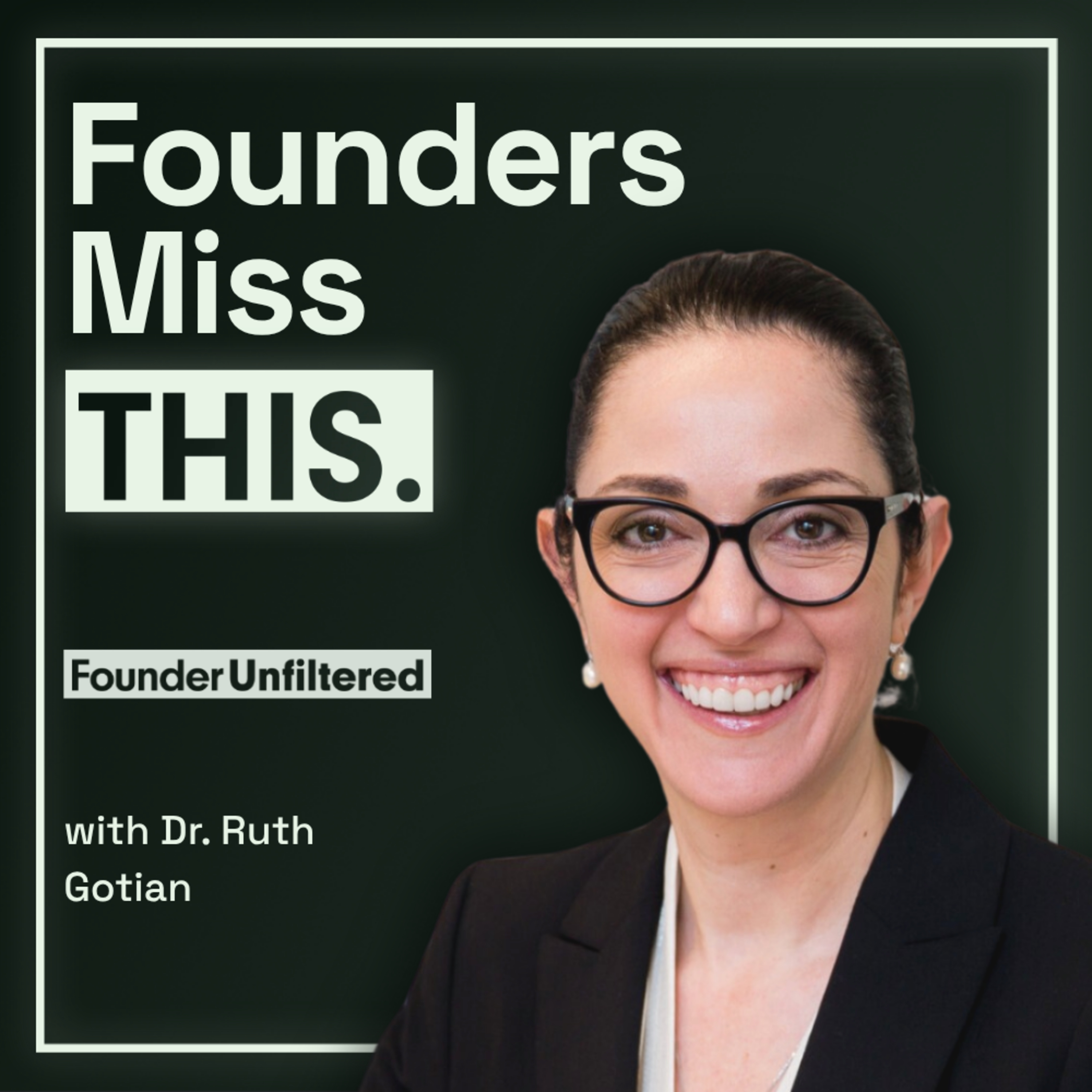 Dr. Ruth Gotian Studied Nobel Winners, Astronauts & Olympians — Here’s What She Found 25.06.2026 43pI sat down with Dr. Ruth Gotian, a success researcher and executive coach who has spent her career studying the world's highest performers, Nobel laureates, NASA astronauts, and Olympic champions, to figure out what they actually do differently when the pressure is real.What surprised me most is how often these elite performers say "I don't know." They're not protecting their egos, they're staying curious and pulling knowledge from outside their lane. We dug into why imposter syndrome is actually a sign of your success, why high achievers fear not trying more than they fear failing, and why focusing on your next goal beats obsessing over the ultimate one.We also got into self-promotion, the thing so many founders avoid. Ruth's take reframed it for me: it's not about you, it's about the value and the people you put the spotlight on. And she shared a networking system, the 24/7/30 rule, that any founder can use right now.Resources mentioned: Ruth's book The Success Factor, her LinkedIn Learning courses, and the free Passion Audit at RuthGotian.com.Build your founder brand with Mylance: https://mylance.coConnect with Bradley Jacobs: https://www.linkedin.com/in/bradley-r-jacobs/00:00 What elite performers do differently01:15 The subway that sparked the research03:30 No one teaches you how to succeed05:00 The surprising power of "I don't know"07:00 Reading isn't it, open your mind09:30 Get out of your lane to learn11:30 Ego and saying "I don't know"14:00 Your five people set your baseline16:30 Think next goal, not ultimate goal19:00 They're terrified too20:30 Imposter syndrome is a strength22:30 Failure is just data25:00 Saying yes only to aligned goals28:00 Giving value across seasons30:30 Self-promotion is really value-giving33:30 Becoming a LinkedIn Top Voice36:00 Don't fear giving away your secrets39:00 Breaking through the praise plateau42:00 What got you here won't get you there44:30 Using AI for real human connection47:30 The 24/7/30 networking rule50:00 Remember your why
 -
AI and the Founder Opportunity (Pt 3 of 4): Finding Your Product-Market Fit 18.06.2026 13pThis is part three of my four-part series on how AI is reshaping the workforce, and it's the one I promised would be tactical. If you've listened to parts one and two, you know about the macro shift and the inner-game work, this episode is the playbook.I walk through the exact mistake most founders make: they get excited about an idea, build it, then go looking for customers, only to discover they built the wrong thing. I share the step-by-step process I used about a year ago to launch a brand-new product at Mylance, one that had paying customers before we'd even built it.You'll hear how I wrote out my hypotheses, ran real customer conversations instead of asking leading questions, built a no-code MVP I could ship in a day, and used the Sean Ellis score to know when I'd actually found product-market fit. I also talk about how tools like Claude Code, Lovable, and Base44 have made building fast, but figuring out what to build is still the hard part.Part four, on building trust and a sustainable customer experience, drops in two weeks.Build your founder brand with Mylance: https://mylance.coConnect with Bradley Jacobs: https://www.linkedin.com/in/bradley-r-jacobs/00:00 Intro and what Mylance does00:50 Recap of parts one and two01:30 What this episode delivers02:15 The mistake most founders make03:00 Step 1: write your hypotheses04:15 Bradley's own hypothesis example05:30 Step 2: real customer conversations07:00 Talk to real ideal customers08:00 Step 3: brainstorm the MVP08:45 Build fast with AI/no-code tools10:00 Get customers onto the MVP11:15 The Sean Ellis score and PMF12:30 Why founders skip this step13:15 Recap, Part 4 coming in 2 weeks
-
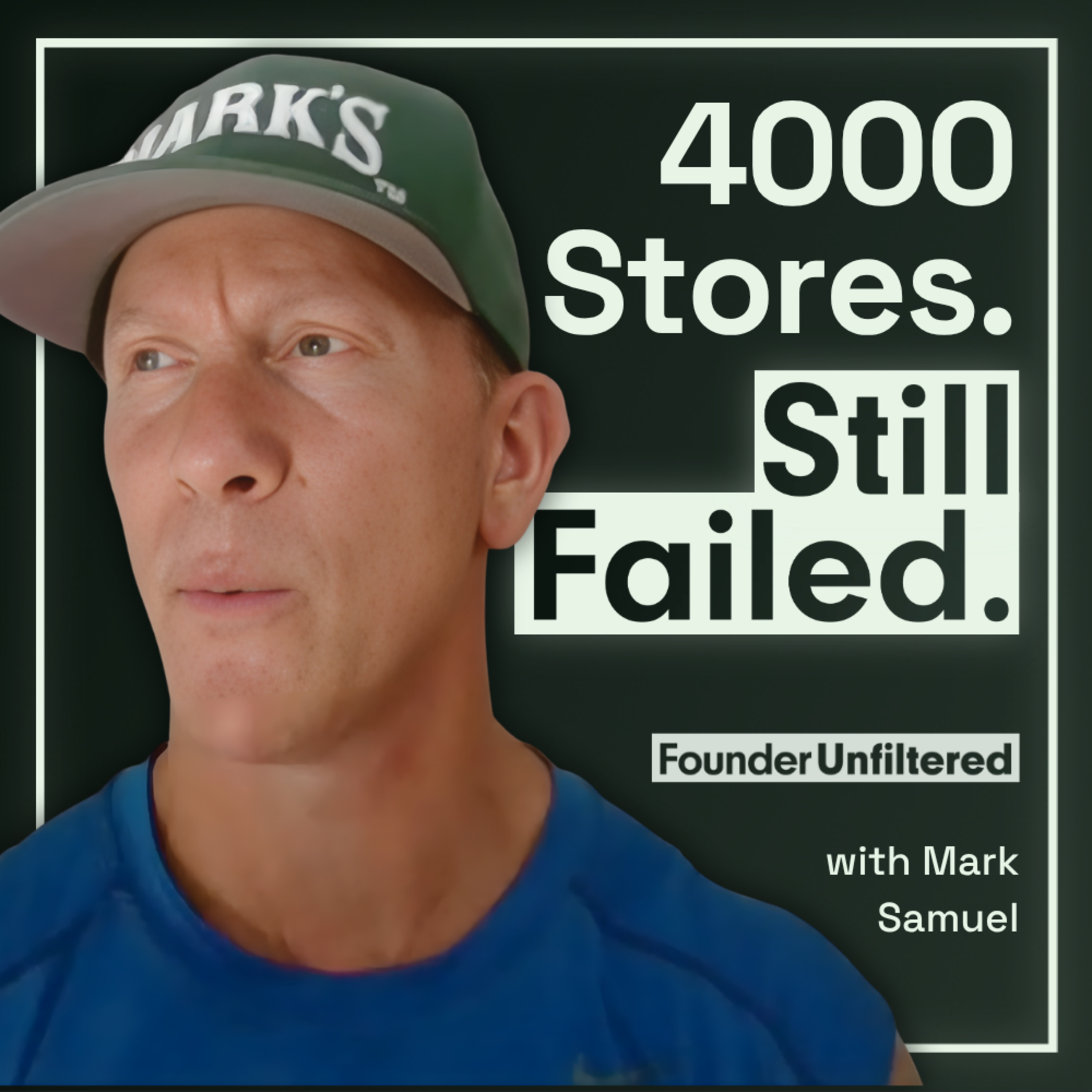 "Nobody Cares About You" | Mark Samuel on Failure, Pivots & Founder Health 11.06.2026 32pI sat down with Mark Samuel for an episode that pushed back on a lot of startup gospel. Mark's a serial CPG entrepreneur. He built Iwon Organics into thousands of retail doors before licensing it, had a global brand in Fitmark that was acquired, and he's now building MARK'S, a better-for-you snack company. He also hosts the Let's Eat podcast, where he's interviewed over 250 CPG founders and operators.We got into why getting onto the shelf is the easy part and why velocity in the door is the metric that actually matters. Mark challenged my own belief that winners are simply the ones who never quit. His reframe: "keep going" means keep moving your feet, not keep pushing a product that's clearly not working. We talked about how to tell a real pivot from a sunk cost, the emotional weight of carrying private investors' money, and why he puts his own health ahead of family and work, in that order.It's an honest, unfiltered conversation about identity, failure, and starting over. No books or external resources were mentioned in this episode.Build your founder brand with Mylance: https://mylance.coConnect with Bradley Jacobs: https://www.linkedin.com/in/bradley-r-jacobs/Connect with Mark Samuel: https://www.linkedin.com/in/markalansamuel/00:00 Welcome + meet Mark Samuel00:48 Iwon Organics: scaled then licensed03:00 Getting in the door is the easy part04:51 The emotional weight of investor money07:02 The numbers speak for themselves11:13 Marks' go-to-market: Amazon + DSD09:25 Pushback: do winners just never quit?09:46 "Keep going" means move your feet16:36 How to know: pivot or move on15:58 The Poppy outlier story21:00 Health, family, work — in that order24:53 Marks as a health & wellness platform25:25 Discipline over motivation25:45 On resilience27:00 What drives him now + brand position31:13 "Nobody cares about you" — the takeaway31:43 Where to find Mark
 -
AI and the Founder Opportunity (Pt 2 of 4): Why Founders Stay Small 04.06.2026 15pIn this episode — part two of my four-part series, AI and the Founder Opportunity — I get into the real stuff that keeps founders stuck. Not the tactics, not the tools. The fear.After talking with thousands of founders, I keep seeing the same patterns. Fear of judgment and rejection. Not knowing which move to make next. And that subtle, quiet thing where you're going through the motions but never quite giving it everything you've got — leaving yourself a back door just in case it doesn't work out.I talk about why action is the only thing that actually moves the needle on these blocks. Not therapy, not journaling (though those have their place) — but taking small, uncomfortable steps forward anyway. I share how I work with my own business coach, and why if you can't afford one, buying a smart friend tacos once a week might be the best investment you can make.I also get into why this moment — with AI making it easier than ever to build, test, and launch — is a massive opportunity for founders who are willing to stop waiting for the perfect idea, the right co-founder, or one more dollar in the bank. The riches are in the niches, and the tools to go after them have never been more accessible.No books or external resources were mentioned in this episode beyond a brief reference to 10x Is Easier Than 2x (highly recommended by Bradley).Build your founder brand with Mylance: https://mylance.co Connect with Bradley Jacobs: https://www.linkedin.com/in/bradley-r-jacobs/
-
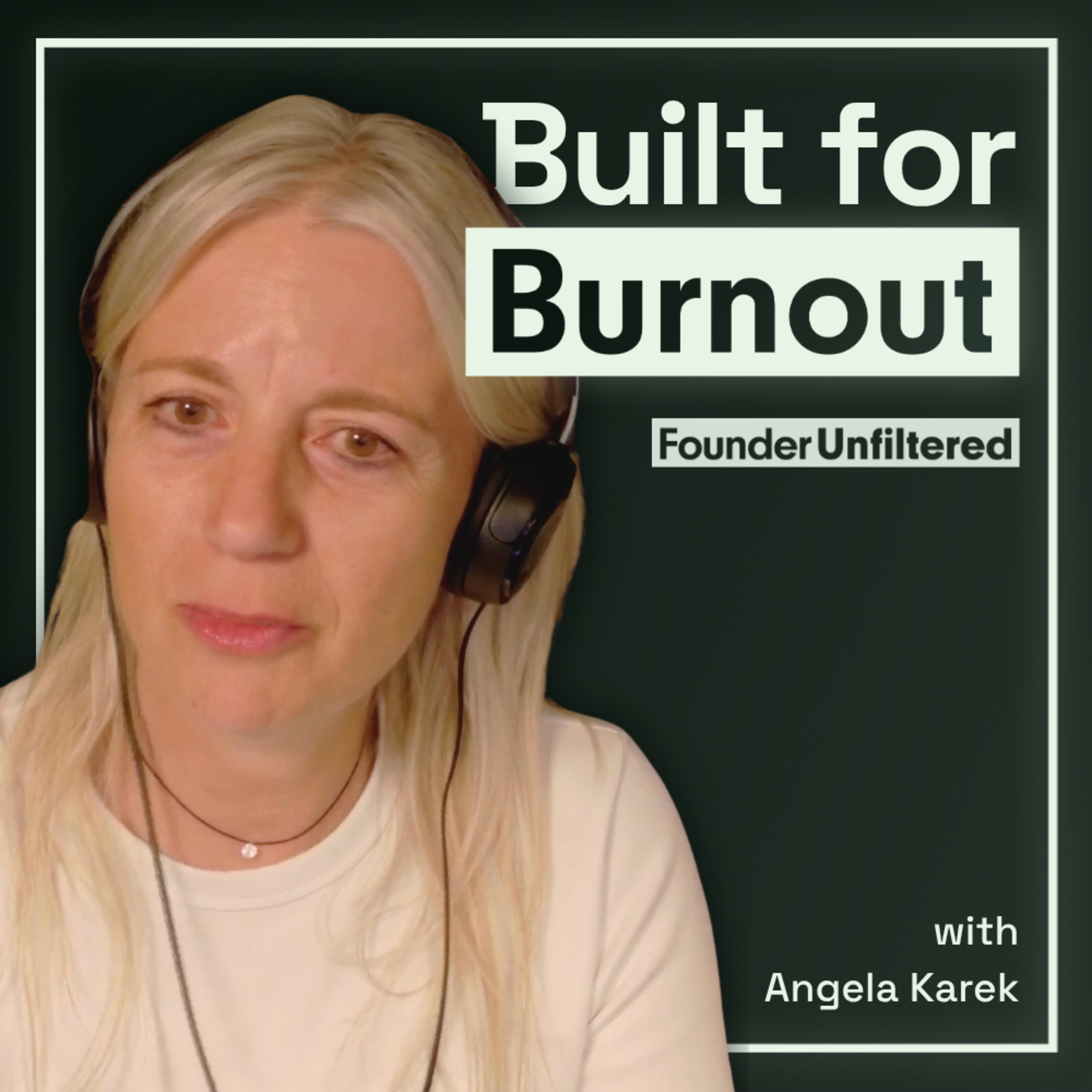 Are You Playing to Win, or Playing Not to Lose in Your Business? with Dr. Angela Kerek 28.05.2026 35pMost founders I talk to already know what they need to do — they just aren't doing it. In this episode, I find out why.Dr. Angela Kerek is a former professional tennis player, big law finance partner, and now founder of Active Giving — and her framework for sustainable performance completely reframed how I think about fear, self-sabotage, and what it actually means to give your all.We talked about the difference between playing to win versus playing to avoid losing, and how that same psychology that showed up on the tennis court follows us into every pitch, every client call, and every revenue goal we set. Angela shared how she realized she'd never truly given 100% in her entire career — not because she couldn't, but because if she gave everything and still lost, she'd have no excuse left. We dug into how to build a value system that's truly your own, why movement is one of the most underrated tools for mental resilience, and what it really looks like to live a sustainable, high-performing life without burning out. No books or external resources were mentioned in this episode. Find Angela and Active Giving at angelakeriek.com and activegiving.de.Build your founder brand with Mylance: https://mylance.co Bradley Jacobs: https://www.linkedin.com/in/bradley-r-jacobs/ Connect with Angela Kerek: https://www.linkedin.com/in/angelakerek/00:00 Welcome & guest intro00:44 Angela's background02:39 Learning to succeed without losing yourself06:38 Winning in business vs. winning in sport07:35 Defining success on your own terms11:04 Process focus & planning the night before12:48 We know what to do — so why don't we?13:59 Self-sabotage: the fear beneath the avoidance14:53 Playing to win vs. playing not to lose19:58 Fear of giving your all — and still failing20:14 What we can and can't control21:23 What to actually do about it23:27 Building your own universe25:00 Blocking out the noise — from everyone26:27 Training the mind to come back to itself29:42 Why building a business is so hard30:16 Uncertainty and the hardest part of founding32:02 Closing thoughts & last advice32:18 Never stop following your dreams34:10 Where to find Angela & Active Giving34:49 Wrap-up
 -
AI and the Founder Opportunity (Pt 1 of 4): The Macro, the Opportunity, and the Fear 21.05.2026 15pThe AI revolution isn't coming — it's already here. Bradley Jacobs breaks down what the wave of tech layoffs actually signals and why he sees it as a massive opening for founders and solo entrepreneurs.With the cost and complexity of building software plummeting, Bradley argues that anyone with niche expertise can now create tailored solutions for underserved audiences that big companies will never touch. A focused, one- or two-person business serving a specific audience? More viable today than it has ever been — and getting more so by the month.But the real barrier isn't technical or financial. It's mindset. Bradley gets honest about fear, imposter syndrome, and the habit of playing small — drawing on quotes from Lady Gaga and Emma Watson to show that self-doubt is universal. The people who break through aren't fearless; they just act anyway. This episode sets the stage for a four-part series exploring the opportunity in front of every founder right now.Build your founder brand with Mylance: https://mylance.coConnect with Bradley Jacobs: https://www.linkedin.com/in/bradley-r-jacobs/00:00 Welcome & episode overview01:15 Big tech layoffs & what they signal03:30 AI is still in its infancy05:00 The niche founder opportunity07:45 Custom solutions for underserved audiences10:00 Why being miserable at work isn't required12:30 What really holds founders back: fear15:00 Imposter syndrome — Lady Gaga & Emma Watson17:30 Playing big despite the fear19:45 Bradley's personal fear of playing big21:30 Miniseries roadmap: episodes 2, 3 & 423:00 DM Bradley & Mylance CTA
Hasonló podcastok


Népszerű itt:
Ez a podcast ezeknek az országoknak a podcast-listáin is szerepel.
