
Moving Money (Right)
Fawziyah
0
Moving Money (Right) is a podcast that explains everyday financial products in accessible language. It is hosted by Fawziyah, who builds these products for a living and shares what she has learned from that work. The show aims to help listeners better understand common financial tools and make more informed decisions.
Epizódok
-
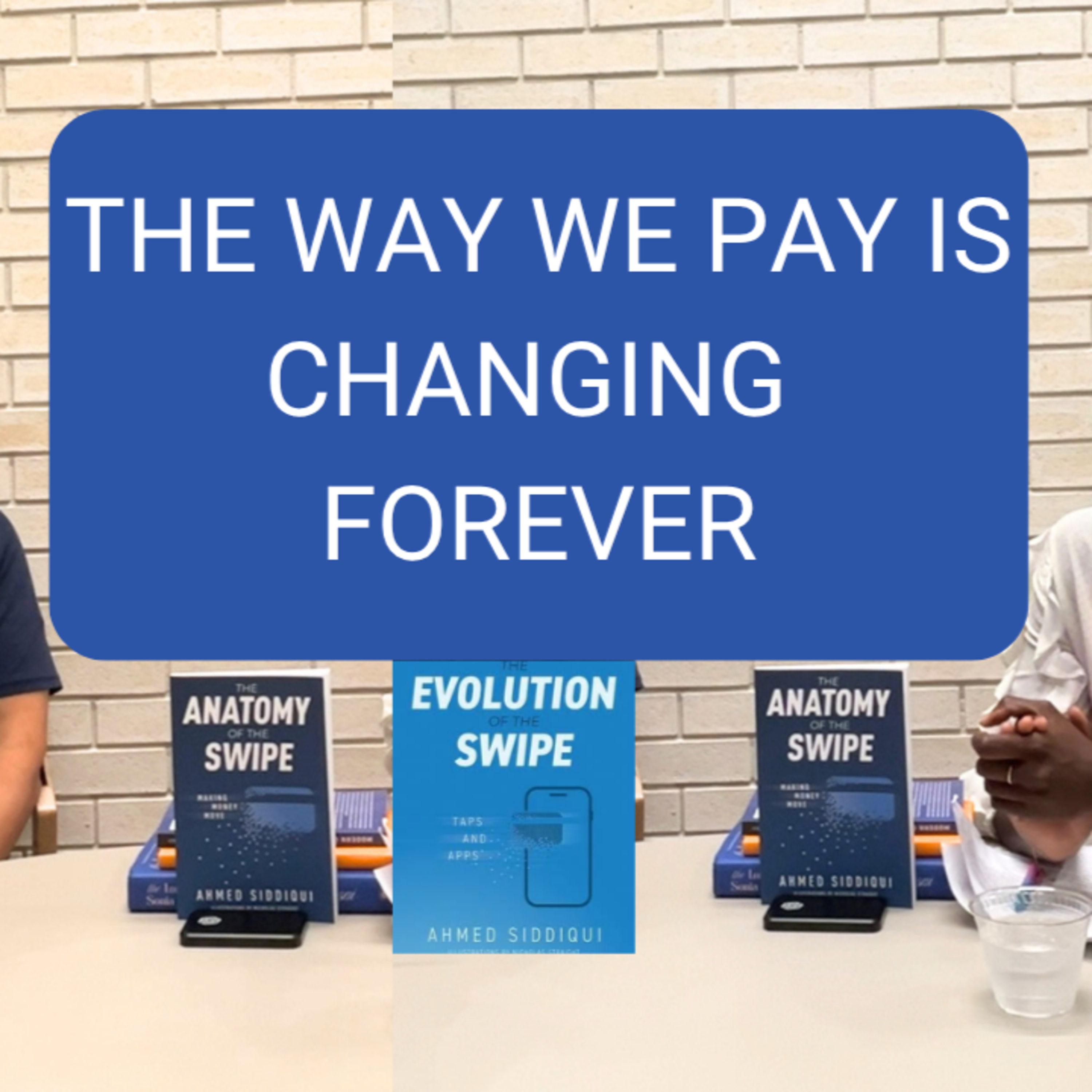 The Evolution of the Swipe: Why the Way We Pay Is Changing Forever | A Conversation with Ahmed Siddiqui, Bestselling Author of ‘The Anatomy of the Swipe’ 08.09.2026 59pFurther Reading / Links Referenced in the video Ahmed’s website: https://www.academyoftheswipe.com/The Anatomy of the Swipe (his first book): https://amzn.to/46wRznw The Evolution of the Swipe: Taps and Apps (his latest book): https://amzn.to/4qSfffF NACHA / ACH File Format Specifications: https://www.nacha.org/rules The Clearing House (RTP Network): https://www.theclearinghouse.org/payment-systems/rtp Federal Reserve (FedNow Service): https://www.frbservices.org/financial-services/fednowEMVCo Payment Tokenization Standard: https://www.emvco.com/emv-technologies/tokenization/ Visa Flexible Credential Overview: https://usa.visa.com/solutions/crypto/visa-flexible-credential.html Capital One & Discover Acquisition Details: https://www.capitalone.com/discover-announcement/ Today’s episode is with the bestselling author of The Anatomy of the Swipe, a fantastic book on how money literally moves within the US, Ahmed Siddiqui. He joins me to discuss his second book: The Evolution of the Swipe. If you’ve ever wanted to know why wire transfers cost $30, rental cars only let you use credit cards not debit cards, how Apple Pay literally works, and why Capital One purchased the Discover card network, then you’ll love our conversation. Ahmed Siddiqui leads Product at Branch, revolutionizing how workers get paid. Prior to Branch, Ahmed served as one of the earliest Product Managers and a VP of Product at Marqeta. He helped build the modern card issuance platform from the ground up. His first book, The Anatomy of the Swipe, has been used as an onboarding tool for companies like Marqeta, Visa, Mastercard, Shopify, Stripe, and Block.He’s also been recognized on the Product 50, the definitive list of the top global product leaders developing boundary-breaking, business-making products.
 -
 What powers every financial product you use | Ledger 101 & why they must be protected at all costs 08.08.2026 44pEvery time you deposit money into your bank account, Venmo your friend, or even pay for something with your card, a record is created onto something called a ledger. No financial product you use can exist without it, and my guest, Jauzey Imam, has designed and built a rigorous one before. Two years ago, a product called Yotta had to leave its users stranded because it outsourced its ledger to another company, Synapse, that went bankrupt. Those users are still unable to access $112m in deposits they gave to Yotta. Jauzey pulls back the curtain on how ledgers operate, shares the story of building what is now GoDaddy Payments, and why at scale your ledger should always belong to you. Listen to our conversation to learn about an essential part of many financial products you interact with everyday, and what it takes to maintain it successfully. Jauzey Imam is a Lead Architect at GoDaddy. He helped build and design the ledger and payments infrastructure at Poynt, which GoDaddy acquired in 2021 and turned into what's now GoDaddy Payments. He was also my very first manager at my first job!A few terms from this episode you may not be familiar with / glossaryISO (Independent Sales Organization): A third party that signs up merchants to accept card payments on behalf of a bank or processor. Many small businesses get their card readers through an ISO without ever knowing the bank behind it.MID (Merchant ID): A unique number a processor assigns to a business so it can accept card payments. Every card swipe is tied back to one of these behind the scenes.KYC / KYB (Know Your Customer / Know Your Business): The identity checks companies run before letting you open an account or process payments, required by law to prevent fraud and money laundering.Gateway switch: A piece of infrastructure that sits between a payment processor and the card networks, routing transactions without the processor needing a direct connection to every bank.BIN table (Bank Identification Number): The first six to eight digits of your card number, which identify the issuing bank and card type(debit/credit). It is how a merchant's system knows where to send a transaction for approval.Further Reading / Links Referenced in the video Synapse / Yotta collapse: https://www.yalejournal.org/publications/the-synapse-collapseThe Payfac model: https://stripe.com/guides/payfacsUber rebuilt its ledger several times (discussion imo is more interesting than the article): https://news.ycombinator.com/item?id=47861731Visa TransactionGPT (Whitepaper): https://arxiv.org/abs/2511.08939
 -
From swipe to you: how your transaction data actually moves | FDX, the role of AI, & how networks like Plaid work 08.07.2026 39pEvery time you swipe your card, a chain of invisible actions starts so that RocketMoney, Copilot, Mint (RIP), or YNAB have your most updated transactions ready for you. Aggregators like Yodlee, and MX, and data networks like Plaid, ledger and reconcile messy merchant data. My guest, Nick Sundin, is a Senior Staff Software Engineer at Plaid, and we discuss how this work is getting easier because of things like FDX, and the role of Foundation Models in future use cases for your data, like lending and personalizing financial products. Listen to our conversation to learn the story of what happens when you swipe your card, and how that data eventually makes its way back to you.Links referenced in the video:Financial Data Exchange (FDX): https://financialdataexchange.org/Stripe Payments Foundation Model: https://stripe.com/payments/aiVisa TransactionGPT (Whitepaper): https://arxiv.org/abs/2511.08939Plaid Transaction Foundation Model: https://plaid.com/blog/building-transaction-foundation-model-intelligent-financePatrick McKenzie's Reconciliation Game: https://keshikomisimulator.com/ ; https://www.bitsaboutmoney.com/archive/a-game-that-intentionally-frustrates-the-player/Plaid's Sequential Foundation Model: https://plaid.com/blog/sequential-foundation-model/RTP, explained: https://www.moderntreasury.com/learn/what-is-rtpNick Sundin is a Senior Staff Software Engineer at Plaid with five years focused on building insights products, including Plaid LendScore. Prior to Plaid, he launched Dropbox Transfer.Visit www.movingmoneyright.com to learn more!
Hasonló podcastok


Népszerű itt:
Ez a podcast ezeknek az országoknak a podcast-listáin is szerepel.
