
Let's Talk Money with Monika Halan
Monika Halan
0
Let's Talk Money is your guide to financial stability and freedom. Join Monika Halan, a trusted financial expert, as she delves into a wide array of topics each week. From tackling debt to making friends with the stock market, from gold to mutual funds, Monika's insights are your compass to financial wellness. But that's not all! Monika's here to answer your money questions. Send them in, and she'll help you make informed decisions. It's time to take control of your financial destiny with Monika Halan. So, Let’s Talk Money!
Episodi
-
 Digital Dakoos and their Diet of Fear and Greed 24.09.2026 23minIn this episode, Monika looks at how cyberfraudsters exploit two powerful human emotions: fear and greed. She explains how scams such as digital arrest, fake KYC alerts and fraudulent investment opportunities create urgency and pressure people into acting without thinking. She shares simple rules for slowing down, verifying information independently and refusing to let a stranger take control of your next financial decision.She also explores how a personal financial system can protect you from the temptation of easy money. From separating money for everyday spending, emergencies and long-term goals to creating a 24-hour rule for unsolicited investment opportunities and automating good financial habits, she explains how preparation can make you harder to exploit. The central message is simple: when you are afraid, pause and verify; when you are excited about making money, pause and check whether the opportunity actually fits your financial plan.In the listener questions, Seefa A from Kerala asks how to choose between a SEBI-registered investment adviser and a mutual fund distributor, whether health insurance should be bought through an agent, and what to do about an existing regular mutual fund plan; Jayesh Shah asks how to structure his asset allocation and SIPs across short-term, children's education and retirement goals; and Sanjeev Samtani asks how to protect his family's financial security and investments when geopolitical tensions and war create uncertainty.Chapters:(00:00–00:00) Investing in Turbulent Times: Building a Portfolio That Can Survive a Crisis(00:00–00:00) Should You Invest While Paying Off a Loan?(00:00–00:00) How Should You Align Investments With Your Financial Goals?(00:00–00:00) Should You Hire a Financial Adviser or Manage Your Portfolio Yourself?(00:00–00:00) How Should You Protect Your Money During a War or Crisis?If you have financial questions that you’d like answers for, please email us at [email protected] Monika’s book on basic money managementhttps://www.monikahalan.com/lets-talk-money-english/Monika’s book on mutual fundshttps://www.monikahalan.com/lets-talk-mutual-funds/Monika’s workbook on recording your financial lifehttps://www.monikahalan.com/lets-talk-legacy/Calculatorshttps://investor.sebi.gov.in/calculators/index.htmlYou can find Monika on her social media @monikahalan. Twitter @MonikaHalanInstagram @MonikaHalanFacebook @MonikaHalanLinkedIn @MonikaHalanProduction House: www.inoutcreatives.comProduction Assistant: Anshika Gogoi
 -
 Investing in Turbulent Times 17.09.2026 23minIn this episode, Monika explores why having more money does not necessarily mean having more stuff. She shares what decades of working with money have taught her about freedom, consumption, lifestyle inflation, maintenance costs and the idea of finding your own “enough” — and why she would rather spend on time, comfort and well-being than on possessions that create more work.She looks at how a high-cost lifestyle can limit financial freedom, why experiences can also become another form of consumption, and how being intentional about what you spend on can help you build a life that is richer without necessarily owning more. The goal, she argues, is not deprivation but knowing what genuinely adds value to your life and letting go of the rest.In the listener questions, Raja from UAE asks how to restructure his portfolio as he retires and moves back to India, including his PMS, AIFs, mutual funds, property and insurance policies; Anon asks how to build a self-employed career around investing and finance without relying on trading or prematurely giving up a salaried career; and Sarini from Kolkata asks how to find out how much her bank or agent earns from the financial products she invests in.Chapters:(00:00–00:00) Investing in Turbulent Times(00:00–00:00) How Should You Invest While Paying Off a Loan?(00:00–00:00) Should You Sell Property to Build Your Retirement Corpus?(00:00–00:00) How Can You Choose the Right Health Insurer?(00:00–00:00) What Should You Check Before Buying Health Insurance?If you have financial questions that you’d like answers for, please email us at [email protected] Monika’s book on basic money managementhttps://www.monikahalan.com/lets-talk-money-english/Monika’s book on mutual fundshttps://www.monikahalan.com/lets-talk-mutual-funds/Monika’s workbook on recording your financial lifehttps://www.monikahalan.com/lets-talk-legacy/Calculatorshttps://investor.sebi.gov.in/calculators/index.htmlYou can find Monika on her social media @monikahalan. Twitter @MonikaHalanInstagram @MonikaHalanFacebook @MonikaHalanLinkedIn @MonikaHalanProduction House: www.inoutcreatives.comProduction Assistant: Anshika Gogoi
 -
 Why I Don't Want More Stuff 10.09.2026 18minIn this episode, Monika explores why having more money does not necessarily mean having more stuff. She shares what decades of working with money have taught her about freedom, consumption, lifestyle inflation, maintenance costs and the idea of finding your own “enough” — and why she would rather spend on time, comfort and well-being than on possessions that create more work.She looks at how a high-cost lifestyle can limit financial freedom, why experiences can also become another form of consumption, and how being intentional about what you spend on can help you build a life that is richer without necessarily owning more. The goal, she argues, is not deprivation but knowing what genuinely adds value to your life and letting go of the rest.In the listener questions, Raja S from UAE asks how to restructure his portfolio as he retires and moves back to India, including his PMS, AIFs, mutual funds, property and insurance policies; Anon asks how to build a self-employed career around investing and finance without relying on trading or prematurely giving up a salaried career; and Sarini from Kolkata asks how to find out how much her bank or agent earns from the financial products she invests in.Chapters:(00:00–00:00) Why More Money Doesn’t Mean More Stuff(00:00–00:00) How Much Is Enough for Retirement?(00:00–00:00) Should You Leave Your Job to Build a Finance Career?(00:00–00:00) How Can You Find Out What Your Agent Earns(00:00–00:00) The Hidden Cost of Financial Products and AdviceIf you have financial questions that you’d like answers for, please email us at [email protected] Monika’s book on basic money managementhttps://www.monikahalan.com/lets-talk-money-english/Monika’s book on mutual fundshttps://www.monikahalan.com/lets-talk-mutual-funds/Monika’s workbook on recording your financial lifehttps://www.monikahalan.com/lets-talk-legacy/Calculatorshttps://investor.sebi.gov.in/calculators/index.htmlYou can find Monika on her social media @monikahalan. Twitter @MonikaHalanInstagram @MonikaHalanFacebook @MonikaHalanLinkedIn @MonikaHalanProduction House: www.inoutcreatives.comProduction Assistant: Anshika Gogoi
 -
 Is the Government Fudging GDP Data? 03.09.2026 22minIn this episode, Monika examines whether India’s latest GDP growth numbers are as strong as they appear and addresses the growing claims that the government is fudging economic data. She looks at the 7.8% Q1 GDP growth, the impact of the new GDP series and base-year revisions, and why comparing current-price numbers with unrevised data can create a misleading picture of growth.She explains what the wider economic indicators tell us about India’s resilience, from manufacturing and services growth to consumption, inflation, capital flows and the rupee. She also breaks down why a falling currency or a weak stock market does not necessarily mean the economy is weakening, and why India’s fiscal and monetary policy choices have helped it absorb a major external shock. The episode also looks at what households should make of official inflation numbers and why macroeconomic stability does not mean that India’s structural challenges have disappeared.In the listener questions, XXX asks about building a retirement corpus while living in the UAE, managing an emergency fund, insurance policies, a mortgage and the transition back to India; Suparna Srivastav asks how interest on fixed deposits is taxed and whether a mid-career sabbatical can be treated as a legitimate financial goal; and Deepak asks how to restructure his portfolio as he approaches retirement and whether he should consider an annuity or build his own retirement income pools.Chapters:00:00–00:00 Is India’s GDP Growth Really as Strong as It Looks?00:00–00:00 GDP Revisions, Double Deflation & Can We Trust the Data?00:00–00:00 How Should You Plan for Retirement as an NRI?00:00–00:00 Should You Pay Tax on FD Interest Before Maturity?00:00–00:00 Is an Annuity the Right Choice for Retirement Income?If you have financial questions that you’d like answers for, please email us at [email protected] Monika’s book on basic money managementhttps://www.monikahalan.com/lets-talk-money-english/Monika’s book on mutual fundshttps://www.monikahalan.com/lets-talk-mutual-funds/Monika’s workbook on recording your financial lifehttps://www.monikahalan.com/lets-talk-legacy/Calculatorshttps://investor.sebi.gov.in/calculators/index.htmlYou can find Monika on her social media @monikahalan. Twitter @MonikaHalanInstagram @MonikaHalanFacebook @MonikaHalanLinkedIn @MonikaHalanProduction House: www.inoutcreatives.comProduction Assistant: Anshika Gogoi
 -
 Insurance Must Go From Push to Pull 27.08.2026 19minIn this episode, Monika looks at why insurance in India needs to move from a “push” model to a “pull” model. Life and health insurance are financial seat belts, yet the industry continues to rely heavily on commissions and aggressive selling, while insurance penetration remains low and complaints continue to rise. She examines whether the real problem is that Indians do not want insurance, or that insurance is being sold badly.She explains what needs to change for consumers to actively seek out insurance: simpler products, underwriting at the point of sale, greater accountability for sellers, useful disclosures and better ratings of the distribution chain. Monika also looks at how the mutual fund industry’s “Mutual Fund Sahi Hai” campaign offers a useful model for insurance, arguing that the industry must first fix products and incentives before asking consumers to buy more. The goal is to build trust and make insurance something people understand and want, rather than something that is pushed on them.In the listener questions, SK from Bangalore asks whether he should sell a low-yielding rental property, repay the outstanding loan and redeploy the money into mutual funds and other investments. Anahita Mistry from Dubai asks how she should invest her savings in the UAE while continuing her existing Indian investments and managing currency risk. Ritwik Bhuyan asks Monika for her views on Bitcoin and whether cryptocurrency can really serve as a hedge against inflation and currency debasement.Chapters:(00:00 – 00:00) The Best Product May Not Be The Best Decision(00:00 – 00:00) Why Simple Beats Optimal In Personal Finance(00:00 – 00:00) Should I Sell My Investment Property?(00:00 – 00:00) How Should An NRI Invest Globally?(00:00 – 00:00) Is Bitcoin A Good Investment?If you have financial questions that you’d like answers for, please email us at [email protected] Monika’s book on basic money managementhttps://www.monikahalan.com/lets-talk-money-english/Monika’s book on mutual fundshttps://www.monikahalan.com/lets-talk-mutual-funds/Monika’s workbook on recording your financial lifehttps://www.monikahalan.com/lets-talk-legacy/Calculatorshttps://investor.sebi.gov.in/calculators/index.htmlYou can find Monika on her social media @monikahalan. Twitter @MonikaHalanInstagram @MonikaHalanFacebook @MonikaHalanLinkedIn @MonikaHalanProduction House: www.inoutcreatives.comProduction Assistant: Anshika Gogoi
 -
 The Best Product May Not Be The Best Decision 20.08.2026 22minIn this episode, Monika shares what she learnt from speaking to Naval personnel across the Southern Command in Kochi about building financial freedom alongside a career in the forces. She explains why those in uniform have already solved some of the biggest financial concerns faced in the private sector, and why financial freedom means being able to take off the uniform without compromising on values or dignity for money.She explores why the best financial product is not always the best financial decision. Personal finance is less about mathematical optimisation and more about behaviour, and a simple strategy that can be understood and followed may work better than a theoretically perfect portfolio. She also shares a practical framework for making financial decisions based on goals, time horizon, risk, simplicity and the ability to stick with a decision.In the listener questions, Rekha asks about balancing Sukanya Samriddhi Scheme, NPS Vatsalya and equity investments for her daughters. Rohit asks whether passive index funds have the same long-term advantage in India and whether he should add an index fund to his existing portfolio. Sarah, an 18-year-old student, asks what Monika would focus on if she were starting again and wanted to achieve financial independence as early as reasonably possible.Chapters:(00:00 – 00:00) Make Your Money March: Financial Freedom After the Uniform(00:00 – 00:00) Why the Best Financial Product May Not Be the Best Decision(00:00 – 00:00) NPS Vatsalya vs Mutual Funds: What’s Better for Your Children’s Future?(00:00 – 00:00) Active vs Passive Funds: Which Investment Strategy Works Better in India?(00:00 – 00:00) If You’re 18, What Should You Do to Become Financially Independent?If you have financial questions that you’d like answers for, please email us at [email protected] Monika’s book on basic money managementhttps://www.monikahalan.com/lets-talk-money-english/Monika’s book on mutual fundshttps://www.monikahalan.com/lets-talk-mutual-funds/Monika’s workbook on recording your financial lifehttps://www.monikahalan.com/lets-talk-legacy/Calculatorshttps://investor.sebi.gov.in/calculators/index.htmlYou can find Monika on her social media @monikahalan. Twitter @MonikaHalanInstagram @MonikaHalanFacebook @MonikaHalanLinkedIn @MonikaHalanProduction House: www.inoutcreatives.comProduction Assistant: Anshika Gogoi
 -
 Do You Feel Your Salary is Stagnating? 06.08.2026 23minHave your salary hikes felt smaller than expected despite years of hard work? In this episode, Monika analyses a decade of Income Tax Return data to explain why India's salaried middle class feels financially stuck. While more people have moved into higher income brackets and the formal economy has expanded rapidly, average salaries within income groups have barely grown, raising important questions about wages, productivity and purchasing power.She explains what these trends mean for employees, why changing jobs and upgrading skills often matter more than annual appraisals, and why your career remains your biggest financial asset. The episode concludes with practical advice on taking charge of your own earning potential rather than waiting for the labour market to change.In the listener questions, Monika advises a young first-generation wealth creator on managing a sudden financial windfall, overseas diversification and avoiding lifestyle inflation. She also explains how debt mutual fund maturities actually work and guides a Hyderabad-based listener on whether downsizing his home can help create a more secure retirement income.Chapters:(00:00 – 00:00) Is Your Salary Really Growing? What 10 Years of Tax Data Reveal About Middle India(00:00 – 00:00) Why Aren’t Salaries Rising Despite Formalisation and Economic Growth?(00:00 – 00:00) How Should First-Generation Wealth Creators Invest in a Sudden Windfall?(00:00 – 00:00) When Should You Exit a Debt Mutual Fund?(00:00 – 00:00) Should You Downsize Your Home to Build a Better Retirement Income?If you have financial questions that you’d like answers for, please email us at [email protected] Monika’s book on basic money managementhttps://www.monikahalan.com/lets-talk-money-english/Monika’s book on mutual fundshttps://www.monikahalan.com/lets-talk-mutual-funds/Monika’s workbook on recording your financial lifehttps://www.monikahalan.com/lets-talk-legacy/Calculatorshttps://investor.sebi.gov.in/calculators/index.htmlYou can find Monika on her social media @monikahalan. Twitter @MonikaHalanInstagram @MonikaHalanFacebook @MonikaHalanLinkedIn @MonikaHalanProduction House: www.inoutcreatives.comProduction Assistant: Anshika Gogoi
 -
 How Much Financial Safety Is Enough? 30.07.2026 25minFinancial safety isn't about having the highest net worth or the perfect asset allocation—it's about sleeping well at night. In this episode, Monika explores the everyday financial fears that people live with, from job loss and medical emergencies to inflation and market crashes, and explains how to build practical financial safety without becoming paranoid about every possible risk.She breaks down the role of emergency funds, health insurance, asset allocation and simple planning in protecting your financial life. The goal isn't to eliminate all risk, but to cover the basics well enough that you're prepared when life throws the unexpected your way.In the listener questions, Monika answers whether a self-employed professional with a solid financial foundation is ready to begin investing seriously, explains why it's time to exit ULIPs and buy term insurance instead, discusses whether it makes sense to continue older LIC policies that are close to maturity, and reassures an AIIMS doctor that decades of disciplined saving have already put him on track for a financially secure retirement.Chapters:(00:00 – 00:00) How Much Financial Safety Is Really Enough?(00:00 – 00:00) Emergency Funds, Health Insurance and Protecting Yourself Against Life’s Biggest Risks(00:00 – 00:00) Should You Wait to Invest Until Your Emergency Fund Is Complete?(00:00 – 00:00) Should You Continue Your LIC Policy or Switch to Mutual Funds?(00:00 – 00:00) Is It Too Late to Start Investing at 55? Building a ₹16 Crore Retirement CorpusIf you have financial questions that you’d like answers for, please email us at [email protected] Monika’s book on basic money managementhttps://www.monikahalan.com/lets-talk-money-english/Monika’s book on mutual fundshttps://www.monikahalan.com/lets-talk-mutual-funds/Monika’s workbook on recording your financial lifehttps://www.monikahalan.com/lets-talk-legacy/Calculatorshttps://investor.sebi.gov.in/calculators/index.htmlYou can find Monika on her social media @monikahalan. Twitter @MonikaHalanInstagram @MonikaHalanFacebook @MonikaHalanLinkedIn @MonikaHalanProduction House: www.inoutcreatives.comProduction Assistant: Anshika Gogoi
 -
 What Went Wrong with Some Debt Funds Last Year? 23.07.2026 18minIn this episode, Monika explains why many long-duration debt funds, especially gilt funds, disappointed investors despite the RBI cutting interest rates. She unpacks the relationship between repo rates, bond yields and bond prices, and explains why global bond markets, inflation expectations, oil prices and changing RBI guidance prevented long-term bond funds from delivering the gains many investors were expecting. Her key message is that debt funds are not all the same, and that most investors are better served by safer, shorter-duration debt funds rather than trying to predict interest-rate cycles.She uses the recent performance of debt funds to reinforce a broader investing lesson: tactical bets on interest rates are difficult to get right because long-term bond yields are influenced by far more than RBI policy. While short-duration and accrual-oriented debt funds continued to provide stable returns, long-duration funds became a reminder that debt should primarily provide stability within a portfolio, leaving growth and risk-taking to equities.In listener questions, Sashikant from Hyderabad asks whether the newly launched Life Cycle Funds are a better way to save for his son's education, prompting Monika to explain how these funds work, their current limitations and why she would wait for the category to mature before investing. Nidhi shares an alternative retirement income strategy built around fixed deposits, rental income and mutual funds, leading to a discussion on preserving capital, taxation and retirement planning. Finally, Singaravelu Muthu from Tamil Nadu asks how a beginner should start investing, giving Monika an opportunity to emphasise that financial planning begins with managing cash flows, building an emergency fund and putting insurance in place before choosing mutual funds.Chapters:(00:00 – 00:00) Why Long-Duration Debt Funds Disappointed Despite RBI Rate Cuts(00:00 – 00:00) What Really Drives Bond Yields and Debt Fund Returns?(00:00 – 00:00) Are Life Cycle Funds the Future of Goal-Based Investing?(00:00 – 00:00) Can Fixed Deposits Replace the Three-Pool Retirement Strategy?(00:00 – 00:00) How Should a Beginner Start Investing in Mutual Funds?If you have financial questions that you’d like answers for, please email us at [email protected] Monika’s book on basic money managementhttps://www.monikahalan.com/lets-talk-money-english/Monika’s book on mutual fundshttps://www.monikahalan.com/lets-talk-mutual-funds/Monika’s workbook on recording your financial lifehttps://www.monikahalan.com/lets-talk-legacy/Calculatorshttps://investor.sebi.gov.in/calculators/index.htmlYou can find Monika on her social media @monikahalan. Twitter @MonikaHalanInstagram @MonikaHalanFacebook @MonikaHalanLinkedIn @MonikaHalanProduction House: www.inoutcreatives.comProduction Assistant: Anshika Gogoi
 -
 Will your Bank Stop Mis-Selling in 2027? 16.07.2026 19minIn this episode, Monika examines the RBI's new Responsible Business Conduct regulations, which come into effect on 1 January 2027, and asks whether they will finally put an end to decades of financial mis-selling by banks. She explains the new concepts of dark patterns, suitability, and mis-selling, but argues that the regulations lack meaningful consequences. If banks simply have to refund customers without facing serious penalties or management accountability, she believes the incentives to mis-sell remain largely unchanged.She goes on to argue that stronger consumer protection requires more than good intentions. Monika calls for simpler and standardised product disclosures, insurance commission reform, independent mystery-shopping exercises to uncover mis-selling, and meaningful penalties that hold senior management accountable. While welcoming the RBI's recognition that a customer's signature alone is not proof of informed consent, she concludes that lasting trust in India's financial system will only come when mis-selling becomes genuinely expensive for financial institutions.In listener questions, Sai Trivikram from Hyderabad asks how to balance buying a car with planning for a future home purchase, prompting Monika to discuss debt, budgeting, and where to park short-term savings. Viswajeet from Pune raises the long-standing cap on overseas mutual fund investments, leading to a conversation about investor diversification, capital controls, and why the limit may finally need revisiting. Finally, Harish from Mysore seeks guidance on strengthening his financial foundation, opening up a discussion on emergency funds, health insurance, home ownership, retirement planning, and building wealth systematically in his mid-thirties.Chapters:(00:00 – 00:00) Will RBI's New Mis-selling Rules Finally Protect Bank Customers?(00:00 – 00:00) Why Better Disclosures, Commission Reform and Stronger Penalties Matter(00:00 – 00:00) Should You Pay Cash or Take a Loan When Buying a Car?(00:00 – 00:00) Why Is India Still Limiting Overseas Mutual Fund Investments?(00:00 – 00:00) How Should You Build Financial Security When You're Starting Late?If you have financial questions that you’d like answers for, please email us at [email protected] Monika’s book on basic money managementhttps://www.monikahalan.com/lets-talk-money-english/Monika’s book on mutual fundshttps://www.monikahalan.com/lets-talk-mutual-funds/Monika’s workbook on recording your financial lifehttps://www.monikahalan.com/lets-talk-legacy/Calculatorshttps://investor.sebi.gov.in/calculators/index.htmlYou can find Monika on her social media @monikahalan. Twitter @MonikaHalanInstagram @MonikaHalanFacebook @MonikaHalanLinkedIn @MonikaHalanProduction House: www.inoutcreatives.comProduction Assistant: Anshika Gogoi
 -
 10 Things That Work In India 09.07.2026 21minIn this episode, Monika reflects on returning from Berlin and explains why she still believes India is one of the best places to live despite its many shortcomings. From responsive customer service and quick healthcare to UPI, home deliveries, affordable domestic help, and thriving consumer services, she shares ten everyday conveniences that make life in India remarkably easy. While acknowledging problems like poor urban infrastructure and pollution, she argues that India's optimism and constant improvement outweigh many of its frustrations.She contrasts India's strengths with Europe's, noting that while Europe often offers better public infrastructure, India increasingly excels in affordability, convenience, and responsiveness. Her message is one of perspective: it's important to recognise India's challenges, but equally important to appreciate how much everyday life has improved through innovation, entrepreneurship, and better private services.In listener questions, Chiranth from Bengaluru asks how to research and shortlist mutual funds, leading Monika to explain her framework for evaluating long-term fund performance and consistency. An anonymous PSU employee seeks advice after becoming heavily leveraged with multiple loans, prompting a discussion on debt management, protecting family assets, and avoiding further borrowing. Finally, Avinash asks whether raising the PPF investment limit would benefit the economy, opening up a conversation on government borrowing costs and the role of market-linked investing.Chapters:(00:00 – 00:00) 10 Things That Make India a Better Place to Live(00:00 – 00:00) Why Convenience, Healthcare & Digital India Matter More Than We Realise(00:00 – 00:00) How to Research and Shortlist Mutual Funds Like a Long-Term Investor(00:00 – 00:00) Managing Multiple Loans Without Losing Your Financial Stability(00:00 – 00:00) Should the Government Increase the PPF Investment Limit?If you have financial questions that you’d like answers for, please email us at [email protected] Monika’s book on basic money managementhttps://www.monikahalan.com/lets-talk-money-english/Monika’s book on mutual fundshttps://www.monikahalan.com/lets-talk-mutual-funds/Monika’s workbook on recording your financial lifehttps://www.monikahalan.com/lets-talk-legacy/Calculatorshttps://investor.sebi.gov.in/calculators/index.htmlYou can find Monika on her social media @monikahalan. Twitter @MonikaHalanInstagram @MonikaHalanFacebook @MonikaHalanLinkedIn @MonikaHalanProduction House: www.inoutcreatives.comProduction Assistant: Anshika Gogoi
 -
 The Big SIP Fight 02.07.2026 21minIn this episode, Monika reflects on her own journey through the Indian stock market, beginning with the boom-and-bust years surrounding the Harshad Mehta scam in the early 1990s, when speculation, stock tips, and market euphoria repeatedly lured retail investors into buying high and selling low. She explains how the Indian mutual fund industry gradually transformed investing by introducing the Systematic Investment Plan (SIP), adapting the principle of rupee cost averaging into a disciplined investment habit that matched the rhythm of salaried earners. Over time, SIPs helped shift investor behaviour away from speculation and towards long-term wealth creation, becoming one of the biggest success stories in India's financial markets.She then examines the recent wave of criticism aimed at SIP investing and separates genuine concerns from misplaced fear. Monika addresses arguments around expensive market valuations, inflation-adjusted returns, and foreign institutional investor (FII) outflows, explaining why these factors matter differently for lump-sum investors than for disciplined SIP investors. While acknowledging that SIPs have sometimes been oversold without enough emphasis on asset allocation, she argues that the evidence still strongly supports long-term, diversified SIP investing. Her message is clear: don't abandon a proven strategy because of short-term pessimism. Instead, build an appropriate asset allocation, continue investing through market cycles, and avoid fear-driven decisions promoted by "merchants of doom."In listener questions, an anonymous couple asks whether their ₹9 crore retirement corpus is sufficient to comfortably increase spending after being inspired by the book Die with Zero, prompting Monika to discuss retirement multiples, her Three Pool Retirement strategy, healthcare planning, and estate planning conversations with ageing parents; Harsh Kumar questions whether recurring expense ratios make Gold ETFs less attractive than DigiGold over very long periods, leading to a discussion about the hidden impact of annual costs, regulation, liquidity, and the importance of questioning conventional financial wisdom; and another anonymous 24-year-old professional seeks guidance on balancing education loan repayment, investing, and plans for higher studies, opening up a practical conversation about prioritising debt repayment, maintaining long-term SIPs, building contingency savings, and adjusting asset allocation before and after returning to the workforce.Chapters:(00:00 – 00:00) The Big SIP Fight: Why Long-Term Investing Is Under Attack(00:00 – 00:00) Do Expensive Markets, Inflation and FII Selling Really Make SIPs a Bad Idea?(00:00 – 00:00) Can You Afford to Spend More in Retirement?(00:00 – 00:00) Gold ETFs vs DigiGold: Which Is Better for Long-Term Investors?(00:00 – 00:00) Should You Repay Your Education Loan Before Investing?If you have financial questions that you’d like answers for, please email us at [email protected] Monika’s book on basic money managementhttps://www.monikahalan.com/lets-talk-money-english/Monika’s book on mutual fundshttps://www.monikahalan.com/lets-talk-mutual-funds/Monika’s workbook on recording your financial lifehttps://www.monikahalan.com/lets-talk-legacy/Calculatorshttps://investor.sebi.gov.in/calculators/index.htmlYou can find Monika on her social media @monikahalan. Twitter @MonikaHalanInstagram @MonikaHalanFacebook @MonikaHalanLinkedIn @MonikaHalanProduction House: www.inoutcreatives.comProduction Assistant: Anshika Gogoi
 -
 Three Pool Retirement 18.06.2026 18minIn this episode, Monika introduces what she calls the Three Pool Retirement Strategy — a framework she personally uses to think about retirement and one that aims to replace anxiety with clarity. Ahead of a brief break while travelling to Berlin, she addresses one of the biggest worries people have about retirement: not necessarily building the corpus, but managing it after work stops. Rather than relying solely on withdrawal-rate formulas, she explains how dividing retirement money into three distinct pools — a two-year “Spend It” pool in fixed deposits, a ten-year “Protect It” pool in debt funds, and a long-term “Grow It” pool in equity — creates liquidity, stability, and growth while reducing the fear of running out of money. She then walks through how each pool works and how they interact over time. Fixed deposits provide a buffer against market crashes and eliminate the need to sell investments in bad times. Debt funds act as a bridge for the following decade, periodically replenishing the cash pool, while equity remains untouched for long stretches, allowing compounding to do its work. By ring-fencing money according to time horizons rather than chasing maximum returns, retirees can create a system that prioritises peace of mind. Monika argues that the real purpose of retirement planning is not to squeeze out every extra percentage point of return, but to ensure that money quietly supports life rather than constantly demanding attention. She promises to return in a future episode with the numbers and corpus multiples required to make the strategy work effectively.In listener questions, Archanaa Panda asks whether a large investment made into a Balanced Advantage Fund near market highs should be rebalanced after disappointing returns, leading to a discussion on evaluating funds over three-, five-, and ten-year periods and considering tax-efficient switches only when portfolio fit and long-term performance justify it; an anonymous listener in her thirties seeks guidance on creating a self-funded health reserve for her ageing father who is largely uninsurable, prompting Monika to discuss super top-up policies, dedicated healthcare buffers, and why diversified funds are preferable to sector-specific healthcare funds; and another anonymous 28-year-old listener asks whether to focus on stocks or mutual funds while beginning his investment journey, giving Monika an opportunity to reinforce the importance of emergency funds, health insurance, and using mutual funds as a simpler and more reliable path to long-term financial independence.Chapters:(00:00 – 00:00) The Three Pool Retirement Strategy for Peace of Mind(00:00 – 00:00) How the Spend It, Protect It and Grow It Pools Work Together(00:00 – 00:00) When Should You Rebalance an Underperforming Mutual Fund?(00:00 – 00:00) Building a DIY Health Fund for Parents Without Insurance(00:00 – 00:00) Why Mutual Funds Beat Stock Picking for Most Young InvestorsIf you have financial questions that you’d like answers for, please email us at [email protected] Monika’s book on basic money managementhttps://www.monikahalan.com/lets-talk-money-english/Monika’s book on mutual fundshttps://www.monikahalan.com/lets-talk-mutual-funds/Monika’s workbook on recording your financial lifehttps://www.monikahalan.com/lets-talk-legacy/Calculatorshttps://investor.sebi.gov.in/calculators/index.htmlYou can find Monika on her social media @monikahalan. Twitter @MonikaHalanInstagram @MonikaHalanFacebook @MonikaHalanLinkedIn @MonikaHalanProduction House: www.inoutcreatives.comProduction Assistant: Anshika Gogoi
 -
 What the GDP Numbers Tell Us 11.06.2026 19minIn this episode, Monika examines two important developments that shaped the economic conversation over the past week: the Reserve Bank of India’s decision to keep the repo rate unchanged at 5.25%, and India’s strong FY26 GDP growth of 7.7%, with the fourth quarter growing at 7.8%. She explains how the RBI’s inflation-targeting framework and relatively low inflation of 3.1% have given policymakers valuable room to maintain rates despite the inflationary pressures created by the West Asia conflict and elevated crude oil prices. The lesson, she says, applies equally to nations and to individuals managing their own money.She then turns to the growth story and why India’s economic momentum remains intact despite rising global uncertainties. Looking at broad-based indicators including agriculture, steel, cement and commercial vehicle demand, Monika highlights that FY26 was a remarkably strong year and that India entered the current period of geopolitical turmoil from a position of strength. While the RBI’s projection of 6.6% growth for FY27 reflects caution amid higher oil prices and global fragility, she argues that India’s growth has merely been “shaved, not sunk.” Had the current conflict not erupted, the country was positioned to exceed 8% growth. India may face turbulence, but it is far from crisis.In listener questions, Srinivas asks whether LIC annuity products deserve a place in retirement planning, prompting Monika to examine the broader case for and against annuities, discussing guaranteed lifelong income, simplicity and protection from market volatility, while also highlighting their low returns, inflation risk and tax disadvantages compared with alternatives like debt funds and systematic withdrawals; Bhavesh, an NRI with a carefully constructed 50:50 portfolio, seeks guidance on how to rebalance during market corrections and transition debt allocations as retirement approaches, leading to a detailed discussion on the hierarchy of redeeming maturing fixed deposits, arbitrage funds and debt funds while preserving long-duration gilt investments; and Rachana from Coorg shares her concerns about retiring early with a ₹1.25 crore corpus and no pension, opening up a conversation about longevity risk, healthcare costs, protecting capital, and the importance of continuing to earn for as long as possible in order to strengthen financial independence in later life.Chapters:(00:00 – 00:00) Why India’s Growth Story Is Shaved but Not Sunk(00:00 – 00:00) RBI Holds Rates Steady as Inflation Stays Under Control(00:00 – 00:00) The Pros and Cons of Annuities for Retirement Income(00:00 – 00:00) Rebalancing a Portfolio: Which Debt Investments Should Go First?(00:00 – 00:00) Is ₹1.25 Crore Enough to Retire at 45 Without a Pension?https://www.pib.gov.in/PressReleasePage.aspx?PRID=2269286®=48&lang=2https://rbidocs.rbi.org.in/rdocs/PressRelease/PDFs/PR3855508EB4A59FF46F9B57BBA200AA250B8.PDFIf you have financial questions that you’d like answers for, please email us at [email protected] Monika’s book on basic money managementhttps://www.monikahalan.com/lets-talk-money-english/Monika’s book on mutual fundshttps://www.monikahalan.com/lets-talk-mutual-funds/Monika’s workbook on recording your financial lifehttps://www.monikahalan.com/lets-talk-legacy/Calculatorshttps://investor.sebi.gov.in/calculators/index.htmlYou can find Monika on her social media @monikahalan. Twitter @MonikaHalanInstagram @MonikaHalanFacebook @MonikaHalanLinkedIn @MonikaHalanProduction House: www.inoutcreatives.comProduction Assistant: Anshika Gogoi
 -
 What the FM told me about mis-selling 04.06.2026 18minIn this episode, Monika takes listeners inside a recent meeting with Finance Minister Nirmala Sitharaman at the newly inaugurated Kartavya Bhavan. What begins as a visit to present the latest editions and translations of her books becomes a broader reflection on policymaking, public service, and the government's focus on financial consumer protection. She shares her impressions of the transition from the historic North Block to the modern Ministry of Finance offices, describes conversations around financial literacy, mis-selling, and her new online education initiative, and offers a personal glimpse into the people and institutions shaping India's economic policy. Along the way, she reflects on the importance of fiscal prudence and why India's economic foundations remain stronger than many people realise despite current global uncertainty.She then turns to a question from Balaji in Bangalore about one of the biggest challenges in personal finance: planning for retirement in a world where future expenses, inflation, healthcare needs, and even lifestyle expectations are impossible to predict with certainty. Monika explains why retirement planning has been described as one of the hardest problems in finance, discusses the role of inflation targeting by the RBI, and outlines her own framework for managing retirement income through a combination of cash, debt, and equity. The conversation explores how investors can build resilience into their retirement plans without relying on precise forecasts and why flexibility often matters more than accuracy.In listener questions, Saahil from Kolkata asks whether passive investors should trust a single index fund or diversify across multiple fund houses, leading to a discussion about the legal structure of mutual funds, operational risks, AMC failures, and the role of diversification for young investors; and Rama from Pune raises the often-overlooked question of how to actually use accumulated wealth after retirement, prompting a conversation about withdrawal strategies, retirement corpus adequacy, balancing equity and debt in later life, and the importance of preparing not just for the accumulation phase of investing, but also for the decades that follow.Chapters:(00:00 – 00:00) Inside My Meeting with the Finance Minister: Books, Consumer Protection and Mis-Selling(00:00 – 00:00) Retirement Planning Beyond Inflation: Building a Corpus That Lasts(00:00 – 00:00) Index Funds, AMC Risk and the Simplicity of Long-Term Investing(00:00 – 00:00) Managing Retirement Withdrawals: When and How to Use Your Investments(00:00 – 00:00) Listener Questions on Wealth Preservation, Insurance and Financial Freedomhttps://x.com/monikahalan/status/2059623668616249611https://x.com/monikahalan/status/2059838775619145737If you have financial questions that you’d like answers for, please email us at [email protected] Monika’s book on basic money managementhttps://www.monikahalan.com/lets-talk-money-english/Monika’s book on mutual fundshttps://www.monikahalan.com/lets-talk-mutual-funds/Monika’s workbook on recording your financial lifehttps://www.monikahalan.com/lets-talk-legacy/Calculatorshttps://investor.sebi.gov.in/calculators/index.htmlYou can find Monika on her social media @monikahalan. Twitter @MonikaHalanInstagram @MonikaHalanFacebook @MonikaHalanLinkedIn @MonikaHalanProduction House: www.inoutcreatives.comProduction Assistant: Anshika Gogoi
 -
 Nations Don't Die 28.05.2026 23minIn this episode, Monika responds to the atmosphere of fear and panic spreading through everyday financial conversations — from rumours about banks collapsing to people withdrawing savings based on WhatsApp forwards and social media anxiety. Using history as her anchor, she makes a powerful argument that nations do not simply “roll over and die.” Companies fail, markets crash, governments stumble — but nations survive, adapt, reform, and rebuild. She walks listeners through some of the most severe economic crises faced by countries around the world, from Argentina’s repeated debt defaults to Germany’s hyperinflation and South Korea’s gold donation campaign during the Asian Financial Crisis, showing how recovery eventually followed even the darkest moments.She then turns to India’s own history of economic survival and reinvention. From the humiliating 1966 rupee devaluation and food shortages, to the 1991 balance of payments crisis when India pledged gold for emergency loans, to the 2008 Global Financial Crisis and the economic devastation of COVID-19, Monika traces a recurring pattern: every crisis initially feels catastrophic, but India repeatedly emerges transformed rather than broken. She argues that while growth may slow and reforms may become unavoidable, today’s India is fundamentally stronger than in earlier crises — with healthier banks, stronger foreign exchange reserves, a large digital economy, and growing geopolitical relevance. Her central message is one of practical resilience: prepare for turbulence, not collapse. Build emergency buffers, diversify wisely, avoid panic, and resist fear-driven rumours. The episode ultimately becomes a reminder that survival and recovery are deeply embedded in both economic systems and human behaviour.In listener questions, Jennifer asks how to structure a retirement corpus while preparing for the steep maintenance costs of a redeveloped Mumbai home, leading to a discussion on safe investing, inflation-adjusted retirement planning, and avoiding unnecessary risk later in life; Shantanu Bopardikar shares thoughtful feedback on wanting more advanced guidance around evaluating underperforming mutual funds, portfolio diversification, and passive-income planning, prompting Monika to explain her philosophy around “forever funds,” long-term consistency, and allocation-based investing; and an anonymous Bengaluru-based listener seeks advice on balancing his own financial growth with concern for his ageing parents’ retirement security, health insurance, and inherited assets.Chapters:(00:00 – 00:00) Why Nations Don’t Collapse the Way We Fear They Will(00:00 – 00:00) India’s Darkest Economic Crises — And How It Recovered Every Time(00:00 – 00:00) What Today’s Slowdown Really Means for Your Money and Investments(00:00 – 00:00) Managing Retirement, Redevelopment and Financial Safety in Your 60sIf you have financial questions that you’d like answers for, please email us at [email protected] Monika’s book on basic money managementhttps://www.monikahalan.com/lets-talk-money-english/Monika’s book on mutual fundshttps://www.monikahalan.com/lets-talk-mutual-funds/Monika’s workbook on recording your financial lifehttps://www.monikahalan.com/lets-talk-legacy/Calculatorshttps://investor.sebi.gov.in/calculators/index.htmlYou can find Monika on her social media @monikahalan. Twitter @MonikaHalanInstagram @MonikaHalanFacebook @MonikaHalanLinkedIn @MonikaHalanProduction House: www.inoutcreatives.comProduction Assistant: Anshika Gogoi
 -
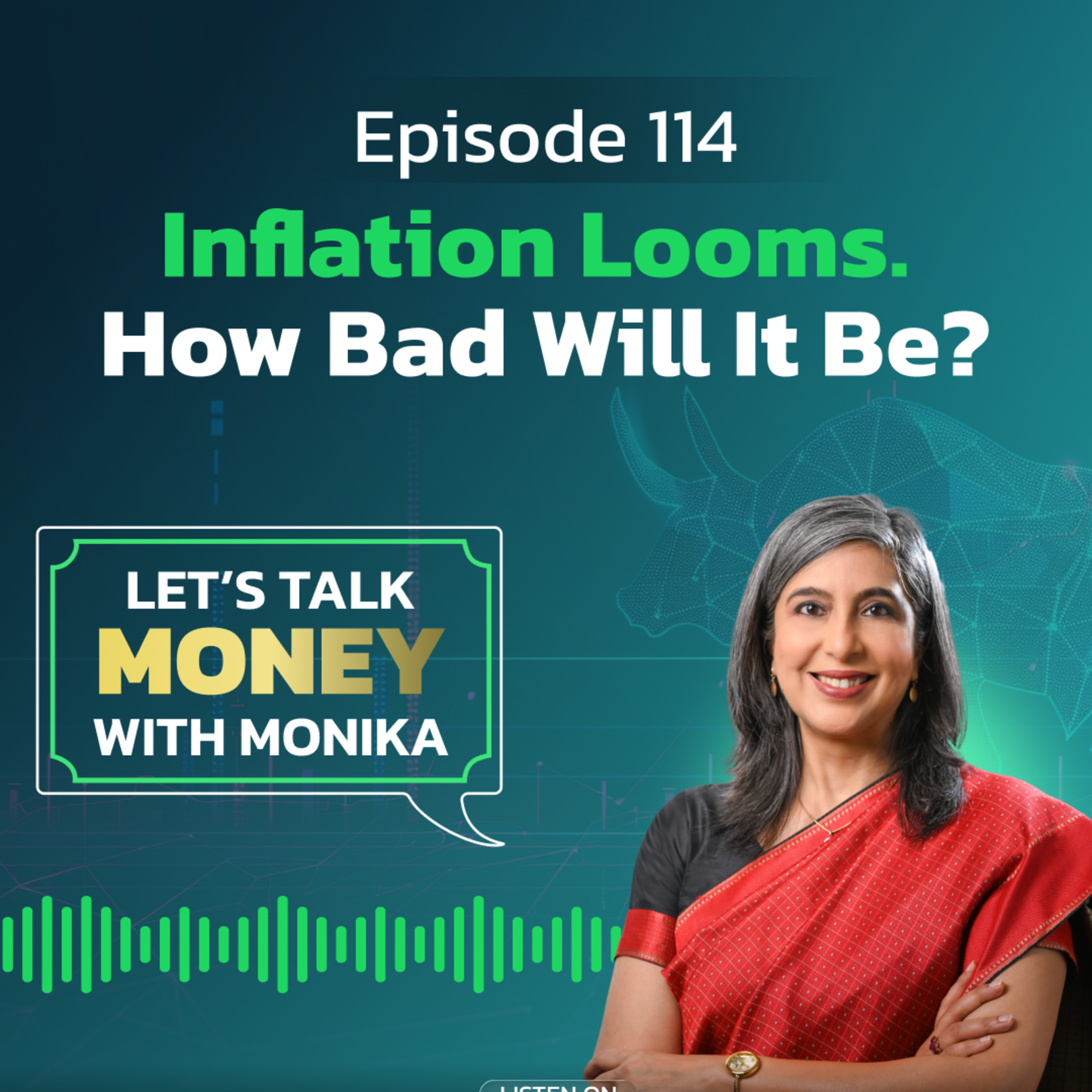 Inflation looms. How bad will it be? 21.05.2026 21minIn this episode, Monika unpacks the growing inflation pressures quietly building beneath the economy and explains why the recent ₹3 fuel price hike is likely only the beginning of a longer and more uncomfortable adjustment cycle. She breaks down the widening gap between wholesale inflation and consumer inflation, showing how the government and oil companies had been absorbing massive fuel losses for months before finally passing some of the burden to consumers. From rising transportation costs to the ripple effects on household expenses, she explains how inflation slowly spreads through every corner of daily life. She also warns that while food prices have remained relatively manageable so far, risks from a weak monsoon and rising fertiliser costs could soon intensify the pressure.She then zooms out to examine the larger global and economic backdrop shaping this decade. What began as a period of strong growth potential for India has instead collided with war-driven supply shocks, volatile commodity prices, and slowing global growth. Monika discusses why higher inflation will likely mean higher interest rates, more expensive loans, slower economic momentum, and greater market volatility in the months ahead. Yet she also cautions against falling into panic or “collapse thinking,” arguing that India still has the policy capacity to manage the crisis. Her advice throughout is grounded and practical: postpone unnecessary expenses, avoid risky speculation, maintain liquidity, and focus on financial resilience rather than dramatic portfolio changes. The larger message is one of disciplined realism — difficult periods require prudence, patience, and perspective, not fear.In listener queries, Abhishek Kumar seeks guidance on building separate investment plans for his daughter’s education and his retirement while planning an eventual return to India, leading to a discussion on long-term SIPs, NRE investing, and disciplined asset allocation; Meera asks how to thoughtfully deploy a ₹1 crore windfall after exiting direct equity investments, raising broader questions around index investing, asset allocation, NPS, and financial planning for single women; and an anonymous 24-year-old IT professional looks for clarity on building his very first long-term investment portfolio, prompting a conversation on keeping portfolios simple, using index funds effectively, balancing equity and debt, and avoiding unnecessary complexity early in the investing journey.Chapters:(00:00 – 00:00) Why Inflation Is Starting to Show Up Everywhere(00:00 – 00:00) Fuel Prices, Global Shocks and the Cost of Living Ahead(00:00 – 00:00) Building Long-Term Wealth as an NRI Returning to India(00:00 – 00:00) Designing a Safe ₹1 Crore Portfolio Without Losing Growth(00:00 – 00:00) A Simple Investing Framework for a 24-Year-Old BeginnerIf you have financial questions that you’d like answers for, please email us at [email protected] Monika’s book on basic money managementhttps://www.monikahalan.com/lets-talk-money-english/Monika’s book on mutual fundshttps://www.monikahalan.com/lets-talk-mutual-funds/Monika’s workbook on recording your financial lifehttps://www.monikahalan.com/lets-talk-legacy/Calculatorshttps://investor.sebi.gov.in/calculators/index.htmlYou can find Monika on her social media @monikahalan. Twitter @MonikaHalanInstagram @MonikaHalanFacebook @MonikaHalanLinkedIn @MonikaHalanProduction House: www.inoutcreatives.comProduction Assistant: Anshika Gogoi
 -
 Simple Portfolios, Richer Life 14.05.2026 23minIn this episode, Monika explores an often-overlooked truth about wealth: the more complicated your financial life becomes, the more it quietly steals from your time, energy, and peace of mind. Through the story of a retired couple overwhelmed by scattered properties, multiple advisors, fragmented investments, and endless financial maintenance, she explains how complexity masquerades as sophistication. What was meant to provide security had instead become a full-time management burden. From multiple homes and insurance-linked products to overlapping mutual fund platforms and confusing investment structures, she argues that every additional layer of complexity creates hidden emotional and cognitive costs that rarely show up in return calculations.She makes a compelling case for simplicity as a deliberate financial strategy rather than a compromise. Monika discusses why additional real estate often becomes a “part-time job” in retirement, why fragmented investing across platforms and advisors creates chaos instead of safety, and why many investors end up maintaining a “museum of past financial decisions” they no longer understand. Her solution is intentionally minimalist: one primary home, consolidated investments, a transparent fee-only advisor, and products simple enough to explain clearly to one’s children. The real reward of simplicity, she says, is not just better organisation — it is freedom from constantly thinking about money, allowing wealth to finally serve life instead of consuming it.In listener queries, an anonymous doctor seeks guidance on balancing retirement planning with the enormous future cost of overseas education for his son, leading to a discussion on separating long-term equity compounding from short-term education funding goals; Deepika asks whether her unusually high allocation to gold should be reduced and how to think about home ownership while supporting dependent parents and planning for marriage; and Jagdish Hulgeei questions whether the cost difference between regular and direct mutual funds truly matters, prompting a broader conversation on the long-term compounding impact of fees and the importance of transparent financial advice.Chapters:(00:00 – 00:00) Why Financial Complexity Becomes the Most Expensive Thing You Own(00:00 – 00:00) The Hidden Burden of Multiple Properties, Platforms and Financial Products(00:00 – 00:00) Planning Simultaneously for Retirement and Expensive Overseas Education(00:00 – 00:00) Reducing Excess Gold Exposure and Rethinking Home Ownership Decisions(00:00 – 00:00) The Long-Term Cost of Regular Mutual Fund Fees and Advisor CommissionsIf you have financial questions that you’d like answers for, please email us at [email protected] Monika’s book on basic money managementhttps://www.monikahalan.com/lets-talk-money-english/Monika’s book on mutual fundshttps://www.monikahalan.com/lets-talk-mutual-funds/Monika’s workbook on recording your financial lifehttps://www.monikahalan.com/lets-talk-legacy/Calculatorshttps://investor.sebi.gov.in/calculators/index.htmlYou can find Monika on her social media @monikahalan. Twitter @MonikaHalanInstagram @MonikaHalanFacebook @MonikaHalanLinkedIn @MonikaHalanProduction House: www.inoutcreatives.comProduction Assistant: Anshika Gogoi
 -
 Does Everyone Need A Foreign Allocation? 07.05.2026 27minIn this episode, Monika takes on the rising buzz around international investing and challenges a widely accepted idea — that global diversification is essential for everyone. She explains how the recent excitement around US markets, driven by the performance of companies like Apple, Microsoft, and Nvidia, has led many Indian investors to equate “going global” with smarter investing. Breaking down the theory versus reality, she highlights that true diversification is not about chasing returns but about understanding correlation, currency risk, and portfolio context. For most retail investors, she argues, jumping into international funds without this foundation is less about strategy and more about fear of missing out.She goes deeper into the structural complexities of international investing — from currency fluctuations to taxation differences and layered costs in fund structures. Monika emphasizes that while global allocation has its place, it is most relevant for investors with large, mature portfolios or specific foreign currency goals. For everyone else, the Indian growth story — backed by strong demographics, consumption trends, and expanding markets — offers more than enough opportunity. Her core message is simple but powerful: master domestic investing first, build discipline, and resist the noise. International exposure, she says, is not a starting point but an advanced step in the investing journey.In listener queries, an anonymous IT professional based in Johannesburg evaluates his ₹3.5 crore corpus and FIRE goal for Pune, with guidance on insurance, housing upgrades, and realistic retirement planning; Roshni Menon from Bangalore seeks a practical framework for integrating credit cards into a disciplined financial system without losing control over spending; and Dr. Gaurav Shah questions whether holding cash in anticipation of market corrections is wise, leading to a broader discussion on the pitfalls of market timing and the importance of consistent investing over macro predictions.Chapters:(00:00 – 00:00) Why International Diversification Isn’t for Every Investor(00:00 – 00:00) Understanding Currency Risk, Taxation and Complexity in Global Investing(00:00 – 00:00) Planning FIRE Goals While Managing Career and Geographic Uncertainty(00:00 – 00:00) Using Credit Cards Safely Within a Disciplined Money System(00:00 – 00:00) Why Market Timing Fails and How to Stay Invested Through UncertaintyIf you have financial questions that you’d like answers for, please email us at [email protected]’s book on basic money managementhttps://www.monikahalan.com/lets-talk-money-english/Monika’s book on mutual fundshttps://www.monikahalan.com/lets-talk-mutual-funds/Monika’s workbook on recording your financial lifehttps://www.monikahalan.com/lets-talk-legacy/Calculatorshttps://investor.sebi.gov.in/calculators/index.htmlYou can find Monika on her social media @monikahalan. Twitter @MonikaHalanInstagram @MonikaHalanFacebook @MonikaHalanLinkedIn @MonikaHalanProduction House: www.inoutcreatives.comProduction Assistant: Anshika Gogoi
 -
 Account Aggregator 30.04.2026 21minIn this episode, Monika Halan unpacks the transformative potential of India’s Account Aggregator framework and why it could fundamentally change the way individuals control and share their financial data. Using everyday examples—from applying for loans to visa documentation—she explains how the traditional system forces people to repeatedly hand over sensitive financial records with little visibility or control. The Account Aggregator model, by contrast, creates a secure, consent-based system where individuals decide exactly what financial information is shared, with whom, and for how long.She highlights why this matters far beyond convenience. Faster access to verified financial data can reduce paperwork, speed up credit decisions, and most importantly, expand access to formal finance for millions whose incomes remain invisible to traditional banking systems. For small business owners, self-employed workers, and informal earners, this framework offers the possibility of building a credible financial history without sacrificing dignity or privacy. At its core, the conversation is about shifting power back to individuals and redefining financial inclusion through technology and informed consent.In listener queries, Keshavan Kasturi asks about evaluating true asset allocation across direct stocks, equity funds, and hybrid funds, where the advice centers on practical portfolio tracking, periodic review, and disciplined rebalancing. Anjana from Thrissur shares the emotional and financial stress of managing high-interest education debt within a new marriage, leading to guidance on debt reduction, strategic use of assets, and building a partnership-based approach to money. Shreya Singhal, at 24, seeks advice on funding higher education while planning for early retirement and a future creative venture, where the recommendation focuses on short-term debt-oriented investing for immediate goals and a long-term equity-led strategy for financial independence.Chapters:(00:00 – 00:00) How Account Aggregators Are Changing Financial Data Ownership(00:00 – 00:00) Why Consent-Based Finance Can Improve Credit Access in India(00:00 – 00:00) Simplifying Asset Allocation Across Stocks, Mutual Funds and Hybrid Funds(00:00 – 00:00) Paying Off High-Interest Debt While Preserving Financial Security(00:00 – 00:00) Investing for Higher Education and Building an Early Retirement PlanIf you have financial questions that you’d like answers for, please email us at [email protected] Monika’s book on basic money managementhttps://www.monikahalan.com/lets-talk-money-english/Monika’s book on mutual fundshttps://www.monikahalan.com/lets-talk-mutual-funds/Monika’s workbook on recording your financial lifehttps://www.monikahalan.com/lets-talk-legacy/Calculatorshttps://investor.sebi.gov.in/calculators/index.htmlYou can find Monika on her social media @monikahalan. Twitter @MonikaHalanInstagram @MonikaHalanFacebook @MonikaHalanLinkedIn @MonikaHalanProduction House: www.inoutcreatives.comProduction Assistant: Anshika Gogoi
Podcast simili


Popolare in
Questo podcast compare anche nelle classifiche dei podcast di questi paesi.


