
Chinese Language Convo Club - Casual Chinese Speaking Practice
Chinese Language Convo Club - Learn Chinese
1
For intermediate to advanced Chinese learners who want real-world Mandarin they can actually use—with dialogues, cultural insights, and fun conversations. As a long-time student of Chinese, I’m joined by Vicky Zhang, my friend and seasoned Chinese teacher. Alongside us, we’ll sometimes feature a guest or two. Language learning is a collaborative journey, and we invite anyone with something to contribute to join us along the way. Our goal is to speak Chinese better and our approach is fun, casual, and informative. New lessons bi-weekly.
Episodi
-
 Are You Overthinking Again? 又开始内耗了? 13.09.2026 14minEver replay a conversation in your head and wonder, “Did I say something wrong?” Or send someone a message, get no reply, and immediately start imagining the worst?There’s a very Chinese word for that kind of mental spiraling: 内耗 (nèihào).In this episode of Chinese Language Convo Club, Lindi and Vicky explore how 内耗 went from meaning “internal consumption” or “internal friction” to describing the overthinking, self-doubt, and mental exhaustion so many of us experience today.We’ll talk about why social media, too many choices, perfectionism, work—and even learning Chinese—can send us into an 内耗 spiral. You’ll also learn useful everyday expressions like 脑补 (nǎobǔ), practice separating 事实 (facts) from the stories your brain invents, and discover some practical ways to spend less energy worrying and more energy taking action.Plus, stick around for Mandarin pronunciation and speaking practice using a line from today’s dialogue.少一点内耗,多一点行动!Less overthinking, more action!你有没有过这样的经历:跟别人聊完天以后,回到家还一直想:“我是不是说错话了?”或者给朋友发了消息,对方几个小时没回,你就开始怀疑:“他是不是不高兴了?”这种反复纠结、怀疑自己、消耗自己情绪和精力的状态,现在很多人会用一个很流行的词来形容——内耗。这一期《中文对话俱乐部》,Lindi 和 Vicky 一起来聊聊“内耗”到底是什么意思,以及为什么现代人特别容易陷入内耗。社交媒体、选择太多、完美主义、工作压力,甚至学习中文,都可能让我们想得太多。你还会学到 脑补、纠结、优化 等实用的中文表达,并学习如何区分 事实 和 脑补,用行动代替反复思考。最后,我们还会带大家一起做中文发音和口语练习。少一点内耗,多一点行动!Nǐ yǒu méiyǒu guò zhèyàng de jīnglì: gēn biérén liáo wán tiān yǐhòu, huí dào jiā hái yìzhí xiǎng: “Wǒ shì bú shì shuō cuò huà le?” Huòzhě gěi péngyou fā le xiāoxi, duìfāng jǐ ge xiǎoshí méi huí, nǐ jiù kāishǐ huáiyí: “Tā shì bú shì bù gāoxìng le?”Zhè zhǒng fǎnfù jiūjié, huáiyí zìjǐ, xiāohào zìjǐ qíngxù hé jīnglì de zhuàngtài, xiànzài hěn duō rén huì yòng yí ge hěn liúxíng de cí lái xíngróng — nèihào.Zhè yì qī “Zhōngwén Duìhuà Jùlèbù”, Lindi hé Vicky yìqǐ lái liáoliao “nèihào” dàodǐ shì shénme yìsi, yǐjí wèishénme xiàndài rén tèbié róngyì xiànrù nèihào. Shèjiāo méitǐ, xuǎnzé tài duō, wánměi zhǔyì, gōngzuò yālì, shènzhì xuéxí Zhōngwén, dōu kěnéng ràng wǒmen xiǎng de tài duō.Nǐ hái huì xuédào nǎobǔ, jiūjié, yōuhuà děng shíyòng de Zhōngwén biǎodá, bìng xuéxí rúhé qūfēn shìshí hé nǎobǔ, yòng xíngdòng dàitì fǎnfù sīkǎo.Zuìhòu, wǒmen hái huì dài dàjiā yìqǐ zuò Zhōngwén fāyīn hé kǒuyǔ liànxí.Shǎo yìdiǎn nèihào, duō yìdiǎn xíngdòng!
 -
 I’m Supposed to Be Where?! 我约重了! 30.08.2026 6minEver looked at your calendar and realized you’re supposed to be in two places at the same time? 😬In this minisode, Lindi and Vicky talk about what happens when you accidentally double-book yourself—and the natural Chinese expressions you can use to explain it.Learn how to say “I double-booked myself” (我约重了), talk about schedule conflicts (时间冲突了), explain that you’ve packed your schedule too full, and ask to reschedule an appointment.Plus, we talk about another kind of “double booking”: what happens when an airline overbooks a flight—and why that might occasionally work in your favor!A short, practical episode packed with Chinese you can use in real life.你有没有看了一眼日历,突然发现自己竟然同时约了两件事?😬在这期迷你节目中,Lindi 和 Vicky 聊聊“不小心约重了”该怎么用中文表达。你会学到怎么说 “我约重了”、怎么用 “时间冲突了” 来表达时间冲突,以及当自己的日程安排得太满时该怎么说。我们还会教你如何用中文提出更改预约时间。另外,我们也聊到了另一种“重复预订”——航空公司超售机票。如果碰到这种情况,说不定有时候还能免费升舱!短短几分钟,学几个非常实用、生活中真的用得到的中文表达!Nǐ yǒu méiyǒu kàn le yì yǎn rìlì, tūrán fāxiàn zìjǐ jìngrán tóngshí yuē le liǎng jiàn shì? 😬Zài zhè qī mínǐ jiémù zhōng, Lindi hé Vicky liáoliao “bù xiǎoxīn yuē chóng le” gāi zěnme yòng Zhōngwén biǎodá.Nǐ huì xué dào zěnme shuō “wǒ yuē chóng le”, zěnme yòng “shíjiān chong tu le” lái biǎodá shíjiān chōngtū, yǐjí dāng zìjǐ de rìchéng ānpái de tài mǎn shí gāi zěnme shuō. Wǒmen hái huì jiāo nǐ rúhé yòng Zhōngwén tíchū gēnggǎi yùyuē shíjiān.Lìngwài, wǒmen yě liáo dào le lìng yì zhǒng “chóngfù yùdìng” — hángkōng gōngsī chāoshòu jīpiào. Rúguǒ pèng dào zhè zhǒng qíngkuàng, shuōbudìng yǒu shíhou hái néng miǎnfèi shēngcāng!Duǎnduǎn jǐ fēnzhōng, xué jǐ ge fēicháng shíyòng, shēnghuó zhōng zhēn de yòng de dào de Zhōngwén biǎodá!
 -
 Slow Down & Recharge: Mindfulness in Chinese | 放空 · 充电 · 活在当下 16.08.2026 25minNeed a moment to slow down and recharge — while practicing your Chinese?In this episode of Chinese Language Convo Club, Lindi is joined by returning guest Kapa to explore natural Chinese expressions connected to mindfulness, relaxation, awareness, and being present.We unpack useful expressions like 放空 (fàngkōng), 充电 (chōngdiàn), 活在当下 (huó zài dāngxià), 觉察 (juéchá), and 想开一点 (xiǎng kāi yìdiǎn), with plenty of real-life examples to show how they're actually used in conversation.Then, slow things down with us as Kapa leads a short guided meditation entirely in Chinese — a chance to practice your listening while relaxing your mind at the same time.Along the way, we also chat about why our brains can be so hard to switch off, what it really means to “empty your mind,” and the simple ways we can give ourselves a little time to recharge.So find a comfortable spot, take a deep breath, and come learn some Chinese while giving your brain a break.Key vocabulary: 放空 · 充电 · 活在当下 · 觉察 · 想开一点 · 冥想Topics: Mandarin Chinese, spoken Chinese, Chinese vocabulary, Chinese listening practice, mindfulness, meditation, relaxation, guided meditation想让自己慢下来、充充电,同时练习中文吗?这一期 Chinese Language Convo Club,Lindi 邀请老朋友 Kapa 一起来聊聊和冥想、放松、觉察以及活在当下有关的地道中文表达。我们会学习几个非常实用的词和表达,比如 放空 (fàngkōng)、充电 (chōngdiàn)、活在当下 (huó zài dāngxià)、觉察 (juéchá) 和 想开一点 (xiǎng kāi yìdiǎn),并通过生活中的例子来看看这些表达在真实对话中到底怎么用。接下来,让我们一起慢下来。Kapa 会带大家做一个全中文的简短冥想练习。你可以一边练习中文听力,一边让自己的大脑和身体放松下来。我们还会聊到:为什么有时候大脑就是停不下来?“放空”到底是什么意思?生活中又有哪些简单的方法可以让自己休息一下、充充电?所以,找一个舒服的地方坐下来,深呼吸,跟我们一起学中文,也给自己的大脑放个假吧!重点词汇: 放空 · 充电 · 活在当下 · 觉察 · 想开一点 · 冥想本期话题: 中文口语 · 中文词汇 · 中文听力 · 冥想 · 正念 · 放松 · 中文冥想练习Xiǎng ràng zìjǐ màn xiàlái, chōng chōng diàn, tóngshí liànxí Zhōngwén ma?Zhè yì qī Chinese Language Convo Club, Lindi yāoqǐng lǎo péngyou Kapa yìqǐ lái liáoliao hé míngxiǎng, fàngsōng, juéchá yǐjí huó zài dāngxià yǒuguān de dìdao Zhōngwén biǎodá.Wǒmen huì xuéxí jǐ ge fēicháng shíyòng de cí hé biǎodá, bǐrú fàngkōng (放空), chōngdiàn (充电), huó zài dāngxià (活在当下), juéchá (觉察) hé xiǎng kāi yìdiǎn (想开一点), bìng tōngguò shēnghuó zhōng de lìzi lái kànkan zhèxiē biǎodá zài zhēnshí duìhuà zhōng dàodǐ zěnme yòng.Jiēxiàlái, ràng wǒmen yìqǐ màn xiàlái. Kapa huì dài dàjiā zuò yí ge quán Zhōngwén de jiǎnduǎn míngxiǎng liànxí. Nǐ kěyǐ yìbiān liànxí Zhōngwén tīnglì, yìbiān ràng zìjǐ de dànǎo hé shēntǐ fàngsōng xiàlái.Wǒmen hái huì liáodào: wèishénme yǒu shíhou dànǎo jiùshì tíng bu xiàlái? “Fàngkōng” dàodǐ shì shénme yìsi? Shēnghuó zhōng yòu yǒu nǎxiē jiǎndān de fāngfǎ kěyǐ ràng zìjǐ xiūxi yíxià, chōng chōng diàn?Suǒyǐ, zhǎo yí ge shūfu de dìfang zuò xiàlái, shēn hūxī, gēn wǒmen yìqǐ xué Zhōngwén, yě gěi zìjǐ de dànǎo fàng ge jià ba!Zhòngdiǎn cíhuì: fàngkōng · chōngdiàn · huó zài dāngxià · juéchá · xiǎng kāi yìdiǎn · míngxiǎngBěn qī huàtí: Zhōngwén kǒuyǔ · Zhōngwén cíhuì · Zhōngwén tīnglì · míngxiǎng · zhèngniàn · fàngsōng · Zhōngwén míngxiǎng liànxí
 -
 What Is Emotional Value?! 情绪价值 ⭐⭐⭐⭐⭐ 02.08.2026 13minOne phrase has taken Chinese social media by storm: 情绪价值 (qíngxù jiàzhí). But what does it actually mean?In this episode of Chinese Convo Club, Vicky and I explore one of today's most popular Chinese buzzwords through natural conversation, real-life examples, and interactive pronunciation practice.You'll learn how native speakers use 情绪价值 in relationships, friendships, the workplace, and everyday conversations. Along the way, you'll also discover fun modern expressions like P一下 (to Photoshop a photo), the idiom 赏心悦目, and the viral Chinese milk tea story that perfectly captures the meaning of emotional value.If you're an intermediate Mandarin learner looking to sound more natural, understand modern Chinese culture, and expand your everyday vocabulary, this episode is for you.What 情绪价值 really meansHow to use it naturally in conversationRelationship and dating vocabularyWorkplace Chinese expressionsModern internet slang including P一下The idiom 赏心悦目Listening practice with natural dialoguesPronunciation shadowing exercisesCultural insights into modern ChinaWhether you're studying HSK 3–5 Chinese or simply want to speak more like a native, you'll come away with practical expressions you can start using immediately.最近几年,"情绪价值" 成了中国最流行的热词之一,但它到底是什么意思?在这一期《中文对话俱乐部》中,Lindi 和 Vicky 通过轻松自然的对话,带大家学习这个现代汉语中的热门表达。节目中不仅会讲解 "情绪价值" 在恋爱、友情、职场中的真实用法,还会分享有趣的文化故事、网络热词,以及帮助你提升口语的发音练习。这一期你还会学到:• P 一下 的真正意思• 成语 赏心悦目• 与恋爱、工作相关的实用表达• 奶茶为什么会成为"情绪价值"的代表?• 两段真实中文对话练习• 跟读练习,提高发音和口语流利度如果你想学习课本里学不到的真实中文,了解当代中国文化,并提高听说能力,这一期千万不要错过!Zuìjìn jǐ nián, "qíngxù jiàzhí" chéng le Zhōngguó zuì liúxíng de rècí zhī yī, dàn tā dàodǐ shì shénme yìsi?Zài zhè yī qī "Zhōngwén Duìhuà Jùlèbù" zhōng, Lindi hé Vicky tōngguò qīngsōng zìrán de duìhuà, dài dàjiā xuéxí zhège xiàndài Hànyǔ zhōng de rèmén biǎodá. Jiémù zhōng bùjǐn huì jiǎngjiě "qíngxù jiàzhí" zài liàn'ài, yǒuyì, zhíchǎng zhōng de zhēnshí yòngfǎ, hái huì fēnxiǎng yǒuqù de wénhuà gùshì, wǎngluò rècí, yǐjí bāngzhù nǐ tíshēng kǒuyǔ de fāyīn liànxí.Zhè yī qī nǐ hái huì xuédào:• P yíxià de zhēnzhèng yìsi• Chéngyǔ shǎngxīn yuèmù• Yǔ liàn'ài, gōngzuò xiāngguān de shíyòng biǎodá• Nǎichá wèishénme huì chéngwéi "qíngxù jiàzhí" de dàibiǎo?• Liǎng duàn zhēnshí Zhōngwén duìhuà liànxí• Gēndú liànxí, tígāo fāyīn hé kǒuyǔ liúlìdùRúguǒ nǐ xiǎng xuéxí kèběn lǐ xué bú dào de zhēnshí Zhōngwén, liǎojiě dāngdài Zhōngguó wénhuà, bìng tígāo tīngshuō nénglì, zhè yī qī qiānwàn búyào cuòguò!For the full transcript, click here: https://docs.google.com/document/d/1J9Gx_gBgbzT5DUvO95utgU0SCpE0k_q-/edit?usp=sharing&ouid=100922691999674231854&rtpof=true&sd=trueMusic By: MoodMazeTitle: Travelling AsiaURL: https://audiojungle.net/item/travelling-asia/29889111
 -
 🎙️ 回头见! A Quick Podcast Update 05.07.2026Just a quick hello to let you know what to expect over the next few weeks!Vicky and I are taking a brief summer break while we're both traveling, but this is only a pause—not a goodbye. We'll be back soon with more real conversations to help you sound more natural in Mandarin.In the meantime, thank you for learning with us. We appreciate every download, every review, and every one of you who's joined us on this journey.回头见!(Huítóu jiàn!) ❤️~Lindi
 -
 健身小白 (Fitness Newbie) Real Chinese for the Gym 💪 22.06.2026 35minEver walked into a gym and had no idea what anything was called? In this rebroadcast, Vicky and I explore useful Chinese vocabulary for fitness beginners, from treadmills and elliptical machines to stretching, warming up, and sticking to it.You'll learn practical words and phrases like:✅ 健身教练 (personal trainer)✅ 健身小白 (fitness newbie)✅ 器械 (gym equipment)✅ 有氧运动 (cardio exercise)✅ 热身 (warm up)✅ 拉伸 (stretching)✅ 坚持下去 (stick with it)Whether you're a gym regular or a complete beginner, this episode will help you talk about fitness naturally in Mandarin.一起加油!(Let's do it together!)🏋️♀️ 重播节目你去过健身房却不知道各种器械和运动项目用中文怎么说吗?在这一期重播节目中,Lindi 和 Vicky 一起聊聊健身新手常用的中文表达。从跑步机、椭圆机,到热身、拉伸和健身目标,你都能学到实用又自然的中文。本期你将学到:✅ 健身教练✅ 健身小白✅ 器械✅ 有氧运动✅ 热身✅ 拉伸运动✅ 坚持下去无论你是经常锻炼,还是刚刚开始健身,希望这期节目能帮助你更自然地用中文聊健身话题。一起加油!🏋️♀️ Chóngbō JiémùNǐ qù guò jiànshēnfáng què bù zhīdào gè zhǒng qìxiè hé yùndòng xiàngmù yòng Zhōngwén zěnme shuō ma?Zài zhè yī qī chóngbō jiémù zhōng, Lindi hé Vicky yìqǐ liáoliáo jiànshēn xīnshǒu chángyòng de Zhōngwén biǎodá. Cóng pǎobùjī, tuǒyuánjī, dào rèshēn, lāshēn hé jiànshēn mùbiāo, nǐ dōu néng xuédào shíyòng yòu zìrán de Zhōngwén.Běn qī nǐ jiāng xuédào:✅ Jiànshēn jiàoliàn✅ Jiànshēn xiǎobái✅ Qìxiè✅ Yǒuyǎng yùndòng✅ Rèshēn✅ Lāshēn yùndòng✅ Jiānchí xiàqùWúlùn nǐ shì jīngcháng duànliàn, háishì gānggāng kāishǐ jiànshēn, xīwàng zhè qī jiémù néng bāngzhù nǐ gèng zìrán de yòng Zhōngwén liáo jiànshēn huàtí.Yìqǐ jiāyóu! 🚴♀️💪Dialogue:赵杰:你好!我是赵杰。你是新来的吗?(Nǐ hǎo! Wǒ shì zhào jié. Nǐ shì xīn lái de ma?) Hello! I'm Zhao Jie. Are you new here? 王雨:是的,我是新来的。我叫王雨。你怎么知道的?(Shì de, wǒ shì xīn lái de. Wǒ jiào wáng yǔ. Nǐ zěnme zhīdào de?) Yes, I'm new. I'm Wang Yu. How did you know?赵杰:我是这里的健身教练,看到陌生面孔就会注意一下。欢迎! 你想锻炼哪个部位?(Wǒ shì zhèlǐ de jiànshēn jiàoliàn, kàn dào mòshēng miànkǒng jiù huì zhùyì yīxià. Huānyíng! Nǐ xiǎng duànliàn nǎge bùwèi?) I am a fitness instructor here so when I see unfamiliar faces I usually take notice. Welcome! Which area do you want to exercise?王雨:主要是锻炼腿部和腹部,但我是健身小白。可以给一些建议吗?(Zhǔyào shi duànliàn tuǐ bù hé fùbù, dàn wǒ shì jiànshēn xiǎo bái. Kěyǐ gěi yīxiē jiànyì ma?) Mainly I want to do legs and abdomen, but I am a fitness novice. Can you give me some suggestions?赵杰:当然!我们这里有很多器械可以帮你达到目标。你想尝试一下吗?(Dāngrán! Wǒmen zhè li yǒu hěnduō qìxiè kěyǐ bāng nǐ dádào mùbiāo. Nǐ xiǎng chángshì yīxià ma?) Of course! We have a lot of equipment here to help you reach your goals. Would you like to give them a try? 王雨:好的,但我对器械不太熟悉。(Hǎo de, dàn wǒ duì qìxiè bù tài shúxī) Okay, but I'm not very familiar with exercise equipment.赵杰:没问题,我可以教你。这是有氧运动区,有跑步机、椭圆机等。我们可以从简单的开始。首先,我们热身一下,做些拉伸运动,然后慢慢开始跑步。跑步时要保持正常呼吸,不要太用力。(Méi wèntí, wǒ kěyǐ jiào nǐ. Zhè shì yǒu yǎng yùndòng qū, yǒu pǎobù jī, tuǒyuán jī děng. Wǒmen kěyǐ cóng jiǎndān de kāishǐ. Shǒuxiān, wǒmen rèshēn yīxià, zuò xiē lā shēn yùndòng, ránhòu màn man kāishǐ pǎobù. Pǎobù shí yào bǎochí zhèngcháng hūxī, bùyào tài yònglì.)No problem, I can teach you. This is the aerobic exercise area with treadmills, elliptical machines, etc. We can start simple. First, we warm up, do some stretching, and then slowly start running. Breathe normally while running and don't push too hard. 王雨:好的,我会注意的。其实,我也想变得更健康。希望能坚持下去。(Hǎo de, wǒ huì zhùyì de. Qíshí, wǒ yě xiǎng biàn dé gèng jiànkāng. Xīwàng néng jiānchí xiàqù.)Okay, I will keep that in mind. Actually, I also want to become healthier. Hope I can stick with it.赵杰:没问题,有任何问题都可以问我。 (Méi wèntí, yǒu rènhé wèntí dōu kěyǐ wèn wǒ.) No worries, if you have any questions, just ask me.王雨:好的,这里的氛围很好。谢谢你的帮助!(Hǎo de, Xièxiè nǐ de bāngzhù!)Okay, Thank you for your help!赵杰:不客气,欢迎随时来找我。一起加油!(Bù kèqì, huānyíng suíshí lái zhǎo wǒ. Yīqǐ jiāyóu!) No problem,you're welcome to come find me anytime. We've got this!)
 -
 Speak More Naturally: Replacing 很好 in Everyday Chinese 07.06.2026 18minDo you say 很好 (hěn hǎo) every time someone asks for your opinion?In this episode of Chinese Language Convo Club, we show you how native Chinese speakers describe movies, weather, and people using more natural and expressive vocabulary.You'll learn useful words and phrases including:✅ 精彩 (exciting, wonderful)✅ 紧凑 (well-paced, tightly structured)✅ 到位 (spot-on, perfectly done)✅ 明媚 (bright and sunny)✅ 清新 (fresh, refreshing)✅ 体贴 (thoughtful, considerate)✅ 成熟稳重 (mature and dependable)Plus, stay for our pronunciation practice and listening challenge to help you use these expressions in real conversations.Perfect for intermediate Chinese learners who want to sound more natural and less like a textbook.#LearnChinese #ChinesePodcast #MandarinChinese #ChineseVocabulary #HSK #ChineseListening #ChineseConversation #SpeakChinese你是不是也常常用“很好”来回答所有问题?电影怎么样?很好。天气怎么样?很好。新男朋友怎么样?也很好。这一期节目里,我们会教你如何用更具体、更地道的中文表达自己的想法,让你的中文听起来更自然、更像母语者。你会学到:✨ 精彩 (jīngcǎi)✨ 紧凑 (jǐncòu)✨ 到位 (dàowèi)✨ 明媚 (míngmèi)✨ 清新 (qīngxīn)✨ 体贴 (tǐtiē)✨ 成熟稳重 (chéngshú wěnzhòng)节目最后还有发音训练和听力挑战,帮助你把这些表达真正用起来!Listening Comprehension Segment:男:今天天气真舒服,阳光明媚,空气清新。难怪你心情这么好。Nán: Jīntiān tiānqì zhēn shūfu, yángguāng míngmèi, kōngqìqīngxīn. Nánguài nǐ xīnqíng zhème hǎo.The weather’s so pleasant—bright and fresh. No wonder you’re insuch a good mood.女:当然啦,这种天气最适合约会了。Nǚ: Dāngrán la, zhè zhǒng tiānqì zuì shìhé yuēhuì le.Of course. This kind of weather is perfect for dates.男:哦?又跟你那个“成熟稳重”的新男朋友?Nán: Ó? Yòu gēn nǐ nàge “chéngshú wěnzhòng” de xīn nánpéngyou?Oh? With that “mature and steady” newboyfriend again?女:什么叫“那个”?人家真的很体贴,也很有责任感。Nǚ:Shénme jiào “nàge”? Rénjiā zhēn de hěn tǐtiē, yě hěnyǒu zérèngǎn.What do you mean “that guy”? Hereally is considerate and responsible.男:是吗?看电影的时候是不是还帮你分析剧情?Nán:Shì ma? Kàn diànyǐng de shíhou shì bú shì hái bāng nǐfēnxī jùqíng?Oh really? Did he analyze the plot foryou during the movie too?女:对啊!那部电影特别精彩,节奏紧凑,结局也很震撼。Nǚ:Duì a! Nà bù diànyǐng tèbié jīngcǎi, jiézòu jǐncòu,jiéjú yě hěn zhènhàn.Yes! The movie wasbrilliant—tight pacing and a powerful ending.男:听你这么说,我都分不清你是在夸电影,还是在夸他了。Nán:Tīng nǐ zhème shuō, wǒ dōu fēn bu qīng nǐ shì zài kuādiànyǐng, hái shì zài kuā tā le.Listening to you, Ican’t tell whether you’re praising the movie… or him.女:你少调侃我。Nǚ: Nǐ shǎo tiáokǎn wǒ.Stop teasing me.For Complete Transcript with PinYin, follow this link:https://drive.google.com/file/d/12iEgnIKf6lFAUT4sH8ZPVzs5Zr5EAe1X/view?usp=sharing
 -
 5 Ways to Forgive in Chinese: From "It's Fine" to "I Need Time" 24.05.2026 15minIn Chinese, when someone says “sorry,” the most common response is “没关系 (it’s okay).”But in real life, different situations call for different responses.In this episode, we’ll walk you through the different levels of forgiveness—from small mistakes to more serious situations—and teach you natural, real-life expressions you can actually use.You’ll learn how to:show understandingexpress your feelingsgive suggestionsand even set boundariesMaster these phrases and your Chinese will sound more natural, more thoughtful, and more real.在中文里,当别人说“对不起”的时候,我们最常听到的回答就是“没关系”。但是,在不同的情境下,我们其实可以用更自然、更真实的表达来回应对方。在这一期节目中,我们会带你了解“原谅的不同层次”,从小事情到严重的情况,教你如何用地道的中文表达你的真实感受,不仅能表示理解,还能表达情绪、提出建议,甚至设定界限。学会这些表达,让你的中文听起来更自然、更有温度!Pinyin:Zài zhōngwén lǐ, dāng biérén shuō “duìbuqǐ” de shíhou,wǒmen zuì cháng tīngdào de huídá jiùshì “méi guānxi”.Dànshì, zài bùtóng de qíngjǐng xià,wǒmen qíshí kěyǐ yòng gèng zìrán, gèng zhēnshí de biǎodá lái huíyìng duìfāng.Zài zhè yī qī jiémù zhōng, wǒmen huì dài nǐ liǎojiě “yuánliàng de bùtóng céngcì”,cóng xiǎo shìqíng dào yánzhòng de qíngkuàng,jiāo nǐ rúhé yòng dìdào de zhōngwén biǎodá nǐ de zhēnshí gǎnshòu,bùjǐn néng biǎoshì lǐjiě,hái néng biǎodá qíngxù, tíchū jiànyì, shènzhì shèdìng jièxiàn.Xuéhuì zhèxiē biǎodá, ràng nǐ de zhōngwén tīng qǐlái gèng zìrán, gèng yǒu wēndù!For a link to the transcript, click here: https://turboscribe.ai/transcript/share/648518346449331565/D-uJFxfYBLaqjq2976WX5TIVVncdz-2CVEIVG1nY9-o/5-ways-to-forgive
 -
 Beyond 没关系: Responding to Apologies Naturally in Chinese 11.05.2026 17minIf someone says 对不起… what do you say back?“没关系” is easy. But what if it’s not fine?What if you want to sound more sincere… or more honest?In this episode, we explore the language of forgiveness in Chinese — from holding a grudge (怨恨) to truly letting go (释怀).Through a relatable, real-life dialogue, you’ll learn how to:Express forgiveness with depthShow grace and understandingTalk about regret, reflection, and emotional healing💡 Plus: cultural insights like the Chinese saying“宰相肚里能撑船” — having a heart big enough to forgive.This isn’t just vocabulary.It’s how to communicate like a real human in Chinese.Dialogue:A:我知道我错了,但希望你能原谅我。 B:原谅不容易,可是我不想一直带着怨恨。 A: 我真的很后悔,当时没考虑你的感受。 B:人都会犯错,重要的是你真心反省。 A:谢谢你愿意宽恕我。 B:没关系,我已经释怀了。放下过去,我们才能向前走。Pinyin A:Wǒ zhīdào wǒ cuò le, dàn xīwàng nǐ néng yuánliàng wǒ. B:Yuánliàng bù róngyì, kěshì wǒ bù xiǎng yīzhí dàizheyuànhèn. A:Wǒ zhēn de hěn hòuhuǐ, dāngshí méi kǎolǜ nǐ de gǎnshòu. B:Rén doū huì fàncuò, zhòngyào de shì nǐ zhēnxīn fǎnxǐng. A:Xièxiè nǐ yuànyì kuānshù wǒ. B: Méiguānxì. Wǒ yǐjīng shìhuáile。Fàngxiàguòqù, wǒmen cái néng xiàng qián zǒu.English A:I know I was wrong, but I hope you can forgive me. B:Forgiveness isn’t easy, but I don’t want to carry resentmentforever. A:I truly regret not considering your feelings at the time. B:Everyone makes mistakes — what matters is that you sincerelyreflect. A:Thank you for being willing to forgive me. For episode transcript, click here: https://turboscribe.ai/transcript/share/8214565720432973579/ogXxkK9hU01j2ZKYUrRjoVoEWXtZb3-sQ-NyZ7k-gKY/forgiveness
 -
 Earth Day Chinese 🌍..Talk About the Environment Naturally (Not Like a Textbook!) 22.04.2026 13minWant to talk about the environment in Chinese without sounding like a textbook? 🌱In this Earth Day special episode of Chinese Convo Club, we teach you real-life Chinese vocabulary and natural speaking patterns to discuss environmental protection, sustainability, and daily habits—the way native speakers actually talk.You’ll learn:Practical vocabulary like 环保 (environmental protection), 一次性用品 (disposable items), 环保主义者 (environmentalist)Natural sentence patterns like:开始 + verb (to show lifestyle changes)少 + verb / 多 + verb (simple ways to talk about habits)How to say things like:“I try not to waste food”“I use less plastic now”“I bring my own water bottle”We also share:Real-life examples of eco-friendly habits in China 🇨🇳Cultural insights on sustainabilityA fun speaking challenge to help you practice out loud💡 Plus: Lindi reveals her “unusual” eco-friendly habit at the end 👀
 -
 How to Say “No” in Chinese (Without Actually Saying No 😏) 14.04.2026 17minEver felt stuck when you needed to say “no” in Chinese… but didn’t want to sound rude?In this episode of Convo Club, we break down one of the trickiest real-life communication skills: how to politely refuse in Chinese—without ever actually saying “no.”You’ll learn:Common “soft no” phrases like 我再看看吧 and 下次吧The hidden meanings behind phrases like 我考虑一下 (hint: it’s often a NO 👀)How to tell the difference between a real “maybe” and a polite rejectionCasual, modern expressions younger Chinese speakers usePlus, we walk through real-life scenarios (friends, coworkers, dating) so you can sound natural and culturally aware.If you want to sound more like a native—and avoid awkward moments—this episode is a must-listen.你有没有遇到过这种情况:想用中文拒绝别人,但又怕说得太直接、伤感情?在这一期《中文对话俱乐部》中,我们来聊一个非常实用、但也最容易卡住的话题——👉 如何在中文里“委婉地拒绝别人”,却不用直接说“不”。你将学到:常见的“软拒绝”表达,比如「我再看看吧」「下次吧」「我考虑一下」背后的真实含义(很多时候其实就是拒绝 👀)如何判断对方是在认真考虑,还是在礼貌地说“不”年轻人常用的更随意的拒绝方式我们还会通过真实生活场景(朋友、同事、甚至约会)来帮你理解这些表达的用法,让你说得更自然、更地道。如果你想让你的中文更像母语者,同时避免尴尬,这一集一定不要错过!Nǐ yǒu méiyǒu yùdào guò zhè zhǒng qíngkuàng: xiǎng yòng Zhōngwén jùjué biérén, dàn yòu pà shuō de tài zhíjiē, shāng gǎnqíng?Zài zhè yì qī “Zhōngwén Duìhuà Jùlèbù” zhōng, wǒmen lái liáo yí gè fēicháng shíyòng, dàn yě zuì róngyì kǎ zhù de huàtí —👉 rúhé zài Zhōngwén lǐ “wěiwǎn de jùjué biérén”, què bù yòng zhíjiē shuō “bù”.Nǐ jiāng xuédào:Chángjiàn de “ruǎn jùjué” biǎodá, bǐrú “wǒ zài kàn kàn ba”, “xià cì ba”“Wǒ kǎolǜ yíxià” bèihòu de zhēnshí hányì (hěn duō shíhou qíshí jiùshì jùjué 👀)Rúhé pànduàn duìfāng shì zài rènzhēn kǎolǜ, háishì zài lǐmào de shuō “bù”Niánqīngrén chángyòng de gèng suíyì de jùjué fāngshìWǒmen hái huì tōngguò zhēnshí shēnghuó chǎngjǐng (péngyǒu, tóngshì, shènzhì yuēhuì) lái bāng nǐ lǐjiě zhèxiē biǎodá de yòngfǎ, ràng nǐ shuō de gèng zìrán, gèng dìdào.Rúguǒ nǐ xiǎng ràng nǐ de Zhōngwén gèng xiàng mǔyǔ zhě, tóngshí bìmiǎn gāngà, zhè yì jí yídìng búyào cuòguò!🗣️ Dialogue with Pinyin & TranslationA:这个项目你这周能不能一起跟进一下?Zhège xiàngmù nǐ zhè zhōu néng bù néng yìqǐ gēnjìn yíxià?Can you help follow up on this project together this week?B:我这边最近事情有点多,Wǒ zhè biān zuìjìn shìqíng yǒudiǎn duō,I’ve had quite a lot going on lately on my end,可能时间上不太允许。kěnéng shíjiān shàng bù tài yǔnxǔ.so time-wise it might not really allow for it.A:那下周呢?Nà xià zhōu ne?What about next week?B:我再看看整体安排吧,Wǒ zài kàn kan zhěngtǐ ānpái ba,Let me take another look at my overall schedule,到时候再说。dào shíhou zài shuō.we can talk about it then.A:好的,那不着急。Hǎo de, nà bù zháojí.Alright, no rush then.The 4 (polite) refusals: 我这边最近事情有点多,Wǒ zhè biān zuìjìn shìqíng yǒudiǎn duō 。a.k.a (我最近有一点忙) 时间上不太允许。 shíjiān shàng bù tài yǔnxǔ. 我再看看吧,Wǒ zài kàn kan ba 到时候再说。dào shíhou zài shuō.
 -
 “上头” Doesn’t Mean What You Think… (4 Real-Life Uses Explained!) 29.03.2026 6minHave you ever heard someone say “上头” (shàngtóu) and wondered what it means?In this episode, we break down one of the most commonly used (and confusing!) slang expressions in Chinese. From describing an addictive song to talking about getting tipsy, referring to your boss, or even just meaning “on top of something” — this word does it all.We start with a fun, natural dialogue about a super catchy song (“My Stupid Heart”), then walk you through 4 real-life meanings of 上头, with clear examples you can actually use in conversation.If you're an HSK1–HSK2 learner looking to sound more natural and understand real Chinese, this episode is for you.🎯 By the end, you’ll be able to:Understand 上头 in different contextsUse it naturally in daily conversationsSound more like a native speaker🇨🇳 中文:你有没有听过别人说“上头”,但是不太明白是什么意思?在这一期节目中,我们会带你深入了解这个在中文中非常常见、但又容易让人困惑的表达。从形容一首让人上瘾的歌,到表示有点醉了,再到指上级/领导,甚至还能表示在某个东西上面——“上头”其实有很多不同的用法!我们会先通过一个轻松有趣的对话(关于一首很上头的歌《My Stupid Heart》),然后帮你讲解“上头”的四种常见意思,并提供实用例句,帮助你真正掌握这个词。如果你是HSK1–HSK2的学习者,想要说得更自然、听懂更地道的中文,这一集一定不要错过!🎯 听完这一集,你可以:理解“上头”的不同用法在日常对话中自然使用这个词说中文更像母语者Vicky: 我最近听了一首特别让我上头的歌。叫 My Stupid Heart. 那个小孩特别可爱。不知道你有没有听这首歌?(Wǒ zuìjìn tīngle yī shǒu tèbié ràng wǒ shàngtóu de gē. Jiào “My Stupid Heart” Nàgè xiǎohái tèbié kě'ài. Bù zhīdào nǐ yǒu méiyǒu tīng zhè shǒu gē)I recently heard a song that’s super catchy. It's called “My Stupid Heart” That kid is so cute. I don’t know if you've heard this song or not?Lindi: 没听过。在哪儿可以听?(Méi tīngguò. Zài nǎ'er kěyǐ tīng?)No I haven’t. Where can I listen to it? Vicky:网上好像到处都是。你可以找一找。(Wǎngshàng hǎoxiàng dàochù dōu shì. Nǐ kěyǐ zhǎo yī zhǎo)It seems to be everywhere on the Internet. You can look for it.Lindi: 啊是吗?好的。那我一会儿在油管上查一下。(A shì ma? Hǎo de. Nà wǒ yīhuǐ'er zài yóuguǎn shàng chá yīxià)Oh really? Okay. I’ll check it out on YouTube in a little while. 上头:The 1st meaning:就是这首歌呀,一听就很容易去学,很想跟着一起唱,很容易上瘾就上头。(Jiùshì zhè shǒu gē ya, yī tīng jiù hěn róngyì qù xué, hěn xiǎng gēnzhe yīqǐ chàng, hěn róngyì shàngyǐn jiù shàngtóu)It's talking about a particular song, you only have to hear it once and you already know it, you also can’t help singing along. It’s a song that’s very addictive. 2nd Meaning: (Intoxicating, Goes to One's Head Quickly)如果你喝了一种酒,然后你一下子就觉得有点醉,你就可以说这个酒真让人上头。(Rúguǒ nǐ hēle yī zhǒng jiǔ, ránhòu nǐ yīxià zi jiù juédé yǒudiǎn zuì, nǐ jiù kěyǐ shuō zhège jiǔ zhēn ràng rén shàngtou。)If you drink a certain type of alcohol and right away start to feel a bit tipsy, you can say the alcohol really goes straight to your head. 3rd Meaning: (Upper Management)上头。。。你在中国的电视里面会经常看到,比如说有两个同事在说话, 假如说,我是同事A,你是同事B。然后我要是问你啊。。说。。你知道这件事情我们该怎么办吗?(Shàngtou... Nǐ zài zhōngguó de diànshì lǐmiàn huì jīngcháng kàn dào, bǐrú shuō yǒu liǎng gè tóngshì zài shuōhuà, jiǎrú shuō, wǒ shì tóngshì A, nǐ shì tóngshì B. Ránhòu wǒ yàoshi wèn nǐ a.. Shuō。。Nǐ zhīdào zhè jiàn shìqíng wǒmen gāi zěnme bàn ma?)You often see this on Chinese TV. For example, two colleagues are talking. Let's say I'm colleague A and you're colleague B. If I ask you…Do you know what we should do about this issue?如果你在中国呆的时间长了经常会有一些事情。如果你不知道该怎么解决你要去问的话,大家都会说“我们听上头的“。(Rúguǒ nǐ zài zhōngguó dāi de shíjiān chǎngle jīngcháng huì yǒu yīxiē shìqíng. Rúguǒ nǐ bù zhīdào gāi zěnme jiějué nǐ yào qù wèn dehuà, dàjiā dūhuì shuō wǒmen tīng shàngtou de。)If you stay in China for a long time, there will often be some issues. If you don't know how to solve them and you ask, everyone will say that we listen to the boss. 4th Meaning: (On Top of something)还有最后一个意思就是它可以表示一个。。。说“把这个盒子放在柜子上头”或者是说“在椅子上头坐着一只小猫”。。都可以。。(Hái yǒu zuìhòu yīgè yìsi jiùshì tā kěyǐ biǎoshì yīgè... Shuō “bǎ zhège hézi fàng zài guìzi shàngtou” huòzhě shì shuō “zài yǐzi shàngtou zuòzhe yī zhǐ xiǎo māo”.. Dōu kěyǐ.)The last meaning is that it can mean a... You can say "put the box on the top of the cabinet" or "there is a kitten sitting on the chair". It all works.
 -
 “It’s Way Too Early!”: The Chinese Idiom 八字还没一撇 (Intermediate) 15.03.2026 13minIn this episode, we explore a very common and natural Chinese expression: “八字还没一撇 (bā zì hái méi yī piě).”Literally, it means “the character ‘eight’ hasn’t even had its first stroke yet.”Native speakers use it to describe situations where something hasn’t even started or taken shape yet, but people are already talking about it.In this episode you'll learn:• The real meaning of 八字还没一撇• When Chinese speakers naturally use this expression• Two natural Chinese conversations• Practical example sentences you can use right away• Pronunciation practice to help you sound more native If you're learning Chinese and want your speech to sound more natural and authentic, this is an expression you definitely need to know.在这一期节目中,我们来学习一个非常常见、也非常地道的中文表达:“八字还没一撇”。这个成语字面意思是:“八”这个字连第一笔都还没写出来。它用来形容一件事情还没有开始、还没有任何眉目,但人们却已经开始讨论或担心。在这一期节目里,你会学到:• “八字还没一撇”真正的意思• 中国人在什么情况下会用这个表达• 两段真实、自然的中文对话• 实用例句,让你马上学会使用• 跟读发音练习,帮助你说得更像母语者如果你正在学习中文,想让自己的表达更自然、更地道,这个表达一定要学会!Zài zhè yī qī jiémù zhōng, wǒmen lái xuéxí yí gè fēicháng chángjiàn, yě fēicháng dìdào de Zhōngwén biǎodá: “bā zì hái méi yī piě.”Zhège chéngyǔ zìmiàn yìsi shì: “bā” zhège zì lián dì yī bǐ dōu hái méi xiě chūlái.Tā yòng lái xíngróng yí jiàn shìqíng hái méiyǒu kāishǐ, hái méiyǒu rènhé méimù, dàn rénmen què yǐjīng kāishǐ tǎolùn huò dānxīn.Zài zhè yī qī jiémù lǐ, nǐ huì xué dào:• “Bā zì hái méi yī piě” zhēnzhèng de yìsi• Zhōngguó rén zài shénme qíngkuàng xià huì yòng zhège biǎodá• Liǎng duàn zìrán de Zhōngwén duìhuà• Shíyòng lìjù, ràng nǐ mǎshàng xuéhuì shǐyòng• Gēndú fāyīn liànxí, bāngzhù nǐ shuō de gèng xiàng mǔyǔ zhěRúguǒ nǐ zhèngzài xué Zhōngwén, xiǎng ràng zìjǐ de biǎodá gèng zìrán, gèng dìdào, zhège biǎodá yídìng yào xuéhuì!Conversation 1:小美:你听说了吗?小李和他女朋友可能要结婚了!(Xiǎo Měi): Nǐ tīngshuō le ma? Xiǎo Lǐ hé tā nǚpéngyoukěnéng yào jiéhūn le!小张:结婚?他们连订婚都还没提呢,八字还没一撇呢。(Xiǎo Zhāng): Jiéhūn? Tāmen lián dìnghūn dōu hái méi tíne, bāzì hái méi yì piě ne.小美:哈哈,我也是听别人瞎说的。(Xiǎo Měi): Hāhā, wǒ yě shì tīng biérén xiā shuō de.Conversation 2:小王:你儿子是不是要上哈佛大学?听说他在准备申请。(Xiǎo Wáng): Nǐ érzi shì bú shì yào shàng Hāfó Dàxué?Tīngshuō tā zài zhǔnbèi shēnqǐng.小李:哎呀,八字还没一撇呢,连申请材料都没开始写。(Xiǎo Lǐ): Āiyā, bāzì hái méi yì piě ne, lián shēnqǐngcáiliào dōu méi kāishǐ xiě.小王:原来如此,那我就不打扰你们了。(Xiǎo Wáng): Yuánlái rúcǐ, nà wǒ jiù bù dǎrǎo nǐmenle.
 -
 Gen Z Chinese Workplace Slang: 5 Buzzwords Everyone Uses (Upper Intermediate) 13.03.2026 20minWhat do 牛马 (corporate workhorse), 内卷 (involution), and 躺平 (lie flat) really mean in today’s China?In this episode, we break down 5 viral Chinese buzzwords that reflect Gen Z workplace stress, competition culture, and emotional burnout. You’ll learn real-life example sentences, pronunciation practice, and cultural insights to help you understand modern Chinese conversations.If you're learning Mandarin or curious about Chinese youth culture, this episode will upgrade your vocabulary — and maybe even hit you emotionally (破防!).最近几年中国年轻人最常说的热词是什么?“牛马”、“内卷”、“摆烂”、“躺平”、“破防”到底是什么意思?这一集我们带你了解5个最火的中国网络流行语,不只学词汇,还带你看懂年轻人面对工作压力、竞争文化和情绪表达的真实心声。还有发音练习和情景对话,帮你真正听懂、说得出口!Zhōngguó niánqīngrén zuì cháng shuō de recí shì shénme?“Niú mǎ”, “nèi juǎn”, “bǎi làn”, “tǎng píng”, “pò fáng” dàodǐ shì shénme yìsi?Zhè yī jí wǒmen dài nǐ liǎojiě wǔ gè zuì huǒ de Zhōngguó wǎngluò liúxíngyǔ, bù zhǐ xué cíhuì, hái dài nǐ kàn dǒng niánqīngrén miànduì gōngzuò yālì, jìngzhēng wénhuà hé qíngxù biǎodá de zhēnshí xīnshēng. Hái yǒu fāyīn liànxí hé qíngjǐng duìhuà, bāng nǐ zhēnzhèng tīng dǒng, shuō de chūkǒu!Dialogue: 小张: 最近这份工作真是让我觉得自己像个牛马,天天加班,几乎喘不过气。(Xiǎo Zhāng: Zuìjìn zhè fèn gōngzuò zhēn shì ràng wǒ juéde zìjǐ xiàng ge niú mǎ, tiāntiān jiābān, jīhū chuǎn bù guò qì.)Lately this job really makes me feel like a “牛马”—working overtime every day, I can hardly breathe.小李: 嗯,我也差不多。倒不如直接摆烂,省下精力应付这一切。(Xiǎo Lǐ: Ń, wǒ yě chà bù duō. Dào bùrú zhíjiē bǎi làn, shěng xià jīnglì yìngfu zhè yīqiè.)Yeah, me too. Might as well just “摆烂” and save some energy 小张: 可是内卷太严重了,要是不参与,好像连存在感都没了。(Xiǎo Zhāng: Kěshì nèi juǎn tài yánzhòng le, yàoshi bù cānyù, hǎoxiàng lián cúnzài gǎn dōu méi le.)But the competition is so intense—if I don’t join in, I feel invisible.小李: 那就别躺平,但也别让自己破防了。偶尔放松一下,也许更有力量。(Xiǎo Lǐ: Nà jiù bié tǎng píng, dàn yě bié ràng zìjǐ pò fáng le. Ōu’ěr fàngsōng yíxià, yěxǔ gèng yǒu lìliàng.)Then don’t “lie flat,” but don’t let yourself get emotionally defeated either(or don’t let it ‘get to you’). Sometimes rest gives you more strength.
 -
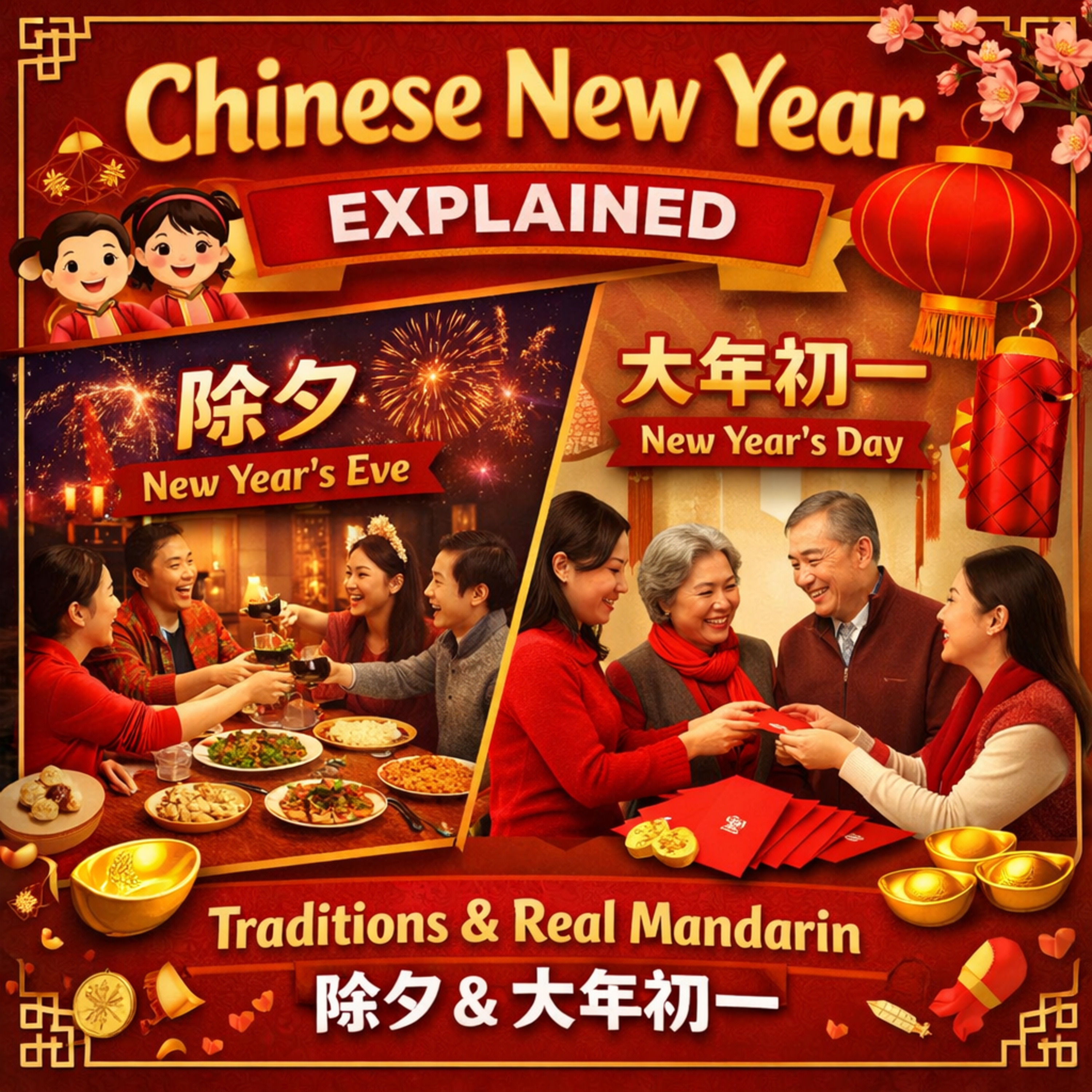 Chinese New Year Explained: Real Traditions, Real Mandarin (除夕 & 大年初一) 15.02.2026 13minWhat really happens during Chinese New Year — beyond the fireworks and red envelopes? 🧧In this episode, we walk you through Chinese New Year’s Eve (除夕) and New Year’s Day (大年初一) as they’re actually celebrated in everyday life. You’ll learn essential real-world Mandarin, common traditions, and the cultural logic behind things like family reunions, staying up late, greeting elders, and why nobody sweeps the floor on New Year’s Day.Perfect for Chinese learners, heritage speakers, and anyone curious about modern Chinese culture.In this episode you'll learn: Where the name 除夕 (Chinese New Year’s Eve) comes from That 年夜饭 (the reunion dinner) often matters more than the holiday itself What 守岁 is — and why people do it What happens on 大年初一 (New Year’s Day)The meaning of 拜年 and when it's done.Everyday Mandarin you’ll actually hear during Spring FestivalAll Mandarin is explained clearly, with natural examples and cultural context, so you don’t just memorize words — you understand how Chinese New Year really works.🎉 新年快乐!万事如意!🎆 Chinese New Year’s Eve(除夕)中文:除夕这一天,大家最重要的事情就是回家团圆。Pinyin:Chúxī zhè yì tiān, dàjiā zuìzhòngyào de shìqing jiùshì huí jiā tuányuán.English:On Chinese New Year’s Eve, themost important thing is going home for a family reunion.中文:晚上,全家人会一起吃年夜饭。Pinyin:Wǎnshang, quánjiā rén huì yìqǐchī niányèfàn.English:In the evening, the whole familyeats the New Year’s Eve dinner together.中文:餐桌上常见的菜有饺子、鱼,还有象征好运的年菜。Pinyin:Cānzhuō shàng chángjiàn de càiyǒu jiǎozi, yú, hái yǒu xiàngzhēng hǎo yùn de nián cài.English:Often included on the dinner table, are dishes such as dumplings, fish and others that symbolize goodluck. 中文:吃完饭后,很多人会看春晚,一起守岁,迎接新年的到来。Pinyin:Chī wán fàn hòu, hěn duō rénhuì kàn Chūnwǎn, yìqǐ shǒusuì, yíngjiē xīnnián de dàolái.English:After dinner, many people watch theSpring Festival Gala and stay up late to welcome the New Year.🧨 Chinese New Year’s Day(初一)中文:大年初一,大家通常会起得比较晚。Pinyin:Dànián chūyī, dàjiā tōngchánghuì qǐ de bǐjiào wǎn.English:On New Year’s Day, people usuallywake up a bit later.中文:一醒来,就要给家人拜年,说一些吉利的话。Pinyin:Yí xǐnglái, jiù yào gěi jiārénbàinián, shuō yìxiē jílì de huà.English:As soon as they wake up, they greetfamily members and say auspicious wishes.中文:孩子们最期待的,就是收到红包。Pinyin:Háizimen zuì qīdài de, jiùshìshōudào hóngbāo.English:What children look forward to themost is receiving red envelopes.中文:这一天,很多人不扫地、不吵架,希望新的一年有个好开始。Pinyin:Zhè yì tiān, hěn duō rén bùsǎodì, bù chǎojià, xīwàng xīn de yì nián yǒu gè hǎokāishǐ.English:On this day, many people avoidsweeping the floor or arguing, hoping for a good start to the year.For the full transcript, click here: https://turboscribe.ai/transcript/share/8980177657064100715/7Fxm_UxP9AJ26zEURve0ZJni7vsn4ftjfMJybEcxxxE/chinese-new-yearMusic: Li River by Zimpzonhttps://track.pstmrk.it/3s/uppbeat.io%2Ft%2Fzimpzon%2Fli-river/vZub/AFXDAQ/AQ/083f6ce2-49f5-4655-afe0-af85484a41ba/4/rcr0--dCae
 -
 3 Chinese Love Words You Must Know: 暧昧, 约会 & 表白 02.02.2026 16minIn this episode of Chinese Language Convo Club, we delve into three essential Chinese love words that come up again and again in real-life dating conversations: 暧昧 (ambiguous feelings), 约会 (going on dates), and 表白 (confessing your feelings).With Valentine’s Day around the corner, Vicky and I break down how romantic relationships typically unfold in Chinese dating culture, and how it differs from Western dating norms. You’ll learn what these words really mean, how native speakers use them, and when 约会 turns into 交往.The episode includes natural Chinese dialogues, clear explanations, cultural insights, and repeat-after-me practice to help you sound more natural and confident when talking about relationships in Mandarin.Perfect for intermediate Chinese learners, podcast listeners who want real spoken Chinese, and anyone curious about love, dating, and romance in Chinese culture.For The Complete Transcript, Click Here:https://turboscribe.ai/transcript/share/477381560584301628/okfSdv4XEu74yPtZU1W6STG67OdJSeMvd_go3M4sSv8/3-love-words-you-must-know
 -
 Cheers in Chinese: How to Toast, Sip, or Politely Say No 19.01.2026 27minWhat does “干杯” really mean—and do you actually have to finish your drink? In this episode, we explore Chinese drinking culture, from casual dinners with friends to formal business banquets. You’ll learn key toasting phrases, pronunciation tips, and polite ways to decline alcohol—without losing face.“干杯”一定要喝完吗?敬酒时为什么杯子要放低?这一集我们通过生活化对话,带你了解中文里的喝酒文化、正式与非正式的敬酒礼仪,以及各种得体又自然的“不喝酒”说法。Gānbēi” yídìng yào hē wán ma? Jìngjiǔ shí wèishénme bēizi yào fàng dī? Zhè yí jí wǒmen tōngguò shēnghuó huà duìhuà, dài nǐ liǎojiě Zhōngwén lǐ de hējiǔ wénhuà, zhèngshì yǔ fēi zhèngshì de jìngjiǔ lǐyí, yǐjí gè zhǒng détǐ yòu zìrán de “bù hējiǔ” shuōfǎ.🟢 Dialogue 1: Casual dinner with friends小兰: 来,干杯!在中文里,“干杯”就是“cheers”的意思。湖帆: 哦,那要喝完吗?小兰: 不一定,朋友之间随意一点就好。湖帆: 明白了!那我就小酌一口~ Pinyin:A: Lái, gānbēi! Zài Zhōngwén lǐ, “gānbēi” jiù shì “cheers” de yìsi.B: Ó, nà yào hē wán ma?A: Bù yídìng, péngyǒu zhījiān suíyì yīdiǎn jiù hǎo.B: Míngbai le! Nà wǒ jiù xiǎo zhuó yì kǒu ~English:A: Okay, cheers! In Chinese, “干杯 (gānbēi)” means “cheers.”B: Oh, do I have to finish the drink?A: Not necessarily — with friends, it’s more relaxed.B: Got it! Then I’ll just take a small sip.🟠 Dialogue 2: Formal business banquet小刘: 王经理,我敬您一杯!感谢您的合作。王经理: 谢谢!我也回敬您一杯。先您后我,这是礼貌。小刘: 对,听说敬酒时杯口要比对方低一点?王经理: 是的,表示尊重。Pinyin:Xiao Liu: Wáng jīnglǐ, wǒ jìng nín yì bēi! Gǎnxiè nín de hézuò.Wang Jingli: Xièxiè! Wǒ yě huíjìng nín yì bēi. Xiān nín hòu wǒ, zhè shì lǐmào.Xiao Liu: Duì, tīngshuō jìngjiǔ shí bēikǒu yào bǐ duìfāng dī yìdiǎn?Wang Jingli: Shì de, biǎoshì zūnzhòng.English:A: Manager Wang, I’d like to toast to you! Thank you for your cooperation.B: Thank you! I’ll also return the toast. You first, then me — that’s polite.A: Right, I heard the rim of my glass should be slightly lower than yours?B: Yes, that shows respect.Polite Refusals: 1. 我今天不太能喝酒,还请多包涵。Wǒ jīntiān bù tài néng hējiǔ, hái qǐng duō bāohan.“I can’t really drink today — thank you for understanding.”➡️ Super common, soft, humble tone.2. 我酒量不好,今天就先不喝了。Wǒ jiǔliàng bù hǎo, jīntiān jiù xiān bù hē le.“My alcohol tolerance isn’t great, so I’ll pass today.”➡️ A very accepted excuse; no one argues with “low tolerance.”3. 我等等还要开车,就不喝酒了。Wǒ děngdeng hái yào kāichē, jiù bù hējiǔ le.“I still need to drive later, so I can’t drink.”➡️ 100% respected; people will immediately stop pushing alcohol.4. 我身体不太舒服,医生也不建议我喝酒。Wǒ shēntǐ bù tài shūfu, yīshēng yě bù jiànyì wǒ hējiǔ.“I’m not feeling well, and my doctor advised me not to drink.”➡️ No one will challenge this.Soft & Friendly Ways (Still Polite)5. 我陪大家就好,我喝茶/水就行。Wǒ péi dàjiā jiù hǎo, wǒ hē chá/shuǐ jiù xíng.“I’ll join everyone in spirit — tea/water is fine for me.”➡️ Shows participation without drinking alcohol.6. 我浅尝一下就好,真的不太能喝。Wǒ qiǎncháng yíxià jiù hǎo, zhēn de bù tài néng hē.“I’ll just take a tiny sip; I really can’t drink much.”➡️ Not very effective. Drinking in China is an "all or nothing" event! Direct But Still Polite7. 不好意思,我真的不喝酒。Bù hǎoyìsi, wǒ zhēnde bù hējiǔ.“Sorry, but I really don’t drink alcohol.”➡️ Clear boundary, still polite.8. 我对酒精过敏,所以真的不能喝。Wǒ duì jiǔjīng guòmǐn, suǒyǐ zhēnde bùnéng hē.“I’m allergic to alcohol, so I really can’t drink.”➡️ Absolutely respected; people will even protect you from more toasts.A Playful but Safe Excuse (Used in Friendly Settings)9. 我喝一杯就会脸红得像虾,还是算了吧!Wǒ hē yì bēi jiù huì liǎnhóng de xiàng xiā, háishi suànle ba!“If I drink even one glass I turn red like a shrimp, so better not!”➡️ Lightens the mood, keeps things friendly.
 -
 资深吃货! Learn Festive Chinese Food Slang for the Holidays 30.12.2025 5minWe'll be back in a few weeks to bring you more fun lessons on Chinese language and culture, but in the meantime, celebrate the holidays and boost your Chinese vocabulary in this quick five-minute bilingual episode! 🥟✨ Learn how to describe a true foodie (资深吃货), talk about a big holiday feast (大餐), and even say you’ve eaten to your limit (吃到嗓子哑了). Perfect for learners who love language, culture, and great food. Listen, laugh, and learn festive Mandarin phrases you can use right away!
 -
What NOT to Give: Chinese Gift Taboos (Upper Intermediate) 22.12.2025 20minThink gift-giving is easy? Not always — especially in Chinese culture 😅In this episode, we talk about Chinese gift-giving taboos and the surprising reasons why things like clocks, shoes and other seemingly normal items, can send the wrong message.With funny examples, natural dialogues, and pronunciation practice, you’ll learn Chinese while picking up real cultural tips you can actually use. Learn how to avoid awkward moments, sound more natural, and understand what gifts really mean in Chinese.送礼看起来很简单,但在中国文化里,可没那么容易 😅这一集我们用轻松有趣的对话,带你认识常见的送礼禁忌,看看为什么钟、鞋、等等。。。都可能让人误会你的意思。通过真实情境、自然对话和发音练习,帮你在开心中学中文,不仅学会怎么说,更懂中国文化在想什么。Sònglǐ kàn qǐlái hěn jiǎndān, dàn zài Zhōngguó wénhuà lǐ, kě méi nàme róngyì Zhè yí jí wǒmen yòng qīngsōng yǒuqù de duìhuà, dài nǐ rènshi chángjiàn de sònglǐ jìnjì, kànkan wèishénme zhōng, xié, deng deng...dōu kěnéng ràng rén wùhuì nǐ de yìsi.Tōngguò zhēnshí qíngjìng, zìrán duìhuà hé fāyīn liànxí, bāng nǐ zài kāixīn zhōng xué Zhōngwén, Bù jǐn xuéhuì zěnme shuō, gèng dǒng Zhōngguó wénhuà zài xiǎng shénme.Dialogue 1:小王: 我打算买个钟送给李老师,你觉得怎么样?(Xiǎo Wáng): Wǒ dǎsuàn mǎi gè zhōng sòng gěi Lǐ lǎoshī, nǐ juéde zěnmeyàng?I’m thinking about giving a clock to Teacher Li — what do you think?小李: 千万别!送钟在中国是大忌!(Xiǎo Lǐ): Qiānwàn bié! Sòng zhōng zài Zhōngguó shì dà jì!Don’t ever do that! Giving a clock is a big taboo in China!小王: 啊?为什么?(Xiǎo Wáng): A? Wèishénme?Huh? Why?小李: 因为“送钟”听起来像“送终”,很不吉利。(Xiǎo Lǐ): Yīnwèi “sòng zhōng” tīng qǐlái xiàng “sòng zhōng”, hěn bù jílì.Because “giving a clock” sounds like “attending a funeral” — it’s unlucky!小王: 原来如此!那我改送点别的吧。(Xiǎo Wáng): Yuánlái rúcǐ! Nà wǒ gǎi sòng diǎn bié de ba.I see! Then I’ll give something else instead.Dialogue 2:小美: 你看我给男朋友买了一双鞋,好看吗?(Xiǎo Měi): Nǐ kàn wǒ gěi nánpéngyou mǎi le yì shuāng xié, hǎokàn ma?Look, I bought a pair of shoes for my boyfriend! Aren’t they nice?小芳: 鞋很好看,不过听说送鞋有点不吉利。(Xiǎo Fāng): Xié hěn hǎokàn, búguò tīngshuō sòng xié yǒudiǎn bù jílì.They’re nice, but I heard giving shoes is a bit unlucky.小美: 是吗?那怎么办?(Xiǎo Měi): Shì ma? Nà zěnmebàn?Really? What should I do then?小芳: 很简单,你让他给你一块钱,就当是“买”的,不是“送”的。(Xiǎo Fāng): Hěn jiǎndān, nǐ ràng tā gěi nǐ yí kuài qián, jiù dāng shì “mǎi” de, bú shì “sòng” de.Easy! Just ask him to give you one yuan — that way, it’s like he bought the shoes, not that you gave them. 小美: 哈哈,好主意!(Xiǎo Měi): Hāhā, hǎo zhǔyì!Haha, good idea!
-
小确幸: A Way To Find Joy in Stressful Times (Intermediate) 08.12.2025 14minFeeling stressed or overwhelmed? In this episode, we talk about the popular Mandarin phrase 小确幸 (xiǎo què xìng) — the Chinese concept of “small but certain happiness” that has become a modern lifestyle mindset across Asia.You’ll learn:• The meaning and origin of 小确幸• Why it became so influential in Chinese culture• How to use 小确幸 naturally in real Mandarin conversations• Practical examples of everyday “small joys”• A guided pronunciation breakdown to help you sound more natural• A full dialogue review for listening practiceWe also talk about stress, burnout, workplace drama, and how noticing small moments of joy can help you recharge — emotionally and linguistically.Conversation 1:小王: 最近工作太忙了,压力好大。(Xiǎo Wáng: Zuìjìn gōngzuò tài máng le, yālì hǎo dà.)You’ve been so busy lately—so stressed out.小刘: 是啊,不过今天早上喝到一杯特别好喝的咖啡,算是小确幸吧。(Xiǎo Liú: Shì a, búguò jīntiān zǎoshang hē dào yì bēi tèbié hǎohē de kāfēi, suàn shì xiǎo què xìng ba.)Yeah, but I had a really good cup of coffee this morning—that’s my little happiness for the day.小王: 哈哈,小确幸也很重要啊!(Xiǎo Wáng: Hāhā, xiǎo què xìng yě hěn zhòngyào a!)Haha, those small joys really matter!Conversation 2 :小美: 最近真的有点累,什么事都提不起劲。(Xiǎo Měi): Zuìjìn zhēn de yǒudiǎn lèi, shénme shì dōu tí bù qǐ jìn.Lately I’ve been exhausted—nothing really excites me.小芳: 我懂,不过我发现,生活里的小确幸能让我重新充满能量。(Xiǎo Fāng): Wǒ dǒng, búguò wǒ fāxiàn, shēnghuó lǐ de xiǎo què xìng néng ràng wǒ chóngxīn chōngmǎn néngliàng.I know the feeling, but I’ve realized that the little happinesses in life can really recharge me.小美: 对,你说得对。也许我们都该学会去发现这些小确幸。(Xiǎo Měi): Duì, nǐ shuō de duì. Yěxǔ wǒmen dōu gāi xuéhuì qù fāxiàn zhèxiē xiǎo què xìng.You’re right. Maybe we should all learn to notice those small joys in life.Example Sentences: 吃到第一口冰淇淋的感觉,就是小确幸。The feeling of that first bite of ice cream—that’s a little happiness. 下班回家发现外卖刚好送到,小确幸!Coming home from work just as your food delivery arrives—that’s a small joy! 听喜欢的歌、闻到咖啡香,这些都是生活里的小确幸。Hearing your favorite song or smelling fresh coffee—these are the small pleasures of life.Contact Us: [email protected]
Podcast simili


Popolare in
Questo podcast compare anche nelle classifiche dei podcast di questi paesi.


