
World War II with Tom Hanks
For eighty years, the Second World War has remained the most devastating and defining conflict in human history. World War II with Tom Hanks reexamines the war through the lens of a new century. Told over twenty hours and guided by Tom Hanks, whose lifelong passion for this history has shaped some of the most profound screen portrayals of the era, the series captures the full arc of the war — from the rise of fascism in Europe to the fall of Berlin, from Pearl Harbor to Hiroshima, and the uneasy peace that follows. Each episode uncovers new dimensions of the conflict: the decisions that shaped the battlefield, the unseen networks that sustained the war effort, and the aftershocks that still shape our world today. World War II with Tom Hanks is the definitive retelling of that story for a new generation: a sweeping, deeply human portrait of how the modern world was forged in the fires of global war.
Episodi
-
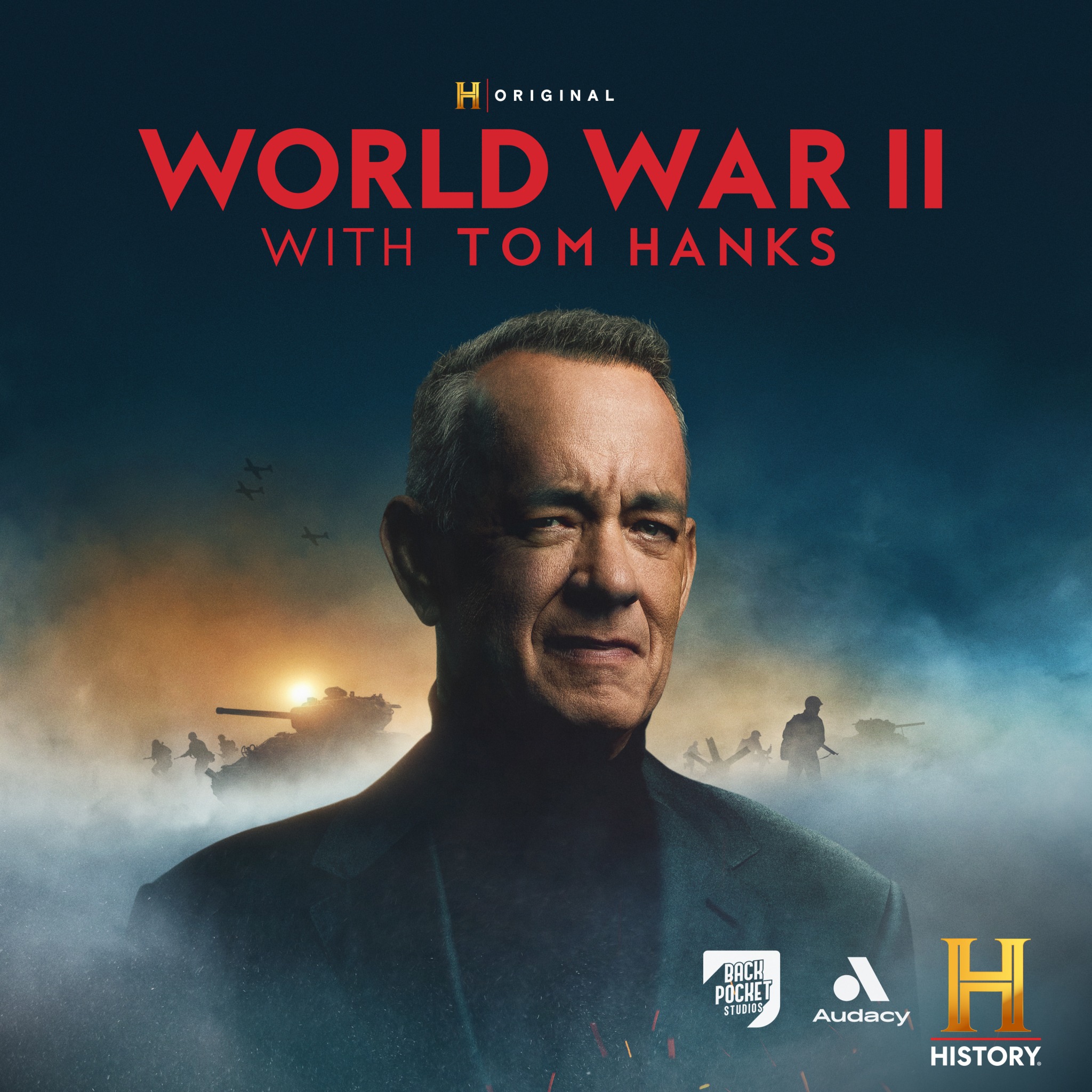 World War II with Tom Hanks 18.05.2026 1minComing May 26th: World War II with Tom Hanks reexamines history’s most devastating conflict for a new century. Across twenty hours, the series traces the war’s full arc–from the rise of fascism to Hiroshima–uncovering the decisions, hidden networks, and lasting consequences that continue to shape our world.
 -
The Beginning 26.05.2026 40minIn September 1939, enabled by a secret pact between Adolf Hitler and Josef Stalin, Germany invades Poland with its lightning style of tank warfare, plunging Europe back into war. Adolf Hitler can now pursue his longed-for racial war, as the world watches in horror, and the stage is set for global conflict.This episode features interviews with (in order of appearance):Dan Carlin, podcaster, Hardcore HistoryAlexandra Richie, professor, Collegium CivitasRobert Citino, senior historian, National WWII MuseumCameron Zinsou, associate professor, Command and General Staff CollegeGeoffrey Wawro, professor, University of North TexasJadwiga Biskupska, associate professor, Sam Houston State UniversitySimon Sebag Montefiore, historian and authorRoger Moorhouse, historian and authorLeah Wright Rigueur, associate professor, Johns Hopkins UniversityJames Bulgin, Imperial War MuseumGeneral Wesley Clark, US Army, Ret.Sean McMeekin, professor, Bard College
-
Blitz 26.05.2026 40minAfter defeating Poland, Hitler looks west, planning an attack into France that will take advantage of a weak point in their defences. France is overrun and new British Prime Minister Churchill scrambles to evacuate Allied troops from the coast. Shocked by the defeat of France, Roosevelt calls to mobilize the US while German planes bombard Britain from the sky. The Germans are pushed back as Roosevelt establishes the US as the “arsenal of democracy” in the war against tyranny.This episode features interviews with (in order of appearance):Ludivine Broch, historian, University of WestminsterCameron Zinsou, associate professor, Command and General Staff CollegeMichael Neiberg, professor, US Army War CollegeSaul David, military historian and authorGeoffrey Wawro, professor, University of North TexasDan Snow, historian and broadcasterAlexandra Richie, professor, Collegium CivitasDan Carlin, podcaster, Hardcore HistoryRobert Citino, senior historian, National WWII MuseumJon Meacham, presidential historianLeah Wright Rigueur, associate professor, Johns Hopkins University
-
Barbarossa 26.05.2026 39minOperation Barbarossa, Nazi Germany’s surprise invasion of the Soviet Union, launches on June 22, 1941. In what is the largest military operation in history, Hitler aims to capture the Soviet Union’s vast economic resources, enslave its populations, and expand Germany east. It is the beginning of a brutal campaign that will ultimately help decide the war in Europe.This episode features interviews with (in order of appearance):Simon Sebag Montefiore, historian and authorSean McMeekin, professor, Bard CollegeColonel Douglas Douds, professor, US Army War CollegeAlexandra Richie, professor, Collegium CivitasRobert Citino, senior historian, National WWII MuseumJadwiga Biskupska, associate professor, Sam Houston State UniversityDan Carlin, podcaster, Hardcore HistoryGeneral Wesley Clark, US Army, Ret.Sir Antony Beevor, military historian
-
Pearl Harbor 02.06.2026 40minDriven by their desire for resources and an Asian empire, Japan invades China. The US joins the global outcry as Japanese troops brutally destroy the Chinese capital of Nanking. FDR responds with a crippling oil embargo, but Japan refuses to back down, propelling them towards an attack on Pearl Harbor that will change the trajectory of WWII and the world.This episode features interviews with (in order of appearance):Geoffrey Wawro, professor, University of North TexasNoriko Kawamura, professor, Washington State UniversityTakima Melber, the University of HeidelbergRobert Citino, senior historian, National WWII MuseumDan Carlin, podcaster, Hardcore HistoryColonel Douglas Douds, professor, US Army War CollegeChristopher Harding, cultural historian, University of EdinburghJon Meacham, presidential historianLeah Wright Rigueur, associate professor, Johns Hopkins UniversityJonathan Parshall, military historian, US Naval War CollegeMax Brooks, fellow, Modern War Institute, West Point
-
The War at Sea 02.06.2026 37minIn 1940, German U-boats are sinking British hopes of victory. From the sidelines, FDR loans Britain much needed aid and maneuvers US patrols to the edge of an “undeclared war” with Germany. Meeting at a game-changing summit, Churchill and FDR align their goals. But as America and Britain get closer, so do the German U-boats. Once at war, the US will face not only German ships but the might of the Japanese empire. At Midway, America’s young and inexperienced forces will fight for control of the sea.This episode features interviews with (in order of appearance):Dan Snow, historian and broadcasterPhillips O'Brien, professor, University of St. AndrewsMax Brooks, fellow, Modern War Institute, West PointRobert Citino, senior historian, National WWII MuseumJon Meacham, presidential historianLeah Wright Rigueur, associate professor, Johns Hopkins UniversityGeoffrey Wawro, professor, University of North TexasColonel Douglas Douds, professor, US Army War CollegeJonathan Parshall, military historian, US Naval War CollegeDan Carlin, podcaster, Hardcore History
-
Guadalcanal 09.06.2026 39minAmerica’s “day of infamy” at Pearl Harbor is the birth of a new Japanese empire. Japan launches unprecedented attacks across Asia, proclaiming “Asia for the Asians” and pushing out Western colonial powers. Fueled by ideology, Japan’s armies are seemingly unstoppable – until a confrontation with the 1st Marine Division of the United States at Guadalcanal becomes a testing ground in a war without mercy.This episode features interviews with (in order of appearance):General Wesley Clark, US Army, Ret.Jonathan Parshall, military historian, US Naval War CollegeRobert Citino, senior historian, National WWII MuseumSaul David, military historian and authorDan Snow, historian and broadcasterChristopher Harding, cultural historian, University of EdinburghDan Carlin, podcaster, Hardcore HistoryTakima Melber, the University of HeidelbergColonel Douglas Douds, professor, US Army War CollegeGeoffrey Wawro, professor, University of North Texas
-
Darkness Falls 09.06.2026 41minUnder Adolf Hitler's leadership, anti-Semitic policies escalate from discrimination to widespread genocide. The state-sponsored persecution features mobile killing squads conducting mass shootings, and then purpose-built death camps, where millions of men, women and children are murdered by poison gas.This episode features interviews with (in order of appearance):Waitman Wade Beorn, assistant professor, Northumbria UniversityJadwiga Biskupska, associate professor, Sam Houston State UniversityAlexandra Richie, professor, Collegium CivitasDaniel Greene, adjunct professor, Northwestern UniversityJames Bulgin, Imperial War MuseumRebecca Erbelding, historian and authorSimon Sebag Montefiore, historian and authorRobert Citino, senior historian, National WWII Museum
-
Operation Torch 16.06.2026 40minIn 1942, Eisenhower leads the first joint U.S.-British operation of the war – Operation Torch – successfully landing thousands of untested U.S. troops on the Vichy-controlled shores of North Africa. The Allies race to trap the German forces in Tunisia, resulting in fearsome tank battles against the famed “Desert Fox,” German Field Marshall Erwin Rommel and his battle-tested Afrika Korps.This episode features interviews with (in order of appearance):Robert Citino, senior historian, National WWII MuseumJonathan Parshall, military historian, US Naval War CollegeGeneral Wesley Clark, US Army, Ret.Colonel Douglas Douds, professor, US Army War CollegeSaul David, military historian and authorDan Snow, historian and broadcasterCameron Zinsou, associate professor, Command and General Staff CollegeMichael Neiberg, professor, US Army War CollegeAlexandra Richie, professor, Collegium CivitasJon Meacham, presidential historian
-
Secrets and Lies 16.06.2026 40minAmid World War II’s chaos, a hidden battle rages — a war of espionage, deception, and codebreaking. At Bletchley Park, Alan Turing and his team race to crack Germany's "unbreakable" Enigma Code in a bid to thwart Nazi plans and save Britain from invasion. But as the codes evolve, daring missions and deadly risks intensify…This episode features interviews with (in order of appearance):Dan Snow, historian and broadcasterRobert Citino, senior historian, National WWII MuseumDavid O’Keefe, professor, Marianopolis CollegeNicholas Reynolds, historian and former CIA officerDavid Abrutat, Official Historian, GCHQSir Dermot Turing, writer and speakerMatthew Hefler, intelligence historian, King’s College LondonTessa Dunlop, historian and authorGuy Walters, historian and authorKatrin Paehler, professor, Illinois State UniversityRobert Hutchinson, intelligence historian
-
Stalingrad 23.06.2026 39minIn 1942, Hitlers launches his second offensive in the Soviet Union: Operation Blue. Quickly becoming impatient, Hitler splits his force in an attempt to capture both the Caucasus oil fields and Stalingrad.Initially successful, the German Sixth Army captures up to 90% of the city until they are trapped by General Zhukov’s men. The Soviet attacks and the unforgiving Russian winter steadily wipe out the German troops until their leader, General Paulus, surrenders. Furious, Hitler launches his final attack, ending all hopes for a German victory on the Eastern Front.This episode features interviews with (in order of appearance):Colonel Douglas Douds, professor, US Army War CollegeRobert Citino, senior historian, National WWII MuseumSir Antony Beevor, military historianAlexandra Richie, professor, Collegium CivitasSean McMeekin, professor, Bard CollegeSimon Sebag Montefiore, historian and authorDan Carlin, podcaster, Hardcore HistoryGeoffrey Wawro, professor, University of North TexasJadwiga Biskupska, associate professor, Sam Houston State University
-
Italy 30.06.2026 38minIn the summer of 1943, after a successful campaign in North Africa, Churchill convincesRoosevelt that the best way forward is an invasion of the island of Sicily. But what is thought to be a quick and decisive attack instead becomes a months-long slog up the Italian peninsula, as Hitler has no intention of giving up this key part of his empire without a fight.This episode features interviews with (in order of appearance):Dan Snow, historian and broadcasterRobert Citino, senior historian, National WWII MuseumSarada Peri, presidential speechwriter and political analystJon Meacham, presidential historianSimon Sebag Montefiore, historian and authorDan Carlin, podcaster, Hardcore HistorySaul David, military historian and authorColonel Douglas Douds, professor, US Army War CollegeMartin Morgan, military historian and authorMarco Aterrano, associate professor, University of Naples Federico IIAlexandra Richie, professor, Collegium Civitas
-
Battle for the Skies 30.06.2026 39minIn 1942, the Allies are eager to challenge the Luftwaffe’s superiority in the air. The RAF and U.S. Army Air Forces combine operations to bomb the industrial heart of Germany and destroy German air power ahead of the upcoming Allied invasion of France. Airmen on both sides will suffer grievous losses – and so will civilians below.This episode features interviews with (in order of appearance):Robert Citino, senior historian, National WWII MuseumDan Snow, historian and broadcasterA.J. Baime, journalist and authorMartin Morgan, military historian and authorJohn Curatola, military historian, National WWII MuseumColonel Douglas Douds, professor, US Army War CollegeDr. Rebecca Grant, national security analystDan Carlin, podcaster, Hardcore HistoryJon Meacham, presidential historianAnand Toprani, military historian, U.S. Naval War College
-
Overlord 07.07.2026 37minAfter years of discussion over how to take the fight directly to Germany, the Allies set a target for a cross-channel invasion: Normandy, spring of 1944. But the road to Operation Overlord is no easy journey, with Hitler lying in wait. For the Allies, it’s a race to pull off one of the most complicated operations in military history.This episode features interviews with (in order of appearance):Dan Snow, historian and broadcasterRobert Citino, senior historian, National WWII MuseumCraig L. Symonds, military historian and authorSarada Peri, presidential speechwriter and political analystDan Carlin, podcaster, Hardcore HistoryJon Meacham, presidential historianMichel Paradis, professor, Columbia UniversityGeoffrey Wawro, professor, University of North TexasDr. Peter Lieb, military historian and authorJames Holland, military historian and authorColonel Douglas Douds, professor, US Army War CollegeDr. Rebecca Grant, national security analystMartin Morgan, military historian and authorPaul Woodadge, author and Normandy battlefield guide
-
Long Road to Tokyo 07.07.2026 38minThe B-29 bomber is the Allies’ best chance to strike Japan, and they turn to China as a potential air base. But Japan launches its largest land offensive of the war to gain control of Asia, leading to brutal fighting in the jungles and plains of South Asia. All the while, the U.S. Navy is speeding through the Pacific towards the Mariana Islands, another potential future B-29 base.This episode features interviews with (in order of appearance):Colonel Douglas Douds, professor, US Army War CollegeDr. Rebecca Grant, national security analystA.J. Baime, journalist and authorRobert Citino, senior historian, National WWII MuseumDan Carlin, podcaster, Hardcore HistoryGeoffrey Wawro, professor, University of North TexasJames Holland, military historian and authorDan Snow, historian and broadcasterSarada Peri, presidential speechwriter and political analystJon Meacham, presidential historianJonathan Parshall, military historian, US Naval War CollegeChristopher Harding, cultural historian, University of EdinburghNoriko Kawamura, professor, Washington State University
-
 How Higgins and His Boats Won the War (from HISTORY This Week) 09.07.2026 31minFor more stories just like these, check out HISTORY This Week wherever you get your podcasts.June 6, 1944. As thousands of Allied soldiers prepare to storm the beaches of Normandy, they climb down rope nets into small wooden landing craft bobbing in the dark waters of the English Channel. Within hours, these boats will carry them into the largest amphibious invasion in history.The craft are known as Higgins boats, named for their inventor, Andrew Higgins: a hard-driving New Orleans boatbuilder who built his reputation designing vessels that could speed through swamps, crash through obstacles, and go places other boats couldn't. Higgins was stubborn, abrasive, and relentless. The Navy repeatedly dismissed his ideas. He refused to go away.How does a small-time New Orleans boatbuilder force his way into the military industrial complex? And what exactly is so special about these boxy little Higgins boats?Special thanks to Dr. John Curatola, Samuel Zemurray Stone Senior Historian at the National WWII Museum in New Orleans, Louisiana. His book is Armies Afloat: How the Development of Amphibious Operations in Europe Helped Win World War II.You can find the rest of the books we used to research this episode at historythisweekpodcast.com.
 -
Home Front 14.07.2026 38minAs the tide begins to turn against the Axis powers, the leaders of Germany and Japan deploy opposite strategies on their home fronts. Hitler and his propaganda minister do everything in their power to shield the German people from the war, while Hideki Tojo asks the Japanese to sacrifice more and more to support the war effort. But both governments’ demands of their people will grow more intense – and deadly.This episode features interviews with (in order of appearance):Robert Citino, senior historian, National WWII MuseumAlexandra Richie, professor, Collegium CivitasNicholas Stargardt, historian and authorMartin Morgan, military historian and authorColonel Douglas Douds, professor, US Army War CollegeSheldon Garon, professor, Princeton UniversityYuki Tatsumi, senior director, Institute for Indo-Pacific SecurityChristopher Harding, cultural historian, University of EdinburghDan Carlin, podcaster, Hardcore HistoryJonathan Parshall, military historian, US Naval War CollegeJeremy Yellen, historian and authorNoriko Kawamura, professor, Washington State UniversityBradley Hart, military historian, National WWII MuseumLouise Young, professor, University of Wisconsin-Madison
-
Resistance 14.07.2026 38minResistance to Nazi occupation and oppression has been a constant throughout the war. In the summer of 1944, two cities revolt against the Nazis but meet very different outcomes. And some, living and dying through the Holocaust, take their fate into their own hands and mount organized resistance in the direst of circumstances.This episode features interviews with (in order of appearance):Colonel Douglas Douds, professor, US Army War CollegeRobert Citino, senior historian, National WWII MuseumDan Snow, historian and broadcasterAlexandra Richie, professor, Collegium CivitasMichael Neiberg, professor, US Army War CollegeMarco Aterrano, associate professor, University of Naples Federico IIMartin Morgan, military historian and authorSimon Sebag Montefiore, historian and authorAnand Toprani, military historian, U.S. Naval War CollegeJames Bulgin, historian, Imperial War MuseumRebecca Erbelding, historian, United States Holocaust Museum
-
No Surrender 21.07.2026 38minIn 1944-45, as Allied victory in Europe seems all but assured, the fighting in the Pacific intensifies. The U.S. and Japan suffer terrible losses in the Philippines and on Iwo Jima. Roosevelt understands what ordinary Americans are only beginning to realize: in a clash between a nation which demands unconditional surrender and a nation which refuses to surrender, the worst is still to come.This episode features interviews with (in order of appearance):Jon Meacham, presidential historianRobert Citino, senior historian, National WWII MuseumJonathan Parshall, military historian, US Naval War CollegeDan Carlin, podcaster, Hardcore HistoryA.J. Baime, journalist and authorBradley Hart, military historian, National WWII MuseumNoriko Kawamura, professor, Washington State UniversityChristopher Harding, cultural historian, University of EdinburghDr. Rebecca Grant, national security analystAnand Toprani, military historian, U.S. Naval War CollegeColonel Douglas Douds, professor, US Army War CollegeSarada Peri, presidential speechwriter and political analystMartin Morgan, military historian and author
-
Last Days of the Reich 21.07.2026 36minIn the winter of 1944, as American and British armies are advancing across western Europe, Hitler plans one last major offensive attempt through the Ardennes forest - the Battle of the Bulge - to swing the tide of the war back in Germany’s favor. Meanwhile, the Soviet Red Army is swiftly moving across Eastern Europe to fulfill Stalin’s ultimate wish of taking Berlin.This episode features interviews with (in order of appearance):Robert Citino, senior historian, National WWII MuseumDan Carlin, podcaster, Hardcore HistoryJames Holland, military historian and authorDr. Peter Lieb, military historian and authorMartin Morgan, military historian and authorGeoffrey Wawro, professor, University of North TexasPaul Woodadge, author and Normandy battlefield guideColonel Douglas Douds, professor, US Army War CollegeMichel Paradis, professor, Columbia UniversitySarada Peri, presidential speechwriter and political analystAlexandra Richie, professor, Collegium CivitasSean McMeekin, professor, Bard CollegeSimon Sebag Montefiore, historian and authorJon Meacham, presidential historianDan Snow, historian and broadcaster
Podcast simili


Popolare in
Questo podcast compare anche nelle classifiche dei podcast di questi paesi.
-
 Canada
-
 Tunisia
-
 Mongolia
-
 Tanzania
-
 Isole Cayman
-
 Ruanda
-
 Kuwait
-
 Malawi
-
 Sri Lanka
-
 Algeria
-
 Stati Uniti
-
 Nicaragua
-
 Sudafrica
-
 Trinidad e Tobago
-
 Slovenia
-
 Irlanda
-
 Perù
Perù
-
 Panama
-
 Regno Unito
-
 Cipro
Cipro
-
 Kirghizistan
-
 Croazia
-
 Zambia
-
 Ecuador
-
 Marocco
-
 Islanda
-
 Qatar
Qatar
-
 Grecia
-
 Ungheria
-
 Repubblica Dominicana
-
 Lussemburgo
-
 Paraguay
-
 Lituania
-
 Uzbekistan
-
 Australia
-
 Giordania
-
 Guatemala
-
 Taiwan
-
 Tagikistan
-
 Slovacchia
-
 Romania
-
 Malta
Malta
-
 Kenya
Kenya
-
 Bahrein
-
 Indonesia
-
 Filippine
-
 Venezuela
-
 Colombia
-
 Namibia
-
 Finlandia
-
 Bulgaria
-
 Honduras
-
 Ucraina
-
 Albania
-
 Maldive
-
 Nuova Zelanda
-
 Hong Kong
-
 India
India
-
 Thailandia
-
 Botswana
-
 Moldavia
-
 Svezia
-
 Armenia
-
 Oman
Oman
-
 Zimbabwe
-
 Cile
Cile
-
 Belgio
-
 Cambogia
-
 Norvegia
-
 Israele
-
 Giamaica
-
 Emirati Arabi Uniti
-
 Grenada
-
 Messico
-
 Belize
-
 Costa Rica
-
 Argentina
-
 Danimarca
-
 Bermuda
-
 Ghana
Ghana
-
 Azerbaigian
-
 Nigeria
-
 Estonia
-
 Uruguay
-
 Singapore
-
 Turchia
-
 Lettonia
-
 Ciad
Ciad
-
 Brasile
-
 Kazakistan
-
 Malesia
-
 Polonia