
The Science of Motherhood
Dr Renee White
0
Knowledge is power and we are all about empowering the mothers of the world! In each episode we will unravel and interpret the latest research and evidence-based practices for pregnancy, postpartum and motherhood.
Episodi
-
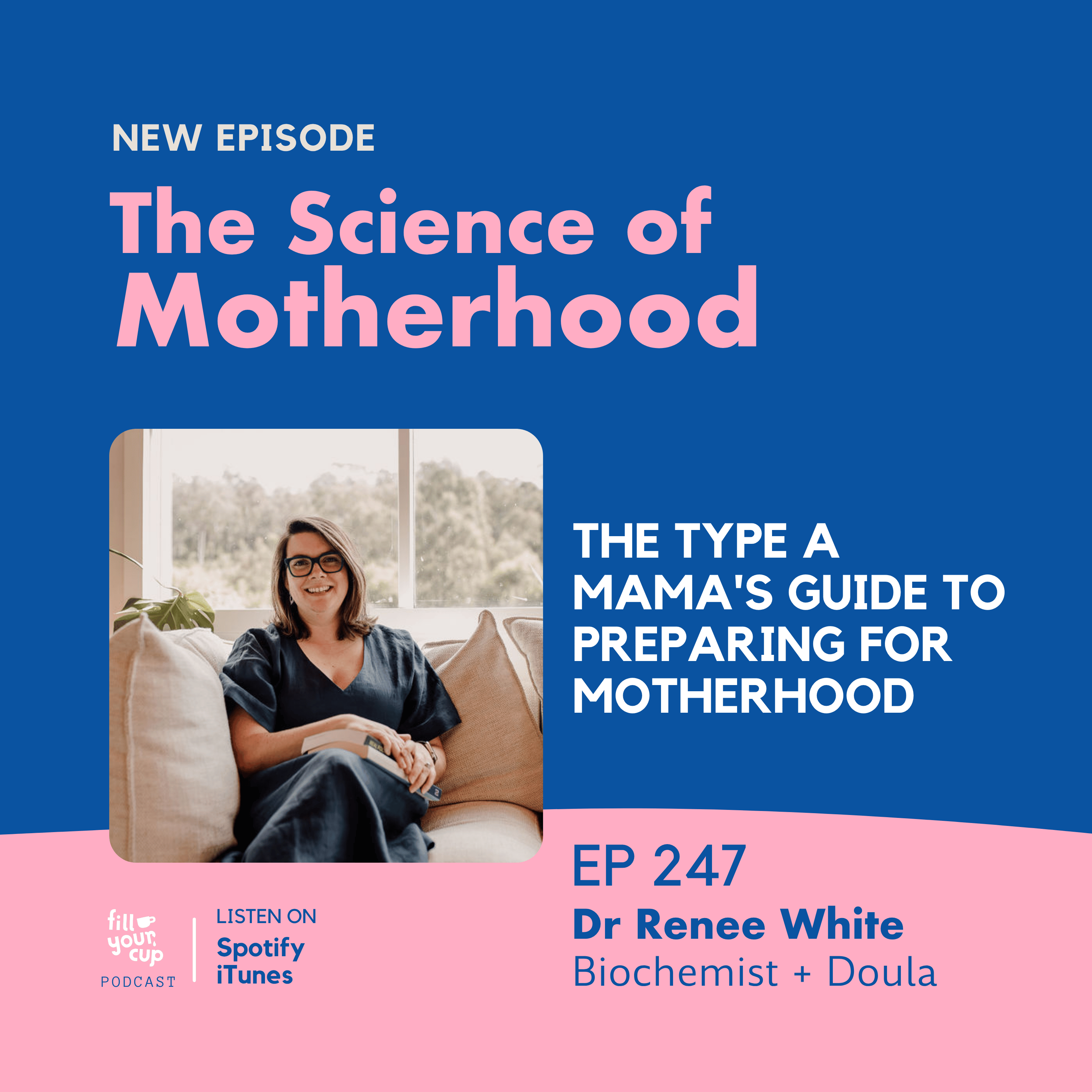 Ep 247. The Type A Mama's Guide to Preparing for Motherhood 06.10.2026 22minIf you're a Type A personality, you've probably mapped out almost everything, from the pram research to the hospital bag spreadsheet. And if a quiet voice is asking what happens when you can't control it all, that voice belongs to someone who cares deeply and wants to get this right.Your planning brain is one of your greatest strengths as a mama. It needs a slightly different job description once baby arrives, and the research shows where to point it.In this episode of The Science of Motherhood, Dr Renee White unpacks how to prepare for motherhood as a Type A personality, from the surprising origin of the label to what the research says about perfectionism, your remodelled brain and your baby's body clock. She also shares her two-part framework, control the controllables and embrace the spontaneity, along with a confession about a spreadsheet and an algorithm from her first baby.You'll Hear About:Where the Type A label actually came fromWhy perfectionism makes motherhood feel harderHow your brain is remodelled for motherhoodWhy babies run on a different clockHow a two-part framework balances control and spontaneityYour planning strength has a wonderful home in motherhood, from a stocked freezer to a support team waiting in your corner. With that in place, you get to give yourself permission to let go of the rest and enjoy meeting your baby, one thirsty, hungry or sleepy day at a time. And if the need for control starts tipping into constant worry, reaching out early is one of the most Type A things you can do.If you know a Type A mama who has a spreadsheet for the hospital bag, send it her way. And subscribe so you don't miss an episode of The Science of Motherhood.Resources & LinksConnect with Renee on Instagram: @fillyourcup_Connect with Renee on LinkedIn: Renee WhiteLearn more about Dr Renee White and explore Fill Your Cup Doula servicesTreat yourself with our Chocolate + Goji lactation cookiesHear Dr Elseline Hoekzema explain your changing brain in Ep 237. Pregnancy Rewires Your Brain. Here's What You GainSupport for new and expecting parents from PANDA on 1300 726 306, Monday to Saturday, or visit panda.org.auThis episode is proudly supported by Fill Your Cup, Australia's first doula village, with doulas available across Melbourne, Geelong, Sydney, Newcastle, Brisbane, Gold Coast, Hobart and Perth.Disclaimer: The information on this podcast presented by Fill Your Cup is not a substitute for independent professional advice. Nothing contained in this episode is intended to be used as medical advice and it is not intended to be used to diagnose, treat, cure or prevent any disease, nor should it be used for therapeutic purposes or as a substitute for your own health professional's advice.
 -
 Ep 246. What Every Dog Owner Needs to Do Before Baby Comes Home 29.09.2026 44minYou've packed the hospital bag, set up the nursery, and read all the baby books. But there's one family member who's easy to forget until your newborn actually comes home, and that's your dog. The shift from being the centre of your world to sharing space with a brand new tiny human can be a lot for them to process too.If you've caught yourself wondering how your dog is going to cope, that instinct is worth listening to. Getting it right comes down to preparation you can start well before your due date, and a few small shifts in how you read your dog's cues.In this episode of The Science of Motherhood, Dr Renee White chats with Seb Lemaire, founder and head trainer at Canines on Cue Dog Training on the Gold Coast, to unpack how to prepare your dog for a new baby. Seb draws on his own experience as a dad to a toddler and years of dog training to walk through what those first weeks look like from your dog's point of view.You'll Hear About:How to read your dog's subtle stress signalsWhy your dog's breed says less than you thinkWhat to prepare before your baby comes homeHow to handle that first at-home introductionWhy crate training helps your dog switch offA little preparation now means your dog and your baby get the chance to feel safe together from day one. You don't have to navigate this alone, and with the right groundwork, your home can hold space for both of them.If you know a dog owner counting down to their due date, send this one their way. And subscribe so you don't miss an episode of The Science of Motherhood.Resources & LinksConnect with Dr Renee WhiteConnect with Renee on Instagram: @fillyourcup_Connect with Renee on LinkedIn: Renee WhiteLearn more about Dr Renee White and explore Fill Your Cup Doula servicesTreat yourself with our Chocolate + Goji lactation cookiesConnect with Seb LemaireLearn more about Seb and explore: Canines on CueConnect with Seb on Instagram: @caninesoncueLearn more about Seb’s course: Safe Start — How to Introduce Your Dog to Your Newborn SafelyThis episode is proudly supported by Fill Your Cup, Australia's first doula village, with doulas available across Melbourne, Geelong, Sydney, Newcastle, Brisbane, Gold Coast, Hobart and Perth.Disclaimer: The information on this podcast presented by Fill Your Cup is not a substitute for independent professional advice. Nothing contained in this episode is intended to be used as medical advice and it is not intended to be used to diagnose, treat, cure or prevent any disease, nor should it be used for therapeutic purposes or as a substitute for your own health professional's advice.
 -
 Ep 245. Preparing Your Toddler Before Baby Comes Home 22.09.2026 17minSomewhere between announcing baby number two or three and the baby actually arriving, there's a question nearly every mother asks, how do you stop your toddler from resenting the baby. Underneath it sits a quieter fear, that loving a second child might mean taking something away from the first.Decades of research on sibling adjustment paint a far gentler picture than we once assumed. This transition responds beautifully to preparation, the same way baby's arrival does.In this episode of The Science of Motherhood, Dr Renee White unpacks how to prepare your toddler for a new sibling, from the first conversation to the everyday job that makes the shift feel like theirs. She covers the play-based science behind emotional regulation, a ritual for protecting your quiet moments, and two ways to ask for support.You'll Hear About:Why toddler sibling transitions rarely become a crisisWhen to start talking about the new babyHow giving your toddler a real job helpsWhy play does more work than you'd thinkTwo ways to ask your village for helpYour toddler can move through this gently, with the groundwork you lay now. Every small job, every basket, every hand from your village adds up to a softer landing for both your children.Share this episode with a friend expecting baby number two or three, she'll want this before the due date. And subscribe so you don't miss an episode of The Science of Motherhood.Resources & LinksConnect with Dr Renee White📲 Connect with Renee on Instagram: @fillyourcup_🌐 Learn more about Dr Renee White and explore Fill Your Cup Doula services🍪 Treat yourself with our Chocolate + Goji lactation cookies🎧 Catch up on the power of play with Tina Payne Bryson in Episode 236A few books worth having on hand before baby arrives:Waiting for Baby by Rachel FullerI'm a Big Sister / I'm a Big Brother by Joanna ColeI'm Going to Be a Big Sister / Big Brother by Brenda BercoviciThe New Baby by Mercer MayerPeter's Chair by Ezra Jack KeatsThis episode is proudly supported by Fill Your Cup, Australia's first doula village, with doulas available across Melbourne, Geelong, Sydney, Newcastle, Brisbane, Gold Coast, Hobart and Perth.Disclaimer: The information on this podcast presented by Fill Your Cup is not a substitute for independent professional advice. Nothing contained in this episode is intended to be used as medical advice and it is not intended to be used to diagnose, treat, cure or prevent any disease, nor should it be used for therapeutic purposes or as a substitute for your own health professional's advice.
 -
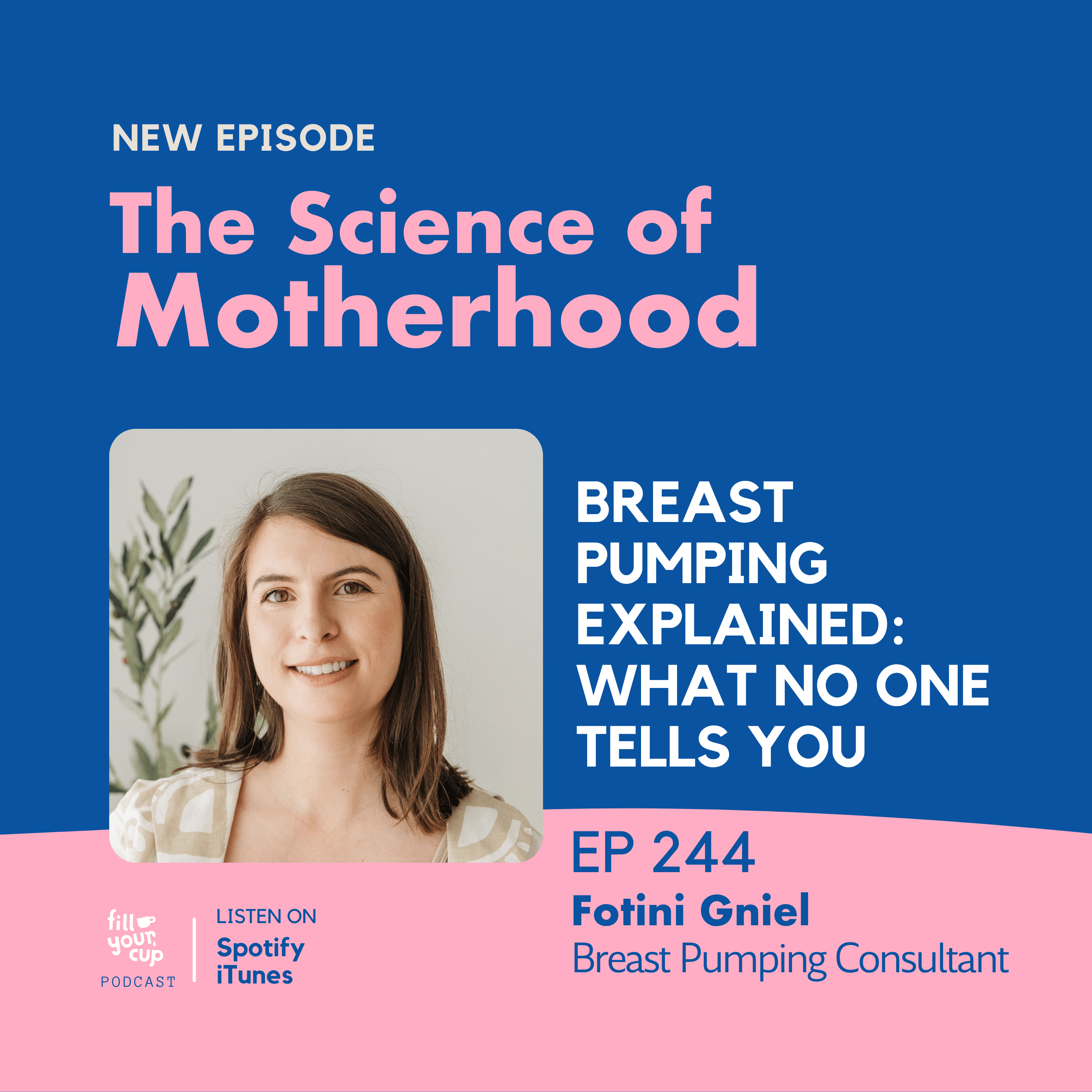 Ep 244. Breast Pumping Explained: What No One Tells You 15.09.2026 1h 4minYou're sent home with a breast pump after birth and left to work out the rest of your pumping and breastfeeding journey on your own. No one mentions flange size, settings or the fact you might not need to sterilise a single part.Pumping comes with more variables than most mums are ever told about, and working them out alone in the middle of exhausted, hormonal days makes everything harder than it needs to be. Understanding what actually matters can take a lot of that pressure off.In this episode of The Science of Motherhood, Dr Renee White chats with Fotini Gniel, founder of Nurturing Flow and breast pump and flange fitting specialist, to work through everything mums are rarely taught about pumping, from flange sizing and settings to choosing the right pump and caring for exclusive pumpers. Together they bust some of the most common myths mums are told in hospital and beyond.You'll Hear AboutWhy flange sizing changes your whole pumping experienceWhat pump settings actually support comfortWhy sterilising pump parts isn't strictly neededHow to choose the right pump for youWhat exclusive pumpers need and rarely getWith the right information, pumping can feel manageable, straightforward and genuinely doable.If this conversation changed how you think about pumping, share it with a mama figuring hers out alone. Subscribe to The Science of Motherhood to keep these conversations coming to your feed.Resources & LinksConnect with Dr Renee White 📲 Connect with Renee on Instagram: @fillyourcup_ 📲 Connect with Renee on LinkedIn: Renee White 🌐 Learn more about Dr Renee White and explore Fill Your Cup Doula services 🍪 Treat yourself with our Chocolate + Goji lactation cookiesConnect with Fotini Gniel 📲 Connect with Fotini on Instagram: @nurturing.flow 🌐 Learn more about Fotini’s work: www.nurturingflow.com.auThis episode is proudly supported by Fill Your Cup, Australia's first doula village, with doulas available across Melbourne, Geelong, Sydney, Newcastle, Brisbane, Gold Coast, Hobart and Perth.Disclaimer: The information on this podcast presented by Fill Your Cup is not a substitute for independent professional advice. Nothing contained in this episode is intended to be used as medical advice and it is not intended to be used to diagnose, treat, cure or prevent any disease, nor should it be used for therapeutic purposes or as a substitute for your own health professional's advice.
 -
 Ep 243. What Does a Birth Doula Actually Do? 08.09.2026 49minYou might wonder what a doula actually does, or whether having one is worth it when you've already got a partner and a midwife by your side. There's a lot of noise out there about what the role really involves, and most of it doesn't reflect what a doula is actually there to do. A doula's real job is to be a steady, judgement-free presence, there for exactly what you need and out of the way for the rest.There's a lot to untangle about where a doula fits, what they actually do in the room, and how that support changes depending on how your birth unfolds.In this episode of The Science of Motherhood, Dr Renee White chats with Amanda Down, Fill Your Cup's longest-standing birth doula, to unpack what doulas actually do and how they fit alongside midwives and partners. Amanda draws on years of supporting mamas through pregnancy, birth and postpartum to explain how doulas build trust, advocate in the birth space and adapt to whatever a family needs on the day.This is Part 6, the final instalment, of our Pregnancy and Birth series.You'll Hear About:What a birth doula does day to dayHow doulas differ from midwives in your careWhy prenatal sessions focus on trust firstHow doulas support partners through labourWhat the BRAIN tool helps you decideWherever you land on the spectrum of support you want, you get to decide what your birth looks like and who stands beside you for it. Amanda's approach is a reminder that you don't need permission to trust yourself, only the right people in your corner.Share this with a friend who's weighing up whether a doula is right for her birth team. And subscribe so you don't miss an episode of The Science of Motherhood.Resources & LinksConnect with Dr Renee White📲 Connect with Renee on Instagram: @fillyourcup_📲 Connect with Renee on LinkedIn: Renee White🌐 Learn more about Dr Renee White and explore Fill Your Cup Doula services🍪 Treat yourself with our Chocolate + Goji lactation cookiesThis episode is proudly supported by Fill Your Cup, Australia's first doula village, with doulas available across Melbourne, Geelong, Sydney, Newcastle, Brisbane, Gold Coast, Hobart and Perth.Disclaimer: The information on this podcast presented by Fill Your Cup is not a substitute for independent professional advice. Nothing contained in this episode is intended to be used as medical advice and it is not intended to be used to diagnose, treat, cure or prevent any disease, nor should it be used for therapeutic purposes or as a substitute for your own health professional's advice.
 -
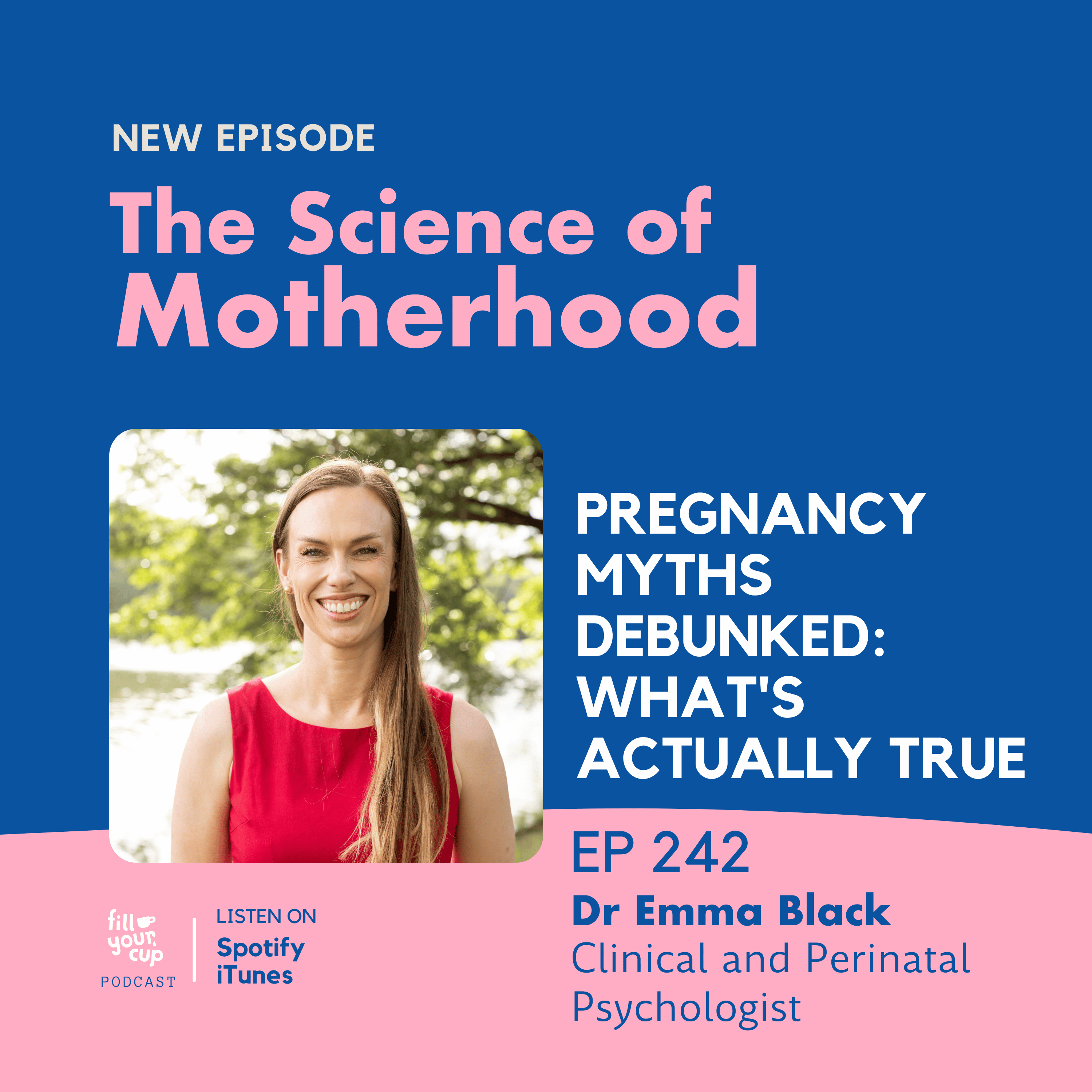 Ep 242. Pregnancy Myths Debunked: What's Actually True 01.09.2026 53minSomeone in your life has probably already told you what pregnancy is "supposed" to feel like, whether you asked or not. When what you're going through doesn't line up with that, it's easy to wonder what's wrong with you instead of questioning where that advice even came from.These are the myths mums are told to accept without question, pulled apart to show what happens to your confidence when you stop challenging them.In this episode of The Science of Motherhood, Dr Renee White sits down with Dr Emma Black, Clinical and Perinatal Psychologist, to bust some of pregnancy's most persistent myths. Together they unpack where these beliefs come from, why they stick around for generations, and how mums can start trusting their own judgement instead.This is part 5 of 6 in our Pregnancy and Birth series.You'll Hear AboutWhy the nesting instinct myth doesn't hold upWhat the 12 week rule was really protectingHow to respond when unsolicited advice keeps comingWhy gender disappointment is often grief in disguiseHow to build confidence to do pregnancy differentlyYou're allowed to question the rules you were handed and keep only the ones that actually serve you. Trust builds when you start choosing what fits your family instead of what's expected of you.If this conversation helped you see one of these myths differently, share it with a mama who needs permission to let it go too. Subscribe to The Science of Motherhood so new episodes land in your feed each week.Resources & LinksConnect with Dr Renee White 📲 Connect with Renee on Instagram: @fillyourcup_ 📲 Connect with Renee on LinkedIn: Renee White 🌐 Learn more about Dr Renee White and explore Fill Your Cup Doula services 🍪 Treat yourself with our Chocolate + Goji lactation cookiesConnect with Dr Emma Black Learn more about Emma and her work: 🌐 motherhoodmyths.com.au 🌐 townsvillepsychologist.com.au 📲 Follow Emma on instagram: @emmablackpsych 📲 Follow Emma on Facebook: emmablackpsych 📖 The Pregnancy Myths Guide now available in bookstores or online✨ This episode is proudly supported by Fill Your Cup, Australia's first doula village, with doulas available across Melbourne, Geelong, Sydney, Central Coast, Brisbane, Gold Coast, Hobart and Perth.Disclaimer: The information on this podcast presented by Fill Your Cup is not a substitute for independent professional advice. Nothing contained in this episode is intended to be used as medical advice and it is not intended to be used to diagnose, treat, cure or prevent any disease, nor should it be used for therapeutic purposes or as a substitute for your own health professional's advice.
 -
 Ep 241. Birth Trauma Explained: Signs, Causes and Healing 25.08.2026 1h 8minMaybe your birth went exactly how everyone told you it should, and you still can't shake the way it made you feel. Maybe it didn't go anywhere near the plan, and somehow you came out the other side feeling strong. Whatever your birth looked like on paper, if it left something behind that you're still carrying, that's worth taking seriously.This is for you if you've never quite known what to call what happened to you. It's for you if you're getting ready to give birth and want to understand what actually helps when things don't go to plan.In this episode of The Science of Motherhood, Dr Renee White chats with Claire DiCarlo, perinatal counsellor and founder of Rad Parents, to get honest about what birth trauma really is and why it's so often missed. Claire brings both her clinical experience supporting mums through birth trauma and her own birth story, which didn't go to plan, to explore why the people around you matter more than the outcome, and what real support looks like once it's over.This is part four of the six-part Pregnancy and Birth series.You'll Hear About:What birth trauma actually meansWhat actually makes a birth feel unsafeWhy women blame themselves for someone else's actionsWhen birth debriefing actually helpsHow to protect yourself before you give birthThere's no timeline for making sense of your birth, and no version of your story that's too small to matter. However long it takes you to get there, you deserve the space to talk about it.Share this with a mum who's never had the words for what her birth left behind. And subscribe so you don't miss an episode of The Science of Motherhood.Resources & LinksConnect with Dr Renee White 📲 Connect with Renee on Instagram: @fillyourcup_ 📲 Connect with Renee on LinkedIn: Renee White 🌐 Learn more about Dr Renee White and explore Fill Your Cup Doula services 🍪 Treat yourself with our Chocolate + Goji lactation cookiesConnect with Claire DiCarlo 🌐 Learn more about Claire’s work with Rad Parents: www.radparents.com.au 🌐 Learn more about Claire’s work with Beyond Birth: www.beyondbirthcourse.com 📲 Connect with Claire on Instagram: @clairedicarlo_radparents✨ This episode is proudly supported by Fill Your Cup, Australia's first doula village, with doulas available across Melbourne, Geelong, Sydney, Central Coast, Brisbane, Gold Coast, Hobart and Perth.Disclaimer: The information on this podcast presented by Fill Your Cup is not a substitute for independent professional advice. Nothing contained in this episode is intended to be used as medical advice and it is not intended to be used to diagnose, treat, cure or prevent any disease, nor should it be used for therapeutic purposes or as a substitute for your own health professional's advice.
 -
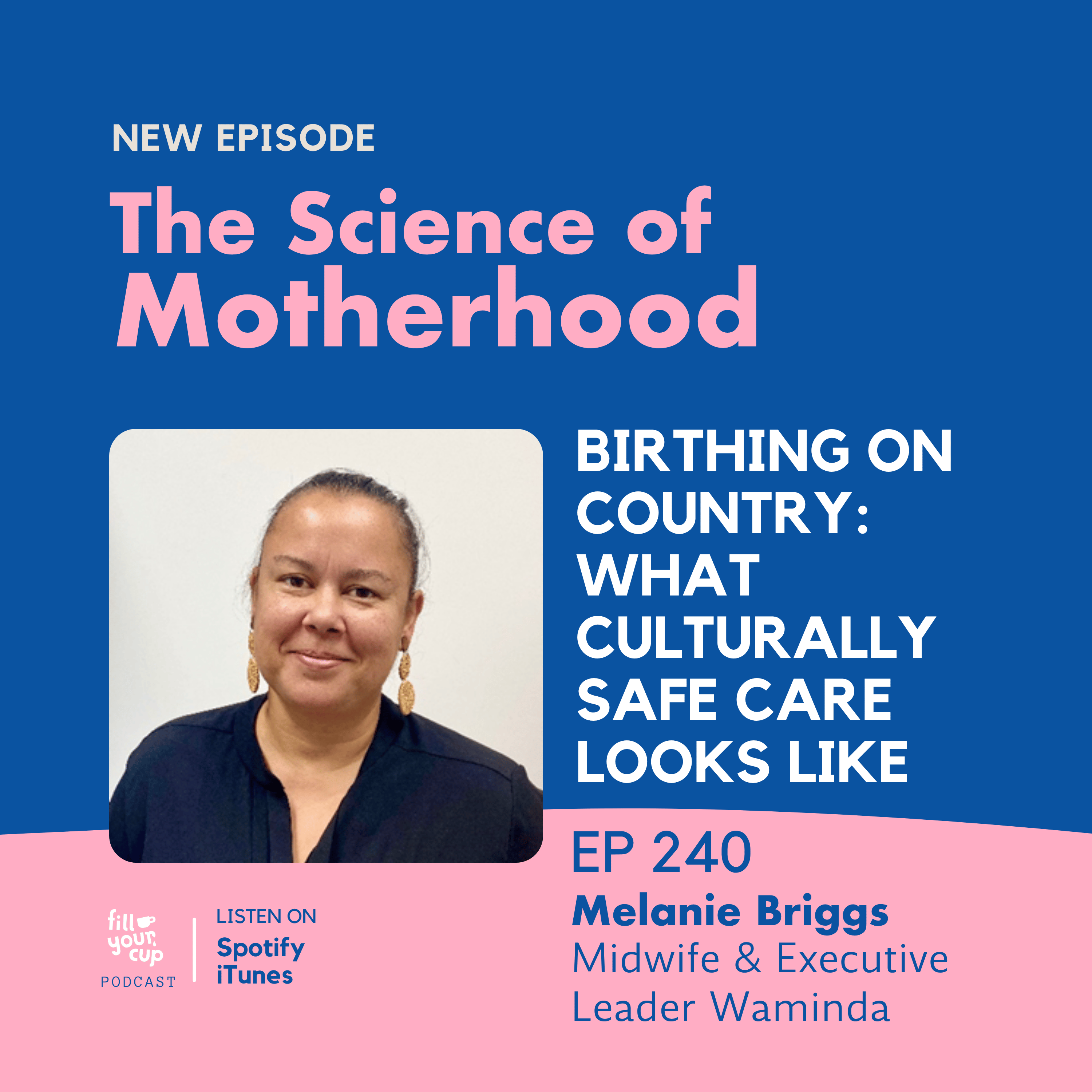 Ep 240. Birthing on Country: What Culturally Safe Care Looks Like 18.08.2026 40minFor generations, birth belonged to community, culture and country. That belonging is being reclaimed inside hospital rooms across Australia today, one birth at a time.That's the belief driving birthing on country, a way of caring for mothers built on trust, culture and community.In this episode of The Science of Motherhood, Dr Renee White sits down with Melanie Briggs, a proud Dharawal and Gumbaynggirr woman and endorsed midwife who manages the Birthing on Country program at Waminda, to explore what birthing on country truly means. Together they unpack the model's remarkable outcomes, the systemic barriers First Nations families still face, and the personal calling that led Melanie to this work.This is part three of six in our Pregnancy and Birth series.You'll Hear AboutWhat birthing on country truly meansHow Waminda's model transformed birth outcomesWhy continuity of care changes outcomesWhat racism still looks like in maternity careHow Melanie found her purpose in this workBirthing on country is a powerful reminder that culturally safe care is every mother's birth right. When community leads the way, mothers and babies thrive.Share this episode with a mother who deserves to know her birth rights matter. Subscribe to The Science of Motherhood for more conversations that put evidence and community at the heart of birth.Resources & Links📲 Connect with Renee on Instagram: @fillyourcup_📲 Connect with Renee on LinkedIn: Renee White🌐 Learn more about Dr Renee White and explore Fill Your Cup Doula services🍪 Treat yourself with our Chocolate + Goji lactation cookiesConnect with Melanie Briggs📲 Instagram: @birthingoncountry_waminda📘 Facebook: Waminda - Birthing on Country🌐 Website: waminda.org.au/maternity/birthing-on-countryThis episode is proudly supported by Fill Your Cup, Australia's first doula village, with doulas available across Melbourne, Geelong, Sydney, Newcastle, Brisbane, Gold Coast, Hobart and Perth.Disclaimer: The information on this podcast presented by Fill Your Cup is not a substitute for independent professional advice. Nothing contained in this episode is intended to be used as medical advice and it is not intended to be used to diagnose, treat, cure or prevent any disease, nor should it be used for therapeutic purposes or as a substitute for your own health professional's advice.
 -
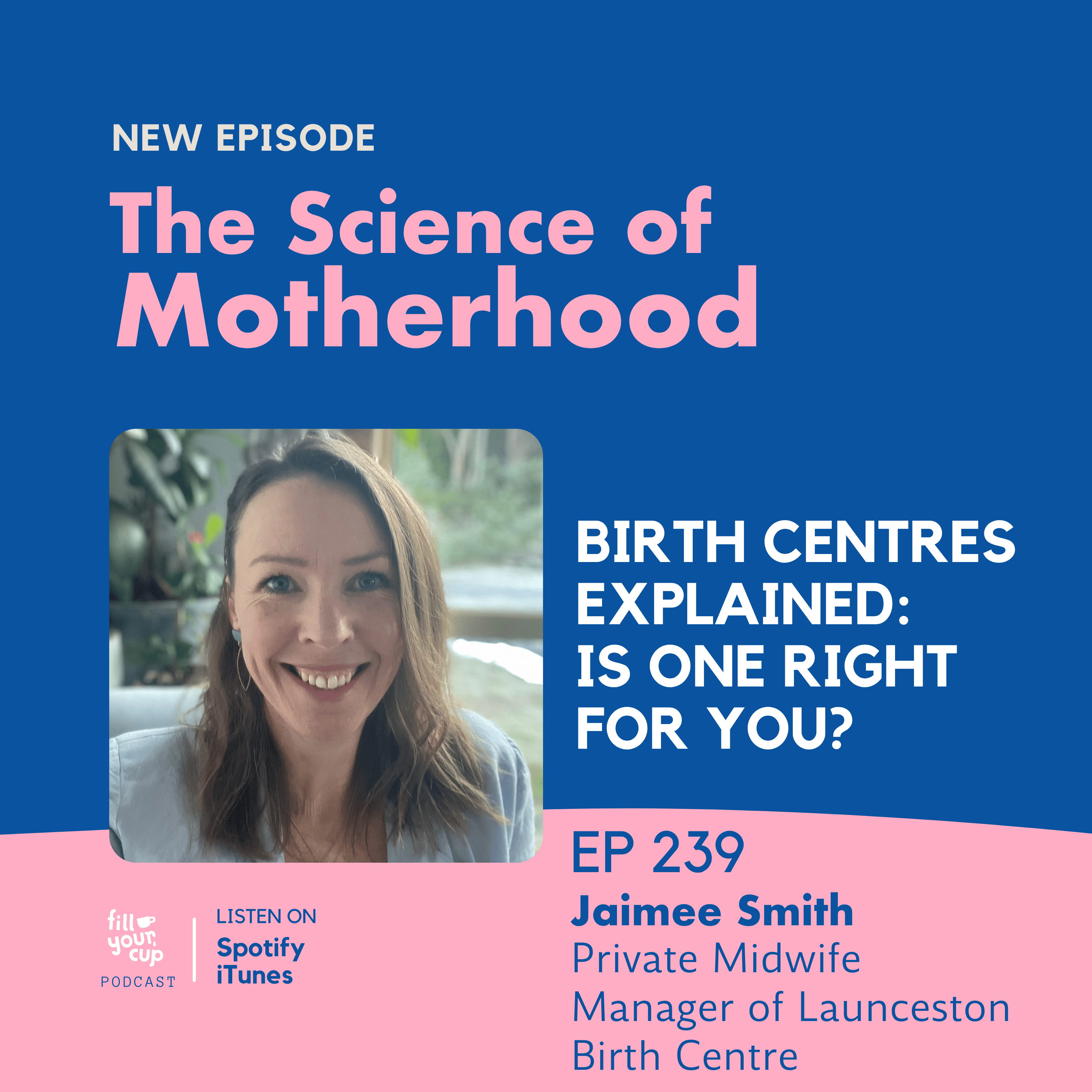 Ep 239. Birth Centres Explained: Is One Right for You? 11.08.2026 52minMost mamas picture birth happening in a hospital room, because that's the only version most of us have ever seen. There's another path many don't even know exists.Hospital can feel like the only option on the table, but there's a wider spectrum of care available than most mums realise.In this episode of The Science of Motherhood, Dr Renee White sits down with Jaimee Smith, endorsed private midwife and manager of the Launceston Birth Centre. Jaimee shares how relationship based care shapes calmer births and why continuity with the same midwife changes the experience for mums.This is part two of our six part Pregnancy and Birth series.You'll hear aboutWhy continuity of carer changes birth outcomesWhat actually happens inside a birth centreHow midwives support birth after caesareanWhat private midwifery costs across AustraliaWhy home birth differs from free birthUnderstanding the full spectrum of care available means you get to choose what feels safest and most supported for your family.Share this episode with a friend who's exploring her birth options beyond the hospital doors. Subscribe to The Science of Motherhood so you never miss an episode.Resources & Links📲 Connect with Renee on Instagram: @fillyourcup_🌐 Learn more about Dr Renee White and explore Fill Your Cup Doula services🍪 Treat yourself with our Chocolate + Goji lactation cookiesConnect with Jamiee:Website: themidwivesmidwife.comInstagram: @themidwivesmidwife_Facebook: The Midwives’ MidwifeLaunceston Birth CentreThis episode is proudly supported by Fill Your Cup, Australia's first doula village, with doulas available across Melbourne, Geelong, Sydney, Newcastle, Brisbane, Gold Coast, Hobart and Perth.Disclaimer: The information on this podcast presented by Fill Your Cup is not a substitute for independent professional advice. Nothing contained in this episode is intended to be used as medical advice and it is not intended to be used to diagnose, treat, cure or prevent any disease, nor should it be used for therapeutic purposes or as a substitute for your own health professional's advice.
 -
 Ep 238. What to Expect From Private Midwifery Care on Day One 04.08.2026 50minYou've probably never been told that a private midwife is even an option, not just the hospital care you default to. That gap in information can shape how safe, informed and supported you feel through pregnancy and birth.This conversation gives you a real look at what private midwifery care involves in practice, from early pregnancy through labour, and why having the same trusted person by your side changes the experience.This is part one of our six-part Pregnancy and Birth series.In this episode of The Science of Motherhood, Dr Renee White chats with Kelly Langford, endorsed private midwife and co-founder of MAMA Private Midwifery Practice, to explore what private midwifery care and home birth involve. Together they cover continuity of care, what non-negotiables matter for first-time mums, the physiology behind labour, and how to choose a care provider that feels right.You'll Hear AboutWhat private midwifery care actually includesWhy continuity of care changes birth outcomesHow physiological birth naturally worksWhat pain relief looks like without interventionHow to choose the right care providerYou don't need a radical plan to feel in control of your birth, only the right information and the right people around you. Understanding your options early gives you the confidence to make decisions that are truly your own.If this conversation shifted how you think about your birth options, share it with a friend who's navigating the same decisions. And subscribe so you don't miss an episode of The Science of Motherhood.Resources & Links📲 Connect with Renee on Instagram: @fillyourcup_ 🌐 Learn more about Dr Renee White and explore Fill Your Cup Doula services 🍪 Treat yourself with our Chocolate + Goji lactation cookies🌐 Learn more about MAMA and their midwifery services 📲 Follow Kelly and the team at MAMA on Instagram @mamabirth.auThis episode is proudly supported by Fill Your Cup, Australia's first doula village, with doulas available across Melbourne, Geelong, Sydney, Newcastle, Brisbane, Gold Coast, Hobart and Perth.DisclaimerThe information on this podcast presented by Fill Your Cup is not a substitute for independent professional advice. Nothing contained in this episode is intended to be used as medical advice and it is not intended to be used to diagnose, treat, cure or prevent any disease, nor should it be used for therapeutic purposes or as a substitute for your own health professional's advice.
 -
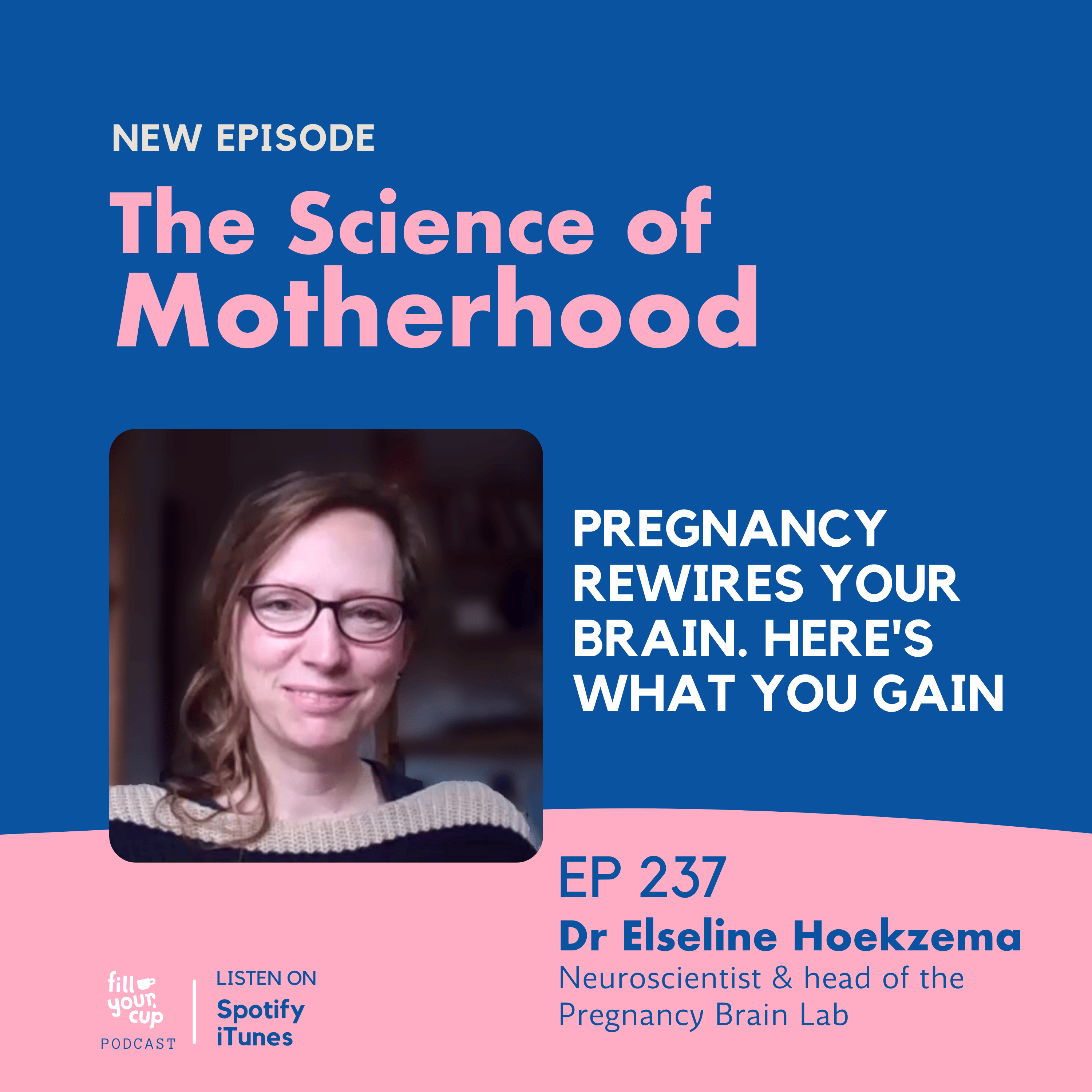 Ep 237. Pregnancy Rewires Your Brain. Here's What You Gain 28.07.2026 41minThat feeling of not quite recognising yourself after your baby arrives has a biological explanation. Pregnancy reshapes the structure of the brain, and those changes can still be measured years down the track. What you're experiencing is your brain doing exactly what it's built to do.If you've ever said out loud that you feel like a different person since becoming a mum, you're describing something researchers can now see on a scan. Understanding what's happening in there changes how the whole experience feels.In this episode of The Science of Motherhood, Dr Renee White sits down with Dr Elseline Hoekzema, neuroscientist and head of the Pregnancy Brain Lab at Amsterdam University Medical Center, to unpack what pregnancy does to the maternal brain. Together they explore the changes to brain tissue first mapped in 2017, what those changes mean for how you think and feel, and what shifts differently the second time around.Elseline also works through the questions that flooded in after Renee shared her research on Instagram, covering what might happen with a third or fourth baby, spacing between siblings, pregnancy loss, and what changes for fathers and adoptive parents. She's honest about how much this field still has left to uncover.You'll Hear About:What happens to grey matter during pregnancyWhy the changes peak in the third trimesterHow a second pregnancy rewires different brain networksWhat the research shows about perinatal depressionWhy your instincts are worth listening toYour brain has been quietly reorganising itself to meet the exact demands of the life you're now living. Knowing that gives you something solid to hold onto on the days you feel furthest from yourself.Share this with a friend who's been saying she doesn't feel like herself since having her baby. And subscribe so you don't miss an episode of The Science of Motherhood.Resources & Links📲 Follow Renee on Instagram: fillyourcup_🌐 Learn more about Dr Renee White and explore Fill Your Cup Doula services🍪 Treat yourself with our Chocolate + Goji lactation cookiesFollow Elseline's and the Pregnancy Brain Lab's work on Instagram: @pregnancybrainlabExplore the Hoekzema Lab research at pregnancyandthebrain.comStudies mentioned in this episode📄 Pregnancy leads to long-lasting changes in human brain structure. Nature Neuroscience, 2017. PMID 27991897📄 Do pregnancy-induced brain changes reverse? The brain of a mother six years after parturition. Brain Sciences, 2021. PMID 33525512📄 Mapping the effects of pregnancy on resting state brain activity, white matter microstructure, neural metabolite concentrations and grey matter architecture. Nature Communications, 2022. PMID 36414622📄 The effects of a second pregnancy on women's brain structure and function. Nature Communications, 2026. PMID 41714315This episode is proudly supported by Fill Your Cup, Australia's first doula village, with doulas available across Melbourne, Geelong, Sydney, Newcastle, Brisbane, Gold Coast, Hobart and Perth.Disclaimer: The information on this podcast presented by Fill Your Cup is not a substitute for independent professional advice. Nothing contained in this episode is intended to be used as medical advice and it is not intended to be used to diagnose, treat, cure or prevent any disease, nor should it be used for therapeutic purposes or as a substitute for your own health professional's advice.
 -
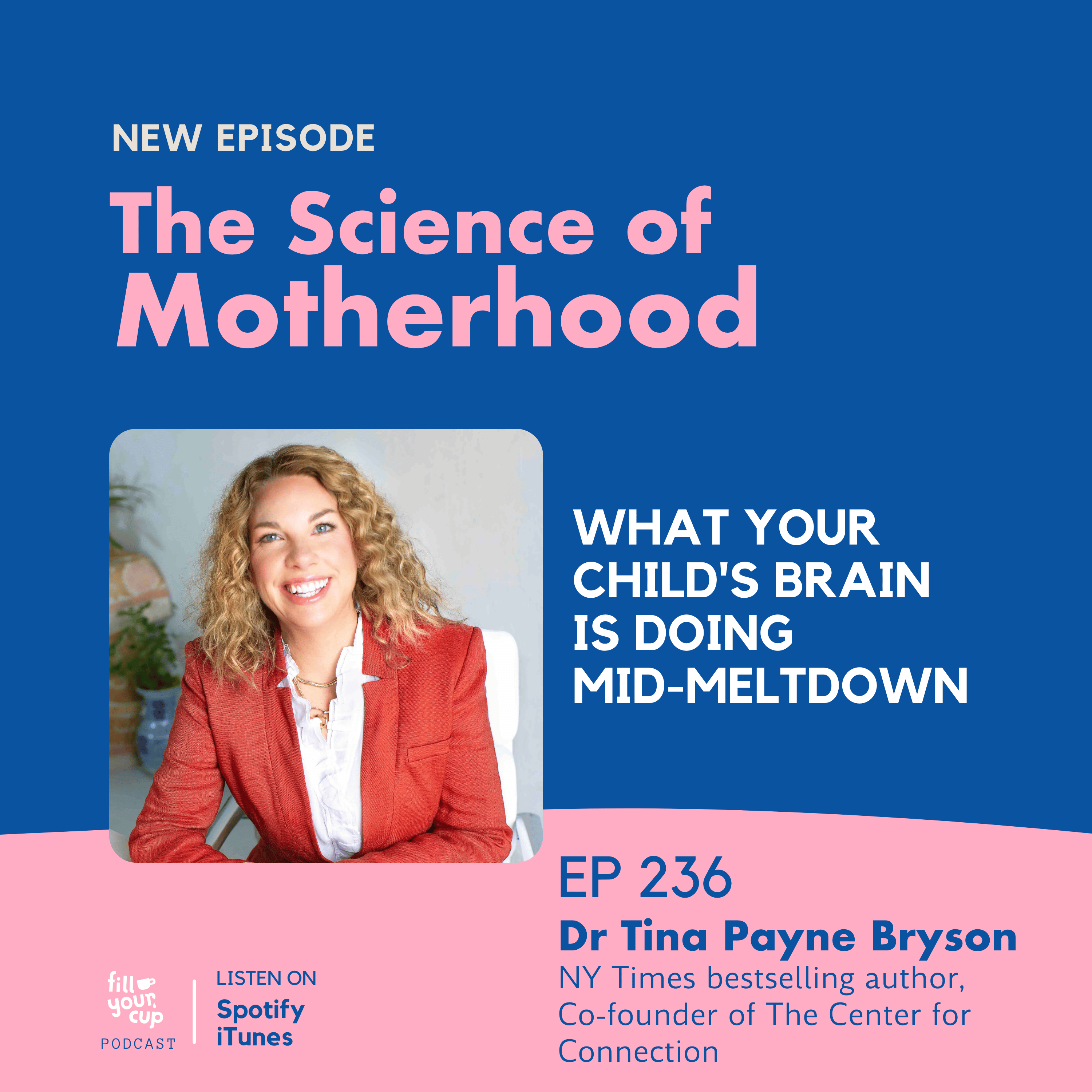 Ep 236. What Your Child's Brain Is Doing Mid-Meltdown 21.07.2026 1h 21minYour child is banging on the wall, sobbing, and won't let you near them. In that moment, staying calm isn't about having the right words, it's about understanding what's happening in their brain and yours.This conversation gets into what's happening in your child's brain during a meltdown, and how you can stay regulated enough to help them find their way back.In this episode of The Science of Motherhood, Dr Renee White sits down with Dr Tina Payne Bryson, New York Times bestselling author of The Whole-Brain Child and founder of The Center for Connection, to explore what's happening in a child's brain during a meltdown and how parents can respond in ways that build resilience instead of reactivity. They talk through practical, science-backed strategies for staying regulated as a parent, repairing after the hard moments, and why play might be the most underrated tool in your parenting kit.You'll Hear AboutWhy the upstairs and downstairs brain matterWhat to do when your child melts downHow to stay regulated during a meltdownWhy repair matters more than perfectionHow play builds resilience and connectionYou don't need to get every moment right to raise a regulated, resilient child. What matters is showing up, staying steady in the hard moments, and repairing when you get it wrong.If this conversation shifted how you think about your child's big feelings, share it with a friend who needs to hear it too. Subscribe to The Science of Motherhood so you never miss an episode.Resources & Links📲 Connect with Renee on Instagram: @fillyourcup_🌐 Learn more about Dr Renee White and explore Fill Your Cup Doula services🍪 Treat yourself with our Chocolate + Goji lactation cookiesGuest links:🌐 Website: tinabryson.com📩 Subscribe: tinabryson.com/subscribe📲 Instagram: instagram.com/tinapaynebryson📺 YouTube: youtube.com/channel/UCCXGwMEmoL_noUYgx8kpakw📘 Facebook: facebook.com/TinaPayneBrysonPhD🐦 X/Twitter: twitter.com/tinabryson🏢 The Center for Connection: thecenterforconnection.org🏢 Play Strong Institute: playstronginstitute.com🏢 CFC Santa Barbara: cfcsantabarbara.com🛍 Amazon shop (Tina's favourites): amazon.com/shop/tinapaynebryson📚 Books: The Bottom Line for Baby, The Whole-Brain Child, No-Drama Discipline, The Yes Brain, The Power of Showing Up, The Way of Play📱 HumanUp app: humanup.comThis episode is proudly supported by Fill Your Cup, Australia's first doula village, with doulas available across Melbourne, Geelong, Sydney, Newcastle, Brisbane, Gold Coast, Hobart and Perth.Disclaimer:The information on this podcast presented by Fill Your Cup is not a substitute for independent professional advice. Nothing contained in this episode is intended to be used as medical advice and it is not intended to be used to diagnose, treat, cure or prevent any disease, nor should it be used for therapeutic purposes or as a substitute for your own health professional's advice.
 -
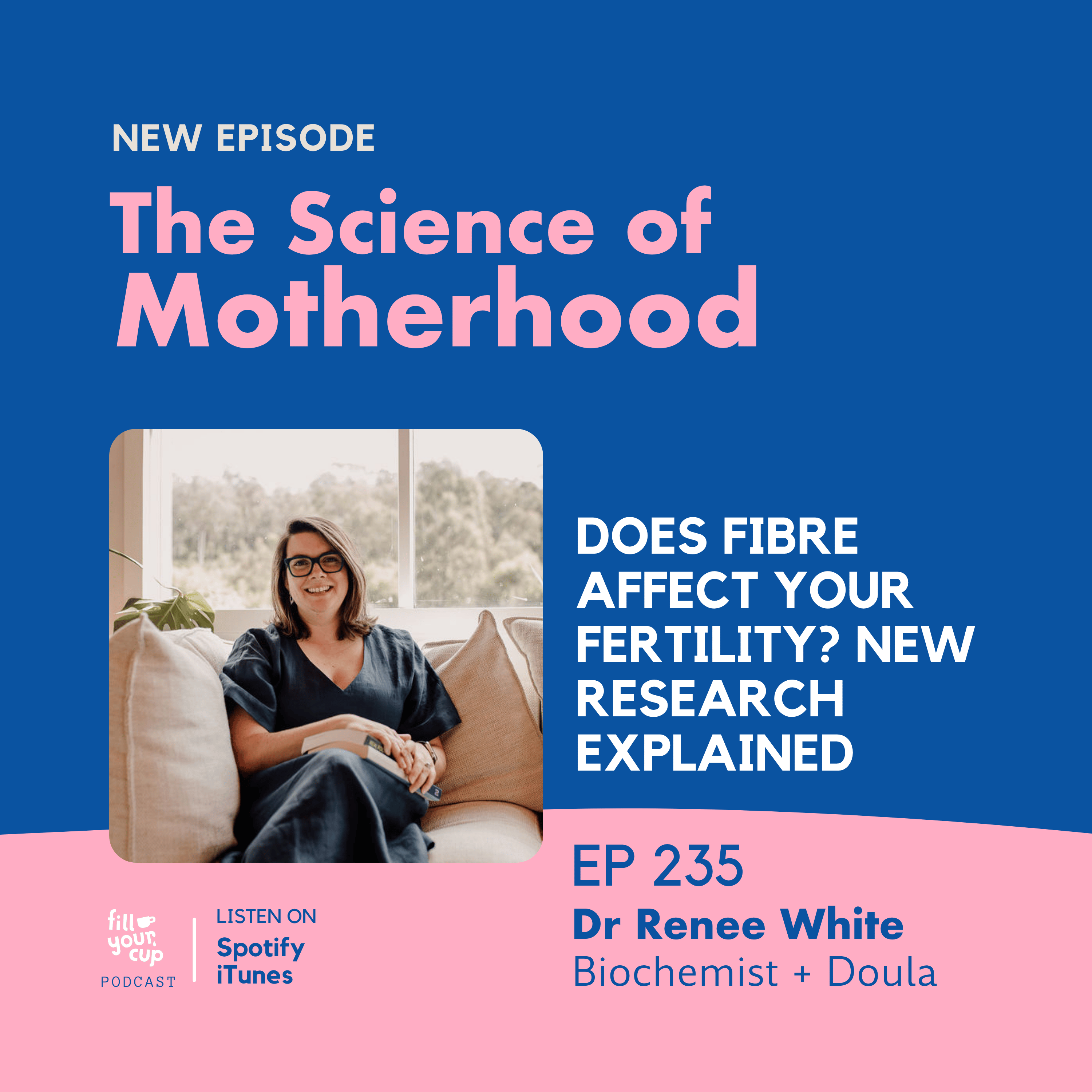 Ep 235. Does Fibre Affect Your Fertility? New Research Explained 14.07.2026 19minHave you ever seen a headline claiming a certain food can boost your fertility and rolled your eyes? You're not wrong to be sceptical, and most of what circulates online about diet and conception is wellness noise dressed up as science.This time, the science actually holds up. A new 2026 study traces a real, step by step mechanism from what's on your plate to whether an embryo implants.In this episode of The Science of Motherhood, Dr Renee White breaks down a new mouse study linking dietary fibre, gut bacteria and the uterine immune system. She walks through how the pathway works, where the research falls short, and what's reasonable to take from it if you're trying to conceive.You'll Hear About:Why mouse studies are used in fertility researchWhat the new 2026 fibre study foundHow gut bacteria influence uterine immune toleranceWhy this mechanism doesn't yet prove human benefitWhat foods support this specific fibre pathwayYou don't need to overhaul your diet to take this seriously. Paying attention to fibre quality, not only quantity, is a small, evidence-backed step available to you now. The mechanism is real, even if the guarantee isn't, and that still counts for something.If this episode helped you look at fertility diet advice differently, share it with a friend who's trying to conceive and wading through conflicting information. And subscribe so you don't miss an episode of The Science of Motherhood.Resources & Links📲 Connect with Renee on Instagram: @fillyourcup_🌐 Learn more about Dr Renee White and explore Fill Your Cup Doula services🍪 Treat yourself with our Chocolate + Goji lactation cookiesThis episode is proudly supported by Fill Your Cup, Australia's first doula village, with doulas available across Melbourne, Geelong, Sydney, Newcastle, Brisbane, Gold Coast, Hobart and Perth.Disclaimer: The information on this podcast presented by Fill Your Cup is not a substitute for independent professional advice. Nothing contained in this episode is intended to be used as medical advice and it is not intended to be used to diagnose, treat, cure or prevent any disease, nor should it be used for therapeutic purposes or as a substitute for your own health professional's advice.
 -
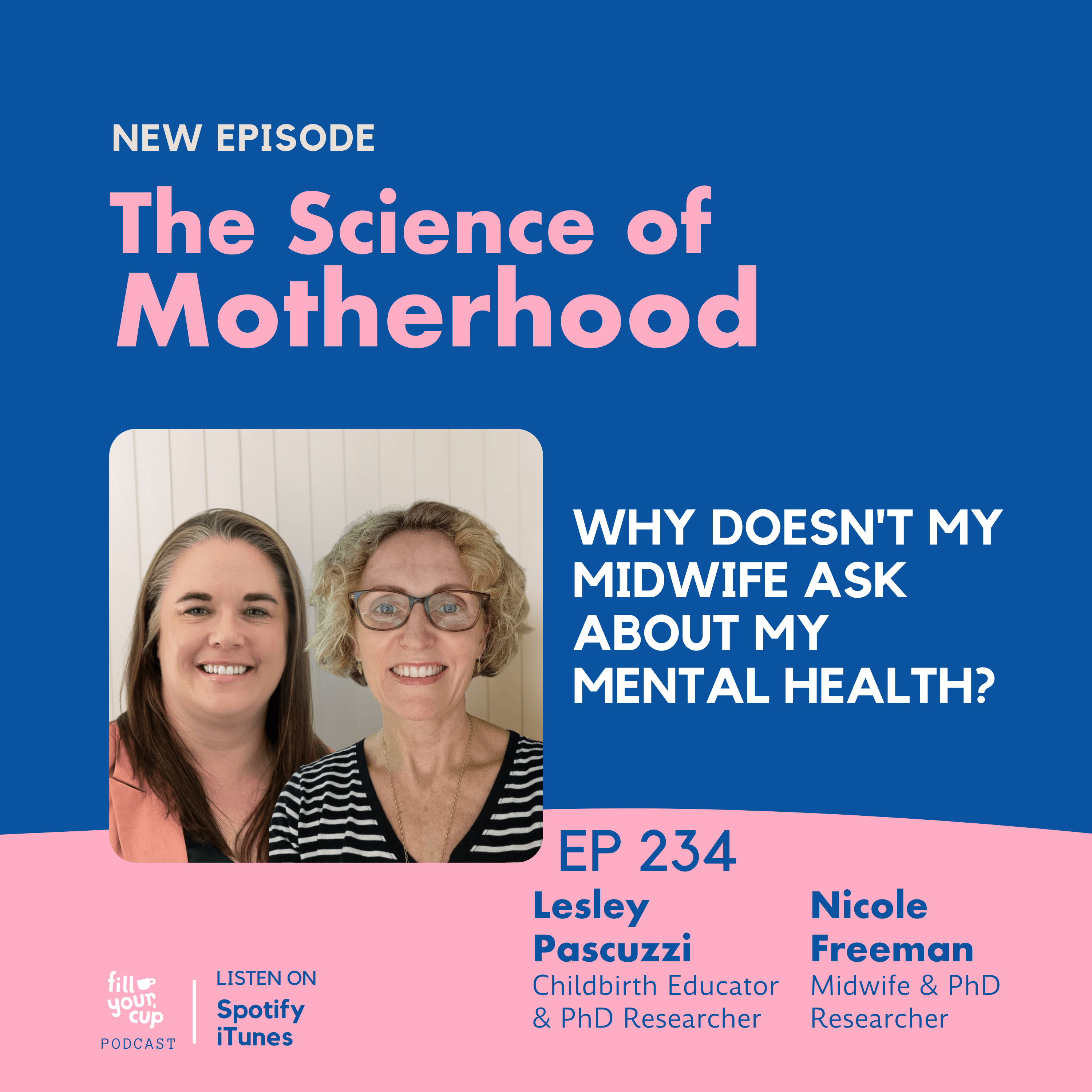 Ep 234. Why Doesn't My Midwife Ask About My Mental Health? 07.07.2026 1h 14minYou've sat through an antenatal appointment focused on blood pressure and bump measurements, wishing there'd been room to talk about how you were actually feeling. Midwives want that room too, working inside appointments measured in minutes. There's real momentum building to bring emotional wellbeing further into that time together.Two researchers went looking at exactly what that momentum looks like in practice, and how to act on it without asking midwives to find time they don't have.In this episode of The Science of Motherhood, Dr Renee White sits down with Lesley Pascuzzi, childbirth educator and perinatal mental health researcher, and her colleague Nicole Freeman, midwife and PhD researcher in early pregnancy care, to unpack what midwives told them about supporting mental health during pregnancy. Together they explore where the system falls short, and the pilot program already testing a different way forward.You'll Hear About:Why the current model centres illness over wellnessWhat midwives believe a well woman looks likeHow time pressure shapes mental health conversationsWhy continuity of care changes everythingWhat the new pilot program is testingKnowledge is the foundation of advocating for your own mental health, in pregnancy and beyond. The more you understand about your options, the more equipped you are to ask for exactly what you need.If you've ever left an appointment feeling rushed or unheard, send this to a friend who's navigating pregnancy right now. And subscribe so you don't miss an episode of The Science of Motherhood.Resources & Links📲 Follow Renee on Instagram: fillyourcup_🌐 Learn more about Dr Renee White and explore Fill Your Cup Doula services🍪 Treat yourself with our Chocolate + Goji lactation cookiesConnect with Lesley Pascuzzi on LinkedIn: Lesley PascuzziConnect with Nicole Freeman on LinkedIn: Nicole FreemanThis episode is proudly supported by Fill Your Cup, Australia's first doula village, with doulas available across Melbourne, Geelong, Sydney, Newcastle, Brisbane, Gold Coast, Hobart and Perth.Disclaimer: The information on this podcast presented by Fill Your Cup is not a substitute for independent professional advice. Nothing contained in this episode is intended to be used as medical advice and it is not intended to be used to diagnose, treat, cure or prevent any disease, nor should it be used for therapeutic purposes or as a substitute for your own health professional's advice.
 -
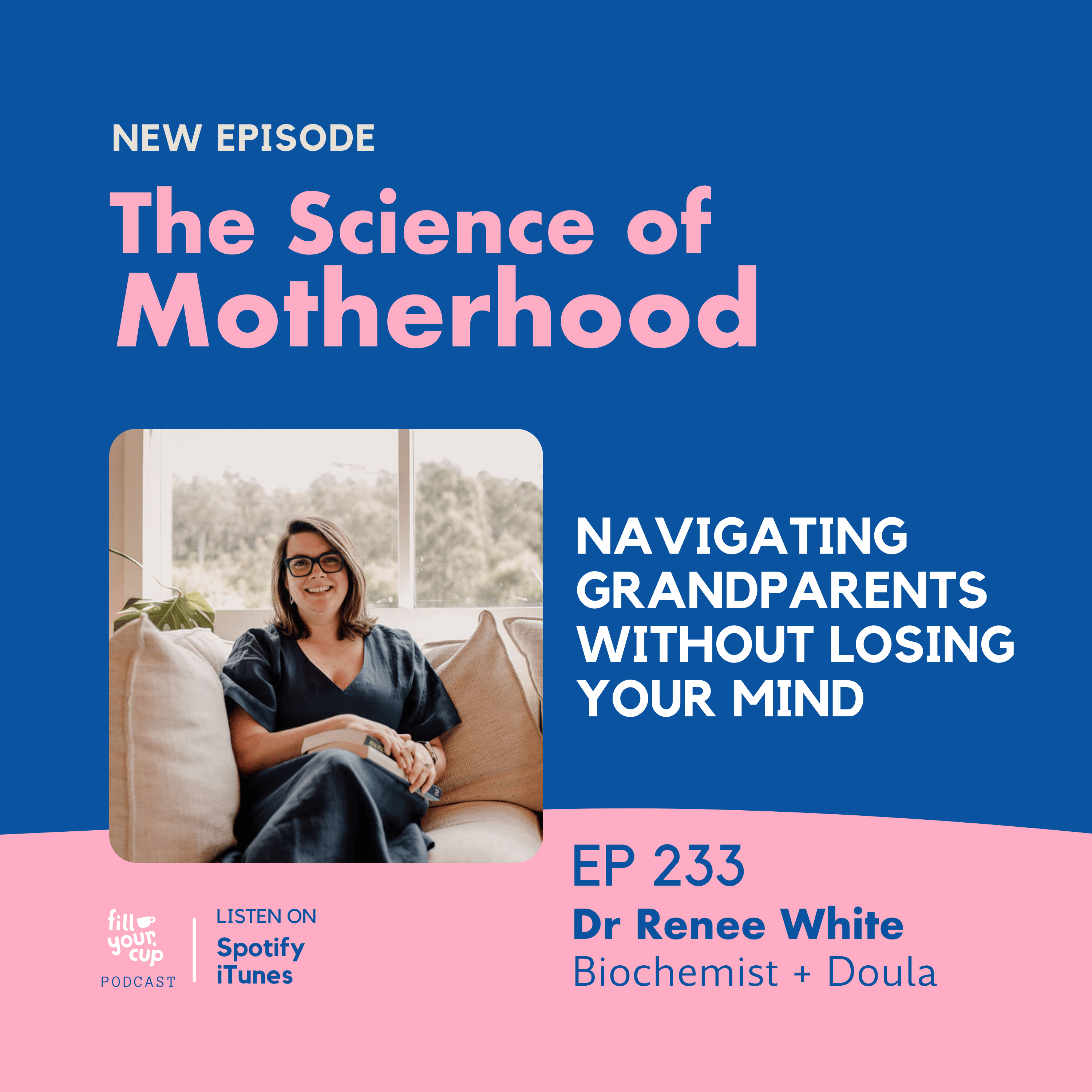 Ep 233. Navigating Grandparents Without Losing Your Mind 30.06.2026 26minYour parents or your in-laws are going to tell you they did things differently and you turned out fine, right in the middle of a conversation about sleep safety or feeding choices, and you can feel the eye roll building before they've even finished the sentence. Their love is real, and you don't have to brace for it each time they visit.In this episode of The Science of Motherhood, Dr Renee White unpacks what grandparents and in-laws genuinely need to know before the baby arrives, cutting through outdated advice to share what the current evidence actually supports, what's changed, and what's genuinely worth doing differently.You might be pregnant or newly postpartum and quietly dreading the moment a well-meaning relative tells you how it used to be done. If you're the grandparent listening in, most of those moments come down to a gap in information that's easy to close. Start the conversation early, and you give your village the chance to actually hold you up, the way you deserve.You'll Hear About:Why vaccinations protect newborns before six weeksHow updated safety guidance differs from old adviceWhat matrescence means for the woman you loveWhy cuddles are something to be earnedHow to offer help without the unsolicited opinionsYou don't have to manage anyone else's feelings while you're still learning your own baby. The right people in your life will meet you with curiosity instead of correction, and that's the kind of village worth building around yourself and your baby.Share this with the grandparent, aunty, or friend who wants to support you well, and with the parent who needs the words to start this conversation early. And subscribe so you don't miss an episode of The Science of Motherhood.Resources & Links📲 Follow Renee on Instagram: fillyourcup_🌐 Learn more about Dr Renee White and explore Fill Your Cup Doula services🍪 Treat yourself with our Chocolate + Goji lactation cookiesThis episode is proudly supported by Fill Your Cup, Australia's first doula village, with doulas available across Melbourne, Geelong, Sydney, Newcastle, Brisbane, Gold Coast, Hobart and Perth.Disclaimer: The information on this podcast presented by Fill Your Cup is not a substitute for independent professional advice. Nothing contained in this episode is intended to be used as medical advice and it is not intended to be used to diagnose, treat, cure or prevent any disease, nor should it be used for therapeutic purposes or as a substitute for your own health professional's advice.
 -
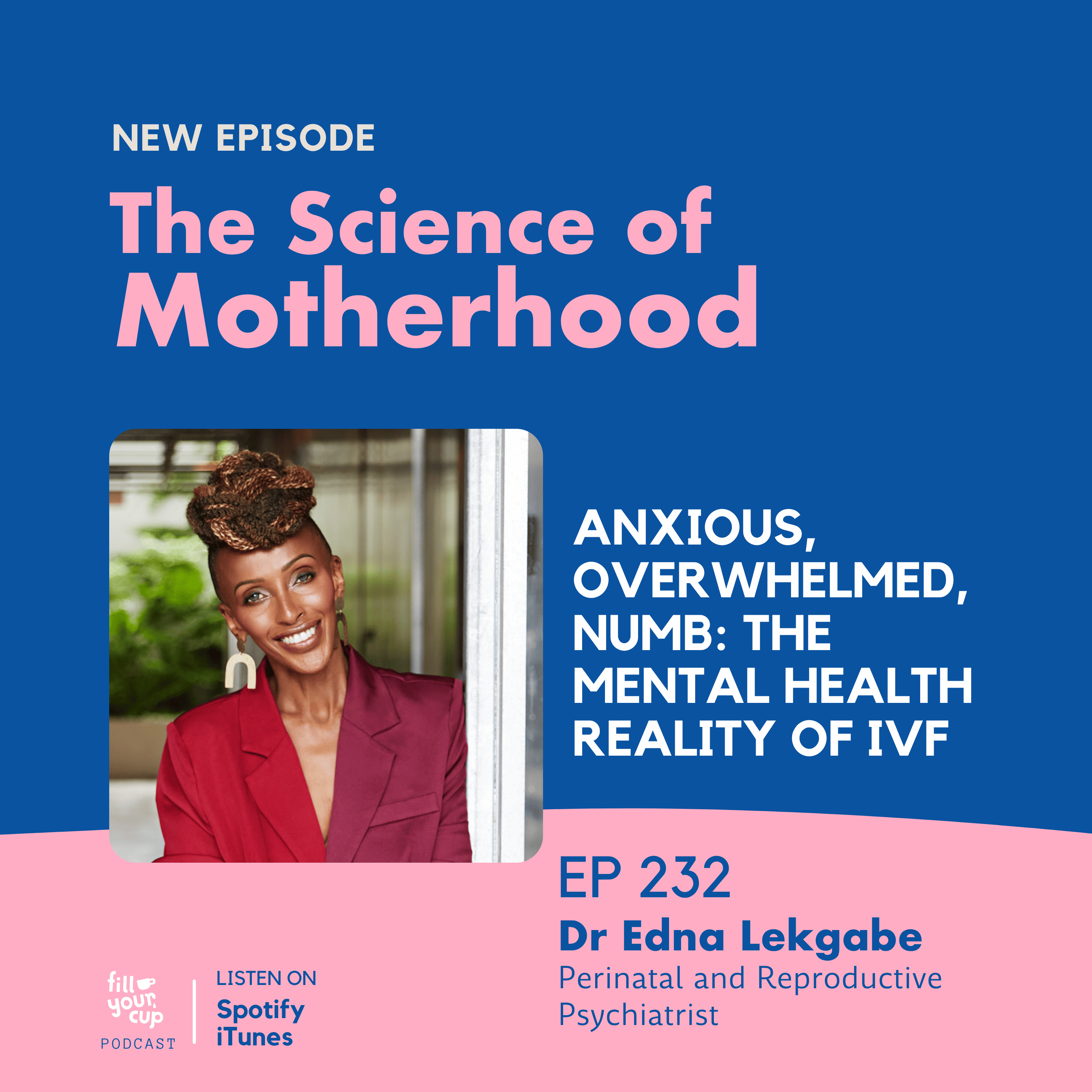 Ep 232. Anxious, Overwhelmed, Numb: The Mental Health Reality of IVF 23.06.2026 55minThe mental and emotional weight of trying to conceive doesn't disappear once you're pregnant, or once the baby arrives. For many women, it quietly shapes everything that comes after.Sometimes the hardest part isn't the fertility treatment itself. It's carrying the aftermath of it into motherhood without anyone acknowledging that you went through something significant to get there.In this episode of The Science of Motherhood, Dr Renee White sits down with Dr Edna Lekgabe, certified perinatal and reproductive psychiatrist practising in Melbourne, to explore the mental health dimensions of the trying to conceive journey. They cover the difference between normal anxiety and clinical anxiety, how IVF trauma shows up in the body long after treatment ends, and why perinatal mental health challenges are never a personal failing.This is the final episode of the six-part Trying to Conceive series on The Science of Motherhood.In this episode, you'll hear about:Why what you're feeling is a nervous system response, not a character flawHow to recognise when anxiety has moved from visitor to renovationWhat IVF trauma looks like in the body and why it often goes unidentifiedHow medication decisions are made with a risk-versus-risk frameworkWhy reaching out early makes a differenceYour mental health through this journey is part of the journey. It deserves the same attention as everything else. There is support available, and you deserve to use it.If this resonates, share it with someone who needs to hear it. Subscribe to The Science of Motherhood so you never miss an episode.Resources & LinksConnect with Renee📲 Connect with Renee on Instagram: @fillyourcup_🌐 Learn more about Dr Renee White and explore Fill Your Cup Doula services: ifillyourcup.com🍪 Treat yourself with our Chocolate + Goji lactation cookiesConnect with Edna📲 Connect with Dr Edna on Instagram: @drednalekgabe🌐 Dr Edna Lekgabe's website: drednalekgabe.com.au🌐 Wraparound mental health care for women and parents: warmhealthcollective.com.auThis episode is proudly supported by Fill Your Cup, Australia's first doula village, with doulas available across Melbourne, Geelong, Sydney, Newcastle, Brisbane, Gold Coast, Hobart, and Perth.Disclaimer: The information on this podcast presented by Fill Your Cup is not a substitute for independent professional advice. Nothing contained in this episode is intended to be used as medical advice and it is not intended to be used to diagnose, treat, cure or prevent any disease, nor should it be used for therapeutic purposes or as a substitute for your own health professional's advice.
 -
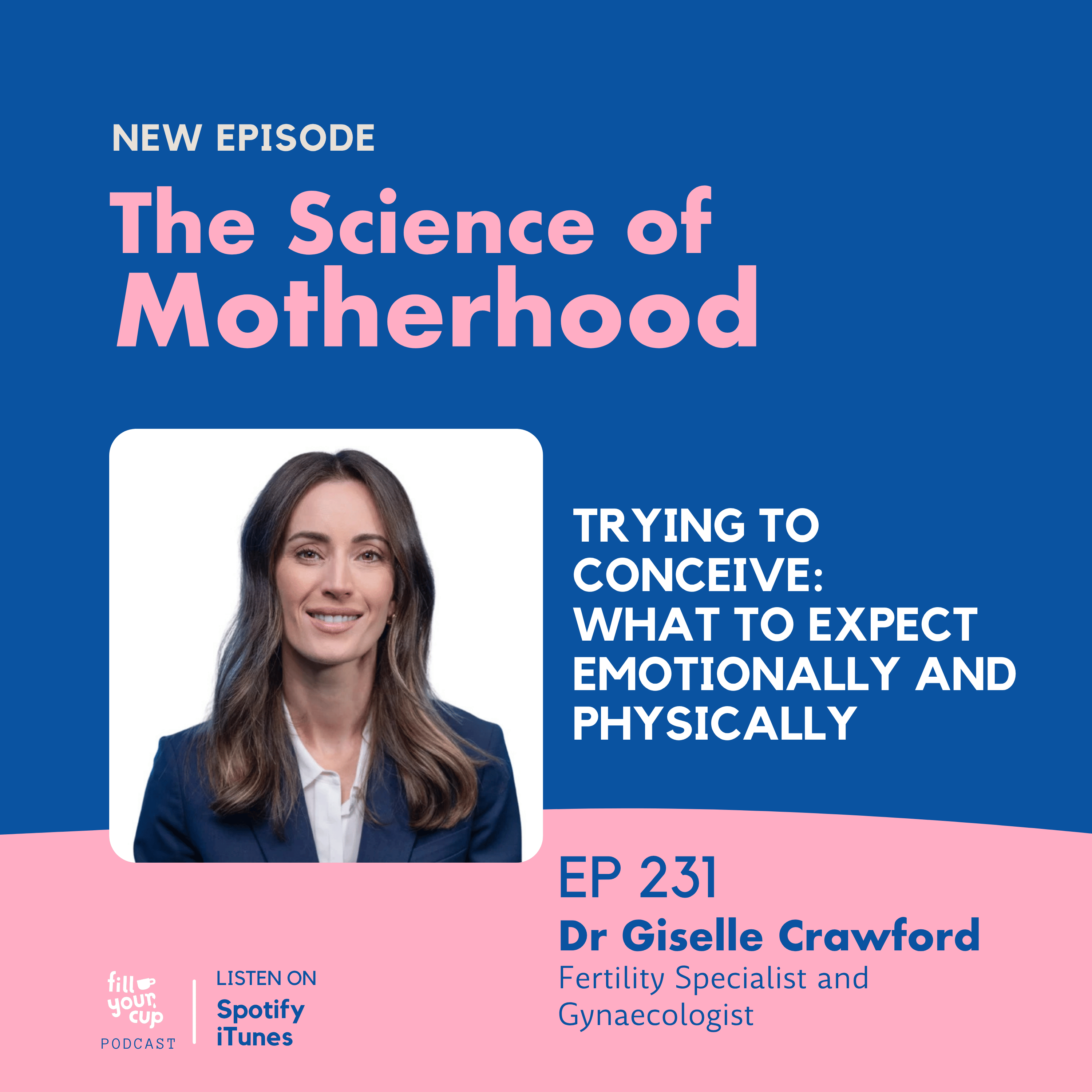 Ep 231. Trying to Conceive: What to Expect Emotionally and Physically 16.06.2026 34minThe emotional side of a fertility journey is real, and it's the part that often goes unspoken. You can walk into treatment prepared with every medical question imaginable and still feel blindsided by the weight of the waiting, the uncertainty, and the grief that can come when things don't go to plan.That gap deserves more airtime than it gets.In this episode of The Science of Motherhood, Dr Renee White sits down with Dr Giselle Crawford, fertility specialist and gynaecologist with more than ten years of experience in obstetrics, gynaecology, and infertility care, to explore the emotional terrain of fertility treatment and what genuinely good care looks like from the inside. They cover everything from managing expectations through the IVF process, to navigating grief, supporting your relationship, and knowing when to pause.This episode is Part 5 of the Trying to Conceive series on The Science of Motherhood.You'll Hear About:Why emotional preparation matters as much as medical readinessHow to understand the concept of attrition in IVFWhat stress actually does (and doesn't) do to fertility outcomesHow partners can move from spectator to co-pilotWhy stopping treatment isn't giving upHaving language for what you're going through makes it easier to carry. This episode gives you that, alongside the science to back it up.If someone you love is navigating fertility treatment right now, this is the episode to share with them. And subscribe so you don't miss an episode of The Science of Motherhood.Resources & Links:📲 Follow Renee on Instagram: @fillyourcup_🌐 Learn more about Dr Renee White and explore Fill Your Cup Doula services: ifillyourcup.com🍪 Treat yourself with our Chocolate + Goji lactation cookies🌐 Dr Giselle Crawford's website: www.drgisellecrawford.com.auThis episode is proudly supported by Fill Your Cup, Australia's first doula village, with doulas available across Melbourne, Geelong, Sydney, Newcastle, Brisbane, Gold Coast, Hobart, and Perth.Disclaimer: The information on this podcast presented by Fill Your Cup is not a substitute for independent professional advice. Nothing contained in this episode is intended to be used as medical advice and it is not intended to be used to diagnose, treat, cure or prevent any disease, nor should it be used for therapeutic purposes or as a substitute for your own health professional's advice.
 -
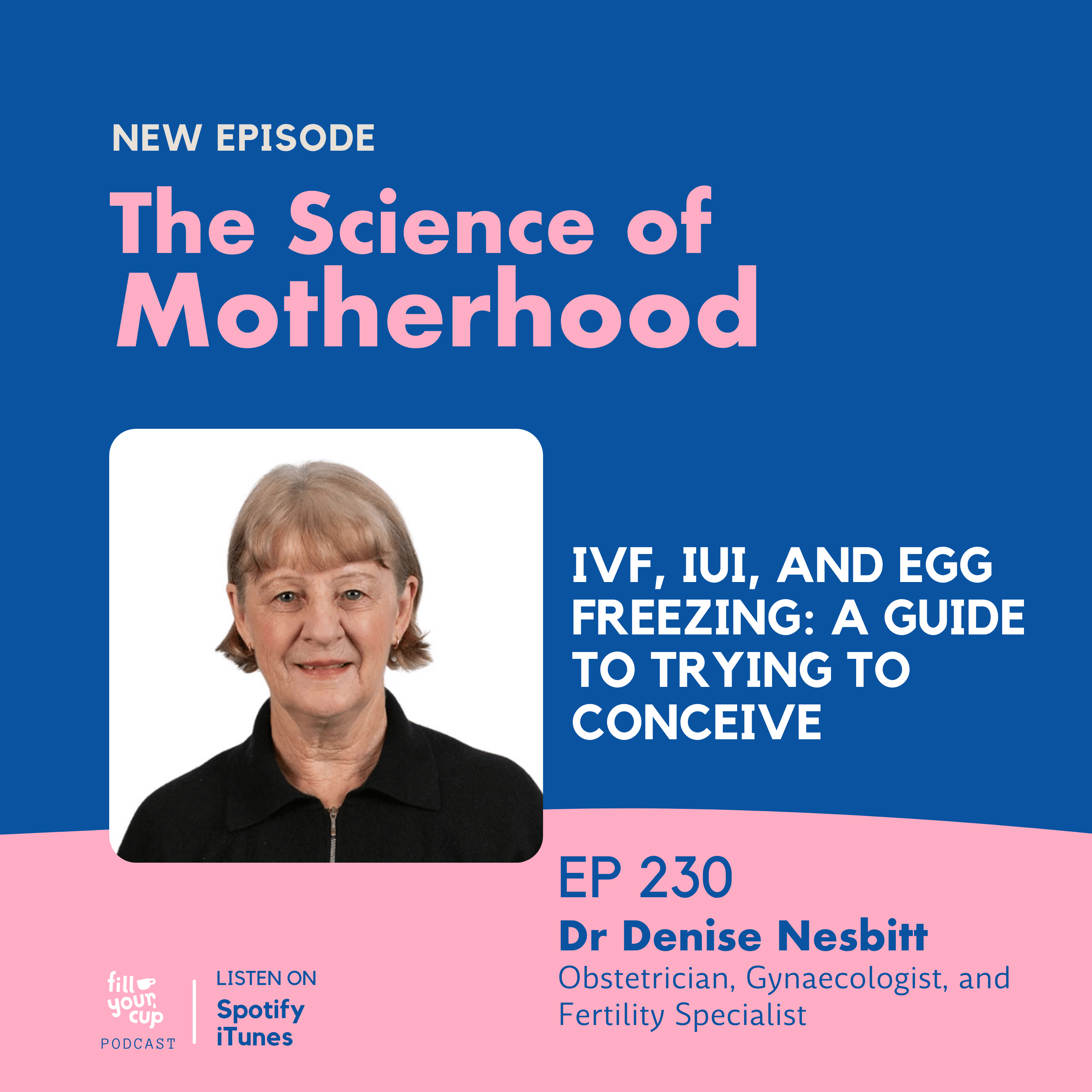 Ep 230. IVF, IUI, and Egg Freezing: A Guide to Trying to Conceive 09.06.2026 40minIf you've been trying to conceive for a while, you've probably found yourself down a research rabbit hole at some point, reading forum threads at midnight and trying to decode acronyms you barely know. IVF, IUI, FSH, ICSI. The information is out there, but it doesn't always feel like it was written for you.Understanding the difference between your options, and knowing the right questions to ask, can make a conversation with a fertility specialist feel far less overwhelming.In this episode of The Science of Motherhood, Dr Renee White sits down with Dr Denise Nesbitt, obstetrician, gynaecologist, and fertility specialist at Hunter IVF, to unpack the key differences between IUI and IVF, including when each is recommended and what to actually expect from both processes. They explore sperm health, egg freezing, success rates, and what's really happening during the two-week wait.This episode is Part 4 of the Trying to Conceive series on The Science of Motherhood.You'll Hear About:How doctors decide between IUI and IVFWhat actually happens during each fertility cycleWhy sperm health matters more than most people realiseWhat success rates mean and what influences themHow to emotionally prepare for the two-week waitStarting this journey is brave. Having the right information means you can walk into that appointment knowing the right questions to ask, and feeling far less alone in the process.If you know someone who's navigating fertility treatment, share this episode with them. And subscribe so you don't miss an episode of The Science of Motherhood.Resources & LinksFollow Renee on Instagram: @fillyourcup_ 🌐Learn more about Dr Renee White and explore Fill Your Cup Doula services 🍪 Treat yourself with our Chocolate + Goji lactation cookies🔗 Learn more about Dr Denise Nesbitt and book an appointment at Hunter IVF 🔗 Your IVF Success — calculate your personalised IVF success rate using Australian data 🔗 Egg Freezing Australia — calculator to help you understand how many eggs you may needThis episode is proudly supported by Fill Your Cup, Australia's first doula village, with doulas available across Melbourne, Geelong, Sydney, Newcastle, Brisbane, Gold Coast, Hobart and Perth.Disclaimer The information on this podcast presented by Fill Your Cup is not a substitute for independent professional advice. Nothing contained in this episode is intended to be used as medical advice and it is not intended to be used to diagnose, treat, cure or prevent any disease, nor should it be used for therapeutic purposes or as a substitute for your own health professional's advice.
 -
 Ep 229. Does Stress Affect Fertility? The Science Behind Your Hormones 02.06.2026 22minYou've probably been told to "just relax" at some point on your fertility journey. Maybe by a friend, a family member, or even a health professional. And if you're anything like most people trying to conceive, you probably wanted to throw something at them.That advice isn't just unhelpful. It's both slightly right and completely missing the point.In this episode, Dr Renee White unpacks the real science behind stress, mindfulness, and fertility, cutting through the noise to tell you what the evidence actually supports, what it doesn't, and what's genuinely worth trying.This is part three of our six-part Trying to Conceive series.You'll Hear About:Why stress and reproduction are biologically competing systemsHow chronic stress disrupts your cycle and hormonesWhat mindfulness reliably improves (and what it doesn't)Why pregnancy rate claims need more evidence behind themFive evidence-backed practices worth integrating nowThe fertility journey asks so much of you. It can feel like your body is working against you, when the science tells a more nuanced story. Your nervous system and your reproductive system are in conversation, and understanding that relationship puts something real back in your hands.Share this episode with someone who's been told to "just relax" and deserves a better answer. And subscribe so you don't miss an episode of The Science of Motherhood.Resources & Links📲 Follow Renee on Instagram: fillyourcup_🌐 Learn more about Dr Renee White and explore Fill Your Cup Doula services🍪 Treat yourself with our Chocolate + Goji lactation cookiesThis episode is proudly supported by Fill Your Cup, Australia's first doula village, with doulas available across Melbourne, Geelong, Sydney, Newcastle, Brisbane, Gold Coast, Hobart and Perth.DisclaimerThe information on this podcast presented by Fill Your Cup is not a substitute for independent professional advice. Nothing contained in this episode is intended to be used as medical advice and it is not intended to be used to diagnose, treat, cure or prevent any disease, nor should it be used for therapeutic purposes or as a substitute for your own health professional's advice.
 -
 Ep 228. What Should You Actually Do Before Trying to Conceive? 26.05.2026 49minMost of us weren't taught that what happens before conception matters. You were told to take a folate supplement, book in when you got a positive test, and go from there. But there's a window of time before you even start trying that can shape not just your pregnancy, but your child's long-term health.The science on preconception care has moved significantly, and most people still aren't hearing about it.This is Part 2 of our six-part Trying to Conceive series.In this episode of The Science of Motherhood, Dr Renee White sits down with Dr Eliza Hannam, GP, International Board Certified Lactation Consultant, and founder of Nurtured Medical, a specialised perinatal clinic in Sydney, to explore what genuinely evidence-informed preconception care looks like. Together they unpack what the periconception window actually means, what testing is available and when to seek it, and what both partners can do to optimise health before pregnancy begins.You'll Hear About:Why preconception health affects your child's long-term metabolic healthWhat a thorough preconception GP appointment coversWhich supplements and nutrients matter most before conceptionHow to read your cycle beyond what any app can tell youWhen to seek fertility support without waiting 12 monthsThe periconception window is a gift of time, and knowing how to use it well changes things. You don't need to be a biochemist to understand it. You just need the right conversation.If you know someone who's thinking about starting a family, share this one with them. And subscribe so you don't miss an episode of The Science of Motherhood.Resources & Links:Connect with Dr Renee White: 📲 Follow Renee on Instagram: fillyourcup_ 🌐 Learn more about Dr Renee White and explore Fill Your Cup Doula services 🍪 Treat yourself with our Chocolate + Goji lactation cookiesConnect with Dr Eliza Hannam: 🌐 Website — www.nurturedmedical.com.au perinatal GP clinic, Sydney Inner West (telehealth available Australia-wide) Follow Eliza on Instagram: @dr.eliza.hannam | @nurturedmedicalStart the Trying to Conceive series from the beginning — head to Episode 227 on The Science of Motherhood feed.Mentioned in this episode:Mackenzie's Mission — government-funded carrier screening for cystic fibrosis, fragile X, and spinal muscular atrophyMothersafe — free medication helpline, NSWIn the Flow by Alisa VittiThis episode is proudly supported by Fill Your Cup, Australia's first doula village, with doulas available across Melbourne, Geelong, Sydney, Newcastle, Brisbane, Gold Coast, Hobart and Perth.Disclaimer: The information on this podcast presented by Fill Your Cup is not a substitute for independent professional advice. Nothing contained in this episode is intended to be used as medical advice and it is not intended to be used to diagnose, treat, cure or prevent any disease, nor should it be used for therapeutic purposes or as a substitute for your own health professional's advice.
Podcast simili


Popolare in
Questo podcast compare anche nelle classifiche dei podcast di questi paesi.
