
Grid Lock
Dr. Paul Moses
0
Grid Lock: Engineering for the Real World is a podcast hosted by Dr. Paul Moses, an electrical engineering professor. Each episode explores the tradeoffs in engineering and energy policies that shape our power infrastructure, covering topics like affordability, reliability, and resilience. The conversation starts in Oklahoma and scales to national and global challenges.
Episodi
-
 Power Quality: How Clean is our Electricity? 31.08.2026 18minGrid Lock: Engineering for the Real WorldIs Your Electricity Really Clean?There's a scene from an old British sitcom where a socially anxious housewife asks the meter reader whether her electricity is "clean" — as clean as her neighbor's. This is an apt seqway into a real engineering question: what does clean power actually look like, and how would you know if yours wasn't?In this episode, Paul Moses takes a power quality meter around his own house to find out. Clamping onto USB chargers, a backup battery inverter, light bulbs, a DC power supply, and a flat-screen TV, he captures the real current and voltage waveforms these everyday devices draw — and shows just how distorted (and non-sinusoidal) modern electronics really are.Along the way: why fast-charging USB-C bricks produce different harmonic signatures than a basic 5V charger, why an incandescent bulb still exhibits better power quality than the LED that replaced it, why cheap inverters can be too distorted to trust with sensitive electronics, and why a TV — despite being a much bigger load — turns out to have one of the cleanest waveforms in the house. The episode closes with a broader look at what all this distortion adds up to at the grid level, why most utility metering still can't see it, and why that may matter more as EVs, data centers, and renewable inverters multiply.00:27 Introduction to Power Quality03:16 Measuring Power Quality in Household Devices04:37 USB Devices08:49 AC Inverter09:52 Analyzing Inverters and Their Waveforms10:28 Resistive Loads10:55 Lighting13:05 DC power supplies13:21 TV14:09 Observations on Voltage and Harmonics15:09 Distortions in supply voltage16:33 Future of Power Quality MonitoringMusic licensed through Soundstripe.Code: B5BZKIHAEBMV6UQ0
 -
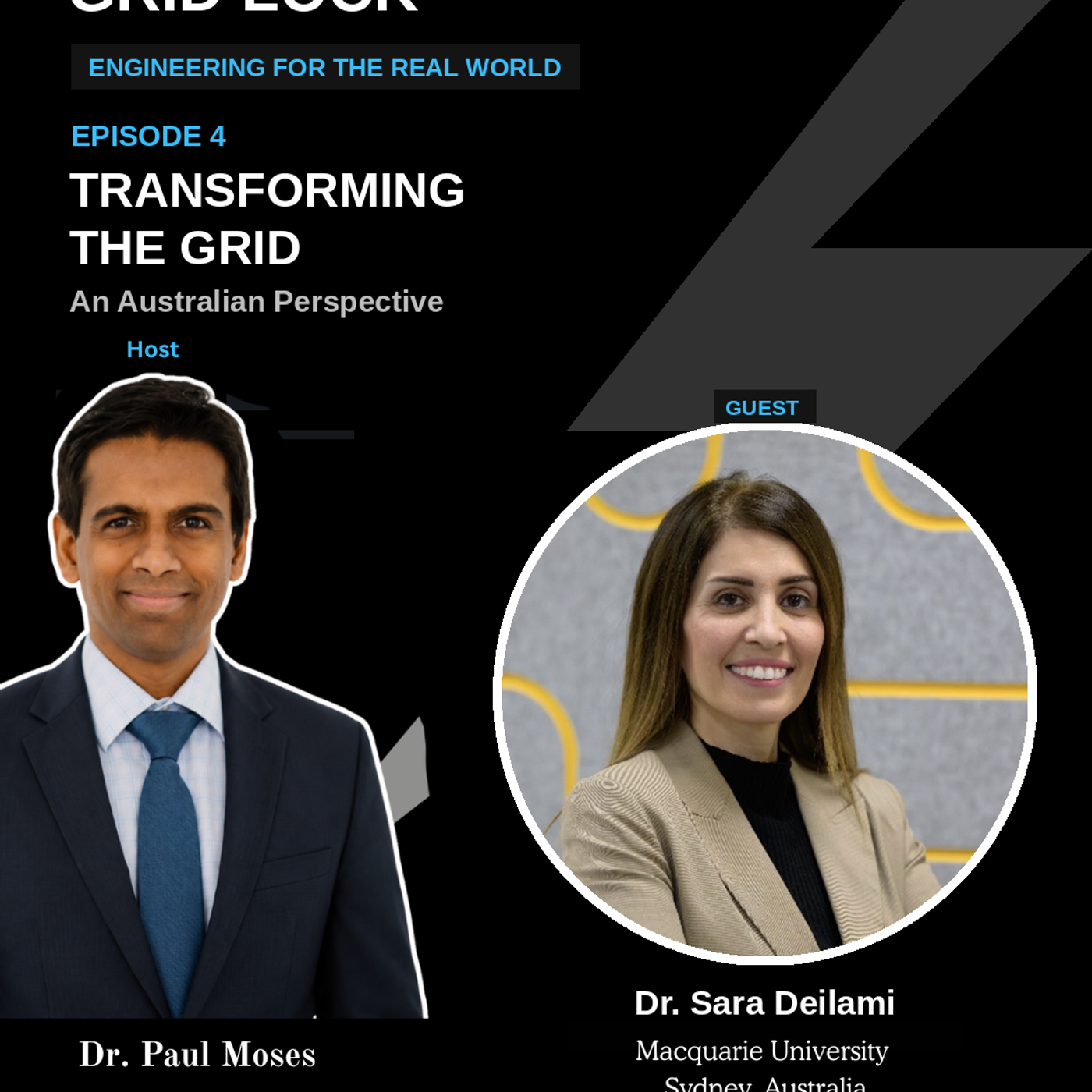 Transforming the Grid: An Australian Perspective 10.08.2026 52minGrid Lock: Engineering for the Real WorldWhat can we learn from Australia’s experience transforming the electrical grid?In this episode, I talk with Dr. Sara Deilami, an electrical engineering researcher at Macquarie University, to explore Australia's rapidly changing energy system and what it can teach us about the future of the grid.We discuss renewable energy, virtual power plants, and the challenges of integrating new technologies into an evolving power system. We also examine the growing impact of AI on the electrical industry, including the electricity demands of AI data centers.The conversation goes beyond technology to explore energy access in rural and regional communities, the social considerations behind sustainable energy adoption, and the importance of collaboration among engineers, industry, government, academia, and communities.Sara also shares her work on wireless power transfer for electric vehicles, along with thoughts on the future of EV charging, emerging technologies, and preparing the engineering workforce for a rapidly changing industry.We finish with a discussion about women in engineering, career development, work-life balance, and the growing challenges posed by extreme weather and natural hazards.In This Episode🇦🇺 Australia's changing electricity system🤖 AI and electricity demand⚡ Renewable energy and distributed grids🏠 Virtual power plants at home🌏 Rural and regional energy access👥 Social considerations in the energy transition🚗 EV integration and wireless power transfer🤝 Collaboration and innovation👩🔬 Women in engineering and work-life balance🌪️ Extreme weather and grid resilience🔮 The future of power engineeringTimestamps02:12 — Introduction to Dr. Sara Deilami02:49 — Journey into electrical engineering04:14 — Industry to academia05:09 — AI and the electrical industry06:23 — AI data centers and electricity demand08:25 — Australia's power system09:21 — Renewable energy and rural communities10:43 — Virtual power plants and home batteries13:41 — Evolving regulations15:52 — Collaboration among stakeholders18:26 — Emerging energy technologies20:54 — Pilot projects and innovation22:19 — Wireless power transfer for EVs26:28 — Wireless charging efficiency28:13 — The future of power grids32:45 — Preparing the energy workforce35:57 — Career advice for engineers40:12 — Women in engineering and work-life balance44:05 — Optimism for power engineering46:02 — Extreme weather and natural hazards50:39 — Collaboration and sharing ideas51:45 — The future of the energy transition51:46 — Engineering reliable power systemsLearn more:Dr. Sara Deilami — Macquarie UniversityDr. Sara Deilami on LinkedInMusic licensed through Soundstripe.Code: B5BZKIHAEBMV6UQ0
 -
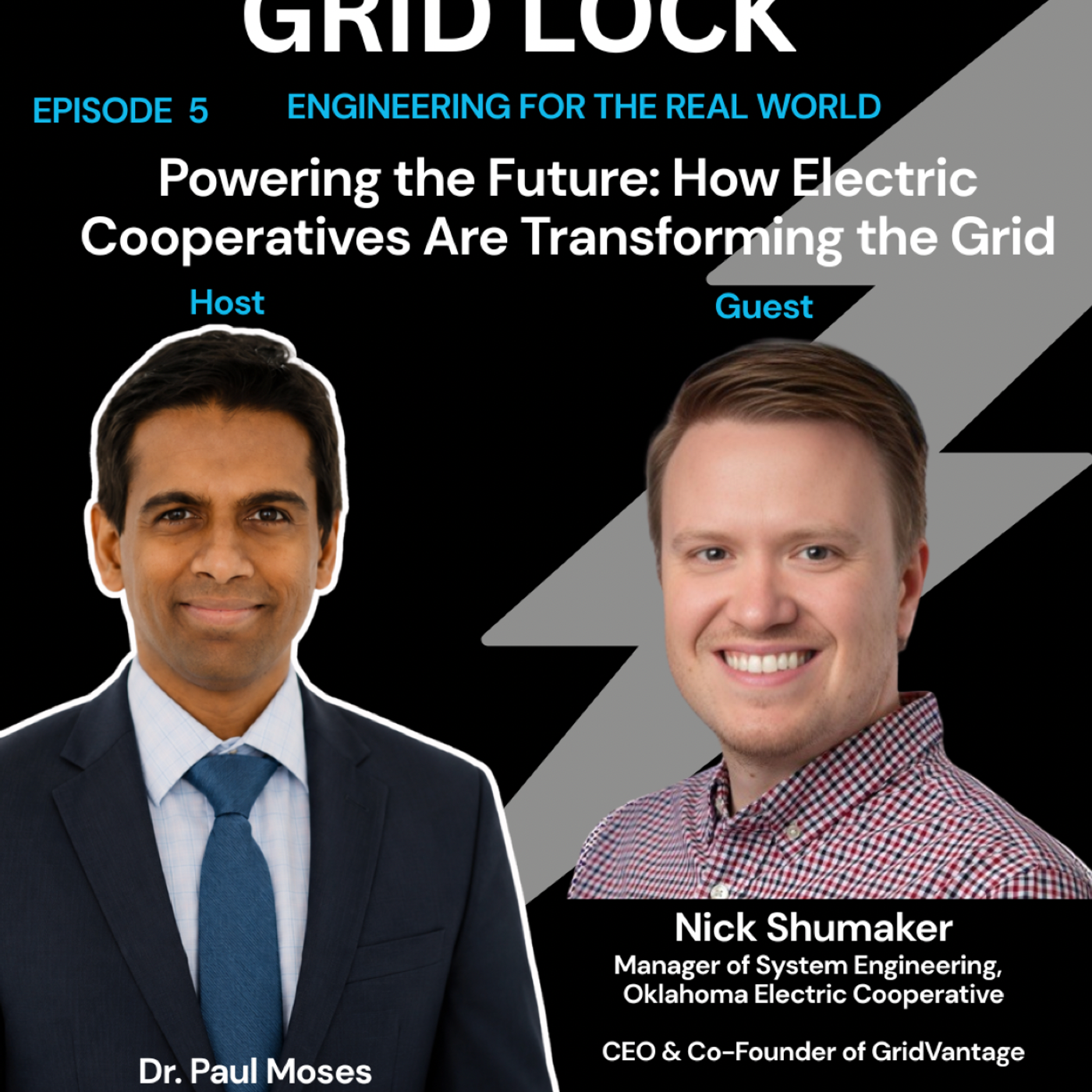 Powering the Future: How Electric Cooperatives Are Transforming the Grid 17.08.2026 1h 21minGrid Lock: Engineering for the Real WorldWhat does it take to keep the lights on as storms, aging infrastructure, rapid load growth, and changing customer expectations put increasing pressure on the electric grid?In this episode of Grid Lock, we sit down with Nick Shumaker, Manager of System Engineering at Oklahoma Electric Cooperative (OEC) and National Chair of NRECA’s Transmission and Distribution Engineering Committee.Nick offers a firsthand look at the cooperative model and the challenges facing electric utilities—from meeting rapidly growing demand and restoring power after severe storms to modernizing aging infrastructure and deploying intelligent grid technology.We explore OEC’s use of advanced technology and its Adaptively Controlled Electric System (ACES) to accelerate restoration, the synergies between broadband services and electric grid operations, distributed energy resources, and the challenges of building new infrastructure.Nick also shares his experiences as co-founder of GridVantage, using data analytics and AI to improve utility operations, and Legally Brewed, a craft brewery built around community and entrepreneurship. We discuss the potential—and limitations—of AI in distribution system management, the future of solar, and the workforce challenges facing the energy industry.Chapters00:00 Introduction to Grid Lock and Nick Shumaker02:52 Nick's Journey into Engineering and Cooperatives05:43 Understanding the Cooperative Structure09:22 NRECA and Community Collaboration11:17 Challenges and Changes in the Utility Industry13:33 Storm Response and Restoration17:59 Technological Innovations at OEC19:33 ACES Technology and Its Impact23:07 Broadband and Community Connectivity27:06 Distributed Energy Resources and Resilience32:17 Aging Infrastructure: Challenges and Solutions41:43 Challenges in Building New Infrastructure45:29 Underground vs. Overhead Lines51:30 Entrepreneurship and Brewing Community Connections54:37 The Art of Beer Making55:47 GridVantage: Data Analytics and AI58:46 AI for Electric Cooperatives01:01:32 The Risks of Over-Dependence on AI01:04:48 Entrepreneurship and the Startup Landscape01:09:27 The Future of Solar Energy01:15:12 Addressing Energy Workforce Challenges01:19:33 Concluding RemarksLinksGridVantage:https://gridvantage.com/Legally Brewed:https://legallybrewedco.com/123 W. Main Street, Norman, OK, USANick Shumaker:https://www.linkedin.com/in/nick-shumaker-67712930/ACES – Adaptively Controlled Electric System:https://oecfiber.com/blog/aces/https://www.youtube.com/watch?v=ozvgAoduAaUMusic licensed through Soundstripe.Code: B5BZKIHAEBMV6UQ0.
 -
Smart Grids: A reality or a dream? with Dr Paul Moses 05.08.2026 9minSmart Grids: An Unrealized Reality?For more than two decades, we've been promised a future where our homes actively participate in a smarter, cleaner, and more resilient electricity grid. Smart meters have been installed in millions of homes around the world, utilities have invested billions in grid modernization, and the term smart grid has become a staple of energy discussions.But has the average household actually experienced this transformation?In this episode, we explore whether today's "smart grid" is truly smart from the customer's perspective. We discuss why many consumers still interact with electricity much the same way they did decades ago, despite the technology already existing to do much more.Key Questions:We have the technology for smart grids but is it really implemented and used by customers? Have we changed our energy usage patterns with the roll out of smart meters? What more is needed to realize true smart grid functionality? Have smart meters fundamentally changed the way we use electricity?Why hasn't household energy management become mainstream?What technologies are already available but remain underutilized?What incentives would encourage homeowners to participate?Are we still building a smart grid—or simply collecting more data?Topics CoveredWhat the original vision for the smart grid looked likeHow smart meters have changed utility operations—and what they haven't changedWhy most households still consume electricity in largely the same way as beforeThe missing link between smart meters and truly smart homesTakeawayThe technology for a truly interactive smart grid largely exists today. The challenge is no longer one of engineering—it is one of economics, regulation, interoperability, and customer engagement. Unlocking the next generation of grid intelligence will require homes to evolve from passive electricity consumers into active participants that can respond to changing grid conditions in real time.www.mosesconsulting.netMusic licensed through Soundstripe.Code: GKPWCT4VH7TVOUQX
-
Grid Lock: The Unequal Grid with Dr. Paul Moses 27.07.2026 11minEpisode Show NotesThis episode is a short overview to some of the topics we hope to touch in later in depth details. How Infrastructure Disparities Affect Power ReliabilityWhy do some neighbourhoods get their power back in hours while others wait days after the same storm? In this episode of Grid Lock: Engineering for the Real World, we explore how the design of the electric grid influences reliability, resilience, and the customer experience.We discuss the differences between overhead and underground power distribution, why restoration times vary depending on where you are connected to the grid, and the unique challenges faced by rural communities. The conversation also examines a difficult question: should customers who experience very different levels of reliability all pay the same rates?This episode looks beyond the headlines to examine the engineering trade-offs, infrastructure investment decisions, and equity challenges that utilities and policymakers face as the power system evolves.In this episode:Electrical usage patternsDisparity in infrastructure Grid ModernizationEconomic RealitiesHow grid topology affects outage restoration times.The reliability challenges facing rural electricity networks.The balance between cost, resilience, and fairness in electricity infrastructure.What future grid investments could mean for customers.Grid Lock: Engineering for the Real World explores the engineering decisions behind the infrastructure we depend on every day, bringing practical discussions with experts from across the energy industry.Connect with Dr. Paul Moses: www.mosesconsulting.netMusic licensed through Soundstripe.Code: JA5BI0DBAHXMMZIM
-
The State of the Grid: Intro to Grid Lock Dr. Paul Moses 22.07.2026 8minI'm Dr. Paul Moses, an electrical engineer, educator, and researcher.Grid Lock: Engineering for the Real WorldEvery system we depend on — the lights that turn on, the grid that holds steady, the infrastructure that scales with demand — is the result of hard tradeoffs engineers and policymakers make every day. Grid Lock: Engineering for the Real World goes inside those tradeoffs.Each episode brings in experts across engineering and energy disciplines to explore the pressures defining our power future: affordability, flexibility, reliability, grid resilience, versatility, capacity, and what it takes to electrify societies for the future.The conversation starts local — right here in Oklahoma — scales up to national policy and infrastructure trends, and connects to the global engineering challenges shaping how the world powers itself.www.mosesconsulting.netIn this episode I discuss the overview of the state of the grid.In recent years, we are seeing a rapid escalation in the amount of electrical energy we useAffordability, even here in Oklahoma which is touted to be one of the lowest cost of living states, is still not immune to electricity price growthUtilities are also in a bind; grid modernizationLegacy equipmentThe impact of new energy consumers; data centersPower system planning has always been a top-level down endeavor – key decisions made at the federal, or boardrooms of power corporations – and seldom or very little input from the communities. Indeed a bottom-up approach is more sort after in stakeholder engagement, the general public in entering the discussion.These are important decisions, and will have lasting repercussions in everyone, costs of living, our children and grandchildren’s prospects and thinking 22nd century. – Remember, it takes many years, sometimes decades to planout and start building major infrastructure.I look forward to continuing these important conversations over the series of episodes in the podcast Grid Lock.Thank you for listening!


