
Philosophy Overdose
Philosophy Overdose
0
Philosophy Overdose is a collection of public and academic philosophy lectures and interviews, focusing mainly on analytic philosophy with occasional continental philosophy. The channel seeks out thought-provoking material that is often rare and features famous philosophers, sometimes offering translations from German and French. It is entirely non-commercial and intended for educational purposes, aiming to spread good philosophy content. Topics span epistemology, ethics, metaphysics, philosophy of mind, and many other branches of philosophy.
Episodi
-
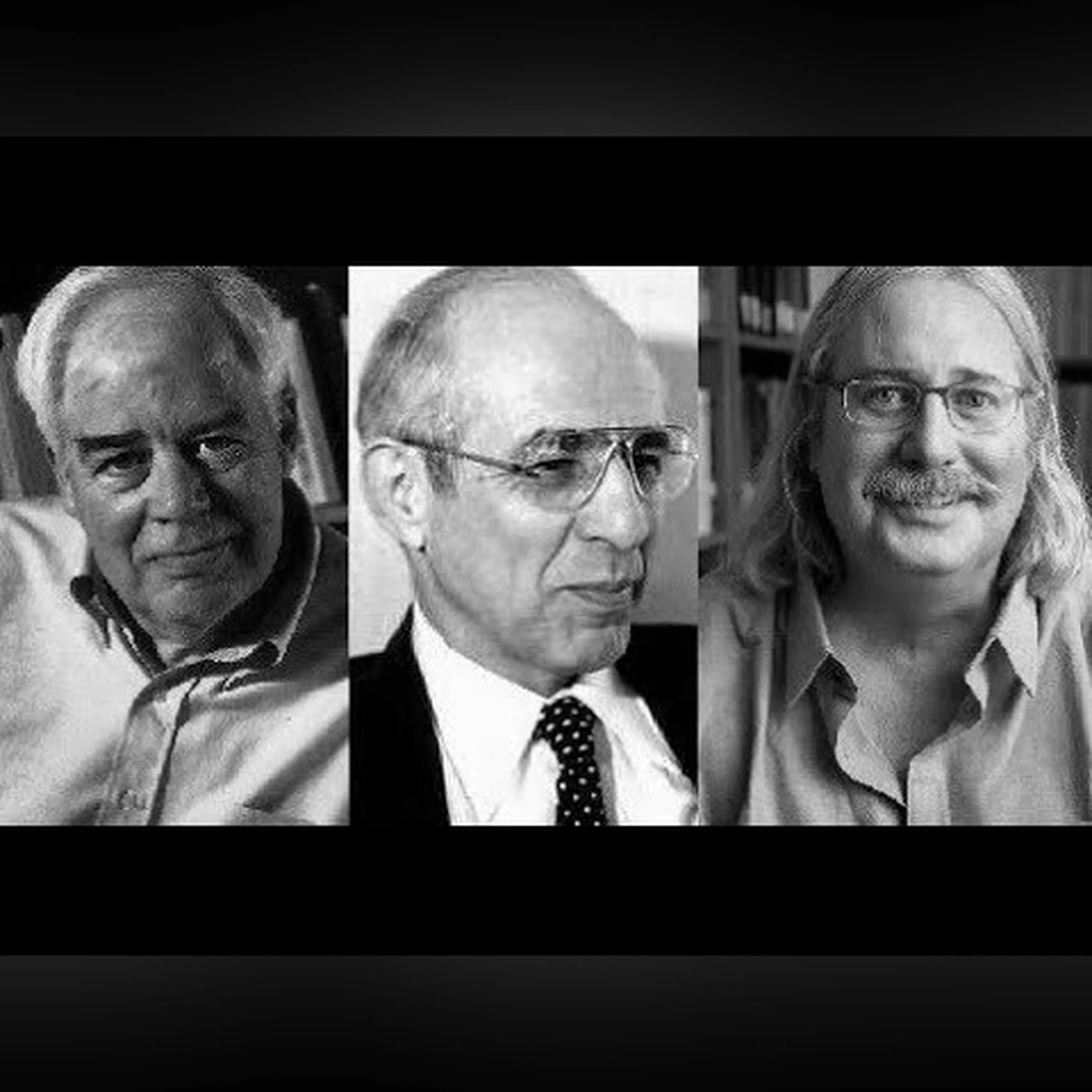 Pragmatism and Truth - Rorty, Putnam, and Conant (2002) 23.09.2026 55minAudio recording of a discussion between Richard Rorty, Hilary Putnam, and James Conant on pragmatism and truth. This comes from an episode of Odyssey on WBEZ Chicago from back in 2002 with host Gretchen Helfrich. Note, this is a reupload. #philosophy #epistemology #rorty #pragmatism #historyofphilosophy #debate Learn more about your ad choices. Visit megaphone.fm/adchoices
 -
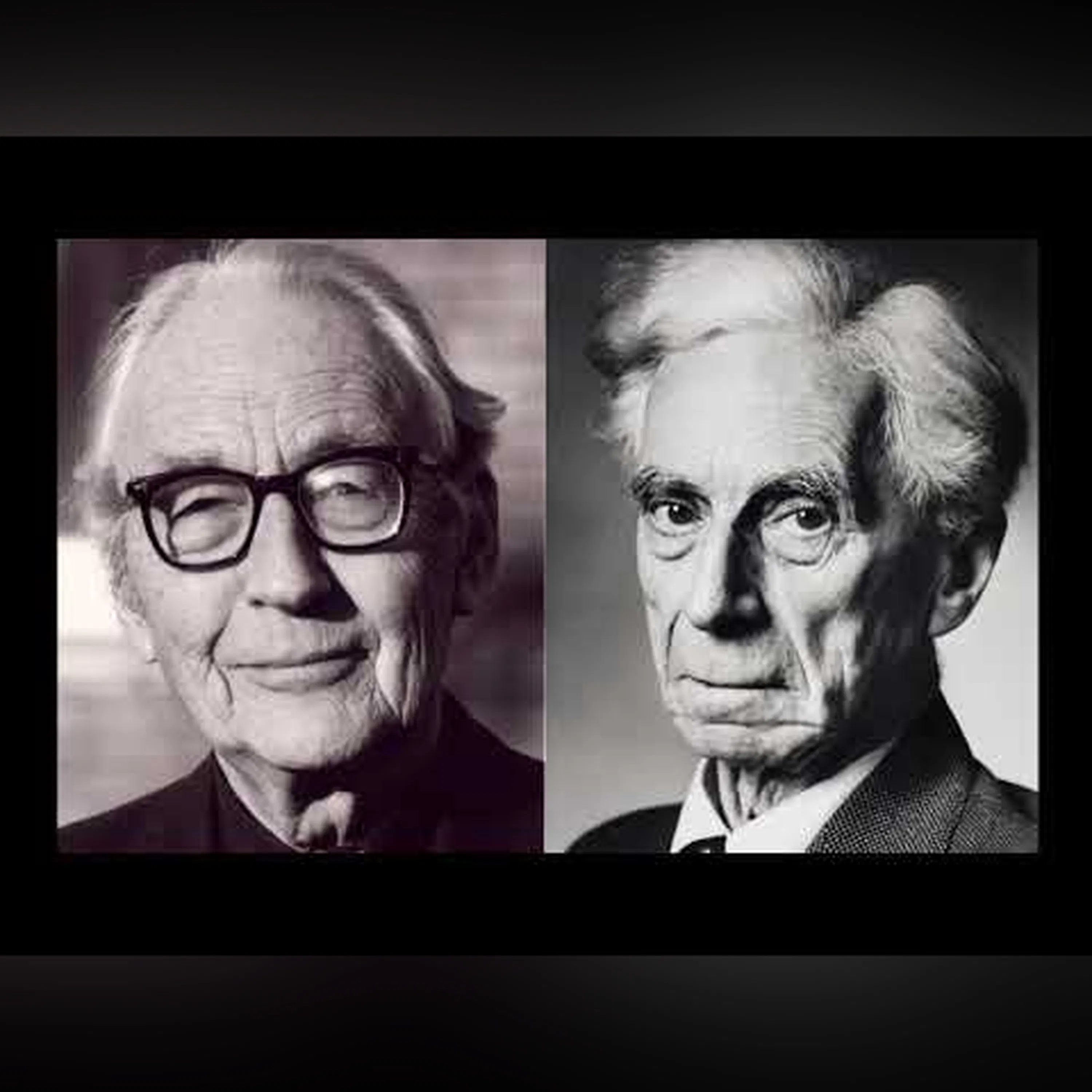 Russell-Copleston Debate on God's Existence (1948) 23.09.2026 23minBertrand Russell and Frederick Copleston debate the existence of God in this famous radio debate from 1948. Copleston here presents the argument from contingency, which is a kind of cosmological argument for God's existence. It is now in the public domain. Note, the audio has been improved. Frederick Copleston on Schopenhauer: https://youtu.be/6x8ydL5Jp70Peter Millican on God & Morality: https://www.youtube.com/watch?v=WOTvCtv9ht8Simone de Beauvoir on God & Existentialism: https://www.youtube.com/watch?v=tJnWHVwvYSQ#philosophy #bertrandrussell #theism #atheism #god #philosophyofreligion #historyofphilosophy #debate Learn more about your ad choices. Visit megaphone.fm/adchoices
 -
 Gadamer on Language and Understanding (1970) 23.09.2026 11minClips of Hans-Georg Gadamer from a 1970 lecture on language and understanding. This is a version of an upload from the other channel. The translation is my own. More Gadamer: https://www.youtube.com/playlist?list=PLhP9EhPApKE_MbPzGOh27qfdqiCaf7UotMore Short Clips: https://www.youtube.com/playlist?list=PLhP9EhPApKE8v8UVlc7JuuNHwvhkaOvzc#Philosophy #Gadamer #Language Learn more about your ad choices. Visit megaphone.fm/adchoices
 -
 John Locke - Antony Flew (1977) 23.09.2026 16minAudio recording of a short program in which Antony Flew discusses the life and thought of the great 17th-century British empiricist philosopher, John Locke. This comes from a 1977 series of programs on western philosophy. #philosophy #epistemology #locke #historyofphilosophy Learn more about your ad choices. Visit megaphone.fm/adchoices
 -
 Ernest Nagel on Current Issues in Philosophy of Science (1962) 23.09.2026 1h 15minAudio recording of a 1962 lecture given by professor Ernest Nagel at Yale on the current issues in the philosophy of science. #philosophy #science #philosophyofscience #epistemology Learn more about your ad choices. Visit megaphone.fm/adchoices
 -
 Same-Sex Marriage Arguments 23.09.2026 19minProfessor Martha Nussbaum discusses the main arguments against same-sex marriage in a clip which comes from a 2010 lecture at the Harvard Book Store on her book, From Disgust to Humanity: Sexual Orientation and Constitutional Law. Although this topic would've seemed out of date a decade ago, it seems increasingly less so in the current socio-political climate. #philosophy #ethics #socialissues #law #debate Learn more about your ad choices. Visit megaphone.fm/adchoices
 -
 Thomas Kuhn Speaking (1995) 23.09.2026 4minAudio recording of a short clip of Thomas Kuhn talking about his famous book 'The Structure of Scientific Revolutions'. This is an excerpt from: "an intellectual autobiography in the form of an interview, conducted by Aristides Baltas, Kostas Gavroglu, and Vassiliki Kindi in Athens in the fall of 1995" (Kuhn, The Road since Structure, ed. James Conant and John Haugeland, University of Chicago, 2000).#philosophy #philosophyofscience #kuhn #science #historyofphilosophy Learn more about your ad choices. Visit megaphone.fm/adchoices
 -
 What Is Probability? Difficulties Understanding Probability 23.09.2026 33minProfessor David Wallace discusses the nature of probability and some of the philosophical puzzles that arise regarding how to understand and make sense of probability. He begins by distinguishing between subjective probabilities (which are about our beliefs) and objective probabilities (which are about the world itself). He then goes on to discuss various interpretations of probability and some of the difficulties that arise for each. This comes from a talk given in a series on the many-worlds interpretation of quantum mechanics back in 2015 at Oxford.00:00 Concepts of Probability01:04 Subjective Probability02:14 More-Objective Probabilities03:49 Very Objective Probabilities05:52 Two Questions about Objective Probability08:40 Frequentism13:52 Probability from Symmetry16:59 Probability as Primitive18:10 The "Why" Question20:10 The Principal Principle24:43 A Dearth of Solutions to the Why Question#philosophy #probability #epistemology #philosophyofscience #historyofphilosophy Learn more about your ad choices. Visit megaphone.fm/adchoices
 -
 Hegel and his Heirs 23.09.2026 1h 4minRobert Harrison and Adrian Daub discuss Georg Wilhelm Friedrich Hegel and his heirs a few years back in an episode of Entitled Opinions, a KZSU Stanford University program. http://french-italian.stanford.edu/op...Hegel was one of the most important and influential 19th century German philosophers, best known for his dialectic, absolute idealism, and historicism, among various other things. The Hegelian dialectic is the process in which everything changes, based on the triad: thesis-antithesis-synthesis. Hegel's idealism rejected the Kantian notion of the thing-in-itself and instead embraced a monistic vision of the world in which everything forms an organic, interconnected, rational whole. Nothing is true or real except the whole. Not only a thinker of totality, Hegel was a historicist thinker who rejected the notion that ideas are static and fixed (e.g. the concepts of human nature and morality, as well as the concept of reason itself). Things can only be understood by understanding their historical context, which, for Hegel, is a process which changes and develops, and which has an underlying meaning or significance. So not only is there history in reason, but there is reason in history. For Hegel, history progresses towards its endpoint of ever greater freedom, driven by alienation, that of constant conflict and struggle by way of this dialectical process. (My Description)#philosophy #hegel #metaphysics Learn more about your ad choices. Visit megaphone.fm/adchoices
 -
 6 Reid on Personal Identity - Reid's Critique of Hume (Dan Robinson) 23.09.2026 55minProfessor Dan Robinson gives the sixth in a series of 8 lectures on Thomas Reid's critique of David Hume at Oxford in 2014. In the third of his Essays on The Intellectual Powers of Man, Reid devotes the fourth chapter to the concept of 'identity', and the sixth chapter to Locke's theory of 'personal identity'. This latter chapter is widely regarded as a definitive refutation of the thesis that personal identity is no more than memories of a certain sort, less a “bundle of perceptions”. As he says, “This conviction of one’s own identity is utterly necessary for all exercise of reason. The operations of reason—whether practical reasoning about what to do or speculative reasoning in the building up of a theory—are made up of successive parts. In any reasoning that I perform, the early parts are the foundation of the later ones, and if I didn’t have the conviction that the early parts are propositions that I have approved or written down, I would have no reason to proceed to the later parts in any theoretical or practical project whatever”.Under “David Hume”, the Stanford Encyclopedia of Philosophy begins with, “The most important philosopher ever to write in English”. His most formidable contemporary critic was the fellow Scot, Thomas Reid, the major architect of so-called Scottish Common Sense Philosophy. The most significant features of Hume’s work, as understood by Reid, are the representive theory of perception, the nature of causation and causal concepts, the nature of personal identity and the foundations of morality. Each of these topics is presented in a pair of lectures, the first summarizing Hume’s position and the second Reid’s critique of that position.All Lectures: https://www.youtube.com/playlist?list=PLhP9EhPApKE9nki7CXFPi7PMOi5W2g2-q#philosophy #davidhume #personalidentity #skepticism #historyofphilosophy Learn more about your ad choices. Visit megaphone.fm/adchoices
 -
 6 Varieties of Philosophical Skepticism - John McDowell's Mind and World 23.09.2026 1h 45minIn this sixth lecture, James Conant continues to discuss the Kantian problematic, and does so by discussing the work of John McDowell. He particularly focuses on the case of perception and then of action and intentions. In the case of perception, the problem involves avoiding the myth of the Given without thereby falling into an empty kind of coherentism or idealism.In this series of lectures on varieties of philosophical skepticism, James Conant distinguishes between two forms of philosophical skepticism: Cartesian skepticism and Kantian skepticism. He discusses their general structure and shows how they're related. This sheds light on issues in various different areas, including within the philosophy of perception, philosophy of mind, and philosophy of language. Some of the philosophers discussed throughout this course include Wittgenstein, Sellars, Hilary Putnam, Kripke, C.I. Lewis, John McDowell, and Stanley Cavell.This series of lectures was given in 2005 at the Department of Philosophy at the University of Bergen, Norway. Note, the audio has been slightly edited and improved."When Kant describes the understanding as a faculty of spontaneity, that reflects his view of the relation between reason and freedom: rational necessitation is not just compatible with freedom but constitutive of it. In a slogan, the space of reasons is the realm of freedom. But if our freedom in empirical thinking is total, in particular if it is not constrained from outside the conceptual sphere, that can seem to threaten the very possibility that judgements of experience might be grounded in a way that relates them to a reality external to thought. And surely there must be such grounding if experience is to be a source of knowledge, and more generally, if the bearing of empirical judgements on reality is to be intelligibly in place in our picture at all. The more we play up the connection between reason and freedom, the more we risk losing our grip on how exercises of concepts can constitute warranted judgements about the world. What we wanted to conceive as exercises of concepts threaten to degenerate into moves in a self-contained game." McDowell"The idea of the Given is the idea that the space of reasons, the space of justifications or warrants, extends more widely than the conceptual sphere." McDowell00:00 Introduction 07:33 Perception 49:05 Action All lectures: https://www.youtube.com/playlist?list=PLhP9EhPApKE8muoMpX8qQ-14zKnYPc5VI#philosophy #epistemology #skepticism #philosophyofmind #kant #historyofphilosophy Learn more about your ad choices. Visit megaphone.fm/adchoices
 -
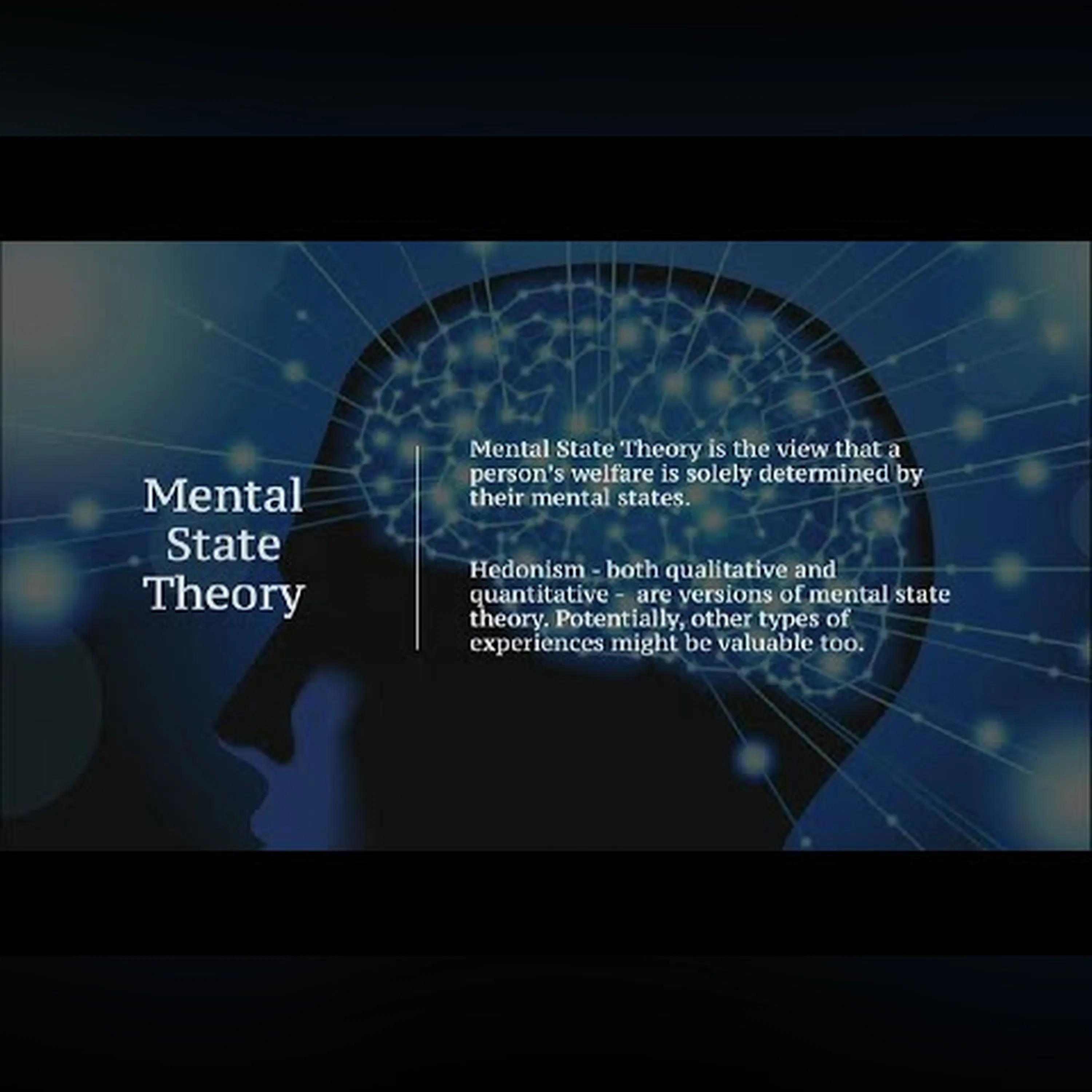 Theories of Welfare - Ethics and Society Course 23.09.2026 56minThe nature of well-being is discussed in this introductory lecture from a 2023 course on Ethics and Society by Professor Samuel Zincke Elgin at UCSD, the University of California (UC San Diego). #philosophy #ethics #moralphilosophy #utilitarianism #hedonism Learn more about your ad choices. Visit megaphone.fm/adchoices
 -
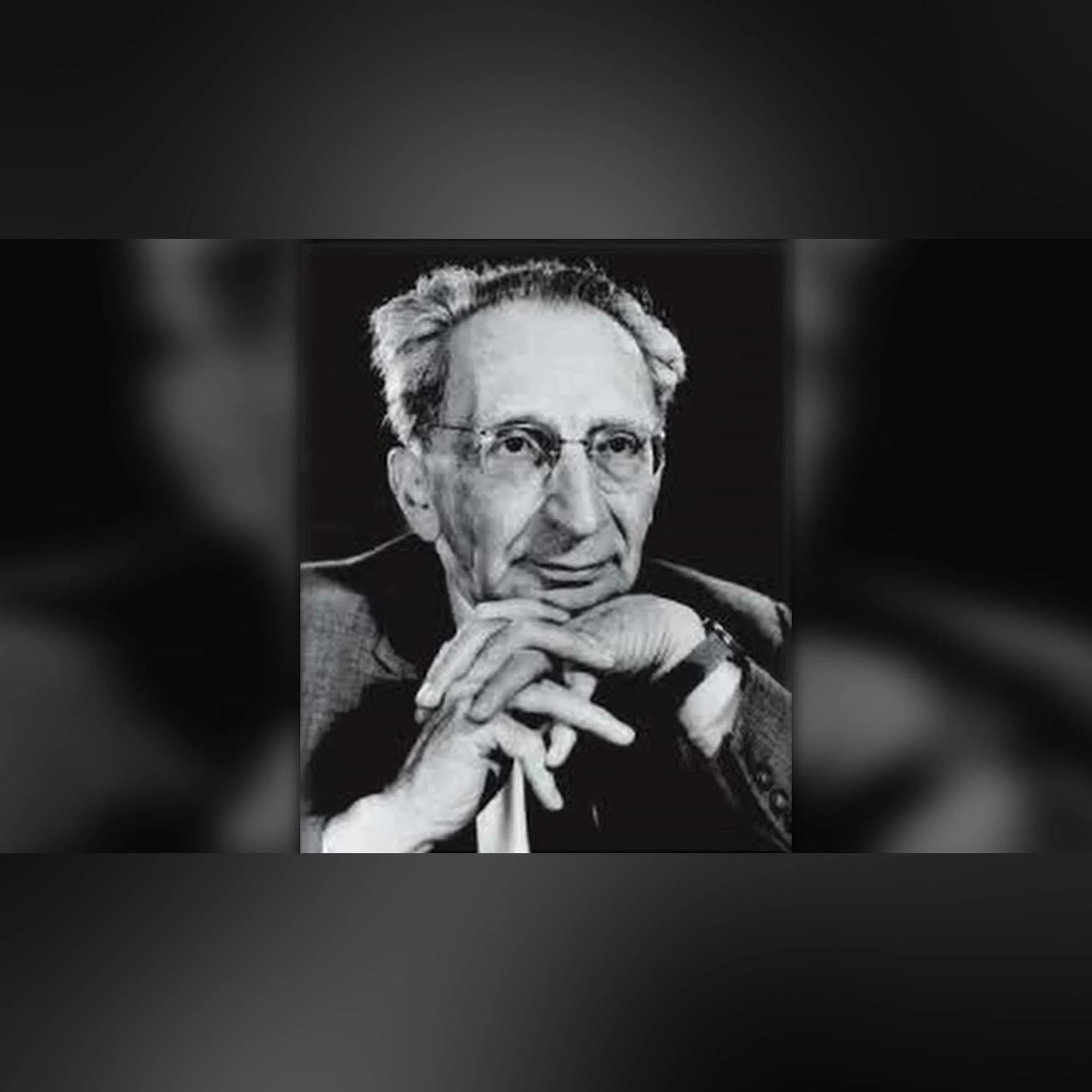 Science and Free Will - Herbert Feigl (1963) 23.09.2026 1h 12minAudio recording of a lecture given by professor Herbert Feigl on free will and science at Coffman Union in 1963 at the University of Minnesota. After introducing the traditional problem of free will, he goes on to discuss how determinism and indeterminism fit into our conception of science. He then goes on to argue that free will is not only consistent with determinism, but it seems to presuppose it. He thereby tries to dissolve the traditional issue by showing the underlying compatibility between free will and that of causal determinism. #philosophy #determinism #science #freewill #causality #causation #philosophyofscience Learn more about your ad choices. Visit megaphone.fm/adchoices
 -
 What Is Rationality, Anyway? 23.09.2026 1h 32minDr. Peter Dennis gives a public lecture on the nature of rationality at the LSE in 2015. Peter Dennis is an LSE Fellow in the Department of Philosophy, Logic and Scientific Method and a Forum for European Philosophy Fellow. 00:00 Talk 54:04 Q&A #philosophy #rationality #epistemology Learn more about your ad choices. Visit megaphone.fm/adchoices
 -
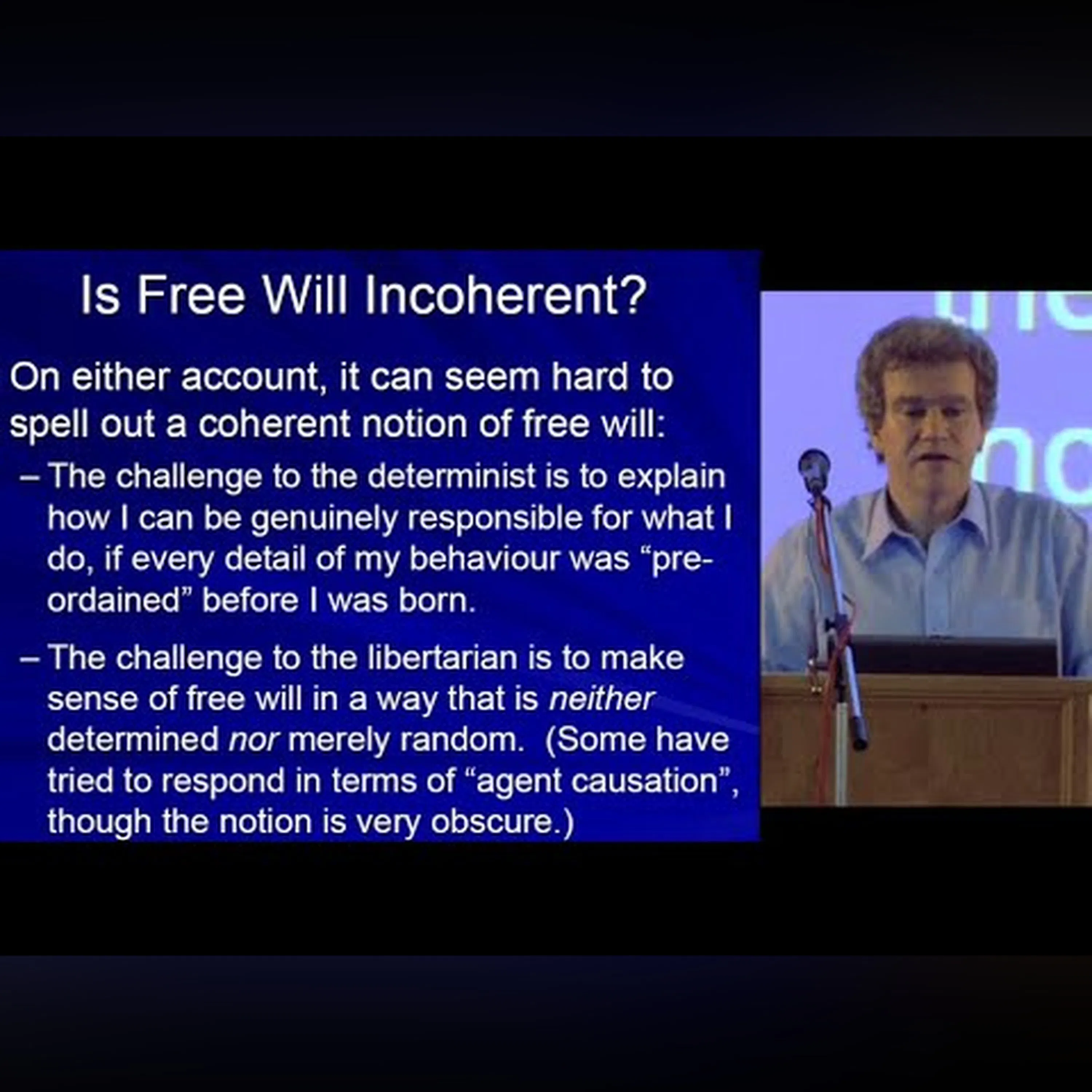 Free Will - General Philosophy (Peter Millican) 23.09.2026 58minIn this lecture on General Philosophy, Professor Peter Millican discusses free will and the problem of moral responsibility. This comes from a 2010 series on General Philosophy. The slides have been added.This series of lectures was delivered by Peter Millican to first-year philosophy students at the University of Oxford. The lectures comprise of the 8-week General Philosophy course, delivered to first year undergraduates. These lectures aim to provide a thorough introduction to many philosophical topics and to get students and others interested in thinking about key areas of philosophy. Taking a chronological view of the history of philosophy, each lecture is split into 3 or 4 sections which outline a particular philosophical problem and how different philosophers have attempted to resolve the issue. Individuals interested in the 'big' questions about life such as how we perceive the world, who we are in the world and whether we are free to act will find this series informative, comprehensive and accessible.More lectures on General Philosophy: https://www.youtube.com/playlist?list=PLhP9EhPApKE_xo2wvkm6qPZrUlAiRNHXbSource: https://podcasts.ox.ac.uk/series/general-philosophy#philosophy #freewill #determinism #causality #causation #mind #metaphysics #psychology Learn more about your ad choices. Visit megaphone.fm/adchoices
 -
 Reason and Feeling in Ethics - Brand Blanshard (1966) 23.09.2026 51minAudio recording of a 1966 lecture by Brand Blanshard on reason and ethics given at Wheaton College (Massachusetts). #philosophy #ethics #moralphilosophy #utilitarianism #historyofphilosophy Learn more about your ad choices. Visit megaphone.fm/adchoices
 -
 Beginning of 'The Absurd' by Thomas Nagel 23.09.2026 6minA reading of the beginning of Thomas Nagel's 1971 article "The Absurd", which I've always quite liked.#philosophy #existentialism #ethics Learn more about your ad choices. Visit megaphone.fm/adchoices
 -
 Philosophy of Mathematics and Frege - Michael Dummett (1994) 23.09.2026 1h 39minAudio recording of a 1994 lecture by Michael Dummett on Frege and the philosophy of mathematics at the LSE on the occasion of his Lakatos Award for an outstanding contribution to the philosophy of science. For a good intro to the philosophy of mathematics, check out: https://www.youtube.com/watch?v=UhX1ouUjDHE and https://www.youtube.com/watch?v=XyXWnGFKTkg#philosophy #epistemology #mathematics #frege #kant #historyofphilosophy Learn more about your ad choices. Visit megaphone.fm/adchoices
 -
 2 Varieties of Philosophical Skepticism - Cartesian and Kantian Skepticism 23.09.2026 1h 45minIn this second lecture (note, it's actually the third because the second wasn't recorded), James Conant continues to give examples of Cartesian skepticism in various other areas of philosophy and discusses some of the differences with Kantian skepticism. Note, because Kantian skepticism was introduced and discussed in the previous session, and there's no recording, it might be a bit difficult at first to understand what Kantian skepticism precisely is. However, this will definitely become clear as the lectures go on.In this series of lectures on varieties of philosophical skepticism, James Conant distinguishes between two forms of philosophical skepticism: Cartesian skepticism and Kantian skepticism. He discusses their general structure and shows how they're related. This sheds light on issues in various different areas, including within the philosophy of perception, philosophy of mind, and philosophy of language. Some of the philosophers discussed throughout this course include Wittgenstein, Sellars, Hilary Putnam, Kripke, C.I. Lewis, John McDowell, and Stanley Cavell.This series of lectures was given in 2005 at the Department of Philosophy at the University of Bergen, Norway. Note, the audio has been slightly edited and improved."There are never any sure signs by means of which being awake can be distinguished from being asleep." Descartes"The a priori conditions of a possible experience in general are at the same time conditions of the possibility of objects of experience. Now I maintain that the categories ... are nothing but the conditions of thought in a possible experience ... And without such unity no thoroughgoing, universal, and therefore necessary, unity of consciousness would be met with in the manifold of perceptions. These perceptions would not then belong to any experience, consequently would be without an object, merely a blind play of representations, less even than a dream." Immanuel Kant00:00 Introduction01:31 Where one is possible, so is the other03:29 Philosophy of Law05:27 Skepticism for any Area of Philosophy07:37 Testimony 13:21 Personal Identity17:01 The Past19:51 Reference24:00 Move to Kantian Problematic33:55 Why these Two Labels?45:45 Is Kantian Skepticism a Kind of Skepticism?51:33 Features of BothAll lectures: https://www.youtube.com/playlist?list=PLhP9EhPApKE8muoMpX8qQ-14zKnYPc5VI#philosophy #epistemology #skepticism #kant #historyofphilosophy Learn more about your ad choices. Visit megaphone.fm/adchoices
 -
 Political Philosophy and John Rawls 23.09.2026 48minAudio recording of a lecture by Jonathan Wolff on John Rawls' political philosophy. After discussing the detrimental influence of logical positivism on ethical and political discourse, Jonathan Wolff goes on to explain John Rawls' famous contractarian conception of justice. Rawls' argument takes the form of a thought experiment involving a hypothetical contract in which people are made ignorant about certain facts about themselves which could bias them in their own favor (e.g. their race, gender, class, age, talents, etc.). In this way, ignorance is used as a way to guarantee impartiality in deciding how societies should be set up. After all, one cannot rig things up to benefit oneself if one doesn't know what one's interests are or what one's position in society will be. Rawls argued that people behind this so-called "veil of ignorance" would agree to two principles of justice: the liberty principle and the difference principle. Jonathan Wolf explains these principles and the main arguments for and against them. (My Summary) Note, this is re-upload. More details about this talk will be added at a later date.More Political Philosophy: https://www.youtube.com/playlist?list=PLhP9EhPApKE_O1dkCOqsUke_0QUkX80A- #philosophy #politicalphilosophy #rawls #johnrawls #politicaltheory #historyofphilosophy Learn more about your ad choices. Visit megaphone.fm/adchoices
Podcast simili


Popolare in
Questo podcast compare anche nelle classifiche dei podcast di questi paesi.
