
The Straits Times Podcasts
The Straits Times
1
The Straits Times Podcasts is an all-in-one channel that publishes episodes almost every weekday. It covers a wide range of topics including Singapore youth perspectives, social issues, geopolitics from an Asian viewpoint, health, climate change, personal finance, and career advice. The podcast is produced by podcast editor Ernest Luis and The Straits Times, part of SPH Media.
Episodi
-
 S2E50: Why travelling with friends can lead to meltdowns and broken friendships 14.09.2026 20minIs travelling with friends worth the risk when all hell breaks loose? From disagreements over budget to one person wanting to “travelmax” while another wants to wake up at noon, a trip can become a horror story. In this episode, Kai Wen and Sue-Ann discuss whether you should travel with friends and the red flags that can spell disaster instead of a fun holiday. Highlights (click/tap above): 0:00: Intro 2:10 Compromising on travel choices 4:50 Walking red flags on holiday 8:11 Relaxing vs travelmaxxing 12:00 Breakups on holiday 14:05 Picking travel companions 15:57 Pre-trip disclosures Follow See Kai Wen on LinkedIn: https://str.sg/qfwqQ Follow Sue-Ann Tan on LinkedIn: https://str.sg/A86X Read Sue-Ann Tan's articles: https://str.sg/mvSa Hosts: See Kai Wen ([email protected]) and Sue-Ann Tan ([email protected]) Produced & edited by: Amirul Karim Executive producer: Elizabeth Law Follow the Headstart On Record Podcast here: Channel: https://str.sg/wB2m Apple Podcasts: https://str.sg/wuN3 Spotify: https://str.sg/wBr9 Feedback to: [email protected] Get business/career tips in ST's Headstart newsletter: https://str.sg/headstart-nl --- Follow more ST podcast channels: All-in-one ST Podcasts channel: https://str.sg/wvz7 Get more updates: http://str.sg/stpodcasts Watch Headstart On Record Podcast on YouTube: https://str.sg/3psqrx --- Get The Straits Times app, which has a dedicated podcast player section: The App Store: https://str.sg/icyB Google Play: https://str.sg/icyX --- Do note: All analyses, opinions, recommendations and other information in this podcast are for your general information only. You should not rely on them in making any decision. Please consult a fully qualified financial adviser or professional expert for independent advice and verification. To the fullest extent permitted by law, SPH Media shall not be liable for any loss arising from the use of or reliance on any analyses, opinions, recommendations and other information in this podcast. SPH Media accepts no responsibility or liability whatsoever that may result or arise from the products, services or information of any third parties. --- #headstartSee omnystudio.com/listener for privacy information.
 -
 S1E110: Singapore ministerial pay debate: Paying top talent competitive salaries is in the ‘soul of the PAP’ 11.09.2026 51minWill the increase in ministerial salaries cost the People’s Action Party (PAP) votes at the next General Election? On Sept 8, Prime Minister Lawrence Wong announced that political office-holders will get a one-off pay increase of up to 9 per cent. This will take effect from Oct 15 - an entry-level grade MR4 minister getting the full adjustment will see his annual pay rise from $1.1 million to $1.2 million. The changes to salaries come after the Government accepted the recommendations of a committee convened to review political salaries. One of its recommendations is that the MR4 benchmark will also be updated from $1.1 million to $1.8 million. Existing ministers’ salaries will continue to be adjusted based on performance, and PM Wong expects most MR4 ministers to earn about $1.35 million – the lower end of the new salary range – by the end of this term of government. In this episode of The Usual Place, Natasha speaks with Straits Times’ senior columnist Bhavan Jaipragas, and Rebecca Grace Tan, a senior lecturer in Political Science at the National University of Singapore. We discuss whether there is the “right” formula to calculating ministers’ salaries, and whether alternative performance reviews of ministers’ and MPs work is now necessary to account to the public for the pay raises. Highlights (click/tap above): 1:24 How did PM Wong fare in explaining the salary increases? 5:38 Was the debate “subdued” as compared to 2012? 8:44 Have S’poreans come to accept the million-dollar salaries? 13:45 Why didn’t the Workers’ Party oppose more strongly? 18:00 Growing divide between political elites and the rest of us? 21:09 Is the top 1,000 earners benchmark still fair? 26:20 Money, motive and minimising opportunity costs 32:15 How can we assess ministers’ performance? 41:44 Has public office become unattractive? 47:22 Is S’pore just another corporation? Host: Natasha Ann Zachariah ([email protected]) Read Natasha’s articles: https://str.sg/iSXm Follow The Usual Place podcast on IG: https://str.sg/8KNT Follow Natasha on LinkedIn: https://str.sg/v6DN Filmed by: Studio+65 Edited by: Eden Soh, Hadyu Rahim & Teo Tong Kai Executive producer: Danson Cheong Producers: Natasha Ann Zachariah, Elizabeth Law & Zachary Lim Follow The Usual Place Podcast and get notified for new episode drops every Thursday: Channel: https://str.sg/5nfm Apple Podcasts: https://str.sg/9ijX Spotify: https://str.sg/cd2P YouTube: https://str.sg/theusualplacepodcast Feedback to: [email protected] --- Follow more ST podcast channels: All-in-one ST Podcasts channel: https://str.sg/wvz7 Get more updates: http://str.sg/stpodcasts --- Get The Straits Times app, which has a dedicated podcast player section: The App Store: https://str.sg/icyB Google Play: https://str.sg/icyX -- #tup #tuptrfSee omnystudio.com/listener for privacy information.
 -
 S2E86: Nine-year-olds on drugs: Has the world abandoned Myanmar? 10.09.2026 25minAn unending conflict and shrinking aid leave Myanmar’s refugees and displaced in increasingly dire circumstances. Synopsis: Every second Friday of the month, The Straits Times’ senior columnist Ravi Velloor distils 45 years of experience covering the Asian continent, with expert guests. In this episode, he speaks with the British psychotherapist and aid worker Edward Blakeney on the travails of Myanmar’s 1.6 million exiles and 4 million internally displaced people. What emerges is a story of food shortages, medical issues including mental trauma, and lack of educational opportunities among an exile diaspora that now stretches from Thailand to Bangladesh, Malaysia, India and Sri Lanka. Highlights (click/tap above) 2:30 Brutal war and a worsening refugee situation 5:20 A 9-year-old drug addict 8:40 Wasting, malnourished children 14:10 Ukraine distraction, journalists under the gun 24:00 Has Blakeney seen a shrink himself, given what he has seen and experienced? Read Ravi's columns: https://str.sg/3xRP Follow Ravi on X: https://twitter.com/RaviVelloor Sign up for ST’s weekly Asian Insider newsletter: https://str.sg/sfpz Host: Ravi Velloor ([email protected]) Produced and edited by: Fa’izah Sani Executive producer: Ernest Luis Follow Asian Insider Podcast on Fridays here: Channel: https://str.sg/JWa7 Apple Podcasts: https://str.sg/JWa8 Spotify: https://str.sg/JWaX YouTube: https://str.sg/rF3qR Feedback to: [email protected] --- Follow more ST podcast channels: All-in-one ST Podcasts channel: https://str.sg/wvz7 Get more updates: http://str.sg/stpodcasts --- Get The Straits Times app, which has a dedicated podcast player section: The App Store: https://str.sg/icyB Google Play: https://str.sg/icyX --- #STAsianInsiderSee omnystudio.com/listener for privacy information.
 -
 S1E90: A non-profit chief on why caregivers refuse the rest they need and end up hitting a wall 09.09.2026 43minAs Singapore ages, the number of family caregivers is rising, making caregiver respite a key focus. Synopsis: Conversations and interviews that give you something to think about. Each Wednesday, In Your Opinion speaks to thinkers, leaders, and the people shaping our lives and the issues of the day. The rising number of dementia patients is just the tip of the iceberg. An ageing population, chronic illnesses that leave loved ones bedridden, and more awareness of mental health conditions have cast a spotlight on the importance of caregiver respite. On this episode of In Your Opinion, we look at the mental health struggles faced by caregivers who sacrifice much of themselves in caring for loved ones. Joining assistant podcast editor Lynda Hong is Tim Oei, CEO of Mindfull Community. Drawing on decades of leadership at major social service agencies like AWWA and the National Kidney Foundation, he talks about caring for the carers, and why some see going to work as a form of respite. Oei touches on systemic gaps that could disadvantage asset-rich, cash-poor caregivers, and why quitting your job to be a full-time carer can very quickly lead to burnout. They also explore the marathon that is caregiving, and how friends, colleagues and neighbours can take small steps to help. Highlights (click/tap above): 3:23 When burnt-out caregivers face health issues 5:34 Caregivers only seek help when crisis hits 9:22 Why having a job can backfire when applying for grants 11:40 ‘Work is respite’: How some carers see their jobs 14:25 Will the $10m OrangeAid grant help with caregiver burnout? 21:45 Why sending a caregiver on a ‘staycation’ backfired 23:13 How to scale tailored support for caregivers? 26:20 The dementia tsunami: Scaling support for 2030 27:41 Co-location of services to help care recipients and caregivers 34:45 Hitting the wall: When caregivers reach the tragic breaking point Read ST’s Opinion section: https://str.sg/w7sH Follow Lynda Hong on LinkedIn: https://str.sg/Gm2v Host: Lynda Hong ([email protected]) Produced and edited by: Teo Tong Kai Executive producers: Danson Cheong and Lynda Hong Follow In Your Opinion Podcast here and get notified for new episode drops: Channel: https://str.sg/w7Qt Apple Podcasts: https://str.sg/wukb Spotify: https://str.sg/w7sV YouTube: https://str.sg/GjMT Feedback to: [email protected] --- Follow more ST podcast channels: All-in-one ST Podcasts channel: https://str.sg/wvz7 Get more updates: http://str.sg/stpodcasts --- Get The Straits Times app, which has a dedicated podcast player section: The App Store: https://str.sg/icyB Google Play: https://str.sg/icyX --- MENTAL WELL-BEING Mindfull Community HQ (for caregivers, families and persons in recovery): 6460-4400 (weekdays, 9am to 5pm) National Mindline: 1771 (24 hours) / 6669-1771 (via WhatsApp) Samaritans of Singapore: 1-767 (24 hours) / 9151-1767 (24 hours CareText via WhatsApp) Singapore Association for Mental Health: 1800-283-7019 Silver Ribbon Singapore: 6386-1928 Chat, Centre of Excellence for Youth Mental Health: 6493-6500/1 Women’s Helpline (Aware): 1800-777-5555 (weekdays, 10am to 6pm) The Seniors Helpline: 1800-555-5555 (weekdays, 9am to 5pm) Tinkle Friend (for primary school-age children): 1800-2744-788 COUNSELLING Touchline (Counselling): 1800-377-2252 Touch Care Line (for caregivers): 6804-6555 Counselling and Care Centre: 6536-6366 We Care Community Services: 3165-8017 Shan You Counselling Centre: 6741-9293 Clarity Singapore: 6757-7990 Care Corner Counselling Centre: 6353-1180 ONLINE RESOURCES mindline.sg/fsmh eC2.sg chat.mentalhealth.sg carey.carecorner.org.sg (for those aged 13 to 25) limitless.sg/talk (for those aged 12 to 25) #inyouropinionSee omnystudio.com/listener for privacy information.
 -
 S2E49: Singapore stocks have just had their best run in years, are you missing out? 07.09.2026 34minThe US market is exciting, but it can also be dangerous for young investors. The US market has been on a tear, but it is also littered with pitfalls for unsuspecting new investors. Should we stock pick or just buy the S&P 500? And what about new IPOs like Space X? In this episode, ST business correspondent Sue-Ann Tan looks at how to explore the US market without getting burnt. Her guests are Sheryl Choong, Head of Client Advisory Singapore at Endowus and Afdhal Rahman, OCBC executive director of wealth advisory. Highlights (click/tap above): 3:12 Should I just invest in the S&P 500? 7:13 What percentage of my portfolio should be in the US? 10:30 S&P 500 vs Nasdaq vs Dow Jones 12:00 How to start investing in the US 15:45 Getting into popular new US IPOs 18:30 Lump sum investing vs regular investing 23:20 Dealing with exchange rates Read Sue-Ann Tan's articles: https://str.sg/mvSa Follow Sue-Ann Tan on LinkedIn: https://str.sg/A86X Hosts: Sue-Ann Tan ([email protected]) Produced & edited by: Amirul Karim and Natasha Liew Executive producer: Elizabeth Law Follow Headstart On Record Podcast channel here: Channel: https://str.sg/wB2m Apple Podcasts: https://str.sg/wuN3 Spotify: https://str.sg/wBr9 Feedback to: [email protected] Get business/career tips in ST's Headstart newsletter: https://str.sg/headstart-nl --- Follow more ST podcast channels: All-in-one ST Podcasts channel: https://str.sg/wvz7 Get more updates: http://str.sg/stpodcasts Watch Headstart On Record Podcast on YouTube: https://str.sg/3psqrx --- Get The Straits Times app, which has a dedicated podcast player section: The App Store: https://str.sg/icyB Google Play: https://str.sg/icyX --- Do note: All analyses, opinions, recommendations and other information in this podcast are for your general information only. You should not rely on them in making any decision. Please consult a fully qualified financial adviser or professional expert for independent advice and verification. To the fullest extent permitted by law, SPH Media shall not be liable for any loss arising from the use of or reliance on any analyses, opinions, recommendations and other information in this podcast. SPH Media accepts no responsibility or liability whatsoever that may result or arise from the products, services or information of any third parties. --- #headstartSee omnystudio.com/listener for privacy information.
 -
 S1E152: How old are you biologically, and what are you doing about it? 04.09.2026 54minDiscover the science of aging and learn about the latest geroscience research aimed at shifting the focus from mere lifespan to healthspan. Synopsis: Once a month, The Straits Times helps you make sense of health matters that affect you. In the latest Health Check podcast, we examine the burgeoning science of healthspan—the period of life spent in good health, free from chronic disease—shifting the focus beyond mere lifespan. Part of The Straits Times' “The New Age” series, this episode explores ageing not as an inevitable decline, but as a complex biological network. Host Joyce Teo sits down with Dr Brian Kennedy, director of the Center for Healthy Longevity at the National University Health System, about cutting-edge research in geroscience and the shift from reactive sick care to proactive healthcare. Brian is a distinguished professor of biochemistry and physiology at the Yong Loo Lin School of Medicine at the National University of Singapore. Highlights (click/tap above): 1:33 Exploring ageing clocks, geroscience, and longevity 7:57 Our bodies maintain an internal homeostasis for health. When does this equilibrium break down? 9:08 Brian Kennedy's transition from lab models to human trials in Singapore and Singapore's global standing 13:36 Study showed that the Japanese are healthier in Japan than in another country that they have moved to 15:27 Will a low carb, high protein diet help me age better? 18:15 You got to do medicine before you do longevity medicine 23:23 Is there evidence that hyperbaric oxygen chambers work? 24:19 How do you choose the right ageing supplements? 30:31 We need to empower people to make more of their own health decisions Read Joyce Teo's stories: https://str.sg/JbxN Host: Joyce Teo ([email protected]) Produced and edited by: Natasha Liew Executive producers: Ernest Luis and Lynda Hong Follow Health Check Podcast here and get notified for new episode drops: Channel: https://str.sg/JWaN Apple Podcasts: https://str.sg/JWRX Spotify: https://str.sg/JWaQ Feedback to: [email protected] --- Follow more ST podcast channels: All-in-one ST Podcasts channel: https://str.sg/wvz7 Get more updates: http://str.sg/stpodcasts The Usual Place Podcast YouTube: https://str.sg/theusualplacepodcast --- Get The Straits Times app, which has a dedicated podcast player section: The App Store: https://str.sg/icyB Google Play: https://str.sg/icyX --- #healthcheckSee omnystudio.com/listener for privacy information.
 -
 S2E85: Leaving Taiwan after four years: What our correspondent learnt 03.09.2026 22minTaiwan correspondent Yip Wai Yee reflects on her four-year journey in this special farewell episode. Synopsis: Every first Friday of the month, The Straits Times catches up with its foreign correspondents about life and trends in the countries they're based in. After four years of reporting from the frontlines, Taiwan correspondent Yip Wai Yee is hanging up her media pass to embark on a new chapter. In this special farewell episode, host Li Xueying sits down with Wai Yee for one final, reflective look back at the island she called home for the past four years. They discuss the stark paradox of high-tech industries coexisting with deep-rooted tradition, and the everyday resilience of people living with geopolitical uncertainty. Wai Yee shares the stories that defined her tenure in Taiwan, and what she will miss most. Highlights (click/tap above): 1:08 Why it’s time to say goodbye: Wai Yee’s next chapter 3:56 Taiwan’s high-tech prowess meets deep-rooted tradition 6:16 How locals cope with geopolitical pressure 10:50 Taiwan’s mangoes becoming hot property in Europe 16:29 Navigating cross-strait families and shifting identities 20:17 What Wai Yee will miss most about Taiwan Read Yip Wai Yee’s articles here: https://str.sg/wFZk Read Li Xueying’s articles: https://str.sg/iqmR Follow Li Xueying on LinkedIn: https://str.sg/ip4x Sign up for ST’s weekly Asian Insider newsletter: https://str.sg/sfpz Host: Li Xueying ([email protected]) Edited by: Fa’izah Sani Executive producer: Ernest Luis Follow Asian Insider Podcast on Fridays here: Channel: https://str.sg/JWa7 Apple Podcasts: https://str.sg/JWa8 Spotify: https://str.sg/JWaX YouTube: https://str.sg/rF3qR Feedback to: [email protected] --- Follow more ST podcast channels: All-in-one ST Podcasts channel: https://str.sg/wvz7 Get more updates: http://str.sg/stpodcasts --- Get The Straits Times app, which has a dedicated podcast player section: The App Store: https://str.sg/icyB Google Play: https://str.sg/icyX --- #STAsianInsiderSee omnystudio.com/listener for privacy information.
 -
 S1E109: Lifting of wait out period for private home owners could flood HDB market with cash-rich buyers 03.09.2026 50minIf you own a private condominium unit and are looking to downgrade, or a family considering buying a BTO flat, the two recent housing policy changes would have brought some relief. In July, the 15-month wait-out period for private residential property owners who want to buy a non-subsidised HDB resale flat was lifted. In his National Day Rally speech, Prime Minister Lawrence Wong announced that the income ceiling for BTO flats and new executive condominiums will be raised, and more ballot chances for first-timers with children. How will these moves affect housing prices, and will there be more million-dollar flats as demand goes up? Also, with more people qualifying for a BTO, will it be harder to get a flat? Chief researcher and strategist at Realion (Orange Tee & ETC) Group Christine Sun, and chief research officer at Mogul.sg Nicholas Mak, share their views on what moves we could possibly see in the property market. Highlights (click/tap above): 1:55 Three groups who will benefit 6:40 Will BTO application rates surge? 9:00 Why million-dollar flats still sell 12:55 Did the income ceiling for ECs need to be raised? 17:14 Should the Govt claw back EC subsidies? 25:48 Will BTOs get more expensive? 30:35 Why Nicholas doesn’t see the singles eligibility age dropping 37:36 Will there be an oversupply in ‘ulu’ areas? 41:32 Why so many 2-room flats? 44:53 No 3-room flats is ‘a bit too extreme’: Nicholas Host: Natasha Ann Zachariah ([email protected]) Read Natasha’s articles: https://str.sg/iSXm Follow The Usual Place podcast on IG: https://str.sg/8KNT Follow Natasha on LinkedIn: https://str.sg/v6DN Filmed by: Studio+65 Edited by: Eden Soh Executive producer: Danson Cheong Producers: Natasha Ann Zachariah, Elizabeth Law & Zachary Lim Follow The Usual Place Podcast and get notified for new episode drops every Thursday: Channel: https://str.sg/5nfm Apple Podcasts: https://str.sg/9ijX Spotify: https://str.sg/cd2P YouTube: https://str.sg/theusualplacepodcast Feedback to: [email protected] --- Follow more ST podcast channels: All-in-one ST Podcasts channel: https://str.sg/wvz7 Get more updates: http://str.sg/stpodcasts --- Get The Straits Times app, which has a dedicated podcast player section: The App Store: https://str.sg/icyB Google Play: https://str.sg/icyX -- #tup #tuptrfSee omnystudio.com/listener for privacy information.
 -
 S1E89: My son has autism, he changed how I think about success and significance | MP Denise Phua 02.09.2026 56minDenise Phua raised an autistic son and spent decades championing greater inclusion. Synopsis: Conversations and interviews that give you something to think about. Each Wednesday, In Your Opinion speaks to thinkers, leaders, and the people shaping our lives and the issues of the day. The Straits Times Deputy Opinion Editor Mubin Saadat sits with Member of Parliament and President of Autism Resource Centre Denise Phua to discuss her personal journey raising a son with autism and the lessons it has taught her about inclusion. The podcast explores the “post-18 cliff” faced by many adults with autism and their families, and what needs to change in learning, employment and living arrangements. Denise also discusses the anxieties caregivers face about their children’s futures, especially when parents are no longer around. The conversation examines whether Singapore’s disability policies are keeping pace with the needs of people across their entire lives – and what a truly inclusive society should look like. Highlights (click/tap above): 0:55 Motherhood and personal advocacy journey 5:55 Evolving support systems and challenges 15:55 Bridging gaps in learning, working and living 22:55 Creating inclusive employment opportunities 29:35 What would you say to employers to embrace inclusivity? 37:25 Will AI take over jobs meant for people with special needs? 40:35 Personalised support and living models 47:10 On straddling between advocacy and her role as MP 51:05 Grappling with life without parents for people with autism Read more: Going beyond tackling misconceptions about autism: https://str.sg/xaFs When you’re told you’re ‘not autistic enough’: https://str.sg/sXC4 Walk a mile in my shoes as mother of two children with autism: https://str.sg/EpUu Autism lasts a lifetime. Can support stay the course?: https://str.sg/LR3om Autism in the workplace is about more than job placement: https://str.sg/apLC We are more aware of autism, but how well do we understand it?: https://str.sg/ejLE Schools have integrated children with autism. Have they included them?: https://str.sg/qgmz Read ST’s Opinion section: https://str.sg/w7sH Follow Mubin Saadat on LinkedIn: https://str.sg/brVx Host: Mubin Saadat ([email protected]) Produced and edited by: Teo Tong Kai Executive producers: Danson Cheong and Lynda Hong Follow In Your Opinion Podcast here and get notified for new episode drops: Channel: https://str.sg/w7Qt Apple Podcasts: https://str.sg/wukb Spotify: https://str.sg/w7sV YouTube: https://str.sg/GjMT Feedback to: [email protected] --- Follow more ST podcast channels: All-in-one ST Podcasts channel: https://str.sg/wvz7 Get more updates: http://str.sg/stpodcasts --- Get The Straits Times app, which has a dedicated podcast player section: The App Store: https://str.sg/icyB Google Play: https://str.sg/icyX --- #inyouropinionSee omnystudio.com/listener for privacy information.
 -
 S2E84: Is Anwar Ibrahim’s coalition reaching breaking point before GE16? 27.08.2026 48minWith DAP committed to the unity government, can Anwar Ibrahim reform his coalition before the next general election? Synopsis: Every fourth Friday of the month, The Straits Times analyses the hottest political and trending talking points, alternating between its Malaysia and China bureaus. For our August episode, ST's Malaysia bureau chief Shannon Teoh and host Zurairi A.R. are joined by Dr Ong Kian Ming, a former deputy minister and adjunct professor at Taylor’s University. Highlights (click/tap above): 5:20 DAP members vote to stay in government: Is it the right choice? 8:40 Is the DAP grassroots divided over call to stay in government? 17:40 What is the ideal situation for DAP? Is it time to return to the opposition? 19:50 Should Anwar Ibrahim step back to allow Pakatan Harapan to rebuild for 16th general election? 24:40 Anwar’s strategy: Tactical survival or a genuine long-term plan? 31:00 Are Anwar’s advisers listening? Here’s what we have to say to them 37:10 Side note: Formula 1 is back in Sepang, but what sporting events do we want Malaysia to host? Read more: Malaysia’s DAP votes to stay in government, easing pressure on PM Anwar after state polls setbacks: https://str.sg/3Tr5u Malaysia keeps voting for change. Is Anwar’s Pakatan Harapan running out of time to deliver?: https://str.sg/mUbA F1 race in Malaysia: Country eyes a rise in tourists, increased business for small traders: https://str.sg/xboz Read Zurairi A.R.’s articles: https://str.sg/DCfr Read Shannon Teoh's articles: https://str.sg/wzyK Sign up for ST’s weekly Asian Insider newsletter: https://str.sg/sfpz Host: Zurairi A.R. ([email protected]) Produced and edited by: Fa’izah Sani Executive producer: Ernest Luis Follow Asian Insider Podcast on Fridays here: Channel: https://str.sg/JWa7 Apple Podcasts: https://str.sg/JWa8 Spotify: https://str.sg/JWaX YouTube: https://str.sg/rF3qR Feedback to: [email protected] --- Follow more ST podcast channels: All-in-one ST Podcasts channel: https://str.sg/wvz7 Get more updates: http://str.sg/stpodcasts --- Get The Straits Times app, which has a dedicated podcast player section: The App Store: https://str.sg/icyB Google Play: https://str.sg/icyX --- #STAsianInsiderSee omnystudio.com/listener for privacy information.
 -
 S1E88: Sleep earlier: NUS scientist Dean Ho on the top thing people can do to live longer 26.08.2026 57minAn NUS scientist reversed his own biological age after stress-testing his diet, sleep and exercise in a longevity study Synopsis: Conversations and interviews that give you something to think about. Each Wednesday, In Your Opinion speaks to thinkers, leaders, and the people shaping our lives and the issues of the day. Strict bedtimes, daily exercise and cutbacks to fat and sugar intake are usually gleaned from big data as standard advice for better health. But what if you could effectively tailor these rules for your own body? To find out more about how an individual’s biological baseline shifts over time, Dean Ho, director of the Institute for Digital Medicine (WisDM) at NUS Yong Loo Lin School of Medicine (NUS Medicine), embarked on a two-year study on himself to develop a technology that analyses the data from wearables. Known as DELTA, this study had helped reverse the 47-year-old's biological age by 15 years, after undergoing a series of lifestyle interventions, including varying fasting durations, exercise routines and nutrition adjustments. Throughout the process, this biological response was monitored in real-time to track a biological baseline shaped by age, stress, sleep, food, exercise and illness. His intense regimen included around 20 hours of fasting each day, multiple 48-hour fasts, 90 minutes of strength or cardiovascular training every morning, and a structured diet centred on leafy greens, seeds, olive oil, lean protein, and other Mediterranean-style foods. His beverages were limited to water, electrolytes, and black coffee or tea without milk and sugar. In this episode of In Your Opinion, Lynda Hong, assistant podcast editor from The Straits Times, sits down with Ho, who is also provost’s chair professor at the NUS Yong Loo Lin School of Medicine. They delve into why he embarked on this study with just himself as the study sample, and how he can still eat everything from chicken rice, and pizza to five chendols in 2.5 days when he went on a trip to Penang with his son. Highlights (click/tap above): 7:48 Technology aspect to DELTA study in analysing vitals and biological age 10:00 How DELTA differs from Project Blueprint 12:52 Have your pizza and eat it too - understanding 'your delta' to optimise your biology 15:24 Ho’s interaction with Bryan Johnson 15:52 Ho on Bryan Johnson: ‘His dedication to sleep is inspiring’ 17:46 Did Ho take any testosterone replacements, HGH, supplements? 20:30 Why a sample size of one is enough for the DELTA study 27:08 The function of a ‘digital twin’ in tailoring strategies to improve health 30:05 ‘Human behavior is more powerful than the most powerful medicines on the planet’ 39:00 Taking small steps to drinking Kopi ‘O’ Kosong and sleeping more 43:00 Beyond the wrinkles and cutting sugar to the real reason why Ho pursues longevity 52:10 The Pursuit of Longevity vs. Quality of Life Read ST’s Opinion section: https://str.sg/w7sH Follow Lynda Hong on LinkedIn: https://str.sg/Gm2v Host: Lynda Hong ([email protected]) Produced and edited by: Hadyu Rahim Executive producers: Danson Cheong and Lynda Hong Follow In Your Opinion Podcast here and get notified for new episode drops: Channel: https://str.sg/w7Qt Apple Podcasts: https://str.sg/wukb Spotify: https://str.sg/w7sV YouTube: https://str.sg/GjMT Feedback to: [email protected] --- Follow more ST podcast channels: All-in-one ST Podcasts channel: https://str.sg/wvz7 Get more updates: http://str.sg/stpodcasts --- Get The Straits Times app, which has a dedicated podcast player section: The App Store: https://str.sg/icyB Google Play: https://str.sg/icyX --- #inyouropinionSee omnystudio.com/listener for privacy information.
 -
 S1E108: Can cash, childcare leave and BTO priority get Singaporeans to have kids? | National Day Rally 2026 24.08.2026 46minIf you’ve been thinking about having kids, last night’s National Day Rally might have given you something to rally about. Parents - and those who are considering having children - were the focus of PM Wong’s address on August 23. In a nutshell, parents will get more help: more childcare leave and financial support, along with lower pre-school fees and more ballot chances when buying their first BTO flat. But will this move the needle on our Total Fertility Rate, which now stands at 0.87? Natasha asks Senior Parliamentary Secretary Goh Hanyan from the Ministry of Culture, Community and Youth why the Government shifted its stance to consider every child equally. Dr Reuben Ng, associate professor at the Lee Kuan Yew School of Public Policy and a father of four, shared his thoughts on when the Government needs to roll out more measures for this reset to count. Highlights (click/tap above): 2:17 Were the parenthood measures good enough? 6:56 Why tackle the cost concerns first? 12:15 Should mothers get medals for having more kids? 17:24 Why not taking leave is sometimes seen as a “badge of honour” 20:41 Hanyan’s experience juggling political office and being a mother-of-three 25:14 What about colleagues who cover parents on leave? 28:20 Are singles getting the short end of the stick? 33:41 Politically risky to invest so much public funds into parenting? 38:21 How fast does the Government need to roll out the measures? Host: Natasha Ann Zachariah ([email protected]) Read Natasha’s articles: https://str.sg/iSXm Follow The Usual Place podcast on IG: https://str.sg/8KNT Follow Natasha on LinkedIn: https://str.sg/v6DN Filmed by: Studio+65 Edited by: Eden Soh & Natasha Liew Executive producer: Danson Cheong Producers: Natasha Ann Zachariah, Elizabeth Law & Zachary Lim Follow The Usual Place Podcast and get notified for new episode drops every Thursday: Channel: https://str.sg/5nfm Apple Podcasts: https://str.sg/9ijX Spotify: https://str.sg/cd2P YouTube: https://str.sg/theusualplacepodcast Feedback to: [email protected] --- Follow more ST podcast channels: All-in-one ST Podcasts channel: https://str.sg/wvz7 Get more updates: http://str.sg/stpodcasts --- Get The Straits Times app, which has a dedicated podcast player section: The App Store: https://str.sg/icyB Google Play: https://str.sg/icyX -- #tup #tuptrfSee omnystudio.com/listener for privacy information.
 -
 S1E107: What the Maju Forest and Gillman Barracks debate showed about policy making and consultation 20.08.2026 42minWhat kind of involvement do Singaporeans want in policymaking? The Maju Forest-Gillman Barracks issue has seen Singaporeans making their voices heard, offering counter-proposals, and demanding more transparency from the Government. This isn’t the first time Singaporeans have made their views known - remember issues including the Dear You bilingual policy debate, the SimplyGo roll out, and the scrapped NTUC Income-Allianz deal. Are we in a new era of civic participation, and does the way the Government engages Singaporeans need to change? Also, would too much consultation hamper policymaking? In this episode of The Usual Place, I speak with: Assistant Professor of Sociology George Wong, who researches grassroots organisations in urban governance and politics in Asia at Singapore Management University, and Jonathan Ng, an independent consultant with more than 20 years of experience in policy advocacy and regulation, and a former civil servant. He also creates social media content about how government and businesses work. Highlights (click/tap above): 2:17 Reactions to S’poreans speaking up about Maju Forest 6:33 Has the Government responded well? 9:38 Citizens must trust that their voices matter: Jonathan 11:00 S’poreans want to “see how the sausage is being made”: George 13:54 Should policies satisfy every stakeholder? 16:18 Presenting trade-offs without being defensive 18:54 No more “Trust me bro!” 24:09 How does the Government choose whom to listen to? 28:18 Is active citizenry fuelled by social media? 31:43 Do name-calling, political labels hurt engagement? 34:34 Can S’poreans disagree agreeably? 36:19 Is another iteration of Our Singapore Conversation needed? 39:46 Why you shouldn’t scream to be heard Host: Natasha Ann Zachariah ([email protected]) Read Natasha’s articles: https://str.sg/iSXm Follow The Usual Place podcast on IG: https://str.sg/8KNT Follow Natasha on LinkedIn: https://str.sg/v6DN Filmed by: Studio+65 Edited by: Eden Soh & Natasha Liew Executive producer: Danson Cheong Producers: Natasha Ann Zachariah, Elizabeth Law & Zachary Lim Follow The Usual Place Podcast and get notified for new episode drops every Thursday: Channel: https://str.sg/5nfm Apple Podcasts: https://str.sg/9ijX Spotify: https://str.sg/cd2P YouTube: https://str.sg/theusualplacepodcast Feedback to: [email protected] --- Follow more ST podcast channels: All-in-one ST Podcasts channel: https://str.sg/wvz7 Get more updates: http://str.sg/stpodcasts --- Get The Straits Times app, which has a dedicated podcast player section: The App Store: https://str.sg/icyB Google Play: https://str.sg/icyX -- #tup #tuptrfSee omnystudio.com/listener for privacy information.
 -
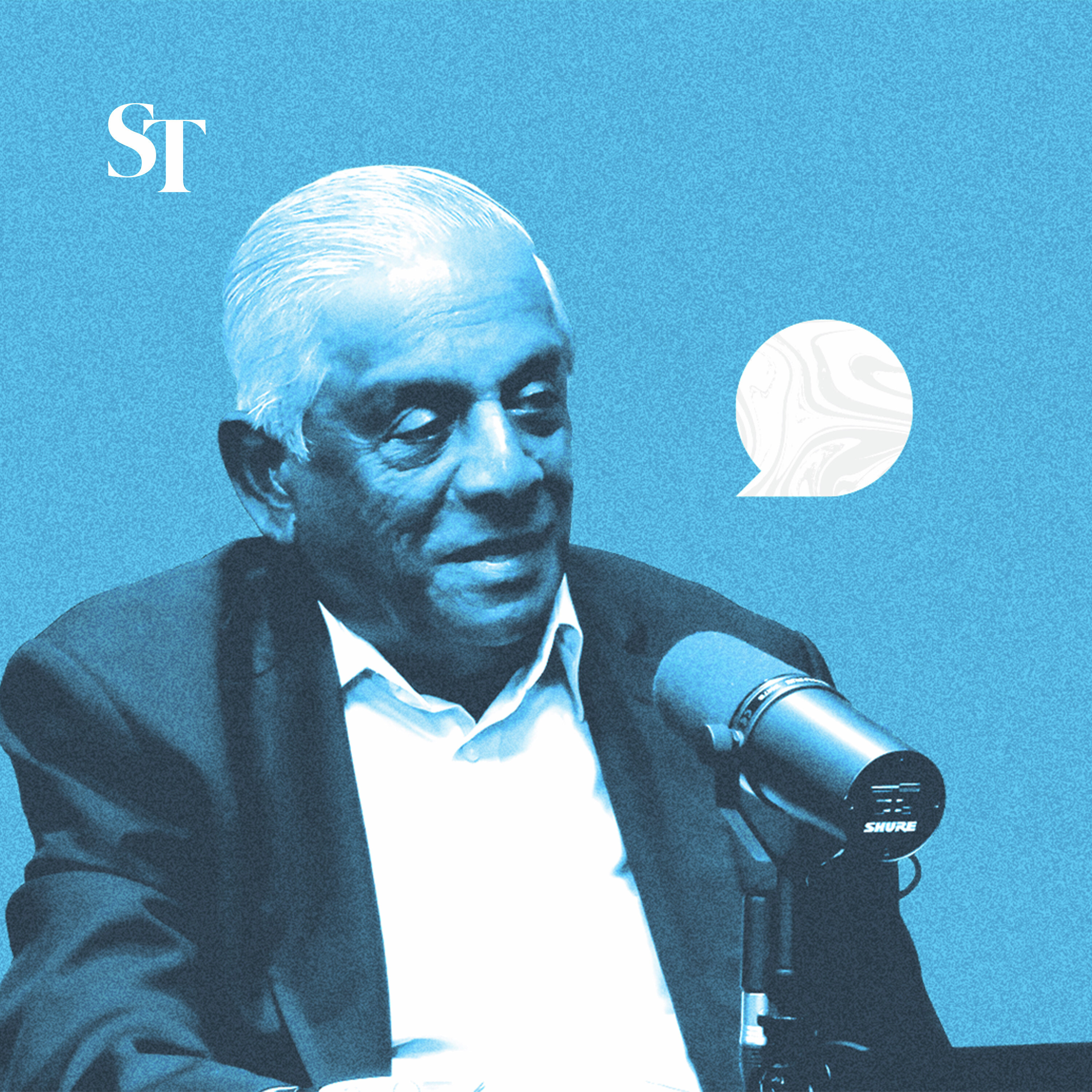 S1E87: Lee Kuan Yew arrowed me to face JB Jeyaretnam: Ex-SM S Jayakumar on being in LKY’s Cabinet 19.08.2026 54minThe former senior minister unveils the robust Cabinet debates over three defining institutions published in a new book. Synopsis: Conversations and interviews that give you something to think about. Each Wednesday, In Your Opinion speaks to thinkers, leaders, and the people shaping our lives and the issues of the day. Governing Singapore today is a tough task, made more difficult by frequent comparisons with the immediate post-independence decades - a period dominated by the towering figure of founding Prime Minister Lee Kuan Yew. Yet was Lee more open to persuasion than we realise? Was governing Singapore far more complex, nuanced and more akin to a team sport? What enabled the Singapore Cabinet to have vociferous debates on policy including the Elected Presidency, the Group Representation Constituency and the Non-Constituency Member of Parliament? And after recent developments and the power of hindsight, would one of their chief architects say they’re due for a refresh? These are the subjects of the book Creating Three Unique Singapore Laws: An Inside Story by S. Jayakumar, launched on Aug 12. In an exclusive hour-long podcast with The Straits Times opinion editor Lin Suling, he opens up on Cabinet deliberations and sheds light on a milieu in Singapore’s history after the 1981 Anson by-election, which sparked the creation of three powerful institutions that have become indelible parts of Singapore’s political system. Highlights (click/tap above): 1:44 Are recent resignations of minority Members of Parliament a setback for the GRC system? Is the GRC system due for a review? 12:58 Has public understanding on the limits of the Elected Presidency improved? 21:21 Was the NCMP scheme created to secure the ruling People’s Action Party’s dominance in Parliament? 29:26 Do PAP backbenchers pull their punches in Parliament? What was it like being J B Jeyaretnam’s “sparring partner”? 31:36 Was Lee Kuan Yew actually more open to persuasion than Singaporeans realise? 33:10 What allowed Lee’s Cabinet to have such vociferous debates? Does S Jayakumar worry about political correctness dampening discussions? What does it take to recruit capable Cabinet Ministers? 40:45 Why did a proposal on constitutional design go through DEFCO - the defence council overseeing national security? 44:00 Are any of Singapore's constitutional institutions due for a refresh? 46:59 How did S Jayakumar balance heavy ministerial portfolios with constituency duties in Bedok and family life? Creating Three Unique Singapore Laws: An Inside Story is published by Straits Times Press and available for $38.90 (excluding GST) at major bookstores and online at https://www.stbooks.sg/ Read ST’s Opinion section: https://str.sg/w7sH Follow Lin Suling on LinkedIn: https://str.sg/hiLQ Host: Lin Suling ([email protected]) Produced and edited by: Teo Tong Kai Executive producers: Danson Cheong and Lynda Hong Follow In Your Opinion Podcast here and get notified for new episode drops: Channel: https://str.sg/w7Qt Apple Podcasts: https://str.sg/wukb Spotify: https://str.sg/w7sV YouTube: https://str.sg/GjMT Feedback to: [email protected] --- Follow more ST podcast channels: All-in-one ST Podcasts channel: https://str.sg/wvz7 Get more updates: http://str.sg/stpodcasts --- Get The Straits Times app, which has a dedicated podcast player section: The App Store: https://str.sg/icyB Google Play: https://str.sg/icyX --- #inyouropinionSee omnystudio.com/listener for privacy information.
 -
 S2E48: Pay transparency: what to do after finding out a colleague’s salary is higher than yours 17.08.2026 30minWould you reveal your salary to your colleagues? What to do if you are underpaid? In this episode, ST’s own manpower correspondent Sharon Salim talks about navigating conversations around salary transparency and how being too transparent can affect workplace dynamics. Hosts Kai Wen and Sue-Ann discuss transparency being crucial to benchmarking against peers in the same industry, and whether firms discourage employees from salary transparency to maintain an advantage in salary negotiations. Highlights (click/tap above): 0:00: Intro 3:55 Utilising salary guides & public sector disparity 7:58 The impact on workplace dynamics 11:52 Downsides of transparency 15:34 Job interviews to check “market rate” 19:59 Is sharing your salary against rules 23:29 Negotiating a pay raise 27:42 Track your monthly career milestones Follow See Kai Wen on LinkedIn: https://str.sg/qfwqQ Follow Sue-Ann Tan on LinkedIn: https://str.sg/A86X Read Sue-Ann Tan's articles: https://str.sg/mvSa Hosts: See Kai Wen ([email protected]) and Sue-Ann Tan ([email protected]) Produced & edited by: Eden Soh, Fa’izah Sani and Amirul Karim Executive producer: Elizabeth Law Follow the Headstart On Record Podcast here: Channel: https://str.sg/wB2m Apple Podcasts: https://str.sg/wuN3 Spotify: https://str.sg/wBr9 Feedback to: [email protected] Get business/career tips in ST's Headstart newsletter: https://str.sg/headstart-nl --- Follow more ST podcast channels: All-in-one ST Podcasts channel: https://str.sg/wvz7 Get more updates: http://str.sg/stpodcasts Watch Headstart On Record Podcast on YouTube: https://str.sg/3psqrx --- Get The Straits Times app, which has a dedicated podcast player section: The App Store: https://str.sg/icyB Google Play: https://str.sg/icyX --- Do note: All analyses, opinions, recommendations and other information in this podcast are for your general information only. You should not rely on them in making any decision. Please consult a fully qualified financial adviser or professional expert for independent advice and verification. To the fullest extent permitted by law, SPH Media shall not be liable for any loss arising from the use of or reliance on any analyses, opinions, recommendations and other information in this podcast. SPH Media accepts no responsibility or liability whatsoever that may result or arise from the products, services or information of any third parties. --- #headstartSee omnystudio.com/listener for privacy information.
 -
 S2E83: China’s economy has a big problem: Who will keep buying? 13.08.2026 39minWhat more should we know now about this country that is central to the global economy and is playing an ever greater role in geopolitics? Synopsis: Every second Friday of the month, The Straits Times’ senior columnist Ravi Velloor distils 45 years of experience covering the Asian continent, with expert guests. In this first-ever joint episode of Asian Insider and Radio Davos, he is joined by the World Economic Forum’s Robin Pomeroy as they speak with Qian Liu, whose Wusawa Advisory helps companies understand China. It was recorded in late June at the World Economic Forum’s Annual Meeting of the New Champions 2026 in Dalian, China. Ravi and Robin discuss with Qian about how a Chinese economy built on innovation and scale is impacting the world, the mainland’s internal worry lines such as high youth unemployment and lagging consumption, and why female power could drive China’s next growth phase. Highlights (click/tap above) 4:00 Exports, joblessness, property in a slowing economy 9:00 China’s property market prospects 11:10 ‘Ageing concubine’ Europe ‘cooking up’ negativity 15:00 EVs, cognac and bubble tea 19:40 You don’t need to get fat on Chinese ice-cream 23:10 ‘Involution’ and its imperatives 25:00 Shrugging off Hormuz 27:00 China’s watching US destroy itself 33:00 Female power in China More at wef.ch/amnc26 and across social media using the hashtag #AMNC26 Produced and edited by Radio Davos: Editing - Seamus Hart, Louie Carroll Studio production: Gareth Nolan --- Read Ravi's columns: https://str.sg/3xRP Follow Ravi on X: https://twitter.com/RaviVelloor Sign up for ST’s weekly Asian Insider newsletter: https://str.sg/sfpz Host: Ravi Velloor ([email protected]) Follow Asian Insider Podcast on Fridays here: Channel: https://str.sg/JWa7 Apple Podcasts: https://str.sg/JWa8 Spotify: https://str.sg/JWaX YouTube: https://str.sg/rF3qR Feedback to: [email protected] --- Follow more ST podcast channels: All-in-one ST Podcasts channel: https://str.sg/wvz7 Get more updates: http://str.sg/stpodcasts --- Get The Straits Times app, which has a dedicated podcast player section: The App Store: https://str.sg/icyB Google Play: https://str.sg/icyX --- Discover more Radio Davos podcasts:From 'US innovates, China imitates' to 'Opportunity 2.0' - lessons from Summer Davos: https://www.weforum.org/podcasts/radio-davos/episodes/strategic-intelligence-amnc26-debrief-china-innovation/The Hormuz shock, AI and China: the state of global energy, with Jason Bordoff: https://www.weforum.org/podcasts/radio-davos/episodes/amnc26-energy-china-hormuz-oil-gas-renewables-bordoff/AMNC26: What just happened at the Summer Davos?: https://www.weforum.org/podcasts/radio-davos/episodes/amnc26-what-just-happened-summer-davos/All podcasts: wef.ch/podcasts: YouTube: https://www.youtube.com/@wef/podcasts Radio Davos: https://pod.link/1504682164Meet the Leader: https://pod.link/1534915560Agenda Dialogues: https://pod.link/1574956552 --- #STAsianInsiderSee omnystudio.com/listener for privacy information.
 -
 S1E106: Will the new National Library Board campaign get more people to read books? 13.08.2026 38minWould you read regularly if you were paid to do so? The National Library Board (NLB) is hoping that people will develop a consistent reading habit by giving readers virtual coins that can eventually be exchanged for cash. They need to spend at least 15 minutes on the activity each day. But why does the library have to incentivise us to read for fun? What do we lose when we no longer read, especially if we’re choosing to doomscroll instead? In this episode of The Usual Place, I speak with: Associate Professor Loh Chin Ee from the National Institute of Education, who researches people’s reading habits, and Chris Koh, the programme director of the National Reading Movement Highlights (click/tap above): 1:47 How was ReadSG conceptualised 3:41 Why do we have to be paid to read? 7:41 Is reading for 15 mins actually realistic? 10:45 Does reading daily create a habit? 19:16 Why we should stop calling kids “non-readers” 21:10 Will book clubs get people reading? 27:39 What do we lose when we don’t read? 32:19 S’pore’s most borrowed library book? 33:34 Book recommendations from Chris, Chin Ee and Natasha Books recommended in this episode: Maybe You Should Talk to Someone: A Therapist, Her Therapist, and Our Lives Revealed by Lori Gottlieb The Complete Chronicles of Narnia by C.S. Lewis Bang My Car by Ann Ang Ministry of Moral Panic by Amanda Lee Koe Taiwan Travelogue by Yang Shuang-zi Host: Natasha Ann Zachariah ([email protected]) Read Natasha’s articles: https://str.sg/iSXm Follow The Usual Place podcast on IG: https://str.sg/8KNT Follow Natasha on LinkedIn: https://str.sg/v6DN Filmed by: Studio+65 Edited by: Teo Tong Kai & Hadyu Rahim Executive producer: Danson Cheong Producers: Natasha Ann Zachariah, Elizabeth Law & Zachary Lim Follow The Usual Place Podcast and get notified for new episode drops every Thursday: Channel: https://str.sg/5nfm Apple Podcasts: https://str.sg/9ijX Spotify: https://str.sg/cd2P YouTube: https://str.sg/theusualplacepodcast Feedback to: [email protected] --- Follow more ST podcast channels: All-in-one ST Podcasts channel: https://str.sg/wvz7 Get more updates: http://str.sg/stpodcasts --- Get The Straits Times app, which has a dedicated podcast player section: The App Store: https://str.sg/icyB Google Play: https://str.sg/icyX -- #tup #tuptrfSee omnystudio.com/listener for privacy information.
 -
 S1E86: Dinesh Vasu Dash on Singapore’s dependence on migrant workers 12.08.2026 50minMigrant workers - we discuss the unpaid wage saga and their role in our economy. Synopsis: Conversations and interviews that give you something to think about. Each Wednesday, In Your Opinion speaks to thinkers, leaders, and the people shaping our lives and the issues of the day. The Straits Times columnist Tan Dawn Wei sits down with Minister of State for Manpower Dinesh Vasu Dash to discuss his transition to the Cabinet and how his background in healthcare for vulnerable groups shapes his approach to labour policy. The conversation tackles a major wage crisis where over 400 migrant workers went unpaid, sparking a debate on whether Singapore’s system is adequate in picking up early warning signs. The Minister of State also outlines a future with fewer but better paid migrant workers and better living conditions, concluding with a call for stronger social integration and mutual empathy between Singaporeans and migrant workers. Highlights (click/tap above): 1:38 Transitioning to the manpower portfolio: Dinesh Vasu Dash discusses how his previous role in integrated healthcare shaped his focus on safeguarding low-wage and vulnerable workers. 10:06 The unpaid wage crisis: An update on the tripartite intervention that recovered salaries for the workers left stranded. 17:37 Why ground-level officers didn't pick up the unpaid wage case earlier. 26:43 NGO recommendations and their feasibility. 28:45 Regulating recruitment debt: Examining the high upfront fees workers pay in source countries. 35:13 Foreign worker levies: Has it achieved its objective? 39:04 What will Singapore’s manpower landscape look like in 20 years? 45:26 Social integration as a two-way street. Read ST’s Opinion section: https://str.sg/w7sH Host: Tan Dawn Wei ([email protected]) Produced and edited by: Hadyu Rahim Executive producers: Danson Cheong and Lynda Hong Follow In Your Opinion Podcast here and get notified for new episode drops: Channel: https://str.sg/w7Qt Apple Podcasts: https://str.sg/wukb Spotify: https://str.sg/w7sV YouTube: https://str.sg/GjMT Feedback to: [email protected] --- Follow more ST podcast channels: All-in-one ST Podcasts channel: https://str.sg/wvz7 Get more updates: http://str.sg/stpodcasts --- Get The Straits Times app, which has a dedicated podcast player section: The App Store: https://str.sg/icyB Google Play: https://str.sg/icyX --- #inyouropinionSee omnystudio.com/listener for privacy information.
 -
 S2E82: When Japan's prisons become a safety net for the elderly 06.08.2026 22minJapan's ageing crisis has turned prisons into an unlikely safety net for lonely seniors.Synopsis: Every first Friday of the month, The Straits Times catches up with its foreign correspondents about life and trends in the countries they're based in. Japan's prisons are increasingly housing a growing number of elderly inmates, many of whom are repeat offenders convicted of minor crimes. Why would anyone choose prison over freedom? In this episode, host Li Xueying speaks with Japan correspondent Walter Sim as he takes the audience inside Tochigi Prison, Japan's largest women's correctional facility, where an unexpected trend is raising difficult questions about the country's rapidly ageing society. Some elderly women are repeatedly committing minor offences, but the reasons behind their actions may not be what you expect. Their stories reveal deeper challenges facing Japan, from loneliness and shrinking family support networks to rising care costs and an ageing population. What happens when prison becomes part of a country's social safety net? Highlights (click/tap above): 0:42 Japan's demographic challenges and prison population trends 2:23 Social dynamics within Tochigi’s prison 4:18 The paradox of prisons feeling like nursing homes 8:12 Broken social safety nets and the rise of "kodokushi" 10:31 The structural gaps in healthcare and caregivers 12:43 Japan's policy reforms towards rehabilitation 15:10 Implications of declining crime rates and prison closures Read Walter Sim’s article here:https://str.sg/kfTG Read Li Xueying’s articles: https://str.sg/iqmR Follow Li Xueying on LinkedIn: https://str.sg/ip4x Sign up for ST’s weekly Asian Insider newsletter: https://str.sg/sfpz Host: Li Xueying ([email protected]) Edited by: Natasha Liew Executive producer: Ernest Luis Follow Asian Insider Podcast on Fridays here: Channel: https://str.sg/JWa7 Apple Podcasts: https://str.sg/JWa8 Spotify: https://str.sg/JWaX YouTube: https://str.sg/rF3qR Feedback to: [email protected] --- Follow more ST podcast channels: All-in-one ST Podcasts channel: https://str.sg/wvz7 Get more updates: http://str.sg/stpodcasts --- Get The Straits Times app, which has a dedicated podcast player section: The App Store: https://str.sg/icyB Google Play: https://str.sg/icyX --- #STAsianInsiderSee omnystudio.com/listener for privacy information.
 -
 S1E105: 2 out of 3 suicide deaths are men, a psychiatrist explains why 06.08.2026 43minMillennials are the generation that changed the conversation around mental health. They normalised mental health talk, encouraged self-care and made going to therapy less taboo. So what caused the 50 per cent jump in suicide deaths among adults in their 30s in 2024? Recently released data from the annual report on registration of births and deaths by the Immigration and Checkpoints Authority showed there were 441 suicide deaths in Singapore in 2024. Suicide among adults aged between 30 and 39 increased from 66 cases in 2023 to 99 in 2024. In this episode, Natasha speaks with Dr Jared Ng, a psychiatrist and medical director at Connections MindHealth, and Anthea Ong, co-lead for a white paper for national suicide prevention strategy Project Hayat, about what’s affecting this group. We also talk about why men are still reluctant to seek help, and whether AI chatbots are valid sources of mental health support. Watch the previous TUP episode on how to help someone having suicidal thoughts: https://str.sg/3KHRV Highlights (click/tap above): 2:28 Why did millennial suicide deaths spike by 50 per cent in a year? 6:14 “I failed at something.” vs “I’m a failure.” 11:08 The challenges of living in a pressure-cooker society 13:23 The “treatment gap” problem 16:48 Do you feel safe in your workplace? 20:38 Why staff don’t trust Employee Assistance Programmes 25:13 The gender paradox about suicide 29:53 Why do men stay suicidal 34:32 Where AI chatbots can help, and where they don’t 39:57 Struggling isn’t the same as being suicidal 41:30 Not all helpline callers are in distress Helplines Mental well-being: National Mindline: 1771 (24 hours) / 6669-1771 (via WhatsApp) Samaritans of Singapore: 1-767 (24 hours) / 9151-1767 (24 hours CareText via WhatsApp) Singapore Association for Mental Health: 1800-283-7019 Silver Ribbon Singapore: 6386-1928 Chat, Centre of Excellence for Youth Mental Health: 6493-6500/1 Women’s Helpline (Aware): 1800-777-5555 (weekdays, 10am to 6pm) The Seniors Helpline: 1800-555-5555 (weekdays, 9am to 5pm) Tinkle Friend (for primary school-age children): 1800-2744-788 Mindfull Community HQ (for caregivers, families and persons in recovery): 6460-4400 (weekdays, 9am to 5pm) Counselling: Touchline (Counselling): 1800-377-2252 Touch Care Line (for caregivers): 6804-6555 Counselling and Care Centre: 6536-6366 We Care Community Services: 3165-8017 Shan You Counselling Centre: 6741-9293 Clarity Singapore: 6757-7990 Care Corner Counselling Centre: 6353-1180 Online resources: mindline.sg/fsmh eC2.sg chat.mentalhealth.sg carey.carecorner.org.sg (for those aged 13 to 25) limitless.sg/talk (for those aged 12 to 25) Host: Natasha Ann Zachariah ([email protected]) Read Natasha’s articles: https://str.sg/iSXm Follow The Usual Place podcast on IG: https://str.sg/8KNT Follow Natasha on LinkedIn: https://str.sg/v6DN Filmed by: Studio+65 Edited by: Eden Soh & Natasha Liew Executive producer: Danson Cheong Producers: Natasha Ann Zachariah, Elizabeth Law & Zachary Lim Follow The Usual Place Podcast and get notified for new episode drops every Thursday: Channel: https://str.sg/5nfm Apple Podcasts: https://str.sg/9ijX Spotify: https://str.sg/cd2P YouTube: https://str.sg/theusualplacepodcast Feedback to: [email protected] --- Follow more ST podcast channels: All-in-one ST Podcasts channel: https://str.sg/wvz7 Get more updates: http://str.sg/stpodcasts --- Get The Straits Times app, which has a dedicated podcast player section: The App Store: https://str.sg/icyB Google Play: https://str.sg/icyX -- #tup #tuptrfSee omnystudio.com/listener for privacy information.
Podcast simili


Popolare in
Questo podcast compare anche nelle classifiche dei podcast di questi paesi.


