
The Somatic Strength Collective
Mandy L Ryle
0
The Somatic Strength Collective is a podcast for midlife women dealing with persistent pain, joint stiffness, and chronic over-functioning. Host Mandy Ryle, a certified strength and conditioning specialist, pain care coach, and somatic educator, explores evidence-informed ways to build bone and muscle without triggering pain flare-ups. Episodes cover calming a hypervigilant nervous system, navigating midlife hormonal shifts, and replacing fear of age-related decline with neural and physical resilience. The show addresses factors that keep women stuck in pain and offers practical strategies they may not hear in a doctor's office.
Episodi
-
 Practice: Release Neck & Jaw Pain Through the Pelvic Floor 06.10.2026 35minDo you struggle with persistent tension, stiffness, or pain in your neck, jaw, throat, or upper shoulders (what Mandy calls the "schneck")? While biomechanics often looks at these areas in isolation, pain through a biopsychosocial lens reveals a profound connection between the base of your pelvis and the upper body.In this episode, Mandy guides you through an experiential, floor-based somatic practice designed to help you map, expand, and soften tension patterns between your pelvic floor and your neck, throat, jaw, and ears. By shifting away from forcing or stretching and moving into neuro-somatic inquiry, you will discover how intentional breath and subtle pelvic shifts create downward release through the entire spinal axis.In this episode, you will learn and experience:The Neck–Pelvis Connection: Why fight-or-flight evolutionary protection mechanisms cause the pelvic floor, jaw, and throat to contract together, often contributing to issues like constipation, clenching, and neck stiffness.Setup & Preparation: What props you need (a yoga mat or bed, and a flat pillow/blanket for comfort without elevating the neck).Directional Pelvic Floor Breathing: How to guide your breath into the anterior, posterior, right, and left quadrants of the pelvic floor to systematically decompress the throat, skull base, and cheeks.Somatic Movement Exploration: Integrating pelvic tilts, modified butterfly pose, gentle supine twists, and pelvic clock rotations to retrain nervous system holding patterns.Real-Life Integration: How to use micro-breaths in daily stressful situations (like sitting in traffic) to signal safety to your nervous system.Props Needed:A yoga mat or bed to lie onA thin blanket or low cushion under your head (for comfort, not elevation)Optional: Pillows, blocks, or wall/headboard access for leg and knee supportTimestamps / Practice Roadmap:00:00 – Why secondary neck, throat, and jaw pain show up with other conditions02:00 – Setup, initial body scan, and tuning into pelvic floor energy05:40 – Anterior tilt & front pelvic floor breath: Releasing the front of the throat10:30 – Supported butterfly pose: Downward throat stretch through slow breath13:40 – Posterior pelvic tilt & rear pelvic floor breath: Releasing the upper traps and base of the skull20:00 – Left tilt & right side expansion: Decompressing the right throat, jaw, and cheek25:40 – Right tilt & left side exploration: Inner ear, jaw, and throat release32:45 – Pelvic clock circles, full integration scan, and closing reflectionsResources & Links Mentioned:Watch the Pelvic Clock Lesson on YouTube: Moving Beyond PainExplore 100+ guided somatic practices inside the Somatic Strength Collective App. Start your 7-day free trial here
 -
When the Scan Comes Back Clean: The Three Types of Pain and Why You're NOT Crazy 29.09.2026 20minHave you ever spent 45 minutes inside an MRI machine praying for validation, only to be told everything looks completely "normal"? Or that they simply "can't find" anything to validate the pain you've been suffering with? Hearing that scans are clean can feel crushing and leave you questioning your sanity. In this episode, Mandy unpacks the three medical classifications of pain—nociceptive, neuropathic, and nociplastic (or neuroplastic)—to explain why clean scans do not mean your pain is imaginary. Discover why most persistent pain is a nervous system "software" alarm rather than structural "hardware" damage, and learn how the Somatic Strength framework helps retrain your brain for lasting relief.Episode Timestamps[00:00] – The Clean Scan Dilemma: Why "normal" results feel crushing[02:40] – Type 1: Nociceptive Pain (The Hardware Alarm & Healing Timelines)[03:46] – Type 2: Neuropathic Pain (The Wiring Issue & Sciatica Misconceptions)[05:22] – Type 3: Nociplastic Pain (The Sensitized Volume Knob & Smoke Detector Analogy)[07:44] – Free Resource: The 13-Question Neuroplastic Pain Assessment Quiz[08:44] – Hardware vs. Software: Why Injections & Surgeries Fail for Sensitized Pain[11:13] – The Somatic Strength Solution: Retraining the Brain Through Safe MovementKey TakeawaysClean Scans Image Hardware, Not Software: MRIs show bones, discs, and ligaments; they cannot measure the sensitivity settings of your central nervous system.The 6–12 Week Rule: Most soft-tissue injuries heal within 6 to 12 weeks. Pain lasting beyond that window is frequently driven by central sensitization, not unhealed damage.The Faulty Smoke Detector: In nociplastic/neuroplastic pain, your danger alarm treats everyday stress, temperature drops, or harmless movements like a five-alarm fire.Software Demands Software Solutions: Invasive structural treatments often fail when the root cause is neural sensitization. Retraining the alarm requires Pain Neuroscience Education, somatic awareness, and progressive, non-threatening movement.Resources & Links📋 Free Assessment: Download the 13-Question Neuroplastic Pain Quiz – Discover whether your symptoms stem from tissue damage or an over-sensitized alarm system.🏋️♀️ Work With Mandy: Explore the Somatic Strength Program – Rebuild movement confidence and calm your nervous system without triggering flare-ups.Connect & SupportSubscribe & Review: If this episode gave you clarity, please rate and review the show on Apple Podcasts or Spotify to help other women find real solutions for chronic pain.Instagram: @mandyleighryle | Website: EmpoweredSelf.me
-
The Vagus Nerve Explained: What Women with Persistent Pain Actually Need to Know 22.09.2026 30minIf you've spent five minutes on social media, you’ve seen 15-second reels promising to "reset" your vagus nerve with eye exercises,humming, or a $300 neck buzzer to instantly cure chronic pain, fatigue, and burnout.When these quick fixes inevitably fail, it's easy to feel defeated. But your nervous system isn't broken—it's sensitized. Understanding the Vagus Nerve is a first step to less pain and stiffness.In this episode, we cut through the hype. We explore Cranial Nerve X anatomy, unpack why viral soundbites get human neurobiology twisted, and look at what building sustained autonomic capacity actually takes for women navigating chronic pain, IBS, and hormonal transitions.Community Sponsor: Proudly presented by our dedicated listener, Lori Bruck. Thank you, Lori, for supporting independent, hype-free pain care!In This Episode, We Cover:The 15-Second Reel Problem: Why viral videos confuse temporary relief with sustained healing.Why Women Need Real Science: Central sensitization, medical dismissal, and reclaiming your agency.Anatomy 101 & The 80% Rule: Why the vagus is an upward surveillance cable, not an on/off switch.The Gadget Trap: Why direct-to-consumer wearables fail, and where clinical VNS actually belongs.4 Practical Somatic Tools: Resonant breathing, micro-movements, co-regulation, and pendulation.Key Timestamps[00:00] – The 15-Second "Reset" Myth & Why Women in Pain Need Real Science[03:45] – Community Sponsor Spotlight: Lori Bruck[04:47] – Anatomy 101: 4 Body Zones & The 80% Upward Sensory Rule[11:20] – State Shifts vs. Sustained Healing: The 15-Second Reel Trap[17:30] – The Gadget Trap: $300 Consumer Wearables vs. Clinical Depolarization[19:20] – Hormones, Perimenopause & Why Women in Pain Must Care[23:30] – 4 Somatic Practices to Send "Good News" Upstairs[32:50] – Real Medical VNS: When Prescription Neurostimulation Belongs[35:45] – Closing & The Somatic Strength Collective AppResources & LinksCurious to understand your unique level of sensitivity? Take the FREE 3 minute neural AuditThe Somatic Strength Collective App: Move beyond quick hacks. Access progressive somatic movement sessions, restorative mobility, breathwork, and pain education.👉 Start Your 7-Day Free TrialSupport the Show: Follow, rate, and leave a review on Apple Podcasts or Spotify to help other women find evidence-informed pain care.Disclaimer: For educational purposes only. Does not substitute for medical advice.
-
The Real Reason Your Back Is Stiff: And How To Finally Break Free! (Part 2) 15.09.2026 35minIf you’ve spent years trying to move with a "flat back" or bracing your core like you're about to be punched, you’ve likely noticed that it doesn't really reduce your pain. If anything you are just getting tighter and more uncomfortable. Conventional fitness advice tells us to stabilize and stiffen to protect our spines, but modern pain science reveals a different reality.Your nervous system has likely forgotten how to let go of the "emergency brake," a phenomenon known as sensory motor amnesia. In this episode, we move from the theory of last week into a clear, evidence-based roadmap for teaching your body that it is safe to be supple, mobile, and strong again.What You’ll Discover:The Flexion Relaxation Paradox: Why healthy spines actually "shut off" their muscles when bending forward, while pained backs stay stuck in a hyper-vigilant electrical fire.The Ischemia of Bracing: How white-knuckle core clenching chokes off blood supply to your tissues, triggering the very pain you’re trying to avoid.The 12-Week Roadmap: A look at the 4 distinct phases—from floor-based somatics to progressive resistance—required to rebuild a body that can lift groceries or barbells without fear.Referenced Science:Van Dieen, J. H., et al. (2019). "Trunk muscle recruitment patterns in patients with low back pain." PubMedGeisser, M. E., et al. (2005). "A meta-analytic review of surface electromyography among persons with low back pain and normal, healthy controls." PubMedKarayannis, N. V., et al. (2013). "Fear of movement is related to trunk stiffness in low back pain." PubMedStep-by-Step Somatic Strength:Try the Somatic Strength Collective App (7-Day Free Trial)Free Fear Avoidance Self-Assessment:Free Move Beyond Pain RoadmapBook a Strategy Session with Mandy: Timestamps[00:00] - Intro: Dismantling the Bracing Myth.[03:38] - The "Emergency Brake" Habit.[06:33] - Research: The Stiffening Strategy.[07:44] - The Flexion Relaxation Phenomenon.[15:52] - Understanding Sensory Motor Amnesia.[20:53] - The Danger of OSHA Advice.[24:21] - Phase 1: Calming the System.[28:40] - Phase 2: Floor-Based Somatics.[31:30] - Phase 3: Graded Standing Exposure.[34:58] - Phase 4: Progressive Tissue Resilience.[45:08] - Reclaiming a Liberated Life.
-
Why "Good Form" Won't Save Your Back: What Science Actually Says About Bending Under Load 08.09.2026 27minIf there is one movement that strikes terror into women with a history of back pain, it’s bending forward under load—specifically, the deadlift. For decades, we’ve been told: "Bend with your knees, never your back," and "If you round your spine, you’ll slip a disc."In Part 1 of this two-part series, Mandy Ryle, CSCS, dismantles the myth of "perfect form." Drawing on landmark biomechanical research, Mandy explains why your spine evolved to bend, why arched backs spike spinal compression, and how fear-mongering and the nocebo effect cause your back to seize before you even lift.Timestamps: 00:27 – The Deadlift Boogeyman & Fear-Based Cues 02:46 – What Science Says About Spinal Flexion (Saraceni, 2020) 04:15 – Why Elite Powerlifters Flex 20°–30° Under Load 04:54 – The Lordotic Paradox: Arched Backs & Disc Compression 06:20 – How Natural Flexion Recruits Posterior Fascia 07:03 – Evolutionary Anatomy: A Spine Built to Bend 08:59 – The Myth of the "Laser-Straight" Neutral Spine 10:58 – The Form Fallacy: Why Bad Form Doesn't Guarantee Injury 12:48 – The Real Driver: Load vs. Capacity 15:11 – Volume Spikes, Sleep Debt & Allostatic Load 19:40 – Midlife Realities: Estrogen Shifts in Perimenopause 22:30 – Predictive Protection: When the Brain Flags Sensation as Threat 24:35 – The Nocebic Cost of "Jelly Donuts" & "Teacups" 27:10 – Hyper-Vigilant Guarding: How Fear Triggers Spasms 28:40 – Rebuilding Spinal Confidence 30:21 – Key Takeaways & Part 2 PreviewKey Takeaways: • Neutral spine is an adaptable, dynamic zone—not a rigid line.• Research shows no consistent link between spinal flexion and back pain.• Forcing an arched back under load causes muscles to clamp, increasing spinal compression.• Pain flares happen when load exceeds capacity (sleep, stress, recovery), not form alone.• Your back isn't weak—it's often stuck in protective threat guarding.Studies Referenced: • Saraceni et al. (2020): Spinal Flexion & Low Back Pain• Arjmand & Shirazi-Adl (2005): Posture & Spinal CompressionResources & Next Steps: • Free Fear Avoidance Self-Assessment: Discover how much threat guarding is driving your stiffness• Free Move Beyond Pain Roadmap: 50-page guide to overcoming persistent pain• Book a Strategy Call with Mandy: Explore guided program options for your budget• The Somatic Strength Collective App (7-Day Trial)Share this episode with a friend who has been afraid to lift, and subscribe for Part 2 next week!
-
Stiff Lower Back & Spasms? How to Calm Muscle Guarding (Bed Practice) 01.09.2026 25minIf you wake up feeling like the "Tin Man"—stiff, locked up, or terrified that the slightest bend or twist is going to flare your lower back—this episode is for you.When lower back tightness persists despite stretching, chiropractic adjustments, or medical procedures, the issue often isn't just in the physical tissues. Over time, your nervous system puts up "yellow caution tape" around your spine, using muscle guarding, protective tension, and fear to keep you from moving.In this episode, we duck under that caution tape with a gentle, zero-load somatic movement and breath practice you can do right from your bed. You'll learn how to calm protective muscle spasms, challenge threatening beliefs about movement, and send safety signals back to your nervous system.In This Episode, We Cover:The "Tin Man" Back: Why chronic stiffness often persists after injections, chiro, and aggressive stretching.Muscle Guarding & The Nervous System: How fear, beliefs, and protective tension create scaffolding around your spine.Zero-Load Exploration: Why practicing supine in bed removes mechanical load so your brain can register safety.Directional Breathwork: How to use your breath to test safety thresholds in your belly, side body, and lumbar spine.Gentle Somatic Pelvic Tilts & Twisting: Safe, graded exposure to flexion, extension, and rotation without poking the bear.Timestamps00:00 – Why chronic lower back stiffness resists traditional treatments02:07 – The role of thoughts, beliefs, and nervous system guarding in back pain03:14 – Setup: Preparing your body in bed (no equipment needed)04:14 – Somatic body scan: Observing sensation and neutral alignment without judgment06:47 – Directional breathing: Belly vs. side-body expansion and safety ratings09:58 – Low back breath expansion: Confronting protective tension11:35 – Somatic pelvic tilts: Inhale expansion & posterior tilt14:46 – Exploring gentle lumbar extension (anterior pelvic tilt)17:08 – Windshield wiper hip releases: Safe, zero-load rotational movement21:12 – The "Caution Tape" concept: Why your nervous system tries to shoo you away24:11 – Squeezing into the arch: Safely challenging deep protective bracing25:44 – How retraining beliefs calms tissue tension and chronic inflammation27:00 – Side-lying rest and integration28:54 – How to build a consistent somatic practice with the Somatic Strength CollectiveReady for More Consistent Relief?Healing chronic pain requires repeated safety inputs to your brain and body. To access hundreds of guided somatic practices, strength training routines, and pain care education, start your 7-Day Free Trial inside the Somatic Strength Collective App:👉 [Join the Somatic Strength Collective App Free for 7 Days]
-
Your Body Is Not a Machine: Why The Mechanistic Model of The Body Keeps You Stuck. 25.08.2026 23min📘 FREE EBOOK: The Move Beyond Pain in Perimenopause Roadmap👉 Download Your Free Copy Here(Get the full step-by-step framework, workbook prompts, and linked video practices to put this episode into action right away!)Episode SummaryHave you been told your knees are "bone-on-bone," your spine is wearing out like brake pads, or that joints simply degrade after too many miles? You have been sold The Machine Myth.In this episode of The Somatic Strength Collective, Mandy Ryle dismantles the 400-year-old mechanistic worldview that treats human bodies like factory engines. Unlike cars, living organisms don't break down when loaded—they biologically adapt and get stronger. Discover how your bones, muscles, tendons, and nervous system adapt to mechanical stress, and learn the 6-Step Roadmap my clients use to escape fear-avoidance, build real capacity, and move without pain.⏱️ Timestamps00:34 – The Elementary School Myth: Why comparing your body to a car causes suffering02:59 – The History of Mechanistic Medicine: Descartes, factories & wear-and-tear mindset05:22 – Biological Adaptation: How bones (Wolff's Law), muscles & tendons adapt to load07:35 – Why Rest Makes Tendons Worse: Tendinopathy research (Peter Malliaras & Jill Cook)10:00 – Neuroplasticity & Adaptation: Are you adapting toward stiffness or strength?12:19 – Why Muscle Guarding Happens: Your muscles listen to your beliefs14:32 – The 6-Step Roadmap to Escape the Avoidance Cycle14:32 – Step 1: Education (Pain Neuroscience)16:44 – Step 2: Awareness (Interoception & Objective Data)18:00 – Step 3: Graded Exposure (Somatic Resets)19:08 – Step 4: Addressing All Factors (The Biopsychosocial Stress Bucket)20:20 – Step 5: Challenge (Progressive Overload & Strength)21:29 – Step 6: Pain Care Planning (Managing Future Flares)22:44 – How to Download The Move Beyond Pain Roadmap eBook🔑 Key TakeawaysBodies Adapt, Machines Degrade: Mechanical load builds bone density (Wolff's Law), synthesizes muscle protein, and remodels tendon fibers. Complete rest increases stiffness.Nervous Systems Adapt Too: Chronic bracing shrinks your movement tolerance. Micro-doses of safe movement update threat gating in the motor cortex.The 6-Step Process: Healing requires a structured shift from education and interoception into somatic graded exposure, lifestyle stress management, progressive strength, and long-term flare planning.🔗 Connect & Next Steps📘 Free eBook: Move Beyond Pain Roadmap📱 App Trial: 7-Day Free Trial of Somatic Strength Collective🌐 Website: empoweredself.me
-
The #1 Predictor of Chronic Pain (It’s Not What Your MRI Shows) 18.08.2026 29minHas your journey to find pain relief hit a dead end? You've faithfully done all the scans, the exercises, the pills and procedures. But pain is still taking up your precious time and energy, and money...In this episode of The Somatic Strength Collective, Mandy Ryle uncovers a game-changing truth: fear-avoidance is the single strongest predictor of whether pain becomes chronic and disabling—far outweighing what your MRI shows or how much pain you're in.Discover why resting tight joints often backfires, how somatic movement deconditions your brain's threat alarm, and a real-life case study of overcoming fear-induced bracing. Plus, take a 5-question self-inquiry audit to see if fear-avoidance is quietly shrinking your life.⏱️ Timestamps00:07 – The Detective Trap: Why we still hurt after following the rules02:51 – The Research: Why fear-avoidance trumps MRIs & tissue damage06:59 – Confronting pain vs. the avoidance spiral11:27 – The Biopsychosocial Model: Why pain is more than physical tissue13:29 – Why hasn’t your doctor or PT addressed fear-avoidance?17:31 – Client Story: Overcoming lifelong bracing & scar tissue23:25 – Subtle Avoidance: Hidden rules about bending and lifting25:35 – 5-Question Self-Inquiry: Are you trapped in fear-avoidance?29:56 – Next Steps: Download the Fear-Avoidance Audit PDF🔑 Key TakeawaysFear Trumps Scans: Studies show fear of movement predicts disability more accurately than tissue damage or pain intensity.Avoidance Hypersensitizes: Avoiding movement expands your brain’s threat detection zone, making you more sensitive over time.Conditioned Responses Can Be Unlearned: Somatic movement takes feared movements out of high-stress contexts so your nervous system can stand down.📚 Scholarly CitationsVlaeyen, et al. (1995). The role of fear of movement/(re)injury in chronic low back pain. Pain.Crombez, et al. (1999). Pain-related fear is more disabling than pain itself. Pain.Fritz, et al. (2001). Fear-avoidance beliefs and the progression to chronicity. Phys Ther.Gatchel, et al. (2016). The biopsychosocial approach to chronic pain. Psychol Bull.🔗 Resources & Links📥 Free Download: The Fear-Avoidance Audit PDF📱 Free Trial: Somatic Strength Collective App🌐 Website: empoweredself.me
-
When Your Body Won't Let You Work Out: Two Keys To Move Beyond Pain 11.08.2026 34minYou know you need to strength train in midlife to protect your bones, muscle mass, and metabolic health. But every time you try to lift weights or join a class, your back seizes, your knees throb, or your neck locks up. You are trapped in the Midlife Exercise Catch-22: terrified of losing mobility if you don't lift, but terrified of crippling pain if you do.In this episode, Mandy Ryle breaks you out of that all-or-nothing trap. Clinical evidence shows progressive exercise isn't something you earn after you're out of pain—it is the primary treatment for chronic pain itself. Discover why rest makes tendons stiffer, how progressive overload retrains a hyper-vigilant nervous system, and how Graded Exposure is somatic strength, and allows you to build strength without flaring!Timestamps00:00 – The Midlife Exercise Catch-2201:19 – The Real Purpose of Somatics: Getting Strong02:15 – Estrogen Decline, Muscle Loss & Bone Health05:37 – Muscle as Your Primary Metabolic Organ07:44 – Why Mainstream Fitness Advice Fails Pain Sufferers09:51 – The Science: Exercise as #1 Chronic Pain Treatment11:42 – Research on Osteoarthritis & Joint Health13:01 – Why Tendons Need Loading, Not Rest15:03 – Desensitizing Nervous System Threat Algorithms18:26 – Graded Exposure: Micro-Dosing Resistance20:20 – Movement Variables to Prevent Flare-UpsKey TakeawaysThe Midlife Catch-22: Declining estrogen makes loading mandatory, but traditional workout intensity triggers protective nervous system flare-ups.Rest Makes Tendons Worse: Tendinopathies and osteoarthritis require controlled mechanical load to remodel tissue. Rest increases stiffness.Graded Exposure is the Key: Micro-dosing resistance and tweaking variables (range of motion, tempo, load) builds strength safely in the "Goldilocks zone."Scientific Research CitedHayden et al. (Cochrane Review): 240+ RCTs showing progressive exercise outperforms passive care for pain and disability.Fransen et al. (Cochrane Review): Therapeutic exercise produces OA pain reductions comparable to NSAIDs without gut side effects.Malliaras & Lewis: Tendons require progressive mechanical load to remodel; rest increases sensitivity.Geneen et al.: Exercise consistently improves function and quality of life across persistent pain conditions.Resources & Links📲 7-Day Free Trial: Join the Somatic Strength Collective App.📊 Free Neural Audit: Evaluate your nervous system threat level with The Neural Audit.📘 Free Guide: Download The Move Beyond Pain in Perimenopause Roadmap.ConnectYouTube: Watch full video breakdowns on YouTube.Website: Programs & coaching at Empowered Self.Disclaimer: Educational purposes only; not medical advice.
-
Sciatic Pain in Midlife: Why Deep Stretching Backfires (And What to Do Instead) 06.08.2026 33minIf you’ve been dealing with shooting, burning, or aching discomfort through your lower back, hip, glute, or down the back of your leg, you’ve probably been told it’s "sciatica"—and your immediate instinct was likely to yank on your hamstrings or aggressively stretch your piriformis.But what if deep stretching is actually making your sciatic pain worse?In this special experiential episode of The Somatic Strength Collective, we are dispelling one of the most widely misunderstood pain conditions in midlife. Nerves don't want to be aggressively pulled or strained; they need room to glide and slide freely through surrounding tissues.Grab a comfortable spot on a yoga mat or carpeted floor as Mandy Ryle guides you through a gentle, restorative somatic practice blending somatic education, nerve mobilization, and gentle breathwork. You’ll learn how slow, non-judgmental movement acts like a 3D printer for your brain's internal map, allowing both physical bracing and emotional residue to melt away.Access this practice on YouTube if you prefer video guidance: https://youtu.be/FxyJUvU5vAk⏱️ Key Timestamps:00:00 – The Sciatica Trap: Why aggressive stretching isn't fixing your leg pain02:50 – Tissues vs. Nervous System: Understanding nerve mobility & sensitivity05:55 – Guided Breathwork: Establishing baseline neural safety before moving09:07 – Sensory 3D Printing: How slow micro-movements restore muted body maps11:55 – Nerve Mobilization: Safe, gentle nerve gliding for sciatic relief20:52 – Moving Without an Agenda: Releasing physical bracing & emotional residue26:56 – Continuing Your Practice: Accessing guided resets inside the Collective App🔗 Links & Resources Mentioned:📊 Take the Free 2-Minute Neural Audit: Uncover where your nervous system is on its journey and get your personalized next step: https://empoweredself.me/free-neural-audit-quiz-for-perimenopausal-pain/📱 Access the Free Nervous System Reset Library: Practice guided somatic resets inside The Somatic Strength Collective App: https://empoweredself.me/the-somatic-strength-collective/🌐 Connect with Mandy: Book a free strategy call to chart your holistic path away from persistent pain: https://empoweredself.me/free-strategy-session/💬 Key Quote from the Episode:"Nerves don't want to be yanked on—they need to glide and slide through their tissues. When we stop chasing a deep stretch and start moving without an agenda, the nervous system finally gets the message that it is safe to let go." — Mandy Ryle
-
Doing All the "Right" Exercises but Still in Pain? Here's Why 06.08.2026 34minHave you ever decided to get back to fitness—picking up a light set of dumbbells, going for a short walk, or following a simple 10-minute video—only to end up in a severe pain flare-up two days later?When your back seizes, your neck locks, or your knees throb after doing everything "right," it’s easy to feel betrayed by your own body. But the problem isn't your joints, your muscles, or your willpower. The problem is that your brain is relying on an outdated map.In this episode of The Somatic Strength Collective, Mandy Ryle breaks down the neuroscience of the somatosensory cortex (your brain's internal GPS). You’ll discover why standard stretching and PT exercises often fail when the brain lacks a clear map, how decades of chronic stress and over-functioning lead to "sensory amnesia," and why somatic movement is the key to exercising without triggering pain flares.⏱️ Key Timestamps:00:23 – The Midlife Fitness Catch-22: Why scaling back still results in pain flares02:05 – Moving from intellectual understanding to true cellular embodiment06:02 – The Somatosensory Cortex: Understanding your brain’s internal GPS09:30 – Sensory Amnesia & "Smudged" Maps: How stress and pain blur your brain's perception17:44 – The "Driving in a Blizzard" Analogy: Why pain is a protective output, not structural failure21:28 – What Somatic Movement IS (and isn't): 3D printing new body maps with slow awareness28:35 – Client Case Study: How "Leah" re-mapped her chronic knee pain and returned to an active life34:40 – Free Resource: Download The Perimenopause Roadmap for Moving Beyond Pain🔗 Links & Resources Mentioned:📖 Download the Free eBook: Get The Perimenopause Roadmap for Moving Beyond Pain to understand how your nervous system adapts in midlife: https://empoweredself.me/move-beyond-pain-roadmap-ebook/📱 Access the Free Nervous System Reset Library: Explore guided somatic resets inside The Somatic Strength Collective App: https://empoweredself.me/the-somatic-strength-collective/🌐 Connect with Mandy: Book a free strategy call to map out your personalized path away from persistent pain: https://empoweredself.me/free-strategy-session/💬 Key Quote from the Episode:"You didn't end up in pain because the exercise was bad or dangerous. You ended up in pain because your nervous system was driving in a blizzard on a blurry map—and pain was the only emergency brake it had left." — Mandy Ryle
-
The Over-Functioning Trap: Why Midlife Pain Isn't Age-Related Decline 06.08.2026 30minIf you have tried everything to get out of chronic pain—stretching, resting, pushing through, buying every gadget, and seeing specialist after specialist—and you still feel frustrated, bewildered, and broken... I have a life-changing truth for you:Your body is not broken. It is highly, beautifully protective.In this premiere episode of The Somatic Strength Collective, we are dismantling the pervasive myth of age-related decline. We explore why decades of chronic over-functioning—holding it all together, pushing through fatigue, and ignoring body boundaries—train your nervous system to operate like a hyper-sensitive security system.You’ll learn why chronic pain in midlife is rarely about deteriorating joints or a lack of discipline, and how shifting from frustration to curiosity is the first step toward building a body that feels reliable, strong, and safe.In This Episode, We Cover:The Over-Functioning Loop: How powering through daily stress creates a low-grade threat state that locks physical tension into your tissues.The Science of Hypervigilance: How the persistent, bewildering pain you are experiencing is a manifestation of a nervous system that’s just trying to keep you safe.Pain as an Output, Not an Input: Understanding how your brain creates protective responses—and why aggressive stretching or pushing through often backfires.The 1-Minute Somatic Check-In: A gentle, real-time exercise to identify where your body is actively bracing right now (jaw, shoulders, belly) It’s like telling your nervous system, “hey, I’m paying attention now, you can stop acting up.”🔗 Links & Resources Mentioned:📊 Take the Free 2-Minute Neural Audit: Uncover where your nervous system is on its journey and get your personalized next step: https://empoweredself.me/free-neural-audit-quiz-for-perimenopausal-pain/📱 Access the Free Nervous System Reset Library: Download The Somatic Strength Collective App to access short, 3-to-5-minute guided audio resets whenever you notice bracing: https://empoweredself.me/the-somatic-strength-collective/🌐 Connect with Mandy: Book a free strategy call to chart your holistic path away from persistent pain https://empoweredself.me/free-strategy-session/⏱️ Key Timestamps:00:00 – The Great Frustration: Why your body isn't actually broken03:00 – The Over-Functioning Loop: How powering through creates physical tension08:00 – The Science of Hypervigilance: Understanding pain as a protective brain output12:00 – The 1-Minute Somatic Check-In: Uncovering your hidden bracing patterns in real-time15:00 – Shifting from frustration to curiosity & accessing the Neural Reset Library
-
The Yin Yoga Podcast is Evolving: Welcome to The Somatic Strength Collective 30.07.2026 3minWelcome to the next chapter! After a period of quiet evolution behind the scenes, The Yin Yoga Podcast is officially becoming The Somatic Strength Collective.In this short rebrand trailer, I’m sharing why this shift is happening and how we are bridging the gap between clinical pain neuroscience, somatic movement, and bone-building strength training.If you are a midlife woman who feels like you can hold up the sky, but worry your body is falling apart—you are in the right place. We are moving away from the narrative of age-related decline and stepping into true physical and neural resilience.In This Short Episode, You'll Discover:Why We’re Evolving: How The Yin Yoga Podcast has grown into a dedicated space for holistic pain care and nervous system regulation.The Midlife Myth: Why aging does not mean an inevitable slide into fragility, and why softening alone isn't enough.Somatic Strength Defined: Bridging the gap between clinical science and felt-sense intuition to build a body that feels reliable, strong, and stable.What to Expect Next: How our upcoming weekly episodes will help you safely load your tissues and move beyond pain—without adding another grueling task to your to-do list.Links & Resources Mentioned:📊 Take the Free 2-Minute Neural Audit: Uncover where your nervous system is on its journey and get personalized next steps: Take the Audit📱 Explore The Somatic Strength Collective App: Start your free 7-day trial for guided programs customized to you: Join the Collective 🌐 Connect with Mandy: Visit EmpoweredSelf.meTimestamps: 00:00 - Welcome back! Mandy introduces the new focus of the podcast01:18 - Mandy’s background in pain neuroscience, strength, and anatomy02:17 - Debunking aging myths: musculoskeletal fragility is not inevitable02:46 - The vision of building resilience rather than just softening tissues03:14 - What to expect from the newly branded Somatic Strength Collective03:42 - Moving from symptom management to vibrant aging and vitality04:11 - Closing thoughts and upcoming episodesResources & Links:Let's Be Social!InstagramFacebook
-
 Yin & Somatics: Thoracic Expression 22.03.2023 1h 8minThe upper back is an area that can be a big source of tension and even pain. We also have a fair amount of cultural baggage around the appropriate way to hold our upper back. Even in the Yoga world, we tend to favor a stiff and straight upper back above other shapes. But the upper back is capable of so much more, and I believe we suffer when we get locked in to a specific posture or expression. In this practice, we explore the capacity of the upper back to generate movements, sensations and even emotions. We will use a somatic lesson adapted from Feldenkrais Method® supported by familiar Yin Poses. Your upper back and neck will really benefit from this practice. Transformational Self CareA Late Winter Wellness Retreat in the Dominican RepublicMarch 3-10, 2023Join me for a 7 day Caribbean wellness retreat. Each day we will focus on a pillar of self care. By the end of the week you will have a group of new friends, some unforgettable memories and a personal self care strategy to enhance your life back at home. Learn More Let's connect! Follow me on: FacebookInstagramTicTocYouTubeFree Resources:Master the Yin Yoga Pose Repertoire: 7 Day Email CourseIntroduction to Pain Care YogaPractice Gallery Workbook - 6 go to sequences with pictorial instructions
 -
 Yin & Somatics: Heartfelt Good Wishes 25.01.2023 51minThis movement practice is supported by a form of meditation known as a Koan. Essentially a line of inquiry that you explore quietly. This type of meditation can lead to profound insight and transformation. Your movement will focus on the lower body with a progressive sequence of twists. This is a sweet and inquisitive practice that will leave you feeling calm and centered. Transformational Self CareA Late Winter Wellness Retreat in the Dominican RepublicMarch 3-10, 2023Join me for a 7 day Caribbean wellness retreat. Each day we will focus on a pillar of self care. By the end of the week you will have a group of new friends, some unforgettable memories and a personal self care strategy to enhance your life back at home. Learn More Let's connect! Follow me on: FacebookInstagramTicTocYouTubeFree Resources:Master the Yin Yoga Pose Repertoire: 7 Day Email CourseIntroduction to Pain Care YogaPractice Gallery Workbook - 6 go to sequences with pictorial instructions
 -
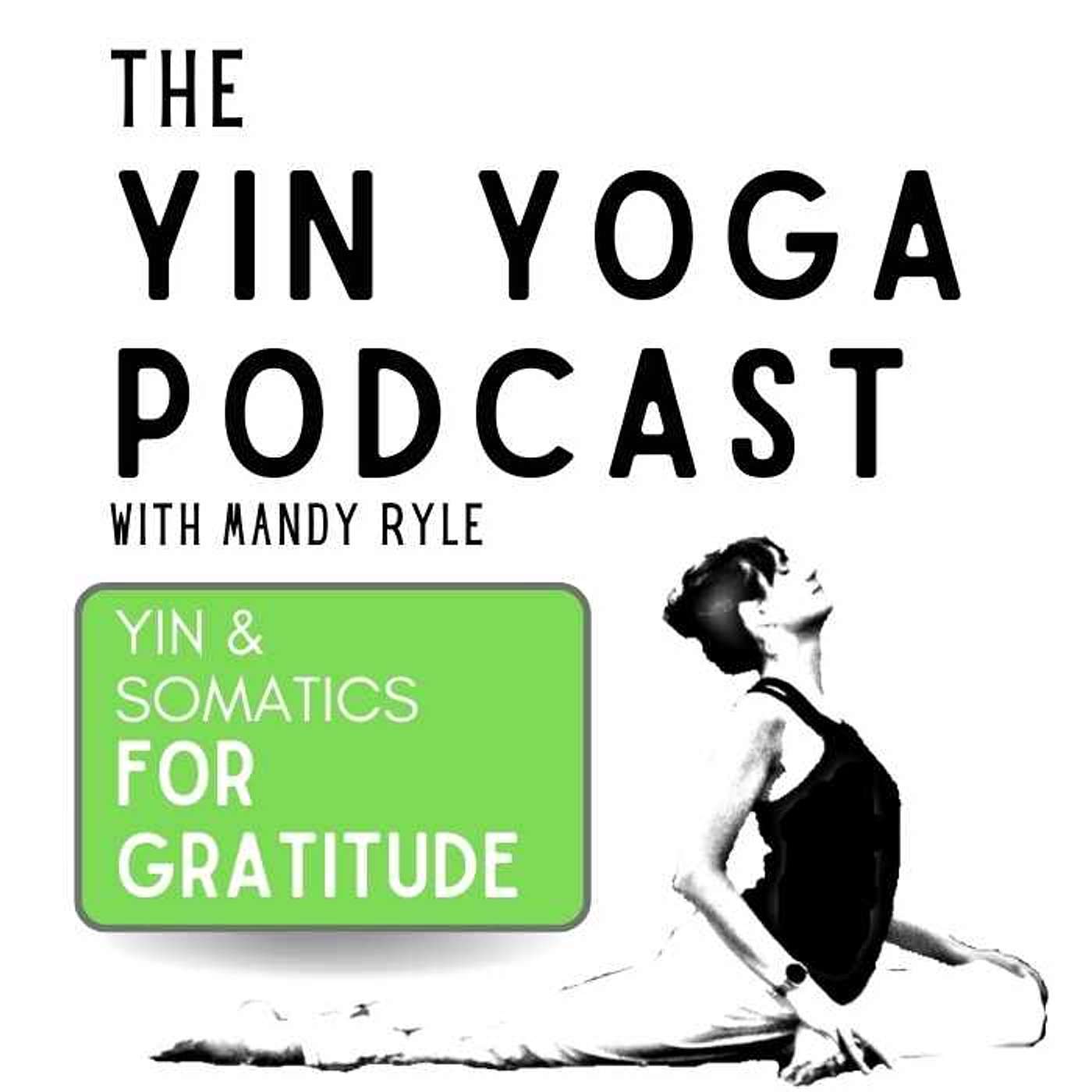 Yin & Somatics for Gratitude 25.11.2022 1h 31minGratitude is a practice just like any other. It requires effort, even when it's challenging. But it's worth it. People who commit to a more grateful existence experience better physical and mental health, more happiness and closer relationships. For this practice we will not look outside of self but deep within to the very building block of life, the cell. We will build a foundation of embodied gratitude FOR the body. This is a live practice event and is extended to provide plenty of time for you to marinade in the poses, the movements and the meditation. Props needed: Bolster, blocks, blanket and strapTransformational Self CareA Late Winter Wellness Retreat in the Dominican RepublicMarch 3-10, 2023Join me for a 7 day Caribbean wellness retreat. Each day we will focus on a pillar of self care. By the end of the week you will have a group of new friends, some unforgettable memories and a personal self care strategy to enhance your life back at home. Learn More Let's connect! Follow me on: FacebookInstagramTicTocYouTubeFree Resources:Master the Yin Yoga Pose Repertoire: 7 Day Email CourseIntroduction to Pain Care YogaPractice Gallery Workbook - 6 go to sequences with pictorial instructions
 -
 Wall Yin: Releasing Grudges 04.11.2022 38minAll of us tend to hold little grudges against our bodies. Maybe you can't do something as well as you used to, or pain casues you to opt out of things you really want to do. This is a wall practice which will focus on healthy and happy range of motion for the hips and knees. But we will also explore a simple meditation on the benevolent and loyal body. Perhaps we can release a few grudges we've been holding and replace them with something more affirming. All you need for practice is a wall, though some might like to use a blanket, pillow or block. To view the pose gallery for this practice please visit: https://yoga.mandyryle.com/wall-yin-releasing-grudges/Transformational Self CareA Late Winter Wellness Retreat in the Dominican RepublicMarch 3-10, 2023Join me for a 7 day Caribbean wellness retreat. Each day we will focus on a pillar of self care. By the end of the week you will have a group of new friends, some unforgettable memories and a personal self care strategy to enhance your life back at home. Learn More Let's connect! Follow me on: FacebookInstagramTicTocYouTubeFree Resources:Master the Yin Yoga Pose Repertoire: 7 Day Email CourseIntroduction to Pain Care YogaPractice Gallery Workbook - 6 go to sequences with pictorial instructions
 -
 YinRestore: In The Loop 03.03.2021 1h 4minThis is a super restorative-y Yin practice. We will be taking the common Supta Padangusthasana series (supine hand to big toe) in a VERY creative and supported way. As you melt into these poses I'll get you into the loop as well about your hamstrings. Yogis get a lot of misinformation about stretching and no area is as misunderstood as the hamstrings. As you practice, I offer some information about stretching that you can apply immediately. The change in perspective is sublime and I hope you walk away from your class not with longer hamstrings but with a greater appreciation for your unfathomably wonderful body. You will need a long Yoga strap (belt) for this class. If you are on the taller side, an 8-10 foot strap is necessary. You will also want to have pillows, blankets, bolsters, or other cushiony stuff around.If you would like to learn more about what I do, please visit my website: http://yoga.mandyryle.com/--- Send in a voice message: https://anchor.fm/mandy-l-ryle/messageLet's connect! Follow me on: FacebookInstagramTicTocYouTubeFree Resources:Master the Yin Yoga Pose Repertoire: 7 Day Email CourseIntroduction to Pain Care YogaPractice Gallery Workbook - 6 go to sequences with pictorial instructions
 -
 Yin + Mindfulness: The Panacea 19.01.2021 1h 4minWe are living through an incredibly stressful time. As we struggle with Covid-19 we are also experiencing extreme political unrest. It's hard not to let it get to you. Here is a practice to take a break, heal, gain perspective, self regulate. Mindfulness is just the most important tool that most of us aren't making full use of. This is a guide to employing mindfulness in your Yin practice but you will learn tools to use all the time. You will be amazed at how great you feel at the end of this hour. For class you will need some pillows and a blanket. If you have a Yoga bolster, blocks, blanket those will be handy. For more information on me and my teaching, please visit http://yoga.mandyryle.com/--- Send in a voice message: https://anchor.fm/mandy-l-ryle/messageLet's connect! Follow me on: FacebookInstagramTicTocYouTubeFree Resources:Master the Yin Yoga Pose Repertoire: 7 Day Email CourseIntroduction to Pain Care YogaPractice Gallery Workbook - 6 go to sequences with pictorial instructions
 -
 Nest: Safety and Surrender in Practice 08.09.2020 1h 3minOhhhh Yogis I LOVE this practice. This is one I often teach when I travel. It's novel and fresh. It also feels so amazing. You'll be using a blanket throughout practice as a nest and prop. Some of the positions are a little different so just follow along step by step and you will love how supported you feel. We explore polyvagal theory in an experiential way in this practice. I want for you to feel safe, supported and peaceful in this class. Please have a look at my free online course, foundations of Yin Yoga: https://online.soundmethodyoga.com/project/foundations-of-teaching-yin-yoga/--- Send in a voice message: https://anchor.fm/mandy-l-ryle/messageLet's connect! Follow me on: FacebookInstagramTicTocYouTubeFree Resources:Master the Yin Yoga Pose Repertoire: 7 Day Email CourseIntroduction to Pain Care YogaPractice Gallery Workbook - 6 go to sequences with pictorial instructions
Podcast simili


Popolare in
Questo podcast compare anche nelle classifiche dei podcast di questi paesi.
