
Explaining Ukraine
UkraineWorld
0
Explaining Ukraine is a podcast produced by UkraineWorld.org, a multimedia project about Ukraine run by Internews Ukraine. Each episode breaks down aspects of Ukrainian politics, society and culture for an international audience. The show aims to give context and analysis that go beyond headlines, drawing on journalists, experts and commentators. Listeners can support the project through its Patreon page.
Episodi
-
 Religion in Ukraine - with Cyril Hovorun 07.10.2026 40minWhat role does religion play in Ukraine? How pluralistic is the country’s religious landscape? Which Christian denominations are the most influential, and how does Christianity coexist with Islam and Judaism? Why is Ukrainian Orthodoxy divided, and what is the story behind the emergence of an autocephalous Orthodox Church of Ukraine? And how does Russia use its branch of Orthodoxy in Ukraine as an instrument of political influence and propaganda? *** Host: Volodymyr Yermolenko, a Ukrainian philosopher, editor-in-chief of UkraineWorld, and president of PEN Ukraine. Guest: Archimandrite Cyril Hovorun, a prominent Ukrainian theologian. *** Explaining Ukraine is a podcast by UkraineWorld, an English-language media outlet about Ukraine brought to you by Internews Ukraine. We thank the Ukrainian History Global Initiative for helping us to organize this conversation. *** Listen on various platforms: https://li.sten.to/explaining-ukraine UkraineWorld: https://ukraineworld.org/en *** SUPPORT: You can support our work on https://www.patreon.com/c/ukraineworld Your help is crucial, as we rely heavily on crowdfunding. You can also contribute to our volunteer missions to frontline areas in Ukraine, where we deliver aid to both soldiers and civilians. Donations are welcome via PayPal at: [email protected]. *** CONTENTS: 00:04 Introduction. Support UkraineWorld: https://www.patreon.com/c/ukraineworld 01:57 What are the fundamental characteristics of religion in Ukraine today? 04:12 How does Ukraine challenge the simplified view of Eastern Orthodoxy being aligned with Moscow? 07:44 Beyond Orthodoxy, how diverse is Ukraine's religious landscape, and what makes its interfaith relations unique? 09:29 How did Ukrainian Orthodoxy, originally tied to Constantinople, become dominated by the Russian Church, and what has been the recent movement for autocephaly? 15:08 What is the fundamental difference in church-state relations between Western Christianity and Russian Orthodoxy, and how did the Orthodox "symphony" play out in Russia? 19:04 How does Ukrainian Orthodoxy's emphasis on "synodality" (conciliarity) offer a unique and horizontal model compared to the centralized Russian model? 24:27 Why does Ukrainian Orthodoxy remain tragically divided into two main parts despite the establishment of the autocephalous Orthodox Church of Ukraine? 27:38 What specific reasons prevent many members of the Ukrainian Orthodox Church (Moscow Patriarchate-aligned) from transitioning to the autocephalous Orthodox Church of Ukraine? 29:15 What are the ideal and realistic future scenarios for unity within Ukrainian Orthodoxy? 31:59 How does Russian propaganda weaponize the presence of the Greek Catholic Church, and what is the ironic outcome of Russia's "protection" of Orthodoxy in Ukraine? 35:52 How should misleading claims of “religious persecution” in Ukraine, particularly regarding the Russian Church, be understood in the context of propaganda and national security?
 -
 Why Shevchenko Is Still Central to Ukrainian Identity - with Rory Finnin 01.10.2026 39minWhy does Taras Shevchenko remain the central figure of Ukrainian culture? Why is a poet who lived in the 19th century still perceived in Ukraine almost as a contemporary? How does Shevchenko’s understanding of time and history differ from our present-day perspective, so focused on the immediate moment and often lacking the depth of historical memory? And how did he articulate powerful anticolonial ideas as early as the 19th century — particularly through his empathy and solidarity with other oppressed peoples? This is the Explaining Ukraine podcast. *** Host: Volodymyr Yermolenko, a Ukrainian philosopher, editor-in-chief of UkraineWorld, and president of PEN Ukraine. Guest: Rory Finnin, the Notre Dame Collegiate Mission Chair in Ukrainian Studies and Global Affairs and director of the Ukrainian Studies Hub at the University of Notre Dame. He is a scholar of Ukrainian culture, literature, and identity, and the author of the award-winning book Blood of Others: Stalin’s Crimean Atrocity and the Poetics of Solidarity. *** Explaining Ukraine is a podcast by UkraineWorld, an English-language media outlet about Ukraine brought to you by Internews Ukraine. We thank the Ukrainian History Global Initiative for helping us to organize this conversation. *** Listen on various platforms: https://li.sten.to/explaining-ukraine UkraineWorld: https://ukraineworld.org/en *** SUPPORT: You can support our work on https://www.patreon.com/c/ukraineworld Your help is crucial, as we rely heavily on crowdfunding. You can also contribute to our volunteer missions to frontline areas in Ukraine, where we deliver aid to both soldiers and civilians. Donations are welcome via PayPal at: [email protected]. *** CONTENTS: 00:00 Why does Taras Shevchenko remain a central and contemporary figure in Ukrainian culture, articulating anti-colonial ideas from the 19th century? 01:55 Why is Shevchenko a contemporary figure, rather than just a historical classic? 03:02 How does the West's tendency to mirror Russia psychologically, but not rhetorically, hinder its understanding of the war? 06:15 How does Shevchenko's understanding of "imperialist time" contrast with the West's short-term perspective, as seen in Russia's 19th-century conquest of Circassia? 09:49 How does Shevchenko's empathy for oppressed peoples like the Circassians differ from the imperialist narratives found in Russian literature? 12:40 What makes Shevchenko's poetry so contemporary, and how does his use of "anti-repoussoir" allow readers to connect personally with the struggles of conquered peoples, even his own friend who died fighting them? 17:57 How does Shevchenko's view of history as an "eternal return" and a series of constant tests, like those faced by early Christians or Jan Hus, make his work timeless? 20:25 How is Shevchenko's biblical worldview centered on profound empathy for the vulnerable, even applying this lens to Christ himself? 22:42 What tragic event in 1978, involving Oleksa Hirnyk's self-immolation on Shevchenko's grave, underscores the poet's enduring anti-colonial message? 25:40 Why does the West continue to misunderstand Russia, despite ample historical literature, by focusing on a "soothing" alternative rather than its vast, multi-ethnic, and often oppressive reality? 30:12 How does Shevchenko's poem "Haydamaky" navigate the complex issue of violence, seemingly romanticizing it while simultaneously depicting its descent into madness? 31:19 Does "Haydamaky" romanticize violence, or does Shevchenko's original perspective condemn the internal infection of violence within Ukrainian society? 37:31 What is Shevchenko's dual legacy of creating a national myth while also offering a critical perspective on Ukrainian history and the importance of family bonds? 38:41 Closing remarks and support information for the "Explaining Ukraine" podcast.
 -
 Timothy Snyder on the Deep Layers of Ukrainian History 23.09.2026 44minStudying Ukrainian history can be far more fascinating than you might think. It can reveal deeper layers of our past than we ever imagined and help us better understand the history of humanity as a whole. It can help us grasp why the interaction between settled and nomadic cultures has been so important throughout human history. Why some of the world's earliest proto-cities emerged in what is now central Ukraine. Why the origins of the Indo-European languages might lie here, too. And why Ukraine, situated between the vast forests and the vast steppe, on the shores of the Black Sea, has been a crossroads through which so many peoples have passed, shaping both our past and our present. This is the Explaining Ukraine podcast. *** Explaining Ukraine is a podcast by UkraineWorld, an English-language multimedia project about Ukraine. Host: Volodymyr Yermolenko, a Ukrainian philosopher, the editor-in-chief of UkraineWorld, and the president of PEN Ukraine. Guest: Timothy Snyder, the renowned American historian and thinker, the author of “Bloodlands”, “On Freedom”, “Black Earth” and many other books. We recorded this conversation in Kyiv, on the sidelines of the Yalta European Strategy forum and ahead of the annual conference of the Ukrainian History Global Initiative. *** Listen on various platforms: https://li.sten.to/explaining-ukraine UkraineWorld: https://ukraineworld.org/en *** SUPPORT: You can support our work on https://www.patreon.com/c/ukraineworld Your help is crucial, as we rely heavily on crowdfunding. You can also contribute to our volunteer missions to frontline areas in Ukraine, where we deliver aid to both soldiers and civilians. Donations are welcome via PayPal at: [email protected]. *** CONTENTS: 00:05 - Introduction: What makes Ukrainian history so uniquely fascinating and revealing about humanity's past? 02:54 - Beyond Modern Anxiety: How does a deep historical perspective alleviate present-day anxieties about Ukraine's identity? 05:03 - Starting Points: Where should one truly begin to tell the extensive narrative of Ukrainian history? 06:12 - The Right to Exist: Does Ukraine's right to exist depend on proving its historical longevity? 09:51 - Ancient Echoes: How do ancient figures like Achilles and Amazons connect to modern Ukrainian identity and military units? 12:23 - Geography's Enduring Influence: How has Ukraine's unique geography shaped the historical tension between settled and nomadic cultures? 13:36 - Early Civilizations: What were the origins and significance of Ukraine's first proto-cities after the Ice Age? 15:24 - Clash and Creation: How did the encounter between Cucuteni-Trypillia culture and Yamna culture contribute to linguistic revolutions like the emergence of the Proto-Indo-European languages? 17:20 - Goddesses and Old Europe: What do ancient Ukrainian mother goddess cults reveal about "Old Europe" and its feminine spiritual traditions? 22:06 - Gender and Mergers: Was the interaction between ancient cultures more of a creative merger than a simple patriarchal conquest? 24:45 - Concepts of Time: How did Trypillia's circular understanding of time differ from Yamna's linear marking of time through kurgans? 29:40 - The Puzzle of Continuity: How can we write a coherent history for Ukraine despite apparent gaps and discontinuities in its cultural and linguistic past? 32:31 - A Cradle of Languages: Why Ukraine can be seen as a cradle of languages that repeatedly saw returns of Indo-European cultures 38:06 - Borderland or Center?: Can Ukraine be re-envisioned not merely as a borderland, but as a central "attraction zone" for diverse cultures and ideas?
 -
 The Magic of Ukrainian Traditional Music - with Mariana Sadovska and André Erlen 17.09.2026 46minUkrainian traditional music has preserved one of the richest traditions of polyphonic singing in the world. It has survived centuries of oppression, oblivion, marginalisation, and even physical extermination. Despite all this, there have always been people in Ukraine who travelled to villages, talked to local singers, listened to their songs, and recorded them. Thanks to their work, this tradition remains alive — not only in the villages themselves, but also in archival recordings, on stage, and increasingly in modern interpretations. Today, we are going to talk about this extraordinary tradition. You are listening to the Explaining Ukraine podcast. *** Explaining Ukraine is a podcast by UkraineWorld, an English-language media outlet about Ukraine brought to you by Internews Ukraine Host: Volodymyr Yermolenko, the editor-in-chief of UkraineWorld and president of PEN Ukraine. Guests: Mariana Sadovska, one of Ukraine’s best-known singers, musicians, and cultural activists, Andre Erlen, a German theatre director. They are currently travelling through the villages of southern Ukraine, collecting and recording more songs. We met in Odesa at the PORT cultural festival, where Mariana and Andre created an extraordinary performance featuring musicians from villages across Ukrainian Bessarabia — people of Bulgarian, Romanian, Moldovan, Gagauz, and other backgrounds. This episode is recorded and produced with the support from the Mnozhyna foundation. *** Listen on various platforms: https://li.sten.to/explaining-ukraine UkraineWorld: https://ukraineworld.org/en *** SUPPORT: You can support our work on https://www.patreon.com/c/ukraineworld Your help is crucial, as we rely heavily on crowdfunding. You can also contribute to our volunteer missions to frontline areas in Ukraine, where we deliver aid to both soldiers and civilians. Donations are welcome via PayPal at: [email protected].
 -
 The Steppe Origins of Russian Imperialism - with Michael Khodarkovsky 28.08.2026 56minHow did the vastness of the Eurasian steppe shape the political model of Russian imperialism? What does the Russian Empire have in common with other Eurasian empires — the Ottoman, Persian, Mughal, Chinese, and others? What are the roots of Russia’s assimilationist imperialism and its claims to global domination? And why is the Russian political model so deeply rooted in the logic of war and military conquest? *** “Thinking in dark times” is a podcast by UkraineWorld, an English-language media outlet about Ukraine brought to you by Internews Ukraine Host: Volodymyr Yermolenko, the editor-in-chief of UkraineWorld and president of PEN Ukraine. Guest: Michael Khodarkovsky, an American historian of Ukrainian origin and one of the leading scholars of Russian and Eurasian history. We talk about his new book, The Steppe and Its Empires: The Russian Empire and Its Eurasian Counterparts, published by Yale University Press in 2026. In this book, Khodarkovsky looks at Russia not so much through its relationship with Europe, but by comparing it with the empires of Eurasia — the Ottoman, Persian, Mughal, and Chinese empires. Book: https://yalebooks.co.uk/book/9780300284386/the-steppe-and-its-empires/?utm_source=chatgpt.com *** Listen on various platforms: https://li.sten.to/explaining-ukraine UkraineWorld: https://ukraineworld.org/en *** SUPPORT: You can support our work on https://www.patreon.com/c/ukraineworld Your help is crucial, as we rely heavily on crowdfunding. You can also contribute to our volunteer missions to frontline areas in Ukraine, where we deliver aid to both soldiers and civilians. Donations are welcome via PayPal at: [email protected]. *** CONTENTS: 00:04 Intro 00:00:45 Who is Michael Khodarkovsky and what is his new book, "The Steppe and Its Empires," about? 01:52 Why should Russia be studied in the context of Eurasian empires, not European ones? 05:38 How do Eurasian empires like Russia, Persia, or China broaden our understanding of imperialism and colonialism beyond the Western maritime empires? 10:26 How did the Eurasian steppe influence the Russian Empire's identity and its expansionist drive? 15:38 What is the "include and rule" principle of Eurasian empires, and how did it differ from Western "divide and rule" strategies? 18:07 Did Russia have feudalism, and how did its lack of feudalism differentiate it from Western European states and even Ukraine? 25:51 What is the concept of "universal monarchy" in Eurasian empires, and how did it separate them from Western monarchies? 33:23 Why were Eurasian empires, particularly Russia, "organized for war" rather than "organized for law"? 39:13 What factors allowed Russia to build such a highly centralized state, even more so than other Eurasian empires? 45:51 What is Ukraine's unique place in the historical narrative of steppe and Eurasian empires, especially concerning its dual nomadic and sedentary influences?
 -
 The War, Without Illusions - with Andriy Zagorodnyuk 20.08.2026 47minHow can Ukraine protect itself against Russia’s ballistic missile threat? What role can Europe play, particularly through joint production? Can Ukraine develop its own anti-ballistic missile? And who is winning this war now? *** Explaining Ukraine is a podcast by UkraineWorld, an English-language media outlet about Ukraine brought to you by Internews Ukraine Host: Volodymyr Yermolenko, the editor-in-chief of UkraineWorld and president of PEN Ukraine. Guest: Andriy Zagorodnyuk, a renowned Ukrainian security expert and former deputy Minister of Defence of Ukraine. *** Listen on various platforms: https://li.sten.to/explaining-ukraine UkraineWorld: https://ukraineworld.org/en *** SUPPORT: You can support our work on https://www.patreon.com/c/ukraineworld Your help is crucial, as we rely heavily on crowdfunding. You can also contribute to our volunteer missions to frontline areas in Ukraine, where we deliver aid to both soldiers and civilians. Donations are welcome via PayPal at: [email protected]. CONTENTS: 00:00 | Intro 01:18 | How should we interpret the current war situation to avoid extreme optimism or pessimism? 03:13 | Why does Putin consistently escalate, and what does this mean for Ukraine's path to victory? 05:28 | What immediate solutions can counter Russia's ballistic missile threat, including targeting mobile launchers and developing Ukraine's own systems? 06:39 | How can Europe effectively respond to ballistic missile threats by treating them as a shared European concern? 08:30 | Why do different European countries perceive the Russian threat so differently, despite the reach of Russia's missiles? 11:09 | Who is gaining the upper hand in the economic dimension of the war, and can economic pressure compel Putin to de-escalate? 19:30 | Are old technologies like ballistic missiles overshadowing new drone warfare, or is it a complex mix of capabilities? 21:18 | Should Ukraine intensify attacks on Russia's military production facilities rather than its general economy? 23:54 | Can Ukraine realistically close Russia's export capacities in the Black Sea and the Baltic Sea, and what historical parallels exist? 32:05 | What are the best options for Ukraine to develop anti-ballistic missile capabilities, considering international licensing and domestic production? 36:03 | How is the United States' evolving role impacting European security, and why must Europe take greater responsibility for its own defense? 43:05 | What immediate and long-term priorities should guide joint Ukrainian-European efforts to bolster defense against current and future threats?
 -
 Unmasking Russian Propaganda - with Thomas Kent 13.08.2026 47minWhy should we take Russian propaganda seriously? Why is it so deeply rooted in Russia’s authoritarian vision of society and politics? What lessons can we learn from Russia’s war against Ukraine about information warfare? And how should the West change its strategies — and do so quickly? *** Explaining Ukraine is a podcast by UkraineWorld, an English-language media outlet about Ukraine. Host: Volodymyr Yermolenko, a Ukrainian philosopher, chief editor of UkraineWorld, and president of PEN Ukraine. Guest: Thomas Kent, a leading expert on Russian propaganda, disinformation, and journalistic ethics. He is a former president of Radio Free Europe/Radio Liberty and spent many years at the Associated Press. His latest book, published in August 2026, is called The Propaganda Manual of the Ukraine War: Information Warfare by Russia, Ukraine, and Western Nations — Lessons Learned for Future Conflicts. In this episode we will talk about this book. Link to the book: https://www.afpc.org/publications/books/the-propaganda-manual-of-the-ukraine-war-information-warfare-by-russia-ukraine-and-western-nations-lessons-learned-for-future-conflicts *** Listen on various platforms: https://li.sten.to/explaining-ukraine UkraineWorld: https://ukraineworld.org/en *** SUPPORT: You can support our work on https://www.patreon.com/c/ukraineworld Your help is crucial, as we rely heavily on crowdfunding. You can also contribute to our volunteer missions to frontline areas in Ukraine, where we deliver aid to both soldiers and civilians. Donations are welcome via PayPal at: [email protected]. *** Contents: 0:00 Intro 1:59 What is Thomas Kent's new book about and why did he decide to write it? 3:51 Does Russia have a long and deeply rooted tradition of propaganda essential to its state survival? 5:39 How does Russia view information, not as a tool for peace, but as a weapon of war? 6:32 How have Ukraine's information operations been more successful compared to Western efforts? 7:38 Why has the West's communication been "muddled" due to a lack of clear strategy for the war? 9:53 What factors led to the West's loss of confidence in conveying its message to an international audience? 12:07 How does propaganda make messages credible by leveraging existing beliefs and using "unified theories"? 15:13 What are the tactics of "laundering information" and "hijacking credible sources" to spread propaganda? 17:22 How effectively has Russia used the fear of nuclear attack to deter Western aid to Ukraine? 20:23 How has Ukraine successfully leveraged humor and wit as an "important currency" in information warfare? 23:00 What is "strategic imagination" and other key strengths of Russia's information operations? 29:02 What were Russia's key failures in information warfare, particularly in defending its reputation and influencing Ukrainians? 33:59 What are Ukraine's strengths in information warfare, including its virtuous cause, courage, and creative fundraising tactics? 36:53 What are Thomas Kent's recommendations for the West to improve its information strategies, including the need for a clear strategy, volume, cleverness, and physical world activity?
 -
 What You Need to Know About Ukrainian Society - with Maryna Starodubska 17.07.2026 44minWhat values define Ukrainian society? How accurate is it to say that Ukrainians have high levels of horizontal trust—trust in one another—but low trust in public institutions? How should we understand power distance in Ukraine? Is corruption really as great a threat as it is often portrayed, or is its impact sometimes overstated? And how have these dynamics changed during the war? *** Explaining Ukraine is a podcast by UkraineWorld, an English-language media outlet about Ukraine. Host: Volodymyr Yermolenko, a Ukrainian philosopher, chief editor of UkraineWorld, and president of PEN Ukraine. Guest: Maryna Starodubska, Kyiv-Mohyla Business School Adjunct Professor, cross-cultural interaction consultant, and author of the book "Understanding Ukrainians: Cross-Cultural Perspective" published in Ukrainian. Link: https://vivat.com.ua/product/yak-zrozumity-ukraintsiv-kroskulturnyi-pohliad/ Maryna is now preparing her new book, in English, called Ukraine Layer by Layer: Freedom and Friction in a Frontier Society. The book will be published by Ibidem Verlag in the series Ukrainian Voices in October 2026. Link: https://cup.columbia.edu/book/ukraine-layer-by-layer/9783838221175/ *** Listen on various platforms: https://li.sten.to/explaining-ukraine UkraineWorld: https://ukraineworld.org/en *** SUPPORT: You can support our work on https://www.patreon.com/c/ukraineworld Your help is crucial, as we rely heavily on crowdfunding. You can also contribute to our volunteer missions to frontline areas in Ukraine, where we deliver aid to both soldiers and civilians. Donations are welcome via PayPal at: [email protected]. *** Contents: 00:03 What fundamental questions about Ukrainian society will this episode explore? 02:33 How can we describe Ukrainian society's values, particularly regarding horizontal trust versus institutional mistrust? 03:02 How has "double institutionalization" shaped Ukrainians' values and their approach to formal requirements versus "warm connections"? 04:19 In what ways has Ukraine's history as a "highly threatened culture" led to survival through close-knit communities and interpersonal trust? 04:58 How does "institutional dysfunction" explain the horizontal orientation of Ukrainians? 06:20 What are the three most pronounced values in Ukrainian national culture? 08:59 Has the war led to an explosion of "generalized trust" in Ukraine, moving beyond the traditional limited circles of trust? 11:59 How do Ukrainians differentiate their trust levels across protective, infrastructural, and local institutions? 15:29 Is Ukraine moving in the right direction to reduce its "power distance" by bringing leaders closer to citizens, as seen with figures like President Zelensky? 16:59 How does Ukraine's high power distance manifest through the importance of status and the desire for strong leaders who deliver justice? 21:21 Do external metrics and surveys, often influenced by Western "premonitions," accurately capture the complexities of Ukrainian society and its institutions? 25:16 How do collectivism and situational individualism coexist in Ukrainian society, affecting interactions with in-group versus out-group members? 28:12 How do effective institutions in Ukraine, such as administrative service centers, gain trust by focusing on fairness, justice, and tangible outcomes? 31:27 Is the perception of corruption in Ukraine often overestimated, and how might it be influenced by inherited mistrust rather than actual encounters? 39:01 What key insights and framework does Marina Starodubska's new book, "Ukraine Layer by Layer," offer to help professional readers understand the country better?
 -
 What Are the Hidden Risks of a Ceasefire? We Asked Chatham House Experts 09.07.2026 51minWhen people look at this war from the outside, they often ask one question: When will it end? Many assume that if a ceasefire is reached, the war will be over and life will return to normal. But we should not confuse a ceasefire with a lasting peace—or, more importantly, with a just peace that restores Ukraine’s rights. Thinking about a possible ceasefire, therefore, also means thinking about its risks, not only its opportunities. This is the “Explaining Ukraine” podcast. *** “Explaining Ukraine” is a podcast by UkraineWorld, an English-language media outlet run by Internews Ukraine. Host: Volodymyr Yermolenko, a Ukrainian philosopher, chief editor of UkraineWorld, and president of PEN Ukraine. Guests: experts at Chatham House, the renowned London-based think tank: - Orysia Lutsevych, Head of the Ukraine Forum and Deputy Director of the Russia and Eurasia Programme, and - John Lough, an Associate Fellow with the Russia and Eurasia Programme. Together with their colleagues, Simon Smith and Keir Giles, they wrote a report, “How a Russia–Ukraine ceasefire could imperil Ukrainian and European security”. In this episode, we will talk about its major arguments. Read the Chatham House Report: https://www.chathamhouse.org/2026/05/how-russia-ukraine-ceasefire-could-imperil-ukrainian-and-european-security *** Listen on various platforms: https://li.sten.to/explaining-ukraine UkraineWorld: https://ukraineworld.org/en *** SUPPORT: You can support our work on https://www.patreon.com/c/ukraineworld Your help is crucial, as we rely heavily on crowdfunding. You can also contribute to our volunteer missions to frontline areas in Ukraine, where we deliver aid to both soldiers and civilians. Donations are welcome via PayPal at: [email protected]. *** CONTENTS: 01:57: Why is discussing a ceasefire, rather than victory or justice, a risk for Ukraine and its partners? 02:48: How does Chatham House view the possibility of a ceasefire, despite having previously argued for Ukrainian victory? 04:27: Do current events in Russia and potential political shifts in the US make a ceasefire a more plausible scenario? 07:13: What are the critical risks for Ukraine, including its sovereignty, economy, and social fabric, in the event of a ceasefire? 11:31: Will European nations maintain their resolve against Russia, or will a ceasefire lead to a desire to return to "business as usual"? 15:07: How will Ukraine manage the challenges of internal resilience, veteran reintegration, and democratic elections during a potential ceasefire? 22:15: How can the international community prevent a temporary ceasefire from morphing into a permanent, unrecognized occupation, akin to historical examples? 26:50: Has the mood within Ukraine shifted, with increased confidence in its ability to reclaim territory and resist pressure for an unfavorable ceasefire? 31:21: What are Chatham House's key recommendations for Europe to enforce a ceasefire, deter Russia, and support Ukraine's security? 37:45: What strategic priorities and reforms should Ukraine undertake to build its future military force and integrate with Europe after a ceasefire? 42:16: What are the significant risks for Ukraine and Europe if a ceasefire is not achieved and the war continues indefinitely? 45:39: Can Ukraine leverage its technological advancements to achieve a decisive military defeat of Russia, or does continued conflict pose greater dangers?
 -
 Is the War Approaching a Turning Point? - with Tetyana Ogarkova 02.07.2026 36minMany things have changed this year. Ukraine is now striking targets deep inside Russian territory on a regular basis. Russia’s traditional strengths—its vast territory and abundant resources—are increasingly becoming liabilities. The war may be approaching a turning point. It is time to seriously consider that a Ukrainian victory is not only possible but also the only viable path to a lasting peace. *** Explaining Ukraine is a podcast by UkraineWorld, an English-language media outlet run by Internews Ukraine. Host: Volodymyr Yermolenko, a Ukrainian philosopher, chief editor of UkraineWorld, and president of PEN Ukraine. Guest: Tetyana Ogarkova, a Ukrainian intellectual and journalist, head of the international service of Ukraine Crisis Media Centre, lecturer at Kyiv Mohyla Academy and author of the podcast “L’Ukraine face a la guerre”, Ukraine facing the war, in French. *** Listen on various platforms: https://li.sten.to/explaining-ukraine UkraineWorld: https://ukraineworld.org/en *** SUPPORT: You can support our work on https://www.patreon.com/c/ukraineworld Your help is crucial, as we rely heavily on crowdfunding. You can also contribute to our volunteer missions to frontline areas in Ukraine, where we deliver aid to both soldiers and civilians. Donations are welcome via PayPal at: [email protected]. *** Contents: 00:04: Is the war approaching a turning point, and is Ukrainian victory the only viable path to lasting peace? 03:09: How have drones transformed the front line into an extended "kill zone," and what were the recent observations from Kherson? 07:52: Is Ukraine now scaling up its technological innovations to match or surpass Russia's quantity in warfare? 10:07: How are Ukrainian deep strikes impacting Russian territory, specifically oil refineries and fuel supply? 14:04: Why do Russian citizens react with confusion and blame towards their government, unlike Ukrainians who direct anger at the aggressor? 19:00: How does the Russian population describe the war's impact as an impersonal "natural disaster," avoiding direct political connections? 22:00: How is Ukraine strategically turning Russia's traditional strengths, such as vast territory and resources, into liabilities? 26:08: Can Ukraine's decentralized society and innovative use of cost-effective technology overcome Russia's military advantages? 30:08: What are the major challenges Ukraine faces, from Russian advances in Donbas to shifts in international political support? 33:19: Why should the discourse shift from "war and peace" to "war and victory" as Ukraine seeks to secure its future?
 -
 Greece, Ukraine, Communism, War, Europe - with Christos Chomenidis 10.06.2026 41minI read this book with absolute passion. While it is a novel, it is truly an epic—the story of a family told through the greatest upheavals and disasters of the 20th century. Although it is set in Greece, we Ukrainians can deeply relate to this story: a narrative where global events shape your life far more than your own plans. It is a novel about national conflicts and population displacements, fascism and communism, World War II, violence from all sides. It explores the trap of "revolutionary struggle," the dilemmas of duty versus life, and self-sacrifice versus human happiness. The novel is called "Niki", and it was written by Christos Chomenidis, a prominent Greek writer. I was glad to meet him in Kyiv, the Ukrainian capital, where he traveled at the invitation of the Greek embassy and his Ukrainian publisher. We sat down at PEN Ukraine and spoke about Europe, the past, the future, freedom, war, and peace. This is Thinking in Dark Times, a podcast series by UkraineWorld, an English-language media outlet about Ukraine. *** Host: Volodymyr Yermolenko, a Ukrainian philosopher, chief editor of UkraineWorld, and president of PEN Ukraine. Guest: Christos Chomenidis, a prominent, award-winning Greek writer. He has traveled to Ukraine despite the relentless Russian missile and drone strikes that regularly target the Ukrainian cities. *** Listen on various platforms: https://li.sten.to/explaining-ukraine UkraineWorld: https://ukraineworld.org/en *** SUPPORT: You can support our work on https://www.patreon.com/c/ukraineworld Your help is crucial, as we rely heavily on crowdfunding. You can also contribute to our volunteer missions to frontline areas in Ukraine, where we deliver aid to both soldiers and civilians. Donations are welcome via PayPal at: [email protected]. *** CONTENTS: 0:03 Intro 2:04 What brought prominent Greek writer Christos Chomenidis to Kyiv despite the ongoing war? 3:05 How does Chomenidis’ novel "Niki" weave together individual human stories with the challenging 20th-century history of Greece? 4:12 How does the experience of communism differ between Greece and Ukraine, and what forms did it take in each country? 5:56 How does the novel portray the act of destroying one's own house as a sacrifice to communist forces, and how is this understood today? 7:31 How does the novel explore the tension between duty to a greater cause and the pursuit of individual desires and happiness? 11:12 What main similarities does the author find between the Greek and Ukrainian peoples? 12:44 How did Chomenidis experience the fear of air raids in Kyiv, and what does it reveal about Ukrainian resilience? 15:28 Why was the Soviet Union, and even Stalin, romanticized in some Greek left-wing circles, and how does Chomenidis explain this perspective now? 17:41 How does modern Russian propaganda operate in Greece, and why do some Greek parties support Russia based on "zoopolitics"? 23:17 Do societies with a recent memory of authoritarianism have a stronger capacity or intuition to fight for freedom? 35:12 Why is democracy likened to a "baby"? What is freedom a "muscle" that requires constant, everyday struggle and care? 38:28 What gives Christos Chomenidis hope for the future amidst challenging times?
 -
 Foreign Fighters in Ukraine: What Are Their Stories? - with Colin Freeman 28.05.2026 36minAlthough Russia claims to be waging a war against the so-called West, no other country has officially deployed its military to fight alongside Ukraine. Instead, thousands of individuals from across the globe have made the personal choice to join the Ukrainian defense. Who are these foreign volunteers risking their lives to fight the Russian invasion? What motivates them? What challenges do they face, both on the front lines and back home? How can international military cooperation be improved? You are listening to the Explaining Ukraine podcast. *** Explaining Ukraine is a podcast by UkraineWorld, an English-language media outlet run by Internews Ukraine. Host: Volodymyr Yermolenko, a Ukrainian philosopher, chief editor of UkraineWorld, and president of PEN Ukraine. Guest: Colin Freeman, freelance foreign affairs reporter for the Daily Telegraph. Colin has reported widely on British fighters in Ukraine. *** Listen on various platforms: https://li.sten.to/explaining-ukraine UkraineWorld: https://ukraineworld.org/en *** SUPPORT: You can support our work on https://www.patreon.com/c/ukraineworld Your help is crucial, as we rely heavily on crowdfunding. You can also contribute to our volunteer missions to frontline areas in Ukraine, where we deliver aid to both soldiers and civilians. Donations are welcome via PayPal at: [email protected]. *** CONTENTS: 00:03 Intro. The topic of the episode 01:43 Why studying the involvement of foreign soldiers in the Russian-Ukrainian war? 04:11 How many foreign soldiers are estimated to have fought for Ukraine, and why is it so difficult to get exact figures? 06:23 Do European governments encourage their citizens to fight in Ukraine, and how does their stance compare to Russia's recruitment of foreign fighters? 08:56 What is the primary motivation of foreign volunteers for fighting given their modest salary? 09:47 What different types of foreign volunteers exist, from professional soldiers seeking combat experience to "war tourists," and how useful were they on the battlefield? 14:08 Was the initial attempt to integrate foreign fighters through the International Legion largely a success or failure - or both? 15:29 What specific bureaucratic and logistical problems did the Ukrainian army face in integrating foreign volunteers, including language barriers and lack of preparation? 20:11 Why are home governments, like the British, seemingly hesitant to tap into the combat experience of their citizens returning from Ukraine? 26:54 Does the current "blindness" of European governments to this unique combat experience echo historical parallels, like the Spanish Civil War, with potential cultural and military consequences? 30:18 If Ukraine needs more soldiers, how can it improve its recruitment and integration of foreign volunteers to avoid the mistakes of 2022? 34:43 What crucial lessons should European militaries and governments learn from the foreign fighters' experiences in Ukraine for future conflicts?
 -
 Mariupol: Inside Russia’s Massive War Crime - with James Verini 21.05.2026 49minOn March 16, 2022, the Russian army committed one of the gravest war crimes of its invasion of Ukraine. It dropped air bombs on the Mariupol Drama Theatre, knowing that around a thousand civilians were sheltering inside, seeking refuge from Russian shelling. It did so despite the huge inscriptions reading “Children” — written in Russian on both sides of the theatre — clearly visible from the air as a warning to any potential bomber. In this episode, we analyse this crime with the help of a journalist who spent several years speaking with dozens of survivors. You are listening to the Explaining Ukraine podcast. *** Explaining Ukraine is a podcast by UkraineWorld, an English-language media outlet run by Internews Ukraine. Host: Volodymyr Yermolenko, a Ukrainian philosopher, Chief Editor of UkraineWorld, and President of PEN Ukraine. Guest: James Verini, an American journalist and book writer who wrote for The New York Times and other papers. He recently published a book, The Theater: Courage and Survival in the Defining Atrocity of the Ukraine War. The book was published this year by Simon & Schuster. Link to the book: https://www.simonandschuster.com/books/The-Theater/James-Verini/9781668062203 *** Listen on various platforms: https://li.sten.to/explaining-ukraine UkraineWorld: https://ukraineworld.org/en *** SUPPORT: You can support our work on https://www.patreon.com/c/ukraineworld Your help is crucial, as we rely heavily on crowdfunding. You can also contribute to our volunteer missions to frontline areas in Ukraine, where we deliver aid to both soldiers and civilians. Donations are welcome via PayPal at: [email protected]. *** CONTENTS: 0:00 Intro 2:40 Why does the guest call the Mariupol drama theater bombing the "defining atrocity" of the Russian war against Ukraine? 5:48 What made Mariupol particularly vulnerable to the Russian siege and bombardment? 8:51 What were the devastating living conditions for civilians in Mariupol during the siege? 9:48 Why did people consider the Mariupol drama theater a safe shelter, and how was it designated as such? 13:05 How did the theater's staff and volunteers manage to transform it into a functioning refugee shelter for thousands? 15:50 When did the bombardment of the theater occur, and why is it significant that "Children" was clearly written outside? 21:28 What were the immediate consequences of the direct bomb hits on the theater, and how did they cause such lethality? 24:49 How did the journalist connect with and interview dozens of survivors to document their experiences? 31:32 How is Russia attempting to erase the memory and culture of Ukraine in occupied Mariupol? 35:10 What is the historical context of neglecting and building over the dead in Mariupol, and how does it relate to current events? 40:10 How has the Greek heritage of Mariupol been affected by the Russian invasion and occupation? 45:37 What was the significance of the defense of Azovstal in Mariupol's story, and how did it impact civilians? 47:29 What is the final message regarding the Mariupol drama theater bombing and its implications for the war? *** Photo credit (James Verini’s portrait): Larry D. Moore, CC BY 4.0, Wikimedia Commons.
 -
 How Russians Are Erasing Life in Ukraine’s South - with Zarina Zabrisky 13.05.2026 52minThe Russian army is hunting people in Kherson, a major city in the southern part of Ukraine. It is estimated that 700 Russian drones attack Kherson region every day. Russian soldiers are targeting Ukrainian civilians, their cars, and their homes, as if they were on a safari. On the occupied lands of the Kherson region, on the left bank of the Dnipro River, the situation is even worse. There, the Russian army is implementing the tactics of a 'drone blockade.' People cannot leave their villages, they cannot buy food, and they cannot even bury their dead. The situation is catastrophic, and Russia is continuously breaking international humanitarian law. These people must be rescued urgently. You’re listening to the Explaining Ukraine podcast. *** Explaining Ukraine is brought to you by UkraineWorld, an English-language media outlet run by Internews Ukraine. Host: Volodymyr Yermolenko, a Ukrainian philosopher, Chief Editor of UkraineWorld, and President of PEN Ukraine. Guest: Zarina Zabrisky, an American journalist and writer who now lives in Kherson. She is the author of the documentary 'Kherson. Human Safari,' which explores Russia’s continuous tactics of exterminating the population of the city. You can find our previous conversation about this film here on this podcast: https://ukraineworld.org/en/podcasts/ep-384 Now, she is also working to draw attention to the humanitarian catastrophe unfolding on the Russian-occupied lands of the Kherson region. *** Listen on various platforms: https://li.sten.to/explaining-ukraine UkraineWorld: https://ukraineworld.org/en *** SUPPORT: You can support our work on https://www.patreon.com/c/ukraineworld Your help is crucial, as we rely heavily on crowdfunding. You can also contribute to our volunteer missions to frontline areas in Ukraine, where we deliver aid to both soldiers and civilians. Donations are welcome via PayPal at: [email protected]. *** CONTENTS: 00:03 What is the current catastrophic situation in Kherson and Kherson region, with continuous Russian drone attacks and violations of international humanitarian law? 04:54 How has the situation in Kherson deteriorated with constant drone attacks, and what does the term "human safari" imply? 06:34 What are the new and undetectable fiber optic drones being used by Russians, and how do they pose an increased threat? 09:59 How significantly have drone attacks intensified in the Kherson region, with alarming daily and hourly statistics? 13:01 What extreme safety measures do Kherson residents employ to navigate a city constantly under threat from drones, mines, and falling debris? 15:06 How does Kherson continue to function with public transportation, taxis, and even food delivery? 18:36 Are Russian forces deliberately using guided bombs and training drone pilots by targeting Ukrainian civilians in Kherson? 23:27 What is the "drone blockade" tactic implemented by Russians in the occupied territories of the Kherson region? 36:35 What are the unbearable living conditions in Russian-occupied towns and villages of the Kherson region, including lack of food, heating, medical care, and the tragic "burial crisis"? 40:14 What evacuation options are being considered for the people trapped in the occupied territories, and what are the challenges involved? 41:53 Why are Russians intentionally creating such horrific conditions in occupied territories, from using civilians as human shields to property seizure and ethnic cleansing? 46:16 What actions can the international community, including NGOs, governments, and individuals, take to address the genocide unfolding in occupied Kherson? 49:11 What gives Zarina Zabrisky hope amidst the difficult and horrific conditions she witnesses daily in Kherson?
 -
 Why Europe must fix its defence now - with Moritz Schularick 07.05.2026 43minUkraine has won time for Europe. A vast amount of time. But the price of this time has been tremendous. It is measured not in money, but in human lives. Dozens of towns and hundreds of villages have been destroyed. Occupied territories, occupied people, occupied lives—an occupied future. Europe helps, and it helps a lot. The Ukrainian economy would be in a far more difficult situation without European financial aid. Europe has also provided armaments and political support. Yet, many in Ukraine feel that the time we won for Europe is not being used properly—or is even being wasted. It seems Europe has yet to learn from the Ukrainian experience, our successes, and our mistakes. The continent remains far from becoming a true security union, and its defense industries still behave as if we are living in a time of peace—or as if they are preparing for the wars of the past, not the future. Is this diagnosis correct? And what must Europe do to respond to these challenges more effectively? You’re listening to the Explaining Ukraine podcast. *** Explaining Ukraine is a project by UkraineWorld, an English-language media outlet run by Internews Ukraine. Host: Volodymyr Yermolenko, a Ukrainian philosopher, Chief Editor of UkraineWorld, and President of PEN Ukraine. Guest: Dr. Moritz Schularick, President of the Kiel Institute for the World Economy in Germany and Professor of Economics at Sciences Po in France. A report by Kiel Institute that we discuss in this podcast: https://www.kielinstitut.de/publications/time-to-spend-smart-19558/ *** This episode was produced in cooperation with Politeia, a Ukrainian NGO. *** Listen on various platforms: https://li.sten.to/explaining-ukraine UkraineWorld: https://ukraineworld.org/en *** SUPPORT: You can support our work on https://www.patreon.com/c/ukraineworld Your help is crucial, as we rely heavily on crowdfunding. You can also contribute to our volunteer missions to frontline areas in Ukraine, where we deliver aid to both soldiers and civilians. Donations are welcome via PayPal at: [email protected]. *** CONTENTS: 00:03 - Intro. Ukraine has won time for Europe, but is Europe using this time properly? 03:59 - Is Europe's financial support for Ukraine growing, and why does its defense potential not match its perceived strength? 07:59 - What are the fundamental inefficiencies undermining Europe's significant defense spending? 11:59 - How can Europe "spend smarter" by leveraging its economic strengths in defense? 15:59 - How can Europe overcome national protectionism and unify its fragmented defense industry? The challenge is to move beyond expensive national procurement and "interoperability" to achieve true "interchangeability" and standardization across European militaries. 19:59 - Why is Europe's procurement process so slow, and how does it hinder adaptation to wartime needs? 23:59 - Can promoting horizontal cooperation and flexible funding overcome bureaucratic hurdles in European defense? Suggestions include establishing fast-track wartime procedures and promoting direct, horizontal relations between European startups and Ukrainian military units, possibly with flexible funds managed by private entities. 27:59 - What is the economic rationale for joint European defense financing through shared borrowing and assets? 31:59 - How has Russia financed its war effort, and what short-term mechanisms has it relied upon? 35:59 - What are the current vulnerabilities and long-term economic fragilities facing Russia's war economy?
 -
 How Russia can be defeated - with Lesia Ogryzko 29.04.2026 43minIn recent months, Ukrainian deep strikes into Russia have outnumbered Russian strikes on Ukraine. Ukraine has managed to build its military capacities practically from scratch, while Russia has made very little technological progress since 2022. Furthermore, Russia is losing more and more people on the frontline, even as the pace of its advance slows down. Does this mean Ukraine can win the war? *** This is the “Explaining Ukraine” podcast. Host: Volodymyr Yermolenko, a Ukrainian philosopher, chief editor of UkraineWorld, and president of PEN Ukraine. Guest: Lesia Ogryzko, a Ukrainian expert in international relations and security, the co-founder and director of the Sahaidachnyi Security Centre, a Ukrainian think tank. She is also the head of the reforms support office of Ukraine’s defence ministry. Sahaidachnyi Security Centre: https://sahasec.org *** Explaining Ukraine is produced by UkraineWorld and brought to you by Internews Ukraine. This episode is also produced in cooperation with Politeia, a Ukrainian NGO. *** Listen on various platforms: https://li.sten.to/explaining-ukraine UkraineWorld: https://ukraineworld.org/en *** SUPPORT: You can support our work on https://www.patreon.com/c/ukraineworld Your help is crucial, as we rely heavily on crowdfunding. You can also contribute to our volunteer missions to frontline areas in Ukraine, where we deliver aid to both soldiers and civilians. Donations are welcome via PayPal at: [email protected]. *** CONTENTS: 0:03 - Introduction: Ukraine's recent military successes, including deep strikes and self-built capacities, raise the question: can Ukraine win the war? 2:05 - Why Ukrainians believe Russia can be defeated: a historical perspective of Russia’s previous collapses 5:01 - How warfare innovation on the front line is rapidly accelerating, with a 6-8 week feedback loop for technology deployment. 9:09 - Why Ukraine has to adopt an asymmetric strategy for Russia's "terminal defeat," dismantling its war-waging capacity, rather than fighting a symmetrical "small Soviet army against a big Soviet army" war. 10:36 - Asymmetric pillars include next-generation deep strikes over 3,000 km into Russia and scaled special operations/cognitive warfare within Russian territory. 13:02 - How Western partners show surprising hesitancy despite NATO's 2022 concept identifying Russia as the primary threat, and Russia's systemic sub-threshold warfare across Europe is often met with non-responsive actions. 16:34 - Why ignoring Russian hybrid attacks won't deter them; Russia, acting on "Gopnik logic," only retreats when forcefully confronted. 21:01 - Risks of a broader conflict and Euroscepticism in Ukraine 24:10 - Ukraine's deep strikes outnumbered Russia's in March 2026, significantly decreasing Russia's oil refining and export capabilities. 31:26 - A "golden opportunity" exists for Ukraine and Europe to partner, when Ukraine would provide battlefield innovation, and Europe would scale production.
 -
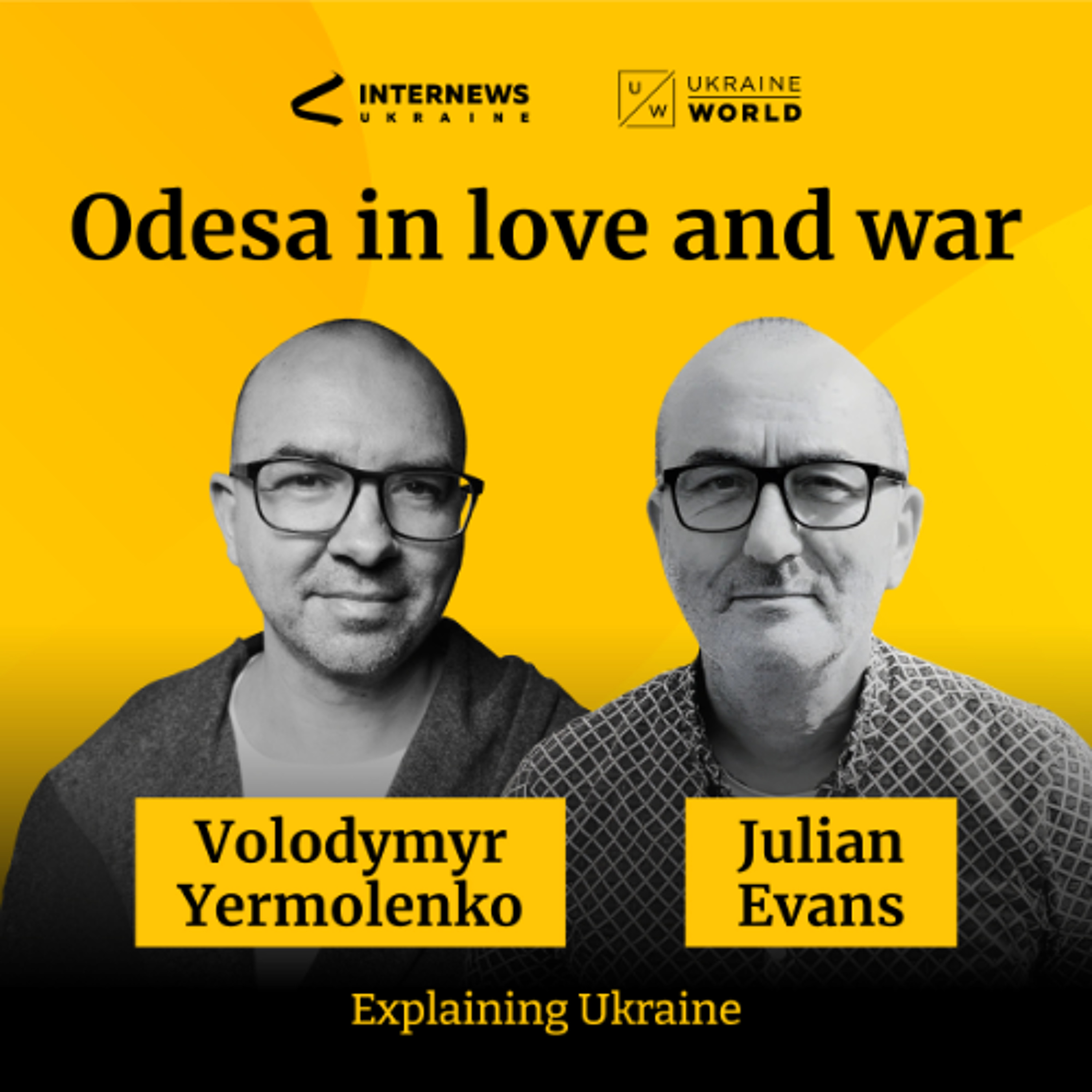 Odesa in love and war - with Julian Evans 23.04.2026 42minLet’s travel for a moment. Imagine you are on the shore of the Black Sea, in Odesa—one of the most beautiful cities in Eastern Europe. Odesa possesses multiple identities and refuses to be trapped by a single definition. It is Jewish, French, Italian, Ukrainian, Crimean Tatar, Romanian, Moldovan, Greek, Bulgarian, and more. Both the Russian and Soviet empires sought to flatten this multiplicity into a single imperial identity. They failed. Today, in an act of resentment, Russia is attempting to destroy Odesa. Missiles and drones fall upon its historic center, a site of UNESCO World Heritage. Meanwhile, Odesa is seeking a new identity. It is a work in progress—not yet fully formed—which makes the city incredibly vibrant and, in many ways, still misunderstood. *** This is the “Explaining Ukraine” podcast. Host: Volodymyr Yermolenko, a Ukrainian philosopher, chief editor of UkraineWorld, and president of PEN Ukraine. Guest: Julian Evans, a British-Australian journalist, writer, traveler, and filmmaker. His latest book, Undefeatable: Odesa in Love and War, published by Scotland Street Press, shares his personal story of Odesa through his friendships and family connections. Book: https://www.scotlandstreetpress.com/product/undefeatable-odesa-in-love-and-war Explaining Ukraine is produced by UkraineWorld and brought to you by Internews Ukraine. *** Listen on various platforms: https://li.sten.to/explaining-ukraine UkraineWorld: https://ukraineworld.org/en *** SUPPORT: You can support our work on https://www.patreon.com/c/ukraineworld Your help is crucial, as we rely heavily on crowdfunding. You can also contribute to our volunteer missions to frontline areas in Ukraine, where we deliver aid to both soldiers and civilians. Donations are welcome via PayPal at: [email protected]. *** CONTENTS: 0:00. Intro. Odesa's Multifaceted Identity and Current War 5:13 Julian Evans' Personal Connection and Wartime Challenges 10:20 Odesa's European Roots Versus Russian Imperial Claims 15:25 The Changing Ukrainian Identity of Odesa 20:45 Dismantling the "Russian World" Imperial Fantasies about Odesa 25:50 Cultural De-Russification and Personal Impact 31:00 Human Stories and the Spirit of Odesan Survival 36:10 Odesa's Enduring Beauty and Resilience Under Attack 39:27 "Undefeatable Odesa": A Spirit of Freedom
 -
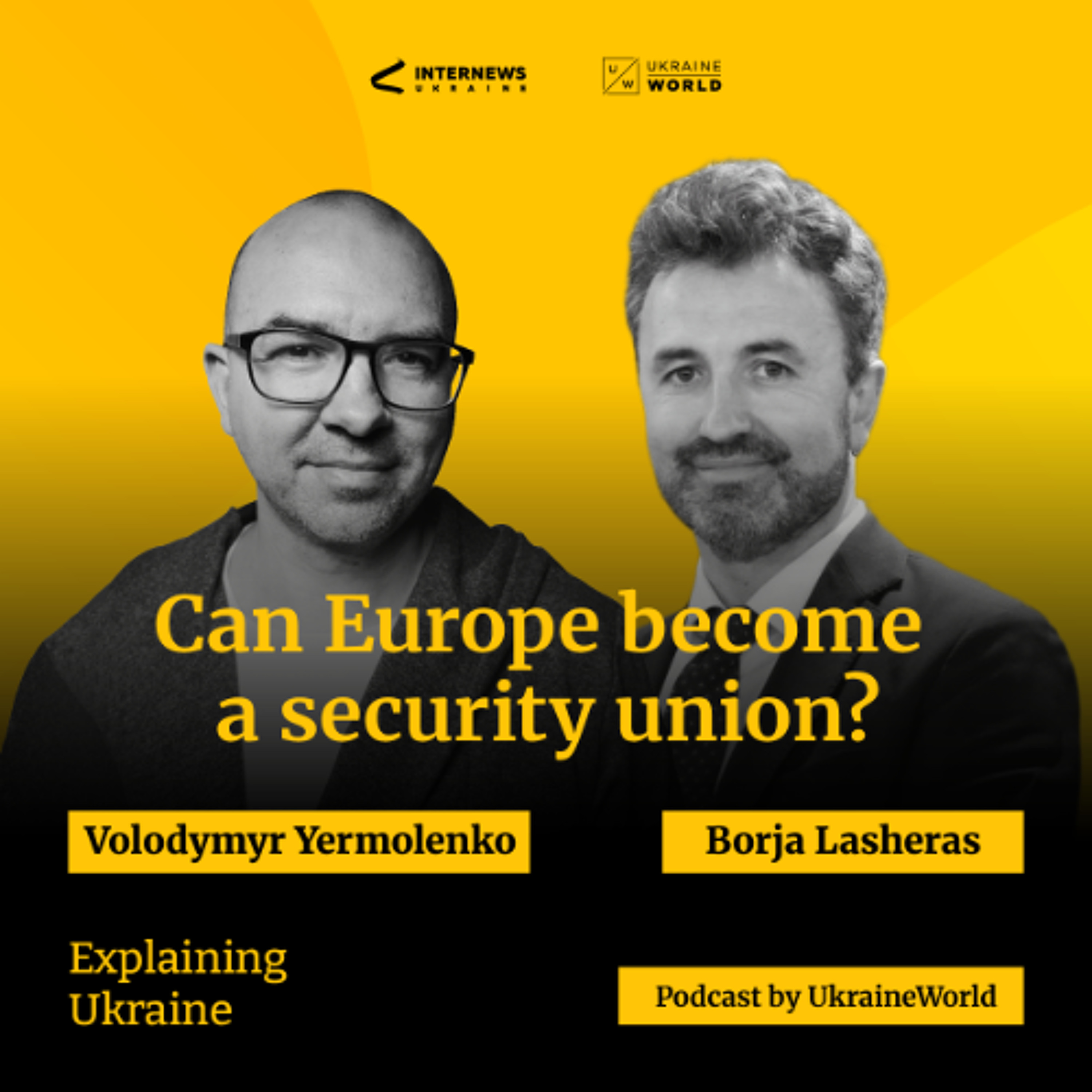 Can Europe become a security union? - with Borja Lasheras 15.04.2026 43minCan Europe become a genuine security union? Is it truly aware of the 21st-century geopolitical dangers that threaten its very existence? How central is Ukraine to Europe’s self-defense, and does the continent understand—and adapt to—the changing nature of modern warfare? *** This is the “Explaining Ukraine” podcast. Host: Volodymyr Yermolenko, a Ukrainian philosopher, chief editor of UkraineWorld, and president of PEN Ukraine. Guest: Borja Lasheras, a Spanish book author and expert on Ukrainian and European security. Borja is an Associate Policy Fellow at the European Policy Institute in Kyiv (EPIK). Explaining Ukraine is produced by UkraineWorld and brought to you by Internews Ukraine. *** Listen on various platforms: https://li.sten.to/explaining-ukraine UkraineWorld: https://ukraineworld.org/en *** SUPPORT: You can support our work on https://www.patreon.com/c/ukraineworld Your help is crucial, as we rely heavily on crowdfunding. You can also contribute to our volunteer missions to frontline areas in Ukraine, where we deliver aid to both soldiers and civilians. Donations are welcome via PayPal at: [email protected]. *** CONTENTS: 00:27 - Borja Lasheras: a Spanish author and expert on Ukrainian and European security. The conversation is taking place in Kharkiv, 40 km from the Russian border, after overnight Russian shelling. 01:47 - Why it is important for experts to travel to Ukraine, as it "defies many expectations" and is a "beating heart," not just a victim of aggression. 06:03 - Lasheras discusses writing his book "Station Ukraine," which reflects his personal and professional evolution alongside Ukraine. 09:52 - Why Europe is in a hybrid war with Russia and can no longer rely on the US as before. 13:24 - Why it is necessary to define a new European security concept that includes Ukraine, as Ukraine is a "growing middle power" with an advanced defense industry. 15:40 - Can the European Union can become a military union? Why EU can be a key element but not necessarily replace NATO. 19:01 - Why Changing EU rules, such as moving to qualified majority voting, is challenging. 23:06 - A scenario of a "Europe of different speeds" or minilateral coalitions: is it possible? 26:25 - "Ukraine Facility": the European support has been significant and stable, unlike that from the US. 30:44 - Why technological cooperation is important, including instances of joint ventures and new programs aimed at integrating Ukraine's defense industrial base. 35:20 - Why it is important for Europe to use the technological impulse of the war to catch up with leaders in AI, electronics, and drones. 37:31 - Why awareness of Russia’s possible attack is growing across Europe. 40:03 - Why supporting Ukraine is a fundamental interest for European security
 -
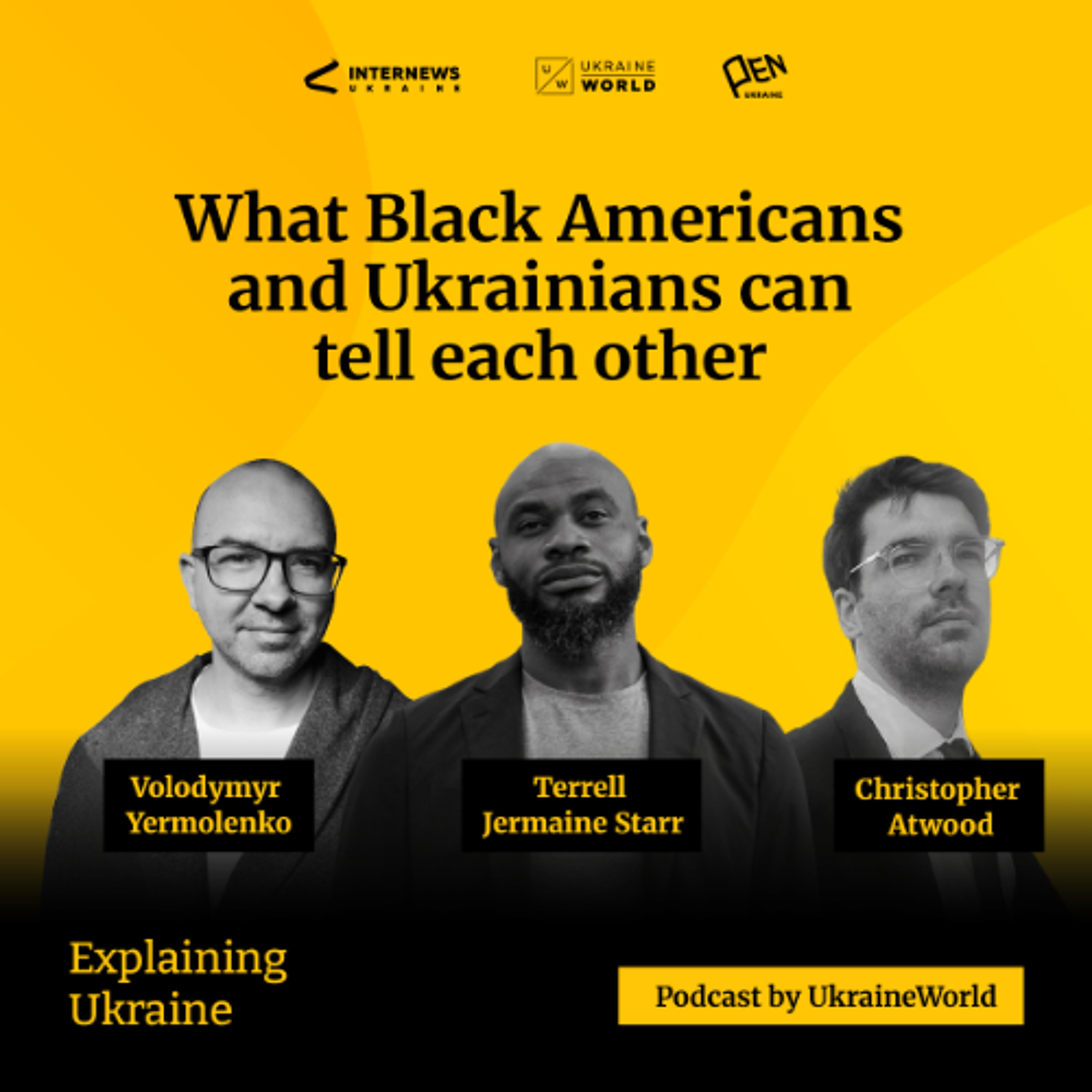 What Black Americans and Ukrainians can tell each other 10.04.2026 1h 41minWhat do Ukrainians and Black Americans share in their historical and cultural experiences? Can we draw comparisons between serfdom and slavery, or find parallels in the colonial traumas and the struggle for human dignity? Furthermore, what role do culture, identity, and language play in overcoming these legacies? In this episode of the Explaining Ukraine podcast, we share a recording of a vital discussion held at PEN Ukraine in Kyiv in October 2025. This conversation explores collective memory, the universal aspiration for freedom, and the growing solidarity between communities that have endured systemic oppression. *** Our Speakers are: - Terrell Jermaine Starr – Independent American journalist and host of Black Diplomats, a documentary news show covering civilian life in Ukraine. Over his 16-year career, he has reported extensively on the U.S. military, nuclear policy, and the Black Lives Matter movement. - Christopher Atwood – Human rights and communications expert, Head of the Ukraïner International, which an international branch of Ukrainer, a popular Ukrainian media. Host: Volodymyr Yermolenko, a Ukrainian philosopher, president of PEN Ukraine and the editor-in-chief of UkraineWorld. *** Listen on various platforms: https://li.sten.to/explaining-ukraine UkraineWorld: https://ukraineworld.org/en *** SUPPORT: You can support our work on https://www.patreon.com/c/ukraineworld Your help is crucial, as we rely heavily on crowdfunding. You can also contribute to our volunteer missions to frontline areas in Ukraine, where we deliver aid to both soldiers and civilians. Donations are welcome via PayPal at: [email protected]. *** CONTENTS: 00:00:00 Guests: American journalist Terrell Jermaine Starr and American civic activist Christopher Atwood. Discussion at PEN Ukraine, October, 2025. 00:04:03 What can Black Americans and Ukrainians tell each other to make their shared struggles better understood by the world? 00:07:34 What are the three profound commonalities between the 2014 Maidan Revolution and the Black Lives Matter movement? 00:18:54 How do the legacies of Frederick Douglass and Taras Shevchenko reveal the universal trauma of being "born into unfreedom"? 00:22:56 How did the exploitative "sharecropping" system in the American South mirror the traps faced by Ukrainian peasants? 00:28:41 What is the historical link between the "slave catchers" of the 19th century and the architecture of modern American policing? 00:30:30 In what ways is the current political divide in America a shadow of the Civil War? 00:32:38 Why does the American democracy only have a "30-year jump" on Ukraine’s independence? 00:33:48 In what ways is "whiteness" weaponized as a tool of convenience by Western powers? 00:35:07 What is the difference between the "colonialism of racism" and the "colonialism of assimilation"? 00:36:18 How does Frantz Fanon’s Black Skin, White Masks explain language as a primary tool of domination? 00:37:15 Why does the Western intellectuals struggle to reject colonialism in practice? 00:42:48 Why is it a dangerous intellectual shortcut to blame systemic issues on "one bad man" like Trump or Putin? 00:53:32 What does the history of the Brooklyn Bridge reveal about the racial hierarchies? 00:57:17 How can Black Americans and Ukrainians build solidarity when they face the same systems of oppression but have "colonizers who look different"? 01:05:40 What are the "multiple layers of whiteness"? 01:12:50 How does Edward Said’s Orientalism help explain why Western scholars often treat Ukrainians as "objects" of study rather than "subjects"? 01:24:10 How did Western academics miss the "seething rage" that signaled Ukrainians would never welcome invaders as liberators? 01:26:56 Why does the American "dominant class" believe democracy is a finished project? 01:33:33 Can a government truly understand the cultural dynamics of another country if it refuses to reflect on the racial dynamics of its own?
 -
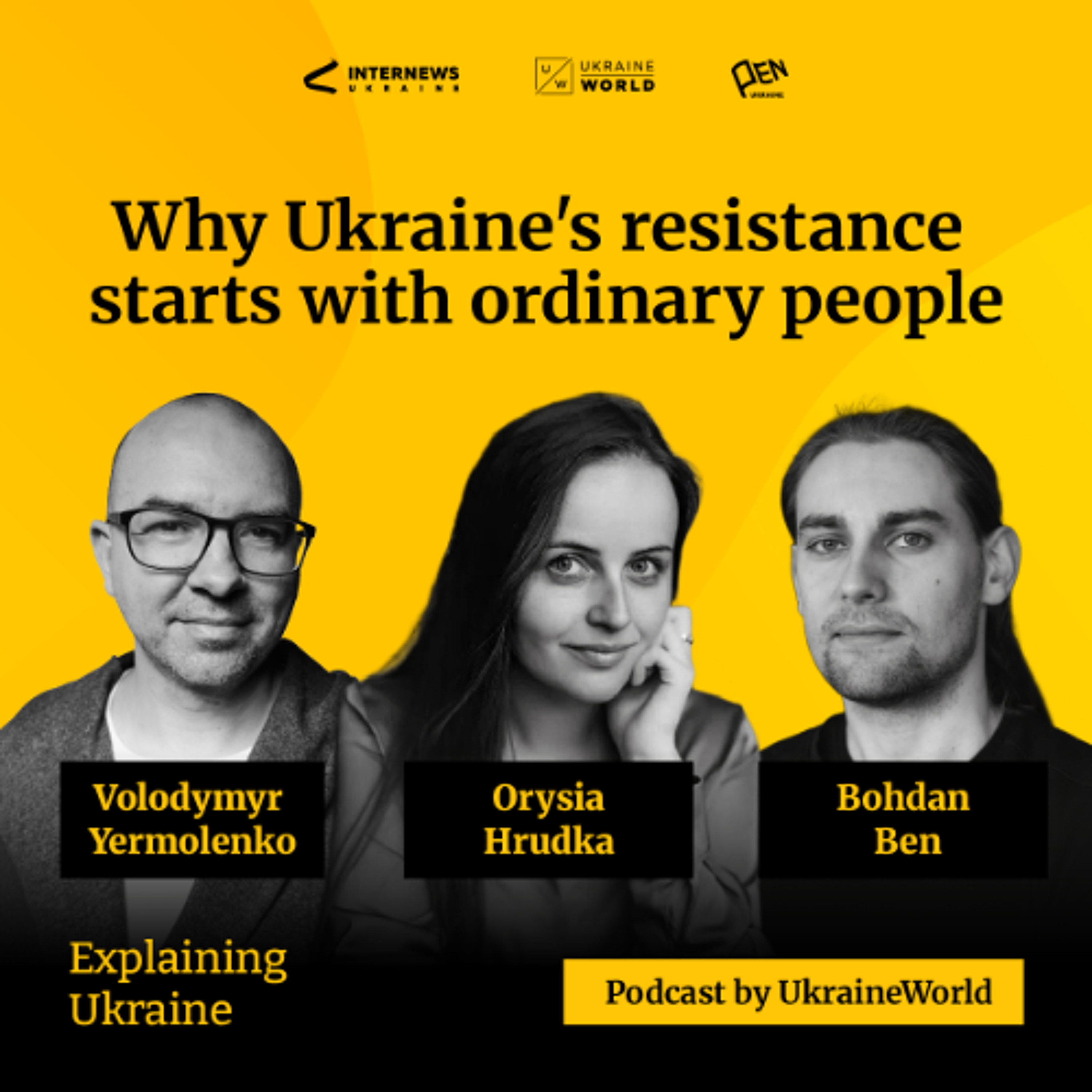 Why Ukraine's resistance starts with ordinary people 19.03.2026 1h 9minHow did two friends save hundreds of civilians? How did one restaurant feed tens of thousands in a besieged city? What does a former entrepreneur feel while recovering the bodies of fallen soldiers every day? What is life truly like under Russian occupation? And most importantly—why is the Ukrainian resistance impossible to grasp without understanding the role of ordinary people, like you and me? *** Explaining Ukraine is a podcast by UkraineWorld, an English-language media outlet covering Ukraine. Host: Volodymyr Yermolenko—Ukrainian philosopher, editor-in-chief of UkraineWorld, and president of PEN Ukraine. This episode features a conversation held at PEN Ukraine in late February with the authors of the book Dark Days, Determined People: Stories from Ukraine under Siege, written by journalists Bohdan Ben and Orysia Hrudka. Part of the "Ukrainian Voices" series, the book was published in English by Ibidem-Verlag and is available on Amazon. https://www.amazon.com/Dark-Days-Determined-People-Ukrainian/dp/3838219589 The book brings together 20 reportage stories documented between 2022 and 2024 across Ukraine. Originally published mostly by Euromaidan Press, these stories capture the lived experiences of Ukrainian soldiers, volunteers, artists, students, and children. *** Listen on various platforms: https://li.sten.to/explaining-ukraine UkraineWorld: https://ukraineworld.org/en *** SUPPORT: You can support our work on https://www.patreon.com/c/ukraineworld Your help is crucial, as we rely heavily on crowdfunding. You can also contribute to our volunteer missions to frontline areas in Ukraine, where we deliver aid to both soldiers and civilians. Donations are welcome via PayPal at: [email protected]. *** CONTENTS: 00:00 — Why Ukrainian resistance is impossible to grasp without the effort of the ordinary people 01:51 — Writing a book together: natural or unthinkable? 04:40 — The first days of invasion: urgency to inform the world 06:20 — The “human spirit radar”: stories of unexpected courage 08:15 — Small decisions that changed the war’s outcome 09:30 — Beyond the headlines: the secret to Ukraine's first victories 10:45 — The political nature of freedom: why a state is a necessity 12:56 — Navigating hell: the raw motivation behind civilian evacuations 14:39 — When heroism isn't planned, but becomes survival 17:29 — Vulnerability revealed: when nothing is guaranteed anymore 21:00 — Farming in minefields: the sheer determination to feed a nation 23:15 — Stealing warmth: Russia’s war on basic human needs 25:19 — The psychological toll of recovering the fallen 27:45 — The physical limit: the truth about endurance 30:17 — A nation turned factory: drones, innovation and resistance 31:57 — Ukraine as Europe's military asset, not a victim 34:10 — Second Life: rediscovering the will to live 36:30 — Sniper theologian: when ethics collide with survival 41:24 — Orcs and adventures: how parents explain the war 45:23 — Why Ukraine needs its own films 51:30 — Rewriting in real time: the grind of wartime reporting 54:30 — Dark stories, real hope: what keeps them going 56:30 — Where Ukrainians find hope for the future 59:45 — Stories left untold: what didn’t make the book 01:02:45 — How the war shapes the Ukrainian society 01:05:30 — The intensity of life when facing death
Podcast simili


Popolare in
Questo podcast compare anche nelle classifiche dei podcast di questi paesi.
