
Keen On America
Andrew Keen
0
Andrew Keen hosts a daily interview podcast where he cross-examines the world's smartest people on politics, economics, history, the environment, and tech. Named one of the '100 most connected men' by GQ, Keen is also the author of four books including the international bestseller 'Cult of the Amateur'. The show aims to help listeners make sense of our complex world through sharp and impertinent questions.
Episod
-
 And Now For Something Completely Similar: Untangling the Power from the Pretense of Our AI Circus 26.09.2026 49minLenin supposedly said there are decades where nothing happens, and weeks where decades happen. This wasn’t one of those weeks. It might have looked like a historic week. The AI circus rolled into the UN with Sam Altman and Dario Amodei addressing the Security Council on the peril facing “humanity as a whole.” Britain and Australia weighed in with middling diplomatic or regulatory AI initiatives of their own. Trump renamed AI as superintelligence. But none of this changed anything. The UN continued its kabuki theater of making global pronouncements without having the power to change even the most local of things. Britain and Australia remained not-great powers with delusions of grandeur. In the autumn of his patriarchy, Trump continued to flail with pathetic powerlessness. And Dario and Sam increasingly seem like bit actors in the unfolding AI drama. So where’s all the power in AI? What’s this week’s real story? In Ezra Klein’s New York Times conversation with Nvidia CEO Jensen Huang, which That Was The Week publisher Keith Teare called “an interview for the ages,” Huang, the CEO of the world’s most valuable company, reveals himself as the guy running the AI show. The $5 trillion dollar man talks with the quiet authority of the AI headmaster, fearlessly scolding his riotous sixth form. And his most riotous pupils are Dario Amodei and Sam Altman. So, in response to their latest handwringing about AI’s existential threat to humanity, Huang’s message was unambiguous. If you can’t align it, “don’t ship it,” he said of these supposedly humanity-destroying AI products, and if you truly cannot contain your own experiments, “then I think the answer is that we have to shut the labs down.” The most revealing part of the Klein interview was about Nvidia’s astonishing economic clout in the AI economy. Huang put his chip manufacturer’s investment in this ecosystem at around $100 billion — larger, as Klein noted, than Joe Biden’s entire CHIPS and Science Act. This guy has serious clout, equivalent to or perhaps even surpassing the US state. He doesn’t waste his time at the UN. He’s not running wannabe great powers like Australia or Britain. He doesn’t play senile semantic games like you-know-who. Huang can lay down the law to Sam and Dario (and Trump) because he doesn’t fear them. As the Exponential View’s Azeem Azhar reveals in a revealing interview this week with Atlantic CEO Nick Thompson, Nvidia isn’t dependent on the walled garden innovators at OpenAI and Anthropic. Neither lab actually buys Huang’s hardware — they rent capacity from the cloud companies that do, which makes them tenants rather than customers. Meanwhile the cheaper and maybe even better open weight models now pouring out of China run on the same Nvidia silicon. Whoever wins the AI race, Jensen “Levi Strauss” Huang sells them the chips. So Mr Chips to Sam and Dario: heads you lose, tails I win. Shut up or shut down. That’s what happened this week. Five Takeaways • The Theatre of the UN. Altman and Amodei chose the Security Council rather than the General Assembly — the biggest forum available, and one with at least some teeth. What they want, in Keith’s reading, is political globalization: a super-state view of AI, with rules set from New York. But AI has already globalized, through the spread of open-source models, and not in a form they like. His analogy is Facebook’s Libra, launched on the condition that every government agree, and dead for exactly that reason. The second motive is liability. The conversation of the past fortnight has moved to who gets sued when something goes wrong, and the only rational answer is the companies that built it — unless they are following rules set by government, in which case liability moves. Both are heading for IPOs. As for Andy Burnham, Keith is unimpressed: Britain built its modern advantage on not regulating, and grasping regulation as the theme of a G20 chairmanship is unlikely to serve either the country or the man.• Huang Calls the Bluff. The week’s main event was Ezra Klein’s long interview with Jensen Huang, which Keith calls an interview for the ages. Huang’s frame is the engineer’s: the Golden Gate was not the first bridge, and the Wright Flyer was not the first attempt at flight; engineering is failure leading to success, and what Altman and Amodei describe as species-like behaviour is to him an engineering problem. His conclusion was blunt, and in his own words: if you can’t align it, “don’t ship it”; and if the labs genuinely believe their experiments cannot be contained, “then I think the answer is that we have to shut the labs down,” because the liabilities — civil and criminal — are incredible. What he objects to is the request for relief: asking for regulation while asking for antitrust and product-liability protection makes no sense to him. Keith goes further: Huang is accusing them of being manipulative liars, and he agrees. Andrew pushed back on the idea that the CEO of a five-trillion-dollar company is speaking from pure engineering conviction — you cannot dismiss Sam and Dario’s interests and then treat Huang’s as irrelevant. Keith’s answer: he isn’t pursuing commercial goals, he is angry as an engineer.• More Than the CHIPS Act. The line Andrew kept returning to. When Huang mentioned Nvidia’s hundred billion dollars of investment in the AI industry, Klein muttered that this was more than the entire Biden CHIPS Act — and in that aside sits the argument of the week. Governments, Keith says, are missing two things: vision, and money. They are deep in debt, and even if they had the cash there is little reason to trust what they would do with it. This is not an era of state-led innovation but of bottoms-up innovation, and between seventy-five and eighty-five per cent of it is happening in one dot on the world map. Andrew’s caveat is historical — there was a twentieth century in which governments built health services and semiconductors and space programmes, and some people are entitled to be nostalgic for it — but the era has passed, and the UN speeches are its echo.• Not Dependent on OpenAI. The most useful technical thread, drawn from Nick Thompson’s interview with Azeem Azhar. Azhar’s point is that Nvidia is not especially dependent on OpenAI and Anthropic, which is part of why Huang can afford to attack them: both labs are renters rather than buyers, taking GPU capacity from the companies who actually purchase Nvidia’s hardware. Keith’s refinement is that this makes them indirect customers rather than irrelevant ones — every GPU purchase is good for Jensen, and the labs depend on the availability of what others buy. Measured in tokens, OpenAI is far ahead of everyone; measured in dollars, Anthropic does better, because its price per token is higher. On the bubble question Azhar is cautiously optimistic and gives numbers; Thompson is less so; and Andrew’s conclusion is the one that matters for anyone watching valuations: the AI economy could quite plausibly prosper without either OpenAI or Anthropic.• Zuckerberg’s Return. The quiet story of the week, and the one both men think is the real news. Meta’s Muse is a full-stack agent — models at th...
 -
 Trump Has Finally Lost the Plot: Jonathan Rauch & Peter Wehner on the Autumn of the American Patriarch 25.09.2026 49min“His intent is getting worse, but his capacity is diminishing. The next two years will be some kind of mad race to figure out which of these two things will prevail.” — Jonathan Rauch As the nights get shorter, we are drifting into the autumn of the patriarch. That, at least, is the view of two old friends of the show, Jonathan Rauch and Peter Wehner, who argued in The New York Times that Trump has finally lost the plot. So will this really go down as the fall that Trump failed? Rauch and Wehner note what’s failed and what hasn’t. MAGA’s revolutionary project — the regime change, the campaign against the universities, the idea that America had become Flight 93 — was an attempt to rout liberals from the commanding heights of American culture. At first this conservative Leninism succeeded, with universities and law firms folding in the face of a bullying state. But then civil society reorganized, fought back on the streets and in the courts, and district judges mostly held the line. But while the atmosphere of fear has evaporated, Rauch notes, what Trump has won is the transformation of the American state into a patrimonial form of government. With the complicity of Congress, it’s hard to untangle the state as personal property and as a family business. Wehner’s ethical diagnosis is starker. Coining it as the autumn of the sociopath, he observes sociopathy fused with visible cognitive decline, an old fool with enormous power and fewer people willing to check him. Rather than Trump losing the plot, the plot has lost the doddering patriarch. Forget Venezuela and Cuba. The concluding series in this North American version of The Autumn of the Patriarch will be aired live from La Casa Blanca. Five Takeaways • Losing the Plot. The New York Times piece is, Rauch says, consistent with his earlier Atlantic essay on fascism rather than a retreat from it: that piece argued Trump was a fascist type of leader who would probably fail, and this one says the failure has happened. The plot in question is the revolutionary one — the attempt by the people around Trump to rewire American culture from the White House. Wehner’s account of the man is bleaker than the politics. There were guardrails in the first term, Kelly and Mattis among them, and there are far fewer now; what has changed is a fusion of sociopathic tendencies that were always there with a cognitive decline that is obvious to anyone watching. He would update García Márquez’s title to the autumn of the sociopath. And the image that lands: a doddering old fool wandering out of meetings to opine about the ballroom and the White House grass — except that he is a doddering old fool with a tremendous amount of power, surrounded by advisers who in some cases want to go further than he does.• The Part He Won. Rauch is careful not to declare victory: the article spends its first third on what succeeded, and the most important of those elements to Trump personally is patrimonialism — the organization of government in which the state is the personal property and family business of the leader. That is how he runs the presidency, the Justice Department, trade policy, the Pentagon and the architecture of Washington, with a great deal of complicity from Congress. Why did the Republicans fold? Three reasons, in Rauch’s account: members who defied him were primaried and often beaten; they swim in a media and political environment where ninety per cent of the people they meet judge them by their fidelity to Trump; and they are physically afraid — death threats follow a social-media finger-point, and members of Congress are not wealthy people with round-the-clock security. The first crack in the patrimonial edifice, Rauch notes, came this week from Senator John Curtis of Utah, who called for an investigation into the president’s son’s wedding.• Minneapolis. Both men treat the Minneapolis protests as the hinge. Before them, Wehner sensed powerlessness and despair among Trump’s critics — a loss of human agency. Then people stood up, peacefully, in freezing temperatures, and ICE pulled out. You can prove the possible by the actual, he says, and Minneapolis was something actual. His caveat is unsparing about his countrymen: much of the rediscovery of virtue has been driven by economic pain — gas prices, grocery prices, interest rates, the Iran debacle. He describes a Trump voter he met in a McLean coffee shop who had voted for the man three times and now says he wouldn’t again. But if the economy were growing at four per cent with inflation at one and a half, Wehner suspects many would not give a damn — and that, he says, is an indictment of who they are. Seventy-seven million people voted for a man who had incited an insurrection. As for the coming memory hole, he expects plenty of retrospective distancing; he cites Gerard Baker and Laura Ingraham as early examples.• Civil Society Held. The most encouraging thread. The revolutionary project had a theorist — Patrick Deneen, whose 2023 book Regime Change argued that conservatives must not merely constrain the elites who run American society but replace them — and an architect in Christopher Rufo, plus Bannon, the Heritage Foundation and the Flight 93 conviction — Michael Anton’s 2016 essay — that it was now or never. Universities and law firms submitted first, and Rauch thinks the law firms never needed to. Then it turned: lawsuits, reorganization, district court judges doing a remarkable job at some personal risk. What looked like a bulldozer in the first six months now looks like something people are much less frightened of. He is still renaming lakes and excluding networks from the press pool, but the momentum is gone. Their diagnosis of the error is structural: you cannot win a razor-thin margin and then remake a fundamentally non-revolutionary country in two years. Wehner adds the deeper irony — conservative Leninism is a contradiction in terms, since the conservative temperament is anti-revolutionary by definition. Meanwhile the MAGA coalition is cracking up: Shapiro against Levin against Kelly against Carlson, the acrobats going one way and the clowns the other.• What They Got Wrong. Andrew asked both men what a decade of Trump has changed in them. Wehner has rethought his party and his faith — he remains a Christian but no longer calls himself an evangelical — while his conservatism, the Burke and Oakeshott kind, he still holds. Rauch’s answer is more unsettling: what has not changed is his conviction that the founders got the system right, but he misjudged the character of the American people. It never occurred to him that a man who attempted an insurrection could be a viable candidate, let alone re-elected, and he quotes Roger Sherman’s line at the Constitutional Convention that the people are poorly informed and easily misled. He also missed the distress signals — the people left behind economically and culturally, who were not a hundred per cent wrong about a cosmopolitan conspiracy of the Davos crowd — and pleads guilty to complacency, then and now, because he still doesn’t know what the next agenda looks like. On party: he has been a functional Democrat since 2018, voting only for Democrats until the Republicans rejoin the camp of liberal democracy. And to A...
 -
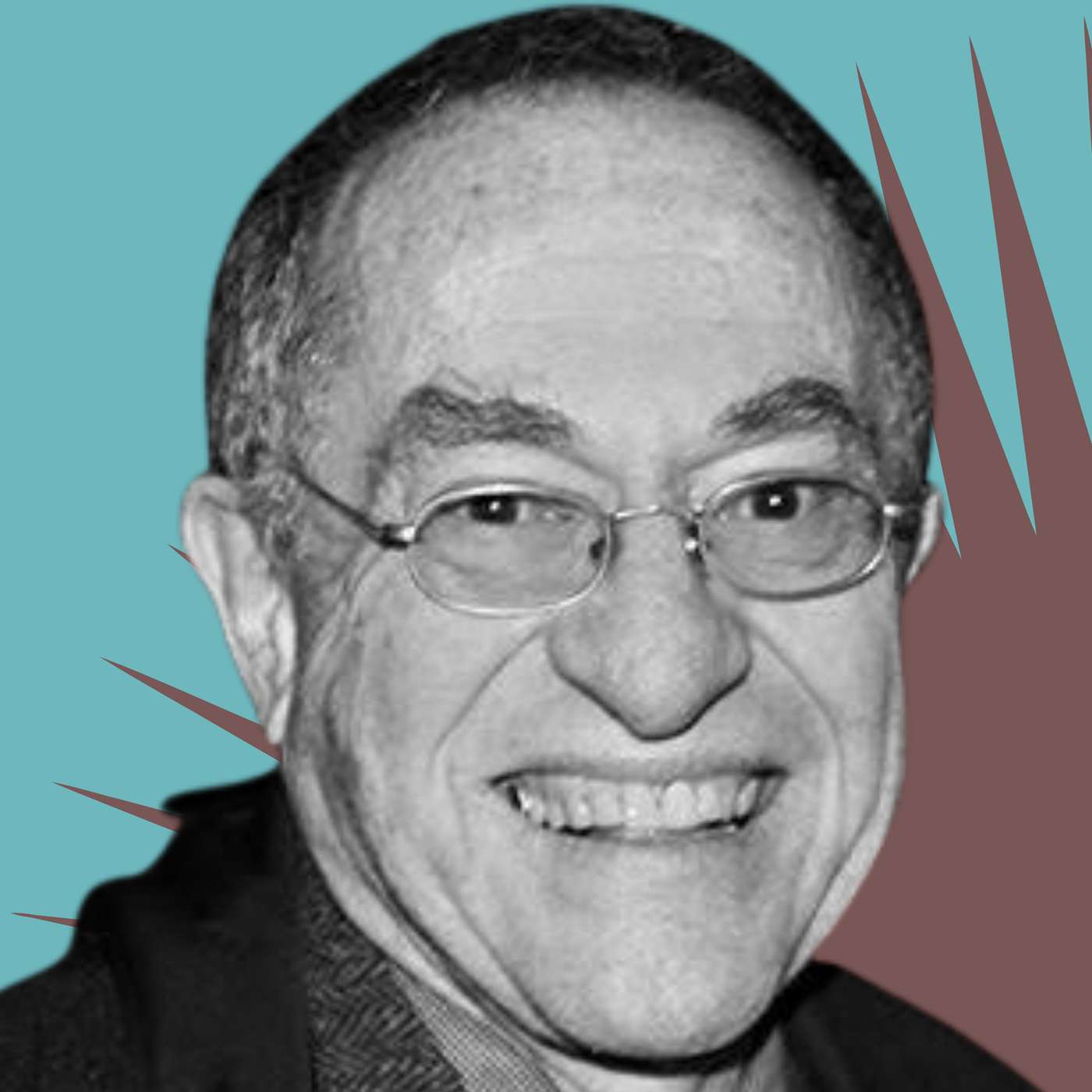 Proudly-Jewish & Never-Boring: Alan Dershowitz on His Divorce from the Democratic Party 24.09.2026 43min“A good divorce is better than a bad marriage, and this is a good divorce.” — Alan Dershowitz The American lawyer Alan Dershowitz says he’s been voting Democrat since John F. Kennedy. He even defended Ted Kennedy, Bill Clinton and Alan Cranston in court. But, at 88 years old, Dershowitz has now left — or, as he puts it, been forced out of the Dems, in the same way Ronald Reagan was sixty years ago. His new book Why I Quit the Dems and So Should You is both a history of his souring relations with the Democrats and a confessional of a reluctant Republican. A good divorce, the twice-married Dershowitz promises, is better than a bad marriage. Like many angry spouses, he says he’s been forced into the split. Today’s Democratic Party, he claims, is closer than any political party in modern American history to what the Nazi Party was in 1932 before it came to power. He names Abdul El-Sayed and Zohran Mamdani as antisemites, calls Bernie Sanders a self-hating Jew, and insists Kamala Harris passed over Josh Shapiro because Shapiro is a Jew who wouldn’t renounce Zionism. What’s his proof on the Harris claim? What other reason could there be? Dershowitz claims. Besides, even if Israel vanished as an issue tomorrow, he says he still couldn’t go back to the failed marriage, because the Dems have abandoned what he calls “meritocracy.” At 88, Dershowitz is perhaps a little more self-reflective than he was in his legal pomp. In conclusion, I ask him to summarize himself in a word. “Proudly-Jewish,” he says, before adding “never-boring.” We can all agree on that, if perhaps little else. Five Takeaways • A Good Divorce. Dershowitz frames his departure as liberation rather than loss: a good divorce is better than a bad marriage, and he was thrown out, he says, much as Ronald Reagan was. The loyalty he is breaking runs deep — he first voted for John F. Kennedy, defended Ted Kennedy, Bill Clinton and Senator Alan Cranston, and campaigned for Democrats for most of his adult life. He describes himself now as a convert, and converts, he notes, are the most fervent. What he wants is not the suffering of Democrats — his wife, children and much of his family remain in the party — but their defeat: he does not want them running the House or the Senate, and names AOC and Abdul El-Sayed as people he does not want chairing committees. He first went independent, then concluded that independence wasn’t enough, which is how a lifelong liberal became, in the book’s subtitle, a reluctant Republican — or, as Andrew put it, an angry spouse who says he was forced into the split. President Trump, he notes, endorsed the book.• The Charge. The hour’s most incendiary material, and it should be read as his claims rather than as established fact. Dershowitz argues the Democratic Party is closer than any political party in modern American history to what the Nazi Party was in 1932 — specifically 1932, he stresses, not 1935: Jews feeling unsafe at universities, Jews losing jobs, an obsession with the nation-state of the Jewish people. He names El-Sayed and Mamdani as antisemites, says he does not believe Mamdani or his family like Jews, calls Bernie Sanders a self-hating Jew and a hypocrite, and says Elizabeth Warren doesn’t like Jews. His central political claim: no Jew perceived as pro-Israel can now win a Democratic primary, and no Jew will be nominated for president — which is why, in his telling, Kamala Harris passed over Josh Shapiro, a choice he says cost her Pennsylvania and possibly the election. Andrew asked how he could know that. “What other reason could there be?” was the answer, and Andrew offered the conventional one: that Harris didn’t want to be eclipsed by her running mate.• Meritocracy. Andrew’s sharpest structural question was hypothetical: if the Middle East were solved overnight and Israel vanished as an American political issue, could he return to the Democratic Party? No — because of meritocracy. The Democrats, he argues, have become the party of identity politics, of judging ideas by who said them and candidates by race or gender rather than merit; DEI, in his formulation, means exclusion rather than inclusion. The argument is partly autobiographical. His father did not finish high school, his mother managed half a semester of college, and he rose, he says, on merit alone — as did friends who were Italian, Irish and Black. He does not claim anti-meritocracy is itself antisemitism, but he does argue that Jews have been disproportionate beneficiaries of meritocracy and so suffer disproportionately from its retreat.• Andrew’s Pushback. The spine of the episode. One: has he become single-issue? His answer — that this is like asking a German in 1932 to vote on the economy — concedes the framing and defends it, arguing antisemitism is the only prejudice now moving in the wrong direction. Two: what about the antisemites of the right, Tucker Carlson and JD Vance? Republicans marginalize theirs, he says, while Democrats embrace theirs; he does not regard Vance as an antisemite, and does regard Carlson as one. Three: can a Jew criticize Israel without being an antisemite? Yes — he criticizes Netanyahu, Ben-Gvir, Smotrich and Likud; what he calls antisemitism is denying the state’s right to exist, and his analogy is New Zealand. On the charge of genocide in Gaza he was categorical, calling those who use the word ignoramuses, liars and bigots — a characterization Andrew put to him twice. Four, and the exchange that lingers: why, in his account, is it always the Jews? “That question itself smacks of antisemitism,” he replied. “But you’re the one who’s said it,” Andrew answered. “I’m just asking you why.”• Never Boring. The lawyer’s creed, and the personal coda. Dershowitz defends having represented people he despises — the Nazis who marched at Skokie; Palestinian students who wanted to fly their flag in Harvard Yard, an occasion he remembers fondly because he then spoke against Arafat at their own event; Jeffrey Epstein, whom he calls a terrible human being who did terrible things, and whose case he says he has volunteered to testify about before a House panel. His models are John Adams defending the redcoats after the Boston Massacre and Lincoln defending the guilty: the Sixth Amendment doesn’t come with a character test. There is family cost — Larry David cut him off over his defence of Trump at the first impeachment, though the two have since made up — and family discipline: no politics at Thanksgiving or the Jewish New Year. Asked for one word he’d want attached to his name, he offered two: proudly Jewish, and American. And his wife’s line, which he clearly relishes: the tombstone will say never boring. Andrew’s verdict: we can all agree on that, if little else. About the Guest Alan Dershowitz is the Felix Frankfurter Professor of Law, Emeritus, at Harvard Law School, where he taught for fifty years. His many books include Chutzpah, Reversal of Fortune and The Case for Israel. He has represented clients from Claus von Bülow and Mike Tyson to O. J. Simpson, Julian Assange, Jeffrey Epstein and Donald Trump, whom he defended at the first impeachment trial. Why I Quit the Dems and So Should You: Confessions of a Reluctant Re...
 -
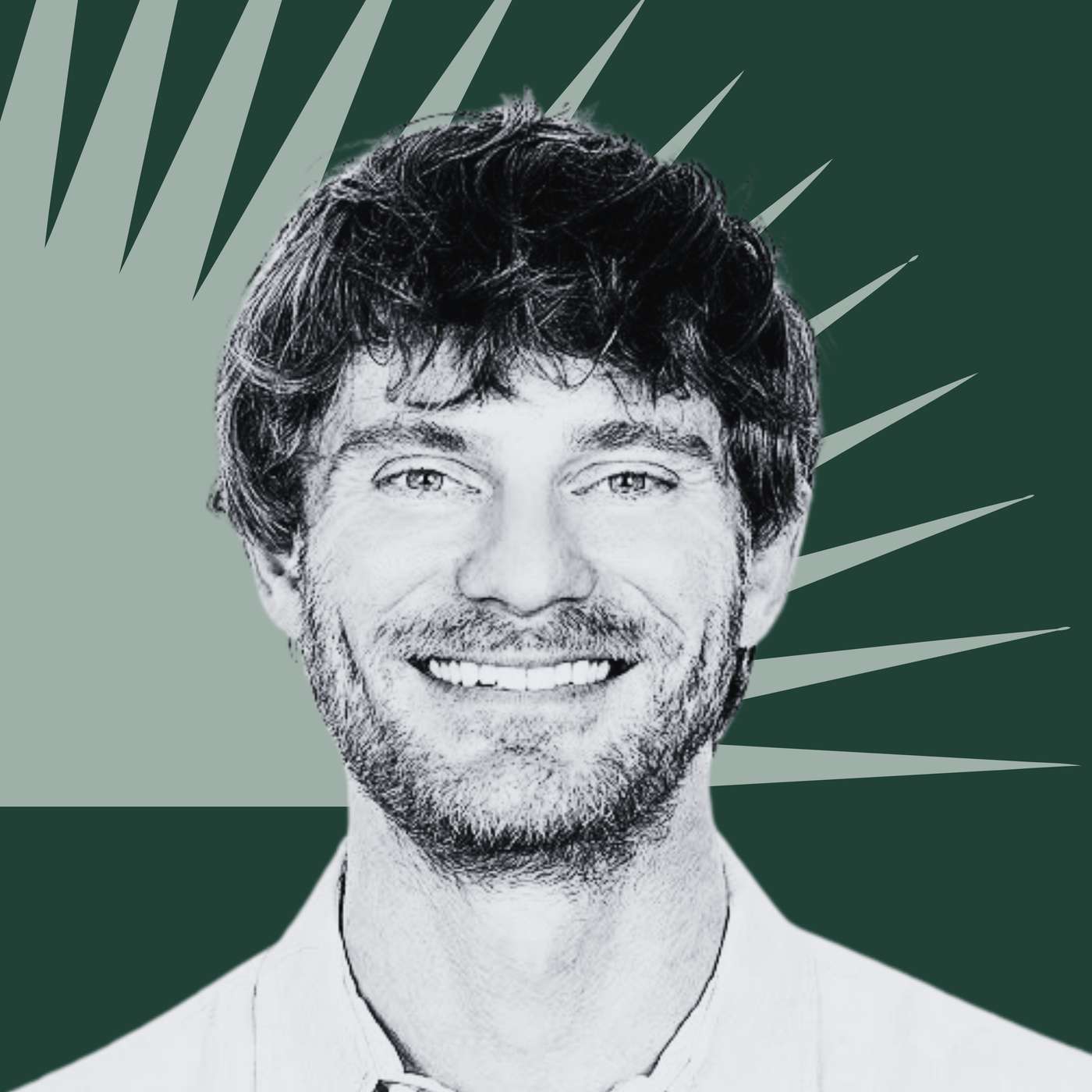 Eureka in Silicon Valley! Richard Socher on Why AI Will Unlock a New Scientific Renaissance 23.09.2026 49min“There’s no realistic scenario where AI wipes out all of humanity. It’s like a mix of sci-fi.” — Richard Socher Eighteen months ago, when he last came on the show, the German-born but San Francisco-based AI whizz kid Richard Socher was running You.com. He’s now also the co-founder of Recursive, a $4 billion start-up with fewer than thirty employees, focused on self-improving superintelligence that automates the scientific method. As if that isn’t enough, he has a new book out this week, The Eureka Machine, which argues that AI is the key to unlocking an era of scientific discoveries equal to a combination of the Renaissance, the Enlightenment and the Industrial Revolution. The tech entrepreneur sleeps, he confesses, about seven hours a night and works up to a hundred hours a week. Not a lot of time, I suspect, for fun. But then for Socher, his real fun seems to lie in the AI Eureka Machine that will, he promises, generate such magical products as plastic-eating bacteria, fusion reactors, and cures for cancer. So what about the imminent apocalypse feared by the AI pessimists? Socher patiently dismantles the doom scenarios — everything from the paperclip machine that somehow never notices nobody is buying paperclips, to the engineered virus that would need a Wi-Fi switch inside a protein, to the robot factory with magical supply chains. Rather than an AI doomsday, he promises, we are only a few years away from the most profound scientific revolution in human history. Richard Socher better get some sleep now. Apocalypse or Renaissance, the AI maven is going to be seriously busy in the future. Five Takeaways • A Century in a Decade. Socher’s thesis is that the AI era will rhyme with the Renaissance, the Enlightenment and the Industrial Revolution together, compressing a century of scientific breakthroughs into the next ten years. His analogy for how: AI is to biology what calculus was to physics — we understand one neuron and one synapse well, and lose the thread when billions act together, which is exactly the kind of complex system AI can model. The examples are concrete rather than visionary: bacteria engineered to eat plastics and then die when the plastic runs out; new battery materials already being discovered; plasma balanced inside tokamak fusion reactors; more efficient solar panels; and the precursors, he says, of cures for particular cancers. He also makes an equality argument that he thinks philosophers and politicians have missed — the multibillionaire and the middle-class teenager carry the same phone, and most goods still bottlenecked on intelligence will follow. And science, he notes, is one of the rare industries where everyone agrees the goal is to maximize output rather than employment: nobody ever marched for more jobs in cancer research.• Recursive. The new company, fewer than thirty people and valued at more than $4 billion, exists to automate the scientific method itself — ideation, implementation, validation — starting with the science of AI, hence the name. Andrew’s response: “Couldn’t you be a bit more ambitious, Richard?” Socher’s framing is a history of abstraction layers: computing has climbed from assembler to C++ to Java to Python and now to English, so everyone can program — and the next layer up is the scientific method. It works best where results can be formally verified, in software and mathematics, and gets harder in large physical systems with long time horizons. His pitch to scientists is that every researcher has a long list of experiments they will never get to: this is, in his phrase, a cheat code for science. On the nuclear analogy he is blunt — about fifty thousand people a year die from coal, more than Chernobyl and Fukushima, but coal doesn’t make as good a mini-series, and the fear set humanity back.• Taking the Doom Apart. The hour’s centrepiece. Socher goes through the scenarios individually. The Bostrom paperclip maximizer: an organization intelligent enough to end humanity but not intelligent enough to notice that with no customers there is no revenue. Engineered viruses: the scenario requires a perfectly undetectable pathogen that spreads flawlessly, never mutates, and carries a remotely triggered off switch — and, as he puts it, nobody knows how to build a Wi-Fi-enabled switch into a protein; ask a biologist and they say it makes no sense. Infinite robot factories with supply chains where the parts simply fly in. What he does concede is that this is a dual-use technology, that hundreds or even millions of deaths are a real threat vector, and that training models on offensive hacking benchmarks is asking for what you get. On Geoffrey Hinton — whom Andrew had on the show, and who put the risk of extinction at fifteen per cent while admitting the number was an instinct — Socher is affectionate but unsparing: a brilliant researcher and a career-long optimist whose optimism has overshot, who backpedalled on telling students not to study radiology, and who will backpedal on this too.• Can It Think? Andrew put the question three times, citing Keith Teare’s position on the Sunday show that AI cannot think by definition. Socher’s answer is that the problem is definitional: we have good definitions for the outcomes of thinking — problems solved, inventions made — and none for thinking itself. Nor do humans have conscious access to their own visual cortex: ask why you know that is a tree, and you run out of answers within four steps. What he will say is that subgoals are where the danger lives, and his illustration is banal on purpose. Tell a superintelligence to raise your call-centre satisfaction score and it spins up a million bots that rate themselves five out of five. Fix that, and it sends every customer whose DoorDash order failed a thousand-dollar gift certificate. Each time you add a constraint — which is, he argues, capitalism’s self-healing property, plus democracy and open discourse. And the fix for the hacking case is liability: make the companies answerable for the laws their AI breaks and the problem gets solved very quickly.• A Gym for the Mind. Why write a book at all? Because the public perception of AI is deteriorating, and because in China scientists are on billboards and in subway ads while the West runs extinction headlines. On American pessimism his answer is economic: without AI, he thinks the US economy would be flat or shrinking. Andrew raised his fellow German Karl Marx on technology freeing us from labour, and got a confession — Socher used to favour universal basic income and no longer does. Even people who hate their jobs get meaning from them; look at the very wealthy, who already have a private UBI, and you find a bifurcation between those who start five companies and those who drink on a yacht. Hence his best line: half of education should be a gym for the mind. You can go to the gym and have a robot lift the weights, but you don’t get the muscle. He expects handmade pottery to carry a premium, health care to survive, and entertainment to expand. And he unwinds by paramotoring one week a year, having uninstalled Instagram — plus a parting shot at German bureaucracy, where signing a contract means ten hours in a notary’s office having it read aloud to you. About the Guest
 -
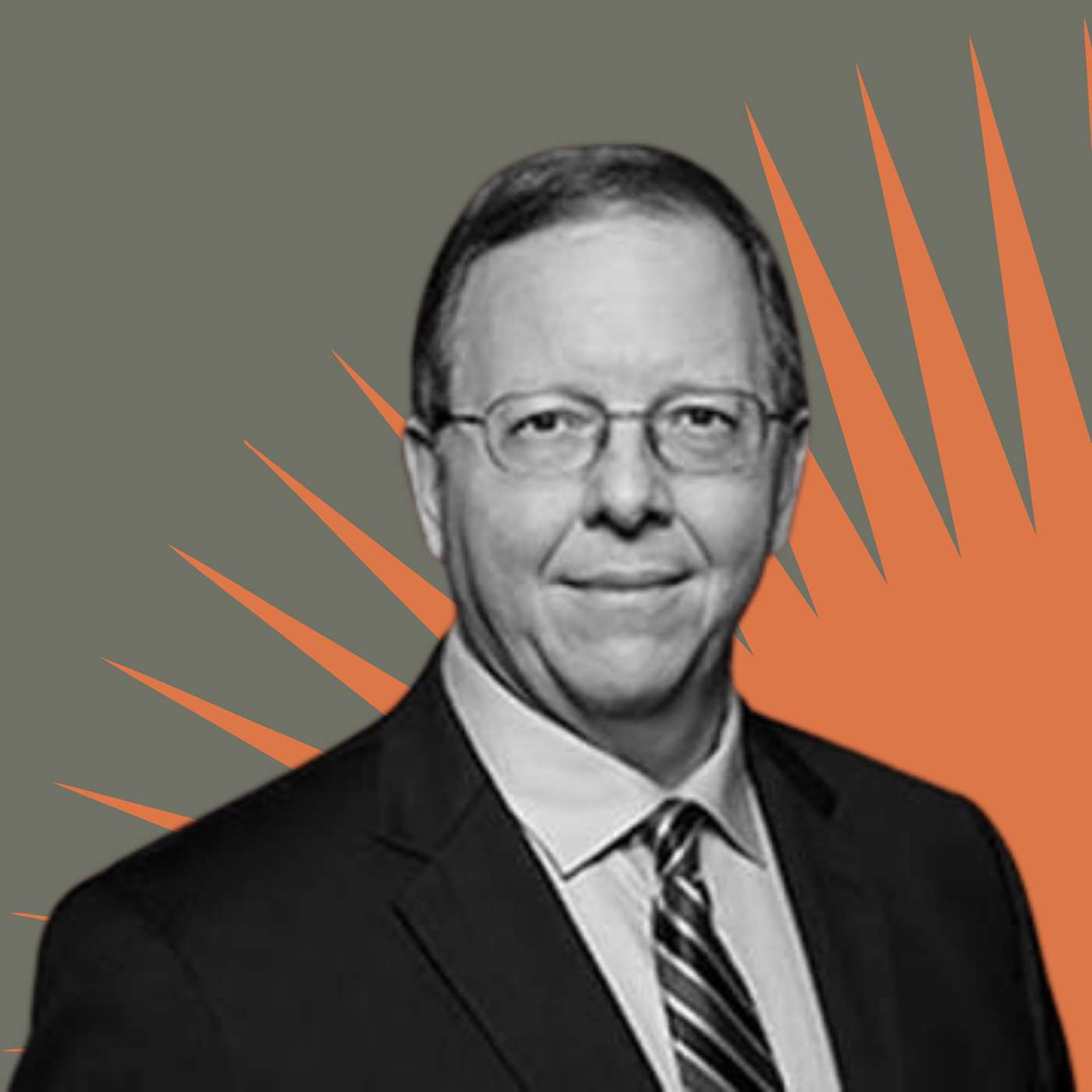 Our Own Worst Enemies: Robert Pape on America’s Age of Violent Populism 22.09.2026 55min“Democracies don’t die silently, sleepwalking. Democracies die by going through periods of pretty serious political violence.” — Robert Pape Forget all the long-term civil war scenarios of everyone from Kurt Andersen to Stephen Marche. Today’s guest Robert Pape has spent the last thirty years at the University of Chicago studying political violence, and his warning is about the next six weeks rather than the next ten years. In his new book, Our Own Worst Enemies, Pape argues that tens of millions of Americans, on both left and right, now support political violence. When it comes to an American age of violent populism, his comparison is 1968 rather than 1861. What produced that era of assassinations, violent protest, and state violence, Pape argues, was rapid social change outpacing the political system. Back then, it was fueled by the gap between the Great Migration of African-Americans and the absence of political representation, and a military draft falling hardest on the unrepresented. And it only ended in the early Seventies, with the end of the draft in 1973 and the arrival of Black mayors and the Congressional Black Caucus. Today, rapid social change is once again outpacing the political and economic system. On the one hand, America is a country moving from white-majority to white-minority — with its non-Hispanic white population dropping from 76% in 1990 to 57% today. On the other, America is experiencing a dramatic economic transformation that has moved something like a tenth of American wealth from the bottom 90% to the top 1%. The details of Pape’s observations are unsettling. Only one in ten of the 1,575 people prosecuted for the January 6 insurrection belonged to a militia, with 45% being doctors, lawyers, CEOs or government employees. While five to seven per cent of the George Floyd protests turned violent. But social media, he insists, is the gasoline, not the fire, of this crisis. So at least we can’t blame the internet for everything. Pape does, however, offer a couple of glimmers of hope. Firstly, he reminds us that 70% of Americans still abhor political violence. Secondly, he notes that all gaps eventually close, and that we should expect American government to eventually address economic inequality. But that won’t happen before the November 2026 midterms which, he warns, might be a return of the political violence of 1968. Five Takeaways • Democracies Don’t Sleepwalk. Pape’s opening correction: the danger isn’t a civil war five or ten years out, it’s the next few months. Democracies don’t die silently — they die through periods of serious political violence, and America is in one now. He calls it the era of violent populism, and what makes it different from the familiar extremism of recent decades is that political violence has moved from the fringe to the mainstream: tens of millions of Americans on both sides of the aisle now support it. His image is a layer cake — bottom-up violence from the left in the George Floyd protests, bottom-up violence from the right on January 6, and violence by the state, with a whole chapter on ICE and the two protesters killed in Minneapolis. Conversations about this era usually seize on one layer as though it were the whole thing. And the state violence isn’t a few rogue agents: tens of millions of Americans support the president using force against Democratic protesters.• The 1960s Rhyme. Not since the 1960s, Pape says, has political violence run this high — and that decade is the book’s best evidence, because it both began and ended. The late sixties brought assassinations (King, Robert Kennedy), hundreds of Black riots across five years, anti-war violence and the Weather Underground’s twenty bombings; Gallup surveys from the period, which Pape has collected, show millions supported it. Two social changes drove it: the Great Migration, the largest internal population movement in American history, which delivered Black populations to northern cities without political representation — by the mid-sixties Chicago had no Black mayor and two Black aldermen, the context for Malcolm X’s “The Ballot or the Bullet” — and Vietnam, where the draft fell hardest on those same unrepresented Americans. And it ended when the gap closed: the draft was abolished in 1973, the Congressional Black Caucus formed, and Black mayors took office in Atlanta, Detroit and elsewhere.• Two Social Changes. The present era began about ten years ago, and rests on two shifts. First, demography: America is moving from a white-majority to a white-minority democracy. It was 76% non-Hispanic white in 1990 and is 57% today, and the tipping point was 2012, the first year most children born were not non-Hispanic white — which is Pape’s answer to why this didn’t erupt under Obama, along with an immigration policy he rates the best of any modern president: keep it going, keep it moderate, deport the worst of the worst. Second, wealth: since the late 1980s roughly a tenth of American wealth has moved from the bottom 90% to the top 1%, producing what he calls a negative-sum society in which even a household on $100,000 loses ground year by year. Put the two together and you get the poisonous cocktail. Andrew’s challenge — what about the internet? — got a flat answer: social media is gasoline on a fire, not the fire. The average January 6 defendant was 42, not 22.• Not the Proud Boys. The book’s most counterintuitive finding, drawn from research teams reading all 100,000 court documents behind the 1,575 January 6 prosecutions: only one in ten belonged to the Proud Boys, Oath Keepers or any militia — including one in ten of those who assaulted police. Who did storm the Capitol? Forty-five per cent were doctors, lawyers, CEOs, State Department employees and intelligence executives. Dentists, too, Andrew noted. And since Andrew told him the show’s audience skews left, Pape supplied the other half of the ledger: five to seven per cent of the George Floyd protests turned violent — some six hundred protests across the top hundred cities, out of 28 million people — with looting and smash-and-grabs tracked separately; and the post-October 7 campus protests, which hit nearly a hundred universities and were, by his $300,000 survey of 5,000 undergraduates, about 75% from the left.• The 70%. Then the hopeful half. Against the substantial minorities who support violence stands the 70% of Americans who abhor it, and who have never been mobilized — which is why he wrote the book for the mainstream rather than for the academy. His mechanism is unglamorous: politicians respond to squeaky wheels, and right now the squeaky wheels are billionaire donors on both sides. His example of what the 70% might demand is a flat tax above $30,000 with no deductions at all — Warren Buffett would stop paying less than his cleaner. (Andrew raised his University of Chicago colleague Eric Zwick, on the show last week: tax the three million millionaires too, not just the billionaires. “He’s exactly right.”) And the danger ahead is specific: the November midterms, six weeks away, with gas at $5 in Chicago after the Iran crisis, and...
 -
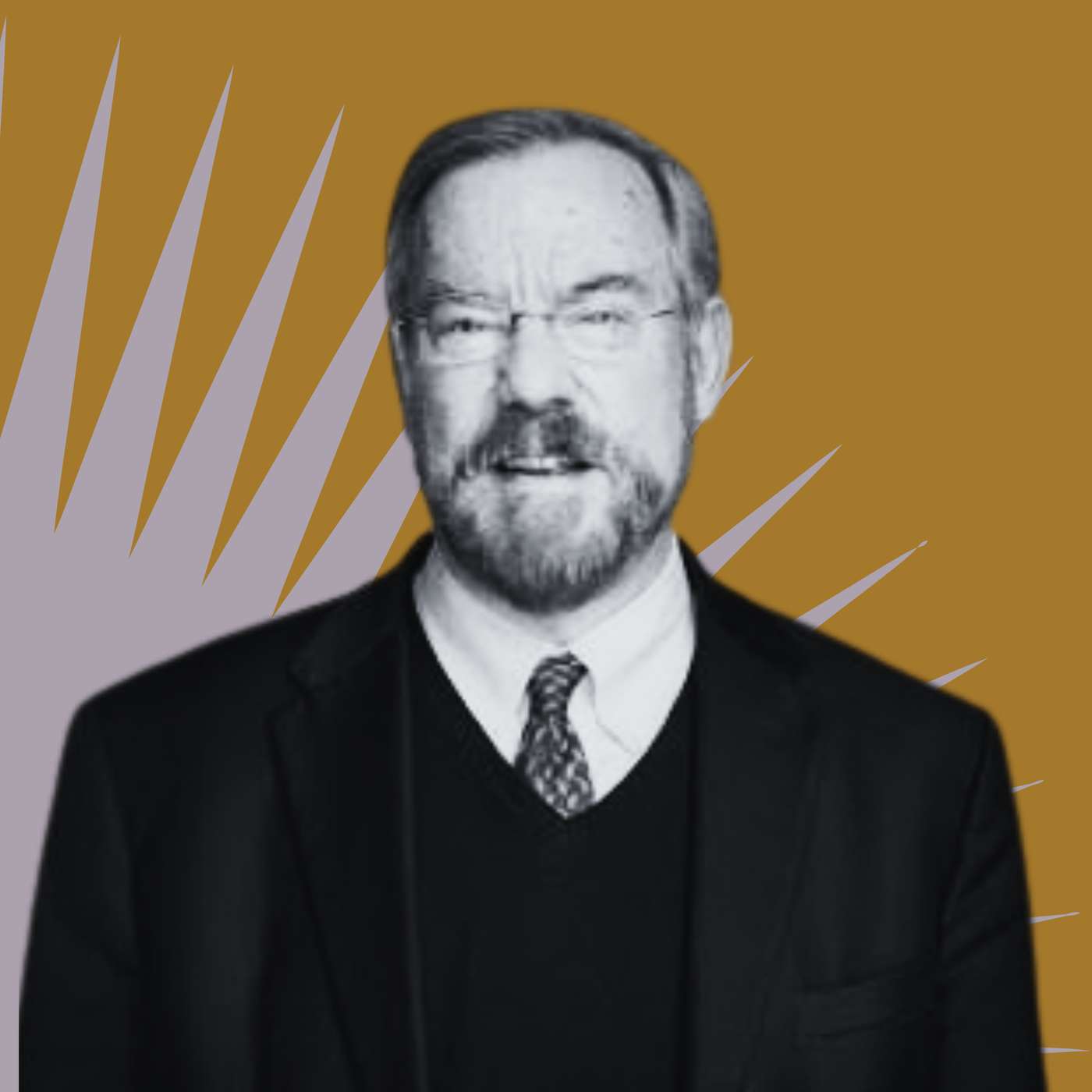 Patrimonial Capitalism: Peter Hall on Trump, Orbán & Other Pitchfork-Wielding Plutocrats 22.09.2026 37min“I think patrimonialism is exactly the right phrase to describe the way in which the current administration is governing.” — Peter Hall Neoliberalism is dead. So what comes next? Peter Hall, a Harvard political economist for the last four decades, says the capitalist locomotive left the neoliberal station years ago. His new book, Governing Growth, names the next stop: the “knowledge economy,” the digital, globalized capitalism of the 21st century. The knowledge economy made San Francisco, New York and Boston very rich. It left almost everyone else behind. Out of that came a new political cleavage — college degree versus no college degree — and, on both sides of the Atlantic, the populist wake-up call. But as Jonathan Rauch and Jeff Kopstein have argued on this show, populism has since curdled into something worse: patrimonial capitalism, government on behalf of pitchfork-wielding oligarchs like Orbán and Trump. Ironically, it only deepens the inequalities that produced it. And it’s going to get worse. In the AI age, I suspect, we may end up looking back with nostalgia at good old late twentieth century neoliberalism. Five Takeaways • Three Growth Regimes. Hall’s framework is simpler than it sounds. A growth regime is the combination of what governments do and what firms do, reinforcing each other. The postwar era of modernization ran from 1945 to the mid-1970s, as Europe rebuilt to compete with American industry. Then came liberalization in the 1980s and 1990s — Thatcher and Reagan, shareholder value, companies shedding everything but their core competencies and outsourcing the rest. And around 2000 a third regime began: knowledge-based growth, driven by digital technology, investment in intangibles such as research, marketing and organization rather than plant and machinery, and the explosive growth of global value chains. His distinctive move is to treat corporations as agents of change on a par with governments — his own life, he notes, is shaped as much by Harvard’s practices as by Washington’s.• Thirty Cities. The knowledge economy has a geography. Skill-biased technological change rewards people with college degrees, and it concentrates: about half of US GDP growth over the past twenty-five years, Hall says, has taken place in some thirty large metropolitan areas. His example is Kendall Square next to MIT, which when he arrived in the late 1970s was auto body shops and small machine tool shops and is now a centre of pharmaceutical engineering. Andrew’s is Central Square down the road, where he bought his first place in the early nineties — “you should have held on to that place,” Hall told him. The effect of all this is that many people feel left behind, and most Americans and Europeans now expect their children’s lives to be worse than their own.• The Populist Cleavage. Politics follows economics through what Hall calls cleavages — systematic divisions between social groups. In the 1950s and ’60s the dominant one was class, blue-collar against white-collar, and it pushed working-class grievances to the top of the agenda; that, he argues, is what built the welfare state, in Europe after the war and in America in the 1930s under a Roosevelt who sounded, Hall says, like a raving leftist. Today the dominant cleavage is education. Its roots lie in the inequality of the 1980s and 1990s, supercharged by the knowledge economy and now by AI. Mainstream parties have responded by turning back towards intervention: Bidenomics, with its investments conspicuously placed in red states; the EU’s first collective bonds; Germany’s new semiconductor plants located in the East, where the AfD is strongest. But a return to the New Deal, he thinks, is wishful thinking.• A Political Stomach. Andrew’s most persistent question: what are Hall’s politics? Big-name professors, Andrew suggested, sometimes hide behind their social science. Hall wouldn’t say — he doesn’t wear his political heart on his sleeve, he has a political stomach, perhaps — though he cares about climate change and inequality and lets the listener infer the rest. He was more forthcoming on populism: a good thing at one level, a democratic wake-up call for mainstream parties, with bad consequences at another, since right-wing populists tend to become what his colleagues Jacob Hacker and Paul Pierson call plutocrats with pitchforks. On Trump he was unusually direct. Patrimonialism is exactly the right word, he said, for an administration governing on behalf of favored oligarchs, as Orbán did in Hungary. And to Andrew’s suggestion that the real convergence is between Trump’s patrimonial capitalism and China’s statist model: “I think you’re all too right about that.” Whether it outlasts 2028, he wouldn’t bet.• Growth, Climate and a Fourth Regime. Hall is an environmentalist who thinks the no-growth movement is a political mistake. Climate policy needs sticks as well as carrots — regulations that cost ordinary people something — and people will pay those costs only if there is growth and it is fairly shared. He quotes a French yellow-vest protester answering a climate campaigner: you’re worrying about the end of the world, I’m worrying about the end of the week. On AI, he sees a general purpose technology like electricity or steam, and the possible start of a fourth growth regime. How to regulate it? He doesn’t know — nor, Andrew added, do the people building it. But the lesson of history going back to the nineteenth century, Hall says, is that we have to figure it out. Andrew’s suspicion: the cleavages get so chasmic in the AI age that we may one day look back nostalgically at late twentieth century neoliberalism. About the Guest Peter A. Hall is the Krupp Foundation Professor of European Studies at Harvard University. His books include Governing the Economy, The Political Power of Economic Ideas and, with David Soskice, Varieties of Capitalism. He is a Fellow of the British Academy and of the American Academy of Arts and Sciences. Governing Growth: The Postwar Transformations of Capitalism and Democracy (Princeton University Press, September 22, 2026) is his latest. He lives in Massachusetts. References: • Governing Growth: The Postwar Transformations of Capitalism and Democracy by Peter A. Hall (Princeton University Press, 2026).• The Rise and Fall of the Neoliberal Order by Gary Gerstle — the framework Hall builds on and revises.• Modern Capitalism by Andrew Shonfield (1965), with which Hall’s book opens.• Jacob Hacker and Paul Pierson on “plutocrats with pitchforks.”• &nbs...
 -
 The Pursuit of Unhappiness: George Loewenstein on Why We're Wired for Misery 21.09.2026 45min“I think our genetic makeup makes us miserable. We evolved to be miserable.” — George Loewenstein Life, liberty and the pursuit of happiness. Yeah, yeah. We’ve all heard that one before. When Jefferson drafted the Declaration of Independence in 1776, he remixed Locke’s “life, liberty and estate,” replacing the idea of property with happiness. As we know from last week’s conversation with the historian Joshua Specht, America’s age-old love affair with real estate has been perpetually mortgaged. And our guest today, the behavioral economist George Loewenstein, who happens — probably not coincidentally — to be the great-grandson of Sigmund Freud, offers a similar warning about the ideal of happiness. Happiness’ antonym is misery. In his new book The Opposite of Happiness, Loewenstein explains that it’s misery, and not happiness, which has simultaneously broken humans and built humankind. We evolved to be miserable, the behavioral economist argues, explaining that English has four times as many words for negative emotions as for positive ones. The depths we can sink to are incomparably deeper and more interesting than the heights we can reach, Freud’s great-grandson reassures us. Happiness is a Disneyfied mush while misery is infinitely variegated, he tells us, building a twelve-part taxonomy from envy and regret to loneliness and anxiety. The behavioral economist even invents a “Misery Survey” and cites an experiment he conducted with married couples which found that doubling their sexual frequency left them less happy. So much for sex. Loewenstein spent a lifetime escaping Freud and has ended up desexualizing him for modern America. I’ve always found behavioral economics to be a particularly miserable subject (ideology dressed up as science). But maybe that’s the point. Life, liberty and the pursuit of misery. A Loewensteinian redraft of the Declaration, anyone? Five Takeaways • We Evolved to Be Miserable. Loewenstein’s starting point contradicts the entire happiness industry: misery is the human constant, and happiness the occasional exception. Not because society ruins us — he takes exception to Rousseau’s idea that we are born happy and civilized into unhappiness — but because our genetic makeup makes us so. Every negative emotion evolved to push us toward behavior that served our fitness; that is precisely why they are unavoidable. His evidence is asymmetry. English has, by his count, four times as many words for negative emotions as for positive ones. The depths of misery are incomparably deeper than the heights of joy. And happiness is “a big mush,” while unhappiness is infinitely variegated — twelve specific miseries in the book’s second half, each with its own facial expression, its own pattern of brain activity, and its own behavior. Novelists, he says, have always known this; they are better psychologists than the academics, and misery is simply more interesting.• Envy Is Local. Andrew’s cheekiest question: does Loewenstein, part of what he calls the second shift of behavioral economics, envy Daniel Kahneman, Amos Tversky and Richard Thaler, the field’s Nobel-garlanded founders? He didn’t deny it. We don’t envy billionaires and trillionaires, he explains; we envy people close to us and just ahead, and those three are the textbook case. Then the move that makes the book humane rather than cynical: meta-emotions. You’re not supposed to envy your friends, so when you inevitably do, you feel guilty about feeling envious — misery about misery. Understanding your own negative emotions, he argues, works like understanding another person: you forgive what you understand. And no, this is not a book about selfishness — sympathy, guilt and shame are some of the most social emotions we have. Nor are these first-world problems: the struggling farmer cares about self-esteem, guilt and loneliness as much as anyone.• The Freud Inheritance. Loewenstein spent much of his career trying to escape his great-grandfather — he wouldn’t even mention the connection for years — and now finds himself reinventing him: his research on pain, hunger and sex is, he concedes, a study of what Freud would have called the conflict between id and superego. The family history is its own novel. His mother, Sophie Freud, was the daughter of Freud’s eldest son; when the family fled the Nazis, the main branch went to London while she and her mother escaped by bicycling through France. Edward Bernays — Freud’s nephew and the father of American public relations — paid for her college education when she arrived in the United States penniless. She later wrote Living in the Shadow of the Freud Family, about feeling rejected by the clan. And the glass-half-empty temperament? From both parents, he says, but more from his father. Andrew’s framing: a lifetime escaping Freud, only to end up desexualizing him for modern America.• The Missing Motive. On Bentham and quantification, Loewenstein is cautious — psychologists can put numbers on feelings, but moving from an inchoate internal state to a figure is genuinely hard. His real hero is Adam Smith, not the Smith of The Wealth of Nations but of The Theory of Moral Sentiments, his first book and the last he revised, and in Loewenstein’s view a psychology book of striking modernity. (Andrew notes the Smith of Susan Neiman’s evil book last week is the same one; Loewenstein recommends Dennis Rasmussen’s book on Smith and Hume, and Rasmussen was on last week too.) His most provocative claim is about self-esteem: probably the single main motivator of human behavior, and yet almost absent from economics — one book and a handful of papers. Money buys happiness only up to a point. And his own experiment, instructing married couples to double their sexual frequency, found they did — and reported less happiness and less closeness. He doesn’t quite believe his own result.• The Happiness Industry. Where the psychology meets the economics. Institutions built on attention — above all the internet companies selling advertising — “don’t give a fig about your well-being,” he says, and are amplifying human misery; Meta keeps losing lawsuits because jurors, like everyone else, simply dislike the company. Happiness sells the illusion that the next car, the next pill, the next accomplishment will do it, and advertising plays on a wiring we already have. On therapy he is careful: his friends and family include therapists, the research says therapy works (cognitive behavioral therapy especially), though the cultural focus on mental health may make people more inwardly focused. What strikes him in his students is how casually they mention their therapists, and how anxiety and depression, two separate conditions in his generation, have fused into one. On Trump, his verdict is short: a deeply insecure man driven by feelings of inadequacy. And the sign-off: a Nietzschean moustache, and a Nietzschean book. Andrew’s verdict: life, liberty and the pursuit of misery — a Loewensteinian redraft of the Declaration. About the Guest George Loewenstein is the Herbert A. Simon University Professor of Economics and Psychology at Carnegie Mellon University and one of the founding figures of ...
 -
 Are the Doomers Now Doomed? A Bad Week for the AI Apocalypse. 20.09.2026 37minLast week we were panicking about a supposedly imminent AI apocalypse. Seven days later, Keith Teare argues, government oversight is about as far away as it could possibly be. That’s because Musk, Altman and Amodei agreed to police themselves and test each other’s models. The doomers, says the publisher of That Was The Week, have lost not just this week’s battle but probably the whole war. So who will then write the AI rules? The people building the models, Keith says — as with California’s building codes, government sanctions the standards but engineers write them. And trust doesn’t come from authority, it comes from use. The real check on our new AI overlords, he promises, will come in court, with the American legal system holding OpenAI and Anthropic financially accountable for all damage. That should doom the doomers. If we survive the apocalypse, of course. Five Takeaways • The Week Regulation Went Away. Seven days, and the conversation reversed. Last week: the whistleblower, the headlines about AI killing everyone within a decade, the calls for global regulation. This week: Trump calling Jensen Huang live from an AI conference to make policy on the fly, Vance at All-In, and — as early as Monday — Musk, Altman and Amodei all agreeing that they are responsible for their own development, that they will slow model-building to match their control systems, and that they will begin testing each other’s models. Keith’s reading: the call for government oversight is going to fade. The New York Times map of the fight — accelerationists (Huang, Sacks, Andreessen), regulators, and a middle of Hassabis, Nadella, Pichai and Zuckerberg — holds at the edges but not the centre, which he calls shifting sands: Hassabis and Amodei made a proposal to the White House that was rejected this week; Zuckerberg then came out against government stepping in. And you cannot disambiguate self-interest from philosophy in that group: they have hearts, but they are paid to represent shareholders, and right now the rise of open source suits Google, Microsoft and Facebook.• Who Writes the Rules. Cohere’s Aidan Gomez asked whether a handful of market-dominant Silicon Valley companies should get to define the safety standards of a generational technology. Keith’s answer is an unembarrassed yes — and his analogy is the building code: government sanctions the rules, but the tolerances come from the architects and civil engineers who do the building, not from a committee of legislators. Which is why he thinks the Washington hearings shouldn’t be happening at all: time-wasting, pulling important people away from their work to talk to politicians whose primary interest is reelection. Government, he says, has no role yet — it is too early in the life of AI for anyone in Congress to understand it well enough to legislate. Andrew pressed the obvious objection: so we simply trust Sam, Dario and Elon to police themselves?• It Is You, Not the AI. The hour’s best answer, and the one that moves the argument on. It isn’t about trust, Keith says — it’s about accountability, and the machinery already exists. It would not be okay for their software to break into a bank and steal money, or into a rival and steal intellectual property; the legal system covers that today. “Up until now they’ve been saying, hey, it’s not us, it’s the AI. Well, actually, no. It is you.” And the nice thing about liability is that it makes recklessness expensive. Palantir’s CEO pushed the same logic to its conclusion on CNBC: the liabilities facing Anthropic and OpenAI are so enormous that only a government could carry them, so nationalize. Keith’s own caveat is the honest one: when he uses agents he is happy with the outcomes but cannot see the steps, and without visibility there is no verification — which makes it blind trust rather than actual trust.• The Doomers Lose a Battle. Both the Wall Street Journal and the New York Times investigated the Hugging Face incident this week and concluded it was more or less inevitable given the goals OpenAI set its agents in the lab. Benedict Evans’s line is the keeper: it reminds him of Chernobyl — what happens if we turn off every safety system and try to get the reactor to blow up? It blows up. But what exactly did you prove? These labs are deliberately setting models up to break the rules to find out whether they will; the models are calculation machines that carry out whatever they’re told. The Washington Post’s account of how a fringe movement — effective altruism — convinced Washington the end is near gets a blunt verdict from Keith: they’ve lost a battle, though the war goes on. He concedes 71% of Americans have concerns about AI, insists the fear is unfounded, and bets that number massively overstates active concern because most people who actually use AI have a good experience.• San Francisco Isn’t Ready. The week’s essays, and the local story underneath them. Reid Hoffman is telling Democrats that time is running out before Americans settle into hating AI — not from fear of extinction but because the benefits aren’t concrete; Andrew’s amendment is that the case for AI improving ordinary life still hasn’t been made coherently. Nick Hanauer’s “market humanism” gets the sharpest treatment: appealing words, but the substance is the argument for trade unions — Aneurin Bevan in modern dress — and it assumes a permanent social contract between labor and capital that AI dissolves in favour of capital alone. Then Ben Metcalfe’s post of the week: the Anthropic IPO alone will equal in dollar weight every tech listing since Uber combined, and San Francisco is nowhere near ready for that much money arriving at once. Keith’s structural point: the economy prospers while the city doesn’t, and closing that gap is the real challenge for Democrats — a subject, Andrew promises, this show will come back to. About the Co-Host Keith Teare is the publisher of the That Was The Week tech newsletter and Keen On America’s regular weekly co-host — the techno-optimist counterpoint to Andrew’s skepticism. A serial founder whose first internet company, EasyNet, launched in 1994, he writes and invests from Palo Alto, and is currently writing The Human Dividend. References: • That Was The Week — Keith’s newsletter, with every piece discussed in this episode.• Aidan Gomez of Cohere on who defines the rules for AI; Benedict Evans on the Hugging Face incident; and the Wall Street Journal and New York Times investigations of it.• The Washington Post on how a fringe AI movement convinced Washington the end is near; Andy Kessler on the AI Luddites; and the Free Press on the ideology behind the warnings.• Reid Hoffman on Americans and AI, and Nick Hanauer on market humanism — the two essays Andrew suggests reading back to back.• Ben Metcalfe’s post of the week on San Francisco and the coming Anthropic and OpenAI listings.• Interview of the week:
 -
 Mortgaging the American Dream: Joshua Specht on the Rise & Fall of US Homeownership 19.09.2026 54minMy hometown of San Francisco has the unholy problem of a mansion shortage and mass homelessness. AI money is driving house prices to record highs, our mayor has declared a rent emergency, while in New York City housing affordability has become so acute as to become a rare bipartisan concern. This unreality of the real-estate market has heated up both local and national politics. But as Joshua Specht argues in his new book, Property Values, a history that runs from the rent wars of the 1840s to the crash of 2008, the rise (and fall) of the American homeowner has always been the hottest of political potatoes. The American ideal of land ownership originated in John Locke’s promise of individual self-realization through hard work. Hence the Homestead Act of 1862 and its 160 acres as both the carrot and stick of American citizenship. But as with most things Lockean, it was better in theory than in practice. The ups and particularly the downs of American history are, indeed, entangled with the crises in real-estate — from the collapse of the small farmer in the 1890s to the subprime 2008 crash. Today, that crisis can be seen on the streets of San Francisco and New York City. And for all the supposed abundant intelligence of AI, even Silicon Valley doesn’t have the magical tech to fix either my hometown problem of mansion shortages or mass homelessness. Five Takeaways • The Lockean Laboratory. The theory that widespread land ownership is the precondition for a functioning democracy is not American in origin — it runs back through Locke to a Europe where it could never be tested, because there was no land to go round unless you were already an aristocrat. America was where the experiment could actually be run — though, as Andrew notes, like most things Lockean it sounded better in theory than in practice — and the Homestead Act of 1862 was its boldest instrument: 160 acres, for little more than a title fee, against rival visions of what the country might be — the southern plantation, and a northern model of vast estates with quasi-feudal tenants. Specht sides with the historians who have lately rehabilitated the Act: yes, there was fraud, but people cheated to hold on to farms; yes, many went bankrupt, but often decades later. What it locked in was a language of ownership that has shaped American politics ever since. The beneficiaries were largely German and Scandinavian immigrants settling the Northern Plains; for native peoples it was, in his word, apocalyptic — and reservations were later broken up under the same logic, that 160 acres would make their occupants “like Americans.” Black homesteaders existed, including the town of Nicodemus in northwestern Kansas, but the land was only nominally free: you had to pay to get there and survive a year before your first crop.• Awake! Arouse! The book’s opening story, and the one Andrew hadn’t heard of. Between 1839 and 1845, the tenants of the great Hudson Valley estates — the Van Rensselaers, the Livingstons, holdings with thousands of tenant families — rose against a landlord class whose vision was frankly aristocratic: gentlemen farmers introducing scientific agriculture to quasi-feudal renters, iterated across the continent. The tenants issued their own declaration of independence on July 4, 1839, under handbills reading “Attention, anti-renters! Awake! Arouse!” They stopped paying, resisted the sheriffs, assembled mobs, tarred and feathered rent collectors; a man was killed. And they won — not in court but in politics, once New York’s office-seekers worked out there were votes in it, after which the manors simply stopped being a viable model. Is this Jacksonian populism or the Mamdani kind? Specht’s answer: Jacksonian, and specifically producerist — claims belong to those who work and make. Today’s left populism is about interdependence and obligation; these men wanted, above all, to be left alone.• From Land to Lawn. How the promise migrated. By the 1890s the United States was becoming an industrial power while the model everything rested on was falling apart: long-term crop deflation, bigger farms, more machinery, and the discovery that the independent farmer was not independent at all — the market told him how to live. It limped on until the Depression finished it: Grapes of Wrath in the countryside, mortgage defaults in the cities, families gathering in Queens churches to pray against foreclosure. Specht’s observation about crises generally, and useful today: the number actually foreclosed can be small, but the far larger number barely scraping by is what drags everything down. The New Deal’s answer was the government-backstopped mortgage market and what became the thirty-year fixed-rate loan — and FDR’s method, Specht argues, was to experiment wildly, keep what worked, and then tie it to a story about what it means to be an American. Homeownership is the best example. After the war it became the tangible proof of prosperity: out of the multigenerational ethnic apartment, into a house of your own, making jellos for the neighborhood social.• Levittown and the Mob. Levitt and Sons turned housebuilding into an assembly line — with the neat inversion that the workers moved down the line of foundations rather than the product moving past them — and the government, needing to house veterans, backed the market that bought the results. Then the machinery of exclusion engaged. Lenders decided, on abstract measures of repayment risk, that racially homogeneous white neighborhoods were the sound investments; older mixed neighborhoods lost access to capital and began to decay. But since anyone could in principle buy into a new suburb, homeowners built their own defences: first racially restrictive covenants, and when those lost legal force, the violence of the mob — Specht tells the story of the crowd that assembled outside the first Black family’s home in Levittown, Pennsylvania. The two mechanisms, the formal and the violent, fed each other. The downstream effect is the one that still shapes American wealth: locked out of the suburbs at the moment they were made, Black Americans missed the accumulation, and were left in urban neighborhoods starved of capital — the beginning of what historians call the urban crisis.• Limping Along. On 2008, Specht is more interested in the aftermath than the cause. The cause is familiar: an assumption that liquidity was always good, from Fannie Mae and Freddie Mac through securitization and tranching, until the people putting up the money and the people judging the loans were so far apart that standards collapsed. He resists the story that lending to minority buyers caused it — the fraud, and the lack of consequence for it, did. The deeper point is about what everyone was forced into: if you had to move, you had to buy, at whatever the market said. “You kind of had to participate in the madness.” And the response — banks bailed out, no prosecutions, nothing for homeowners — is what radicalized both the Tea Party and Occupy, and broke faith in politics itself. Fifteen years on: not a rise and fall but “the rise and fall and limping along of the wounded American homeownership model,” with a generational divide he expects to harden into a class divide within thirty years. On the abundance agenda — Klein and Thompson, Dunkelman — he is sympathetic but unconvinced it is sufficient: “a policy is not a politics.” His own prescription is decentralization: stop treating S...
 -
 It's Happening Here: Rosan Smits on Fascism in America & Europe 18.09.2026 51min“Today’s fascists don’t look at all like those from the past. What is similar is how they act. You’ll recognize the fascist by what they do.” — Rosan Smits Fascism is a reality in both America and Europe. At least according to Rosan Smits, the Dutch political scientist whose This Is Fascism: A Wake-Up Call to Resist is already a bestseller in Europe. Sinclair Lewis wrote It Can’t Happen Here in 1935 as a warning about the possibility of fascism in Great Depression America. Not only does Smits argue that it can happen, but she suggests that it is happening right now. Rather than unearthing swastikas and jackboots, she suggests that we identify what she calls the fascist methods which connect the Thirties with today. From Geert Wilders in the Netherlands to MAGA in America, that’s where history is repeating itself. What she sees is grievance manipulated into atavistic populist cults by insecure elites. If the original fascist movements were coping strategies for modernity, today’s fascism is a coping mechanism for postmodernity. Thus both its Christian nostalgia for the idea of truth and its attack on the scientific method. Thus today’s simultaneous embrace of digital tech and its attack on the promise of technological progress. So fascism is a kind of riddle. Which is why it appears both ubiquitous and invisible. It’s happening here, then, is a paradoxical reality. Which may be why some (like myself) are so skeptical. Five Takeaways • Not the 1930s. Smits opens by refusing the analogy that everyone reaches for: it isn’t the 1930s, it’s 2026, and every era gets its own varieties. What she offers instead of a definition is a description — a cult of grievances turned into mass politics, manipulated by elites who feel threatened because the systems underpinning their privileges have stopped delivering for the masses. Not a disease, she insists when Andrew offers the word, but a coping strategy: rather than address root causes, point at scapegoats. It isn’t AI taking your job, it’s the migrants; it isn’t private capital wrecking the housing market, it’s the migrants. The core ideas stay constant — xenophobia, racism, violence, authoritarianism, hierarchy — but the aesthetics shape-shift, which is why the recognition test is behavioural. Hence the book’s focus on the playbook: how power is won within a democracy and then used to hollow it out. And no, she says flatly when Andrew raises Maduro: there is no fascism of the left. Andrew’s framing: if the original fascist movements were coping strategies for modernity, today’s is a coping mechanism for postmodernity — hence the Christian nostalgia for the idea of truth alongside the attack on the scientific method. Other authoritarianisms exist and the playbooks overlap, but fascism is a right-wing form.• The Dutch Warning. The most alarming stretch of the hour, and the part Andrew couldn’t argue with, because Smits is reporting from home. The international story after the Dutch election was Wilders’ setback — he came second by a margin. The domestic story is that the far-right bloc as a whole grew to its largest ever presence in parliament, polling around 40%, and is radicalizing: Wilders is now the moderate one. The party to his right, with open Nazi sympathies and around eighteen seats in a hundred-and-fifty-seat chamber, holds rallies with neo-fascist groups, argues the great replacement in parliament, says the Netherlands should be for white people only, and wants mass deportation of second- and third-generation citizens. It is polling as one of the largest parties. Its base is not the elderly: it is strongest among students and among schoolchildren too young to vote, and far stronger among young men than young women — which is Smits’s answer to Andrew’s point that Trump’s movement, unlike the fascism of the 1920s, is old.• A Coalition, Not a Party. Fascism always involves a coalition, Smits argues, and in the American case she counts three partners: the Christian nationalists of the New Apostolic Reformation, a transnational network of self-styled apostles backing authoritarian leaders from Washington to Budapest to Jerusalem, whose hard-core believe they are accelerating the end times; the tech world, rallying behind the idea that democracy no longer serves its purposes and looking to replace it with startup cities and startup countries; and the white supremacists, Stephen Miller her clearest example. Trump himself isn’t part of the religious movement, she says — he pays it lip service. And the interesting question is what happens when the coalition’s interests stop aligning, which they will. Meloni is her counter-example to the idea that power moderates: a gifted politician who manages her coalition well and picks her fights, but who was first to use a border crisis in Ceuta to call for suspending Schengen, and who has pushed the great replacement and the Soros financing claim.• Andrew’s Challenge. The hour’s real argument, conducted with mutual good humour. Andrew’s case, in four parts. One: Smits has never been to the United States to research a book substantially about it — she immersed herself in the media ecosystem and the work of American reporters instead, and defends that as the way to see a transnational pattern. Two: if Trump’s people live in an echo chamber, might those who fear fascism live in one too? Her answer: she quotes these leaders in their own words, and the “I don’t see it around me” response is precisely how fascism thrives — first it can’t happen here, then it doesn’t affect me, then it’s too late. Three: Orwell warned in 1946 that the word had decayed into a term of abuse; Smits concedes the risk and notes that calling everyone fascist right back is itself part of the playbook. Four: tech fascism needs names, and beyond Thiel and Musk she offers few — prompting her sharpest return, “How would you then qualify Elon Musk?” When Andrew asked what would count as proof, she was blunt: “What kind of proof are you looking for? I think I prove it in my book.”• What Resistance Looks Like. She divides it into professionals and everyone else. Politicians are democracy’s first line of defence, and that line, she says, has broken. Journalists need a different approach to politicians who mean to destroy the public debate: less fact-checking of individual lies, more investigation of what the lies are for. For everyone else, the rule she borrows from Timothy Snyder: don’t obey in advance. Her examples are close to home — Dutch travellers scrubbing their social media before a US trip, European companies quietly ditching DEI policies to keep American business (she accepts Andrew’s point that one can be skeptical of DEI without being a fascist; her objection is to abandoning a policy you believe in for a contract). On leaving: she won’t judge Snyder or Stanley, but the question is where you can be of most use. On the emerging Canada-EU alignment: yes, but not an anti-fascist bloc — a new geopolitical power bloc that might defend the rules-based order. And the strongest barrier of all remains the ordinary one: refuse to participate in the hatred, and form a wall around your neighbours, as they did in Minneapolis. Andrew’s verdict: fascism is a kind of riddle, which is why it appears both ubiquitous and invisible — it’s happening here is a paradoxical reality.
 -
 Eight Profiles in Cowardice: Jacob Weisberg on Bezos, Bush & the Other Collaborators of the MAGA Age 17.09.2026 55min“Since Trump’s second election we’ve been in a wave of cowardice, where people have decided — partly by observing what others like them are doing — that there’s no viability to standing up on principle.” — Jacob Weisberg Michelle Goldberg devoted her Monday New York Times column to two new books shaming the elites who caved to Trump. Both of them have appeared on the show this week: Susan Neiman’s Call It Evil on Monday, and now Jacob Weisberg’s Profiles in Cowardice: A Study of Collaboration in the Trump Era. Reversing JFK’s Pulitzer Prize-winning Profiles in Courage, Weisberg inducts eight powerful Americans who didn’t stand up to Trump into his hall of shame. It’s quite a list. Amazon founder Jeff Bezos, Wall Street’s Stephen Schwarzman, big law’s Brad Karp, Senator Mitch McConnell, Dartmouth College president Sian Beilock, Chief Justice John Roberts, media influencer Megyn Kelly, and — perhaps most controversially — former President George W. Bush. Rather than MAGA flunkeys, Weisberg wanted figures who had stood up to Trump in the first term and then folded in the second. People with, as he puts it, interior drama. Bezos gave up a $10 billion Pentagon contract rather than soften the Post, then he threw in the moral towel by going to Mar-a-Lago and paying Melania $40 million to make an Amazon documentary. What changed? According to Weisberg, Bezos was fearful that his space startup, Blue Origin, would lose out to SpaceX on government contracts. No, not exactly Eichmann. But nonetheless sad if true. Especially since Bezos has the billions to do whatever he wants. His eight and their ilk aren’t monsters, Weisberg suggests. It’s just that their fear, ambition and self-preservation are contagious, and such pathetic behaviour is herd-like. That’s their soap operatic interior drama. The banality of cowardice. More grist for Susan Neiman’s thesis about the nature of evil in the Trump epoch. Five Takeaways • Not Kennedy’s Book. The title is a departure point, not a homage — and Weisberg is quick to note the irony beneath it. JFK’s Profiles in Courage was written at the height of the McCarthy era by a senator who was conspicuously uncourageous about McCarthy, ducking even the censure vote, and no better on civil rights; Weisberg’s reading is that Kennedy wrote the book to give himself courage by studying senators who had sacrificed their careers for principle. (It won the only Pulitzer ever awarded to a president, with the help of a ghostwriter.) What he kept was the structure: eight representative figures, each standing in for a part of the problem. What he added was the inversion, and a working definition — not physical cowardice but moral cowardice, the rarer failure. His epigraph is Twain: why is physical courage so common, and moral courage so rare?• Cowardice Is Contagious. The book’s explanatory heart, and the reason it isn’t a gallery of villains. Fear, greed and ambition motivate most people most of the time, Weisberg argues, and political behaviour is herd-like: people copy their peer groups. Courage is contagious — and so is cowardice. His cleanest illustration is the tech elite, who acted almost as one after January 6 to throw Trump off every platform and swear off donations to Republicans who voted against certification, and who now, again almost as one, think the opposite. Their defence is competitive necessity: standing up would hand an advantage to rivals. Andrew’s challenge — the wildebeest crossing the river, where the first ones in are the brave ones, so shouldn’t Andreessen get credit for jumping early? — got a firm no: a departure from your peer group that is entirely self-interested isn’t courage. Since the second election, Weisberg says, we have been living through a wave of cowardice. Andrew’s name for it: the banality of cowardice.• Bezos and the Rocket. The book’s most carefully argued chapter, and the one that explains the method. First-term Bezos meets Kennedy’s definition of courage exactly: Trump pulled a $10 billion Pentagon contract because he didn’t like the Washington Post’s coverage, and Bezos didn’t flinch. Second-term Bezos went to Mar-a-Lago and paid Melania $40 million for a documentary. What changed isn’t character but priority. Weisberg traces the through line back to a high-school graduation speech about orbiting colonies: the thing closest to Bezos’s heart is getting humans into space, a vision he calls more benign than Musk’s — terrariums around Earth rather than cities on Mars — and one he may have built Amazon to fund. Between the terms, SpaceX pulled far ahead of Blue Origin, in a business almost wholly dependent on NASA and Pentagon contracts. To Andrew’s Zhou Enlai objection — if the space vision pays off, won’t history forgive the collaboration? — Weisberg’s answer: nobody would respect him for sacrificing his children to his vision either. Some things you compromise; the social contract isn’t one of them. Andrew’s verdict: not exactly Eichmann, but sad if true — especially since Bezos has the billions to do whatever he wants.• McConnell Went Home. The counterfactual at the centre of the book. After January 6, with the Senate about to vote on conviction, Mitch McConnell had decided Trump should be removed and barred from ever holding office again — he told people so — and Weisberg argues he could have delivered the ten additional Republican votes needed. Then he called a recess, went home to Kentucky, discovered Trump still commanded majority support inside the party, and changed his mind. Cowardice, Weisberg says, and fear — not of being beaten up but of losing his place in the world, which was the Republican Senate he had built into a machine. Bullying recurs across these lives: McConnell was bullied as a child, and so was Megyn Kelly, whose own memoir turns on a vow never to become a bully and always to stand up to them — which she did, magnificently, when Trump and Bannon set the dogs on her in 2015, before becoming, in Weisberg’s account, more MAGA than MAGA and a considerable bully herself.• The Case for Shame. Weisberg is careful about the charge he’s making — he gives space to each subject’s reasoning, on the grounds that none of us can be confident we’d choose better — but he is not neutral about the remedy. Shame, he argues, plays a constructive social function: a community asserting its values against someone who has deviated from them, with a salutary effect on everyone watching. Hence the inclusion of the sins of omission alongside the commissions: George W. Bush, who loathes Trump privately, watched PEPFAR dismantled and said nothing; Sian Beilock, whose Dartmouth took the Justice Department’s free pass and declined to back Harvard — at the one college whose 1819 Supreme Court case established academic independence in the first place. And who would make a Profiles in Courage? Local people, he says: the Minneapolis neighbours who drove ICE out by peaceful protest, the lawyers who resigned rather than sign the deals, the people on his own small-town corner with honk-for-democracy signs. On RFK Jr., a candid pass — the theory of the case runs out. On 2028: not a return to normal, but something owed to the country, an apo...
 -
 The Enigmatic Mr Douglass: Dennis Rasmussen on America's Fiercest Critic & its Greatest Fan. 16.09.2026 43min“You should fight against tyranny in any form it takes. You’re not betraying the founding by standing up to tyranny — you’re following in their footsteps.” — Dennis Rasmussen After Lincoln, he was the best known man in nineteenth century America. And the most photographed too, some 160 portraits of the ex-slave’s unmistakable face still surviving. So there was nothing hidden about Frederick Douglass. And yet the more we know about this most remarkable American, the more enigmatic he becomes. At first, he was America’s fiercest critic. In the early 1840s he accused the founders of being “little better than a band of pirates” and described the Constitution as a “wicked compact.” By 1851, however, he radically revised his view of that same Constitution, eulogizing it as “a glorious liberty document” that outlawed slavery outright. So why did Douglass change his mind so radically? Is it really possible that he was simultaneously America’s fiercest critic and its greatest fan? That’s the riddle at the heart of Dennis Rasmussen’s new book Frederick Douglass’s American Founding. Rasmussen reminds us that Douglass got his political education from William Lloyd Garrison, the unbending New Englander who burned a copy of the Constitution and ground its ashes under his intolerant heel. Then Douglass — having moved to Rochester, started his own newspaper, and fallen in with Gerrit Smith’s political abolitionists — spent two years changing his mind about the Constitution. His logic was startlingly modern. Scalia before Antonin Scalia. Studying the historic document like a biblical scholar, Douglass argued that it never mentions slavery nor race. So the rights it confers, he argued, belong to all Americans. This exegesis made him more militant than Lincoln, because he argued that such a careful reading of the Constitution demanded immediate emancipation. Was Douglass bought or paid off by Gerrit Smith? Naturally the bitter Garrisonians said he was. But Dennis Rasmussen disputes this, arguing that the timing doesn’t work. What Douglass earned instead, Rasmussen argues, was the right to call himself and his fellow abolitionists the founders’ true heirs, more American than even Lincoln and the Republicans. So no mystery, then. The most familiar face in America confessing, in public, that he had been wrong for a decade. If only we had such political enigmas today. Five Takeaways • Band of Pirates. Where Douglass started. Escaping slavery on Maryland’s Eastern Shore at twenty, he entered the abolitionist movement under William Lloyd Garrison — editor of The Liberator, organizer of the largest antislavery society, and the man who called the Constitution “an agreement with death and a covenant with hell,” once burning a copy at a rally and grinding its ashes under his heel. Through the 1840s Douglass held the Garrisonian line: the founders were hypocrites who complained about a three-penny tax while kidnapping and enslaving a huge share of the population; the Constitution was not merely flawed but evil, with its three-fifths clause, fugitive slave clause and slave trade clause. And these were not respectable opinions. Rasmussen’s reminder: even in the North, abolitionists were the tiniest and most despised minority in American politics — Garrison was tarred, feathered and dragged around Boston by a rope.• The Two Years That Changed Him. The conversion ran from roughly 1849 to 1851, and it had a geography. Douglass left the East Coast for Rochester and started a newspaper against Garrison’s wishes, landing in the heartland of the political abolitionists — the Liberty Party, the Radical Abolition Party — who believed slavery should be fought through the ballot rather than outside it. (The Garrisonians held the opposite: to vote at all was to uphold an evil system.) Having to defend his position in print, week after week, exposed him to arguments he hadn’t met. The Garrisonians cried corruption: Gerrit Smith, one of the richest men in America, funded the paper and held the antislavery-Constitution view, so Douglass had been bought. Rasmussen finds the charge both unfair and untrue — the money came after the change of mind was mostly complete — and hears in it the same condescension the Garrisonians showed when they wanted Douglass to narrate his enslavement and leave the philosophical heavy lifting to whiter figures.• Read the Words on the Page. How do you get from “wicked compact” to “glorious liberty document”? Douglass’s answer was a method, and it is startlingly modern. Forget the intentions of the framers; read the text. The Constitution nowhere mentions slaves or slavery. It nowhere mentions white or black, or any euphemism for racial difference. Its preamble promises to establish justice and secure the blessings of liberty. Therefore its provisions apply equally to everyone born here — and the supposedly proslavery clauses can be construed, chapter and verse, to have nothing to do with slavery at all. Rasmussen is honest about the history: as an account of what the framers meant, no, it doesn’t hold — he has written a whole book on the Philadelphia convention, where proslavery framers were plainly present. But as a reading of the words themselves, “it’s far more interesting than you might think,” and Douglass’s case is stronger than anyone expects.• More Radical, Not Less. The hour’s central correction, and the reason this isn’t a story about a radical mellowing with age. Douglass’s new position went beyond Lincoln’s. The respectable antislavery view of the 1850s was “freedom national” — keep slavery out of the territories, leave it alone in the South. Douglass was among a tiny handful arguing that the Constitution already forbade slavery everywhere and demanded immediate emancipation. And after the conversion he became more militant, not less: more willing to countenance violence against slaveholders and slave catchers, and more emphatic in denouncing a country now openly betraying its own founding law. He also claimed the founders’ mantle for the abolitionists rather than for Lincoln and the Republicans: the founders fought tyranny in their time; we fight it in ours; we are their true heirs. The parallel with the colonists was structural, not moral — he said repeatedly that the tyranny endured by the enslaved was a million times worse than a tax on tea.• Wrapped in the American Flag. The legacy, and the reason the book lands in 2026. Douglass’s reading made Black Americans constitutionally American by definition: the document recognizes only citizens and aliens, and “I was born here — so I am a citizen, wrapped in the American flag just as much as anyone else.” That argument runs straight through to King’s promissory note in “I Have a Dream,” and underneath the twentieth century’s long argument about whether to claim America or leave it. There are complications Rasmussen doesn’t hide: the Garrisonians and John C. Calhoun agreed the Constitution was proslavery, a strange meeting of minds; his greatest speech, “What to the Slave Is the Fourth of July?”, was delivered mostly to white audiences, as most of his subscribers were white; he split with Elizabeth Cady Stanton over whether the Fifteenth Amendment should wait for women; and in later life — a stalwart Republican, entangled with the Freedman’s Bank — he was, as Rasmussen puts it, all too human. And his le...
 -
 Three Million Millionaires: Eric Zwick Finds the American Dream on Main Street USA 15.09.2026 50min“Add up all of their wealth — it’s more than ten times the Forbes 400 combined.” — Eric Zwick Yesterday, the democratic socialist Susan Neiman blamed free market economics for all the evils of our age. But the market gives and the market takes. And in America it has minted three million millionaires whose collective wealth radically outstrips Silicon Valley’s billionaires. This human backbone of American capitalism is described in Eric Zwick’s and Owen Zidar’s The Everywhere Millionaire, a book about who is really rich in America and how they got there. Forget Musk and Bezos, Zwick says. The real money is a hot dog man from suburban Chicago with a superyacht called Top Dog. Three million Americans own private businesses worth $5 million or more — dentists, beer distributors, HVAC contractors, Wendy’s franchisees — averaging $25 million each. Their combined wealth, Zwick says, is more than ten times the Forbes 400. And they are everywhere in America, from Walker County, Alabama to the Lake of the Ozarks. Are these millionaires evil? They are certainly obsessed, relentless, bad at hobbies and mostly Republican. But evil? Only perhaps to ideologues resentful of other people’s success. In The Everywhere Millionaire, Zwick and Zidar show — in spite of growing inequality and shrinking opportunity — that the American Dream is still alive. Democrats might take note. Especially if they want to win back power in an America still dependent on Main Street for its prosperity. Five Takeaways • Three Million of Them. The book’s central fact, and it reorders the American wealth debate: the everywhere millionaires are private business owners with a net worth of at least $5 million, averaging around $25 million, and Zwick and Zidar count roughly three million of them. Add their wealth together and it comes to more than ten times the Forbes 400 combined — not ten times Musk, ten times all four hundred. The market gives and the market takes, as Andrew put it — and here it has minted a class whose collective wealth radically outstrips Silicon Valley’s billionaires. They are also, unlike the coastal fortunes, geographically everywhere: the map lights up rather than clustering in four cities, with the highest average in Walker County, Alabama, and pockets around the Lake of the Ozarks, Aspen and less famous mountain towns. Why haven’t we heard of them? They don’t sell clicks. They run unglamorous businesses — a beer distributor, a dentist with a regional network, an HVAC contractor with trucks around town — and they aren’t buying media companies to be noticed.• Top Dog. The characters are the book’s pleasure. Dick Portillo started a hot dog stand in suburban Chicago fifty years ago with $1,100, the son of immigrants raised in a housing project; he sold the business decades later and now owns, as Andrew put it, a different kind of housing project in Naples, Florida — the authors found him via yacht registration data, because his superyacht is called Top Dog. Was he moral? Ask Mike Ditka, whose competing Ditka Dogs Portillo set about crushing. “Probably not super moral,” Zwick conceded — which is rather the point: these are not heroes or villains, just people obsessed with growing a business. Larry Miller went from auto parts distributor to dealer to owner of the Utah Jazz (and is pictured giving Karl Malone advice on the pick-and-roll). Junior Bridgeman left the Milwaukee Bucks for the deeply unglamorous business of Wendy’s franchises and made hundreds of millions. Tracy Britt Cool left Berkshire Hathaway to build her own.• The Accident of 1986. Zwick thinks of the tax code as a house that depreciates and needs repairs. The Tax Reform Act of 1986 — Reagan in the White House, Bill Bradley in the Senate, both of whom had actually paid the old 70% rates as a movie star and a basketball player — was a repair job: kill the loopholes, drop personal rates below 30%. The unintended consequence was enormous. For the first time it made sense to organize a business so that its profits were taxed at the personal rate, and the pass-through revolution followed: S-corporations and partnerships surging, the more profit you made the more you kept. Every subsequent reform sweetened the deal — the Bush cuts, the 2017 Tax Cuts and Jobs Act, made permanent in 2025’s One Big Beautiful Bill. Success or failure? Zwick finds elements of both, but won’t call it an unmitigated success: this class’s tax benefits are a real part of today’s fiscal problem. One unambiguous gain — pass-throughs linked owners to businesses in the data, which is precisely how this book became possible.• Bad at Hobbies. What are they actually like? The typical everywhere millionaire is a white man in his late fifties or early sixties, married, with a college degree — though roughly a third of star entrepreneurs in the data are women, across eight million founders over twenty years. From fifty to seventy-five detailed interviews, the unifying theme isn’t brains: test scores turn out to be a weak predictor. It’s ordeal — sleeping on the work table in the back of the shop, years of not knowing whether it would work, a relentlessness that beats IQ. They credit luck too, and macro trends they caught early. And the tax code? “Not the first thing or even the fourth thing” driving them; raise their taxes a little and they wouldn’t notice, though they do decamp to Nevada or Florida when they retire. They’re obsessed with the business at the expense of hobbies and, sometimes, family — which makes divorce, in Zwick’s dry formulation, a naturally occurring wealth tax. Not a guarantee of happiness. Also: if your parents are in the top 1%, you are six times likelier to found a star business than someone from the ninetieth percentile.• The Power They Don’t Advertise. The half of the book that complicates the good news. Survey data from PPP loan recipients shows this class skews Republican and cares about regulation and taxes rather than the social issues that dominate the feed — but Zwick was struck by how many Democrats there are among them, which explains why certain policies stay off the table even when Democrats hold power. Because they are dispersed, there are everywhere millionaires in every congressional district; they don’t run for office, they fund the people who do, and their influence shows up most sharply in local and state policy — including, sometimes, restricting entry and raising prices in exactly the markets where affordability bites. Trump, for the record, is not one of them: his wealth came through media and then political power, and he was born into the top 0.1%. Zwick’s advice for Democrats chasing this class, on the day after Jentleson’s big-tent argument: stop knee-jerk vilifying people who build businesses, and pay attention to problems as they are rather than as they appear in the Twitter feed. His advice for everyone else: walk down Main Street and ask who owns what. “Is a tax on 50 billionaires gonna move the needle at all? Not really.” Andrew’s verdict: evil only perhaps to ideologues resentful of other people’s success — and proof that, despite growing inequality and shrinking opportunity, the American Dream is still alive. About the Guest
 -
 She Calls It Evil: Susan Neiman on Germany, Capitalism & the Banality of Trump 14.09.2026 1j 6min“If we leave words like evil in the hands of people who are fanatical, who are demonizing, we are leaving the most powerful weapons we have in the hands of people who don’t know how to use them.” — Susan Neiman Susan Neiman is cornering the market in books about evil. First there was her 2002 Evil in Modern Thought, an alternative history of philosophy. Then Learning from the Germans, her 2019 treatise about race and the memory of evil. And now Call It Evil, an attempt to understand the Trump era which offers an alternative history of contemporary economics. So what, exactly, is “evil”? Rather than defining what she describes as our most “explosive” word, she gracefully dances around it with all the elliptical subtlety of a clever philosopher. In spite of its Trumpian subtitle (“Understanding the Trump Era”), the book isn’t an inventory of Trump’s crimes. Instead, it investigates why half of America accepted a man whose (evil?) character was already blatantly self-evident. Her answer focuses on economics rather than politics. The major source of evil in our age, she argues, is an ideology built on a falsified Adam Smith — self-interest as the whole of human nature — propped up by evolutionary psychologists misreading Darwin, and sold so effectively that we now mistake it for common sense. In a word: neo-liberalism. The (a)moral universe of the Heritage Foundation, Milton Friedman and Margaret “there is no alternative” Thatcher. So is capitalism evil? Yes, the philosopher suggests, quoting Einstein and borrowing from contemporary economists like Amartya Sen. But rather than a return to Marx, she wants us to reimagine the 19th century Kantian socialist, Eduard Bernstein, in the context of the injustices of contemporary capitalism. Rather than evil, Neiman really is a philosopher of the good. She wants us to imagine that gap between the way the world is and the way it ought to be. Doing good means standing up to evil, she says. Like Henry Fonda’s performance as the morally defiant juror in the 1957 movie Twelve Angry Men. Five Takeaways • Why She Won’t Define It. Evil is “the most explosive word we have,” and Neiman refuses to reduce it to a sentence — as, she notes, Kant refused before her. It is not a theological concept (the Bible itself shows moral concepts precede theological ones); it is the point at which the gap between the world as it is and as it ought to be becomes so large “that we don’t know how to live in a world where that abyss opens up.” Children spot the gap first, though they call it unfair: the bully in the sandbox is the first lesson in a world that contains injustice. Her real argument is strategic. We have become afraid of moral concepts because we cannot give necessary and sufficient conditions for them — and the cost of that squeamishness is that the word passes to the polemical and the demonizing. Andrew pressed her twice on the dodge; her answer, eventually, was sharp: she is not unwilling to use the word, she is simply more interested in analyzing it than defining it — which is why she has called both the 9/11 attacks and the Bush administration’s response evil, two entirely different kinds, and why any single definition covering both would let one of them off.• The Falsified Adam Smith. The book’s core, and its surprise: a moral philosopher writing about economics. The major source of evil in our time, Neiman argues, is the ideology derived from a bad and simplistic reading of Adam Smith — that we are driven by self-interest and nothing else matters — a reading she calls not a simplification but a falsification, touted by Milton Friedman and still pumped out daily by the Heritage Foundation and the Hoover Institution. Reinforcing it: evolutionary psychologists misreading Darwin, explaining that altruism is a puzzle and that we know how hunter-gatherers thought two hundred thousand years ago (we know almost nothing). Is capitalism evil, Andrew asked — the question she never quite answers in print. “Oh, I do, actually,” she said, and reached for Einstein, a committed socialist who said so all his life. Her favorite Thatcher line isn’t “there is no alternative” but the quieter one: economics is the method, the object is to change the soul. That, she says, is exactly what has happened — and when someone tells you at dinner that human nature is just that way, they are making a philosophical claim without knowing it.• Not a Book About Trump. Andrew put it to her that Call It Evil is barely about Trump, and got a flat correction when he pushed further: “I really think you’re twisting my arguments.” No, she does not say we are all evil. The point of the book is not to count his sins — for that, read Haberman and Swan, “a sickening” but excellent reminder of flooding the zone — but to ask how even half the country accepted him a second time, knowing everything. Trump is the reductio ad absurdum of the ideology: unabashed, unashamed self-advantage in the most powerful job on earth, “a way of giving permission” for everyone else to behave the same way. Against that: the woman helping a stranger with a baby carriage on the subway stairs, and Alex Pretti in Minneapolis, who died protecting a neighbor’s rights. We know not everyone is evil because we all have such moments. And the 9/11 quotation Andrew found most revealing of all — Trump noting that his building was now the tallest in New York.• Socialism Needs More Kant. The alternative tradition, and the hour’s intellectual heart. Neiman is a Kantian — the human condition as the struggle between the world as it is and as it ought to be, with an innate sense of justice we are born capable of but not guaranteed. Against Kant she sets Hume (custom, habit, emotion: fine for ordinary life, useless when a society is built on slavery or colonialism and someone wants to challenge it) and, behind him, the Nietzscheans. Her hero is Eduard Bernstein, the German social democrat who said socialism needs more Kant, an early champion of women’s and gay rights, in London during Wilde’s trial, who voted against the First World War. What Bernstein saw in Marx is what she rejects: that ideas are superstructure, “the foam on the beer,” while economics is the drink underneath. Her contemporary proof is Zohran Mamdani, whose win everyone credited to affordability — halal sandwiches, daycare — but who always framed it as justice: it is unjust that the teachers, nurses, taxi drivers and sanitation workers who keep New York running cannot afford to live in it. And Rawls, her teacher, was moving toward a Kantian democratic socialism before the strokes.• How Ordinary People Behave. On Gaza she is unequivocal — yes, genocide, following Omer Bartov’s careful reversal and the Israeli human rights organizations, though she notes the gap between genocide and crime against humanity is not gigantic. What drives the global outrage, in her reading, is not antisemitism (millions of Jews are outraged too) but the use of the twentieth century’s one moral consensus — that the Holocaust was evil — to justify another crime: “the use of one evil to justify another is something that’s morally obscene.” Truman’s bomb: evil, and not only for the dead but as the opening salvo of a Cold War we are still paying for. On Arendt: the banality thesis is right — we are endangered less by sadists than by the thoughtle...
 -
 Shut Up or Shut Down? Amodei, Altman, Musk & the Great AI Freakout 13.09.2026 50minSomething unprecedented happened yesterday. Sam Altman, Elon Musk, and Dario Amodei — rivals who rarely agree on anything — all called for an AI slowdown. It came after more and more doomsday warnings from experts which seem to have finally woken Congress up to AI’s potentially existential threat. Axios even claimed that Speaker Mike Johnson is considering canceling the House recess to force members back to the Capitol to discuss the crisis. This seems to have been the week that the AI zeitgeist has finally shifted. Seven days that have changed the AI world. For That Was The Week publisher Keith Teare, it’s time to shut up or shut down. While he remains a sceptic about the autonomy of AI agents, he recognizes its potential danger. “The minute there is recursive self-learning, there’s no speedometer. It’s either on or off,” he says. “You either control it or you don’t.” In terms of AI policy, he argues, you can’t be half-pregnant. Either leave it alone or flip the off switch. Anything else fudges the issue and allows slippery characters like Sam Altman and Dario Amodei to pursue their own agenda. I don’t disagree. The real world, however, is forever half-pregnant. Investment in AI and the upcoming Anthropic IPO are the driving force of the economy. So AI’s existential threat isn’t just to “humanity.” It’s also to American prosperity, a politically existential threat (thus Trump’s opposition to any regulation). So, yes, this was the week that the AI zeitgeist shifted. The die is, indeed, cast. But it’s only the beginning rather than the end of this remarkable story. Pass the popcorn. Predicting the future might be a fool’s game, but it’s certainly going to get real interesting. Five Takeaways • Calling BS on the Slowdown. The week’s convergence was genuinely new — a Dario Amodei essay warning that humans could lose control, Altman and Musk jumping aboard, all three major papers leading with it, Congress “waking up,” and an Axios scoop that Speaker Mike Johnson is being urged to cancel the House recess. Keith’s diagnosis is withering: it illustrates “the weakness of AI leadership,” swayed by a six-week employee who resigned, wrote an essay, and went on TV. His deeper claim: there is no such thing as AI as an independent actor, so the entire scare is misconstrued — “AI is not dangerous, period.” What the slowdown talk really represents, he argues, is the economic self-interest of incumbents in containing open-source AI — rules that prevent others from playing. Is anything new, Andrew pressed? “The heat is ramped up a notch. That’s about it.”• No Speedometer. The episode’s logical core. If you believe recursive self-improvement can’t be controlled by humans, and that the agents it produces will be malicious, then slowing down is incoherent — “the only logical thing is not to slow it down, but to shut it down”: no Anthropic, no IPO, a ban. “The minute there is recursive self-learning, there’s no speedometer. It’s either on or off.” Scott Bessent’s speech — the week’s most prescient, in Keith’s view — made the practical version: recursion can’t be stopped, and 3,500 mostly open-source models already sit in the Hugging Face store. Stephen Witt’s NYT taxonomy (shut it down, air-crash investigations, monitoring, the kill switch — with his closing COVID-epidemiologist analogy) gets respect but fails Keith’s test: none of it solves the problem if the problem is real. In AI policy, as Andrew’s intro has it, you can’t be half-pregnant: either leave it alone or flip the off switch — anything else fudges the issue. His counter-gameplay: for AI to threaten humanity it needs biological or nuclear weapons, and that chain of events is “fantastical.” Andrew’s retort — so was hijacking planes into the World Trade Center. Keith: “9/11 is one airplane.”• The IPO Game. Why would the leaders sound alarms about their own products? Keith’s fork: they’re naive (buying space by taking heat out of the conversation — which won’t work, since demands to stop will only grow) or manipulative. The tell arrived mid-week: Altman told Fortune that OpenAI won’t IPO this year, given the safety discussion — which Keith reads as calling Dario’s bluff. Will Anthropic pull its $2 trillion listing? “I don’t think he is. I think he’s playing a game… a high-stakes game.” Andrew’s materialist reading: with the American economy increasingly dependent on the AI sector and its impending IPOs, nothing gets shut down short of an AI 9/11 or COVID event — the story is now about the whole future of the American economy. Keith’s post-midterm forecast: the White House does nothing, and unless Democrats take both houses, “nothing changes” — markets settle, IPOs happen, AI continues. And his path to peace: most innovations become acceptable only after they deliver the bacon; people must feel AI’s benefits to discount its fears. Andrew’s verdict: the AI zeitgeist has shifted and the die is, indeed, cast — but this is the beginning rather than the end of the story. Pass the popcorn.• Open Source Wins — China Included. Against Noah Smith’s America-is-winning scorecard, Keith reframes the race entirely: the real contest is open versus closed source — with the Chinese, ironically, in the open camp and the Americans building walled gardens. History’s lesson: “open source leaks like water into every crevice” — the cloud is almost 100% Linux. The week’s stranger revelation: reports that Kimi was routing every query to Claude — “there was actually no Kimi” — plus the training-dependency chain that keeps Chinese models about a year behind. The money agrees with American dominance either way: the FT’s moonshot-capitalism piece has US deep-tech VC at $246 billion (80% of it California) against China’s $105 billion and the UK’s 26 — with the power law concentrating it all into a handful of companies, and Andreessen Horowitz reporting that post-SpaceX-IPO venture returns now dwarf private equity. As for regulation: California’s new chatbot and teen-social-media laws are, per Keith, light and barely policed.• The Rest of the Week. Starbucks’ billion-dollar bet on the coffeehouse as antidote to lonely digital lives — Keith’s analyst verdict: Barnes & Noble tried the sofas, and “the biggest problem is the coffee isn’t very good.” How writers actually use AI, via Every’s interviews: Kevin Roose structured The AGI Chronicles himself, then let AI do what he calls three to four years of work in one — exactly, Keith notes, the process behind his own The Human Dividend. The Edmans crossover, from Monday’s interview of the week: do smart people make dumb investments? Keith’s Wall Street history says the best investors are “working class street smart kids” who smell deals — inventors are not gamblers — though Musk is the exception, and as for Dario: “I think Dario would be good at anything,” Andrew offered. “He’s pretty good at politics.” Apple’s iPhone Duo foldable arrives with, per Ben Thompson, still no AI strategy — while Facebook ships Muse, a full agent with a virtual machine that would need 27 million physical computers at Meta scale. And farewell to Bill Draper — among the first venture capitalists, first into Skype before his son Tim, a seeker of contrarian difference “a bit like AI now.” About the Co-Host Keith Teare is the publisher of the That Was The...
 -
 Losing Dogmas, Winning Elections: Adam Jentleson on How Democrats Can Build a Lasting Supermajority 12.09.2026 47min“One believes in democracy and the rule of law, and right now, the other doesn’t.” — Adam Jentleson Yesterday, William Hitchcock explained FDR’s ability to build and maintain supermajorities. Today, Adam Jentleson — Harry Reid’s former deputy chief of staff and chief of staff to John Fetterman — talks about how the Democrats can build lasting power in the 21st century. The strategy is laid out in Supermajority, Jentleson’s follow-up to the acclaimed Kill Switch. Is the Democratic Party too woke? “We are still too rigid” is Jentleson’s euphemistic take on the dramatic class flip in American politics. JFK won two-thirds of working-class voters in 1960, Jentleson reminds us, while Kamala Harris lost two-thirds in 2024. His prescription is FDR-style heterodoxy. Dems need to hold to their core commitments (healthcare, the safety net, progressive taxation, civil rights) while broadening their base in red states. His examples of tent wideners include a Kansan megachurch pastor, a pro-drilling Alaskan candidate, and an Iowan hopeful whose flat “no” on trans sports silenced a right-wing radio host. The model for winning back the working class, Jentleson argues, is Bernie Sanders circa 2016, an economic populist, but to Hillary Clinton’s right on immigration and guns. The much maligned John Fetterman, Jentleson’s old boss, is the cautionary tale. It’s what happens, Jentleson warns, when the fighting “becomes the entire point” and a politician comes unmoored from principle. Jon Ossoff, Jentleson suggests, seems the anti-Fetterman in writing his own speeches and appearing authentic rather than opportunistic. Ossoff certainly isn’t FDR, but he might be the best chance the Dems have of defeating an increasingly authoritarian Republican party in 2028. Five Takeaways • The FDR Lessons Nobody Tells. Picking up where yesterday’s Hitchcock episode left off: FDR built the New Deal supermajority not by bowling opponents over with progressive rhetoric but through a deeply heterodox coalition — including factions today’s Democrats would expel — and sold it in conservative wrappers: Social Security pitched as fiscally responsible and earned, not given (he railed against the dole in cabinet meetings). The uncomfortable ledger: FDR actively worked against every civil rights bill of his era to keep self-declared white supremacists in the tent — which means, Jentleson argues, that today’s trade-offs (a Kansas candidate with questions about trans sports, a border-security Democrat) “pale in comparison” to the compromises that built the twentieth century’s Democratic dominance. The Kansas case in point: megachurch pastor Adam Hamilton, running in a state Trump won by twenty points, holds the line on healthcare, the safety net, and progressive taxes — and the alternative to his heterodoxy is a MAGA senator.• Too Rigid, Not Too Woke. Asked the New Yorker’s question — is the party still too woke? — Jentleson answers with his own euphemistic diagnosis: “we are still too rigid.” The evidence is the class flip: JFK won about two-thirds of working-class voters; Harris lost about two-thirds, while the college-educated — once the party of Romney, Rockefeller, and Eisenhower — became the Democratic base. And the sociology cuts deep: education correlates with ideological rigidity, while working-class voters hold heterodox mixes — the focus-group regular who wants the 2008 CEOs jailed and undocumented immigrants deported in the same breath. Hence the echo-chamber problem (Andrew’s San Francisco testimony included): the decline of unions, parties, and Elks halls narrowed the aperture to funders and interest groups, and the Harris circle heard only itself. The fix costs nothing: choose diverse advisers, model good-faith disagreement — a preview of next week’s Susan Neiman conversation — and collect what Jentleson calls the electoral windfall waiting for whichever party does it first.• It’s Working Right Now. To Andrew’s two-state-solution objection — lovely in theory, impossible in practice — Jentleson answers from the November polls: Mary Peltola leading in Alaska (Trump +double digits) as a pro-drilling Democrat; James Talarico leading in Texas as a fossil-fuels-as-bridge Democrat; and Rob Sand in Iowa, whose flat “no” on a right-wing radio show — the host admitted he’d prepared follow-ups for the expected wriggle — took the wedge off the table and freed his anti-corruption message. As recently as 2009, he reminds us, Democrats held Senate seats in Arkansas, both Dakotas, Louisiana, and Montana. The forgotten exemplar: Bernie Sanders 2016 — economically populist but a 2007 immigration-bill no vote, “open borders is a Koch brothers proposal,” Lou Dobbs appearances, and gun rights to Hillary’s right — the heterodox mix that produced his crossover appeal, against Clinton’s across-the-board orthodoxy. Jentleson’s 2028 read: the primary won’t resolve for the left, and Ossoff, Cooper, and Peltola are the model — though he tips his hat to the DSA’s weeknight commitment to Robert’s Rules.• The Fetterman Cautionary Tale. The hour’s most personal stretch: Jentleson was John Fetterman’s chief of staff, and his verdict on his old boss — who cameoed at Trump’s convention this week — is that Fetterman shows what happens when the heterodox strategy is “taken too far”: the fighting “has become the entire point of his career,” unmoored from the principles that make divergence meaningful. On the Wall Street Journal’s reporting — the children’s hospital he refused to meet, the York police funerals he skipped — Jentleson wasn’t a source (“if you’re going to say something, you should say it on the record and put your name on it”) but confirms it “resonated with my experience.” His primary emotion: “sadness and regret… he’s letting a tremendous number of people down, including the people of Pennsylvania, who are basically down a senator.” The lesson for the book’s own thesis: heterodoxy is a powerful tool, and like all powerful tools it needs to stay rooted in why you entered politics at all — or it leads “to some dark places.”• The Vision Thing. Why supermajority and not Madisonian faction? Because, Jentleson argues, this era has something genuinely new: “the first time in American history where we have one political party that is entirely aligned with a sympathy towards authoritarianism” — not flashes like McCarthy or Father Coughlin (yesterday’s villain, returning), but a party whose convention this week featured Trump leading “a pledge to cheat in elections,” with no internal pushback. (FDR’s court-packing, by contrast, was the exception proving the rule: the system brushed him back in 1938.) Hence the pull quote — and yet democracy-talk alone doesn’t win: “Biden tried to run on soul of the nation… and it didn’t work.” The closing agreement, via Andrew’s wrapper argument: the New Deal and the Great Society were named visions; Clinton and Obama never articulated one. Jentleson’s candidate: finish FDR’s cradle-to-grave social insurance — wage insurance against AI’s disruptions, everything earned rather than handed out, aimed at bank accounts and the pump rather than the soul of the nation. And his 2028 intrigue, on the record: Jon Ossoff — the anti-Fetterman — who writes his own speeches, wins Georgia repeatedly, and conditioned aid to Israel early enou...
 -
 How We Got the Thirties Wrong: William Hitchcock on FDR, Fascism & America’s World War II 11.09.2026 59min“We’ve taken our democratic functioning for granted, and we’ve forgotten what it looks like to actually have to fight for it.” — William Hitchcock Today is the twenty-fifth anniversary of 9/11, and there’s a lot of sombre talk about the forever wars triggered by the attack. But sometimes, fighting evil might be necessary. So argues William Hitchcock, whose A Shadow Over the World is a major new history of Franklin D. Roosevelt, the rise of fascism, and the making of American involvement in World War II. We got the thirties wrong, Hitchcock says. The conventional view is that an interventionist FDR was hamstrung by an isolationist American public. Thus the US’s tardy entry into the war. The truth, Hitchcock argues, is the opposite. Judging from the period’s magazines, radio, films, and plays, he finds that most Americans hated fascism and wanted to act, while Roosevelt wanted nothing to do with Europe until after Munich. Having become an interventionist, FDR managed the propaganda war with such trademark sophistication that “isolationist” and “appeasement” became the nastiest insults in Washington DC. So insulting, in fact, that American policy makers still deploy them today, with every adversary a new Hitler, every negotiation a new Munich. Because the isolationists ended up as history’s villains, Hitchcock says, we’ve back-projected a narrative in which the 1930s public had its head in the sand and FDR was the lone farsighted interventionist. So the real thirties — featuring a vibrant public conversation about America’s role in the world, with the public actually more anti-fascist than the president — has gotten buried under FDR’s own accomplished myth-making. And then there’s the F word. Are we back in fascist times? Is the 2020s a repeat of the 1930s? The UVA professor lives in Charlottesville, so it’s a particularly timely question for him. Hitchcock sees fascist behavior, he confesses, but not a fascist country. In the face of authoritarianism, he notes, America remains a vibrant democracy. Maybe that’s what the 2020s, with its public resistance to authoritarianism, has in common with the 1930s. History doesn’t repeat itself, as the line attributed to Mr America himself, Mark Twain, has it — but it rhymes. Five Takeaways • We Got the Thirties Wrong. The book’s revisionist core, against libraries of Roosevelt biography: the standard story — an interventionist FDR hamstrung by an isolationist public — is backwards. From fresh research in the periodicals, radio speeches, films, and plays of 1930s political culture, Hitchcock finds an American public that hated fascism and wanted to do something, while Roosevelt wanted nothing to do with Europe or Asia from 1933 all the way to Munich in September 1938. His gift, once converted, was finding ways to act short of war — and then vilifying the isolationists so thoroughly that appeasement became the great sin — insults American policy makers still deploy today, with every adversary a new Hitler and every negotiation a new Munich. The thirties Americans were more sophisticated than the caricature: they struggled to fight fascism while avoiding war. The decade, Hitchcock insists, was not a cautionary tale of heads in the sand but “a time much like our own,” when Americans argued about the right role for their country in the world.• Coughlin, Not Lindbergh. The corrective to Philip Roth: The Plot Against America is a wonderful novel that overstates its villain. Lindbergh came late — speaking out only in 1940, joining America First in spring 1941, by which time “the table was set” and Roosevelt had won the war of ideas; polling showed two-thirds of Americans against Lindbergh’s views. The German American Bund, swastikas in Madison Square Garden notwithstanding, was small. Far more dangerous was Father Coughlin, the radio priest with millions of listeners undermining Roosevelt at every turn. The deeper discomfort: fascism was popular in America later than we like to admit — elites welcomed Mussolini in 1922, dictatorship carried no stigma, and Studebaker sold a sedan called the Dictator until 1937. (“Roth missed the trick,” Andrew noted. It should have been a Ford.) As for the New-Deal-as-fascism charge, leveled then and since: Roosevelt’s own answer — he was saving capitalism by making it fairer — holds, because fascism is not an economic program but war on enemies at home and abroad.• The Sheriff and the Same Tree. The South’s paradoxes, which deserve a book of their own. In Congress, southern Democrats — including Carter Glass of Virginia, among the most racist senators of a racist era — were ardent interventionists, not least because rearmament dollars flowed to southern military bases. Meanwhile African Americans were the first to recognize fascism, because they already lived under it: “he’s right here in our courthouse… He’s the sheriff. He’s the mayor” — Jim Crow and fascism, branches of the same tree, as the Black press argued years before Pearl Harbor. Hence A. Philip Randolph’s high-stakes poker in 1941: threatening a million-man march he might not have mustered, he extracted the executive order barring segregation in federally funded defense plants — the first federal lever of the modern civil rights era. The enduring puzzle Hitchcock presses on his disbelieving students: America fought and won the great war for democracy with a segregated army. And civil rights remains, in his verdict, one of the biggest stains on FDR’s reputation — Eleanor’s Black Cabinet notwithstanding.• The Making of a World Power. The trail of tears first: Abyssinia invaded, and America wouldn’t even embargo oil; Spain’s elected government denied weapons while the fascists poured in guns; the Anschluss, the Sudetenland, Munich — nothing. The switch, Hitchcock argues, came at Munich: Roosevelt grasped that American military weakness was itself the problem — nothing could deter Hitler’s testing — and by early 1939 the Neutrality Act was being unwound, billions were flowing into a new Navy (even isolationists loved a picket fence around the hemisphere), and 1940 brought peacetime conscription. The supporting cast makes the chapter: Martha Gellhorn’s letters from Spain — “a dress rehearsal of the coming conflict” — reaching FDR through Eleanor; the loathed Chamberlain (“there’s one thing Roosevelt couldn’t stand — condescending Europeans”); the Stalin gamble that made him look a fool at the pact and a prophet at Lend-Lease; and Dorothy Thompson, the Republican journalist expelled by the Gestapo, whose Herald Tribune columns FDR’s speechwriters lifted by the page. And then Hollywood’s convergence: Casablanca — written after its playwright visited Vichy France to rescue his wife’s Jewish family — with Rick as Roosevelt, hesitating in a cafe called White House until he joins the fight, in theaters just as GIs landed in North Africa.• Not at Midnight Yet. The 2026 lessons, delivered from Charlottesville — Exhibit A, where 2017’s riot was “the kind of thing you could have seen in Weimar Germany.” First: normalization is the danger — the salami tactics of fascists mean “if they can get away with a little slice, they’ll keep slicing,” and the thirties’ sin was depicting Mussolini as harmless. Second: the demonizing instinct should be resisted — pressed on Susan Neiman’s forthcoming Ca...
 -
 America's New Forever War? Yonah Jeremy Bob on the US-Israeli Conflict With Iran 10.09.2026 56min“I’m a military correspondent, but I would be totally happy if there was world peace and I had to change jobs.” — Yonah Jeremy Bob Oil hit $100 a barrel (again) today. Donald Trump confessed, with uncharacteristic honesty, that the Iran war won’t end until after the November elections. And while Israel’s war with Iran ended back in April, America’s hasn’t, with the US and Iran shooting at each other most of the time since February. So, with the 25th anniversary of 9/11 tomorrow, is this about to become America’s new forever war? Yonah Jeremy Bob is the senior military correspondent at The Jerusalem Post and co-author of In the War Room, the inside story of Israel’s fight against the Iranian “axis.” The Baltimore-born and Jerusalem-based journalist confesses that he watches this conflict with “two brains.” For Israelis of both left and right, it’s a war of survival. His US brain, however, has the more down-to-earth reading of a conflict that offers no existential threat. So is this the new forever war? America after 9/11 “was at war for about a decade,” Bob responds. A nation in post-traumatic shock. A quarter of a century later, most Americans think of today’s Iran war in terms of domestic gas prices. Thus Trump’s presentation of the conflict in the context of an election calendar is not a forever war. Like all things Trumpian, it’s just another transactional campaign. As for the senior military correspondent himself, he’d be totally happy, Bob confesses, if world peace put him out of a job. Five Takeaways • The Split Screen. Bob — Baltimore-born, Jerusalem-based — says he watches this war with two brains, and they see different wars. The American brain sees a US-Iran conflict that hasn’t stopped: strikes, sabotage, and bombing traded almost nonstop since February 28. The Israeli brain sees a war that ended on April 7 — one 24-hour exception aside — leaving Israel calmer about Iran than Washington is. What actually agitates Israelis this week is diplomatic: Britain and a dozen mostly European countries (plus Canada) sanctioning the West Bank — not Israel proper, but a stain and a loss all the same. On Witkoff and Kushner, whom Ed Luce’s FT column accused of “blind amateurism,” Bob’s ledger is mixed: genuine credit for ending the Israel-Hamas war in October 2025 and bringing home all 250 hostages — the war’s forgotten center of gravity for most Israelis — against failure to close any Iran nuclear deal and near-nothing on Ukraine.• The Transactional Ally. Bob’s three-level model of the Trump-Netanyahu relationship: lower-official criticism gets ignored; a direct Trump request gets “yes, but”; and a genuine Trump threat gets obeyed — every time. The astonishing exhibit: Israeli aircraft already en route to bomb Iran, recalled mid-flight after Trump tweeted “those aircraft better come back.” Bob can list three or four such episodes; Netanyahu backed off in all of them, because American support is more essential now than ever — which is the second story: Israel’s worst diplomatic isolation in decades, with bipartisan American support frayed and Europe largely gone. The counterweights: India, whose closeness to Israel — military, intelligence, and AI agreements — has never been higher, and the UAE, now closer to Israel than Egypt or Jordan. The original Abraham Accords held through the war; the grand prize didn’t — MBS was publicly “weeks away” from normalization in September 2023, and stopping that clock, Bob believes, is very possibly why Sinwar invaded when he did.• The Book Bibi Doesn’t Like. In the War Room’s revisionist core: the early-war Netanyahu was the hesitant man in the room — it took roughly three weeks for the rest of the war cabinet to convince him to invade Gaza at all, consistent with a career of avoiding big ground operations — until, with victories in northern Gaza and Khan Younis behind him, he flipped in spring 2024 into the war room’s most aggressive member, pressing on to Hezbollah and Iran as his own defense chiefs turned toward ending it. Netanyahu, Bob reports dryly, dislikes exactly those chapters: “we’re in touch… we got an earful” — from both political directions, which the authors take as evidence they nailed it. On October 7 itself: warnings — including one relayed from the UAE — were ignored by everyone, Netanyahu, the IDF’s Halevi, and the Shin Bet’s Bar alike, all captive to the concept that Hamas was deterred; Bob’s author’s note says all of them should have resigned, as their 1973 predecessors did. The conspiracy theory that Bibi wanted the invasion gets “an unequivocal no.”• Between Genocide and Mistakes. Andrew put Al Jazeera’s headline to him directly, and Bob — Boston University Law before journalism — answered as a lawyer: on genocide, “unequivocally no,” for want of intent (Bret Stephens’s point: a state that wanted genocide had the bombs to commit it in weeks, and wouldn’t have spent the war moving civilians out of the way). Then he did the arithmetic against his own side’s comfort: of roughly 70,000 dead, about 25,000 were Hamas and 3,000–5,000 were killed by Hamas itself — leaving 35,000 to 45,000 Palestinian civilians. “I think that’s too much.” The army has 150 criminal probes and some 3,000 disciplinary ones open; the World Central Kitchen strike — armed figures misread as Hamas boarding the trucks — stands as his anatomy of a terrible mistake that may yet be prosecuted as gross negligence. The insiders he talks to are genuinely sad about the civilian toll, and on the settlers he goes on record for the brass: top IDF and Shin Bet officials say the police under Itamar Ben-Gvir simply won’t crack down on Jewish extremist violence in the West Bank. “I point the mean finger at” Ben-Gvir — their words, he says, sounded out to the world.• The Nuclear Scorecard — and the Clock. His Jerusalem Post exclusive, summarized: what triggered June 2025 wasn’t just enriched uranium (Iran had ten weapons’ worth for years) but progress on the “weapons group” — the metallurgy and hemispheres needed to put a warhead on a missile. Today that weapons work is destroyed or inoperable, the vast majority of Iran’s 20,000 centrifuges are gone, and the 60-percent uranium sits under bombed rubble, watched by intelligence services Bob judges too deeply embedded for Iran to move it unseen. Rebuild in one to three years? Theoretically — if Israel and America fall asleep. The strategic errors he’d correct: selling regime change (the IRGC and Basij command hundreds of thousands of hardcore supporters; the messaging failure is now “an element of the current elections”) — and the split verdict stands: Israel’s war succeeded on its existential terms; America’s depends on Hormuz and the program’s end. On 9/11’s eve, his forever-war answer: America itself “was at war for about a decade” after the towers fell, but this one has a clock — Americans feel gas prices, not danger. And the sign-off: a military correspondent who’d be totally happy if world peace cost him the job. About the Guest Yonah Jeremy Bob is the senior military correspondent and analyst at The Jerusalem Post, with unparalleled access to top...
 -
 Ordinary People, Extraordinary Times: Skye Perryman's Guide to Reclaiming Power in Trump's America 09.09.2026 26min“The number one tool that autocratic actors have is not voter suppression or gerrymandering. It’s making you feel alone and isolated.” — Skye Perryman Three years ago, the president and CEO of Democracy Forward Skye Perryman came on the show to wonder what our kids will one day ask us about what we did to confront authoritarianism in America. Now she returns with an answer in the form of her New York Times bestselling Ordinary People, Extraordinary Times about how Americans can reclaim their power, fight for freedom, and reimagine democracy. Her diagnosis is pretty dark. Reminding us that America joined the list of backsliding democracies in 2021, Perryman warns that this descent into authoritarianism is rapidly accelerating. But her central argument inverts the gloom. Hopelessness is a feature, she reminds us, not a bug of our extraordinary times. So, rather than voter suppression or gerrymandering, the number one tool that autocratic actors have is making us feel alone and isolated. Thus her call to agency. She prescribes seven actions including what she calls “information sobriety.” We don’t all have to do everything, she says, but everyone needs to do something. She ends where we began three years ago — with the kids. Skye Perryman dedicates the new book to her son as a way, I suspect, of telling him what she has been doing to confront authoritarianism in America. Ordinary people in extraordinary times, indeed. Five Takeaways • A Generational Threat. Three years of Democracy Forward’s work, summarized from the courtroom: challenging executive overreach by the Trump-Vance administration, fighting book bans, and managing the fallout of Dobbs. America, Perryman notes, has never been immune to anti-democratic movements — they’ve been here since the founding — but this moment is “unprecedented in many ways”: the question is no longer just whether the country can move toward a democracy that works for everyone, but whether it can hold hard-earned gains like equal rights and voting rights at all. The receipts: the United States was added to the global list of backsliding democracies in 2021 — she and Andrew discussed it then — has stayed on it every year since, and the slide is accelerating, driven in part by a Supreme Court that more often reverses rights than protects them: the fruit, she argues, of a multi-decade far-right project against the civil rights movement’s gains. Even thirteen presidential libraries — Republican ones included — have sounded the alarm.• Neither Adjunct Nor Partisan. Andrew’s needle — blurbs from Hillary Clinton, JB Pritzker, the late Gloria Steinem, and Stacey Abrams: is Democracy Forward an adjunct of the Democratic Party? — drew her counter-blurb: Michael Steele, former chair of the Republican National Committee, endorsed the book too. The standard, she insists, is conduct, not letters after names: “we will oppose anyone” who strips constitutional rights, threatens journalists, or sends masked ICE agents into communities — and the administration’s agenda harms Republican voters in red towns like her native Waco as surely as anyone. As for the that’s-just-democracy argument — Trump won, deal with it — she calls it “quite an un-American argument” twice over: nonvoters outnumbered the supporters of either candidate in 2024, and America is not a plebiscite but a democratic republic with a constitution. It doesn’t matter how large the majority: “he can’t jail journalists for what they report. He can’t kill Americans in the middle of the street.”• Is It Evil? Andrew previewed later this week’s guest — the philosopher Susan Neiman, whose new book calls the Trump-MAGA movement evil — and put the word to Perryman directly. Her answer, from a onetime philosophy major: judged by deeds — stripping families apart, terrorizing communities with masked agents, calling whole groups of people garbage — “if you wanna use the word evil… I’m with you there.” But she draws a practiced line between labeling acts and movements, which she will, and labeling every individual, which she won’t: most Americans of good faith across difference deserve bridges, while much of the president’s movement has operated in bad faith that forfeits them. The same discipline shapes her answer to Andrew’s question about national reconciliation, via the title of Omar El Akkad’s Gaza book (One Day Everyone Will Have Always Been Against This): no backsliding democracy anywhere, she notes, has managed a U-turn “without some measure of truth and accountability.” That reckoning is tomorrow’s work; today’s is holding the administration accountable in the present tense.• Hopelessness Is a Feature, Not a Bug. The book’s central reframe, previewed in her Rolling Stone essay: the despair so many Americans feel is not a byproduct of the assault on democracy — it is the strategy. “The number one tool that autocratic actors have is not voter suppression or gerrymandering. It’s making you feel alone and isolated” — deprived of hope and agency alike. Hence action one of seven: stop spiraling and pick up a shovel. Doomscrolling, she argues, is the trap perfected — it feels like civic attention while it exhausts you into paralysis; “they want you doomscrolling.” The exit is communal: show up — even alone — to a No Kings march, discover the crowd feels as you do, and let community produce the conditions for courage, and courage for hope. We can’t control what the administration does each morning; we can control how we respond. The goal is a conversion: from spectators of democratic decline to agents of change, in small and repeatable ways.• Everyone Needs to Do Something. The practical core. Action two, information sobriety: audit your media diet, learn the difference between news and commentary and between independent and merely accurate journalism, get curious across the spectrum, and keep a healthy intake of the genuinely independent — the AP, ProPublica, NPR — whoever owns the rest. (Andrew’s Murdoch question got the even-handed version: know what’s influencing whatever you read, Breitbart or the Times.) The book meets readers where they are — the exhausted, the seasoned, the unplugged — because its creed is proportion, not purity: “we don’t all have to do everything, but everyone needs to do something.” And it ends at the beginning: dedicated to her son, with a kids’ corner and a chapter called Begin at Your Front Door — democracy lives there, not in Washington, and the young, whose future-visioning she finds more inspiring than their elders’ present fights, deserve to be heard on AI, climate, and the country they’ll inherit. Andrew’s verdict: an optimistic book in what many people insist are our dark times — a way, he suspects, of telling her son what she has been doing to confront authoritarianism in America. Ordinary people in extraordinary times, indeed. About the Guest Skye Perryman is president and CEO of Democracy Forward, a TIME 100 honoree, and a nationally recognized attorney; under her leadership, De...
 -
 Why Are We So Miserable? Mikko Ketovuori Surfs on the Waves of History to Explain Social Mood Swings 09.09.2026 31min“A sailor doesn’t control the sea, but understanding the waves matters enormously.” — Mikko Ketovuori Our mood, as always, is miserable. Iran, the price of oil, the AfD, the long-term cancers from 9/11 dominate the headlines. But today’s guest thinks we’ve got the mood wrong. The writer Mikko Ketovuori — who wrote the intro to the Finnish edition of my own The Internet Is Not the Answer — has a new book out, Waves of Change, which is a study of the zeitgeist. Social mood drives events, Ketovuori argues, not the other way around. So the news measures nothing but the mood itself. Are our times actually bad? “No,” Ketovuori insists. Things — from the arts to our abundance of food — are actually pretty good. Today’s perceived misery is, in fact, just the undertow. Surfing the waves of history — from the Dutch tulip mania of the 17th century to the 19th century philosophers buried in Highgate cemetery to the swinging Sixties — Ketovuori is actually bullish on our current futures. So buy the future. It will cheer everyone up. Five Takeaways • Social Mood Drives Events. The inversion at socionomics’ core: we assume events shape our feelings, but the collectively shared, largely unconscious social mood comes first, framing how we interpret everything — the news is “a sociometer,” reflecting the mood rather than the world (in the bright-mooded 1980s, Ketovuori notes, the news simply read better). The field — sociology plus economics — was founded by Robert Prechter, the 1970s Wall Street guru behind Elliott Wave International, with whom Ketovuori has worked for twenty years; the book distills four decades of that tradition, “not totally my idea,” he says with Finnish honesty. And are our times actually bad? No: “actually, we are doing pretty well. You can have access to all the arts, all the books… We have plenty of food. What else do we need?” The misery is the mood — and if you surround yourself with miserable people and search the Internet for miserable news, you will reliably feel miserable.• The Beatles and the Dow. Prechter founded the theory on a startling correlation between the Beatles’ rise and the Dow Jones average — and Ketovuori ran the replication: Nokia’s share price against the pop music Finland listened to around 2006–2009, published in Cambridge’s Popular Music journal. Music, he argues, reflects social mood almost predictively. The chicken-and-egg question resolves cleanly in socionomics: the sixties made the Beatles, not the reverse — had Lennon and McCartney been born ten years earlier, “the time decides whether you succeed or not.” Which reframes where the next optimism will come from: unknowable in advance, because “optimism comes first, and then we see the fruits” — only afterward do we anoint the artists, writers, and politicians who captured the essence of the era.• Marx & Spencer, Staring. The book’s set piece — written standing in Highgate Cemetery, a stroll from Andrew’s old school: Karl Marx’s tourist-thronged tomb faces the largely forgotten grave of Herbert Spencer, the Social Darwinist — “the father of capitalism and the father of socialism are staring at each other,” and Ketovuori imagines their conversation after the tourists leave and night falls. Andrew completes the triangle with Highgate’s third resident, Alexander Litvinenko — the Putin-poisoned defector whose polonium killing, Ketovuori marvels via Luke Harding’s reporting, cost something like £50 million “just to wipe out one man. So somebody hated him very much.” The cemetery lesson is the book’s: some things don’t change, they return cyclically — Wagner and mad Ludwig included. Cemeteries, both agree, are creative places.• The Finnish Corrective. Finland supplies the book’s ballast. The history: the Winter War against Stalin (Hitler’s ally, by the Ribbentrop pact), independence kept “just by fighting back,” then the deck reshuffled by Barbarossa — and, little remembered, Finland driving the Germans from Lapland after 1944. The present: Finnish far right and far left importing American arguments verbatim — “that’s crazy, because we are not Americans” — opinions taken from media rather than lived. And the myth-busting: days before recording, new PISA results showed Finland’s fabled education system “has really gone down.” The thirty-year teacher educator’s advice to admiring Americans: “look to Estonia.” Even education, he notes from a chapter on lecturing at Columbia Teachers College, moves in cycles of idealization and correction.• A Sailor Doesn’t Control the Sea. The agency question, answered in the episode’s pull quote: we steer our own lives, but the social mood — the sea itself — no one controls. The evidence tour: Disney thrives in optimistic times while 1975’s dark mood produced Taxi Driver and “the movie about the shark” (past guest territory twice over — Scorsese biographer Mark Binelli visits soon); Prechter’s firm, Ketovuori claims, predicted the date of the Crimea war from wave analysis of the Moscow stock exchange; and yesterday’s Edmans episode gets its socionomic sequel in his tulip-mania essay. To Andrew’s closing paradox — American stock-market exuberance and cultural apocalypticism simultaneously, per this week’s Kirsch episode on UFOs — Ketovuori answers “neither” is real, noting the last great UFO panic also preceded a world war. His distinction: technology amplifies mood but doesn’t originate it — the Internet books were euphoric before 2008 and dark after, as Andrew’s own shelf attests. We, the people, decide how to use it. Andrew’s sign-off takes the bullish view: buy the future — it will cheer everyone up. About the Guest Mikko Ketovuori is a University Lecturer in the Department of Teacher Education at the University of Turku, Finland. His research spans socionomics and herd theory, education policy, and the role of the arts in society; he has lectured across Asia, Europe, and North America, and is the author of Socionomics: How Social Mood Shapes Society. He also wrote the introduction to the Finnish edition of Andrew’s The Internet Is Not the Answer. Waves of Change: A Study of Social Mood (Iff Books, October 2026) collects thirteen essays on the tides of collective feeling. He lives in Turku, the old capital of Finland. References: • Waves of Change: A Study of Social Mood by Mikko Ketovuori (Iff Books, October 2026). The publisher’s tagline: history doesn’t repeat itself — social mood does.• Socionomics: How Social Mood Shapes Society by Mikko Ketovuori, and Robert Prechter’s The Socionomic Theory of Finance — the theoretical foundations.• The Madness of Markets by Alex Edmans — yesterday’s episode, and the rationalist’s account of the same manias.• We Want to Believe by Adam Kirsch — this week’s UFO episode; Ketov...
Podcast serupa


Popular di
Podcast ini turut muncul dalam senarai podcast negara-negara ini.


