
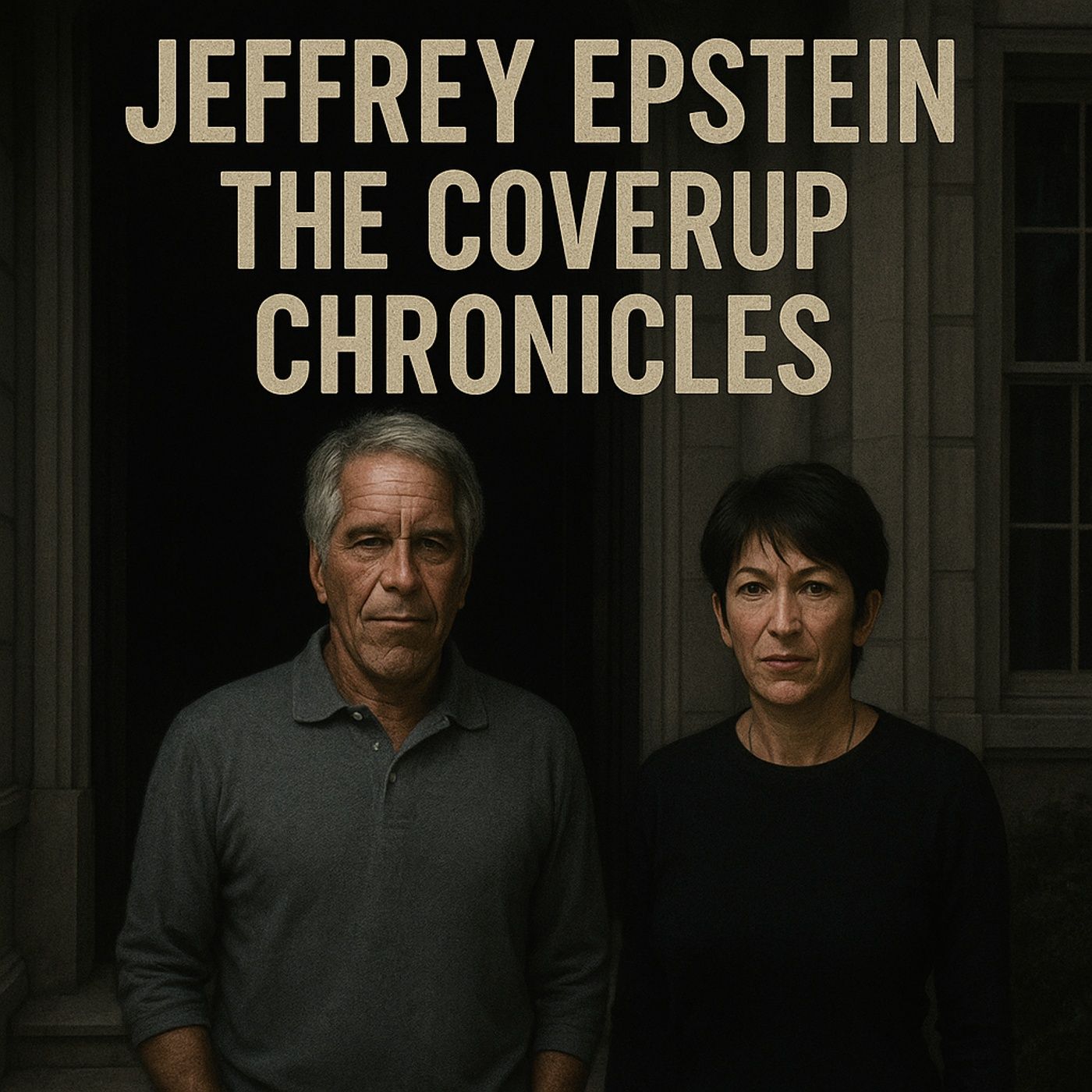
Jeffrey Epstein: The Coverup Chronicles
Jeffrey Epstein: The Coverup Chronicles is a podcast dedicated to examining not just who Epstein was and what he did, but how so many people and institutions worked—then and now—to keep it all hidden. This series cuts past the headlines and digs into the documentation: court filings, deposition transcripts, plea deals, sealed exhibits, and the bureaucratic paper trail that still tells the real story. Our focus isn’t on speculation or recycled outrage. It’s on facts—and the deliberate efforts to keep those facts out of public view. Each episode will feature in-depth analysis of newly surfaced records and underreported legal developments, alongside expert commentary that connects them to the broader machinery of power that shielded Epstein for decades.
Episod
-
 Mega Edition: Michael Thomas And The OIG Witness Statement (Part 14-16) (9/26/26) 27.09.2026 40minMichael Thomas was a veteran correctional officer employed by the Federal Bureau of Prisons at the Metropolitan Correctional Center in Manhattan — a federal detention facility — where Jeffrey Epstein was being held in the Special Housing Unit (SHU) while awaiting trial on federal sex-trafficking charges. Thomas had been with the Bureau of Prisons since about 2007 and, on the night of Epstein’s death (August 9–10, 2019), was assigned to an overnight shift alongside another officer, Tova Noel, responsible for conducting required 30-minute inmate checks and institutional counts in the SHU. Because Epstein’s cellmate had been moved and not replaced, Epstein was alone in his cell, making regular monitoring all the more crucial under bureau policy.Thomas became a focal figure in the official investigations into Epstein’s death because surveillance footage and institutional records showed that neither he nor Noel conducted the required rounds or counts through the night before Epstein was found unresponsive in his cell early on August 10. Prosecutors subsequently charged both officers with conspiracy and falsifying records for signing count slips that falsely indicated they had completed rounds they had not performed. Thomas and Noel later entered deferred prosecution agreements in which they admitted falsifying records and avoided prison time, instead receiving supervisory release and community service. Investigators concluded that chronic staffing shortages and procedural failures at the jail contributed to the circumstances that allowed Epstein to remain unmonitored for hours before his death, which was officially ruled a suicide by hanging.to contact me:[email protected]:EFTA00113577.pdf
 -
Mega Edition: Michael Thomas And The OIG Witness Statement (Part 10-13) (9/26/26) 27.09.2026 52minMichael Thomas was a veteran correctional officer employed by the Federal Bureau of Prisons at the Metropolitan Correctional Center in Manhattan — a federal detention facility — where Jeffrey Epstein was being held in the Special Housing Unit (SHU) while awaiting trial on federal sex-trafficking charges. Thomas had been with the Bureau of Prisons since about 2007 and, on the night of Epstein’s death (August 9–10, 2019), was assigned to an overnight shift alongside another officer, Tova Noel, responsible for conducting required 30-minute inmate checks and institutional counts in the SHU. Because Epstein’s cellmate had been moved and not replaced, Epstein was alone in his cell, making regular monitoring all the more crucial under bureau policy.Thomas became a focal figure in the official investigations into Epstein’s death because surveillance footage and institutional records showed that neither he nor Noel conducted the required rounds or counts through the night before Epstein was found unresponsive in his cell early on August 10. Prosecutors subsequently charged both officers with conspiracy and falsifying records for signing count slips that falsely indicated they had completed rounds they had not performed. Thomas and Noel later entered deferred prosecution agreements in which they admitted falsifying records and avoided prison time, instead receiving supervisory release and community service. Investigators concluded that chronic staffing shortages and procedural failures at the jail contributed to the circumstances that allowed Epstein to remain unmonitored for hours before his death, which was officially ruled a suicide by hanging.to contact me:[email protected]:EFTA00113577.pdf
-
Bill Clinton, Jeffrey Epstein and The Shared Hotel Suite 27.09.2026 39minJeffrey Epstein and Bill Clinton were a lot closer than most people know or understand. From all kinds of financial "donations" to Clinton, to visits to various properties to being invited to Chelsea Clinton's wedding, you'd have to be blind or playing serious partisan politics to not see how deep the ties run between the Clinton's and Epstein and Maxwell. Yet, there has not been no serious investigation (that we are aware of) into the relationship Epstein and Clinton shared and nobody has even bothered to call out his spokesperson for the canned statement he continues to offer. Hopefully, after these new revelations, the legacy media will re-evaluate their position and dive into the deep end instead of just checking the water temperature with their finely manicured toes.To contact me:[email protected]:https://www.thedailybeast.com/epstein-shared-hotel-room-with-bill-clinton-and-was-terrified-of-being-poisoned-says-victim-juliette-bryant
-
Jeffrey Epstein And The Vanity Fair Puff Piece 27.09.2026 45minThe 2003 Vanity Fair profile of Jeffrey Epstein painted him as a glamorous, high-flying financier—luxurious Manhattan mansion, exclusive billionaire clientele, and glamorous flights with celebrities like Bill Clinton and Kevin Spacey. It framed Epstein as a mythic creature within elite circles, glossing over any deeper scrutiny and leaving the reader with the impression of a mysterious, alluring money man rather than a predator at work. Under the guise of curiosity, it offered pageantry—not accountability.What’s truly infuriating is the piece’s deliberate omission of credible allegations—like Annie and Maria Farmer’s claims of attempted seduction and abuse. These weren’t mere rumors; they were on-record accounts shared with reporter Vicky Ward during her reporting. But Vanity Fair’s editor, Graydon Carter, excised them from the article—reportedly after Epstein exerted pressure, including threats to the magazine’s office and Carter himself. That decision wasn't journalistic caution; it was cowardice, allowing a predator to hide behind a glossy veneer while silencing victims.To contact me:[email protected]:https://www.newyorker.com/news/annals-of-communications/why-didnt-vanity-fair-break-the-jeffrey-epstein-story
-
Tyler Robinson Preliminary Hearing Transcripts (Day 2 Part 14) (9/26/26) 26.09.2026 14minDay two of Tyler Robinson’s preliminary hearing focused heavily on prosecutors’ effort to connect Robinson to the Utah Valley University campus and to the physical evidence recovered after Charlie Kirk was shot. Investigators introduced additional surveillance footage they said showed Robinson moving around UVU before and after the shooting, while the State also turned to forensic evidence recovered along the alleged escape route. A screwdriver found on top of the Losee Center and a towel recovered from a wooded area near the rifle became major points of testimony. The State Bureau of Investigation introduced an FBI laboratory report concluding that DNA from both Robinson and his roommate, Lance Twiggs, was present on the screwdriver and towel, evidence prosecutors argued helped connect Robinson to the rooftop area and to the abandoned rifle. The hearing also featured argument over the State’s allegation that Kirk had been targeted because of his political and religious views, an issue relevant to the victim-targeting enhancement prosecutors had attached to several chargesThe defense spent much of the day attacking how strongly the forensic evidence could actually be interpreted. FBI forensic examiner Amanda Bakker was questioned for roughly three hours as defense attorney Michael Burt dug into the technical details of the DNA testing, mixtures, statistical interpretation and the limitations of what the results could establish about when or how DNA was deposited on the objects. Robinson’s lawyers also pushed back against the State’s motive theory, challenging the attempt to characterize the killing as being driven by Kirk’s religious beliefs in addition to political disagreement. By the end of day two, prosecutors had added important physical evidence to the surveillance case presented on day one, but the defense had begun laying out the approach it would use throughout the hearing: concede that certain items contained Robinson-associated evidence while aggressively challenging what that evidence actually proved about possession, timing, motive and the circumstances of Kirk’s killing.to contact me:[email protected]
-
JP Morgan Responds To The USVI's Motion To Strike Affirmative Defenses (Part 4) (9/26/26) 26.09.2026 15minJP Morgan has responded to the U.S. Virgin Islands' (USVI) motion to strike several of its affirmative defenses in the ongoing lawsuit related to Jeffrey Epstein's sex trafficking operations. The bank argues that these defenses are crucial to demonstrate the alleged complicity of the USVI government in enabling Epstein’s activities.JP Morgan contends that high-ranking USVI officials, including former First Lady Cecile de Jongh, played a role in facilitating Epstein’s operations by managing his local companies and helping spread his influence throughout the government. The bank alleges that Epstein’s ties with local political figures allowed him to receive favorable treatment, such as tax benefits and reduced oversight, despite his known criminal background/The USVI's motion to strike these defenses is viewed by JP Morgan as an attempt to avoid exposing the government's own culpability. Conversely, the USVI argues that the bank’s defenses are baseless and are intended to deflect from its failure to act on clear signs of Epstein's criminal behavior.to contact me:[email protected]:gov.uscourts.nysd.610915.94.5.pdf (courtlistener.com)
-
JP Morgan Responds To The USVI's Motion To Strike Affirmative Defenses (Part 3) (9/26/26) 26.09.2026 11minJP Morgan has responded to the U.S. Virgin Islands' (USVI) motion to strike several of its affirmative defenses in the ongoing lawsuit related to Jeffrey Epstein's sex trafficking operations. The bank argues that these defenses are crucial to demonstrate the alleged complicity of the USVI government in enabling Epstein’s activities.JP Morgan contends that high-ranking USVI officials, including former First Lady Cecile de Jongh, played a role in facilitating Epstein’s operations by managing his local companies and helping spread his influence throughout the government. The bank alleges that Epstein’s ties with local political figures allowed him to receive favorable treatment, such as tax benefits and reduced oversight, despite his known criminal background/The USVI's motion to strike these defenses is viewed by JP Morgan as an attempt to avoid exposing the government's own culpability. Conversely, the USVI argues that the bank’s defenses are baseless and are intended to deflect from its failure to act on clear signs of Epstein's criminal behavior.to contact me:[email protected]:gov.uscourts.nysd.610915.94.5.pdf (courtlistener.com)
-
JP Morgan Responds To The USVI's Motion To Strike Affirmative Defenses (Part 2) (9/26/26) 26.09.2026 13minJP Morgan has responded to the U.S. Virgin Islands' (USVI) motion to strike several of its affirmative defenses in the ongoing lawsuit related to Jeffrey Epstein's sex trafficking operations. The bank argues that these defenses are crucial to demonstrate the alleged complicity of the USVI government in enabling Epstein’s activities.JP Morgan contends that high-ranking USVI officials, including former First Lady Cecile de Jongh, played a role in facilitating Epstein’s operations by managing his local companies and helping spread his influence throughout the government. The bank alleges that Epstein’s ties with local political figures allowed him to receive favorable treatment, such as tax benefits and reduced oversight, despite his known criminal background/The USVI's motion to strike these defenses is viewed by JP Morgan as an attempt to avoid exposing the government's own culpability. Conversely, the USVI argues that the bank’s defenses are baseless and are intended to deflect from its failure to act on clear signs of Epstein's criminal behavior.to contact me:[email protected]:gov.uscourts.nysd.610915.94.5.pdf (courtlistener.com)
-
JP Morgan Responds To The USVI's Motion To Strike Affirmative Defenses (Part 1) (9/26/26) 26.09.2026 11minJP Morgan has responded to the U.S. Virgin Islands' (USVI) motion to strike several of its affirmative defenses in the ongoing lawsuit related to Jeffrey Epstein's sex trafficking operations. The bank argues that these defenses are crucial to demonstrate the alleged complicity of the USVI government in enabling Epstein’s activities.JP Morgan contends that high-ranking USVI officials, including former First Lady Cecile de Jongh, played a role in facilitating Epstein’s operations by managing his local companies and helping spread his influence throughout the government. The bank alleges that Epstein’s ties with local political figures allowed him to receive favorable treatment, such as tax benefits and reduced oversight, despite his known criminal background/The USVI's motion to strike these defenses is viewed by JP Morgan as an attempt to avoid exposing the government's own culpability. Conversely, the USVI argues that the bank’s defenses are baseless and are intended to deflect from its failure to act on clear signs of Epstein's criminal behavior.to contact me:[email protected]:gov.uscourts.nysd.610915.94.5.pdf (courtlistener.com)
-
Mega Edition: Ghislaine Maxwell And The Grand Jury (9/26/26) 26.09.2026 53minThe grand jury played a central role in turning the federal investigation of Ghislaine Maxwell into a criminal prosecution. On June 29, 2020, a federal grand jury returned a sealed indictment charging Maxwell with conspiring with Jeffrey Epstein to recruit and groom underage girls, transporting minors for illegal sexual activity and committing perjury during earlier civil depositions. Because of the COVID-19 pandemic, the indictment was returned by a grand jury sitting in the White Plains Division of the Southern District of New York rather than Manhattan, a decision Maxwell’s lawyers later challenged unsuccessfully. The indictment remained sealed while federal agents prepared to arrest her, and on July 2, 2020, authorities took Maxwell into custody in New Hampshire. The charges were unsealed that same day, revealing that prosecutors had used the grand jury process to formally accuse Maxwell of participating in Epstein’s abuse of minors rather than simply treating her as a witness or associate.The grand jury’s involvement did not end with Maxwell’s arrest. As prosecutors continued investigating, they returned superseding indictments that expanded and refined the case against her. In March 2021, another Manhattan grand jury added sex-trafficking and sex-trafficking-conspiracy charges, reflecting additional evidence prosecutors said had emerged as the investigation continued. Maxwell repeatedly challenged the indictments, including the composition of the original grand jury and the legality of the additional charges, but Judge Alison Nathan rejected those efforts and allowed the case to proceed. The grand jury process therefore served as the mechanism through which prosecutors first brought Maxwell into the criminal case, then broadened the charges against her as the investigation developed, ultimately setting the stage for the trial that resulted in her conviction.to contact me:[email protected]
-
Mega Edition: Jeffrey Epstein And The 2019 Grand Jury (9/26/26) 26.09.2026 57minThe 2019 New York federal grand jury transcripts capture the final prosecutorial push that led to the arrest of Jeffrey Epstein on sex-trafficking charges in the Southern District of New York. The transcripts reflect prosecutors laying out a sweeping pattern of alleged conduct, including the recruitment and exploitation of underage girls, the use of intermediaries, and the systematic nature of the abuse network. Witness testimony, documentary evidence, and financial records were presented to establish probable cause, directly contradicting the long-standing narrative that Epstein was a lone offender whose crimes were limited to Florida. These proceedings culminated in the July 2019 indictment, marking the first time federal prosecutors in New York formally moved against Epstein despite years of prior allegations and investigative leads.The transcripts have now been newly unsealed under the Epstein Transparency Act, a move that has reignited scrutiny over what federal authorities knew—and when. Their release sheds light on investigative decisions, evidentiary thresholds, and the scope of information presented to the grand jury, while also highlighting gaps that critics argue point to earlier prosecutorial failures. Survivors and transparency advocates have emphasized that the unsealing is significant not only for what it reveals about Epstein’s conduct, but for what it exposes about institutional hesitation, delayed accountability, and the broader protection mechanisms that allowed Epstein to evade federal charges for years. While redactions remain, the disclosure represents a rare window into the mechanics of a case that many believe should have been brought long before 2019.to contact me:[email protected]:EFTA00008529.pdf
-
Mega Edition: Michael Thomas And The OIG Witness Statement (Part 7-9) (9/26/26) 26.09.2026 39minMichael Thomas was a veteran correctional officer employed by the Federal Bureau of Prisons at the Metropolitan Correctional Center in Manhattan — a federal detention facility — where Jeffrey Epstein was being held in the Special Housing Unit (SHU) while awaiting trial on federal sex-trafficking charges. Thomas had been with the Bureau of Prisons since about 2007 and, on the night of Epstein’s death (August 9–10, 2019), was assigned to an overnight shift alongside another officer, Tova Noel, responsible for conducting required 30-minute inmate checks and institutional counts in the SHU. Because Epstein’s cellmate had been moved and not replaced, Epstein was alone in his cell, making regular monitoring all the more crucial under bureau policy.Thomas became a focal figure in the official investigations into Epstein’s death because surveillance footage and institutional records showed that neither he nor Noel conducted the required rounds or counts through the night before Epstein was found unresponsive in his cell early on August 10. Prosecutors subsequently charged both officers with conspiracy and falsifying records for signing count slips that falsely indicated they had completed rounds they had not performed. Thomas and Noel later entered deferred prosecution agreements in which they admitted falsifying records and avoided prison time, instead receiving supervisory release and community service. Investigators concluded that chronic staffing shortages and procedural failures at the jail contributed to the circumstances that allowed Epstein to remain unmonitored for hours before his death, which was officially ruled a suicide by hanging.to contact me:[email protected]:EFTA00113577.pdf
-
Mega Edition: Michael Thomas And The OIG Witness Statement (Part 4-6) (9/26/26) 26.09.2026 41minMichael Thomas was a veteran correctional officer employed by the Federal Bureau of Prisons at the Metropolitan Correctional Center in Manhattan — a federal detention facility — where Jeffrey Epstein was being held in the Special Housing Unit (SHU) while awaiting trial on federal sex-trafficking charges. Thomas had been with the Bureau of Prisons since about 2007 and, on the night of Epstein’s death (August 9–10, 2019), was assigned to an overnight shift alongside another officer, Tova Noel, responsible for conducting required 30-minute inmate checks and institutional counts in the SHU. Because Epstein’s cellmate had been moved and not replaced, Epstein was alone in his cell, making regular monitoring all the more crucial under bureau policy.Thomas became a focal figure in the official investigations into Epstein’s death because surveillance footage and institutional records showed that neither he nor Noel conducted the required rounds or counts through the night before Epstein was found unresponsive in his cell early on August 10. Prosecutors subsequently charged both officers with conspiracy and falsifying records for signing count slips that falsely indicated they had completed rounds they had not performed. Thomas and Noel later entered deferred prosecution agreements in which they admitted falsifying records and avoided prison time, instead receiving supervisory release and community service. Investigators concluded that chronic staffing shortages and procedural failures at the jail contributed to the circumstances that allowed Epstein to remain unmonitored for hours before his death, which was officially ruled a suicide by hanging.to contact me:[email protected]:EFTA00113577.pdf
-
Mega Edition: Michael Thomas And The OIG Witness Statement (Part 1-3) (9/25/26) 26.09.2026 40minMichael Thomas was a veteran correctional officer employed by the Federal Bureau of Prisons at the Metropolitan Correctional Center in Manhattan — a federal detention facility — where Jeffrey Epstein was being held in the Special Housing Unit (SHU) while awaiting trial on federal sex-trafficking charges. Thomas had been with the Bureau of Prisons since about 2007 and, on the night of Epstein’s death (August 9–10, 2019), was assigned to an overnight shift alongside another officer, Tova Noel, responsible for conducting required 30-minute inmate checks and institutional counts in the SHU. Because Epstein’s cellmate had been moved and not replaced, Epstein was alone in his cell, making regular monitoring all the more crucial under bureau policy.Thomas became a focal figure in the official investigations into Epstein’s death because surveillance footage and institutional records showed that neither he nor Noel conducted the required rounds or counts through the night before Epstein was found unresponsive in his cell early on August 10. Prosecutors subsequently charged both officers with conspiracy and falsifying records for signing count slips that falsely indicated they had completed rounds they had not performed. Thomas and Noel later entered deferred prosecution agreements in which they admitted falsifying records and avoided prison time, instead receiving supervisory release and community service. Investigators concluded that chronic staffing shortages and procedural failures at the jail contributed to the circumstances that allowed Epstein to remain unmonitored for hours before his death, which was officially ruled a suicide by hanging.to contact me:[email protected]:EFTA00113577.pdf
-
RFK And His Reported Trips On Jeffrey Epstein's Plane 26.09.2026 12minRobert F. Kennedy Jr. has acknowledged that he flew on Jeffrey Epstein’s private jet on two occasions during the 1990s. One flight was a family trip to visit his mother in Palm Beach, and the other was to South Dakota for a fossil-hunting excursion with his wife and children. Kennedy has stated that these trips took place before Epstein’s crimes were publicly known and emphasized that he was never alone with Epstein. He characterized the flights as benign and unrelated to the network of abuse and trafficking that would later be exposed.Despite his explanation, the revelation has drawn public scrutiny, especially given the broader pattern of influential figures maintaining social ties with Epstein. Kennedy’s presence on Epstein’s plane, even in the early years, adds to the perception of how deeply embedded Epstein became in political, financial, and social circles. While Kennedy insists he had no knowledge of Epstein’s criminal behavior, his name now appears among a long list of prominent individuals linked to Epstein’s travel and hospitality—connections that continue to raise questions about proximity, privilege, and selective awareness.to contact me:[email protected]:RFK Jr. admits he flew on Jeffrey Epstein's jet twice (nypost.com)
-
Jeffrey Epstein...The King Of Slime 26.09.2026 21minJeffrey Epstein earned the reputation as the proverbial king of slime because he thrived in the moral runoff of elite power, operating where money, secrecy, and exploitation overlapped. He attached himself to institutions, governments, financiers, academics, and royalty not through merit, but through usefulness, insinuation, and leverage. Epstein cultivated access by positioning himself as a fixer, a gatekeeper, and a discreet problem-solver for powerful people who wanted favors without fingerprints. He trafficked in secrets, introductions, and kompromat, making himself indispensable to those who feared exposure or craved influence. His wealth was opaque, his credentials dubious, yet doors opened for him everywhere because he knew how to flatter egos and exploit appetites. Epstein did not need legitimacy in the traditional sense; he borrowed it from the people and institutions willing to stand next to him. Like slime, he spread quietly, coating everything he touched while remaining difficult to fully grasp or contain. His power came not from respect, but from proximity to those who had everything to lose.What made Epstein especially corrosive was that he survived precisely because so many respectable systems absorbed and normalized him. Banks overlooked red flags, universities accepted donations, politicians took meetings, and law enforcement deferred when pressure was applied. Even after his criminality was publicly exposed, Epstein continued to move freely among elites, protected by legal deals, professional enablers, and a culture that treated him as an inconvenience rather than a threat. He embodied a kind of moral decay where exploitation was tolerated so long as it was profitable or politically inconvenient to confront. Epstein was not an aberration at the edge of society; he was a product of its worst incentives, thriving in spaces where accountability dissolved on contact with power. Like slime, he did not create the rot, but he fed on it and accelerated it. His story endures because it reveals how easily entire systems will debase themselves to protect the powerful, even when the cost is measured in human lives.to contact me:[email protected]
-
Tyler Robinson Preliminary Hearing Transcripts (Day 2 Part 13) (9/25/26) 25.09.2026 20minDay two of Tyler Robinson’s preliminary hearing focused heavily on prosecutors’ effort to connect Robinson to the Utah Valley University campus and to the physical evidence recovered after Charlie Kirk was shot. Investigators introduced additional surveillance footage they said showed Robinson moving around UVU before and after the shooting, while the State also turned to forensic evidence recovered along the alleged escape route. A screwdriver found on top of the Losee Center and a towel recovered from a wooded area near the rifle became major points of testimony. The State Bureau of Investigation introduced an FBI laboratory report concluding that DNA from both Robinson and his roommate, Lance Twiggs, was present on the screwdriver and towel, evidence prosecutors argued helped connect Robinson to the rooftop area and to the abandoned rifle. The hearing also featured argument over the State’s allegation that Kirk had been targeted because of his political and religious views, an issue relevant to the victim-targeting enhancement prosecutors had attached to several chargesThe defense spent much of the day attacking how strongly the forensic evidence could actually be interpreted. FBI forensic examiner Amanda Bakker was questioned for roughly three hours as defense attorney Michael Burt dug into the technical details of the DNA testing, mixtures, statistical interpretation and the limitations of what the results could establish about when or how DNA was deposited on the objects. Robinson’s lawyers also pushed back against the State’s motive theory, challenging the attempt to characterize the killing as being driven by Kirk’s religious beliefs in addition to political disagreement. By the end of day two, prosecutors had added important physical evidence to the surveillance case presented on day one, but the defense had begun laying out the approach it would use throughout the hearing: concede that certain items contained Robinson-associated evidence while aggressively challenging what that evidence actually proved about possession, timing, motive and the circumstances of Kirk’s killing.to contact me:[email protected]
-
Tyler Robinson Preliminary Hearing Transcripts (Day 2 Part 12) (9/25/26) 25.09.2026 13minDay two of Tyler Robinson’s preliminary hearing focused heavily on prosecutors’ effort to connect Robinson to the Utah Valley University campus and to the physical evidence recovered after Charlie Kirk was shot. Investigators introduced additional surveillance footage they said showed Robinson moving around UVU before and after the shooting, while the State also turned to forensic evidence recovered along the alleged escape route. A screwdriver found on top of the Losee Center and a towel recovered from a wooded area near the rifle became major points of testimony. The State Bureau of Investigation introduced an FBI laboratory report concluding that DNA from both Robinson and his roommate, Lance Twiggs, was present on the screwdriver and towel, evidence prosecutors argued helped connect Robinson to the rooftop area and to the abandoned rifle. The hearing also featured argument over the State’s allegation that Kirk had been targeted because of his political and religious views, an issue relevant to the victim-targeting enhancement prosecutors had attached to several chargesThe defense spent much of the day attacking how strongly the forensic evidence could actually be interpreted. FBI forensic examiner Amanda Bakker was questioned for roughly three hours as defense attorney Michael Burt dug into the technical details of the DNA testing, mixtures, statistical interpretation and the limitations of what the results could establish about when or how DNA was deposited on the objects. Robinson’s lawyers also pushed back against the State’s motive theory, challenging the attempt to characterize the killing as being driven by Kirk’s religious beliefs in addition to political disagreement. By the end of day two, prosecutors had added important physical evidence to the surveillance case presented on day one, but the defense had begun laying out the approach it would use throughout the hearing: concede that certain items contained Robinson-associated evidence while aggressively challenging what that evidence actually proved about possession, timing, motive and the circumstances of Kirk’s killing.to contact me:[email protected]
-
Jes Staley's Reply Memo In Support Of The Motion To Dismiss The JP Morgan Claims (Part 2) (9/25/26) 25.09.2026 11minJes Staley’s lawyers used the May 2023 filing to argue that JPMorgan Chase’s third-party claims against him should be dismissed outright. The bank had sought contribution and indemnification from Staley in the lawsuits brought by a Jane Doe plaintiff and the U.S. Virgin Islands over JPMorgan’s relationship with Jeffrey Epstein, but Staley argued those claims were legally defective. His attorneys said the Trafficking Victims Protection Act did not create a right to contribution or indemnification and that JPMorgan could not use New York state law to manufacture one. They also argued that JPMorgan was being sued for its own alleged conduct, not merely for Staley’s actions, which undercut the bank’s attempt to shift liability onto him. Staley’s side further pointed to JPMorgan’s own pleadings, which said his alleged misconduct fell outside the scope of his employment, and argued that the bank had failed to show that Staley caused the same injuries for which JPMorgan itself was being sued.Staley also attacked JPMorgan’s separate employment-related claims for breach of fiduciary duty and faithless servant, arguing they were time-barred and inadequately pleaded. His attorneys said JPMorgan had been on notice for years that Staley’s relationship with Epstein warranted scrutiny, particularly after Epstein’s 2019 arrest and after the bank produced more than 1,200 Staley-Epstein emails to U.K. authorities. They argued that JPMorgan could not claim it only recently discovered the alleged misconduct when it possessed decades of records and had ample reason to investigate sooner. The filing also said the bank failed to plead with the required specificity who Staley allegedly deceived, when the deception occurred, or how it caused JPMorgan’s later litigation costs and reputational damage. Staley’s lawyers ultimately asked the court to dismiss all of JPMorgan’s claims against him with prejudice.to contact me:[email protected]:Microsoft Word - MTD Reply - Doe an(11210113.11).docx
-
Jes Staley's Reply Memo In Support Of The Motion To Dismiss The JP Morgan Claims (Part 1) (9/25/26) 25.09.2026 11minJes Staley’s lawyers used the May 2023 filing to argue that JPMorgan Chase’s third-party claims against him should be dismissed outright. The bank had sought contribution and indemnification from Staley in the lawsuits brought by a Jane Doe plaintiff and the U.S. Virgin Islands over JPMorgan’s relationship with Jeffrey Epstein, but Staley argued those claims were legally defective. His attorneys said the Trafficking Victims Protection Act did not create a right to contribution or indemnification and that JPMorgan could not use New York state law to manufacture one. They also argued that JPMorgan was being sued for its own alleged conduct, not merely for Staley’s actions, which undercut the bank’s attempt to shift liability onto him. Staley’s side further pointed to JPMorgan’s own pleadings, which said his alleged misconduct fell outside the scope of his employment, and argued that the bank had failed to show that Staley caused the same injuries for which JPMorgan itself was being sued.Staley also attacked JPMorgan’s separate employment-related claims for breach of fiduciary duty and faithless servant, arguing they were time-barred and inadequately pleaded. His attorneys said JPMorgan had been on notice for years that Staley’s relationship with Epstein warranted scrutiny, particularly after Epstein’s 2019 arrest and after the bank produced more than 1,200 Staley-Epstein emails to U.K. authorities. They argued that JPMorgan could not claim it only recently discovered the alleged misconduct when it possessed decades of records and had ample reason to investigate sooner. The filing also said the bank failed to plead with the required specificity who Staley allegedly deceived, when the deception occurred, or how it caused JPMorgan’s later litigation costs and reputational damage. Staley’s lawyers ultimately asked the court to dismiss all of JPMorgan’s claims against him with prejudice.to contact me:[email protected]:Microsoft Word - MTD Reply - Doe an(11210113.11).docx
Podcast serupa


Popular di
Podcast ini turut muncul dalam senarai podcast negara-negara ini.

