
Mom and Mind | Pregnancy and Postpartum Depression & Anxiety
Katayune Kaeni, Psy.D., PMH-C
0
Mom and Mind is a podcast that explores the realities of perinatal mental health, including postpartum depression and anxiety. Hosted by Dr. Kat, a psychologist specializing in perinatal mental health, the show features interviews with moms, dads, experts, and advocates. It aims to provide honest, stigma-crushing information about the transition to motherhood and parenthood. Listeners can learn coping strategies and find support for managing perinatal mood and anxiety disorders.
Afleveringen
-
 The Loss of a Postpartum Mother and Wife (Ep. 486) 07.09.2026 1u 7minNo one will escape this life without feeling the pain of loss, and there is no better way to channel that pain than through creating something beautiful out of it. In today’s show, you’ll meet a devoted husband and father who wasn’t content to wallow in his loss on the sidelines. He’s turned his pain into purpose as he helps countless families through the challenges of maternal mental health treatment. Steven D’Achille is president and founder of The Alexis Joy D’Achille Foundation for Postpartum Depression. He’s an advocate for maternal mental health issues because he realizes that women’s health is a family health issue. His passion is creating access to care for struggling families. He’ll go deep into his story today, sharing how postpartum depression took the life of his wife, Alexis. I’ve had the pleasure of serving on the board of Postpartum Support International with Steven, and I’ve seen up close his passion and dedication springing from the horrible and unnecessary outcome of his wife’s death. He is changing the landscape in Pittsburgh and wherever he goes to share his wife’s story and the foundation in her name. Steven is a passionate advocate for fathers, in addition to his support of maternal mental health because he realizes the need for caring for the whole family, especially fathers and partners. As his six-year-old daughter, Adriana puts it, “He wanted to change the world.” **Sensitivity Notice: Difficult topics are discussed in this episode related to suicide. If you aren’t in a place to listen today, feel free to find the episode at a later date. Show Highlights: Get to know Steven and his story that began with the traumatic birth of his daughter, Adriana How Steven’s wife, Alexis, believed that her first act of motherhood was to damage her child How things started unraveling almost immediately for Alexis, who knew she needed help How Alexis experienced serious anxiety and saw an LCSW for coping mechanisms, receiving a PTSD diagnosis The increased anxiety, shame and stigma, and scary options More symptoms included depression, insomnia, and loss of appetite The disconnect between psychiatric care and Ob care for mothers How HIPAA rules prevented the pediatrician from notifying anyone of her concerns about Alexis How Alexis was prescribed an antidepressant and the depression escalated to suicidal thoughts; her plea for help went unacknowledged How Alexis begged to be admitted for weeks and then hung herself in their basement--just 14 days after beginning the new antidepressant How the system failed Alexis How Alexis survived to get to the hospital and make it to ICU How Steven got clarity on how to move forward and make something good come out of Alexis’ tragedy, to get other moms the help Alexis could not get How The Alexis Joy D’Achille Foundation’s hospital treated 3000 moms in 2019 The family services provided by the foundation The importance of a father’s perspective in going through this journey and raising a 6-½-year-old daughter without her mom How our laws protect puppies more than we do moms and babies The reality of postpartum depression treatment in the US---and what needs to change The power in telling your story What the new standard of care should be Resources: Alexis Joy Foundation Website Facebook: Alexis Joy D’Achille Foundation for Postpartum Depression: @Alexisjoydachille Instagram: @ajd_foundation Call the National Maternal Mental Health Hotline at 1-833-TLC-MAMA or visit cdph.ca.gov Please find resources in English and Spanish at Postpartum Support International, or by phone/text at 1-800-944-4773. There are many free resources, like online support groups, peer mentors, a specialist provider directory, and perinatal mental health training for therapists, physicians, nurses, doulas, and anyone who wants to be more supportive in offering services. You can also follow PSI on social media: Instagram, Facebook, and most other platforms. Visit www.postpartum.net/professionals/certificate-trainings/ for information on the grief course. Visit my website, www.wellmindperinatal.com, for more information, resources, and courses you can take today! If you are a California resident looking for a therapist in perinatal mental health, email me about openings for private pay clients! Learn more about your ad choices. Visit podcastchoices.com/adchoices
 -
 Postpartum Depression, Anxiety and OCD: Dr. Kat Interviewed by Karen Kleiman (Ep. 485) 24.08.2026 45minToday is a very special episode because I not only have the pleasure of hosting this podcast, but I am also the guest. Yes, that's right! Today, I'm opening up my heart and sharing my postpartum story with you once again; I last told my story way back in Episode 1 in June 2016. I want all of you who know me as Dr. Kat professionally to understand why I am so deeply passionate about the cause of maternal mental health. Join us now! Karen Kleiman is a well-known international maternal mental-health expert with over 35 years of experience. As an advocate and author of several groundbreaking books on postpartum depression and anxiety, her work has been featured on the internet and within the mental health community for decades. In 1988, Karen founded The Postpartum Stress Center, a treatment and training facility for prenatal and postpartum depression and anxiety. Katayune Kaeni, Psy.D. PMH-C, “Dr. Kat,” is a perinatal mental health-certified psychologist, author of The Pregnancy Workbook: Manage Anxiety and Worry with CBT and Mindfulness Techniques, and host of the Mom & Mind Podcast, covering personal stories and expert interviews related to perinatal mental health. She is also the board chair of Postpartum Support International, an organization whose mission is to promote awareness, prevention, and treatment of mental health issues related to childbearing in every country worldwide. Dr. Kat began specializing in perinatal mental health after her own experience with postpartum depression, anxiety, and OCD over 12 years ago. Dr. Kat continues to work virtually with clients across California. Show Highlights: How Dr. Kat’s first pregnancy, even though planned and easy, resulted in a long, difficult labor that jump-started postpartum depression, anxiety, and OCD Why new moms struggle to know what’s normal, not normal, too much, or not enough How feeling inadequate and incompetent as a new mom was part of Dr. Kat’s anxiety and her battle with perfectionism How she felt alone and disconnected even from her husband, and NO ONE knew what was happening on the inside How scary intrusive thoughts put her in emotional turmoil Why shame and stigma are greater for mental health professionals–and will silence them at times How Dr. Kat carried on her therapy work with clients as the depression grew, making her feel trapped, exhausted, embarrassed, and confused How finally taking the PHQ-9 depression screening test for herself finally opened her eyes to the truth of what she was going through How she shut down even with her therapist and turned to a naturopathic physician, acupuncture, and other healing alternatives Why therapists MUST address the suffering client in front of them with curiosity and questions Why Dr. Kat is so deeply driven to help other moms break through and find the help and support to know that THEY WILL BE OK Resources: Connect with Karen: Website, Twitter, Instagram, Facebook, Book: Good Moms Have Scary Thoughts and LinkedIn Check out Karen Kleiman’s other books: Website and Amazon. Call the National Maternal Mental Health Hotline at 1-833-TLC-MAMA or visit cdph.ca.gov Please find resources in English and Spanish at Postpartum Support International, or by phone/text at 1-800-944-4773. There are many free resources, like online support groups, peer mentors, a specialist provider directory, and perinatal mental health training for therapists, physicians, nurses, doulas, and anyone who wants to be more supportive in offering services. You can also follow PSI on social media: Instagram, Facebook, and most other platforms. Visit www.postpartum.net/professionals/certificate-trainings/ for information on the grief course. Visit my website, www.wellmindperinatal.com, for more information, resources, and courses you can take today! If you are a California resident looking for a therapist in perinatal mental health, email me about openings for private pay clients! Learn more about your ad choices. Visit podcastchoices.com/adchoices
 -
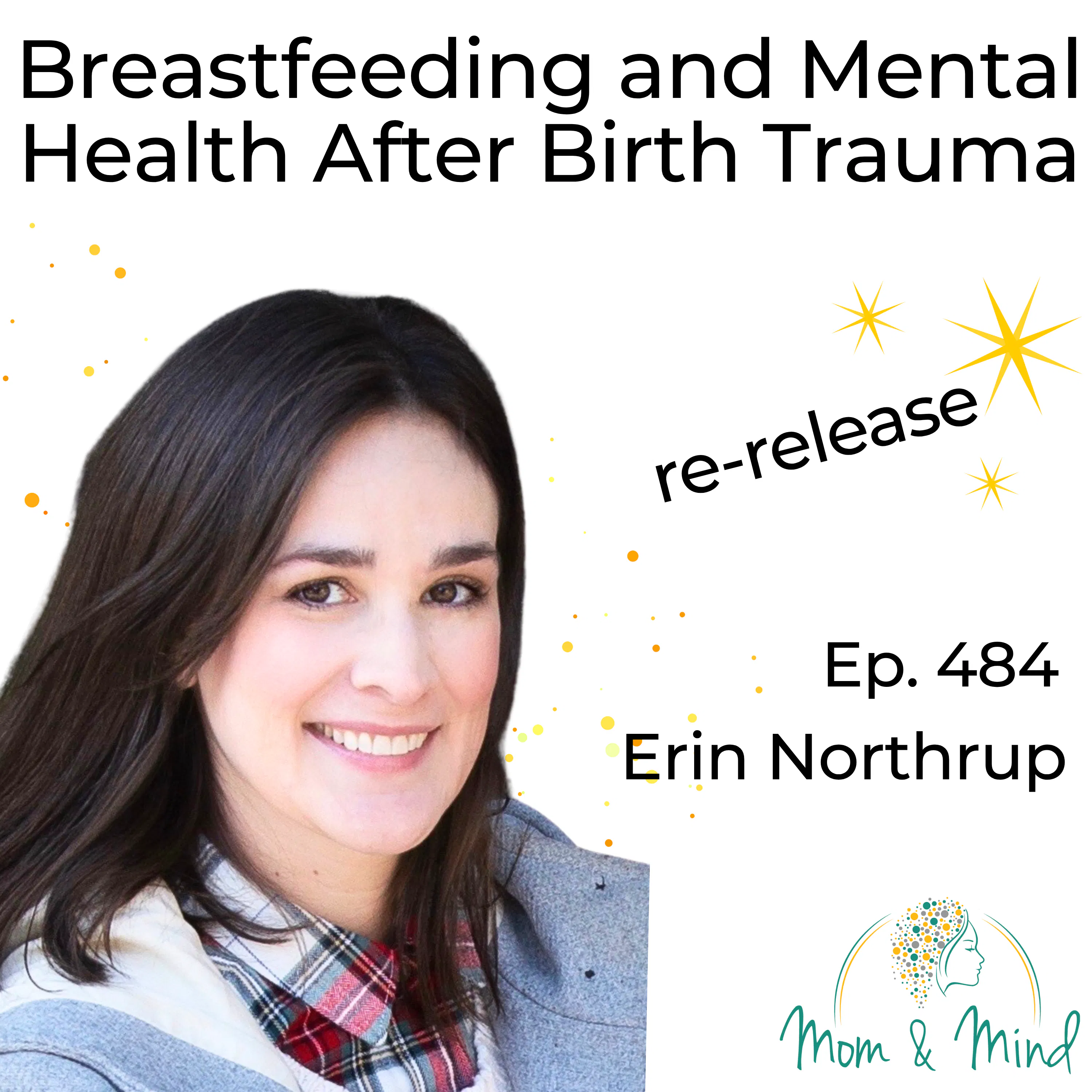 Breastfeeding and Mental Health After Birth Trauma (Ep. 484) 10.08.2026 42minWe talk about a lot of things that people don’t want to talk about or even hear. Still, they are very real, challenging, and difficult circumstances surrounding pregnancy, birth, and postpartum. It’s important to share these stories because these difficulties become a reality for many people. Today’s show focuses on birth trauma and breastfeeding as we hear our guest’s personal account. Erin Northrup is a mom of four busy children, ranging in age from 2 to 10. She lives in Atlantic Canada, where she enjoys spending time in nature with her family. With the birth of her oldest child, Jack, she experienced birth trauma, and this experience sparked her passion for researching trauma. Erin holds a bachelor’s in Psychology and is currently pursuing a Master’s in Health Services Research. Her current research explores the experience of breastfeeding after birth trauma. Her own experience of breastfeeding after birth trauma inspired her to become a volunteer with a breastfeeding support organization offering community-based, peer-to-peer breastfeeding support. She is committed to raising awareness of the intersection of birth trauma, breastfeeding, and perinatal mental health. Show Highlights: Erin’s birth trauma experience with the birth of her son, Jack, now 10 How her OB prepared her to have a C-section because of an ambiguous condition How Erin’s water broke a week early, and her spinal didn’t take, so the C-section proceeded under general anesthesia, while Erin felt dissociated from the entire experience In recovery, she was told that her son was taken to the NICU because of low blood sugar, and she couldn’t see him yet How Erin’s mom, a physician, stepped in to advocate for Erin to see her son While eating breakfast a few hours after the birth, Erin felt a popping sensation in her incision and felt a gush of blood Erin was rushed back to the OR, and the spinal worked this time while Erin cried on the table--all of this was before she had even held her baby How Erin was repeatedly spoken about like she wasn’t even in the room; she felt like her input wasn’t even important When Erin got home, survival mode kicked in, and she regretted not advocating more strongly for herself How Erin questioned whether or not her son was even the right baby, worrying that a mix-up could have occurred in the hospital because neither she nor her husband witnessed his birth How she determined to “make it up” to her son by breastfeeding him How the Ob told her at two months postpartum that her condition should not have warranted a C-section in the first place---which just made everything worse How Erin felt an erosion of trust in her doctors and the medical system How Erin asked where the growth and meaning was in her situation and how she could use her experience to help others Erin applied to a Master’s program and went on to have three more kids with positive birth experiences How Erin found support for breastfeeding What Erin has found in her research by asking mothers about their experience with birth trauma and breastfeeding The magnitude of the response she has received, but the difficulty in hearing the painful stories of birth trauma The results from Erin’s research: Birth trauma is destabilizing to the breastfeeding process because of the physical and emotional pain in childbirth and the postpartum period from mistreatment The importance of trauma-informed care How women with these experiences feel like the trauma is somehow their fault What care providers should be aware of in their work Resources: Instagram: Live Learn Lactate Call the National Maternal Mental Health Hotline at 1-833-TLC-MAMA or visit cdph.ca.gov Please find resources in English and Spanish at Postpartum Support International, or by phone/text at 1-800-944-4773. There are many free resources, like online support groups, peer mentors, a specialist provider directory, and perinatal mental health training for therapists, physicians, nurses, doulas, and anyone who wants to be more supportive in offering services. You can also follow PSI on social media: Instagram, Facebook, and most other platforms. Visit www.postpartum.net/professionals/certificate-trainings/ for information on the grief course. Visit my website, www.wellmindperinatal.com, for more information, resources, and courses you can take today! If you are a California resident looking for a therapist in perinatal mental health, email me about openings for private pay clients! Learn more about your ad choices. Visit podcastchoices.com/adchoices
 -
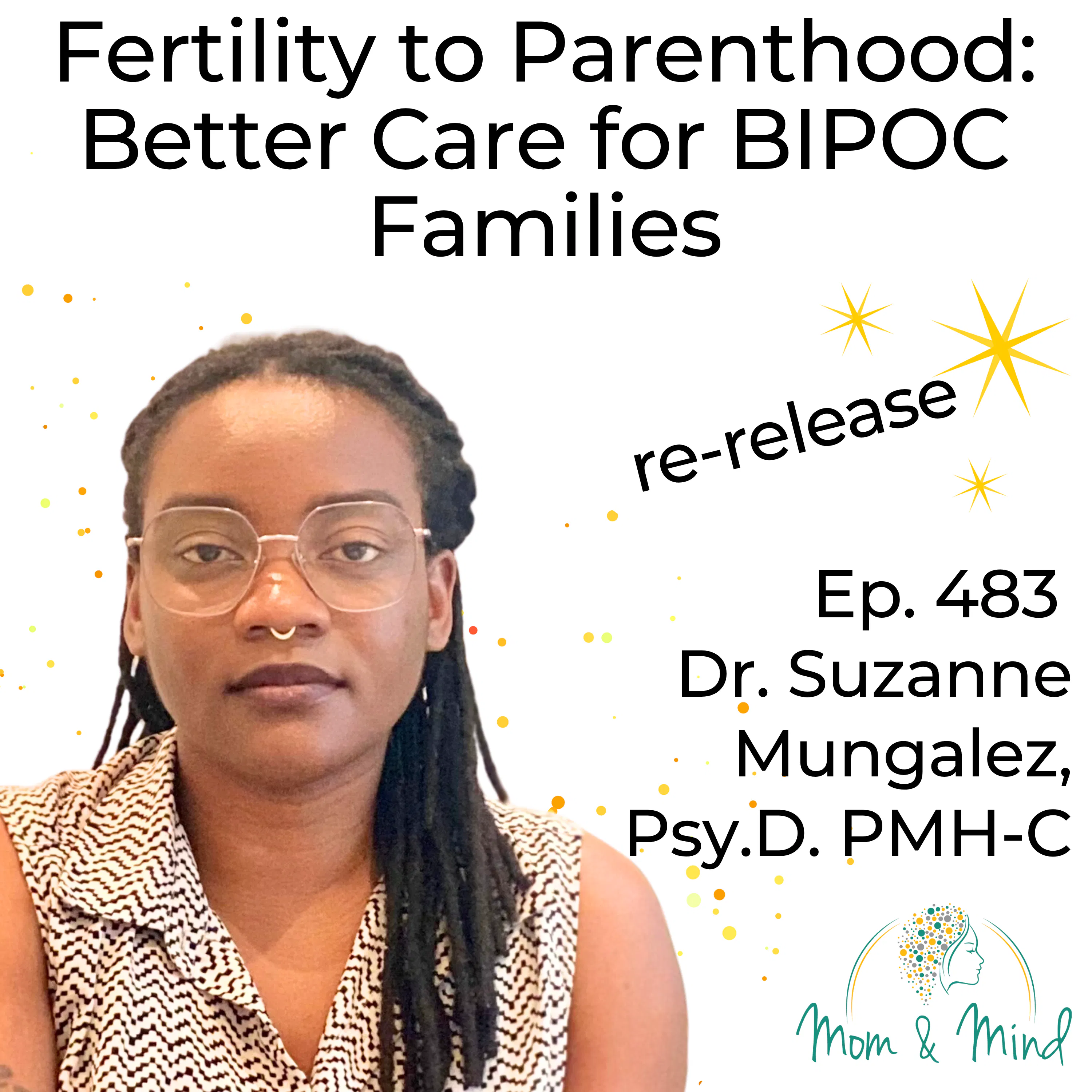 From Fertility to Parenthood: Better Care for BIPOC Families with Dr. Suzanne Mungalez (Ep. 483) 27.07.2026 42minThere are internal and societal pressures in making birthing and parenting decisions that are magnified for the BIPOC community. My guest explains how incorporating ancestral practices can be supportive, shares her valuable work, and highlights the importance of doulas for people of color. Dr. Suzanne Mungalez (aka Dr. Zann) is a licensed clinical psychologist in CA, certified in perinatal mental health, a childbirth educator, a certified lactation education specialist, and a trained doula. She has worked in hospital settings and birthing centers alongside OB-GYNs, midwives, and other birth workers. She is black, Congolese-American, and queer, along with being a gender-expansive woman and mother who has given birth in the comfort of her own home. Her background and experience shape her expertise in clinical work and how she holds space for her patients. Dr. Zann describes herself as “tender with people, tough on systems, and relentlessly committed to our collective liberation.” Show Highlights: Dr. Zann’s path to the perinatal work she does today The need to equip people with knowledge Everyone needs support and community! Pressures in birthing and parenting decisions for people of color Dr. Zann’s help includes guided meditation, visualizations, therapy, and education. The benefits of incorporating ancestral background into birth experiences Considerations for people of color in “mom rage” and finding safe spaces to express yourself Understanding the role and benefits of a doula Dr. Zann’s unique support for people in the transition to parenthood Ways of telling your birth story that bring empowerment, healing, and community How things are changing for the better for the BIPOC community—but it’s still not enough! More support is always needed! Dr. Zann’s appeal to people of color Resources: Connect with Dr. Zann Website and Instagram. Call the National Maternal Mental Health Hotline at 1-833-TLC-MAMA or visit cdph.ca.gov Please find resources in English and Spanish at Postpartum Support International, or by phone/text at 1-800-944-4773. There are many free resources, like online support groups, peer mentors, a specialist provider directory, and perinatal mental health training for therapists, physicians, nurses, doulas, and anyone who wants to be more supportive in offering services. You can also follow PSI on social media: Instagram, Facebook, and most other platforms. Visit www.postpartum.net/professionals/certificate-trainings/ for information on the grief course. Visit my website, www.wellmindperinatal.com, for more information, resources, and courses you can take today! If you are a California resident looking for a therapist in perinatal mental health, email me about openings for private pay clients! Learn more about your ad choices. Visit podcastchoices.com/adchoices
 -
 Healing Birth Trauma Through Storytelling and Sharing the Narratives of Black Mothers (Ep. 482) 13.07.2026 39minToday’s episode focuses on the narrative style of therapy, and it’s a topic that we haven’t covered on the podcast before. We always want to explore new therapeutic approaches and the various ways they can offer healing and support for more women. Everyone needs to know about the different therapies that are available to them. Join us to learn more! Dr. Lyneia Richardson is a mother, healer, and licensed psychologist who works as a maternal mental health advocate dedicated to revitalizing the spirit of all mamas. She received her BA in psychology from North Carolina A&T State University and a master’s in mental health counseling from Johns Hopkins University. After earning a Ph.D. in counseling psychology from Howard University, she focused her work on decolonizing therapy and education through a mothering praxis. She is currently a professor of counseling at McDaniel College and the proud owner of Melanated Women's Therapy LLC. Dr. Richardson recently published Mothering As A Work of Art, an anthology collection of personal narratives exploring the multiple dimensions of black mothering aimed at changing the narrative on mothering and what it means to mother in contemporary times. In today’s episode, she discusses these topics and the value of using narrative therapy as a pathway through healing birth trauma. Show Highlights: The narrative approach: to externalize and separate yourself from the problem (It’s the opposite of self-blaming and internalizing issues, challenges, and traumas.) Understanding the difference between storytelling and narrative The common experience for women of all races is not being listened to by their doctors and nurses Dr. Richardson’s personal birth story and her work with social justice and advocacy to amplify the voices of black mothers The challenge in advocacy work Broadening the network to have a bigger outreach to help moms Collective healing and community healing Empowerment through a support network Trying to normalize the struggle when social media makes everyone else’s life look perfect Mothering As A Work of Art: How the book came to be Being a creative mom The value of sharing stories as a form of healing and therapy Resources: Connect with Dr. Lyneia Richardson Website, Melanated Women's Therapy LLC, Instagram, Mothering As A Work of Art Call the National Maternal Mental Health Hotline at 1-833-TLC-MAMA or visitcdph.ca.gov. Please find resources in English and Spanish at Postpartum Support International, or by phone/text at 1-800-944-4773. There are many free resources, such as online support groups, peer mentors, a specialist provider directory, and perinatal mental health training for therapists, physicians, nurses, doulas, and anyone who wants to be more supportive in providing services. You can also follow PSI on social media: Instagram, Facebook, and most other platforms. Visit www.postpartum.net/professionals/certificate-trainings/for information on the grief course. Visit my website at www.wellmindperinatal.com for more information, resources, and courses you can take today! If you are a California resident seeking a therapist in perinatal mental health, please email me about openings for private pay clients. Learn more about your ad choices. Visit podcastchoices.com/adchoices
 -
 Foundations in Paternal Perinatal Mental Health (Ep. 481) 29.06.2026 40minI’m excited to welcome Dr. Daniel Singley back to the show. He joined me years ago when we were a brand-new podcast, and he’s been busy doing meaningful work in the world around paternal mental health. Join us to learn more about why the mental health of fathers cannot be overlooked in perinatal care. Dr. Daniel Singley is a San Diego-based, board-certified psychologist and director of The Center for Men’s Excellence. His research and practice focus on men’s mental health with particular emphasis on reproductive psychology and the transition to fatherhood. He won the American Psychological Association’s 2017 Practitioner of the Year Award from the Division on Men and Masculinities. He is a past president of the APA’s Section on Positive Psychology and is the current president of the APA’s Society for the Psychological Study of Men and Masculinities and the President’s Advisory Council for Postpartum Support International. Dr. Singley conducts training and presentations across the country to assist individuals and organizations in enhancing their level of father inclusiveness. He also founded the grant-funded Basic Training for New Dads, Inc. nonprofit and the Padre Cadre social networking application, Just for Dads, to give fathers the tools they need to be highly engaged with their infants and their partners. Show Highlights: How things have changed over the past seven years in paternal perinatal mental health–and why there is still much work to do Why it’s a systemic problem in our society that men can’t take time off when a new baby arrives How a dad’s mental health is affected in the reproductive period What the numbers show about the prevalence of perinatal mental health disorders in fathers How neurobiological shifts happen in fathers during pregnancy, birth, and postpartum How society’s message to fathers about being the emotional rock and provider for their family is a damaging one The impact on a new baby, kids, and the family system when a dad gets the mental health help he needs What perinatal mental health issues might look like in new dads An overview of Dr. Singley’s advanced PSI training, Foundations in Paternal Perinatal Mental Health (Find out more at www.postpartum.net.) Resources: Connect with Dr. Singley: Website, Facebook, Instagram, and Twitter Call the National Maternal Mental Health Hotline at 1-833-TLC-MAMA or visitcdph.ca.gov. Please find resources in English and Spanish at Postpartum Support International, or by phone/text at 1-800-944-4773. There are many free resources, such as online support groups, peer mentors, a specialist provider directory, and perinatal mental health training for therapists, physicians, nurses, doulas, and anyone who wants to be more supportive in providing services. You can also follow PSI on social media: Instagram, Facebook, and most other platforms. Visit www.postpartum.net/professionals/certificate-trainings/for information on the grief course. Visit my website, www.wellmindperinatal.com, for more information, resources, and courses you can take today! If you are a California resident seeking a therapist in perinatal mental health, please email me about openings for private pay clients. Learn more about your ad choices. Visit podcastchoices.com/adchoices
 -
 Perinatal Mental Health Healing: 10 Years of Support, Advocacy and Hope for Families (Ep. 480) 15.06.2026 40minThis is a special episode as we hit the 10-year mark of the podcast. It’s unbelievable, and it certainly doesn’t feel like ten years have passed! It’s a good point to stop and reflect on what we’ve done and how incredibly grateful I am to each person who has come on the show to share their stories and help us learn what perinatal mental health conditions look like and how we can offer more support. This information is what everyone needs before they even know they need it. I want to take this opportunity to reflect on how far the podcast has come and how far perinatal mental health education, advocacy, and understanding have advanced over the past ten years. This specialty has continued to grow within the context of how people find growth and healing. We’ve covered the basics and made people aware of the fundamentals of perinatal mental health, and the voices have only gotten louder in spreading vital information. Let’s take a look! Show Highlights: A look back at the very beginning of Mom & Mind The shift in language from “maternal mental health” to “perinatal mental health” and “PMADs” to “PMDs.” The need for basic information remains, letting people know what to look for. Diving into people’s lived experiences through their cultural, religious, ethnic, and marginalized lenses Our systems impact us, especially in how we become parents and parent our children. Deepening and widening the discussion to include everyone connected to the birth or loss of a child The myth of “the magical download” of parenthood People are more willing to talk about their shortcomings as new parents. Scary thoughts are what you might be feeling—not WHO you are. We understand SO much more about what people might be going through with perinatal mental health. Everyone deserves highly specialized care for these 100% treatable and very temporary conditions. The stigma of medication during pregnancy and postpartum, and how we’ve addressed it Your culture, identity, and lived experience are central to your healing. One final truth: “The transition to motherhood and parenthood is a profound psychological transition. Peer connection is essential.” Resources: Call the National Maternal Mental Health Hotline at 1-833-TLC-MAMA or visitcdph.ca.gov. Please find resources in English and Spanish at Postpartum Support International, or by phone/text at 1-800-944-4773. There are many free resources, such as online support groups, peer mentors, a specialist provider directory, and perinatal mental health training for therapists, physicians, nurses, doulas, and anyone who wants to be more supportive in providing services. You can also follow PSI on social media: Instagram, Facebook, and most other platforms. Visit www.postpartum.net/professionals/certificate-trainings/for information on the grief course. Visit my website, www.wellmindperinatal.com, for more information, resources, and courses you can take today! If you are a California resident seeking a therapist in perinatal mental health, please email me about openings for private pay clients. Learn more about your ad choices. Visit podcastchoices.com/adchoices
 -
 Birth Trauma: Gaps in Care and Advocacy for Change (Ep. 479) 01.06.2026 39minIf you’re one of the many mothers who has experienced birth trauma, you’ve likely battled shame, anger, confusion, among other emotions. Today’s guest discusses her story of birth trauma, including the effects of the experience and the gaps in care that contributed to the trauma. Her passion for advocacy is fired by the desire to prevent similar experiences from happening to others. Join us to learn more! As a writer, advocate, and mother dedicated to exploring the complexities of the human experience, Casey Keen focuses on themes of resilience, identity, and transformation. Whether through the lens of motherhood, mental health, or immersive storytelling, her writing spans both deeply personal narratives and richly imagined fiction. With a bachelor’s degree in psychology and a master’s in forensic medicine, Casey brings a unique perspective to the intersection of mental health, trauma, and systemic reform. She founded an online postpartum support community and is building a platform that provides education, coaching, and advocacy to new mothers. Casey lives in Pennsylvania with her family as she continues to write, create, and advocate with stories that inspire and empower. Show Highlights: Casey’s story of birth trauma when her son was born 3 years ago The PP screening at six weeks didn’t show any red flags–but something was wrong. Finding a perinatal therapist after six months and being diagnosed with PP anxiety and depression Casey’s anger at what happened to her and how mothers are not being cared for properly Finding ways to help by “casting a wide net”- Casey chose to write a book. A closer look at Casey’s postpartum preeclampsia experience (zero symptoms except for elevated blood pressure) Casey’s overwhelming feelings of failure as a new mom The realization that things would have been very different had she been better prepared and educated about postpartum challenges. The impact of Casey’s educational background (in psychology and forensic medicine) on her personal experience Gaps Casey is seeing in the way our healthcare system treats perinatal care, and the education (or lack of) that mothers are receiving The major problems with the timing of the “six-week checkup.” Casey’s overriding goal in writing her book, The Alchemy of Motherhood Casey’s experience with stigma, rage, and intrusive thoughts Casey’s vision for a better future for struggling moms Resources: Connect with Casey Keen: Website, Instagram, and Casey’s book, The Alchemy of Motherhood Call the National Maternal Mental Health Hotline at 1-833-TLC-MAMA or visitcdph.ca.gov. Please find resources in English and Spanish at Postpartum Support International, or by phone/text at 1-800-944-4773. There are many free resources, like online support groups, peer mentors, a specialist provider directory, and perinatal mental health training for therapists, physicians, nurses, doulas, and anyone who wants to be more supportive in offering services. You can also follow PSI on social media: Instagram, Facebook, and most other platforms. Visit www.postpartum.net/professionals/certificate-trainings/for information on the grief course. Visit my website, www.wellmindperinatal.com, for more information, resources, and courses you can take today! If you are a California resident seeking a therapist in perinatal mental health, please email me about openings for private pay clients. Learn more about your ad choices. Visit podcastchoices.com/adchoices
 -
 A Postpartum Psychosis Journey: From Healing to Advocacy (Ep. 478) 25.05.2026 40minToday’s guest shares her personal story of postpartum psychosis with an underlying bipolar disorder. Her experience has inspired her passion for advocacy on behalf of other mothers who need support and the assurance that they can get through these issues and go on to lead normal lives. Join us to learn more! Luisa Shamas is an educator with more than a decade of experience in the perinatal mental health field. She provides bilingual (Spanish and English) support to families experiencing perinatal mood and anxiety disorders. Luisa is the PSI Spanish Support Group Manager and provides training and ongoing assistance to volunteers interested in facilitating a support group. She is a PPP survivor who believes that peer support is essential for successful recovery and is a Certified Group Facilitator, Coach, and Lead Trainer for GPS en Español. Her lived experience with perinatal mood disorders provides her with an expertise that has fueled her advancement at both GPS and PSI. Luisa describes herself as a passionate advocate, educator, and mother who wants to help other mothers who struggle with perinatal mental health issues. She is of Argentinian heritage and currently lives with her husband and son in St. Petersburg, Florida. Show Highlights: Luisa’s story: marriage (into a family of doctors), a new baby, the loss of her father, postpartum intrusive thoughts, and her family noticing that “something’s not right.” Even having a healthy baby and seemingly everything she ever wanted couldn’t prevent thoughts that became a nightmare. Delusions, negative thoughts, and an obsession with the baby With postpartum psychosis, early detection is important! Finding a Spanish-speaking psychiatrist, but she was not a perinatal psychiatrist. Finding help with medications, but then being diagnosed with bipolar disorder Luisa’s passion to work with PSI to help other mothers Understanding that breastfeeding while on medication can work Luisa’s message to mothers who are struggling with bipolar disorder or PPP Cultural stigmas for Latin Americans to not admit when they are struggling The need for more perinatal mental health professionals Women need to educate themselves about mental health. Peer support groups through PSI help women know they are not alone. Resources: Connect with Luisa Shamas: Instagram Call the National Maternal Mental Health Hotline at 1-833-TLC-MAMA or visit cdph.ca.gov. Please find resources in English and Spanish at Postpartum Support International, or by phone/text at 1-800-944-4773. There are many free resources, like online support groups, peer mentors, a specialist provider directory, and perinatal mental health training for therapists, physicians, nurses, doulas, and anyone who wants to be more supportive in offering services. You can also follow PSI on social media: Instagram, Facebook, and most other platforms. Visit www.postpartum.net/professionals/certificate-trainings/for information on the grief course. Visit my website, www.wellmindperinatal.com, for more information, resources, and courses you can take today! If you are a California resident seeking a therapist in perinatal mental health, please email me about openings for private pay clients. Learn more about your ad choices. Visit podcastchoices.com/adchoices
 -
 Parents and Mental Health: The Negative Impact of Expectations (Ep. 477) 18.05.2026 43minGuilt, shame, and unreasonable expectations should not be the words that describe parenthood, but for many new parents, they are. This conversation focuses on the impact of social systems on perinatal mental health and what professionals should know about how to support people with perinatal mental health conditions. We still have a long way to go to fully understand how our social systems impact parents. Join us to learn more! Olivia Scobie is a queer social worker whose own chaotic transition into motherhood inspired her dedication to supporting new parents. She holds a Master of Social Work and a Master of Arts in Sociology with a focus on gender and family, and she is completing a Ph.D. in Health Policy and Equity, researching the reproductive trauma experience of LGBT+ birthers. Olivia works one-on-one with parents and is the co-founder of Canadian Perinatal Mental Health Trainings, where she mentors and trains mental health and allied professionals to navigate the unique challenges of the perinatal period. She is the author of Impossible Parenting: Creating a New Culture of Mental Health for Parents, a bold call to rethink the impossible standards parents are expected to meet. Olivia specializes in perinatal mood, reproductive trauma, parental mental health, and provider burnout. She is committed to fostering equity, understanding, and support for parents and professionals alike. Show Highlights: Olivia’s journey into perinatal mental health Confusing expectations to maintain “parenthood status.” Understanding “maternal role collapse” and what it means to be a “good mom.” Mixed messages for moms about giving, depleting, sacrificing—but prioritizing self-care Systemic problems that contribute to the mixed messages for parents Maternal leave policies in Canada are different from those in the US How thoughts and feelings of guilt and shame show up for new parents External pressure of expectations, shame, and guilt can contribute to diagnosable perinatal mental health conditions. Understanding “maternal strain.” Recognizing when you’ve crossed from tired, exhausted motherhood into the space of needing professional help Significant pre-pregnancy risk factors that shouldn’t be overlooked in perinatal mental health Highlights of Olivia’s organization and their work in Canada The importance of validating and normalizing ALL feelings of parenthood Resources: Connect with Olivia Scobie Website Instagram, Facebook Impossible Parenting: Creating a New Culture of Mental Health for Parents Call the National Maternal Mental Health Hotline at 1-833-TLC-MAMA or visit cdph.ca.gov. Please find resources in English and Spanish at Postpartum Support International, or by phone/text at 1-800-944-4773. There are many free resources, like online support groups, peer mentors, a specialist provider directory, and perinatal mental health training for therapists, physicians, nurses, doulas, and anyone who wants to be more supportive in offering services. You can also follow PSI on social media: Instagram, Facebook, and most other platforms. Visit www.postpartum.net/professionals/certificate-trainings/for information on the grief course. Visit my website, www.wellmindperinatal.com, for more information, resources, and courses you can take today! If you are a California resident seeking a therapist in perinatal mental health, please email me about openings for private pay clients. Learn more about your ad choices. Visit podcastchoices.com/adchoices
 -
 Embodied Motherhood: Postpartum and Beyond (Ep. 476) 11.05.2026 45minToday’s episode takes a deep dive into learning to listen to your body and understanding how this knowledge can support you through motherhood. Trusting your body with a deep connectedness can help you heal your relationship with it. Join us to learn more! Charlotte Mindel is a London-based somatic therapist and the founder of The Embodied Mother, a high-touch program that helps mothers heal their relationship with themselves. Certified through the Focalizing Institute, Charlotte supports women to move beyond overwhelm, reactivity, and self-doubt so they can parent (and live!) from a place of steadiness, joy, and self-trust. Her approach combines nervous system education with body-based healing, offering practical tools to break cycles of stress and create a more connected, fulfilling motherhood. Show Highlights: Highlights of Charlotte’s work as a somatic therapist An example of setting an intention and connecting with a “felt” experience with the body Common reasons why clients seek out a somatic therapist (Visualize the “shrinking cup.”) Finding the missing piece: joy Motherhood forces us to explore a new set of values in life. Signs of being disconnected from your body Feeling anger and fear toward our body makes it difficult to connect and feel safe. The “bridge of repair” with our body (cultivating self-trust) Mothers’ needs change during different stages of motherhood. Tools and techniques that are helpful: orienting (bringing ourselves into the present) through touch, reparenting ourselves, and acknowledging our tiredness Being attuned to your experience increases your awareness of the self-care you need. Noticing moments of discomfort and standing up for yourself is key. Charlotte’s hopeful messages for listeners about somatic healing Resources: Connect with Charlotte Mindel Website and Instagram Call the National Maternal Mental Health Hotline at 1-833-TLC-MAMA or visitcdph.ca.gov. Please find resources in English and Spanish at Postpartum Support International, or by phone/text at 1-800-944-4773. There are many free resources, like online support groups, peer mentors, a specialist provider directory, and perinatal mental health training for therapists, physicians, nurses, doulas, and anyone who wants to be more supportive in offering services. You can also follow PSI on social media: Instagram, Facebook, and most other platforms. Visit www.postpartum.net/professionals/certificate-trainings/for information on the grief course. Visit my website, www.wellmindperinatal.com, for more information, resources, and courses you can take today! If you are a California resident seeking a therapist in perinatal mental health, please email me about openings for private pay clients. Learn more about your ad choices. Visit podcastchoices.com/adchoices
 -
 Supporting Military Families Through Pregnancy and Postpartum Mental Health (Ep. 475) 04.05.2026 44minIn May, which is Maternal Mental Health Awareness Month, I’ll be releasing weekly episodes. In June, we will celebrate 10 full years of the Mom & Mind Podcast–480 episodes of personal stories, expert interviews, paths to healing, and a multitude of ways to know you’re not alone in experiencing difficulties in fertility, loss, pregnancy, birth, and postpartum. Join us to hear today’s guest share her focus on perinatal mental health for military families. Patience Riley is a perinatal mental health specialist who bridges the gap between clinical expertise and somatic wellness. With 14 years of experience as a licensed professional counselor, Patience offers a multifaceted approach to healing by integrating her roles as a therapist, RETAIN Parental Leave Coach, and 200-HR Registered Yoga Teacher specializing in prenatal care. Patience’s career is defined by her work in high-impact settings, including psychiatric hospitals, crisis intervention, and military installations. As a military spouse, she brings a deeply personal understanding of the unique challenges facing service members and their families. Patience channels this dedication into her roles on the PSI Georgia Board and PSI Military Task Force, working to ensure every family, military and civilian alike, has access to the specialized support they deserve. In her private practice, Patience primarily supports clients during the perinatal period through individual therapy, yoga, and mental wellness workshops in her community. A popular keynote speaker, she serves in various leadership positions and has been featured in multiple media outlets. Outside of work, Patience is a creative, a foodie, and a “plant mom” who loves a good festival. She loves doing life with her college sweetheart and their two sons. Show Highlights: Patience’s work in private practice with perinatal mental health and yoga Mental health seems scary, but yoga is a gateway to deeper mind-and-body healing. The stigma of seeking mental health help extends to military spouses. “Mission ready” and “service first” mentalities keep service members from seeking help. A “no records/no notes” approach encourages military members to access the mental health services available to them. Common barriers to access to mental health services for service members and their families Parental leave policies for military members include birth, loss, and adoption. Patience’s story of motherhood with two sons: multiple moves, COVID, her husband’s deployment, no local support system/community, and anger/rage Feeling the need to filter everything, especially negative feelings about the military Patience’s key message to military families: “Support is out there, it is available, and you deserve it.” Resources: Connect with Patience Riley Website, Facebook, Instagram, Additional Resources Military OneSource Counseling, PSI Military Resources and Support Group, Telemynd Virtual Mental Health Care, MMHLA Fact Sheet, and Military Reach (accessible and practical research for military families) Call the National Maternal Mental Health Hotline at 1-833-TLC-MAMA or visitcdph.ca.gov. Please find resources in English and Spanish at Postpartum Support International, or by phone/text at 1-800-944-4773. There are many free resources, like online support groups, peer mentors, a specialist provider directory, and perinatal mental health training for therapists, physicians, nurses, doulas, and anyone who wants to be more supportive in offering services. You can also follow PSI on social media: Instagram, Facebook, and most other platforms. Visit www.postpartum.net/professionals/certificate-trainings/for information on the grief course. Visit my website, www.wellmindperinatal.com, for more information, resources, and courses you can take today! If you are a California resident seeking a therapist in perinatal mental health, please email me about openings for private pay clients. Learn more about your ad choices. Visit podcastchoices.com/adchoices
 -
 Bioenergetic Body-Centered Healing for Perinatal Mental Health (Ep. 474) 27.04.2026 52minThere is an increased awareness recently about bringing somatic-based tools into our therapy practices, mainly because so much of the perinatal experience is influenced by the changes taking place in our bodies. Today’s guest explains why a body approach to therapy can help perinatal clients, how perinatal experiences can alienate a woman from her body, and why this type of therapy can be beneficial for those in the perinatal period. Join us to learn more! Dr. Leslie Ann Costello is a psychologist and certified bioenergetic therapist. Originally a preschool teacher, she volunteered as a Lamaze instructor in the 1980s and subsequently studied developmental psychology, with a focus on infant mental health. Professional encounters with pregnancy and infant loss propelled her toward maternal mental health as a career focus. As a freshly minted Ph.D., she landed in a grant-funded prenatal clinic in Louisiana, soaking up experiences that shaped the trajectory of her thirty-year career as a professor, therapist, trainer, and supervisor. Leslie is a mom, step-mom, and grandmother who identifies as an American living in Canada. Her new book, Helping Mothers Helping Babies, is for perinatal therapists who want to bring somatic tools into their work with clients. Show Highlights: The cultural shift that focuses more on the mother and her somatic experience The “mother first” philosophy in perinatal mental health Respecting the language of body sensation OVER the language of emotion and story Using physical grounding exercises can help with emotional overwhelm. With somatic tools, slower is always better. Not having the language for your direct experience is normal. Dr. Costello’s message about the benefits of body-centered healing therapies Understanding somatic interventions The WHAT is more important than the WHY in understanding a body experience. Drawbacks of the current culture of aesthetic living and parenting Maternity leave: differences in the US and Canada Drawbacks in the US practice of maternity leave (It’s not socially responsible to ignore the 4th trimester.) Resources: Connect with Dr. Leslie Ann Costello: Instagram and Helping Mothers Helping Babies Call the National Maternal Mental Health Hotline at 1-833-TLC-MAMA or visit CDPH. Please find resources in English and Spanish at Postpartum Support International, or by phone/text at 1-800-944-4773. There are many free resources, like online support groups, peer mentors, a specialist provider directory, and perinatal mental health training for therapists, physicians, nurses, doulas, and anyone who wants to be more supportive in offering services. You can also follow PSI on social media: Instagram, Facebook, and most other platforms. Visit www.postpartum.net/professionals/certificate-trainings/for information on the grief course. Visit my website, www.wellmindperinatal.com, for more information, resources, and courses you can take today! If you are a California resident seeking a therapist in perinatal mental health, please email me about openings for private pay clients. Learn more about your ad choices. Visit podcastchoices.com/adchoices
 -
 Perinatal Mental Health Risks: Using the HEAL MAMAS Tool (Ep. 473) 13.04.2026 31minToday’s episode focuses on the HEAL MAMAS advocacy tool and the importance of understanding risk factors for perinatal mental health. Women and their providers need to know the risks for PMADs and the screening process. This tool can help! Join us to learn more! Sarah Baroud has been a clinical social worker for over 15 years, working in a variety of settings with children and families. She established her private practice in 2021 to focus on perinatal mental health, bringing together her professional expertise and personal postpartum struggles. Sarah works with individuals and couples through the family planning process, the postpartum period, and beyond. She serves on the board of the Massachusetts Chapter of Postpartum Support International and advocates for policies that improve maternal health outcomes. She recently testified in the Massachusetts State House in support of a postpartum psychosis bill that would prioritize treatment over criminalization. She is a wife and mom of two who lives near Boston, Massachusetts. Show Highlights: Understanding the HEAL MAMAS advocacy tool—and why it was created Sarah’s vision for how the tool can be used by birthing people, their loved ones, and providers The HEAL MAMAS tool: Sarah’s blend of her personal experience, what she was hearing from clients, and evidence-based information about risk and protective factors A basic understanding of “protective factors” Components of the acronym: HEAL: (Help, Emotions, Activities of Daily Living, and Learn) MAMAS: (Medical, Apathetic, Medication, Anxious, and Support Structures) The tool’s targeted approach to address and acknowledge what’s “really going on” with someone and bring empowerment Sarah’s approach with providers who need to use this tool in their practices The tool’s benefit to be used in tandem with the traditional screening process Sarah’s next big step for the tool: a partnership with Tufts University grad students The possibilities are endless as to where this tool can be posted and circulated to reach the perinatal population and their families. Sarah’s high hopes for the HEAL MAMAS tool in the future Resources: Connect with Sarah Baroud: Sarah’s Website, HEAL MAMAS.org, and Instagram Call the National Maternal Mental Health Hotline at 1-833-TLC-MAMA or visitcdph.ca.gov. Please find resources in English and Spanish at Postpartum Support International, or by phone/text at 1-800-944-4773. There are many free resources, like online support groups, peer mentors, a specialist provider directory, and perinatal mental health training for therapists, physicians, nurses, doulas, and anyone who wants to be more supportive in offering services. You can also follow PSI on social media: Instagram, Facebook, and most other platforms. Visit www.postpartum.net/professionals/certificate-trainings/for information on the grief course. Visit my website, www.wellmindperinatal.com, for more information, resources, and courses you can take today! If you are a California resident seeking a therapist in perinatal mental health, please email me about openings for private pay clients. Learn more about your ad choices. Visit podcastchoices.com/adchoices
 -
 Birth Trauma EMDR: Recovery from PTSD and Negative Core Beliefs (Ep 472) 30.03.2026 39minToday’s episode focuses on EMDR, what it is, and how it can help struggling moms shift their mindsets at the root of trauma. We are discussing EMDR intensives, including how to assess your readiness for this type of healing, and how it differs from typical talk therapy. Join us to learn more! Amity Olson, LCSW, has been providing individual and group therapy since 2008. Her clinical work focuses on helping adults heal from trauma through evidence-based techniques. She owns Olson Counseling Services and currently works with mothers who are struggling to manage and navigate unrealistic expectations. Amity loves to “nerd out” on administrative tasks and recently began offering budgeting services for solo practitioners in private practice through Practice Desk x OCS. She is an EMDR-certified therapist, a member of the Motivational Interviewing Network of Trainers, and a member of the Academy of Food Allergy Counseling. Outside of work, Amity is an avid Green Bay Packers fan and a mom struggling to survive her child’s senior year of high school. She is licensed to practice in Delaware, Florida, Iowa, and Wisconsin. Show Highlights: A basic understanding of EMDR, Eye Movement Desensitization and Reprocessing, and how it helps the mind and body “get on the same page.” EMDR incorporates audio and tactile techniques in a customized way for each person. There is no time limit on past traumas that can be reshaped and reprocessed. The reality of any therapy modality: Healing isn’t easy; it’s a process. Common beliefs that moms have upon beginning a therapy journey (“I’m not enough, There’s something wrong with me, I’m not perfect enough,” etc.) Conditions that can benefit from EMDR (You don’t have to have a PTSD diagnosis!) EMDR is safe and helpful for most pregnant patients and can be provided in person and virtually with the same functionality. The benefits of therapy in an EMDR-intensive form Consider EMDR as an adjunct therapy along with traditional talk therapy. Curious about EMDR? Hear Amity’s advice about learning more and finding the right therapist for you. Resources: Connect with Amity Olson: Website, Bookkeeping Services for Therapists, Facebook, Instagram, and EMDRIA Call the National Maternal Mental Health Hotline at 1-833-TLC-MAMA or visitcdph.ca.gov. Please find resources in English and Spanish at Postpartum Support International, or by phone/text at 1-800-944-4773. There are many free resources, like online support groups, peer mentors, a specialist provider directory, and perinatal mental health training for therapists, physicians, nurses, doulas, and anyone who wants to be more supportive in offering services. You can also follow PSI on social media: Instagram, Facebook, and most other platforms. Visit www.postpartum.net/professionals/certificate-trainings/for information on the grief course. Visit my website, www.wellmindperinatal.com, for more information, resources, and courses you can take today! If you are a California resident seeking a therapist in perinatal mental health, please email me about openings for private pay clients. Learn more about your ad choices. Visit podcastchoices.com/adchoices
 -
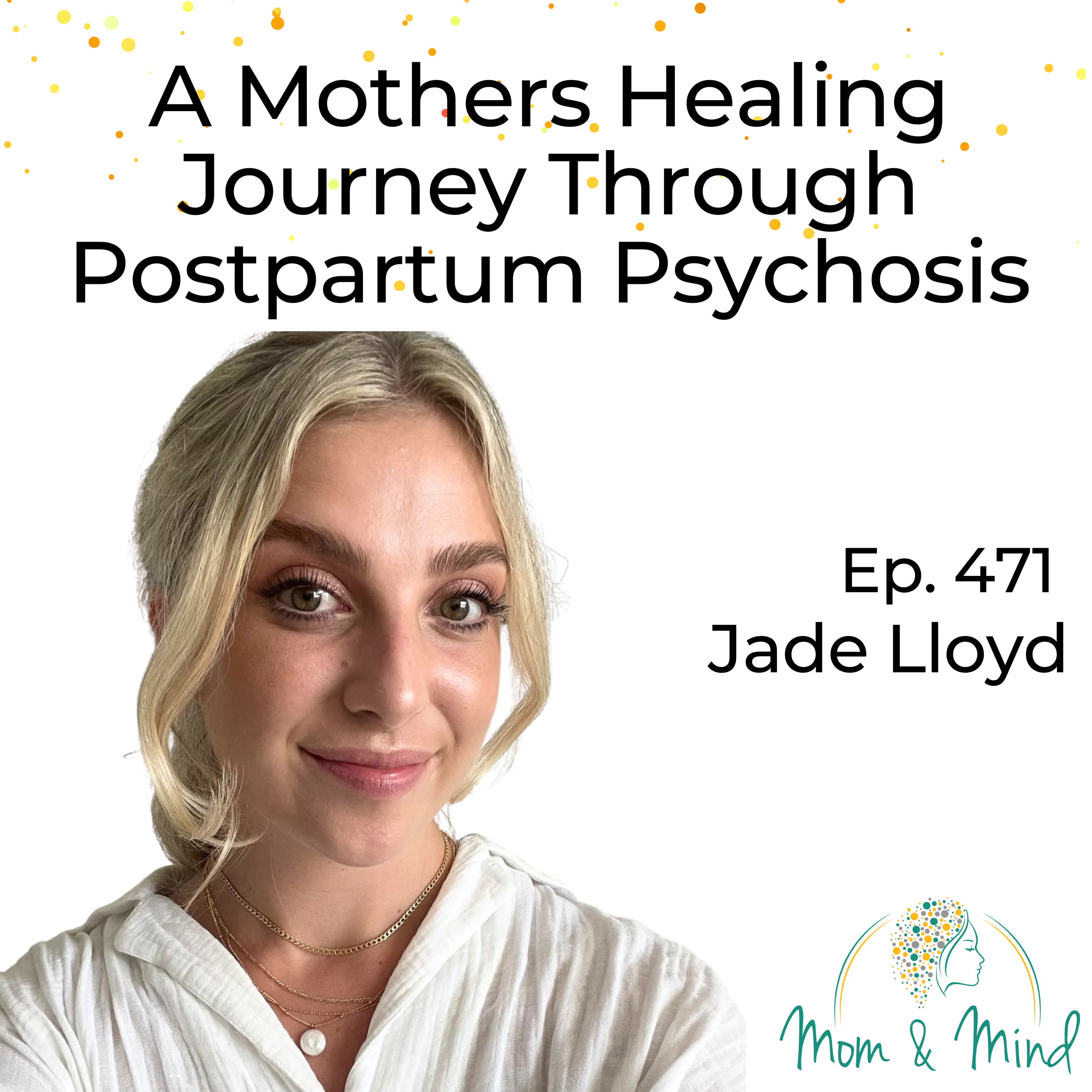 Postpartum Psychosis Recovery: Spotting the Symptoms and Getting Inpatient Help with Jade Lloyd (Ep 471) 16.03.2026 52minToday’s guest shares the events leading up to her postpartum psychosis, what she experienced, and how she managed to recover. It is important to hear stories like this so people understand postpartum psychosis and know how to get help. We all need to recognize the symptoms and get the people we love the help they need. Join us for Jade’s powerful story. Jade Lloyd is a survivor of postpartum psychosis and a maternal mental health advocate from the UK. Her maternal mental health struggles began with anxiety and sleeplessness, soon progressing to scary, intrusive thoughts and hallucinations. Jade shares her story in the hope that more knowledge and understanding about postpartum depression, anxiety, and psychosis will lead to more moms getting the help they need without shame, blame, and stigma. Show Highlights: Jade’s story: An easy pregnancy and plans for an at-home water birth turned into an induction, epidural, followed by a ventouse/forceps delivery. Immediate feelings of shame and failure for not having the delivery she wanted With a December 2020 birth, COVID lockdowns contributed to Jade’s mental health struggles. The first symptom Jade noticed was anxiety. Social media was Jade’s primary socialization, which led her to feel even more inadequate as a new mom. Getting up the courage to admit to the doctor that she was “not ok.” When asking for help makes you feel like an inconvenience A specific event one night that scared Jade because of intrusive thoughts of harming herself Dealing with the self-imposed pressure to be the perfect mom Help from medications and a doctor who checked in with Jade regularly Even with medication, Jade’s struggles continued with intrusive thoughts. Jade’s feelings of losing touch with reality and experiencing hallucinations Treatment in the mother-baby unit Jade’s passion for sharing her story and doing advocacy work for those with PPP Hope for the future Jade’s message to listeners and those who are suffering: “It’s okay to ask for help.” Resources: Connect with Jade Lloyd: Instagram Call the National Maternal Mental Health Hotline at 1-833-TLC-MAMA or visitcdph.ca.gov. Please find resources in English and Spanish at Postpartum Support International, or by phone/text at 1-800-944-4773. There are many free resources, like online support groups, peer mentors, a specialist provider directory, and perinatal mental health training for therapists, physicians, nurses, doulas, and anyone who wants to be more supportive in offering services. You can also follow PSI on social media: Instagram, Facebook, and most other platforms. Visit www.postpartum.net/professionals/certificate-trainings/for information on the grief course. Visit my website, www.wellmindperinatal.com, for more information, resources, and courses you can take today! If you are a California resident seeking a therapist in perinatal mental health, please email me about openings for private pay clients. Learn more about your ad choices. Visit podcastchoices.com/adchoices
 -
 Birth Trauma PTSD: Somatic Therapies for Recovery and Reclaiming Parenthood with Maya Weir (Ep 470) 02.03.2026 35minA traumatic birth can happen to anyone, and it’s much more common than we might think. Today’s show focuses on birth trauma, what it looks like, and how the healing journey can positively reshape someone’s parenting experience. There is help! Join us to learn more! Dr. Maya Weir is a clinical psychologist who specializes in birth trauma and the emotional transitions of early parenthood. Inspired by her own experience of becoming a parent, she understands how profound, overwhelming, and transformative this stage of life can be. Dr. Weir supports parents in making sense of their journey, healing from birth trauma, and cultivating grounded, connected ways to move forward. She offers short-term therapy for individuals and couples who are processing birth trauma, along with longer-term support for parents navigating the challenges of early parenthood. Based in Napa, CA, Dr. Weir provides virtual therapy throughout CA. Show Highlights: Birth trauma: an explanation and examples Many people go through birth trauma and don’t realize it until later. Invalidation compounds the original trauma. Common symptoms of birth trauma: triggering memories, anxiety, and relationship issues Strategies used to address birth trauma focus on somatic techniques. Expected results of therapy for birth trauma Understanding the intersection of different types of trauma Therapy for birth trauma addresses feelings of guilt, blame, and failure. Huge issues remain in the birthing system regarding how mothers are treated and spoken to in the sacred moments of childbirth. A partner can feel shame for “not showing up” to prevent birth trauma. (Partners can greatly benefit from therapy, too!) Recognizing generational shifts in parenting today Key takeaways from Dr. Weir: “Healing is possible, your birth story deserves space, and you deserve to feel better and have access to parenting resources.” Resources: Connect with Dr. Maya Weir Website and Instagram Call the National Maternal Mental Health Hotline at 1-833-TLC-MAMA or visitcdph.ca.gov. Please find resources in English and Spanish at Postpartum Support International, or by phone/text at 1-800-944-4773. There are many free resources, such as online support groups, peer mentors, a specialist provider directory, and perinatal mental health training for therapists, physicians, nurses, doulas, and anyone who wants to be more supportive in their work. You can also follow PSI on social media: Instagram, Facebook, and most other platforms. Visit www.postpartum.net/professionals/certificate-trainings/for information on the grief course. Visit my website, www.wellmindperinatal.com, for more information, resources, and courses you can take today! If you are a California resident seeking a therapist in perinatal mental health, please email me about openings for private pay clients. Learn more about your ad choices. Visit podcastchoices.com/adchoices
 -
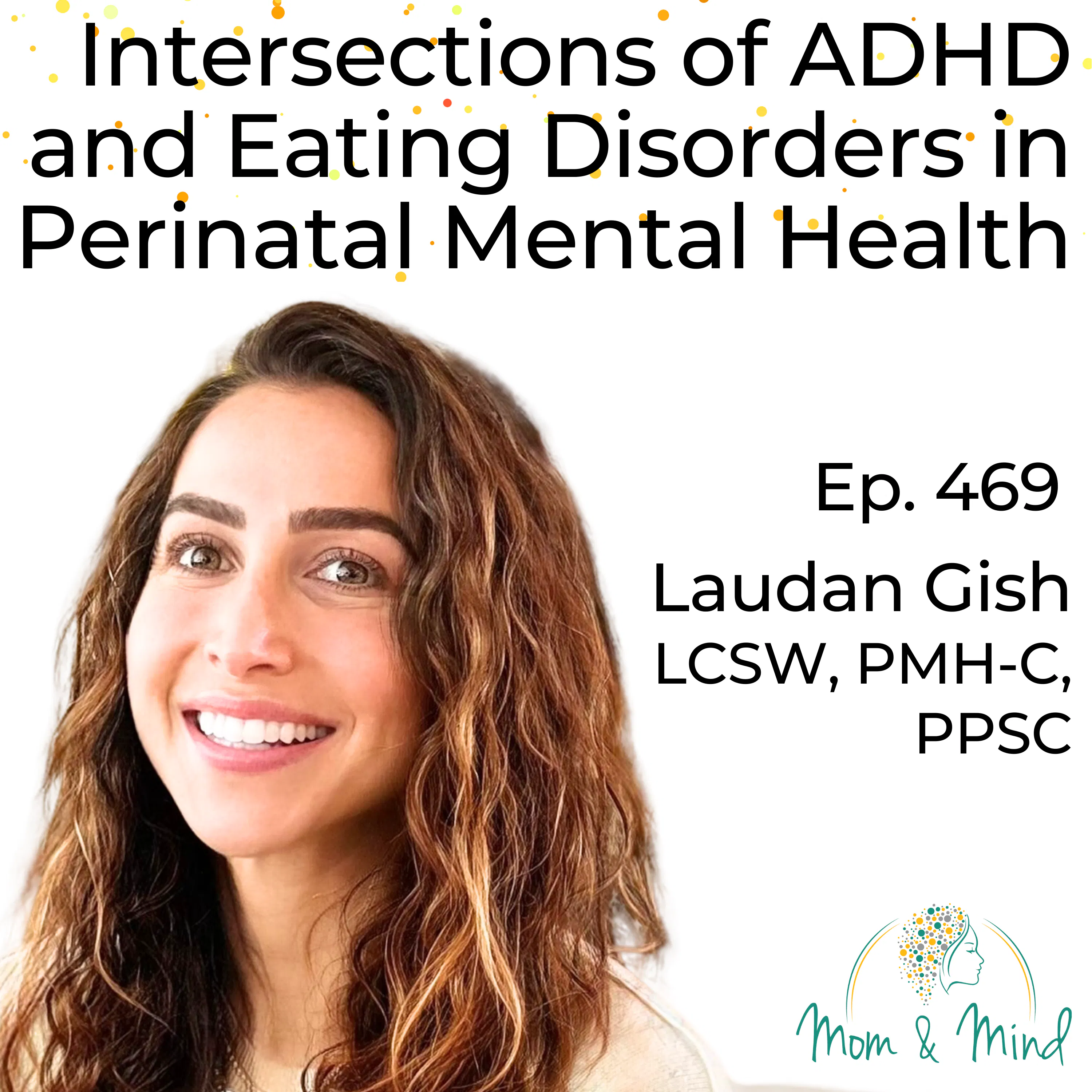 Postpartum Eating Disorders & ADHD: Symptoms and Specialized Support (Ep 469) 16.02.2026 38minToday’s episode focuses on the impacts of ADHD and eating disorders on perinatal mental health. We aim to explore this topic and educate listeners on how these conditions intersect and overlap during life’s transitional periods. Laudan Kermani Gish is a licensed psychotherapist in California, Texas, and Connecticut who also offers coaching to clients worldwide. She specializes in women’s health, particularly eating disorders, ADHD, perinatal mental health, and life transitions; she welcomes clients of all genders. She blends trauma-informed and evidence-based modalities to help clients cultivate resilience, strengthen self-worth, and create lives that feel authentic and nourishing. Laudan provides services in both English and Farsi. Show Highlights: ADHD is a neurodevelopmental disorder that has wide-ranging impacts. Understanding eating disorders in a general sense Examples of eating disorders: anorexia, bulimia, binge eating, and avoidant/restrictive food intake disorder (ARFID) The difference between disordered eating and an eating disorder An increase in ADHD symptoms and eating disorders during the postpartum Simply naming what’s happening makes it easier to seek help. The benefit of the ADHD self-reporting assessment and the eating attitudes test The neuroscience of ADHD, anxiety, and depression Compassion is vital for avoiding self-judgment. Laudan’s advice for family members is to use “the sandwich approach” and come from a place of curiosity, not judgment. Laudan’s key takeaways from today’s conversation Resources: Connect with Laudan Gish: Website, Adult ADHD Self-Report Scale, and Eating Attitudes Test Call the National Maternal Mental Health Hotline at 1-833-TLC-MAMA or visitcdph.ca.gov. Please find resources in English and Spanish at Postpartum Support International, or by phone/text at 1-800-944-4773. There are many free resources, like online support groups, peer mentors, a specialist provider directory, and perinatal mental health training for therapists, physicians, nurses, doulas, and anyone who wants to be more supportive in offering services. You can also follow PSI on social media: Instagram, Facebook, and most other platforms. Visit www.postpartum.net/professionals/certificate-trainings/for information on the grief course. Visit my website, www.wellmindperinatal.com, for more information, resources, and courses you can take today! If you are a California resident seeking a therapist in perinatal mental health, please email me about openings for private pay clients. Learn more about your ad choices. Visit podcastchoices.com/adchoices
 -
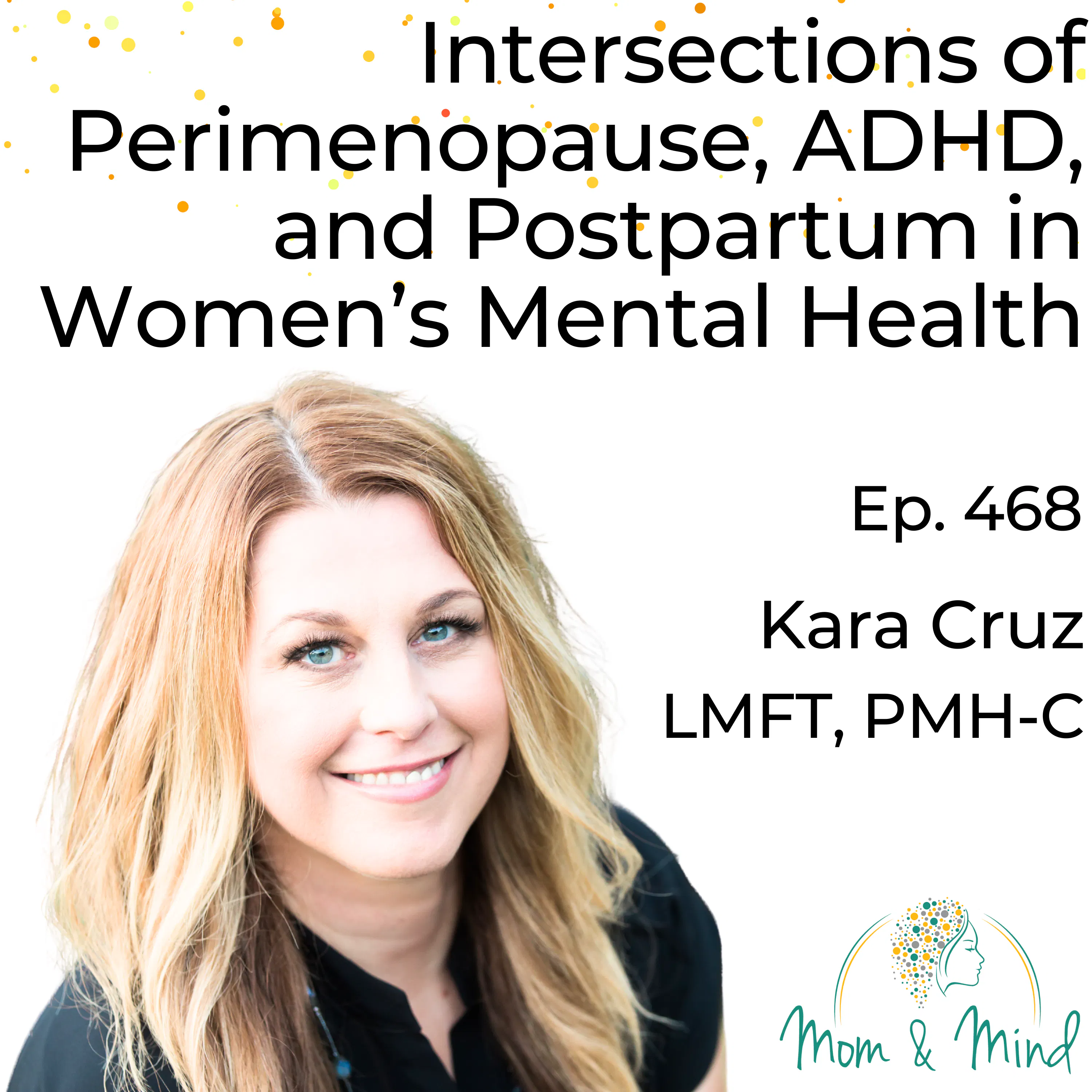 ADHD & Perimenopause: Managing Symptoms During the Postpartum Overlap (Ep 468) 02.02.2026 46minThere is much to consider about the intersection of perimenopause, ADHD, and postpartum. With more and more people choosing to have babies later in life, there is the likelihood that the start of perimenopause may coincide with the perinatal period. Those with ADHD have another variable thrown into the mix. We are tackling these topics with our expert guest today. Please join us! Kara Cruz is a Licensed Marriage and Family Therapist, Perinatal Mental Health Specialist, private practice owner, clinical supervisor, women’s mental health advocate, and educator. Her areas of focus are reproductive mental health, ADHD, complex trauma, and mood and anxiety conditions. In addition to psychotherapy with individuals and couples, Kara also facilitates continuing education and mental health training for professionals. One of her favorite projects is her Therapist Group Bootcamp, where she teaches and coaches fellow therapists on building their own wellness and support groups. Kara is an EMDRIA-certified therapist who leads workshops, including her signature group for women, “It Begins With Us.” She is the co-owner/co-founder of Women’s Support Circle, a space for community, resource sharing, and support for women worldwide. She created the Wellness for Women Healers Community, a space for healers of all professions and backgrounds who share the common goal of promoting women’s healing and wellness. Away from work, Kara is a busy wife and mom, enjoying baseball, music, and all nature activities near the beautiful California coast. Show Highlights: Women are suffering in silence, feeling shame and guilt about how they feel. Understanding the basics of perimenopause Perimenopause experiences cannot be compared from woman to woman; everyone is different. The impacts of ADHD on perimenopause Many professionals are not well-trained on menopause and perimenopause. Kara’s personal experience with ADHD Differences in males and females with ADHD (more external in boys/more internal in girls) Kara’s observations with patients who finally admit they are overloaded and are experiencing multiple symptoms of ADHD Similarities in symptoms for those who struggle with perimenopause and postpartum: anxiety, panic attacks, anger/irritability, depression, brain fog, sleep disturbances, sadness/crying, joint pain, etc. The importance of sleep for everyone Kara’s process to help people track their sleep and identify their sleep issues The value of a collaborative effort among a healthcare/treatment team Kara’s trainings offered to therapy professionals (An overview of three core trainings in 2026) How a therapist can help with perimenopause and ADHD Resources: Connect with Kara Cruz: Website, LinkedIn, and Instagram Call the National Maternal Mental Health Hotline at 1-833-TLC-MAMA or visitcdph.ca.gov. Please find resources in English and Spanish at Postpartum Support International, or by phone/text at 1-800-944-4773. There are many free resources, like online support groups, peer mentors, a specialist provider directory, and perinatal mental health training for therapists, physicians, nurses, doulas, and anyone who wants to be more supportive in offering services. You can also follow PSI on social media: Instagram, Facebook, and most other platforms. Visit www.postpartum.net/professionals/certificate-trainings/for information on the grief course. Visit my website, www.wellmindperinatal.com, for more information, resources, and courses you can take today! If you are a California resident seeking a therapist in perinatal mental health, please email me about openings for private pay clients. Learn more about your ad choices. Visit podcastchoices.com/adchoices
 -
 PMAD Treatment: How Acceptance and Commitment Therapy (ACT) Aids Recovery (Ep 467) 19.01.2026 39minToday’s focus is on Acceptance and Commitment Therapy in treating perinatal mood and anxiety disorders (PMADs). Our expert guest will help us understand this therapy technique, its processes, and the overarching goal of this method. Join us to learn more! Dr. Carissa Gustafson, PMH-C, is a licensed clinical psychologist who specializes in perinatal psychology. She supports clients from preconception through parenting, with a particular focus on pregnancy and postpartum care. As the author of Reclaim Your Life: Acceptance and Commitment Therapy in 7 Weeks, she utilizes Acceptance and Commitment Therapy (ACT) to help clients learn to relate to their thoughts and feelings with acceptance and compassion, while aligning their behavior with their values. Dr. Gustafson sees clients online throughout California and in person at Village Birth, a part of Heartship Psychological Services. In addition to seeing clients, she has been an adjunct professor and clinical faculty at Pepperdine University Graduate School of Education and Psychology. Show Highlights: Dr. Gustafson’s path to serving perinatal mental health clients through ACT Understanding ACT as a therapy technique The unpredictable nuances of the perinatal journey align perfectly with the core processes of ACT, especially for high-achieving women. The need to be present with our difficult emotions Learning to “surf the waves” of emotions and feelings Compassion is essential because of the shame and blame we put on ourselves. ACT core processes: mindfulness, acceptance/compassion, cognitive defusion, the observer self, values, and committed/valued action “Bringing presence to our pain brings peace.” We don’t want to make an enemy of our internal experiences. ACT offers a clear path to relief for PMADs if someone is willing to use the techniques. Psychological health can be improved with flexibility in our thoughts and behaviors. Acceptance doesn’t mean resignation. Advocacy and agency are vital! Learn more about Dr. Gustafson’s book, training courses, and workbook (get yours for free at Dr. Gustafson's website!) Resources: Connect with Dr. Carissa Gustafson: Website, Instagram, and Reclaim Your Life: Acceptance and Commitment Therapy in 7 Weeks Call the National Maternal Mental Health Hotline at 1-833-TLC-MAMA or visitcdph.ca.gov. Please find resources in English and Spanish at Postpartum Support International, or by phone/text at 1-800-944-4773. There are many free resources, like online support groups, peer mentors, a specialist provider directory, and perinatal mental health training for therapists, physicians, nurses, doulas, and anyone who wants to be more supportive in offering services. You can also follow PSI on social media: Instagram, Facebook, and most other platforms. Visit www.postpartum.net/professionals/certificate-trainings/for information on the grief course. Visit my website, www.wellmindperinatal.com, for more information, resources, and courses you can take today! If you are a California resident seeking a therapist in perinatal mental health, please email me about openings for private pay clients. Learn more about your ad choices. Visit podcastchoices.com/adchoices
Vergelijkbare podcasts


Populair in
Deze podcast verschijnt ook in de podcastlijsten van deze landen.

