
Sisters In Sobriety
Sonia Kahlon and Kathleen Killen
0
Sonia Kahlon and Kathleen Killen, sisters-in-law, share their journey of sobriety and recovery. Each episode offers honest conversations about addiction, emotional sobriety, mindfulness, and socializing without alcohol. The podcast aims to support those who are sober-curious or already living alcohol-free, blending vulnerability with comic relief. Topics include making the decision to get sober, adopting a mindful lifestyle, and achieving emotional sobriety.
Afleveringen
-
 Breaking the Nightly Wine Habit with Casey Davidson 05.10.2026 51minWhat happens when a successful life includes a private struggle with alcohol? In this episode, Sonia speaks with Casey Davidson, founder of Hello Someday Coaching and host of the Hello Someday podcast, about high achievement, anxiety, and getting out of the drinking cycle. Why can drinking feel like the only way to switch off? What makes the evening “witching hour” so difficult? How can sober curiosity and gray area drinking open a conversation without labels? Sonia and Casey explore early sobriety, moderation, and the value of support from women who understand. Casey shares the practical pieces of her “sober bubble”: asking for help, changing routines, eating before the evening rush, and lowering expectations. She explains her 100-day coaching approach, discusses everyday rewards, and explores how boundaries and community create room for a more satisfying life. From college rugby and corporate pressure to motherhood and nightly red wine, Casey traces the moments that made drinking harder to ignore. She shares how a 100-day commitment grew into lasting sobriety—and how admitting she no longer wanted her corporate job helped lead her toward coaching. This is Sisters in Sobriety, the support community that helps women change their relationship with alcohol. Check out our substack for extra tips, tricks and resources. Casey’s Links 🌐 Hello Someday Coaching Website📸 Casey’s Instagram — @caseymdavidson SIS Links 💌 Sisters In Sobriety Substack – where the magic (and the mocktail recipes) happen📬 Sisters In Sobriety Email📸 Sisters In Sobriety Instagram🌐 Kathleen’s Website Kathleen does not endorse any products mentioned in this podcast📸 Kathleen’s Instagram Timestamped highlights 00:00 — Introducing Casey Davidson02:00 — People-pleasing and the gold-star girl04:00 — Rugby culture and problematic drinking07:00 — Mommy wine culture and climbing the ladder09:00 — Recognizing herself in quit lit11:00 — Reaching the point of needing change12:00 — Committing to 100 alcohol-free days15:00 — Extending the break to a year16:00 — Building a sober bubble19:00 — Preparing for the witching hour20:00 — Eating before the evening rush23:00 — Life after the red wine identity25:00 — Admitting her career no longer fit28:00 — Launching Hello Someday and defining coaching30:00 — Making room for bigger life changes33:00 — Casey’s perspective on moderation37:00 — Her approach to substituting substances42:00 — Questioning recovery labels45:00 — Sober curiosity and gray area drinking48:00 — Finding women who understand
 -
 Sober but Still Angry? With Zach Brittle 28.09.2026 58minWhat happens when the drinking stops but the anger stays? Sonia welcomes Zach Brittle, LMHC, Certified Gottman Therapist, Relational Life Therapist, and host of Marriage Therapy Radio. Why can resentment linger after quitting alcohol? How can someone take responsibility without taking all the blame? What happens when partners get sober at different times? Sonia and Zach explore recovery, relationship boundaries, and rebuilding trust beyond counting drinks or sober days. Zach explains his approach to the “wise adult,” pausing before reacting, and playing the movie forward. He describes how Relational Life Therapy connects self-esteem, boundaries, and intimacy, and why having communication tools differs from being ready to use them. Sonia also asks about the difference between celebrating recovery and becoming overconfident. From asking for help during the pandemic to confronting longstanding resentment, Zach shares the experiences behind his recovery. An unforgettable Christmas tree stand, a frustrating gas-station queue, and his and Rebecca’s different paths to sobriety reveal how change has reshaped their marriage and parenting. This is Sisters in Sobriety, the support community that helps women change their relationship with alcohol. Check out our substack for extra tips, tricks and resources. Zach’s Links Website Instagram Marriage Therapy Radio SIS Links 💌 Sisters In Sobriety Substack – where the magic (and the mocktail recipes) happen📬 Sisters In Sobriety Email📸 Sisters In Sobriety Instagram🌐 Kathleen’s Website Kathleen does not endorse any products mentioned in this podcast📸 Kathleen’s Instagram Episode Highlights 00:00 — Introducing Zach Brittle02:00 — Recovery beyond alcohol04:00 — Recognizing personal relapse risks08:00 — Drinking escalates during COVID10:00 — Asking for a sponsor’s help13:00 — Taking inventory of resentment15:00 — Owning his anger without alcohol18:00 — Responsibility versus self-blame20:00 — Anger in the gas-station queue22:00 — The pause that creates choice25:00 — Playing the movie forward27:00 — Recovery becomes a new way of living29:00 — A milestone tests his sobriety33:00 — Why tools alone aren’t enough35:00 — Self-esteem, boundaries, and intimacy40:00 — Partners on different recovery paths46:00 — Setting relationship boundaries47:00 — Alcohol’s impact beyond drink counts49:00 — Connection, fun, and life after drinking56:00 — Modeling recovery for adult children
 -
 Bad Marriage Advice and Better Ways to Connect with Monica Tanner 21.09.2026 47minOn Sisters in Sobriety, Sonia welcomes relationship coach, author, and podcast host Monica Tanner to explore conflict, emotional safety, and intimacy when alcohol is no longer the escape hatch. Together, they explore how to ask for support, navigate difficult conversations, and reconnect through change. Does “never go to bed angry” actually help? When does communication become criticism? What happens when drinking or scrolling becomes a way to disappear during conflict? Sonia and Monica explore resentment, sober relationships, and talking about sex without turning the conversation into a performance. Monica introduces relational life therapy concepts, including protective childhood patterns, the emotional “whoosh,” and choosing a response with greater awareness. She shares examples of clear requests, healthy boundaries, side-by-side intimacy conversations, and small routines that create space for connection. Monica also shares how her parents’ divorce shaped her interest in relationships, why late-night arguments brought up fears of abandonment, and how a simple request for reassurance changed those moments in her marriage. Her son’s approaching wedding became the inspiration for her book. This is Sisters in Sobriety, the support community that helps women change their relationship with alcohol. Check out our substack for extra tips, tricks and resources. Monica’s Links 🌐 Monica Tanner’s Website🎙️ Secrets of Happily Ever After Podcast📖 Bad Marriage Advice SIS Links 💌 Sisters In Sobriety Substack – where the magic (and the mocktail recipes) happen📬 Sisters In Sobriety Email📸 Sisters In Sobriety Instagram🌐 Kathleen’s Website Kathleen does not endorse any products mentioned in this podcast📸 Kathleen’s Instagram Timestamped Highlights 01:00 — Meet relationship coach Monica Tanner.02:00 — The divorce that reshaped her idea of marriage.04:00 — Rethinking “never go to bed angry.”06:00 — Asking for reassurance before taking a break.08:00 — Relationship maintenance before a crisis.11:00 — Why conflict can block familiar communication skills.14:00 — Recognizing protective patterns and boundaries.16:00 — Teaching a partner how to love you well.18:00 — Small requests before resentment builds.20:00 — Asking for listening instead of solutions.23:00 — Making requests without criticism.25:00 — Withdrawal, fawning, and old survival strategies.26:00 — Sonia on alcohol, conflict, and getting sober.28:00 — Withdrawing in plain sight.30:00 — Pausing during the emotional “whoosh.”34:00 — Making space for conversations about sex.38:00 — Exploring a broader definition of intimacy.41:00 — When deeper relationship problems need help first.45:00 — Monica’s routines for regular connection.46:00 — Couples work, intensives, and closing reflections.
 -
 Good Enough Daughtering With Dr. Allison Alford 14.09.2026 51minIn this episode of Sisters in Sobriety, Sonia explores the invisible work adult daughters perform to keep families connected. With communication scholar, Baylor professor and Good Daughtering author Dr. Allison M. Alford. Dr. Alford helps women recognize how family roles can shape self-worth, perfectionism, resentment and coping. Why are daughters so often expected to organize, anticipate needs and smooth over conflict? How do culture, birth order and family expectations influence daughtering? And why can a son receive enormous praise for a small gesture while a daughter feels she is always falling short? Dr. Alford defines daughtering as the mental, emotional, logistical and identity work daughters do for their families. She explains how to make that labor visible, establish boundaries without turning them into ultimatums, distinguish venting from rumination and replace impossible A+ expectations with a sustainable B+ standard. She also shares how her own family relationships changed when she stopped building connection around complaints and enlisted her husband, children and sister in creating new conversation patterns. Her message is simple: every woman is already a good-enough daughter and has agency in deciding how that role will fit into her life. This is Sisters in Sobriety, the support community that helps women change their relationship with alcohol. Check out our substack for extra tips, tricks and resources. Dr. Alford’s Links 🌐 Daughtering 101 Website📕 Good Daughtering📸 Instagram SIS Links 💌 Sisters In Sobriety Substack – where the magic (and the mocktail recipes) happen📬 Sisters In Sobriety Email📸 Sisters In Sobriety Instagram🌐 Kathleen’s Website Kathleen does not endorse any products mentioned in this podcast📸 Kathleen’s Instagram Timestamped Highlights 01:00 — Dr. Allison Alford introduces her work on daughtering05:00 — Defining the overlooked cost of being a good daughter07:00 — Why women’s caring roles are so often called mothering10:00 — Honoring daughterhood as a distinct part of identity12:00 — Choosing how fully to show up in family roles14:00 — Daughters as the behind-the-scenes family CEOs16:00 — How daughter conditioning develops from childhood18:00 — Why sons receive praise for exceeding lower expectations22:00 — Culture, geography and privilege shape daughtering24:00 — The unspoken rules daughters are expected to follow27:00 — How impossible standards create a fog of failure30:00 — Creating a personal B+ daughter rubric32:00 — The relationship between resentment and self-abandonment34:00 — Boundaries as fences around emotional and physical space36:00 — Recognizing when family venting becomes rumination38:00 — Communicating a boundary once—and following through40:00 — Making invisible daughtering labor visible43:00 — Building a Plan B for healthier family conversations46:00 — Eldest and only daughters face distinct pressures50:00 — Every daughter gets to decide what “good enough” means
 -
 Writing a Joyful Recovery Story with Kerri Maher 07.09.2026 55minIn this episode of Sisters in Sobriety, Sonia explores the connection between sobriety, creativity, and reinvention with Kerri Maher, the USA Today bestselling author of The Paris Bookseller and The Kennedy Debutante. Kerri discusses her four years of sobriety and her deeply personal new novel, Summer of Love, set in California and centered on addiction, family, recovery, and hope. What happens when someone’s drinking does not produce a cinematic rock bottom, but no longer feels sustainable? How can people find recovery support outside traditional 12-step programs? Sonia and Kerri discuss sober identity, online community, emotional sobriety, belonging, and the many different paths people can take toward changing their relationship with alcohol. Kerri explains how The Luckiest Club helped her find her people, why sobriety and writing are both daily practices, and how greater clarity changed her creative and professional decisions. She also shares how The Artist’s Way, morning pages, artist dates, and an “adjacent art” with no pressure attached helped her develop Summer of Love. Kerri’s story reveals a quieter, joyful vision of recovery: clear mornings, renewed confidence, richer emotions, and the freedom to experience places such as Napa beyond their drinking culture. She also reflects on generational addiction, “good girl” identity, sober travel, and writing a novel that allows recovery to be hopeful rather than punishing. This is Sisters in Sobriety, the support community that helps women change their relationship with alcohol. Check out our substack for extra tips, tricks and resources. Kerri’s Links 📚 Summer of Love📸 Instagram: @kerrimaherwriter SIS Links 💌 Sisters In Sobriety Substack – where the magic (and the mocktail recipes) happen📬 Sisters In Sobriety Email📸 Sisters In Sobriety Instagram🌐 Kathleen’s Website Kathleen does not endorse any products mentioned in this podcast📸 Kathleen’s Instagram Timestamped Highlights 01:00 — Kerri introduces her sobriety and Summer of Love04:00 — The small moments that made Kerri question her drinking05:00 — An early 15-to-18-month period without alcohol08:00 — How The Luckiest Club began and became Kerri’s community10:00 — Finding accessible support during the sandwich-generation years14:00 — Is recovery’s “special sauce” the program or the community?17:00 — Emotional sobriety, anger management, and continued inner work19:00 — Writing and sobriety as practices built through repetition21:00 — How alcohol created subtle brain fog without stopping productivity26:00 — The personal origins of Summer of Love28:00 — Morning pages bring the book’s characters and plot together31:00 — Watercolor play as relaxing, pressure-free creativity33:00 — Writing about recovery as joyful rather than punishing35:00 — Clear mornings and dependable presence as everyday sober joy43:00 — Exploring generational patterns of addiction46:00 — Looking beyond wine culture in Napa Valley49:00 — Rediscovering California through food, landscape, and connection53:00 — Sober travel and experiencing mornings without a hangover54:00 — Kerri’s message to sober and sober-curious readers55:00 — Closing the conversation
 -
 Mystical Mocktails: Drinking With Intention With Julia Hadas 31.08.2026 1u 1minOn this episode of Sisters in Sobriety, Sonia explores how alcohol-free drinks can become meaningful rituals rather than consolation prizes with bestselling author and mixologist Julia Halina Hadas, whose book Mystical Mocktails combines zero-proof recipes with intention, connection and everyday magic. What makes a mocktail feel complete? How can flavor, aroma, temperature and glassware change the experience? Julia explains why people often seek more than alcohol from a drink—and how a thoughtfully made alternative can offer beauty, pleasure and social connection without the buzz. The conversation covers practical building blocks such as citrus, sweeteners, tea, coconut water, herbs, spices and garnishes. Julia shares how mint can suggest renewal, maple and black tea can feel grounding, and rose can represent connection. She also explains how to prevent watery tea-based drinks, balance sweetness and acidity, order creatively at a bar and pair affirmations with the physical act of drinking. Julia also reflects on pregnancy, her husband’s sobriety and the importance of recognizing when alcohol-removed products feel triggering. She shares how creating her Rose of Remembrance recipe unexpectedly helped her process grief following her father’s death—showing how an intentional drink can hold memory, emotion and healing. This is Sisters in Sobriety, the support community that helps women change their relationship with alcohol. Check out our substack for extra tips, tricks and resources. Julia’s Links Website: WitchCraft CocktailsInstagram: @witchcraftcocktailBook: Mystical Mocktails SIS Links 💌 Sisters In Sobriety Substack – where the magic (and the mocktail recipes) happen📬 Sisters In Sobriety Email📸 Sisters In Sobriety Instagram🌐 Kathleen’s Website Kathleen does not endorse any products mentioned in this podcast📸 Kathleen’s Instagram Timestamped highlights 01:00 — Meet bestselling author and mixologist Julia Halina Hadas02:00 — Making zero-proof drinks before nonalcoholic spirits were widely available04:00 — Seeking connection and a change in feeling through drinks06:00 — Bringing herbs and intention into mixology07:00 — Magic, spirituality and reclaiming personal power09:00 — Using maple and black tea to create a grounding drink11:00 — The Rose of Remembrance recipe and processing grief12:00 — Why yuzu can transform an alcohol-free drink14:00 — How garnishes and aroma elevate the experience17:00 — Mint, cucumber, strawberry, basil and rose as intentional ingredients20:00 — Preventing tea-based mocktails from becoming watery22:00 — Adding cardamom, cinnamon, nutmeg and clove25:00 — The color-changing magic of butterfly pea flower27:00 — Tea ceremonies, presence and the Jasmine Peace Potion30:00 — Making drink preparation part of a personal ritual32:00 — Why glassware can make an ordinary moment feel special35:00 — The cup as a symbol of what a person welcomes into their life39:00 — Pairing affirmations with the physical act of drinking47:00 — How to order a more interesting mocktail at a bar56:00 — Protecting sobriety when alcohol-removed drinks feel triggering
 -
 The Midlife Body With Dr. Shawna Darou 24.08.2026 1u 7minMidlife can make a woman feel as though her body has suddenly changed the rules—but those changes are not a personal failure, and they are not “just aging.” In this episode of Sisters in Sobriety, Sonia and Kathleen help unpack the relationship between perimenopause, metabolic health, alcohol, blood sugar, stress and movement with Dr. Shawna Darou, ND. A naturopathic doctor with more than 20 years of experience, Dr. Darou translates complex women’s health information into clear, practical steps for building strength and vitality through midlife and beyond. Why does alcohol suddenly hit harder in midlife? What do belly weight, brain fog, disrupted sleep, afternoon fatigue and persistent food noise reveal about insulin resistance? How can women use GLP-1 medications and continuous glucose monitors more responsibly—and why can excessive fasting or carbohydrate restriction backfire? The conversation also explores sugar cravings in early sobriety, chronic stress, menopause and the habits that support long-term metabolic health. Dr. Darou explains why menopause is a metabolic transition, not only an estrogen transition; how alcohol interrupts nighttime blood sugar regulation and fat oxidation; and why muscle acts as a “metabolic sink.” She shares a realistic starting point: prioritize protein, add daily movement, walk after meals and build strength gradually. Flexible consistency, proper recovery and movement that feels genuinely enjoyable matter more than perfection. Dr. Darou also shares her unexpected evolution from engineer to naturopathic doctor—and from someone who did not identify as an athlete to a competitive runner who began racing at 50. Her story challenges narrow ideas about aging and shows how confidence, community and ambitious new goals can emerge later in life. This is Sisters in Sobriety, the support community that helps women change their relationship with alcohol. Check out our substack for extra tips, tricks and resources. Timestamp Highlights 01:00 — Meet Dr. Shawna Darou02:00 — From engineering to women’s health05:00 — The pandemic’s metabolic impact06:00 — Movement as a longevity lever07:00 — Becoming an athlete at 4909:00 — Why women over 40 need new possibilities13:00 — Metabolic health beyond weight15:00 — Early signs of metabolic dysfunction17:00 — How insulin resistance fuels cravings18:00 — Reversing dysfunction without diet culture20:00 — GLP-1 benefits and risks23:00 — Why midlife changes the rules26:00 — Using a continuous glucose monitor responsibly32:00 — Chronic stress and blood sugar35:00 — What alcohol does metabolically38:00 — Why alcohol hits harder in midlife39:00 — Sugar cravings in early recovery41:00 — The “yes with a boundary” approach47:00 — Protein and post-meal movement56:00 — Flexible consistency, intensity and recovery Dr. Darou’s Links Website — www.drshawnadarou.comInstagram — @drshawnadarou SIS Links 💌 Sisters In Sobriety Substack – where the magic (and the mocktail recipes) happen 📬 Sisters In Sobriety Email 📸 Sisters In Sobriety Instagram 🌐 Kathleen’s Website Kathleen does not endorse any products mentioned in this podcast 📸 Kathleen’s Instagram
 -
 Getting Sober, Coming Out, and Starting Over With Braunwyn Spinner 17.08.2026 53minWhat happens when alcohol feels like the only way to become comfortable in your own skin? In this episode, Sonia is joined by Braunwyn Spinner, advocate, mother of seven, and former Real Housewives of Orange County cast member whose sobriety unfolded in public. How can someone go years without alcohol and still have a serious drinking problem? What changes when a social life—and a television career—is built around drinking? Braunwyn and Sonia explore relapse, alcohol withdrawal, AA and the 12 steps, sober socializing, queer recovery spaces, codependency, parenting, and the difference between avoiding alcohol and developing emotional sobriety. They also ask why getting sober can initially feel worse, how to identify the “fun limit,” and what it means to choose recovery when relationships and routines begin to change. Their conversation makes clear that alcohol dependence is not defined only by how often a person drinks, but by what happens after the first drink. They discuss why heavy withdrawal should never be attempted alone, how independent transportation and an exit plan can protect early sobriety, and why repeatedly stopping for a few days can mean reliving the hardest stage again and again. Recovery can include community, boundaries, therapy, medication, and learning to recognize the restless “wanting” beneath substitute compulsions. Braunwyn also shares the deeply personal story behind her first drink at 14, the moment in Miami that ended her drinking, and the sober producer who helped get her into an AA meeting when she planned to relapse. She opens up about realizing she was gay in sobriety, leaving a decades-long marriage, co-parenting, becoming more present with her children, surviving a mental health crisis, returning to television, and loosening the hold of beauty standards and the male gaze. This is Sisters in Sobriety, the support community that helps women change their relationship with alcohol. Check out our substack for extra tips, tricks and resources. Highlights 00:01 – Braunwyn introduces herself in a new chapter as Braunwyn Spinner00:02 – Why her first drink made her feel comfortable in her skin00:04 – The difference between abstinence and working a recovery program00:05 – Why time between drinks does not rule out alcohol addiction00:07 – How reality television accelerated her drinking00:09 – The “God shot” that told her drinking had to end00:12 – Sonia’s final drink and the unexpected day sobriety began00:14 – What the first 30 days can feel like00:16 – The sober producer who helped save Braunwyn’s life00:19 – Finding comfort instead of judgment in AA00:21 – Sobriety, stillness, and realizing she was gay00:23 – Protecting early recovery with a private room, car, and exit plan00:24 – Recognizing the sober “fun limit”00:27 – Braunwyn’s first sober kiss with a woman00:29 – How sobriety exposed codependency and changed her marriage00:34 – Parenting with presence and making living amends00:36 – Why emotional health can feel worse before it gets better00:38 – Queer identity, religious trauma, and addiction risk00:42 – Recognizing substitute addictions and the feeling of “wanting”00:52 – Why giving sobriety six weeks can change everything Braunwyn's Links 📸 Instagram SIS Links 💌 Sisters In Sobriety Substack – where the magic (and the mocktail recipes) happen 📬 Sisters In Sobriety Email 📸 Sisters In Sobriety Instagram 🌐 Kathleen’s Website Kathleen does not endorse any products mentioned in this podcast 📸 Kathleen’s Instagram
 -
 Early Sobriety: What No One Tells You About the First 90 Days With Girl, Undrunk 10.08.2026 51minEarly sobriety can feel euphoric, terrifying, lonely and unexpectedly funny—sometimes all in the same day. In this episode of Sisters in Sobriety, Sonia and Kathleen explore what the first days and months without alcohol actually look like and share practical ways to manage cravings, triggers and life after rehab. They are joined by Heather Chappell and Zoe Kachan, host and co-host of Girl, Undrunk, the raw, unfiltered sobriety podcast that finds humor in the highs, lows and messiness of recovery. What happens when someone returns from rehab to the same apartment, routines and drinking cues they left behind? How do friendships change when alcohol is no longer the thing holding them together? Heather and Zoe discuss the “rehab high,” the fear of relapse, sober community, dating without alcohol and the surprising challenge of discovering who they are when drinking is no longer shaping their personalities. The conversation examines emotional sobriety, mental health and the slow work of developing coping skills that alcohol once replaced. Heather and Zoe explain how meetings, sponsorship, therapy, firm boundaries and supportive sober friendships helped them build safer lives. They also share simple approaches to cravings: staying in the present, following the possible consequences of a drink from beginning to end, leaving overwhelming situations and naming uncomfortable feelings out loud. Heather and Zoe also open up about the experiences that led them to treatment, from isolation and deteriorating health to job loss, a DUI and repeated hospital visits. Their stories continue beyond getting sober, revealing the anger, trauma and relationship patterns that resurfaced in recovery. An honest discussion of sober intimacy explores how the body can carry fear even when the mind feels safe—and why patience, communication and self-trust matter while learning to date and connect without alcohol. This is Sisters in Sobriety, the support community that helps women change their relationship with alcohol. Check out our substack for extra tips, tricks and resources. Episode Highlights02:00 Heather’s loneliness, anxiety and escalating drinking in New York05:00 The call that finally took Heather to rehab06:00 Zoe’s early drinking, drug use and need to fit in09:00 A DUI, hospital visits and Zoe’s last attempt to start over11:00 Leaving rehab and facing the first 90 days12:00 Resisting an early craving at the dog park13:00 Building a protective routine around high-risk hours15:00 Discovering that personality and humor survive sobriety17:00 Relearning adulthood after years of drinking19:00 Mental health, emotional sobriety and alcohol as a coping mechanism21:00 Meetings, sponsorship and rebuilding confidence22:00 Therapy, anger and confronting the past without alcohol24:00 Everyday triggers and rewiring the brain26:00 Leaving unsafe situations and setting firm boundaries29:00 How sobriety changes friendships32:00 The chance meeting that brought Heather and Zoe together40:00 Dating, relapse and protecting early recovery44:00 Sober intimacy, dissociation and learning to trust the body49:00 Day-one advice and how to name a craving Girl, Undrunk Links Instagram SIS Links 💌 Sisters In Sobriety Substack – where the magic (and the mocktail recipes) happen 📬 Sisters In Sobriety Email 📸 Sisters In Sobriety Instagram 🌐 Kathleen’s Website Kathleen does not endorse any products mentioned in this podcast 📸 Kathleen’s Instagram
 -
 Trapped Emotions, Alcohol Cravings, and the Heart Wall With Dr. Bradley Nelson 03.08.2026 53minCan unresolved emotional pain influence alcohol cravings, addictive behaviors, and the way the body experiences stress? In this episode of Sisters in Sobriety, Sonia speaks with Dr. Bradley Nelson, holistic physician and bestselling author of The Emotion Code, The Body Code, and The Heart Code, about his approach to identifying and releasing what he calls “trapped emotions.” Why can someone understand a harmful pattern and still feel unable to change it? Could addiction be less about the substance itself and more about an attempt to soothe emotional pain? Dr. Nelson shares his perspective on the subconscious mind, biofeedback, muscle testing, alcohol cravings, and the “heart wall”—a protective emotional barrier he believes can form after heartbreak, grief, trauma, or loss. The conversation explores how emotions may go unprocessed, how present-day triggers can connect with earlier experiences, and why Dr. Nelson views symptoms as messages rather than root causes. He demonstrates the sway test, explains the Emotion Code chart, and describes his process for narrowing down an emotion, deciding whether more context is needed, and using a magnet or hand movement to release it. These practices are presented as Dr. Nelson’s energy-healing framework and are not a substitute for evidence-based medical, mental health, or addiction care. Dr. Nelson also opens up about the childhood experiences that shaped his path, including a serious case of measles, kidney disease, and an early encounter with holistic practitioners in rural Montana. He traces the journey from computer programmer to chiropractor and shares stories that led him to connect physical symptoms, heartbreak, compulsive behavior, and emotional healing—including accounts involving chronic pain, food cravings, and alcohol use. This is Sisters in Sobriety, the support community that helps women change their relationship with alcohol. Check out our substack for extra tips, tricks and resources. 00:00 — Dr. Bradley Nelson and the concept of trapped emotions02:00 — Childhood healing experiences and belief in a higher power05:00 — From computer programming to the healing arts06:00 — Searching for the roots of patients’ symptoms07:00 — Addiction as a response to emotional pain09:00 — The subconscious mind as the body’s internal computer11:00 — Muscle testing and yes-or-no biofeedback13:00 — How emotions may become “trapped” in the body16:00 — Emotional baggage, anxiety, PTSD, and addictive behavior18:00 — The overflowing-glass metaphor for emotional pain20:00 — How the “heart wall” may relate to addiction22:00 — Why the heart is viewed as more than a pump26:00 — A patient story connecting heartbreak and chronic neck pain29:00 — Introducing the ring-in-ring method and sway test36:00 — Using the Emotion Code chart to identify an emotion38:00 — Closing an emotional “open loop”42:00 — How emotional baggage may drive cravings45:00 — A story about alcohol urges and releasing the heart wall48:00 — True healing versus symptom relief51:00 — A small next step and where to learn more Dr. Bradley's Links Instagram Website SIS Links 💌 Sisters In Sobriety Substack – where the magic (and the mocktail recipes) happen 📬 Sisters In Sobriety Email 📸 Sisters In Sobriety Instagram 🌐 Kathleen’s Website Kathleen does not endorse any products mentioned in this podcast 📸 Kathleen’s Instagram
 -
 What Traditional Addiction Treatment Gets Wrong About Women With Dr. Stephanie Covington 27.07.2026 54minAddiction treatment has not always been designed with women in mind—and that can profoundly shape how women experience recovery. In this episode of Sisters in Sobriety, Sonia is joined by Dr. Stephanie S. Covington, internationally recognized clinician, author, and pioneer in addiction and trauma treatment, whose groundbreaking work includes A Woman’s Way Through the Twelve Steps, Helping Women Recover, Beyond Trauma, and Awaken Your Sexuality. Why do traditional addiction treatment and Twelve Step programs sometimes fail to reflect women’s actual experiences? How are trauma, relationships, sexuality, shame, and addiction connected? Dr. Covington examines why recovery can look different for women, what conventional relapse prevention may overlook, and why community and connection are so essential. She also discusses the gaps in addiction treatment within jails and prisons, the importance of continuity of care after incarceration, and why she prefers the term “criminal legal system” over “criminal justice system.” The conversation breaks down the relationship between childhood trauma, genetics, emotional development, substance use, and relapse. Dr. Covington explains when trauma and addiction may need to be treated simultaneously, the difference between trauma-informed, trauma-responsive, and trauma-specific care, and the powerful shift from asking “What’s wrong with you?” to “What happened to you?” She also offers a gender-responsive perspective on the Twelve Steps, reframing concepts like the Fourth Step in ways that can reduce shame and help women see themselves more clearly in recovery. Sonia also gets personal about working the Twelve Steps nearly nine years into sobriety, feeling disconnected from the male-centered language of traditional AA literature, dating and having sex sober for the first time, and navigating conversations around “Cali sober” and mindful substance use. Dr. Covington shares her own early experiment with moderation, why she has no desire to test whether she could drink again, and a surprisingly simple “green beans” test that can reveal just how much power alcohol or another substance has in someone’s life. This is Sisters in Sobriety, the support community that helps women change their relationship with alcohol. Check out our substack for extra tips, tricks and resources. Highlights 00:01:00 – Meet Dr. Stephanie Covington and the personal recovery story behind her pioneering work 00:02:20 – What early addiction treatment and Twelve Step programs got wrong about women 00:03:35 – Why women-only recovery spaces can create greater safety and vulnerability 00:04:00 – Addiction, incarceration, and the lack of real treatment inside jails and prisons 00:06:00 – Medication-assisted treatment, Twelve Step access, and what is missing behind bars 00:07:00 – Why recovery community can be critical for successful reentry after incarceration 00:08:35 – Sonia shares that she is working the Twelve Steps nearly nine years into sobriety 00:09:20 – Why A Woman’s Way Through the Twelve Steps reframes recovery through women’s voices 00:10:00 – Reimagining the Fourth Step as a compassionate “spring cleaning” of the self 00:14:00 – Should AA literature change, and why Dr. Covington focuses on the Twelve Steps over the Big Book 00:16:00 – The Twelve Steps as tools for living, not simply tools for stopping drinking 00:17:00 – Why meetings, connection, and community strengthen long-term recovery 00:18:30 – How trauma and addiction become intertwined and why genetics is only part of the picture 00:21:00 – When trauma and addiction should be treated together rather than sequentially 00:23:30 – The three major relapse risks for women: trauma, relationships, and sexual issues 00:25:30 – Why childhood trauma can have a particularly profound developmental impact 00:28:00 – Big-T versus little-t trauma—and why comparing trauma can be misleading 00:30:00 – Relationships, sexuality, shame, and the overlooked realities of wome
 -
 How to Retrain Your Brain for Joy in Addiction Recovery With Dr. Eric Garland 20.07.2026 56minAddiction can gradually disconnect people from the ordinary pleasures, relationships and experiences that once made life meaningful. In this episode of Sisters in Sobriety, Sonia and Kathleen help make the science of addiction recovery practical and accessible with Dr. Eric Garland, a clinical researcher, psychotherapist and leading expert in mind-body therapies for addiction and chronic pain. Dr. Garland is the developer of Mindfulness-Oriented Recovery Enhancement, or MORE, an evidence-based treatment that combines mindfulness, cognitive behavioural therapy and positive psychology. Why do alcohol and other addictive substances begin to feel more rewarding than everyday life? How are addiction, chronic pain, depression, anxiety and trauma connected? Dr. Garland explains how substance use changes the brain’s dopamine and reward systems, why cravings can become automatic, and how mindfulness can create a pause between an urge and an action. He also discusses relapse prevention, emotional pain, moderation, harm reduction and the role of meditation in 12-step recovery. The conversation breaks down the three pillars of MORE: mindfulness, cognitive reappraisal and savoring. Dr. Garland explains how mindfulness strengthens attention and awareness, how reappraisal helps people examine the consequences of their choices, and how savoring retrains the brain to experience pleasure from ordinary moments. He also shares techniques for observing cravings, “playing the tape forward,” rebuilding natural reward and using the STOP practice before engaging in an addictive behaviour. Sonia reflects on how rediscovering simple pleasures and developing new hobbies contributed to a profound identity shift in her own sobriety. Dr. Garland shares how his personal mindfulness practice shaped his career, why recovery can involve transcending an addiction-based identity, and how people can reconnect with meaning, joy and a version of themselves that is larger than any craving, painful feeling or past behaviour. This is Sisters in Sobriety, the support community that helps women change their relationship with alcohol. Check out our substack for extra tips, tricks and resources. Highlights 00:00 Dr. Eric Garland and the MORE approach02:00 How mindfulness shaped Dr. Garland’s career04:10 Addiction, chronic pain and the loss of natural reward07:00 Clinical research and the effectiveness of MORE08:00 Reducing relapse, cravings, pain and emotional distress10:00 Why people use substances to escape pain12:00 Mindfulness, reappraisal and savoring15:00 How addiction hijacks the dopamine reward system18:20 Practical ways to relearn pleasure in recovery20:00 The mindfulness loop and strengthening attention23:00 Recognizing triggers and automatic cravings25:00 Zooming into the physical experience of a craving28:00 Playing the tape forward through cognitive reappraisal30:20 Mindfulness, pain and emotional bypassing32:00 What traditional addiction treatments may be missing34:00 Finding reward in coffee, birdsong and everyday moments40:00 Sobriety, identity change and self-transcendence43:00 MORE, the 12 steps and responding to a lapse46:00 Harm reduction, moderation and opioid treatment49:00 The STOP practice for interrupting automatic behaviour53:00 Expanding MORE through training, community and technology Dr. Garland's Links www.moretherapy.com https://apps.apple.com/us/app/more-therapy/id6761741739 SIS Links 💌 Sisters In Sobriety Substack – where the magic (and the mocktail recipes) happen 📬 Sisters In Sobriety Email 📸 Sisters In Sobriety Instagram 🌐 Kathleen’s Website Kathleen does not endorse any products mentioned in this podcast 📸 Kathleen’s Instagram
 -
 Past Lives, Hypnosis, and Healing the Patterns We Carry With Boris W 13.07.2026 58minWhat if the parts of you that feel stuck, afraid, or hard to explain are connected to something deeper than this lifetime? In this episode of Sisters in Sobriety, Sonia and Kathleen explore hypnosis, identity, past lives, intergenerational trauma, and spiritual healing with Boris Walter, a Psychotherapeutic Consultant specializing in parallel metaphysical phenomena, commonly referred to as past lives, and founder of the Consciousness Integration Collective. Boris helps people locate their inner authority by remembering who they are beneath fear, protection, and conditioning. Boris shares how his path moved from offshore oil and gas work into psychotherapy, hypnotherapy, altered states of consciousness, and spiritual exploration. Together, Sonia and Kathleen ask: What is the difference between personality, identity, and the true self? Can hypnosis help people access parts of themselves that ordinary talk therapy cannot reach? Are past life memories literal, symbolic, or both? And how do fear, shame, family trauma, and old protective patterns keep people disconnected from their own inner knowing? This conversation opens up a grounded but expansive discussion of the ego, the unconscious mind, hypnosis, higher consciousness, and the ways trauma can live in the body. Boris explains how hypnosis can soften the grip of the ego, move people beyond the social mask, and allow them to access imagery, emotion, memory, and meaning that may not be available through conscious thought alone. He also explores the idea that healing is not always about proving whether an experience is “real,” but about understanding the themes, emotions, and false beliefs that are asking to be transformed. In the personal story portion of the episode, Boris reflects on the childhood experiences, family dynamics, spiritual encounters, and early client sessions that shaped his work. Kathleen also shares her own powerful experience in Egypt and the unexpected emotions that surfaced during the conversation. The episode moves into a deeper discussion of ancestral memory, intergenerational trauma, Indigenous history, and the possibility that healing may involve not only this lifetime, but the wider field of family, body, spirit, and consciousness. This is Sisters in Sobriety, the support community that helps women change their relationship with alcohol. Check out our substack for extra tips, tricks and resources. [00:01:00] Boris shares the unexpected path that took him from offshore oil and gas work into psychotherapy. [00:02:00] Why money, success, and a “good job” still left Boris feeling unfulfilled. [00:03:00] Boris explains how wanting to understand himself and his mother’s mental health led him toward psychology. [00:04:00] Kathleen relates to Boris’s career change and the feeling of being called into therapy work. [00:06:00] Boris discusses childhood wounding, ego compensation, and finding work that is no longer driven by the wounded self. [00:07:00] Why traditional talk therapy felt incomplete to Boris, and what he believed was missing. [00:09:00] Boris explains why he became interested in altered states of consciousness and experiences that transcend the mind. [00:10:00] The first client experience that introduced Boris to past life material and higher-self perspectives. [00:12:00] Kathleen asks whether Boris was spiritual before these experiences began appearing in his work. [00:13:00] Boris describes his early fascination with paranormal activity and parapsychology. [00:14:00] Boris shares a profound DMT experience that changed his understanding of divinity, purpose, and love. [00:17:00] How client sessions began shifting Boris’s personal spiritual practices and relationship with his body. [00:18:00] Kathleen asks whether there is such a thing as a “true self.” [00:20:00] Boris explains personality as a social mask and identity as a structure that creates stability. [00:24:00] Kathleen asks what hypnosis is and what happens in the brain during
 -
 High-Functioning Addiction: When Coping Becomes the Problem With Dr. Blair 06.07.2026 45minIn this episode of Sisters in Sobriety, Sonia explores the hidden patterns behind addiction, emotional dysregulation, self-sabotage, and high-functioning survival mode. She is joined by Dr. Blair Steel, a licensed clinical psychologist whose career has focused on resilience, substance abuse treatment, and helping people understand how they either transcend adversity or become trapped in negative cycles. Dr. Steel’s background includes training at Beit T’Shuvah, working as a primary therapist at Cliffside Malibu, serving as Program Director at Passages Malibu, and maintaining a private practice. She is currently a clinical supervisor at pH Wellness and part of the clinical team at Carrara Wellness Treatment & Spa, with writing featured in outlets including The Huffington Post, CNBC, and Well + Good. Together, Sonia and Dr. Steel unpack why addiction is often more complicated than a simple bad habit or lack of willpower. They discuss what it means to view emotional and behavioral patterns as protective rather than defective, and why alcohol or substances can become a way to regulate depression, anxiety, social discomfort, trauma, identity loss, or overwhelm. The conversation looks at the progression from drinking as something that feels magical, to something medicinal, to something miserable — and how to recognize when substance use has become a private coping mechanism instead of a shared ritual or choice. Dr. Steel brings a compassionate, clinically grounded perspective to high-functioning addiction, perfectionism, shame, cultural programming, and emotional avoidance. She explains why shame rarely creates lasting change, why internal motivation matters in long-term sobriety, and how “pattern solving” can be more useful than problem solving. Sonia and Dr. Steel also explore AA, community, social media, therapy, psychedelics, ketamine, antidepressants, labels, self-regulation, and the difference between being alcohol-free and identifying as sober. In the personal story segment, Sonia shares her experience of being a high-functioning alcoholic while working as an orthodontist, running a large practice, and holding a professional license. She reflects on selling her business, the identity loss that followed, her fear of having too much unstructured time, and the realization that sobriety was not just about removing alcohol — it was about building a new life. Sonia and Dr. Steel also discuss the grief of letting go of old identities, the pressure to appear put together, and the moment when the “party” has often been over long before someone finally stops drinking. This is Sisters in Sobriety, the support community that helps women change their relationship with alcohol. Check out our substack for extra tips, tricks and resources. Highlights [00:01:00] Dr. Blair Steel introduces her work as a clinical psychologist and how she entered the addiction treatment field. [00:02:00] Blair explains why she sees patterns as protective rather than defective. [00:03:00] Sonia reflects on how alcohol once helped her survive severe depression and anxiety. [00:04:00] Blair discusses why substances can work temporarily before they begin taking more than they give. [00:05:00] Sonia and Blair talk about shame, blame, fear, and why shame is not motivating. [00:06:00] Blair introduces the idea of pattern solving instead of problem solving. [00:07:00] Sonia connects cultural expectations, self-care, and the pressure to push through pain. [00:08:00] Blair explains how alcohol can maintain a disconnect between the head and the heart. [00:09:00] Blair discusses the disease model of addiction and why she does not approach people as “sick.” [00:10:00] Sonia asks why addiction and mood disorders so often go hand in hand. [00:11:00] Blair shares the phrase “magical, medicinal, then miserable” to describe the progression of alcohol use. [00:12:00] Blair explains why she prefers “problematic” and “non-problematic” substance use over “healthy” alc
 -
 Why Goal Setting Isn’t Working — and What to Do Instead With Danielle M 29.06.2026 54minFeeling flat, burned out, or disconnected after doing everything “right” can be confusing—especially for high-achieving women who are used to setting goals, checking boxes, and pushing through. In this episode of Sisters in Sobriety, Sonia speaks with Danielle McGeough, a professor, speaker, transformation strategist, host of the Plan Goal Plan podcast, and creator of the RISE Ritual Method. Danielle helps high-performing women and teams reconnect with their core identities, navigate transitions, and create intentional plans that support sustainable growth. Sonia and Danielle explore what happens when ambition starts to feel empty, why burnout and demoralization are not the same thing, and how women can begin redefining success after a major life shift. They look at the difference between productivity and purpose, how planning can become a tool for self-discovery, and why so many people turn rest, wellness, sobriety, or even creativity into another pressure-filled checklist. The conversation also asks: How do goals change when identity changes? How can ritual help with habit change? And what does it mean to build a life that feels aligned instead of simply impressive? Danielle breaks down the difference between habits, routines, and rituals, explaining why habits are meant to become automatic while rituals are designed to bring people back into presence and meaning. She shares how rituals can help shift someone from one state to another, whether that is from work mode into home mode, from reactive parenting into calm connection, or from “gap thinking” into recognizing the gains already made. The episode also touches on consistency, flexibility, all-or-nothing thinking, moderation, replacement rituals, early sobriety, and the power of adding a little “ish” to the places where perfectionism has taken over. In the personal story segment, Sonia opens up about redefining success after selling her orthodontic practice, writing her book, and noticing how easily her own ambition can turn hobbies, healing, and self-growth into another metric to master. Danielle shares how her own experience of burnout, motherhood, demoralization, and identity loss led her to rethink planning as something deeper than time management. Together, they explore how alcohol can function as a transition ritual, why letting go of that ritual can involve grief, and how new rituals can help support identity change in sobriety and beyond. Highlights [00:01:00] Danielle introduces herself as a mom, professor, and “ritual nerd.” [00:02:00] Danielle shares how achievement, habits, and hard work helped her earn a PhD and tenure—but left her feeling flat. [00:03:00] The conversation turns to burnout, anxiety, rumination, and realizing something needed to shift. [00:05:00] Danielle explains how decorative planning and stickers unexpectedly helped her slow down and reflect. [00:07:00] Danielle defines the difference between burnout and demoralization. [00:08:00] Sonia asks how demoralization changed Danielle’s relationship with goals and ambition. [00:09:00] Danielle describes bitterness, numbness, resentment, and the desire to disconnect. [00:11:00] Danielle reflects on using novels, Netflix, and over-exercising as ways to avoid her own feelings. [00:12:00] Sonia asks how Danielle’s identity had to evolve beyond career, wife, and mother roles. [00:14:00] Danielle reframes planning as a way to collect data about values, priorities, and self-connection. [00:15:00] Danielle explains the difference between habits and rituals. [00:16:00] Danielle shares why rituals are powerful tools for identity change. [00:17:00] Danielle explains the RISE Ritual Method through the story of “Safe Place Sarah.” [00:20:00] Danielle describes how her research on collective rituals helped shape her personal ritual framework. [00:22:00] Danielle explains why traditional goal-setting can feel too abrupt for women who are disconnected from their desires. [00:24:00] Sonia opens up abou
 -
 Why Successful Women Get Stuck in the Same Relationship Patterns With Riana M 22.06.2026 54minIn this episode of Sisters in Sobriety, Sonia and Riana Malia explore how old relationship patterns, identity shifts, and unconscious beliefs can keep women stuck in cycles that no longer match the lives they are trying to build. Riana is a board-certified neuro-somatic practitioner whose work helps women break long-standing relational patterns and create deeper, more authentic connection. They look at what happens when women have done the inner work, moved through sobriety, divorce, reinvention, or major life transitions, and are ready for relationships that reflect who they are now — not who they used to be. The conversation opens up big questions about why high-achieving women can be so successful, strategic, and clear in their careers, yet still feel confused or stuck in love, dating, friendships, family dynamics, or partnership. Why do the same patterns keep repeating? What is the difference between knowing a pattern intellectually and actually releasing it from the body? How do childhood beliefs, unconscious programming, and old identities shape the way women choose, attach, perform, shrink, over-function, or settle in relationships? Riana explains how neuroscience, somatic awareness, identity work, and emotional release come together in her Clear to Create method. She talks about clearing old stories, cycles, resentment, loss, limiting beliefs, and emotional charge so that women can create confidence, partnership, love, and a life that feels aligned. The episode also explores why “I don’t want this anymore” can still keep attention fixed on the very thing someone is trying to avoid, how the unconscious mind drives so many relationship patterns, and why replacing old neurology matters just as much as understanding it. Riana also shares practical tools, including her “Magnet for Miracles” exercise and a 72-hour rubber-band practice designed to interrupt negative thought loops and redirect attention toward what is actually desired. Riana shares the life experiences that shaped her work — growing up with a distant father, being forced to become resourceful at 18, entering a lonely young marriage, navigating a painful divorce, moving across the country, losing financial security, and eventually finding herself in a relationship that became her line-in-the-sand moment. Her story traces the path from survival and self-abandonment to clarity, self-trust, and becoming available for a different kind of love. She also shares how doing this work changed her own life and helped her become ready for the healthy partnership she once thought would never happen for her. This is Sisters in Sobriety, the support community that helps women change their relationship with alcohol. Check out our substack for extra tips, tricks and resources. Highlights [00:01:00] Riana Malia is introduced as a board-certified neuro-somatic practitioner helping women break old relationship patterns. [00:02:00] Riana shares the early experience of being left without college housing support and learning how to become resourceful. [00:03:00] She describes getting three jobs, renting a house, and staying in school despite having no clear path forward. [00:04:00] Riana talks about marrying young, feeling lonely in marriage, and becoming a mother. [00:05:00] She opens up about the fear, anger, and volatility that followed her divorce. [00:06:00] Riana explains the decision to move to California despite every instinct telling her not to. [00:08:00] She recounts the DEA investigation that upended her life and froze the assets she was relying on. [00:09:00] Riana describes choosing to stay in California to keep her promise to her daughter. [00:10:00] She shares the “never again” moment that led her to stop shrinking, performing, and abandoning herself in relationships. [00:11:00] Riana introduces her Clear to Create method and explains why people have to clear old stories before creating a new life. [00:12:00] She explains how unconscious patterns keep peop
 -
 Sonia Does The Steps: Step 3 - From Willpower to Willingness 08.06.2026 57minIn this episode of Sisters in Sobriety, Sonia and Kathleen continue the 12-step series with Arlina Allen for a real, funny, and deeply honest conversation about Step Three: making a decision to turn will and life over to a higher power. Arlina helps unpack the language that can feel intimidating, especially the “God” part, and reframes Step Three as a practice of willingness, surrender, and learning to stop doing recovery alone. The conversation explores what it means to move from willpower to willingness, why “trying harder” often keeps people stuck, and how dependence on a higher power can actually create more freedom. Sonia and Arlina talk about abstinence, moderation, self-will, fear, control, family triggers, difficult conversations, and the emotional gymnastics of wondering whether there is an “easier, softer way” to stay sober. Along the way, they make Step Three feel practical and human. They discuss the difference between surrender and giving up, how intuition can show up as peace, why self-care is part of spiritual practice, and how resentment becomes a bridge into Step Four. The episode also touches on the Serenity Prayer, direct communication, emotional responsibility, and the inventory process: naming resentments, identifying how they affect self-esteem, security, relationships, and fear, and beginning to see one’s own patterns without collapsing into shame. In the personal story segment, Sonia reflects on the relief and grief of realizing that full abstinence is the easier, softer way for her, even when part of her wishes she could use substances differently. Arlina shares how old family patterns, friendship endings, people-pleasing, and “everybody hates me” thinking still show up after decades of sobriety—and how connection, gratitude, honest conversations, and returning to practice help bring her back to peace. This is Sisters in Sobriety, the support community that helps women change their relationship with alcohol. Check out our substack for extra tips, tricks and resources. Highlights [00:01:00] Sonia explains why Step Two felt like a mental hurdle. [00:03:00] Arlina reads Step Three and reframes it through willingness. [00:04:00] The set-aside prayer opens the door to new information. [00:05:00] Sonia shares when she finally became willing to consider abstinence. [00:06:00] Dependence on a higher power becomes independence of spirit. [00:08:00] Step Three is not abdicating responsibility. [00:09:00] Arlina explains ego, intuition, and the quiet voice of peace. [00:12:00] Outside perspective helps interrupt the silo of self-will. [00:14:00] Family triggers reveal old default settings. [00:16:00] Arlina checks self-care when “nobody likes me” thinking returns. [00:18:00] Sonia reflects on learning to treat herself like a precious object. [00:21:00] Recovery as a practice, not a one-time achievement. [00:23:00] “Ish” and dimmer switches offer a gentler view of consistency. [00:24:00] Arlina defines self-will as fear, control, and self-centeredness. [00:27:00] Love versus fear becomes a simple spiritual gut check. [00:30:00] Letting go of a friendship becomes an act of self-respect. [00:33:00] Sonia connects with “no easier, softer way.” [00:36:00] Running the experiment again is no longer necessary. [00:39:00] Resentments become the bridge into Step Four. [00:48:00] The Serenity Prayer becomes a tool for emotional disturbance and indecision. Arlina's Links 🌐 www.soberlifeschool.com 📸 Instagram: @arlinaallen | @odaatpodcast SIS Links 💌 Sisters In Sobriety Substack – where the magic (and the mocktail recipes) happen 📬 Sisters In Sobriety Email 📸 Sisters In Sobriety Instagram 🌐 Kathleen’s Website Kathleen does not endorse any products mentioned in this podcast 📸 Kathleen’s Instagram
 -
 Sonia Does The Steps: Step Two - A Higher Power 01.06.2026 58minIn this episode of Sisters in Sobriety, Sonia takes on something she has circled for years: the 12 steps. After years of attending meetings here and there, interviewing addiction experts, and seeing the way the steps have changed people’s lives, she is finally stepping in. Joined by recovery coach, One Day at a Time podcast host, and The 12 Steps for Skeptics author Arlina Allen, Sonia explores Step Two through the lens of skepticism, spirituality, language, and lived recovery. The conversation opens with Sonia’s honest reaction to Step Two: “Came to believe that a power greater than ourselves could restore us to sanity.” Together, Sonia and Arlina unpack why words like sanity, insanity, God, and character defects can feel outdated or loaded, especially for people who understand addiction through trauma, mental health, coping mechanisms, and neuroscience. They also explore how to “take what you like and leave the rest,” why looking for similarities matters, and how a higher power can be understood in a way that feels personal, flexible, and grounded. Arlina helps reframe Step Two as less about dogma and more about willingness, support, outside perspective, and access to something beyond one’s own fear-based thinking. The episode touches on spirituality versus religion, the pause between impulse and reaction, emotional triggers, “first thought wrong,” and why the hard choice is often the right one. Sonia and Arlina also talk about synchronicity, awe, honesty, music, emotional avoidance, and how sobriety can make room for deeper joy, grief, intuition, and connection. In the personal story segment, Sonia shares how she is beginning to recognize her higher power in real life: in moments of synchronicity, in sober awe, and in choosing honesty. Arlina offers a beautiful reflection on how witnessing someone else heal can soften and heal something inside us, too. The conversation becomes both practical and deeply human—a bridge for anyone who has wanted the wisdom of the steps, but needed a way in that actually feels possible. This is Sisters in Sobriety, the support community that helps women change their relationship with alcohol. Check out our substack for extra tips, tricks and resources. [00:00:00] Sonia introduces the episode and shares why doing the 12 steps feels like a big deal. [00:02:00] Arlina Allen joins Sonia to begin exploring Step Two. [00:03:00] Sonia explains why the word “sanity” immediately brings up resistance. [00:05:00] Arlina reframes insanity as repeating the same pattern and expecting a different result. [00:06:00] Arlina explains Step Two as the beginning of needing help and outside perspective. [00:08:00] Sonia and Arlina discuss trauma, coping mechanisms, guilt, shame, and neuroscience. [00:10:00] Arlina talks about looking for similarities instead of differences in recovery literature. [00:12:00] Sonia shares the “Fred drinking whiskey in milk” moment that took her out of the Big Book. [00:14:00] Sonia explains how the 12 and 12 and Arlina’s homework softened her resistance. [00:16:00] Sonia describes her current concept of spirituality and a higher power. [00:18:00] Sonia reflects on reliance versus defiance and asking for guidance instead of control. [00:20:00] Arlina explains why surrender is not abdicating responsibility. [00:21:00] Sonia and Arlina explore the difference between impulse, instinct, and inner guidance. [00:23:00] Arlina discusses triggers, condescension, and the power of pausing before reacting. [00:30:00] Sonia shares the qualities she wants in a higher power. [00:32:00] Arlina tells a powerful story about synchronicity, grief, and a sobriety date. [00:40:00] Sonia describes sober awe, inspiration, and the return of her inner life. [00:43:00] Sonia connects higher power to the pause between impulse and reaction. [00:49:00] Sonia shares an emotional story about grief, love, and witnessing healing. [00:54:00] Arlina explains why avoiding pain also blocks joy, awe, and wonder
 -
 Sonia Does the Steps: Step One, Powerlessness, and the 12 Steps for Skeptics 25.05.2026 49minIn this deeply personal first episode of a new Sisters in Sobriety series, Sonia begins something she has circled for years: working the 12 steps. Joined by Arlina Allen, recovery coach, host of the One Day at a Time podcast, and author of The 12 Steps for Skeptics, Sonia explores why she has always respected AA while still feeling hesitant to fully commit. Together, Sonia and Arlina open the door to Step One with honesty, curiosity, humor, and a modern lens for anyone who has ever wondered whether the steps could work for them. The conversation explores what it means to admit powerlessness over alcohol without collapsing into shame, why “unmanageable” does not always look like losing everything, and how women with high-functioning lives can still hit an emotional bottom. Sonia and Arlina talk about raising the bottom, separating the 12-step program from meeting culture, finding the right sponsor or guide, and why old recovery language can sometimes create resistance before people even get to the deeper wisdom underneath it. This episode breaks down Step One in a practical, accessible way: defining powerlessness and unmanageability, identifying patterns around moderation, understanding denial, and recognizing the difference between being sober and being emotionally sober. Arlina also explains why the steps are not just about quitting alcohol, but about self-honesty, accountability, nervous system regulation, recovery habits, and learning to meet the parts of ourselves we would rather avoid. Sonia also shares her own story of having what looked from the outside like a “silk sheet bottom”: a stable marriage, career success, financial security, and no dramatic external consequences. But inside, she was emotionally exhausted, self-loathing, and unable to keep the daily promise not to drink. Through Step One, she begins to see how alcohol had made her life unmanageable in quieter but powerful ways—and why this series may be less about joining a program perfectly and more about finally stepping inside the work. This is Sisters in Sobriety, the support community that helps women change their relationship with alcohol. Check out our substack for extra tips, tricks and resources. Time-Stamped Highlights 00:00 Sonia introduces the new series and why she is finally choosing to work the 12 steps. 02:00 Arlina explains how she will guide Sonia through the steps using The 12 Steps for Skeptics. 03:00 Sonia shares why she has always “danced around” AA without fully committing. 04:00 The moment Sonia realized she could separate the 12-step program from meeting culture. 05:00 Arlina explains why the steps are an experience, not just words on a page. 07:00 Sonia opens up about the awkwardness of seeking a sponsor after years of sobriety. 08:00 Arlina explains why Sonia’s approach will be modified because she already has long-term sobriety. 09:00 Sonia reflects on being surprised by how much Step One had to offer. 10:00 The concept of “raising the bottom” helps Sonia reframe what recovery can look like. 11:00 Sonia describes having an emotional bottom even though her outside life looked stable. 12:00 Sonia shares how her brother’s AA experience planted the first seed that alcohol might be a problem. 14:00 Arlina clarifies that Step One means powerless over alcohol, not powerless over everything. 16:00 Sonia revisits Bill’s story with a more open mind than she had in the past. 18:00 Arlina introduces HOW: honest, open-minded, and willing. 21:00 Sonia and Arlina discuss finding similarities instead of differences in recovery stories. 23:00 Sonia defines powerlessness and unmanageability in her Step One homework. 24:00 Sonia shares the daily cycle of promising not to drink and drinking anyway. 26:00 Sonia connects deeply with the idea that when she enjoyed drinking, she could not control it. 28:00 Sonia questions whether rehashing old drinking stories is always helpful. 32:00 Arlina explains the difference between sobriety and recovery.
 -
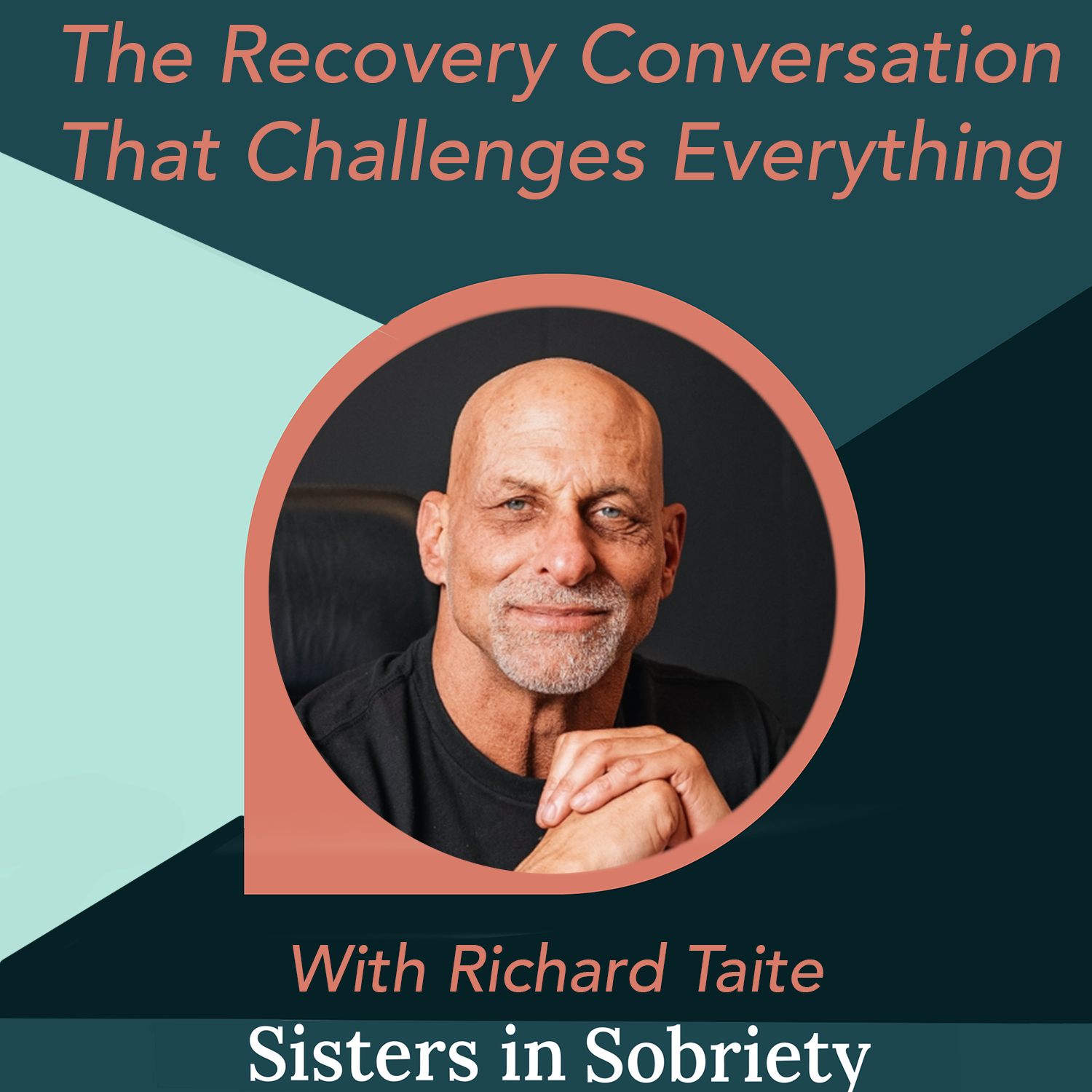 The Recovery Conversation That Challenges Everything With Richard Taite 18.05.2026 52minIn this episode, Sonia sits down with Richard Taite to talk about addiction, trauma, treatment, emotional sobriety, self-love, and what it really takes to build a life that feels worth staying present for. They explore Richard’s decades of experience as an addiction treatment entrepreneur, recovery advocate, founder of Cliffside Malibu and Carrera Treatment, and host of the mental health podcast We’re Out of Time. Richard also opens up about his own history with addiction, childhood trauma, homelessness, long-term recovery, and his controversial view that some people can transcend addiction after doing deep, sustained work. The conversation moves through some big questions: Is addiction always a lifelong identity? What does it mean to truly recover versus simply stop using? How does childhood trauma become the emotional engine behind substance use disorder? Sonia and Richard also discuss AA, therapy, treatment centers, the fentanyl crisis, emotional sobriety, reparenting, and why “getting sober” is only one part of the work. Richard challenges familiar recovery language while still crediting AA as a foundation in his own life, making space for a more nuanced conversation about addiction recovery, identity, and healing. Richard explains why therapy has been central to his recovery, how shame forms in childhood, and why so many people carry a “bad kid” narrative into adulthood. He shares his belief that self-care can become self-esteem, and self-esteem can become self-love—especially when recovery expands beyond abstinence into purpose, parenting, relationships, physical health, and joy. The episode also looks at what effective addiction treatment should include today, why therapeutic fit matters, and how families may need to think differently about drugs, alcohol, opioids, and fentanyl in the current recovery landscape. This is Sisters in Sobriety, the support community that helps women change their relationship with alcohol. Check out our substack for extra tips, tricks and resources. Highlights [00:01:00] Richard corrects the record about his sobriety and explains why he no longer identifies as sober. [00:02:00] Richard describes what he means by “transcending addiction.” [00:03:00] He shares the Michelin-star wine-pairing moment that showed him his relationship with alcohol had changed. [00:04:00] Sonia asks whether his shift happened suddenly or slowly over time. [00:05:00] Richard explains why thriving matters after getting sober. [00:07:00] Sonia asks how his current relationship with alcohol differs from active addiction. [00:08:00] Richard opens up about becoming a father and losing the fantasy of eventually getting loaded again. [00:10:00] Sonia asks whether fatherhood pushed him into deeper emotional sobriety work. [00:11:00] Richard talks about being in therapy for much of his recovery. [00:12:00] Richard shares the therapy moment that helped him understand he was never “a bad kid.” [00:14:00] He explains how childhood shame can keep running the adult life. [00:16:00] Sonia and Richard discuss childhood trauma as a root driver of addiction. [00:18:00] Richard challenges the idea that one first drink automatically explains addiction. [00:19:00] He talks about AA as a foundation while also questioning rigid recovery identities. [00:21:00] Richard explains why he sees AA as support, not treatment. [00:23:00] He connects self-care, self-esteem, and self-love. [00:27:00] Richard explains why treatment should feel like care, not punishment. [00:32:00] Sonia asks how fentanyl changed the addiction treatment landscape. [00:34:00] Richard shares the overdose death that brought him back into treatment work. [00:40:00] Richard describes how he talks to his son about pills, powders, fentanyl, and peer pressure. [00:45:00] Sonia asks what families should look for in a recovery center today. [00:50:00] Richard closes with a message of hope for anyone afraid to ask for help. Richard's Links https://www.instagram.com
Vergelijkbare podcasts


Populair in
Deze podcast verschijnt ook in de podcastlijsten van deze landen.
