
AML Conversations
AML RightSource
0
AML Conversations is dedicated to inform professionals and those interested in anti-money laundering about conversations happening in the government, private sector, and internationally. Throughout the series John Byrne, AML RightSource Vice Chairman, will interview industry experts or participate in live programming or panel discussions related to the industry.
Episoade
-
 Treasury Actions, Digital Asset Risks, and 25 Years After 9/11 11.09.2026 21minThis week, John Byrne and Elliot Berman examine a wave of regulatory and enforcement developments shaping the AML landscape. Topics include new U.S. Treasury sanctions targeting Iran's aviation sector, FinCEN's renewal of Southwest Border Geographic Targeting Orders, guidance on SAR confidentiality, and growing concerns over digital asset scams and cryptocurrency regulation. They also discuss FATF's latest reports on underground banking networks, money-laundering risks in the gambling sector, and AUSTRAC's enforcement actions against remittance and crypto firms. In recognition of the 25th anniversary of 9/11, the conversation turns to the lasting impact the attacks had on anti-money laundering, counter-terrorist financing, and public-private partnerships. John and Elliot reflect on how the Patriot Act transformed financial crime prevention, why collaboration between financial institutions and law enforcement remains essential, and the importance of ensuring future generations understand the role AML professionals play in protecting the financial system.
 -
 Never Forget 25 Years After 9 11, Where We've Been and Where We're Going 11.09.2026 49minTwenty-five years after the attacks of September 11, 2001, John Byrne sits down with Dennis Lormel, who led the FBI's Financial Crimes Program on 9/11 and stood up the Bureau's first Terrorist Financing Operations Section (TFOS) in its aftermath. Dennis shares his firsthand account from inside FBI headquarters that morning, the plan he wrote that night for a centralized financial investigation, and the unprecedented cooperation from banks and government agencies that followed. The conversation covers the warning signs that preceded the attacks, the three-week passage of the PATRIOT Act, the findings of the 9/11 Commission and its terrorist financing monograph, FATF's special recommendations, and the unintended consequences for charities. Dennis closes with an assessment of the threat landscape in 2026 and a call for the proactive, imaginative use of financial intelligence. As this episode marks both the 25th anniversary of 9/11 and the 25th anniversary of counter-terrorist financing, one theme carries throughout: never forget.
 -
 Global Enforcement Actions, Prediction Market Battles, and a New Era of Bank Supervision 04.09.2026 24minJohn Byrne and Elliot Berman discuss a busy week in the AML, sanctions, and compliance landscape. Topics include AUSTRAC's enforcement push under Australia's new AML laws and its investigation into Western Union, fresh guidance on politically exposed persons from the Hong Kong Monetary Authority, and the FBI's Art Crime Team's recovery of Egyptian cultural artifacts. They also examine growing concerns surrounding prediction markets, conflicting federal court rulings involving Kalshi and Polymarket, new Treasury sanctions and proposed Section 311 action against a UAE-based bank, and the OCC and FDIC's significant changes to bank examination standards.
 -
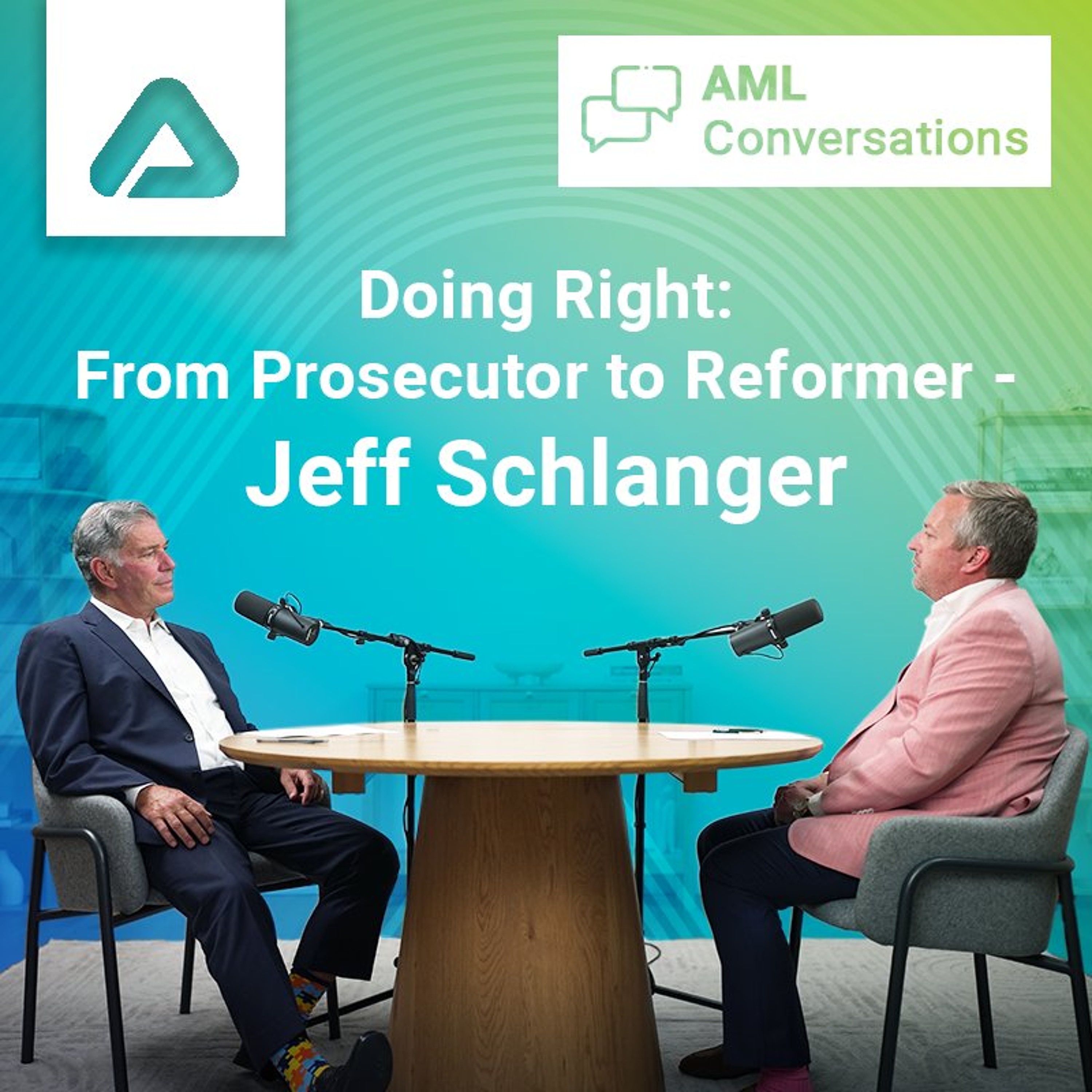 Doing Right - From Prosecutor to Reformer - Jeff Schlanger 03.09.2026 47minIn this episode of AML Conversations, Brad Breslin, President and General Manager, Compliance Solutions at AML RightSource, sits down with Jeff Schlanger, former Manhattan prosecutor, institutional reformer, and author of "Doing Right: From Prosecutor to Reformer — A Journey Through Crime, Corruption, Complacency, and Change." Jeff's career spans four decades on the front lines of accountability. He prosecuted the Westies and helped build the case against John Gotti. He served as the federal monitor overseeing the LAPD consent decree after the Rampart scandal. He later became the NYPD's first Deputy Commissioner for Risk Management, and he founded IntegrAssure to bring collaborative oversight to police departments nationwide, including the Aurora, Colorado consent decree. The conversation explores what happens when institutions designed to do good drift off course, and what it takes to bring them back. Jeff shares the moment he discovered the FBI withheld knowledge of jury tampering during the Gotti trial, why he published his NYPD resignation letter, and how the Mickey Featherstone case taught him that doing right often means acting against your own interests. For financial crime compliance and risk professionals, the lessons translate directly. Jeff draws the line from police reform to the HSBC monitorship, where he and Brad worked together, showing that the methodology of oversight, accountability, and continuous improvement is the same whether the rulebook is an LAPD procedures manual or the FFIEC guidelines. Link to Jeff's book: https://doingright.integrassure.com/doing-right-homepage.html
 -
 How Sanctioned Networks Slip Through - OCCRP's Zack Kopplin on Defense Contracts, Shell Companies, and Golden Passports 02.09.2026 35minInvestigative journalist Zack Kopplin of the Organized Crime and Corruption Reporting Project (OCCRP) joins AML Conversations to discuss his reporting on a Pentagon fuel subcontractor linked to individuals connected to U.S. sanctions targets. He explains how questionable contractors can remain embedded in government supply chains, why subcontractor vetting remains a persistent challenge, and what his investigation uncovered in Iraq and Lebanon. Kopplin also explores the broader fight against corruption and financial crime, including beneficial ownership transparency, anonymous shell companies, defense contracting oversight, and the growing use of "golden passports" by sanctioned actors, fraudsters, and other high-risk individuals seeking to obscure their identities. From tracing hidden ownership structures to uncovering international money laundering networks, this conversation offers a firsthand look at how investigative journalists expose corruption and why transparency remains critical to effective AML, sanctions, and compliance efforts.
 -
 Increased Economic Pressure on Iran, New Opportunities for Syria, and the Fight Against Online Scams 28.08.2026 14minIn this week's episode of This Week in AML, John Byrne and Elliot Berman break down Treasury's renewed sanctions campaign against Iran and discuss what it could mean for global trade, enforcement efforts, and China's role in the sanctions landscape. They also examine the U.S. decision to remove Syria from its State Sponsors of Terrorism list, a move that could pave the way for reintegration into the global financial system and future engagement with FATF standards. Additional topics include Singapore's new Social Media Code of Practice aimed at reducing financial scams on major platforms, Europol's warning about increasingly violent museum heists, updates from OCCRP on corruption and money laundering investigations, and the FDIC's efforts to streamline the deposit insurance application process for new banks. Plus, a look at recent anti-corruption research from the Basel Institute on Governance and upcoming AML-focused educational events.
 -
 Corporate Transparency Rollback, Ireland's First AML Strategy, and Trump's Bank Charter 21.08.2026 24minIn this episode of This Week In AML, Joe McNamara fills in for Elliot Berman and joins John Byrne for a packed week of AML news on both sides of the Atlantic. The conversation opens with the fallout from Treasury and FinCEN's final rule eliminating domestic beneficial ownership reporting under the Corporate Transparency Act, then moves to Transparency International's guidance for EU member states that have not yet published a national anti-corruption strategy. Ireland, one of the six late adopters named in that report, has now released its first national AML/CFT/CPF strategy, and John walks through its five strategic goals and three pillars ahead of AMLA supervision and FATF evaluation. The hosts also cover the UN Security Council's 38th Monitoring Team report on ISIL, AMLA's warning that money laundering in the EU property sector could deepen the housing crisis, and the OCC's conditional approval of a national trust bank charter for World Liberty Trust Company, along with the sharp objections raised by Senator Elizabeth Warren and others over conflicts of interest. Stateside, they close on Treasury: an unreleased internal report on the risks of an AI bubble, and the department's public request for comment on GENIUS Act implementation. John rounds out the episode with a $165 million crypto Ponzi indictment reported by OCCRP. Links Referenced Transparency International, Good Practices for National Anti-Corruption Strategies in EU Member States: https://knowledgehub.transparency.org/helpdesk/good-practices-for-national-anti-corruption-strategie... Ireland Department of Finance, Ireland's First National Anti-Money Laundering Strategy: https://www.gov.ie/en/department-of-finance/press-releases/t%C3%A1naiste-and-minister-for-finance-si... UN Security Council, 38th Report of the Analytical Support and Sanctions Monitoring Team (S/2026/651): https://docs.un.org/en/S/2026/651 AML Intelligence, AMLA Urges Crackdown on Money Laundering in EU Property Sector: https://www.amlintelligence.com/2026/08/news-amla-urges-crackdown-on-money-laundering-in-eu-property... OCC, Conditional Approval for World Liberty Trust Company (CD 1385): https://www.occ.gov/topics/charters-and-licensing/interpretations-and-decisions/2026/cd1385.pdf NOTUS, Treasury Internal Report Warns of the Dangers of an AI Bubble: https://www.notus.org/economy/treasury-internal-report-warning-dangers-ai-bubble?utm_source=content_... U.S. Treasury, Request for Public Comment on GENIUS Act Implementation: https://home.treasury.gov/news/press-releases/sb0605
 -
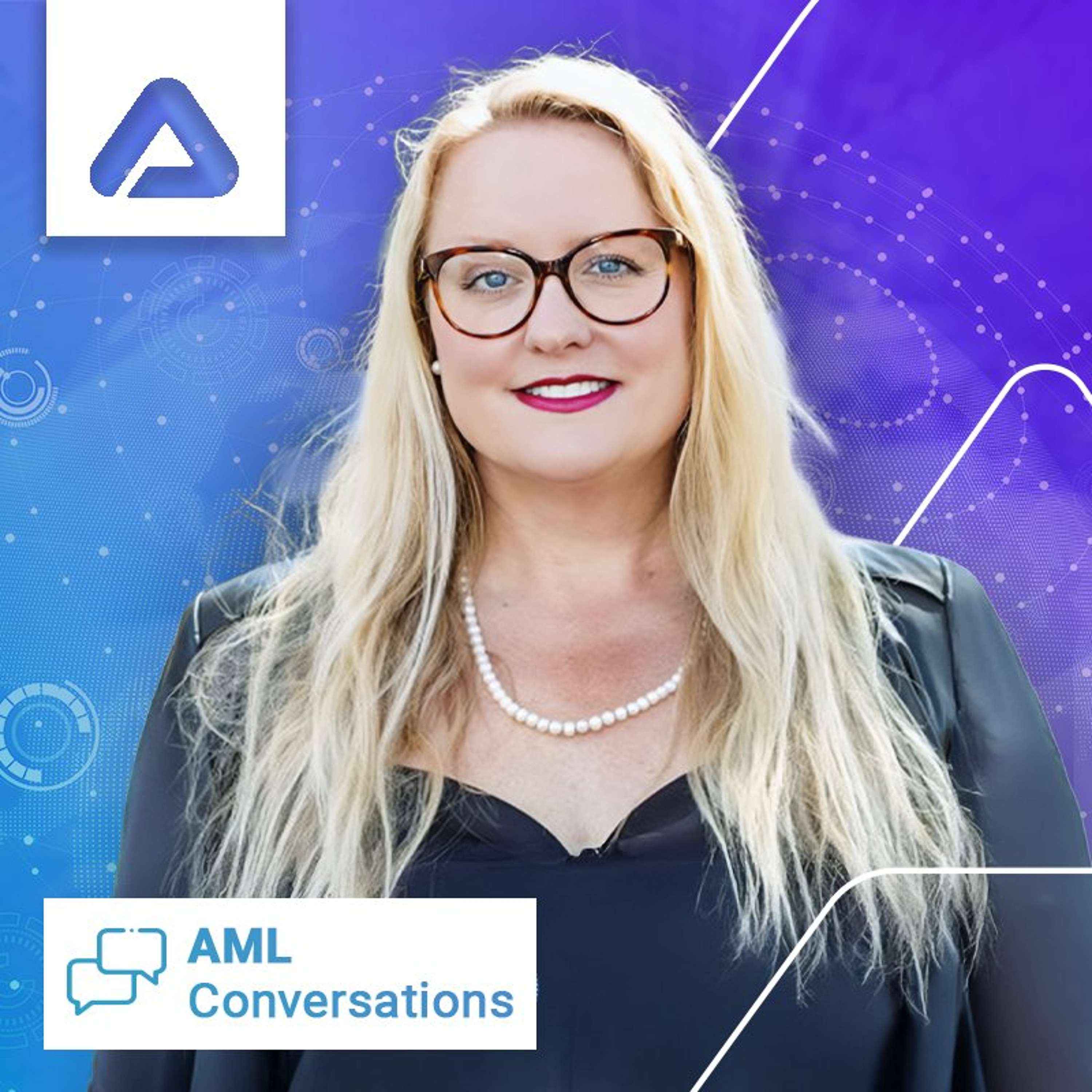 AML Conversations - Monthly Chat with Sarah Beth Felix 20.08.2026 32minJohn Byrne is joined by Sarah Beth Felix, author of Dirty Money Weekly, for their monthly conversation on financial crime developments. They start with FinCEN's final rule ending Corporate Transparency Act reporting and what it means in practice: the detection burden for shell companies shifts back to financial institutions, the CDD rule remains in force, and beneficial ownership data belongs in SAR backup documentation to support law enforcement. Sarah Beth shares practical red flags for spotting shell companies, from formation mill documents to companies with no online presence and unexplained revenue. The conversation then turns to the Wise enforcement action and why a clean exam history is the wrong benchmark for a compliance program, including the OCC's pointed finding that leadership lacked financial crime expertise at the board level. They also discuss the Capital One litigation and the safety risks of demands to identify individual investigators, and close on the operational obstacles AML teams face in responding to the executive order on credit risk and illegal immigration, where citizenship indicators are buried across lending and deposit systems that financial crime teams rarely see.
 -
 FinCEN Ends BOI Reporting, Fraud Enforcement Expands, and Global Compliance Shifts 14.08.2026 15minIn this episode of This Week in AML, Elliot Berman and John Byrne break down FinCEN's final rule eliminating beneficial ownership reporting requirements for millions of small businesses and discuss what the move means for AML compliance, transparency, and financial crime prevention. The conversation also explores the renewal of FinCEN's Minnesota Geographic Targeting Order and the growing debate over whether the U.S. is experiencing a true fraud crisis, including insights from Jonathan Rusch's recent analysis of federal fraud enforcement efforts. Beyond the U.S., the hosts examine OCC concerns that led to the rejection of a European fintech's national bank charter application, the Luxembourg FIU's new authority to freeze fraud-linked payments, developments surrounding European beneficial ownership registries, Russia's reported sanctions-evasion payment network, and Australia's enforcement action against a major cryptocurrency ATM operator. The episode concludes with a discussion of a new de-risking resource for nonprofits.
 -
 The Largest Broker-Dealer AML Penalty Ever - UBS, FinCEN Leadership Changes, and the Future of SAR Reporting 07.08.2026 18minThis week on This Week in AML, John Byrne and Elliot Berman examine FinCEN's record-setting $125 million enforcement action against UBS, the largest civil money penalty ever imposed against a broker-dealer for Bank Secrecy Act violations. They discuss what made the case significant, the consequences of repeated compliance failures, and the lessons financial institutions should take from the enforcement action. The conversation also covers FinCEN Director Andrea Gacki's departure for Citibank and what the appointment of Acting Director Jenna Casanova could mean for future enforcement priorities. John and Elliot then explore Senator Ron Wyden's report on financial institutions' handling of Jeffrey Epstein-related accounts, including proposed changes to suspicious activity reporting requirements and concerns about SAR confidentiality. They also review Capital One's defense of account closures tied to AML obligations and the broader debate surrounding claims of "debanking." Internationally, the hosts discuss the FCA's planned overhaul of transaction reporting requirements in the UK, ongoing challenges in accessing beneficial ownership registries across the European Union, and Transparency International's push for stronger global anti-corruption measures.
 -
 FinCEN's Fraud Focus, Corruption Questions, and Crypto Compliance Challenges 31.07.2026 17minIn this episode of This Week in AML, John Byrne and Elliot Berman unpack several significant developments across the AML, sanctions, fraud, and compliance landscape. They begin with the U.S. Senate's overwhelming bipartisan vote to advance new Russia and Iran sanctions legislation, then turn to FinCEN Director Andrea Gacki's recent congressional testimony, including her emphasis on fraud prevention, BSA modernization, SAR guidance, and the industry's ongoing uncertainty about AML priorities and effectiveness standards. The conversation also explores Transparency International's 2025 achievements in advancing anti-corruption reforms worldwide and raises important questions about whether corruption will remain a formal U.S. AML priority. John and Elliot review FinCEN's new alert on financial student aid fraud, discuss the continued role of shell companies in fraud schemes, and examine a House Financial Services Committee report on scams and fraud. Additional topics include Treasury's review of the SDN List, the growing industry around sanctions delisting petitions, the closure of crypto exchange BitMEX despite presidential pardons for its founders, the OCC's denial of Wise US's national trust charter application due to AML compliance concerns, and new reporting linking crypto-to-cash storefronts to money laundering activity.
 -
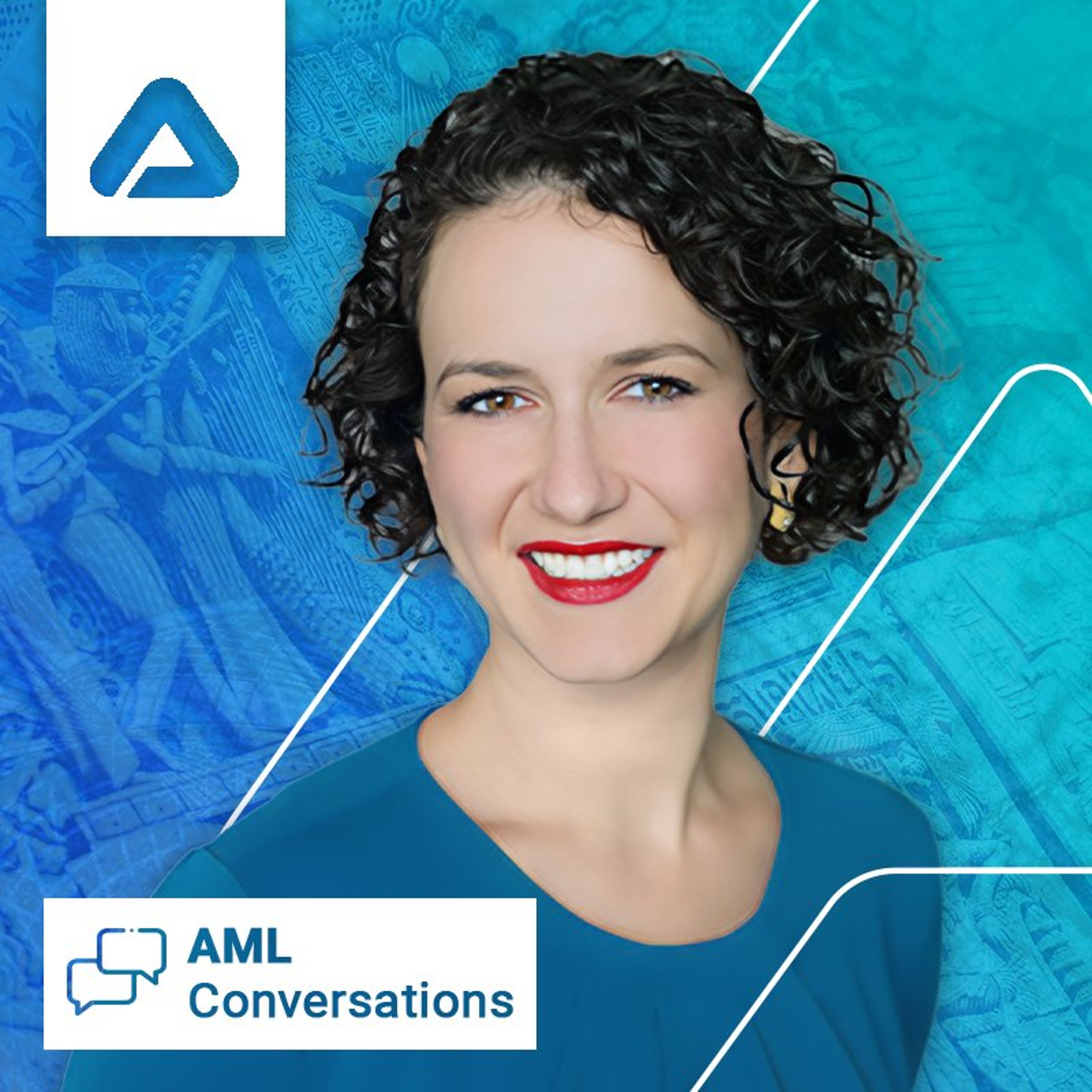 Art, Antiquities, and Financial Crime - Protecting Cultural Heritage in a Global Threat Landscape with Tess Davis 29.07.2026 31minIn this episode of AML Conversations, host John Byrne welcomes Tess Davis, Executive Director of the Antiquities Coalition, for a timely discussion on the intersection of cultural heritage crime and financial crime. From the looting of museums and archaeological sites in conflict zones such as Ukraine and Sudan to the exploitation of the global art market for money laundering and sanctions evasion, Tess explains why antiquities trafficking is far more than a cultural issue—it is a financial crime issue. The conversation explores the Rome Statement on Art Market Integrity, the growing role of law enforcement agencies like the Manhattan District Attorney's Antiquities Trafficking Unit, and bipartisan efforts in the United States to bring the art market under the AML regulatory framework. Tess also shares real-world examples of how stolen artifacts are laundered into legitimate collections and outlines key red flags financial institutions should understand when assessing risks tied to art and antiquities transactions. This episode offers valuable insights into a rapidly evolving threat landscape and the collaborative efforts underway to combat it.
 -
 Southeast Asia’s Criminal Economy, Crypto Crime Risks, and AMLA’s Compliance Wake-Up Call 24.07.2026 24minThis week on This Week in AML, Elliot Berman and Joe McNamara examine a series of reports and regulatory updates highlighting the growing sophistication of global financial crime. The discussion begins with a new United Nations Office on Drugs and Crime (UNODC) threat assessment that details how Southeast Asia has become a hub for interconnected criminal ecosystems, with organized crime groups increasingly offering “fraud as a service” at enterprise scale. Elliot and Joe explore how criminal organizations are evolving from trafficking goods to operating highly sophisticated criminal services businesses. They also discuss FATF’s latest targeted update on virtual assets and VASPs, including concerns about stablecoins, regulatory gaps, and ongoing challenges in implementing the Travel Rule across jurisdictions. The conversation highlights how organized crime networks are leveraging crypto assets to move illicit funds globally. The episode then turns to new guidance from the Wolfsberg Group on managing risks associated with non-bank payment service providers, AMLA’s growing focus on vulnerabilities in the non-financial sector, and ongoing concerns about real estate as a money-laundering vehicle.
 -
 Russia Sanctions Resurface, New Lending Guidance, and Europol’s EU Terrorism Report 17.07.2026 18minIn this week's episode of This Week in AML, John Byrne and Elliot Berman discuss the renewed push for a bipartisan U.S. sanctions bill targeting Russia and compare its approach to the European Union's existing sanctions framework. They also examine new guidance from federal banking agencies on lending to non-work authorized. The conversation explores a notable difference in the Federal Reserve's proposed AML program rule, highlights key findings from Europol’s latest EU Terrorism Situation and Trend Report, and reviews a Transparency International report examining the illicit finance risks associated with cryptocurrency and stablecoins. John and Elliot also discuss developments involving a high-profile IRS lawsuit and Florida's proposed designation of certain organizations as terrorist entities.
 -
 Sanctions, Crypto Workarounds, AI Oversight, and the Future of Financial Crime Compliance 10.07.2026 17minIn this week's episode of This Week in AML, John Byrne and Elliot Berman unpack a wide-ranging set of developments shaping the financial crime compliance landscape. They discuss the evolving geopolitical environment, including sanctions activity involving Iran, Russia, and North Korea, and examine new reports highlighting how cryptocurrencies are being used to evade international sanctions. The conversation also explores the rise and risks of meme coins, recent SEC efforts to combat retail investor fraud, FINRA's independent review of its enforcement program, and the Federal Reserve's proposed AML program rule. John and Elliot further discuss policymakers' growing interest in AI governance, including questions surrounding financial crime prevention, customer identification, and responsible adoption of emerging technologies. Whether you're focused on AML, sanctions, fraud prevention, regulatory policy, or AI in compliance, this episode delivers timely insights on the trends reshaping financial crime risk management.
 -
 Anti-Corruption at a Crossroads: Enforcement, Risk, and the Future of Financial Integrity with Jonathan Rusch 07.07.2026 46minIn this episode of AML Conversations, host John Byrne sits down with longtime DOJ prosecutor and anti-corruption expert Jonathan Rusch to unpack a rapidly shifting enforcement landscape. From the scaling back of DOJ anti-corruption resources to the growing use of presidential pardon power in bribery cases, Rusch offers a candid assessment of what these changes signal for accountability in the U.S. and globally. He also breaks down why anti-corruption still matters—highlighting its economic, political, social, and legal impacts—and what happens when those guardrails weaken. Drawing on his experience at the Justice Department and in the private sector at a major global bank, Rusch shares practical insights for financial institutions navigating today’s environment: balancing deregulation pressures, evolving expectations around “de-banking,” and the enduring realities of laws such as the FCPA. The conversation closes on a note of cautious optimism—exploring what resilience looks like for compliance professionals, regulators, and institutions committed to maintaining integrity in uncertain times.
 -
 FATF Priorities, Crypto Regulation Shifts, and Emerging Financial Crime Risks 03.07.2026 16minIn this week's episode of This Week in AML, John Byrne and Elliot Berman examine major developments shaping the financial crime compliance landscape. They discuss newly released presidential financial disclosures, FATF's priorities under new President Giles Thomson, and a new FATF report on terrorist financing risks tied to social media, messaging apps, and streaming platforms. The conversation also covers the Rome Statement on Art Market Integrity, Binance's licensing challenges under the EU's MiCA framework, FinCEN and FBI actions targeting cartel-linked fuel theft and human smuggling networks, and the UK's evolving crypto asset regulatory regime. Additional topics include Europol's latest assessment of organized crime networks, the SEC's enforcement action against Merrill Lynch for SAR reporting failures, and the potential business and regulatory implications of a recent U.S. Supreme Court decision affecting independent federal agencies. The episode concludes with a preview of upcoming AML RightSource content, including a discussion on AI and financial compliance.
 -
 FATF’s Fraud Focus, Stablecoin Scrutiny, and the Push for Real AML Effectiveness 26.06.2026 21minIn this episode of This Week in AML, Elliot Berman and John Byrne break down key developments from the latest FATF plenary—highlighting a growing global emphasis on fraud, stronger public-private collaboration, and updated guidance on payment transparency and targeted sanctions. They also explore the Wolfsberg Group’s refreshed framework for a truly effective risk-based approach, centered on proportionality, prioritization, and outcomes—not just compliance for compliance’s sake. Back in the U.S., the conversation turns to the evolving regulatory landscape around stablecoins, including new proposed rules extending KYC and CIP requirements—and concerns about whether they go far enough to address illicit finance risks. It’s a wide-ranging discussion that reinforces a central theme: effectiveness—not just effort—is becoming the defining standard in AML.
 -
 FinCEN Expands 314(b), Global AML Crackdowns, and Rising Regulatory Tensions 19.06.2026 17minThis week on This Week in AML, Elliot Berman and John Byrne unpack major developments shaping the financial crime landscape. They discuss FinCEN’s guidance expanding Section 314(b) information-sharing to include fraud and what it means for financial institutions. The conversation also covers new CFPB guidance on lending and immigration-related risks, increased IRS scrutiny of nonprofits, and enforcement actions from the UK and New Zealand. Plus, they explore growing concerns about the future of U.S. anti-financial crime leadership, the challenges of beneficial ownership transparency, and ongoing investigations tied to high-profile cases.
 -
 What Customers Really Want - Evolving Expectations 17.06.2026 16minIn this episode of Third Party Risk Perspectives, host Elliot Berman sits down with Christopher Sindik of Blue Umbrella to explore what clients are truly looking for in today’s third-party risk management and due diligence landscape. From the growing demand for scalable technology platforms to increased reliance on ongoing monitoring and managed services, organizations are rethinking how they build and maintain effective compliance programs—often while being asked to do more with fewer resources. The conversation also highlights the rising importance of speed, with a notable increase in expedited due diligence requests as companies look to move faster without sacrificing risk oversight. Tune in for practical insights into how customer expectations are shifting—and what that means for building more efficient, responsive, and resilient risk management programs.
Podcasturi similare


Popular în
Acest podcast apare și în topurile de podcasturi din aceste țări.


