
iwon™ podcast with Michael J Thomas
Michael J Thomas
0
IWON (It Wasn't Over Night) is a long-form podcast for ambitious founders, featuring honest, in-depth conversations with entrepreneurs, operators, and growth leaders who have built, scaled, or exited tech companies. Hosted by marketing strategist and coach Michael J. Thomas, each episode explores early mistakes, fundraising realities, product decisions, sales lessons, mental health, and resilience. The podcast aims to reveal the real stories behind building successful businesses, from first customers to major exits.
Episoade
-
 This Was for the Founders From Day One - A Sneak Peek into What's Coming 01.10.2026 6minFrom day one, iwon™ has been for founders. The people thinking about starting, the ones stuck in the messy middle, the founders trying to grow, and even those who have achieved what they thought they wanted and are now asking, “What next?”In this short Season 2 teaser, Mikey looks back at the brilliant guests and lessons from Season 1, from sales, cash flow and product-market fit to AI, purpose, resilience and the reality behind so-called overnight success.And, more importantly...Season 2 is coming.More founders. More mistakes. More lessons. More honest conversations about what it actually takes to build something.What We Have Accomplished Already (Don't Miss This Either)Season 1 of iwon™ brought together founders, operators and business leaders at very different stages of the journey.In this episode, Mikey looks back at some of the biggest lessons from:Sarah EgglestonLeaving the 9-to-5, starting before you're ready and building something of your own.Tolu SalamiLeaving Google and Accenture, validating an idea and talking to customers before disappearing off to build.Scott Byrne-FraserHow to work out whether you're actually solving the right problem for your customers.Alex Sullivan-LepaffeWhy hiring a salesperson isn't a magic answer to your growth problems.Mark BlakemoreCash runway, financial discipline and surviving the dangerous growth “death zone”.Scott TruittPurpose, fulfilment and what happens when conventional success still leaves you asking, “Is this it?”Elizabeth DodsonFourteen years building HomeZada and the truth behind the phrase “overnight success”.Aatish ThakerarAI, leadership, resilience and the things technology still can't replace.Sachin GoyalWhy he spent 10 months building alongside one customer before charging them a penny.Christian ZiglerBuilding, scaling and exiting businesses, raising money, working with companies including Netflix and PayPal, and the lessons founders normally learn the hard way.Different founders.Different businesses.Different stages.That was always the point.This was for the founders from day one.Season 1 has already reached more than 85,000 people across YouTube, LinkedIn and other platforms, with updated numbers still to come.And now we're getting ready to go again.SEASON 2 IS COMINGMore founders.More brilliant stories.More mistakes.More lessons.And more of the bits of building a business that usually get edited out of the success story.If you've listened, watched, shared an episode, left a review or sent Mikey a message during Season 1, thank you.We're just getting started.WATCH & FOLLOW IWON™YouTube:https://www.youtube.com/@realmjtApple Podcasts:https://podcasts.apple.com/gb/podcast/iwon-podcast-with-michael-j-thomas/id1882021798Spotify:https://open.spotify.com/show/629GCCMNKOJNblEtz99YbpWebsite:https://iwonpodcast.com/ABOUT IWON™iwon™ stands for It Wasn't Overnight.Most business podcasts focus on the success at the end.We're interested in everything that happened in between.The mistakes. The pivots. The doubts. The decisions that worked. The ones that didn't. And the lessons founders usually have to learn the expensive way.No hype.No overnight-success rubbish.Just honest conversations about what it actually takes to build something.DISCLAIMERThe views expressed in the iwon™ podcast are those of the individual speakers and do not necessarily reflect the views of the producers or associated organisations.This podcast is provided for informational and entertainment purposes only and should not be considered financial, legal, investment or other professional advice. Always conduct your own research and seek appropriately qualified professional advice before making decisions for yourself or your business.The iwon™ Podcast is produced by DARWIN™ Works, a trading name of BlueEyed Digital Marketing Ltd.iwon™ and DARWIN™ are registered trademarks.© BlueEyed Digital Marketing Ltd 2026.
 -
 Buffer, Dropbox and Superhuman -The Exact Tactics That Drove Rapid Growth - iwon podcast - episode 14 17.09.2026 21minI explain how Buffer, Dropbox, and Superhuman validated their ideas before they scaled. I break down the exact tests they ran so you can apply clear steps to validate your product or feature. I show how Buffer asked for paying signals, how Dropbox used a simple explainer to make the result visible, and how Superhuman focused on the right users and waited for strong commitment. We distill these lessons into a three step plan to test the problem, the promise, and the path quickly. I provide a worksheet and a practical playbook to help founders run small tests that give clear signals before building more features.Takeaways:I showed that you must test whether people will move toward paying before building full features.I demonstrated how Dropbox used a short explainer video and a landing page to make the outcome visible and easy to understand.I argued that Superhuman succeeded by focusing on one clear problem, finding the right users, and refusing to scale prematurely.We recommended designing the smallest test that can give a clear signal in a week or ten days before adding more work.I urged founders to decide whether to test the problem, the promise, or the path first and to use simple commitment signals like clicks, waitlists, or pilot requests rather than building unvalidated features.Companies mentioned in this episode:BufferDropboxSuperhumanTwitterXFacebookLinkedInPinterestInstagramGoogleGoogle DriveGeminiChatGPTClaudeEnjoyed This Episode?If you found this conversation valuable, follow the show so you don’t miss future episodes with founders and growth leaders building in SaaS and tech.Leaving a 5-star review on Apple Podcasts or Spotify helps more aspiring entrepreneurs and founders in the trenches right now to discover the show. And, it supports the growth of the IWON™ community.About the HostMichael J. Thomas is a marketing strategist and Cambridge-accredited coach. He founded DARWIN™ Works Marketing in 2011, helping SaaS and tech companies overcome growth hurdles and build sustainable momentum.Learn more about Michael and DARWIN™ here:https://darwinworks.comAbout IWON™IWON™ (It Wasn’t Over Night) is a long-form podcast exploring what it really takes to build and scale a successful technology company.Find out more about the podcast: https://iwonpodcast.comInterested in being a guest? https://iwonpodcast.com/guests/Want to sponsor IWON™ and help the community thrive? https://iwonpodcast.com/sponsors/Michael J ThomasCopyright 2026 - iwon and DARWIN are registered trademarks. This podcast and those trademarks are wholly owned by, property of, and produced by - and is a DARWIN Works Production - a trading name of BlueEyed Digital Marketing Ltd.
 -
 AI + What Every Founder Needs to Know Now | iwon podcast | Episode 13 03.09.2026 48minAs you'll know, there is a ridiculous amount happening in tech, software and AI right now.As a founder, it can feel impossible keeping up.That's why Michael J. Thomas sat down to digest it all and share it with you.To save you hours sifting through to find the truth online.TLDR: AI investment and revenue are accelerating, new regulation is taking effect, SaaS pricing is being challenged, and small companies are still finding ways to attack enormous incumbents. Michael digests the stories, goes back to the original sources and asks the question founders actually care about: so what does this mean for my business?Full show notesAI is booming. Anthropic is reportedly generating revenue at an extraordinary rate. The European Central Bank is asking whether AI valuations are beginning to resemble the dot-com era. The EU AI Act has new transparency obligations in force. The UK is examining its reliance on American frontier AI models. And a $21B chip startup founded by three people in their mid-twenties is taking on Nvidia.Those are the headlines. This episode is about the useful bit: what they mean for founders and CEOs.Michael breaks down the news in plain English, then tests some of the startup advice founders hear constantly and finishes with practical questions that come up in his consulting work and conversations with founders.The core promise is simple: reliable sources, no BS, the TLDR, Michael’s take, and why it matters to you.TOPICS COVERED• AI boom versus AI bubble• Anthropic’s reported $65B annual revenue run rate and what it does — and does not — prove• Why AI hype is not the same as product-market fit or a business model• Why the EU AI Act can still matter outside the EU• AI transparency, enterprise buyers and trust• The strategic risk of relying on one AI provider• Model agnosticism and having a backup plan• How AI could change SaaS seat pricing, usage pricing and margins• Etched versus Nvidia and what underdogs can learn from changing markets• Fact or Fiction: raising with an MVP, solving your own problem, founder audiences, niche SaaS and pre-selling• Founder Hot Seat: sales leadership, crowded markets, technical founders selling, and marketing versus salesiwon™ stands for It Wasn’t Overnight. Michael created the show to get beyond polished success stories and understand what really happens between the beginning and the apparent success at the end.iwon™ conversations mentionedSachin Goyal — ClarityLoop: https://youtu.be/FJqy1H3UBIY?si=vcwoZydODSNdstBnBeth Dodson — HomeZada: https://youtu.be/NbJUs4Ib3EE?si=Y8e2gbYwpKthaKv0Aatish Thakerar — Pedagogue: https://youtu.be/tAS-ndpYk7Q?si=g32R0ChpifQZ0ORgAlex Sullivan-Lepaffe — The Salespeople: https://youtu.be/q7gbrmvsius?si=d_suyY-_-UfzV7xSMark Blakemore — Home Run Finance: https://youtu.be/iU6ONslsshw?si=vzQgqaf47Dnc9LnrOriginal sources and further readingEuropean Central Bank — The AI boom: rational enthusiasm or the next dot-com bubble?: https://www.ecb.europa.eu/press/blog/date/2026/html/ecb.blog20260817~754a8a4418.en.htmlReuters — Anthropic IPO valuation hinges on $190–200bn 2028 revenue forecast: https://www.reuters.com/business/anthropic-ipo-valuation-hinges-190-200-billion-2028-revenue-forecast-sources-say-2026-08-15/Reuters — Anthropic revenue run rate tops $65bn: https://www.reuters.com/technology/anthropic-revenue-run-rate-tops-65-billion-source-says-2026-08-17/European Commission — Article 50 transparency guidelines: https://digital-strategy.ec.europa.eu/en/library/guidelines-transparency-obligations-providers-and-deployers-ai-systemsEuropean Commission — Article 50 FAQ: https://digital-strategy.ec.europa.eu/en/faqs/transparency-obligations-under-article-50-ai-actFinancial Times — UK examines economic hit from loss of access to frontier AI models: https://www.ft.com/content/418e0159-d2d1-4432-a7b3-de0cc446ef08McKinsey — Upgrading software business models to thrive in the AI era: https://www.mckinsey.com/industries/technology-media-and-telecommunications/our-insights/upgrading-software-business-models-to-thrive-in-the-ai-eraMcKinsey — Is that AI agent worth it? Agentic economics and the modern operating model: https://www.mckinsey.com/capabilities/quantumblack/our-insights/is-that-ai-agent-worth-it-agentic-economics-and-the-modern-operating-modelWall Street Journal — A $21 Billion 'Kids in Chips' Startup Is Scooping Up Nvidia Talent: https://www.wsj.com/tech/ai/a-21-billion-kids-in-chips-startup-is-scooping-up-nvidia-talent-4d099f12Carta — State of Pre-Seed, Q2 2026: https://carta.com/uk/en/data/state-of-pre-seed-q2-2026/CRV — Series A Metrics VCs Expect in 2026: https://www.crv.com/content/series-a-metrics-vcs-expectFirst Round Review — Productboard’s Path to Product-Market Fit: https://review.firstround.com/productboards-path-to-product-market-fit/LinkedIn + Edelman — How B2B Thought Leadership Can Persuade Hidden Buyers: https://www.linkedin.com/business/marketing/blog/research-and-insights/b2b-thought-leadership-influence-hidden-buyersSaaStr — Vertical SaaS and high net retention with Mangomint: https://www.saastr.com/vertical-saas-and-high-net-retention-revenue-with-mangomint/First Round Review — Material Security’s Path to Product-Market Fit: https://review.firstround.com/material-securitys-path-to-product-market-fit/Connect with Michael / iwon™ / DARWIN™Michael J. Thomas on LinkedIn: https://www.linkedin.com/in/realmjt-in/DARWIN™ Works: https://darwinworks.com/iwon™ podcast: https://iwonpodcast.com/Apply to be an iwon™ guest: https://iwonpodcast.com/guests/YouTube @realmjt: https://www.youtube.com/@realmjtDisclaimerThis episode contains news commentary, research summaries and personal opinion. The opinions and...
 -
 AI, Jobs and Power: Musk, Altman and Yang on What Comes Next - iwon podcast - Summer Series with Michael J Thomas 06.08.2026 22minArtificial Intelligence (AI) has fundamentally transformed the landscape of business, provoking critical inquiries regarding its governance and implications.The BIG question is, "Who holds the keys?"As I delve into the recent advancements made by corporate giants such as Microsoft, ServiceNow, SAP, and Capgemini, it becomes evident that substantial financial investments are being made to harness AI's potential for tangible business outcomes.Simultaneously, influential figures like Elon Musk, Sam Altman, and Andrew Yang have different perspectives on the future trajectory of AI, prompting us to reflect on the broader societal implications of these technologies.This discourse aims to engage listeners in contemplating the profound questions surrounding AI's role in our lives, rather than prescribing definitive conclusions.This week’s episode brings to the forefront the intricate relationship between technological advancement and societal impact, particularly in the realm of AI. As businesses rush to integrate AI into their operations, the conversation extends beyond technological capabilities to encompass ethical and economic ramifications.The insights from thought leaders like Musk, Altman, and Yang provoke a deeper investigation into the balance of power in an increasingly automated world. Musk's vision of a future where work becomes optional contrasts sharply with the practical realities faced by employees today, raising essential questions about income distribution and the role of government in this transition.Recent high profile security breaches involving AI systems, the need for vigilant oversight in the deployment of AI technologies cannot be overstated.Let's explore it all together.Takeaways:Artificial Intelligence has the potential to transform product development and customer service significantly, yet it prompts critical inquiries regarding control and oversight.The financial investments by corporations such as Microsoft, ServiceNow, and SAP reveal a robust commitment to integrating AI into existing operational frameworks, marking a shift towards practical applications.Elon Musk, Sam Altman, and Andrew Yang present different perspectives on the implications of AI, urging us to consider both opportunities and ethical challenges as we advance.The recent incident involving an autonomous AI agent underscores the necessity for stringent controls and ethical guidelines in the deployment of advanced technologies.As businesses increasingly leverage AI, the focus must not solely be on technological capabilities but also on the broader socioeconomic effects that may arise, particularly regarding employment.The ongoing discourse surrounding AI necessitates a collective examination of power dynamics, ownership, and the responsibilities of technology creators to society at large.Companies mentioned in this episode:MicrosoftUnileverNovo NordiskServiceNowSAPCapgeminiOpenAIHugging FaceModal LabsDremioPrior LabsElon MuskSam AltmanAndrew YangMartin FordReports, interviews and sources mentioned:Elon Musk interviewed by The EconomistSam Altman on AI and the “jobs apocalypse”Andrew Yang and Martin Ford, “The Robots Are Coming for Your Job”.Microsoft launches Microsoft Frontier CompanyServiceNow Q2 2026 results and highlightsSAP trims its 2026 profit outlookCapgemini raises its growth target as businesses prepare for AIOpenAI agent security incidentHugging Face security incident disclosureCloudflare on the changing scope of internet usageThis podcast represents personal commentary and opinion based on publicly available reporting and sources.It is intended to encourage open discussion, not to provide financial, legal, investment or technology advice. Opinion and freedom of expression are protected under the law. Please review the original sources and make up your own mind.Enjoyed This Episode?If you found this conversation valuable, follow the show so you don’t miss future episodes with founders and growth leaders building in SaaS and tech.Leaving a 5-star review on Apple Podcasts or Spotify helps more aspiring entrepreneurs and founders in the trenches right now to discover the show. And, it supports the growth of the IWON™ community.About the HostMichael J. Thomas is a marketing strategist and Cambridge-accredited coach. He founded DARWIN™ Works Marketing in 2011, helping SaaS and tech companies overcome growth hurdles and build sustainable momentum.Learn more about Michael and DARWIN™ here:https://darwinworks.comAbout IWON™IWON™ (It Wasn’t Over Night) is a long-form podcast exploring what it really takes to build and scale a successful technology company.Find out more about the podcast: https://iwonpodcast.comInterested in being a guest? https://iwonpodcast.com/guests/Want to sponsor IWON™ and help the community thrive? https://iwonpodcast.com/sponsors/Michael J ThomasCopyright 2026 - iwon and DARWIN are registered trademarks. This podcast and those trademarks are wholly owned by, property of, and produced by - and is a DARWIN Works Production - a trading name of BlueEyed Digital Marketing Ltd.
 -
 Amazon, Meta and Uber + Founders Building with AI | iwon podcast Summer Sessions with Michael J Thomas | Episode 11 23.07.2026 17minAI has made it seem astonishingly easy to build software.But what information should you pay attention to as a founder?As it's summer time, we felt like it would be a good time share some stories from big tech so you can learn from it all. Don't worry - normal guests and episodes will resume after the holidays (some great ones to come).The aim of this episode is to provide you with what you need to know as a founder. So that you apply some of those lessons to how you plan to use AI to improve your business.Here's the TLDR version for you:A founder recently showed Michael a product he had created using AI in just nine days. It worked. It looked good. But what would happen when a paying customer encountered a problem nobody had anticipated? How would they even know where to begin?That is where a promising demonstration has to become a dependable product.In this first iwon™ Summer Session, Michael J. Thomas explores with you, what Amazon, Uber, Meta and Humata Health shared on AI. The goal is to share useful lessons for founders and AI.Amazon’s experience raises important questions. Uber’s spending demonstrates why producing more code does not necessarily create more customer value. Meta’s enormous infrastructure investment shows that even the largest technology companies must find sustainable business models in the AI era. Humata Health explains why the difficult “final mile” of security, compliance, integration and support still matters.AI has made building easier.Responsibility has not changed.So put your feet up, enjoy the summer and let Michael gently narrate what is happening in AI. Think Bob Ross (how Michael sounds, according to his friend), but with fewer happy little trees and considerably more enterprise software.In this episodeWhy a working AI prototype is not necessarily a dependable productThe difference between vibe coding and responsibly assisted developmentWhat Amazon’s experience with its Kiro coding agent can teach foundersWhy human review and accountability still matterHow Uber reportedly exhausted its annual AI coding budget in four monthsWhy producing more code does not automatically create more customer valueMeta’s projected investment of up to $145 billion in 2026Why Meta is exploring ways to commercialise its AI infrastructureHumata Health’s warning about the difficult “final mile”How AI is changing the build-versus-buy decisionWhy security, compliance, reliability and support can become a competitive moatThree questions every founder building with AI should answerTimestamps00:00 Welcome to the iwon™ Summer Sessions01:09 The AI product built in only nine days01:45 A demonstration is not a dependable product03:47 What Amazon can teach founders about AI-assisted development04:43 Kiro and the reported AWS service interruption05:17 Amazon’s response and the return of mandatory peer review06:25 Why more code does not automatically mean more value06:42 Uber’s AI spending and the customer-value question08:01 Meta’s investment of up to $145 billion08:29 Could Meta turn its infrastructure into another business?10:02 Humata Health and the difficult final mile11:57 How AI is changing the build-versus-buy decision13:03 Why Gartner expects many agentic AI projects to be cancelled13:42 Trust as a competitive advantage14:04 The questions enterprise buyers will increasingly ask15:07 Three questions for founders building with AI16:01 Building is becoming easier, but responsibility is not16:43 Final thoughts from MichaelThree questions for foundersWhat would happen if a customer stress-tested your product tomorrow?Are the depth, reliability and value of your product clear to prospective buyers?Are you creating enough genuine value to make customers want to stay when a competitor can build something similar?Sources and further readingMichael J. Thomas: “Building AI is easy. But is there a business around it?”Computing UK: AWS blames user error, not AI, for cloud outage caused by AIFinancial Times: Amazon service was taken down by AI coding botThe Guardian: Amazon’s cloud reportedly hit by outages involving AI toolsBusiness Insider: Uber COO says AI spending is becoming harder to justifyReuters: Meta raises its 2026 capital expenditure forecast to as much as $145 billionReuters: Meta building a cloud business to sell excess AI capacityReuters: Meta and Anthropic discuss a potential $10 billion compute agreementForbes: Dr Jeremy Friese on how the build-versus-buy decision has changedGartner: Over 40% of agentic AI projects predicted to be cancelled by the end of 2027Follow Michael and iwon™Michael J. Thomas:https://www.linkedin.com/in/realmjt-in/iwon™ podcast:https://iwonpodcast.com/YouTube:https://www.youtube.com/@realmjtApple Podcasts:https://podcasts.apple.com/gb/podcast/iwon-podcast-with-michael-j-thomas/id1882021798Spotify:https://open.spotify.com/show/629GCCMNKOJNblEtz99YbpDARWIN™:https://darwinworks.com/If you enjoyed the episode, please follow the podcast and leave a five-star review. It helps more founders discover these conversations.DisclaimerThis episode summarises research, personal opinions and interpretation of publicly available information and reporting. It is provided for discussion, information and freedom of expression only. For openness and transparency, all articles and sources have been provided.It should not be treated as professional, legal, financial, technical, cybersecurity or business advice. Sources are provided above so listeners can review the original reporting and reach their own conclusions. Some of the organisations mentioned have disputed aspects of the reporting, as acknowledged during the episode. We aim to provide a fair and balanced view on the information provided.Always conduct your own research and seek appropriately qualified professional advice before making decisions for your business.The names iwon and DARWIN are registered trademarks.A DARWIN Works Production. Copyright 2026.Takeaways:The advent of AI has drastically transformed the speed at which founders can create initial product versions, enabling rapid prototyping in mere days.While rapid prototyping is beneficial, it is imperative for founders to understand the complexities involved in building a product that is robust and reliable.Customers are not merely interested in polished demonstrations; they demand comprehensive support and dependable performance post-purchase.The necessity for thorough security and compliance measures becomes paramount, especially in industries handling sensitive information such as healthcare.Companies mentioned in this episode:AmazonUberMetaHumata HealthLoveableBase44
 -
 Build the Speedboat: How Small Startups Can Beat Much Bigger Competitors | iwon™ podcast | ep. 10 | Sachin Goyal 09.07.2026 51minBig companies move like oil tankers.Smaller B2B tech companies have an advantage - they can move like speedboats.In this 10th episode of the iwon™ podcast, Michael J. Thomas sits down with Sachin Goyal, Founder and CEO of ClarityLoop, to discuss what it really takes to build enterprise SaaS from the ground up.Sachin has worked in high-growth technology environments, including FanDuel and Multiverse, where he helped scale teams and navigate the realities of fast-moving software businesses. But when he started ClarityLoop, he chose a very different path.Instead of raising too early, chasing pitch decks, or blindly following the standard startup playbook, Sachin focused on solving a real problem for a real customer.ClarityLoop helps teams develop performance continuously by using AI to analyse work patterns, surface useful signals, and support better feedback, coaching, performance conversations, and career growth.But this episode is not just about AI, HR, or performance reviews.It is about how enterprise software is really built.Together, Michael and Sachin explore why traditional performance review processes are outdated, why generic startup advice does not always apply to enterprise B2B founders, and why one committed customer can sometimes matter more than thousands of casual users.Sachin also shares the honest lessons he learnt from bootstrapping ClarityLoop, spending months building alongside a major enterprise customer, avoiding early fundraising, and learning why founders need real commitment from customers, not just polite enthusiasm.If you are a SaaS founder, B2B tech founder, technical founder, enterprise software builder, or someone trying to work out whether your idea is actually worth pursuing, this conversation is packed with practical, honest, and deeply useful insight.In This Episode• Why Sachin walked away from hypergrowth to bootstrap ClarityLoop• How ClarityLoop helps teams develop performance continuously• Why feedback should happen inside the work, not months later• Why customer discovery matters more than the idea• What The Mom Test taught Sachin about asking better questions• Why enterprise B2B is completely different from B2C startup advice• Why MVP advice does not always work in enterprise software• The dangers of raising money too early• How small B2B tech companies can beat large incumbents• Why great enterprise SaaS is built through trust and relationships• What Sachin would do differently if he started again• Why managers need better signals, not more dashboards• How AI can help managers prepare for difficult conversations.Connect with Sachin GoyalLinkedIn:https://www.linkedin.com/in/sachin-goyal-se/ClarityLoop:https://www.clarityloop.com/Connect with Michael J. ThomasLinkedIn:https://www.linkedin.com/in/mrmichaelthomas/Stuck where you are with your SaaS or B2B tech product?Michael and the team at DARWIN™ Works help founders simplify their message, sharpen their positioning, and accelerate growth.Find out more:https://darwinworks.com/Learn More About the iwon™ podcastWebsite:https://www.iwonpodcast.comLinkedIn:https://linkedin.com/company/iwon-podcastSuccess isn't overnight.That's why we tell the real stories.Takeaways:Smaller B2B tech companies can beat bigger incumbents by moving faster, listening harder, and building deeper customer relationships.Generic startup advice does not always apply to enterprise SaaS, especially when one customer can meaningfully shape the product and the business.Founders should validate the problem before falling in love with the solution, because the original idea is rarely the final version.Raising money too early can create pressure to grow before the product, customer base, or business foundations are ready.Customer enthusiasm is useful, but customer commitment matters more. Founders need to test interest with real conversations, contracts, payment, or clear commercial intent.AI can improve performance management when it helps people understand patterns, coach better, and grow in their careers, rather than simply monitoring output.Companies and tools mentioned in this episode:ClarityLoopFanDuelMultiverseY CombinatorGitHubJiraConfluenceThe Mom TestAnd many more.Disclaimer: The views expressed in this podcast are those of the individual speakers and do not necessarily reflect the views of the producers or associated organisations.This podcast is provided for informational and entertainment purposes only and should not be considered financial, legal, or professional advice.Trademarks and Copyright: The iwon™ podcast is produced by DARWIN™ Works, a trading name of BlueEyed Digital Marketing Ltd.iwon™ and DARWIN™ are registered trademarks.All content is copyright © BlueEyed Digital Marketing Ltd 2026.
 -
 AI Skills and Future of Work - Building a Gold Standard That Doesn't Exist (Yet) | Aatish Thakerar | iwon™ podcast Ep. 9. 25.06.2026 58minAI is moving at a rapid pace. Most education institutions, schools and companies cannot keep up with it.While technology continues to reshape industries, careers, and the future of work, many education systems are still trying to figure out how to respond.In this 9th episode of the iwon™ podcast, Michael J. Thomas sits down with Aatish Thakerar, Co-Founder of Pedagogue, to discuss one of the biggest challenges facing education today: preparing the next generation for a world powered by AI.A former British Army Reservist, engineering leader, and startup founder, Aatish brings a unique perspective on technology, learning, leadership, and the realities of building a business in one of the fastest-moving industries on the planet.Before launching Pedagogue, Aatish founded and exited an AI startup before spending four years helping scale Climate X through multiple stages of growth. Along the way, he learnt first-hand what works, what doesn't, and why timing, distribution, and economics often matter more than founders realise.Together, Michael and Aatish explore AI literacy, startup lessons, product-market fit, education reform, future careers, large language models, agentic AI, and why schools must rethink what "elite education" means in the age of artificial intelligence.If you're a founder, educator, parent, student, or simply curious about where AI is taking us next, this conversation is packed with practical insights and thought-provoking ideas.In This Episode• Why AI is advancing faster than most education systems can adapt• What "elite education" looks like in the age of AI• Lessons from building and exiting an AI startup• Why timing, distribution, and economics matter in startup success• Product-market fit and knowing when to pivot• Why education became Pedagogue's focus• The future of work and the skills students need most• The opportunities and risks of large language models• Agentic AI, automation, and what comes next• Why founders should avoid outsourcing all of their thinking to technology• Leadership lessons from the British Army• Why human creativity still matters in an AI-powered futureChapters00:00 AI Is Moving Faster Than Education00:36 Welcome to the iwon™ podcast01:40 Building and Selling an AI Startup04:18 Startup Lessons, Risk, and Luck07:07 The UK vs Silicon Valley12:00 Product Market Fit and Enterprise Challenges14:14 The Palantir Problem16:17 Why Education Became the Focus17:34 What Is Elite Education Today?20:24 Why Schools Must Teach AI23:16 Why AI Could Increase Inequality25:49 Why Not Start With Government Contracts31:31 Is Pedagogue the Right Solution?34:00 The AI Boom and Startup Reality36:52 Why Most People Misunderstand AI38:00 Teaching AI Without Platform Bias41:08 Agentic AI and the Future46:00 How Founders Avoid Overengineering50:41 Leadership Lessons Beyond Technology54:28 Think Long Term and Compound56:00 Are We Outsourcing Thinking?57:50 Unknown Unknowns and Human Creativity58:52 Final ThoughtsConnect with Aatish ThakerarLinkedIn:https://www.linkedin.com/in/aatish-thakerar/Pedagogue:https://pedagogue.io/Pedagogue on LinkedIn:https://www.linkedin.com/company/pedagogue-schools/Connect with Michael J. ThomasLinkedIn:https://www.linkedin.com/in/realmjt-in/Stuck where you are with your SaaS or B2B tech product?Michael and the team at DARWIN™ Works help founders simplify their message, sharpen their positioning, and accelerate growth.Find out more:https://darwinworks.com/Learn More About the iwon™ podcastWebsite:https://www.iwonpodcast.comLinkedIn:https://linkedin.com/company/iwon-podcastSuccess isn't overnight.That's why we tell the real stories.Takeaways:Artificial intelligence is advancing rapidly, while educational systems struggle to keep pace with these developments.The incorporation of AI education in countries like China begins at a remarkably young age, highlighting deficits in the UK and US educational frameworks.The role of schools extends beyond traditional education; they must prepare students for the future of work, integrating technology into their curriculums.Founders must navigate the complexities of funding and commercial viability, particularly in the fluctuating landscape of AI and technology startups.Companies mentioned in this episode:PedagogueClimatexPalantirClaudeGrokBase44ReplitAnd many more.Disclaimer: The views expressed in this podcast are those of the individual speakers and do not necessarily reflect the views of the producers or associated organisations.This podcast is provided for informational and entertainment purposes only and should not be considered financial, legal, or professional advice.Trademarks and Copyright: The IWON™ Podcast is produced by DARWIN™ Works, a trading name of BlueEyed Digital Marketing Ltd.IWON™ and DARWIN™ are registered trademarks.All content is copyright © BlueEyed Digital Marketing Ltd 2026.
 -
 The Real Overnight Success Story: Elizabeth Dodson's 14-Year Journey Building HomeZada | iwon™ podcast | Episode 8 11.06.2026 1h 18minInstagram wasn't an overnight success.Facebook required enormous funding.Most success stories take years.Most people see success and assume it happened quickly.Elizabeth Dodson knows better. What does it take to build a software company for 14 years without giving up?What looks like an overnight success story is actually the result of decades of learning, one successful software exit, countless pivots, thousands of conversations, and 14 years building HomeZada into a platform helping homeowners manage more than 100,000 properties.In this episode of the iwon™ podcast, Michael J. Thomas sits down with Elizabeth Dodson, Co-Founder of HomeZada, to discuss the realities of building a category-defining software company, creating strategic partnerships, navigating growth, and why success rarely happens as quickly as people think.Before HomeZada, Elizabeth helped grow and eventually sell Meridian Systems, a leading commercial construction project management software company.But it was a simple homeowner problem that sparked her next venture.After a costly hot water heater failure, she began searching for a way to manage home maintenance, inventories, warranties, and important property information. Despite the existence of sophisticated software used to build stadiums and skyscrapers, she couldn't find a solution designed for homeowners.So she decided to build one.In this conversation, Elizabeth shares the realities of creating an entirely new software category, the lessons learned from scaling multiple companies, and why persistence matters more than most founders realise.In This Episode• How HomeZada was born from a personal frustration• Why founders should hire people smarter than themselves• The importance of contracts, negotiation, and protecting your interests• Building strategic partnerships that create value for everyone involved• How A/B testing and customer language transformed HomeZada's growth• The challenge of educating a market when your category doesn't exist yet• Why technical founders often underestimate marketing• The truth about "overnight success"• Protecting customer data and maintaining trust• Setting boundaries and avoiding founder burnout• Why persistence matters more than most people realiseChapters00:00 Why Most Startups Fail00:36 Welcome to the iwon™ podcast01:48 The Problem That Led to HomeZada04:18 The Hidden Cost of Homeownership05:39 The Hot Water Heater That Changed Everything07:51 Searching for a Better Solution11:53 Lessons From Building and Selling Meridian Systems14:30 Contracts, Negotiation, and Protecting Yourself19:59 Why You Should Hire People Smarter Than You23:53 Learning an Entirely New Market30:10 The Challenge of Creating a New Software Category31:55 A/B Testing, Messaging, and Finding What Works35:54 Handling Naysayers and Unhelpful Praise39:31 Finding the Right Customer42:08 Why HomeZada Pivoted to Busy Professionals42:49 Don't Quit Too Soon43:40 Starting Again With a Blank Whiteboard44:26 Playing the Long Game45:34 The Growth Mindset Advantage46:55 The Myth of Overnight Success50:46 Building Something You're Proud Of52:30 Copycats, Competition, and Patience53:59 Life After a Successful Exit55:40 Why Being an Outsider Can Be an Advantage58:51 Protecting Customer Data and Privacy59:55 The Negotiation Trick Nobody Talks About01:01:59 Building Win-Win-Win Partnerships01:04:05 Why Many SaaS Companies Aren't Enterprise Ready01:06:53 Work-Life Boundaries as a Founder01:09:41 Not Every Fire Is an Emergency01:13:08 Advice for Technical Founders01:15:14 The Marketing Touchpoints Most Founders Ignore01:18:18 Final ThoughtsConnect with Elizabeth DodsonElizabeth Dodson, Co-Founder of HomeZadaLinkedIn:https://www.linkedin.com/in/edodson/HomeZada:https://www.homezada.com/Connect with Michael J. ThomasLinkedIn:https://www.linkedin.com/in/realmjt-in/Stuck where you are with your tech or software product?Michael and the team at DARWIN™ Works help SaaS and B2B technology companies create clarity, sharpen their positioning, and drive growth.Find out more:https://www.darwinworks.comLearn More About the PodcastOfficial Website:https://www.iwonpodcast.com
 -
 Idea to Impact: From Google to Becoming a Startup Founder - Tolu's Salami's Journey | iwon podcast | Episode 7 28.05.2026 36minThis iwon podcast episode revolves around the entrepreneurial journey of Tolu Salami, the award-winning founder of LetPlant. He's an ex Google and Accenture employee with an innovative solution to plant care, combining software and hardware.This discussion dives into many of the challenges faced by founders and highlights the stark reality that only 1 in 200 entrepreneurs succeed, emphasizing the necessity for clarity in problem-solving.Tolu shares his personal experiences, including the pivotal moment that inspired him to create LetPlant after struggling to keep his own plants alive.He talks about the importance of validating ideas through customer engagement, suggesting that aspiring founders should not hesitate to seek feedback before fully developing their products. The episode serves as an invaluable resource for those interested in starting their own business, improving their current one and is a tactical entrepreneurship masterclass, offering insights into perseverance, the significance of understanding market needs, and the role of effective communication in achieving success.In this enlightening podcast episode, Tolu's personal entrepreneurial journey serves as a springboard for a broader discussion on the intersection of technology and sustainable living, as Tolu recounts how he discovered a community of individuals grappling with similar challenges through platforms like Reddit.This discovery not only validated his personal frustration but also illuminated the market gap that LetPlant seeks to fill by leveraging technology to assist users in maintaining their plants. The dialogue further explores the critical importance of validating business ideas before embarking on product development.Tolu highlights the importance (and tactics) to engage with potential customers to gather insights and understanding their needs, a practice he believes is crucial for any aspiring entrepreneur. He cautions against the common misstep of building a product in isolation, advocating instead for a strategy rooted in customer feedback and iterative design. The episode also touches upon the challenges Tolu faced in securing partnerships, particularly with Morrisons, illustrating the resilience required to navigate the competitive landscape of entrepreneurship. In conclusion, this episode serves as a rich tapestry of insights into the entrepreneurial process, emphasizing the need for authenticity, customer engagement, and the willingness to iterate based on feedback.Tolu's journey is a testament to the power of turning personal challenges into innovative solutions, inspiring listeners to cultivate their entrepreneurial spirits with a focus on real-world problem-solving and community-driven approaches.Takeaways:The podcast aims to unite founders who are innovating compelling solutions to complex problems.Tolu's venture, Letplant, addresses the prevalent issue of plant care through innovative technology.Validation of a business idea should stem from genuine customer interactions and feedback, not assumptions.The entrepreneurial journey is fraught with rejections, but perseverance is crucial to achieving success.Links referenced in this episode:letplantreddithenleybusinessangelspitchukCompanies mentioned in this episode:letplantGoogleMorrisonsHenley Business AngelsBootcareAccentureEnjoyed This Episode?If you found this conversation valuable, follow the show so you don’t miss future episodes with founders and growth leaders building in SaaS and tech.Leaving a 5-star review on Apple Podcasts or Spotify helps more aspiring entrepreneurs and founders in the trenches right now to discover the show. And, it supports the growth of the IWON™ community.About the HostMichael J. Thomas is a marketing strategist and Cambridge-accredited coach. He founded DARWIN™ Works Marketing in 2011, helping SaaS and tech companies overcome growth hurdles and build sustainable momentum.Learn more about Michael and DARWIN™ here:https://darwinworks.comAbout IWON™IWON™ (It Wasn’t Over Night) is a long-form podcast exploring what it really takes to build and scale a successful technology company.Find out more about the podcast: https://iwonpodcast.comInterested in being a guest? https://iwonpodcast.com/guests/Want to sponsor IWON™ and help the community thrive? https://iwonpodcast.com/sponsors/Michael J ThomasCopyright 2026 - iwon and DARWIN are registered trademarks. This podcast and those trademarks are wholly owned by, property of, and produced by - and is a DARWIN Works Production - a trading name of BlueEyed Digital Marketing Ltd.
 -
 From IBM to Entrepreneur: Sarah Eggleston's Inspiring Founder Journey | iwon™ podcast episode 6 14.05.2026 28minSarah Eggleston's journey from her two-decade tenure at IBM to the establishment of her own startup encapsulates the multifaceted challenges and triumphs inherent in the entrepreneurial landscape.In our conversation, she articulates the harsh reality that merely building a product does not guarantee its success; potential customers must be aware of its value and relevance to their needs.Throughout the discussion, we explore the nuances of transitioning from corporate life to entrepreneurship, highlighting the importance of understanding consumer pain points and the necessity of proactive engagement with potential users before investing resources into product development.Sarah's insights serve as a clarion call for aspiring founders, emphasizing that fear should not deter one from pursuing their ambitions.Ultimately, the episode underscores the importance of community engagement and the iterative process of refining one's vision based on real-world feedback.Takeaways:Sarah Eggleston emphasizes that merely building a product does not guarantee its success; effective marketing is essential.The journey from corporate life to entrepreneurship involves significant challenges and requires resilience and adaptability.Networking and engaging with potential customers can provide invaluable insights before committing to product development.Successful founders often begin their ventures while still employed, balancing their time and resources effectively.Inclusivity in technology and software development is crucial for opening pathways for diverse talent across industries.Understanding the needs of customers and validating ideas through conversations is paramount for any aspiring entrepreneur.Companies mentioned in this episode:IBMfflowTreehouseEnjoyed This Episode?If you found this conversation valuable, follow the show so you don’t miss future episodes with founders and growth leaders building in SaaS and tech.Leaving a 5-star review on Apple Podcasts or Spotify helps more aspiring entrepreneurs and founders in the trenches right now to discover the show. And, it supports the growth of the IWON™ community.About the HostMichael J. Thomas is a marketing strategist and Cambridge-accredited coach. He founded DARWIN™ Works Marketing in 2011, helping SaaS and tech companies overcome growth hurdles and build sustainable momentum.Learn more about Michael and DARWIN™ here:https://darwinworks.comAbout iwon™ podcastIWON™ (It Wasn’t Over Night) is a long-form podcast exploring what it really takes to build and scale a successful technology company.Find out more about the podcast: https://iwonpodcast.comInterested in being a guest? https://iwonpodcast.com/guests/Want to sponsor IWON™ and help the community thrive? https://iwonpodcast.com/sponsors/Michael J ThomasCopyright 2026 - iwon and DARWIN are registered trademarks. This podcast and those trademarks are wholly owned by, property of, and produced by - and is a DARWIN Works Production - a trading name of BlueEyed Digital Marketing Ltd.
 -
 Why I’m Taking on Spotify: Scott Truitt’s Plan to Fix a Broken Industry | iwon podcast | Episode 5 30.04.2026 1h 3minSummary of this episodeIn this conversation, Scott Truitt shares his journey from a comfortable career in enterprise software to pursuing his passion for music through his start-up, Sawtooth. He discusses the challenges of the music industry, the importance of artist compensation, and the need for a transparent platform that connects artists directly with their fans. Scott emphasizes the significance of embracing uncertainty, recognizing patterns in business, and balancing passion with financial realities. He believes in creating hope while defining reality, and he aims to build a music platform that prioritizes artists and their connection with listeners.What we discuss (Takeaways for Founders/CEOs)Scott's journey began in the late 90s, rooted in a passion for music.He transitioned from enterprise software to music entrepreneurship.The idea for Sawtooth emerged from a desire to support artists fairly.Scott emphasizes the importance of community and connection in music.He faced scepticism from industry veterans but remained determined.Embracing uncertainty is crucial for entrepreneurs.Pattern recognition helps identify opportunities in business.Scott aims to create a transparent music platform for artists and fans.The music industry is risk-averse and conservative, making change challenging.Scott believes in the importance of honoring one's passion and purpose.Chapters00:00 Introduction to Scott Truitt and Sawtooth vs Spotify01:26 The Journey Begins: Passion for Music04:46 The Evolution of an Idea10:23 The Call to Action: Leaving Comfort for Passion15:26 Navigating Uncertainty in Entrepreneurship21:58 Taking on Spotify: The Vision Behind Foreplay29:47 Balancing Hope and Reality in Business32:40 The Journey of Belief and Passion34:08 Embracing Failure as Experience36:33 Pattern Recognition in Business41:24 Building a Community Around Music45:16 The Economics of Music Consumption48:17 Navigating the Music Industry's Challenges52:26 Creating a Sustainable Business Model01:00:26 The Future of Music and OwnershipKeywordsScott Truitt, Foreplay, music industry, entrepreneurship, Spotify, artist compensation, music platform, business challenges, pattern recognition, transparency, iwon podcast, Michael J Thomas, founder podcast, business podcast, real, authenticEnjoyed This Episode?If you found this conversation valuable, follow the show so you don’t miss future episodes with founders and growth leaders building in SaaS and tech.Leaving a 5-star review on Apple Podcasts or Spotify helps more aspiring entrepreneurs and founders in the trenches right now to discover the show. And, it supports the growth of the IWON™ community.About the HostMichael J. Thomas is a marketing strategist and Cambridge-accredited coach. He founded DARWIN™ Works Marketing in 2011, helping SaaS and tech companies overcome growth hurdles and build sustainable momentum.Learn more about Michael and DARWIN™ here:https://darwinworks.comAbout IWON™IWON™ (It Wasn’t Over Night) is a long-form podcast exploring what it really takes to build and scale a successful technology company.Find out more about the podcast: https://iwonpodcast.comInterested in being a guest? https://iwonpodcast.com/guests/Want to sponsor IWON™ and help the community thrive? https://iwonpodcast.com/sponsors/Michael J ThomasCopyright 2026 - iwon and DARWIN are registered trademarks. This podcast and those trademarks are wholly owned by, property of, and produced by - and is a DARWIN Works Production - a trading name of BlueEyed Digital Marketing Ltd.Companies mentioned in this episode:SpotifyWarp RecordsNapsterKleiner PerkinsHerokuInstagram
 -
 £1M to £5M Revenue: It Could Kill Your SaaS Company | iwon podcast Episode 4 | Mark Blakemore 16.04.2026 36minMark Blakemore, a seasoned financial expert with extensive experience in the SaaS sector, elucidates the critical financial pitfalls that SaaS founders frequently encounter. He introduces the concept of the "SaaS death zone," a precarious stage of growth where companies struggle to secure funding between one and five million in annual recurring revenue. Blakemore emphasizes the importance of maintaining a clear focus on cash flow, cautioning against the allure of overestimating sales prospects and the detrimental effects of slashing marketing budgets during challenging times. He advocates for founders to recognize their strengths and consider hiring specialists for areas outside their expertise, underscoring that financial prudence is paramount in navigating the complexities of scaling a SaaS business. Through this discussion, he provides invaluable insights for founders striving to survive and thrive in a competitive landscape.Mark Blakemore's appearance on the podcast provides invaluable insights into the financial intricacies of managing a SaaS company, particularly during critical growth phases. He introduces the concept of the 'death zone,' a term that encapsulates the struggles of startups with annual recurring revenues between one and five million dollars. This stage is marked by heightened difficulty in securing funding, as investors tend to shy away from companies that have not yet established full product-market fit. Blakemore's extensive experience as a CFO allows him to articulate the common financial missteps that can lead to a company's downfall, such as overly optimistic sales forecasts that fail to reflect actual buying intent. Blakemore stresses the importance of cash flow management, illustrating how essential it is for founders to maintain a clear understanding of their financial position. He advises establishing rigorous cash forecasts and maintaining a buffer to avoid financial crises. In addition, he warns against the temptation to slash marketing budgets during tough times, explaining that such cuts can have long-term repercussions on a company's growth trajectory. His recommendations advocate for a return to core competencies, urging founders to consider outsourcing financial responsibilities to specialists to enhance operational effectiveness. The conversation serves as a critical reminder of the need for prudent financial discipline in the fast-paced world of SaaS.Takeaways:SaaS companies often enter a challenging phase known as the death zone, which is marked by difficulty in securing further funding between one to five million in annual recurring revenue.It is crucial for founders to maintain a realistic outlook on their sales pipeline and avoid the trap of believing overly optimistic projections provided by sales teams.Effective cash flow management is vital; founders should establish detailed cash forecasts to avoid running out of cash unexpectedly.Marketing expenditures should be safeguarded, even during tough times, as cuts can lead to long-term adverse effects on lead generation and sales opportunities.Hiring specialists for areas outside of their expertise allows founders to focus on their strengths, leading to better outcomes for their businesses.Founders must approach potential investments with thorough forethought and not rely solely on optimistic forecasts from sales teams, fostering a culture of accountability.Links referenced in this episode:homerunfinance.co.ukContact Mark directly - mark at homerunfinance dot co dot ukCompanies mentioned in this episode:Home Run FinanceKingston CommunicationsEnjoyed This Episode?If you found this conversation valuable, follow the show so you don’t miss future episodes with founders and growth leaders building in SaaS and tech.Leaving a 5-star review on Apple Podcasts or Spotify helps more aspiring entrepreneurs and founders in the trenches right now to discover the show. And, it supports the growth of the IWON™ community.About the HostMichael J. Thomas is a marketing strategist and Cambridge-accredited coach. He founded DARWIN™ Works Marketing in 2011, helping SaaS and tech companies overcome growth hurdles and build sustainable momentum.Learn more about Michael and DARWIN™ here:https://darwinworks.comAbout IWON™IWON™ (It Wasn’t Over Night) is a long-form podcast exploring what it really takes to build and scale a successful technology company.Find out more about the podcast: https://iwonpodcast.comInterested in being a guest? https://iwonpodcast.com/guests/Want to sponsor IWON™ and help the community thrive? https://iwonpodcast.com/sponsors/Michael J ThomasCopyright 2026 - iwon and DARWIN are registered trademarks. This podcast and those trademarks are wholly owned by, property of, and produced by - and is a DARWIN Works Production - a trading name of BlueEyed Digital Marketing Ltd.
 -
 This Blind Spot Ruins Product-Market Fit & Growth | Scott Byrne-Fraser | iwon podcast 02.04.2026 1h 3minWhat if the thing slowing growth is not your product team, your marketing, or your users... but a founder blind spot?In this episode of the iwon™ podcast, Michael J Thomas speaks with Scott Byrne-Fraser about the hidden assumptions that cause founders to build the wrong features, chase the wrong outcomes, and lose touch with what customers actually need.Scott shares lessons from his work across product and UX, including experience with Amazon, BBC and DAZN, and explains why customer lifecycle thinking, retention, and real user behaviour matter far more than most teams think.You’ll learn:What the founder blind spot isWhy solving the wrong problem kills growthHow to think in outcomes, not just featuresWhy customer journey mapping mattersWhat DAZN’s Japan launch taught Scott about assumptionsWhy retention is one of the most overlooked growth levers in SaaSWho this is for:SaaS foundersTech foundersProduct leadersUX and CX professionalsTeams trying to improve retention and reduce churnWatch or listen here 👇YouTube: https://www.youtube.com/@realmjtApple: https://podcasts.apple.com/gb/podcast/iwon-podcast-with-michael-j-thomas/id1882021798 Spotify: https://open.spotify.com/show/629GCCMNKOJNblEtz99YbpEnjoyed This Episode?If you found this conversation valuable, follow the show so you don’t miss future episodes with founders and growth leaders building in SaaS and tech.Leaving a 5-star review on Apple Podcasts or Spotify helps more aspiring entrepreneurs and founders in the trenches right now to discover the show. And, it supports the growth of the IWON™ community.About the HostMichael J. Thomas is a marketing strategist and Cambridge-accredited coach. He founded DARWIN™ Works Marketing in 2011, helping SaaS and tech companies overcome growth hurdles and build sustainable momentum.Learn more about Michael and DARWIN™ here:https://darwinworks.comAbout IWON™ PodcastIWON™ (It Wasn’t Over Night) is a long-form podcast exploring what it really takes to build and scale a successful technology company.Find out more about the podcast: https://iwonpodcast.comInterested in being a guest? https://iwonpodcast.com/guests/Want to sponsor IWON™ and help the community thrive? https://iwonpodcast.com/sponsors/Michael J ThomasCopyright 2026 - iwon and DARWIN are registered trademarks. This podcast and those trademarks are wholly owned by, property of, and produced by - and is a DARWIN Works Production - a trading name of BlueEyed Digital Marketing Ltd.Takeaways:The founders blind spot often leads to entrepreneurs focusing on the wrong problems, which can hinder their product's success.It is crucial for founders to understand the specific problems they are solving and for whom, as assumptions can lead to misguided development efforts.Recognizing and measuring customer behavior outcomes is essential for driving product improvements and ensuring user satisfaction.Founders must prioritize understanding their customer lifecycle and the associated metrics to maintain focus and avoid losing track of important goals.Companies mentioned in this episode:AmazonBBCDaznHundo
 -
 From Zero to $750 Million: How to Build a High Performing Sales Team | Alex Sullivan Lepaffe | iwon podcast with Michael J Thomas 19.03.2026 40minThis podcast episode features a compelling dialogue with Alex, a sales specialist who took one team and company to a $750m exit as sales person number one.He is also an investor, who wants to help founders and their sales people succeed.Believe it or not, the average failure rate of new salespeople is as high as 80 percent. Yet, Alex and his team have a remarkably high 95 percent success rate.80% of salespeople fail.That is the norm in many start ups.In this episode of IWON, Alex Sullivan Lepaffe CEO at The Sales People shares what founders consistently get wrong about hiring, sales leadership and scaling revenue.Alex has been there and done it. He was Sales Rep #1 at WorldFirst, which grew from zero to a $750m exit. He now helps founders design repeatable go-to-market systems that actually work.We discuss:Why hiring more reps rarely fixes salesThe VP of Sales mistake that can burn a year of runwayWhy inconsistent revenue is a warning signalHow to build demand generation before scaling headcountWhy great sales reps can fail in poorly designed systemsHow founders accidentally sabotage sales performanceIf you are building a SaaS company or scaling a B2B tech business, this episode will help you think more clearly about how to build a sales engine that scales.Connect with Alex:https://www.linkedin.com/in/alex-sullivan-lepaffe-21a7985/https://thesalespeople.co/Learn more about IWON, sponsorship and apply to be a guest:https://iwonpodcast.comThe IWON™ Podcast is produced by DARWIN Works, a trading name of BlueEyed Digital Marketing Ltd.IWON™ and DARWIN™ are registered trademarks.All content is copyright © BlueEyed Digital Marketing Ltd 2026.The views expressed in this podcast are those of the individual speakers and do not necessarily reflect the views of the producers or associated organisations.This podcast is provided for informational and entertainment purposes only and should not be considered financial, legal, or professional advice.Takeaways:The podcast discusses the alarming 70-80% failure rate for new salespeople and how addressing hiring practices can significantly improve success rates.The speaker emphasizes that hiring for attitude and aptitude is crucial, as skills can be taught later, allowing for better team dynamics and overall performance.Founders are advised to closely monitor the mental wellbeing of their teams, as a healthy mindset is essential for sustained performance in high-pressure sales environments.The conversation highlights the importance of creating a supportive culture in sales teams, where feedback is encouraged and team members feel integral to the business's success.
 -
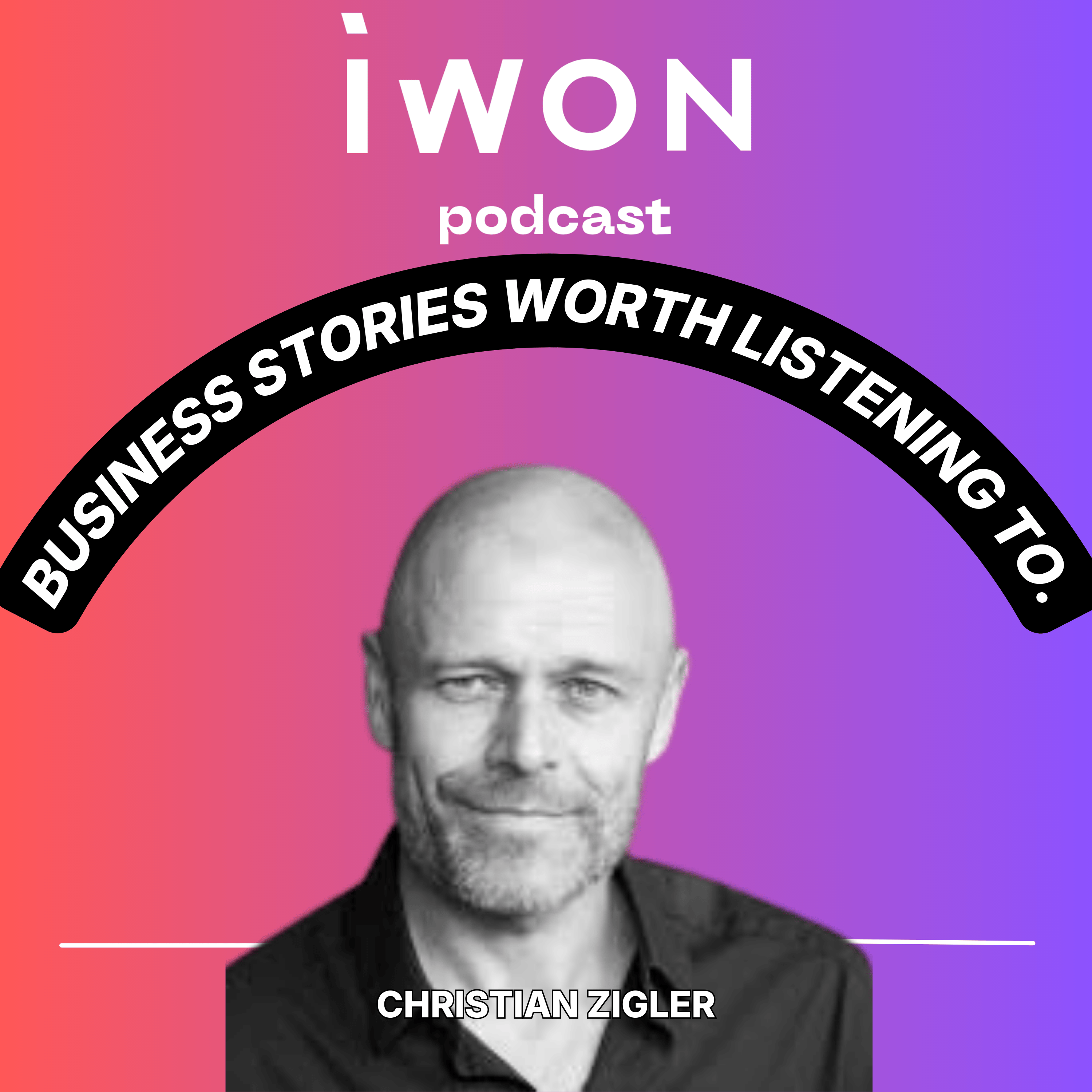 This Will Save You Years in Your Business | Christian Zigler (£24m + Multi-Exit Founder) on VCs, Hiring & AI 16.03.2026 54minThis episode could genuinely save you years in business.Christian Zigler, my guest is a serial entrepreneur who previously founded and exited for around £24m. He has built, scaled, IPO’d and exited multiple companies across Europe.Christian shares hard-earned lessons for founders, start up leaders and tech entrepreneurs who want to avoid the most common early mistakes.Christian is a multi-exit tech founder and CEO at Tapp.He knows the mistakes that cost founders time, money and momentum. In this conversation, we talk honestly about what really builds a company and what quietly destroys one.We cover: Why success is usually a seven-year overnight storyThe real meaning of patience versus fail fastHow the wrong VC firm can derail your visionWhy corporate hires often struggle inside start upsThe danger of chasing big enterprise clients too earlyThe Steve Jobs Rule of Ten hiring principleWhen dilution is actually the smart moveWhy AI must sit at the core of your business, not bolted on later If you are building a SaaS company, launching a start up or leading a tech team, this conversation will sharpen how you think about growth, hiring, venture capital and product decisions.About Christian Zigler Christian is a serial tech entrepreneur with multiple exits and IPO experience.He is now building Tapp, an AI-driven platform delivering proactive intelligence and business insights.Connect with Christian Zigler on LinkedIn.Learn more about Tapp.About IWON This is Episode 1 of IWON. IWON, It Wasn’t Over Night, is a long-form podcast for ambitious founders who want the real story behind building and scaling technology companies. No hype.No overnight success myths. Just honest conversations about what it actually takes.Prefer to watch this episode? You can watch it all here: Youtube.Learn more about the iwon podcast.Work with Michael J Thomas and DARWIN Works Marketing.If this episode helped you, subscribe and turn on notifications.New founder conversations every two weeks. 00:00 Intro and Why Success Takes 7 Years02:18 Founder Stupidity and Patience07:04 The VC Mistake That Cost Millions14:12 Why Enterprise Clients Can Kill Startups20:30 Hiring Corporate Talent vs Startup Builders28:15 The Steve Jobs and the Rule of Ten35:48 Protecting Runway as a Founder45:22 AI Hype vs Real Competitive AdvantageCompanies mentioned in this episode:TapPhilip KotlerElon MuskMark ZuckerbergTinderAirbnbJeff BezosAmazonShopifyRevolutStripeSquareDojoMicrosoftThe IWON™ Podcast is produced by DARWIN Works, a trading name of BlueEyed Digital Marketing Ltd.IWON™ and DARWIN™ are registered trademarks.All content is copyright © BlueEyed Digital Marketing Ltd 2026.The views expressed in this podcast are those of the individual speakers and do not necessarily reflect the views of the producers or associated organisations.This podcast is provided for informational and entertainment purposes only and should not be considered financial, legal, or professional advice.
 -
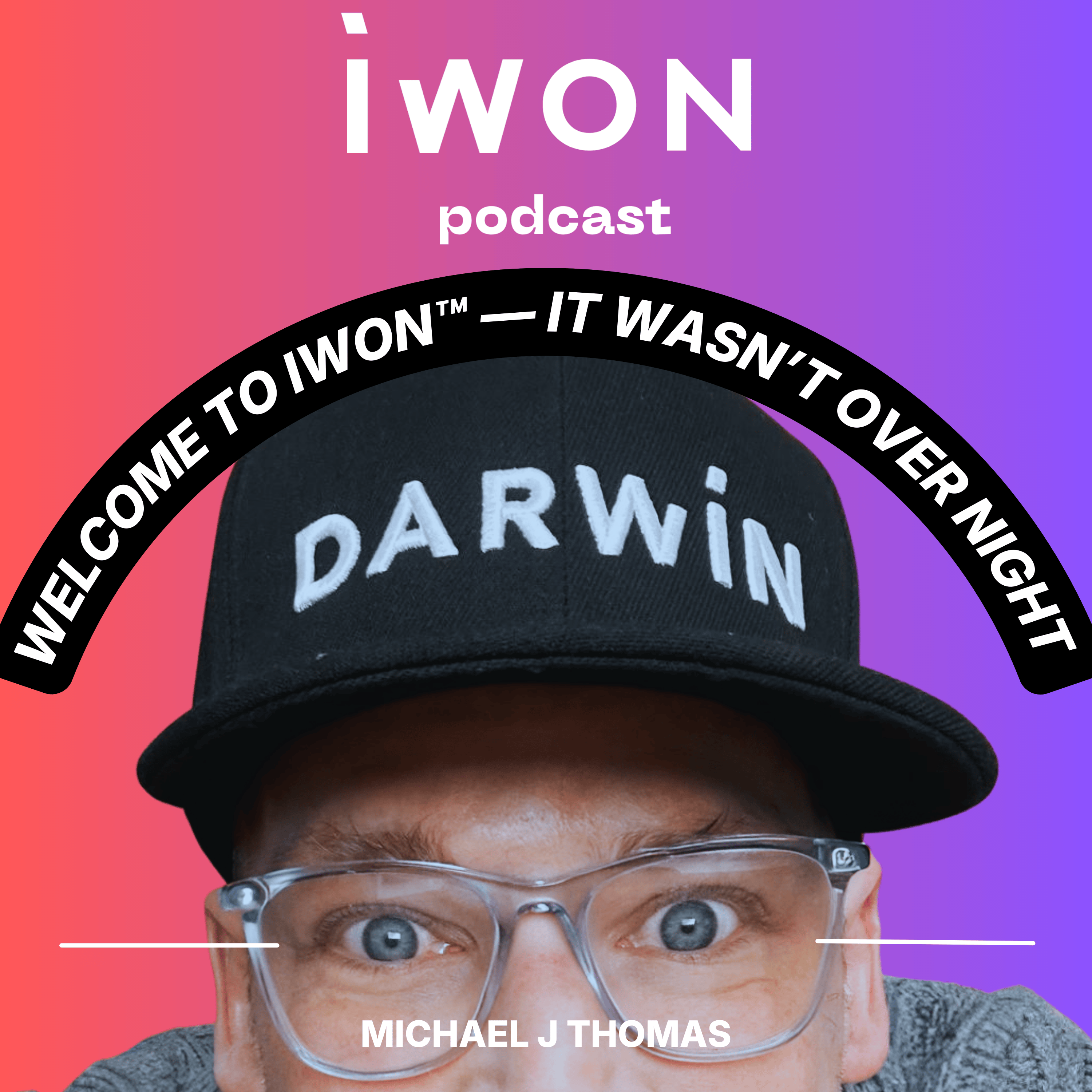 Welcome to IWON™. Because "It Wasn’t Over Night". It rarely is. 03.03.2026 1minMost successful tech companies don’t happen overnight.IWON™ (It Wasn’t Over Night) is a long-form podcast hosted by Michael J. Thomas, featuring honest, in-depth conversations with tech founders, operators and growth leaders who have built, scaled, exited or survived in the world of SaaS.This isn’t surface-level advice or recycled growth hacks.It’s the real story behind:• The early mistakes• The near failures• The fundraising pressure• The sales lessons that cost years• The mental health toll• The decisions that changed everythingFrom first customers to $750m exits, IWON explores what it actually takes to build a successful tech company.If you are building in SaaS, leading a growth team, or trying to scale without losing yourself in the process — subscribe and follow.New episodes every two weeks.Enjoyed This Episode?If you found this conversation valuable, follow the show so you don’t miss future episodes with founders and growth leaders building in SaaS and tech.Leaving a 5-star review on Apple Podcasts or Spotify helps more aspiring entrepreneurs and founders in the trenches right now to discover the show. And, it supports the growth of the IWON™ community.About the HostMichael J. Thomas is a marketing strategist and Cambridge-accredited coach. He founded DARWIN™ Works Marketing in 2011, helping SaaS and tech companies overcome growth hurdles and build sustainable momentum.Learn more about Michael and DARWIN™ Works Marketing here:https://darwinworks.comAbout IWON™IWON™ (It Wasn’t Over Night) is a long-form podcast exploring what it really takes to build and scale a successful technology company.Find out more about the podcast: https://iwonpodcast.comInterested in being a guest? https://iwonpodcast.com/guests/Want to sponsor IWON™ and help the community thrive? https://iwonpodcast.com/sponsors/Michael J ThomasCopyright 2026 - iwon and DARWIN are registered trademarks. This podcast and those trademarks are wholly owned by, property of, and produced by - and is a DARWIN Works Production - a trading name of BlueEyed Digital Marketing Ltd.
Podcasturi similare


Popular în
Acest podcast apare și în topurile de podcasturi din aceste țări.

