
TIME Capsule: Modern Genealogy, Legacy & AI
Barbara Beauregard
0
TIME Capsule is a podcast about preserving family history using modern tools and strategies. Each episode offers practical advice on capturing memories and stories, organizing photos and documents, protecting digital files, and using AI thoughtfully and ethically. Hosted by genealogist and educator Barbara Beauregard, the show helps listeners turn their research into a lasting legacy their families can access and appreciate.
Episoade
-
 Becoming A Future Ancestor 14.09.2026 26minWhat will future generations wish they knew about you?As genealogists, we spend so much of our time looking backward—searching for ancestors, piecing together their lives, studying old photographs, analyzing DNA, and trying to understand the stories that were never written down. But eventually, there is another question we need to ask:What are we leaving behind for the people who will someday be searching for us?In this Season 2 finale of the TIME Capsule Podcast, Barbara Beauregard explores what it means to become a future ancestor and why family history is about more than collecting names, dates, and records.The episode looks at the kinds of information that often disappear between generations: the stories behind photographs, the reasoning behind research conclusions, the memories that exist only in one person’s mind, the family traditions no one thought to document, and the everyday details that can help future descendants understand who we really were.Barbara also reflects on the major themes of Season 2, including family stories, photographs, DNA research, interviewing relatives, artificial intelligence, preserving genealogy collections, and planning for what happens to our research when we are no longer the person managing it.You’ll hear why preserving family history requires more than simply saving files or building a family tree. Context matters. Future genealogists need to know not only what we discovered, but how we reached our conclusions, what questions remain unanswered, and which stories we most want carried forward.This episode is also a reminder that genealogy is never truly finished. We are not creating the final version of our family history. We are contributing one chapter and leaving something for the next generation to continue.As Season 2 comes to a close, Barbara leaves listeners with one important question:What do you know today that you do not want your family to have to rediscover fifty years from now?The TIME Capsule Podcast will take a short break after this episode and return October 5 with Season 3, beginning with a special case-study episode based on the Abigail Case Journal. That investigation will follow the evidence through DNA matches, traditional records, family trees, timelines, competing possibilities, and the process of determining what the evidence can—and cannot—prove.Until then, this finale offers a chance to think about your own place in the family story and what you can begin preserving today for the people who come after you.
 -
 AI, Deepfakes, and Ethics in Family History 07.09.2026 18minAI, Deepfakes, and Ethics in Family History Artificial Intelligence is transforming genealogy in remarkable ways—from restoring old photographs and transcribing handwritten documents to translating foreign records and organizing research. But with these powerful new tools come important ethical questions. How do we embrace AI without compromising the truth? And how can we ensure future generations know the difference between authentic history and AI-generated content?In this episode, Barbara Beauregard explores the growing role of AI in family history research, explains what deepfakes are, and discusses why trust remains the foundation of good genealogy. She introduces her TIME Capsule AI Principles—five practical guidelines to help genealogists use Artificial Intelligence responsibly while preserving the integrity of their family history.Whether you're just beginning to explore AI or are already using it in your research, this episode will help you navigate the opportunities and challenges of this rapidly changing technology with confidence and integrity.In This Episode You'll Learn:Why Artificial Intelligence is transforming genealogy research.What deepfakes are and why genealogists should understand them.The important difference between photo restoration and photo alteration.How AI can assist genealogists without replacing sound research practices.The five TIME Capsule AI Principles for ethical AI use in family history.Why documenting AI-generated changes is essential for future researchers.How transparency builds trust and protects the integrity of your research.Practical ways to use AI responsibly while preserving historical accuracy.TIME Capsule ChallengeChoose one photograph or document you've enhanced with AI and ask yourself:Did I preserve the original version?Have I documented what AI changed?Would someone fifty years from now understand the difference between the original and the AI-enhanced version?If you can answer "yes" to all three questions, you're helping preserve not only your family's history—but its authenticity as well.Resources MentionedArtificial Intelligence photo restoration toolsAI transcription and translation toolsGenealogy best practices for documenting sourcesAncestrySeeking.com for additional genealogy resources and articlesConnect with BarbaraVisit AncestrySeeking.com for:Genealogy blog articlesThe TIME Capsule PodcastEducational resourcesDNA and genealogy research servicesNewsletter signup for genealogy tips and updatesClosing Thought"Technology will continue to evolve, but our responsibility as genealogists remains the same—to preserve the truth, document our research honestly, and leave future generations a family history they can trust."
 -
 What Future Genealogists Will Wish You Had Saved 31.08.2026 18minWhat Future Genealogists Will Wish You Had SavedAs genealogists, we spend years collecting census records, birth certificates, photographs, and DNA matches—but are we preserving the things that future generations will treasure the most?In this episode of TIME Capsule: Modern Genealogy, Legacy & AI, Barbara Beauregard explores the priceless memories, stories, and everyday moments that no record or artificial intelligence can ever replace. Discover why preserving your voice, your experiences, and your research journey may become the greatest gift you leave to your descendants.Whether you're just beginning your family history or have been researching for decades, this episode will inspire you to think beyond names and dates and begin preserving the legacy that only you can share.In This Episode You'll Learn:Why documents alone don't tell the complete story of your family.The five things future genealogists will wish you had preserved.How everyday photographs become historical treasures.Why recording your voice is one of the greatest gifts you can leave.The importance of documenting your research process and discoveries.What artificial intelligence can—and cannot—do for family history.A simple TIME Capsule Challenge you can complete this week to preserve your legacy.Your family tree tells future generations who their ancestors were.Your stories tell them who those ancestors truly were.Resources MentionedVisit AncestrySeeking.com for genealogy articles, educational resources, and preservation tips.Learn more about the TIME Capsule Method™ for preserving your family history and legacy.Subscribe to the podcast so you never miss a new episode.Connect with BarbaraIf you enjoyed this episode, please:Follow or subscribe to TIME Capsule: Modern Genealogy, Legacy & AILeave a review to help others discover the podcast.Share this episode with someone who is preserving their family's history.Remember...Family history isn't just about discovering the past—it's about becoming part of someone else's future.
 -
 Who Will Inherit Your Family History? 24.08.2026 18minWho Will Inherit Your Family History?After spending years researching your family tree, preserving old photographs, collecting documents, and uncovering family stories, have you ever stopped to ask yourself one important question:Who will inherit your family history?In this episode of TIME Capsule: Modern Genealogy, Legacy & AI, Barbara Beauregard explores one of the most important—but often overlooked—aspects of genealogy: ensuring that the passion, knowledge, and research you've accumulated over the years continues long after you're gone.Discover why passing on your family history involves much more than leaving behind boxes of records or a computer full of digital files. Learn practical ways to prepare the next generation, inspire family members to become interested in their heritage, and create a lasting legacy that future generations can understand, appreciate, and continue.Whether you're an experienced genealogist or just beginning your family history journey, this episode will encourage you to think differently about the legacy you're creating—and how to ensure your years of research continue to make a difference for generations to come.In This Episode You'll Learn:Why preserving your research is only part of the genealogy legacy.How to identify and prepare a future caretaker for your family history.Why stories often inspire future genealogists more than pedigree charts.Simple ways to involve children, grandchildren, and extended family in your research.What to do if no one in your family is currently interested in genealogy.How libraries, historical societies, and archives may help preserve your research.Why leaving a genealogy roadmap is one of the greatest gifts you can provide.How artificial intelligence can help organize and preserve your family history.Practical steps you can begin today to ensure your genealogy lives on.Your family history is more than names, dates, and documents. It's a story that deserves to be understood, shared, and carried forward by future generations.For more genealogy resources, educational articles, podcast episodes, and tools to help preserve your family's legacy, visit AncestrySeeking.com.
 -
 What Happens to Your Research If Something Happens to You? 17.08.2026 19minWhat Happens to Your Research If Something Happens to You?Have you ever wondered what would happen to your genealogy research if you were suddenly unable to continue it?After spending years—or even decades—building your family tree, collecting photographs, preserving documents, and solving family mysteries, would your loved ones know where to find your research, how to access it, or what to do with it?In this thought-provoking episode of TIME Capsule: Modern Genealogy, Legacy & AI, Barbara Beauregard explores one of the most overlooked aspects of family history research: creating a plan to preserve your research legacy.You'll discover why so much valuable genealogy is unintentionally lost, the common obstacles families face when inheriting years of research, and seven practical steps you can take today to ensure your life's work can be understood, accessed, and continued by future generations.Barbara also discusses how modern technology—including artificial intelligence—can help organize, preserve, and document your genealogy, while reminding us that no technology can replace the stories and knowledge only we can pass on.Whether you're just beginning your genealogy journey or have been researching for decades, this episode will inspire you to think beyond collecting records and begin preserving your legacy.In This Episode You'll Learn:Why genealogy research is often lost after a researcher can no longer continue.The importance of creating a genealogy roadmap for your family.How to organize your digital and paper research for future generations.Why passwords, online accounts, and subscriptions should be part of your genealogy plan.How documenting your brick walls can help future researchers continue your work.Why preserving family stories is just as important as preserving documents.How to choose a future "legacy keeper" for your genealogy research.Practical ways artificial intelligence can help organize and preserve your family history.Simple steps you can begin today to protect your genealogy legacy.Your family history is more than names, dates, and documents—it's a legacy. Taking a few simple steps today can help ensure that generations to come will benefit from the years of research you've worked so hard to preserve.For more genealogy resources, educational articles, online courses, podcast episodes, and preservation tips, visit AncestrySeeking.com.
 -
 How to Interview Relatives Before It's Too Late 10.08.2026 11minHow to Interview Relatives Before It's Too LateEvery family has stories that will never be found in a census record, birth certificate, or DNA test. They live in the memories of parents, grandparents, aunts, uncles, and older relatives—and once those memories are gone, they are gone forever.In this episode of TIME Capsule: Modern Genealogy, Legacy & AI, Barbara Beauregard shares practical tips for interviewing relatives in a way that captures not only names and dates, but the stories, traditions, emotions, and everyday experiences that bring your family history to life.You'll learn how to ask meaningful questions that encourage conversation, why ordinary memories are often the most valuable, and how simple tools like your smartphone and artificial intelligence can help preserve these priceless family stories for future generations.Whether you're just beginning your genealogy journey or have been researching for years, this episode will inspire you to start recording the memories that no archive can ever replace.In This Episode You'll Learn:Why interviewing relatives is one of the most important genealogy projects you'll ever undertake.How to ask open-ended questions that encourage storytelling.Tips for making family interviews comfortable and enjoyable.Why everyday memories are often more valuable than major life events.How photographs, heirlooms, and keepsakes can unlock forgotten stories.Common interviewing mistakes to avoid.How AI can help transcribe, organize, and preserve family interviews.Simple ways to begin recording your family's history today.Every conversation you preserve becomes a priceless gift for future generations.For more genealogy resources, educational articles, online courses, and podcast episodes, visit AncestrySeeking.com.
 -
 Two Sisters, One Hidden Truth - An Adoption Mystery Solved Through DNA 03.08.2026 25minCase Study Series #1: One Branch, Two Sisters, One Hidden TruthHow DNA, Patience, and Ethical Genealogy Solved an Adoption MysteryEpisode SummaryWhat happens when DNA points you to the right family—but not the right person?In this first episode of the Case Study Series, Barbara shares a remarkable real-life adoption case that demonstrates how DNA and traditional genealogy work hand in hand. After a man adopted as an infant discovers the identity of his biological father through a close DNA match, the search for his biological mother proves far more challenging.DNA narrows the search to one family branch, but several women fit the timeline. Through careful research, relationship analysis, and nearly a year of patience, the investigation eventually narrows to two sisters. Then, an unexpected DNA match changes everything.This episode isn't just about solving a mystery—it's about understanding the importance of evidence, patience, ethical decision-making, and treating every family story with compassion.All names and identifying details have been changed to protect the privacy of those involved.In This Episode You'll LearnWhy DNA testing doesn't always provide immediate answers.How close DNA matches can quickly identify biological family members.Why traditional genealogy is still essential alongside DNA evidence.How to build and evaluate a candidate list.The importance of eliminating possibilities through documented evidence.Why patience is often one of the most valuable research tools.How one unexpected DNA match provided the final answer.Ethical considerations when uncovering long-held family secrets.Why genealogy is about people—not just records.Key Takeaways✔ DNA opens doors—but traditional genealogy helps you walk through them.✔ A family branch is not the same as identifying an individual.✔ Never rely on a single piece of evidence. Build a proof argument using multiple independent sources.✔ Sometimes the best research strategy is simply waiting for new evidence to appear.✔ Every DNA match represents a real person with real emotions and family relationships.✔ Genealogists have a responsibility to balance truth with compassion.Question for ListenersHave you ever solved a family mystery using DNA—or are you currently working through one?What has been your biggest challenge: finding the right records, interpreting DNA matches, or simply waiting for the next clue?I'd love to hear your story.Coming Up NextEpisode 29How to Interview Relatives Before It's Too LateDiscover practical strategies for preparing meaningful family interviews, asking questions that spark memories, using AI transcription tools, and preserving stories before they're lost forever.Connect with Barbara Beauregard🌐 Website: https://ancestryseeking.com🎙 Podcast: TIME Capsule: Modern Genealogy, Legacy & AI📬 Subscribe to Barbara's free genealogy newsletter for research tips, podcast updates, and educational resources.
 -
 Shared DNA Matches Explained Simply 27.07.2026 11minShared Matches Explained SimplyUnderstanding One of the Most Powerful Tools in DNA ResearchIf you've ever looked at your DNA match list and wondered how all those people are connected, you're not alone.One of the most valuable tools available to genealogists today is the Shared Matches feature. Whether you're researching your family tree, solving a DNA mystery, identifying unknown ancestors, or working on an adoptee case, shared matches can provide important clues about how individuals are related.But for many researchers, shared matches can feel confusing and overwhelming.What exactly is a shared match?How do shared matches help identify family lines?And how can you use them to make sense of your DNA results?In this episode, Barbara Beauregard breaks down shared matches in simple, easy-to-understand language. You'll learn what shared matches are, why they matter, and how they can help you organize DNA evidence and uncover family connections with greater confidence.Whether you're new to DNA testing or have been working with DNA results for years, understanding shared matches is an essential skill for every family historian.In This Episode You'll Learn:✔ What shared matches are and how they work✔ Why shared matches are one of the most valuable DNA research tools✔ How shared matches can help identify family groups✔ The difference between direct matches and shared matches✔ How to use shared matches to organize DNA evidence✔ Common mistakes researchers make when interpreting shared matches✔ Practical ways to use shared matches to break down genealogy brick wallsKey TakeawayShared matches help transform a long list of DNA matches into meaningful family groups. By understanding who shares DNA with whom, researchers can identify family lines, confirm relationships, and uncover new clues about their ancestry.Questions to ConsiderHave you explored the shared matches for your closest DNA matches?Are there clusters of people who appear repeatedly in your shared match lists?Could shared matches help identify an unknown ancestor or family connection?Are you using shared matches as part of your DNA research strategy?Simple Action StepsSelect one of your stronger DNA matches.Open the Shared Matches section.Identify people who appear repeatedly among the shared matches.Look for common surnames, locations, or family lines.Create a simple group or cluster to organize your findings.Resources MentionedThe TIME Capsule Method™DNA Match Analysis TechniquesShared Match Clustering StrategiesDNA Research WorkflowsGenetic Genealogy Best PracticesFamily Tree Building TechniquesConnect with Barbara🌐 Website: AncestrySeeking.com🎙 Podcast: TIME Capsule: Modern Genealogy, Legacy & AI📚 Books, Courses, and Resources: Visit AncestrySeeking.com for genealogy education, preservation tools, and family history resources.Enjoyed This Episode?Please consider:⭐ Following the podcast⭐ Leaving a review⭐ Sharing this episode with a friend or family member interested in DNA research⭐ Exploring your own shared matches this weekBecause every DNA match tells part of the story—but shared matches help reveal how the pieces fit together.Your family history matters. Your stories matter. Your legacy matters.
 -
 Can AI Help Identify Old Family Photographs? 13.07.2026 12minCan AI Help Identify Old Family Photographs?Exploring the Possibilities—and the Limitations—of Artificial IntelligenceFor many family historians, old photographs are among their most treasured possessions.Yet countless images remain mysteries.Who are the people in the photograph?When was it taken?Where was it taken?What story does it tell?Today, artificial intelligence is opening new possibilities for analyzing and identifying old family photographs. AI tools can estimate dates, recognize clothing styles, enhance damaged images, extract text, and even help organize collections.But how reliable are these tools? And where should we be cautious?IWhether you're a beginner or an experienced researcher, you'll learn how to use AI responsibly while preserving the accuracy of your family history.In This Episode You'll Learn:✔ What AI can and cannot do when analyzing old family photographs✔ How AI can help estimate dates and identify visual clues✔ Ways AI can assist with photograph restoration and enhancement✔ How facial recognition technology may support photo identification✔ Why context, family knowledge, and documentation still matter✔ Common mistakes researchers make when relying too heavily on AI✔ Best practices for using AI as a genealogy assistant rather than a replacement for researchKey TakeawayArtificial intelligence can be a valuable tool for identifying and analyzing old family photographs, but it should never replace careful research, family knowledge, and historical evidence. The best results come when AI and human expertise work together.Questions to ConsiderHow many unidentified photographs do you have in your collection?Are there photographs that relatives might still be able to identify?What clues might be hiding in the background of a photograph?How can AI help organize and analyze your collection without replacing traditional research?Simple Action StepsSelect one unidentified family photograph.Scan the image at a high resolution.Use an AI tool to analyze visible details such as clothing, location, objects, or text.Compare the results with known family records and photographs.Document your findings and clearly note which conclusions are based on evidence versus AI suggestions.Resources MentionedThe TIME Capsule Method™AI-Powered Photo Analysis ToolsFamily Photograph Preservation TechniquesDigital Scanning Best PracticesPhotograph Identification WorkflowsMetadata and Digital Organization StrategiesConnect with Barbara🌐 Website: AncestrySeeking.com🎙 Podcast: TIME Capsule: Modern Genealogy, Legacy & AI📚 Books, Courses, and Resources: Visit AncestrySeeking.com for genealogy education, preservation tools, and family history resources.Enjoyed This Episode?Please consider:⭐ Following the podcast⭐ Leaving a review⭐ Sharing this episode with a friend or family member⭐ Choosing one unidentified photograph and beginning the identification process this weekBecause every photograph contains a story—and every story deserves the chance to be understood.Your family history matters. Your stories matter. Your legacy matters.
 -
 The HIdden Clues on the Back of a Photograph 20.07.2026 17minThe Hidden Clues on the Back of a PhotographDiscovering the Stories Written Beyond the ImageWhen we think about family photographs, our attention naturally goes to the people in the picture.But what if some of the most valuable clues aren't on the front of the photograph at all?The backs of old photographs often contain handwritten names, dates, locations, photographer information, addresses, notes, and other details that can unlock family stories and solve genealogy mysteries.Unfortunately, these hidden clues are frequently overlooked—or worse, lost when photographs are scanned only from the front.In this episode, Barbara Beauregard explores why the back of a photograph can be just as important as the image itself. You'll learn what to look for, how to preserve these valuable details, and why capturing both sides of a photograph is an essential part of preserving your family's history.Whether you're organizing a box of old photographs or digitizing an entire family collection, this episode will help you uncover the hidden clues that may have been waiting to be discovered for generations.In This Episode You'll Learn:✔ Why the back of a photograph often contains valuable genealogy clues✔ How handwritten notes can help identify people, places, and dates✔ What photographer imprints can reveal about time and location✔ Why scanning both sides of every photograph is important✔ Common mistakes that cause valuable information to be lost✔ How hidden clues can connect photographs to family records and stories✔ Best practices for preserving both the image and its historyKey TakeawayA family photograph tells one story—but the information written on the back often tells another. By preserving both sides of every photograph, you protect the visual memory and the historical context that future generations will need to understand it.Questions to ConsiderHave you ever turned over your old family photographs to see what's written on the back?Are there names, dates, or places that could help identify unknown relatives?Have you scanned both sides of your photographs?Could a simple handwritten note solve one of your genealogy mysteries?Simple Action StepsSelect five old family photographs.Carefully examine the front and back of each one.Scan or photograph both sides.Record any names, dates, locations, photographer names, or handwritten notes.Add this information to your digital files or genealogy software so it stays connected to the photograph.Resources MentionedThe TIME Capsule Method™Family Photograph Preservation GuidePhotograph Identification TechniquesDigital Scanning Best PracticesMetadata and Photo Organization StrategiesFamily Story Documentation TipsConnect with Barbara🌐 Website: AncestrySeeking.com🎙 Podcast: TIME Capsule: Modern Genealogy, Legacy & AI📚 Books, Courses, and Resources: Visit AncestrySeeking.com for genealogy education, preservation tools, and family history resources.Enjoyed This Episode?Please consider:⭐ Following the podcast⭐ Leaving a review⭐ Sharing this episode with someone preserving family photographsBecause every photograph has two stories: the one you can see, and the one waiting to be discovered.Your family history matters. Your stories matter. Your legacy matters.
 -
 Turning Research Into Stories Your Family Will Actually Read 06.07.2026 10minTurning Research Into Stories Your Family Will Actually ReadBringing Your Family History to Life Through StorytellingHave you ever spent hours researching your family history, only to realize that most of your relatives aren't interested in reading a pedigree chart or a list of dates?You're not alone.One of the biggest challenges family historians face is sharing their research in a way that captures the attention of family members who may not be genealogists themselves.In this episode, Barbara Beauregard explores how to transform names, dates, records, and documents into engaging stories that connect people to their ancestors. You'll learn why storytelling is one of the most powerful preservation tools available and how even simple family narratives can help future generations understand where they came from.Whether you're writing an ancestor biography, creating a family history book, or simply sharing stories with relatives, this episode will help you bring your research to life.In This Episode You'll Learn:✔ Why facts alone often fail to engage family members✔ The difference between genealogy research and family storytelling✔ How to identify the story hidden within your research✔ Simple storytelling techniques anyone can use✔ How photographs, letters, and records can add context and emotion✔ Why stories are often remembered long after names and dates are forgotten✔ Ways to make your family history more meaningful to future generationsKey TakeawayResearch helps us discover our ancestors, but stories help us understand them. By turning research into stories, we create a lasting connection between past generations and those who will follow.Questions to ConsiderWhat family story do you remember most vividly?Which ancestor in your family tree deserves to have their story told?Are there records in your collection that reveal more than just facts?How can you share your research in a way that others will enjoy reading?Simple Action StepsChoose one ancestor from your family tree.Gather the records, photographs, and facts you already have.Identify a challenge, event, or turning point in their life.Write a short story that focuses on the person, not just the dates.Share that story with a family member and invite their memories or feedback.Resources MentionedThe TIME Capsule Method™Ancestor Biography Writing TechniquesFamily Story Journal TemplatesOral History Recording MethodsPhotograph Preservation and Storytelling StrategiesConnect with Barbara🌐 Website: AncestrySeeking.com🎙 Podcast: TIME Capsule: Modern Genealogy, Legacy & AI📚 Books, Courses, and Resources: Visit AncestrySeeking.com for genealogy education, preservation tools, and family history resources.Enjoyed This Episode?Please consider:⭐ Following the podcast⭐ Leaving a review⭐ Sharing this episode with a friend or family member⭐ Choosing one ancestor and writing their story this weekBecause future generations don't just inherit our research—they inherit the stories we choose to tell.Your family history matters. Your stories matter. Your legacy matters.
 -
 Why Family Stories Disappear and How to Save Them 29.06.2026 12minWhy Family Stories Disappear — and How to Save ThemPreserving the Memories That Matter Before They're LostEvery family has stories.Stories of love, sacrifice, hardship, adventure, resilience, and everyday life.Yet with each passing generation, many of these stories quietly disappear. Names become forgotten. Photographs lose their identities. Memories fade. And valuable pieces of our family history can be lost forever.In this episode, Barbara Beauregard explores why family stories vanish over time and what we can do to preserve them before it's too late. You'll learn practical ways to capture memories, record family experiences, and ensure that future generations inherit more than just names and dates.Whether you're just beginning your family history journey or have been researching for years, this episode will inspire you to take action while those stories can still be told.In This Episode You'll Learn:✔ Why family stories are often lost within just a few generations✔ The difference between preserving records and preserving memories✔ How unlabeled photographs contribute to forgotten family history✔ Why oral history is one of the most valuable family history resources✔ Common reasons families unintentionally lose important stories✔ Practical ways to capture memories before they disappear✔ How the TIME Capsule Method™ can help preserve stories alongside documents and photographsKey TakeawayFamily stories don't disappear all at once. They fade one memory, one photograph, and one untold story at a time. By taking small steps today, you can preserve the experiences, lessons, and memories that future generations may never have another chance to hear.Questions to ConsiderWhat stories do you remember hearing as a child?Who in your family knows the stories that haven't been written down?Are there photographs in your collection that need identification?What memories would you regret losing if they disappeared tomorrow?Simple Action StepsIdentify and label five family photographs.Record a conversation with a parent, grandparent, or relative.Write down one family story you remember hearing.Create a folder for family stories and oral histories.Share a family memory with another family member this week.Resources MentionedThe TIME Capsule Method™Oral History Interview TechniquesFamily Story Preservation StrategiesPhotograph Identification and LabelingDigital Preservation Best PracticesConnect with Barbara🌐 Website: AncestrySeeking.com🎙 Podcast: TIME Capsule: Modern Genealogy, Legacy & AI📚 Books, Courses, and Resources: Visit AncestrySeeking.com for genealogy education, preservation tools, and family history resources.Enjoyed This Episode?Please consider:⭐ Following the podcast⭐ Leaving a review⭐ Sharing this episode with a friend or family member⭐ Encouraging a relative to record their stories while they still canBecause every family story saved today becomes a gift to future generations.Your family history matters. Your stories matter. Your legacy matters.
 -
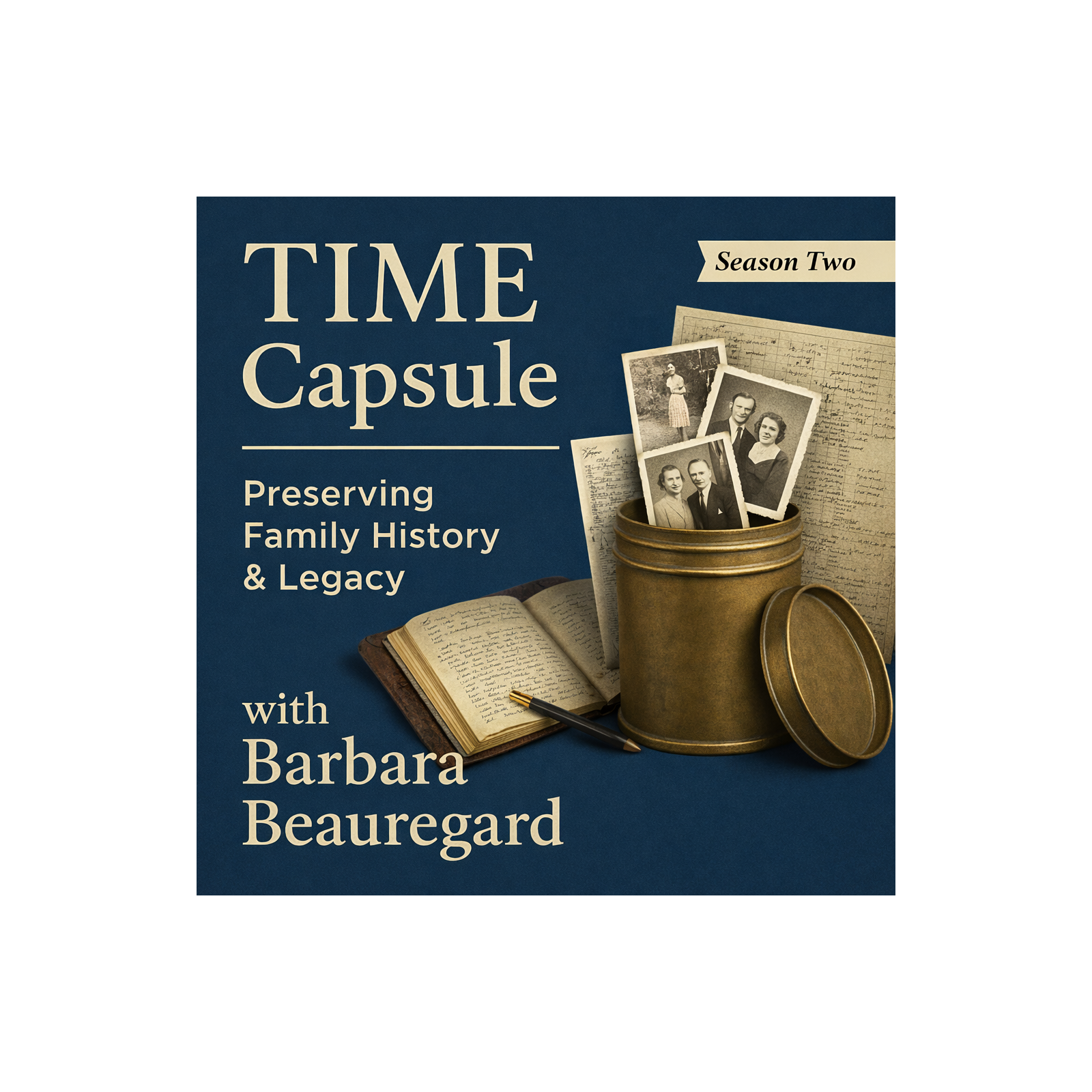 You Don’t Have to Be an Expert to Start Your Family History 22.06.2026 6minIn this Season Two opening episode, Barbara addresses one of the most common beliefs that stops people from preserving their family history: the idea that you need to be an expert before you can begin.Barbara explains why waiting for confidence, knowledge, or the “right” system often leads to inaction—and how family history is more often lost through delay than through mistakes. She reframes what it really means to “start” and emphasizes that small, imperfect actions taken today matter far more than polished projects that never happen.Listeners will learn why confidence follows action, not the other way around, and how focusing on preservation rather than perfection can protect stories, memories, and records before they disappear. Through practical examples and gentle reassurance, this episode encourages listeners to see themselves not as experts-in-waiting, but as caretakers of their family’s history.The episode concludes with a simple, meaningful action step designed to help listeners begin preserving their family history immediately—without overwhelm, pressure, or the need for specialized knowledge.CONNECT WITH BARBARAWebsite: https://ancestryseeking.comBook: Here Today, Gone Tomorrow: A Comprehensive Guide to Protecting & Preserving Your Family History from the Unexpected Available on AmazonNewsletter: Sign up on the website — Stay Connected – Subscribe NowCourses: Preserving Your Genealogy Upcoming TIME Capsule Method™ course https://ancestryseeking.comContact: Via the contact form on AncestrySeeking.com
 -
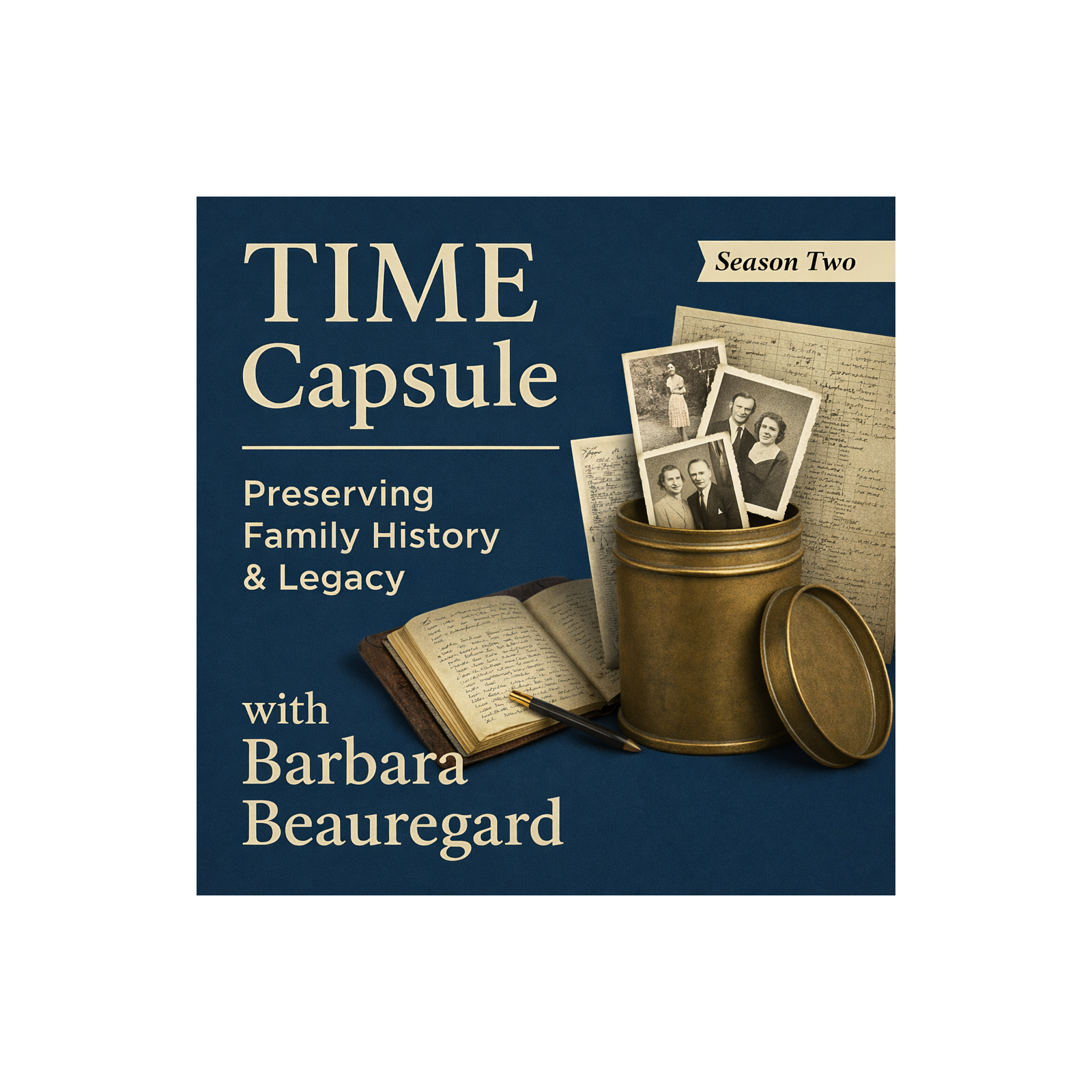 First Cousin Once Removed? Understanding Family Relationships: Without the Confusion 15.06.2026 8minFamily relationships can sometimes feel confusing—especially when terms like second cousin once removed or third cousin appear in genealogy research.In this episode, Barbara Beauregard explains cousin relationships in a clear and simple way so beginners can understand how families connect across generations. Using practical examples, she breaks down what terms like first cousin, second cousin, and “removed” actually mean, and how these relationships appear in family trees and DNA matches.You’ll also learn how understanding cousin relationships can help you make sense of genealogy records, identify relatives in historical documents, and better interpret DNA match results.Whether you're just starting your family history journey or helping a younger generation understand their roots, this episode provides an easy-to-follow explanation of one of genealogy’s most common sources of confusion.In This Episode You’ll Learn• What a first cousin, second cousin, and third cousin actually mean • How the word “removed” applies to family relationships • Why cousins share common ancestors • How cousin relationships appear in family trees and genealogy records • How understanding cousin relationships can help interpret DNA matchesWhy This Matters for GenealogyUnderstanding family relationships is one of the foundations of genealogy research. When you know how cousins are connected, it becomes much easier to:• Interpret census records and family documents • Understand DNA match connections • Identify relatives in photographs and records • Build an accurate family treeLearning how cousins connect helps transform genealogy from a collection of names into a meaningful story of how families are linked across generations.A Simple Tip from This EpisodeIf cousin relationships feel confusing, start by identifying the most recent common ancestors between two people. Once you know the shared ancestor, it becomes much easier to determine how the cousins are related.Connect with BarbaraWebsite: https://ancestryseeking.comAuthor of: Here Today, Gone Tomorrow: Protecting and Preserving Your Genealogy from the UnexpectedToday’s podcast episode goes deeper into a topic many genealogists struggle with."👉 Read the article https://ancestryseeking.com/understanding-cousins-and-family-relationships-a-simple-guide-for-genealogy-beginners/“If you enjoy the TIME Capsule Podcast, be sure to follow or subscribe so new episodes appear automatically in your podcast app.”
 -
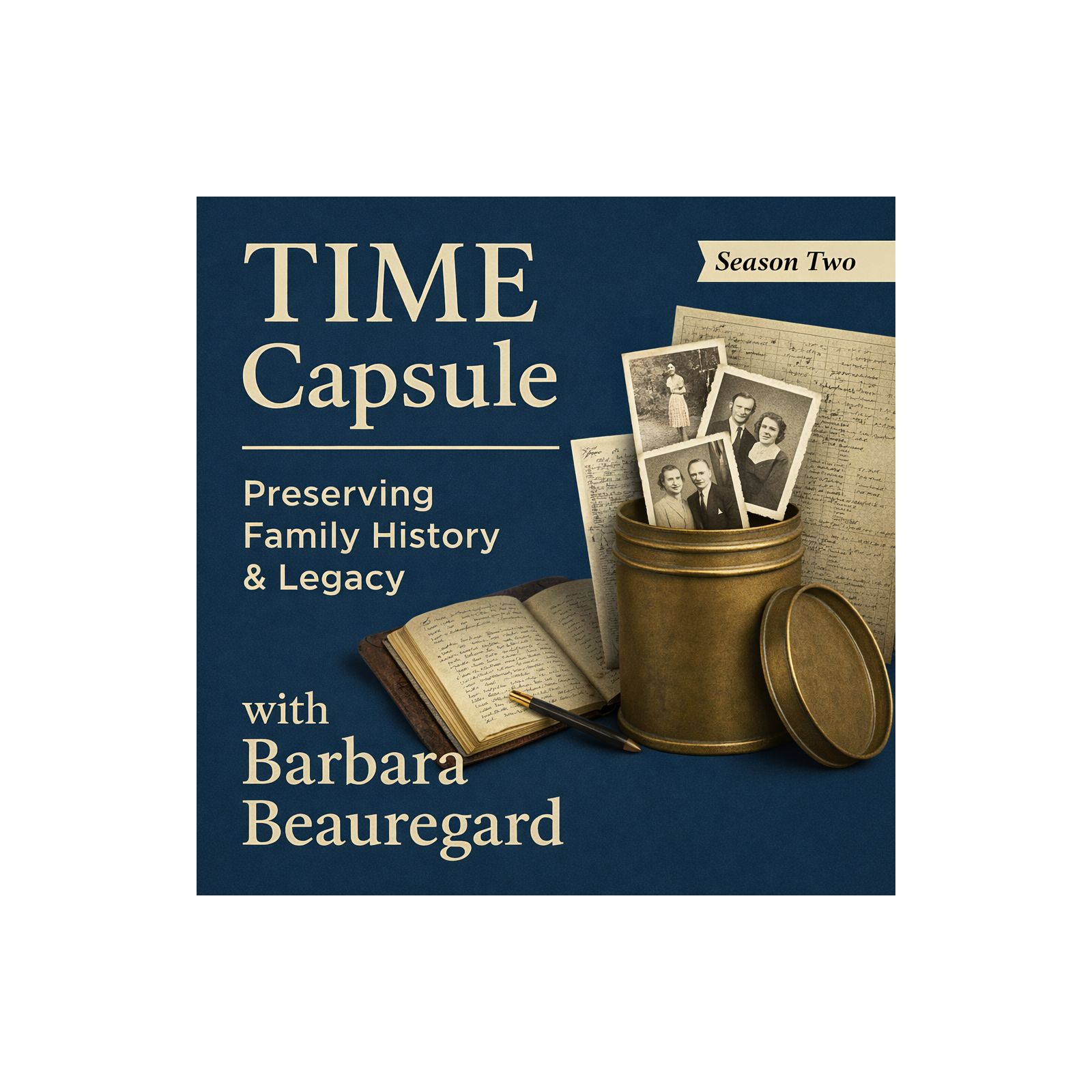 Saving Your Family History: Paper, Photos, and Digital Files Explained 08.06.2026 8minIn this episode, Barbara addresses one of the most common frustration points in family history work: feeling overwhelmed by paper records, photographs, and digital files—and not knowing where to begin.Barbara explains why these three formats often cause confusion, how each carries its own emotional and practical challenges, and why trying to choose the “perfect” system too early can lead to paralysis. Through clear examples, she shows how preservation doesn’t require deciding everything at once, and why focusing on meaning and context matters more than format.Listeners will learn practical ways to move forward without getting stuck, including how to prioritize identifying information, preserve fragile materials, and manage digital files without needing to reorganize their entire collection. The episode emphasizes that most family history naturally exists across paper, photos, and digital formats—and that mixing methods is not a mistake, but a reality.The episode concludes with a simple action step designed to help listeners preserve one meaningful item today by capturing what it is and why it matters, without pressure to scan, organize, or finalize anything.CONNECT WITH BARBARAWebsite: https://ancestryseeking.comBook: Here Today, Gone Tomorrow: A Comprehensive Guide to Protecting & Preserving Your Family History from the Unexpected Available on AmazonNewsletter: Sign up on the website — Stay Connected – Subscribe NowCourses: Preserving Your Genealogy Upcoming TIME Capsule Method™ course https://ancestryseeking.comContact: Via the contact form on AncestrySeeking.com
 -
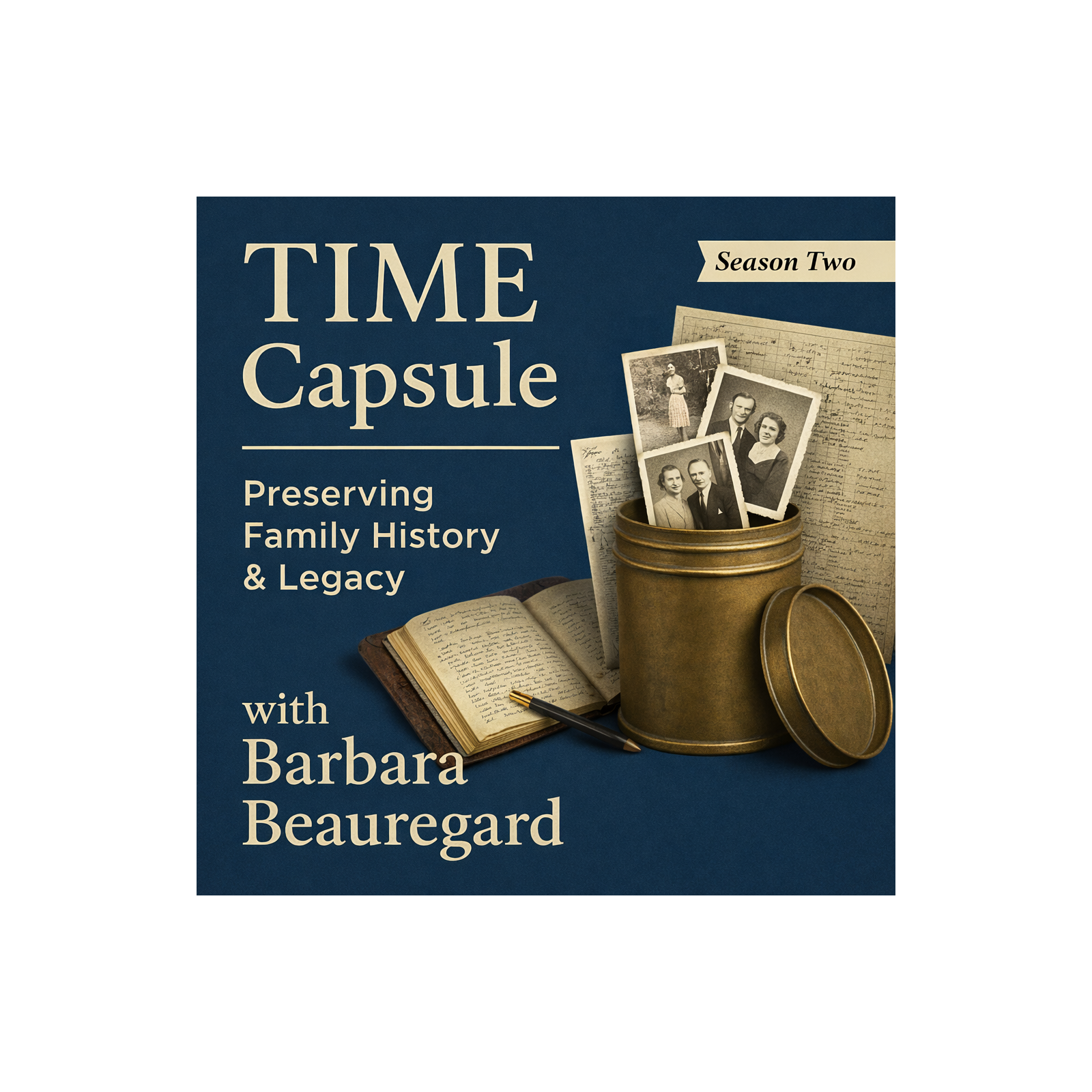 The Biggest Mistakes Genealogists Make—and How to Avoid Them 01.06.2026 8minIn this episode of the AncestrySeeking Podcast, we explore some of the most common mistakes genealogists make—whether they’re just getting started or have been researching for years.Genealogy is a learning process, and mistakes are often part of the journey. The key is recognizing them early and knowing how to course-correct without becoming overwhelmed or discouraged.In this episode, you’ll learn:Why trying to research everything at once often leads to frustration—and how focusing on one goal can move you forward fasterThe risks of copying online family trees without verifying sourcesHow ignoring historical context can lead to incorrect conclusions about your ancestorsWhy recording where your information came from is essential for long-term accuracyHow digital clutter can derail your research—and simple ways to stay organizedWhy waiting too long to talk with family members can result in lost stories and memoriesHow the belief that there’s a “right” way to do genealogy can hold you backThis episode offers practical guidance, realistic examples, and gentle encouragement to help you build a stronger, more confident approach to researching and preserving your family history.Whether you’re a beginner or an experienced family historian, this episode will help you recognize common pitfalls and give you clear strategies to avoid them—so your work is accurate, meaningful, and built to last.CONNECT WITH BARBARAWebsite: https://ancestryseeking.comBook: Here Today, Gone Tomorrow: A Comprehensive Guide to Protecting & Preserving Your Family History from the Unexpected Available on AmazonNewsletter: Sign up on the website — Stay Connected – Subscribe NowCourses: Preserving Your Genealogy Upcoming TIME Capsule Method™ course https://ancestryseeking.comContact: Via the contact form on AncestrySeeking.com
 -
 Before It’s Too Late: Preserving the Stories Along with Your Family Photos 25.05.2026 17minBefore It’s Too Late: Preserving the Stories Along with Your Family PhotosThe TIME Capsule Podcast with Barbara BeauregardFamily photographs are some of the most treasured items we inherit — but without names, stories, dates, and context, many of those memories can slowly disappear over time.In this episode of The TIME Capsule Podcast, Barbara Beauregard explores why preserving the stories behind your family photographs is just as important as preserving the images themselves. From unidentified faces in old albums to digital photo overload on our phones and computers, this episode offers practical guidance to help you protect the memories that future generations may otherwise lose forever.Barbara shares simple ways to identify, organize, label, and preserve family photos while capturing the stories, emotions, and details that bring those images to life.In This Episode, You’ll Learn:Why unlabeled photographs become “mystery photos” over timeThe importance of recording names, places, relationships, and stories nowSimple ways to label printed and digital photographs safelyHow captions, metadata, and digital organization can preserve contextQuestions to ask relatives before memories fadeWhy preserving stories matters more than creating a perfect archiveHow AI tools may help identify and organize photographs in the futureEasy first steps you can take today to begin preserving your collectionFeatured Topics:Family photo preservationGenealogy storytellingOrganizing digital photographsArchival-safe labelingMetadata and photo captionsPreserving family memoriesAI and family historyThe TIME Capsule Method™Mentioned in This Episode:Family photo albums and estate sale discoveriesScanning and organizing older photographsDigital folders by family line, year, or eventUsing archival-safe pens and pencilsRecording stories during family gatheringsPreserving both printed and digital memoriesConnect with Barbara:🌐 Website: AncestrySeeking.com 📘 Facebook: Ancestry Seeking on Facebook 🎥 YouTube: Ancestry Seeking YouTube Channel 🎙 Podcast: The TIME Capsule PodcastIf you enjoyed this episode, please follow or subscribe to The TIME Capsule Podcast so new episodes automatically appear in your podcast app.
 -
 What Matters Most to Save in Your Genealogy, and What Can Wait. 18.05.2026 8minIn this episode, Barbara helps listeners cut through the overwhelm that often comes with preserving family history by focusing on what truly matters most—and letting go of the pressure to save everything at once.Barbara explains why urgency and importance are not the same thing, and how trying to preserve everything immediately can actually stall progress. She walks listeners through the types of family history materials that deserve priority, including stories that live only in people, information only the current generation can identify, and fragile items at risk of physical loss.You’ll also learn what can safely wait, such as perfect organization systems, solving every research mystery, or digitizing entire collections all at once. By reframing preservation as a series of intentional choices rather than an all-or-nothing task, this episode offers clarity, relief, and a more sustainable path forward.The episode concludes with a simple action step designed to help listeners identify and preserve one meaningful story, photo, or document today—without overwhelm, guilt, or the need to “do it all.”CONNECT WITH BARBARAWebsite: https://ancestryseeking.comBook: Here Today, Gone Tomorrow: A Comprehensive Guide to Protecting & Preserving Your Family History from the Unexpected Available on AmazonNewsletter: Sign up on the website — Stay Connected – Subscribe NowCourses: Preserving Your Genealogy Upcoming TIME Capsule Method™ course https://ancestryseeking.comContact: Via the contact form on AncestrySeeking.com
 -
 From DNA Clues to Clear Answers: Building a Simple Proof Argument 11.05.2026 6minHave you ever looked at your DNA matches and felt like the answer was there—but you just couldn’t quite prove it?In this episode, I walk you through a simple, practical approach to turning DNA clues into a clear and confident conclusion. You don’t need complicated charts or advanced tools—you just need a process.We’ll talk about how to move from scattered matches and possibilities… to a well-supported conclusion you can explain and trust. Whether you’re working through a new discovery or trying to confirm a long-standing question, this episode will help you take the next step with clarity and purpose.In This EpisodeWhy DNA evidence alone isn’t enough to prove a relationshipThe difference between a guess, a possibility, and a supported conclusionA simple step-by-step approach to building a DNA proof argumentHow to organize your matches and identify the most likely candidatesWhy eliminating the wrong possibilities is just as important as finding the right oneCommon mistakes genealogists make when working with DNA evidenceHow to document your findings so they can be understood and trustedKey TakeawayA DNA match is just the beginning—confidence comes from combining DNA evidence with careful research, clear reasoning, and a structured process. Resources MentionedBlog Article: How to Build a DNA Proof ArgumentWorksheet: DNA Proof Argument GuideWebinar: DNA Proof Arguments Made Simple (available on my website)If you’re working through a DNA question right now, try applying just one step from this process. You don’t have to solve everything at once—progress comes from moving forward one piece at a time.Connect with BarbaraWebsite: https://ancestryseeking.comBook: Here Today, Gone Tomorrow (available on Amazon)Newsletter: Stay connected and receive new articles, tips, and resourcesCourses: Preserving Your Genealogy and upcoming TIME Capsule Method™ courseContact: https://ancestryseeking.com/contactAnd if you found this helpful, be sure to follow or subscribe so new episodes appear automatically in your podcast app.
 -
 Starting Your Genealogy Legacy Project: Your Next Right Step 04.05.2026 5minAs we begin Season Two of the TIME Capsule Podcast, Barbara brings together everything explored so far and helps listeners identify the single next step that will move their family history and legacy project forward.Rather than focusing on big plans or perfect systems, this episode emphasizes small, meaningful actions that create momentum over time. Barbara guides listeners through five simple steps to help reduce overwhelm, including choosing one focus area, setting a five-minute goal, creating a “legacy home” for stories and documents, establishing a monthly legacy moment, and sharing one piece of family history with someone you love.You’ll learn why legacy work doesn’t need to be complicated or time-consuming to be meaningful, and how consistent, intentional choices can preserve more than you ever imagined. This episode encourages listeners to trust the process, start where they are, and recognize that simply caring about their family history is already the beginning of their legacy.The episode closes Season One with a clear action step and a look ahead to Season Two, where new tools, topics, and approaches—including AI and the TIME Capsule Method™—will help bring family history to life in practical, confidence-building ways.“In our next episode, we’ll take everything we’ve talked about this season and turn it into one simple next step you can take right away.”CONNECT WITH BARBARAWebsite: https://ancestryseeking.comBook: Here Today, Gone Tomorrow: A Comprehensive Guide to Protecting & Preserving Your Family History from the Unexpected Available on AmazonNewsletter: Sign up on the website — Stay Connected – Subscribe NowCourses: Preserving Your Genealogy Upcoming TIME Capsule Method™ course https://ancestryseeking.comContact: Via the contact form on AncestrySeeking.com
Podcasturi similare


Popular în
Acest podcast apare și în topurile de podcasturi din aceste țări.
