
sleepyphilosophyradio
slphilosophy
0
Long-form philosophy content for late-night listening and deep focus. We cover the big thinkers - from the Stoics and Aristotle to Camus, Nietzsche, and Dostoevsky - explained in a calm, steady voice that keeps things interesting without being overstimulating. If you want something substantial to think about during quiet hours, or just appreciate philosophy delivered at a relaxed pace, this is for you.
Episoade
-
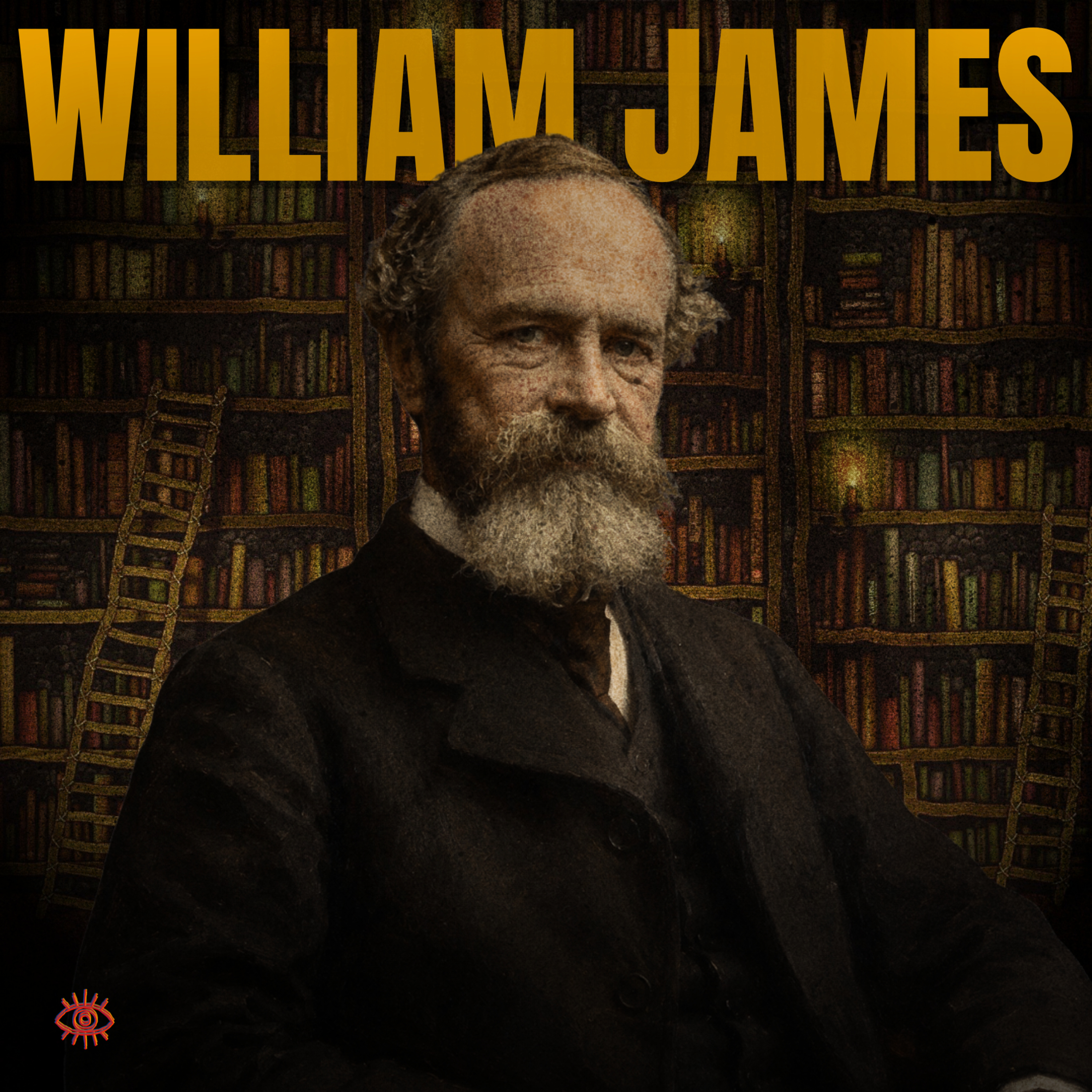 Life Is Worth Living | William James and the Sick Soul 18.09.2026 2h 23minFall asleep to the life of William James, the invalid who became America's great philosopher of hope and belief.As a young man William James was so ill in body and mind that he could barely leave his room, and one spring evening he made a private decision that would shape everything after it. This episode follows the whole arc of his life and thought, from a wandering childhood in the most gifted family in America, through the collapse that nearly ended him, to the years when he founded a new science of the mind and taught the world to picture consciousness as a flowing stream. We move with him from psychology into philosophy, through his defense of the right to believe, his tender study of the religious experience of ordinary people, and the practical theory of truth that made him famous and infamous at once. And we follow him to the end, a public conscience in a warring age, insisting to his last breath that the universe is unfinished and that our own efforts help to complete it.Please listen only in safe, restful contexts.Chapters:0:00:00 Chapter 1: The Life and the Turn0:11:44 Chapter 2: A Natural History of the Mind0:21:34 Chapter 3: The Stream That Never Stops0:29:58 Chapter 4: The Great Flywheel0:35:48 Chapter 5: Because We Tremble0:47:29 Chapter 6: The Right to Believe0:56:28 Chapter 7: The Sick Soul1:08:32 Chapter 8: By Their Fruits1:17:25 Chapter 9: One White Crow1:23:32 Chapter 10: What Difference It Makes1:34:57 Chapter 11: Truth Happens to an Idea1:44:09 Chapter 12: A World of Pure Experience1:50:30 Chapter 13: A Universe Still Unfinished2:00:51 Chapter 14: What Makes a Life Significant2:12:22 Chapter 15: The Temper That RemainsIf this helped you rest, follow Sleepy Philosophy Radio on Spotify, and become a member to unlock member only episodes and help keep the show going.Music by Kevin MacLeod (incompetech.com)Licensed under Creative Commons: By Attribution 4.0 Licensehttps://creativecommons.org/licenses/by/4.0/Tracks used: Anguish, Blue Feather, Evening Fall (Harp), Gregorian Chant, Heartbreaking, Lightless Dawn, Lone Harvest, Magic Forest, Mesmerize, Mourning Song, Oppressive Gloom, Promising Relationship, Quinn's Song: A New Man, Relent, Smoother Move, Sunset at Glengorm, Trio for Piano Cello and Clarinet, Wounded
 -
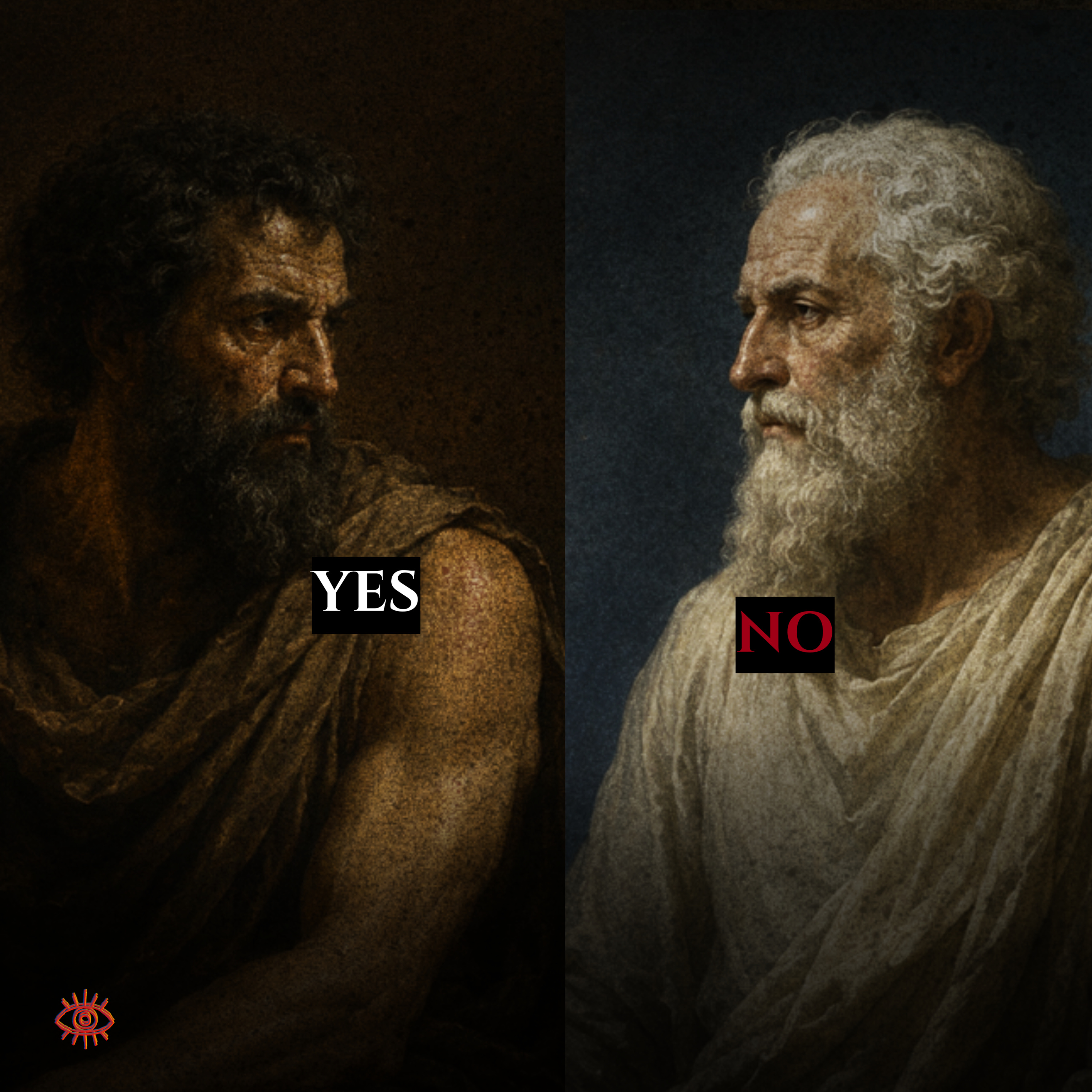 Is Change Real? | Heraclitus vs Parmenides | Philosophy for Sleep 13.09.2026 2h 17minFall asleep to the oldest quarrel in philosophy, whether all things flow or nothing ever moves at all.Twenty-five centuries ago, two Greek thinkers gave opposite answers to the same question, and nearly every philosopher since has stood somewhere between them. This episode follows the quarrel from its beginning. We meet Heraclitus, the lonely riddler of Ephesus who hid his one book in a temple and taught that everything flows, that the world is a river and a living fire held in tune by a hidden measure. We cross the sea to meet Parmenides, the calm lawgiver of the Greek west who used pure reason to argue that change is impossible, and that whatever truly is must stand motionless and one. We follow their collision through the famous paradoxes of Zeno, through Plato's daring attempt to give each thinker a world of his own, through Aristotle's quieter answer, and into our own age, where the same argument lives on in physics and in the felt passing of time. It is a slow, patient walk through the two deepest things we feel, that everything changes, and that nothing is ever truly lost.Please listen only in safe, restful contexts.Chapters:0:00:00 Chapter 1: The Riddler0:12:58 Chapter 2: The Man from the West0:21:03 Chapter 3: Into the Same River0:26:40 Chapter 4: The Bow and the Lyre0:35:38 Chapter 5: The Hidden Account0:47:03 Chapter 6: The Gates of Night and Day0:53:18 Chapter 7: What Cannot Not Be1:05:20 Chapter 8: The Well-Rounded Sphere1:14:14 Chapter 9: The World of Seeming1:19:55 Chapter 10: Achilles and the Tortoise1:28:20 Chapter 11: Becoming Against Being1:34:51 Chapter 12: The Two Worlds1:47:52 Chapter 13: How Change Was Saved1:55:01 Chapter 14: The World Flows Again2:04:43 Chapter 15: The Stubborn IllusionIf this helped you rest, follow Sleepy Philosophy Radio on Spotify, and become a member to unlock member only episodes and help keep the show going.Music by Kevin MacLeod (incompetech.com)Licensed under Creative Commons: By Attribution 4.0 Licensehttps://creativecommons.org/licenses/by/4.0/Tracks used: Anguish, Blue Feather, Evening Fall (Harp), Gregorian Chant, Heartbreaking, Lightless Dawn, Lone Harvest, Magic Forest, Mesmerize, Mourning Song, Oppressive Gloom, Promising Relationship, Quinn's Song: A New Man, Relent, Smoother Move, Sunset at Glengorm, Trio for Piano Cello and Clarinet, Wounded
 -
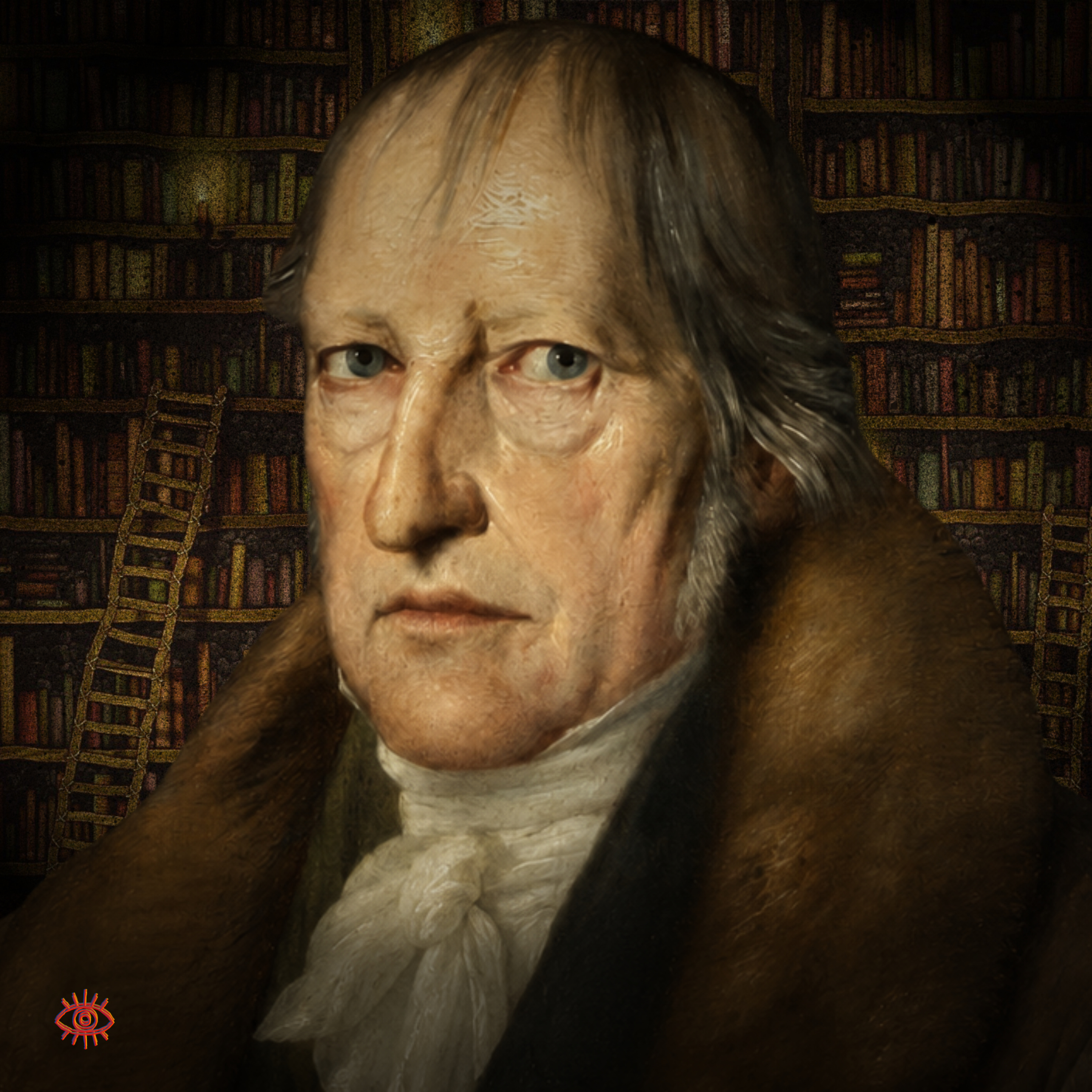 No One Is Free Alone | Hegel and the Need to Be Seen 09.09.2026 2h 17minFall asleep to Hegel, who watched an old world end and swore reason was moving through the ruin.Georg Wilhelm Friedrich Hegel was born into a modest world and rose, against long odds, to become the most commanding philosopher of his age, the last great thinker who dared to explain nearly everything as a single unfolding whole. This episode opens in a burning town, with an unknown lecturer carrying the only copy of his first masterpiece, and from there it traces the long climb of his life and his thought. We follow his diagnosis of a broken modern world and his lifelong search to make it whole again. We watch his famous ladder of consciousness rise rung by rung, the meeting of master and servant that would echo for two centuries, his forbidding logic, his vision of history as the slow growth of freedom, and his readings of art, of religion, and of the state. And we end with the storm that broke over his grave, and with the strange, patient wisdom of an owl that takes flight only at dusk.Please listen only in safe, restful contexts.Chapters:(00:00:00) Chapter 1: The World-Soul on Horseback(00:13:09) Chapter 2: A World Torn in Two(00:19:11) Chapter 3: The Limit and Beyond(00:27:20) Chapter 4: Nothing Stands Still(00:37:40) Chapter 5: The Ladder of Consciousness(00:45:42) Chapter 6: Master and Slave(00:56:02) Chapter 7: The Unhappy Consciousness(01:02:22) Chapter 8: The Thoughts of God(01:12:32) Chapter 9: Spirit Comes to Itself(01:19:59) Chapter 10: The Shape of Freedom(01:31:43) Chapter 11: The Poverty in Plenty(01:38:48) Chapter 12: The Cunning of Reason(01:48:51) Chapter 13: Art's Long Farewell(01:55:40) Chapter 14: The Picture and the Thought(02:05:01) Chapter 15: The Owl of MinervaIf this helped you rest, follow Sleepy Philosophy Radio for a new full length philosophy episode every few nights.Music by Kevin MacLeod, incompetech.comLicensed under Creative Commons: By Attribution 4.0 Licensehttps://creativecommons.org/licenses/by/4.0/Tracks used: Anguish, Blue Feather, Evening Fall (Harp), Gregorian Chant, Heartbreaking, Lightless Dawn, Lone Harvest, Magic Forest, Mesmerize, Mourning Song, Oppressive Gloom, Promising Relationship, Quinn's Song: A New Man, Relent, Smoother Move, Sunset at Glengorm, Trio for Piano Cello and Clarinet, Wounded
 -
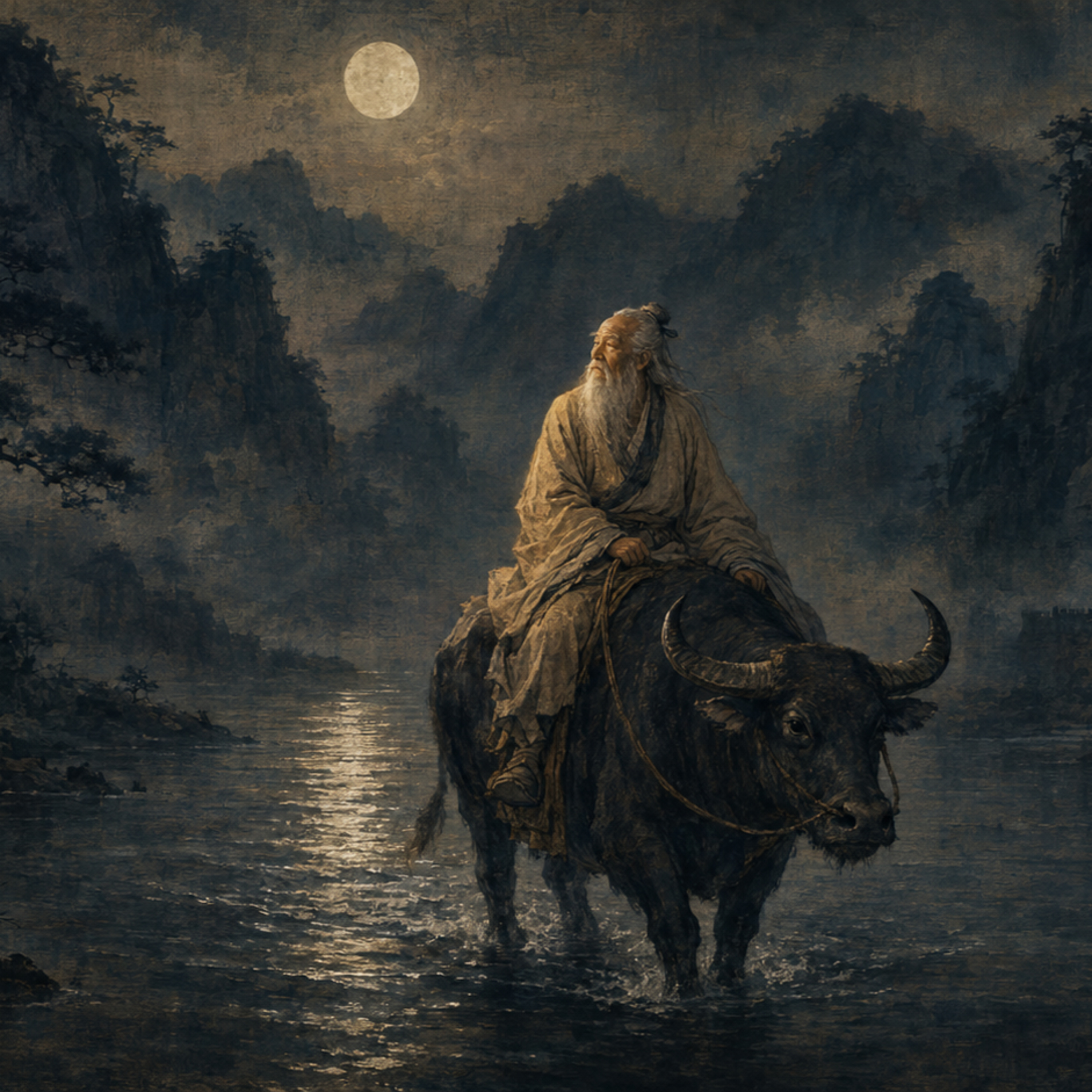 Those Who Know Do Not Speak | The Hidden Teachings of Lao Tzu 04.09.2026 2h 17minFall asleep to the ancient Chinese way of yielding, water, and the wisdom of doing without forcing.More than two thousand years ago, in a China torn apart by endless war, an old man rode west on an ox, handed a gatekeeper a small book of verses, and disappeared into the mountains. That book, and the tradition it founded, is the subject of this long, slow episode. We begin with its legendary author and the strange little classic he left behind, then move into the heart of his teaching, the nameless Way beneath all things, the art of accomplishing much by forcing nothing, and the quiet strength of water, emptiness, and the low places. We meet the second great teacher, a poor and brilliant man who taught through wild and funny stories, dreamed he was a butterfly, and met death without fear. From there we follow the tradition as it grows into a vast religion, flows into painting and poetry and the birth of Zen, and travels at last across the world to speak to our own restless and exhausted age.Please listen only in safe, restful contexts.Chapters:0:00:00 Chapter 1: The Old Man at the Pass0:12:12 Chapter 2: Five Thousand Words0:18:08 Chapter 3: The Way That Cannot Be Named0:29:26 Chapter 4: Doing Without Doing0:37:39 Chapter 5: The Use of Emptiness0:43:06 Chapter 6: The Spirit of the Valley0:50:26 Chapter 7: Ruling a Great State0:59:44 Chapter 8: The Butterfly and the Man1:11:33 Chapter 9: Whether the Fish Are Happy1:20:06 Chapter 10: The Usefulness of the Useless1:25:51 Chapter 11: The Cook and the Ox1:35:27 Chapter 12: The Pivot of the Way1:43:58 Chapter 13: Sitting in Forgetfulness1:50:22 Chapter 14: When the Way Became a Church1:59:43 Chapter 15: The Meeting of the Rivers2:05:44 Chapter 16: Water Finds Its LevelIf this helped you rest, follow Sleepy Philosophy Radio on Spotify, and become a member to unlock member only episodes and help keep the show going.Music by Kevin MacLeod (incompetech.com)Licensed under Creative Commons: By Attribution 4.0 Licensehttps://creativecommons.org/licenses/by/4.0/Tracks used: Anguish, Blue Feather, Evening Fall (Harp), Gregorian Chant, Heartbreaking, Lightless Dawn, Lone Harvest, Magic Forest, Mesmerize, Mourning Song, Oppressive Gloom, Promising Relationship, Quinn's Song: A New Man, Relent, Smoother Move, Sunset at Glengorm, Trio for Piano Cello and Clarinet, Wounded
 -
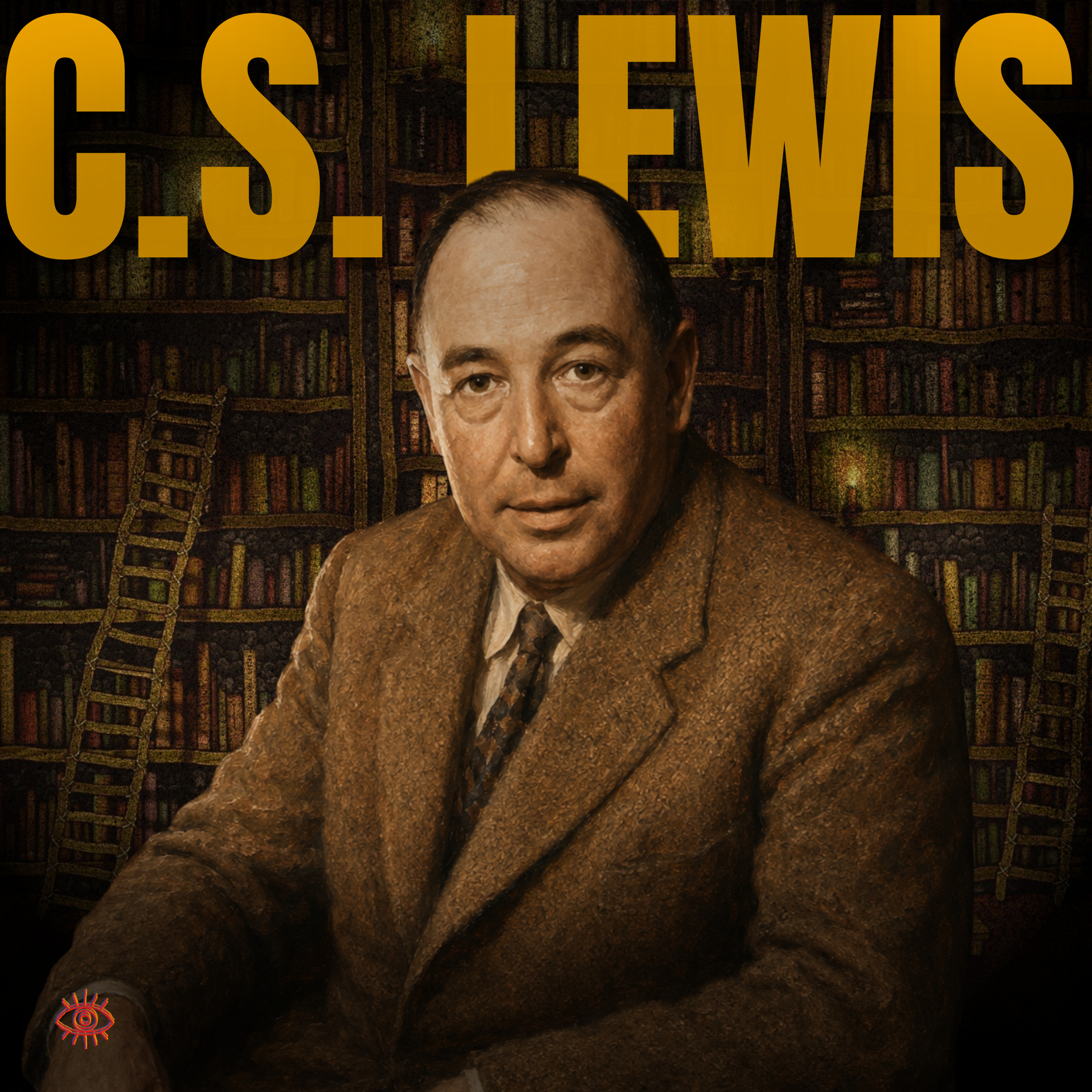 The Most Reluctant Convert | C.S. Lewis for Deep Sleep 29.08.2026 2h 22minFall asleep to the life and mind of C.S. Lewis, the atheist who became Christianity's most beloved modern voice.Over more than two hours, this longform episode traces the whole arc of a remarkable life and mind. We begin in a cold Belfast childhood and a wartime trench, follow a brilliant young atheist through the long, reluctant argument that led him back to belief, and settle in among the Oxford friendships that shaped him. From there we move slowly through the great works, the stab of longing he called Joy, the plain wartime broadcasts that made him famous, the fierce little book on objective value that secular readers still admire, the letters of a tempting devil, the bus ride to the edge of heaven, the lion in the snowy wood, and the pagan myth he retold as his masterpiece. And we end where his own life ended, in a late and unexpected love, a shattering grief, and a quiet death, before asking why, more than half a century on, so many still turn to him in the dark. Clear enough to follow with your eyes closed, and serious enough to be worth it.Please listen only in safe, restful contexts.Chapters:0:00:00 Chapter 1: The Most Reluctant Convert0:16:11 Chapter 2: The Stab of Longing0:24:41 Chapter 3: The Night on Addison's Walk0:31:01 Chapter 4: The Kingdom of Courtesy0:39:14 Chapter 5: The Megaphone of God0:45:44 Chapter 6: A Hall With Many Doors0:55:56 Chapter 7: The Cardinal Difficulty1:04:00 Chapter 8: Men Without Chests1:15:37 Chapter 9: The Silent Planet1:23:35 Chapter 10: Letters From the Enemy1:29:32 Chapter 11: The Bus to Heaven1:37:20 Chapter 12: The Wardrobe and the Lion1:49:30 Chapter 13: The Face Beneath the Veil1:58:45 Chapter 14: When Love Becomes a God2:06:11 Chapter 15: The Slammed Door2:12:43 Chapter 16: The Man Who Would Not FadeIf this helped you rest, follow Sleepy Philosophy Radio on Spotify, and become a member to unlock member only episodes and help keep the show going.Music by Kevin MacLeod (incompetech.com)Licensed under Creative Commons: By Attribution 4.0 Licensehttps://creativecommons.org/licenses/by/4.0/Tracks used: Anguish, Blue Feather, Evening Fall (Harp), Gregorian Chant, Heartbreaking, Lightless Dawn, Lone Harvest, Magic Forest, Mesmerize, Mourning Song, Oppressive Gloom, Promising Relationship, Quinn's Song: A New Man, Relent, Smoother Move, Sunset at Glengorm, Trio for Piano Cello and Clarinet, Wounded
 -
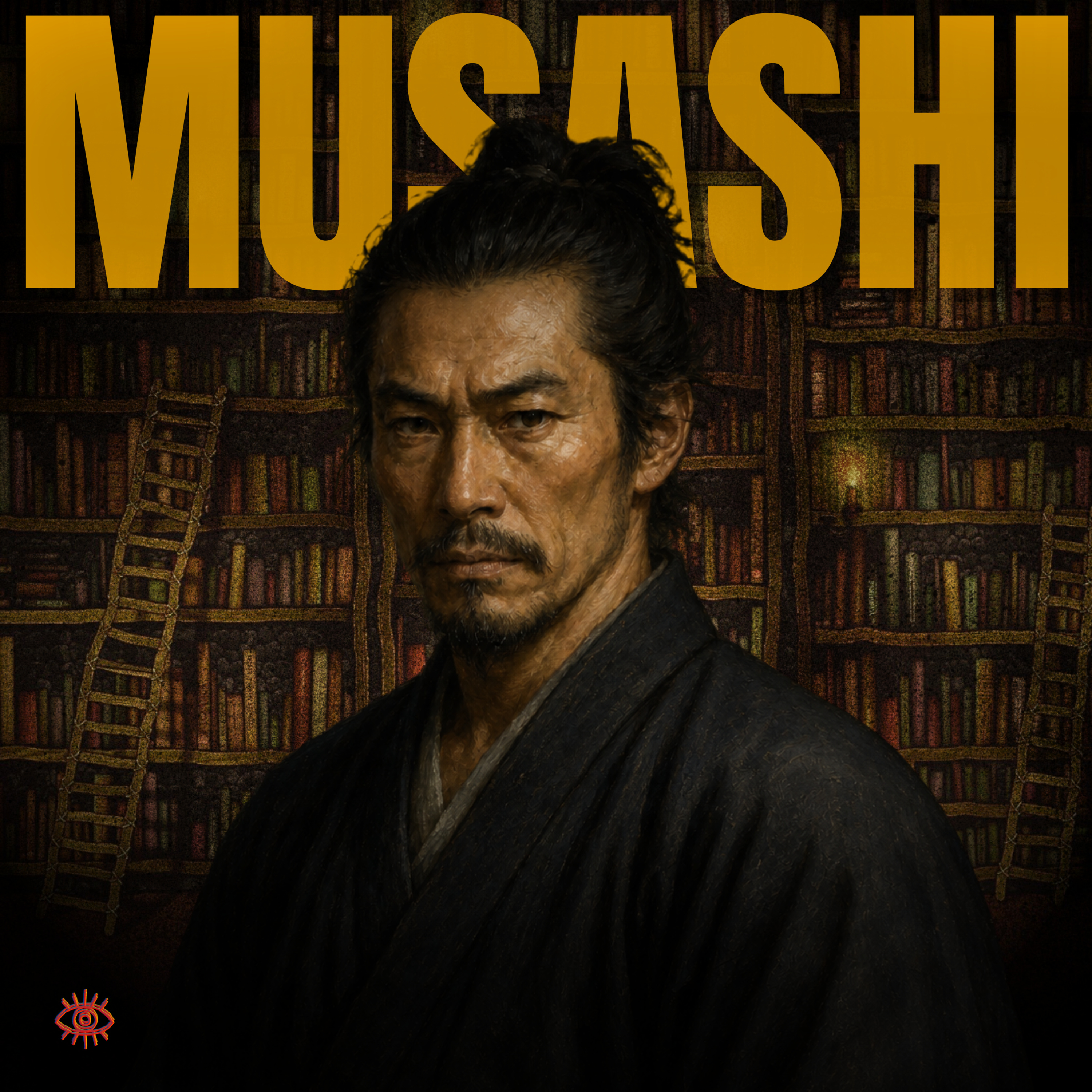 The Sword Was Never the Point | Miyamoto Musashi for Deep Sleep 23.08.2026 2h 7minFall asleep to the story of Miyamoto Musashi, the undefeated swordsman who laid down his blade to write.Born into the last years of Japan's long civil wars, a rough, motherless boy killed his first opponent in a duel at the age of thirteen and walked out onto the open road to test himself against the finest swordsmen in the land. This is the story of what he was really looking for. We follow him through the two duels that made him a legend, a broken dynasty of sword teachers in the old capital and a single stroke on a windswept island, and then through the stranger second half of a life spent turning away from killing toward painting, teaching, and a search for something the sword could only point at. In a cave at the end of his days he gathered all of it into one short, austere book about strategy, mastery, and the clear, empty mind that waits on the far side of any discipline pursued to its depth. A life, and a way of seeing, for the quiet hours.Please listen only in safe, restful contexts.Chapters:0:00:00 Chapter 1: The Life0:10:41 Chapter 2: The Two Swords0:18:08 Chapter 3: The House in Kyoto0:29:50 Chapter 4: The Island0:36:12 Chapter 5: The Wooden Sword0:44:28 Chapter 6: The Years Without a Master0:50:36 Chapter 7: The Brush and the Sword0:59:09 Chapter 8: The Cave1:04:35 Chapter 9: The Ground of the Way1:12:38 Chapter 10: The Mind Like Water1:24:22 Chapter 11: The Heat of Battle1:33:25 Chapter 12: The Ways of Others1:39:42 Chapter 13: The Great Emptiness1:51:49 Chapter 14: The Way of Walking Alone1:57:16 Chapter 15: The Myth and the ManIf this helped you rest, follow Sleepy Philosophy Radio on Spotify, and become a member to unlock member only episodes and help keep the show going.Music by Kevin MacLeod (incompetech.com)Licensed under Creative Commons: By Attribution 4.0 Licensehttps://creativecommons.org/licenses/by/4.0/Tracks used: Anguish, Blue Feather, Evening Fall (Harp), Gregorian Chant, Heartbreaking, Lightless Dawn, Lone Harvest, Magic Forest, Mesmerize, Mourning Song, Oppressive Gloom, Promising Relationship, Quinn's Song: A New Man, Relent, Smoother Move, Sunset at Glengorm, Trio for Piano Cello and Clarinet, Wounded
 -
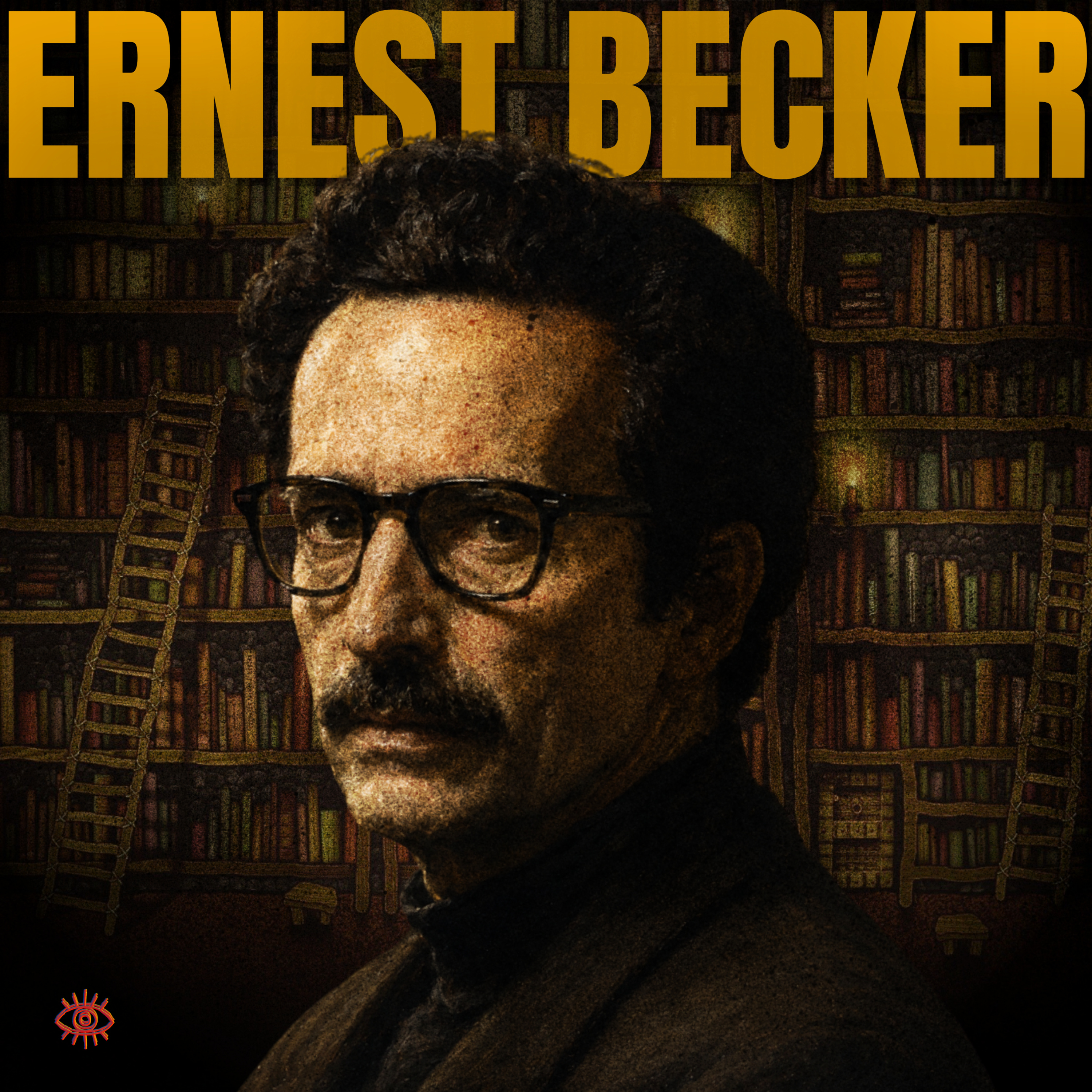 Why We Fear Death | Ernest Becker’s The Denial of Death for Sleep 19.08.2026 2h 28minFall asleep to the story of Ernest Becker, who traced all human striving back to the fear of death.In a hospital bed on the Canadian coast, a dying man agreed to be recorded talking about death, the subject he had spent his whole life studying. This episode follows Ernest Becker, the anthropologist and outsider who was pushed from one university to the next and died at forty-nine, only weeks before his masterwork won the Pulitzer Prize. We trace his single great argument, that human beings are the animals who know they will die, and that we build our entire world, our characters, our loves, our cultures, and our wars, out of the long effort to deny it. We follow him through the vital lie of personality, the immortality projects by which we reach for a symbolic eternity, the hidden roots of human evil, and the quiet, lucid way he faced his own end. It is a long and calm walk to the center of what drives us.Please listen only in safe, restful contexts.Chapters:0:00:00 Chapter 1: The Scientist of Death0:11:44 Chapter 2: The Animal That Knows0:17:53 Chapter 3: The Making of a Person0:26:48 Chapter 4: The Schooling in Dread0:35:24 Chapter 5: The Body That Betrays Us0:42:10 Chapter 6: The Meaning of Madness0:50:09 Chapter 7: The Neurotic and the Artist1:03:15 Chapter 8: The Great Reversal1:11:51 Chapter 9: The Vital Lie1:23:55 Chapter 10: The Spell Cast by Persons1:32:42 Chapter 11: The Immortality Project1:44:45 Chapter 12: The Partner as God1:50:29 Chapter 13: The Ritual Against Death1:59:45 Chapter 14: The Price of Heroism2:12:09 Chapter 15: The Test of a Life2:18:44 Chapter 16: The Worm at the CoreIf this helped you rest, follow Sleepy Philosophy Radio on Spotify, and become a member to unlock member only episodes and help keep the show going.Music by Kevin MacLeod (incompetech.com)Licensed under Creative Commons: By Attribution 4.0 Licensehttps://creativecommons.org/licenses/by/4.0/Tracks used: Anguish, Blue Feather, Evening Fall (Harp), Gregorian Chant, Heartbreaking, Lightless Dawn, Lone Harvest, Magic Forest, Mesmerize, Mourning Song, Oppressive Gloom, Promising Relationship, Quinn's Song: A New Man, Relent, Smoother Move, Sunset at Glengorm, Trio for Piano Cello and Clarinet, Wounded
 -
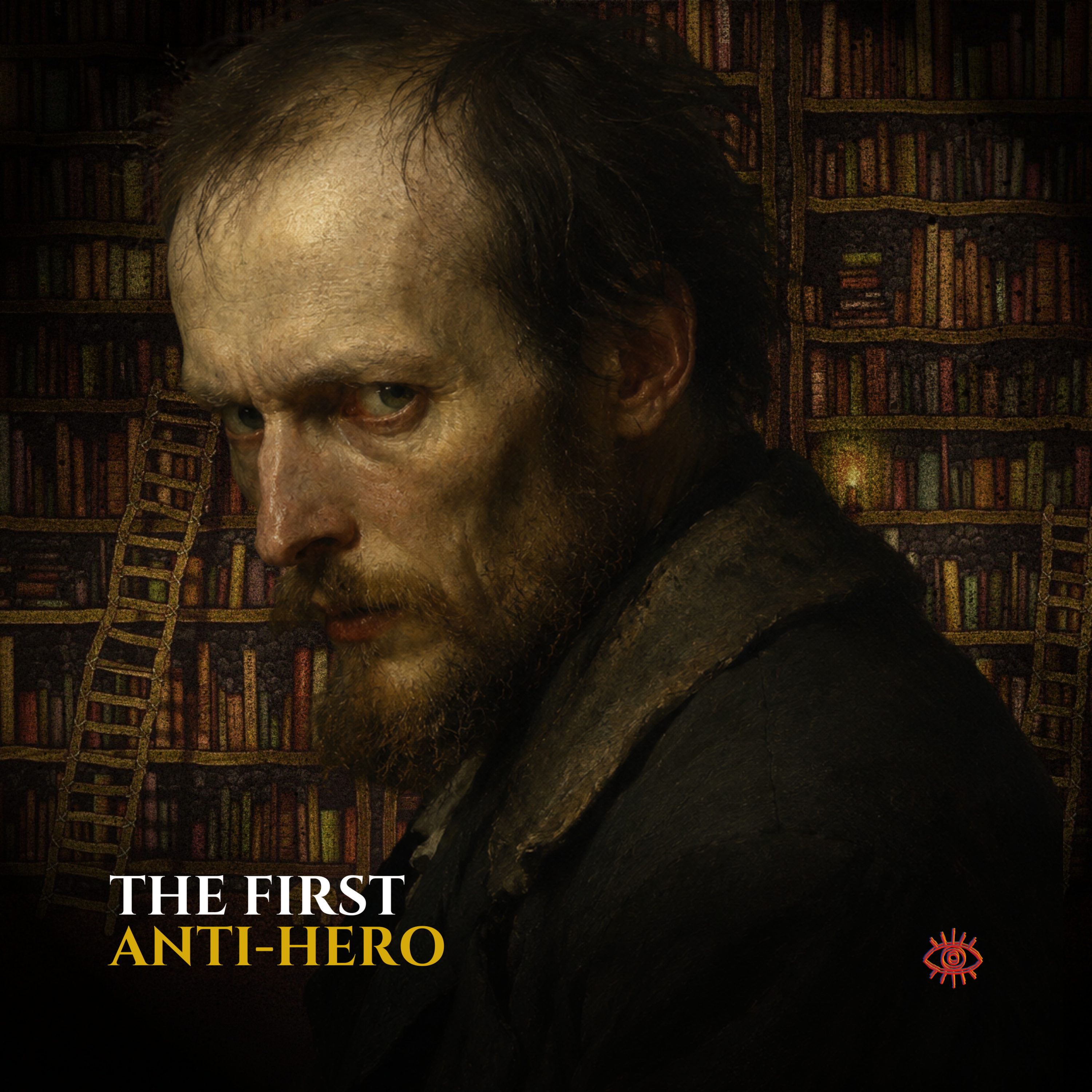 Man Is Not a Piano Key | Dostoevsky's Notes from Underground for Sleep 13.08.2026 2h 18minFall asleep to the story of literature's first anti-hero, the sick and spiteful man who spoke the modern mind's secret.In the winter of a year that would take almost everyone he loved, a broke and grieving writer set loose the strangest voice in Russian literature, a nameless man in a rented corner who declares himself sick, spiteful, and free. This episode stays inside that single short book, Notes from Underground, and follows its narrator all the way down. We begin at the desk where it was written, then enter his war on reason, on the science of happiness, and on the gleaming palace of the perfect future. We follow him out of his head and into the world, to a humiliating dinner, a snowbound street, and an encounter with a young woman that becomes the truest and cruelest scene he ever lived. Along the way we uncover the chapter a censor quietly cut, and the buried answer it removed. What remains is the first modern confession, and a mind we still recognize as our own.Please listen only in safe, restful contexts.Chapters:0:00:00 Chapter 1: The Year of the Underground0:11:37 Chapter 2: A Sick and Spiteful Voice0:17:55 Chapter 3: The Disease of Consciousness0:29:22 Chapter 4: The Wall and the Arithmetic0:37:40 Chapter 5: The Most Advantageous Advantage0:49:08 Chapter 6: The Palace You Cannot Live In0:55:18 Chapter 7: Divorced from Living Life1:02:57 Chapter 8: Apropos of the Wet Snow1:14:25 Chapter 9: A Farewell Dinner1:23:01 Chapter 10: The Speech in the Dark1:33:53 Chapter 11: The Silence Before the Knock1:41:21 Chapter 12: Cheap Happiness or Lofty Suffering1:52:29 Chapter 13: The Chapter the Censor Cut2:01:05 Chapter 14: Such a Person Must Exist2:06:47 Chapter 15: The First Modern ManIf this helped you rest, follow Sleepy Philosophy Radio on Spotify, and become a member to unlock member only episodes and help keep the show going.Music by Kevin MacLeod (incompetech.com)Licensed under Creative Commons: By Attribution 4.0 Licensehttps://creativecommons.org/licenses/by/4.0/Tracks used: Anguish, Blue Feather, Evening Fall (Harp), Gregorian Chant, Heartbreaking, Lightless Dawn, Lone Harvest, Magic Forest, Mesmerize, Mourning Song, Oppressive Gloom, Promising Relationship, Quinn's Song: A New Man, Relent, Smoother Move, Sunset at Glengorm, Trio for Piano Cello and Clarinet, Wounded
 -
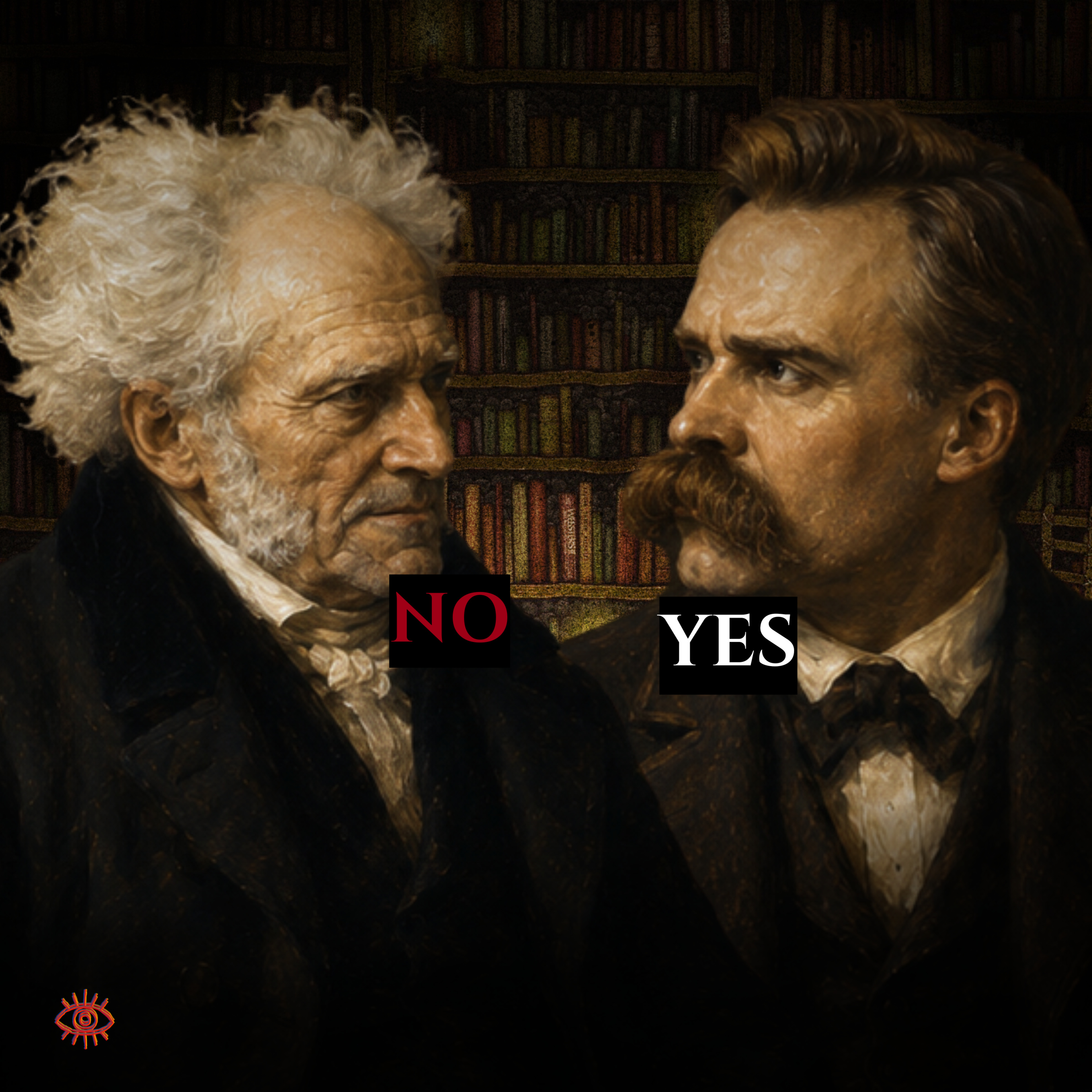 Is Life Worth Living? | Nietzsche vs Schopenhauer | Philosophy for Sleep 07.08.2026 2h 17minFall asleep to the story of the young Nietzsche, who worshipped Schopenhauer and spent his life trying to prove him wrong.As a lonely student, Friedrich Nietzsche found a dead philosopher's book on a bookshop table and fell under a spell that would shape everything he became. This episode follows the long, strange bond between Nietzsche and his first master, Arthur Schopenhauer, from devotion to open war. We meet the bitter, solitary Schopenhauer and his vision of a blind striving world where life is suffering and the wisest thing is to want less. We watch the young Nietzsche pour that vision into his first book, then slowly turn against it, until he answers the darkest case ever made against existence with the wildest possible affirmation of it. Along the way we trace the will, pity, the death of the hidden true world, and the thought that measures whether a life could be loved enough to live again. It is a quiet, patient walk through the deepest argument two honest minds ever had about whether life is worth wanting.Please listen only in safe, restful contexts.Chapters:0:00:00 Chapter 1: The Discovery0:12:06 Chapter 2: The Man He Never Met0:21:17 Chapter 3: The Blind Force Beneath0:32:53 Chapter 4: The Case Against Existence0:41:31 Chapter 5: The Teacher Above Him0:47:05 Chapter 6: Born From Music0:58:42 Chapter 7: A Shared Idol1:06:12 Chapter 8: The Idol Cracks1:12:08 Chapter 9: The Cold Light1:20:18 Chapter 10: What the Will Wants1:31:39 Chapter 11: The Danger of Pity1:40:10 Chapter 12: Sickness or Abundance1:45:30 Chapter 13: The Weight of Return1:55:09 Chapter 14: The True World Vanishes2:03:03 Chapter 15: Everything He Owed2:08:49 Chapter 16: The Quarrel That RemainsIf this helped you rest, follow Sleepy Philosophy Radio on Spotify, and become a member to unlock member only episodes and help keep the show going.Music by Kevin MacLeod (incompetech.com)Licensed under Creative Commons: By Attribution 4.0 Licensehttps://creativecommons.org/licenses/by/4.0/Tracks used: Anguish, Blue Feather, Evening Fall (Harp), Gregorian Chant, Heartbreaking, Lightless Dawn, Lone Harvest, Magic Forest, Mesmerize, Mourning Song, Oppressive Gloom, Promising Relationship, Quinn's Song: A New Man, Relent, Smoother Move, Sunset at Glengorm, Trio for Piano Cello and Clarinet, Wounded
 -
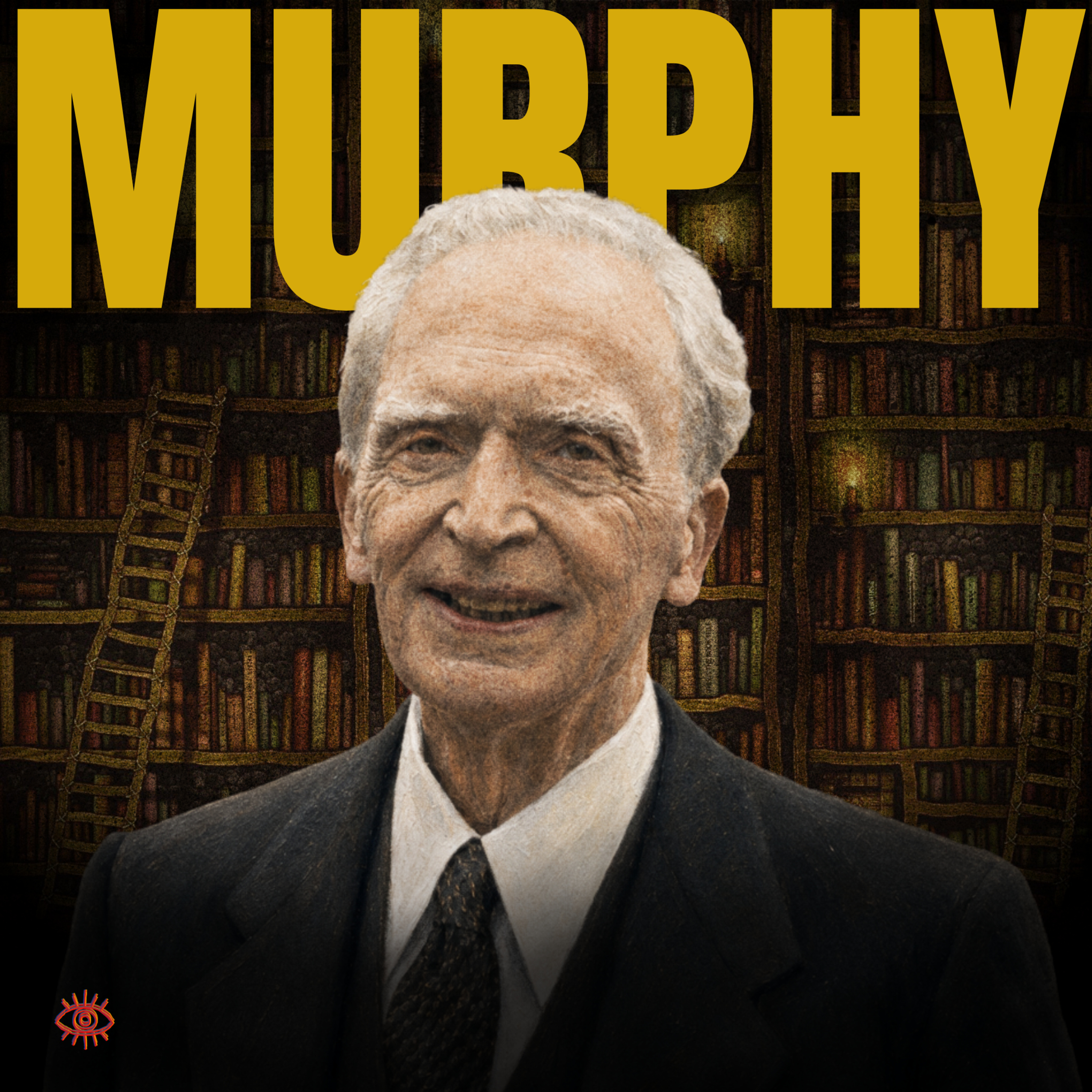 The Power of Your Subconscious Mind | Joseph Murphy for Sleep 01.08.2026 2h 27minAn Irish boy left the priesthood, crossed an ocean, and built a new faith out of the human mind.This is the story of Joseph Murphy, the Irish-born minister whose single book on the subconscious mind has sold in the millions and has never left print. We begin with the boy who trained for the priesthood and lost his faith, the chemist who crossed an ocean, and the quiet preacher who found in a New York congregation a new American religion of the mind. From there we trace the tradition he inherited, the British judge whose ideas he carried, and the simple, startling model of two minds at the center of his teaching. We follow his redefinition of prayer, his practice at the threshold of sleep, his promises of health and wealth, and the impersonal God he made out of the God of his childhood. And we ask the hard questions in turn, whether the teaching is kind, whether it is true, and why, decades after his death, the world still cannot stop reading him.Please listen only in safe, restful contexts.SUPPORT THE SHOWVote on what comes next: https://www.sleepyphilosophyradio.com/voteBecoming a member keeps these episodes coming and unlocks the members only library of exclusive book summary episodes, a growing shelf of great books read closely and explained in plain language.Subscribe: https://creators.spotify.com/pod/profile/sleepyphilo/subscribe00:00:00 The Boy Who Left the Priesthood00:10:42 The American Religion of the Mind00:18:11 The Judge Who Weighed the Soul00:24:34 The Gardener and the Soil00:35:26 The Law of Belief00:41:13 The Book That Would Not Die00:52:42 Prayer Without a Listener01:01:34 The Doorway of Sleep01:07:27 The Body That Believes01:14:57 The Heat of Conviction01:21:32 The Promise of Plenty01:28:47 Rewriting the Self01:39:45 What Became of God01:47:29 The One Mind01:54:04 When the Law Fails02:02:38 How Would We Know02:12:44 The Minister at His Desk02:19:07 The Long AfterlifeSleepy Philosophy Radio makes longform, carefully researched philosophy written as a serious essay and paced for rest.Music by Kevin MacLeod (incompetech.com)Licensed under Creative Commons: By Attribution 4.0 Licensehttps://creativecommons.org/licenses/by/4.0/Tracks used: Anguish, Blue Feather, Evening Fall (Harp), Gregorian Chant, Heartbreaking, Lightless Dawn, Lone Harvest, Magic Forest, Mesmerize, Mourning Song, Oppressive Gloom, Promising Relationship, Quinn's Song: A New Man, Relent, Smoother Move, Sunset at Glengorm, Trio for Piano Cello and Clarinet, Wounded
 -
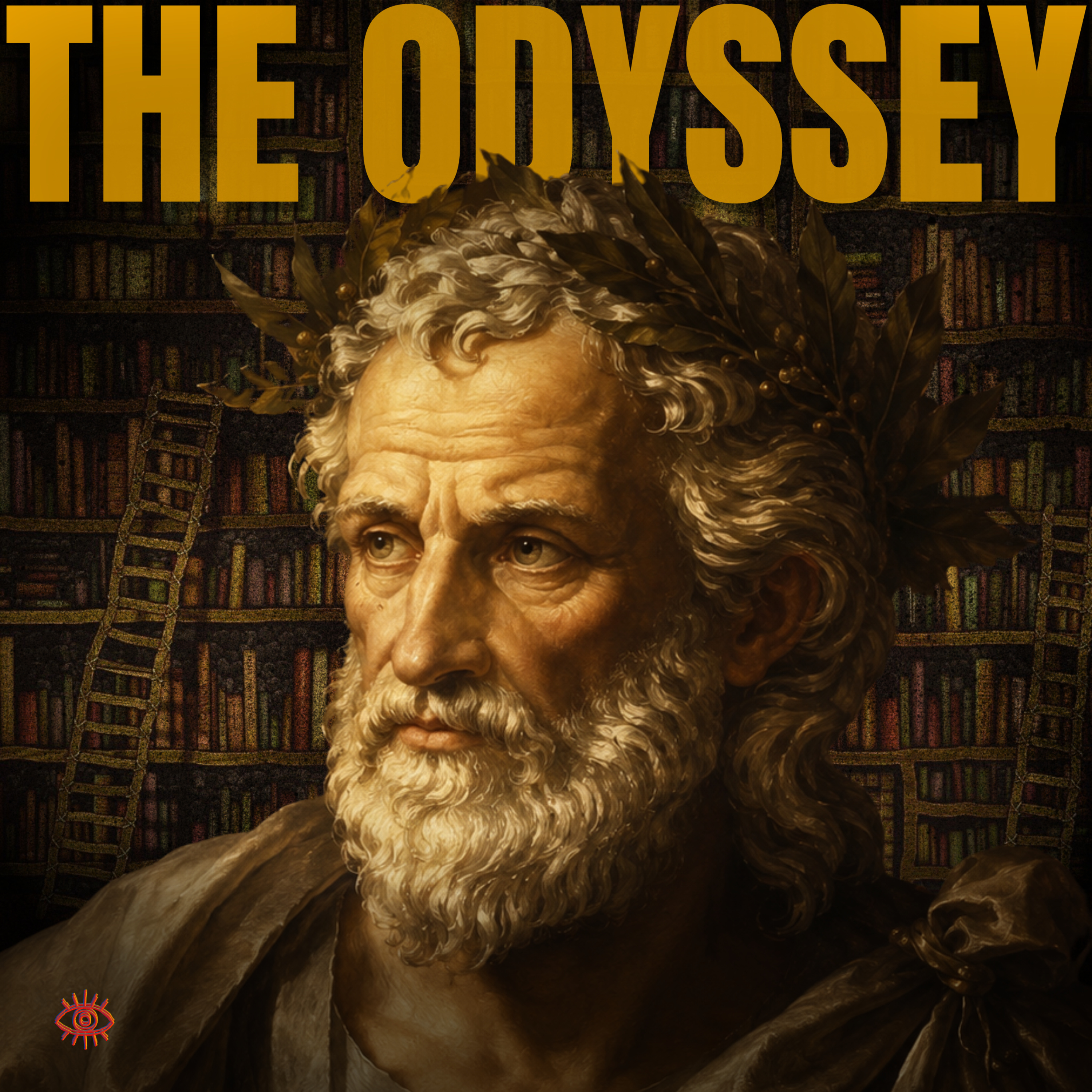 The Odyssey Explained: The Full Story and What It Really Means | For Sleep 24.07.2026 2h 25minFall asleep to Homer's Odyssey, a voyage through mortality, memory, identity, and the difficult meaning of home.Beginning with a man who refuses immortality, then entering the mystery of Homer and the firelit halls where singers carried the poem in memory, this longform episode follows Odysseus through the great trials of his return. It explores the dangerous power of names, the guest law, the cost of knowledge, the voices of the dead, and the fragile line between justice and revenge. Along the way, Penelope emerges as the wanderer's intellectual equal, while the scar, the bow, the orchard, and the bed rooted in a living olive tree reveal how recognition survives disguise and time. The story has lately returned to cinema screens, but its oldest questions remain unchanged. What makes a finite life worth choosing, what do we owe a stranger, and can anyone return to a home altered by absence. The closing movement follows the Odyssey through Dante, Tennyson, and Joyce, showing how every age remakes the wanderer in its own image.Please listen only in safe, restful contexts.Chapters:0:00:00 Introduction: The Mortal Choice0:01:23 Chapter 1: The Singer Called Nobody0:10:19 Chapter 2: The Empty Throne0:18:39 Chapter 3: The Mortal Shore0:27:10 Chapter 4: The Hero Tells Himself0:35:21 Chapter 5: Nobody in the Cave0:48:04 Chapter 6: The Shape of Appetite0:59:38 Chapter 7: Voices Under Earth1:13:34 Chapter 8: Knowledge and Hunger1:21:56 Chapter 9: The Stranger at Home1:30:32 Chapter 10: Signs That Remember1:37:58 Chapter 11: The Patient Equal1:46:51 Chapter 12: The Quiet Reckoning1:54:45 Chapter 13: The Rooted Bed2:05:28 Chapter 14: The Inland Oar2:14:58 Chapter 15: Every Age ReturnsIf this helped you rest, follow Sleepy Philosophy Radio on Spotify, and become a member to unlock member only episodes and help keep the show going.Music by Kevin MacLeod (incompetech.com)Licensed under Creative Commons: By Attribution 4.0 Licensehttps://creativecommons.org/licenses/by/4.0/Tracks used: Anguish, Blue Feather, Evening Fall (Harp), Gregorian Chant, Heartbreaking, Lightless Dawn, Lone Harvest, Magic Forest, Mesmerize, Mourning Song, Oppressive Gloom, Promising Relationship, Quinn's Song: A New Man, Relent, Smoother Move, Sunset at Glengorm, Trio for Piano Cello and Clarinet, Wounded
 -
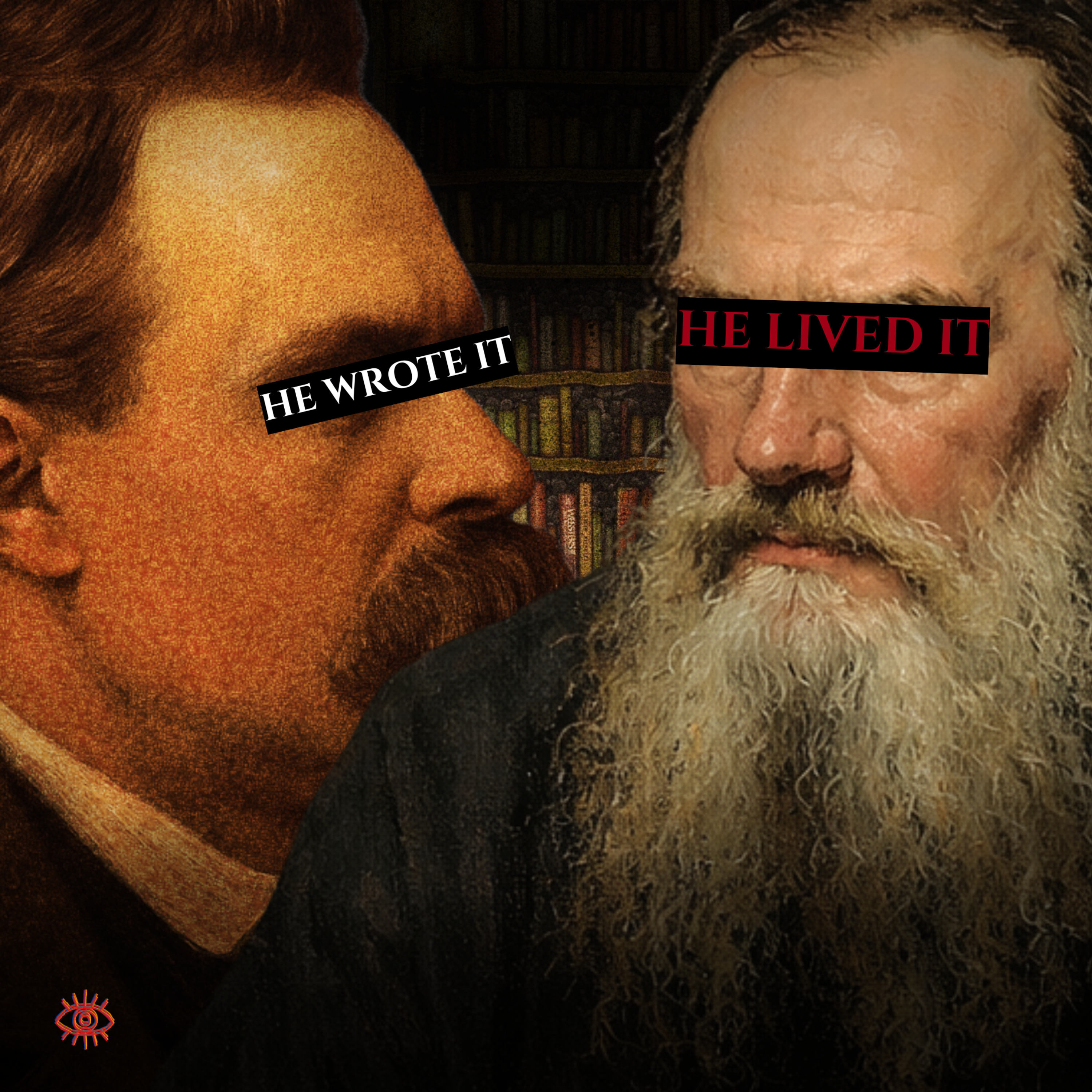 If You Gaze Long Into an Abyss | A Complete Philosophy of the Existential Crisis 18.07.2026 3h 27minWhy do people who have everything still wake at three in the morning certain that none of it means anything?This is a long, unhurried history of the moment the floor of ordinary life gives way. It begins with a celebrated novelist who, at the height of his fame and fortune, quietly hid a rope from himself, and from that single human crisis it opens outward across the centuries. We follow the confrontation with meaninglessness through the oldest scriptures and the calm arguments of antiquity, through a believer terrified by an infinite and silent cosmos, through the philosopher of endless striving, and into the thinkers who made this dread the very center of their work. We sit with the death of God, with radical freedom, with the absurd, with a survivor who found a reason to endure the unendurable, and with a tradition that meets the void by loosening its grip on the self. The episode closes not with a tidy answer but with the quiet question of how a person comes back to life.Please listen only in safe, restful contexts.SUPPORT THE SHOWVote on what comes next: https://www.sleepyphilosophyradio.com/voteBecoming a member keeps these episodes coming and unlocks the members only library of exclusive book summary episodes, a growing shelf of great books read closely and explained in plain language.Subscribe: https://creators.spotify.com/pod/profile/sleepyphilo/subscribe00:00:00 When the Floor Gives Way00:13:20 Everything Under the Sun00:20:22 The Ancient Art of Facing Death00:28:47 The Silence of Infinite Spaces00:34:56 The Will That Never Rests00:45:07 The Dizziness of Freedom00:58:20 The Underground and the Inquisitor01:07:37 The Death of God01:21:39 When the Abyss Looks Back01:30:13 The Sick Soul01:36:59 Anxiety and the Nothing01:48:56 At the Limits01:55:06 Condemned to Be Free02:07:02 The Absurd and the Refusal02:17:15 The Weight of Ambiguity02:23:55 The Courage to Be02:32:09 A Reason to Endure02:44:24 The Denial of Death02:53:08 The Noonday Listlessness02:59:24 The Self That Lets Go03:08:18 The Return of the Ordinary03:15:14 Why the Abyss RemainsSleepy Philosophy Radio makes longform, carefully researched philosophy written as a serious essay and paced for rest.Music by Kevin MacLeod (incompetech.com)Licensed under Creative Commons: By Attribution 4.0 Licensehttps://creativecommons.org/licenses/by/4.0/Tracks used: Anguish, Blue Feather, Evening Fall (Harp), Gregorian Chant, Heartbreaking, Lightless Dawn, Lone Harvest, Magic Forest, Mesmerize, Mourning Song, Oppressive Gloom, Promising Relationship, Quinn's Song: A New Man, Relent, Smoother Move, Sunset at Glengorm, Trio for Piano Cello and Clarinet, Wounded
 -
 Why Humans Are Drawn to the Forbidden | Georges Bataille for Sleep 16.07.2026 3h 13minVote on what comes next: https://www.sleepyphilosophyradio.com/voteBecoming a member keeps these episodes coming and unlocks the members only library of exclusive book summary episodes, a growing shelf of great books read closely and explained in plain language.Subscribe: https://creators.spotify.com/pod/profile/sleepyphilo/subscribeBy day a mild librarian, by night the philosopher of excess, eroticism, and the sacred where reason ends.Georges Bataille kept one of the strangest double lives in modern thought. For decades he was a quiet librarian in Paris, courteous and unremarkable, while in private he wrote some of the most extreme and original books of his century. This episode follows him from a childhood shaped by a blind and dying father, through a lost faith and a notorious first novel, into the feuds and secret societies of the years between the wars. It traces the ideas that made him a hidden source for a whole later generation, the economy of loss and useless expenditure, the sun that gives without return, the sacred glimpsed in transgression, a mysticism with no God at the end of it, and eroticism understood as the meeting place of desire and death. Along the way it restores the man behind the scandal, the gentle scholar drawn to everything orderly thought leaves out. Told as a serious essay and paced for rest.Please listen only in safe, restful contexts.00:00:00 The Blind Father00:12:59 The Eye and the Egg00:22:42 The Excremental Philosopher00:29:12 The Low and the Formless00:39:22 The Economy of Loss00:46:20 Hegel's Wound and Nietzsche's Laughter00:56:34 The Headless God01:03:36 The Return of the Sacred01:13:42 Laure and the Silence01:20:00 A Mysticism Without God01:33:08 A Theology Turned Inside Out01:42:03 God in the Brothel01:48:07 Love Among the Graves01:56:30 The Sun That Gives Without Return02:11:27 The Sovereign Moment02:20:13 Desire All the Way to Death02:34:31 Literature Is Not Innocent02:44:02 The Community of Those Who Have Nothing02:50:24 The Tears of Eros02:58:01 The Mild Librarian03:04:24 The Uses of Georges BatailleSleepy Philosophy Radio makes longform, carefully researched philosophy written as a serious essay and paced for rest.Music by Kevin MacLeod (incompetech.com)Licensed under Creative Commons: By Attribution 4.0 Licensehttps://creativecommons.org/licenses/by/4.0/Tracks used: Anguish, Blue Feather, Evening Fall (Harp), Gregorian Chant, Heartbreaking, Lightless Dawn, Lone Harvest, Magic Forest, Mesmerize, Mourning Song, Oppressive Gloom, Promising Relationship, Quinn's Song: A New Man, Relent, Smoother Move, Sunset at Glengorm, Trio for Piano Cello and Clarinet, Wounded
 -
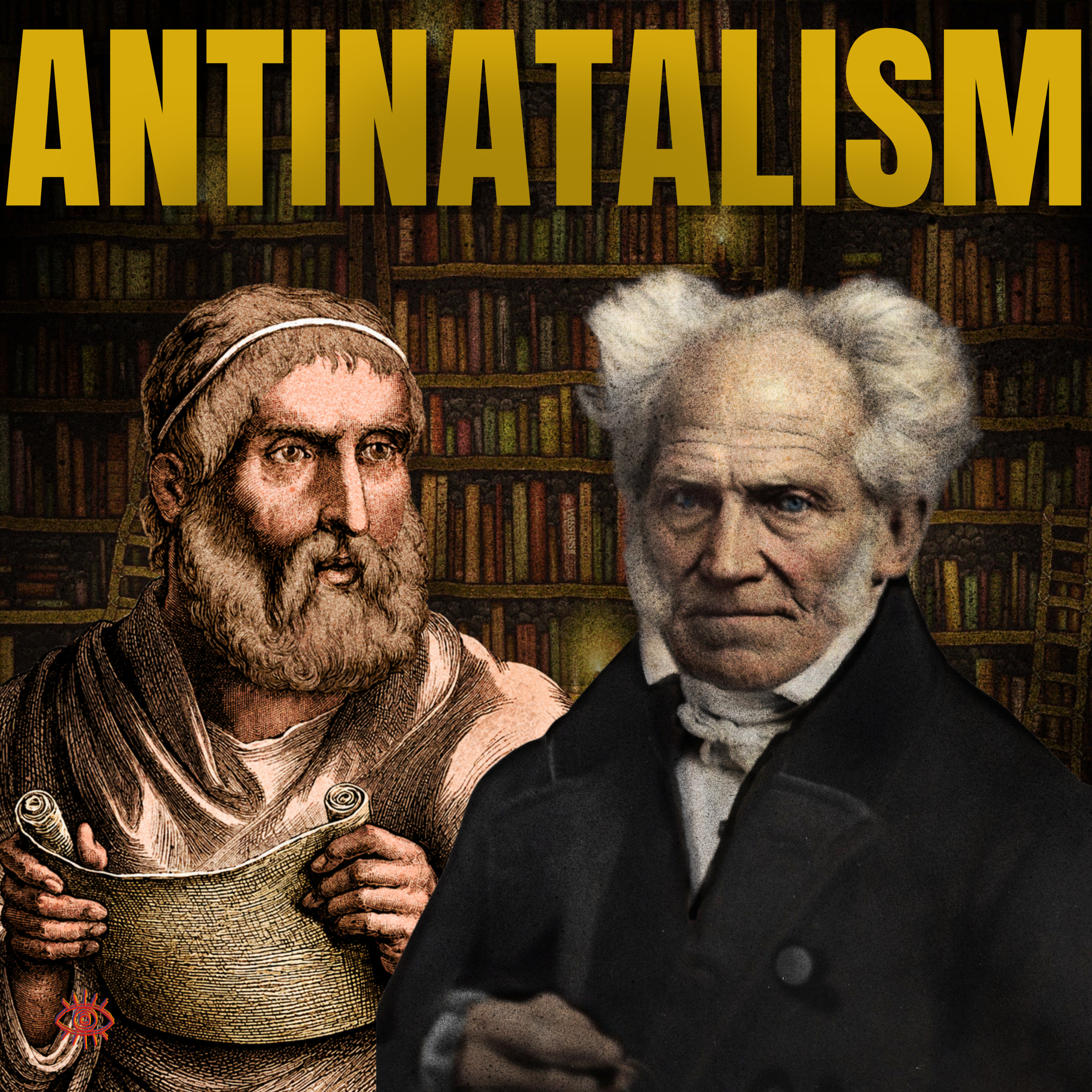 Best of All Is Never to Be Born | Antinatalism, a Complete Philosophy for Sleep 08.07.2026 3h 10minThe oldest, strangest verdict in philosophy, that it might be better never to have been born.Long before the word existed, the wisest voices of the ancient world kept arriving at the same strange verdict, that it might be better never to have been born at all. This episode follows that thought across the centuries, from a captured satyr and the chorus of a Greek tragedy to the systematic pessimism of Schopenhauer, who made suffering the ground note of existence. From there it moves through the strangest corners of the tradition, a philosopher who imagined a God who chose to die, a Norwegian who called consciousness an evolutionary mistake, and a sleepless Romanian who turned despair into aphorism. At its center stands the modern argument that made the idea respectable again, David Benatar's claim that coming into existence is always a harm, with the questions of consent, suffering, and the harm we do woven around it. Along the way it gives the other side a full hearing, including its greatest adversary, the thinker who answered the ancient verdict by daring to love his fate.Please listen only in safe, restful contexts.SUPPORT THE SHOWVote on what comes next: https://www.sleepyphilosophyradio.com/voteBecoming a member keeps these episodes coming and unlocks the members only library of exclusive book summary episodes, a growing shelf of great books read closely and explained in plain language.Subscribe: https://creators.spotify.com/pod/profile/sleepyphilo/subscribe00:00:00 The Wisdom of Silenus00:11:46 A Word for the Position00:17:51 The Wheel of Rebirth00:26:10 The Best of All Possible Worlds00:32:41 The Philosopher of the Will00:44:05 Better Not to Be00:51:50 The God Who Died00:58:16 The Last Messiah01:07:36 The Trouble with Being Born01:14:19 The Asymmetry01:27:26 The Pollyanna in the Mind01:32:57 The Question No One Was Asked01:42:05 The Sum of Suffering01:53:37 The Harm We Do02:02:29 Consciousness, the Malignant Gift02:08:36 A Line of Poets02:17:31 The Man Who Said Yes02:28:48 Why Not Simply Die02:34:43 The Case Against02:43:18 The Silence We Choose02:50:03 The Compassion Core02:58:35 The Verdict ReturnsSleepy Philosophy Radio makes longform, carefully researched philosophy written as a serious essay and paced for rest.Music by Kevin MacLeod (incompetech.com)Licensed under Creative Commons: By Attribution 4.0 Licensehttps://creativecommons.org/licenses/by/4.0/Tracks used: Anguish, Blue Feather, Evening Fall (Harp), Gregorian Chant, Heartbreaking, Lightless Dawn, Lone Harvest, Magic Forest, Mesmerize, Mourning Song, Oppressive Gloom, Promising Relationship, Quinn's Song: A New Man, Relent, Smoother Move, Sunset at Glengorm, Trio for Piano Cello and Clarinet, Wounded
 -
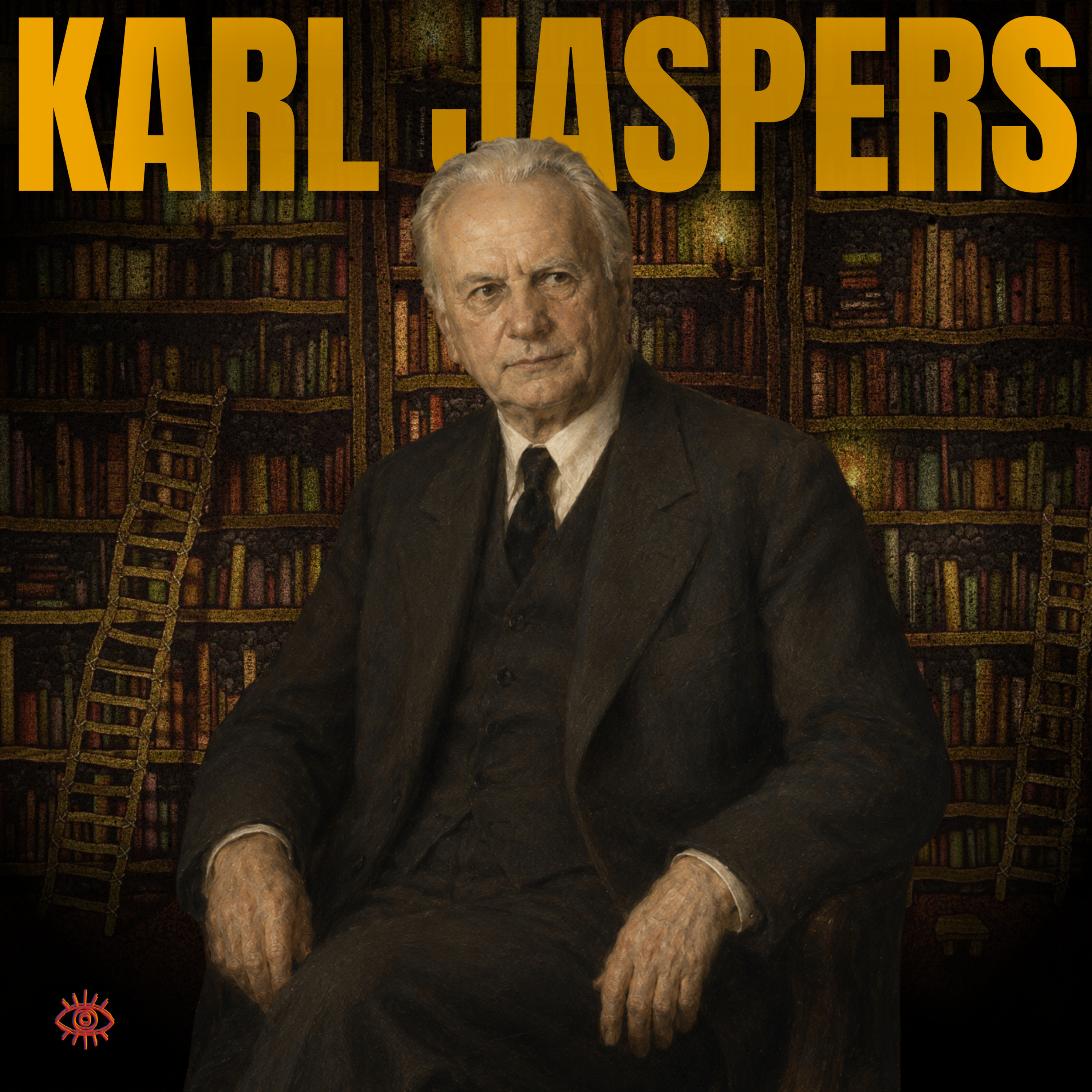 Heidegger Betrayed Him. Arendt Never Left. | Karl Jaspers Complete Philosophy for Sleep 03.07.2026 2h 39minA boy told he would die by thirty built a philosophy of openness that outlived two death sentences.Karl Jaspers trained as a doctor under the shadow of an early death, reinvented the study of the troubled mind, and then crossed quietly into philosophy to ask the largest questions a person can face. This episode follows his whole arc, from the cold northern coast where he was born, through the Heidelberg years and the marriage that shaped everything, to the ideas that made him one of the deepest thinkers of his century. We trace the situations no one escapes, the self that is never finished, the truth that lives only between two people, and the signs of something beyond all knowing. We walk through his shattered friendship with another great philosopher, the years he and his wife lived under threat, and his emergence after the war as a moral conscience who asked a ruined nation to think clearly about its guilt. It is the story of a mind that refused, against everything, to close.Please listen only in safe, restful contexts.Vote on what comes next: https://www.sleepyphilosophyradio.com/voteBecoming a member keeps these episodes coming and unlocks the members only library of exclusive book summary episodes, a growing shelf of great books read closely and explained in plain language.Subscribe: https://creators.spotify.com/pod/profile/sleepyphilo/subscribe(0:00:00) The Boy Given Thirty Years(0:12:03) The Doctor Who Listened(0:20:41) The Man at Full Stretch(0:26:21) The Situations We Cannot Escape(0:36:18) The Two Who Woke Him(0:44:07) The Book Built to Stay Open(0:49:59) The Self That Is Never Finished(0:58:10) The Loving Struggle(1:04:11) The Horizon Behind Every Horizon(1:12:25) The Cipher and the Shipwreck(1:23:07) Reason Against the Fever(1:29:27) The Friend Who Crossed Over(1:36:17) The Poison and the Liberation(1:45:49) Four Kinds of Guilt(1:53:28) The Friendship That Held(1:59:42) A Faith Without Dogma(2:06:46) The Axis of History(2:16:42) The Long Conversation(2:22:56) The Bomb and the Conscience(2:30:40) The Philosopher of the OpenSleepy Philosophy Radio makes longform, carefully researched philosophy written as a serious essay and paced for rest.Music by Kevin MacLeod (incompetech.com)Licensed under Creative Commons: By Attribution 4.0 Licensehttps://creativecommons.org/licenses/by/4.0/Tracks used: Anguish, Blue Feather, Evening Fall (Harp), Gregorian Chant, Heartbreaking, Lightless Dawn, Lone Harvest, Magic Forest, Mesmerize, Mourning Song, Oppressive Gloom, Promising Relationship, Quinn's Song: A New Man, Relent, Smoother Move, Sunset at Glengorm, Trio for Piano Cello and Clarinet, Wounded
 -
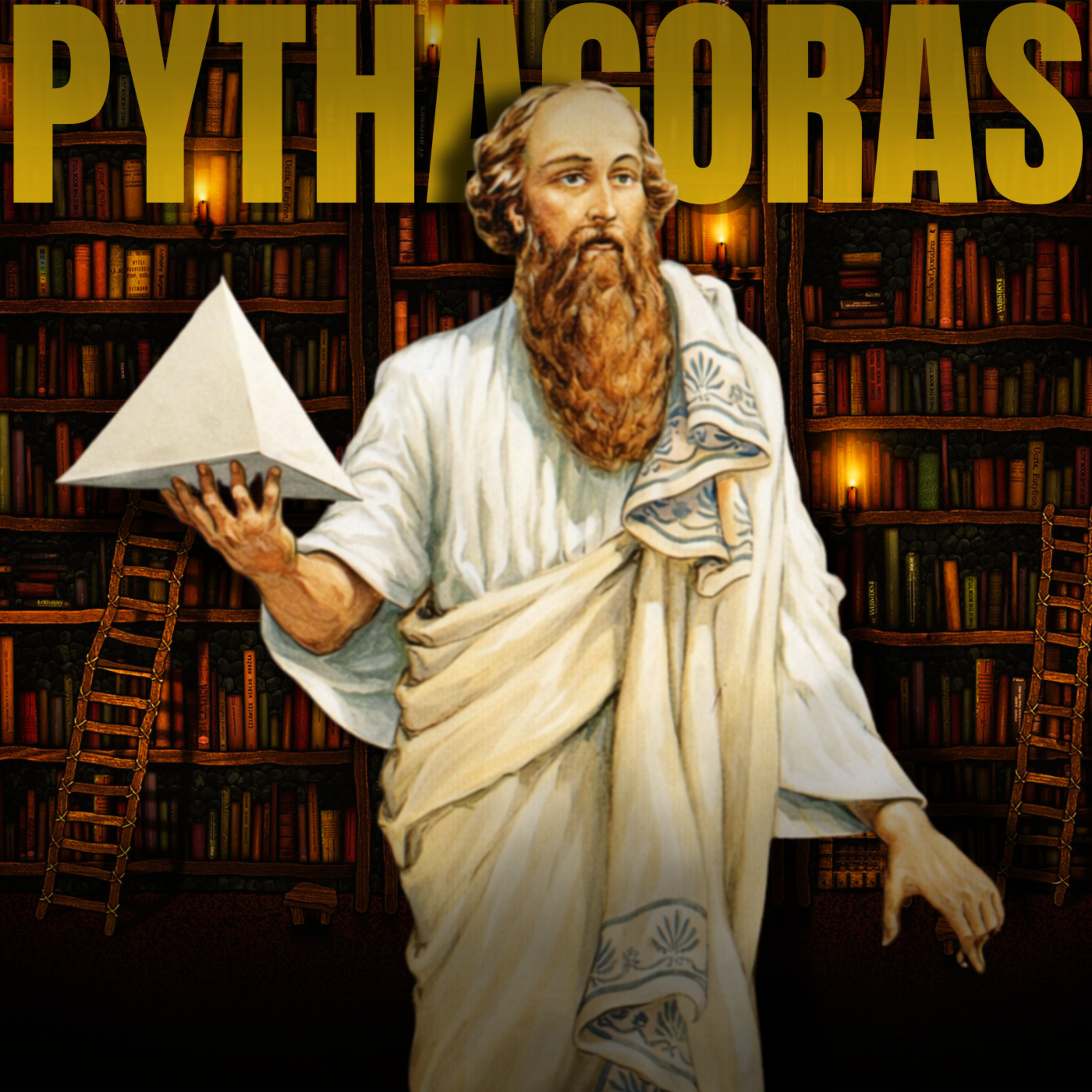 Why Pythagoras Believed Everything Was a Number | Philosophy for Sleep 01.07.2026 3h 4minAround 600 BCE, on the island of Samos, a man declared something that sounded almost absurd: that everything in the universe, every object, every force, every living creature, is ultimately a number. Not described by number. Not measured by number. But number itself.This three-hour exploration follows Pythagoras from his mysterious origins on Samos through his travels to Egypt and Babylon, the secret community he founded in southern Italy, and the mathematical discoveries that would reshape how humanity understands reality. We examine the sacred tetractys, the theorem that bears his name, the discovery that musical harmony is built from simple ratios, and the doctrine that the cosmos itself produces an inaudible symphony.We trace the belief that the soul travels through countless bodies across lifetimes, the persecution that burned his school to the ground, and the ideas that survived to shape Plato, medieval cosmology, and modern science.Pythagoras left almost no writings. What remains was assembled centuries after his death, layered with legend and myth. But beneath that mystery sits a radical idea: that reality has a structure, that structure is mathematical, and that human beings can learn to read it.Please listen only in safe, restful contexts.Chapters(00:00:00)Pythagoras of Samos and the Birth of Mathematical Philosophy(00:18:30)The Pythagorean Way of Life and the Sacred Community(00:43:06)All Is Number, The Fundamental Principle of Reality(01:01:22)The Tetractys and Sacred Geometry(01:19:05)Mathematical Discoveries and the Birth of Proof(01:36:27)Musical Harmony and Mathematical Proportion(01:52:02)The Music of the Spheres and Cosmic Order(02:09:01)The Soul, Metempsychosis, and the Kinship of All Life(02:25:47)Ethics, Politics, and the Pythagorean Persecution(02:41:47)The Legacy of Pythagoreanism in Western ThoughtSupport the channel: https://creators.spotify.com/pod/profile/sleepyphilo/subscribeMusic by Kevin MacLeod (incompetech.com)Licensed under Creative Commons: By Attribution 4.0 Licensehttps://creativecommons.org/licenses/by/4.0/Tracks used: Anguish, Blue Feather, Evening Fall (Harp), Gregorian Chant, Heartbreaking, Lightless Dawn, Lone Harvest, Magic Forest, Mesmerize, Mourning Song, Oppressive Gloom, Promising Relationship, Quinn's Song: A New Man, Relent, Smoother Move, Sunset at Glengorm, Trio for Piano Cello and Clarinet, Wounded
 -
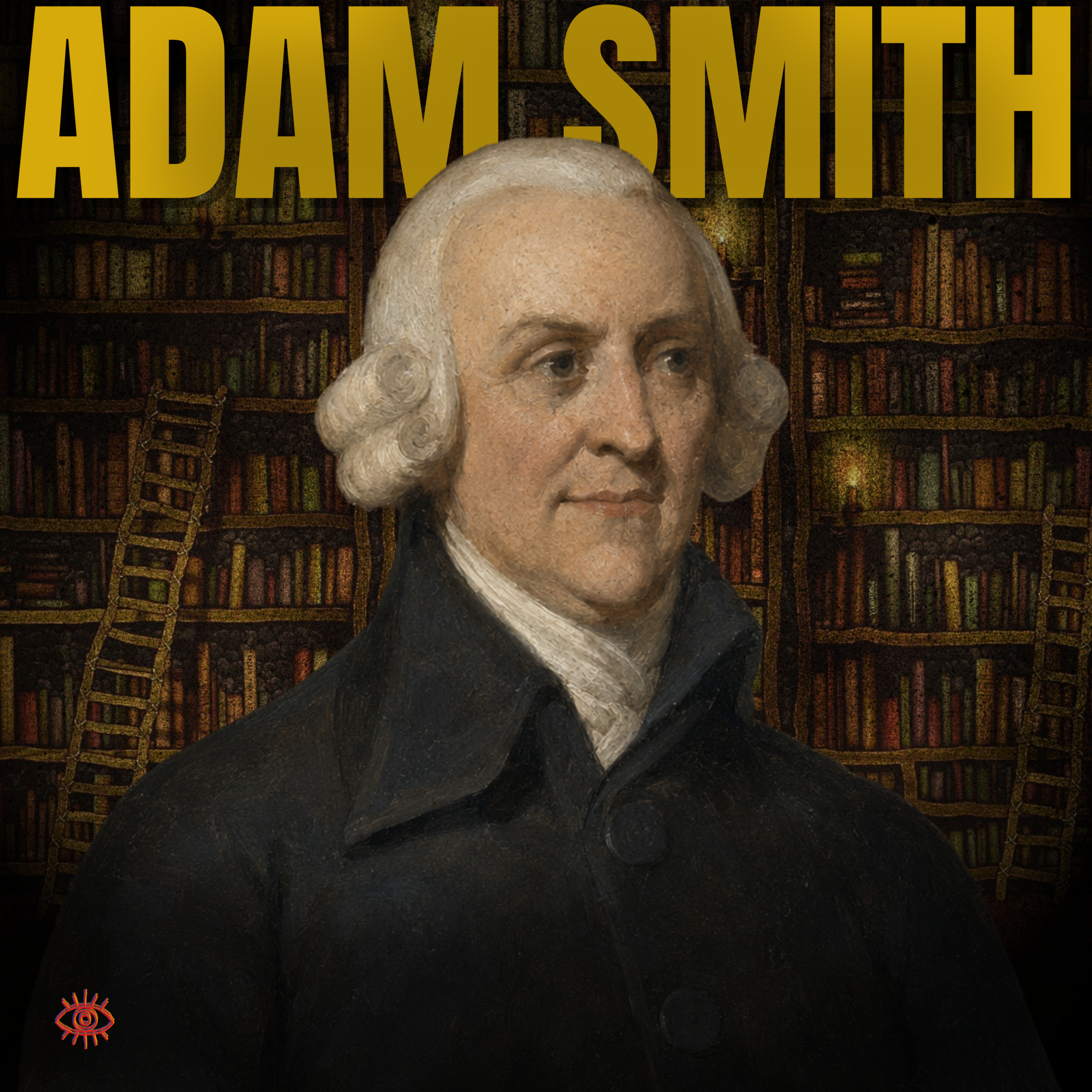 "Led by an Invisible Hand" | Adam Smith Complete Philosophy For Sleep 26.06.2026 3h 27minHe wrote the book that built the modern world, then spent his last days making sure most of the rest was burned.Adam Smith was the gentle, absent-minded son of a Scottish customs official, and he became the most misread thinker in the history of economics.This episode follows the whole arc: the quiet port town of Kirkcaldy and the mother he never left, the miserable years at Oxford, the Glasgow lecture rooms where he was happiest, and the long silent decade by the sea in which he wrote the Wealth of Nations.Before the economics comes the moral philosophy the world forgot, the theory of sympathy and the mirror of society, the impartial spectator and the man within the breast, the little finger and the earthquake, the parable of the poor man's son who chases wealth and finds it empty.Then the great book itself, read slowly and in context, the pin factory, the butcher and the brewer, the invisible hand in all three places Smith actually used it, the merchants conspiring against the public, the critique of empire and slavery, and the duties he assigned to the state.Along the way come Hutcheson and Hume, the French economists in their Paris salons, the bank that collapsed while he wrote, the public letter on Hume's death that cost him more abuse than his attack on the whole commercial system, and the man of system who moves human beings like pieces on a board. Serious philosophy, told slowly and clearly, for listeners who want real ideas as they drift off.Please listen only in safe, restful contexts.SUPPORT THE SHOWVote on what comes next: https://www.sleepyphilosophyradio.com/voteBecoming a member keeps these episodes coming and unlocks the members only library of exclusive book summary episodes, a growing shelf of great books read closely and explained in plain language.Subscribe: https://creators.spotify.com/pod/profile/sleepyphilo/subscribe(0:00:00) The Man Who Burned His Papers(0:13:08) Wonder and the Imagination(0:19:26) A Nation of Improvers(0:28:18) The Mirror of Society(0:39:50) The Faculty of Speech(0:45:29) The Man Within the Breast(0:58:50) The Little Finger and the Earthquake(1:04:32) The Corruption of Our Moral Sentiments(1:14:38) The Poor Man's Son(1:20:51) Justice, the Main Pillar(1:29:42) Among the Economists(1:41:38) The Year the Banks Fell(1:48:02) The Pin Factory(2:01:55) The Butcher's Self-Love(2:12:03) The Invisible Hand(2:24:11) A Conspiracy Against the Public(2:29:46) The Golden Dream(2:40:07) The Linen Shirt(2:46:14) The Duties of the Sovereign(2:59:54) The Death of David Hume(3:08:03) The Man of System(3:13:44) The Uses of Adam SmithSleepy Philosophy Radio makes longform, carefully researched philosophy written as a serious essay and paced for rest.Music by Kevin MacLeod (incompetech.com)Licensed under Creative Commons: By Attribution 4.0 Licensehttps://creativecommons.org/licenses/by/4.0/Tracks used: Anguish, Blue Feather, Evening Fall (Harp), Gregorian Chant, Heartbreaking, Lightless Dawn, Lone Harvest, Magic Forest, Mesmerize, Mourning Song, Oppressive Gloom, Promising Relationship, Quinn's Song: A New Man, Relent, Smoother Move, Sunset at Glengorm, Trio for Piano Cello and Clarinet, Wounded
 -
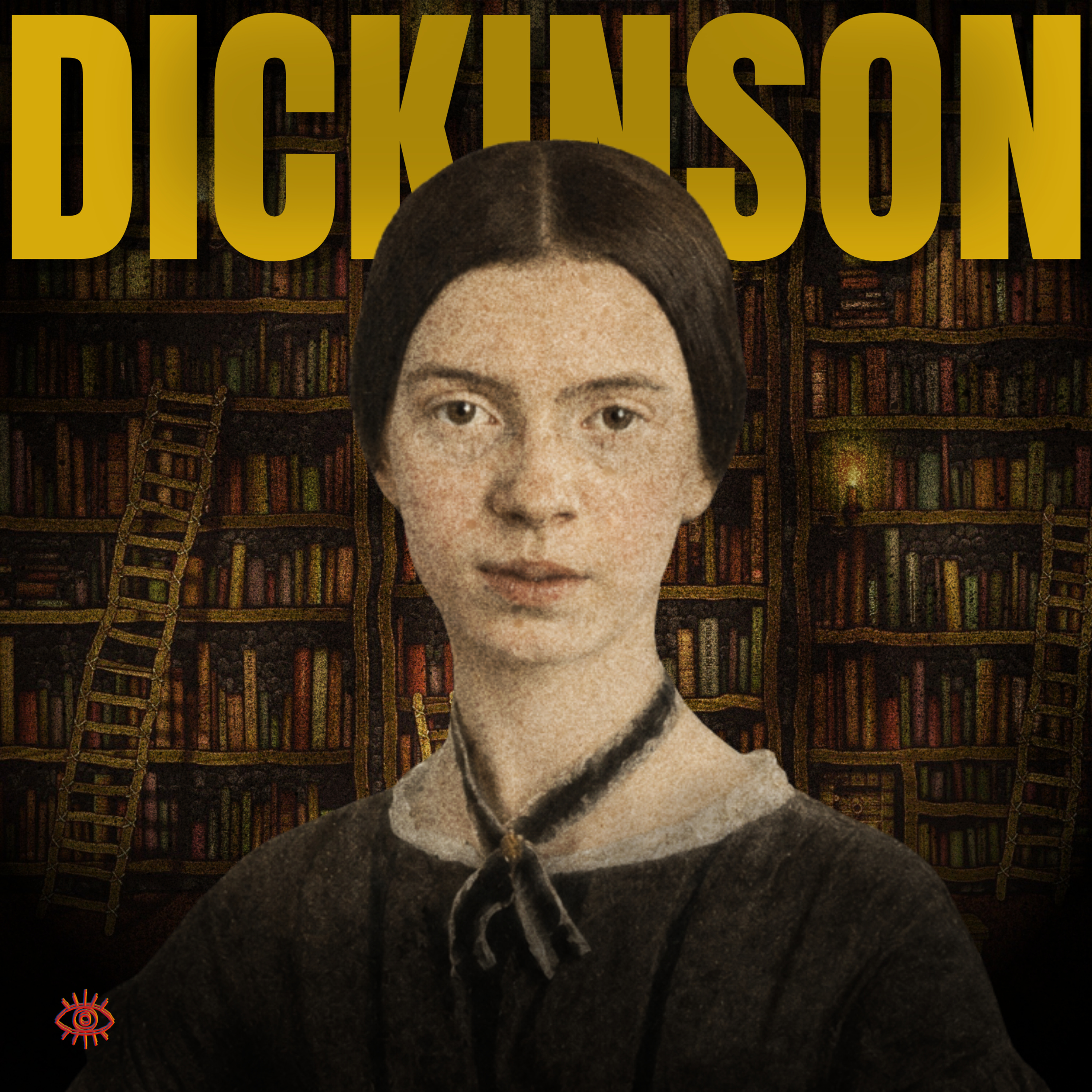 Emily Dickinson on Death, Immortality and the Inner World | For Sleep 23.06.2026 3h 34minShe died unknown, leaving eighteen hundred poems in a locked box. This is the mind that hid them.In May of 1886, a woman almost nobody knew died in a brick house in Amherst, Massachusetts, and her sister found a locked box holding the largest secret in American literature.This episode begins inside that discovery and follows the whole life that produced it, the girl who would not stand for Christ at Mount Holyoke, the white-dressed woman who chose a locked door as a vocation, the letters that built a world she refused to enter, and the astonishing war years when she wrote nearly a poem a day while her eyesight failed.We read the great poems slowly and completely, the carriage ride with Death, the fly at the deathbed, the loaded gun, the wild nights and the great renunciation, the slant of winter light, and we end with the editors, lovers, and rivals who fought for decades over her manuscripts, and with the question of why every age remakes her and none has finished with her.Please listen only in safe, restful contexts.SUPPORT THE SHOWVote on what comes next: https://www.sleepyphilosophyradio.com/voteBecoming a member keeps these episodes coming and unlocks the members only library of exclusive book summary episodes, a growing shelf of great books read closely and explained in plain language.Subscribe: https://creators.spotify.com/pod/profile/sleepyphilo/subscribe(0:00:00) The Locked Box(0:12:50) The Soul Selects Her Own Society(0:19:21) A Letter Always Feels Like Immortality(0:28:49) Dear Mr. Higginson(0:40:20) Some Keep the Sabbath(0:48:33) The War Years(0:57:46) Publication Is the Auction(1:04:56) The Books She Sewed by Hand(1:13:55) Hymn Meter and the Dash(1:21:49) The Carriage Ride(1:33:45) The Fly in the Room(1:42:07) After Great Pain(1:52:36) Across the Hedge(2:01:49) The Master Letters(2:09:21) Wild Nights(2:15:50) I Cannot Live With You(2:25:50) A Loaded Gun(2:38:18) My Business Is Circumference(2:48:39) A Bird Came Down the Walk(2:57:22) A Certain Slant of Light(3:04:16) The Last Decade(3:13:00) The Editors' War(3:22:47) Why She LastsSleepy Philosophy Radio makes longform, carefully researched philosophy written as a serious essay and paced for rest.Music by Kevin MacLeod (incompetech.com)Licensed under Creative Commons: By Attribution 4.0 Licensehttps://creativecommons.org/licenses/by/4.0/Tracks used: Anguish, Blue Feather, Evening Fall (Harp), Gregorian Chant, Heartbreaking, Lightless Dawn, Lone Harvest, Magic Forest, Mesmerize, Mourning Song, Oppressive Gloom, Promising Relationship, Quinn's Song: A New Man, Relent, Smoother Move, Sunset at Glengorm, Trio for Piano Cello and Clarinet, Wounded
 -
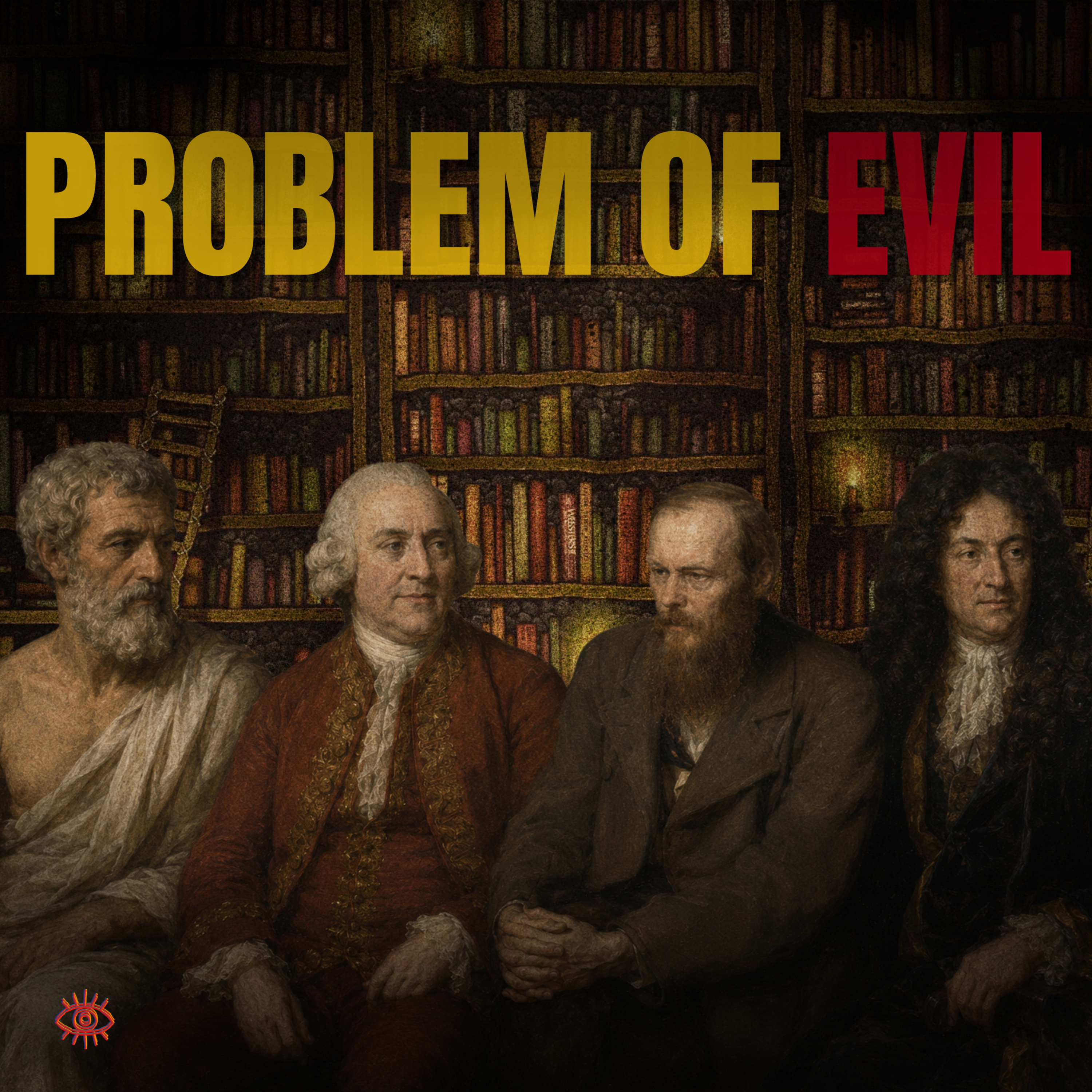 The Problem of Evil: Why God Allows Suffering 19.06.2026 3h 41minAn innocent man, a burned fawn, and the hardest question ever asked of God.This episode follows the problem of evil from its oldest telling to its newest defenses. It begins with a man who loses everything in a single afternoon and refuses every easy explanation, then traces the great answers, evil as absence, the best of all possible worlds, and the earthquake and the novel that broke optimism's public standing.From there the argument sharpens into the twentieth century, a charge of outright contradiction, the celebrated defense that answered it, a theodicy of growing souls, and a dying fawn that changed the question from proof to evidence.The second half belongs to skeptical theism, the claim that human minds cannot survey the reasons a God might have, and to the objections that press it, moral paralysis, spreading doubt, horrendous evils, animal pain, and divine silence. The episode ends where the argument now stands, between a rock and a rope. Serious philosophy, told slowly and clearly, for listeners who want real ideas as they drift off.Please listen only in safe, restful contexts.SUPPORT THE SHOWVote on what comes next: https://www.sleepyphilosophyradio.com/voteBecoming a member keeps these episodes coming and unlocks the members only library of exclusive book summary episodes, a growing shelf of great books read closely and explained in plain language.Subscribe: https://creators.spotify.com/pod/profile/sleepyphilo/subscribe (0:00:00) The Man on the Ash Heap (0:13:21) The Riddle (0:19:35) Evil as Absence (0:29:38) The Best of All Possible Worlds (0:41:30) The Morning Lisbon Fell (0:47:30) The Posthumous Bombshell (0:59:38) Returning the Ticket (1:09:32) After Auschwitz (1:15:50) Three Propositions (1:24:38) The Free Will Defense (1:38:34) The Vale of Soul-Making (1:48:13) The Fawn in the Forest (2:00:13) The Hypothesis of Indifference (2:06:36) The Parent and the Child (2:19:14) The Limits of Sight (2:28:21) The Moral Cost (2:39:46) The Skeptical Spiral (2:46:17) Horrendous Evils (2:57:45) Wandering in Darkness (3:06:50) Against Theodicy (3:13:13) Nature Red in Tooth and Claw (3:22:02) The Hidden God (3:28:57) The Rock and the RopeSleepy Philosophy Radio makes longform, carefully researched philosophy written as a serious essay and paced for rest.Music by Kevin MacLeod (incompetech.com)Licensed under Creative Commons: By Attribution 4.0 Licensehttps://creativecommons.org/licenses/by/4.0/Tracks used: Anguish, Blue Feather, Evening Fall (Harp), Gregorian Chant, Heartbreaking, Lightless Dawn, Lone Harvest, Magic Forest, Mesmerize, Mourning Song, Oppressive Gloom, Promising Relationship, Quinn's Song: A New Man, Relent, Smoother Move, Sunset at Glengorm, Trio for Piano Cello and Clarinet, Wounded
 -
 Anna Akhmatova on Poetry, Suffering and Survival | For Sleep 14.06.2026 3h 25minShe answered terror with a poem too dangerous to write down, and the poem outlived the state that banned it.This episode follows Anna Akhmatova from a childhood in Pushkin's town outside Petersburg, through the cellar cabarets where a new Russian poetry was made, to the love lyrics that made her the most famous woman in Russian literature before she was thirty.Then the century turns. A husband is executed, a son is taken, and an unofficial ban erases her name from print for fifteen years. We trace how a banned poet composed her greatest work without ever writing it down, how a cycle of short poems became the memorial for a generation of the disappeared, and what it means to treat memory itself as a form of resistance.The episode ends among honors that arrived forty years late, a difficult masterpiece three decades in the making, and a bronze figure standing by a river, looking at a prison. Serious philosophy and serious history, told slowly and clearly, for listeners who want real ideas as they drift off.Please listen only in safe, restful contexts.SUPPORT THE SHOWVote on what comes next: https://www.sleepyphilosophyradio.com/voteBecoming a member keeps these episodes coming and unlocks the members only library of exclusive book summary episodes, a growing shelf of great books read closely and explained in plain language.Subscribe: https://creators.spotify.com/pod/profile/sleepyphilo/subscribe(0:00:00) The Woman in the Queue(0:12:50) Pushkin's Town(0:18:51) The Unknown Italian(0:26:52) The Cellar of the Stray Dog(0:37:59) The Glove on the Wrong Hand(0:46:52) Anna of All the Russias(0:52:48) White Flock(0:59:58) The Voice She Refused(1:06:19) August Nineteen Twenty-One(1:16:59) The Unwritten Decade(1:24:58) Fountain House(1:31:14) The Mandelstams(1:40:45) Three Hundredth in Line(1:51:16) Hands, Matches, an Ashtray(1:59:57) Requiem(2:13:12) The Word as Witness(2:19:48) Courage(2:30:38) The Guest from the Future(2:38:41) Half Nun, Half Harlot(2:50:10) The Masquerade(2:59:27) The Box with the Triple Bottom(3:06:07) The Booth at Komarovo(3:15:10) The Monument by the PrisonSleepy Philosophy Radio makes longform, carefully researched philosophy written as a serious essay and paced for rest.Music by Kevin MacLeod (incompetech.com)Licensed under Creative Commons: By Attribution 4.0 Licensehttps://creativecommons.org/licenses/by/4.0/Tracks used: Anguish, Blue Feather, Evening Fall (Harp), Gregorian Chant, Heartbreaking, Lightless Dawn, Lone Harvest, Magic Forest, Mesmerize, Mourning Song, Oppressive Gloom, Promising Relationship, Quinn's Song: A New Man, Relent, Smoother Move, Sunset at Glengorm, Trio for Piano Cello and Clarinet, Wounded
Podcasturi similare


Popular în
Acest podcast apare și în topurile de podcasturi din aceste țări.


