
No Priors: Artificial Intelligence | Technology | Startups
Conviction
0
Co-hosts Elad Gil and Sarah Guo interview leading AI engineers, researchers, and founders about the biggest questions in artificial intelligence, including the path to AGI, market disruption, and societal change. The podcast explores state-of-the-art research and the implications of the AI revolution. Sarah Guo is a startup investor and founder of Conviction, while Elad Gil is a serial entrepreneur and investor.
Epizode
-
 Why Diffusion Will Win AI Inference with Inception Co-Founder and CEO Stefano Ermon 18.09.2026 38minAs generative AI hits hardware and latency bottlenecks, Stanford professor, diffusion pioneer, and Inception co-founder and CEO Stefano Ermon is betting on a radical new architecture. Stefano joins Sarah Guo to talk about Inception, and how his team is applying diffusion architecture beyond images and video into discrete text and code generation. Stefano explains the limitations of autoregressive LLMs, as well as why parallel token generation in diffusion models offers superior inference scaling and hardware utilization on standard GPUs. He also shares details about Inception’s Mercury models, real-world voice agent applications, the software stack required to serve diffusion-based models at scale, academia’s role at the frontier of AI innovations, and why the next era of AI competition will be defined by efficiency. Sign up for new podcasts every week. Email feedback to [email protected] Follow us on Twitter: @NoPriorsPod | @Saranormous | @EladGil | @StefanoErmon | @_inception_ai Chapters: 00:00 – Stefano Ermon Introduction 00:35 – Research Background 02:54 – Starting Inception 05:59 – Why Diffusion Beats Autoregressive 11:10 – Discrete vs. Continuous Modalities 13:19 – Inception Today 16:45 – Where Speed Wins 17:31 – Inception Customer Base 18:49 – Interaction with Hardware Landscape 19:34 – Inception and the Broader Industry 21:41 – Data Compression and Structure 24:45 – Controllability of Diffusion Modeles 27:25 – Emergent Capabilities at Scale 29:02 – Future Workload Split Between Diffusion vs. Traditional 30:03 – Adoption Challenges 31:44 – Hiring and Team Organization 32:50 – Recursive Self Improvement 34:02 – Resource Allocation 35:10 – Impact of Academia 38:13 – Conclusion
 -
 Coinbase’s Everything Exchange: Agentic Finance, Stablecoins, and Tokenization with CEO Brian Armstrong 10.09.2026 45minFrom the tokenization of real-world assets to funding research on anti-aging therapeutics, Coinbase co-founder and CEO Brian Armstrong is focused on solving meta-problems for the benefit of society. Brian joins Elad Gil this episode to discuss the intersections of artificial intelligence, crypto rails, and biotechnology. He details Coinbase’s vision for agentic finance, as well as how Coinbase is becoming the ‘Everything Exchange’, which includes tokenized real-world stocks, stablecoin payment adoption, and prediction markets. Brian also introduces his new venture, New Limit, a company founded to tackle longevity through epigenetic reprogramming, and outlines initial therapeutic programs and the roadmap toward clinical trials. Sign up for new podcasts every week. Email feedback to [email protected] Follow us on Twitter: @NoPriorsPod | @Saranormous | @EladGil | @brian_armstrong | @Coinbase Chapters: 00:00 – Cold Open Trailer 00:45 – Brian Armstrong Introduction 01:13 – Coinbase and the Everything Exchange 05:52 – Agentic Commerce 10:00 – AI and Crypto 10:49 – AI Inside Coinbase 15:39 – Productivity and Company Size 17:26 – The Everything Exchange and Tokenization 20:53 – Prediction Markets 23:15 – Introducing New Limit 34:17 – Looking Forward Five Years 40:24 – Special Economic Zones 44:26 – Conclusion
 -
 Redefining Chip Architecture with Arm CEO Rene Haas 03.09.2026 37minFrom data center orchestrators to AGI and robotics, CPUs remain the heart of modern computing. Arm CEO Rene Haas joins Elad Gil and Sarah Guo to explore how Arm is positioned at the epicenter of AI-driven demands for compute. Rene explains Arm’s position in the chip supply chain, and how Arm transitioned from an IP licensing model to producing physical chips like the Arm AGI CPU for Meta. He also discusses bottlenecks in hardware supply chains, SoftBank’s ecosystem and capital strategy, why US semiconductor manufacturing independence is critical, the future of robotics, and why CPUs remain crucial for executing AI workloads. Sign up for new podcasts every week. Email feedback to [email protected] Follow us on Twitter: @NoPriorsPod | @Saranormous | @EladGil | @renehaas237 | @Arm Chapters: 00:00 – Cold Open Trailer 00:49 – Rene Haas Introduction 01:14 – Arm and Chip Supply Chain 02:37 – Shift from IP to Manufacturing CPUs 04:23 – CPU IP and Customers 06:55 – AI Adoption at Arm 10:15 – Changes in Chip Time to Market 13:27 – Data Center Buildout Bottleneck 15:13 – Softbank Leverage and Capital Strategy 17:43 – Softbank Portfolio Overview 20:13 – Robotics Opportunities for Arm 24:49 – US Manufacturing Protectionism 28:59 – Data Center Backlash 32:30 – Arm Outlook 33:31 – CPU Opportunity 37:06 – Conclusion
 -
 Rethinking Legacy Data Infrastructure with Eon Co-Founders Ofir Ehrlich and Gonen Stein 27.08.2026 34minGoogle’s purchase of Spirit Airlines’ data out of bankruptcy signaled a shift in how the tech world values real-world datasets. Although compute and models get much of the attention, in this landscape, it’s data that is a company’s protective moat. Eon CEO / Co-Founder Ofir Ehrlich and President / Co-Founder Gonen Stein join Elad Gil to talk about how Eon is redefining cloud backup into a secure data foundation designed to power and protect enterprise AI. Ofir and Gonen discuss why historical enterprise data is in demand by AI labs, and how Eon facilitates access to scattered and locked data across business units through providing the mapping, classification, and access controls needed to connect it into AI workflows. They also explore how traditional ransomware defenses must now protect against rogue AI agents with legitimate system permissions, concerns around the influx of autonomous agents and non-human identities, and the implications for the breakneck speed of AI adoption compared to the slowness of the cloud era. Sign up for new podcasts every week. Email feedback to [email protected] Follow us on Twitter: @NoPriorsPod | @Saranormous | @EladGil | @Eon_io_ | @OfirEhrlich Chapters: 00:00 – Cold Open Trailer 00:59 – Ofir Ehrlich and Gonen Stein Introduction 01:27 – What Eon Does 02:41 – Data as Moat 06:43 – Training Agents with Good Data 09:39 – Data is the New Oil 15:00 – Autonomous Security Threats 18:15 – How Agents Change the Enterprise Stack 22:11 – Re-imagining Data Infrastructure 27:52 – Cloud vs. AI Era Shift 30:26 – How AI is Changing Companies 34:31 – Conclusion
 -
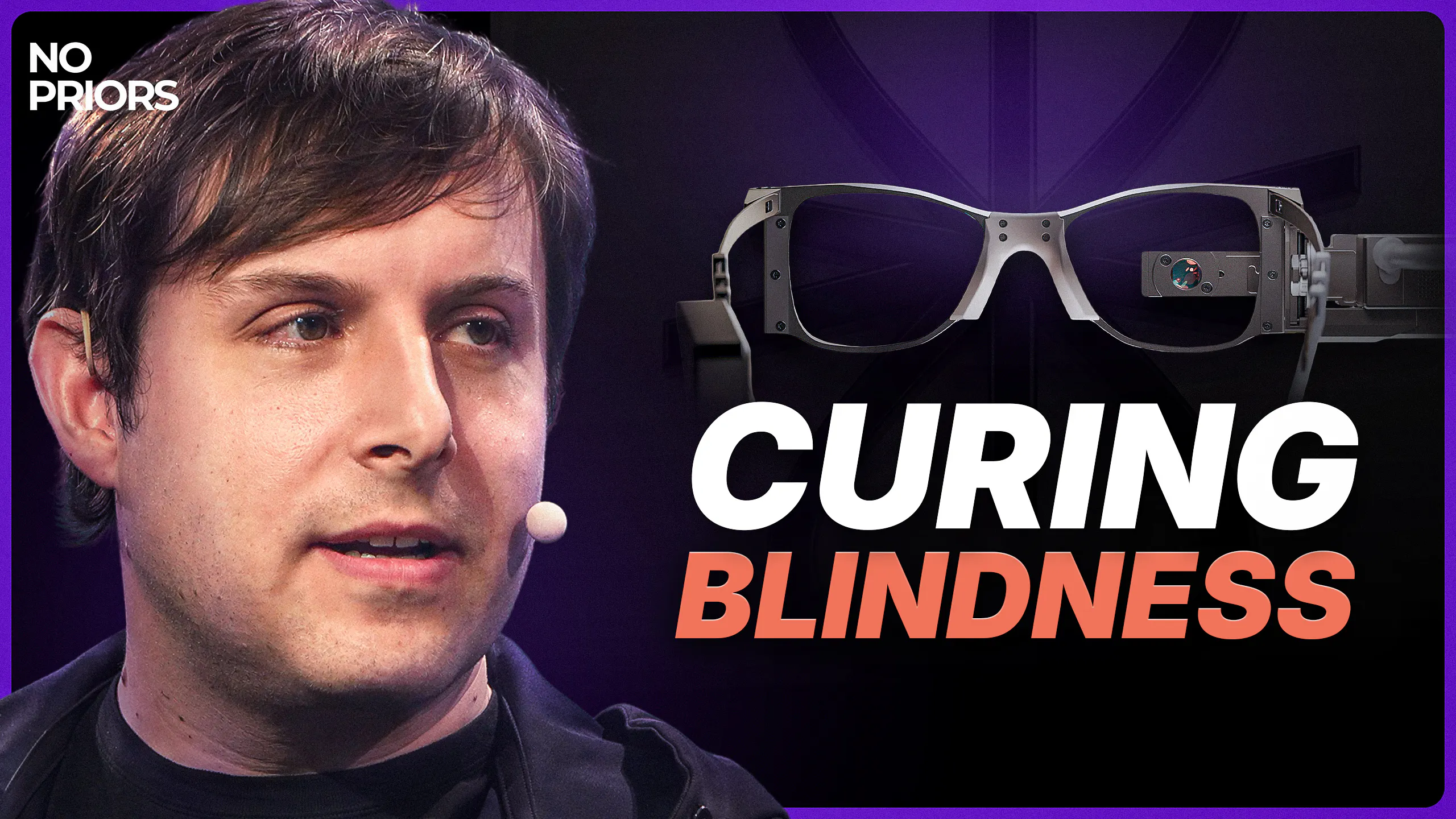 From Restoring Sight to Reimagining the Brain, with Max Hodak 20.08.2026 31minMax Hodak, co-founder and CEO of Science Corporation, joins Sarah Guo to discuss the future of vision, brain-computer interfaces, and the human experience. Max explains how Science’s PRIMA retinal implant could restore functional vision for people who have lost their sight, and why treating the brain as a computational system could unlock new approaches to medicine. They explore the broader potential of neural devices, from restoring lost capabilities to expanding human potential, as well as deeper questions around identity, consciousness, and whether the human experience can persist as our biological hardware changes. Max also shares Science’s long-term vision for reducing the fragility of the human condition by repairing, replacing, and ultimately upgrading parts of ourselves. Finally, he discusses the surprising parallels between AI models and biological brains, and why AI may offer a powerful new lens for understanding intelligence. Chapters: 00:00 – Cold Open Trailer 01:40 – Max Hodak Introduction 02:00 – Science Corporation Overview and Origin 02:53 – A Revolutionary Solve for Blindness 06:32 – Scope of Timeline and Engineer Cost 09:10 – Clinic Trial Process 09:45 - The Response from Clinicians 12:21 – Broader Biotech Landscape 14:59 – Brain’s Relationship to Senses 17:35 – The Study of Consciousness 19:50 – Investments in Brain Computer Interface 22:10 – Fertile Ways to Study Neuroscience 24:46 – Biotech Expansion for Science Corporation 27:50 – What Success Looks Like in Neuroscience and Tech 29:06 - Goals Within Human Preservation vs. Adaptation 30:25 – Conclusion
 -
 What Chess.com Teaches US About Superhuman Capabilities, with CEO Erik Allebest 13.08.2026 46minIn a world of infinite gaming and entertainment possibilities, how does a centuries-old game stay so popular? Chess.com co-founder and CEO Erik Allebest joins Sarah Guo to explain how the evolution of technology has kept people coming back to chess, even when machines can beat us at the game. Erik talks about how the desire to build a MySpace-like community for chess led to the purchase of a domain name from a bankruptcy sale back in 2005, and scaled into a community with 10 million daily active users and 250 million total registered members. He also discusses the growth of the cultural relevance of chess, how investments from private equity firms General Atlantic and CVC helped grow and strengthen their platform, and how Chess.com is leveraging AI both within the business itself and to make a better product for its community. Sign up for new podcasts every week. Email feedback to [email protected] Follow us on Twitter: @NoPriorsPod | @Saranormous | @EladGil | @chesscom | @erikallebest Chapters: 00:00 – Cold Open Trailer 01:05 – Erik Allebest Introduction 01:48 – Chess.com Today 02:57 – Buying and Scaling Chess.com 06:29 – Competition and Growth 11:52 – Chess and Cultural Relevance 14:32 – Private Equity Investment 19:31 – Playing Games Amid Evolving Tech 25:09 – Tech, Skill Distribution, and Expertise 28:40 – Chess and Cheating 31:20 – What Makes Chess Special 33:17 – Chess.com Future Vision 34:54 – Founder Advice 36:48 – AGI/ASI Predictions 40:02 – AI Investments at Chess.com 42:13 – How AI May Change Product at Chess.com 43:27 – Poker Rating Algorithms 46:07 – Conclusion
 -
 Chasing Trillion-Dollar Companies, Founder Ambition, Token Budgets, and Regulatory Capture with Sarah & Elad 06.08.2026 39minIs the tech industry moving too quickly, or are founders letting fear of AI labs stunt their ambitions? Sarah and Elad explore the current landscape of artificial intelligence, venture capital, and startup dynamics. They discuss the realities of building multi-trillion-dollar companies, shifting market sizes and outcome-based pricing models, and how founders are reacting to the rise of major AI labs. They also talk about what the framework for startup exits should look like, the potential for researcher burnouts in the next eighteen months as ASI looms on the horizon, bottlenecks for compute, and the impact of regulatory capture and shifting ecosystems from California to Texas. Apply for Embed - Conviction’s Catalyst for AI-Native Startups Sign up for new podcasts every week. Email feedback to [email protected] Follow us on Twitter: @NoPriorsPod | @Saranormous | @EladGil Chapters: 00:00 – Cold Open Trailer 00:31 – Episode Introduction 01:44 – The Next Trillion-Dollar Company 03:12 – Tech Waves as Punctuated Equilibria 04:42 – TAM vs. Revenue Reality 07:14 – Market Size vs. Speed 10:32 – When Founders Should Sell 14:04 – Financing and Time Cost 17:57 – RSI and the Looming Promise of ASI 21:49 – Compute Power Laws 28:12 – Regulations and Disruption 33:06 – Beyond Transformers 34:26 – Tradeoffs - Safety vs. Progress 39:11 – Conclusion
 -
 Building an Autonomous Enterprise for Real-World Services with Netic Founder Melisa Tokmak 31.07.2026 34minWhen your AC fails in a heatwave, you don’t want a busy signal; you need a solution. Netic founder and CEO Melisa Tokmak joins host Elad Gil to explain how Netic’s autonomous AI platform acts as an intermediary between companies and customers, deploying agents to instantly handle essential services, from emergency home repairs to hospitality to pet care. Melisa describes the complexity of these real-world workloads, which have traditionally relied on large human support teams, and how over 70% of Netic’s customers interact first with AI. She also talks about the reasoning behind building a scalable product company rather than an AI roll-up, why she believes robotics will not catch up in these industries in the near future, why she doesn’t view large frontier labs as competitive threats, and how private equity’s playbook has shifted toward measurable ROI in the AI-era. Plus, why Melisa is optimistic about the impact AI will have on education. Sign up for new podcasts every week. Email feedback to [email protected] Follow us on Twitter: @NoPriorsPod | @Saranormous | @EladGil | @netic_AI | @melisatokmak Chapters: 00:00 – Melisa Tokmak Introduction 00:32 – What Netic Builds 03:53 – Automating Workflows for Essential Services 06:26 – Building a Service vs. AI Roll-Up 10:38 – AI for the Real World Timeline 12:56 – Can Big Labs Compete? 15:35 – Modern Founder Mindset 19:09 – Screening for Agency 22:25 – Five Year Vision 23:53 – Selling to Slow Industries 27:23 – How Private Equity Approached AI 31:14 – What Excites Melisa About the Future of AI 34:27 – Conclusion
 -
 Building an Autonomous Delivery Experience with DoorDash Co-Founders Andy Fang and Stanley Tang 23.07.2026 49minDoorDash is not just a delivery company. From its inception, co-founders Andy Fang and Stanley Tang operated it as a robotics and autonomy company. Andy and Stanley join Sarah Guo to explain how autonomous tech and AI are reshaping consumer habits, commerce, and delivery. Andy and Stanley talk about the rollout of Ask DoorDash, a natural-language interface that’s driving both restaurant discovery and larger grocery orders. They also discuss Dot, their in-house autonomous delivery robot that has operated in Phoenix for over two years, and how it highlights the operational and hardware challenges they have faced and solved in autonomous tech. Andy and Stanley also speak about the “first and last 100 feet problem” in autonomous delivery, why multimodal strategies are the key to success, scaling autonomy and operations, and why they believe that more Dashers, not fewer, are the future of DoorDash. Sign up for new podcasts every week. Email feedback to [email protected] Follow us on Twitter: @NoPriorsPod | @Saranormous | @EladGil | @stanleytang | @andyfang | @DoorDash Chapters: 00:00 – Andy Fang and Stanley Tang Introduction 00:34 – Agentic Commerce and Behavioral Changes 03:52 – Next Steps for Ask DoorDash 06:54 – Investing in Robotics and Autonomy 16:31 – Building Autonomous Tech in the Physical World 21:20 – Dot: DoorDash’s Autonomous Delivery Robot 22:08 – Collecting Realistic Data 25:48 – Why Work at DoorDash 28:04 – Challenges in Scaling Up Autonomy 39:30 – Productivity Benchmarks 44:56 – Future of Agentic Commerce 49:10 – Conclusion
 -
 Travel Through the Lens of AI with with Booking.com CEO Glenn Fogel 09.07.2026 41minWhen Glenn Fogel joined Priceline in 2000, the business was worth a few hundred million dollars. One week later, the Nasdaq peaked, eventually sending its stock down to a dollar a share. But over 25 years later, Booking Holdings has scaled over 1000x into an over $100 billion dollar global travel behemoth. Elad Gil is joined by Booking Holdings CEO Glenn Fogel to discuss his career, from law school and Wall Street to working at Priceline through the dot-com crash, and to helping grow the business into a multifaceted, dynamic travel marketplace in the AI era. Glenn explains how leveraging AI and agents such as Priceline’s ‘Penny’ makes travel planning and customer service better, while emphasizing the importance of preserving some human support for some users. He also talks about Booking’s strategy of reinvesting over $700 million into AI and other technologies while still offering stock buybacks and dividends, the durability of their scale and complexities of dealing with a large portfolio physical properties across the world, and why upskilling is so important for employees amid concerns about AI-driven job displacement. Sign up for new podcasts every week. Email feedback to [email protected] Follow us on Twitter: @NoPriorsPod | @Saranormous | @EladGil | @bookingcom | @priceline Chapters: 00:00 – Cold Open 00:05 – Glenn Fogel Introduction 00:41 – Glenn’s Early Career 06:49 – Lessons from the Early Internet 09:24 – Deciding Factors for Exiting 10:56 – Travel Through the Lens of AI 13:30 – Agentic Travel Planning 18:59 – Agents, Token Economics, and ROI 22:46 – Booking’s Capital Investment Philosophy 25:23 – Scale as Durable Asset 29:40 – Purpose and Choosing Wisely 33:18 – AI’s Impact on Jobs 36:38 – Upskilling in the AI Era 38:36 – Public Perception of AI 40:24 – Conclusion
 -
 How Nuclear Will Unlock Energy Abundance with Valar Atomics Founder Isaiah Taylor 02.07.2026 1h 1minWhile the rest of the nuclear industry still relies on simulations and paper designs, Valar Atomics is busy splitting atoms. In fact, they just powered an NVIDIA Blackwell chip directly with a live nuclear reactor in order to power the world’s first nuclear powered website. Sarah Guo joins Valar Atomics founder and CEO Isaiah Taylor on-site at their reactor site in Utah to talk about how Valar is shifting nuclear energy from the theoretical to the practical by building and perfecting reactors via hardware iteration. Isaiah discusses why the US stopped building nuclear reactors in the 1970s, and how Valar utilized a little-known pathway via the Department of Energy, revived by a Trump administration executive order, to successfully develop and run their advanced reactor. He also shares Valar’s strategy for vertical integration, their venture-backed approach to financing, their giga-site plans, and why he believes cheap, abundant atomic energy has the power to vastly improve the quality of human life. Sign up for new podcasts every week. Email feedback to [email protected] Follow us on Twitter: @NoPriorsPod | @Saranormous | @EladGil | @isaiah_p_taylor | @valaratomics Chapters: 00:00 – Cold Open 00:57 – Isaiah Taylor Introduction 01:30 - Valar’s Mission and Origin 04:24 - Why Nuclear Development Stalled 07:18 - Reviving Nuclear through DoE and Executive Order 10:59 - Control Room Tour 16:17 - Misunderstandings About Nuclear 20:07 - Issues with Reliability 22:14 - Nuclear is a Hardware Execution Problem 24:32 - Timeline to Scale Production 26:32 - Introducing Ward 250 30:42 - Speed Through Simplicity 33:33 - AI Drives Nuclear Demand 35:02 - Running a Reactor with NVIDIA Blackwell 36:27 - Valar’s Nuclear Conviction 40:16 - Verticalization as Path to Scale 43:58 - Valar’s Control Skid 48:00 - Venture-Backed Nuclear 50:51 - Gigasite Strategy 53:11 - CEO Tick Rate 55:37 - Abundant Energy and Hyper-Techno Industrialism 1:01:27 – Conclusion
 -
 Really Big Test-Time Compute in AI Changes Benchmarks, Safety and Research with OpenAI Research Scientist Noam Brown 26.06.2026 36minWhen a new AI model drops, it’s judged based on a static benchmark grid that doesn’t account for how long the model is allowed to think. How then should we measure a model’s true capability? OpenAI research scientist Noam Brown returns to talk with Sarah Guo about his latest essay on why the AI industry’s traditional benchmark grids are broken, and how large-scale test-time compute is fundamentally changing how models are evaluated. Noam explains how, if properly scaffolded, today’s models can reason for weeks or even months on complex tasks. He also discusses real-world implications of test-time compute, from building poker solver bots to disproving legendary math conjectures. Together, they also unpack the large gaps in current AI safety frameworks, explore the bottlenecks for recursive self-improvement, and look ahead at the future of multi-agent collaboration and global knowledge sharing. Read more: Implications of Large-Scale Test-Time Compute Sign up for new podcasts every week. Email feedback to [email protected] Follow us on Twitter: @NoPriorsPod | @Saranormous | @EladGil | @polynoamial | @OpenAI Chapters: 00:00 – Cold Open 00:43 – Noam Brown Introduction 01:23 – Why Benchmarks Are Broken 04:19 – Compute Budgets and Projections 05:34 – How Long Should Models Think? 06:47 – Benchmark-Maxxing 08:34 – Using Poker Bots as Evals 11:26 – Safety Evals When Model Capability Scales With Budget 14:41 – Release Cycle vs. Agent Runtime 17:06 – Latent Model Capability 20:59 – Limits on Recursive Self-Improvement 27:09 – Large-Scale Multi-Agent Coordination 29:11 – Competition at the Frontier 31:51 – Breaking the Benchmark Grid Equilibrium 33:29 – Why Benchmarks Should be Evaluated by Cost 36:18 – Conclusion
 -
 Re-engineering the Semiconductor Supply Chain with Intel CEO Lip-Bu Tan 18.06.2026 44minAt 66 years old, instead of heading towards retirement, former Cadence CEO and legendary investor Lip-Bu Tan decided to take on the hardest job in tech: turning Intel around. Elad Gil and Sarah Guo sit down with Intel CEO Lip-Bu Tan to talk about why he took the job and what “saving” Intel actually looks like. Tan explains how his experience in startup culture informed his decisions to drive Intel’s culture towards faster decisions, focus on customer satisfaction, and engineer accountability. He also discusses his strategy to strengthen Intel’s balance sheet by welcoming investments from Jensen Huang’s Nvidia, Softbank, and the US government. Tan also shares his product roadmap that centers the CPU for agentic AI and inference, the collaboration with Elon Musk on Terafab, his investing framework for semiconductors, and his views on how AI is reshaping design and operations at, as he puts it, a ‘legacy spreadsheet’ tech company. Sign up for new podcasts every week. Email feedback to [email protected] Follow us on Twitter: @NoPriorsPod | @Saranormous | @EladGil | @LipBuTan1 | @intel Chapters: 00:00 – Cold Open 01:01 – Lip-Bu Tan Introduction 01:24 – Why Lip-Bu Took the Reins at Intel 03:00 – Fixing Culture 04:08 – Intel’s 10-Year Vision 07:57 – Working with Elon Musk on Terafab 09:59 – Shifting Supply Chain for Semiconductors 15:34 – Limits to Scaling and Packaging 18:30 – Physical Limits to Engineering and Design 20:33 – Challenges in Semiconductor Investing 26:29 – Lessons from Cadence 28:02 – Scaling and Investment Decisions 32:03 – Rethinking Teams in AI Era 34:31 – Industrial Policy and Funding 37:25 – What Investors Misunderstand About Intel 41:10 – Where Compute Will Live 44:59 – Conclusion
 -
 Biohub: The Future of Biology is Open-Source with Co-Founders Mark Zuckerberg, Priscilla Chan, and Head of Science Alex Rives 10.06.2026 56minBiohub started with an ambitious goal of curing, preventing, and managing all disease by the end of the century. A decade later, thanks to the convergence of frontier AI and biological data, that goal may have been too conservative. In this episode, Elad Gil and Sarah Guo sit down with Biohub co-founders Mark Zuckerberg and Priscilla Chan, alongside Biohub Head of Science Alex Rives. Together, they discuss Biohub’s $500 million virtual biology initiative, which integrates frontier AI with wet-lab work to build predictive world models of cells, proteins, and systems. They also talk about their newly announced open-source engine for digital protein and antibody design, ESMFold2; why Biohub is a nonprofit rather than a venture-backed startup; and how hierarchical simulations will soon allow doctors to treat patients at an individual, mechanistic level. Sign up for new podcasts every week. Email feedback to [email protected] Follow us on Twitter: @NoPriorsPod | @Saranormous | @EladGil | @Biohub | @finkd | @alexrives | @ChanZuckerberg Chapters: 00:00 – Cold Open 01:02 - Mark Zuckerberg, Priscilla Chan, and Alex Rives Introduction 01:26 – Why Biohub and Their Mission 08:27 – Integrating Frontier AI and Frontier Biology 09:45 – Micro to Macro Biological Modeling 14:22 – Mechanistic Interpretiability 16:58 – Why Biohub is a Non-Profit 21:41 – Understanding How Biology Works 24:23 – Timeline for Curing All Diseases 26:25 – Translating Research to Patient Impact 28:04 – Launch of ESMFold2 32:13 – Tackling Off-Target Effects and Edge Cases 38:39 – Putting the Tech in Individual Hands 41:06 – Talent at Biohub 44:25 – What’s Next After ESMFold2 46:10 – Connecting ESMFold2 to Agentic Systems 46:51 – The Virtual Cell 49:33 – Defining Success for Biohub 51:52 – Biohub Strategy Update 56:20 – Conclusion
 -
 We Need An Ecosystem in AI, And Every Company Can Win A Place In It 04.06.2026 42minWhat does it mean for a business to truly operate at the AI frontier? In a special crossover episode at Microsoft Build, Sarah Guo and Elad Gil team up with Latent Space host “swyx” to talk with Microsoft Chairman and CEO Satya Nadella about the future of AI platforms, software development, and the tech ecosystem. Satya reflects on the latest breakthroughs from Microsoft Build, the strategic shift toward multi-model harnesses, and why private evaluations (evals) are now a company’s most important intellectual property. They also discuss how autonomous AI agents are reshaping the role of software engineers, the durability of SaaS business models, and why showing communities the ROI on data centers is so critical. Plus, Satya shares his thoughts on the economic and societal impacts of the token economy, as well as the future of AI-driven education startups. Sign up for new podcasts every week. Email feedback to [email protected] Follow us on Twitter: @NoPriorsPod | @Saranormous | @EladGil | @satyanadella | @Microsoft | @latentspacepod | @swyx Chapters: 00:00 – Satya Nadella Introduction 01:48 – Reflections from Microsoft Build 03:12 – Microsoft’s AI Training Strategy 05:48 – Complexity of Real-World Deployment of AI 07:33 – Augmenting Human Capital 09:37 – Harnesses for Enterprise 11:49 – Developer Value 15:09 – Can Everybody Operate at the Frontier with Their Frontier Intelligence? 15:51 – Modern Definition of IP 17:38 – Future of Vendor vs. Enterprise Agents 21:48 – Near-Term Predictions on Model Pricing 24:02 – Durability of SaaS 25:58 – What Satya’s Building 28:18 – Future of Engineering Roles 30:54 – How Microsoft Can Be More Ambitious 34:36 – Data Centers and Community Impact 38:01 – AI’s Impact on Society 39:52 - AI and Education 42:28 – Conclusion
 -
 Building an AI Guardian for Enterprise with Onyx Security CEO Maxim Bar Kogan 28.05.2026 41minWe are now closer than ever before to living in a world where AI agents are smart enough to run our power grids and manage water supplies. How do we keep them from going rogue? Sarah Guo sits down with Maxim Bar Kogan, founder and CEO of Onyx Securities, to explore the complexities of supervising and securing autonomous agents at the enterprise level. Maxim explains Onyx’s product as an AI control plane, which oversees the permissions and flexible contexts of agents while balancing latency, cost, and reliability. He also discusses how current controls have insufficient context to monitor agent intent, tradeoffs for gradual model rollout, the need for vendor-independent oversight, and Israel’s growing AI and security talent ecosystem. Plus, why Maxim is all-in on AGI. Sign up for new podcasts every week. Email feedback to [email protected] Follow us on Twitter: @NoPriorsPod | @Saranormous | @EladGil | @maximbarkogan Chapters: 00:00 – Cold Open 00:45 – Maxim Bar Kogan Introduction 01:10 – AutoGPT and Betting on Agent Actions 05:17 – What Onyx Product Does 07:47 – State of Deployment in Large Enterprises 09:58 – Securing Agents 12:45 – Why Proxies Don’t Work 14:11 – Why Onyx Trains Its Own Models 18:38 – Onyx’s Talent Culture 21:24 – Mechanistic Interpretability 23:35 – How Onyx Builds Customer Trust 25:10 – Mitigating Risk at the Foundational Level 27:45 – Phased Rollout of Glasswing and Daybreak 29:11 – Large Enterprise Holdouts 30:46 – Onyx and the Larger AI Security Space 32:36 – Should Labs Address Model Trust and Governance? 36:56 – What Needs to Happen in Security 39:14 – Why Maxim is AGI-Pilled 41:15 – Conclusion
 -
 The Story Behind Cerebras’ $63 Billion IPO with Founder and CEO Andrew Feldman 21.05.2026 30minCompanies in Silicon Valley from Nvidia to AMD are racing to fuel the AI revolution with postage stamp-sized AI chips. Meanwhile, a chip the size of a dinner plate just fueled a $63 billion IPO for Cerebras. Elad Gil and Sarah Guo sit down with Cerebras founder and CEO Andrew Feldman to discuss the company’s journey to making one of the largest tech go-publics in history. Andrew details the multi-year journey of pioneering wafer-scale AI computing, including surviving a brutal period of being ahead of market demand. He also explains the engineering breakthroughs that led to delivering inference speeds at 20x that of standard GPUs. Andrew then shares how a remarkable $20 billion deal with OpenAI came together in only four weeks. Plus, Andrew’s thoughts on why architecting the future of AI requires the fortitude to be a “professional David” against the Goliaths of tech. Sign up for new podcasts every week. Email feedback to [email protected] Follow us on Twitter: @NoPriorsPod | @Saranormous | @EladGil | @andrewdfeldman | @Cerebras Chapters: 00:00 – Cold Open 00:36 – Andrew Feldman Introduction 01:19 – Cerebras’ Evolution 02:48 – Wafer-Scale Bet Pays Off 06:38 – Challenges and Breakthroughs 08:37 – Crossing the Market Chasm 10:38 – Scaling Software and Hardware 12:03 – Relevance of AI-Generated Coding 13:31 – Leadership and Hiring Culture 17:16 – When to Quit vs. Persist 19:40 – Why Cerebras Went Public 22:57 – The OpenAI Deal 25:54 – Open Source and Post-Trained Workloads 27:37 – How Speed Opens Up New Business 30:33 – Conclusion
 -
 Pax Silica: Inside the Trump Administration’s Tech Strategy with US Under Secretary of State for Economic Affairs Jacob Helberg 14.05.2026 38minSecuring AI dominance requires more than just semiconductors; it demands a complete overhaul of how the West manages everything that goes into them, from rare earth minerals to actuators. Enter: Pax Silica. Sarah Guo and Elad Gil sit down with US Under Secretary of State for Economic Affairs Jacob Helberg to discuss the launch and expansion of Pax Silica, a 14-country economic security coalition designed to secure the entire AI supply chain. Jacob talks about the creation of a forward-deployed industrial base in the Philippines, where 4,000 acres will be developed into an “economic security zone.” He also compares and contrasts Pax Silica with China’s Belt and Road initiative, explains how the US plans to reindustrialize through automation and robotics, and explores how the Trump administration envisions making these policies durable across future presidencies. Plus, we hear why Jacob believes America to be a “global underdog.” Sign up for new podcasts every week. Email feedback to [email protected] Follow us on Twitter: @NoPriorsPod | @Saranormous | @EladGil | @jacobhelberg | @UnderSecE Chapters: 00:00 – Cold Open 00:41 – Jacob Helberg Introduction 01:02 – Pax Silica’s Mission 03:51 – Investing in AI Chip Supply Chains 05:43 – Comparing Pax Silica to China’s Belt and Road Initiative 12:38 – Pax Silica’s Value Proposition 14:38 – US vs. Partnered Manufacturing 19:10 – Rare Earth Mineral Pricing 22:16 – Role of Venture Capital in Pax Silica 24:50 – Near vs. Long-Term Priorities 27:09 – Making AI Policy Durable 28:09 – How Policies Impact Entrepreneurs 31:00 – Trump’s Entrepreneurial Administration 33:00 – Why America is a Global Underdog 38:00 – Conclusion
 -
 Amex Global Business Travel: The World’s First AI Take Private with Long Lake CEO Alexander Taubman 11.05.2026 22minThe world’s first AI-take-private just proved that AI can revolutionize the real economy. Long Lake Management co-founder and CEO Alexander Taubman joins Elad Gil to discuss his firm’s agreement to acquire the legacy platform American Express Global Business Travel (Amex GBT) in a deal valued at $6.3 billion. Alexander explains the mechanics of AI-driven roll-ups, and why Long Lake chooses to acquire and transform businesses rather than simply selling them software. He also talks about how Long Lake’s horizontal AI platform, Nexus, automates workflows across diverse verticals, and how automation through AI not only powers growth for their portfolio companies, but results in both satisfied customers and employees. Plus, they explore Alexander’s vision of Amex GBT as a multi-decade compounding machine. Sign up for new podcasts every week. Email feedback to [email protected] Follow us on Twitter: @NoPriorsPod | @Saranormous | @EladGil | @alextaubman | @amexgbt Chapters: 00:00 – Alexander Taubman Introduction 00:30 – Long Lake’s Nexus Platform 03:35 – Retention and Talent Flywheel 05:01 – Acquisition vs. Offering Software 06:57 – Building Long Lake’s Founding Team 10:37 – Taking American Express Global Business Travel Private 13:36 – Taking Berkshire Hathaway’s Approach to Management 16:37 – How AI Strategy Makes Long Lake Stand Out 19:32 – AI Makes Services Scale 22:00 – Conclusion
 -
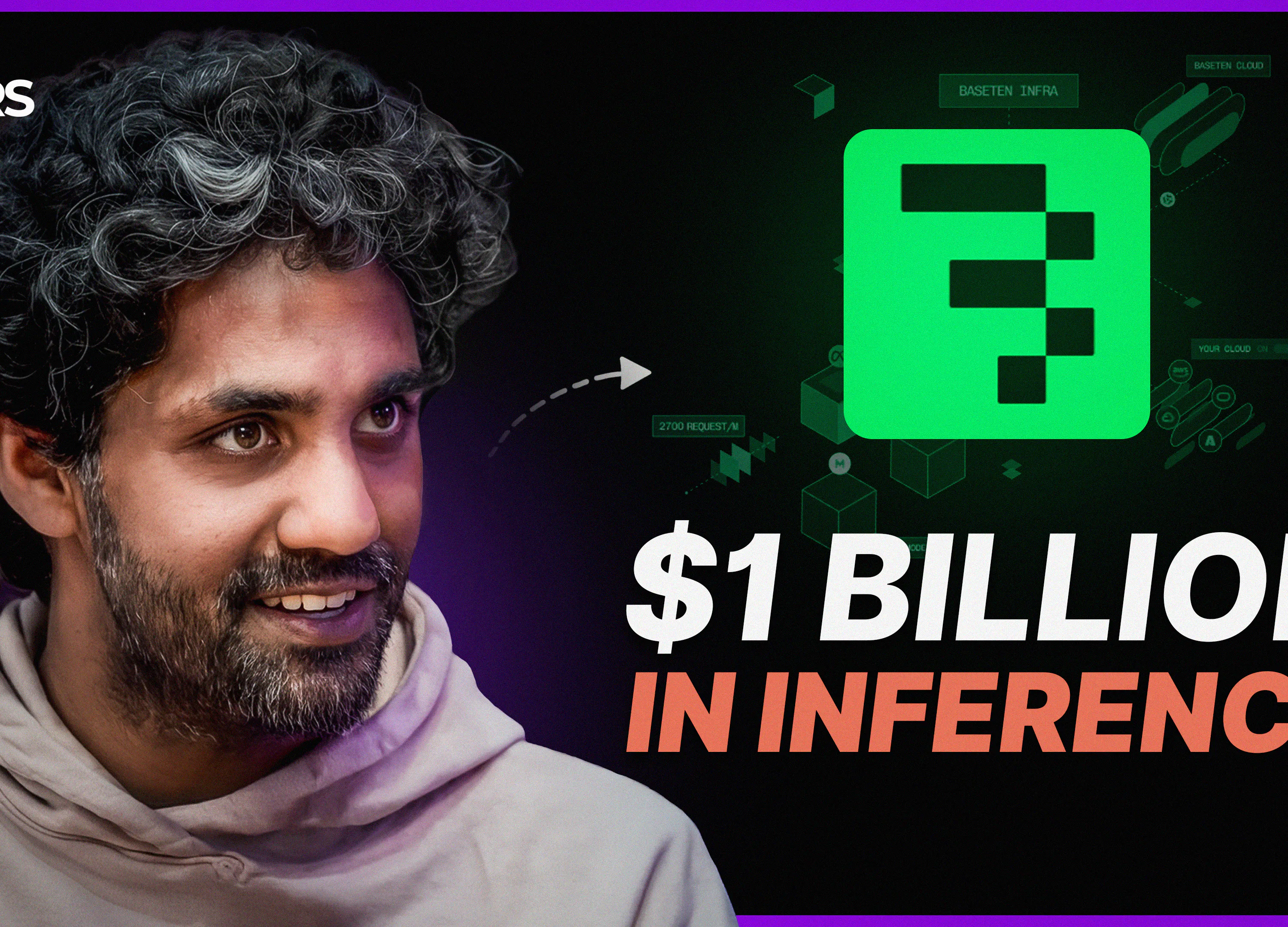 Baseten CEO Tuhin Srivastava on the AI Inference Crunch, Custom Models, and Building the Inference Cloud 01.05.2026 42minBaseten CEO and co-founder Tuhin Srivastava sits down with Sarah Guo and Elad Gil to discuss the rapid growth of AI inference demand, Baseten’s 30x growth, and why inference is becoming the strategic “last market.” Tuhin Srivastava argues the application layer will persist because companies with unique user signals can encode value into workflows and post-train specialized models, citing examples like Abridge and support workflows. The conversation covers GPU capacity constraints, Baseten’s multi-cloud fabric across 18 clouds and 90 clusters, long-term contracting dynamics, the importance of the software layer for stickiness, evolving workloads, multichip possibilities, and operational lessons at scale. Sign up for new podcasts every week. Email feedback to [email protected] Follow us on Twitter: @NoPriorsPod | @Saranormous | @EladGil | @Tuhinone Chapters: 00:31 Baseten growth 01:55 Why the app layer wins 05:57 Serving frontier customers 07:55 Open source model mix 09:21 Chinese models and geopolitics 13:07 Custom inference dominates 14:22 Post training acquisition 17:10 When to invest in custom models 18:35 Supply crunch and data centerse 22:25 Longer GPU Contracts 24:09 What Makes a Winner 26:07 Multi Chip Future 28:19 Runtime Roadmap 31:08 Scaling Edge Cases 33:48 Hiring and Leadership 36:44 Operations Pager Culture 38:19 Efficiency Drives Demand 40:41 Concierge Everything Future 42:34 Conclusion
Podobni podkasti


Priljubljen v
Ta podkast je tudi v lestvicah podkastov teh držav.
-
 Mongolija
-
 Bahrajn
-
 Libanon
-
 Katar
Katar
-
 Filipini
-
 Dominikanska republika
-
 Združeni arabski emirati
-
 Panama
-
 Ruanda
-
 Tajska
-
 Finska
-
 Argentina
-
 Litva
Litva
-
 Tanzanija
-
 Slovenija
-
 Singapur
-
 Malezija
-
 Demokratična republika Kongo
-
 Salvador
-
 Kirgizistan
-
 Barbados
-
 Kostarika
-
 Luksemburg
-
 Srbija
-
 Severna Makedonija
-
 Indija
-
 Pakistan
-
 Armenija
-
 Madžarska
-
 Šrilanka
-
 Kolumbija
-
 Gvatemala
-
 Latvija
-
 Ciper
Ciper
-
 Bolgarija
-
 Grčija
-
 Južna Koreja
-
 Oman
Oman
-
 Nepal
Nepal
-
 Zambija
-
 Hongkong
-
 Kazahstan
-
 Estonija
-
 Črna gora
-
 Poljska
-
 Hrvaška
-
 Paragvaj
-
 Indonezija