
Roxy's Ride & Inspire RAWcast - Mountain Bike & Mindset Podcast
Roxybike
0
A no-bla-bla podcast about mountain biking, MTB coaching, mental training, and mindset improvement, hosted by Rafaella "Roxy" Wieschollek, a Mountain Bike Skills Coach and Graduate Sports Mental Trainer. The show features short, inspiration-dense episodes that debunk mountain bike myths, share inspirational ideas, and explain neurological and psychological concepts in simple terms. The goal is to make mountain biking safer and advance the global standard of mountain bike instruction. New episodes are released as often as the host feels inspired to share.
Epizode
-
 Want to Ride Better Under Pressure? Talk to Yourself Like THIS | Podcast #66 26.09.2026 22minWhy do MTB skills seem to disappear the moment you feel scared, frustrated, overwhelmed or under pressure? You KNOW how to brake. You KNOW where to look. You KNOW what your body should be doing — and yet, on a difficult section of trail, suddenly none of it seems accessible. In previous episodes I've talked about how a lack of automaticity may be the cause, in THIS episode we talk about how you may be sabotaging yourself mentally! Because maybe it's the way you talk to yourself. In this episode of the Ride & Inspire RAWcast, we explore a sport psychology tool called Ileism. It's actually ridiculously simple — but psychological and neuroscience research into self-distancing and emotion regulation helps explain why changing the way we talk to ourselves can influence how we respond under pressure.In this episode, you'll learn:Why your MTB skills can feel inaccessible when pressure risesHow self-talk influences fear, attention and performanceWhat third-person self-talk and ileism areWhy psychological distance can help us regulate emotionsPractical examples on how to replace identity-based thoughts with useful process cuesHow to coach yourself through difficult MTB sectionsWhy the RIGHT technical cues still matterHow this technique can also help with overwhelm, procrastination and stressful situations away from the bikeBecause becoming a better mountain biker isn't "just" about learning what your body needs to do. It's also about learning how to "coach" your brain when it matters.Try the practical self-talk exercise from this episode on your next ride and notice what changes. And DO share it with me 😍Work with me on our doorstep with my remote courses, where we turn these generic tips into individual guidance:https://roxybike.podia.com/mountain-bike-online-coursesFREE Balance course: https://roxybike.podia.com/trackstand-challenge-drill-to-skill-with-roxyWant to keep this podcast ad-free? 🥰 Support meon Patreon: https://www.patreon.com/c/rideandinspire 📚 Research mentioned in this podcast: Kross et al. (2014): Self-talk as a regulatory mechanism: how you do it matters.Journal of Personality and Social Psychology, PMID: 24467424Across seven studies (N=585), participants used either first-person language or non-first-person language (their own name/other pronouns) when thinking about themselves. Third-person/non-first-person self-talk increased self-distancing. Under social stress, these participants showed less distress and better performance, including during public speaking. They also tended to appraise future stressful situations more as challenges and less as threats. Lieberman et al. (2007): Putting feelings into words and the brain, PMID: 17576282In an fMRI experiment, labeling emotional stimuli was associated with reduced amygdala/limbic responses: Useful evidence that language and emotional labeling can alter measurable neural responses. Moser et al. (2017): Third-person self-talk facilitates emotion regulation without engaging cognitive control: Converging evidence from ERP and fMRI, PMID: 28674404Using EEG/ERP and fMRI, the researchers found evidence that third-person self-talk facilitated emotion regulation without requiring greater cognitive-control engagement. A strong basis that this can be useful when cognitive resources are already under pressure.
 -
Anxious About Group Rides? Try This Neuroscience-Based “Brain Hack” | Podcast #65 12.09.2026 9minDo MTB group rides make you nervous? Maybe you're worried you'll be too slow, hold everyone back, or won't be able to ride all the technical sections. Or you have anxiety about another topic and are looking for a simple, yet effective method to help with it? In this episode of the Ride & Inspire RAWcast, we explore the psychology and neuroscience of reframing — and why it is much more than motivational positive thinking.I’ll introduce you to research by Alison Wood Brooks showing how changing what you label your emotions as can influence performance without ignoring the emotion. And, most importantly, we’ll translate the science directly to mountain biking and use "ride anxiety" as a practical example.You'll learn how to reframe common pre-ride thoughts such as:“What if I’m too slow?”“What if I’m the slowest rider?”“What if I can’t ride all the sections?”“What if I hold everyone back?”I’ll also introduce the simple Roxybike MAP Method:Meaning – Adjust – Proceed, which you can use on your next group ride, during MTB practice, or in stressful situations in everyday life. Because stress itself isn't necessarily the enemy. What matters is the meaning your brain gives it.🎙️ Ride & Inspire RAWcast is completely ad-free. If you'd like to help me keep it that way and support my work, you can join me on Patreon: https://www.patreon.com/c/rideandinspireSources: Brooks, A. W. (2014). “Get excited: Reappraising pre-performance anxiety as excitement.”Journal of Experimental Psychology: General, 143(3), 1144–1158. PMID: 24364682, DOI: 10.1037/a0035325Sammy et al. (2017): Arousal reappraisal under pressure, PMID: 28535726This is particularly relevant to MTB performance, because it specifically examines reappraising physiological arousal under pressure and its relationship with stress responses, attention, confidence and performance.
-
 Can’t Focus on MTB Practice? What ADHD Research Teaches Every Rider | Podcast #64 29.08.2026 27minCan you happily ride your mountain bike for hours… but lose focus after ten minutes of deliberate skills practice? Or you feel like you're just SO inconsistent with your performance? If you have ADHD — or simply struggle with concentration, inconsistency or getting overwhelmed by too many instructions — the problem may not be your ability to learn. It may be the way you’re practising.In this episode, I look at what science tells us about ADHD, attention and motor learning — and translate it into practical MTB training for every adult brain, not just neurodivergent brains 🧠We talk about:why ADHD does not simply mean “you can't concentrate”why performance can fluctuate even when you already know a skillresearch son how to produce better motor learning in adults with ADHDdoes more repetitions do not automatically equal more learning?how working-memory overload can make MTB coaching cues counterproductivewhy making a task harder doesn't necessarily make it a better learning taskhow fear, speed, terrain and social pressure increase the effective difficulty of a skillwhat makes complex MTB skills easier to learnhow immediate feedback and visible progress can help (and why this does NOT mean you need a coach by your side...!)why novelty is useful — but constantly changing drills isn't what that meanswhat research says about aerobic exercise, executive function and motor learning in adults with ADHDAnd I give you a very simple practice structure to try:ONE — FIVE — CHECKThis is the step-by-step DROP TUTORIAL I talk about: https://youtu.be/cf6vSUtNKYY?is=y4ym92qogtoyBOcp&list=PLwfXYMc609PWCk0Gs4BWHsVBNQJYG7Boz&si=rQ16psvciW_ZyQbRNote: “Neurodivergent” is not a medical diagnosis itself; it’s a broad umbrella term for brains that function in ways that differ from what is considered neurotypical. ADHD is commonly included under that umbrella, along with autism, dyslexia, dyspraxia and some other neurological/developmental differences.🧠 Want to try this learning approach yourself?Start with my FREE Balance / Trackstand Course. It breaks balance training into small, safe and manageable steps so you can build control gradually instead of trying to perform the final skill immediately.👉 Find the free course here. And if this way of learning works for you, you'll find the same brain-friendly approach throughout my other MTB skills courses — from fundamentals and braking to drops, cornering and advanced skills.💜 This podcast is completely ad-freeRide & Inspire is made possible by the lovely riders who support my work on Patreon (BONUS: You also get access to exclusive content). If you enjoy the science-based episodes, videos and educational content I create and would like to help me keep them independent and ad-free, you can support the podcast by becoming a Patron. Thank you to everyone who already does. 💜Find my Patreon Channel here: https://www.patreon.com/cw/rideandinspire🔬 Research & Studies Mentioned in This EpisodeWant to dive deeper into the science behind this episode? Here are some of the studies I used:🧠 ADHD, Attention & RewardSustained and focused attention deficits in adult ADHDhttps://pubmed.ncbi.nlm.nih.gov/17712171/The impact of financial reward contingencies on cognitive function profiles in adult ADHDhttps://pubmed.ncbi.nlm.nih.gov/23840573/Frustration Modulates Attentional Control and Affective Processing in Adults With ADHDhttps://pubmed.ncbi.nlm.nih.gov/42477904/🧩 Working MemoryWorking Memory Training for Adults With ADHDhttps://pubmed.ncbi.nlm.nih.gov/28856932/🚲 ADHD & Motor LearningThe consolidation of a motor skill in young adults with ADHD: Shorter practice can be betterhttps://pubmed.ncbi.nlm.nih.gov/26826465/Determining the optimal challenge point for learning motor skills in children with ADHDhttps://pubmed.ncbi.nlm.nih.gov/39369556/🎯 Task Difficulty & Motor LearningTask difficulty promotes tactical learning but suppresses the positive learning effects of autonomy and cognitive efforthttps://pubmed.ncbi.nlm.nih.gov/40203519/🏃 Exercise, Cognition & ADHDAcute Effects of Aerobic Exercise on Executive Function and Attention in Adult Patients With ADHDhttps://pubmed.ncbi.nlm.nih.gov/30971959/Acute aerobic exercise at different intensities modulates inhibitory control and cortical excitability in adults with ADHDhttps://pubmed.ncbi.nlm.nih.gov/38485649/Physical exercise as add-on treatment in adults with ADHD – the START study: a randomized controlled trialhttps://pubmed.ncbi.nlm.nih.gov/41244864/Effects of Low, Moderate, and High Intensity Exercise on Functional Impairment and ADHD Symptoms: A Randomized Pilot Studyhttps://pubmed.ncbi.nlm.nih.gov/42437494/🧍 Movement & Body AwarenessPhysical exercise and body awareness/movement quality in adults with ADHD: Results from the START randomized controlled trialhttps://pubmed.ncbi.nlm.nih.gov/41903823/
 -
Are You Really a Negative Person? Why Your Brain Thinks So—and How MTB Can Help | Podcast #63 08.08.2026 17minYou'd like to be more optimistic or positive? Then this episode is for you! Today we explore a fascinating insight from neuroscience: your brain is not a passive observer of reality. It's a prediction machine that constantly looks for evidence to support what it already believes. And you can LEVERAGE this to become more positive, courageous or in fact, almost anything you think you're NOT!If you've ever caught yourself saying:👉 "I'm just not confident."👉 "I'm not athletic."👉 "I'm too old."👉 "I'm a negative person."...this episode is for you.You'll learn how to influence these labels, why two riders can have completely different experiences on the exact same trail and most importantly, you'll discover how mountain biking can become a powerful tool for changing ingrained patterns. Using examples from the free Trackstand Challenge, I explain how bike skills practice can help train attention, build resilience, strengthen healthier thought patterns, and create evidence that challenges limiting beliefs.In this episode:• Why does negative thinking feel so automatic?• How do self-fulfilling prophecies work?• How does ad adult brain learn?• Why is attention one of the most powerful training tools you have?• What's the difference between a thought and a label?• How can trackstand practice help rewire your brain?🎥 This is the video I mention at the beginning of this episode: https://www.youtube.com/watch?v=vHtezlTRuYo&list=PLwfXYMc609PXz3fHAWMt5HLdLUS5_KiQ-&index=2🎯 Free Trackstand Challenge:https://roxybike.podia.com/trackstand-challenge-drill-to-skill-with-roxy☕ Support this ad-free podcast:https://www.patreon.com/rideandinspireIf you enjoy the podcast, please consider following, rating, and sharing it with a riding friend. It helps us reach more riders and continue creating science-based content that empowers people both on and off the bike.
-
The 3 Brain Exercises Every Mountain Biker Over 40 Should Do | Podcast #62 25.07.2026 9minMost mountain bikers think getting better means riding more, training harder, or improving fitness. But what if the biggest limiter after 40 isn't your fitness at all? What if it's your nervous system?In this episode, we explore three surprisingly simple exercises that neuroscience suggests can help maintain and improve the systems that matter most for mountain biking: balance, vision, and brain function.You'll learn why many age-related changes are not simply the result of getting older, and why training the systems that support coordination, confidence, and control on the bike matters!We discuss:• Why balance is one of the first abilities to decline with age• How vision affects line choice, timing, and confidence on trails• The surprising connection between smell, brain health, and decision-making• Why mountain biking is fundamentally a coordination sport• How your nervous system influences confidence and fear on the trail• Simple daily exercises you can start today—without even touching your bikeWhether you're 40 or 70, or simply want to keep riding strong for decades to come, this episode will help you understand why training your brain may be just as important as training your body.🎯 Free On-Bike Balance Course: https://roxybike.podia.com/trackstand-challenge-drill-to-skill-with-roxy💪 Build Your Ride Ready Body (6 weeks of follow-along coordination & strength training specifically for mountain bikers over 35): https://roxybike.podia.com/building-basics-introduction-to-strength-coordination📩 Join the Ride & Inspire Newsletter: https://roxybike.podia.com/sign-me-up☕ Support the podcast and help keep it independent, value-focused, and ad-free through Patreon or Buy Me a Coffee. 😍
-
Your Brain Is Exhausted. Here's What Finally Helped Mine | Podcast #61 10.07.2026 17minDo you ever finish a day feeling mentally exhausted... even though it doesn't feel like you've actually done that much? A few weeks ago, I disappeared for two weeks. No Instagram. No YouTube. No comments, emails, or analytics. Ironically, it wasn't the holiday we'd planned. Berni came down with COVID the day before we left, so instead of traveling, we spent most of our time at home. Looking back, that unexpected change became a gift. In this episode, I read an article that perfectly describes what so many of us are experiencing without realizing it: a brain overloaded by constant notifications, endless information, and the pressure to always stay connected. This isn't an anti-phone or anti-social media episode. Technology allows me to coach mountain bikers all over the world, build an amazing community, and do work I genuinely love. But like any powerful tool, it works best when we're in control of it—not the other way around.In this episode we talk about:Why your brain feels exhausted in today's digital worldWhat constant task-switching is doing to your attentionThe surprising benefits of boredomWhat these digital sabbaths give meSmall changes that can help you regain focus without giving up technologyIf you've ever struggled to concentrate, found yourself reaching for your phone without thinking, or simply felt mentally "fried," I think you'll find something valuable in this episode.This is the article I read in this episode: Steve Magness: A Digital Survival GuideI'd love to hear your thoughts after listening. Have you ever taken a digital break? And if not... would you?
-
 Why ADHD, Fear or Self-Doubt Don't Have To Define You | Nir Eyal Part 3/3 Podcast #60 30.06.2026 22minStarting with a simple mountain biking example ("I'm bad at left corners") the conversation expands into a much deeper discussion about ADHD, fear, confidence, labels, self-concept, and why what comes after the words "I am" may shape your future more than you realize. Sometimes the biggest breakthroughs begin when we stop saying "This is who I am" and start saying "This is what I'm learning."Because the thing is, many of us carry labels we've repeated for years:"I have ADHD.""I'm not confident.""I'm bad at this.""I'm just an anxious person.""I'm not athletic.""I've always been this way."But what if some of those labels have quietly become limitations? In this final part of my conversation with bestselling author Nir Eyal (Hooked, Indistractable, Beyond Belief), we explore the powerful connection between identity, self-belief, and human potential. Nir shares his own experience with ADHD and explains why diagnoses, labels, and personality traits can sometimes become self-fulfilling prophecies that keep us stuck, because they can narrow what we believe is possible.🎥 Watch the entire interview as a video here: https://www.youtube.com/watch?v=vHtezlTRuYo&list=PLwfXYMc609PXz3fHAWMt5HLdLUS5_KiQ-&index=2🎙️ Listen to episode 1 here and episode 2 here 🙂We also discuss:✅ Why labels can become limits (and how MTB Skills training can help with ADHD)✅ The surprising downside of identifying too strongly with a diagnosis✅ ADHD, attention, focus, and learning new skills✅ Why "I'm bad at this" is rarely a useful belief✅ The importance of the word "yet" in skill development✅ How mountain biking can challenge limiting identities✅ Why confidence requires evidence, not blind faith✅ The difference between faith and belief✅ Why persistence matters more than talent in long-term success✅ How to stop letting fear and self-doubt define youWhether you're struggling with confidence, anxiety, ADHD, skill progression, or simply feeling stuck in an old version of yourself, this conversation offers a powerful reminder:You are not your labels.About Nir Eyal:Nir Eyal is the bestselling author of Hooked, Indistractable, and Beyond Belief. His work combines psychology, neuroscience, and behavioral design to help people understand why they do what they do—and how to create lasting change.Find Nir:https://www.nirandfar.comThe Book Beyond Belief:geni.us/beyondbeliefFree belief change guide:www.nirandfar.com/beyond-belief-liveInstagram:http://instagram.com/nireyalPrevious books:Hooked: geni.us/hookedIndistractable: geni.us/IndistractableIf you enjoy this podcast and want to support ad-free, independent content, you can support me on Patreon:https://www.patreon.com/rideandinspireWork with me on your MTB Skills and Mindset:www.roxybike-coaching.comThank you for listening and for being part of our Ride & Inspire community. We hope this conversation encourages you to question the labels you've accepted, gather new evidence about what's possible, and discover that growth doesn't stop when you reach a certain age, receive a diagnosis, or face a setback.How manifestation can harm: https://www.bps.org.uk/research-digest/manifestation-believe-and-achieve
 -
 How to Change a Limiting Belief in Minutes | Nir Eyal Part 2/3 Podcast #59 21.06.2026 24minWhat if the biggest thing holding you back is a belief you've never questioned? In this special interview (part 2 of 3) with bestselling author Nir Eyal (Hooked, Indistractable, Beyond Belief), we move from understanding beliefs to learning how to change them.Many of us can recognize limiting beliefs:"I'm too old.""I'm not good at this.""I don't have time.""I'll never get better."But once you've identified a limiting belief, what do you do next?In this episode, Nir shares the most powerful mindset exercise I've ever learned—a simple but profound framework for questioning the stories that create suffering and keep us stuck.Using real-life examples, including a story about his own mother, Nir explains how to uncover hidden assumptions, challenge long-held beliefs, and replace them with beliefs that create more freedom, motivation, and possibility.🎥 Watch the entire interview as a video here: https://www.youtube.com/watch?v=vHtezlTRuYo&list=PLwfXYMc609PXz3fHAWMt5HLdLUS5_KiQ-&index=2🎙️ Listen to episode 1 here 🙂 We also discuss:✅ Why people stay stuck even when they know what to do✅ The difference between facts and interpretations✅ Byron Katie's powerful belief-questioning process✅ The four questions that can reveal hidden assumptions✅ The "turnaround" technique for creating new perspectives✅ Why venting often reinforces suffering rather than reducing it✅ Why we don't see people as they are—we see them as we believe them to be✅ How liberating beliefs increase motivation and reduce suffering✅ Why looking for evidence matters when creating lasting changeWhether your challenge is mountain biking, relationships, health, work, or confidence, this episode offers a practical framework you can start using immediately.About Nir Eyal:Nir Eyal is the bestselling author of Hooked, Indistractable, and Beyond Belief. His work combines psychology, neuroscience, and behavioral design to help people understand why they do what they do—and how to create lasting change.Find Nir:https://www.nirandfar.comThe Book Beyond Belief:geni.us/beyondbeliefFree belief change guide:www.nirandfar.com/beyond-belief-liveInstagram:http://instagram.com/nireyalPrevious books:Hooked: geni.us/hookedIndistractable: geni.us/IndistractableIf you enjoy this podcast and want to support ad-free, independent content, you can support me on Patreon:https://www.patreon.com/rideandinspireWork with me on your MTB Skills and Mindset:https://roxybike.podia.comThank you for listening and for being part of our Ride & Inspire community. We hope this conversation helps you question a limiting belief, see a situation from a new perspective, and discover that many of the barriers we face are not facts—but stories that can be rewritten.
 -
 Your Beliefs About Aging Can Add (or Take Away) 7.5 Years of Your Life | Nir Eyal 1/3 - Podcast #58 07.06.2026 14minWhat if one of the strongest predictors of how long you live isn't your diet, fitness routine, or supplements... but your beliefs about aging? In this special interview (part 1 of 3) with bestselling author Nir Eyal (Hooked, Indistractable, Beyond Belief), we explore the surprising science behind beliefs and how they shape what we see, feel, and ultimately do.Many riders over 35 tell themselves:"I'm too old.""I'm not athletic enough.""Mountain biking is too dangerous."But what if these aren't facts at all?In this first part of our conversation, Nir explains the difference between facts, faith, and beliefs, why beliefs are powerful predictions about the future, and how they can become self-fulfilling prophecies that influence everything from confidence and performance to health and longevity.🎥 Watch the entire interview as a video here: https://www.youtube.com/watch?v=vHtezlTRuYo&list=PLwfXYMc609PXz3fHAWMt5HLdLUS5_KiQ-&index=2We also discuss:✅ Why beliefs are tools, not truths✅ The surprising research linking positive views of aging to longer life expectancy✅ How beliefs influence behavior and biology✅ Why we often see evidence that confirms what we already believe✅ The connection between mountain biking, confidence, and personal growth✅ Why it's never too late to learn new skillsWhether you're a mountain biker, athlete, or simply someone who wants to challenge limiting beliefs, this episode will help you see yourself—and your future—through a different lens.About Nir Eyal:Nir Eyal is the bestselling author of Hooked, Indistractable, and Beyond Belief. His work combines psychology, neuroscience, and behavioral design to help people understand why they do what they do—and how to create lasting change.Find Nir:https://www.nirandfar.comThe Book Beyond Belief: geni.us/beyondbeliefFree belief change guide: www.nirandfar.com/beyond-belief-liveInstagram: http://instagram.com/nireyalPrevious books: Hooked: geni.us/hooked and Indistractable: geni.us/IndistractableIf you enjoy this podcast and want to support ad-free, independent content, you can support me on Patreon:https://www.patreon.com/rideandinspireWork with me on your MTB Skills and Mindset: https://roxybike.podia.com Thank you for listening and for being part of our Ride & Inspire community. We hope this conversation helps you challenge a limiting belief, discover what's possible, and enjoy many more years of riding, learning, and growing.Study about how beliefs about aging can add 7,5 years to your life mentioned in this episode: https://psycnet.apa.org/record/2002-17391-001
 -
Flats vs. Clipless: Which Pedals Make You a Better Rider? (According to Science) #57 25.05.2026 12minWhich pedals actually improve your mountain biking skills faster: flat pedals or clipless (clip-in) pedals? In this episode we break down the science behind flat pedals vs. clipless pedals, not from a tribal “this is better” perspective, but through the lens of neuroscience, motor learning and coordination training.If you want to develop better long-term coordination, balance, timing, pressure control and technical understanding of the bike, this episode is for you. In this episode, we explore:- why coordination matters more than most riders think- how sensory feedback through your feet affects riding- how fear and tension influence learning- how skills transfer from flats to clipless ridingThis episode is especially helpful if you:struggle with confidence on technical trailsfeel tense or inconsistent while ridingwant to improve cornering, jumps, drops or manualsplateau despite practicing a lotor simply want to become a smoother, safer and more controlled riderMentioned in this Episode🎁 Free Trackstand & Balance CourseTrackstand Challenge – Drill to Skill📚 Remote Coaching & Online CoursesRoxybike Online Coaching & Courses📩 Ride & Inspire NewsletterNewsletter Signup🎙️ More from Roxybike – Ride & InspireRoxybike YouTube Channel#MountainBiking #MTBSkills #FlatPedals #CliplessPedals #MountainBikePodcast #MotorLearning #MTBTechnique #MountainBikeCoaching #RideAndInspire #MTBTraining #AdultLearning #MTBConfidenceTopics CoveredFlat pedals vs. clipless pedalsMTB coordination and balanceNeuroscience of motor learningError detection and skill developmentPressure control and body awarenessFear, tension and nervous system regulationMTB skill learning for adult ridersWhy pros still train on flat pedals
-
Why Thinking Ruins Your MTB Riding (But Is the Key to Progress) #56 13.05.2026 8minYou want to improve your skills so you start to practice. You think about your body position, your braking or your timing… and suddenly everything falls apart. 😬 This is where many riders come to the same conclusion: “Thinking is the problem. I should just ride naturally.” But that’s exactly what keeps them stuck. In this episode, we break down what’s actually happening in your brain when you switch from autopilot to conscious control and why that awkward, frustrating phase is NOT failure…You’ll learn:- what changes in your brain when you start thinking about movement- why things feel worse when you go into that second brain mode- and how to use that phase to actually build better, more reliable skillsIf your riding "falls apart" the moment you try to fix something… this episode will change how you see that.
-
Harsh Self-Criticism in MTB: The Loop That Creates Fear & Overthinking #55 28.04.2026 15minYou're out on your MTB and mess up. 😣 Instantly your mind goes: “Why do I always do this?” OR “I should be better by now.” Do you recognise yourself here? Then this episode is for you! Because THAT is a self-criticism loop that is NOT helping you improve - in fact, it's keeping you stuck. It's quietly training your brain to feel more fear, more tension, and less control every time you practice or ride. In this episode, we break down the neuroscience about what harsh self-criticism actually does inside your brain and why it pushes you out of learning mode. You’ll understand/learn:- why mistakes start to feel dangerous and why that's NOT a good thing - a simple 4-step system (P.A.S.T.) to stay regulated and improve faster- how self-criticism creates overthinking and blocks progress - why “being strict on yourself” isn't motivating, but actually backfires- and how to interrupt the loop in real time using a simple system you can apply on every ride (the Roxybike P.A.S.T System) This is about staying regulated so your brain can actually learn. And once you see this pattern on the bike…you won’t be able to unsee it in the rest of your life. Want to improve your confidence and mental strength with me on your doorstep?Find all my courses here and start my TRACKSTAND COURSE for free (it's the first course listed on the following page): https://roxybike.podia.com/mountain-bike-online-coursesWork with my personal feedback to pinpoint your causal mistake and get clear, motivating feedback: https://roxybike.podia.com/online-mtb-coaching Support my ads-free podcast by becoming a Patron or buying me a coffee 💗
-
Skills Training After 35 (Part 2): 5 Mental Benefits of Training MTB Skills #54 08.04.2026 6minMost riders think skills training is about technique. But what if it’s actually one of the most powerful tools to reduce fear, improve focus, and build real confidence — on and off the bike?In this episode, I break down 5 mental benefits of mountain bike skills training that most riders completely overlook.We’re talking about:why fear on the bike is a prediction problem, not a personality flawhow structured practice creates real motivation (instead of frustration)how skills training improves focus and mental clarityhow riding can become a powerful tool for stress regulationand how building skills builds self-trust that transfers into lifeThis episode is especially relevant for riders over 35 who feel stuck, hesitant, or like progress isn’t sticking — despite putting in time on the bike. Because the problem usually isn’t effort. It’s the lack of a system.👉 Want to train this in a structured way?Check out the Skill Up Challenge, we start April 18th: https://roxybike.podia.com/skill-up-2026-your-all-in-one-mtb-skills-program?coupon=LATE-BIRD
-
5 Surprising Benefits of MTB Skills Training After 35 (Part 1 of 2) #53 25.03.2026 6minMost riders think skills training is about riding harder trails or going faster. But what if it’s actually one of the most powerful tools to improve your brain, reduce stress, and stay physically capable as you get older? In this episode, I break down 5 surprising benefits of mountain bike skills training, especially for riders over 35.If you’ve ever felt stuck, tense, or like your riding isn’t improving despite putting in time, this episode will shift how you think about training.👉 Want a structured way to train all of this?Check out the Skill Up Challenge, my live all-in-one program, we start April 18th: https://roxybike.podia.com/skill-up-2026-your-all-in-one-mtb-skills-program
-
 How Mountain Biking Builds (or Destroys) Confidence — The Neuroscience Behind It #52 01.03.2026 23minMountain biking can rewire your brain for deep confidence and self-trust. But if you’re not careful, it can also train self-doubt, fear, and destructive thought patterns. In this episode, I break down the neuroscience behind both. You’ll learn how real confidence is built through motor learning, awareness, and measurable progress — and why many riders unknowingly train the opposite of what they want. I explain how skills training, when done intentionally, becomes a powerful tool to overcome limiting habits and beliefs — based on how the brain actually works.This isn’t motivation fluff. It’s brain science applied to the trail.Because MTB is more than sport. If used consciously, it becomes a laboratory for rewiring belief systems.You’ll also hear the story of Samantha, a rider who went from constant self-doubt to grounded confidence — through understanding cause and effect, and how you can, too! You’ll learn:- Why confidence is a trained neural pattern (not a character trait)- How to build confidence circuits in your brain- Why awareness is the true foundation of self-confidence and what the German word for confidence (Selbstbewusstsein) has to do with it- How the Notice → Accept → Adjust → Repeat loop builds self-trust- Why dopamine from small wins is more powerful than big breakthroughs- Why negative self-talk blocks learning- Why even your posture and body tension directly influence confidence- How familiarity — not difficulty — determines fear- Why safe practice environments accelerate growth- How skills training on the bike transfers into real-life self-beliefLinks mentioned in the episode: Join my once a year LIVE COHORT starting in April: https://roxybike.podia.com/skill-up-2026-your-all-in-one-mtb-skills-programPatreon: https://www.patreon.com/rideandinspireBuy me a coffee: https://buymeacoffee.com/roxyinspiresWork with me with my remote coaching: https://www.roxybike-coaching.comSign up for my FREE newsletter with tips directly to your inbox and get a FREE BALANCE COURSE to start rewiring right on your doorstep: https://roxybike.podia.com/sign-me-up Book MentionedWay of the Peaceful Warrior – Dan Millman
 -
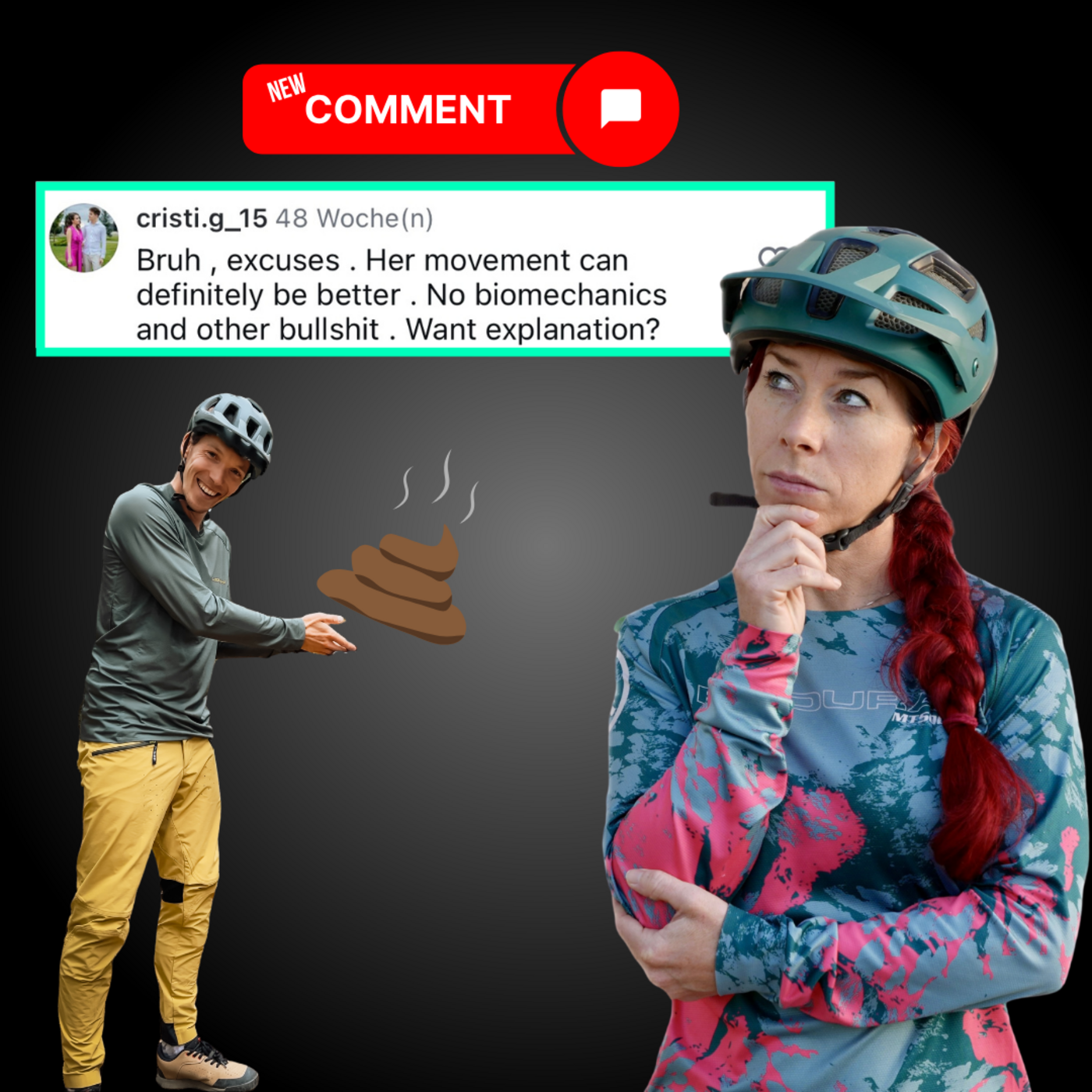 Why MTB Is Objectively Harder for Women (Physics, Not “Excuses”) #51 13.02.2026 14minIf you're fed up with men telling women that they're just making excuses, or you think “women just need to try harder”… you’re exactly why this episode exists. 🤓 It is based on physics, physiology, bike geometry and hormones: it's a clear explanation of why the same trail and the same skill can cost women more. If you'd like to see some great examples of mansplaining, then just check the comments below this reel, which ironically addresses this topic with FACTS already: https://www.instagram.com/reel/DF2rxqqsb78/?igsh=cm9nbGZobnUzNWti This is not a political statement and not “activism.” I’m NOT here to fight culture wars. I’m here for truth, physics, and better coaching — so more women+ ride bikes, stay motivated in the sport, feel seen and progress faster. In this episode you’ll learn:the difference between relative strength vs absolute strength and why mountain biking doesn't care that women can have more "relative lower body strength" why cues like “just send it”, "stop making excuses", or “just pull up” are NOT helpful when coaching womenhow power production, fatigue, recovery, and threat response can change the learning curvewhere bike geometry and component sizing can quietly reduce control for many womenwhy women often ride closer to their limits on the SAME trail or when performing the SAME movewhy women can't just "make it snappier" as easily as men. One boundary up front:This episode is for women and men. However, it's for genuinely strong men: the kind who can handle facts, respect context, and support women without putting them down to feel superior.If you’re here to learn (regardless of gender): welcome. If you’re here to “correct” women’s experiences, minimize biology, degrade me or others — that’s not a discussion, and it’s not welcome here. Also: That’s not masculinity. That’s insecurity with a keyboard. 🤓This space is for respectful, grounded (wo)men+ who value understanding, empathy, and better solutions.Looking for coaching that’s designed around different biologies and adapts skills training to your age, body, and bike? Sign up for free here:https://roxybike.podia.com/sign-me-upSupport this ads-free podcast: https://www.patreon.com/c/rideandinspire Scientific resources & Citations: Strength & Power differences between women and men: https://pubmed.ncbi.nlm.nih.gov/8477683/ and https://pubmed.ncbi.nlm.nih.gov/37772882/ and https://physoc.onlinelibrary.wiley.com/doi/full/10.1113/JP284198 and https://pmc.ncbi.nlm.nih.gov/articles/PMC7930971/ and https://pmc.ncbi.nlm.nih.gov/articles/PMC7930971/ Physiological differences between genders: Women and men gain strength well relatively, but not absolutely: https://pubmed.ncbi.nlm.nih.gov/3529284/ and why testosterone matters: https://pmc.ncbi.nlm.nih.gov/articles/PMC6391653/Intimidation and Perception: A 2010 Sacred Rides survey showed that 60% of women believed the perception of mountain biking as "hard-core" was deterring women from participating Media Representation: Research about inclusivity by Fiona Spotswood, Bristol University: "media continues to anchor male authority and reinforce hypermasculinity, falling short of its transformative potential. Women disengage and can feel disconnected from mountain biking" Fostering Inclusive Action Sport: "We need a better understanding of the practices that reconstitute, or challenge, the established production of male-dominated content that masculinizes sport." The eye-opening books for all of you saying women are not underrepresented: "Invisible Women" written by Caroline Criado Perez
 -
Why Fear Blocks Progress: The 3 Neuroplasticity Stages That Make MTB Skills Stick #50 30.01.2026 17minWhy do MTB skills feel amazing right after a clinic… and then “disappear”? In this episode, I break down what’s really happening inside your brain (neuroscience-based, no fluff, in simple terms) when you learn mountain bike skills:Why your brain deletes new MTB skills (unless you do this)The real reason skills fade: you’re stuck in Stage 1 of neuroplasticity Why confidence isn’t magic, it’s actually something called myelination (and it's simple to build!)Why fear blocks learning: the amygdala rule every MTB rider (and MTB skills coach) should knowYou’ll learn how to move from temporary performance to trail-proof skill by understanding the 3 stages of neuroplasticity and how to train in a way that actually sticks.Real progress isn’t about talent or bravery. It’s about wiring the skill deep enough that it shows up when it matters. In this episode you'll find out how to do that! 👉 Start rewiring with:My FREE Balance course → https://roxybike.podia.com/sign-me-upWork with me personally → More info hereSupport me to keep this podcast ads-free and value-driven: By supporting me on Patreon 😍 (Which also unlocks exclusive peaks) By buying me a virtual coffee 😍
-
Why Solo Rides Feel So Hard — And How to Make Them One of Your Strongest Training Tools #49 16.01.2026 19minRiding alone can feel surprisingly hard, especially for MTB beginners, often more so for women, but sometimes even for experienced mountain bikers. Fear, lack of focus, and constant “what if” thoughts often have a lot to do with how the brain reacts when we lose external support. This episode is especially helpful if you want practical, science-based confidence strategies. In this episode, we break down:why solo MTB rides trigger fear and overthinkinghow self-talk influences confidence and riding performancehow third-person self-talk (Illeism) can calm the nervous system (and why it works based on neuroscience) how to make solo rides safer and more effectivepractical strategies for solo ride safety and preparationYou’ll learn how to:ride alone with more confidencestrategies for guided self-talk reduce fear on solo mountain bike ridesstay focused without external validationbuild trust in yourselfStart my free on-bike balance course designed specifically for mountain bikers 35+: https://roxybike.podia.com/sign-me-up For the Ladies 40+: Sign up for free MTB + Menopause Tips: https://roxybike.podia.com/menopause-tips Train your strength and coordination at home (course specifically for mountain bikers 35+): https://roxybike.podia.com/building-basics-introduction-to-strength-coordinationSupport this podcast by becoming a patron or buying me a coffee 😍 (It's NOT sponsored to keep it value-driven, not algo-driven)☕️ https://buymeacoffee.com/roxyinspires🙏 https://www.patreon.com/c/rideandinspire
-
 Why Your Brain Clings to the Bad — And How to Train It Otherwise #48 19.12.2025 19minIn today’s episode, we dig into one of the most powerful (and most misunderstood) features of the human brain: your built in negativity bias. You'll learn:why your brain holds onto negative experienceswhy “reality” is filtered, not objectivehow the Reticular Activating System (RAS) decides what you noticeand how mountain biking is a surprisingly effective tool for retraining your attentionIf you’ve ever wondered why one bad ride, one mistake, or one negative comment sticks in your mind far longer than all the good stuff combined, this episode will finally help you make sense of it and CHANGE it! You’ll learn practical, science-backed tools to start training your attention today (on the trail and in daily life) so your brain becomes better at noticing possibilities, capabilities, and micro-wins instead of dangers and mistakes to build a more supportive inner environment.We explore:Baumeister et al., “Bad Is Stronger Than Good”the fast subcortical threat pathway that triggers your amygdala before you can thinkwhy positive moments fade unless you consciously reinforce themhow attention literally rewires your neural pathway Hebbian learningand why your RAS acts like a “bouncer,” filtering your world based on what you engage with✨ Patreon Bonus: Patrons get a free downloadable cheat sheet that summarizes all tools and concepts from today’s episode.Join here to get it PLUS other exclusive perks: https://www.patreon.com/c/rideandinspire This episode is not sponsored. It’s made possible by the lovely humans who support my work on Patreon. If you want to help me keep creating science-based, real-talk MTB content, JOIN my Patreon, thank you. 🩵Research, Citations & Sources: All of what I mention in this episode is solid sports psychology:Negativity Bias — “Bad Is Stronger Than Good”: Baumeister, R.F., Bratslavsky, E., Finkenauer, C., & Vohs, K.D. (2001).Review of General Psychology, 5(4), 323–370. DOI: https://doi.org/10.1037/1089-2680.5.4.323Fast Threat Detection, Subcortical “Low Road” Pathway: This is Joseph LeDoux’s foundational fear-circuit research. Emotion circuits in the brain. Annual Review of Neuroscience, 23, 155–184. DOI: https://doi.org/10.1146/annurev.neuro.23.1.155Subcortical fast route via thalamus → amygdala This paper describes how threat cues take a fast shortcut to the amygdala. Morris, J.S., Ohman, A., & Dolan, R.J. (1999).A subcortical pathway to the right amygdala mediating “unseen” fear. PNAS, 96(4), 1680–1685. DOI: https://doi.org/10.1073/pnas.96.4.1680Emotional memory consolidation — why threat sticks more. This is the amygdala → memory research that explains why negative events imprint so strongly. Phelps, E.A., & LeDoux, J.E. (2005). Contributions of the amygdala to emotion processing: From animal models to human behavior. Neuron, 48(2), 175–187. DOI: https://doi.org/10.1016/j.neuron.2005.09.025Cognitive attention networks — why attention shapes perception. This is the Corbetta & Shulman paper: Corbetta, M., & Shulman, G.L. (2002). Control of goal-directed and stimulus-driven attention in the brain. Nature Reviews Neuroscience, 3, 201–215. DOI: https://doi.org/10.1038/nrn755 Hebbian Learning = “Neurons that fire together wire together”. This is the classic foundation for how repeated thoughts build neural pathways. Hebb, D.O. (1949).The Organization of Behavior. New York: Wiley & Sons. https://thedecisionlab.com/reference-guide/neuroscience/hebbian-learning Dopamine, reward learning, and the need for repetition. Wise, R.A. (2004). Dopamine, learning and motivation. Nature Reviews Neuroscience, 5(6), 483–494.DOI: https://doi.org/10.1038/nrn1406Speaking cues aloud improves focus + reduces fear, Research on self-talk regulating attention and performance: Theodorakis, Y., Hatzigeorgiadis, A., & Chroni, S. (2008).Self-talk: Positive impact on sports performance. Journal of Applied Sport Psychology, 20(2), 178–195. https://pubmed.ncbi.nlm.nih.gov/26167788/ Reticular Activating System (RAS): The RAS has decades of neuroanatomical research. A clean modern summary is: Moruzzi, G., & Magoun, H.W. (1949). Brain stem reticular formation and activation of the EEG. Electroencephalography and Clinical Neurophysiology, 1(4), 455–473. DOI: https://www.sciencedirect.com/science/article/pii/0013469449902199?via%3Dihub
 -
 How Menopause Affects Riding – And How Mountain Biking Helps #47 05.12.2025 27minWe dive into what’s actually happening in peri- and postmenopause (hormonally, neurologically, and physically) and how those changes show up on the bike. From fear on technical trails, to fatigue, difficulties concentrating, to the “hit by a truck” recovery days… none of this is random. This episode is science-based and NOT only for women 🤓You’ll learn:to understand women deeper and why the transition is not "in their head" how estrogen and progesterone influence fear, focus, coordination and recovery,why everything can suddenly feel harder,why muscle soreness and fatigue stick around longer,why menopause affects balance and timing,why MTB is one of the most powerful tools to feel better during menopauseAs always: This is education, not medical advice. Please speak with a healthcare provider about your individual situation — especially if considering HRT or if you have medical conditions.🩵 want to leave a comment? Find this episode on YouTube here: How Menopause Affects Riding – And How Mountain Biking Helps #47https://www.youtube-nocookie.com/embed/56niS0Ogsng?feature=oembed 💌 Join the MTB Menopause Newsletter:Get science-backed training, fueling, and mindset tools specifically for midlife riders delivered straight to your inbox. Sign up here: https://roxybike.podia.com/menopause-tips Follow my new page on Instagram: https://www.instagram.com/mtbmenopause/ 🐰 Start my BUNNY HOP COURSE with a methodology designed specifically for women & riders 40+ Key Links & Research Mentioned, also, diving a little deeper: Menopause physiology & STRAW+10:STRAW+10 staging system (official reproductive aging framework): https://pmc.ncbi.nlm.nih.gov/articles/PMC3340903/ and https://pmc.ncbi.nlm.nih.gov/articles/PMC3580996/Exercise benefits in peri- and postmenopausal women:Sleep, mood, psychological well-being: Systematic review (exercise & sleep in menopausal women) https://pubmed.ncbi.nlm.nih.gov/39627770/Mind–body exercise & sleep improvement (yoga, stretching, relaxation): https://pubmed.ncbi.nlm.nih.gov/40694785/ Aerobic exercise benefits: Aerobic training improves sleep, mental health, and fatigue in peri/postmenopause: https://pubmed.ncbi.nlm.nih.gov/26382311 and https://pubmed.ncbi.nlm.nih.gov/32993147/ and https://pmc.ncbi.nlm.nih.gov/articles/PMC9730414/Strength training & cognition:Resistance training paired with cognitive training improves cognitive function and slows brain-structure decline in older women (RCT): https://pubmed.ncbi.nlm.nih.gov/36312128/Skipping breakfast & metabolic health:Skipping breakfast linked to higher risk of osteoporosis: https://pubmed.ncbi.nlm.nih.gov/34313618/No benefits of time restricted eating vs. just exercise: https://pubmed.ncbi.nlm.nih.gov/40880914/ Protein for midlife women:Whey protein supplementation helps avoid muscle loss and also builds muscle, if paired with strength training: https://pubmed.ncbi.nlm.nih.gov/36235862/Sleep: Sleeping less related to higher obesity risk: https://pubmed.ncbi.nlm.nih.gov/35730978/Estrogen, why important and why we need to fuel differently: Estrogen’s role in muscle, collagen, tendons, inflammation, neuromuscular control (major review): https://pubmed.ncbi.nlm.nih.gov/23460719/Hormone Therapy: Benefits & risks of HRT: https://pubmed.ncbi.nlm.nih.gov/34432008/Menopause symptoms & prevalenceMenopausal transition symptoms overview (cycle changes, brain fog, vasomotor symptoms, mood): https://pubmed.ncbi.nlm.nih.gov/35525259/ 🩵 Thank you for listeningIf you found this episode helpful, please share it with another midlife rider — it makes a huge difference. And DO rate the podcast, or comment below an episode 🩵
Podobni podkasti


Priljubljen v
Ta podkast je tudi v lestvicah podkastov teh držav.

