
Dr. Z's Podcasts
Dr. Z
0
A series of podcasts to help students and everyday individuals with proper thinking and ethics. Sometimes the best decision an ethical person can make is to just stay silent, detached, and mind their own business. The podcasts include material on other courses such as security analytics, networks and security, history, government, and literature.
Epizode
-
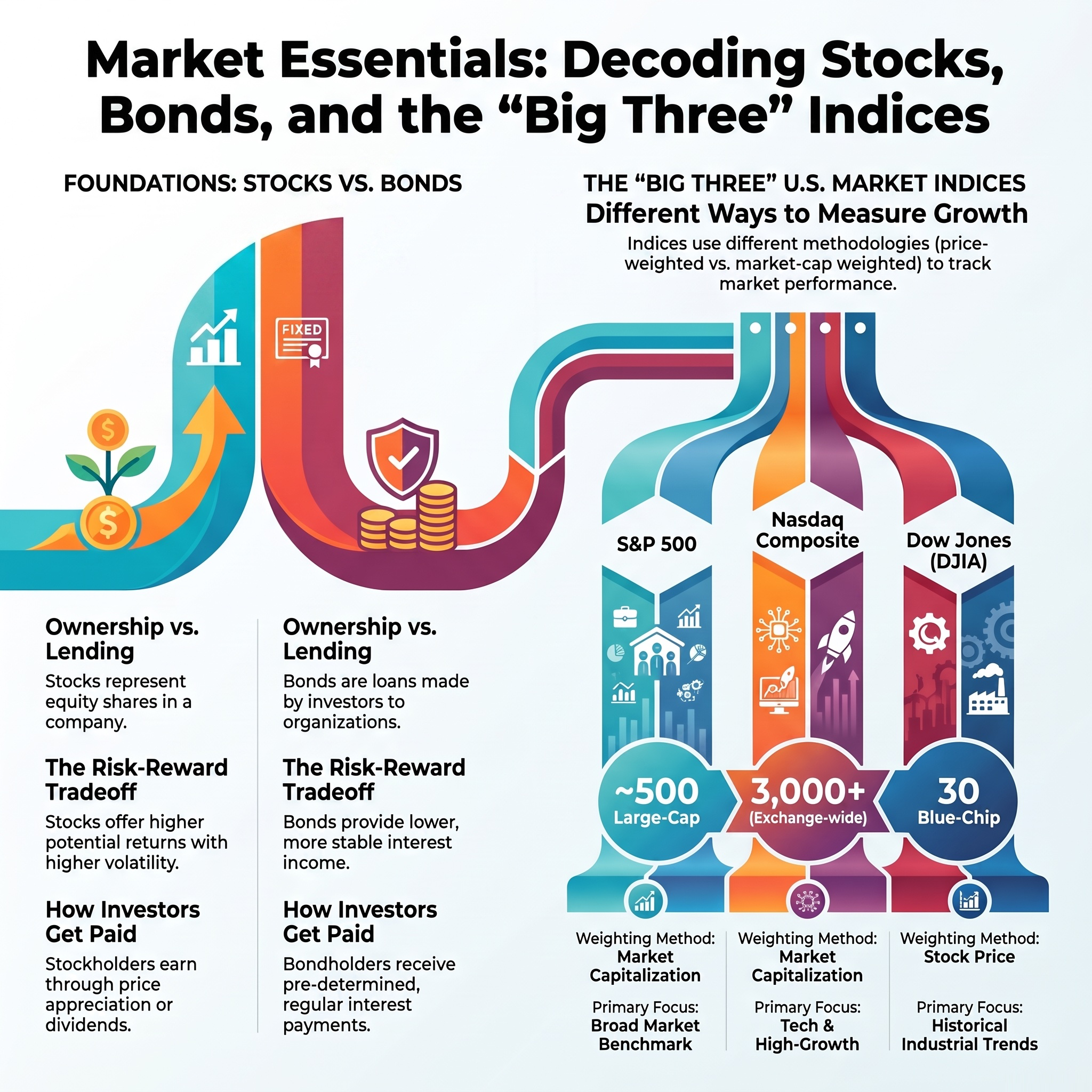 The Real Mechanics Of Financial Markets 21.08.2026 36minA foundational overview of the financial markets, highlighting the functional differences between various investment vehicles and market benchmarks. The podcast distinguishes between stocks, which represent company ownership and higher risk, and bonds, which act as loans that provide steady interest income. Furthermore, the podcast explains how major stock indices like the S&P 500, Nasdaq, and Dow Jones serve as distinct barometers for the economy by tracking different sectors and company sizes. Collectively, these resources aim to educate beginner investors on how to diversify portfolios and navigate global exchanges. Ultimately, the information empowers individuals to align their financial strategies with their personal tolerance for risk and long-term growth objectives.
 -
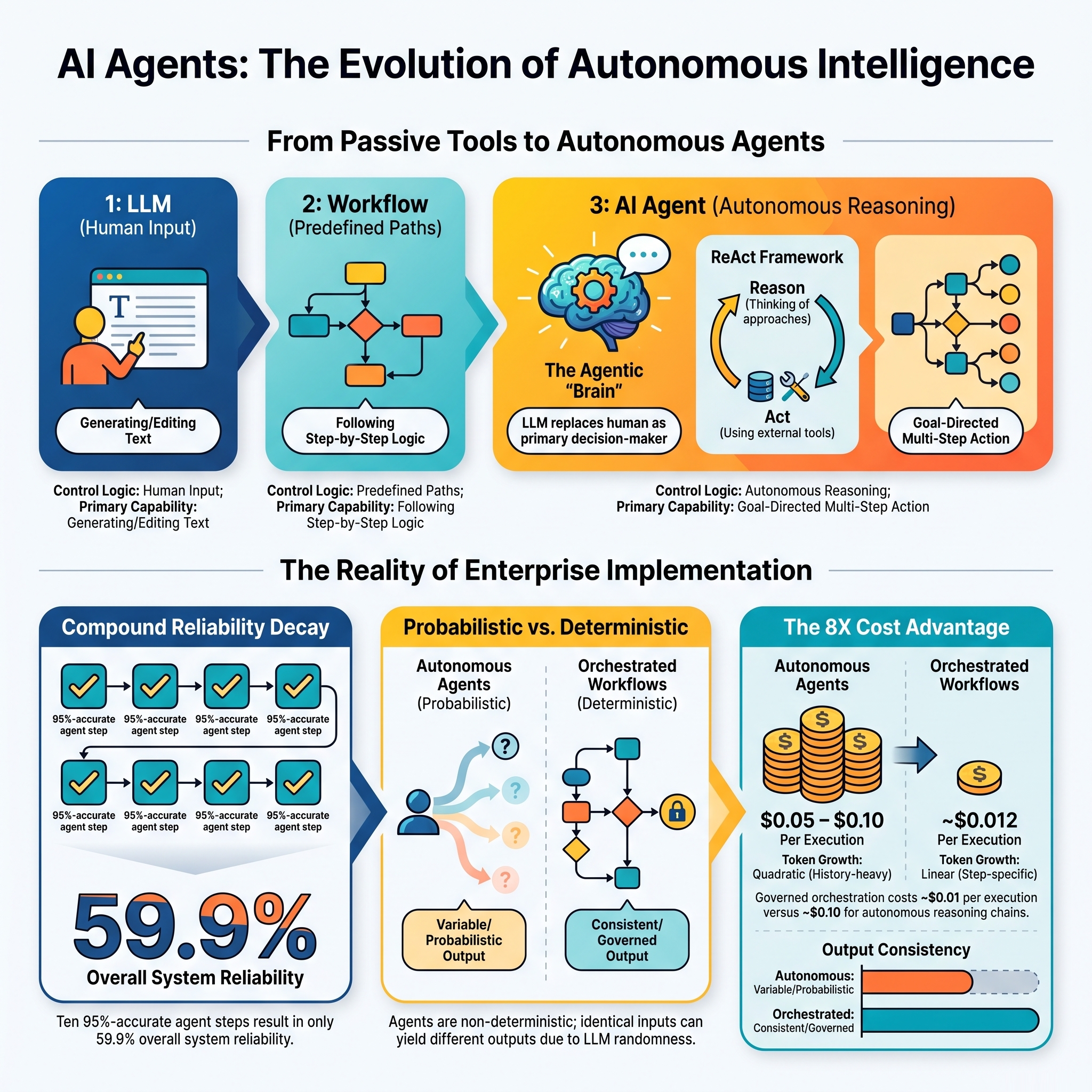 AI, LLMs, & Agents 21.08.2026 33minThis podcast explains the evolution of artificial intelligence from simple chatbots and structured workflows into autonomous AI agents. While traditional tools remain passive and prompt-dependent, agentic systems use large language models to independently reason, select tools, and iterate to achieve complex goals. The materials describe how these agents function through cognitive architectures and software frameworks like the Model Context Protocol to interact with the real world. Real-world applications are emerging in government services, software development, and task automation, though many are still in experimental stages. Despite their potential to boost productivity, the texts highlight significant security risks, ethical concerns, and economic impacts, including job displacement and systemic financial vulnerabilities. Ultimately, the transition to agents represents a shift where AI becomes a decision-maker rather than a mere tool for human-led processes.
 -
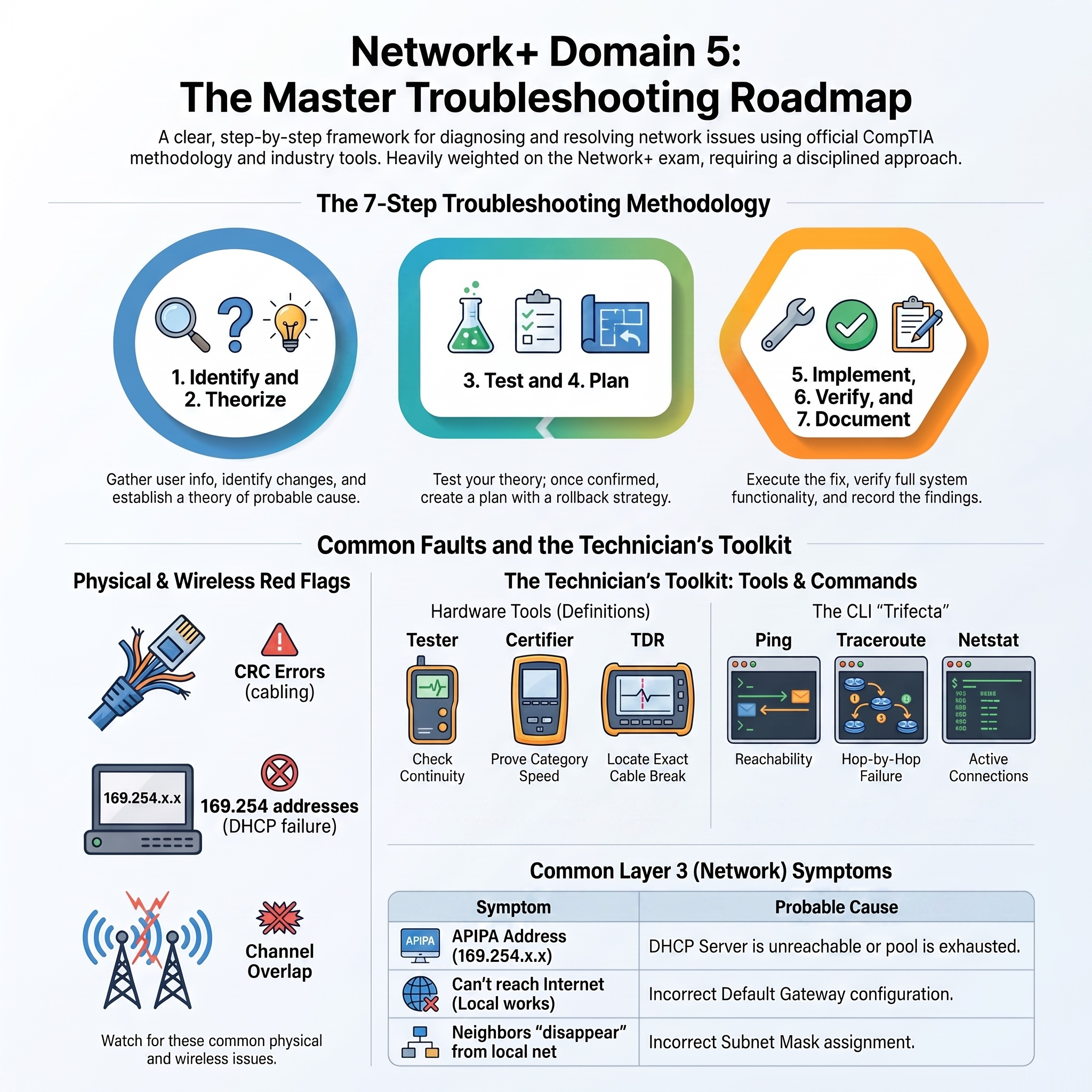 Network+ Domain 05 - Network Troubleshooting 12.07.2026 24minThis podcast provides a comprehensive framework for diagnosing and resolving network connectivity issues, emphasizing a structured seven-step troubleshooting methodology. The materials highlight how physical layer failures, such as damaged cables, faulty network interface cards, and electromagnetic interference, often present as misleading software errors. To address these problems, the podcast advocates for a systematic approach that includes identifying symptoms, testing theories, and verifying solutions through established workflows. Furthermore, the podcast details essential command-line utilities like ping, traceroute, and nslookup to isolate faults within the OSI model. By combining preventative maintenance with logical isolation techniques, IT professionals can efficiently restore services and improve long-term system stability. Specific focus is also given to critical network services, such as DNS and DHCP, explaining how to recognize and fix configuration exhaustion or resolution failures. -Dr. Z
 -
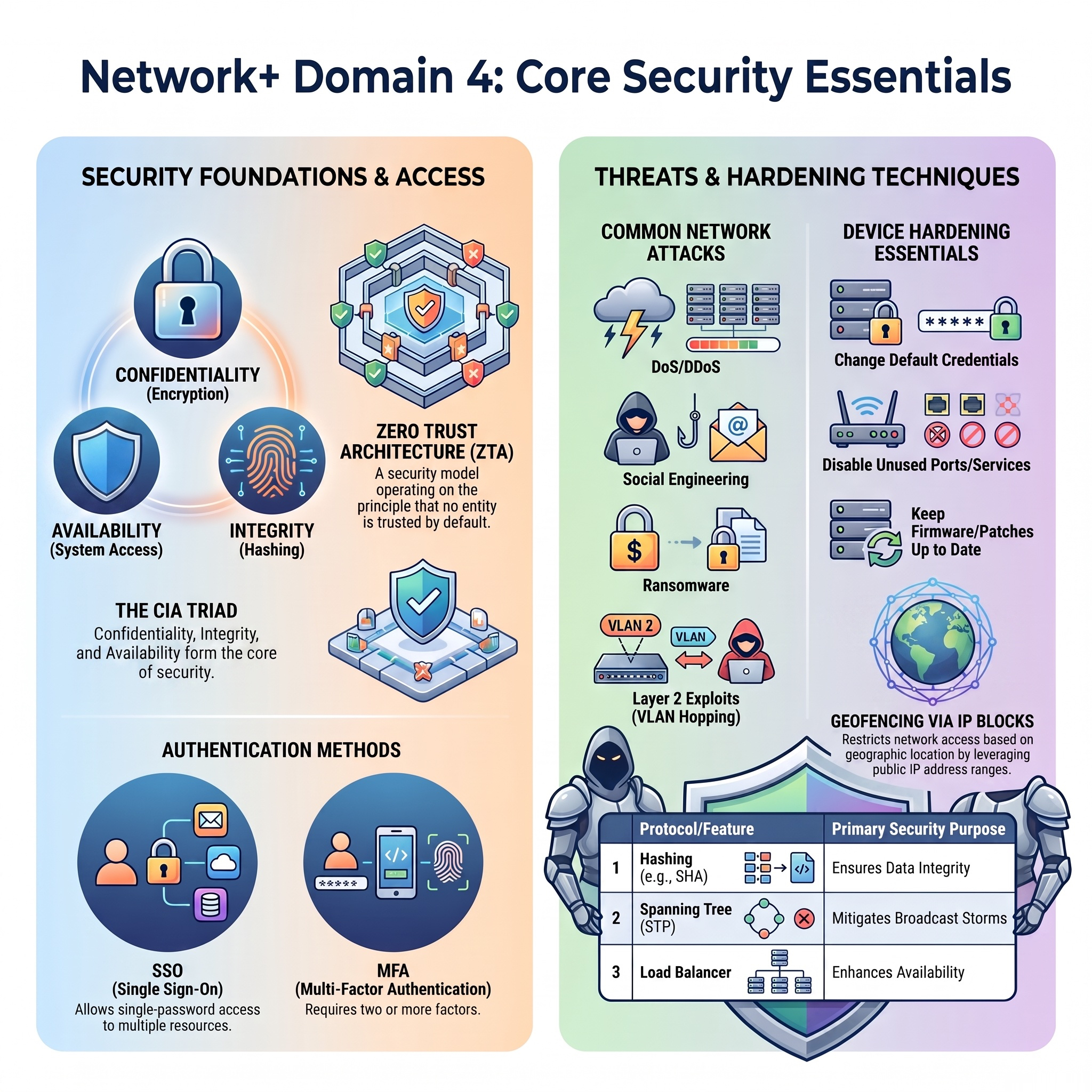 Network+ Domain 04 - Network Security 12.07.2026 24minThis podcast focuses on safeguarding network infrastructure, traffic, and data assets. The Network+ Domain 4 is anchored by the CIA Triad: Confidentiality (keeping data private using encryption and multi-factor authentication), Integrity (ensuring accuracy using hashing and digital signatures), and Availability (maintaining system uptime via redundancies). Modern networks also incorporate Zero Trust Architecture, which assumes no default trust and mandates policy-based authentication and least-privilege access.Administrators must defend against diverse network attacks. These include social engineering (such as phishing), malware (such as human-activated viruses and self-replicating worms), and technology-based exploits (such as SYN floods, Smurf attacks, rogue access points, evil twins, and VLAN hopping).To mitigate these threats, robust hardening techniques must be implemented. Essential controls include deploying stateful firewalls that track connection states, disabling unused switch ports, implementing port security by binding authorized MAC addresses, and leveraging DHCP snooping to block rogue servers. -Dr. Z
 -
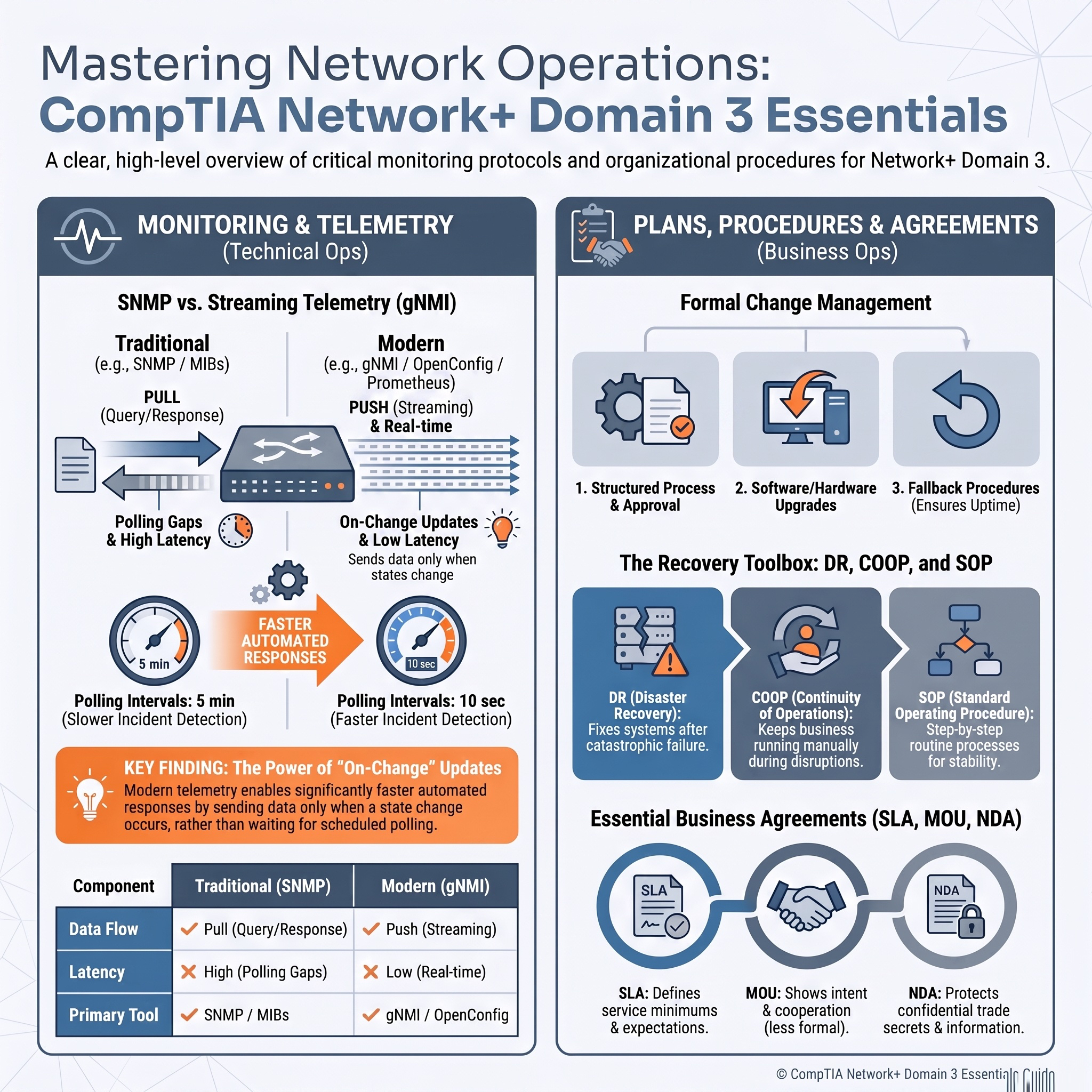 Network+ Domain 03 - Network Operations 12.07.2026 23minThis podcast focuses on Network+ Domain 3, Network Operations. The focus is on managing, monitoring, and securing infrastructure to maintain uptime and availability. Key concepts include implementing a formal change management process with strict policies and procedures to fall back if upgrades fail. It also involves establishing Standard Operating Procedures (SOPs) and incident response plans to handle security events like malware or DDoS attacks. Organizations must prepare disaster recovery and continuity of operations plans (COOP) to keep businesses running. Finally, operations require managing vendor agreements (SLAs, MOUs, NDAs), supervising system lifecycles, and utilizing modern streaming telemetry or traditional SNMP to constantly observe critical device health. -Dr. Z
 -
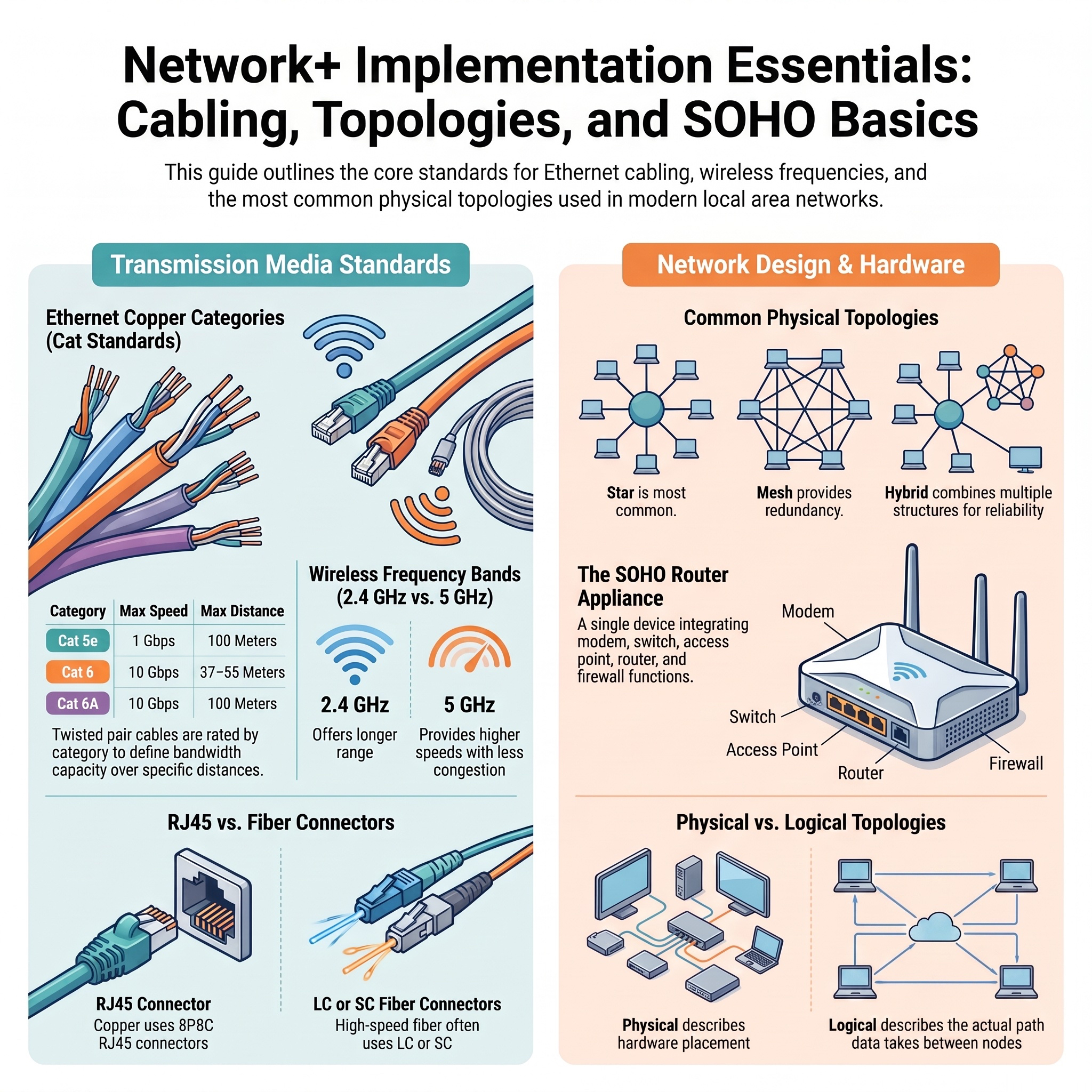 Network+ Domain 02 - Network Implementation 09.07.2026 26minThis podcast traces network implementation from hardware foundations to cloud-scale virtualization. It begins at the physical layer with structured copper (Cat5e to Cat8) and fiber cabling terminating at distribution panels. Locally, Layer 2 Ethernet switches forward frames using MAC addresses, segmented logically into Virtual LANs (VLANs) and trunked via 802.1Q to isolate broadcast domains. Subnet communications are enabled by Layer 3 routers using static and dynamic routing.In virtualized environments, virtual switches connect virtual machines, while Virtual Extensible LANs (VXLAN) perform Layer 2 encapsulation inside Layer 3 UDP packets to stretch networks across boundaries. Finally, Software-Defined Networking (SDN) and SD-WAN leverage controllers and APIs to orchestrate dynamic, transport-agnostic logical overlays. -Dr. Z
 -
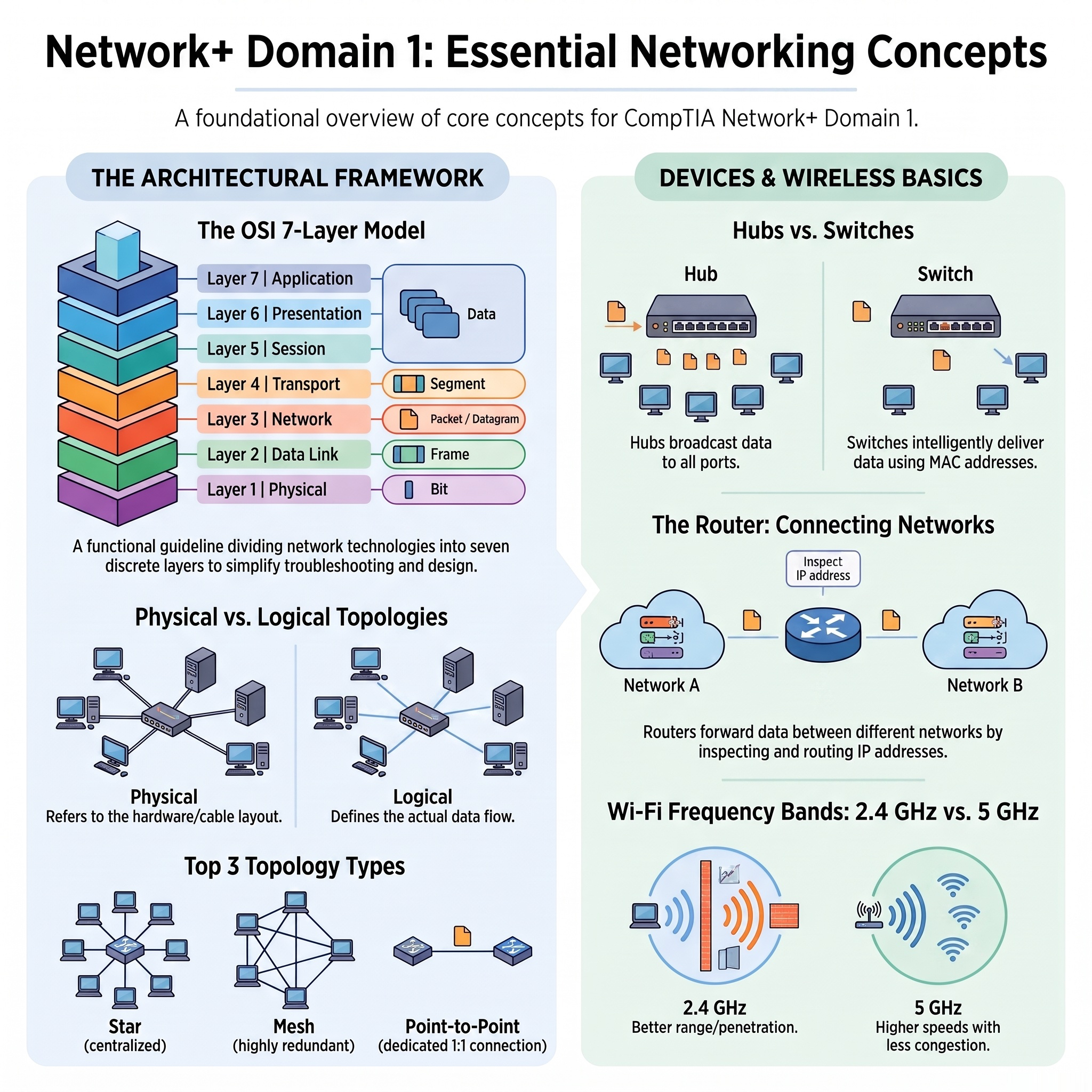 Network+ Domain 01 - Networking Concepts 09.07.2026 21minThis podcast offers a comprehensive look at network infrastructure, beginning with a detailed objective map for the CompTIA Network+ (N10-009) certification. This curriculum guide outlines essential topics such as OSI model concepts, cloud connectivity, network security, and troubleshooting methodologies. Complementing these educational goals, a technical guide explores the physical components of data transmission, focusing specifically on Ethernet cables, SFP transceivers, and fiber optic technology. This technical section distinguishes between various twisted-pair copper categories and highlights the performance differences between single-mode and multimode fiber. Together, the sources establish both the theoretical knowledge and the physical hardware requirements necessary for modern network operations. While one source mentions IPv4 and IPv6 differences, it serves primarily as a placeholder for security verification. These materials ultimately serve as a resource for mastering both the professional standards and the hardware specifications of the telecommunications industry. -Dr. Z
 -
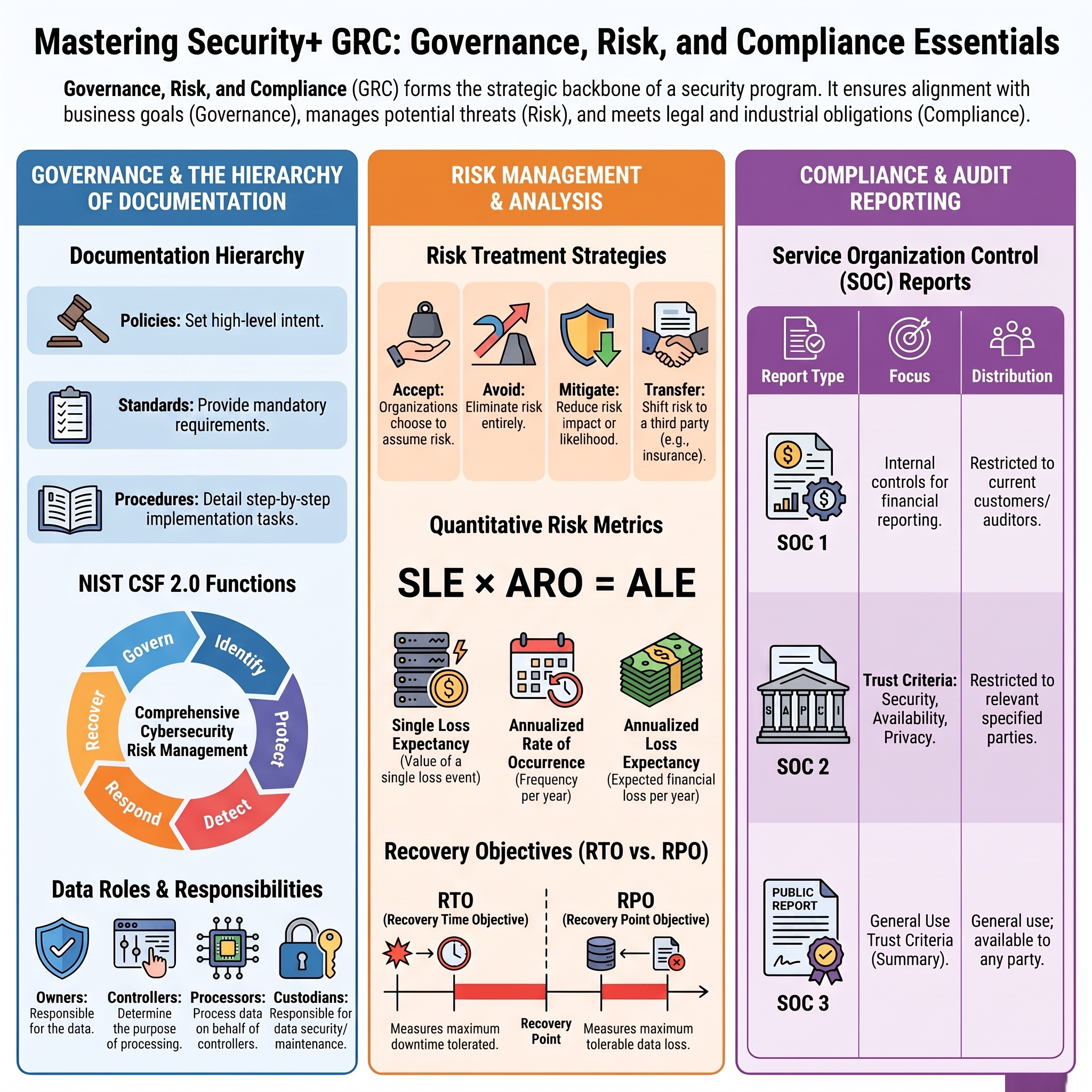 Security+ Domain 11 - Governance, Risk, & Compliance 06.07.2026 24minSecurity+ GRC outlines key knowledge required to assess enterprise security posture. Security governance establishes management’s intent and operational structure through a strict hierarchy of policies (high-level direction), standards (mandatory requirements), and procedures (step-by-step actions).The risk management lifecycle involves identifying, assessing, and treating risks through avoidance, acceptance, mitigation, or transference. Quantitative risk analysis uses metrics like Single Loss Expectancy (SLE) and Annualized Rate of Occurrence (ARO) to calculate Annualized Loss Expectancy (ALE=SLE×ARO). Even after applying these controls, some residual risk always remains.Lastly, compliance ensures organizations adhere to regulatory frameworks like GDPR and HIPAA. This extends to managing third-party risk via thorough vendor assessments and structured agreements such as Service-Level Agreements (SLAs) or Memorandums of Understanding (MOUs). -Dr. Z
 -
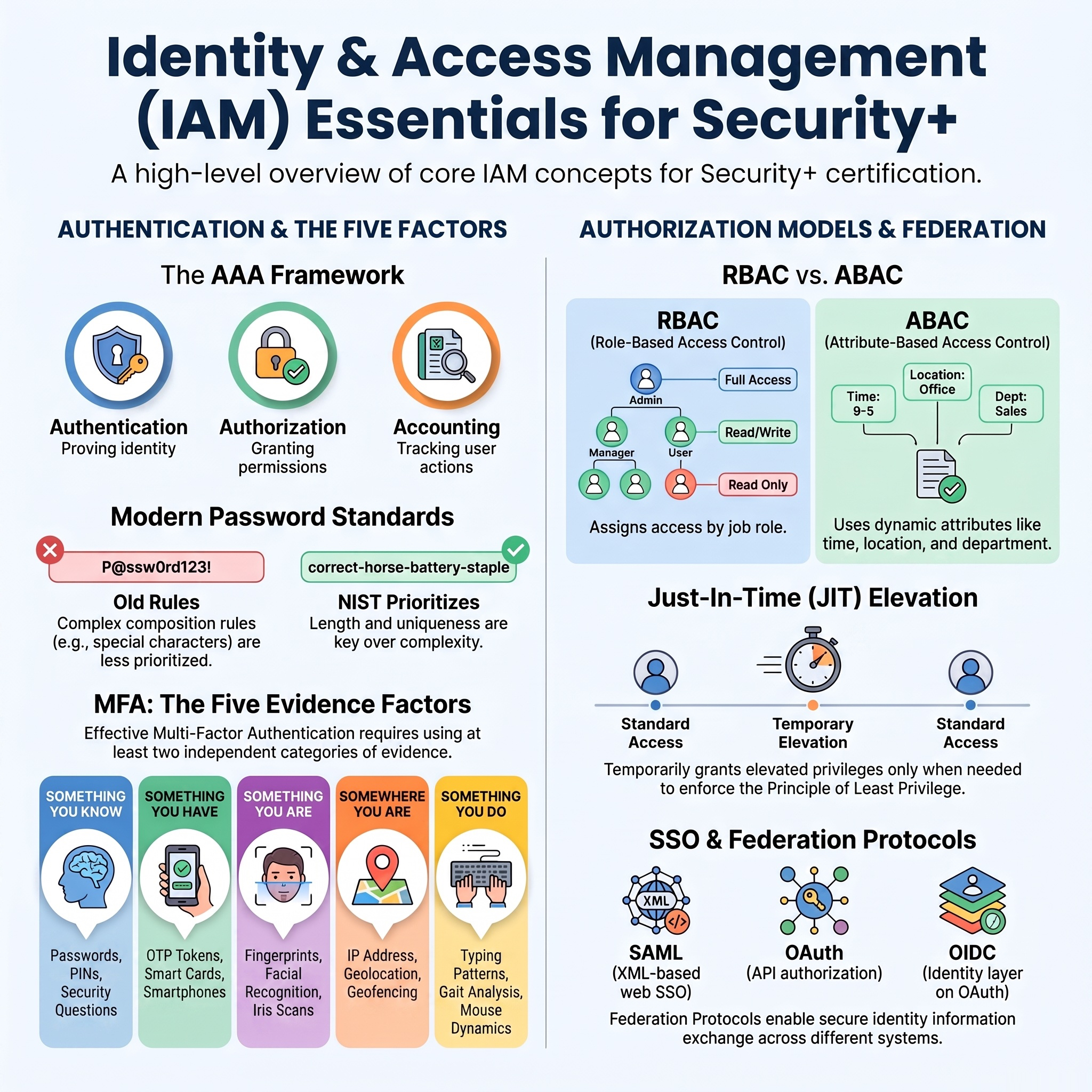 Security+ Domain 10 - Identity & Access Management 06.07.2026 21minThis podcast provides a comprehensive overview of fundamental cybersecurity frameworks and identity management strategies used to protect sensitive information. It details the Biba Integrity Model, which prioritizes data accuracy through strict hierarchical access rules, and compare popular access control methods like role-based and attribute-based systems. The texts also explain essential authentication protocols, specifically contrasting RADIUS and TACACS+, while highlighting the importance of multifactor authentication in preventing account compromises. Finally, the podcast emphasizes Separation of Duties as a critical internal control designed to mitigate fraud by distributing sensitive tasks among multiple individuals. Together, these materials serve as a technical guide for implementing robust security policies and safeguarding system architecture. -Dr. Z
 -
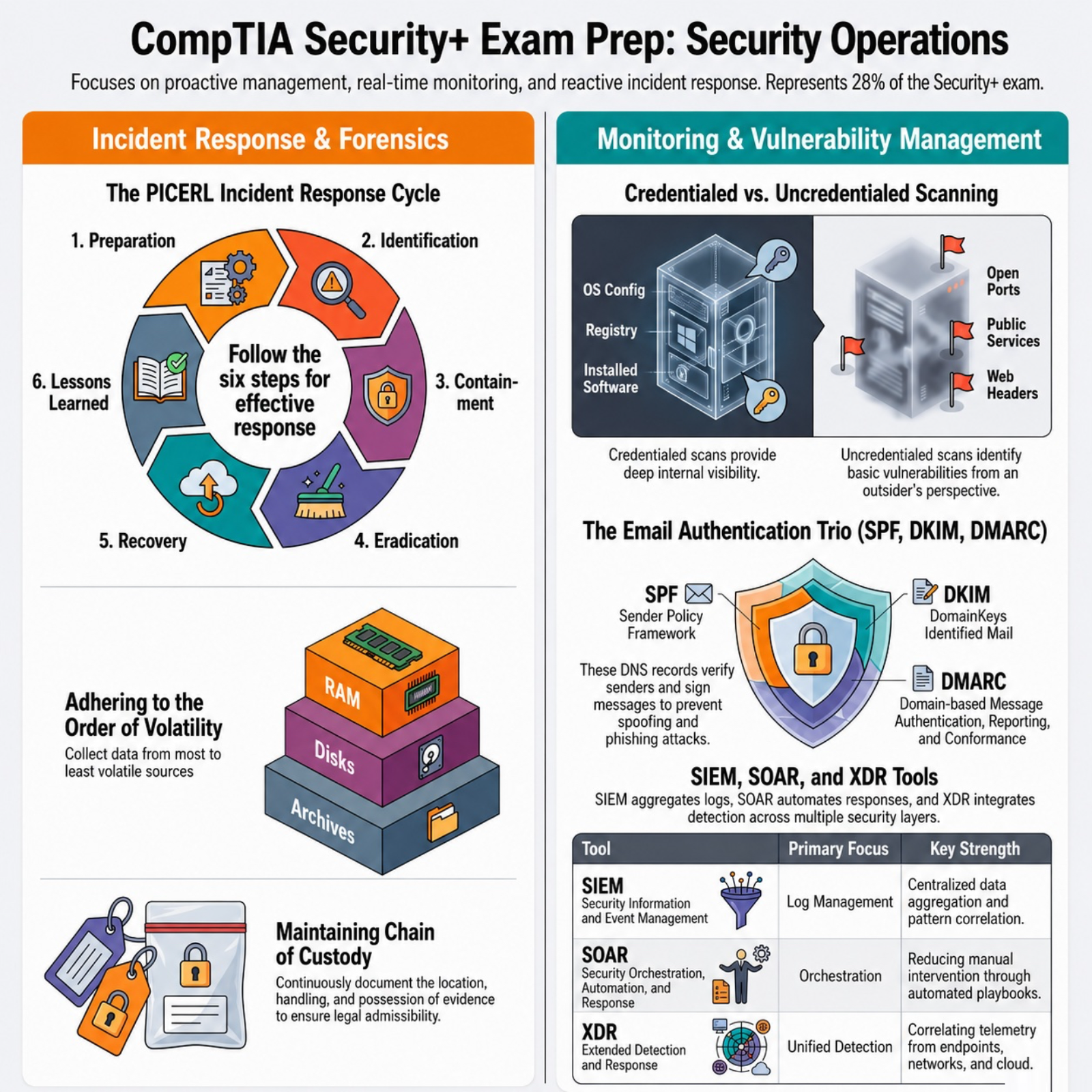 Security+ Domain 09 - Security Operations 06.07.2026 22minThis podcast provides a comprehensive framework for modern cybersecurity management, covering technical standards, defensive protocols, and investigative methodologies. Key topics include the implementation of email authentication via SPF, DKIM, and DMARC to prevent spoofing, alongside a comparison of credentialed and uncredentialed vulnerability scanning for risk assessment. Specialized guidance on digital forensics outlines the process of preserving and analyzing electronic evidence while maintaining a strict chain of custody. Strategic oversight is provided through references to NIST incident handling guidelines and CIS best practices, which offer standardized benchmarks for organizational defense. Together, these materials serve as a roadmap for identifying system weaknesses, responding to active threats, and establishing a resilient security posture. -Dr. Z
 -
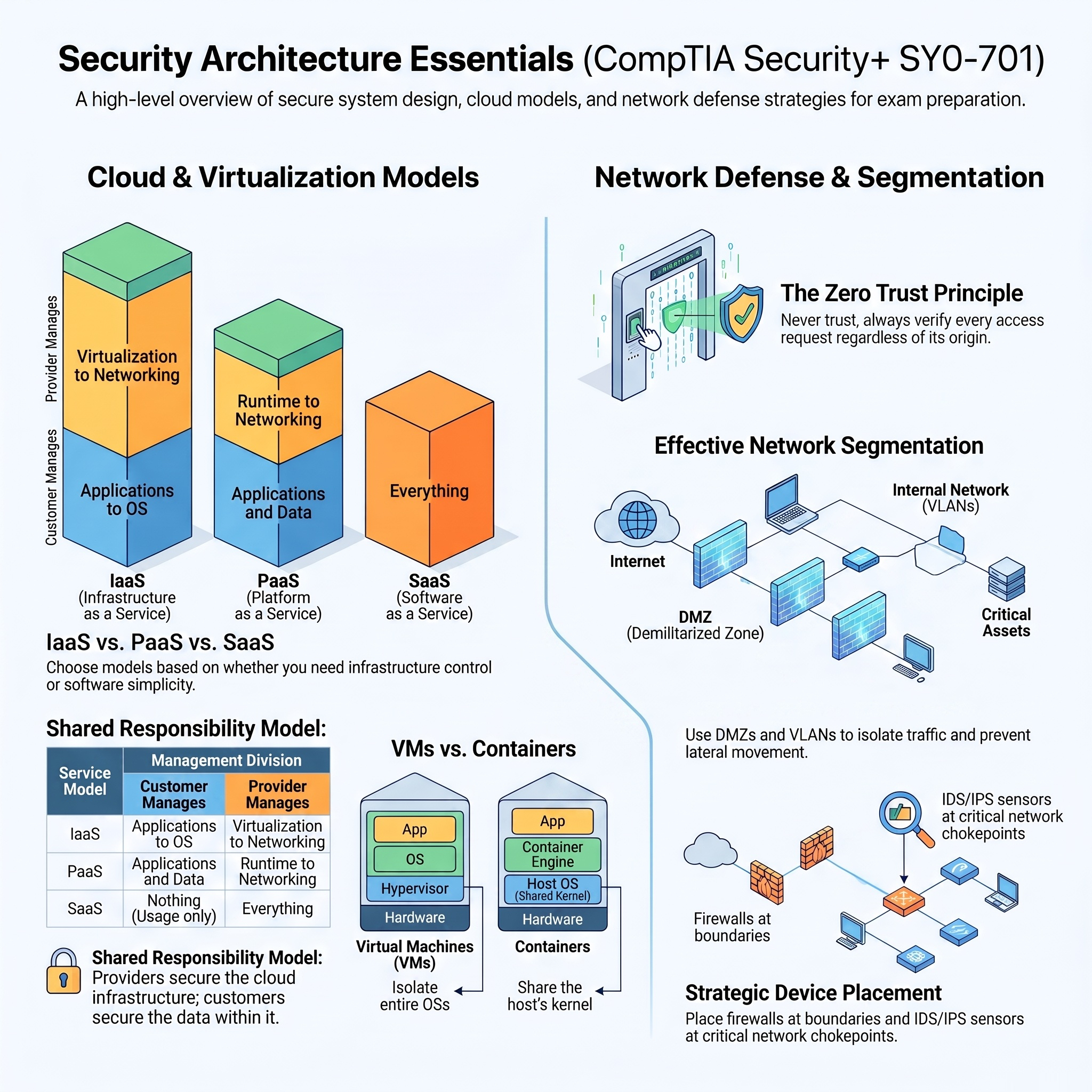 Security+ Domain 08 - Security Architecture 06.07.2026 19minModern security architecture is shifting focus from perimeter defenses to a Zero Trust model. It prioritizes network segmentation, using VLANs, DMZs, and Layer 7 microsegmentation, to restrict lateral server to server traffic. Critical controls include Next Generation Firewalls for application filtering, out of band IDS for detection, inline IPS for active prevention, and proxies to shield clients or servers. Cloud designs leverage SASE and SSE to deliver security at the edge, operating under a shared responsibility model. Securing virtual environments requires mitigating VM escape and container breakout vulnerabilities. Finally, enterprise resilience is maintained through redundancy, robust backups, and alignment with recovery metrics like RTO and RPO. This podcast covers these topics in some detail. -Dr. Z
 -
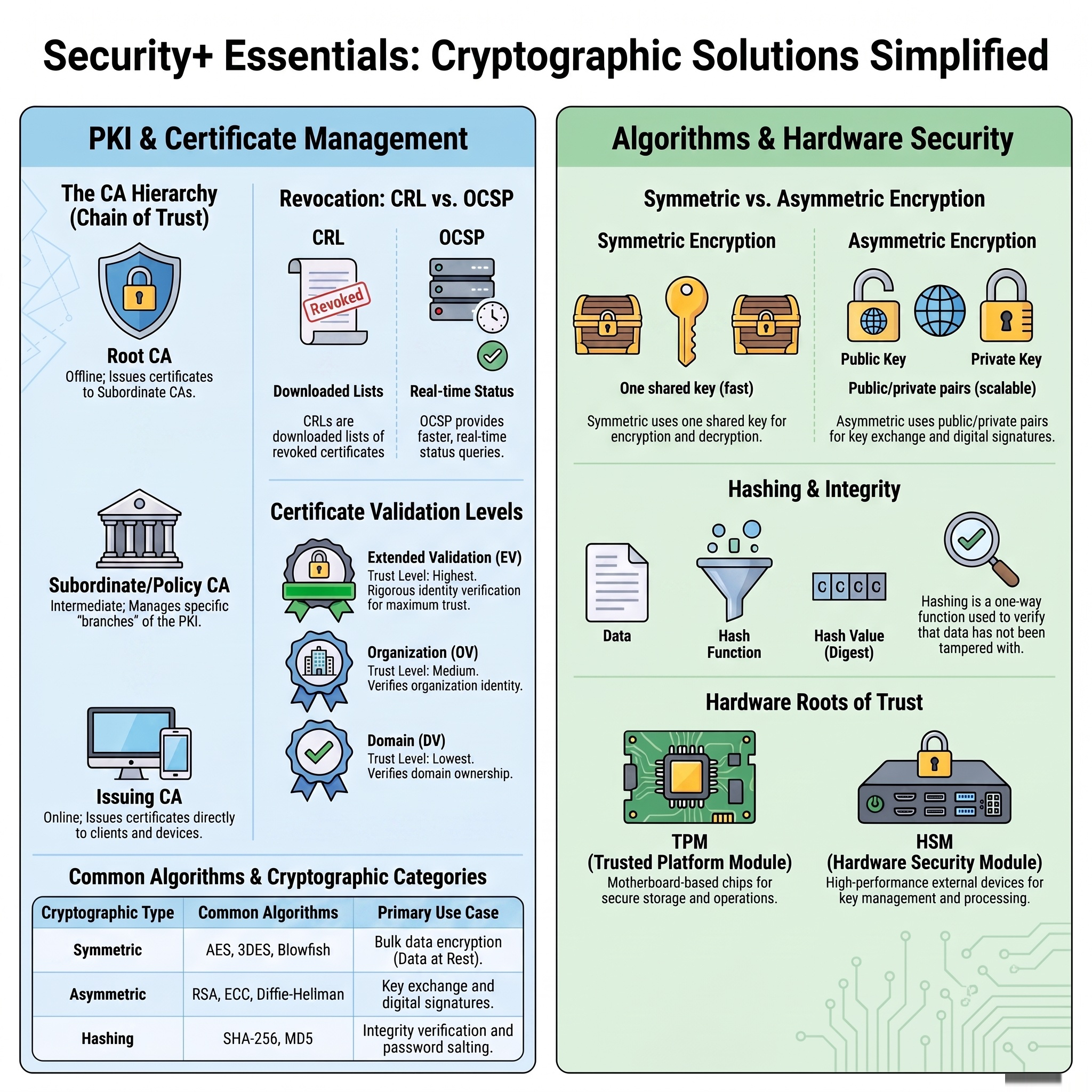 Security+ Domain 07 - Cryptographic Solutions 05.07.2026 24minThis podcast explores the infrastructure and protocols necessary for maintaining secure digital identities and encryption. Central to this is the Certificate Authority (CA), which serves as a trusted entity responsible for verifying identities and issuing digital certificates via hierarchical trust models. The podcast further details modern cryptographic techniques like ECDHE key exchange, which establish shared secrets while ensuring forward secrecy for communications. Security is also framed through compliance standards such as FIPS 140-3, which categorizes requirements for cryptographic modules across various safety levels. Finally, the podcast highlights that strong math is insufficient without protecting against side channel attacks, which exploit physical system behaviors like power usage or timing. To mitigate these risks, the use of Hardware Security Modules (HSMs) is recommended to provide a tamper-resistant environment for key management. -Dr. Z
 -
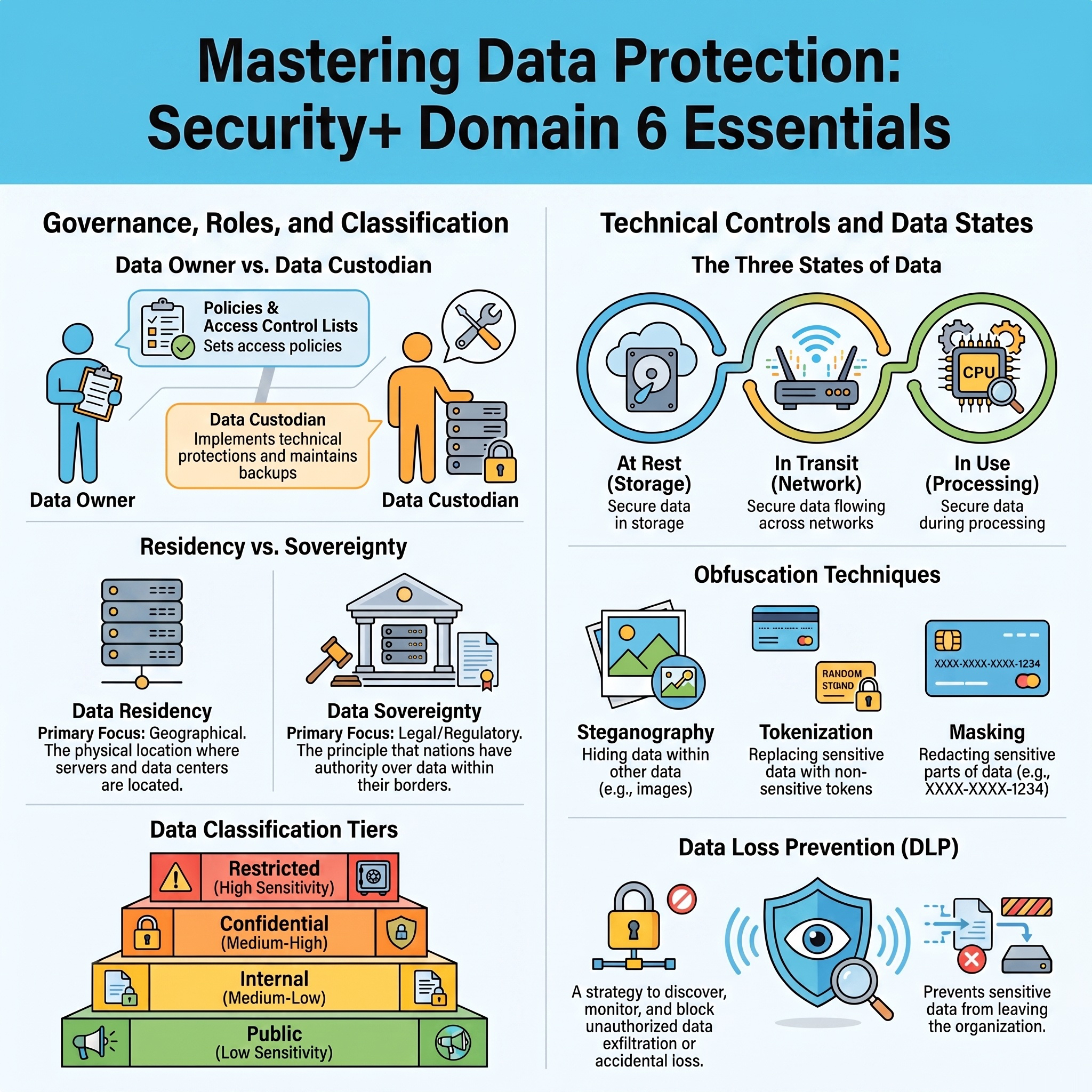 Security+ Domain 06 - Data Protection 05.07.2026 23minThis podcast combines materials into a comprehensive educational framework for mastering cybersecurity fundamentals and implementing data loss prevention (DLP) strategies. The first source serves as a detailed study guide for the CompTIA Security+ SY0-701 exam, breaking down critical topics such as the CIA triad, security control categories, and effective testing techniques. Supplementing this technical foundation, the second source offers a practical roadmap for building a defensible DLP program by identifying sensitive "crown jewels" and establishing data classification levels. It emphasizes a layered security approach, suggesting the use of technical controls like endpoint agents and cloud access brokers to mitigate both accidental leaks and malicious exfiltration. Together, these resources teach professionals how to recognize insider threats and utilize purple team testing to validate the strength of their organizational defenses. The collection ultimately transitions from theoretical exam concepts to actionable, real-world guidance for maintaining information integrity. -Dr. Z
 -
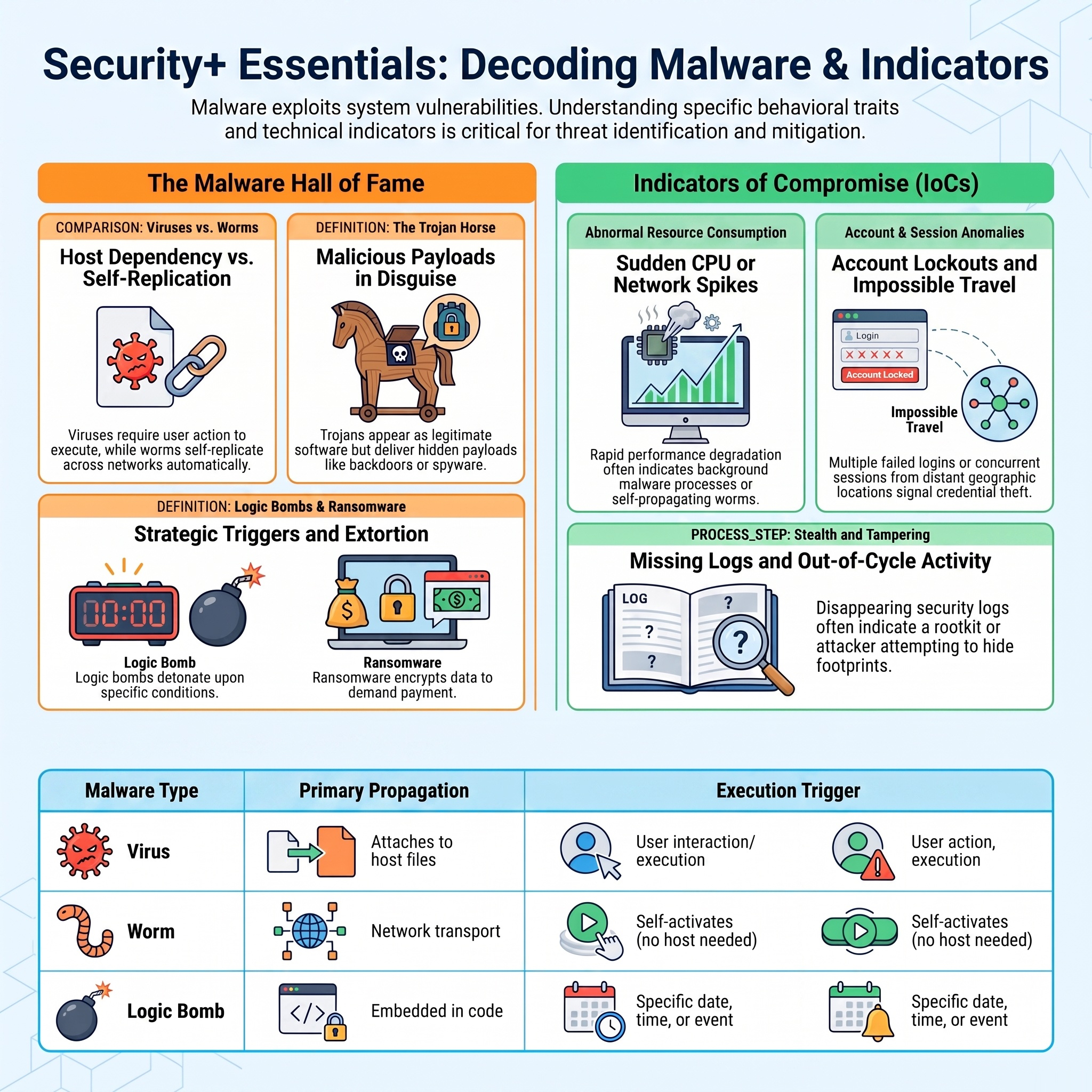 Security+ Domain 05 - Malware 05.07.2026 25minThis podcast offers a detailed examination of modern cybersecurity threats, focusing on the methods used by malicious actors to compromise digital systems. It defines various forms of malware, such as viruses, worms, and ransomware, while highlighting advanced techniques like Living off the Land (LOTL), where attackers exploit legitimate system tools to remain hidden. Beyond software-based attacks, the text covers social engineering tactics and physical security risks like tailgating and dumpster diving. Technical vulnerabilities are also explored, including buffer overflows, injection attacks, and cryptographic weaknesses. To assist defenders, the podcast outlines vulnerability scanning, penetration testing, and the identification of indicators of compromise. Overall, the collection serves as a comprehensive educational guide for understanding cyberattack patterns and implementing Zero Trust defense strategies. -Dr. Z
 -
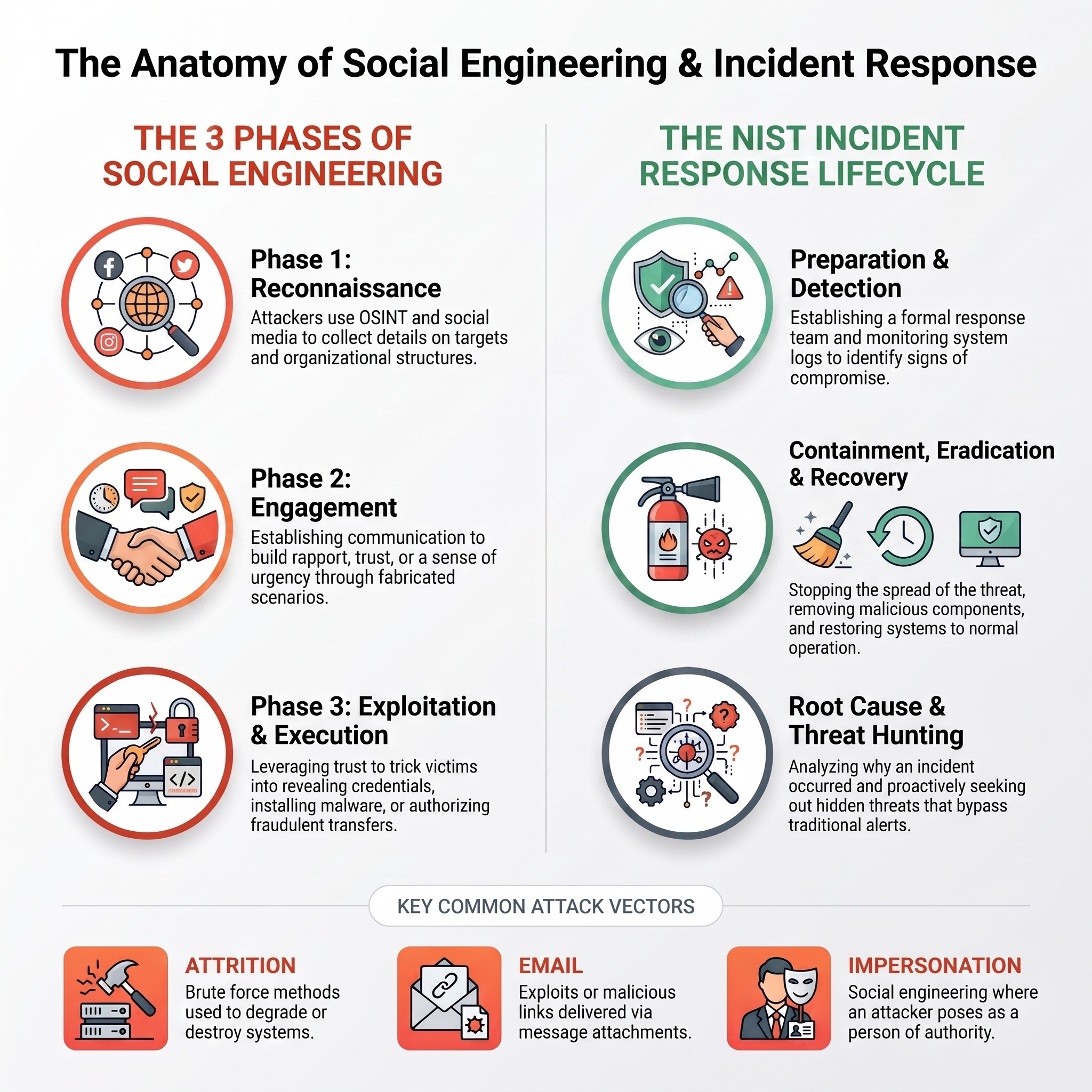 Security+ Domain 04 - Social Engineering 05.07.2026 24minThis podcast provides a multifaceted look at the cybersecurity landscape through educational transcripts, technical discussions, and industry rankings. One source explores incident response strategies, specifically comparing root cause analysis, which investigates the origins of past breaches, with threat hunting, a proactive search for hidden attackers. Another highlight is the psychological tactics of social engineering, detailing how manipulation, rapport-building, and elicitation are used to exploit human vulnerabilities rather than technical flaws. -Dr. Z
 -
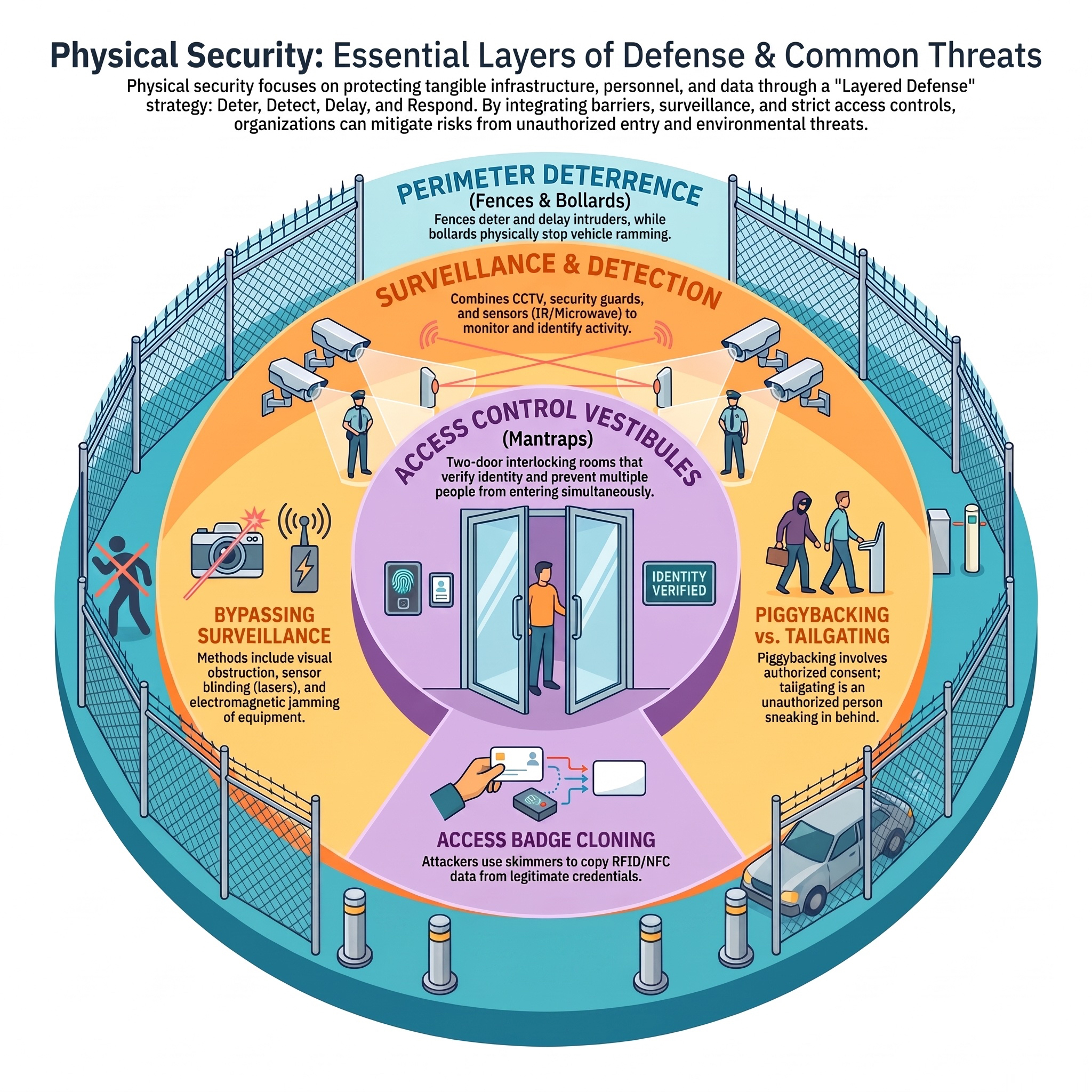 Security+ Domain 03 - Physical Security 05.07.2026 26minThe Security+ physical security podcast emphasizes a layered defense strategy to deter, detect, delay, and respond to threats. Key components include perimeter controls like fencing to deter intruders and bollards to prevent vehicle ramming. Lighting and signage act as deterrents while enhancing video surveillance coverage.For access control, vestibules (mantraps) hold individuals for authentication, defeating unauthorized entry methods like tailgating (slipping in behind someone) and piggybacking (knowingly letting someone tag along). Cipher locks require regularly rotated codes, while RFID badges must be protected from cloning skimmers.Finally, the podcast covers brute-force attacks on physical barriers and methods of bypassing surveillance, which include visual obstructions, sensor blinding, electromagnetic jamming, and environmental attacks on power or HVAC systems. -Dr. Z
 -
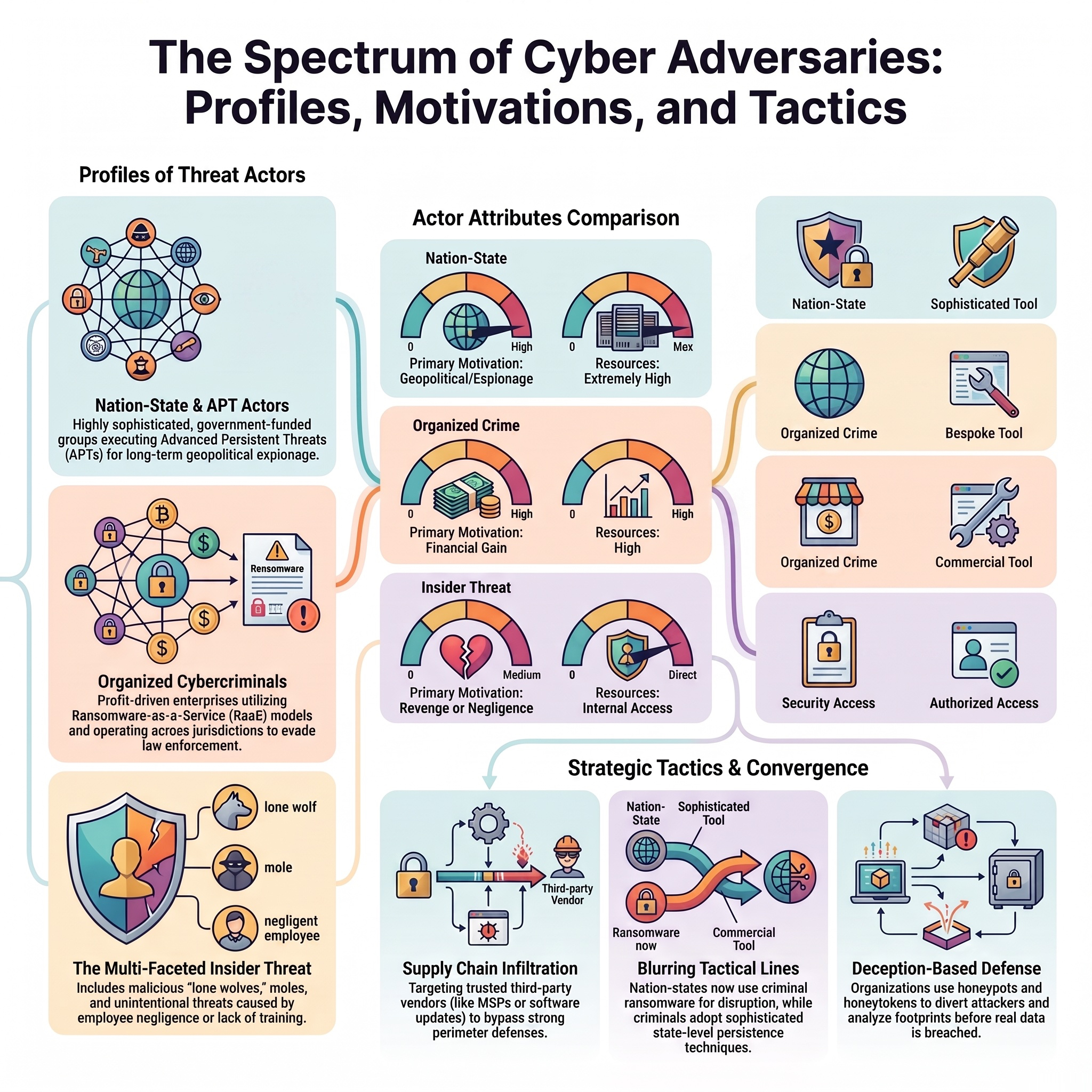 Security+ Domain 02 - Threat Actors 05.07.2026 24minThis podcast examines the shifting landscape of modern cybersecurity, emphasizing the blurring boundaries between geopolitical espionage and profit-driven digital crime. It details how nation-state actors and organized cybercriminals have begun sharing sophisticated tools and tactics, such as fileless malware and encrypted communication channels, to achieve their respective goals. The podcast also highlights the critical risk of insider threats, noting that even authorized personnel can harm an organization through negligence, accidents, or intentional sabotage. To counter these diverse hazards, the podcast proposes proactive defense strategies, including the use of honeynets and honeypots to deceive and analyze attackers in production environments. Ultimately, the podcast underscores that effective security requires a combination of advanced behavioral detection, international cooperation, and comprehensive employee awareness training. -Dr. Z
 -
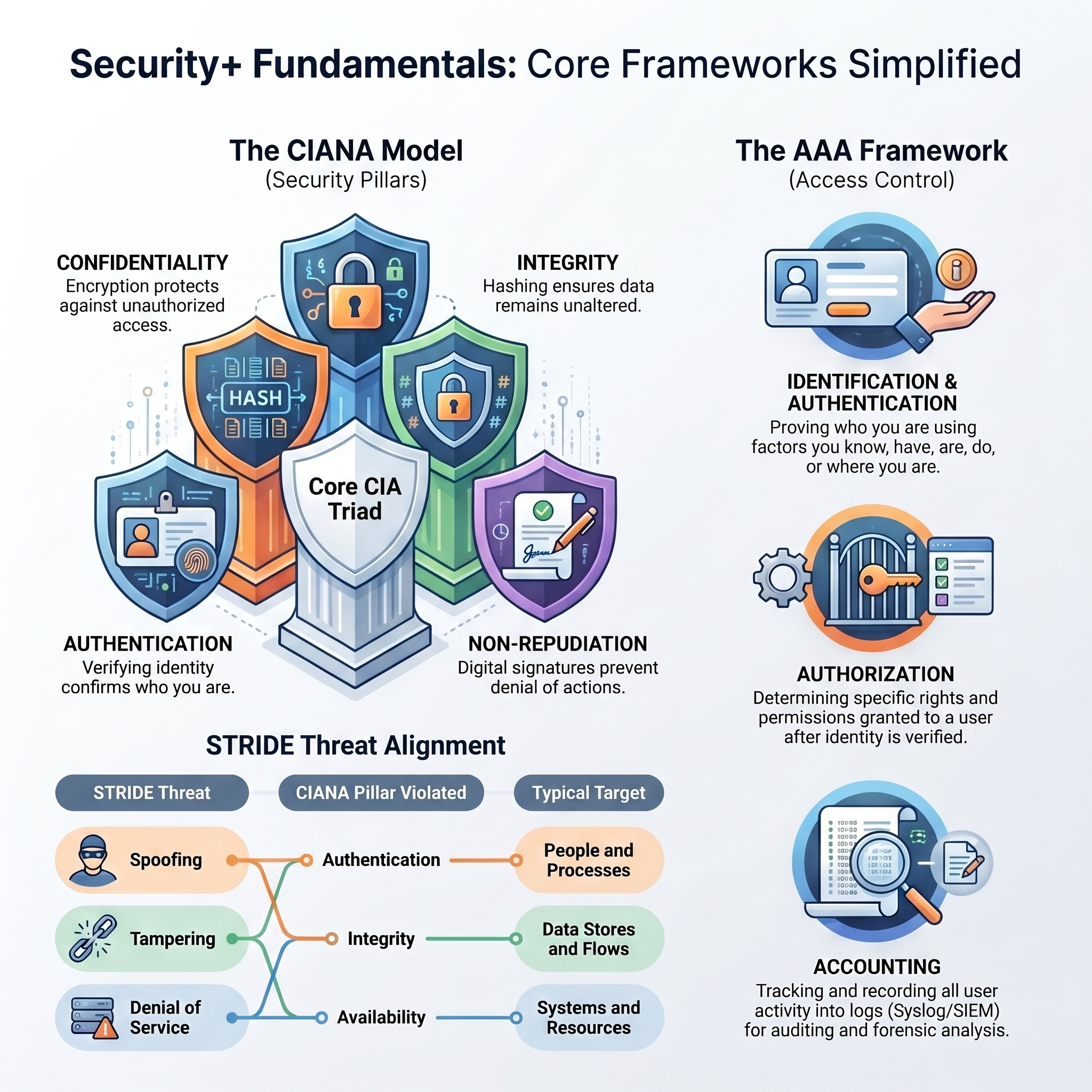 Security+ Domain 01 - Fundamentals Of Security 24.06.2026 20minThis podcast outlines the fundamental pillars and methodologies used to build a robust cybersecurity posture. The documentation introduces the CIA Triad and CIANA model, which establish core goals like confidentiality, integrity, and availability, while the STRIDE framework provides a systematic way to categorize and mitigate specific threats. Organizational security is further strengthened through security controls, classified by their function—such as preventive, detective, and corrective—and their implementation type, ranging from technical to physical. Strategic guidance is provided via the NIST Cybersecurity Framework 2.0, which utilizes Organizational Profiles to help entities conduct gap analyses and move from their current state toward targeted security outcomes. Additionally, the texts highlight modern defensive shifts like Zero Trust Architecture, which replaces implicit trust with continuous, policy-driven verification of all users and devices. Together, these materials serve as a comprehensive guide for identifying vulnerabilities, managing risks, and maintaining resiliency in an evolving digital landscape. -Dr. Z
 -
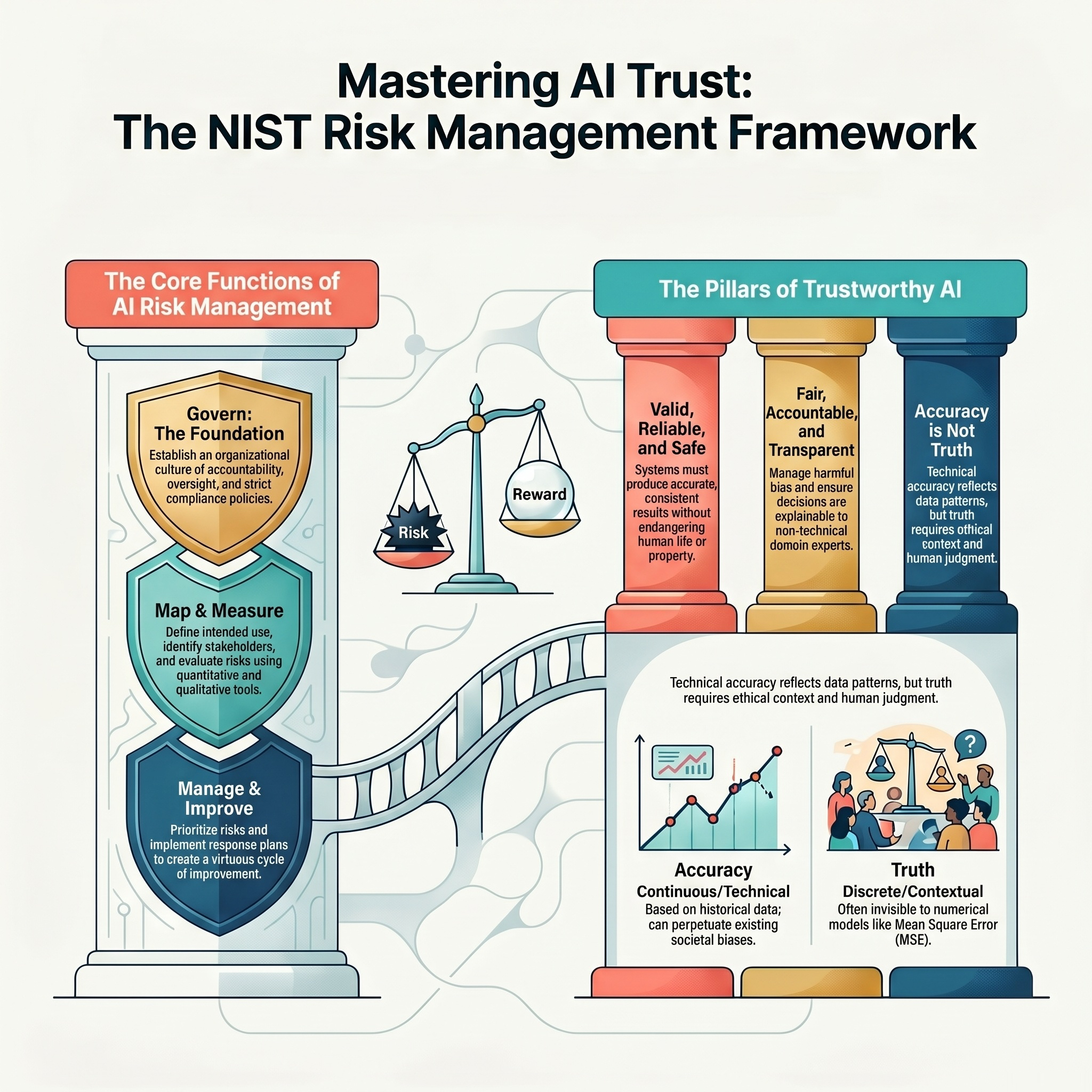 Cybersecurity Analytics - Module 12 - The Gap Between AI Accuracy & Truth 01.05.2026 21minThis podcast outlines the core components of the NIST AI Risk Management Framework, focusing on the essential functions of governance, mapping, measurement, and management. To ensure responsible AI deployment, the framework highlights the importance of establishing clear policies, identifying stakeholder interests, and evaluating performance metrics like fairness and robustness. It emphasizes organizational accountability through oversight structures and systematic risk response planning during the technology's lifecycle. Additionally, the podcast defines the characteristics of trustworthy AI, which include safety, security, and the active mitigation of harmful biases. By integrating these functions, organizations can maintain transparency and ensure their systems remain valid and reliable. -Dr. Z
 -
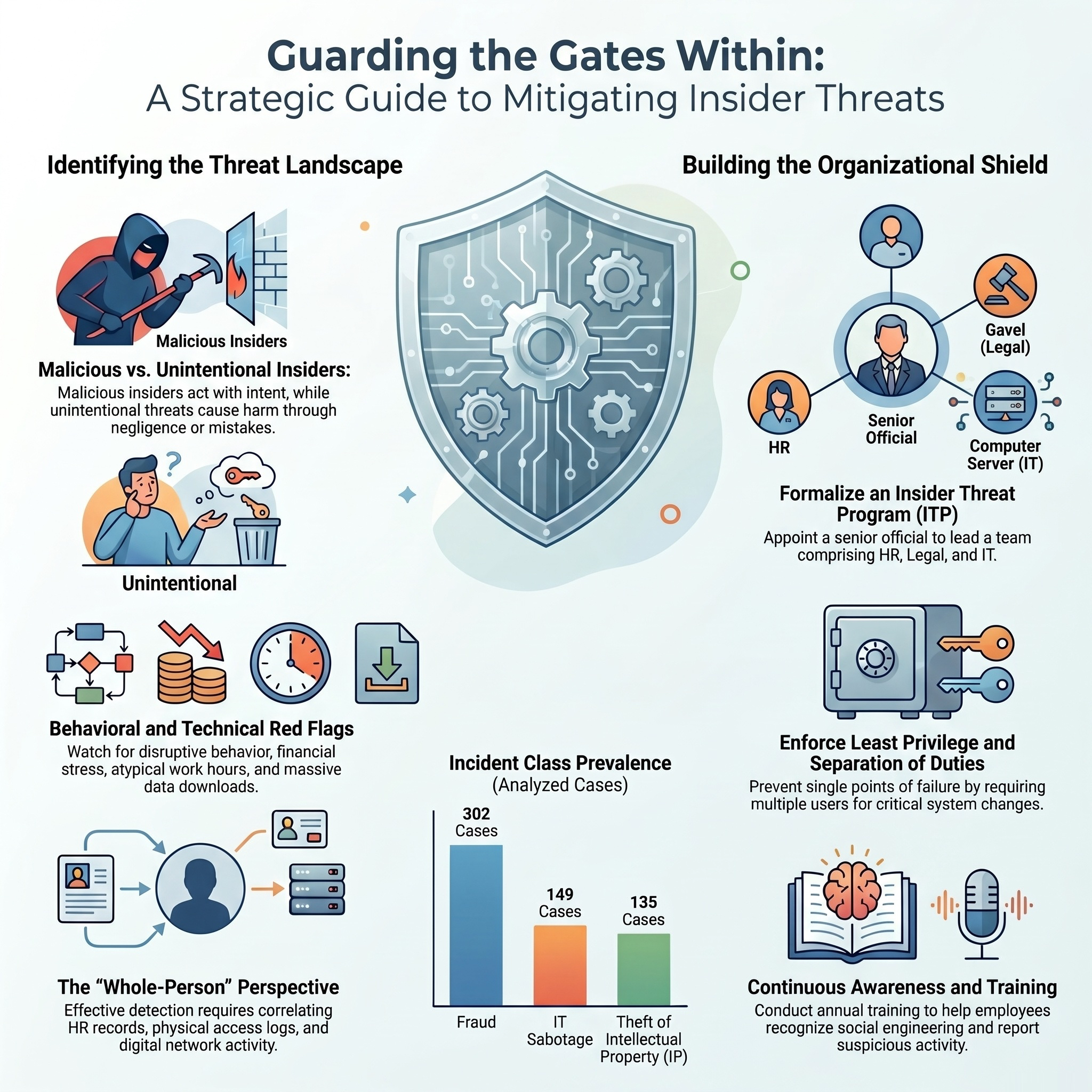 Cybersecurity Analytics - Module 11 - How Behavioral Analytics Catches Insider Threats 01.05.2026 21minThis podcast details the use of User and Entity Behavior Analytics (UEBA) to identify and mitigate insider threats within a digital environment. By establishing behavioral baselines for login times, file access, and network norms, organizations can detect anomalies such as sudden data hoarding or impossible travel. The system aggregates various data sources, including authentication logs and cloud activity, to flag deviations that suggest misuse of legitimate access. It illustrates how these risk scores trigger formal investigations and responses. Ultimately, the podcast emphasizes that while automated profiling is powerful, effective security still requires human oversight and a commitment to user privacy. -Dr. Z
Podobni podkasti


Priljubljen v
Ta podkast je tudi v lestvicah podkastov teh držav.
