
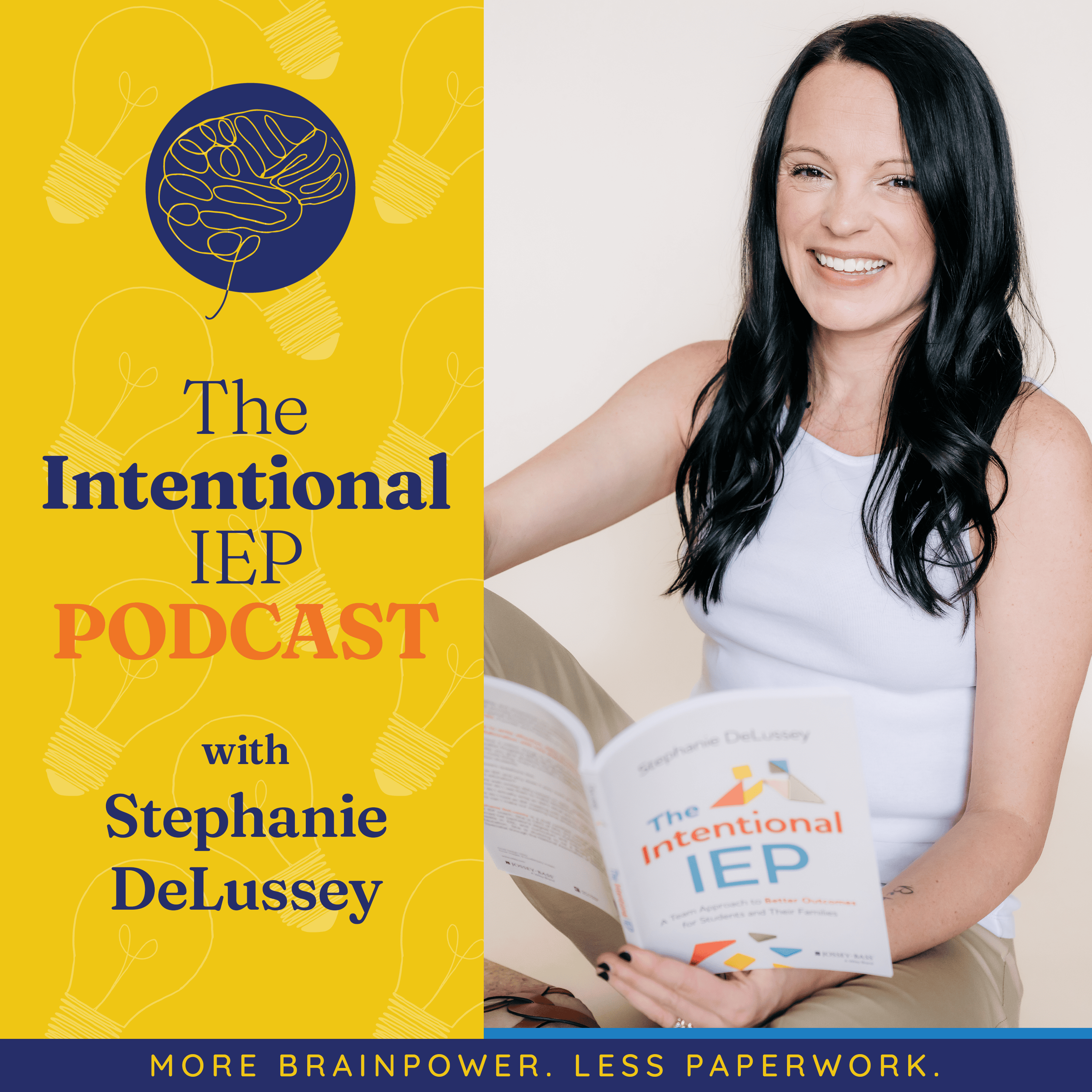
The Intentional IEP Podcast
Stephanie DeLussey
0
The Intentional IEP Podcast helps special education teachers navigate the complexities of Individualized Education Programs. Host Stephanie DeLussey, a dual-certified special education teacher and IEP coach, breaks down the process into actionable steps. Each episode covers topics like writing legally compliant IEP goals, data collection, accommodations, and running effective IEP meetings. The show aims to reduce overwhelm and make special education documentation more manageable.
Epizode
-
 E74. Writing Progress Reports That Won't Get Flagged in Due Process 28.09.2026 16minProgress reports are more than another piece of IEP paperwork. They show whether a student is making progress toward their goals, help teams make informed instructional decisions, and give families a clear picture of where their child started and where they are now.In this episode, Stephanie discusses how to write progress reports that are specific, data driven, and clearly connected to the student's IEP goals.Stephanie discusses:What data to include to clearly show student progress over timeThree common progress report red flags, including vague language and reporting effort instead of measurable progressHow to document limited or stalled progress objectively and use the data to guide next stepsStrong progress reports don't just fill a required box. They tell the student's story through the data and help the entire IEP team understand whether the current plan is working and what may need to change.Ready to stop managing IEPs one meeting at a time? Start managing the process with The Intentional IEP System: https://theintentionaliep.com/start-here
 -
E73. Supporting New Een Ed Teachers on Your Team 21.09.2026 15minNew general education teachers may be learning how to manage their classroom while also figuring out accommodations, goals, SDI, behavior supports, and everything else that comes with supporting students with IEPs.In this episode, Stephanie shares how special education teachers can help new gen ed teachers feel more confident as members of the IEP team. She discusses:Why gen ed teachers’ curriculum expertise is essential to the IEP teamSimple ways to share IEP information without overwhelming a new teacherHow ongoing communication and collaboration can lead to stronger support for studentsSupporting a new teacher doesn’t have to mean adding another huge task to your plate. A little guidance, context, and consistent communication can help the entire team work together more effectively.Ready to stop managing IEPs one meeting at a time? Start managing the process with The Intentional IEP System: https://theintentionaliep.com/start-here
-
E72. Compensatory Education: What Every Special Education Teacher Needs to Know 14.09.2026 16minCompensatory education can feel confusing, especially when a student has missed services or an IEP has not been fully implemented. In this episode, Stephanie breaks down what compensatory education actually means, when it may be considered, and why the focus should be on educational impact rather than simply counting missed minutes.In this episode, Stephanie discusses:What compensatory education is and what it is notHow data and documentation help teams determine educational impactWhat teachers need to know when compensatory services are being consideredThe goal is not simply to make up missed minutes. It is to understand what the student lost and what they need now.Ready to stop managing IEPs one meeting at a time? Start managing the process with The Intentional IEP System: https://theintentionaliep.com/start-here
-
E71. When Parents Want More Restrictive Placement Than the Team Recommends 07.09.2026 16minWhen a parent wants a more restrictive placement than the IEP team recommends, it can be difficult to know how to respond. In this episode, we’re looking at why parents may request a more restrictive setting, how to listen for the concern underneath the request, and what data teams should consider when making placement decisions.In this episode, Stephanie discusses:Why parents may request a more restrictive placementHow to look beyond the placement request and understand the underlying concernWhat data and supports teams should review before making placement decisionsPlacement conversations aren’t about simply defending or changing a setting. They’re about understanding what a student needs to learn, grow, and make meaningful progress.Ready to stop managing IEPs one meeting at a time? Start managing the process with The Intentional IEP System: https://theintentionaliep.com/start-here
-
E70. Collecting Baseline Data: The Most Important Step Before Writing an IEP 31.08.2026 11minBefore writing an IEP goal, teams need to know exactly where a student is starting. In this episode, we’re looking at what baseline data is, why it should be collected with and without supports, and how it helps teams write more meaningful, individualized goals.In this episode, Stephanie discusses:What makes baseline data objective, measurable, and usefulHow data with and without supports can inform IEP decisionsHow baseline data guides goal writing and progress monitoringA strong baseline isn’t just information included in the IEP. It’s the foundation for understanding student growth and making intentional decisions throughout the year.Ready to stop managing IEPs one meeting at a time? Start managing the process with The Intentional IEP System: https://theintentionaliep.com/start-hereFor more information, check out more of Stephanie's resources:https://www.theintentionaliep.com/the-intentional-iep-book/https://www.theintentionaliep.com/https://www.facebook.com/theintentionaliephttps://www.instagram.com/theintentionaliep
-
E69. Transition planning before it’s legally required 24.08.2026 11minTransition planning may be required in the later school years, but the skills students need for life after graduation begin developing much earlier. Stephanie shares why self-advocacy should be intentionally taught from PreK through high school and how everyday opportunities can help students build the skills they need to communicate, make choices, and advocate for themselves.In this episode, we cover:What transition really means and why it goes beyond employment and graduationHow self-advocacy can grow from simple requests in PreK to students leading their own IEP conversations in high schoolWhy helping students understand and communicate their needs is essential preparation for life after schoolTransition doesn't begin at age 14. It begins when students learn that their voice matters. From the first “help please” in PreK to a student confidently advocating for their needs in high school, every opportunity to build self-advocacy is preparing students for greater independence beyond the classroom.Ready to stop managing IEPs one meeting at a time? Start managing the process with The Intentional IEP System: https://theintentionaliep.com/start-hereFor more information, check out more of Stephanie's resources:https://www.theintentionaliep.com/the-intentional-iep-book/https://www.theintentionaliep.com/https://www.facebook.com/theintentionaliephttps://www.instagram.com/theintentionaliep
-
E68. SDI vs. Accommodations vs. Interventions 17.08.2026 12minSDI, accommodations, and interventions are terms we hear constantly in special education but they are often used interchangeably. Understanding the difference matters because each serves a different purpose when supporting students.In this episode, we break down what each one means, how they differ, and how they can work together to support student success.Stephanie unpacks:What specially designed instruction (SDI) is and what it looks like in practiceHow accommodations provide access without changing learning expectationsWhat interventions are and how they differ from special educationThe difference between accommodations and modificationsReal classroom examples of SDI, accommodations, and interventionsHow all three supports can work together within an IEPQuestions IEP team members can ask to determine what type of support a student needsThe goal isn't to choose between SDI, accommodations, and interventions—it's to understand the purpose of each and use them intentionally to meet a student's individual needs.Ready to stop managing IEPs one meeting at a time? Start managing the process with The Intentional IEP System: https://theintentionaliep.com/start-hereFor more information, check out more of Stephanie's resources:https://www.theintentionaliep.com/the-intentional-iep-book/https://www.theintentionaliep.com/https://www.facebook.com/theintentionaliephttps://www.instagram.com/theintentionaliep
-
E67. How to Send Home a Draft IEP 10.08.2026 15minSending home a draft IEP before the meeting can create more meaningful collaboration and give families the time they need to review the proposed plan, process the information, and come prepared with questions.In this episode, Stephanie discusses:What a draft IEP is and how to send one home appropriatelyWhy draft IEPs can improve parent participationHow to avoid predetermination and invite meaningful feedbackIf you’re looking for ways to make your IEP meetings more collaborative and family-centered, this episode is a great place to start. You’ll walk away with practical ideas for sharing draft IEPs while keeping the door open for meaningful team discussion and changes.Ready to stop managing IEPs one meeting at a time? Start managing the process with The Intentional IEP System: https://theintentionaliep.com/start-hereFor more information, check out more of Stephanie's resources:https://www.theintentionaliep.com/the-intentional-iep-book/https://www.theintentionaliep.com/https://www.facebook.com/theintentionaliephttps://www.instagram.com/theintentionaliep
-
E66. What to Do When an IEP Isn't Being Followed 03.08.2026 22minAn IEP is a legally binding document that ensures a student receives the supports they need to access their education. But what happens when those supports are not actually being implemented in the classroom?In this episode, Stephanie breaks down what IEP non-compliance can look like in real settings, how to tell the difference between a one-time issue and a pattern, and what steps teachers and families can take to address concerns while keeping the focus on student access and progress.In this episode Stephanie discussesWhat IEP non-compliance can look like, both obvious and subtleHow to determine whether an issue is isolated or part of a larger patternWhat teachers and families can do to document, communicate, and advocate effectivelyWays to prevent implementation breakdowns through stronger systems and collaborationBy the end of this episode you will have a clearer understanding of how to respond when an IEP is not being followed and how to move from frustration into action that supports the student.Ready to stop managing IEPs one meeting at a time? Start managing the process with The Intentional IEP System: https://theintentionaliep.com/start-hereFor more information, check out more of Stephanie's resources:https://www.theintentionaliep.com/the-intentional-iep-book/https://www.theintentionaliep.com/https://www.facebook.com/theintentionaliephttps://www.instagram.com/theintentionaliep
-
E65. How to Tell If an IEP Goal Is Too Ambitious (Without Guessing) 27.07.2026 12minOne of the most common questions special education teachers ask is, "Is this IEP goal too ambitious?" The answer isn't based on a feeling or a percentage that sounds right. It's found in the data.In this episode, Stephanie explains how to use baseline data, previous IEP progress, and student growth patterns to write goals that are both realistic and appropriately challenging. Instead of relying on opinions or guesswork, you'll learn how to use data to make confident goal writing decisions.In this episode you will learn:Why baseline data is the foundation of every strong IEP goalThe importance of collecting data with and without supportsHow past growth can help determine realistic goal criteriaBy the end of this episode, you'll have a clearer framework for deciding whether an IEP goal is too ambitious, not ambitious enough, or just right for the student sitting in front of you.Ready to stop managing IEPs one meeting at a time? Start managing the process with The Intentional IEP System: https://theintentionaliep.com/start-hereFor more information, check out more of Stephanie's resources:https://www.theintentionaliep.com/the-intentional-iep-book/https://www.theintentionaliep.com/https://www.facebook.com/theintentionaliephttps://www.instagram.com/theintentionaliep
-
E64. Why IEP Meeting Agendas Are Often Overlooked (And Why You Need One) 20.07.2026 10minIEP meetings can quickly feel unorganized or reactive when there is no clear structure in place. While agendas are often treated as optional or overlooked altogether, they play a critical role in keeping meetings focused, compliant, and productive for everyone at the table.In this episode Stephanie breaks down why IEP meeting agendas matter, what should be included based on meeting type, and how they help teams stay aligned and confident throughout the process.In this episode you'll learn:Why IEP meeting agendas are often overlooked and how that impacts the meeting processWhat should be included in agendas for different types of IEP meetingsHow agendas help create clarity, structure, and stronger team collaborationBy the end of this episode you will understand how something as simple as a clear agenda can completely change the flow and effectiveness of your IEP meetings.Ready to stop managing IEPs one meeting at a time? Start managing the process with The Intentional IEP System: https://theintentionaliep.com/start-hereFor more information, check out more of Stephanie's resources:https://www.theintentionaliep.com/the-intentional-iep-book/https://www.theintentionaliep.com/https://www.facebook.com/theintentionaliephttps://www.instagram.com/theintentionaliep
-
E63. Building an IEP System That Survives Teacher Turnover 13.07.2026 18minIf your IEP system only works because you are the one holding it all together, it is not actually a system yet. It is a dependency. And that is exactly what leads to burnout when staff changes happen, caseloads shift, or someone new steps into the role.In this episode Stephanie breaks down what it really takes to build an IEP system that does not fall apart when people change, including the types of burnout that show up when systems are missing and the key shifts that create long term consistency and support for your team.In this episode Stephanie discusses:The five types of burnout special education teachers experience when systems are not in placeWhy strong systems should support consistency even when staff changes happenThe five foundational shifts that help build an IEP system that actually lastsBy the end of this episode you will start to see where your current system is holding strong and where it may be relying too heavily on you instead of supporting the team as a whole.Ready to stop managing IEPs one meeting at a time? Start managing the process with The Intentional IEP System: https://theintentionaliep.com/start-hereFor more information, check out more of Stephanie's resources:https://www.theintentionaliep.com/the-intentional-iep-book/https://www.theintentionaliep.com/https://www.facebook.com/theintentionaliephttps://www.instagram.com/theintentionaliep
-
E62. When Behavior Goals Should Replace Academic Ones 06.07.2026 25minWhen academic goals are in place but a student still can’t access instruction, it may be behavior—not academics—that needs to be addressed first. In this episode, Stephanie breaks down how to recognize when behavior is the real barrier to learning, when it’s appropriate to shift IEP priorities, and how to use data to guide those decisions.In this episode, Stephanie discusses:The difference between academic and behavior goals in an IEPSigns behavior is preventing access to instructionHow to use data to support a temporary shift in goal focusIf this episode helped you rethink how you approach goal writing, be sure to share it with your team or another educator who might need the same perspective. For more support with writing effective, intentional IEPs, make sure you’re subscribed so you don’t miss the next episode.Ready to stop managing IEPs one meeting at a time? Start managing the process with The Intentional IEP System: https://theintentionaliep.com/start-hereFor more information, check out more of Stephanie's resources:https://www.theintentionaliep.com/the-intentional-iep-book/https://www.theintentionaliep.com/https://www.facebook.com/theintentionaliephttps://www.instagram.com/theintentionaliep
-
E61. Come Prepared: What General Education Teachers Need to Bring to an IEP Meeting 29.06.2026 10minIn this episode of The Intentional IEP Podcast, Stephanie is talking about what general education teachers should bring to every IEP meeting. While special education teachers often lead the meeting, general education teachers play a critical role in making informed decisions. The key is coming prepared with data, not just observations.In this episode, you'll learn:Why general education teachers should bring data on IEP goals, accommodations, and classroom performance.How simple data collection leads to stronger recommendations and better team decisions.Easy ways to track student progress without creating extra work.Whether you're a general education teacher preparing for your next meeting or a special education teacher supporting your team, this episode will help you make IEP meetings more productive and student-focused.Ready to stop managing IEPs one meeting at a time? Start managing the process with The Intentional IEP System: https://theintentionaliep.com/start-hereFor more information, check out more of Stephanie's resources:https://www.theintentionaliep.com/the-intentional-iep-book/https://www.theintentionaliep.com/https://www.facebook.com/theintentionaliephttps://www.instagram.com/theintentionaliep
-
E60. Standards-Aligned IEP Goals (Without Doing It Wrong) 22.06.2026 13minWriting standards-aligned IEP goals can feel overwhelming, especially when you've been told to align goals to grade-level standards without being shown what that actually looks like in practice.In this episode, we're breaking down a simple framework for aligning IEP goals to state standards while keeping them individualized and appropriate for each student's needs.Stephanie covers:• Why standards-aligned does not mean copying and pasting a state standard into an IEP goal • How to use baseline data, grade-level standards, and skill gaps to identify the next appropriate step for a student• How prerequisite skills can help you create meaningful goals that move students toward grade-level expectationsIf you've ever wondered how to balance standards, data, and individual student needs, this episode will help you write goals that are aligned, purposeful, and focused on real progress.Ready to stop managing IEPs one meeting at a time? Start managing the process with The Intentional IEP System: https://theintentionaliep.com/start-hereFor more information, check out more of Stephanie's resources:https://www.theintentionaliep.com/the-intentional-iep-book/https://www.theintentionaliep.com/https://www.facebook.com/theintentionaliephttps://www.instagram.com/theintentionaliep
-
E59. From Panic to Prepared: Your Step-by-Step System for Getting Ready for an IEP Meeting 15.06.2026 17minDo you ever look at your calendar and realize an IEP meeting is coming up much faster than expected?In this episode, we're breaking down a step-by-step system for preparing for IEP meetings without the last-minute stress and scrambling. From scheduling the meeting and gathering team input to writing present levels, developing goals, and preparing families, you'll learn how to create a process that keeps you organized and confident every step of the way.If you're tired of feeling rushed before every IEP meeting, this episode will help you create a system that saves time, reduces stress, and leads to better outcomes for students.Ready to stop managing IEPs one meeting at a time? Start managing the process with The Intentional IEP System: https://theintentionaliep.com/start-hereFor more information, check out more of Stephanie's resources:https://www.theintentionaliep.com/the-intentional-iep-book/https://www.theintentionaliep.com/https://www.facebook.com/theintentionaliephttps://www.instagram.com/theintentionaliep
-
E58. Stop the Chaos: Systems for Communicating with Multiple Paraprofessionals 08.06.2026 18minIn this episode, Stephanie is talking about simple systems that help special education teachers communicate more effectively with paraprofessionals, reduce confusion, and create stronger team collaboration throughout the school day.She shares:Why communication systems matter more than constant conversationsWays to create visual communication systems that reduce questions and increase independenceStrategies for building a culture of open communication and feedbackWhether you're working with one para or managing a larger team, these practical strategies can help improve communication, strengthen teamwork, and create a more organized classroom environment.Ready to stop managing IEPs one meeting at a time? Start managing the process with The Intentional IEP System: https://theintentionaliep.com/start-hereFor more information, check out more of Stephanie's resources:https://www.theintentionaliep.com/the-intentional-iep-book/https://www.theintentionaliep.com/https://www.facebook.com/theintentionaliephttps://www.instagram.com/theintentionaliep
-
Special Education Teachers: This Is for You 05.06.2026 1minSummer is the best time to get ahead before the school year starts.That’s why we created the Summer PD Series.This is practical professional development for special education teachers who want strategies they can use right away. With over 50+ trainings, you’ll get expert-led sessions focused on IEPs, behavior, data collection, collaboration, and student success.Everything is built to help you walk into the new school year prepared, confident, and ready.Join the Summer PD Series today.https://www.theintentionaliep.com/summer-pd-series/
-
E57. How to Explain Lack of Progress to Parents (Without Panic) 01.06.2026 19minTalking to parents about a lack of progress is one of the most challenging parts of being a special education teacher. When you've been working hard, collecting data, and providing support, it can be difficult to explain that a student isn't growing as expected.In this episode, Stephanie shares how to approach these conversations with confidence, use data effectively, and collaborate with families to determine the best next steps.Stephanie covers:What progress really means within an IEPWhy consistent progress monitoring mattersHow to analyze data before talking with parentsWays to explain lack of progress clearly and honestlyLack of progress doesn't mean anyone has failed. It provides valuable information that helps the IEP team make informed decisions and better support the student. This episode will help you navigate these difficult conversations with clarity, professionalism, and a focus on problem-solving.Not a member? Join Today — you can get 50% off your first month of membership https://products.theintentionaliep.com/tii-membership-50off1stmonth-podcast/For more information, check out more of Stephanie's resources:https://www.theintentionaliep.com/the-intentional-iep-book/https://www.theintentionaliep.com/https://www.facebook.com/theintentionaliephttps://www.instagram.com/theintentionaliep
-
E56. The Top 5 Self-Reflection Questions Teachers Should Ask at the End of the Year 25.05.2026 10minThe school year is over. The desks are empty, the paperwork is done, and for the first time in a long time… there’s space to pause.Not the kind tied to compliance checklists, evaluation goals, or guilt. Real reflection. The kind that helps you figure out what actually worked this year, what left you overwhelmed, and what needs to change so next year feels lighter.If you’re a special educator carrying the weight of IEPs, behavior support, data collection, meetings, communication, and constant problem solving, this episode will help you slow down and look at the bigger picture before jumping into another school year.Inside this conversation, Stephanie walks through five powerful reflection questions to help you identify the systems that supported you, the patterns that drained you, and the kind of teacher you want to become moving forward.This episode is your reminder that you don’t have to carry the same stress, chaos, or burnout into another year. Reflection gives you the opportunity to rebuild with intention.Ready to stop managing IEPs one meeting at a time? Start managing the process with The Intentional IEP System: https://theintentionaliep.com/start-hereFor more information, check out more of Stephanie's resources:https://www.theintentionaliep.com/the-intentional-iep-book/https://www.theintentionaliep.com/https://www.facebook.com/theintentionaliephttps://www.instagram.com/theintentionaliep
Podobni podkasti


Priljubljen v
Ta podkast je tudi v lestvicah podkastov teh držav.
