
The Story of Money
Financial Times
1
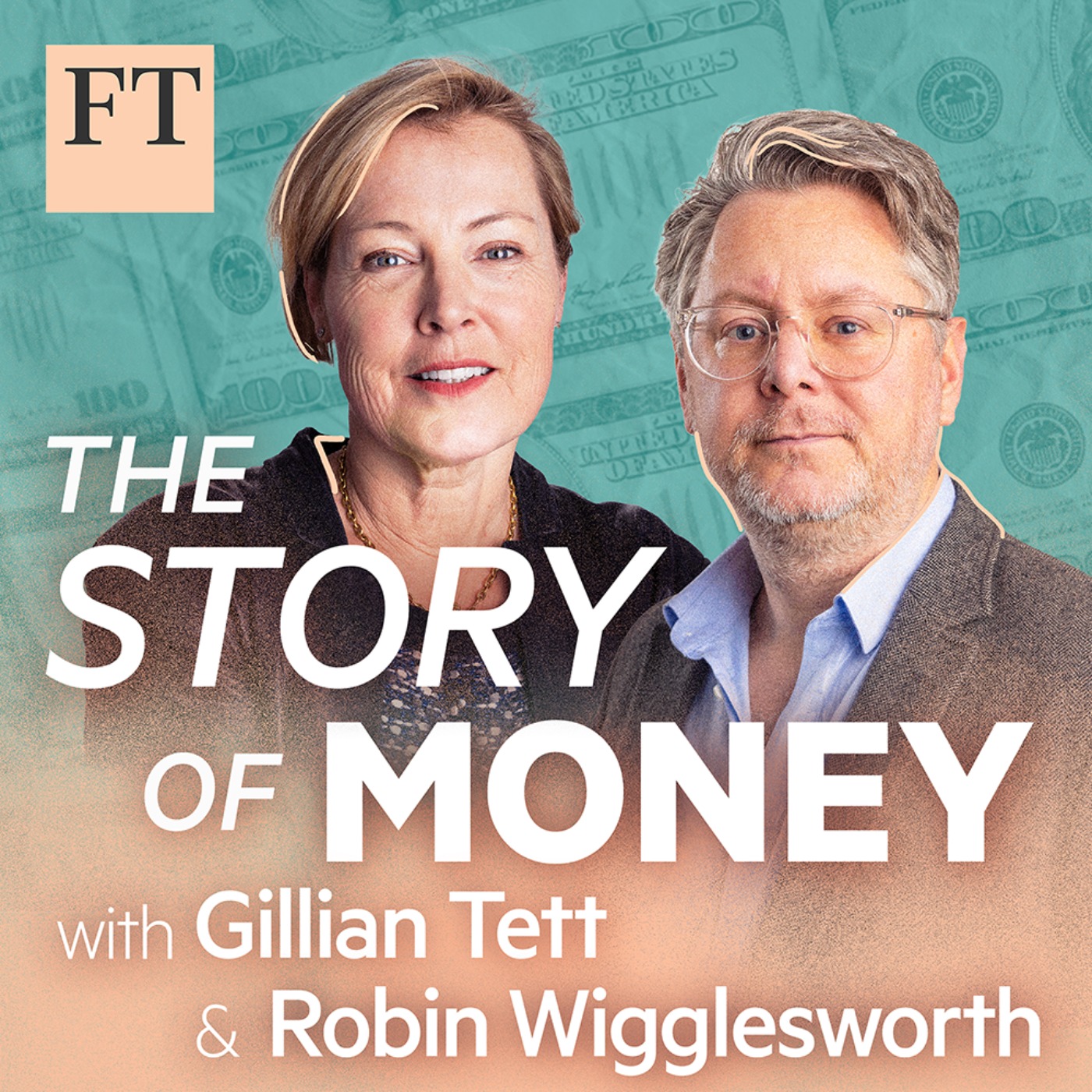
FT columnist Gillian Tett and FT Alphaville editor Robin Wigglesworth explore the ideas, personalities, and institutions that have shaped the history of finance.
Епизоде
-
 Why Dante put bankers in hell and James Joyce didn't 12.09.2026 41минIs money a tool of moral decay or a force for human liberation? Dante feared money would corrupt and damn us, placing bankers in the eighth circle of hell - just one above Lucifer. James Joyce saw it as a tool of freedom, and markets and trade as vital engines of connection and social mobility.In this special bonus episode recorded live in front of an audience at the FT Weekend Festival in London, hosts Gillian Tett and Robin Wigglesworth are joined by economist and author David McWilliams to explore humanity’s complex, seductive relationship with finance. From 14th-century Florentine banking and the birth of zero in accounting to Joyce’s Ulysses and modern central banking, they discuss how literature reveals why money animates human progress, and why trade remains humanity’s ultimate alternative to war.Further reading:Money: A Story of Humanity (2024), by David McWilliamsLove listening to The Story of Money? Be sure to subscribe wherever you get your podcasts, and watch full episodes on the show's dedicated YouTube channel here: https://www.youtube.com/@FTTheStoryOfMoneyHosts: Gillian Tett and Robin WigglesworthGuest: David McWilliamsProducer: Lulu SmythSenior Producer: Michela TinderaExecutive Producers: Manuela Saragosa & Kate FordOriginal Music and Sound Engineering: Breen TurnerPodcast development: Laura ClarkeFT global head of audio: Flo Phillips Learn more at www.ft.com/tsom or get in touch at [email protected] a transcript of this episode on FT.com Hosted on Acast. See acast.com/privacy for more information.
 -
Was Jesus anti-capitalist? 09.09.2026 51минWhat did Jesus really think about money? When he overturned the tables of the money changers in the Temple in Jerusalem, accusing them of turning a sacred "house of prayer" into a "den of robbers", he also set off a series of events that would eventually lead to his death. But what exactly was he attacking? The traders themselves, or the wider economic and religious system they represented? Biblical scholar Tom Thatcher joins Gillian and Robin to explore the financial world of Jesus of Nazareth - from taxation, debt and inequality to the extraordinary economic power of that Temple in Jerusalem. Plus, if Jesus were alive today, where would he sit on the political and economic spectrum? Could his ideas about money and inequality offer a challenge to the way we think about capitalism today? Could he even be described as socialist?Further reading: John, Jesus, and the Renewal of Israel by Richard A. Horsley and Tom ThatcherAntiquities of the Jews by Flavius JosephusThe Historical Jesus: The Life of a Mediterranean Jewish Peasant by John Dominic CrossanTo enjoy future episodes, be sure to subscribe to The Story of Money wherever you get your podcasts, also on the show's dedicated YouTube channel here: https://www.youtube.com/@FTTheStoryOfMoney Hosts: Gillian Tett and Robin WigglesworthSenior Producer: Laurence KnightExecutive producers: Kate Ford and Manuela SaragosaOriginal music and sound design: Breen TurnerBroadcast engineers: Bianca Wakeman and Petros GioumpasisPodcast development: Laura ClarkeFT global head of audio: Flo Phillips Video editors: Richard Topping and Michael SalibaLearn more at www.ft.com/tsom or get in touch at [email protected] a transcript of this episode on FT.comRead a transcript of this episode on FT.com Hosted on Acast. See acast.com/privacy for more information.
-
1873: The year America ditched silver as money and all hell broke loose 02.09.2026 41минIn 1873, Ohio senator John Sherman quietly helped pass a law that stopped Americans from turning silver into official US money. The consequences were huge: years of economic pain and political turmoil that earned it the nickname “the Crime of 1873”. Pulitzer Prize-winning author Liaquat Ahamed explains how the event squeezed American farmers and fuelled the Free Silver movement, led by the populist firebrand William Jennings Bryan. Host Gillian Tett explores with Ahamed how monetary policy can reshape politics. Further reading:1873: The Rothschilds, the First Great Depression, and the Making of the Modern World (2026), by Liaquat AhamedCredits: Getty Images, Wikimedia, AlamyNote: The “Cross of Gold” clip is from a 1921 studio recording, read by William Jennings Bryan. Love listening to The Story of Money? Join Robin and Gillian on Saturday September 5 at Kenwood House Gardens in London, or online as the FT Weekend paper comes to life. Register now at ft.com/festival and enjoy 10% off with code FTPODCAST.To enjoy future episodes, be sure to subscribe to The Story of Money wherever you get your podcasts, also on the show's dedicated YouTube channel here: https://www.youtube.com/@FTTheStoryOfMoney Hosts: Gillian Tett and Robin WigglesworthSenior Producers: Michela Tindera and Laurence Knight Executive producer: Manuela SaragosaOriginal music and sound design: Breen TurnerBroadcast engineers: Bianca Wakeman and Petros GioumpasisPodcast development: Laura ClarkeFT global head of audio: Flo Phillips Video editor: Richard ToppingLearn more at www.ft.com/tsom or get in touch at [email protected] a transcript of this episode on FT.com Hosted on Acast. See acast.com/privacy for more information.
-
The ‘Sheriff of Wall Street’ who exposed bankers’ lies 26.08.2026 46минHe was the bruiser of Wall Street. In the early noughties, New York attorney-general Eliot Spitzer took it upon himself to expose the lies of stock analysts during the dotcom bubble. His crusade blindsided the bankers and made him one of America's most popular politicians. People even spoke of him as a possible US president before a scandal ended his political career almost overnight. In this episode of The Story of Money, host Gillian Tett speaks to Brooke Masters, FT US managing editor and author of Spoiling for a Fight: The Rise of Eliot Spitzer, to explore how Spitzer reshaped financial regulation during the dotcom era, why his aggressive tactics won both admirers and enemies and why his legacy still matters today.Further reading:Spoiling for a Fight: The Rise of Eliot Spitzer, (2006), Brooke MastersCredits: Getty ImagesLove listening to The Story of Money? Join Robin and Gillian on Saturday September 5 at Kenwood House Gardens in London, or online as the FT Weekend paper comes to life. Register now at ft.com/festival and enjoy 10% off with code FTPODCAST.To enjoy future episodes, be sure to subscribe to The Story of Money wherever you get your podcasts, also on the show's dedicated YouTube channel here: https://www.youtube.com/@FTTheStoryOfMoney Hosts: Gillian Tett and Robin WigglesworthProducers: Laurence Knight and Lulu SmythExecutive producer: Manuela SaragosaOriginal music and sound design: Breen TurnerBroadcast engineers: Bianca Wakeman and Petros GioumpasisPodcast development: Laura ClarkeFT global head of audio: Flo Phillips Video editor: Richard ToppingLearn more at www.ft.com/tsom or get in touch at [email protected] a transcript of this episode on FT.com Hosted on Acast. See acast.com/privacy for more information.
-
Mohammed: prophet, trader . . . and capitalist? 19.08.2026 48минDid you know that the Prophet Mohammed was a caravan trader? He helped arrange convoys of thousands of camels carrying valuable goods across the Arabian desert. And he put his commercial nous to good use. Not only did he found one of the world’s great religions, but also a model of free-market capitalism that Friedrich Hayek would have approved of. That is the claim of this week’s guest, the libertarian economist and author Benedikt Koehler. He tells hosts Robin Wigglesworth and Gillian Tett how Islamic commercial practices were, in his view, eventually copied by medieval Europeans to great effect.Further reading:Early Islam and the Birth of Capitalism (2014), by Benedikt KoehlerThe Long Divergence: How Islamic Law Held Back the Middle East (2010), by Timur KuranMuhammad: Man and Prophet (1995), by Adil SalahiCredits: Getty ImagesLove listening to The Story of Money? Join Robin and Gillian on Saturday September 5 at Kenwood House Gardens in London, or online as the FT Weekend paper comes to life. Register now at ft.com/festival and enjoy 10% off with code FTPodcast. To enjoy future episodes, be sure to subscribe to The Story of Money wherever you get your podcasts, also on the show's dedicated YouTube channel here: https://www.youtube.com/@FTTheStoryOfMoney Hosts: Gillian Tett and Robin WigglesworthProducer: Laurence Knight Executive producer: Manuela SaragosaWith additional help from: Saffeya AhmedOriginal music and sound design: Breen TurnerBroadcast engineers: Bianca Wakeman and Petros GioumpasisPodcast development: Laura ClarkeFT global head of audio: Flo Phillips Video editors: Josh Divney and Kristen Kenyon at Podcast DiscoveryLearn more at www.ft.com/tsom or get in touch at [email protected] a transcript of this episode on FT.com Hosted on Acast. See acast.com/privacy for more information.
-
How a stock market crash gave birth to modern antisemitism 12.08.2026 50минThe 1873 Gründerkrach, the spectacular stock market crash that followed Germany’s unification, is one of history’s great financial maelstroms. But its most enduring legacy isn’t about money. Host Robin Wigglesworth speaks to Pulitzer Prize-winning author Liaquat Ahamed about how the resulting economic malaise fuelled social division and transformed old prejudices into antisemitic conspiracy. It gave birth to ideas that would resurface with catastrophic consequences decades later in the 20th century.Further reading:1873: The Rothschilds, the First Great Depression, and the Making of the Modern World (2026), by Liaquat Ahamed Gold and Iron: Bismarck, Bleichröder, and the Building of the German Empire (1977), by Fritz SternCredits: Getty Images, AlamyLove listening to The Story of Money? Join Robin and Gillian on Saturday September 5 at Kenwood House Gardens in London, or online as the FT Weekend paper comes to life. Register now at ft.com/festival and enjoy 10% off with code FTPodcast. To enjoy future episodes, be sure to subscribe to The Story of Money wherever you get your podcasts, also on the show's dedicated YouTube channel here: https://www.youtube.com/@FTTheStoryOfMoney Hosts: Gillian Tett and Robin WigglesworthSenior producers: Michela Tindera and Laurence Knight Executive producer: Manuela SaragosaOriginal music and sound design: Breen TurnerBroadcast engineers: Bianca Wakeman and Petros GioumpasisPodcast development: Laura ClarkeFT global head of audio: Flo Phillips Video editors: Josh Divney and Kristen Kenyon at Podcast DiscoveryLearn more at www.ft.com/tsom or get in touch at [email protected] a transcript of this episode on FT.com Hosted on Acast. See acast.com/privacy for more information.
-
The hidden financial world of ancient Rome 05.08.2026 54минAncient Rome is often depicted as a glamorous empire of power, sophistication and wealth. Yet for most people, the reality of daily life was precarious. Host Robin Wigglesworth talks to Kim Bowes, author of Surviving Rome: The Economic Lives of the Ninety Percent, about how ordinary Romans combined real grit with surprising financial sophistication in order to weather a system that was stacked against them. They uncover a hidden financial world in which women often ran the household finances, families delivered their own children into debt bondage and shepherds might sell wool futures on rented sheep. A far cry from the Rome of popular imagination, this is the ancient Roman empire as most Romans experienced it.Further reading: Surviving Rome: The Economic Lives of the Ninety Percent by Kim Bowes Credits: Getty ImagesLove listening to The Story of Money? Join Robin and Gillian on Saturday 5 September at Kenwood House Gardens in London, or online as the FT Weekend paper comes to life. Register now at ft.com/festival and enjoy 10% off with code FTPodcast. To enjoy future episodes, be sure to subscribe to The Story of Money wherever you get your podcasts, also on the show's dedicated YouTube channel here: https://www.youtube.com/@FTTheStoryOfMoney Learn more at www.ft.com/tsom or get in touch at [email protected]: Gillian Tett and Robin WigglesworthProducer: Lulu SmythSenior Producer: Michela Tindera Executive Producer: Manuela SaragosaOriginal music and sound design: Breen TurnerBroadcast engineers: Bianca Wakeman and Petros GiuompasisPodcast Development: Laura ClarkeFT Global Head of Audio: Flo Phillips Video editor: Josh Divney and Kristen Kenyon at Podcast DiscoveryRead a transcript of this episode on FT.com Hosted on Acast. See acast.com/privacy for more information.
-
The canal that shaped American finance 29.07.2026 40минThe construction of the Erie Canal is one of the most ambitious infrastructure projects in American history. But its most influential legacy is not the waterway itself, it is how it was paid for. Hosts Gillian Tett and Robin Wigglesworth speak with financial historian Richard Sylla about how a gutsy New York City mayor won over politicians, citizens and investors to build something that not only transformed trade in a young nation, but also made New York City a financial centre and laid the blueprint for America’s municipal bond market. Further reading:Wedding of the Waters: The Erie Canal and the Making of a Great Nation (2006), by Peter L. Bernstein Credits: Getty Images. A performance of ‘Meeting of the Waters of the Hudson and Erie’ published by cplotter on YouTube To enjoy future episodes, be sure to subscribe to The Story of Money wherever you get your podcasts, also on the show's dedicated YouTube channel here: https://www.youtube.com/@FTTheStoryOfMoney Hosts: Gillian Tett and Robin WigglesworthProducer: Lulu SmythSenior Producer: Michela TinderaExecutive Producer: Manuela SaragosaOriginal music and sound design: Breen TurnerBroadcast engineers: Bianca Wakeman and Petros GioumpasisPodcast Development: Laura ClarkeFT Global Head of Audio: Flo Phillips Video editors: Josh Divney and Kristen Kenyon at Podcast DiscoveryLearn more at www.ft.com/tsom or get in touch at [email protected] a transcript of this episode on FT.com Hosted on Acast. See acast.com/privacy for more information.
-
The trader who made $100mn from the 1929 crash — only to lose it all 22.07.2026 54минJesse Livermore was a legendary trader who made and lost several fortunes in the early 20th century, most famously by shorting the Wall Street crash of 1929. His early life was immortalised in the roman à clef Reminiscences of a Stock Operator by Edwin Lefèvre, and his trading insights and stunning successes continue to inspire professional traders and would-be traders to this day. But his life also contains cautionary tales about the ease with which success can morph into failure, and what happens when the buzz of the markets is no longer enough. Host Robin Wigglesworth and the FT's US financial commentator Robert Armstrong explore the extraordinary life of the greatest day trader in history.Content note: This episode includes discussion of suicide and mental health.Further reading:Reminiscences of a Stock Operator (1923), Edwin Lefèvre1929: Inside the Greatest Crash in Wall Street History and How It Shattered a Nation (2025), Andrew Ross Sorkin Credits: Getty Images, The New York Times To enjoy future episodes, be sure to subscribe to The Story of Money wherever you get your podcasts, also on the show's dedicated YouTube channel here: https://www.youtube.com/@FTTheStoryOfMoney Learn more at www.ft.com/tsom or get in touch at [email protected]: Gillian Tett and Robin WigglesworthProducer: Lulu SmythSenior Producer: Michela Tindera Executive Producer: Manuela SaragosaOriginal music and sound design: Breen TurnerBroadcast engineers: Bianca Wakeman and Petros GiuompasisPodcast Development: Laura ClarkeFT Global Head of Audio: Flo Phillips Read a transcript of this episode on FT.com Hosted on Acast. See acast.com/privacy for more information.
-
The financial crash that created Britain’s first prime minister 15.07.2026 38минWhen the South Sea Bubble burst in 1720, it wiped out fortunes and plunged Britain into its first great stock market crisis. The collapse of the South Sea Company, a government-backed scheme that promised to turn national debt into riches, left the country's finances in disarray and threatened the credibility of the British state itself. Into the chaos stepped Robert Walpole. Charged with restoring confidence, he restructured the government's debts and laid the foundations for Britain's emergence as a financial superpower. In doing so, he became the country's first de facto prime minister, a title he rejected initially because it was widely used as an insult. In this episode, Robin Wigglesworth and Gillian Tett explore Walpole’s rise to power with Thomas Levenson, professor of science writing at the Massachusetts Institute of Technology.Further reading: Money for Nothing: The South Sea Bubble and the Invention of Modern Capitalism by Thomas Levenson To enjoy future episodes, be sure to subscribe to The Story of Money wherever you get your podcasts, also on the show's dedicated YouTube channel here: https://www.youtube.com/@FTTheStoryOfMoney Hosts: Gillian Tett and Robin WigglesworthProducer: Lulu SmythSenior Producers: Michela Tindera and Laurence Knight Executive Producer: Manuela SaragosaOriginal music and sound design: Breen TurnerFT Head of Audio: Flo PhillipsLearn more at www.ft.com/tsom or get in touch at [email protected] a transcript of this episode on FT.com Hosted on Acast. See acast.com/privacy for more information.
-
South Sea Bubble: the shoemaker’s son who sparked Britain’s first financial crisis 08.07.2026 52минIn 1720, the South Sea Company was one of the most valuable businesses in Britain until a spectacular collapse in its publicly traded shares triggered the country’s first major stock market crisis. At the centre of the story was John Blunt, a shoemaker’s son who rose through the ranks of the financial world to become one of the company’s key architects. In this episode, hosts Robin Wigglesworth and Gillian Tett speak to Professor Thomas Levenson about the speculation and financial engineering that inflated the South Sea Bubble, the strange copycat schemes it inspired and how its dramatic fallout helped reshape modern finance, while leaving Blunt disgraced and forever associated with one of history’s most notorious financial crashes.Further reading: Money for Nothing: South Sea Bubble and the Invention of Modern Capitalism (2020), by Thomas Levenson. Levenson’s latest book is A Pox on Fools: The Grifters and Sinners Who Want Us to Reject Vaccines (2026). Credits: Getty ImagesTo enjoy future episodes, be sure to subscribe to The Story of Money wherever you get your podcasts, also on the show's dedicated YouTube channel here: https://www.youtube.com/@FTTheStoryOfMoney Hosts: Gillian Tett and Robin WigglesworthProducer: Lulu SmythSenior Producers: Michela Tindera and Laurence Knight Executive Producer: Manuela SaragosaOriginal music and sound design: Breen TurnerBroadcast engineers: Bianca Wakeman and Petros GiuompasisPodcast Development: Laura ClarkeFT Global Head of Audio: Flo Phillips Video editor: Josh Divney and Kristen Kenyon at Podcast DiscoveryLearn more at www.ft.com/tsom or get in touch at [email protected] a transcript of this episode on FT.com Hosted on Acast. See acast.com/privacy for more information.
-
The 1980s Garfield buyout that changed corporate finance 01.07.2026 55минWilliam E Simon was a bond trader-turned US cabinet secretary under President Richard Nixon. He was also abrasive, polarising and the “father of private equity”, according to Hettie O’Brien, author of The Asset Class: How Private Equity Turned Capitalism Against Itself. She tells hosts Gillian Tett and Robin Wigglesworth how Simon orchestrated a deal that was so revolutionary, and so lucrative, that it kickstarted the leveraged buyout trend of the 1980s, which later gave way to the modern private equity industry. But how did we get from that one deal to a sector that’s now one of the largest alternative asset classes in the world? And if he was alive today, what would Simon think of the industry he helped create? Further reading:The Asset Class: How Private Equity Turned Capitalism Against Itself, by Hettie O’Brien (2026)Private capital has raised more money than it has returned Credits: Getty ImagesTo enjoy future episodes, be sure to subscribe to The Story of Money wherever you get your podcasts, also on the show's dedicated YouTube channel here: https://www.youtube.com/@FTTheStoryOfMoney Hosts: Gillian Tett and Robin WigglesworthProducer: Lulu SmythSenior Producers: Michela Tindera and Laurence Knight Executive Producer: Manuela SaragosaOriginal music and sound design: Breen TurnerBroadcast engineers: Bianca Wakeman and Petros GiuompasisPodcast Development: Laura ClarkeFT Global Head of Audio: Flo Phillips Video editor: Josh Divney and Kristen Kenyon at Podcast DiscoveryLearn more at www.ft.com/tsom or get in touch at [email protected] a transcript of this episode on FT.com Hosted on Acast. See acast.com/privacy for more information.
-
The US dollar’s ‘immigrant’ origins 24.06.2026 47минToday, when you think of a dollar, the US dollar probably comes to mind first. But that hasn’t always been the case. In this episode of The Story of Money, Brendan Greeley, the author of The Almighty Dollar: 500 Years of the World's Most Powerful Money, explains the origins of the world’s first dollar, the Joachimstaler, and the hapless Bohemian count who played a role in its creation. Greeley, and hosts Gillian Tett and Robin Wigglesworth discuss the dollar’s evolution, and whether it may even outlive the current US dollar system. Further reading:The Almighty Dollar: 500 Years of the World's Most Powerful Money, by Brendan Greeley (2026) Credits: Getty Images, Brendan Greeley To enjoy future episodes, be sure to subscribe to The Story of Money wherever you get your podcasts, also on the show's dedicated YouTube channel here: https://www.youtube.com/@FTTheStoryOfMoney Hosts: Gillian Tett and Robin WigglesworthProducer: Lulu SmythSenior Producers: Michela Tindera and Laurence Knight Executive Producer: Manuela SaragosaOriginal music and sound design: Breen TurnerBroadcast engineers: Bianca Wakeman and Petros GiuompasisPodcast Development: Laura ClarkeFT Global Head of Audio: Flo Phillips Video editor: Josh Divney and Kristen Kenyon at Podcast DiscoveryLearn more at www.ft.com/tsom or get in touch at [email protected] a transcript of this episode on FT.com Hosted on Acast. See acast.com/privacy for more information.
-
The financial scams that brought Albania to the brink of war 17.06.2026 50минIn the mid-1990s, Albania appeared to be a nation on the rise. Emerging from decades of isolation and communist rule, people poured their savings into investment schemes that promised extraordinary returns. But many of those schemes were little more than giant Ponzi scams. When they collapsed in early 1997, millions of people lost everything. The financial meltdown triggered mass protests and armed uprisings. The government lost control of large parts of the country and Albania teetered on the edge of civil war. In this episode, we revisit one of the most dramatic financial disasters of the post-cold war era. Host Robin Wigglesworth speaks to Ortenca Aliaj, the FT’s banking editor who was a child in Albania during the crisis, about what it was like to live through the chaos, how the schemes captured an entire nation and what the collapse reveals about the dangerous mix of financial speculation, weak institutions and public trust.Further reading:The Shock Doctrine, Naomi KleinCredits: Getty ImagesTo enjoy future episodes, be sure to subscribe to The Story of Money wherever you get your podcasts, also on the show's dedicated YouTube channel here: https://www.youtube.com/@FTTheStoryOfMoneyHost: Robin WigglesworthProducer: Laurence KnightExecutive Producer: Manuela SaragosaOriginal music: Breen TurnerBroadcast engineers: Bianca Wakeman and Petros GioumpasisPodcast Development: Laura ClarkeVideo editor: Kristen Kenyon and Josh Divney at Podcast DiscoveryLearn more at www.ft.com/tsom or get in touch at [email protected] a transcript of this episode on FT.com Hosted on Acast. See acast.com/privacy for more information.
-
When Nixon put America first and took the dollar off gold 10.06.2026 40минToday, when people hear the name Richard Nixon, they probably think of Watergate. Few remember another one of his most controversial acts – his suspension of the dollar’s convertibility into gold. The “Nixon Shock” as it became known was a quintessentially America First policy, which shattered the postwar global monetary order. But the US president was far more concerned about juicing the US economy and winning re-election than he was about upsetting America’s closest allies. In this second episode about Nixon’s pivotal decision, Professor Jeffrey Garten tells the story of its aftermath, while hosts Gillian Tett and Robin Wigglesworth explore the parallels with the present-day America First presidency.Further reading:Three Days at Camp David: How a Secret Meeting in 1971 Transformed the Global Economy, by Jeffrey E Garten (2021)Gold and the dollar crisis, by Robert Triffin (1960)Our Dollar, Your Problem, by Kenneth Rogoff (2025)Credits: Getty Images, Associated Press, the Richard Nixon Presidential LibraryTo enjoy future episodes, be sure to subscribe to The Story of Money wherever you get your podcasts, also on the show's dedicated YouTube channel here: https://www.youtube.com/@FTTheStoryOfMoneyHosts: Gillian Tett and Robin WigglesworthProducer: Laurence KnightExecutive Producer: Manuela SaragosaOriginal music: Breen TurnerBroadcast engineers: Bianca Wakeman and Petros GioumpasisPodcast Development: Laura ClarkeVideo editor: Kristen Kenyon and Josh Divney at Podcast DiscoveryLearn more at www.ft.com/tsom or get in touch at [email protected] a transcript of this episode on FT.com Hosted on Acast. See acast.com/privacy for more information.
-
Why Richard Nixon torpedoed the global monetary system 03.06.2026 39минA century ago, when depositors lost confidence in a bank, they’d rush to withdraw their cash. In 1971, US president Richard Milhous Nixon faced a similar dilemma. But his problem wasn’t ordinary citizens fearing for their savings. Instead, it was America’s closest allies who were nervously eyeing the dwindling supply of gold in Fort Knox at a time when the dollar’s value was tied to gold and allies’ currencies were in turn tied to the dollar. And just like a beleaguered bank manager of yore, Nixon chose to shut America’s doors to further withdrawals. His decision threatened to pull the plug on the entire international monetary system established at Bretton Woods in 1944. It was so unexpected and outrageous, it became known as the “Nixon Shock”. In the first of two episodes on the topic, hosts Gillian Tett and Robin Wigglesworth get the story from economist and ex-financier Jeffrey Garten – a man with a CV so long that he once even worked for the Nixon administration himself.Further reading:Three Days at Camp David: How a Secret Meeting in 1971 Transformed the Global Economy, by Jeffrey E Garten (2021)Gold and the dollar crisis, by Robert Triffin (1960)Credits: Getty Images, the Richard Nixon Presidential LibraryTo enjoy future episodes, be sure to subscribe to The Story of Money wherever you get your podcasts, also on the show's dedicated YouTube channel here: https://www.youtube.com/@FTTheStoryOfMoneyHosts: Gillian Tett and Robin WigglesworthProducer: Laurence KnightExecutive Producer: Manuela SaragosaOriginal music: Breen TurnerBroadcast engineers: Bianca Wakeman and Petros GioumpasisPodcast Development: Laura ClarkeVideo editor: Kristen Kenyon and Josh Divney at Podcast DiscoveryLearn more at www.ft.com/tsom or get in touch at [email protected] a transcript of this episode on FT.com Hosted on Acast. See acast.com/privacy for more information.
-
The 18th-century woman who made saving possible for the poor 27.05.2026 46минPriscilla Wakefield was a Quaker, writer and social reformer who believed financial security shouldn’t be reserved for the wealthy. Living in late 18th- and early 19th-century England, she founded the country’s first penny savings bank, giving working women and children a safe place to save. Victoria Bateman, author of Economica: A Global History of Women, Wealth and Power, tells hosts Gillian Tett and Robin Wigglesworth about Wakefield’s life, her ideas and how a simple concept — saving small sums — helped spark a quiet revolution in financial inclusion, with lessons for today. But that didn’t stop Wakefield from running into financial problems of her own. Further reading:Economica: A global history of women, wealth and power, by Victoria Bateman (2025)Reflections on the present condition of the female sex, by Priscilla Wakefield, (reprinted 2015, Cambridge University Press)Credits: Cambridge Library Collection, National Portrait Gallery, Disruption Worthies, National Park Service, Hollinger & RockeyTo enjoy future episodes, be sure to subscribe to The Story of Money wherever you get your podcasts, also on the show's dedicated YouTube channel here: / @ftthestoryofmoney Hosts: Gillian Tett and Robin WigglesworthProducers: Lulu Smyth and Laurence KnightExecutive Producers: Flo Phillips and Manuela SaragosaOriginal music: Breen TurnerBroadcast engineers: Bianca Wakeman and Petros GiuompasisPodcast Development: Laura ClarkeVideo editor: Kristen Kenyon and Josh Divney at Podcast DiscoveryLearn more at www.ft.com/tsom or get in touch at [email protected] a transcript of this episode on FT.com Hosted on Acast. See acast.com/privacy for more information.
-
The deal that put the dollar at the centre of the world 20.05.2026 53минTake 730 delegates from 44 countries, plus another 2,000 or so hangers-on. House them in a remote, dilapidated hotel with holes in the roof and broken furniture. Deliver a train wagon filled with alcohol. Throw in some Russian spies, German prisoners of war, a troupe of bombshell “secretaries” and a magician. And then have the lead protagonist, the world’s most famous economist, almost die of a heart attack. What does that give you? Only the most successful international monetary negotiation in history. This is the story of the Bretton Woods conference of 1944, as relayed by journalist and author Ed Conway to hosts Gillian Tett and Robin Wigglesworth. The three weeks of chaotic talks would deliver three decades of postwar peace and prosperity, and enthrone the US dollar as the global reserve currency. The discussions also nearly killed Britain’s lead negotiator, John Maynard Keynes, and would later disgrace his US counterpart, Harry Dexter White.Further reading:The Summit, by Ed Conway (2015)The Economic Consequences of the Peace, by John Maynard Keynes (1919)John Maynard Keynes, biography by Robert Skidelsky in three volumes (1983-2000)Treasonable Doubt: The Harry Dexter White Spy Case, by R Bruce Craig (2004)Credits: King’s College Cambridge, the IMF, Dreamstime, Getty Images, the Hulton Archive, Ullstein Bild, Bettmann, Shutterstock, the LIFE Picture Collection, Thomas D McAvoy, Alfred Eisenstaedt, and the Darling Archive.To enjoy future episodes, be sure to subscribe to The Story of Money wherever you get your podcasts, also on the show's dedicated YouTube channel here: https://www.youtube.com/@FTTheStoryOfMoneyHosts: Gillian Tett and Robin WigglesworthProducer: Laurence KnightExecutive Producers: Flo Phillips and Manuela SaragosaOriginal music: Breen TurnerBroadcast engineers: Bianca Wakeman and Petros GiuompasisPodcast Development: Laura ClarkeVideo editor: Kristen Kenyon and Josh Divney at Podcast DiscoveryLearn more at ft.com/tsom or get in touch at [email protected] listening to FT Podcasts? Join us live on Saturday June 20 at our inaugural NYC FT Weekend Festival at Spring Studios. Put your questions directly to our experts, experience your favourite podcast in person, and see the FT come to life. Register now and enjoy 10% off with code FTPodcast — this is one Saturday you won’t want to miss.Read a transcript of this episode on FT.com Hosted on Acast. See acast.com/privacy for more information.
-
Why money is the biggest shared hallucination in human history 13.05.2026 44минWhat is money? And what can a small island in Micronesia teach us about how it works? On Yap, a remote island in the western Pacific, giant calcite “Rai” stones once functioned as currency, where ownership and collective trust — rather than physical possession — defined wealth and status. In this episode of The Story of Money, macroeconomist and author Felix Martin joins hosts Gillian Tett and Robin Wigglesworth to explore the stones of Yap, the origins of money and why the traditional “barter theory” may be a myth.Further reading: Money: The Unauthorised Biography (2015) by Felix Martin Uap of the Carolines (1910) by William Henry Furness IIIA Treatise on Money (1930) by John Maynard Keynes The Island of Stone Money (1991) and Money Mischief (1992) by Milton Friedman ‘Tralla La’ in Uncle Scrooge #6 by Carl Barks (1954) His Majesty O’Keefe (1954) Warner Bros To enjoy future episodes, be sure to subscribe to The Story of Money wherever you get your podcasts. You can also follow the show's dedicated YouTube channel here. Love listening to The Story of Money? Join us live on Saturday, June 20 at our inaugural NYC FT Weekend Festival at Spring Studios. Put your questions directly to our experts, experience your favourite podcast in person, and see the FT come to life. Register now and enjoy 10% off with code FTPodcast — this is one Saturday you won’t want to miss. Learn more at ft.com/tsom or get in touch at [email protected]: Gillian Tett and Robin WigglesworthGuest: Felix MartinProducer: Lulu SmythSenior Producers: Laurence Knight and Michela TinderaExecutive Producers: Flo Phillips and Manuela SaragosaOriginal music: Breen TurnerBroadcast engineers: Bianca Wakeman and Petros GiuompasisPodcast Development: Laura ClarkeFT Global Head of Audio: Cheryl BrumleyVideo editors: Kristen Kenyon and Josh Divney at Podcast DiscoveryRead a transcript of this episode on FT.com Hosted on Acast. See acast.com/privacy for more information.
-
When money went rogue: banking in 19th-century frontier America 06.05.2026 56минIn 19th-century America almost anyone could print their own money – and many did. One of the most notable figures to take this up was a man named James Brown, a charismatic conman who built a fortune producing fake banknotes. In this episode of The Story of Money, Stephen Mihm, a professor of history at the University of Georgia, introduces hosts Gillian Tett and Robin Wigglesworth to “the hardest working man in counterfeiting”. They discuss the parallels between banking in the Wild West and the advent of cryptocurrencies today, and the role trust plays in all financial systems. Further reading:A Nation of Counterfeiters: Capitalists, Con Men, and the Making of the United States, by Stephen Mihm (2007) The Square and Tower: Networks, Hierarchies and the Struggle for Global Power, by Niall Ferguson (2018)To enjoy future episodes, be sure to subscribe to The Story of Money wherever you get your podcasts, and also follow the show's dedicated YouTube channel here. Learn more at ft.com/tsom Hosts: Gillian Tett and Robin WigglesworthGuest: Stephen MihmProducer: Lulu SmythSenior Producer: Michela Tindera and Laurence KnightExecutive Producers: Flo Phillips and Manuela SaragosaOriginal music: Breen TurnerBroadcast engineers: Bianca Wakeman and Petros GiuompasisPodcast Development: Laura ClarkeFT Global Head of Audio: Cheryl BrumleyVideo editor: Kristen Kenyon at Podcast DiscoveryRead a transcript of this episode on FT.com Hosted on Acast. See acast.com/privacy for more information.
Слични подкасти


Популаран у
Овај подкаст се појављује и у подкаст листама ових земаља.
-
 Бахреин
-
 Катар
Катар
-
 Кенија
-
 Танзанија
-
 Луксембург
-
 Мауританија
-
 Салвадор
-
 Сингапур
-
 Руанда
-
 Шри Ланка
-
 Оман
Оман
-
 Малави
-
 Кајманска Острва
-
 Северна Македонија
-
 Финска
-
 Маурицијус
-
 Уједињени Арапски Емирати
-
 Бермуди
-
 Чад
Чад
-
 Гвајана
-
 Јерменија
-
 Украјина
-
 Еквадор
-
 Летонија
-
 Парагвај
-
 Антигва и Барбуда
-
 Казахстан
-
 Камбоџа
-
 Лаос
Лаос
-
 Хрватска
-
 Нигер
Нигер
-
 Грчка
Грчка
-
 Непал
Непал
-
 Норвешка
-
 Словенија
-
 Исланд
-
 Румунија
-
 Ангола
-
 Обала Слоноваче
-
 Гана
Гана
-
 Мали
Мали
-
 Малдиви
-
 Хонг Конг
-
 Сијера Леоне
-
 Замбија
-
 Белизе
-
 Индонезија
-
 Таџикистан
-
 Бахами
-
 Буркина Фасо
-
 Перу
Перу
-
 Монголија
-
 Албанија
-
 Тајланд
-
 Кабо Верде
-
 Камерун
-
 Брунеј
-
 Естонија
-
 Молдавија
-
 Мађарска
-
 Сент Винсент и Гренадини
-
 Либан
Либан
-
 Бугарска
-
 Сент Луција
-
 Боцвана
-
 Малта
Малта
-
 Барбадос
-
 Киргистан
-
 Уругвај
-
 Гватемала
-
 Литванија
-
 Кипар
Кипар
-
 Хондурас