
F-Squared Podcast
Frontier Fintech
0
F-Squared Podcast, from Frontier Fintech, explores the business of financial technology in Africa. The show features interviews with founders, executives, investors, and regulators shaping financial services across the continent. It aims to help listeners understand the interconnected nature of Pan-African fintech and spot emerging trends.
Епизоде
-
 Why M-Pesa's Next Act Is About More Than Payments - With Epimack Mbeteni 20.08.2026 46минM-Pesa built mobile money's distribution advantage, but Vodacom's next growth phase depends on far more than cash-in and cash-out. Epimack Mbeteni, Chief Commercial Officer of Vodacom Fintech Group, explains how shared platforms, local execution and sector-specific products support a 103 million-customer business—and why Vodacom wants core and non-core fintech revenue to reach a 50/50 split by 2030. The conversation covers M-Pesa's two failed launches in South Africa, the super-app reset, the Safaricom shareholding change and whether innovation can defend the lead that distribution created.
 -
 KSh25 Billion a Month: Kenya’s New Digital Credit Frontier, with Kevin Mutiso 30.07.2026 1ч 13минKenya has broad financial access and a rapidly expanding digital-credit market, yet only a small minority of adults are financially healthy. Kevin Mutiso, Chairman of the Digital Financial Services Association of Kenya, explains how 2022 regulation unlocked capital, larger loan sizes and specialist lending for traders and boda-boda operators. Samora and Kevin examine the long tail beyond Fuliza and M-Shwari, the data-sharing challenge behind over-indebtedness, and whether digital lenders can help borrowers graduate from short-term liquidity to growth capital.
 -
 Paga's Tayo Oviosu: Why You Can't Bank a Billion People by Building a Bank 18.06.2026 1ч 2минIn 2009, Tayo Oviosu printed a 300-page regulatory application, packed it into a suitcase, and carried it to Abuja because Nigeria had no framework for mobile payments and someone had to ask the Central Bank to write one. Seventeen years later, the lesson he draws is the one most fintech founders still resist: you cannot bank a billion people by building a bank. You bank them by building the infrastructure other people build on.Tayo is the founder and CEO of Paga, one of Nigeria's earliest and most enduring fintech companies, founded when M-Pesa was barely two years old. This conversation is a masterclass in strategic discipline; what Paga chose not to build, and why that restraint is the reason it is still standing.We get into the real economics of agent banking (why roughly 80% of Nigerian agent transactions are cash withdrawals, and what that does to financial-inclusion timelines), why Paga stayed out of the card-gateway war when Paystack and Flutterwave emerged, the AWS/Netflix analogy behind Paga Engine, the Doroki thesis that African retailers need an operating system before they can be banked, and Paga's move into US rails. Through naira devaluations, funding droughts, and the rise of OPay and PalmPay, Paga stayed solvent and stayed focused.Chapters00:00 - Introduction10:00 - The suitcase of binders: cold-calling the CBN in 200924:00 - Why Paga stayed out of the card-gateway market33:00 - The 20-year business: real economics of agent banking40:00 - "You cannot bank a billion people by building a bank" — the Paga Engine thesis44:00 - The Doroki thesis: an operating system for African retailers47:00 - US rails and hosted dollar accounts (Swift, ACH, Fedwire)51:00 - Three hours to twelve seconds: reconciliation with Claude CodePinned quote "Revenue is vanity; gross profit pays the bills. We taught our team that everyone acts like an owner and negotiates the best deal for everything, from marketing to supplies." - Tayo OviosuConnect with Tayo & Paga Tayo Oviosu (LinkedIn): https://www.linkedin.com/in/oviosu/ Paga:https://www.mypaga.com/ Doroki: https://doroki.com/
 -
 Africa Doesn't Have a Dollar Problem. It Has a Plumbing Problem. 29.04.2026 1чAfrican traders earn in Europe and pay in China. Stablecoins are finally solving that triangular liquidity gap — and reshaping how Africa-Asia trade finance works.April Long spent thirteen years inside corridor banking — Standard Chartered, Gulf African Bank, and the Africa-Asia fintech ecosystem. She watched the cost of stablecoin liquidity fall from unworkable to roughly 50 basis points round-trip. This episode is her structural explanation of why that shift matters more than most people in African trade finance currently understand.“Money needs to flow in a triangular structure — receiving from Europe, paying to China. Africa lacks a financial hub where money can flow in and out freely. Consequently, money is forced to find fragmented, inefficient ways to flow.” — April LongWhat You Will Hear:0:00 - Introduction07:54 - The Corridor Banking Model.14:01 - How Off-Ramp Costs Change the Game for Stablecoins21:00 - The Triangular Liquidity Problem - Who is Africa Selling to and Where Are we Buying From?28:00 - Compliance as Structural Barrier 33:20 - How Stablecoins Act Like a Financial Hub37:30 - Why Nigeria Changed First 41:00 - The Velocity Argument — Turning Money Over Fast and How it Grows the Economy53:09 - The China Shift — Why China-Africa trade grew 18% in 2025Read by 16,000+ operators, investors, and practitioners across 126 countries.Subscribe: https://frontierfintech.substack.comSamora Kariuki (Host): https://www.linkedin.com/in/samorakariuki/April Long (Guest): https://www.linkedin.com/in/longapril/Frontier Fintech: https://frontierfintech.substack.comIf this episode was useful, a like or subscription takes four seconds and helps independent media reach more of the right people. The algorithm runs on signals — yours included.
 -
 Building the Rails for African Trade: Inside Onafriq | Dare Okoudjou 15.04.2026 1ч 20минAfrica's mobile money networks have over 800 million registered accounts spread across dozens of closed loops. Moving money between them; across borders, currencies, and regulatory jurisdictions, remains the unfinished infrastructure project of a generation. Onafriq was built on the thesis that someone had to connect the dots.Samora Kariuki sits down with Dare Okoudjou, founder and CEO of Onafriq (formerly MFS Africa), the Pan-African payment network that connects mobile money wallets, bank accounts, cards, and now stablecoin rails across 40+ countries. Dare's path is unusual: an engineer who trained at PricewaterhouseCoopers in Paris, helped architect MTN Mobile Money across Africa from 2006 to 2009, and then left to build the interoperability layer he could see the market would eventually require. Sixteen years later, the vision has proven out, though the path there looked almost nothing like the original plan.This conversation is a rare inside account of what it actually takes to build foundational financial infrastructure in Africa. Dare breaks down the layered architecture of cross-border payments (messaging, risk, currency, settlement), the strategic acquisitions of Beyonic and GTP that accelerated Onafriq's enterprise relationships, and why the platform is now placing simultaneous bets on mobile money interoperability, cards, PAPSS, and stablecoins. He also challenges the entire African fintech industry to ask whether mobile money, as currently architected, is still the right model.In This Episode, You Will Hear:The MTN Origin: How Dare helped build the foundations of MTN MoMo across Africa and why that experience made the MFS Africa opportunity obvious in retrospect.The Fax Machine Problem: Why being early to a network business means spending years being nearly useless, and why the goal is simply not to die until the vision comes true.The Remittance Framing Problem: Why calling intra-African cross-border payments "remittances" actively harms how banks, investors, and regulators engage with the industry.The Acquisition Logic: Why Onafriq bought Beyonic and GTP, and what enterprise relationships with banks actually require that organic sales cannot deliver.Payments Always Revert to Standard: Why Dare believes mobile money must achieve GSM-style interoperability or risk being absorbed into the card standard.The Stablecoin Thesis: Why stablecoins are best understood as programmable mobile money for the internet, and why the dollar stablecoin narrative may create systemic risks for African banking systems.If M-Pesa Were Built Today: The sharpest strategic question in African fintech, posed by someone who was in the room when the original was designed.Key Quote: "The goal was simply not to die until it came true."Connect with Us:Samora Kariuki (Host): https://www.linkedin.com/in/samorakariuki/Dare Okoudjou (Guest): https://www.linkedin.com/in/dare-okoudjou/Frontier Fintech: https://frontierfintech.substack.com
 -
 Building Infrastructure That Puts You in Control of Your Money | Farzam Ehsani, Valr 01.04.2026 59минValr is Africa's largest crypto exchange by volume, but the business has evolved well beyond exchange. Under founder Farzam Ehsani, Valr now provides modular on-chain financial infrastructure that banks and telcos plug into to offer their own customers crypto exposure, stablecoin savings, tokenised assets, and cross-border settlement. In a sector where reputational risk is the norm, the word that keeps coming up around Valr is "respect."Farzam's path to building it has been circuitous. His family are Bahá'ís of Persian origin who were persecuted in Iran and settled in Nairobi in 1975. He grew up in Westlands, moved through Deloitte in San Francisco and McKinsey in Johannesburg, and joined Rand Merchant Bank during the Greek debt crisis, where he dismissed Bitcoin as a scam before falling into the rabbit hole that led him to set up the bank's blockchain unit and ultimately leave to build Valr in 2018.In this conversation with Samora Kariuki, Farzam covers how Valr was built, why an exchange was the logical starting point, and how the business expanded into institutional infrastructure. He also reveals an unexpected source of conviction: a 1999 Bahá'í document that predicted the replacement of fragmented monetary systems by a single electronic currency, a decade before Bitcoin existed.In this episode, you'll learn:How Farzam's journey from Westlands to Deloitte, McKinsey, and Rand Merchant Bank led to founding Valr.Why an exchange — a marketplace where people express divergent views by buying or selling — was the most logical starting point, and how Valr expanded from there.How Valr's B2B2C model provides modular on-chain financial infrastructure (custody, liquidity, matching engines, risk engines) to institutions across Africa.The concept of double-spending: the foundational problem Bitcoin solves that most crypto commentators never discuss.Why the Bitcoin price is fundamentally a story about fiat devaluation, not market speculation.How a 1999 Bahá'í prophecy about a universal electronic currency — written a decade before Bitcoin — underpins Farzam's worldview on where money is heading.Why stablecoins pegged to the US dollar inherit the dollar's long-term fragility — and what the "free banking era" tells us about what comes next.How fractional reserve banking works identically with Bitcoin, and why crypto doesn't eliminate the risk of bank runs.Why regulatory maturity — not market size — is the key variable in Valr's expansion across Kenya, Nigeria, and beyond.Key Quote: "I can host my files, music, and documents locally on my phone or computer, but I do not have that option for money. I have to rely on someone else's servers to show me my balance on their database."Connect with Us:Samora Kariuki (Host): https://www.linkedin.com/in/samorakariuki/Farzam Ehsani (Guest): https://www.linkedin.com/in/farzam-ehsani/Frontier Fintech: www.frontierfintech.substack.comUseful Video on Farzam’s Thinking - https://youtu.be/5lup0b-FWBM?si=juJWtprP2iG8kfni
 -
 Inside the Bank Building Africa's First Regulated Digital Asset Stack | ABSA CIB 18.03.2026 54минBanks have spent decades building the infrastructure that makes money move. Now, a new set of rails; blockchain, stablecoins, tokenized assets, is being laid alongside those systems. The question isn't whether banks will have to engage with digital assets. It's whether they'll do it in time, and whether they'll do it right.Rob Downes, Nkahiseng Ralepeli, and Robyn Lawson lead the digital assets team inside ABSA's Corporate and Investment Bank. Their journey started not with a bold strategic declaration, but with a quiet invitation, Project Khokha, the South African Reserve Bank's blockchain research initiative in 2021. Two weeks after FTX collapsed, they walked into Group Exco to make the case for why ABSA needed to move. This episode is the inside account of what happened next: three years of internal education, regulatory navigation, technical integration, and careful product sequencing that has produced what the team believes is one of the first regulated digital asset custody offerings on the continent and a gold-backed stablecoin built with regulator visibility by design.Samora Kariuki sits down with the ABSA digital assets team to work through what it actually takes for a Tier-1 African bank to build in this space. The conversation covers the internal politics of getting risk and compliance on board, why custody was the right first product, the surprising bottleneck in tech integration, the demand signal they're seeing from institutional clients around tokenized assets and stablecoins, and how they've designed their gold-backed stablecoin to bring regulators along rather than force a confrontation.In This Episode, You Will Hear:Why ABSA started this team in the depths of the 2022 crypto winter and why they called it the "digital assets team," not the crypto teamThe counterintuitive insight from Robyn: compliance and financial crime were enablers, not blockers, the harder conversation was with techWhy custody was the correct first product: wallet infrastructure as the foundation for every downstream digital asset serviceHow ABSA is thinking about institutional demand from Bitcoin strategic reserves to tokenized real-world assets that generate yieldThe rich data problem: when you can see a Bitcoin's entire transaction history going back a decade, what does that mean for risk and KYC policy?How ABSA embedded zero-knowledge proofs into its gold-backed stablecoin to serve privacy-sensitive institutional clientsThe cross-border stablecoin opportunity, and why the CASP regulatory framework in South Africa is creating clarity that other markets lackWhat expansion across ABSA's African footprint looks like now that the infrastructure is builtKey Quote: "The growth in stablecoins, crypto, and financial market infrastructure using blockchain are threats to pan-African and global banks like ours, and we need to respond." — Rob DownesConnect with Us:Samora Kariuki (Host): https://www.linkedin.com/in/samorakariuki/Rob Downes: https://www.linkedin.com/in/rob-downes-a970931/Nkahiseng Ralepeli: https://www.linkedin.com/in/nkahiseng-ralepeli-46a962a6/Robyn Lawson: https://www.linkedin.com/in/robyn-lawson-online/Frontier Fintech: www.frontierfintech.substack.com
 -
 The Operating System for Stablecoins: Beyond the Crypto Hype | Stone Atwine 04.03.2026 1ч 5минFor an operator moving millions across borders, Stone Atwine has come to understand where there’s real value to be created and where hype dominates. For him, having built his Fintech chops in a Mobile Money region, the value proposition for Stablecoins became evident almost immediately. Why manage 10 different bank accounts and wait days for SWIFT when you can run a continental treasury from a single USDT buffer?Stone Atwine is a battle-tested fintech veteran who was talking about unit economics long before the "Venture Winter" made it cool. From solving "black tax" remittances for his grandmother to building Eversend on a lean $1.2M seed round, Stone has transitioned the company from a B2C wallet to the high-leverage B2B infrastructure powering African trade.This conversation moves away from the chatter about web3 towards how companies are solving real treasury challenges with stablecoins. Stone breaks down his "4-Level" payment architecture framework, a system that replaces traditional pre-funding with "Just-in-Time" liquidity. He explains why Eversend has completely abandoned SWIFT for internal operations and why the future of money looks like e-money on open rails.In This Episode, You Will Hear:The Death of SWIFT: Why Eversend no longer uses traditional bank messaging for internal treasury.Centralized Stablecoin Treasury: Moving from fragmented local accounts to a single USDC buffer for 30-minute rebalancing.The Settlement Tension: Why "Just-in-Time" instant settlement can sometimes be costlier than traditional netting.Global Use Cases: Why players like Deel and Wise are the perfect fit for stablecoin infrastructure.Evaluating the Stack: What banks need to learn about custodial services like Fireblocks and security audits.The Issuance Arms Race: Why JPMorgan and Citi, not just Tether, could dominate the future of yield-bearing reserves.CBDCs vs. Private Stablecoins: Why the BIS mBridge is a "brilliant idea" but local stablecoin mandates may be the more practical path. "Stablecoins are basically e-money... but with a global ability to move on a blockchain ledger instead of a telco's ledger. It’s just-in-time financing for the real world."Connect with Us:Samora Kariuki (Host): https://www.linkedin.com/in/samorakariuki/Stone Atwine (Guest): https://www.linkedin.com/in/stoneatwine/Frontier Fintech: https://frontierfintech.substack.com/
 -
 The "Stablecoin Sandwich": How Conduit Fixes Cross-Border Payments 18.02.2026 54минWhy does it take five days and $30 to move money from Mexico to the US, or Nigeria to China? In a world of instant communication, the "black hole" of correspondent banking is still swallowing billions in fees and lost time.Kirill Gertmann, CEO of Conduit, is a 20-year fintech veteran who spent years in traditional banking before diving into crypto. After surviving the 2022 DeFi collapse without losing a cent of client funds, he pivoted Conduit from a "yield" platform to a "utility" powerhouse. Today, Conduit is the "Money Movement Operating System" helping businesses and banks bypass the 1970s-era SWIFT architecture.This episode deconstructs the strategic shift from speculative DeFi to practical cross-border execution. Kirill explains the "stablecoin sandwich" model, the reality of "hard mode" jurisdictions, how Africa is likely to be their biggest geography by end of 2026, and why the ultimate "SWIFT killer" isn't a new coin, but a superior distribution network. We explore why Tier 2 banks are the next big frontier for stablecoin adoption and why CBDCs are likely a dead end.In This Episode, You Will Hear:The Pivot: How the 2022 crypto crash forced a move from DeFi yield to solving the "on-ramp" problem in Latin America.The "Stablecoin Sandwich": Why the most successful fintechs abstract crypto away so CFOs only see fiat-to-fiat results.Bypassing SWIFT: Why Tier 2 banks are desperate for an alternative to the "bottleneck" of correspondent banking.The Africa Growth Story: Why Nigeria has a "higher pain point" than Mexico, how partnering with local fintechs scales growth and how Africa will be their largest geography by end of 2026.The Network Moat: Why Tether (USDT) dominates the Global South and why "distribution beats yield" every time.The Compliance Hurdle: How to balance aggressive growth with the "boring stuff" like SOC2 and rigorous KYB.Key Quote: "Most crypto use cases were speculative. We wanted to build something people would actually use every day... The only moat in payments is the network. Visa and Mastercard are successful because of their network and distribution, not secret technology."Connect with Us:Samora Kariuki (Host): https://www.linkedin.com/in/samorakariuki/Kirill Gertmann (Guest): https://www.linkedin.com/in/kirillgertman/Frontier Fintech: https://frontierfintech.substack.com/
 -
 The Evolution of Nigerian Fintech: Scale, Scars, and Strategy | Olu Akanmu 04.02.2026 1ч 13минWhy does Nigeria have 120 million people with digital identities but only 70 million with bank accounts? Despite a decade of growth, the "last mile" of financial inclusion remains a stubborn red ocean.Samora Kariuki sits down with Olu Akanmu, a rare leader who has navigated the "commercial battlefield" at the highest levels of telcos, Tier-1 banks, and scale-up fintechs (OPay). From his work with EFInA to his current role in academia at Lagos Business School, Olu brings a balanced perspective on why Nigeria’s fintech journey looks so different from the rest of the continent.This episode is a masterclass in the structural realities of the Nigerian market. Olu deconstructs the "Banking Lobby" that slowed mobile money, the friction between competing national identity systems (BVN vs. NIN), and why the next phase of fintech must move from simple payments to deep credit integration. He also provides a candid critique of "generic" late-stage fintech strategies and the internal politics that kill bank-led innovation.In This Episode, You Will Hear:The Banking Lobby vs. Telcos: A behind-the-scenes look at why mobile money struggled to launch in Nigeria and how fintechs filled the gap.The Prosperity Paradox: Why financial inclusion cannot scale in Northern Nigeria without solving for economic inclusion first.Digital Public Infrastructure (DPI): The missed opportunity of siloed identity and payment systems (BVN vs. NIN).Open Banking & the Credit Gap: Why payments grew 30% but credit only 4%, and how Open Banking can bridge that divide.Late-Stage Consolidation: Why "regulatory arbitrage" is ending and how fintechs must find "uncontested markets" to survive.The "Frigate Elephant" Problem: Why bank-led fintech subsidiaries often fail due to traditional banking mindsets.The "Peak Mobile Money" Myth: Why declining agent revenues are actually a sign of a maturing digital ecosystem."Strategy begins with looking at your unique capabilities... You cannot come in as a late entrant offering a generic proposition and expect to scale in a contested market."Connect with Us:Samora Kariuki (Host): https://www.linkedin.com/in/samorakariuki/Olu Akanmu (Guest): https://www.linkedin.com/in/olu-akanmu-88280a/Frontier Fintech: frontierfintech.substack.com
 -
 From Car Wash to Exit: How Bente Krogman Built mTek (Acquired by Bolttech) 22.01.2026 1ч 15минInsurance penetration in Kenya has hovered at 2% for decades. Why? Because the industry tries to sell annual policies to people who earn daily wages. It’s a relevance problem, not a demand problem.Bente Krogman didn't start in fintech. She grew up in a German village of 300 people, managed mosquito net logistics in Tanzania, and launched a car wash in Nairobi. That grit led her to found M-Tek, an Insurtech that pivoted from a B2C marketplace to a B2B2C orchestration platform. In 2026, M-Tek was acquired by global Insurtech unicorn Bolttech, a rare and significant exit in the Kenyan tech ecosystem.In this episode, Samora Kariuki sits down with Bente to decode the journey from "idea to exit." They discuss the brutal reality of B2C customer acquisition costs, why "embedded insurance" is the only path to scale, and the specific unit economics that make micro-insurance profitable (hint: it’s not the 10-shilling premiums).In This Episode, You Will Hear:The Origin Story: How running a manual car wash in Nairobi taught Bente the fundamentals of African business.The Pivot: Why MTek moved from a B2C marketplace to a B2B2C "embedded" model to solve the trust deficit.Unit Economics: Why the "middle segment" (500 KES premiums) is more profitable than ultra-micro products.The "Netflix" Problem: Why complex claims processes kill insurance adoption faster than price. Hint - How long does it take to pay for your Netflix subscription that costs the same as a Micro-insurance premium?Partnership Strategy: How to sell to incumbents by focusing on their distribution headaches.The Exit: Inside the acquisition by Bolttech, why it was a "people decision" over a commercial one.Key Quote: "If you cannot explain a micro-insurance product to me in 20 seconds, it is not a product. Just because it is cheap doesn't mean people will buy it if the process is like buying a car."Connect with Us:Samora Kariuki (Host): https://www.linkedin.com/in/samorakariuki/Bente Krogman (Guest): https://www.linkedin.com/in/bente-krogmann/Frontier Fintech: https://frontierfintech.substack.com/
 -
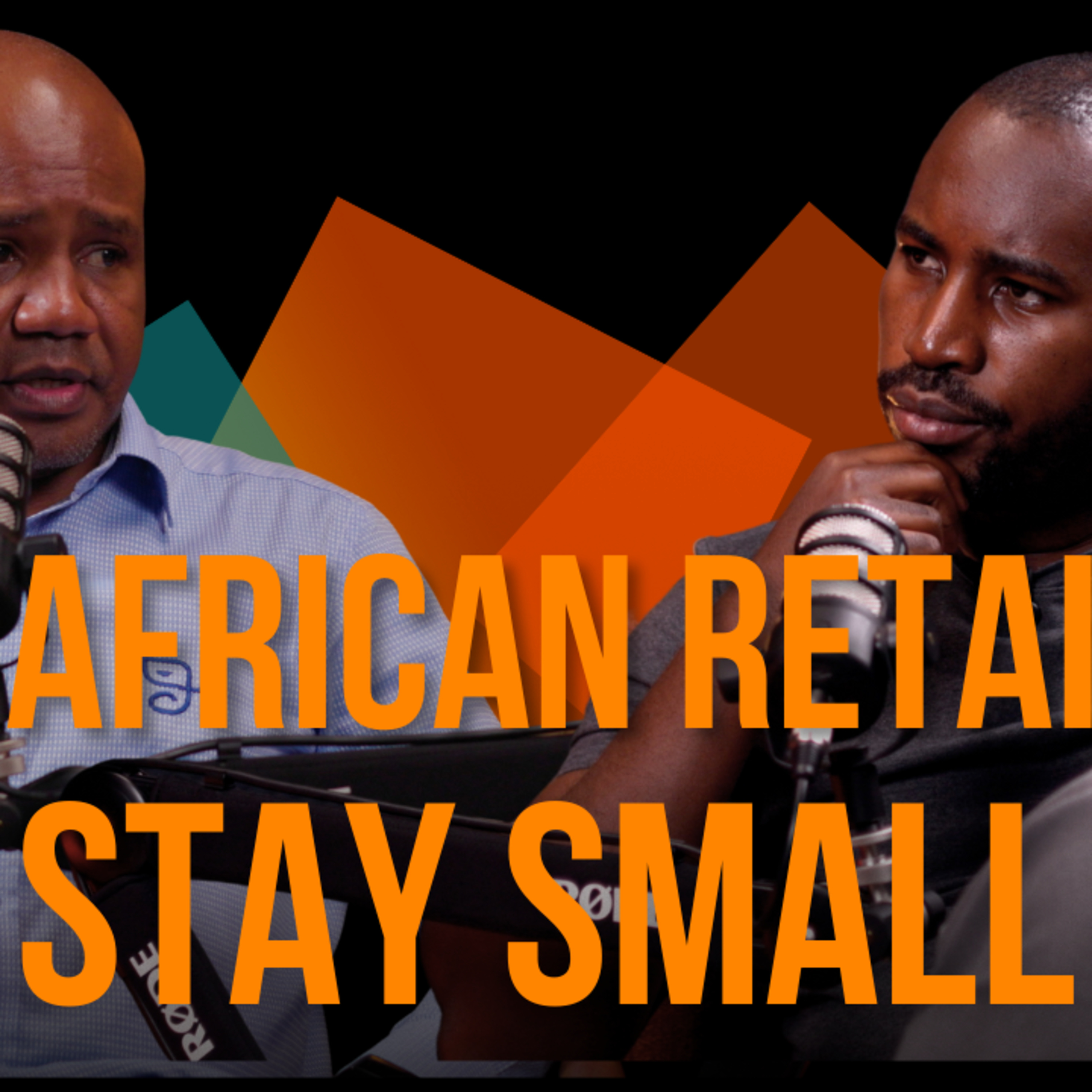 The "Supply Chain Finance" Myth: Why Retailers Really Need Capital | Fred Njogu 03.12.2025 1ч 9минMost banks and fintechs misunderstand the problem at the last mile. They build "Supply Chain Finance" to fund invoices, assuming the sale has happened. But Fred Njogu explains that the real problem is the lost sale: the customer is at the counter, the demand is real, but the shopkeeper didn't have the cash that morning to stock the product.The Story: Fred Njogu, COO of Correlaction, is a "reformed engineer" who spent years optimizing distribution for Coca-Cola and Unilever. In this episode, he deconstructs why traditional banking models fail informal retailers and why the solution isn't lending, it's "smoothing the order-to-cash cycle."The Deep Dive: This conversation corrects a fundamental category error. Fred explains that manufacturers (Anchors) don't have a supply chain problem, their distribution is highly organized. The issue is the "Cash Trap" at the retailer level. He details how Correlaction uses data to help merchants "buy what they can sell, not just what they can afford," effectively financing the inventory gap to prevent stockouts.In This Episode, You Will Hear:The "Supply Chain Finance" Misconception: Why the gap isn't about financing the supply chain, but solving the working capital constraint that causes stockouts.The "Look in the Drawer" Moment: The decision-making process of a retailer who has 5,000 shillings but needs 7,000 worth of stock.Order-to-Cash Smoothing: How to design a product that allows retailers to fulfill actual market demand rather than their limited cash capacity.Unit Economics of the Last Mile: Why a $2 order cannot be delivered by a truck, and the specific math of distribution costs.Why Credit Cards Failed: A lesson on why 16-digit cards and 30-minute till processes destroy sales in a high-velocity environment.Monetizing "Idle Assets": Using historical purchase data as "goodwill" to underwrite risk without physical collateral.The "Fragmentation" Trap: Why African markets fragment rather than consolidate, and the economic incentives behind it.Active vs. Passive Distribution: The difference between a wholesaler "sitting on a high chair" and a distributor who controls the outlet.Key Quote: "The demand is there, and because... you don't have enough working capital, you end up losing the opportunities... It's not really a supply chain finance issue. It's more of a working capital... You can buy what you can sell tomorrow, not buy what you can afford today."Connect with Us:Samora Kariuki (Host): https://www.linkedin.com/in/samorakariuki/Fred Njogu (Guest): https://www.linkedin.com/in/frednjogu/Frontier Fintech: www.frontierfintech.substack.com
 -
The "Black Hole" of African Payments: Why One PSP is Never Enough | Jonatan Allback 19.11.2025 1ч 7минWhy do 30% of transactions in South Africa fail? And more importantly, why do merchants often get nothing but a generic error message when it happens?Jonatan Allback, CEO of Njiapay, joins Samora Kariuki to deconstruct the "black hole" of African payments.The conversation starts with the origin story of Njiapay, originally built as an internal tool to fix low conversion rates for the calling app Talk360. Jonatan breaks down the technical reality of the African payments stack, explaining why "orchestration" isn't just a buzzword, it’s the only way for mid-market companies to navigate the fragmented landscape of gateways, processors, and banks.In this episode, you’ll learn:The 20% Revenue Gap: Why African authorization rates lag behind the global average and how to fix it.The "Waiter" Analogy: A clear definition of the difference between a Gateway, a Processor, and an Acquiring Bank.The Talk360 Pivot: How a consumer app turned their biggest operational headache into a B2B fintech solution.Orchestration 101: Why relying on a single PSP (like Paystack or Peach) often isn't enough for scaling companies.The Fragmentation Trap: Why "Full Stack" control is nearly impossible in Africa, and how to navigate the alternative.
-
Weaver Fintech - The Former Catalog Retailer's 8x Fintech Flywheel | Sean Wibberley 05.11.2025 57минHow do you build a lending business for a market traditional banks ignore? You don't start with a banking charter. You start with a catalog.Sean Wibberley, CEO of Weaver Fintech, joins Samora Kariuki to share the incredible story of Finchoice. It’s a journey that starts with Home Choice, a catalog retailer, and a brilliant insight from the founder’s daughter: the company’s database of female customers—who proved they could repay retail credit—was a data goldmine for underwriting personal loans.This foundation evolved into a high-tech ecosystem, supercharged by the strategic acquisition of BNPL leader PayJustNow. Sean explains how this move transformed their growth, turning a low-margin product into a powerful acquisition engine that feeds their entire flywheel.In this episode, you’ll learn:The "unfair advantage" of using proprietary behavioral data over thin credit bureau files.The strategic thinking behind buying a customer acquisition channel (PayJustNow) instead of building one.The staggering unit economics: why a 2-product customer is 8x more valuable than a 1-product customer.How to create a "virtuous flywheel" where cross-selling "opens the jaws" between revenue and cost, improving your entire business.
-
The Accidental Fintech Career: From Malawi to Scaling Chipper Cash & Ebanx | Wiza Jalakasi 22.10.2025 1ч 13минHow do you build an "accidental" career in fintech? Wiza Jalakasi, famously known as "the African fintech guy" and now Director of African Expansion at Ebanx, joins Samora Kariuki to trace his remarkable journey.It's a story that begins with selling games on floppy disks in Malawi, moves through a failed startup, and lands him at the center of scaling both Africa's Talking and Chipper Cash during their hyper-growth phases. Wiza shares the unique "cheat code" that let him spot Chipper's rise, the hard lessons from his first failure, and the self-awareness that has guided his career.This entire journey culminates in his current work at Ebanx, where he's solving one of the most complex, invisible problems in global tech: how do the world's largest companies collect local payments in Africa, and more importantly, how do they compliantly get their money out in USD?In this episode, you’ll learn:How Wiza's early hustles (like selling games on floppy disks) and a failed startup built the foundation for his fintech career.The "cheat code" at Africa's Talking that let him spot Chipper Cash's explosive growth before anyone else.The core problem: Why global brands can't just "plug into" M-Pesa or OPay themselves.The harsh reality of global priorities: why a 2% payment optimization in the US can be worth more than launching in all of Nigeria.The invisible hurdles of cross-border payments: breaking down the hidden pillars of local licensing, tax compliance, and especially treasury (getting USD out).Why Africa's "prepaid psychology" clashes with the subscription models that power the global internet, and how Ebanx solves it.A $10M startup idea Wiza would build today: chargeback automation for African PSPs.
-
He Resigned After His Mom Said He’d Changed — Building Africa’s Next Fintech Giant. 02.10.2025 1ч 36минHe resigned from one of the world's largest hedge funds after his mom said he'd changed. Tarek Mouganie’s journey is anything but conventional, taking him from a PhD in material science to the trading floors of London, and back to Ghana to tackle one of the hardest problems on the continent: building a real bank for the African majority.In this episode, Tarek, founder and CEO of Affinity Africa, joins Samora Kariuki to share the powerful personal story behind his return and the hard-won lessons from building a full-stack digital bank. Tarek unpacks why "banking failed Africa," how his hybrid "phygital" model is building trust where others can't, and why his proudest moment is seeing a roadside vendor who received a loan become a CEO. This is a masterclass in building a fintech with patience, purpose, and a deep understanding of the market, revealing how Affinity achieved a sub-2% default rate by treating credit as a reward, not a product.Key Quote:"Imagine your African mother tells you, 'You are working for the second largest hedge fund in the world... but stop. This is bad for you.' I stood right up and I went and actually resigned. It was the wakeup call that I needed. She actually saved me."Find us online:You can connect with our host, Samora Kariuki, and our guest, Tarek Mouganie, on LinkedIn. For more insights, visit the Frontier Fintech website.
-
The Moment Playbook: Building a Pan-African Fintech with MultiChoice | Joel Yarbrough 18.09.2025 59минIn this episode, Samora Kariuki sits down with Joel Yarbrough, CEO of Moment, for a deep dive into the strategy and technology behind one of Africa's most ambitious new fintech ventures.The story of a pan-African fintech is often told through big funding rounds and flashy app features. But this narrative skips the most important part: the "unsexy," foundational work required to build a platform that can actually withstand the realities of the market.This conversation begins with a criticalinsight that explains the entire Moment playbook: the "7th of the Month Problem." Joel Yarbrough details how, for millions of Africans, digital funds run out by the first week of the month, causing debit card and digital payment authorizations to collapse. This single consumer behavior is why a sophisticated cash strategy isn't just a feature—it's the core of the business.It explains their focus on building a vast physical collection network and why meeting customers where they are is the only path to digitizing the continent.This is a masterclass in building a real enterprise fintech, focusing on reliability over roadmaps and culture over rawtalent. It covers the deliberate choice to build 97% of their own code to handle power cuts and network outages, the practical solutions for the 5-10% of debit orders that fail monthly, and why solving a company's reconciliation headache is often more valuable than the payment itself. In This Episode, You Will Hear:● The Strategic Rationale: The thinking inside MultiChoice that led to the creation of Moment as its core fintech play.● The "Unfair Advantage": How launching with a massive partner allows you to "run water through thepipes" and de-risk a platform at a continental scale.● The "7th of the Month Problem": A deep dive into a key consumer behavior that explains why a sophisticated cashstrategy is still critical.● The "Clean Stack" Philosophy: Why building 97% of your own code is a powerful advantage for reliability in theAfrican market.● A Practical Fix for Failed Debit Orders: Areal-world solution for a common problem that affects recurring revenuebusinesses. ● The Banker's Dilemma: Why traditional banksstruggle to solve the "last mile" cash problem for their corporateclients and how fintech partnerships are the win-win solution.● Unifying the System: How Moment gives businesses one contract, one settlement, and one clearview of their cash flow across 44 countries.● A Partnership-Led Approach: How Moment is creating a unified network bycollaborating with the best players instead of trying to do it all alone.● The Long-Term Vision: How solving payments isthe first step toward leveraging data for a more digitized and inclusive financial ecosystem.Key Quote: "When you talk to anybody in Africa, trustand reliability and resilience are critical, whether that's network outages, power outages, API outages at the partner level, etc. So we knew what we didn't want to do was put ourselves in a position that we couldn't scale resilience across the market."
-
The Untold Story of M-Pesa: How Was It Really Built? | Catherine Karimi Gichunge 05.09.2025 2ч 17минIn this episode, Samora Kariuki sits down with Catherine Karimi Gichunge, a member of the original M-Pesa team, for a deep dive into the untold story of how Africa's most iconic fintech was really built.The M-Pesa story is often told like a myth, a brilliant innovation that grew "organically" into a billion-dollar behemoth. But this narrative skips the most important part: the messy, unglamorous, and deliberate work that made it all possible.This conversation begins with a surprising revelation: M-Pesa was never intended to be a "send money home" service. It was born from a pilot project to solve a specific problem for a microfinance institutions: the risk and inefficiency of disbursingcash loans. It was only by observing how a small group of women in the pilot started using the system; storing value on their SIM cards and sending money to each other that the team discovered the product's true, world-changing potential.This is a masterclass in building something real, one user and one agent at a time, covering the four-year pilot before the 2007 launch , the reality of walking kilometers with a laptop to set up a single agent , and the complex financial architecture that makes the magic work behind the scenes.● The true origin story of M-Pesa asa microfinance loan disbursement tool, not a P2P payment service.● How the "Send Money Home" phenomenon was discovered by observing unexpected user behavior during the pilot phase.● The on-the-ground reality: launching with only 35 inactive agents and using guerrilla marketing tactics to drive initial adoption.● The secret financial architecturethat makes M-Pesa work: understanding the critical roles of the control account, working capital, float, and commission accounts.● How real-world problems led to innovation, like the creation of the aggregator and super agent models to solvecommission payment and liquidity challenges.● An expert take on why Kenya becamea mobile money market while Nigeria became a bank-led payments market."I had to walk from Muranga Road to Haile Selassie on foot, set up another agent. People do not know these things. They say it is organic growth. It is not." Key Quote:"I had to walk from Muranga Road to Haile Selassie on foot, set up another agent. People do not know these things.They say it is organic growth. It is not." Key Quote:
-
Mike Hudack on Making Global Money Movement Instant, Free, and Social 21.08.2025 48минWhat if sending money across the world was as simple, free, and instant as making a phone call? In this episode, Samora Kariuki sits down with Mike Hudack, CEO of Sling, to discuss how his company is using stablecoins and blockchain technology to build a global,social financial network that moves beyond the friction of traditional banking.Topics covered include:● The future of money is on-chain and borderless● The "terrifying" crypto transfer that sparked the idea for Sling● Building a "directory" to solve the anxiety of sending to anonymous wallet addresses● The core difference between traditional financial rails and a shared blockchain ledger● How to build a sustainable business model on free peer-to-peer transfers● Navigating global regulation and differentiating utility from the "crypto casino"For anyone curious about the real-world application of stablecoins and the future of cross-border payments, this conversation provides a clear vision of what's next.
-
AJ Davidson & Aum Thacker on the Playbook for Building a Fundable Credit Business in Africa. 07.08.2025 1ч 26минWhat does it really take to build a lending business that can attract millions in institutional debt in Africa? In this episode, Samora Kariuki sits down with credit experts AJ Davidson (Sixpoint Capital) and Aum Thacker (TLG Capital) to lay out the practical playbook of do's, don'ts, and non-negotiables.Topics covered include:● Why your lending model needs built-in enforceability to survive.● The investor mindset: Why credit funds care about principal protection, not your unicorn valuation.● The "Do's and Don'ts" of founder DNA and team composition.● How to build your tech stack for securitization from day one.● Navigating regulatory roadblocks and currency risk across the continent.● A simple breakdown of securitization and how it unlocks massive scale For fintech builders and investors seeking to understand the mechanics of private credit, this episode offers a clear, no-nonsense guide to what it takes to get funded and build to last.
Слични подкасти


Популаран у
Овај подкаст се појављује и у подкаст листама ових земаља.
