
AI Builders
Front Lines
0
GTM conversations with founders building the future of AI.
ตอน
-
 The head of AI who had never heard of an ontology | Rob Buller 20.08.2026 19นาทีCyberhill Partners builds and deploys enterprise AI solutions, including Cerebro, an enterprise AI platform Rob describes as AI in a box, and Wolverine, a digital twin product, drawing on eight years of AI work inside the intelligence community.In a recent episode of BUILDERS, we sat down with Rob Buller, Chief Executive Officer of Cyberhill Partners, to learn how the company is bringing intelligence-community-grade AI to enterprise buyers who are still missing the semantic layer that makes AI work.Topics Discussed:Why the core principles of technology adoption have not changed, but complexity has, splitting the buyer across CIOs, CTOs, and CISOsThe AI factory model: a runtime AI fabric that plugs into Snowflake, Databricks, Grok, or Gemini instead of shipping compiled, embedded logicHow Cyberhill positions Cerebro against Palantir on cost, vendor lock-in, and implementation speedWhy Rob has been shocked that heads of AI at multi-billion dollar companies do not know what an ontology isHow large incumbents like Workday and Salesforce try to freeze the market when new technology emergesWhy Cyberhill picks verticals by following demand into government, automotive, and healthcareMarketing at the local level in secondary markets like Dallas and Denver with billboards, airports, and quarterly steak dinnersPartnerships with ServiceNow and Databricks, and government AI work including a global biosurveillance platformGTM & Technology Adoption Lessons:The market cannot buy what it does not understand: Rob has been on roughly a hundred client calls where heads of AI at multi-billion dollar companies could not define an ontology. Without the semantic layer, he argues, you cannot apply context to AI or get traceability. Until buyers understand that, adoption stalls, so education is now part of the sales motion whether Cyberhill wants it or not.Sell the problem solved, not the underlying technology: "People don't care about ontologies and knowledge graphs, they care about can you solve my problem." Cyberhill leads with the business problem and only opens up the technical underpinnings when a buyer wants to know why the product is different.Expect incumbents to freeze the market: Rob says large companies respond to new AI entrants by telling customers they already have AI covered. He admits it does not really work, but it works a little bit. Plan the GTM knowing buyers are hearing "you don't need AI" from vendors they already pay.Let demand pick your verticals: "I've found that business is a lot like water. It finds the lowest level." Rather than forcing a vertical strategy, Cyberhill follows where demand shows up: government, automotive, healthcare. When healthcare demand grew, the company hired a doctor, because subject matter experts are how it enters an industry credibly.Position against the expensive incumbent on speed to value: Rob calls Palantir a great company and a great platform, but points to cost and vendor lock-in. Cyberhill's counter is malleability and implementation speed: "we can implement it in days, not months."Compete where the playing field is level: Instead of fighting Salesforce for attention in New York, LA, and San Francisco, Cyberhill markets at the local level in secondary markets like Dallas and Denver, with billboards, airport advertising, and quarterly steak dinners. Own the category conversation before the window closes: Rob predicts everybody will be talking about the semantic layer in enterprise AI within three years, if not sooner. He also acknowledges the loudest technology does oftentimes win, which makes owning that conversation early a strategic requirement, not a vanity project. // Sponsors: Front Lines -- Silicon Valley's leading Podcast Production Studio. We help B2B tech companies launch, manage, and grow podcasts that drive demand, awareness, and thought leadership. Mention you are a listener and get a 10% discount. www.FrontLines.io/Podcast-as-a-Service
 -
 The 90% trust artifact that opened OPAQUE's market | Aaron Fulkerson 17.08.2026 19นาทีIn a recent episode of BUILDERS, we sat down with Aaron Fulkerson, CEO of OPAQUE, to learn how the company found its market in sovereign AI deployments after discovering that customers would accept 90% verifiability with known gaps rather than waiting for perfect end-to-end confidential computation.Topics Discussed:Why Aaron joined OPAQUE from ServiceNow only after the founders agreed to apply the technology to language modelsHow generative AI systems leak data by architecture, and why that threatens both enterprises and frontier labsThe first customer: a European Union cybersecurity agency running analytics and MLHow the focus evolved from high tech to regulated industries to sovereign deployments over roughly sixteen monthsThe 2025 realization that a trust artifact with 90% verifiability and known gaps was good enough for customersTurning down a nation-state-scale sovereign deployment in the UAE, and how that honesty turned the entity into a Series B investorWhy OPAQUE handed the Confidential Computing Summit to the Linux FoundationWhat Apple's private cloud compute expansion signals for enterprise AI adoptionGTM & Technology Adoption Lessons:Refuse to commercialize the wrong product: Before joining, Aaron told the founders that if the product did not involve language models, it was probably not interesting and would be too difficult to build a commercial effort around. The replatforming from confidential Spark analytics to language models started essentially on day one.Let customers define good enough: OPAQUE assumed it needed end-to-end confidential computation across CPUs and GPUs, but confidential GPU availability through hyperscalers was slow. The company discovered through customers that a trust artifact delivering roughly 90% verifiability of policies, with known gaps, was acceptable. Aaron called it a we-have-been-overthinking-this moment.Honesty about scale limits can win the deal: When a UAE entity wanted OPAQUE to roll out as part of a sovereign stack for a 13 gigawatt build-out, Aaron told them nation-state scale was not deliverable in 2025, since the company had just put its first customers into production. OPAQUE took on two or three enterprise-scale projects instead, and the entity became an investor in the Series B round.Follow the pain into regulated industries: The initial focus was high tech, but OPAQUE learned that regulated industries with strict requirements had the real urgency. Just over a year before the conversation, the company shifted focus to sovereign deployments: healthcare data, banking data, and high tech that is critical infrastructure.Build the ecosystem, not just the brand: OPAQUE hosts the Confidential Computing Summit, which grew until the Linux Foundation became co-host and took ownership. Aaron's view is that no one entity can own the digital sovereignty conversation; OPAQUE needs Google, Microsoft, and Apple building interoperability for the category to exist.Use the anchor example customers already trust: Aaron points to Apple architecting Siri's Gemini-powered processing to be confidential end-to-end. If a basic chatbot was too great a data leakage risk for Apple, enterprises running far leakier AI agents on far more valuable data have their answer.// Sponsors: Front Lines -- Silicon Valley's leading Podcast Production Studio. We help B2B tech companies launch, manage, and grow podcasts that drive demand, awareness, and thought leadership. Mention you are a listener and get a 10% discount. www.FrontLines.io/Podcast-as-a-Service
 -
 How Guild AI discovered their real buyers weren't developers — and rebuilt their GTM motion around CIOs and CSOs | James Everingham 17.07.2026 20นาทีGuild AI is building the infrastructure layer that enterprises need to deploy, manage, and govern AI agents operating inside their systems. Founded by James Everingham — a five-time founder who most recently led developer infrastructure at Meta, overseeing a team of more than a thousand engineers — Guild AI is solving a problem James watched emerge firsthand inside one of the world's most complex technology organizations: what happens when agents stop being prototypes and start taking autonomous action inside your production infrastructure.In this episode of BUILDERS, James shares what he's learned about founding companies across nearly four decades, from writing shareware in central Pennsylvania in 1987 to building developer tooling at Meta to launching Guild AI. He goes deep on why the go-to-market motion for a new infrastructure category defaults tops-down, what enterprise engineering leaders actually respond to from vendors, and the product philosophy he's refined across five companies.Topics Discussed:Why James founded Guild AI after watching agent adoption break at scale inside MetaHow Guild AI's go-to-market shifted from developer-led to CIO/CSO/CTO-driven — and what forced that shiftWhy design partners pushed Guild AI's use cases away from software development and into legal, marketing, HR, and financeWhat vendors consistently got wrong when trying to sell to James at Meta — and what actually workedGTM Lessons For B2B Founders:New infrastructure categories require a tops-down entry: Guild AI initially assumed a bottoms-up, developer-led motion. Their design partners revealed quickly that CIOs, CSOs, and CTOs were the ones carrying the urgency around agent governance — not individual developers. James frames the dynamic precisely: in early markets where buyers lack a clear starting point, individual contributors won't self-organize around a new tool without leadership buy-in first. The tops-down entry earns executive trust, establishes the governance framework, and creates the conditions for developers to adopt the tooling on their own terms — without a mandate.Follow your design partners, not your original thesis: Guild AI launched with a developer productivity thesis. Their earliest design partners pulled them toward marketing, legal, HR, and finance — areas where, as James noted, there's likely more demand for agentic workflow automation than in software development itself. The team followed the signal rather than defending the thesis. For B2B founders in emerging categories, design partnerships aren't just validation — they're navigation. The customers who show up first will often redirect you toward the higher-value problem you hadn't fully seen yet.Enterprise outreach is pattern-matched and rejected in seconds: James was receiving vendor pitches at Meta at scale. What killed deals before they started: AI-generated emails that reflected his own company's marketing language back at him with light personalization layered on top. His analogy is precise — he compares it to the first banner ads on the internet, effective for about three months before everyone learned to ignore them. // Sponsors: Front Lines — We help B2B tech companies launch, manage, and grow podcasts that drive demand, awareness, and thought leadership. www.FrontLines.ioThe Global Talent Co. — We help tech startups find, vet, hire, pay, and retain amazing marketing talent that costs 50-70% less than the US & Europe. www.GlobalTalent.co//Don't Miss: New Podcast Series — How I Hire Senior GTM leaders share the tactical hiring frameworks they use to build winning revenue teams. Hosted by Andy Mowat, who scaled 4 unicorns from $10M to $100M+ ARR and launched Whispered to help executives find their next role. Subscribe here: https://open.spotify.com/show/53yCHlPfLSMFimtv0riPyM
 -
 How The Biological Computing Co timed its stealth exit | Alexander Ksendzovsky 19.06.2026 19นาทีTwo months before this conversation, The Biological Computing Co (TBC) was still in stealth. Three years of building, rebranding, and accumulating experimental data — all before showing the world a single thing. In this episode of BUILDERS, we sat down with Alexander Ksendzovsky, Co-Founder and CEO of TBC, to hear how a neurosurgeon-scientist turned a 20-year research obsession into a commercial AI optimization company. TBC grows living neuron cultures, connects them via electrodes, and derives software tools from the biology's computation — currently applied to video generation model optimization, with language models and world models on the roadmap. The ICP they're selling to today is not the one they envisioned at founding. The name they operate under is a deliberate category ownership move. And the stealth-to-launch decision was made entirely on one criterion: enough data to show the world, not just tell it.Topics Discussed:How TBC uses living neuron cultures and electrode arrays to derive optimization techniques for AI video generation models that silicon-based approaches can't replicate Why TBC's current ICP — video gen model companies that have exhausted standard optimization techniques — is not the customer they anticipated when they founded the company TBC's two-track marketing framework: awareness and credibility, and why sequencing them correctly matters for deep-tech GTM The stealth-to-launch decision: the specific data threshold that triggered TBC's emergence after three years, and why they would not have come out earlier How investor pitch feedback — not customer feedback — drove TBC's rebrand from academic positioning to product-forward identity Category creation in a nascent field: TBC's approach to building the ecosystem rather than fighting for definitional control How TBC structures hiring and team cadence to keep exploratory research culture from blocking commercialization GTM Lessons For B2B Founders:Time your launch to proof, not momentum. TBC spent three years in stealth before going public — not because they feared competitors, but because they needed enough experimental data to generate belief rather than just curiosity. Alex's framing: "If we had done this two years ago, we had some interesting experiments, but people would think it's just research at that point. We really needed people to see that we're building real tools, they're productized and they're ready for production now." For deep-tech founders, the stealth exit decision isn't about market timing — it's about whether your evidence base crosses the threshold from interesting to credible.Investor pitch feedback is your earliest positioning stress test. TBC's rebrand wasn't triggered by customer research — it was triggered by investors consistently not understanding what they were building. Both founders came from academic neuroscience and were unconsciously pitching in that register. Alex: "We learned very early on through pitching to investors that the way we were positioning it was way too academic. We had to beat that out of ourselves." For pre-revenue founders, if investors with context can't quickly grasp your value proposition, buyers with less context won't either. Fix the positioning before you scale the outreach.// Sponsors: Front Lines — We help B2B tech companies launch, manage, and grow podcasts that drive demand, awareness, and thought leadership. www.FrontLines.ioThe Global Talent Co. — We help tech startups find, vet, hire, pay, and retain amazing marketing talent that costs 50-70% less than the US & Europe. www.GlobalTalent.co//Don't Miss: New Podcast Series — How I Hire Senior GTM leaders share the tactical hiring frameworks they use to build winning revenue teams. Hosted by Andy Mowat, who scaled 4 unicorns from $10M to $100M+ ARR and launched Whispered to help executives find their next role. Subscribe here: https://open.spotify.com/show/53yCHlPfLSMFimtv0riPyM
 -
 Why EverWorker targets "boring billion-dollar companies" | Anton Antich 07.04.2026 21นาทีMost AI companies in 2023 raced to own a vertical. EverWorker made the opposite bet — build a horizontal platform that lets anyone create agents for any purpose, no code required. In this episode of BUILDERS, Anton Antich, CPO and Co-Founder of EverWorker, gets into what it actually takes to sell AI inside enterprises that are stuck between the hype and the reality, why he's making the case against SaaS entirely, and how an early PLG motion gave way to deep consultative selling once they realized the market wasn't where Silicon Valley thought it was. Anton helped scale a company from $0 to $1B ARR — and he's direct that most of what he learned there no longer applies.Topics Discussed:Why the $0–$1B scaling playbook is obsolete in the AI eraEverWorker's pivot from PLG to enterprise consultative sellingTargeting "boring billion-dollar companies" as a deliberate ICPWhy most AI pilots never reach production — and the services motion that fixes itThe org-chart model for AI agent teams and the "Chief of Staff" productThe case for replacing SaaS entirely with agents, databases, and markdown filesGoing down-market in 2026 and why community is the lead growth channelWhy instant product access has replaced "contact us for a demo" as the conversion standardGTM Lessons For B2B Founders:Audit your team's DNA before choosing your GTM motion. EverWorker launched PLG, then quickly realized their entire founding team came from enterprise — Microsoft, VMware, Veeam. The pivot wasn't a failure; it was an honest read of where their unfair advantages actually lived. Before committing to a motion, map your team's network, sales instincts, and domain depth. Those signals will outperform market trend-chasing every time.Build a services layer or watch your pilots die. The gap between AI pilot and production is where most deals go to die — Anton cites the widely-reported stat that the vast majority never make it through. EverWorker's solution was to build a services organization that identifies two or three mundane, high-friction processes — Anton's example is data entry, work humans find demeaning and AI handles well — automates them fast, and uses that visible win to build organizational trust. The services layer isn't a concession. For complex AI sales right now, it's the mechanism that actually converts pilots into production.Your ICP should be defined by who won't default to "we'll build it ourselves." EverWorker learned this the hard way in enterprise. Walk into a Fortune 500 or a tech-forward company and IT shows up in the room and kills the conversation. Anton's team shifted toward what he calls "boring billion-dollar companies" — industries doing real, essential work that don't get the spotlight and can't afford to staff AI expertise internally. These buyers need the outcome, not the platform, and they don't have an internal team to rationalize building around. That dynamic is a structural GTM advantage.// Sponsors: Front Lines — We help B2B tech companies launch, manage, and grow podcasts that drive demand, awareness, and thought leadership. www.FrontLines.ioThe Global Talent Co. — We help tech startups find, vet, hire, pay, and retain amazing marketing talent that costs 50-70% less than the US & Europe. www.GlobalTalent.co//Don't Miss: New Podcast Series — How I Hire Senior GTM leaders share the tactical hiring frameworks they use to build winning revenue teams. Hosted by Andy Mowat, who scaled 4 unicorns from $10M to $100M+ ARR and launched Whispered to help executives find their next role. Subscribe here: https://open.spotify.com/show/53yCHlPfLSMFimtv0riPyM
 -
 How Yutori landed enterprise contracts without a sales team by letting prosumer word of mouth do the work | Abhishek Das, Co-CEO at Yutori 02.04.2026 18นาทีYutori is building web agents — AI that can monitor, navigate, and eventually act on the web on your behalf. Their first product, Scouts, launched in beta in June 2024 with one deliberate constraint: read-only web monitoring. No booking, no form-filling, no write actions. Just signal extraction from the open web. That narrow framing, paired with a $25K launch video that went viral on Twitter, drove 20–30K waitlist signups in a single week. M1 retention held above 80%. Enterprise contracts followed — entirely bottom-up, entirely unsolicited. In this episode of Unicorn Builders, Co-CEO Abhishek Das breaks down the thinking behind all of it.Topics Discussed:Why scoping Scouts to read-only monitoring at launch was a GTM decision, not just a product oneThe $25K launch video that went viral — what was in it and why it workedHow unsolicited enterprise contracts emerged from a prosumer productRunning two parallel GTM motions simultaneously with no dedicated marketing teamHow hackathons became a developer acquisition channelThe browser automation API: a separate product with a separate motion, and why the two audiences cross-pollinateWhat's next: authenticated browsing and write-action agents currently in alphaGTM Lessons For B2B Founders:Constrain your launch scope to match what you can actually deliver. The AI agent space is full of products that promise to do everything and fail at anything. Yutori's answer was the inverse: launch Scouts as read-only monitoring only — no purchasing, no reservations, no form submissions. Abhishek was explicit that this was intentional: lower stakes for errors, a cleaner value prop, and a more honest promise to early users. The constraint wasn't a limitation — it was the pitch. If you're launching in a crowded category where trust is already eroded, scoping tightly is a competitive move.Let retention data — not your roadmap — trigger monetization. Scouts launched free with no fixed plan to charge. When M1 retention held above 80%, the team pulled their monetization timeline forward and shipped a flat monthly subscription. No elaborate pricing research, no staged rollout. The data gave them the signal. For founders debating when to introduce pricing: retention is the clearest leading indicator that your product has earned the right to charge. Set a retention threshold before you launch, and let it make the call for you.A $25K launch video beat the market — because the message did the work. The video was Abhishek on camera, directly explaining what Scouts can and cannot do. No cinematic production. It went viral because prominent builders — Guillermo Rauch from Vercel, Scott Belsky — reshared it organically. Abhishek is candid that going viral involves luck and that Twitter feels significantly more saturated today than it did at launch. The takeaway isn't "spend $25K on a video." It's that precise articulation travels further than high production value, and distribution through trusted voices matters more than raw reach.// Sponsors: Front Lines — We help B2B tech companies launch, manage, and grow podcasts that drive demand, awareness, and thought leadership. www.FrontLines.ioThe Global Talent Co. — We help tech startups find, vet, hire, pay, and retain amazing marketing talent that costs 50-70% less than the US & Europe. www.GlobalTalent.co//Don't Miss: New Podcast Series — How I Hire Senior GTM leaders share the tactical hiring frameworks they use to build winning revenue teams. Hosted by Andy Mowat, who scaled 4 unicorns from $10M to $100M+ ARR and launched Whispered to help executives find their next role. Subscribe here: https://open.spotify.com/show/53yCHlPfLSMFimtv0riPyM
 -
 How Cassidy achieved 90% content performance consistency across TikTok and Instagram | Justin Fineberg 04.03.2026 15นาทีJustin Fineberg built a 500,000+ follower audience on TikTok and Instagram before launching Cassidy, an AI automation platform for non-technical users. By consistently creating content about AI and technology, he turned inbound interest into his initial customer base and market validation. In this episode of BUILDERS, Justin breaks down how he leveraged short-form video to identify product opportunities, the mechanics of maintaining authentic audience relationships while monetizing, and how to transition from social-led distribution to scalable B2B SaaS go-to-market.Topics Discussed:Leveraging ChatGPT's launch as an inflection point to ride mainstream AI interestConverting consultant requests into product insights and early customer signalsThe platform mechanics of TikTok vs Instagram for B2B contentTransitioning from 100% social-sourced revenue to multi-channel B2B salesBuilding repeatable content systems that survive founder time constraintsTesting product messaging and features through content before formal launchGTM Lessons For B2B Founders:Timing content focus with market inflection points compounds growthInbound consulting requests are product requirement documents in disguiseContent systems must be friction-free or they'll die under operational loadGood content transcends platform-specific algorithm hackingSocial distribution creates unfair launch advantages, not permanent moats//Sponsors:Front Lines — We help B2B tech companies launch, manage, and grow podcasts that drive demand, awareness, and thought leadership. www.FrontLines.ioThe Global Talent Co. — We help tech startups find, vet, hire, pay, and retain amazing marketing talent that costs 50-70% less than the US & Europe. www.GlobalTalent.co//Don't Miss: New Podcast Series — How I HireSenior GTM leaders share the tactical hiring frameworks they use to build winning revenue teams. Hosted by Andy Mowat, who scaled 4 unicorns from $10M to $100M+ ARR and launched Whispered to help executives find their next role. Subscribe here: https://open.spotify.com/show/53yCHlPfLSMFimtv0riPyM
 -
 How Positron AI is driving sales ahead of product | Mitesh Agrawal 20.02.2026 26นาทีPositron AI is a 2+ year old silicon company targeting decode-heavy AI inference workloads where memory bandwidth, not compute, is the bottleneck. Launching end of 2025/early 2026, their architecture delivers 2TB of on-chip memory capacity versus Nvidia Rubin's 0.4TB—enabling 3-5x better performance per dollar and per watt for reasoning models, code generation, and video generation. In this episode, Mitesh Agrawal shares how Positron identified the memory bandwidth gap in a market where Nvidia controls 90%+ share, why they're prioritizing anchor customer commitments over product completion, and the hard lessons from Lambda Labs about rapid iteration and customer-driven optionality.Topics Discussed:Positron's technical approach: focusing on memory bandwidth and capacity over compute for inference workloadsWhy decode-heavy applications (reasoning models, video generation, code generation) are becoming memory-boundThe challenge of selling silicon to hyperscalers when Nvidia controls 90%+ of the marketBuilding optionality into product strategy: air cooling vs. liquid cooling as unexpected GTM advantageLearning to sell hardware before the product ships and why anchor customers matterLambda Labs experience: lessons on rapid iteration and thoughtful hiring during hypergrowthMaintaining engineering-centricity: 47 of 50 employees focused on product developmentGTM Lessons For B2B Founders:Find technical bottlenecks in high-growth markets: Positron identified that memory bandwidth wasn't scaling as fast as compute, creating a bottleneck for inference workloads. While Nvidia dominates with 90%+ market share, they optimize for training revenue. B2B founders should analyze where dominant players are constrained by their own economics or existing roadmaps, then build specifically for those underserved segments.Markets default to oligopoly, not monopoly: Mitesh observed that customers actively seek alternatives even when one vendor is superior. "Markets want oligopoly structure to exist," he explained. B2B founders shouldn't be discouraged by dominant incumbents—customers want optionality for leverage, supply chain resilience, and risk management. Position yourself as the credible alternative in specific use cases.Discover optionality through customer conversations: Positron initially pitched performance per watt without realizing air cooling capability was a major advantage. Only after selling their first product did they learn customers valued deploying in existing data centers without infrastructure overhauls. B2B founders should systematically debrief early customers to uncover which features solve problems you didn't anticipate.Sell before shipping in hardware: The biggest priority between now and product launch is securing anchor customers willing to commit purchase orders. "If you have someone to build for, the fillip it gives the engineering team, the confidence it gives operations and supply chain vendors—we underwrite that," Mitesh emphasized. Pre-sales derisk production, prove demand, and create momentum. Build storytelling into technical sales: Convincing customers to buy unshipped hardware requires months of narrative work. "It becomes like, if I sell it to you, why will it be useful to you? Is it going to save cost? Attract new customers? Drive growth?" Success means co-creating the internal business case your champion will present. Maintain rapid iteration cadence: Nvidia ships every 12-15 months versus the industry standard of 3-4 years. "If you tell me that in 10 years you've launched 10-12 products in silicon, I will give much more probability we will be successful," Mitesh stated. Delay non-engineering hires until product proves itself: With 47 of 50 people in engineering, Positron has consciously prioritized product over go-to-market. "It was a very conscious decision," Mitesh emphasized. For deep-tech companies, this focus ensures you can actually deliver before scaling sales.
 -
 Why Radical AI targets markets frozen by innovator's dilemma | Joseph Krause 29.01.2026 20นาทีRadical AI is building scientific superintelligence—AGI for science—through a closed-loop system that combines AI agents with fully robotic self-driving labs to accelerate materials discovery. The materials science industry has a fundamental innovation problem: discovering a single new material system takes 10-15+ years and costs north of $100 million. This economic reality has frozen innovation across aerospace, defense, semiconductors, and energy—industries still deploying materials developed 30 to 100 years ago. In this episode, Joseph Krause, Co-Founder and CEO of Radical AI, explains how his company is attacking the root causes: serial experimentation workflows, systematically lost experimental data, and the manufacturing scale-up gap. Working with the Department of Defense, Air Force Research Lab on hypersonics systems, and as an official partner to the DOE's Genesis mission, Radical AI is focused on high entropy alloys that maintain mechanical properties in extreme environments—the kind of enabling technology that unlocks entirely new product categories rather than optimizing existing ones.Topics Discussed:The structural economics preventing materials innovation: 10-15 year timelines, $100M+ discovery costs, and why companies default to decades-old materialsThree fundamental process failures in scientific discovery: serial workflows that prevent parallelization, the 90%+ of experimental data that lives only in lab notebooks, and the valley of death between lab-scale discovery and manufacturing scale-upHow closed-loop autonomous systems capture processing parameters during discovery—temperature ranges, pressure requirements, humidity impacts, precursor form factors—that map directly to manufacturing conditionsHigh entropy alloys as beachhead: 10^40 possible combinations from the periodic table, requiring materials that maintain strength and corrosion resistance at 2,000-4,000°F in oxidative environments created by hypersonic flightThe strategic rationale for simultaneous government and commercial GTM: government for long-shot applications like nuclear fusion and access to world-class science institutions; commercial customers in aerospace, defense, automotive, and energy for near-term product applicationsWhy Radical AI focuses on enabling technology rather than optimization technology—solving for markets where novel materials unlock new products, not incremental margin improvementsGTM Lessons For B2B Founders:Engineer downstream adoption barriers into your initial system architecture: Joseph identified that customer skepticism centered on manufacturability, not discovery speed. Most prospects understood AI could accelerate experimentation but questioned whether discoveries could scale to production without restarting the entire process. Radical AI's response was architectural: their closed-loop system captures processing parameters—temperature ranges, pressures, precursor concentrations, humidity effects, form factors like powders versus pellets—during the discovery phase.Select beachheads where problem complexity matches your technical advantage: Radical AI chose high entropy alloys not because the market was largest, but because the search space is intractable for humans—10^40 possible combinations that would take millions of years to experimentally test. This creates a natural moat where their ML-driven autonomous system has exponential advantage over traditional approaches.Structure dual-track GTM to derisk technology while building commercial pipeline: Radical AI simultaneously pursues government contracts (DOD, Air Force Research Lab) and commercial customers (aerospace, defense primes, automotive, energy). This isn't market hedging—it's strategic complementarity. Government provides access to the world's most advanced scientific institutions, funding for applications with 10-20 year horizons like nuclear fusion, and willingness to bridge the valley of death that scares commercial buyers.
 -
 Why aiOla targets CFOs — not IT buyers | Amir Haramaty, Co-Founder at aiOla 28.01.2026 28นาทีaiOla is pioneering speech-to-data technology that transforms unstructured speech into actionable data for enterprise operations. As a serial entrepreneur on his sixth startup, Co-Founder Amir Haramaty built aiOla after witnessing firsthand how traditional AI implementations fail to deliver ROI in enterprise settings. The company has developed proprietary technology that achieves near-100% accuracy in challenging environments with heavy jargon, multiple languages, and difficult acoustics. With strategic investors including a major airline and partnerships with Nvidia, Accenture, and USG, aiOla is addressing the fundamental challenge that 95% of enterprise AI pilots fail to show value by focusing on immediate, measurable ROI through speech-based data capture.Topics Discussed:The genesis of aiOla from consulting work revealing AI's implementation gaps in traditional enterprisesSolving the triple challenge of speech recognition: accuracy in jargon-heavy environments, separating signal from noise, and converting speech to structured workflow dataaiOla's "jargonic" approach: creating hyper-personalized language models for specific processes without retrainingEarly customer acquisition through serendipitous encounters and demonstrating immediate ROIVertical expansion strategy from food manufacturing to aviation, travel, hospitality, and retailChannel partnership strategy refined from previous startups to achieve scaleThe shift from convincing customers about speech technology to being pulled into diverse use casesBuilding the aiOla Intelligate orchestration layer to dynamically select optimal speech recognition modelsGTM Lessons For B2B Founders:Make CFOs your best friend, not IT departments: Amir explicitly targets CFOs rather than IT as primary buyers because "it doesn't matter how small or big you are, you still have to do more with less." While IT serves as facilitators, CFOs control budgets focused on operational efficiency and ROI. B2B founders should identify which executive truly owns the pain point and budget authority, even if IT will implement the solution.Deploy capital strategically to remove obstacles before they emerge: aiOla convinced their airline investor to provide working capital specifically to fund POCs for prospects without existing budgets. This eliminated the "we don't have pilot budget" objection before it arose. B2B founders should proactively identify and neutralize common barriers in their sales process, whether through creative deal structures, proof-of-concept funding, or implementation support.Prioritize instant ROI over long-term transformation promises: Amir explicitly avoids "digital transformation" conversations, instead selecting use cases delivering "biggest impact within shortest period of time with minimum obstacle possible." The airline baggage tracking example saved 110,000 hours immediately, creating momentum for expansion. B2B founders should resist selling comprehensive transformation and instead identify narrow use cases with quantifiable, rapid returns that create internal champions.Replicate proven use cases across customers rather than customizing: Once aiOla achieved success with specific applications like CRM data entry or pre-op inspections, they "stop, print, replicate" rather than reinventing for each customer. This approach reduced a two-hour inspection process to 34 minutes in food manufacturing, then replicated across industries. B2B founders should document successful implementations as repeatable playbooks and resist the urge to over-customize for each prospect.Channel success requires speaking the partner's economic language: When working with telcos, Amir demonstrated that his solution increased ARPU by 34% and reduced churn by 17%—the only two metrics telcos prioritize. He built predictable models showing exactly how many units each channel rep would sell by geography.
 -
 How Parable achieved a 100% POC win rate in enterprise AI sales | Adam Schwartz 16.01.2026 24นาทีParable is building an end-to-end intelligence platform that quantifies how organizations spend their collective time—the foundation for measuring real AI impact. With a thousand data connectors ingesting activity and log data across the enterprise software stack, Parable constructs proprietary knowledge graphs that size opportunities and measure outcomes in hard dollars, not adoption metrics. In this episode of BUILDERS, I sat down with Adam Schwartz, Co-Founder & CEO of Parable, to explore why 95% of CFOs see no AI ROI, how his decade running profitable businesses under resource constraints shaped his focus on inputs over outcomes, and why 2026 requires moving AI from CapEx experimentation to measured OpEx.Topics Discussed:Why the 95% CFO stat on AI ROI matters as an arbiter of truth, despite backlashBuilding knowledge graphs from activity data to quantify collective time allocation across hundreds of peopleThe fundamental problem: enterprises lack quantitative frameworks for operational efficiency pre-AIRunning parallel ICP experiments to achieve sales-market fit before product-market fitWhy Parable has never lost a POC once leaders see quantitative baselinesMarket dynamics creating false signals—unprecedented curiosity without buying intentThe demarcation between companies treating AI as product work versus those waiting for vendor solutionsWhy AI transformation demands century-old management structures to be questionedGTM Lessons For B2B Founders:Engineer disqualification in momentum markets: Market-wide AI enthusiasm creates pipeline illusion. Prospects will engage indefinitely for education without purchase intent. Adam's framework: "How do we get people to say no to us and not drag us along... They want to keep talking because they want to learn and they want to know what's going on and they are genuinely interested." Use go-to-market as ICP discovery mechanism: Adam intentionally pursued multiple customer segments simultaneously—different company sizes and AI maturity stages—to let data reveal fit rather than rely on hypothesis. His memo to the team: "We're going to go after these three, you know, many different sizes of companies in order for us to decide like, who we like best." Qualify on organizational structure, not verbal commitment: Every enterprise claims AI is strategic. Adam's hard filter: "Who in the organization is responsible for AI transformation? And if you don't have a one person answer to that question, you're not serious." Serious buyers have a named owner reporting to C-suite with dedicated budget and team. Buying Gemini, Glean, or other point solutions isn't a seriousness KPI—it's often passive consumption of AI as a byproduct of existing software relationships. Target post-experimentation, pre-scale buyers: Adam discovered the sweet spot isn't companies beginning their AI journey—it's those who've deployed initial programs and now need to prove value. "The market of people that have started to build AI into their operating model or into their strategy in like a coherent way, there's a team, there's an owner, there's budget... those are the people that we really want to be talking to." These buyers understand the problem viscerally because they're living it. They do product work daily—talking to stakeholders, generating use cases, building briefs, triaging roadmaps. Build measurement into your category narrative: The AI tooling market has over-indexed on soft efficiency claims that won't survive renewal cycles. Adam's warning: "There is too much hand waving around soft efficiency gains... you're going to have to renew and you need NRR and I don't think it's going to be that usage of the tool internally by employees and adoption is going to be enough." The last decade over-rotated to "everything drives revenue" due to VC pressure. This decade requires precision: does your product save time, reduce headcount needs, or accelerate revenue?
 -
 How Datawizz discovered the chasm between AI-mature companies and everyone else shaped their ICP | Iddo Gino 18.12.2025 29นาทีDatawizz is pioneering continuous reinforcement learning infrastructure for AI systems that need to evolve in production, not ossify after deployment. After building and exiting RapidAPI—which served 10 million developers and had at least one team at 75% of Fortune 500 companies using and paying for the platform—Founder and CEO Iddo Gino returned to building when he noticed a pattern: nearly every AI agent pitch he reviewed as an angel investor assumed models would simultaneously get orders of magnitude better and cheaper. In a recent episode of BUILDERS, we sat down with Iddo to explore why that dual assumption breaks most AI economics, how traditional ML training approaches fail in the LLM era, and why specialized models will capture 50-60% of AI inference by 2030.Topics Discussed:Why running two distinct businesses under one roof—RapidAPI's developer marketplace and enterprise API hub—ultimately capped scale despite compelling synergy narrativesThe "Big Short moment" reviewing AI pitches: every business model assumed simultaneous 1-2 order of magnitude improvements in accuracy and costWhy companies spending 2-3 months on fine-tuning repeatedly saw frontier models (GPT-4, Claude 3) obsolete their custom workThe continuous learning flywheel: online evaluation → suspect inference queuing → human validation → daily/weekly RL batches → deploymentHow human evaluation companies like Scale AI shift from offline batch labeling to real-time inference correction queuesEarly GTM through LinkedIn DMs to founders running serious agent production volume, working backward through less mature adoptersICP discovery: qualifying on whether 20% accuracy gains or 10x cost reductions would be transformational versus incrementalThe integration layer approach: orchestrating the continuous learning loop across observability, evaluation, training, and inference toolsWhy the first $10M is about selling to believers in continuous learning, not evangelizing the categoryGTM Lessons For B2B Founders:Recognize when distribution narratives mask structural incompatibility: RapidAPI had 10 million developers and teams at 75% of Fortune 500 paying for the platform—massive distribution that theoretically fed enterprise sales. The problem: Iddo could always find anecdotes where POC teams had used RapidAPI, creating a compelling story about grassroots adoption. Qualify on whether improvements cross phase-transition thresholds: Datawizz disqualifies prospects who acknowledge value but lack acute pain. The diagnostic questions: "If we improved model accuracy by 20%, how impactful is that?" and "If we cut your costs 10x, what does that mean?" Companies already automating human labor often respond that inference costs are rounding errors compared to savings. Use discovery to map market structure, not just validate hypotheses: Iddo validated that the most mature companies run specialized, fine-tuned models in production. The surprise: "The chasm between them and everybody else was a lot wider than I thought." . Target spend thresholds that indicate real commitment: Datawizz focuses on companies spending "at a minimum five to six figures a month on AI and specifically on LLM inference, using the APIs directly"—meaning they're building on top of OpenAI/Anthropic/etc., not just using ChatGPT. Structure discovery to extract insight, not close deals: Iddo's framework: "If I could run [a call where] 29 of 30 minutes could be us just asking questions and learning, that would be the perfect call in my mind." He compared it to "the dentist with the probe trying to touch everything and see where it hurts." Avoid the false-positive trap in well-funded categories: Iddo identified a specific risk in AI: "You can very easily run these calls, you think you're doing discovery, really you're doing sales, you end up getting a bunch of POCs and maybe some paying customers. So you get really good initial signs but you've never done any actual discovery.
 -
 How Dataiku serves 700+ enterprise customers by becoming the AI governance layer | Florian Douetteau 26.11.2025 1ชม. 7นาทีFlorian Douetteau founded Dataiku in 2013 with a contrarian thesis: enterprise AI transformation must come from business operators, not centralized data science teams. While Silicon Valley built for tech companies, Dataiku built the translation layer between fragmented IT infrastructure and the business users who understand actual enterprise processes. With over $850 million raised, $350 million in ARR, and 700+ enterprise customers including 25% of the Fortune 500, Dataiku positioned itself as the permanent infrastructure layer—the glue that remains stable while data platforms churn every 2-3 years. In this episode of Unicorn Builders, Florian explains why retention comes from AI project velocity rather than platform stickiness, how they compete by sitting above infrastructure vendors like Snowflake and Databricks, and why the "GPT-8 will solve everything" worldview fundamentally misunderstands enterprise requirements.Topics Discussed:Why democratizing AI for business operators beats centralized data science teams in enterprisesDataiku's buyer persona: the "in-between" leader managing AI strategy between IT and businessHow avoiding professional services enabled platform-led growth to Fortune 500 scaleCompeting with Snowflake, Databricks, and Microsoft Fabric by positioning as the translation layerWhy enterprise IT infrastructure changes every 2-3 years—and how that creates permanent demand for glueMeasuring retention through AI project velocity instead of platform usage metricsBuilding from France while recruiting experienced executives from US public companiesThe workforce shift: from 80% transacting to 80% inspecting automated systemsWhy enterprises need "reasoning layers" that encode business logic into automated systemsThe Faustian bargain of agents: uncoordinated AI creating organizational chaos at machine speedData sovereignty vs. EU AI Act: two fundamentally different regulatory challengesWhy governance must be built into AI projects from inception, not bolted on at the endFlorian's 12-year relationship with the same buyer persona and why founder-market fit spans decadesGTM Lessons For B2B Founders:Target the structural "in-between" role that bridges technical and business worlds: Dataiku's buyers aren't CTOs managing infrastructure or business leaders focused purely on outcomes—they're "people sitting most of the time in IT, but very much business focused" who run AI strategy, analytics, and data initiatives. These leaders face a permanent structural problem: fragmented infrastructure that changes every 2-3 years on one side, business users demanding project delivery on the other.Platform architecture beats professional services for enterprise scale: When business users couldn't apply AI, the obvious path was high-margin consulting. Dataiku rejected this explicitly: "We actually managed very well to avoid, I would say this consulting trap" by building training, partner ecosystems, and self-service capabilities instead. Two years later, this enabled them to sell to US Fortune 500 companies—a jump requiring platform sophistication for customer independence, not dependency. The strategic bet: self-service drives faster adoption and better retention than services.Retention through output velocity, not platform stickiness: Most enterprise software tracks NRR or feature adoption. Dataiku measures "the acceleration and the multiplication of AI projects"—how many production deployments business teams deliver. Florian was explicit this differs fundamentally from traditional retention: "Retention is not built out of thin air or being just a virtue of being perceived as indispensable...retention is derived from the business value you generate." Each successful project creates organizational capability for the next one—teams delivering five projects become equipped to deliver ten, then twenty. The platform becomes valuable through accumulated competency, not technical lock-in.
 -
 Inside the Race to Build AI Infrastructure w/ Sheldon Kimber 25.11.2025 44นาทีIntersect is solving AI's fundamental constraint: gigawatt-scale power delivered outside traditional grid infrastructure. The company builds behind-the-meter renewable and gas generation paired directly with data centers in locations like West Texas, bypassing the Balkanized regulatory system that makes grid expansion nearly impossible. Currently constructing $9 billion in assets across multiple sites and breaking ground on $10 billion more in 2025, Intersect represents the emerging infrastructure layer that neither traditional utilities nor digital REITs can address. In this episode, I sat down with Sheldon Kimber, CEO and Founder of Intersect, to unpack how his finance-heavy background enabled a contrarian approach to the AI infrastructure buildout.Topics Discussed:Why the US grid's Balkanization across state, federal, and regional system operators makes it structurally unfixableThe business model shift from utility PPAs to operating in deregulated commodity energy marketsIntersect's hybrid model: flexible reciprocating engines and aeroderivative turbines paired with renewablesWhy AI reasoning models and larger context windows guarantee sustained electricity demand growth despite efficiency gainsThe capital formation playbook: hundreds of thousands for early development, billions in non-dilutive project finance post-contractHow single gigawatt data centers translate to $50-60 billion all-in infrastructure when accounting for power, shell, turnkey, and chipsThe AI infrastructure stack battle: Neo clouds pushing down, power companies pushing up, and who owns the constraintGTM Lessons For B2B Founders:Design around regulatory arbitrage, not reform: Intersect's entire business model targets unregulated spaces. Sheldon rejected the conventional utility PPA path, stating: "We built a business model that is not go right at something." Their behind-the-meter, off-grid approach operates outside state public utility commissions, FERC jurisdiction overlaps, and ISO/RTO coordination failures. When entering regulated markets, map the jurisdictional gaps and build your product to live in those spaces rather than fighting for reform that won't come.Bet on technological disruption of calcified systems: Sheldon explicitly compared the grid to the Bell System, which wasn't reformed but rendered irrelevant by cellular, fiber, and digital infrastructure. He observed: "Nobody inside the regulated telecom industry said, let's fix this. Brand new technologies just completely gutted it from the inside out." When facing entrenched infrastructure with misaligned incentives across fragmented stakeholders, identify the technological bypass rather than incremental improvements. The constraint that makes reform impossible also creates the asymmetric opportunity.Optimize for project scale, not team expansion: Intersect maintains radical efficiency by building only gigawatt-scale projects with lean teams. Sheldon's framework: "It takes the same number of people in contracts to build a gigawatt plant as it does to build a hundred megawatt plant, so you might as well build the bigger one." This isn't generic "do more with less"—it's identifying which costs are fixed regardless of project size (legal, interconnection applications, permitting) versus variable (construction materials). B2B founders should analyze their own cost structure to find similar leverage points where deal size scales independent of resource requirements.Lock major contracts before infrastructure deployment: Intersect's capital strategy starts with hundreds of thousands for land options and interconnection applications, uses early reputation to secure anchor contracts, then raises billions in non-dilutive project financing against those contracts. Sheldon described it as: "Making enterprise software where your first sale was to 10 Fortune 500s and they took everything you could possibly build for the next five years."
 -
 How Wisdom AI reduces enterprise trial time-to-value from weeks to minutes | Soham Mazumdar 14.11.2025 18นาทีWisdom AI sells to enterprise data teams, empowering them to deploy AI data analysts that automate analytics functions traditionally handled by human analysts. As a former Rubrik co-founder and Google search ranking engineer, Soham identified the analytics problem firsthand while scaling Rubrik from intuition-driven to data-driven operations. In this episode of Category Visionaries, Soham shares how four Rubrik alumni are building a category-defining solution in the data analytics space, the tactical insights from targeting mid-market accounts to optimize deal velocity and onboarding experience, and how AI buying committees shifted from experimental budgets in 2024 to gatekeepers requiring departmental champions in 2025.Topics Discussed:Leveraging mid-market focus to compress sales cycles while refining onboarding as core product differentiationThe transition from gut-based decisions to data-driven operations and why analytics remains unsolvedTaming LLMs for precision and explainability requirements in enterprise analytics contextsStrategic navigation of the data ecosystem following the FiveTran-DBT merger and positioning against Snowflake, Databricks, and cloud providersOverlaying product-led trial motions on enterprise sales to maintain momentum during extended procurement cyclesAI committee evolution from 2024's experimental phase to 2025's security-focused consolidation mandatePursuing 10x productivity gains versus incremental improvement in established analytics marketsGTM Lessons For B2B Founders:Use mid-market to build onboarding velocity as moat: Rubrik deliberately targeted mid-market accounts despite being an enterprise product that closed eight-figure deals. This served two strategic purposes: compressed sales cycles enabled faster learning loops, and the necessity of quick onboarding forced the team to build exceptional admin experiences that became their primary differentiation. Find problems through operational scar tissue, not market research: Wisdom AI originated when Soham tried moonlighting as engineering's data analyst during Rubrik's scaling phase and discovered he couldn't do it effectively. This wasn't a customer interview insight—it was firsthand recognition that even sophisticated technical leaders with dedicated focus couldn't wrangle data for operational decisions. The problem proved ubiquitous across every business leader optimizing top line, bottom line, and operations. Engineer time-to-value in minutes for PLG overlay on enterprise sales: Wisdom AI's experiential quality—users get excited when they try it, not when they see slides—creates PLG opportunity despite enterprise positioning. The critical difference: sales-led motions tolerate weeks to first value and build confidence through process, but self-serve requires hook-to-value in minutes with zero support. Soham's insight is using PLG not for credit card swipes but to maintain champion enthusiasm during lengthy procurement processes. Treat ecosystem navigation as first-class GTM workstream: Wisdom AI's success depends on partnership execution with Snowflake, Databricks, and cloud providers—all potential competitors with their own AI initiatives. The FiveTran-DBT merger created immediate dynamic shifts requiring repositioning. Rather than viewing partnerships as business development, Soham frames ecosystem navigation as core GTM infrastructure requiring dedicated strategy and repeatable playbooks. Architect for AI committee gatekeepers with departmental executive sponsorship: The market fundamentally shifted from mid-2024's "experimental AI budgets, try everything" to 2025's centralized AI committees focused on security, tool consolidation, and preventing organizational wild west scenarios. Soham's tactical response: secure champions owning specific important departments who can navigate approval hierarchies while trial experiences maintain grassroots excitement.
 -
 How ClickUp survived the 2021 growth at all costs era and came out stronger ($300M ARR) 25.10.2025 43นาทีClickUp is redefining workplace productivity by converging multiple software categories into one flexible platform. With over $400 million raised and a valuation exceeding $4 billion, ClickUp has grown from a bootstrapped internal tool to serving millions of users globally. In this episode of Unicorn Builders, I sat down with Zeb Evans, Founder & CEO of ClickUp, to explore the company's unconventional journey from ignoring Silicon Valley's conventional wisdom to building one of the fastest-growing productivity platforms in the world.Topics Discussed:ClickUp's origin as an internal productivity tool solving tool fragmentationThe decision to ignore venture capital advice about niching down and avoiding competitive marketsBuilding natural product-market fit through bootstrapping versus artificial growth through fundingThe intense fundraising period of 2020-2021 that raised over $500 million in 18 monthsThe cultural challenges of hypergrowth and the return to "founder mode"Transitioning from growth-at-all-costs to profitable, efficient operationsClickUp's unique approach to performance marketing by hiring consumer-focused talentThe strategic decision to build headquarters in San Diego versus Silicon ValleyAI integration strategy focused on human productivity enhancement rather than replacementGTM Lessons For B2B Founders:Build for your own pain, but pivot quickly to market needs: Zeb emphasized that ClickUp started as an internal tool to solve their team's productivity fragmentation across 15 different tools. However, the key was recognizing within weeks that this was a broader market opportunity. B2B founders should solve their own problems first, but be ready to quickly assess whether their solution has wider market appeal and pivot accordingly.Ignore conventional wisdom when you have conviction: Despite universal advice to "niche down" and avoid competitive markets, ClickUp deliberately built flexible software for teams of "two or more people" across all verticals. Zeb noted that everyone said "do not go into this category, this is so stupid," but their conviction about building flexible, customizable software that molds to how teams work proved correct. B2B founders should listen to advice but trust their instincts when they have deep conviction about their approach.Bootstrap to natural product-market fit before raising: ClickUp remained profitable and bootstrapped until reaching $10 million ARR, which Zeb calls "natural product market fit rather than artificial product market fit." This approach forced them to build a truly valuable product without using dollars to mask product deficiencies. Hire performance marketers from consumer, not B2B: One of ClickUp's most counterintuitive moves was hiring their head of performance acquisition from the consumer side. Zeb explained, "the only people that figure out performance marketing at scale is in the consumer side... you can't even name them on a full hand if people had to figure it out on the B2B side." Focus on existing engaged users over new logo acquisition: ClickUp discovered that chasing big company signups was less effective than building relationships with users who were already actively using and paying for the product. Zeb noted, "it was really more about looking at the users that are already active users... go build relationships with those people. And then that's your foot in the door."Culture preservation requires intentional hiring alignment: During hypergrowth, ClickUp hired leaders with impressive backgrounds who weren't culturally aligned, leading to significant culture erosion. Zeb learned that "people just don't change" and that mixing people with fundamentally different work philosophies destroys culture.//Sponsors:Front Lines — We help B2B tech companies launch, manage, and grow podcasts that drive demand, awareness, and thought leadership.www.FrontLines.io
 -
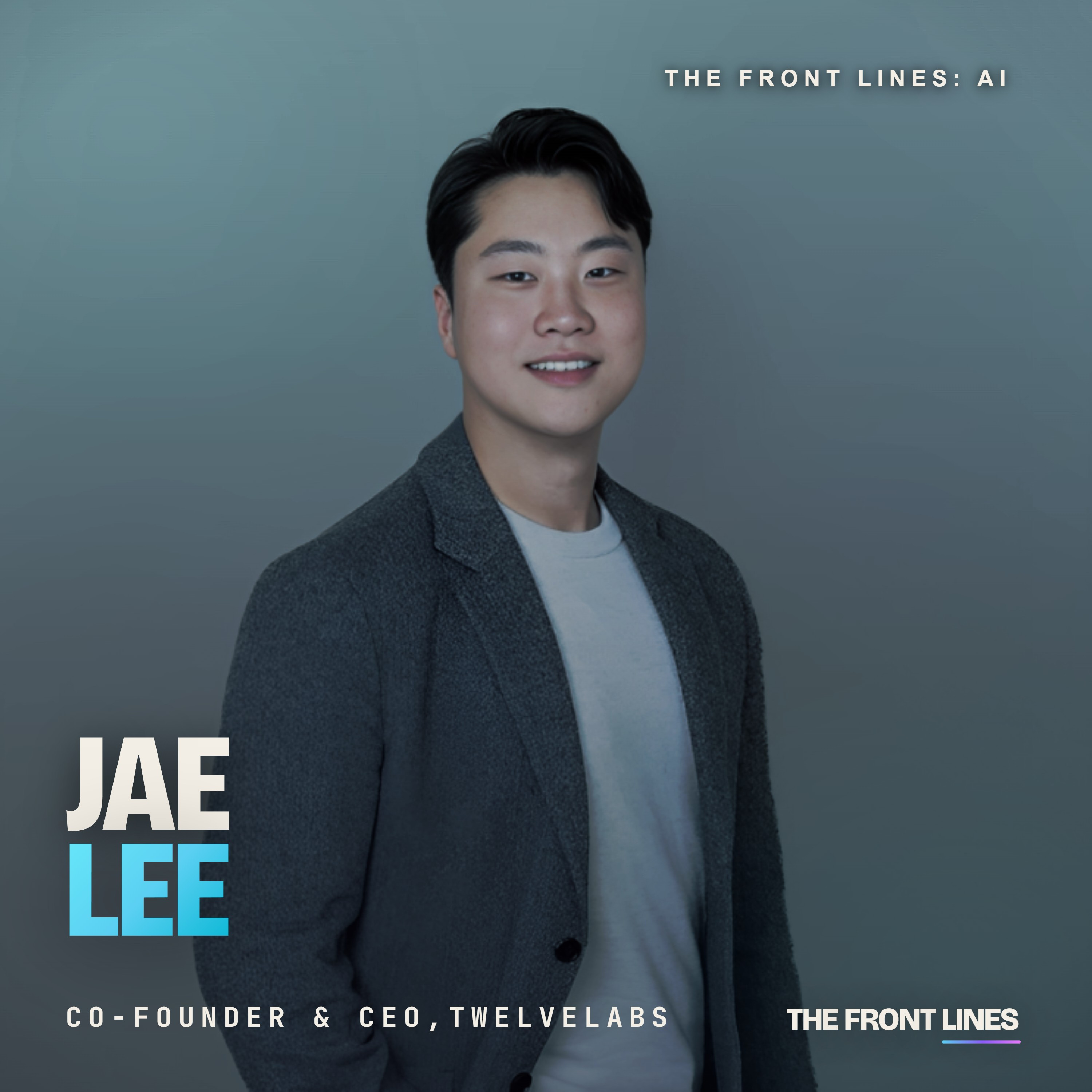 How TwelveLabs sells AI to federal agencies: Mission alignment over process optimization | Jae Lee 15.10.2025 21นาทีTwelveLabs is building purpose-built foundation models for video understanding, enabling enterprises to index, search, and analyze petabytes of video content at scale. Founded by three technical co-founders who met in South Korea's Cyber Command doing multimodal video understanding research, the company recognized early that video requires fundamentally different infrastructure than text or image AI. Now achieving 10x revenue growth and serving customers across media, entertainment, sports, advertising, and federal agencies, TwelveLabs is proving that category creation through extreme focus beats trend chasing. In this episode, Jae Lee shares how the company navigated early product decisions, built specialized GTM motions for established industries, and maintained technical conviction during years of building in relative obscurity.Topics Discussed:How military research in multimodal video understanding led to founding TwelveLabs in 2020 The technical thesis: why video deserves purpose-built foundation models and inference infrastructure Targeting video-centric industries where ROI justifies early-stage pricing: media, entertainment, sports, advertising, and defense Partnership-driven distribution strategy and AWS Bedrock integration results Specialized sales approach: generalist leaders, vertical-specific AEs and solutions architects Maintaining extreme focus and avoiding hype cycles during the first three years of building Federal GTM lessons: why In-Q-Tel partnership and authentic mission alignment matter more than process optimization The discipline of saying no to large opportunities that don't fit ICP Keeping hiring bars high when the entire team is underwaterGTM Lessons For B2B Founders:Hire vertical specialists on the front lines, not just at the top: TwelveLabs structures its GTM team with generalist leaders (head of GTM and VP of Revenue) who can sell any technology, but vertical-specialized AEs, solutions architects, and deployment engineers. These front-line team members come directly from the four target industries and understand customer workflows, buying patterns, and integration points without ramp time. Infrastructure plays require integration partnerships, not displacement: In established industries with layered technology stacks, positioning as foundational infrastructure demands partnership-first distribution. Jae explained their approach: integration with media-specific GSIs, media asset management platforms, and cloud providers ensures TwelveLabs fits into existing workflows rather than forcing wholesale replacement. Extreme focus on first-principles product development beats fast-follower tactics: While competitors built quick demos by wrapping existing models, TwelveLabs spent three years building proprietary video foundation models and indexing infrastructure from scratch. Jae was explicit about the cost: "It was painful journey in the first like two and a half, three years because folks are flying by." The payoff came from solving actual customer problems—indexing 2 million hours of content in two days, enabling semantic search at scale, building agent workflows for specific use cases. Federal requires cultural alignment before GTM optimization: TwelveLabs' federal success stems from authentic mission alignment, not just process execution. With In-Q-Tel as an investor providing interface to agencies and founders with military backgrounds, the company established credibility through shared values rather than sales tactics. ICP discipline protects product focus and team morale: Saying no to large early opportunities that don't fit ICP is operationally painful but strategically essential. Jae acknowledged the difficulty: "Early on saying no to customers is hard... as a founder you want to grow your business and you know that's going to be good for the morale. But that's only true when the customers are actually their ideal customers."
 -
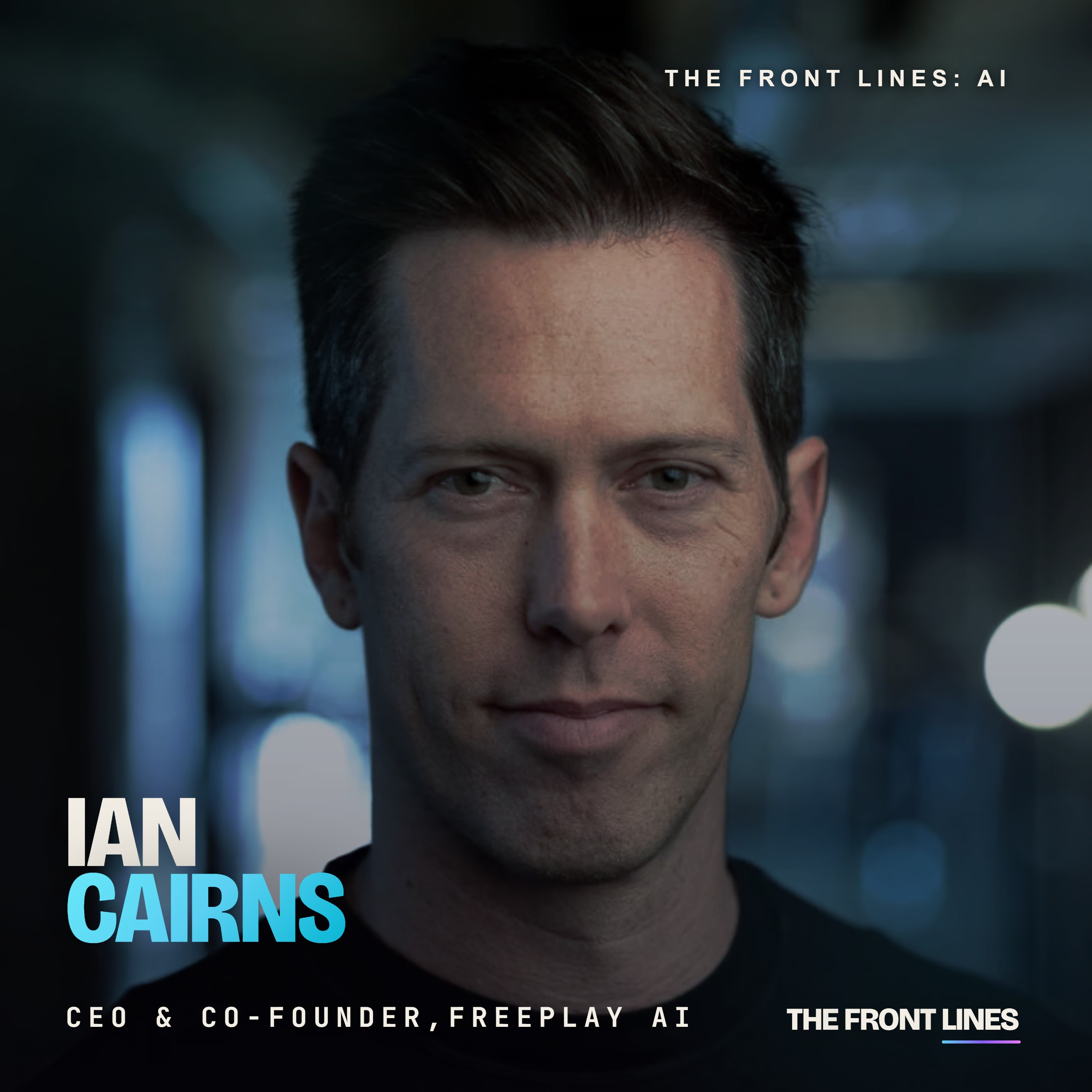 How Freeplay built thought leadership by triangulating insights across hundreds of AI implementations | Ian Cairns 15.10.2025 28นาทีFreeplay AI emerged from a precise timing insight: former Twitter API platform veterans Ian Cairns and Eric Schade recognized that generative AI created the same platform opportunity they'd previously captured with half a million monthly active developers. Their company now provides the observability, evaluation, and experimentation infrastructure that lets cross-functional teams—including non-technical domain experts—collaborate on AI systems that need to perform consistently in production.Topics Discussed:Systematic customer discovery: 75 interviews in 90 days using jobs-to-be-done methodology to surface latent AI development pain pointsCross-functional AI development: How domain experts (lawyers, veterinarians, doctors) became essential collaborators when "English became the hottest programming language"Production AI reliability challenges: Moving beyond 60% prototype success rates to consistent production performanceEnterprise selling to technical buyers: Why ABM and content worked where ads and outbound failed for VPs of engineeringCategory creation without precedent: Building thought leadership through triangulated insights across hundreds of implementationsOffline community building: Growing 3,000-person Colorado AI meetup with authentic "give first" approachGTM Lessons For B2B Founders:Structure customer discovery with jobs-to-be-done rigor: Ian executed a systematic 75-interview program in 90 days, moving beyond surface-level feature requests to understand fundamental motivations. Using Clay Christensen's framework, they discovered engineers weren't just frustrated with 60% AI prototype reliability—they were under career pressure to deliver AI wins while lacking tools to bridge the gap to production consistency. This deeper insight shaped Freeplay's positioning around professional success metrics rather than just technical capabilities.Exploit diaspora networks from platform companies: Twitter's developer ecosystem became Ian's customer research goldmine. Platform company alumni have uniquely valuable networks because they previously interfaced with hundreds of technical teams. Rather than cold outreach, Ian leveraged existing relationships and warm introductions to reach heads of engineering who were actively experimenting with AI. This approach yielded higher-quality conversations and faster pattern recognition across use cases.Target sophistication gaps in technical buying committees: Traditional SaaS tactics failed because Freeplay's buyers—VPs of engineering at companies building production AI—weren't responsive to ads or generic outbound. Instead, Ian invested in deep technical content (1500-2000 word blog posts), speaking engagements, and their "Deployed" podcast featuring practitioners from Google Labs and Box. This approach built credibility with sophisticated technical audiences who needed education about emerging best practices, not product demos.Build authority through cross-portfolio insights: Rather than positioning as AI experts, Ian built trust by triangulating learnings across "hundreds of different companies" and sharing pattern recognition. Their messaging became "don't just take Freeplay's word for it—here's what we've seen work across environments." This approach resonated because no single company had enough AI production experience to claim definitive expertise. Aggregated insights became more valuable than individual case studies.Time market entry for the infrastructure adoption curve: Ian deliberately positioned Freeplay for companies "3, 6, 12 months after being in production" rather than competing for initial AI experiments. They recognized organizations don't invest in formal evaluation infrastructure until they've proven AI matters to their business. This patient approach let them capture demand at the moment companies realized they needed serious operational discipline around AI systems.
 -
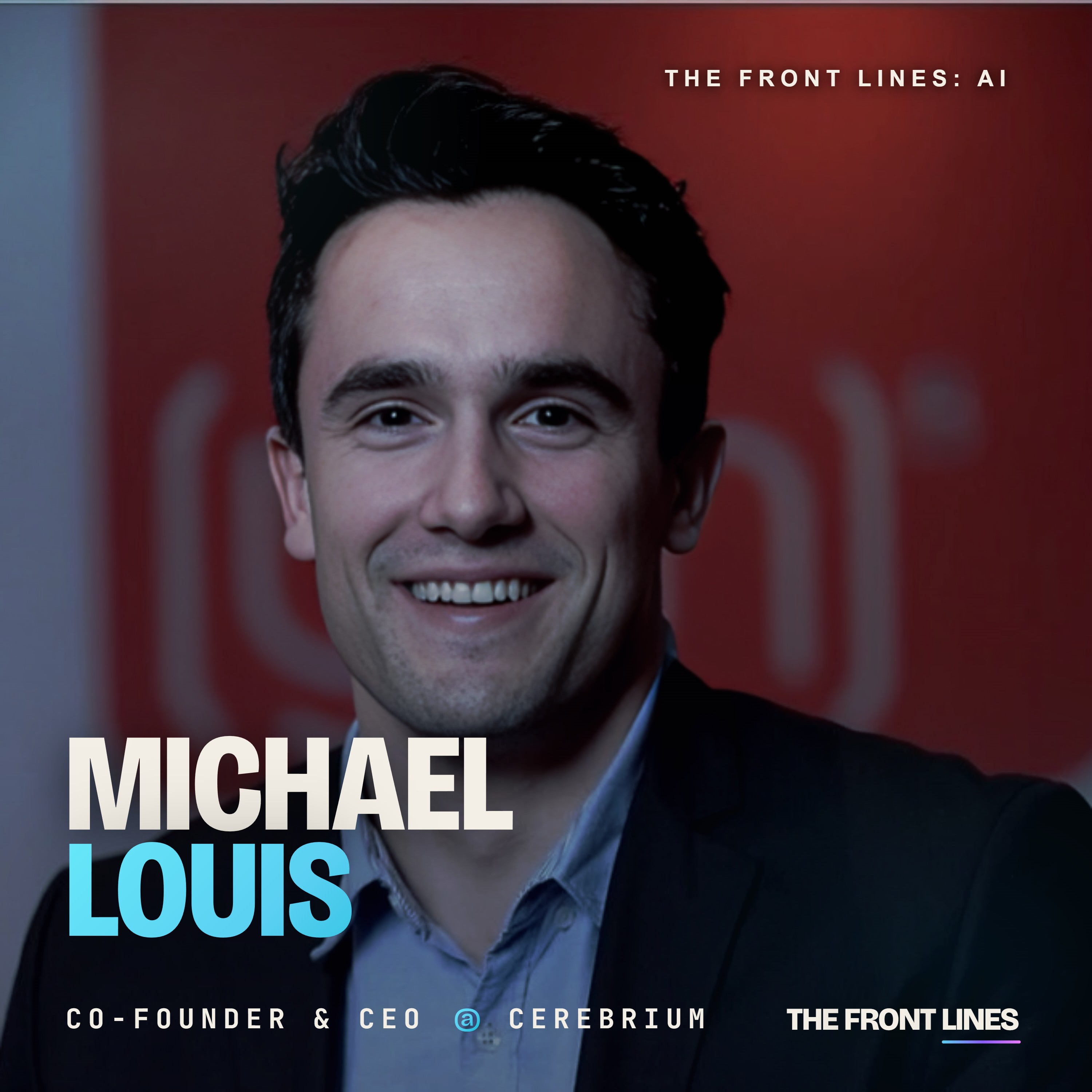 How Cerebrium generated millions in ARR through partnerships without a sales team | Michael Louis 29.09.2025 24นาทีCerebrium is a serverless AI infrastructure platform orchestrating CPU and GPU compute for companies building voice agents, healthcare AI systems, manufacturing defect detection, and LLM hosting. The company operates across global markets handling data residency constraints from GDPR to Saudi Arabia's data sovereignty requirements. In a recent episode of Category Visionaries, I sat down with Michael Louis, Co-Founder & CEO of Cerebrium, to explore how they built a high-performance infrastructure business serving enterprise customers with high five-figure to six-figure ACVs while maintaining 99.9%+ SLA requirements.Topics Discussed:Building AI infrastructure before the GPT moment and strategic patience during the hype cycleScaling a distributed engineering team between Cape Town and NYC with 95% South African talentPartnership-driven revenue generation producing millions in ARR without traditional sales teamsAI-powered market engineering achieving 35% LinkedIn reply rates through competitor analysisTechnical differentiation through cold start optimization and network latency improvementsRevenue expansion through global deployment and regulatory compliance automationGTM Lessons For B2B Founders:Treat go-to-market as a systems engineering problem: Michael reframed traditional sales challenges through an engineering lens, focusing on constraints, scalability, and data-driven optimization. "I try to reframe my go to market problem as an engineering one and try to pick up, okay, like what are my constraints? Like how can I do this, how can it scale?" This systematic approach led to testing 8-10 different strategies, measuring conversion rates, and building automated pipelines rather than relying on manual processes that don't scale.Structure partnerships for partner success before revenue sharing: Cerebrium generates millions in ARR through partners whose sales teams actively upsell their product. Their approach eliminates typical partnership friction: "We typically approach our partners saying like, look, you keep the money you make, we'll keep the money we make. If it goes well, we can talk about like rev share or some other agreement down the line." This removes commission complexity that kills B2B partnerships and allows partners to focus on customer value rather than internal revenue allocation conflicts.Build AI-powered competitive intelligence for outbound at scale: Cerebrium's 35% LinkedIn reply rate comes from scraping competitor followers and LinkedIn engagement, running prospects through qualification agents that check funding status, ICP fit, and technical roles, then generating personalized outreach referencing specific interactions. "We saw you commented on Michael's post about latency in voice. Like, we think that's interesting. Like, here's a case study we did in the voice space." Position infrastructure as revenue expansion, not cost optimization: While dev tools typically focus on developer productivity gains, Cerebrium frames their value proposition around market expansion and revenue growth. "We allow you to deploy your application in many different markets globally... go to market leaders love us and sales leaders because again we open up more markets for them and more revenue without getting their tech team involved." Weaponize regulatory complexity as competitive differentiation: Cerebrium abstracts data sovereignty requirements across multiple jurisdictions - GDPR in Europe, data residency in Saudi Arabia, and other regional compliance frameworks. "As a company to build the infrastructure to have data sovereignty in all these companies and markets, it's a nightmare." By handling this complexity, they create significant switching costs and enable customers to expand internationally without engineering roadmap dependencies, making them essential to sales teams pursuing global accounts.
 -
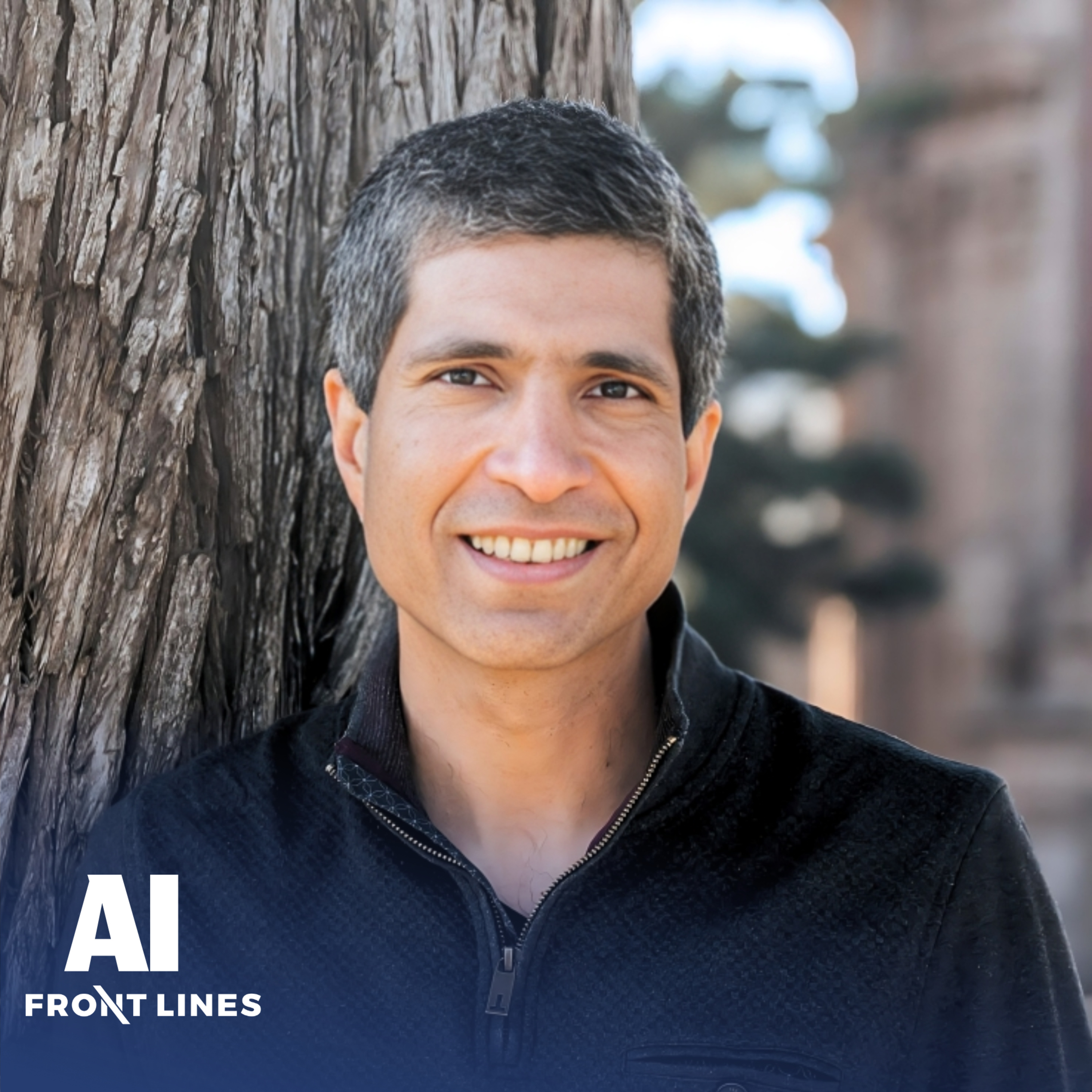 How OpenInfer discovered unexpected government traction by focusing on data ownership pain points | Behnam Bastani 16.09.2025 21นาทีOpenInfer addresses the enterprise infrastructure gap that causes 70% of edge AI deployments to fail. Founded by system architects who previously built high-throughput runtime systems at Meta (enabling VR applications on Qualcomm chips via Oculus Link) and Roblox (scaling real-time operations across millions of gaming devices), OpenInfer applies proven architectural patterns to enterprise edge AI deployment. The company targets three specific customer pain points: cost reduction for AI-always-on applications, data sovereignty requirements in regulated environments, and reliability for systems that must function regardless of connectivity. In this episode of Category Visionaries, CEO and Founder Behnam Bastani reveals how external market catalysts like DeepSeek's efficiency breakthrough transformed investor perception and validated their compute optimization thesis.Topics Discussed:System architecture pattern replication from Meta's Oculus Link to Roblox to OpenInferThe compute efficiency gap: why "throwing hardware" at AI problems creates market inefficienciesHow DeepSeek's January 2025 breakthrough shifted investor sentiment from skepticism to oversubscriptionCustomer targeting methodology: focusing on business unit leaders facing career consequencesGovernment market discovery: air-gapped environments and data sovereignty requirementsTechnical demonstration strategies for overcoming the 70% edge deployment failure ratePrivacy-first AI positioning unlocking previously inaccessible use casesGTM Lessons For B2B Founders:Target decision-makers with career-level consequences: Rather than pursuing prospects who might "take a risk," Behnam focuses on "those that lose their jobs if they're not solving the problem" - specifically business unit leaders whose profit margins or sales metrics directly impact their career trajectory. This creates urgency that comfortable cloud users lack and accelerates deal cycles by aligning solution adoption with personal survival incentives.Leverage external market catalysts for thesis validation: OpenInfer initially faced investor pushback ("Nvidia's got everything working well. Why you think you can do anything better?") until DeepSeek's efficiency breakthrough provided third-party validation. "January hits and then there's DeepSeek... People called us, hey, you're DeepSeek on edge." Founders should identify potential external events that could validate their contrarian thesis and be prepared to capitalize when these catalysts occur.Lead with technical proof points over explanations: In markets with high failure rates, demonstrations eliminate skepticism faster than education. "We definitely have metrics, demos, and we go with those. We demonstrate what's possible... we remove this skepticalism in terms of ease of deployments, power of edge in one shot." This approach recognizes that technical buyers need confidence before curiosity.Pursue unexpected traction sources aggressively: Despite targeting enterprise ISVs, government demand emerged due to air-gapped environment requirements. "Government is actually becoming huge traction primarily because data ownership was a major topic to them." Rather than forcing initial market hypotheses, founders should redirect resources toward segments showing organic product-market fit signals, even when they require different sales processes.Build credibility through architectural pattern repetition: Investors backed OpenInfer because "we are the people that have built this twice, scaled it to millions." Repeating proven technical patterns across different contexts creates sustainable competitive advantages that new entrants cannot replicate without similar experience depth.
พอดแคสต์ที่คล้ายกัน


ยอดนิยมใน
พอดแคสต์นี้ปรากฏในชาร์ตพอดแคสต์ของประเทศเหล่านี้ด้วย
