
YaleCourses
YaleCourses
0
YaleCourses provides access to lectures and academic programs from Yale University, including complete sets from the Open Yale Courses initiative. The channel aims to train a broadly based, highly disciplined intellect without prescribing how it will be used. Students can also find complementary syllabi, transcripts, and other resources on the Open Yale Courses website. The podcast offers a window into the core of the university's classrooms and academic offerings.
ตอน
-
 906 | Setting Up Your Social Enterprise: Key Do's and Don'ts - Social Entrepreneurship Course 25.09.2026 4นาทีAre you ready to navigate the complexities of building a social enterprise? In this essential lesson, we distill the critical do's and don'ts for establishing and managing your organization, focusing on team recruitment, governance, knowledge management, and maintaining your social mission. Avoid common pitfalls and set your venture up for lasting impact.🎯 Learning Objectives• Understand the importance of carefully selecting founding teams, executive teams, and board members based on commitment and fit.• Learn to design organizational structures that promote shared leadership and avoid excessive hierarchy.• Discover the necessity of documenting institutional knowledge to support growth and continuity.• Identify common mistakes to avoid, such as starting a new organization unnecessarily or losing sight of the core social mission.• Recognize the value of seeking expert advice and reimagining traditional institutional structures.📚 About the Course Have you ever wondered what it would be like to create real change? You don't have to start your own organization to make a difference in the world. Everyone can learn the social entrepreneurship mindset and skillset to build social impact. In this course, you will immerse yourself in a social or environmental challenge you want to tackle. You'll start by researching your topic of choice, talking to people, and ideating a potential solution that you can contribute. Then, you'll build a business model around that solution, understanding concepts like measuring social change, ensuring financial viability, funding and pitching. This course is a safe space to experiment and explore. You'll be guided by a ten stage framework to help structure your journey. Along the way, you'll hear from social entrepreneurs around the world through case studies and campus conversations. These include Yale alumni, members of the New Haven community, and global changemakers. Everyone is welcome to join this course! You can apply your lived, learned, or professional experience to discover how you're going to make a difference. 📺 Watch the full playlist on YouTube: https://www.youtube.com/playlist?list=PLh9mgdi4rNezbi0aRJeVnt99ynTVZG1PL 🎓 Enroll on Coursera for assessments and a certificate: https://online.yale.edu/courses/creating-change-through-social-entrepreneurship 🌐 Explore more learning opportunities on Yale Online: https://online.yale.edu/courses/creating-change-through-social-entrepreneurship #SocialEntrepreneurship #YaleCourse #Impact #Changemakers #BusinessPlan #DesignThinking Learn more about your ad choices. Visit megaphone.fm/adchoices
 -
 24. Twilight of the Polis (cont.) and Conclusion 25.09.2026 1ชม. 23นาทีIntroduction to Ancient Greek History (CLCV 205)In this lecture, Professor Kagan tells the story of the rise of Philip and describes his early actions: unifying Macedon, defeating barbarian armies, and creating a new, professional, national army. According to Professor Kagan, through these actions, Philip was able to make inroads into the Greek world. What made these inroads more effective was Philip's uncanny talent for diplomacy and the fighting between the various poleis. Eventually, the Greeks under the efforts of Athens and Demosthenes decided to face Philip in the battle of Chaeronea. The battle, though close, was won by Philip and his Macedonian forces. Finally, Professor Kagan evaluates the actions of Demosthenes and concludes that his actions should be judged as a noble endeavor of one who loved freedom.00:00 - Chapter 1. The Rise of Philip of Macedon10:56 - Chapter 2. Philip, the Military Genius24:52 - Chapter 3. Philip, the Diplomat31:29 - Chapter 4. Philip's Expansion38:17 - Chapter 5. Athens' War Tax and Demosthenes' Opposition to Philip52:29 - Chapter 6. Increased Threats from Philip and Athens' Response01:03:09 - Chapter 7. Demosthenes' Stand and The Battle of ChaeroneaComplete course materials are available at the Open Yale Courses website: http://open.yale.edu/coursesThis course was recorded in Fall 2007. Learn more about your ad choices. Visit megaphone.fm/adchoices
 -
 3.4 | The Rocket Equation: Why 95% Fuel Won’t Cut It | Rocket Science with Yale’s Marla Geha 25.09.2026 15นาทีEver wondered what determines how fast a rocket can go, or why NASA doesn't launch rockets with household items like baking soda and vinegar? In this lesson, we delve into the powerful Rocket Equation (also known as the Tsiolkovsky equation), which describes the maximum speed a rocket can achieve by burning its own fuel. You'll learn how this fundamental equation, inspired by the simple act of throwing rocks from a boat, reveals the critical relationship between exhaust velocity, mass ratio, and the elusive Delta-V needed for space travel.🎯 Learning Objectives• Define the rocket equation and explain its significance in determining a rocket's maximum speed.• Analyze the roles of exhaust velocity and the initial-to-final mass ratio (fuel ratio) in the rocket equation.• Understand why a remarkably high percentage of a rocket's launch mass must be fuel to reach orbit.• Compare the effectiveness of different propellant types based on their exhaust velocities, using examples like liquid hydrogen and the baking soda-vinegar reaction.• Relate Newton's laws of motion to the principles governing rocket propulsion as described by the rocket equation.📚 About the CourseThis course is an intuitive introduction to rocket science in our everyday lives.Modern life increasingly depends on technology provided by Earth-orbiting satellites, from detailed weather predictions to broad-band internet and GPS. How are satellites launched into orbit and how do they work once they get there? Why are rockets used to get into orbit and how are they different from airplanes? This introductory course is aimed at a wide non-technical audience and is appropriate for all ages. 📺 Watch the full playlist on YouTube: https://www.youtube.com/playlist?list=PLh9mgdi4rNexC1fSWLlpQx_Gjj_0DhjVE 🎓 Enroll on Coursera for assessments and a certificate: https://www.coursera.org/learn/rocket-science-for-everyone 🌐 Explore more learning opportunities on Yale Online: https://online.yale.edu/courses/rocket-science-everyone #Yale #RocketScience #OnlineLearning #YaleOnline #STEMEducation #SpaceTech #ScienceForAll #LearnOnline Learn more about your ad choices. Visit megaphone.fm/adchoices
 -
 4. Portfolio Diversification and Supporting Financial Institutions (CAPM Model) 25.09.2026 1ชม. 13นาทีFinancial Markets (ECON 252)Portfolio diversification is the most fundamental concept of risk management. The allocation of financial resources in stocks, bonds, riskless, assets, oil and other assets determine the expected return and risk of a portfolio. Taking account of covariances and expected returns, investors can create a diversified portfolio that maximizes expected return for a given level of risk. An important mission of financial institutions is to provide portfolio-diversification services.00:00 - Chapter 1. Introduction 02:37 - Chapter 2. Evaluation of Efficient Portfolio Frontiers 26:59 - Chapter 3. The Significance of Portfolio Diversification 38:43 - Chapter 4. The Tangency Portfolio and the Mutual Fund Theory 51:46 - Chapter 5. The Capital Asset Pricing Model 59:09 - Chapter 6. Implications of the Equity Premium and Conclusion Complete course materials are available at the Open Yale Courses website: http://open.yale.edu/coursesThis course was recorded in Spring 2008. Learn more about your ad choices. Visit megaphone.fm/adchoices
 -
 2.5 | Mapping the Earth: Polar and Sun-Sync Orbits | Rocket Science for Everyone w/ Yale’s Marla Geha 25.09.2026 9นาทีHave you ever wondered how satellites map the entire Earth or maintain consistent lighting for monitoring? In this lesson, we take a fascinating side quest into special orbital types beyond the major regions. We'll explore the unique advantages of polar and sun-synchronous orbits for Earth observation, and journey into the vast, increasingly important cislunar space between Earth and the Moon.🎯 Learning Objectives• Explain what a polar orbit is and why it's essential for mapping the entire Earth's surface.• Describe the characteristics and practical applications of sun-synchronous orbits, a special type of polar orbit.• Define cislunar space and understand its current and future importance in space activities.📚 About the CourseThis course is an intuitive introduction to rocket science in our everyday lives.Modern life increasingly depends on technology provided by Earth-orbiting satellites, from detailed weather predictions to broad-band internet and GPS. How are satellites launched into orbit and how do they work once they get there? Why are rockets used to get into orbit and how are they different from airplanes? This introductory course is aimed at a wide non-technical audience and is appropriate for all ages. 📺 Watch the full playlist on YouTube: https://www.youtube.com/playlist?list=PLh9mgdi4rNexC1fSWLlpQx_Gjj_0DhjVE 🎓 Enroll on Coursera for assessments and a certificate: https://www.coursera.org/learn/rocket-science-for-everyone 🌐 Explore more learning opportunities on Yale Online: https://online.yale.edu/courses/rocket-science-everyone #RocketScienceForEveryone #YaleOnline #PolarOrbit #SunSynchronous #CislunarOrbit #SpaceScience #STEMEducation #LearnOnline Learn more about your ad choices. Visit megaphone.fm/adchoices
 -
 3.5 | Safeguarding Health Data: HIPAA and GDPR Essentials for Medical Software Course 25.09.2026 13นาทีIn this lesson, we explore the critical domain of data privacy, an escalating concern in medical software development. We'll unpack the intricacies of major regulations like HIPAA in the United States and GDPR in Europe, understanding their impact on how health data is handled. From defining Protected Health Information (PHI) to implementing anonymization techniques, this segment emphasizes building privacy directly into software design to protect sensitive patient data.🎯 Learning Objectives• Understand the importance of data privacy in medical software design.• Define key terms such as HIPAA, PHI, ePHI, PII, de-identification, and anonymization.• Differentiate between the scope and application of HIPAA and GDPR.• Explain the principles of "privacy by design and by default" and data minimization.• Identify common identifiers that constitute Protected Health Information and require careful handling. Learn more about your ad choices. Visit megaphone.fm/adchoices
 -
 Case Study | The Iowa Caucus App Disaster: Lessons in Software Failure | Medical Software Course 24.09.2026 13นาทีHave you ever wondered what happens when a critical software application fails spectacularly? In this detailed case study, Alex Chen dissects the infamous Iowa Reporter app, which caused widespread chaos during the 2020 Iowa Democratic Caucus. Discover the critical missteps in development, inadequate testing, and organizational oversights that turned a crucial election tool into a symbol of software disaster.🎯 Learning Objectives• Understand the high-stakes environment and context of political software development.• Identify specific software engineering and project management failures that led to the Iowa Reporter app's collapse.• Analyze the consequences of inadequate testing, rushed deployment, and ignored expert advice in critical systems.• Learn key lessons on prioritizing quality, proper resource allocation, and bridging communication gaps between political and technical teams. Learn more about your ad choices. Visit megaphone.fm/adchoices
 -
 4.2 | Powering Satellites: Solar Panels and Batteries | Rocket Science for Everyone with Marla Geha 24.09.2026 7นาทีWhy is power so critical for satellites in orbit? In this lesson, we delve into the essential role of electrical power, focusing on how solar panels convert sunlight into electricity for these crucial spacecraft. We'll explore the advantages of solar panels in space, the clever techniques satellites use to maximize sun exposure, and why rechargeable batteries are indispensable for maintaining continuous operation, even when a satellite passes through Earth's shadow. Discover the differences between Earth and space-based solar power, and learn about alternative power sources for specific missions.🎯 Learning Objectives• Understand the critical role of electrical power in satellite operation.• Explain how solar panels convert sunlight into electricity and their enhanced efficiency in space.• Describe the methods satellites use to orient their solar panels towards the sun.• Recognize why rechargeable batteries are essential for satellites and how they overcome periods in Earth's shadow.• Identify alternative power sources for very short missions or spacecraft traveling beyond the inner solar system.📚 About the CourseThis course is an intuitive introduction to rocket science in our everyday lives.Modern life increasingly depends on technology provided by Earth-orbiting satellites, from detailed weather predictions to broad-band internet and GPS. How are satellites launched into orbit and how do they work once they get there? Why are rockets used to get into orbit and how are they different from airplanes? This introductory course is aimed at a wide non-technical audience and is appropriate for all ages. 📺 Watch the full playlist on YouTube: https://www.youtube.com/playlist?list=PLh9mgdi4rNexC1fSWLlpQx_Gjj_0DhjVE 🎓 Enroll on Coursera for assessments and a certificate: https://www.coursera.org/learn/rocket-science-for-everyone 🌐 Explore more learning opportunities on Yale Online: https://online.yale.edu/courses/rocket-science-everyone #RocketScienceForEveryone #SatellitePower #SolarPanels #SpaceEnergy #STEMEducation Learn more about your ad choices. Visit megaphone.fm/adchoices
 -
 12. Real Estate Finance and its Vulnerability to Crisis 24.09.2026 1ชม. 14นาทีFinancial Markets (ECON 252)Real Estate is the biggest asset class and of great importance for both individuals and institutional investors. An array of economic and psychological factors impact real estate investment decisions and the public has changing ideas of real estate as a profitable investment. People's demand to buy a home by taking on long-term debt, called a mortgage, is often tied with the overall health of the economy and financial markets. In recessions, home buying tends to fall and the opposite holds in a strong economy. Commercial real estate, held indirectly by the public through partnerships and real estate investment trusts (REITs), is vulnerable to similar speculative activity. The most recent real estate boom illustrates the speculative nature of real estate, and its relation to financial and economic crises.00:00 - Chapter 1. Introduction 02:17 - Chapter 2. The Development of Commercial Real Estate Assets, from DPP to REIT 17:34 - Chapter 3. The Evolution of Mortgages and Government Regulatory Measures 30:06 - Chapter 4. The Math of Mortgages, Fannie Mae, and Freddie Mac 41:50 - Chapter 5. Understanding the Current Housing Boom: Comparing Los Angeles and Milwaukee 57:37 - Chapter 6. Domestic and International Real Estate Booms Complete course materials are available at the Open Yale Courses website: http://open.yale.edu/coursesThis course was recorded in Spring 2008. Learn more about your ad choices. Visit megaphone.fm/adchoices
 -
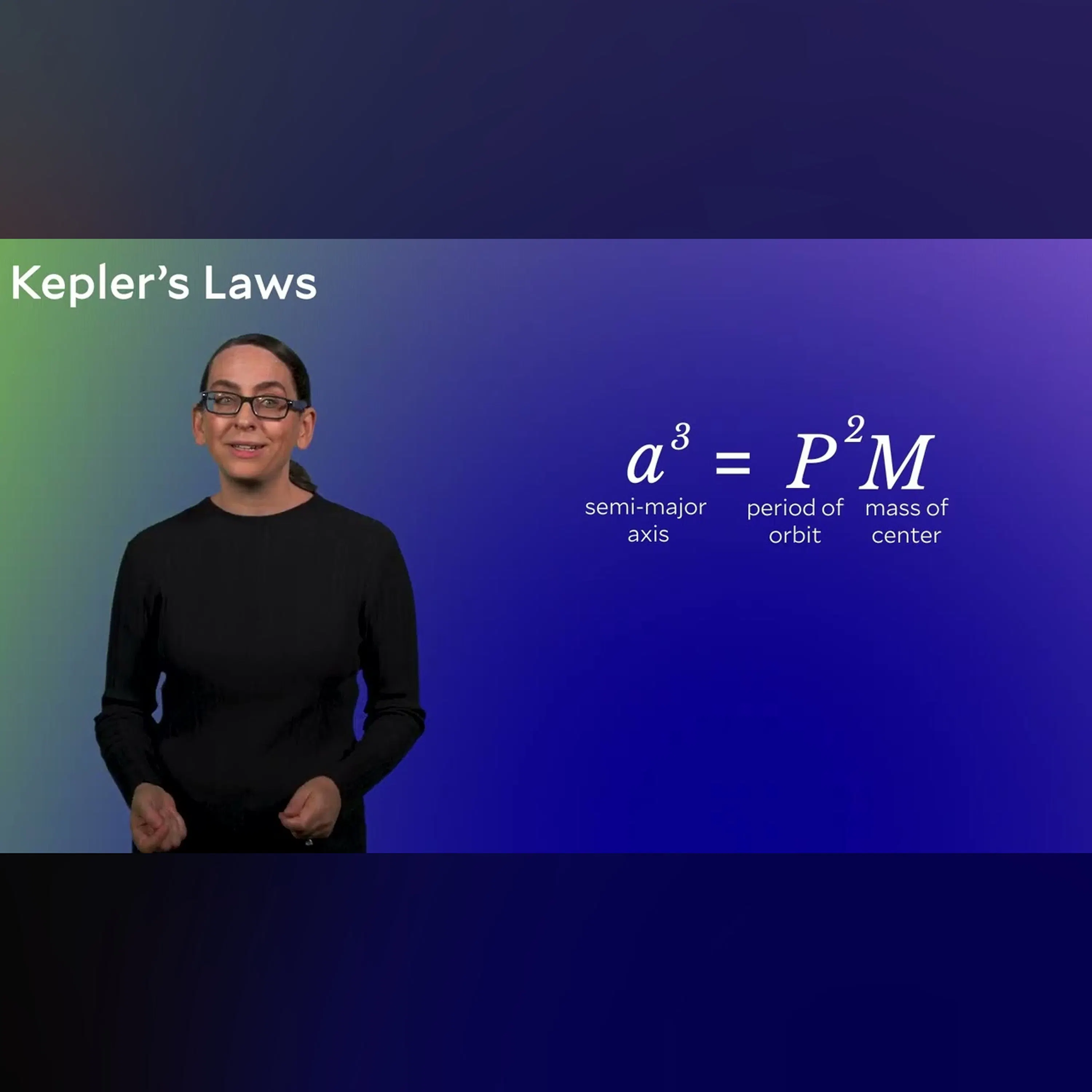 1.5 | Decoding Orbits: Kepler’s Laws and Sputnik | Rocket Science for Everyone with Yale’s Marla Geha 24.09.2026 11นาทีHave you ever wondered what keeps satellites in orbit? In this lesson, we delve into Johannes Kepler's groundbreaking three laws of orbital motion, which explain how objects like planets and satellites move through space. We'll explore why orbits are elliptical, how orbital speed varies, and critically, how Kepler's Third Law allows us to calculate an object's distance based on its orbital period, demonstrated vividly through the case of Sputnik.🎯 Learning Objectives• Explain Kepler's First Law of orbital motion and its significance.• Describe the relationship between an object's orbital period and its distance from the central body (Kepler's Third Law).• Apply Kepler's Third Law to calculate orbital parameters, such as the orbital height of Sputnik.• Understand the historical context and revolutionary nature of Kepler's discoveries.📚 About the CourseThis course is an intuitive introduction to rocket science in our everyday lives.Modern life increasingly depends on technology provided by Earth-orbiting satellites, from detailed weather predictions to broad-band internet and GPS. How are satellites launched into orbit and how do they work once they get there? Why are rockets used to get into orbit and how are they different from airplanes? This introductory course is aimed at a wide non-technical audience and is appropriate for all ages. 📺 Watch the full playlist on YouTube: https://www.youtube.com/playlist?list=PLh9mgdi4rNexC1fSWLlpQx_Gjj_0DhjVE 🎓 Enroll on Coursera for assessments and a certificate: https://www.coursera.org/learn/rocket-science-for-everyone 🌐 Explore more learning opportunities on Yale Online: https://online.yale.edu/courses/rocket-science-everyone #Yale #RocketScience #YaleOnline #KeplersLaws #Orbits #Sputnik #SpaceScience #STEMEducation #LearnOnline Learn more about your ad choices. Visit megaphone.fm/adchoices
 -
 403 | Test Your Ideas: Get Feedback and Fail Fast - Social Entrepreneurship Course 24.09.2026 5นาทีIn this lesson, you'll discover that at the initial stage of the design process, testing your ideas primarily involves gathering feedback by talking to a diverse group of people. This crucial step helps you understand what works, what doesn't, and how to adapt your social impact solution.🎯 Learning Objectives• Understand that early idea testing in the design process means primarily talking to people.• Identify the key types of stakeholders to engage with to gather comprehensive feedback on your ideas.• Learn how feedback from early testing informs the iteration and refinement of your social impact solution.• Grasp the concept of "failing fast" and its importance in the design community.📚 About the Course Have you ever wondered what it would be like to create real change? You don't have to start your own organization to make a difference in the world. Everyone can learn the social entrepreneurship mindset and skillset to build social impact. In this course, you will immerse yourself in a social or environmental challenge you want to tackle. You'll start by researching your topic of choice, talking to people, and ideating a potential solution that you can contribute. Then, you'll build a business model around that solution, understanding concepts like measuring social change, ensuring financial viability, funding and pitching. This course is a safe space to experiment and explore. You'll be guided by a ten stage framework to help structure your journey. Along the way, you'll hear from social entrepreneurs around the world through case studies and campus conversations. These include Yale alumni, members of the New Haven community, and global changemakers. Everyone is welcome to join this course! You can apply your lived, learned, or professional experience to discover how you're going to make a difference. 📺 Watch the full playlist on YouTube: https://www.youtube.com/playlist?list=PLh9mgdi4rNezbi0aRJeVnt99ynTVZG1PL🎓 Enroll on Coursera for assessments and a certificate: https://online.yale.edu/courses/creating-change-through-social-entrepreneurship🌐 Explore more learning opportunities on Yale Online: https://online.yale.edu/courses/creating-change-through-social-entrepreneurship#SocialEntrepreneurship #YaleCourse #Impact #Changemakers #BusinessPlan #DesignThinking Learn more about your ad choices. Visit megaphone.fm/adchoices
 -
 24. Students' Choice Novel: Jonathan Safran Foer, Everything is Illuminated 24.09.2026 52นาทีThe American Novel Since 1945 (ENGL 291)In this first of two lectures on the students' choice end-of-semester novel, Jonathan Safran Foer's Everything is Illuminated (2002), Professor Hungerford models several methods for approaching and evaluating a new work of fiction. She shows how Foer borrows and adapts themes and styles from other authors on the syllabus in service to his ambition as a writer to demonstrate the power of narrative fiction to address the great historical traumas of our time. In thus attempting to marry the nineteenth-century social novel with Postmodernist, or late Modernist, techniques, Foer participates in an emerging tradition that risks the confusion between resonant emotion and sentimental cliché.00:00 - Chapter 1. Foer's Formative Ambition03:58 - Chapter 2. Dialog with the Literary Tradition11:23 - Chapter 3. Absence at the Heart of Desire: Foer's Negative Spaces22:05 - Chapter 4. Bringing Together Sentiment and Formal Play: A Social Postmodern Novel26:39 - Chapter 5. The Campus Novel31:32 - Chapter 6. Sentiment vs. SentimentalityComplete course materials are available at the Open Yale Courses website: http://open.yale.edu/coursesThis course was recorded in Spring 2008. Learn more about your ad choices. Visit megaphone.fm/adchoices
 -
 4. Poetry and Virginity 24.09.2026 57นาทีMilton (ENGL 220)Milton's first publication, A Mask Presented at Ludlow Castle, is examined. Milton's vision of a poet's heaven in "Ad Patrem," paired with the letter to Charles Diodati, with its particular emphasis on the need for chastity in poets, is used as a springboard to a discussion of the depiction of sexual ideals in the masque. Revelation 14, 1 Corinthians, and the Apology for Smectymnuus are also discussed at length, as are the poet's biography and the history of the masque's title.00:00 - Chapter 1. "Ad Patrem": A Poem to Milton's Father08:33 - Chapter 2. "An Apology for Smectymnuus"16:34 - Chapter 3. "Comus: A Mask Presented at Ludlow Castle"Complete course materials are available at the Open Yale Courses website: http://open.yale.edu/coursesThis course was recorded in Fall 2007. Learn more about your ad choices. Visit megaphone.fm/adchoices
 -
 2. Richard Wright, Black Boy 24.09.2026 57นาทีThe American Novel Since 1945 (ENGL 291)Professor Amy Hungerford continues her discussion of Richard Wright's classic American autobiography, Black Boy. Through a close analysis of key passages, she demonstrates an oscillation in the narrative between the socioeconomic deprivations and racial jeopardy confronting its characters, and the compensations to be found in sensual experience, the imagination, and in particular, the power of words. Dramatizing the editorial struggle evident in letters between Wright and Book-of-the-Month-Club-President Dorothy Canfield Fisher, Professor Hungerford shows the high stakes of Wright's uncompromising portrait of America's failed ideals at a time when those ideals are being tested during the Second World War.00:00 - Chapter 1. Classifying the Literary Object: Fiction and Autobiography06:06 - Chapter 2. Choices in the Construction of an Autobiography: A Close Reading of the First Scene11:26 - Chapter 3. Decoding Meaning in Wright's Descriptive "Catalogs"16:58 - Chapter 4. Powerlessness and Exertions of Agency28:00 - Chapter 5. Language and Power: The Voices of the Author38:36 - Chapter 6. The Fisher-Wright Letters: Author vs. Audience, How Outside Forces Shape the Formation of a Personal AccountComplete course materials are available at the Open Yale Courses website: http://open.yale.edu/coursesThis course was recorded in Spring 2008. Learn more about your ad choices. Visit megaphone.fm/adchoices
 -
 America at 250: A History, DeVane Lecture, Class 1 – The Road to 250 24.09.2026 52นาทีAmerica at 250: A History. Class 1 “The Road to 250”Introduction to the course with all three professors setting the stage. Recorded in Yale’s Battell Chapel. This one-time-only course examines U.S. history from 1776 to the present, in advance of the nation’s semiquincentennial (or 250th birthday) in 2026. Taught jointly by Professors Joanne Freeman, David Blight, and Beverly Gage, the course emphasizes the history of the nation-state and the contested nature of American national identity. All three scholars will deliver the course’s first and final lectures together, as an introduction and a wrap-up. In between, they will each deliver eight lectures individually based on their areas of expertise. Joanne Freeman, the Alan Boles, Class of 1929 Professor of History and American Studies, and an expert in the revolutionary and early national periods of American history, will cover the period from the Revolution up through the 1830s, touching on such topics as the birth of party politics, the nature of “Jacksonian democracy,” and the rise of the reform and protest movements.David Blight, Sterling Professor of History and African American Studies and one of the country’s foremost authorities on the history of slavery and the Civil War, will cover the Civil War era up through Reconstruction and the emergence of the Jim Crow laws.Beverly Gage, John Lewis Gaddis Professor of History, who is currently writing a book on the nation’s past to mark the 250th anniversary of the signing of the Declaration of Independence, will pick up in the 1890s and continue through the end of the 20th century, addressing debates around immigration, wealth inequality, and the creation of the social welfare state. The course explores U.S. political history broadly conceived–not just as a realm of presidents and elections and wars (though there will be plenty of those) but as a conversation across time between citizens about what the United States is, was, and was meant to be. It proceeds from the premise that the American Revolution was the first but not the last radical act of national reimagining in U.S. history. A copy of the course syllabus with required readings can be downloaded at the bottom of the page at this link: https://president.yale.edu/committees-programs/devane-lectures/america-at-250-a-history To view all the classes in the DeVane Lecture series, go to this playlist link: https://youtube.com/playlist?list=PLh9mgdi4rNezTQrY_6XMNBWaZqLRdgpoq&feature=shared Learn more about your ad choices. Visit megaphone.fm/adchoices
 -
 America at 250, DeVane Lecture, Class 2 – Revolutionary (and Not So Revolutionary) Beginnings 24.09.2026 47นาทีAmerica at 250: A History. Class 2Professor Joanne Freeman begins her section on The American Experiment. Recorded in Yale’s Battell Chapel. This one-time-only course examines U.S. history from 1776 to the present, in advance of the nation’s semiquincentennial (or 250th birthday) in 2026. Taught jointly by Professors Joanne Freeman, David Blight, and Beverly Gage, the course emphasizes the history of the nation-state and the contested nature of American national identity. All three scholars will deliver the course’s first and final lectures together, as an introduction and a wrap-up. In between, they will each deliver eight lectures individually based on their areas of expertise. Joanne Freeman, the Alan Boles, Class of 1929 Professor of History and American Studies, and an expert in the revolutionary and early national periods of American history, will cover the period from the Revolution up through the 1830s, touching on such topics as the birth of party politics, the nature of “Jacksonian democracy,” and the rise of the reform and protest movements.David Blight, Sterling Professor of History and African American Studies and one of the country’s foremost authorities on the history of slavery and the Civil War, will cover the Civil War era up through Reconstruction and the emergence of the Jim Crow laws.Beverly Gage, John Lewis Gaddis Professor of History, who is currently writing a book on the nation’s past to mark the 250th anniversary of the signing of the Declaration of Independence, will pick up in the 1890s and continue through the end of the 20th century, addressing debates around immigration, wealth inequality, and the creation of the social welfare state. The course explores U.S. political history broadly conceived–not just as a realm of presidents and elections and wars (though there will be plenty of those) but as a conversation across time between citizens about what the United States is, was, and was meant to be. It proceeds from the premise that the American Revolution was the first but not the last radical act of national reimagining in U.S. history. A copy of the course syllabus with required readings can be downloaded at the bottom of the page at this link: https://president.yale.edu/committees-programs/devane-lectures/america-at-250-a-history To view all the classes in the DeVane Lecture series, go to this playlist link: https://youtube.com/playlist?list=PLh9mgdi4rNezTQrY_6XMNBWaZqLRdgpoq&feature=shared Learn more about your ad choices. Visit megaphone.fm/adchoices
 -
 907 | B Labs and B Corps: Making Business a Force for Good - Social Entrepreneurship Course 24.09.2026 9นาทีEver wondered how businesses can truly be a force for good beyond just profit? In this lesson, we dive into the innovative world of B Labs, exploring the distinctions between Public Benefit Corporations (PBCs) and B Corp certification. Discover how these structures and certifications enable companies to legally commit to and demonstrate social and environmental responsibility, moving beyond traditional capitalistic practices.🎯 Learning Objectives• Differentiate between a Public Benefit Corporation (PBC) and B Corp certification.• Understand the mission and impact of B Labs in fostering socially responsible businesses.• Identify how companies like Patagonia and Kickstarter utilize these frameworks to institutionalize their social and environmental impact.• Recognize the role of collective action, such as the B Corp Climate Collective, in addressing global challenges.📚 About the Course Have you ever wondered what it would be like to create real change? You don't have to start your own organization to make a difference in the world. Everyone can learn the social entrepreneurship mindset and skillset to build social impact. In this course, you will immerse yourself in a social or environmental challenge you want to tackle. You'll start by researching your topic of choice, talking to people, and ideating a potential solution that you can contribute. Then, you'll build a business model around that solution, understanding concepts like measuring social change, ensuring financial viability, funding and pitching. This course is a safe space to experiment and explore. You'll be guided by a ten stage framework to help structure your journey. Along the way, you'll hear from social entrepreneurs around the world through case studies and campus conversations. These include Yale alumni, members of the New Haven community, and global changemakers. Everyone is welcome to join this course! You can apply your lived, learned, or professional experience to discover how you're going to make a difference.📺 Watch the full playlist on YouTube: https://www.youtube.com/playlist?list=PLh9mgdi4rNezbi0aRJeVnt99ynTVZG1PL 🎓 Enroll on Coursera for assessments and a certificate: https://online.yale.edu/courses/creating-change-through-social-entrepreneurship 🌐 Explore more learning opportunities on Yale Online: https://online.yale.edu/courses/creating-change-through-social-entrepreneurship #SocialEntrepreneurship #YaleCourse #Impact #Changemakers #BusinessPlan #DesignThinking Learn more about your ad choices. Visit megaphone.fm/adchoices
 -
 18. Biomechanics and Orthopedics 24.09.2026 51นาทีFrontiers of Biomedical Engineering (BENG 100)Professor Saltzman introduces the material properties of elasticity and viscosity. He describes two separate experimental setups to measure the elasticity and the viscosity of a material. Material elasticity can be defined in terms of stress-strain property, and defines the Young's modulus (E), which is the slope of the stress-strain curve. Fluid viscosity, on the other hand, is described by shear stress. When modeling any material, the spring can be used to represent an ideal elastic material and the dashpot an ideal viscoelastic material. All biomaterials contain some combination of these properties and can be described by physical models that consist of both spring and dashpot.00:00 - Chapter 1. Introduction03:16 - Chapter 2. An Experiment on Elasticity18:20 - Chapter 3. Viscosity28:46 - Chapter 4. Deformation and Viscoelasticity42:13 - Chapter 5. ConclusionComplete course materials are available at the Open Yale Courses website: http://open.yale.edu/coursesThis course was recorded in Spring 2008. Learn more about your ad choices. Visit megaphone.fm/adchoices
 -
 17. Paradise Lost, Book IX 24.09.2026 53นาทีMilton (ENGL 220)Book Nine and the depiction of the Fall are presented. Adam and Eve's dialogue -- especially their perspectives on labor, temptation, and the nature of the garden -- is examined. Satan's strategic temptation of Eve is closely analyzed. At the lecture's conclusion, Adam and Eve's new fallen sight is discussed, with particular emphasis placed on the reference to the "veil" of pre-fallen innocence. Overall, the tension between doctrinal and subversive perspectives on the pre-fallen hierarchy of Eden is underscored.00:00 - Chapter 1. Introduction: "Paradise Lost" Book IX03:01 - Chapter 2. Adam and Eve, Arguing?10:19 - Chapter 3. The Argument between Adam and Eve on the Morning of the Fall36:03 - Chapter 4. The Promise of Equality and its Importance to Eve after the FallComplete course materials are available at the Open Yale Courses website: http://open.yale.edu/coursesThis course was recorded in Fall 2007. Learn more about your ad choices. Visit megaphone.fm/adchoices
 -
 5. Insurance: The Archetypal Risk Management Institution 24.09.2026 1ชม. 21นาทีFinancial Markets (ECON 252)Insurance provides significant risk management to a broad public, and is an essential tool for promoting human welfare. By pooling large numbers of independent or low-correlated risks, insurance providers can minimize overall risk. The risk management is tailored to individual circumstances and reflects centuries of insurance industry experience with real risks and with moral hazard and selection bias issues. Probability theory and statistical tools help to explain how insurance companies use risk pooling to minimize overall risk. Innovation and government regulation have played important roles in the formation and oversight of insurance institutions.00:00 - Chapter 1. Circumventing Selection Bias in the Equity Premium Puzzle10:13 - Chapter 2. Politics in the Stock Market and Modern Mutual Funds 19:43 - Chapter 3. The Intuition behind Insurance 34:54 - Chapter 4. Multiline, Monoline, and P&C Insurances 43:52 - Chapter 5. The Advent and Development of the Insurance Industry 56:06 - Chapter 6. Government and NAIC Regulation of Insurance 01:05:14 - Chapter 7. Problems with Insurance Companies Today Complete course materials are available at the Open Yale Courses website: http://open.yale.edu/coursesThis course was recorded in Spring 2008. Learn more about your ad choices. Visit megaphone.fm/adchoices
พอดแคสต์ที่คล้ายกัน


ยอดนิยมใน
พอดแคสต์นี้ปรากฏในชาร์ตพอดแคสต์ของประเทศเหล่านี้ด้วย

