
Boring History for Sleep
Boring History for Sleep is a narrative podcast designed to help you drift into sleep through slow, calming, and immersive stories from the past. Each story unfolds across multiple episodes, creating a gradual journey through ancient civilizations, forgotten worlds, and fascinating eras of history. From Ancient Egypt to Rome, from Greece to the Middle Ages, from the Vikings to the world of the samurai, each series gently explores distant places, everyday lives, quiet details, and the atmosphere of another time. This is not a fast-paced history lesson or a dramatic documentary, but a soft, atmospheric listening experience created to relax your mind and turn history into a peaceful nighttime ritual.
Епізоди
-
 Ancient Greece - EVENING ON THE AEGEAN 26.08.2026 4хвReturn to the Aegean harbor at evening for a final, peaceful reflection on the ancient Greek world. The departing ship has passed beyond the headland, workshops are closing, lamps are being lit, animals are checked, altars cool, and guards continue their watch. This closing episode gathers the farmers, potters, sailors, merchants, teachers, physicians, athletes, actors, soldiers, women, children, enslaved people, worshippers, patients, mourners, and families encountered throughout the journey. Palaces, poleis, democracies, kingdoms, and empires changed, while ordinary people continued to repair walls, store grain, learn songs, care for bodies, keep rituals, and adapt inherited customs. Marble monuments remain, but small traces bring the past closest: a worn cup, an unfinished exercise, a repaired tool, a footprint, or a name. The sea darkens, and the journey ends quietly.This episode includes AI-generated content.
 -
 Ancient Greece - DEATH, BURIAL, HADES, AND THE AFTERLIFE 25.08.2026 14хвFollow a Greek funeral from the household preparation of the body to procession, burial or cremation, mourning, grave offerings, and the long work of remembrance. Women often washed, dressed, watched over, and lamented the dead, while relatives, craftspeople, laborers, and religious specialists supplied everything a funeral required. Cemeteries outside city walls, grave markers, pottery, jewelry, toys, weapons, coins, inscriptions, family plots, and memorial visits preserved identity unevenly across wealth and status. The episode then enters the varied Greek afterlife: the shadowy realm of Hades, Persephone, Hermes, Charon, underworld rivers, restless dead, Eleusinian hopes, Orphic traditions, reincarnation, philosophical debate, and Epicurean freedom from fear. A quiet and compassionate history of loss, ritual, uncertainty, and the obligation to keep a name present.This episode includes AI-generated content.
 -
 Ancient Greece - THEATER, MUSIC, ATHLETES, AND PUBLIC COMPETITION 24.08.2026 23хвJoin the Greek public at theaters, musical performances, gymnasia, athletic grounds, and festival competitions. Tragedy and comedy combined speech, song, dance, masks, costumes, choruses, actors, musicians, sponsors, stage workers, and large audiences within religious and civic celebrations. Familiar myths were reshaped, politicians mocked, and traveling performers carried plays across the Mediterranean. Music also accompanied processions, banquets, work, weddings, funerals, and private storytelling. The episode then enters Olympia and the wider circuit of Greek games, following runners, wrestlers, boxers, pentathletes, pankratiasts, chariot teams, trainers, officials, spectators, and vendors. Training required repetition, money, food, time, and support, while victory brought honor and defeat usually left no record. A measured history of performance, discipline, crowds, fame, and the dust carried home after the festival.This episode includes AI-generated content.
 -
 Ancient Greece - TEMPLES, HOUSEHOLD GODS, ORACLES, AND FESTIVALS 23.08.2026 15хвExplore Greek religion from a household hearth and doorway to monumental temples, mountain sanctuaries, oracles, processions, and festival crowds. The gods belonged to a shared mythology but were worshipped through local names, epithets, calendars, priesthoods, and customs. Small offerings of wine, oil, grain, incense, cakes, or flowers could be as meaningful as a public animal sacrifice. The episode follows Hestia, Zeus, Athena, Apollo, household powers, priests, priestesses, purity rules, sacred property, dedications, and the practical labor behind ritual. Delphi, Dodona, healing dreams, lots, birds, omens, and other forms of divination gave uncertainty a form without removing it. Panhellenic festivals, Eleusinian mysteries, women's rites, markets, visitors, and civic competition complete a calm journey through devotion, obligation, and repeated sacred habits.This episode includes AI-generated content.
 -
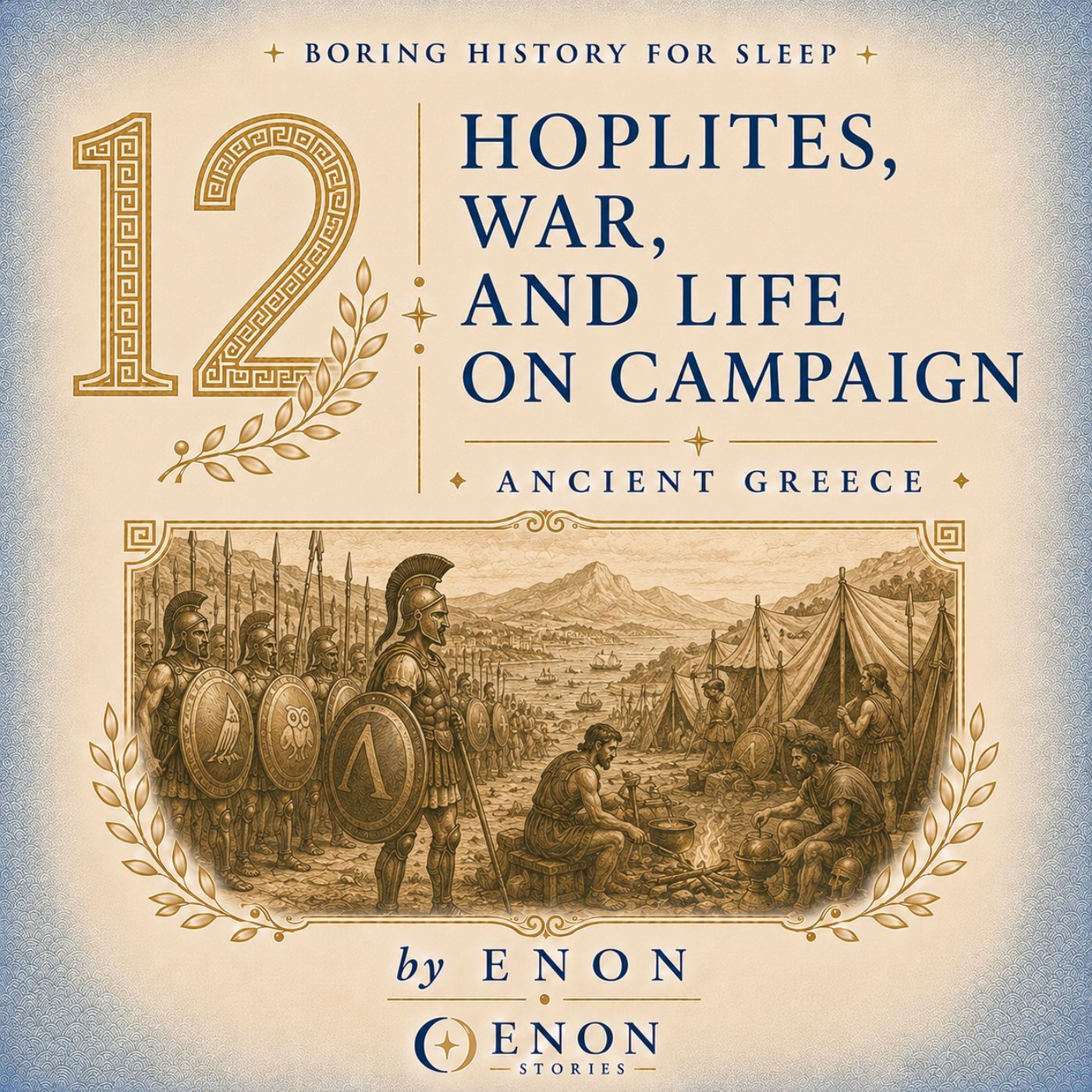 Ancient Greece - HOPLITES, WAR, AND LIFE ON CAMPAIGN 22.08.2026 14хвLift the heavy shield of a Greek hoplite and follow military life beyond the clean diagrams of a phalanx. Armor, spears, helmets, sandals, bedding, water, food, tools, and constant repair all mattered before an army reached battle. The episode explores hoplites, light troops, cavalry, archers, rowers, mercenaries, servants, enslaved attendants, and the support workers who kept campaigns moving. Sparta and Athens developed different military systems, while triremes depended on hundreds of coordinated rowers. Camps, sieges, pay, disease, omens, burial truces, damaged farms, captured civilians, refugees, and families waiting for news reveal war as a long disruption rather than one heroic clash. A calm, unsensational account of discipline, logistics, fear, endurance, and the quiet repairs made before someone lifted a shield again.This episode includes AI-generated content.
 -
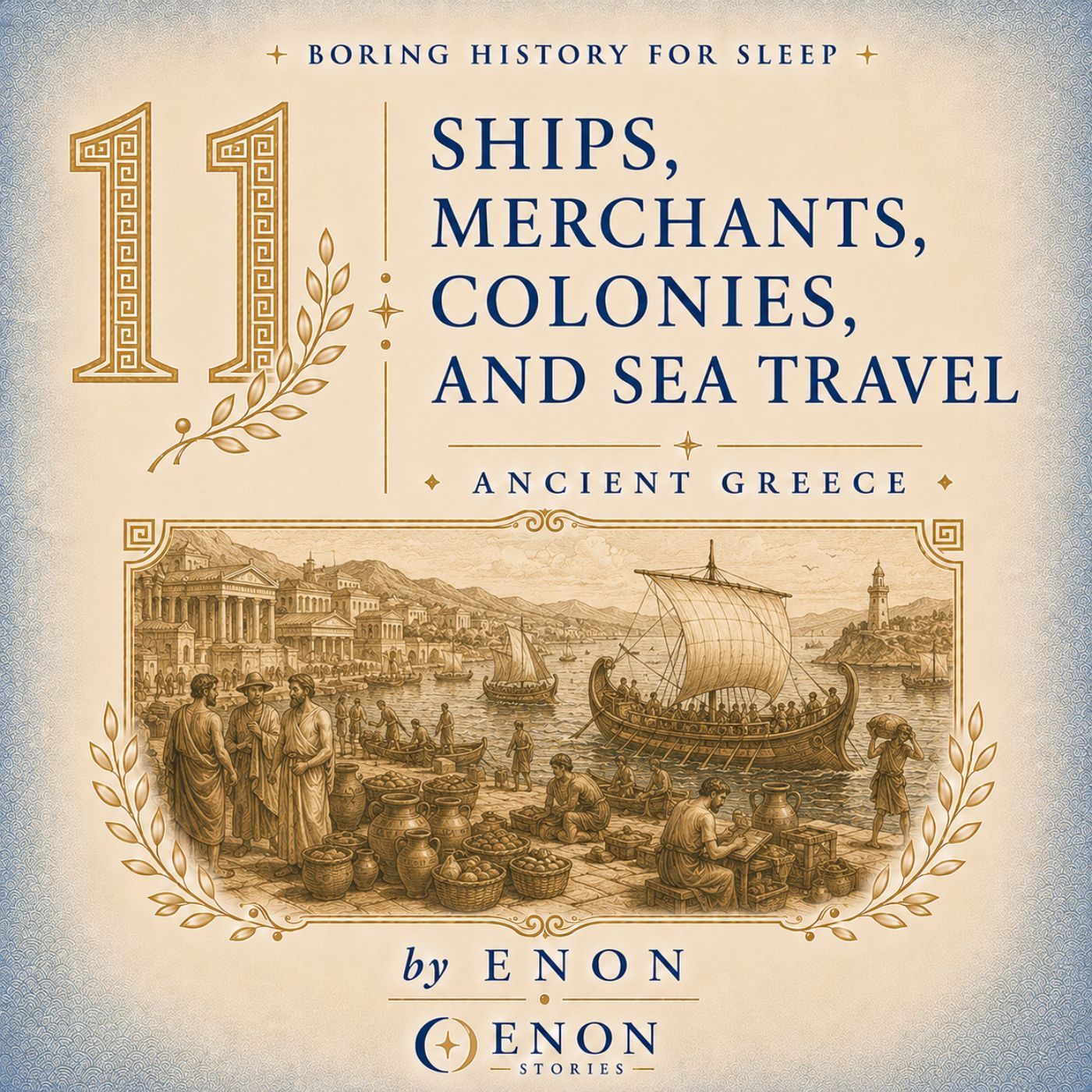 Ancient Greece - SHIPS, MERCHANTS, COLONIES, AND SEA TRAVEL 21.08.2026 14хвSet out from a Greek harbor where every voyage depends on wind, season, cargo, crew, finance, and local knowledge. Merchant vessels carried amphorae, grain, wine, oil, timber, metals, animals, passengers, and enslaved people, while triremes sacrificed storage for speed and coordinated rowing. The episode explores shipbuilding, repairs, anchors, harbors, warehouses, customs, maritime loans, contracts, piracy, navigation, shipwreck, and the long waits behind commercial travel. It also follows Greek settlement around the Mediterranean and Black Sea, where newcomers traded, intermarried, fought, seized land, and adapted to societies already living there. Merchants, sailors, migrants, physicians, actors, mercenaries, families, and captives experienced the same sea in very different ways. A slow journey through movement, risk, exchange, and the horizon beyond the next headland.This episode includes AI-generated content.
 -
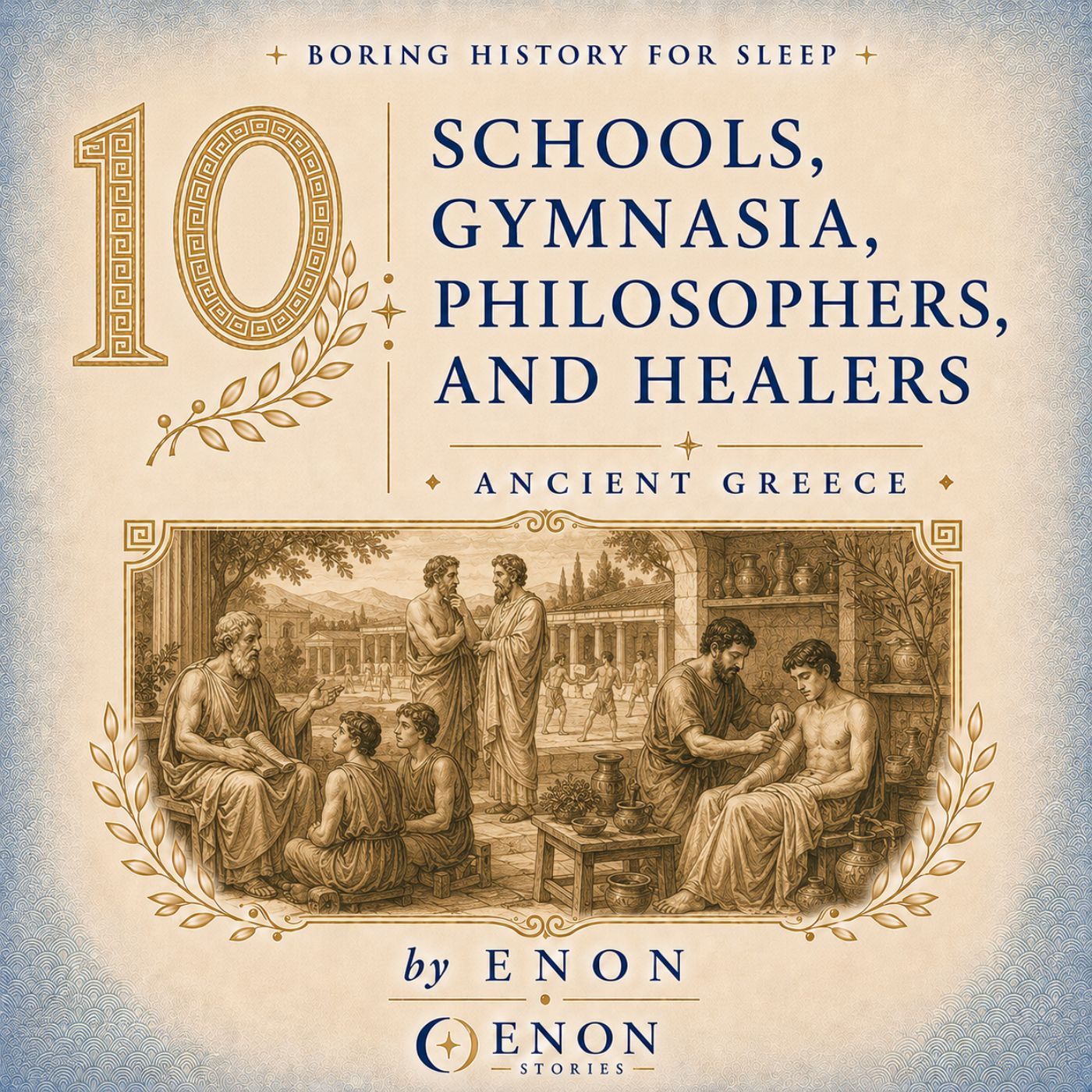 Ancient Greece - SCHOOLS, GYMNASIA, PHILOSOPHERS, AND HEALERS 20.08.2026 24хвBegin with a child practicing letters on wax, wood, or a broken potsherd, then move through the schools, gymnasia, libraries, philosophical circles, and healing traditions of the Greek world. Education depended on wealth, gender, status, and local custom. Boys might study letters, Homer, music, rhetoric, and physical training while an enslaved paidagogos accompanied them. Girls learned through households and, in some places, received substantial literary or athletic instruction. Sophists, Socrates, Plato, Aristotle, Stoics, Epicureans, and scholars at Alexandria turned argument into a way of life. The episode then follows physicians, midwives, household caregivers, Hippocratic writings, surgery, diet, drugs, Asklepian sanctuaries, illness, injury, childbirth, epidemics, and old age. A quiet history of learning, observation, debate, and staying beside a vulnerable body.This episode includes AI-generated content.
 -
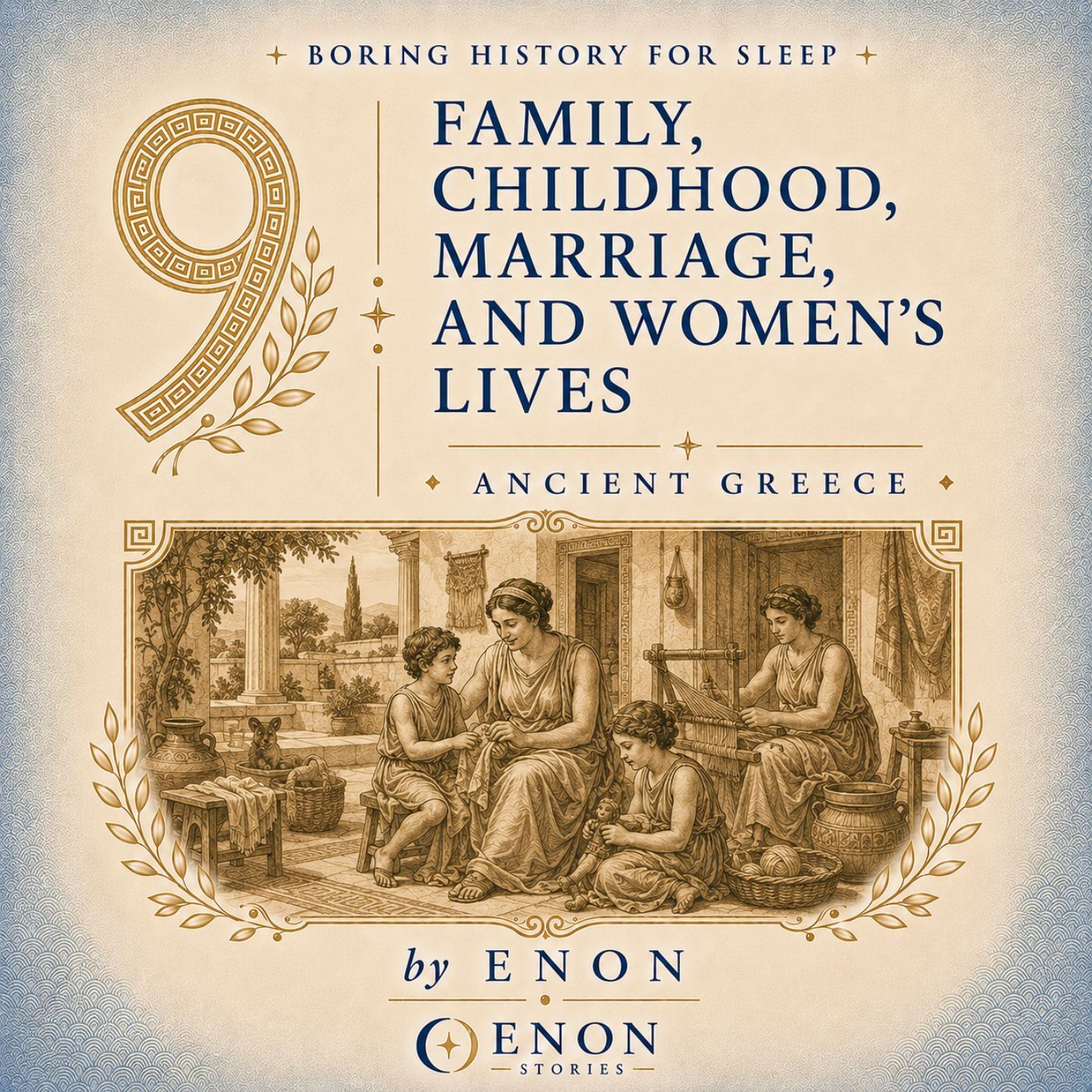 Ancient Greece - FAMILY, CHILDHOOD, MARRIAGE, AND WOMEN'S LIVES 19.08.2026 15хвStep inside Greek family life through birth, childhood, marriage, property, work, religion, aging, and remembrance. The household, or oikos, joined relatives with land, inheritance, dependents, and the labor needed to continue across generations. The episode considers dangerous births, midwives, infant care, childhood play, education, work, arranged marriage, dowries, divorce, adoption, guardianship, and inheritance disputes. Women lived under different laws in Athens, Sparta, Gortyn, Hellenistic Egypt, and other communities. Although usually excluded from formal politics, they managed property and households, worked in trade and agriculture, served as priestesses, led rituals, and maintained family memory. Enslaved women and children faced sale, coercion, and separation. A gentle history of families that could be affectionate, practical, unequal, and dependent on many unnamed acts of care.This episode includes AI-generated content.
 -
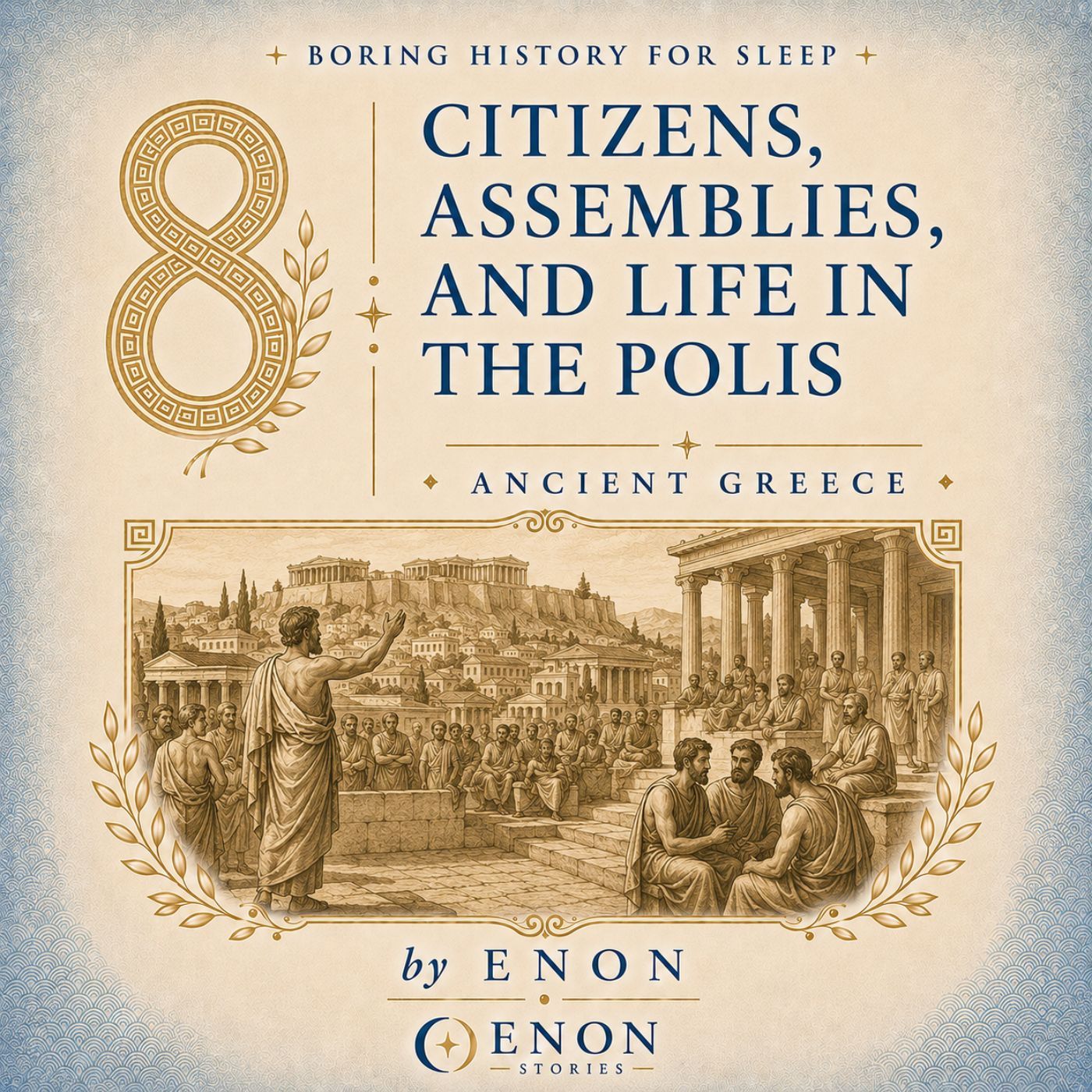 Ancient Greece - CITIZENS, ASSEMBLIES, AND LIFE IN THE POLIS 18.08.2026 16хвEnter the polis as a political community made from citizens, territory, laws, sanctuaries, farmland, offices, and shared memory. The episode explains why citizenship was valuable and selective, normally giving adult male citizens rights denied to women, resident foreigners, freed people, and enslaved people. In democratic Athens, the assembly on the Pnyx, the council, magistrates, large juries, selection by lot, public pay, ostracism, and wealthy liturgies organized participation without making influence equal. Sparta depended on a different system of kings, magistrates, citizen training, common messes, and helot labor. Oligarchies, tyrants, factional conflict, inscriptions, local districts, and later negotiation with kings and Rome widen the picture. A calm exploration of civic freedom, obligation, inequality, and the decisions everyone had to live with.This episode includes AI-generated content.
 -
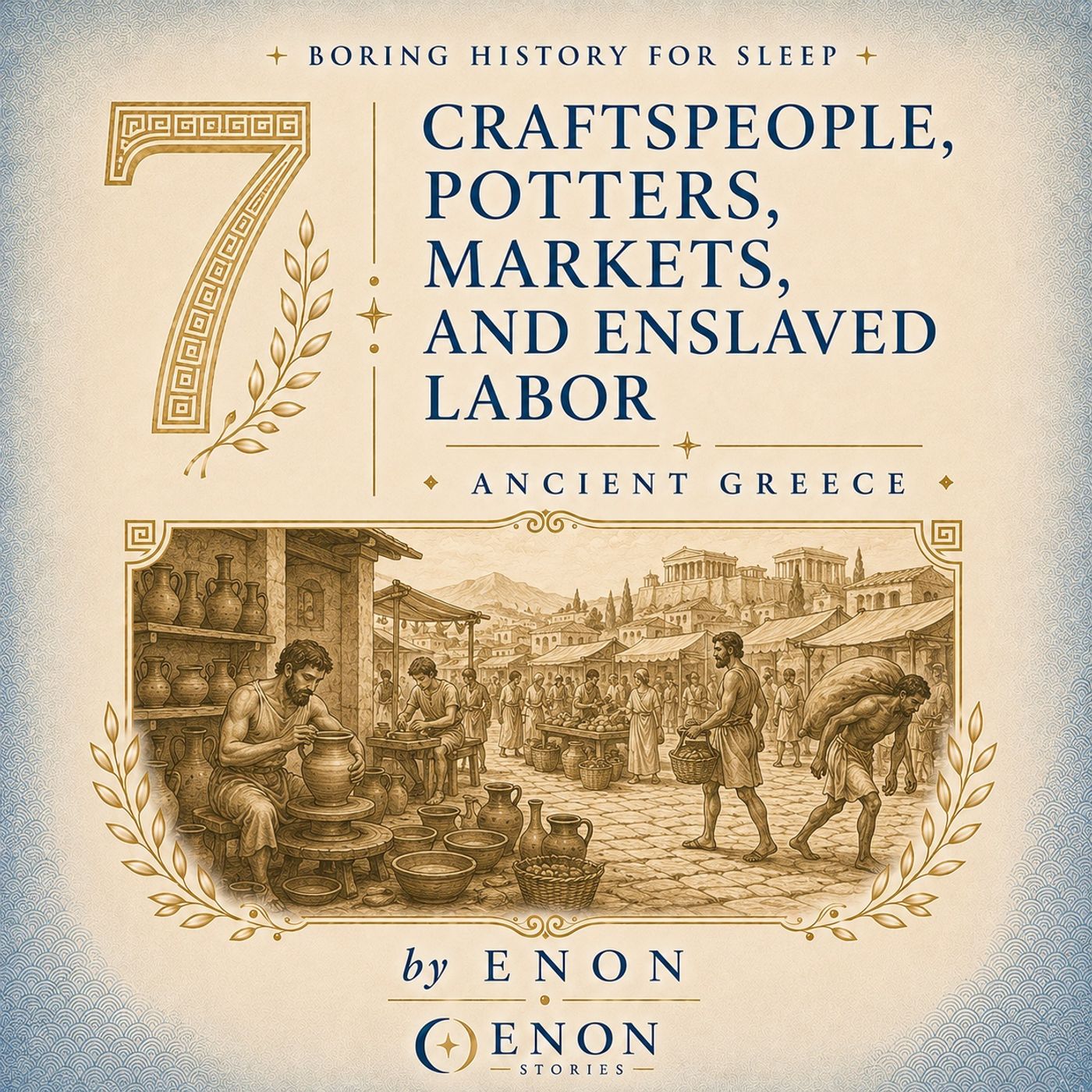 Ancient Greece - CRAFTSPEOPLE, POTTERS, MARKETS, AND ENSLAVED LABOR 17.08.2026 15хвWalk along a Greek street where workshops open directly onto the road. Potters prepare clay, shape vessels, paint surfaces, and manage kilns that can destroy an entire load in one failed firing. Smiths, stonecutters, carpenters, textile workers, dyers, leatherworkers, bakers, shipwrights, jewelers, and repairers turn raw materials into the goods used by homes, farms, temples, ships, and armies. The agora brings buyers, sellers, coins, measures, contracts, credit, resident foreigners, and family businesses together. The episode also looks directly at enslaved labor in houses, workshops, quarries, and the dangerous silver mines of Laurion. Skill could give an enslaved worker responsibility without freedom, while manumission remained possible for only some. A quiet history of craft knowledge, markets, inequality, and the broken pieces kept behind the workshop door.This episode includes AI-generated content.
 -
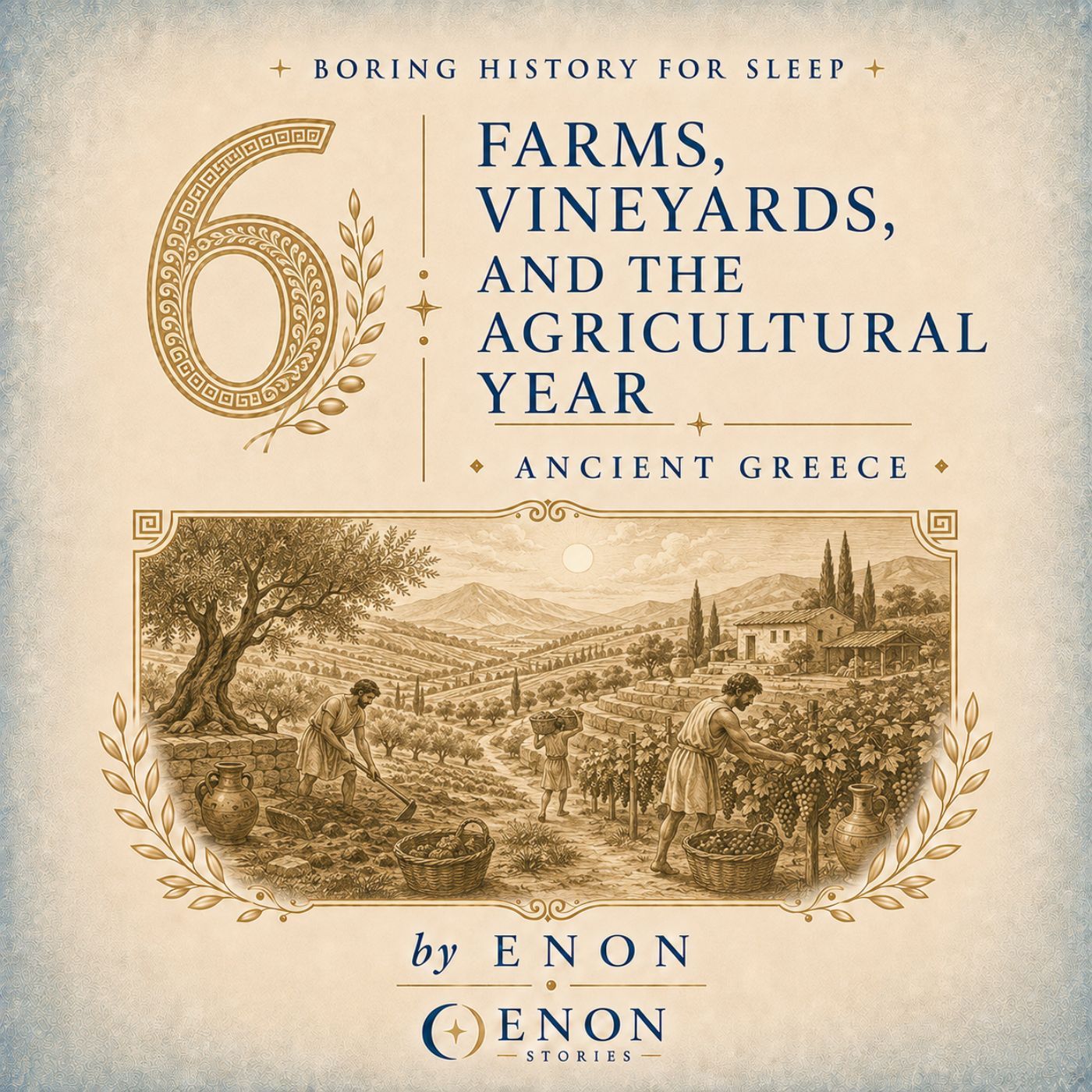 Ancient Greece - FARMS, VINEYARDS, AND THE AGRICULTURAL YEAR 16.08.2026 15хвLeave the towns for the uneven countryside that sustained the Greek world. This episode moves through an agricultural year shaped by autumn rain, winter growth, spring harvests, summer dryness, and the later work of grape and olive gathering. Farmers plowed, sowed, pruned, repaired terraces, watched livestock, managed water, protected seed, and judged weather without ever controlling it. Barley, wheat, pulses, vines, olives, gardens, orchards, sheep, goats, cattle, donkeys, and pigs formed different local combinations across Greece, the islands, Anatolia, Sicily, and beyond. Smallholders, tenants, hired laborers, women, children, shepherds, and enslaved workers carried the burden, while landlords, cities, sanctuaries, armies, and markets claimed part of the result. A calm account of harvest, storage, risk, and the quiet decisions behind survival.This episode includes AI-generated content.
 -
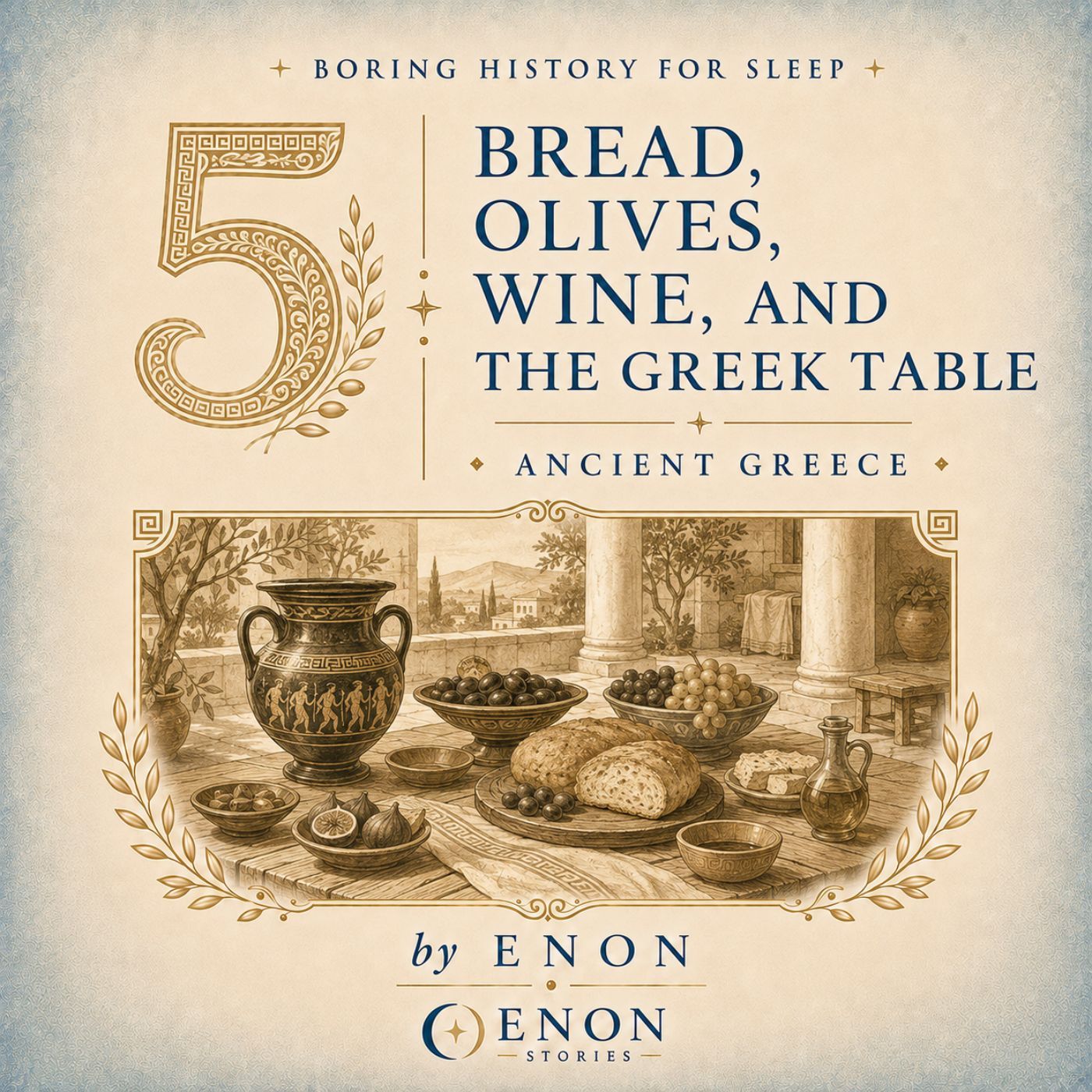 Ancient Greece - BREAD, OLIVES, WINE, AND THE GREEK TABLE 15.08.2026 15хвSit beside the Greek table and follow the many hours of work hidden inside an ordinary meal. Barley and wheat had to be harvested, cleaned, stored, ground, mixed, and baked before becoming bread, porridge, or maza. Olive oil connected cooking with lamps, medicine, body care, and religious offerings, while wine ranged from rough household drink to carefully traded regional products. The episode explores legumes, vegetables, fruit, honey, cheese, fish, meat, sacrifice, cooking pots, markets, amphorae, food storage, and the danger of shortage. It also separates everyday meals from the formal male symposium, where diluted wine, couches, music, conversation, and enslaved service displayed social rank. A relaxed history of food, trade, hospitality, inequality, and the simple ingredients that kept Greek households alive.This episode includes AI-generated content.
 -
 Ancient Greece - INSIDE A GREEK HOUSE 14.08.2026 15хвStep through a plain doorway and into the adaptable world of an ancient Greek house. Courtyards, mud-brick walls, tiled roofs, cisterns, wells, hearths, lamps, storage jars, movable furniture, and street-facing workshops reveal homes shaped by climate, wealth, work, and local building traditions. The episode considers the andron used for formal drinking parties while questioning the idea that every house contained permanently separated male and female quarters. Women, children, relatives, servants, tenants, craftspeople, and enslaved people moved through the same spaces without sharing authority or comfort. Water carrying, cooking, grinding, weaving, repair, childcare, storage, household worship, and the management of fire filled the rooms with repeated labor. A quiet tour of the oikos as home, family, property, workplace, and small economy.This episode includes AI-generated content.
 -
 Ancient Greece - FROM PALACES TO POLEIS AND HELLENISTIC KINGDOMS 13.08.2026 26хвTravel gently across the long history of the Greek world, from Bronze Age palaces to independent poleis, Hellenistic kingdoms, and Roman rule. The episode begins with Minoan Crete, Mycenaean citadels, Linear B tablets, and the collapse of palace administration around the end of the Bronze Age. It then follows the return of alphabetic writing, the growth of the polis, settlement around the Mediterranean and Black Sea, the different paths of Athens and Sparta, the Persian Wars, the Athenian empire, and the Peloponnesian War. Philip of Macedon and Alexander expand the scale of the story before the Ptolemaic, Seleucid, and Antigonid kingdoms create new cities and networks. A calm chronological framework for a civilization that changed repeatedly while preserving languages, institutions, stories, and local identities.This episode includes AI-generated content.
 -
 Ancient Greece - THE AEGEAN SEA AND THE GREEK DAY 12.08.2026 16хвBegin the Greek day among mountains, islands, harbors, fields, and the changing light of the Aegean. This episode explores the varied landscapes of mainland Greece, the Peloponnese, Crete, Anatolia, and the islands, showing how roads and sea routes connected communities without making travel easy. It follows sailors, farmers, market sellers, craftspeople, household workers, and citizens through days measured by sunrise, shadows, meals, labor, sacrifices, and public business rather than exact minutes. Sundials and water clocks brought greater structure, while local lunisolar calendars organized festivals and civic offices differently from one polis to another. Athens, Piraeus, the agora, seasonal winds, and the Olympic cycle reveal a Greek world sharing one sea but never one universal clock or calendar.This episode includes AI-generated content.
 -
 Ancient Greece - ENON ARRIVES BESIDE THE AEGEAN 11.08.2026 6хвEnon arrives beside a small Aegean harbor for a calm introduction to Ancient Greece. Rather than beginning with a famous battle, temple, or philosopher, this opening episode follows the ordinary movement of ropes, jars, fishing nets, ships, workers, travelers, and island routes. It explains why the Greek world was never one country or one unchanging civilization, but a wide network of independent cities, islands, kingdoms, settlements, languages, customs, and local loyalties connected by the sea. Archaeology, inscriptions, household objects, tools, cooking pots, and workshop waste help widen the story beyond rulers and educated male citizens. A gentle first step into the homes, farms, markets, sanctuaries, schools, theaters, ships, and daily lives that shaped the ancient Greek world, designed for quiet listening, relaxation, and sleep.This episode includes AI-generated content.
 -
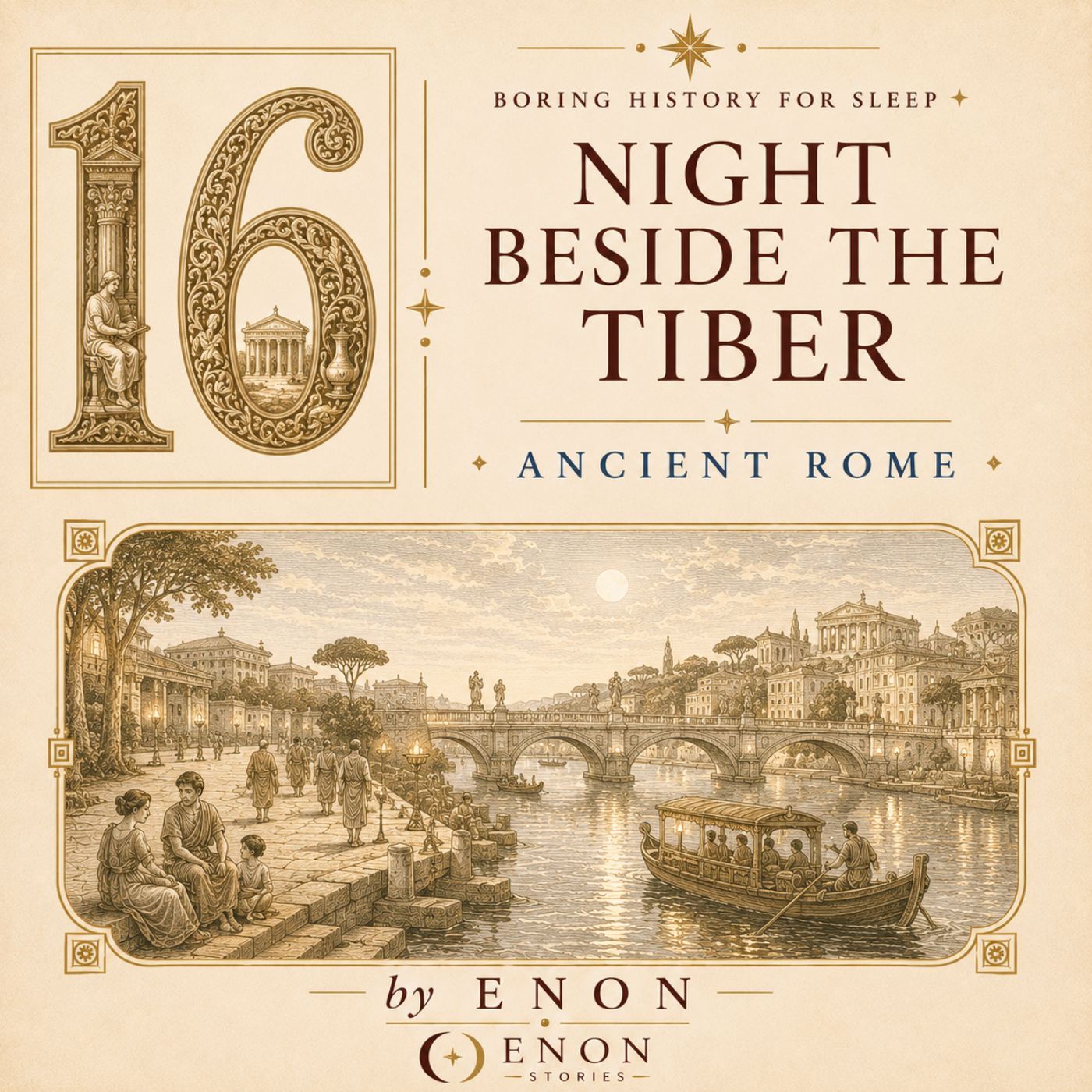 Ancient Rome - NIGHT BESIDE THE TIBER 10.08.2026 5хвReturn to the Tiber at night for a final, peaceful reflection on the Roman world. The streets are quieter, warehouses close, ropes are secured, lamps remain in a few rooms, and guards continue their work. This closing episode gathers the ordinary lives encountered throughout the journey: tenants, farmers, bakers, sailors, craftspeople, teachers, children, soldiers, enslaved people, freed people, worshippers, patients, mourners, and families. Rome's roads, laws, aqueducts, markets, armies, and monuments depended on organization and invention, but also on conquest, taxation, slavery, inequality, and violence. What brings the ancient city closest are the smallest traces: a shoe, a tablet, a repaired tool, a loaf, a seed, a joke, or a name. The river moves on, and the journey ends with a quiet good night.This episode includes AI-generated content.
 -
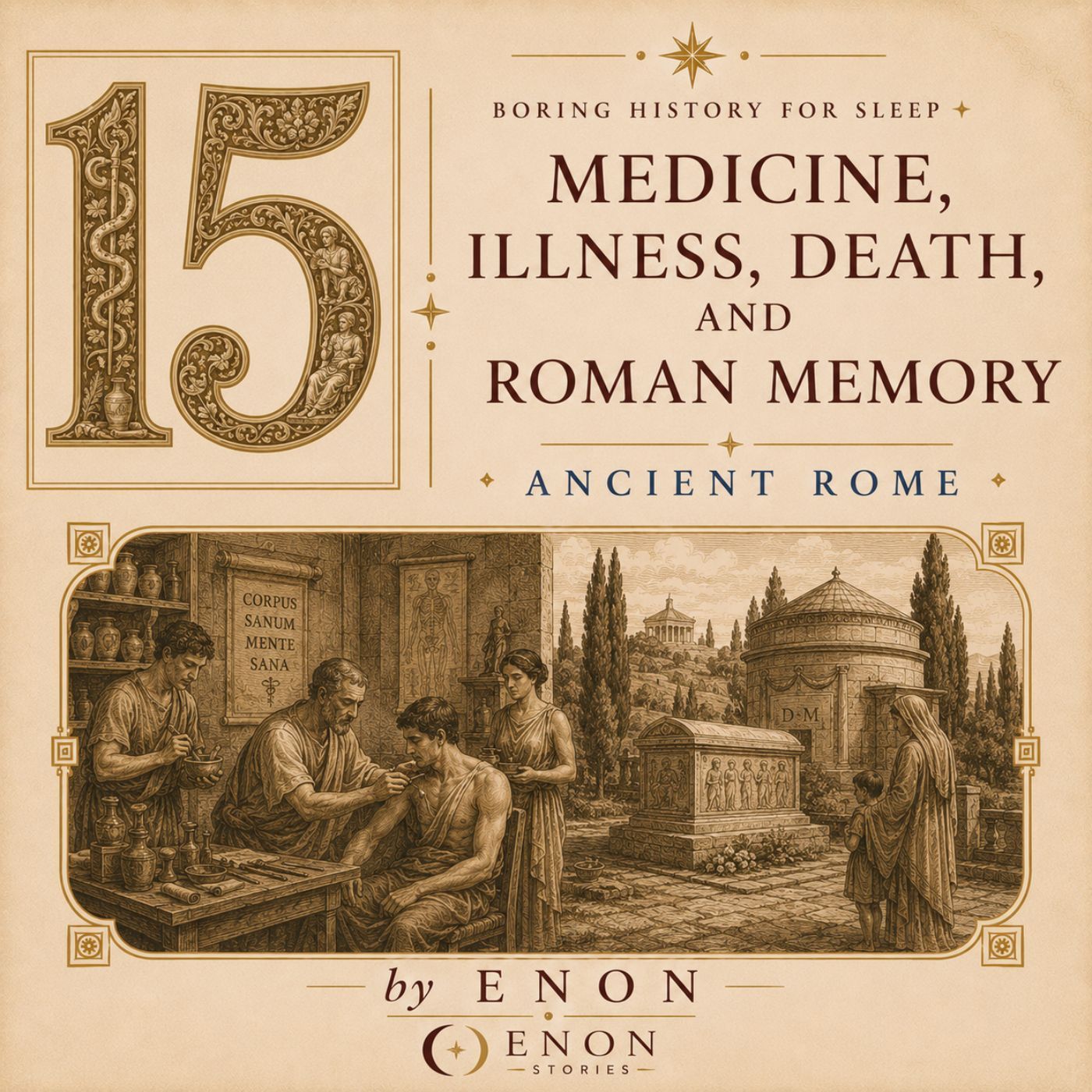 Ancient Rome - MEDICINE, ILLNESS, DEATH, AND ROMAN MEMORY 09.08.2026 17хвConsider the Roman body through medical writing, household care, surgical tools, bones, teeth, parasites, drains, prescriptions, prayers, and tombs. Greek medical traditions and physicians such as Galen shaped learned treatment, but most illness was first managed at home through diet, rest, bathing, herbs, wine, oil, compresses, and family knowledge. The episode looks at surgery, pain, infection, military hospitals, dangerous work, childbirth, childhood mortality, epidemics, disability, old age, mental distress, healing sanctuaries, and the unequal protection offered by wealth. It then follows funerary work through cremation, burial, mourning, burial clubs, roadside tombs, inscriptions, grave goods, and annual remembrance. A quiet and compassionate history of care, loss, and the human wish to leave a name beside the road.This episode includes AI-generated content.
 -
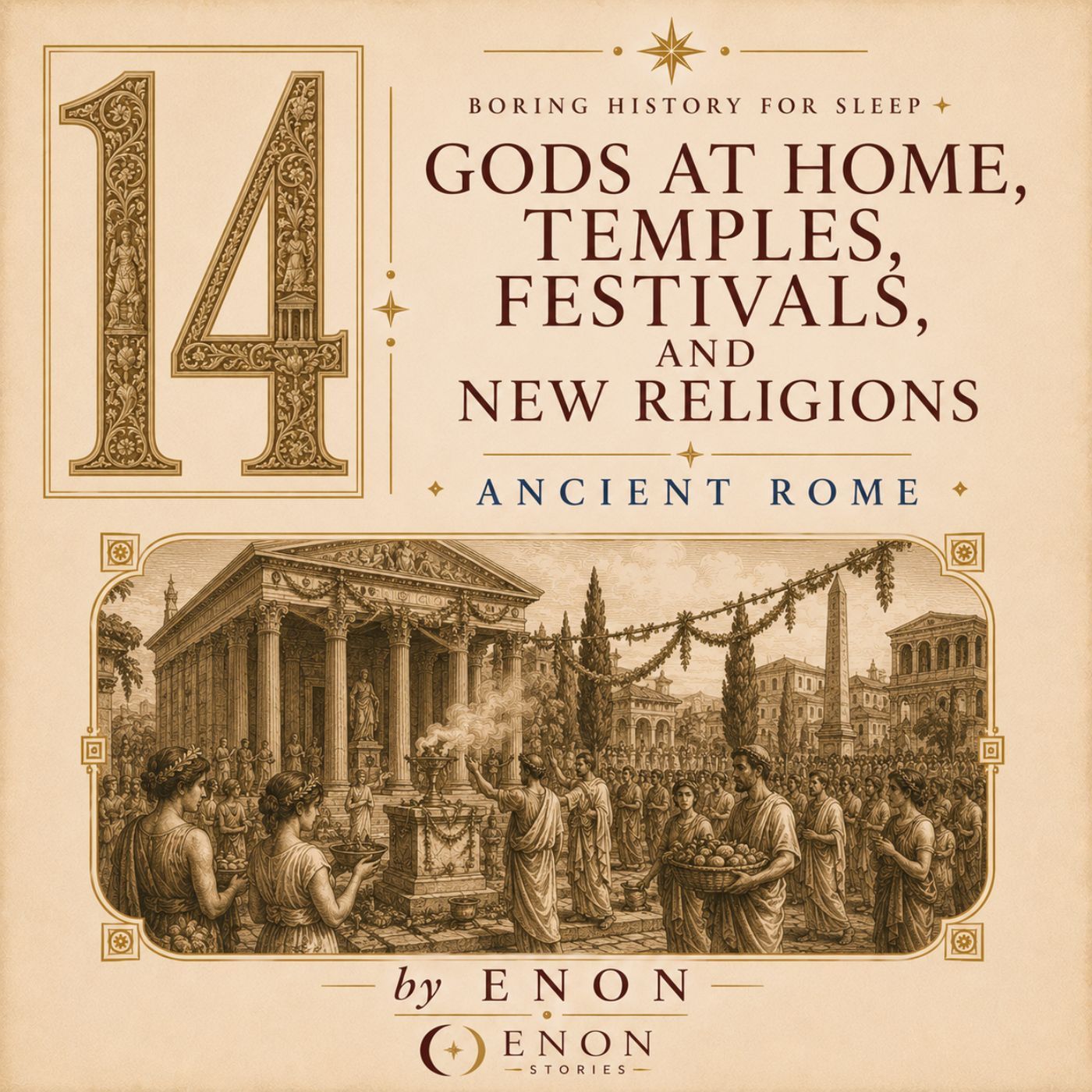 Ancient Rome - GODS AT HOME, TEMPLES, FESTIVALS, AND NEW RELIGIONS 08.08.2026 17хвExplore Roman religion from a small household shrine to great temples, public festivals, military cults, healing sanctuaries, crossroads, tombs, and newly adopted gods. Offerings of wine, incense, food, flowers, lamps, and vows linked daily needs with divine relationships, while public sacrifice joined religion to civic order. The episode introduces the Lares, Penates, household genius, Vestal Virgins, priesthoods, omens, Saturnalia, local deities, mystery cults, Isis, Mithras, the imperial cult, Jewish communities, and the early growth of Christianity. It explains how Roman religion often added new practices rather than replacing old ones, while authorities still imposed limits in the name of public order. A calm journey through devotion, ritual, doubt, magic, community, and the lamp lit at home before night.This episode includes AI-generated content.
 -
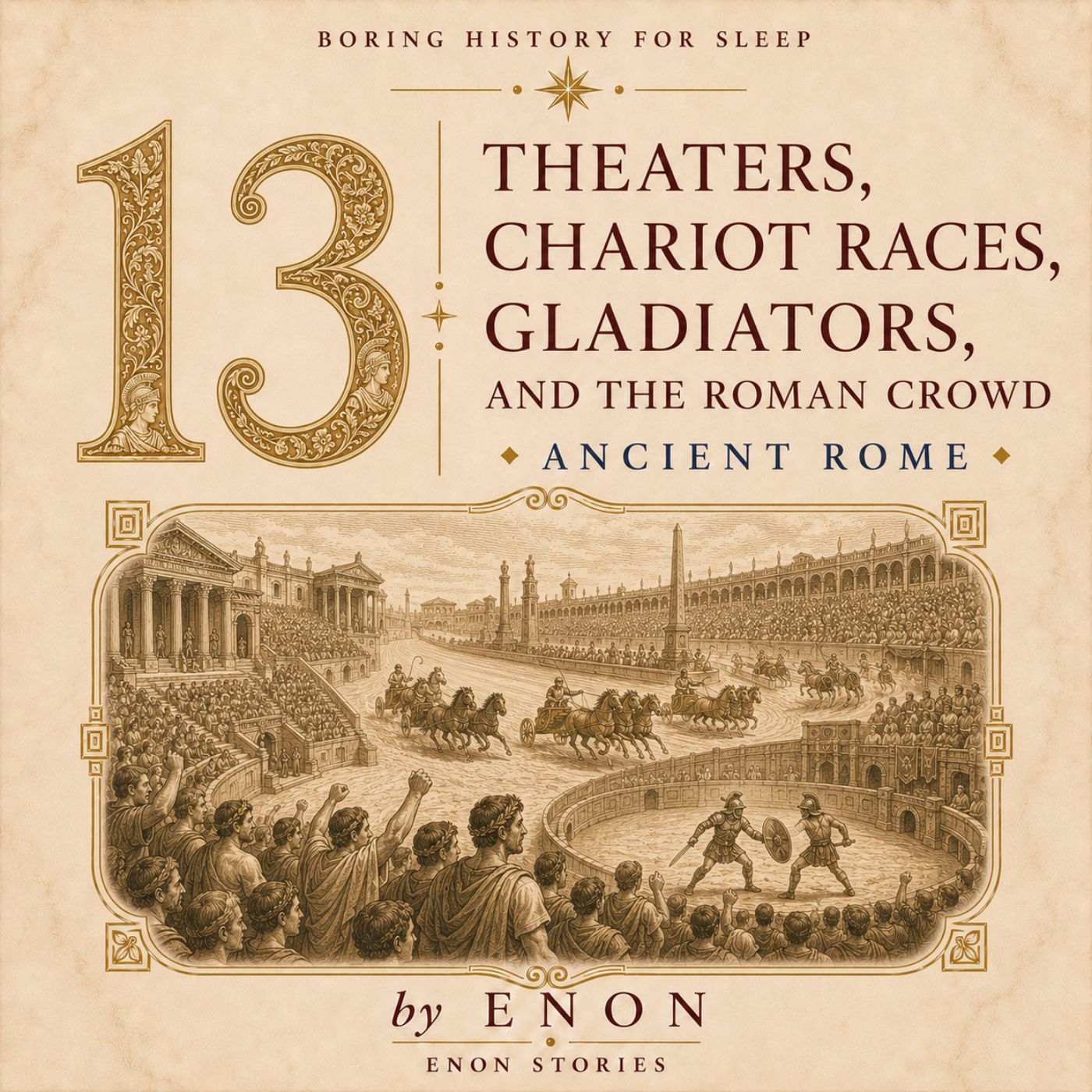 Ancient Rome - THEATERS, CHARIOT RACES, GLADIATORS, AND THE ROMAN CROWD 07.08.2026 17хвJoin the Roman crowd at theaters, circuses, amphitheaters, festivals, races, and arena spectacles. The episode follows actors, musicians, pantomime dancers, charioteers, horses, racing factions, gladiators, animal handlers, stage workers, guards, vendors, and the vast hidden workforce behind public entertainment. The Circus Maximus, provincial venues, and the Colosseum made social hierarchy visible through seating, clothing, and access. Gladiators could be enslaved, condemned, or voluntary fighters trained in specialized styles, while animal hunts and public executions displayed imperial reach and legal inequality. Crowds applauded, gambled, argued, followed celebrities, and sometimes disturbed public order. A measured, non-sensational history of Roman leisure, danger, politics, fame, labor, and the strange quiet that returned after the dust settled.This episode includes AI-generated content.
Схожі подкасти


Популярний у
Цей подкаст також потрапляв у чарти подкастів у цих країнах.

