
FREEDOM UNLOCKED
Freeborn Igie
0
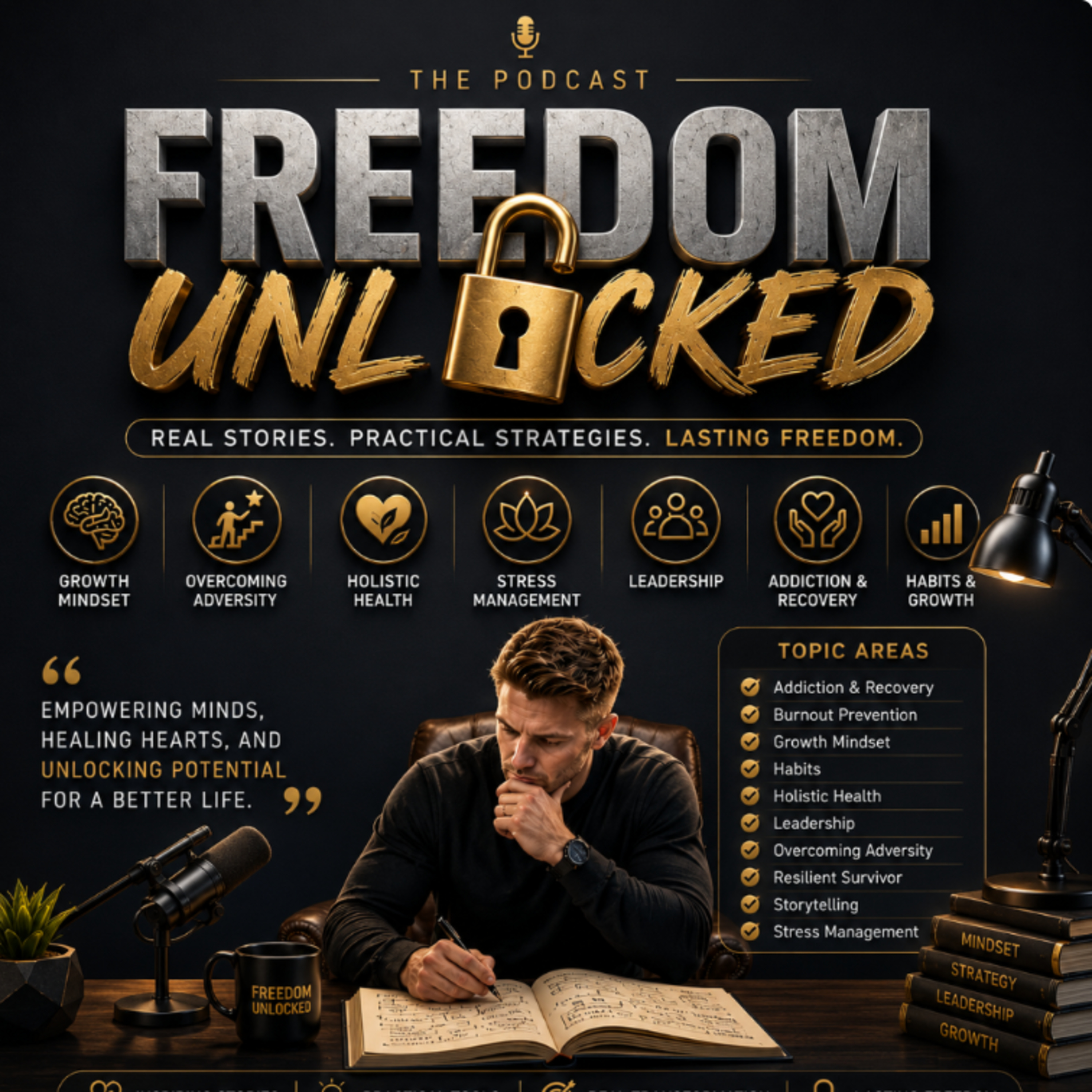
Freedom Unlocked is a transformative podcast focused on real conversations around personal growth, healing, trauma recovery, and addiction recovery. Each episode features leaders, survivors, and change-makers sharing powerful stories and practical insights across topics like trauma recovery, anxiety, addiction recovery, burnout prevention, holistic health, stress management, leadership, and overcoming adversity. The show blends storytelling with strategy to help listeners break limitations, build better habits, strengthen mindset, and live more intentional lives.
Епізоди
-
 How to Build a Faith That Can Survive Difficult Seasons — Timothy Allen 20.09.2026 29хвWhat separates a faith that sounds good in comfortable seasons from one that can actually stand when life becomes difficult?In this episode of Freedom Unlocked, pastor, chaplain and Before the Fall author Timothy Allen explores discipleship, spiritual maturity, pride, Scripture and developing a deeper relationship with God. Timothy explains that spiritual growth begins when biblical knowledge moves beyond the head and becomes genuine conviction that changes how a person lives.The conversation explores why simply attending church or knowing Scripture does not necessarily equal discipleship. Timothy argues that transformation requires being willing to change, obey what Scripture teaches and remain faithful even when doing so is uncomfortable. He also discusses pride, difficult seasons and why Christians should not assume that following Christ means life will always become easier.Timothy also offers encouragement for believers struggling with recurring sin or addiction. His message is that personal weakness does not automatically disqualify someone from being used by God, but meaningful change still requires dependence on God, practical boundaries and taking available ways of escape seriously. Persistent addiction can also benefit from appropriate professional, pastoral and community support alongside spiritual practices.At its heart, this episode is about moving beyond comfortable Christianity into a faith shaped by obedience, perseverance and grace. Timothy reminds listeners that difficult seasons change, failure does not have to become identity, and God’s calling does not depend on someone first becoming flawless.Connect with Timothy AllenLearn more about Timothy’s Bible teaching and resources:https://romans10nine.com/You can also find the Romans 10 9 Bible Study App on Google and Apple app stores.Timothy’s book:Before the Fallexplores pride in the believer’s life and the subtle patterns that can develop before spiritual failure.
 -
How to Break Unconscious Patterns That Keep You Stuck — Andrew Parr 20.09.2026 21хвWhy can someone spend years in therapy, coaching or personal development, understand exactly what needs to change—and still keep repeating the same patterns?In this episode of Freedom Unlocked, therapist, trainer and The Real You author Andrew Parr explores unconscious conditioning, identity, self-worth, relationships and lasting personal change. Andrew argues that mindset work can be helpful, but when the deeper beliefs driving a problem remain unchanged, people can find themselves repeatedly managing the same symptoms. His approach focuses on identifying and loosening the beliefs and emotional conditioning underneath those patterns.Andrew also explains why familiar patterns can influence the relationships and choices we make without us realizing it. Childhood experiences can shape ideas about what feels safe, normal or deserved, and those ideas may continue influencing adult decisions. He describes self-worth as a foundation for change and makes an important distinction: people may develop a low perception of their worth, but that does not mean their underlying worth has actually diminished.At its heart, this episode is about becoming aware of what is operating underneath your choices. Andrew encourages listeners to notice repeating patterns, ask what they are thinking, feeling, fearing and expecting, and create space between old conditioning and the decisions they make today. His message is that meaningful change often begins by recognizing that you may have more strength, influence and inner resources than the version of yourself shaped by past experiences has led you to believe.Connect with Andrew ParrAndrew’s book:The Real Youexplores his approach to uncovering and changing the deeper patterns that influence how people think, feel and behave.Learn more about his work at:http://andrewparr.org/He also runs the Andrew Parr Academy, where he trains practitioners in his therapeutic approach.
-
How Neurodivergent Leaders Can Reduce Burnout and Build Self-Trust — Ronald Sosa 20.09.2026 18хвWhat if the person who looks like your highest performer is actually carrying the heaviest invisible load?In this episode of Freedom Unlocked, neuroinclusive leadership coach, speaker and author Ronald Sosa explores neurodivergence, masking, burnout, self-criticism and sustainable leadership. Drawing from his own leadership experience, Ronald explains how constantly adapting to expectations and chasing positive feedback can lead people into roles and behaviors that look successful from the outside but feel exhausting internally.Ronald introduces what he calls COST — chronic self-monitoring, over-adaptation, self-criticism and tension — and discusses why neurodivergent professionals may expend significant energy monitoring how they speak, behave and perform. He argues that organizations should not only intervene when performance drops, but also notice when employees are consistently operating above a sustainable level and risking burnout.At its heart, this episode is about building workplaces where people do not have to hide who they are in order to succeed. Ronald encourages leaders to create greater psychological safety, design systems with different kinds of minds in mind, and help people reconnect with their values, self-regulation and self-trust instead of constantly proving themselves.Connect with Ronald SosaRonald’s book:Rewriting the Rules — A Leadership Model for a Neuroinclusive Human-Centered Workplaceexplores his approach to building more inclusive and sustainable workplaces.https://www.syn-apt.me/You can also connect with Ronald Sosa on LinkedIn and learn more about his neuroinclusive leadership work through his website.
-
How to Use Intuition and Self-Inquiry to Explore a Deeper Sense of Purpose — Alan Gillanders 20.09.2026 28хвWhat if our everyday understanding of reality is only one part of a much larger picture?In this episode of Freedom Unlocked, artist and The Sacred Hum of I Am author Alan Gillanders explores consciousness, spirituality, intuition, manifestation and the search for truth. Alan shares how questions that began during his Christian upbringing eventually led him to study Eastern philosophies, metaphysics, meditation and ideas about consciousness. He also describes personal experiences that he interprets as spiritual signs and manifestations that shaped his worldview.Alan discusses his belief that consciousness extends beyond the physical brain and that thoughts, words and emotions influence our experience of life. He connects these ideas with his interpretation of spirituality and physics, although several of these claims are philosophical or metaphysical interpretations rather than established scientific conclusions. For Alan, intuition represents an inner form of guidance, and manifestation begins with becoming more intentional about the thoughts, words and emotional states we repeatedly reinforce.At its heart, this conversation is about questioning what you believe, listening more closely to yourself and learning to appreciate the life you have now. Alan encourages listeners who feel disconnected or dissatisfied to examine their expectations, become more present and remain curious about what gives their lives meaning.Connect with Alan GillandersLearn more about Alan’s work and upcoming book:AlanGillanders.comHis book:The Sacred Hum of I Amexplores his ideas around consciousness, spirituality, vibration, intuition and manifestation.Alan says the book will also be available through Amazon, Kindle and bookstores following its release.
-
How to Recover Your Energy When You Feel Exhausted and Stuck — Dr. Ginger Sharp 20.09.2026 22хвWhat if the reason you still feel exhausted is not that you are failing—but that your body has been operating in survival mode for too long?In this episode of Freedom Unlocked, chiropractor, functional medicine practitioner and health coach Dr. Ginger Sharp explores chronic illness, exhaustion, stress, faith and healing. Drawing from her own health struggles, she shares how constantly trying to do more left her depleted and how separating her worth from her productivity became an important part of her healing journey.Ginger believes healing begins with creating a greater sense of safety rather than constantly adding another supplement or protocol. She discusses slowing down, breathing, rest and paying attention to signs that the body may still be operating in a heightened stress state. She also explains how her Christian faith helped her navigate illness and rethink what it means to care for herself.At its heart, this episode is about giving yourself permission to slow down without guilt. Ginger’s message is that caring for your health is not selfish—it can help you show up with greater patience, energy and presence for the people and purpose that matter most.
-
How Greta Garbo Changed Hollywood and Inspired a Generation of Women — Scott Reisfield 20.09.2026 16хвWhat made Greta Garbo more than one of Hollywood’s biggest stars—and why did women around the world connect with her so deeply?In this episode of Freedom Unlocked, author and Garbo family member Scott Reisfield explores the life, career and cultural influence of his great-aunt Greta Garbo. Drawing on previously unseen family letters and documents, Scott explains that his book, Greta Garbo and the Rise of the Modern Woman, seeks to move beyond some of the myths surrounding her and examine an aspect of her legacy he believes has often been overlooked: her influence on women becoming more independent, self-directed and confident in the early twentieth century.Scott argues that one of Garbo’s greatest strengths was the naturalism of her acting. At a time when silent-film performances could be highly theatrical, audiences felt they could understand what Garbo’s characters were thinking and feeling. That authenticity connected particularly strongly with women. Off screen, she also demonstrated an unusual level of independence early in her career—negotiating contracts, understanding her value and eventually gaining greater creative control over the stories she chose to tell.The conversation also explores how Garbo used that influence to portray women with agency, romance, ambition and the freedom to make their own decisions. Scott points to films such as Queen Christina, where Garbo gained significant creative control and helped shape a story that challenged conventional expectations about how a woman’s story should end. He also discusses the growing influence of Hollywood censorship and argues that increasingly restrictive standards made it more difficult for Garbo to continue telling the kinds of stories she wanted. Contrary to the common idea that she simply abandoned filmmaking after 1941, Scott says his research uncovered attempts to develop additional films for years afterward, although those projects ultimately never reached production.Connect with Scott ReisfieldScott Website: http://scottreisfield.com/Scott’s book:Greta Garbo and the Rise of the Modern Womanis available through major online booksellers, bookstores and libraries, including a large-print edition.The book draws on family letters, personal documents and historical research to explore Greta Garbo’s career and her wider influence on women, Hollywood and twentieth-century culture.
-
How to Break Emotional Triggers by Updating What Your Brain Learned — Brian DesRoches 20.09.2026 29хвWhy can you understand exactly where an emotional pattern comes from—and still feel powerless to change it?In this episode of Freedom Unlocked, psychotherapist and Living a Trigger Free Life author Brian DesRoches explores emotional triggers, anxiety, implicit learning, protective behaviors and memory reconsolidation. Drawing from more than three decades of professional experience and his own years in psychotherapy, Brian explains that insight helped him understand where many of his struggles came from, but understanding alone did not consistently change the emotional reactions underneath them.Brian describes the brain as constantly learning, predicting and adapting. Experiences from childhood can create implicit emotional expectations about what will happen if we disappoint someone, accept attention, become visible, express ourselves or risk rejection. Years later, those old predictions can still feel completely true even when our adult circumstances are different. According to Brian, anxiety often functions as a warning signal generated when the brain predicts that something we are about to do could lead to pain, rejection, humiliation or another previously learned threat.The conversation explores memory reconsolidation, a neuroscience concept involving the updating of previously learned memories when they are reactivated under certain conditions. Brian believes this helps explain why patterns such as people-pleasing, avoidance and self-sabotage can be so difficult to change through willpower alone. A behavior that now creates problems may originally have developed as protection against something the brain interpreted as dangerous. His approach focuses on identifying the predicted threat underneath the behavior and introducing experiences or information that contradict the old expectation.At its heart, this episode reframes emotional change from “What is wrong with me?” to “What did my brain learn that it is still trying to protect me from?” Brian encourages people to become curious about the anxiety underneath unwanted behaviors instead of simply fighting the behavior itself. Lasting change, in his view, begins when an old emotional prediction is updated enough that the brain no longer responds to the present as though theConnect with Brian DesRochesLearn more about Brian’s work and resources:BrianDesRoches.comHis book:Living a Trigger Free Lifeis available in print and digital formats through Amazon, and can also be requested through local bookstores.The book explores emotional triggers, implicit learning, protective behaviors and Brian’s approach to creating deeper emotional change by working with the learning underneath the symptom.
-
How Men Can Reconnect With the Emotions They Were Taught to Suppress — Dr. Gloria Vanderhorst 20.09.2026 24хвWhat happens when boys learn from an early age that sadness, vulnerability and asking for comfort are signs of weakness?In this episode of Freedom Unlocked, psychologist and author Dr. Gloria Vanderhorst explores male emotional development, childhood conditioning, relationships and the cultural messages that shape how boys grow into men. Drawing from more than 50 years of clinical experience, Gloria explains how her work with preschool boys eventually led her to examine the emotional experiences of fathers, teenagers and adult men. She argues that many boys are discouraged from expressing distress at a very young age, which can make it harder for them to recognize and communicate a full range of emotions later in life.Gloria challenges familiar messages such as “big boys don’t cry.” In her view, boys are often encouraged to become problem solvers while receiving less permission to express sadness, loneliness, disappointment or emotional need. She believes these expectations can follow men into adulthood, where relationships may require exactly the emotional vocabulary and vulnerability they were discouraged from developing. Rather than treating emotional expression as weakness, Gloria encourages families to give boys permission to experience and communicate the same broad range of human emotions available to everyone else.The conversation also explores therapeutic approaches such as Emotionally Focused Therapy and Internal Family Systems. Gloria explains that these approaches go beyond simply trying to change behavior by helping people examine the emotions, experiences and protective patterns underneath it. She encourages men who want to reconnect with suppressed emotions to begin with reflection and journaling, then consider working with a qualified therapist who can help them explore those patterns more deeply. Seeking help, she argues, should be understood as an act of growth rather than weakness.At its heart, this episode is about giving men permission to become emotionally whole. Gloria emphasizes that change is not solely the responsibility of men: women, fathers, mothers, teachers and wider culture all contribute to the expectations boys absorb. Her message is that healthier relationships begin when people stop shaming emotional vulnerability and instead help boys and men develop the language, support and safety necessary to understand what they feel and communicate what they need.Connect with Dr. Gloria VanderhorstExplore Gloria’s books and guided journals:GloriasBooks.comLearn more about her clinical work and emotional-development resources:DrVanderhorst.comHer website includes resources on Emotionally Focused Therapy, Internal Family Systems and expanding your emotional vocabulary, including a free feelings sheet.
-
How to Turn Fear Into Faith and Reinvent Your Life — Dave Letterfly Knoderer 20.09.2026 25хвWhat if the detour you are fighting today eventually becomes part of the life you were meant to build?In this episode of Freedom Unlocked, author, artist, entrepreneur, horseman and inspirational speaker Dave Letterfly explores creativity, recovery, fear, faith, service and reinvention. Dave traces his unconventional journey from withdrawing into art as a child to running away and joining the circus, performing with horses, becoming a professional sign painter and mural artist, and eventually building a creative career around motorcycles, writing and storytelling. He also shares how alcoholism became increasingly destructive until recovery helped him begin rebuilding his life and relationships.Dave describes recovery as more than simply stopping drinking. Through Alcoholics Anonymous, mentorship, writing and his experience working with horses, he says he began learning consistency, kindness, honesty and healthier ways of relating to other people. Writing became especially important after completing a personal inventory during recovery, eventually developing into a daily practice. Today, after decades of sobriety, Dave says he still writes every morning and has turned many of his experiences into books designed to encourage other people through difficult seasons.The conversation also explores Dave’s relationship with fear and anxiety. He describes anxiety as becoming consumed by possibilities that have not happened yet and says one of his mentors taught him to imagine both the worst and best possible outcomes before recognizing that reality would probably fall somewhere between the two. His Christian faith, connection with other people and willingness to speak fears aloud have become important parts of how he personally responds to anxiety. He also encourages people to restore creativity and play to adult life, arguing that curiosity and imagination can make routine experiences feel more meaningful. These reflections represent Dave’s personal recovery and spiritual framework; persistent anxiety, addiction or severe emotional distress may also require appropriate professional support.At its heart, this episode is about moving from ambition toward purpose. Dave says success once meant accomplishing things for himself, but service gradually changed the way he viewed his gifts. Whether he is writing a story, painting a motorcycle or sharing a lesson from recovery, he now asks how his work can improve someone else’s experience. His message about change follows the same principle: rather than automatically resisting what is changing, use curiosity and imagination to decide how you will respond—and remain open to the possibility that the challenge itself may become part of your evolution.Connect with Dave LetterflyExplore Dave’s books, artwork and resources:DaveLetterfly.comDave also offers a free download of:Hit the Road and Thrive — Seven Secrets for Living the Dreamthrough his website.His work brings together lessons from creativity, horsemanship, recovery, faith, service and more than five decades of artistic experience.
-
How to Break Trauma and Addiction Patterns and Rebuild Your Life — Carrie Patee Davidson 20.09.2026 26хвWhat happens when chaos has been part of your life for so long that peace and safety begin to feel unfamiliar?In this episode of Freedom Unlocked, registered nurse, trauma-informed coach and Addicted to Trauma author Carrie Patee Davidson explores complex trauma, addiction, unhealthy relationship patterns and the journey from survival mode to intentional living. Drawing from her own experiences, Carrie discusses receiving different mental-health diagnoses from a young age and how she later came to understand her difficulties through the lens of complex PTSD. Rather than becoming defined by a diagnosis, she encourages people to become curious about the symptoms, behaviors and recurring patterns affecting their lives.Carrie also shares a dramatic period in her addiction journey when, after using marijuana she says was laced with methamphetamine, she experienced psychosis, crossed into Mexico and was kidnapped before eventually escaping. Looking back, she describes addiction as extending beyond substances into relationships, anger, food, exercise and other ways of escaping emotional pain. Years later, another unhealthy relationship became a deeper turning point when she realized that repeatedly blaming the past would not create the future she wanted. Her conclusion became: we may not be responsible for the trauma inflicted on us, but we can take responsibility for seeking healing and changing the patterns that continue afterward.One of the most powerful ideas in the conversation is that healthy can initially feel unsafe when chaos is familiar. Carrie describes entering a healthier relationship and noticing that her nervous system reacted to the unfamiliar stability as though something were wrong. Her Conscious Creation Method focuses on rebuilding identity through intentional acts of creation—whether writing, art, music, cooking or another personally meaningful activity. She sees creation not merely as something people return to after healing, but as one possible part of reconnecting with agency and self-expression during the process. Trauma, addiction and CPTSD are complex clinical issues, however, and Carrie’s experiences and coaching framework should not replace individualized assessment or treatment from qualified mental-health and addiction professionals.At its heart, this conversation is about becoming honest enough with yourself to interrupt the patterns keeping you in survival mode. Carrie says her first step for someone struggling today would be radical self-honesty: examining how you spend your time, the relationships surrounding you and the behaviors you may be using to cope or escape. From that awareness, she believes it becomes possible to make different choices, rebuild trust in yourself and begin creating a life that is guided by intention rather than old survival patterns.Connect with Carrie Patee DavidsonExplore Carrie’s book, coaching and trauma-recovery resources:CarriePDavidson.comHer memoir:Addicted to Trauma — A Memoir of CPTSD, Addiction and Taking My Life Backshares more of her personal journey through complex trauma, addiction, relationships and recovery.Carrie also offers coaching and free discovery calls through her website.You can find her on Instagram as:@CarriePDavidson
-
How to Build Wealth and Lead Without Losing Your Values — Christine Valdes 20.09.2026 23хвWhat if building a successful life requires changing the way you think long before your circumstances begin to change?In this episode of Freedom Unlocked, corporate sales executive, entrepreneur, real estate investor and leadership mentor Christine Valdes explores mindset, leadership, wealth, confidence and faith. Christine shares her journey from being a college student and single mother relying on government assistance to becoming a senior executive and investor. One of the biggest lessons from that season was learning to recognize the negative stories she repeatedly told herself and intentionally challenge the belief that her current circumstances would determine the rest of her life.Christine also shares a leadership lesson she learned after initially trying to make her team succeed by copying the methods that had worked for her. She eventually realized that great leadership is not about creating versions of yourself. Different people bring different strengths, personalities and areas for development, so a leader’s responsibility is to identify and cultivate those individual talents. The conversation also explores why accomplished people can still struggle with confidence when they constantly focus on how far they have left to go instead of recognizing how much progress they have already made.The conversation then turns to money, investing and long-term wealth. Christine encourages people to pay attention to the beliefs they carry about money and to develop a healthier mindset alongside practical actions such as ownership, investing and building systems that create greater freedom. She discusses affirmations as one tool that has helped her challenge negative self-talk, although beliefs and affirmations alone do not guarantee financial outcomes. Sustainable wealth also depends on factors such as income, spending, saving, investing, risk management and individual circumstances.At its heart, this episode is about stewarding what you have been given rather than constantly measuring yourself against somebody else. Christine sees her leadership, wealth and opportunities through the lens of her Christian faith and asks whether her decisions align with her values rather than fear, envy or comparison. Her definition of wealth captures the larger message of the conversation: wealth is not simply having more money—it is creating enough ownership and freedom to live according to what matters most to you.Connect with Christine ValdesLearn more about Christine’s work in leadership, wealth building, real estate and personal growth:ChristineValdes.comYou can also connect with Christine Valdes on LinkedIn.Christine is currently working on a book and plans to expand her website with additional resources and educational opportunities around mindset, money, wealth building and real estate ownership.
-
How to Make Better Decisions by Listening to Your Inner Voice — David Alan Brown 20.09.2026 26хвWhat if clarity does not come from silencing parts of yourself—but from learning how to bring your emotions, actions and deeper sense of purpose into conversation?In this episode of Freedom Unlocked, teacher, author and personal transformation facilitator David Alan Brown explores self-awareness, spirituality, decision-making, emotional balance and intentional living. David describes three inner perspectives that influence our choices: the emotional voice asking “How am I feeling?”, the practical voice asking “What am I doing?”, and the spiritual or purpose-driven voice asking “Why am I doing it?” His goal is not to let one voice dominate the others, but to bring them into greater balance.David’s framework grew partly from his own difficult period of isolation and disconnection. He explains that professional support, trusted relationships and gradually allowing himself to believe what caring people saw in him helped him begin rebuilding a sense of worth and connection. He now sees healthy human interaction as a central part of personal transformation and encourages people to recognize when they have become trapped entirely in emotion, constant doing or spirituality without action.The conversation also explores what this inner dialogue looks like in everyday decisions. David shares an example involving the possibility of reconnecting with an unhealthy former relationship. Rather than automatically acting on the idea or suppressing the emotional response, he allowed the different parts of himself to “speak”: acknowledging the fear and hurt, considering the practical choice and asking whether the decision aligned with his larger commitment to love and self-respect. For David, this process creates what he calls convergence—a state where emotion, action and purpose become aligned enough to move forward with greater confidence.At its heart, this episode challenges passive ideas of manifestation. David does not believe simply visualizing something strongly enough will cause it to appear. His approach combines inspiration with experimentation, reflection and concrete action: listen for what feels meaningful, take a small step, observe the response, adjust when necessary and then do the work required to keep moving. His message is that meaningful change comes not from perfect certainty, but from developing enough self-awareness to act, learn, realign and continue.Connect with David Alan BrownExplore David’s programs, teachings and Convergence framework:DavidAlanBrown.comHis work focuses on personal empowerment, spirituality, intentional decision-making, leadership and self-discovery.Through his website, you can learn more about the Convergence program and contact David directly to explore his resources and programs.
-
How to Trust God When Your Purpose Does Not Make Sense Yet — Sara Freeman Smith 20.09.2026 25хвWhat happens when the life you planned changes completely—but your purpose remains?In this episode of Freedom Unlocked, author, speaker, career coach and inclusion advocate Sara Freeman Smith explores purpose, faith, resilience, career, disability and learning to recognize your worth beyond your circumstances. After more than 40 years in recruiting and talent development, Sara explains how her passion for helping people find meaningful work eventually became part of a larger calling. Her book, Turning Stones Into Gems, grew from a powerful metaphor: just as an ordinary-looking geode can contain something beautiful inside, our true value cannot always be judged by what people see on the surface.Sara also speaks openly about struggling to act on what she believed God was calling her to do. Her biggest lesson was learning to stop trying to understand every step before taking the first one. She describes surrender as trusting that the people, opportunities and resources needed for an assignment do not all have to be visible in advance. Instead of allowing fear, insecurity or feeling unqualified to become reasons for staying still, Sara encourages listeners to focus on the next step they believe they are being called to take.That belief was tested deeply when Sara began losing her vision in the middle of a successful career. After learning that a genetic condition would eventually lead to blindness, she went through denial, grief and questioning before deciding that blindness would change how she worked, but would not define who she was. She went on to work for another 15 years as her vision declined and says the experience taught her to ask for help, adapt and focus on what she could still do rather than everything she had lost. It also strengthened her advocacy for giving people with disabilities opportunities based on their capabilities rather than assumptions about their limitations.At its heart, this conversation is about turning adversity into something that reveals rather than diminishes your value. Sara’s message is that purpose can survive disability, uncertainty, career changes and financial fear. Her Christian faith is central to that perspective: she encourages people to do the work they can do, remain open to unexpected opportunities and trust God with the parts they cannot control. In her words, the choice often becomes whether to “do nothing out of fear or do something out of faith.”Connect with Sara Freeman SmithLearn more about Sara’s work, speaking and resources:https://urgems.com/Her work focuses on purpose, career development, resilience, inclusion and turning life’s challenges into opportunities.You can also contact Sara at:[email protected] book:Turning Stones Into Gemsexplores the idea that circumstances, setbacks and outward appearances do not determine the value and purpose already within you.
-
How AI Gaming and Influencers Are Changing the Future of Hollywood — Scott Hadley Morgan 20.09.2026 28хвWhat happens when the technology changing Hollywood moves faster than the industry built to create its stories?In this episode of Freedom Unlocked, award-winning writer, producer, director, author and technology entrepreneur Scott Hadley Morgan explores Hollywood, artificial intelligence, streaming, gaming, influencers and the future of storytelling. Drawing from more than three decades in entertainment, Scott reflects on his early experiences learning from established filmmakers and producers and explains why he believes many of the systems that powered traditional Hollywood are no longer suited to the way audiences consume entertainment today.Scott believes the next generation of entertainment will increasingly bring together film, gaming, social influence and interactive technology rather than treating them as completely separate industries. He describes his vision for a new entertainment ecosystem in which audiences, gamers and influencers can interact more directly with stories and potentially participate in worlds built around films rather than simply watching them. He also introduces his concept of a “Qualia Avatar,” which he envisions as a way for an online identity to reflect more of a person’s motivations, interests and experiences rather than relying only on conventional profiles and metadata. These ideas represent Scott’s proposed technology and vision for future entertainment rather than established industry standards.The conversation also examines the growing role of AI in filmmaking. Scott argues that AI can become a powerful production and analytical tool but does not believe it can replace the human understanding required for exceptional writing, acting and directing. In his view, great filmmaking depends on subtleties such as emotional interpretation, trust between actors and directors, comedic timing and creative decisions that cannot be reduced entirely to patterns in existing data. His broader concern is that optimizing entertainment primarily for speed, volume and measurable engagement could produce more content without necessarily producing better stories.At its heart, this conversation is about what technology should enhance without erasing. Scott believes entertainment will inevitably become more interactive, technological and globally connected, but argues that the strongest stories will still depend on distinctly human qualities—emotion, artistic judgment, imagination and the ability to understand what another person feels. For creators navigating AI and emerging media, his message is not to resist technology, but to build systems where technology expands what artists can create without becoming a substitute for the artists themselves.Connect with Scott Hadley MorganExplore Scott’s work, filmmaking ideas and technology concepts:EventHorizon.StudioThe site includes videos, articles and presentations exploring the intersection of filmmaking, AI, technology, gaming, influencers and new entertainment business models.Scott also discusses these ideas in his upcoming books on filmmaking and emerging technology, drawing from his experiences in Hollywood and his work developing the Event Horizon studio model.
-
Reinvention Is the Best Career Insurance You Can Have — Anthony Quinones 20.09.2026 30хвWhat happens when the career you built for decades no longer feels secure—or no longer reflects who you want to become?In this episode of Freedom Unlocked, financial strategist, author, coach and Create Your New Normal host Anthony Quinones explores career reinvention, identity, transferable skills, financial preparation and navigating major transitions. After more than 30 years in accounting and finance, Anthony began reinventing his own career during the Great Recession, when he realized that traditional career paths were becoming less predictable and that people needed to become more adaptable in order to navigate an increasingly changing workforce.Anthony introduces his Five S’s of Reinvention: Skill Set, Strength, Shift, Survey and Solution. He encourages people to begin by identifying everything they know how to do—not just what appears in their job description. From there, the goal is to determine the strongest recurring capability, decide where that strength could take you next, study the people you hope to serve and only then build a solution around what they actually need.The conversation also explores why reinvention can become emotionally difficult. Anthony identifies pride, resentment, fear and commitment as major obstacles. Leaving a long-held profession can mean accepting less money, giving up a prestigious title or admitting that years of experience no longer guarantee security. Reinvention also requires an identity shift: before other people can see you differently, Anthony argues that you must first stop defining yourself solely by the role you previously occupied.At its heart, this episode is about preparing for change before change makes the decision for you. Anthony encourages listeners to take an inventory of their work history, hobbies, accomplishments, relationships and transferable abilities to uncover strengths they may have taken for granted. His message is that you are usually carrying far more usable experience than your résumé or job title reveals—and identifying those strengths can become the starting point for creating your next normal.Connect with Anthony QuinonesExplore Anthony’s podcast, masterclass and reinvention resources:CreateYourNewNormal.comHis Create Your New Normal podcast features conversations with people who have successfully reinvented themselves through career and life transitions.Anthony also offers a masterclass and five-week accelerator built around the Five S’s of Reinvention:Skill Set → Strength → Shift → Survey → Solution
-
How to Keep Moving Forward After Life’s Toughest Setbacks — Andy Campbell 20.09.2026 21хвWhat if healing after a devastating loss is not about making the grief disappear—but about continuing to build a life large enough to hold both the grief and new experiences?In this episode of Freedom Unlocked, author, speaker and resilience advocate Andy Campbell explores grief, purpose, resilience, faith and moving forward after extraordinary setbacks. Andy’s life has included childhood trauma, serious health challenges including stage four pancreatic cancer, family loss and the death of his youngest son by suicide. Through those experiences, he developed 15 core beliefs that now shape how he understands adversity and shares those principles in his book Overcoming Life’s Toughest Setbacks.One of Andy’s central ideas is to “always fall forward.” Difficult experiences can knock us down, but he believes we can gradually learn to position even painful experiences as part of what moves us forward rather than allowing them to permanently push us backward. He also distinguishes goals from purpose. Money, career titles and achievements may be goals, but Andy sees purpose as something larger—living according to your values, positively affecting other people and, within his Christian worldview, becoming the person God created you to be. Purpose, he argues, is not necessarily something you discover because tragedy happens; it can be the reason you continue through the tragedy.Andy shares a powerful metaphor for understanding grief after losing his son. In the beginning, the loss filled his entire “picture frame”—there seemed to be room for nothing else. He does not believe a profound loss simply becomes smaller with time. Instead, he encourages people to continue having experiences, relationships and meaningful moments so that the picture frame of life gradually becomes larger. The grief remains part of the picture, but it no longer has to occupy every part of it. His perspective comes from his personal experience of bereavement and should not be treated as a universal timetable for grief; people experiencing severe or prolonged distress, particularly after suicide loss, may also benefit from professional bereavement or mental-health support.At its heart, this conversation is about refusing to let one terrible chapter become the entire story. Andy encourages listeners to acknowledge pain rather than pretend it did not happen, look deliberately for opportunities hidden inside setbacks and remain curious about what tomorrow could still contain. For him, curiosity is one of the engines of resilience: every new question, experience and possibility helps expand that picture frame and gives us another reason to continue moving forward.Connect with Andy CampbellLearn more about Andy and his work:AskAndyCampbell.comHis book:Overcoming Life’s Toughest Setbacks — 15 Core Beliefs to Transform Challenges into Opportunitiesis available through Amazon.For people looking for resources related to cancer research, Andy also created:YourCancerBreakthroughs.comThe site is intended to help people locate cancer research that may be relevant to them; medical decisions should still be made with appropriately qualified healthcare professionals.
-
How to Heal Painful Memories Without Letting Your Past Define You — Frank Healy 20.09.2026 21хвWhat if you could remember almost every day of your life—including the experiences you would rather forget?In this episode of Freedom Unlocked, licensed professional counselor, life coach and author Frank Healy shares his experience living with hyperthymesia, an extraordinary autobiographical memory that allows him to recall dates and personal experiences from much of his life in unusual detail. Frank describes the ability as both a blessing and, particularly when he was younger, a burden. Positive memories remained vivid, but so did painful experiences, disappointments and the emotions associated with them. That challenge eventually contributed to his interest in psychology and his career helping people work through difficult memories.Frank explores the difference between remembering what happened and continuing to carry the emotional weight of what happened. Through his counseling work and his Heal Your Memories books, he encourages people to examine the beliefs they formed during painful experiences, recognize that those beliefs are conclusions rather than permanent facts, and intentionally build healthier interpretations of themselves and the world. He also discusses grounding in the present, journaling and exercises that alternate attention between difficult and positive memories. These techniques reflect Frank’s therapeutic approach; trauma responses vary significantly, and people dealing with severe trauma, depression or persistent distress may benefit from working with a qualified mental-health professional rather than attempting intensive memory work alone.The conversation also explores how unresolved experiences can influence trust, self-esteem, anxiety and a person’s sense of safety. Frank explains that someone who has experienced betrayal, abuse or repeated rejection may develop broader beliefs such as “people cannot be trusted,” “I have no control” or “something is wrong with me.” His approach is to identify those beliefs, look for evidence that challenges them and gradually develop a different relationship with the past. Rather than allowing adversity to become an identity, Frank believes people can learn from what happened and sometimes use those experiences as the foundation for greater empathy, resilience and even a new direction in life.At its heart, this episode is about remembering without remaining trapped inside the memory. Frank’s own extraordinary recall taught him that forgetting is not always necessary for healing. His larger message is that people can change the emotional meaning they attach to past experiences, seek professional support when needed and gradually build a life that is informed by the past without being controlled by it.Connect with Frank HealyExplore Frank’s books, interviews and resources through:Healy’s Healinghttps://healyshealing.com/You can also find his work on Facebook through:Memory HealingFrank’s books include the Heal Your Memories series, featuring exercises and real-life stories focused on healing the past, changing limiting beliefs and building emotional resilience.He is also active on Instagram and invites listeners to contact him
-
How to Lead With Vulnerability Without Losing Accountability — Ralph Kellogg 20.09.2026 22хвWhat if being resilient does not mean enduring everything indefinitely—and being a strong leader does not mean pretending you always know what to do?In this episode of Freedom Unlocked, HR executive, speaker and Leading While Human — Notes I Wish Someone Had Given Me author Ralph Kellogg explores leadership, vulnerability, mental health, belonging and psychological safety. Ralph shares how a suicide attempt at 19 and years of unresolved anxiety, panic and imposter syndrome followed him into adulthood and eventually influenced the way he approached leadership. He also reflects on spending years hiding parts of himself as a gay man in professional environments and how those experiences strengthened his commitment to leading others with greater empathy and compassion.Ralph challenges the idea that effective leaders must always appear certain and invulnerable. Leaders will inevitably encounter situations where they do not have complete information or know the perfect answer, and he believes being able to say “This is new for me, but we will work through it together” can build more trust than pretending otherwise. His book grew partly from years of handwritten journaling, which became a tool for managing his mental health, examining his own behavior and identifying moments that shaped who he became as both a person and a leader.The conversation also explores why leadership can become deeply lonely and emotionally exhausting, especially when leaders carry confidential information, difficult decisions and expectations they do not feel safe discussing with others. Ralph argues that organizations often make a similar mistake with mental health: an employee discloses that they are struggling, gets directed toward professional support and then is never asked about it again. Leaders do not need to become therapists, but they can continue showing compassion, checking in appropriately and making it clear that support remains available. Anyone experiencing suicidal thoughts or severe mental-health distress should seek help from an appropriately qualified mental-health professional or emergency support rather than relying on workplace support alone.At its heart, this conversation redefines resilience. Ralph once believed resilience meant finishing something regardless of what it cost physically or emotionally. Today, he reserves resilience for work, relationships and goals that contain purpose, meaning, appreciation and genuine value. Staying indefinitely in a situation where you feel unseen, unsupported or depleted is not automatically strength. Sometimes leadership—and resilience—means recognizing what matters enough to keep fighting for and what you finally need permission to leave behind.Connect with Ralph KelloggLearn more about Ralph’s leadership work, speaking and resources:RalphKellogg.comHis book:Leading While Human — Notes I Wish Someone Had Given Meis available through Amazon.You can also connect with Ralph Kellogg on LinkedIn, where he continues conversations around human-centered leadership, mental health, vulnerability, authenticity and creating healthier workplaces.
-
How to Break Toxic Relationship Patterns and Trust Yourself Again — Virginia McConnell 20.09.2026 13хвWhy do we sometimes leave one unhealthy relationship only to find ourselves repeating the same patterns with someone new?In this episode of Freedom Unlocked, relationship pattern coach and narcissistic abuse recovery specialist Virginia McConnell explores toxic relationship patterns, red flags, boundaries, self-trust and dating after emotionally harmful relationships. Drawing partly from her own experiences and professional work, Virginia explains that familiar relationship dynamics can become deeply ingrained, making them easier to repeat until we begin consciously recognizing and changing the patterns.Virginia shares some of the early behaviors she encourages people to notice when dating, including how someone treats waitstaff, family members, friends and former partners. One of her strongest principles is to pay close attention to what happens when you set a healthy boundary. A respectful partner may accept the boundary even if they do not love it, while repeated pressure, resistance or attempts to override it can reveal something important about the relationship. She also encourages people recovering from betrayal or abuse to rebuild self-trust gradually and stop automatically placing other people’s opinions above their own observations and intuition.The conversation also covers online dating, catfishing and what healthy relationships can feel like after unhealthy ones. Virginia recommends paying attention to suspicious profiles, outdated or limited photos, money requests and people who continually avoid meeting in person. She describes healthy relationships as relationships in which you gradually feel safer, do not constantly feel as though you are walking on eggshells and can set reasonable boundaries without persistent retaliation or pressure. Because terms such as narcissistic abuse involve complex psychological and relational issues, Virginia also emphasizes professional support and says her coaching works best alongside therapy rather than as a substitute for it.At its heart, this episode is about learning to choose differently without allowing the past to determine every future relationship. Virginia encourages listeners to identify recurring patterns, learn the red flags they previously overlooked, strengthen their boundaries and rebuild enough trust in themselves to recognize when something does not feel right. Her central takeaway is simple: listen closely to how people respond to your boundaries—and do not keep explaining away the red flags you already see.Connect with Virginia McConnellExplore Virginia’s coaching, courses, relationship quizzes and resources:BreakThePatterns.netHer website includes free relationship quizzes, one-on-one coaching, courses and speaking resources.Virginia also offers a free Monday class at 7:30 PM Eastern Time, designed as an introduction to her Break the Patterns program and coaching approach.
-
How to Rebuild Your Life When You Feel Like Giving Up — David W. Ebel 20.09.2026 20хвWhat happens when pain, rejection and disappointment convince you that your life has no future—but one encounter gives you a reason to keep going?In this episode of Freedom Unlocked, international speaker, author and longtime minister David W. Ebel shares an extraordinary story of chronic illness, bullying, addiction, suicidal despair, faith and transformation. Born with serious medical complications and later living with juvenile rheumatoid arthritis and persistent pain, David says he spent much of his childhood trying to hide what he was experiencing so he could fit in. After leaving college during a breakdown, his life spiraled into alcohol, drugs and repeated suicide attempts.David recounts reaching a point where he had decided to end his life, only for a young woman to invite him to church. Although he arrived heavily intoxicated and initially felt rejected by some people there, David says that night became the turning point of his life. He describes surrendering his life to Jesus, experiencing hope and belonging for the first time in years, and believing he received a calling to love people and preach. That decision eventually led to more than five decades of ministry and sharing his faith across numerous states and countries.The conversation explores church hurt, identity, forgiveness and what it means to begin again. David encourages people not to judge God solely by painful experiences with imperfect people and believes transformation begins with trusting God while allowing supportive people to walk alongside you. His message to anyone feeling hopeless is practical as well as spiritual: do not isolate yourself, find someone trustworthy to walk with you, take one small step forward and keep learning. Because David discusses past suicide attempts and severe emotional distress, anyone currently thinking about suicide or feeling unable to stay safe should also seek immediate help from a qualified mental-health professional, emergency service or trusted person nearby.At its heart, this conversation is about hope after a life that once felt beyond repair. David’s book, When the Doctors Say No, God Says Yes, was written to show people what he believes God can do with a life marked by pain, failure and discouragement. After more than 50 years of ministry, his message remains simple: your history may shape you, but it does not have to define the rest of your story.Connect with David W. EbelLearn more about David, his speaking and his work:DavidWEbel.comHis book:When the Doctors Say No, God Says Yesis available through Amazon in electronic, paperback and hardcover formats.
Схожі подкасти


Популярний у
Цей подкаст також потрапляв у чарти подкастів у цих країнах.
