
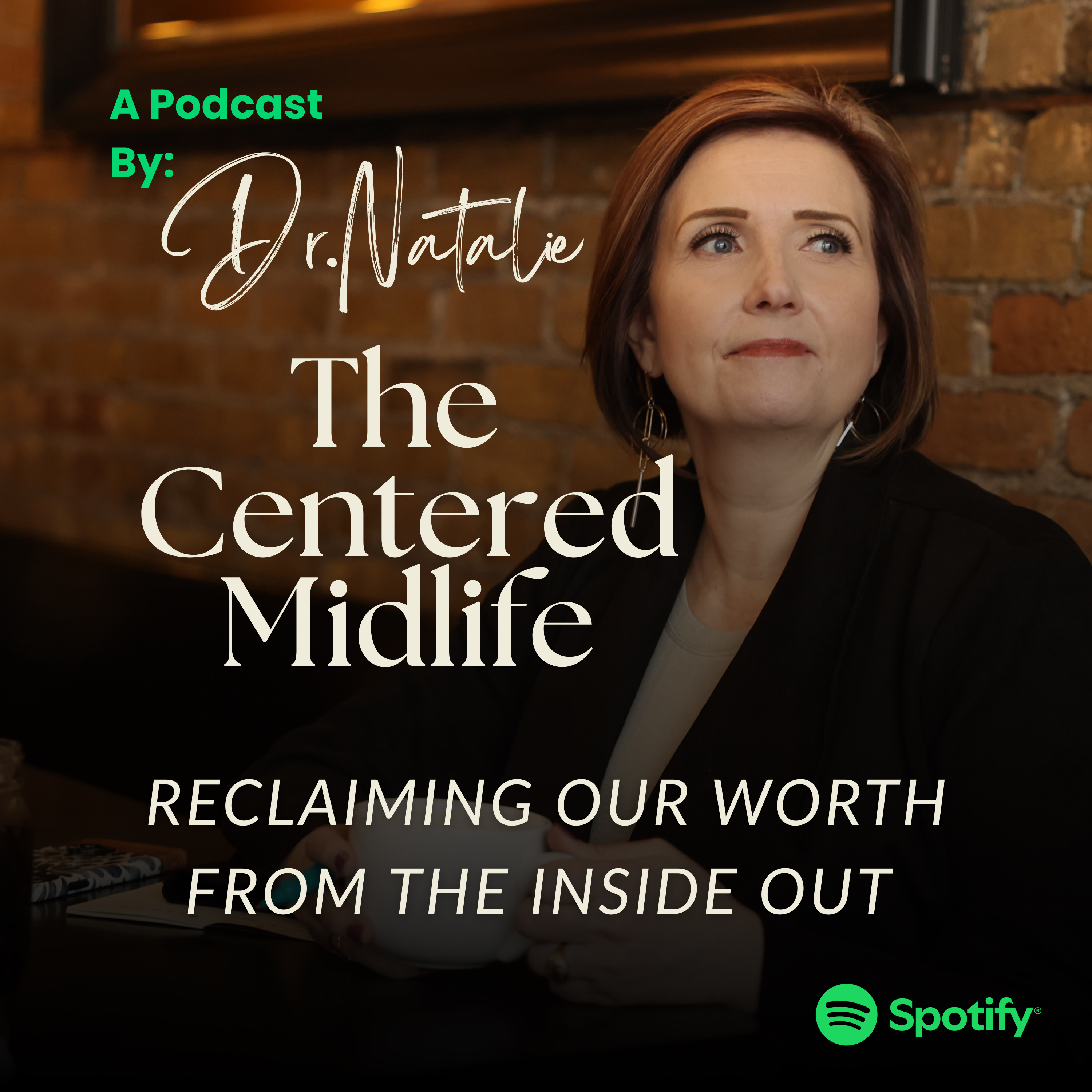
The Centered Midlife: Reclaiming Our Worth From The Inside Out
Dr. Natalie Marr, Clinical Psychologist and Midlife Expert
0
This podcast, hosted by clinical psychologist Dr. Natalie Marr, focuses on helping women navigate midlife transitions. It challenges the idea of a 'midlife crisis,' instead viewing it as an invitation for personal growth. The show combines humor, heart, and science to address issues like perfectionism, external validation, and reclaiming self-worth. Listeners are encouraged to unlearn societal 'shoulds' and rediscover their authentic selves.
Епізоди
-
 Why Am I So Hard on Myself? Meet Your Inner Mean Girl 31.08.2026 36хвEpisode Description:Why is your inner critic so cruel? Licensed psychologist Dr. Natalie Marr breaks down where the "inner mean girl" comes from, the brain science behind self-judgment, and the two-step path to finally quieting her — for good.Summary:That voice in your head — the one that would never let you off the hook, the one you'd never dare use on a stranger — has a name and an origin story. In this episode, Dr. Natalie Marr, a licensed psychologist with 20+ years of clinical experience with women, unpacks why self-criticism isn't a character flaw but an adaptive skill, born in childhood moments like being picked last for kickball. She traces the neuroscience of self-judgment (hello, medial prefrontal cortex), explains why control and anxiety fuel the inner critic, and lays out the real two-part fix: building mindfulness to interrupt the pattern, and learning to love yourself so thoroughly that the inner mean girl finally has nothing left to protect you from.Keywords:inner critic, inner mean girl, self-love, self-criticism, self-judgment, negative self-talk, mindfulness, midlife, mental health, self-compassion, self-awareness, therapy, medial prefrontal cortex, anxiety and controlKey Topics:Where the inner critic actually comes from — and why it's not a flawWhy control feels like the antidote to anxiety, but is actually gasoline on the fireThe neuroscience of self-criticism: fight-or-flight, the limbic system, and the medial prefrontal cortexMindfulness as a rep-based, brain-building practice (not perfection or stillness)The link between "earning lovability" and chronic self-criticismWhy self-love — not willpower — is what actually weakens the inner criticChoosing yourself first as the antidote to a lifetime of trying to be "chosen"Childhood moments of social rejection (like being picked last) often plant the root of adult self-judgment patterns.People who are harshly judgmental of others are frequently just as harsh with themselves; outward and inward judgment tend to travel together.The real antidote to the inner critic isn't fighting her — it's building a genuine, compassionate relationship with yourself so her voice loses its power.Quotes:"Control is not the antidote to anxiety — it's an accelerant.""I choose me first."Chapters:00:00 — The Inner Voice and Its Origins02:33 — Why Self-Criticism Is Adaptive06:26 — Childhood Lessons and Social Dynamics09:47 — The Role of Shame and Survival15:16 — Trauma, Patterns, and Reinforcement21:25 — Building Mindfulness and the Brain26:05 — Practicing the Step Back and Perspective28:23 — Loving Yourself and Compassion30:45 — From Self-Criticism to Self-Love33:09 — The Path to Inner Peace and Self-AcceptanceBased in the Twin Cities? Dr. Natalie Marr offers a small private practice for consultations - NatalieMarrCounseling.com and LearnToLoveYourStory.comDISCLAIMER:The content in this podcast and video is not a replacement for therapy and is not clinical, medical, or mental health treatment. Dr. Natalie Marr is a Licensed Psychologist in the state of Minnesota. Her work with LearnToLoveYourStory.com and NatalieMarrCounseling.com, and all affiliate social media entities is educational and coaching based ONLY. She IS NOT offering therapeutic services of any kind on these mediums.If you or someone you know is having a mental health crisis or having thoughts of suicide, please use the following crisis resources (this is not an exhaustive list of available resources):National Suicide Prevention Lifeline: suicidepreventionlifeline.org/ or CALL 988Crisis Text Line: www.crisistextline.org or Text HOME to 741741
 -
Empty Nest Syndrome: What Nobody Tells You 18.08.2026 32хвSummary: This episode explores the emotional shock many midlife women feel when they drop a child off at college and come home to a quieter house. Dr. Natalie reframes empty nesting as more than just missing a child - it can be a loss of role, identity, and a long-standing way of getting needs met. She also connects this transition to grief, self-worth, caregiving patterns, and the need to build a new relationship with yourself as kids become independent.Key words and Phrasesempty nestinggriefidentity lossmotherhoodcaregivingself-worthpattern interruptself-abandonmentmidlife transitionperimenopauseinner criticrebuilding yourselfself-reflectionQuotes:“The reward to being a good parent is that they're gonna eventually not be in our lives every day."“The person you're gonna pick up and caretake for the rest of your life, that's you.”“Self-abandonment is not a great way to manage grief and loss.”“What hurts is not just the child leaving, but the loss of being needed.”The inner critic often shows up when you’re trying something new.”“The work now is building a relationship with yourself.”Key topicsEmpty nesting can feel intolerable because it is not only separation, it is a major identity disruption.Dr. Natalie says many women are grieving the loss of the mom role, not just the child leaving home.If self-worth has been tied to being a “good mom,” empty nesting can trigger a crisis of identity.Some women have also used parenting as the main way they have ever felt loved, which makes the transition even harder.Parenting may have functioned as a coping strategy to numb old wounds, especially for women who grew up in emotionally barren families.Her central message is that the path forward is building a relationship with yourself through reflection, counseling, new friendships, and honest self-inquiry.Timestamps(00:00) Why empty nesting hits so hard in midlife(01:22) The grief of letting kids go(03:46) When over-contacting children can damage the relationship(04:16) Grieving the role, not just the child(05:44) When worthiness gets tied to caregiving(08:06) Parenting as a source of being loved(09:03) Grief as a recurring process, not a single emotion(10:03) Building a relationship with yourself(11:28) Parenting as a way to avoid other unresolved issues(12:18) Why counseling or coaching can help in this transition(13:39) How Gen X women were trained to hide needs(14:38) Midlife, menopause, and lower distress tolerance(16:31) Why caretaker dynamics strain adult relationships(18:27) Relearning relationships and needs outside the family role(20:48) Empty nesting as a pattern interrupt(21:47) Moving through transition with less resilience(23:15) Journaling, reflection, and making space for self-knowledge(24:42) The inner critic as a sign of change, not failure(27:09) Giving yourself permission to grieve(28:32) Reorganizing life around your own needs(29:31) Why self-abandonment makes adjustment harderDISCLAIMER: The content in this podcast and video is not a replacement for therapy and is not clinical, medical, or mental health treatment. Dr. Natalie Marr is a Licensed Psychologist in the state of Minnesota. Her work with https://LearnToLoveYourStory.com, https://NatalieMarrCounseling.com, and all affiliate social media entities is educational and coaching based ONLY. She IS NOT offering therapeutic services of any kind on these mediums. If you or someone you know is having a mental health crisis or having thoughts of suicide, please use the following crisis resources (this is not an exhaustive list of available resources):National Suicide Prevention Lifeline: https://suicidepreventionlifeline.org/ or CALL 988Crisis Text Line: https://www.crisistextline.org/ or Text HOME to 741741
-
How the Need to Be Needed to Feel Loved Is Wrecking My Midlife Relationships 10.08.2026 26хвSummary:Dr. Natalie explores how childhood trauma and cultural conditioning influence women's relationships in midlife, emphasizing the importance of self-awareness and self-compassion to foster healthier connections and personal growth.Previous episode referenced in today's podcast: https://open.spotify.com/episode/0UrV8UKGgDdedTdw50BUdM?si=HphWMDhFTpCeMN4nJTsbNgKeywordsmidlife, relationships, childhood trauma, self-awareness, self-compassion, women, emotional health, neurochemistry, estrogen, codependencyKey topicsImpact of childhood trauma on adult relationshipsNeurochemical changes during perimenopauseThe role of estrogen in emotional resiliencePatterns of codependency and caretakingThe importance of self-awareness and self-compassionCultural influences on women's self-worthStrategies for breaking unhealthy relationship cyclesThe significance of therapy and self-reflectionTakeaways:Childhood trauma creates ingrained relationship patterns that persist into midlife.Estrogen decline in perimenopause reduces stress tolerance and can exacerbate emotional challenges.Self-awareness and self-compassion are crucial for recognizing and changing harmful patterns.Many women unconsciously conflate being needed with being loved due to early life conditioning.Healing involves understanding the origins of these patterns and actively working to rewrite them. Sound bites"Unhelpful patterns from childhood still shape us.""Estrogen decline reduces stress tolerance.""Neurochemicals protect us, but they fade in midlife."Chapters00:00 Introduction to childhood friendships and midlife reflections3555:31:04 Recognizing unhelpful relationship patterns in midlife7083:17:58 The role of childhood caretaking and its influence on adult patterns10722:11:40 The neurochemical effects of estrogen decline in perimenopause14249:58:30 Resentment and relational patterns in women during midlife17833:18:40 Understanding the origins of relationship behaviors and patterns19944:25:31 The unprecedented nature of women's midlife experiences today20638:52:16 Personal stories of escaping dysfunctional family environments22083:18:59 The importance of self-awareness and self-compassion in healing23555:32:22 The neurochemical and emotional impact of estrogen decline251111:05:48 The cycle of resentment and codependency in midlife women274722:12:33 Changing relationship patterns through awareness and intentionality288611:05:58 Recognizing residual patterns and the need for self-investment309444:26:17 The blueprint of needing to be needed and its effects316666:39:38 The importance of self-awareness in relationship transformation337777:46:21 Self-compassion and understanding the origins of patterns350833:19:46 Releasing shame and embracing growth in midlife366666:39:47 Seeking therapy and support for healing and change388888:53:11 The urgency of addressing emotional and psychological health in midlife395833:19:55 Empowering women to own their midlife journey and transformationDISCLAIMER: The content in this podcast and video is not a replacement for therapy and is not clinical, medical, or mental health treatment. Dr. Natalie Marr is a Licensed Psychologist in the state of Minnesota. Her work with (https://LearnToLoveYourStory.com) (https://NatalieMarrCounseling.com), and all affiliate social media entities is educational and coaching based ONLY. She IS NOT offering therapeutic services of any kind on these mediums. If you or someone you know is having a mental health crisis or having thoughts of suicide, please use the following crisis resources (this is not an exhaustive list of available resources):National Suicide Prevention Lifeline: https://suicidepreventionlife or CALL 988 Crisis Text Line: https://www.crisistextline.org/ or Text HOME to 741741
-
The Grief Nobody Sent Flowers For: The Hidden Grief of Midlife Transitions 03.08.2026 30хвSummary: Dr. Natalie explores the often overlooked topic of grief and loss in midlife, sharing personal stories and practical insights on navigating transitions, relationships, and emotional healing to thrive in this life stage.Keywords: midlife, grief, loss, relationships, parenting, emotional healing, personal growth, mental health, transitions, self-careKey TopicsThe role of grief and loss in midlifeTransition from transactional to relational parentingManaging relationships and friendships in midlifeThe importance of feeling and processing emotionsSelf-care and emotional resilience in midlifeTakeawaysGrief is a natural and necessary part of midlife transitions.Moving from transactional to relational parenting requires emotional work.Loss of friendships and relationships is common and can be healthy.Feeling emotions fully is essential for healing and growth.Protecting your energy and setting boundaries is vital in midlife.Sound Bites"Loss is a big part of midlife.""Emotions need to be felt.""You can't ignore grief; it will wait."Chapters00:00Introduction: Grief and Loss in Midlife02:16Understanding Grief and Loss in Midlife04:06The Transition from Transactional to Relational Parenting05:32Dealing with the Emotional Impact of Children Leaving Home06:28A Personal Parenting Moment and Reflection07:50The Experience of Residency and Overworking09:13A Heartfelt Conversation with Her Son10:39The Importance of Feeling and Processing Emotions12:05Grieving the End of a Transactional Mothering Role13:27Building a New Relationship with Her Son15:17The Concept of Closing the Bones and Transitioning16:13The Joy of a Centered Midlife18:07Letting Go of Codependent Behaviors19:33Embracing the Future and New Possibilities20:58Healing from Family Trauma and Codependency22:21The Guilt of Ending Old Relationships23:44Moving Forward with Self-Compassion25:41Choosing Self-Care Over Old Patterns26:40Seeking Support and Professional Help27:00Disclaimer and Resources for Crisis SupportDISCLAIMER: The content in this podcast and video is not a replacement for therapy and is not clinical, medical, or mental health treatment. Dr. Natalie Marr is a Licensed Psychologist in the state of Minnesota. Her work with (https://LearnToLoveYourStory.com), (https://NatalieMarrCounseling.com), and all affiliate social media entities is educational and coaching based ONLY. She IS NOT offering therapeutic services of any kind on these mediums. If you or someone you know is having a mental health crisis or having thoughts of suicide, please use the following crisis resources (this is not an exhaustive list of available resources):National Suicide Prevention Lifeline: https://suicidepreventionlifeline.org/ or CALL 988Crisis Text Line: https://www.crisistextline.org/ or Text HOME to 741741
-
The Petty Comeback I Didn't Send 27.07.2026 23хвSummary:Dr. Natalie shares a personal story about handling petty moments, grief, and the importance of protecting your energy and self-worth during midlife. This episode offers insights into emotional resilience, boundaries, and self-acceptance.Keywords:midlife, emotional resilience, boundaries, self-worth, personal growth, grief, self-acceptance, mental health, self-protection, life transitionsKey topics:Handling petty moments and emotional triggersThe importance of boundaries and self-protectionGrief and loss during midlifeSelf-acceptance and personal growthNavigating relationships and social judgmentsTakeaways:It's normal to feel petty or triggered; what matters is how you handle it.Protect your energy fiercely and set boundaries around your self-worth.Grief is a layered process, especially during major life transitions.Your self-worth is independent of others' opinions or judgments.Reframing social judgments as small-mindedness helps maintain emotional resilience.Sound bites:"Growth doesn't mean we don't get triggered.""Protect your energy fiercely in midlife.""Your self-worth is independent of others' opinions."Chapters:00:00 Introduction to Petty Moments and Growth2972:11:16 Sharing Personal Stories of Divorce and Loss6999:58:15 The Pain of Being Misjudged and Abandoned11694:25:11 The Fast Pace of Life and Aging Children14888:52:05 Grief and Rejection in Midlife196111:05:39 The Temptation to Be Petty and How to Resist251666:39:27 Understanding Self-Worth Beyond Roles296944:26:18 Setting Boundaries and Protecting Your Energy333888:53:07 The Power of Self-Validation and Moving OnDISCLAIMER: The content in this podcast and video is not a replacement for therapy and is not clinical, medical, or mental health treatment. Dr. Natalie Marr is a Licensed Psychologist in the state of Minnesota. Her work with (https://LearnToLoveYourStory.com), (https://NatalieMarrCounseling.com), and all affiliate social media entities is educational and coaching based ONLY. She IS NOT offering therapeutic services of any kind on these mediums. If you or someone you know is having a mental health crisis or having thoughts of suicide, please use the following crisis resources (this is not an exhaustive list of available resources):National Suicide Prevention Lifeline: https://suicidepreventionlifeline.org/ or CALL 988Crisis Text Line: https://www.crisistextline.org/ or Text HOME to 741741
-
How Do You Stop Overfunctioning in Midlife? A Personal Story of Moving, Rest & Letting Go of Shame 01.07.2026 41хвSummary:Dr. Natalie shares her personal journey through moving, shredding decades of paperwork, and navigating midlife challenges, emphasizing the importance of self-awareness, rest, and intentional living during perimenopause. She aims in this episode to quelch the shame we feel when looking back across our lives and realizing how overfunctioning has come at a high cost.Keywords:midlife, perimenopause, self-care, moving, trauma, overfunctioning, regulated nervous system, self-awareness, mental health, personal growthKey topics:Midlife transition and self-awarenessThe significance of rest and self-care during perimenopausePersonal stories of moving and decluttering as a metaphor for life changesTrauma responses and overfunctioning in womenThe importance of creating a sanctuary and setting boundariesTakeaways:Rest is a form of self-love and essential for health during midlife.Decluttering can be a powerful act of self-discovery and healing.Overfunctioning is often a trauma response that comes at a high personal cost.Self-awareness allows for conscious choices that align with one’s well-being.Midlife is an opportunity for renewal and creating a life that feels right.Resources & Links to Connect with Dr. Natalie:Learn to Love Your Story Coaching- https://learntoloveyourstory.comDr. Natalie’s Counseling Practice - https://nataliemarcounseling.com If you are in MN, book your free 15-minute consultation with Dr. Natalie. Facebook: https://www.facebook.com/learntoloveyourstoryInstagram: https://www.instagram.com/dr.nataliemarrLinked In: https://www.linkedin.com/in/natalie-m-marr/Tik Tok: https://www.tiktok.com/@doc.natalieSound bites"Looking at it in black and white was profound.""Midlife is a miracle, not a crisis.""Choose yourself every day."Chapters00:00 Navigating Life Transitions08:32 The Weight of Paperwork and Memories17:13 The Cost of Overfunctioning23:19 Choosing Yourself in Midlife28:35 Creating a Centered Midlife34:34 Embracing Change and ChoiceDISCLAIMER: The content in this podcast and video is not a replacement for therapy and is not clinical, medical, or mental health treatment. Dr. Natalie Marr is a Licensed Psychologist in the state of Minnesota. Her work with (https://LearnToLoveYourStory.com), (https://NatalieMarrCounseling.com), and all affiliate social media entities is educational and coaching based ONLY. She IS NOT offering therapeutic services of any kind on these mediums. If you or someone you know is having a mental health crisis or having thoughts of suicide, please use the following crisis resources (this is not an exhaustive list of available resources):National Suicide Prevention Lifeline: https://suicidepreventionlifeline.org/ or CALL 988Crisis Text Line: https://www.crisistextline.org/ or Text HOME to 741741
-
Caught in the Middle: Supporting Aging Parents While Raising Children 04.06.2026 31хвSummaryThis episode explores the challenges faced by the sandwich generation—adults caring for aging parents while managing their own families and careers. Dr. Natalie shares insights on emotional, physical, and financial strains, and offers practical strategies for setting boundaries, seeking support, and prioritizing self-care to navigate this demanding phase of life.Keywordssandwich generation, midlife, caregiving, self-care, boundaries, emotional health, physical strain, financial stress, family dynamics, personal growthKey TopicsStatistics on adult caregivers and gender differencesEmotional and physical toll of caregivingFinancial challenges faced by caregiversThe shift from transactional to relational caregivingStrategies for setting boundaries and seeking supportTakeawaysPrioritize self-care to sustain caregiving capacitySet clear boundaries to protect emotional and physical healthSeek support and resources to avoid burnoutReframe caregiving as an act of self-love and modeling for future generationsRecognize that saying no is a valid and necessary choiceSound bites:"You're not alone in this.""64% report moderate to high emotional strain.""Saying no is a valid and necessary choice."Chapters00:00 Understanding the Sandwich Generation06:22 Financial Strain and Overwork11:19 Setting Boundaries and Self-Care16:39 Modeling Healthy Behaviors for Future GenerationsResources & Links to Connect with Dr. Natalie:Learn to Love Your Story Coaching- https://learntoloveyourstory.comDr. Natalie’s Counseling Practice - https://nataliemarcounseling.com If you are in MN, book your free 15-minute consultation with Dr. Natalie. Facebook: https://www.facebook.com/learntoloveyourstoryInstagram: https://www.instagram.com/dr.nataliemarrLinked In: https://www.linkedin.com/in/natalie-m-marr/Tik Tok: https://www.tiktok.com/@doc.natalieDISCLAIMER: The content in this podcast and video is not a replacement for therapy and is not clinical, medical, or mental health treatment. Dr. Natalie Marr is a Licensed Psychologist in the state of Minnesota. Her work with (https://LearnToLoveYourStory.com), (https://NatalieMarrCounseling.com), and all affiliate social media entities is educational and coaching based ONLY. She IS NOT offering therapeutic services of any kind on these mediums. If you or someone you know is having a mental health crisis or having thoughts of suicide, please use the following crisis resources (this is not an exhaustive list of available resources):National Suicide Prevention Lifeline: https://suicidepreventionlifeline.org/ or CALL 988Crisis Text Line: https://www.crisistextline.org/ or Text HOME to 741741
-
The Exhausting Lie that Perfectionism Sold You 22.05.2026 38хвSummary:This episode explores the impact of perfectionism, societal conditioning, and hormonal changes during midlife on women's mental health. Dr. Natalie shares data, personal insights, and practical advice to help women love themselves and navigate this transformative phase with resilience.Keywords:midlife, women, perfectionism, mental health, hormonal changes, self-love, resilience, menopause, societal conditioningKey topics:Perfectionism and its impact on mental healthThe connection between hormonal changes and emotional well-beingSocietal conditioning and self-betrayal in womenPractical steps to cultivate self-love and resilienceSound bites:"Relearn who you are and what you want.""Deserving love even when you screw up.""You do not have to be good."Chapters:00:00 The Burden of Perfectionism in Midlife03:24 Understanding the Mental Health Crisis for Women11:29 The Impact of Hormonal Changes and Medical Misunderstandings28:13 Reclaiming Self-Worth and Breaking Free from Perfectionism36:18 Introduction and Disclaimer37:55 Crisis Resources and SupportResources & Links to Connect with Dr. Natalie:Learn to Love Your Story Coaching- https://learntoloveyourstory.comDr. Natalie’s Counseling Practice - https://nataliemarcounseling.com If you are in MN, book your free 15-minute consultation with Dr. Natalie. Facebook: facebook.com/learntoloveyourstoryInstagram: instagram.com/dr.nataliemarrLinked In: linkedin.com/in/natalie-m-marr-psy-d-lp-6a9298147Tik Tok: tiktok.com/@doc.natalieResources:Mary Oliver's Wild Geese Poem - https://www.poetryfoundation.org/poems/45587/wild-geeseWomen's Health Initiative Study - https://www.nih.gov/news-events/nih-research-matters/women-s-health-initiativeUnderstanding Perfectionism in Women - https://www.psychologytoday.com/us/blog/the-moment-youth/201911/the-perfectionism-epidemicHormone Replacement Therapy (HRT) Information - https://www.mayoclinic.org/diseases-conditions/menopause/in-depth/hormone-therapy/art-20046372Disclaimer:The content in this podcast and video is not a replacement for therapy and is not clinical, medical, or mental health treatment. Dr. Natalie Marr is a Licensed Psychologist in the state of Minnesota. Her work with Learn To Love Your Story coaching (https://LearnToLoveYourStory.com) and her private practice (https://NatalieMarrCounseling.com), and all affiliate social media entities are educational ONLY. She IS NOT offering therapeutic or coaching services of any kind on these mediums. If you or someone you know is having a mental health crisis or having thoughts of suicide, please use the following crisis resources (this is not an exhaustive list of available resources):National Suicide Prevention Lifeline: https://suicidepreventionlifeline.org/ CALL 988Crisis Text Line: https://www.crisistextline.org/ Text HOME to 741741
-
Why You Keep Attracting the Same Kind of Relationship (And What to Actually Do About It) 07.05.2026 39хвEpisode Summary:Dr. Natalie explores the psychological and physical factors contributing to the rising divorce rates among women in midlife, emphasizing patterns of behavior, stress, and self-awareness. She offers insights into how women can recognize and shift these patterns to improve their relationships and well-being.Keywords:midlife, divorce, women, psychology, self-awareness, patterns, stress, relationships, mental health, self-careKey topics:Statistics on midlife divorce ratesPsychological patterns in women’s relationshipsImpact of hormones and stress on midlife womenSound bites:"The average age of divorce is 45.""Women initiate 66% of divorces.""People pleasing patterns are deeply ingrained."Chapters:00:00 Understanding Divorce Statistics and Trends03:23 Psychological Patterns in Midlife Women16:07 Breaking the Cycle of People-Pleasing27:47 Empowering Women to Embrace ChangeResources & Links to Connect with Dr. Natalie:Learn to Love Your Story Course - https://learntoloveyourstory.comDr. Natalie’s Counseling Practice - https://nataliemarcounseling.com If you are in MN, book your free 15-minute consultation with Dr. Natalie. Facebook: facebook.com/learntoloveyourstoryInstagram: instagram.com/dr.nataliemarrLinked In: linkedin.com/in/natalie-m-marr-psy-d-lp-6a9298147Tik Tok: tiktok.com/@doc.natalieDISCLAIMER: The content in this podcast and video is not a replacement for therapy and is not clinical, medical, or mental health treatment. Dr. Natalie Marr is a Licensed Psychologist in the state of Minnesota. Her work with (https://LearnToLoveYourStory.com), (https://NatalieMarrCounseling.com), and all affiliate social media entities is educational and coaching based ONLY. She IS NOT offering therapeutic services of any kind on these mediums. If you or someone you know is having a mental health crisis or having thoughts of suicide, please use the following crisis resources (this is not an exhaustive list of available resources):National Suicide Prevention Lifeline: https://suicidepreventionlifeline.org/ CALL 988Crisis Text Line: https://www.crisistextline.org/ Text HOME to 741741
-
Understanding Trauma Beyond the Bad Things - A Midlife Lesson 22.04.2026 23хвSummary:Dr. Natalie explores the impact of childhood trauma, emotional health, and resilience in midlife. She emphasizes the importance of showing up for oneself, understanding trauma beyond the obvious, and building internal resources for a centered midlife.Keywords: trauma, midlife, emotional health, resilience, childhood experiences, self-worth, connection, coping strategiesKey Topics:Trauma and childhood experiencesThe impact of emotional health in midlifeStrategies for showing up and building resilienceTakeaways:Trauma is not just what happens to us but whether we have resources to manage it.Showing up for yourself daily is crucial for growth in midlife.Connection and empathy are powerful tools for managing emotional distress.Understanding your childhood experiences can inform your midlife health.Self-compassion and small steps are key to navigating midlife challenges.Sound bites:"Being an outsider in childhood can be traumatic""Trauma impacts hormones and physical health""Good days in midlife are moments to cherish"Chapters:00:00 Embracing Midlife Challenges10:30 The Role of Connection in Healing18:58 Strategies for Navigating Midlife21:12 Introduction and Disclaimer22:49 Crisis Resources and SupportResources:Center for the Study of Trauma and Resilience - https://traumaresilience.org/Attachment Theory by John Bowlby - https://www.amazon.com/Attachment-Theory-John-Bowlby/dp/0465026504Therapy for Trauma and Emotional Health - https://www.psychologytoday.com/us/therapistsResources & Links to Connect with Dr. Natalie:Website: https://LearnToLoveYourStory.com Facebook: facebook.com/learntoloveyourstoryInstagram: instagram.com/dr.nataliemarrLinked In: linkedin.com/in/natalie-m-marr-psy-d-lp-6a9298147Tik Tok: tiktok.com/@doc.natalieDISCLAIMER: The content in this podcast and video is not a replacement for therapy and is not clinical, medical, or mental health treatment. Dr. Natalie Marr is a Licensed Psychologist in the state of Minnesota. Her work with (https://LearnToLoveYourStory.com), (https://NatalieMarrCounseling.com), and all affiliate social media entities is educational and coaching based ONLY. She IS NOT offering therapeutic services of any kind on these mediums. If you or someone you know is having a mental health crisis or having thoughts of suicide, please use the following crisis resources (this is not an exhaustive list of available resources):National Suicide Prevention Lifeline: https://suicidepreventionlifeline.org/ CALL 988Crisis Text Line: https://www.crisistextline.org/ Text HOME to 741741
-
How what happened when you were young is making perimenopause worse for you 09.04.2026 36хвSummary:Have you ever found yourself uncontrollably crying? Angry beyond what the situation warrants? Or maybe after years of being an extrovert, you now just want to curl up on the coach and hide from people. Perimenopause is no joke. Dr. Natalie shares her own personal experience of emotional breakdowns during midlife, explores the science behind trauma and hormonal changes, and offers insights into managing these challenges through therapy and self-awareness.Keywords: midlife, trauma, hormones, therapy, emotional health, menopause, childhood experience, stress resilience, self-compassion, mental healthKey topics:Trauma and midlife emotional healthThe impact of childhood experiences on menopauseScience of hormones and stress resilienceTherapeutic approaches for trauma in midlifeSelf-compassion and curiosity in emotional regulationTrauma from childhood can resurface in midlife, affecting emotional health.Hormonal changes in menopause can exacerbate past trauma effects.Therapy and self-awareness are crucial for managing midlife emotional challenges.Understanding your ACE score can help predict health risks in midlife.Practicing curiosity instead of self-criticism fosters self-compassion.Uncovering the Science of Trauma and Hormones in MidlifeHow Childhood Trauma Affects Women in MenopauseSound bites:"Some relationships just have a season for themselves.""I burst into positively never happens.""If it's hysterical, it's historical."Chapters:00:00 Navigating Friendships in Midlife05:59 Emotional Breakthroughs and Self-Compassion12:26 Childhood Trauma and Its Impact on Relationships19:59 The Science of Midlife and Childhood Trauma30:16 Advocating for Your Health in MidlifeResources:Adverse Childhood Experience (ACE) QuestionnaireThe Swan Study on Women's HealthSelf-Compassion Course by Dr. NatalieResources & Links to Connect with Dr. Natalie:Website: https://LearnToLoveYourStory.com Facebook: facebook.com/learntoloveyourstoryInstagram: instagram.com/dr.nataliemarrLinked In: linkedin.com/in/natalie-m-marr-psy-d-lp-6a9298147Tik Tok: tiktok.com/@doc.natalieDISCLAIMER: The content in this podcast and video is not a replacement for therapy and is not clinical, medical, or mental health treatment. Dr. Natalie Marr is a Licensed Psychologist in the state of Minnesota. Her work with (https://LearnToLoveYourStory.com), (https://NatalieMarrCounseling.com), and all affiliate social media entities is educational and coaching based ONLY. She IS NOT offering therapeutic services of any kind on these mediums. If you or someone you know is having a mental health crisis or having thoughts of suicide, please use the following crisis resources (this is not an exhaustive list of available resources):National Suicide Prevention Lifeline: https://suicidepreventionlifeline.org/ CALL 988Crisis Text Line: https://www.crisistextline.org/ Text HOME to 741741
-
The Hidden Trauma of Midlife: How Childhood Shapes Your Stress Resilience 19.03.2026 21хвSummaryDr. Natalie explores the intersection of midlife challenges, hormonal changes, and childhood trauma, emphasizing that women's struggles are often systemic and not personal failures. She discusses how hormonal shifts affect stress resilience and the importance of inner work and therapy to achieve a centered midlife.Keywordsmidlife, hormonal changes, childhood trauma, stress resilience, inner child work, therapy, estrogen, progesterone, systemic issues, personal growthKey topicsHormonal changes in midlife and their impact on stress resilienceThe role of childhood trauma in adult midlife strugglesInner child work and shadow work as tools for healingSystemic societal expectations and their effects on women in midlifeKey frameworksInner Child WorkShadow WorkCore Belief Systems Action itemsSeek therapy to unpack childhood traumaConsider hormone therapy with medical guidanceSet boundaries to protect your mental healthPrioritize love and acceptance of your current lifeSound bites"Childhood trauma can resurface in midlife.""Love your life right now, all of it.""This was never your fault."Chapters00:00 The Burden of Expectations on Women13:18 Childhood Trauma and Its Resurgence in Midlife19:07 Introduction and Disclaimer20:43 Crisis Resources and SupportMidlife/Trauma Resources:Therapy for Trauma and Inner Child Work - https://www.psychologytoday.com/us/therapistsHormone Replacement Therapy (HRT) - https://www.mayoclinic.org/tests-procedures/hormone-replacement-therapyUnderstanding Perimenopause and Menopause - https://www.womenshealth.gov/menopauseResources & Links to Connect with Dr. Natalie:Website: https://LearnToLoveYourStory.com Facebook: facebook.com/learntoloveyourstoryInstagram: instagram.com/dr.nataliemarrLinked In: linkedin.com/in/natalie-m-marr-psy-d-lp-6a9298147Tik Tok: tiktok.com/@doc.natalieDISCLAIMER: The content in this podcast and video is not a replacement for therapy and is not clinical, medical, or mental health treatment. Dr. Natalie Marr is a Licensed Psychologist in the state of Minnesota. Her work with (https://LearnToLoveYourStory.com), (https://NatalieMarrCounseling.com), and all affiliate social media entities is educational and coaching based ONLY. She IS NOT offering therapeutic services of any kind on these mediums. If you or someone you know is having a mental health crisis or having thoughts of suicide, please use the following crisis resources (this is not an exhaustive list of available resources):National Suicide Prevention Lifeline: https://suicidepreventionlifeline.org/ CALL 988Crisis Text Line: https://www.crisistextline.org/ Text HOME to 741741
-
Why Burning Out at 50 Is More About Brain Habits Than Age — And How to Change It 05.03.2026 25хвSummaryIn this conversation, Dr. Natalie reflects on her journey through midlife, particularly focusing on the challenges of perimenopause and the emotional turmoil that often accompanies it. She discusses the importance of letting go of societal expectations and the pressure to conform, emphasizing the need for self-acceptance and compassion. Dr. Natalie also explores the concept of procedural memory and how our ingrained habits can shape our perceptions and emotional responses. Ultimately, she encourages listeners to redefine their narratives and embrace a centered midlife, free from the burdens of self-judgment and societal standards.Episode 117: Expert Advice on Addressing the #1 Symptom in Perimenopause: https://spotifycreators-web.app.link/e/y7WjcCkjf1b or https://youtu.be/GFTFQGbN1rgKeywords:midlife, perimenopause, self-acceptance, emotional health, procedural memory, self-compassion, personal growth, women empowerment, mental health, life transitionsTakeawaysTurning 50 can be a liberating experience.It's important to decide what truly matters to us.Perimenopause can bring significant emotional challenges.Irritability is a common symptom of hormonal changes.95% of our thoughts and behaviors are pre-programmed.We can reprogram our thoughts to be more compassionate.Self-acceptance is crucial for mental well-being.We often hold ourselves to unrealistic standards.It's essential to shift our narratives about ourselves.You are not broken; you are a work in progress.Sound bites"I was waking up that way.""Tell yourself a new story.""You are not broken."Chapters00:00 Embracing Midlife: A New Perspective06:35 Reprogramming the Mind: Breaking Free from Old Habits12:20 Redefining Self-Worth: A Journey to Centered MidlifeResources & Links to Connect with Dr. Natalie:Website: https://LearnToLoveYourStory.com Facebook: facebook.com/learntoloveyourstoryInstagram: instagram.com/dr.nataliemarrLinked In: linkedin.com/in/natalie-m-marr-psy-d-lp-6a9298147Tik Tok: tiktok.com/@doc.natalieDISCLAIMER: The content in this podcast and video is not a replacement for therapy and is not clinical, medical, or mental health treatment. Dr. Natalie Marr is a Licensed Psychologist in the state of Minnesota. Her work with (https://LearnToLoveYourStory.com), (https://NatalieMarrCounseling.com), and all affiliate social media entities is educational and coaching based ONLY. She IS NOT offering therapeutic services of any kind on these mediums. If you or someone you know is having a mental health crisis or having thoughts of suicide, please use the following crisis resources (this is not an exhaustive list of available resources):National Suicide Prevention Lifeline: https://suicidepreventionlifeline.org/ CALL 988Crisis Text Line: https://www.crisistextline.org/ Text HOME to 741741
-
The Exhaustion of Midlife is Real 18.02.2026 23хвSummaryIn this conversation, Dr. Natalie discusses the challenges women face during midlife, particularly around wellness shaming, hormonal changes, and the pressure to conform to societal expectations. She emphasizes the importance of introspection and listening to one's body rather than relying solely on external validation and wellness culture. Dr. Natalie encourages women to embrace their individuality and build self-worth from within, acknowledging that it's okay to make mistakes along the way.TakeawaysThe exhaustion women feel in midlife is real and valid.Hormonal changes can create chaos in our bodies, similar to adolescence.Habit formation is challenging, especially when trying to adapt to new life phases.Introspection is crucial; we should listen to our bodies rather than just external advice.Wellness culture often exploits women's insecurities for profit.It's important to recognize that each woman's experience is unique.Building self-worth from within is essential for navigating midlife.It's okay to not have all the answers about what your body needs.Listening to your body can lead to better health outcomes than following external advice.You are not broken; you are evolving.Keywordsmidlife, wellness, hormones, introspection, self-worth, health, women, perimenopause, wellness culture, body positivitySound bites"The exhaustion is real.""It's okay to mess it up.""You are not broken."Chapters00:00 The Pressure of Midlife Wellness06:18 The Challenge of Habit Formation11:38 Critique of Wellness Culture21:00 Embracing Your Inner ExpertResources & Links: Connect with Dr. Natalie:Website https://LearnToLoveYourStory.com Facebook facebook.com/learntoloveyourstoryInstagram instagram.com/dr.nataliemarrLinked In linkedin.com/in/natalie-m-marr-psy-d-lp-6a9298147Tik Tok tiktok.com/@doc.natalieDISCLAIMER: The content in this podcast and video is not a replacement for therapy and is not clinical, medical, or mental health treatment. Dr. Natalie Marr is a Licensed Psychologist in the state of Minnesota. Her work with (https://LearnToLoveYourStory.com), (https://NatalieMarrCounseling.com), and all affiliate social media entities is educational and coaching based ONLY. She IS NOT offering therapeutic services of any kind on these mediums. If you or someone you know is having a mental health crisis or having thoughts of suicide, please use the following crisis resources (this is not an exhaustive list of available resources):National Suicide Prevention Lifeline: https://suicidepreventionlifeline.org/ CALL 988Crisis Text Line: https://www.crisistextline.org/ Text HOME to 741741
-
What to Let Go of in Midlife 05.02.2026 27хвIn this heartfelt episode, Dr. Natalie addresses midlife women feeling overwhelmed by the pressure to fix and manage everything alone. She offers insight into how hyper-independence and the fear of abandonment can contribute to burnout and midlife struggles—and most importantly, how self-love can help rewrite these patterns.Key Topics:The emotional toll of hyper-independence in midlife womenThe neurochemistry of pursuit and addiction to dopamine hitsChildhood experiences shaping adult patterns of fixing and pleasingRecognizing and interrupting the spiral of justification and validationThe importance of self-love as an antidote to burnout and scarcity mindsetHow fear of abandonment fuels hyper-independencePractical steps to love yourself through mistakes and vulnerabilitiesMoving away from rescuing everyone and focusing on personal peaceTimestamps:00:00 - Addressing hyper-independent women in midlife02:09 - The neurochemical roots of pursuit and addiction to dopamine03:34 - How the chase reinforces the cycle of burnout04:33 - Personal stories of controlling or fixing others05:58 - Childhood patterns influencing adult need for approval06:53 - Recognizing the spiral of justifying and validating08:22 - The pain of not being liked or validated09:04 - The risks of over-investment in work and relationships10:30 - How derailments in pursuit reveal deeper patterns11:56 - The spiral of self-justification in times of stress13:20 - The link between childhood chaos and adult control issues14:19 - Self-love as the key to breaking free from cycles16:41 - The importance of loving yourself despite mistakes19:34 - Understanding the fear of rejection and scarcity mindset20:03 - Letting go of blame and the need for approval21:01 - Managing relationships without spiraling into chaos22:24 - Embracing age and experience for self-compassion23:21 - The power of loving your story, including dysfunction24:19 - Sharing this message with other midlife women25:17 - Letting go of the cycle of justification and abandonment fears26:15 - Finding peace and building inner self-worthResources & Links: Connect with Dr. Natalie:Website https://LearnToLoveYourStory.com Facebook facebook.com/learntoloveyourstoryInstagram instagram.com/dr.nataliemarrLinked In linkedin.com/in/natalie-m-marr-psy-d-lp-6a9298147Tik Tok tiktok.com/@doc.natalieDISCLAIMER: The content in this podcast and video is not a replacement for therapy and is not clinical, medical, or mental health treatment. Dr. Natalie Marr is a Licensed Psychologist in the state of Minnesota. Her work with (https://LearnToLoveYourStory.com), (https://NatalieMarrCounseling.com), and all affiliate social media entities is educational and coaching based ONLY. She IS NOT offering therapeutic services of any kind on these mediums. If you or someone you know is having a mental health crisis or having thoughts of suicide, please use the following crisis resources (this is not an exhaustive list of available resources):National Suicide Prevention Lifeline: https://suicidepreventionlifeline.org/ CALL 988Crisis Text Line: https://www.crisistextline.org/ Text HOME to 741741
-
The Great Unlearning: Reclaiming Self-Worth in Midlife 22.01.2026 28хвSummaryIn this episode, Dr. Natalie explores the concept of 'The Great Unlearning,' a transformative journey that challenges the societal belief that doing everything right leads to a fulfilling life. She reflects on her personal experiences, particularly during midlife, where she realized that striving for perfection and external validation often leads to burnout and disillusionment. Dr. Natalie emphasizes the importance of self-worth and the need to reclaim it from within, rather than through external achievements or approval. Through poignant anecdotes, she illustrates how the pressure to conform to societal expectations can lead to a double life and emotional turmoil, ultimately advocating for a shift towards self-love and acceptance.Dr. Natalie introduces the metaphor of the tugboat versus the lighthouse to illustrate the difference between exhausting oneself in the pursuit of perfection and standing firm in one's self-worth. She encourages listeners to reflect on their own lives, identifying where they may be sacrificing their well-being in the name of doing everything right. The episode serves as a powerful reminder that true fulfillment comes from within, and that midlife can be an opportunity for profound personal growth and self-discovery.Keywords:midlife, self-worth, personal growth, self-love, great unlearning, emotional well-being, tugboat lighthouse metaphor, reclaiming self-worth, Dr. NatalieTakeaways:The version of you that you're most proud of may be blocking your actual life.Midlife can be an invitation to examine the mess of our lives and love it as it is.Reclaiming self-worth from the inside out is essential for true fulfillment.Sound bites:"What if I told you that the version of you that you're most proud of... is in the way of your actual life?""Today we're gonna talk about the great unlearning.""You do not need to fix yourself. You just need to find yourself."Chapters:00:00 Introduction to The Great Unlearning03:49 A Holiday Dinner Reflection10:20 The Tugboat vs. The Lighthouse18:10 The Power of Self-Love23:39 Reflecting on Your JourneyJOIN the https://LearnToLoveYourStory.com Mailing List! Join my newsletter and receive my FREE video and workbook, “Freeing Yourself: A Guide for Letting Go of Other People's Opinions” SIGN UP on the website at https://dashboard.mailerlite.com/forms/762561/109840834025752017/share DISCLAIMER: The content in this podcast and video is not a replacement for therapy and is not clinical, medical, or mental health treatment. Dr. Natalie Marr is a Licensed Psychologist in the state of Minnesota. Her work with (https://LearnToLoveYourStory.com), (https://NatalieMarrCounseling.com), and all affiliate social media entities is educational and coaching based ONLY. She IS NOT offering therapeutic services of any kind on these mediums. If you or someone you know is having a mental health crisis or having thoughts of suicide, please use the following crisis resources (this is not an exhaustive list of available resources): National Suicide Prevention Lifeline: https://suicidepreventionlifeline.org/ CALL 988Crisis Text Line: https://www.crisistextline.org/ Text HOME to 741741
-
Midlife Challenge - How Not to Kill Someone This Holiday Season 03.12.2025 26хвSummaryIn this conversation, Dr. Natalie explores the emotional challenges faced by women in midlife during the holiday season, particularly in relation to hormonal changes and the pressures of self-care. She discusses the impact of menopause on emotional well-being and the importance of self-compassion as women navigate these changes. The conversation emphasizes the need for community support and acceptance of one's evolving identity during this transitional phase of life.TakeawaysThe holiday season can amplify feelings of irritability and self-focus in midlife women.Hormonal changes during menopause significantly affect emotional well-being.Women often prioritize others' needs over their own, leading to burnout.It's important to give oneself grace and acknowledge limitations during the holidays.Self-compassion is crucial for navigating midlife transitions.Emotional awareness shifts during menopause, leading to a more egocentric perspective.Accepting the current version of oneself is key to personal growth.Building self-awareness is essential for overcoming harmful habits.Community support can alleviate feelings of isolation during midlife.Midlife can be a time of significant personal growth and transformation.Keywords: midlife, menopause, holiday stress, self-care, emotional well-being, hormonal changes, self-compassion, personal growth, women empowerment, mental healthSound bites"We want the routine to be the same.""It's okay to give yourself grace.""You really aren't alone in this."Chapters00:00 Navigating Holiday Emotions in Midlife09:45 Understanding Brain Changes During Midlife17:38 Embracing Self-Compassion and Growth in Midlife
-
This is What You're Not Prepared for in Midlife 19.11.2025 20хвSummary: In this conversation, Dr. Natalie discusses the challenges and transformations that occur during midlife, emphasizing the importance of adapting to changes rather than resisting them. She highlights the emotional and psychological aspects of navigating this transition and offers insights into personal growth during this critical phase of life.Takeaways:The life we have built may no longer serve us.Midlife transition can lead to significant personal growth.Resisting change can lead to a midlife crisis.Emotional well-being is crucial during transitions.Understanding our feelings is key to navigating change.Support systems play a vital role in midlife adjustments.Self-reflection can aid in personal development.Embracing change can lead to new opportunities.Midlife is a time for reevaluation and growth.Adapting to change is essential for happiness.Keywords: midlife transition, life changes, personal growth, crisis management, emotional well-beingSound bites"The life that we have built is no longer gonna work for us.""Midlife transition is a critical phase."Chapters00:00 Facing the Unpreparedness of Midlife00:18 Grieving the Loss of Past VersionsJOIN the LearnToLoveYourStory.com (https://LearnToLoveYourStory.com) Mailing List! Join my newsletter and receive my FREE video and workbook, “Freeing Yourself: A Guide for Letting Go of Other People's Opinions” SIGN UP on the website at https://dashboard.mailerlite.com/forms/762561/109840834025752017/share DISCLAIMER: The content in this podcast and video is not a replacement for therapy and is not clinical, medical, or mental health treatment. Dr. Natalie Marr is a Licensed Psychologist in the state of Minnesota. Her work with (https://LearnToLoveYourStory.com), (https://NatalieMarrCounseling.com), and all affiliate social media entities is educational and coaching based ONLY. She IS NOT offering therapeutic services of any kind on these mediums. If you or someone you know is having a mental health crisis or having thoughts of suicide, please use the following crisis resources (this is not an exhaustive list of available resources): National Suicide Prevention Lifeline: https://suicidepreventionlifeline.org/ CALL 988Crisis Text Line: https://www.crisistextline.org/ Text HOME to 741741
-
Expert Advice on Addressing the #1 Symptom in Perimenopause 05.11.2025 25хвSummaryIn this conversation, Dr. Natalie explores the often-overlooked symptoms of perimenopause and menopause, particularly irritability, and emphasizes the importance of community support during this transitional phase. She discusses the impact of sleep disturbances on mental health and the necessity of prioritizing self-care and self-compassion. Dr. Natalie also highlights mindfulness as a crucial practice for navigating the challenges of midlife, encouraging women to be kind to themselves and recognize that they are not alone in their experiences.Keywordsperimenopause, menopause, irritability, mental health, self-care, community support, sleep disturbance, self-compassion, mindfulness, women's healthTakeawaysIrritability is the number one symptom of perimenopause.Sleep disturbances can lead to significant mental health issues.Women in midlife face increased rates of anxiety and depression.Self-care is essential during the perimenopausal journey.Community support can alleviate feelings of isolation.Self-compassion involves being kind to oneself during struggles.Mindfulness helps in recognizing and addressing personal suffering.Women often prioritize others over themselves, especially during this phase.Understanding hormonal changes can help in managing symptoms.It's important to acknowledge that many women share similar experiences. Sound bites"Selfish is the new self-care.""We have to be kind to ourselves.""We're all in this together."Chapters00:00 Understanding Perimenopause and Menopause Symptoms11:06 Navigating Irritability and Self-Care17:16 The Importance of Self-Compassion23:34 NEWCHAPTERJOIN the LearnToLoveYourStory.com (https://LearnToLoveYourStory.com) Mailing List! Join my newsletter and receive my FREE video and workbook, “Freeing Yourself: A Guide for Letting Go of Other People's Opinions” SIGN UP on the website at https://dashboard.mailerlite.com/forms/762561/109840834025752017/share DISCLAIMER: The content in this podcast and video is not a replacement for therapy and is not clinical, medical, or mental health treatment. Dr. Natalie Marr is a Licensed Psychologist in the state of Minnesota. Her work with (https://LearnToLoveYourStory.com), (https://NatalieMarrCounseling.com (about:invalid#zCSafez) ), and all affiliate social media entities is educational and coaching based ONLY. She IS NOT offering therapeutic services of any kind on these mediums. If you or someone you know is having a mental health crisis or having thoughts of suicide, please use the following crisis resources (this is not an exhaustive list of available resources): National Suicide Prevention Lifeline: https://suicidepreventionlifeline.org/ (about:invalid#zCSafez) CALL 988Crisis Text Line: https://www.crisistextline.org/ Text HOME to 741741
-
The Emotional Toll of Midlife Health 23.10.2025 23хвSummary:In this episode, Dr. Natalie shares her personal journey through midlife health challenges, focusing on her struggles with fatty liver disease, weight management, and the emotional toll of navigating the healthcare system. She reflects on her family history of health issues, the feeling of inadequacy despite her efforts, and the importance of self-compassion in the face of adversity. Dr. Natalie emphasizes the need for understanding and support for women experiencing similar challenges during midlife.Takeaways:As a woman in midlife, it's common to feel unheard by healthcare providers.Weight management can be particularly challenging during midlife due to hormonal changes.Family history plays a significant role in health outcomes and awareness.The emotional impact of health struggles can lead to feelings of shame and inadequacy.Self-compassion is crucial when facing health challenges and societal pressures.Navigating the healthcare system can be frustrating and disheartening.It's important to seek validation and understanding from healthcare professionals.Maintaining a healthy lifestyle is a journey that requires patience and resilience.Women often feel the burden of societal expectations regarding health and appearance.You are not alone in your struggles; many women share similar experiences.Keywords: midlife health, women's health, weight management, liver disease, emotional health, healthcare experience, self-compassion, menopause, health challenges, personal journeyChapters:00:00 Facing Health Challenges in Midlife09:41 Navigating the Healthcare System14:24 The Emotional Toll of Weight Management19:12 Finding Compassion in the Struggle
Схожі подкасти


Популярний у
Цей подкаст також потрапляв у чарти подкастів у цих країнах.
