
Everything Is Going To Be OK. No Option B.
Dr Hanan Bushkin
0
Everything Is Going To Be OK. No Option B. is a practical psychology podcast hosted by Dr Hanan Bushkin. It features honest, structured conversations on topics like anxiety, trauma, relationships, emotional regulation, discipline, avoidance, self-respect, purpose, and behavioral change. The podcast offers clear psychological insight and practical steps to help listeners feel less stuck and live with more structure, responsibility, and direction.
Епизоди
-
 Lindsay Clancy: understating is not permission 15.09.2026 8минThe Lindsay Clancy case forces a difficult question: how do we take mental illness seriously without turning explanation into permission?In this episode, Dr Hanan Bushkin argues for a firm distinction between understanding why someone may be struggling and excusing harm done to another person — especially a child.Mental illness must be taken seriously. People need support, treatment and protection when they are unwell. But compassion cannot require us to abandon responsibility, boundaries or the protection of others.This is not a clinical assessment of Lindsay Clancy and it is not a legal opinion on her case. It is a psychological discussion about mental illness, responsibility, compassion and the line we should not erase.
 -
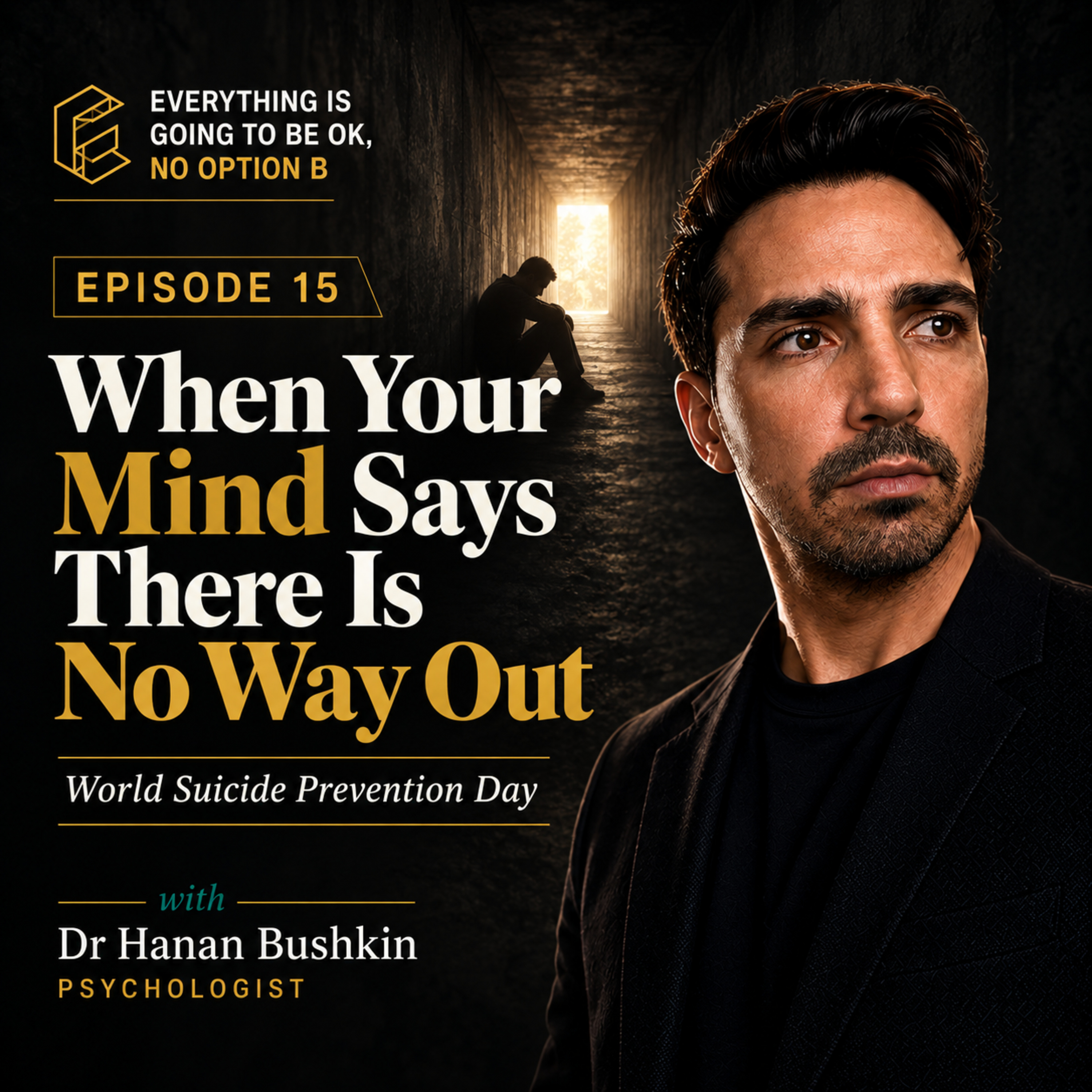 When your mind says there is no way out 08.09.2026 10минSometimes pain becomes so intense that it starts speaking with the authority of truth.“There is no way out.”“Nothing will change.”“No one can help.”“Everyone would be better without me.”Those thoughts can feel like conclusions.But there is an important difference between:“I cannot see a way out”and“There is no way out.”The first describes where you are standing.The second claims to know the entire future.In this episode of Everything Is Going to Be Okay, No Option B, I explore what happens when distress narrows the field of vision, why pain can be completely real without being a reliable predictor of what happens next, and why the next step does not have to be solving your whole life.Sometimes the next step is simply:Tell someone.Stay with someone.Move towards safety.Ask for help.Let another person hold perspective for a while.This episode is linked to World Suicide Prevention Day and its call to start the conversation.The message is simple:Believe the pain.Question the conclusion.If this is personal for you right now, please do not carry it alone.In South Africa, SADAG’s 24-hour Suicide Crisis Helpline is 0800 567 567.Your pain deserves to be taken seriously.But it does not get to be the sole author of what happens next.
 -
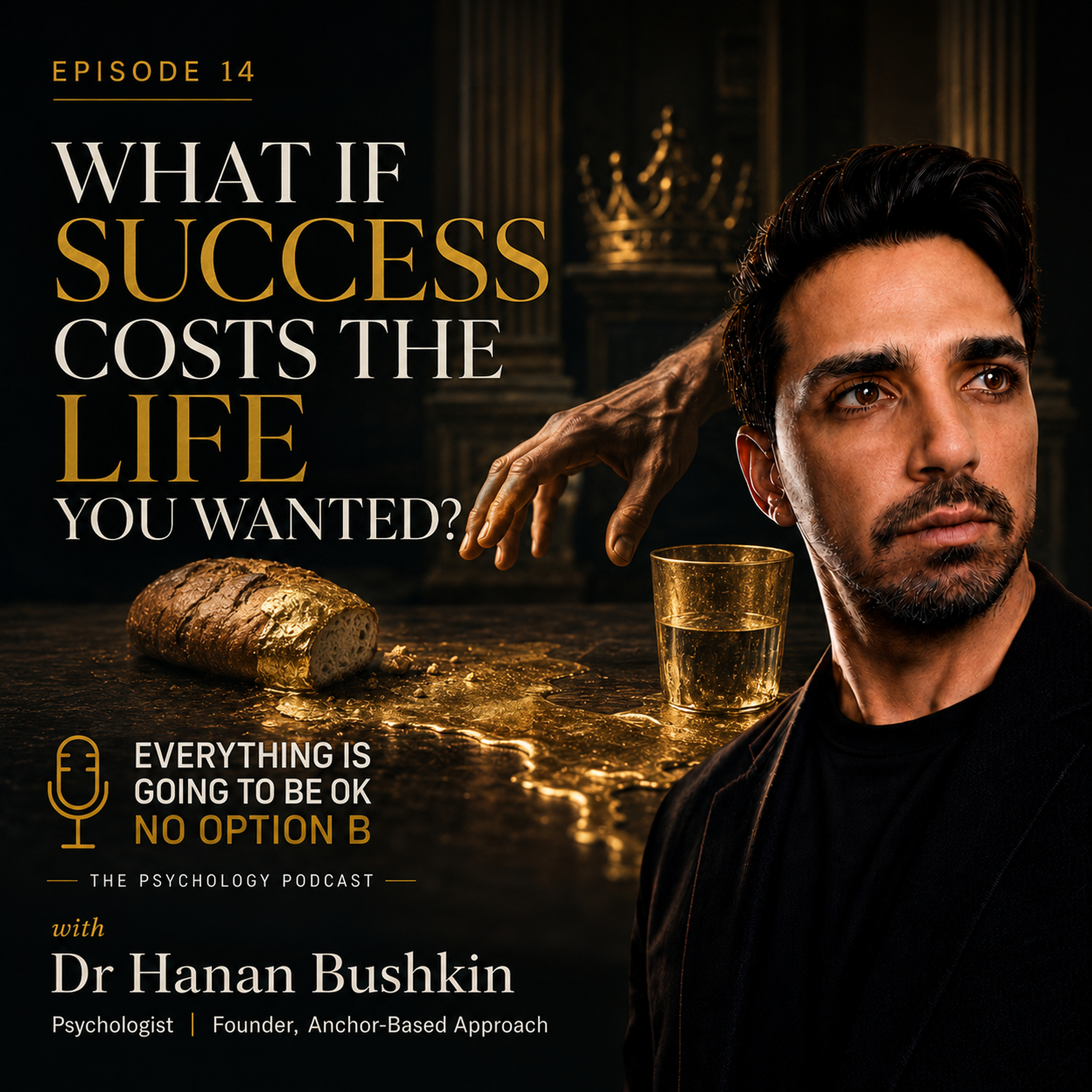 What if success costs you the life you wanted 01.09.2026 13минKing Midas didn’t ruin his life because he failed.He ruined it because he got exactly what he wanted.That’s what makes his story so unsettling. Everything he touched turned to gold—until he realised he could no longer eat, drink or hold anything he loved without destroying what made it valuable.In this episode, I want to talk honestly about ambition. Not about whether success matters, but about what we’re allowing it to cost us.Because sometimes we work to give our families a better life, while quietly giving them whatever is left of us. We tell ourselves it’s just a busy season. But somehow, that season keeps becoming our life.This isn’t an argument against ambition. I believe in working hard. I believe in sacrifice. But I also think we need to define success properly—and decide what the goal is not allowed to consume.Because if you gain the money, the title, the growth or the recognition, but lose your health, your marriage, your children, your integrity or your ability to enjoy your own life…Did you really succeed?Maybe not everything you touch needs to become gold.
 -
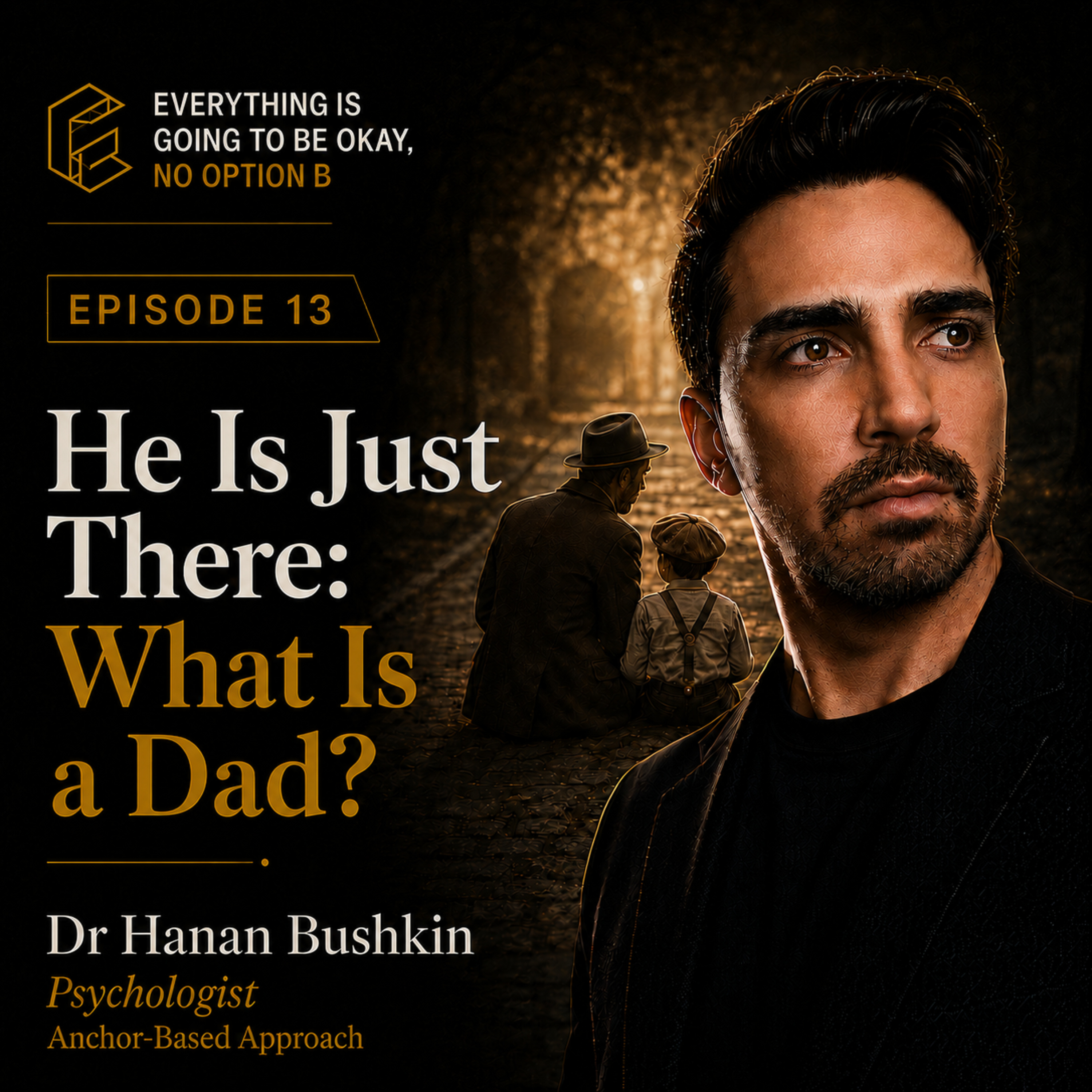 What is a "dad?" 25.08.2026 14минA child may never know what his father protected him from.In Life Is Beautiful, a father turns terror into a game so that his son does not have to fully see the horror around him. He carries the truth. He absorbs the fear. He pays the emotional cost.That is often what fatherhood looks like.Real fathers do not always receive thanks or acknowledgement. They protect, provide and take responsibility—often at their own expense. They see the pain in their children’s eyes, carry what they can, and keep trying even when they cannot make everything better.A father cannot shield his children from every wound. But he can remain present. He can stand between them and what threatens them. He can refuse to run when being a father becomes difficult.In Episode 13 of Everything Is Going to Be Okay, No Option B, I explore what truly makes someone a dad—and why some of the deepest forms of love are found in the burdens a father quietly chooses to carry.After listening, vote in the Spotify poll: What most makes someone a real father?
 -
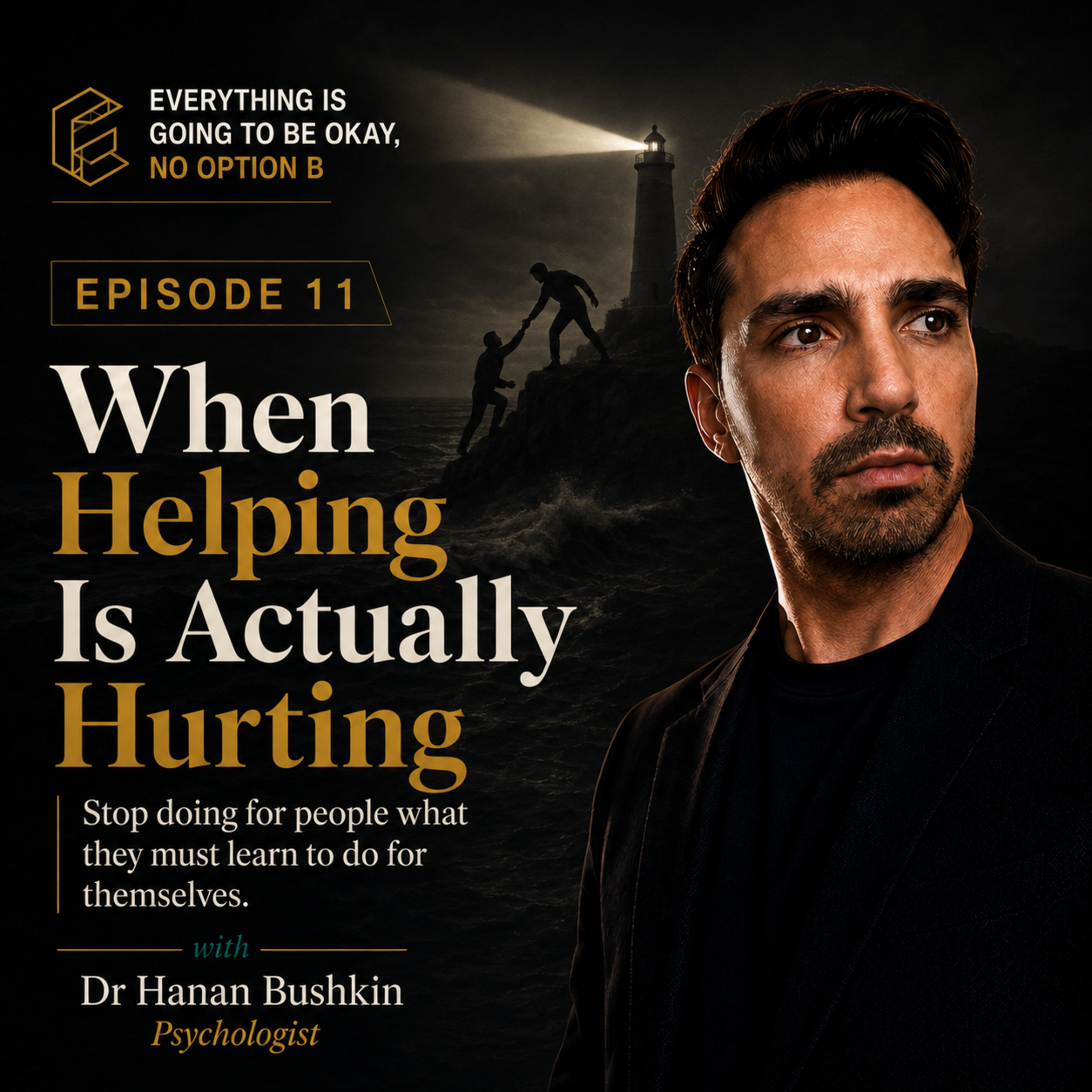 When Helping is Actually Hurting 18.08.2026 10минHelping feels loving.Rescuing feels loving.Stepping in, fixing the problem, making the call, removing the consequence, taking over the task — all of it can feel like care.But what if some forms of helping actually make people less capable?In this episode of Everything Is Going to Be Okay, No Option B, I unpack the difference between supporting someone and rescuing them.Because there is a crucial psychological distinction:Support helps someone become more capable.Rescuing can repeatedly do for them what they need to learn to do for themselves.That distinction matters in parenting, marriage, friendships, leadership and almost every close relationship.A parent finishes the assignment because the child is overwhelmed.A partner makes the difficult phone call because the other person is anxious.A manager takes back the task because it is easier than watching someone struggle.The immediate problem disappears.But what happens to the person’s confidence, judgement and capacity over time?Sometimes the dependency we later complain about is partly maintained by the way we help.And sometimes we rescue people not because they truly cannot cope — but because we cannot tolerate watching them struggle.That is where the lighthouse metaphor becomes useful.A lighthouse does not deny that the ocean is dangerous.It gives warning.It gives direction.It helps the ship navigate.But it does not chase the ship into the ocean and take over the steering wheel.Healthy support often does the same.It says:I am here.Let’s think this through.And you still need to take the next step.In this episode, I explore:The difference between helping and rescuingWhy short-term relief is not always evidence that help was healthyHow rescuing can unintentionally maintain dependenceWhy distress is not always the same as incapacityHow over-helping can create resentment in relationshipsWhy some people rescue others to manage their own anxietyThe three questions to ask before stepping inHow to support someone without abandoning them or taking overThe goal is not radical independence.People need people.The goal is agency — being supported while still remaining an active participant in your own life.Sometimes the most loving thing you can do is step in.And sometimes the most loving thing you can do is remain present while someone does something difficult for themselves.Because if you keep doing for people what they need to learn to do for themselves, eventually your help may become part of the problem.That is when helping is actually hurting.
 -
 When life refuses to make sense 11.08.2026 11минSometimes life gives you a reality you cannot explain, cannot fix and would never have chosen.This episode is deeply personal.It is dedicated to a friend I cared about who recently passed, and to the family and people who loved her.Grief can leave us devastated, angry and asking questions that may never receive satisfying answers.Why her?Why now?Why didn’t the treatment work?Why didn’t God intervene?But perhaps the task is not to make everything make sense.Perhaps the task is to decide how we will live when it doesn’t.In this episode, I explore grief through Viktor Frankl’s ideas about meaning, faith, anger with God, the responsibility to keep living, and the difference between losing hope and losing the outcome we hoped for.You do not have to “get over” someone you love.You carry them.And carrying them does not mean surrendering your own life.Because “Everything is going to be okay” does not mean everything will happen according to plan.It means that whatever reality arrives, we will meet it.We will feel it.We will question it.We may fall apart for a while.And then, when we can, we stand again.We keep loving.We keep living.We keep hoping.Everything is going to be okay.No Option B.
 -
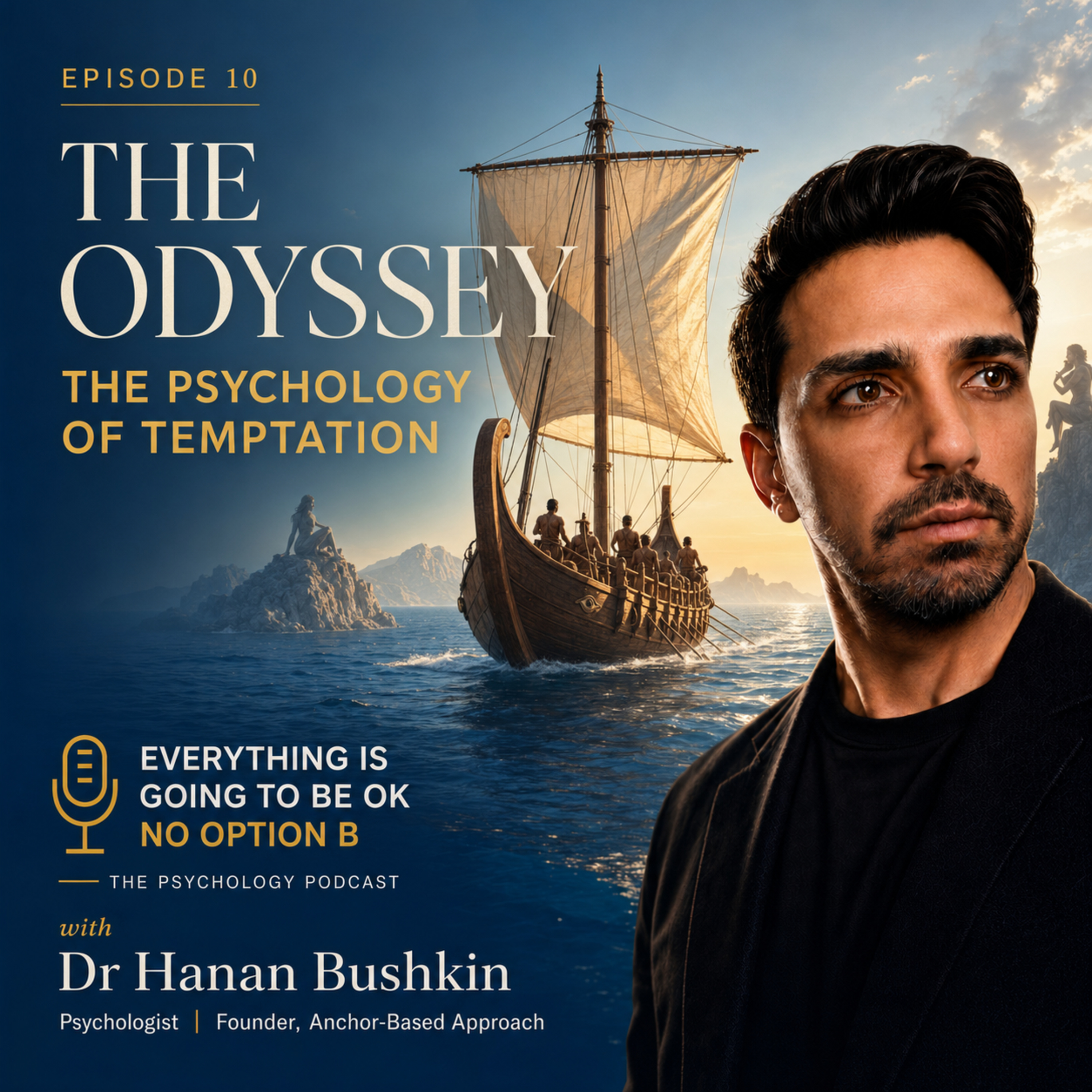 The Odyssey: The psychology of Temptation 04.08.2026 13минOdysseus knew that he was going to change his mind.So he made certain that nobody would listen to him when he did.Before sailing past the Sirens, Odysseus ordered his crew to block their ears with wax and tie him tightly to the ship’s mast. He warned them that once he heard the Sirens singing, he would beg to be released.They were not to obey him.They were to tighten the ropes.Odysseus understood something important about human behaviour: the person who makes a wise decision in a moment of clarity may not be the same person who must carry out that decision inside temptation.The person who calmly decides not to send the message is not the same person who feels rejected at midnight.The person who creates a budget is not the same person standing in front of something they desperately want to buy.The person who promises not to return to a destructive relationship is not the same person who feels lonely on a Sunday evening.In Episode 10 of Everything Is Going to Be Okay, No Option B, I explore The Odyssey, the psychology of temptation and why mature self-control sometimes means restricting our own future choices.The question is not only:“Why am I not strong enough to resist this?”Sometimes the better question is:“Why have I designed my life so that I must keep resisting it?”Your mast might mean charging your phone outside the bedroom, automating your savings, waiting until morning before sending an angry message, removing an app or asking someone to hold you accountable.These structures are not evidence of weakness.They allow the person who can see clearly to protect the person who may temporarily forget.Odysseus did not survive because he believed he could resist anything.He survived because he was honest about what he might not resist.Make your important decisions while you can still remember where you are trying to go.And before the song begins, build your mast.
 -
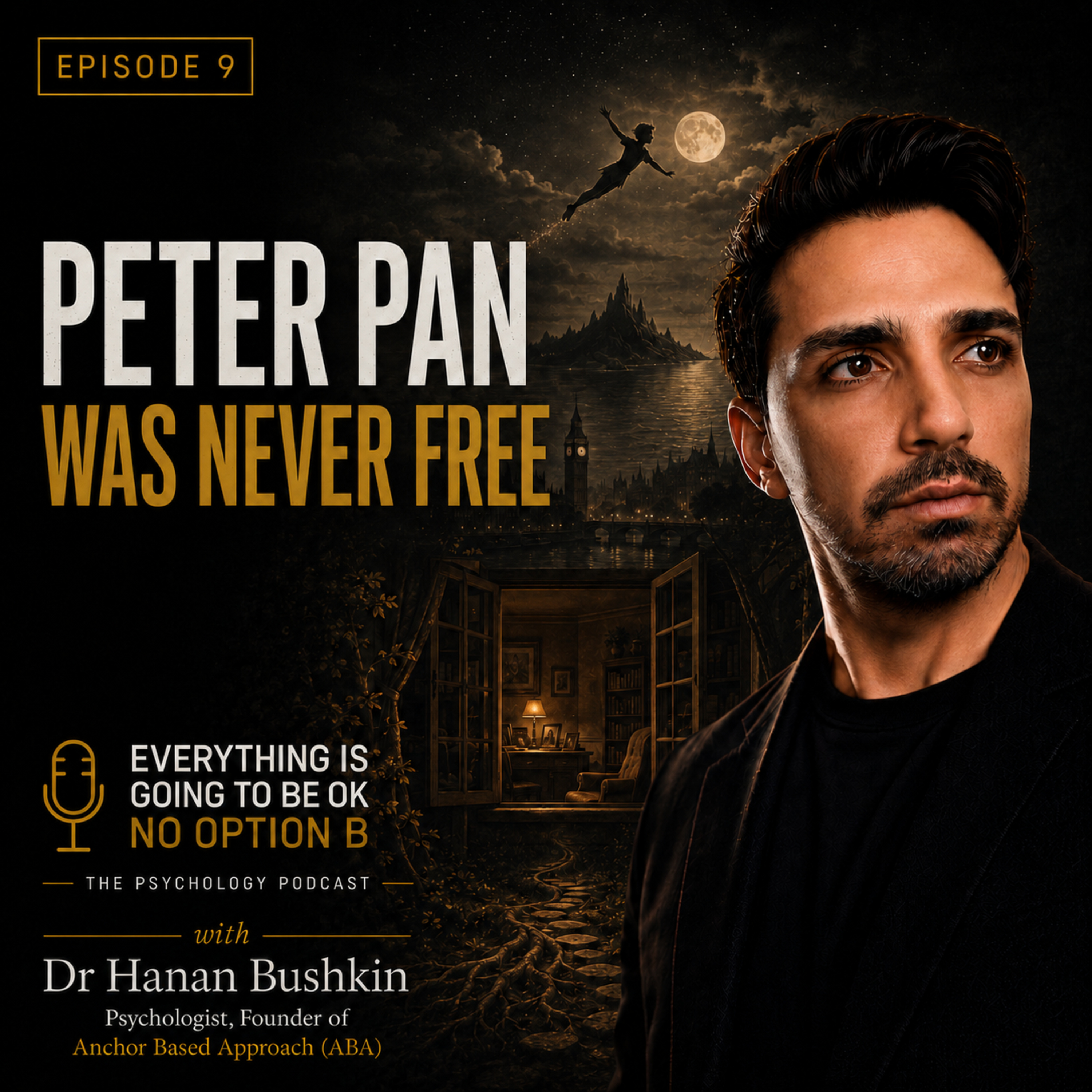 Peter Pan was never free 28.07.2026 12минPeter Pan could fly anywhere.But he could not build a life anywhere.As children, we see Peter Pan as the ultimate symbol of freedom. He never has to grow up, work, accept responsibility or allow anyone to tell him what to do.But look more carefully and Peter Pan becomes a far more tragic character.Everyone around him grows. Wendy builds a life. The Lost Boys find homes. Time gives their lives continuity, relationships and depth.Peter remains exactly where he is.He has endless adventures, but no meaningful story.In Episode 9 of Everything Is Going to Be Okay, No Option B, I explore the psychology behind Peter Pan, emotional maturity and the hidden cost of keeping every option open.We often want the rewards of adulthood without accepting the responsibilities that produce them.We want intimacy without compromise.Trust without predictability.Financial security without repetitive work.Self-respect without the behaviours that create it.But everything meaningful places limits on us.A relationship limits us.Parenthood limits us.A career limits us.A commitment limits us.Those limitations are not necessarily evidence that something has gone wrong. They are often the price of building something worthwhile.Growing up does not mean becoming dull, serious or miserable.It means becoming capable of carrying something.It means keeping promises when the emotion that created them has disappeared.It means accepting that every real choice closes another door.It means asking not only, “What do I feel like doing today?” but also, “What am I trying to build?”Because freedom is not simply the ability to avoid responsibility.Real freedom is becoming strong enough to choose a responsibility, carry it and use it to build a meaningful life.Peter Pan could fly anywhere.But Wendy was the one who went somewhere.
 -
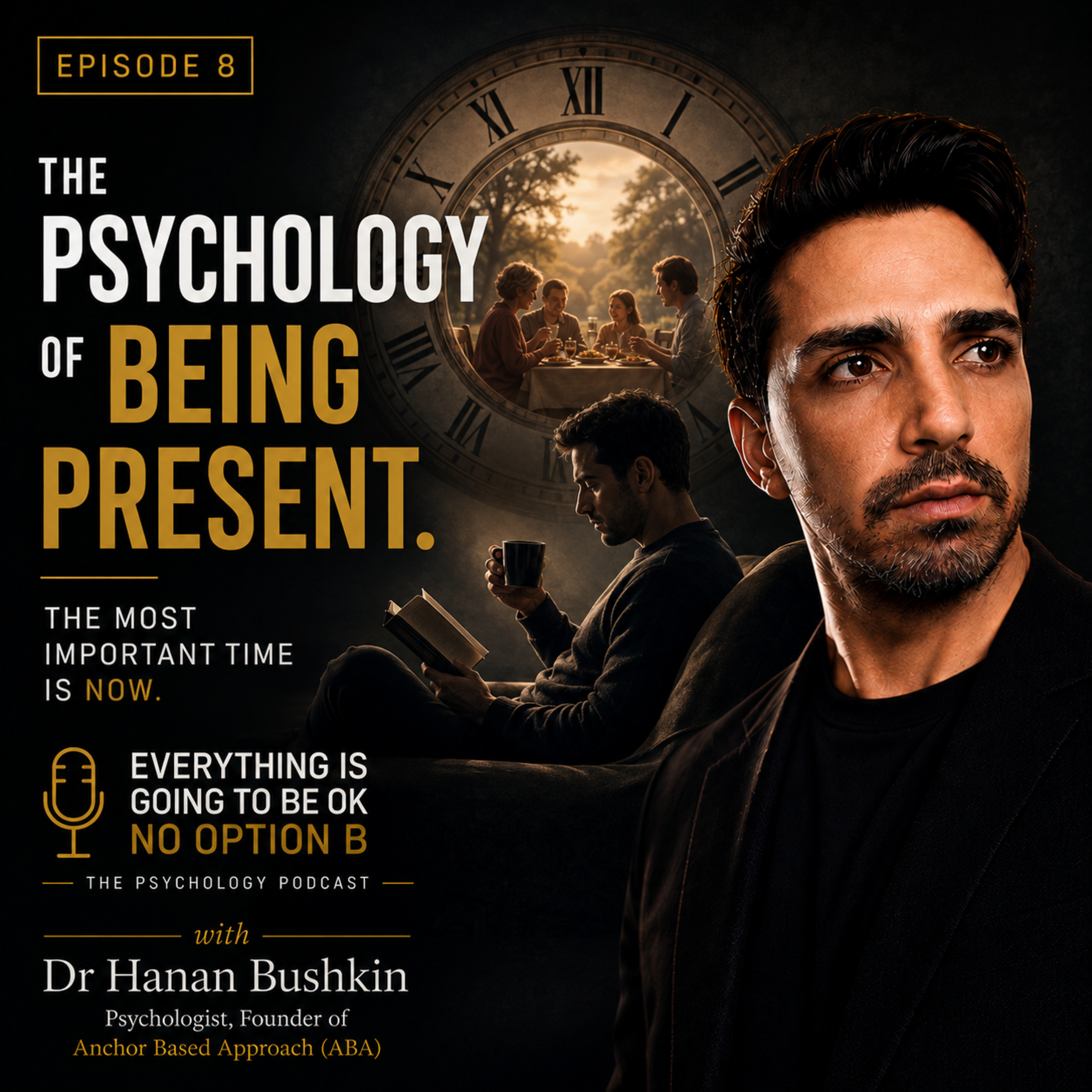 The psychology of being present 21.07.2026 11минMost of us are constantly moving towards the next thing.The next goal.The next holiday.The next achievement.The next version of ourselves.We tell ourselves that once life calms down, once we earn more, once the children are older or once we finally reach the goal, then we will relax and enjoy our lives.But the finish line keeps moving.In this episode, Dr Hanan Bushkin explores Leo Tolstoy’s famous story, The Three Questions, and the psychology behind one of life’s most important challenges:How do we keep moving forward without psychologically abandoning the present?This episode explores ambition, gratitude, attention, behaviour and the danger of treating today like a waiting room.Because gratitude is not the absence of ambition.It is the ability to recognise value while you still have access to it.You can want tomorrow without rejecting today.
 -
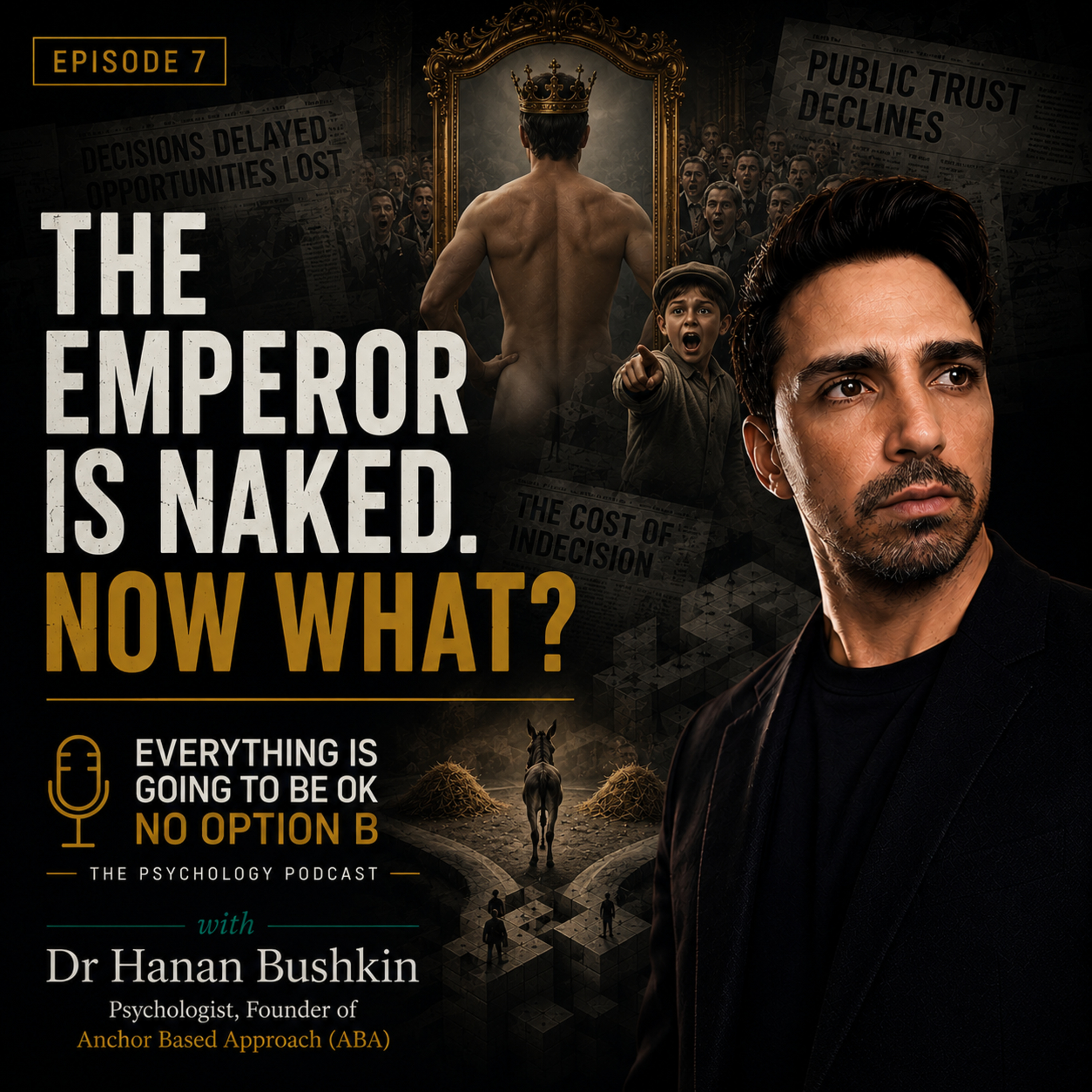 The Emperor Is Naked. Now What? 14.07.2026 13минMost people think The Emperor’s New Clothes is a story about vanity.It is also a story about what happens when everyone can see the truth, but nobody is willing to take a position.In this episode, I unpack why people sit on the fence, why indecision feels safer than commitment, and why every serious choice comes with a sacrifice.I also explore the old philosophical idea of Buridan’s ass: a donkey standing between two identical piles of hay, unable to choose, and eventually starving despite having food on both sides.The problem is not always that we have no options.Sometimes the problem is that we are waiting for an option with no risk, no regret and no cost.But that option does not exist.A mature life requires us to choose, accept what the choice costs, and then build meaning inside the life we have chosen.Because a life with every door permanently open is not necessarily freedom.Sometimes, it is just a corridor.In this episode:Why silence is still a positionWhy indecision is not neutralWhy every choice involves sacrificeWhy fantasy often makes the road not taken look betterHow to stop confusing avoidance with careful thinkingHow to choose, commit, behave, measure and reviewA psychologically honest episode about truth, commitment, sacrifice and the cost of refusing to choose.Everything Is Going to Be Okay, No Option B.
 -
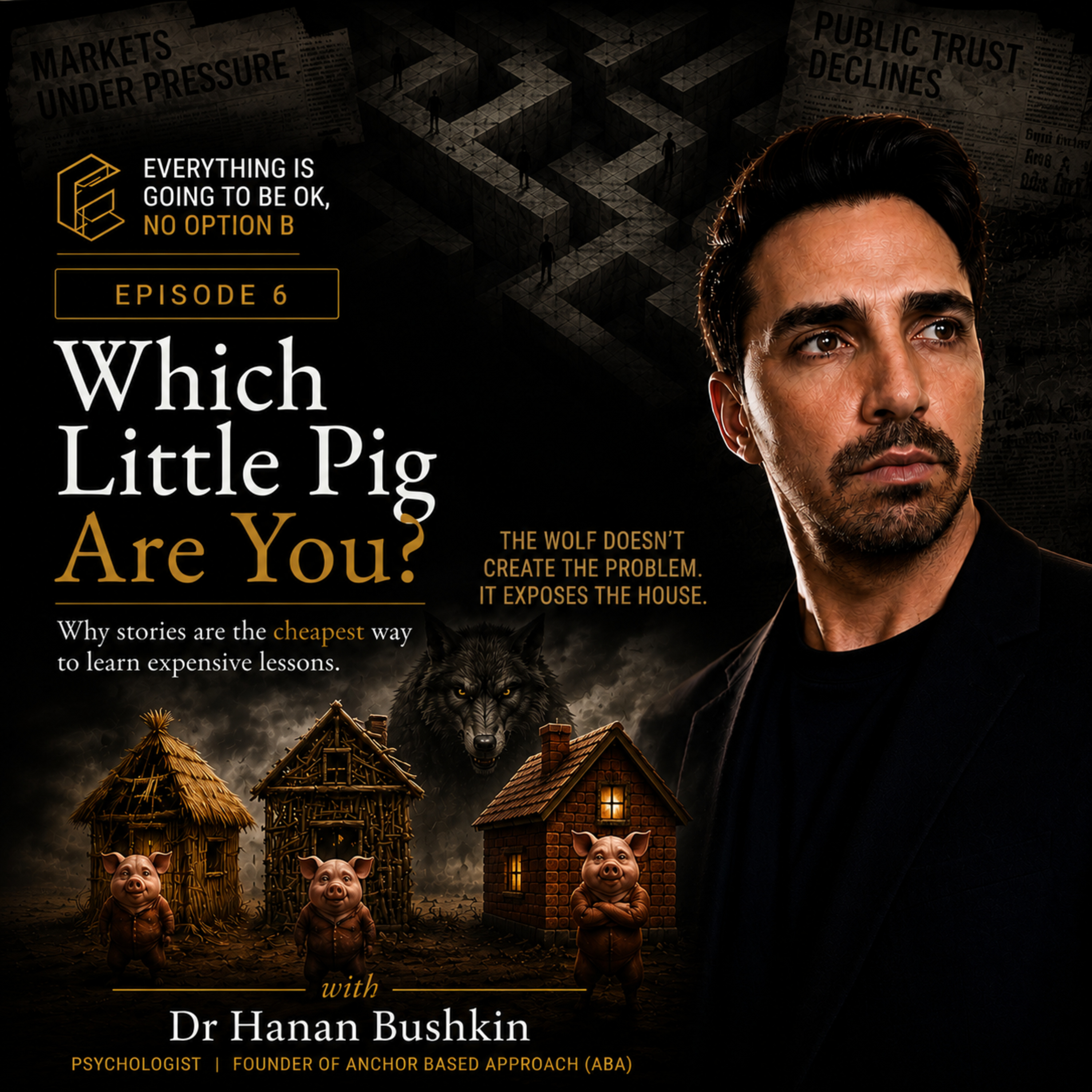 Which little pig are you? 07.07.2026 12минWhy do human beings love stories?Not just because they entertain us.Stories are one of the cheapest ways we learn.Someone else makes the mistake. Someone else ignores the warning. Someone else pays the price. And if we are paying attention, we get to collect the lesson without having to suffer the same consequence ourselves.We don’t have to slip on the banana peel. Sometimes we just need to watch someone else fall and ask: what did they miss?In Episode 6, Dr Hanan Bushkin looks at one of the most familiar stories of all time — The Three Little Pigs — and asks whether we have underestimated what it is really trying to teach us.Three pigs.Three houses.One wolf.Same pressure. Different outcome.Because the wolf does not create the weakness.The wolf exposes the house.And that is not just a children’s story. It is a psychological lesson about life.Anxiety. Financial pressure. Marriage stress. Parenting pressure. Burnout. Illness. Loss. Responsibility.The wolf comes in many forms.The question is not simply whether life will test us. The question is: what have we built before the test arrives?This episode explores why stories matter, how we learn through observation, why intention is not the same as structure, and what it means to build a life strong enough to survive pressure.Because the cheapest lesson is the one we learn from someone else’s consequence.The most expensive lesson is the one life has to teach us personally.Episode 6: which little pig are you?
 -
 You Don’t Need Better Boundaries. You Need a Better Life. 30.06.2026 16минAustralia has tried to set one of the biggest modern boundaries: no social media accounts for children under 16.And whether you agree with the law or not, the early signs reveal something important:A boundary does not work just because you announce it.You can ban the app.You can remove the phone.You can say no.But if a child’s friendships, boredom, identity, entertainment, status, validation and escape all live inside that phone, that boundary is going to struggle.And adults are no different.We think boundaries are about learning better ways to say no.But that is too shallow.A real boundary is not a clever sentence.A real boundary is the behavioural protection of something valuable.In this episode, Dr Hanan Bushkin explains why most boundaries fail — not because people do not know how to say no, but because they have not built something valuable enough on the other side of the no.Your sleep.Your marriage.Your children.Your health.Your dignity.Your future.Your self-respect.That is what gives a boundary strength.You do not need a better no.You need a better yes.Because the strongest boundary is not a sentence.It is a life you are not willing to lose.
 -
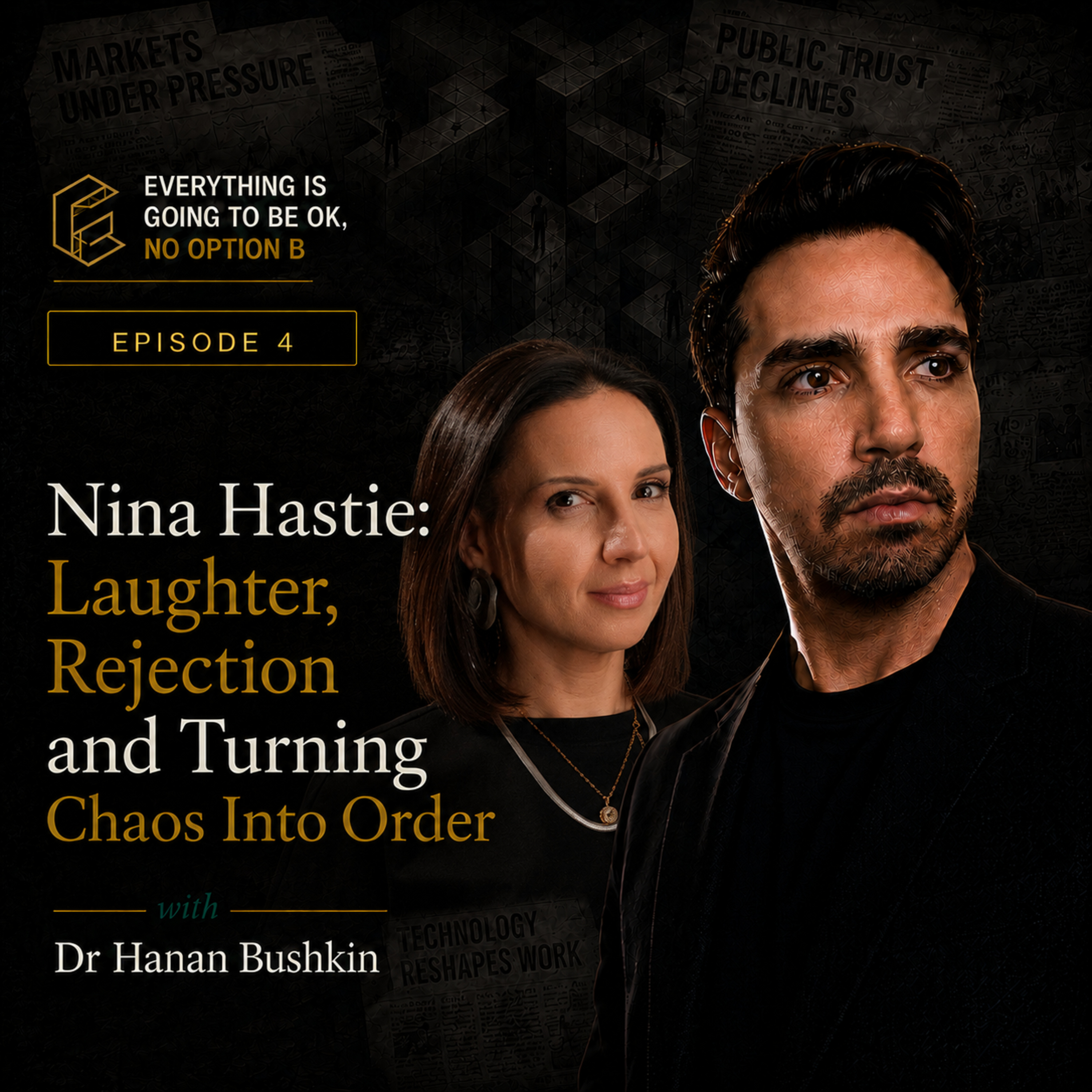 Nina Hastie; Laughter, Rejection, and turning Chaos into Order 23.06.2026 50минNina Hastie is known for being sharp, funny and impossible to ignore.But this conversation is not about celebrity.It is about the human being behind the humour.In this episode, Dr Hanan Bushkin sits down with Nina for a powerful conversation about laughter, rejection, addiction, sobriety, self-respect and the difficult work of turning chaos into order.They explore what humour can do for pain, why rejection hurts so deeply, how bad feedback can attack your sense of worth, and what it really takes to rebuild a life when the old way of surviving no longer works.This is an honest, funny, wise and deeply human conversation about what sits underneath performance, confidence and public success.If you have ever used humour to cope, struggled with rejection, battled destructive patterns, or tried to rebuild yourself quietly while the world expected you to keep functioning, this episode will resonate.A conversation about laughter, pain, responsibility, healing and choosing order — no option B.
 -
 Fifa World Cup. Have we lost perspective 16.06.2026 11минThe 2026 World Cup is the biggest in history — 48 teams, 104 matches, three host countries, and a global machine bigger than ever. But this episode asks a harder question: when does bigger stop meaning better?Dr Hanan Bushkin explores why more money, more success, more status, more achievement, and more scale can still leave a person unanchored. Because if growth destroys your sleep, family, health, peace, marriage, faith or self-respect, it is not success — it is self-betrayal with better branding.The question is not: can you make it bigger? The question is: can you keep it meaningful?
 -
 Are you loved, or are you just useful? 09.06.2026 10минEpisode 2: Are You Loved, or Are You Just Useful?In this episode of Everything is going to be ok, no option B, Dr Hanan Bushkin explores one of the most uncomfortable questions in relationships, families and everyday life: Are you actually loved — or have you become useful?There is a big difference between being needed and being respected. A mother can become the family Uber driver. A father can become the ATM. A partner can become the emotional container. A friend can become the person everyone calls only when they need something. And slowly, without anyone planning it, the relationship changes. You are no longer seen as a person. You are seen as a function.This episode looks at the psychology underneath that pattern: why usefulness can feel like love, why resentment builds when appreciation disappears, and why people often confuse being depended on with being valued.Hanan unpacks how families, marriages, friendships and workplaces can become machines where everyone is busy, everyone is doing their job, but the actual person gets lost.The key question is not whether people need you. The key question is whether they still see you. Because being useful may keep you included. But being loved means you are recognised beyond what you provide.A direct, practical and psychologically honest episode about love, respect, roles, resentment, emotional labour, family dynamics, and the quiet pain of becoming invisible inside your own usefulness.
 -
 When the Mirror Becomes the Master 28.05.2026 8минIn the first episode of Everything Is Going To Be OK. No Option B., Dr Hanan Bushkin explores what happens when the mirror becomes the master.We all need feedback. We all care, to some degree, how we are seen. But there is a point where reflection becomes identity — where the opinions, approval, applause, rejection, silence, and judgement of others start deciding who we think we are.This episode is about the psychological trap of living through the mirror: chasing validation, fearing criticism, outsourcing your self-worth, and slowly becoming dependent on external feedback to feel okay.The mirror can give you information. But it should never become your master.In this episode, Hanan explains how to use feedback without becoming owned by it, how to separate information from identity, and how to begin returning to a more anchored version of yourself.Everything is going to be OK. No option B.In this episode:Why the mirror is useful, but dangerous when it becomes your identityThe difference between feedback and self-worthWhy approval can become addictiveHow criticism can hijack your sense of selfWhy applause is not the same as peaceHow to begin living from anchors rather than external validationCore idea:Use the mirror for information, not identity.Disclaimer:This podcast is for educational purposes only and is not a substitute for therapy, diagnosis, or personalised mental health treatment. If you are struggling, please speak to a qualified mental health professional.
Подобни подкасти


Популярен в
Този подкаст се появява и в подкаст класациите на тези държави.

