
CAPS Unlock Podcast
Peter Leonard
0
The CAPS Unlock Podcast is a show hosted by Peter Leonard, focusing on topics related to the CAPS Unlock community. It features discussions and insights, likely covering various subjects of interest to its audience. The podcast is distributed via Substack and is available on Apple Podcasts.
Episodes
-
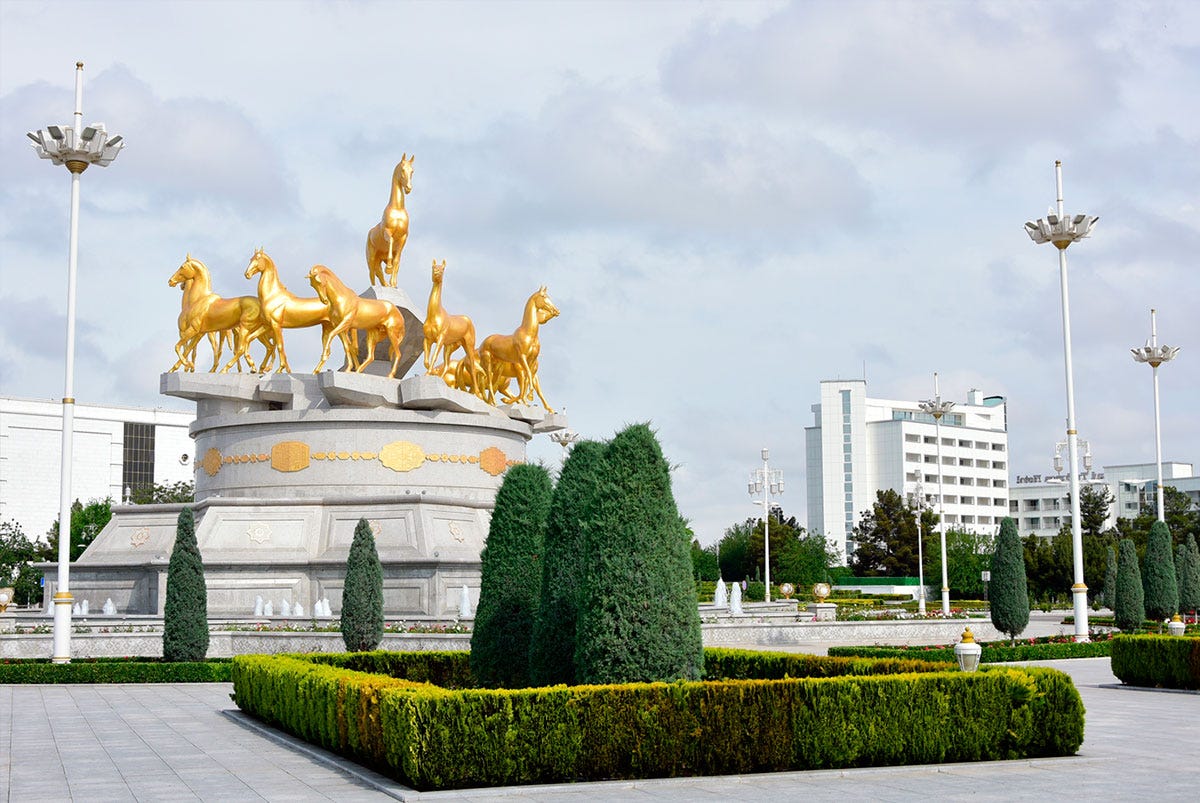 Turkmenistan’s e-visa test: A door opens... on paper 06.10.2026 37mThis week, we begin with Turkmenistan’s announcement that its e-visa system has finally gone live. On paper, this could remove a major obstacle for visitors. Tourists have traditionally needed a letter of invitation and a package from a licensed local agency, with hotels, transport and a guide arranged in advance. The new system is supposed to move the application online and eliminate the separate invitation. Yet crucial details remain unclear: the portal is difficult to locate, and the authorities have not explained eligibility, fees, processing times or whether travellers can apply without an intermediary. We ask whether this represents a genuine opening, or does it simply adds a digital layer to an unusually restrictive system?Our second topic is the 25 percent rise in trade among the five Central Asian states. They exported $8.1 billion in goods to one another between January and July, with Kazakhstan and Uzbekistan responsible for more than 80 percent of the total. We look beyond the headline at Kazakhstan’s dominant role, Uzbekistan’s expansion as both buyer and seller, Turkmen gas and electricity exports, and the threefold rebound in Kyrgyz-Tajik trade after their border reopened. The figures point to stronger regional ties, but not yet a common market. Much of the increase appears to involve larger shipments of familiar products along established routes, while smaller private exporters still face customs delays, certification rules, currency constraints and expensive logistics.And for this week’s interview, we spoke with Zhanibek Arynov, Assistant Professor at Nazarbayev University’s Graduate School of Public Policy. His ongoing research uses focus groups with university students to test whether a Central Asian identity exists beyond official diplomacy. His preliminary findings suggest that young Kazakhs do see Central Asia as a coherent region, while remaining Kazakh first and Central Asian second. They feel closest to Kyrgyzstan and Uzbekistan, know less about Tajikistan and Turkmenistan, and show little attachment to the older, Russia-associated idea of Eurasianism. Arynov cautions, however, that enthusiasm for regional unity may partly reflect limited knowledge of neighbouring countries and of the difficult choices that closer integration would raise.Links* Turkmenistan Launches E-Visas and Online Registration for Foreign Citizens, Turkmenistan Information Portal* Intra-Regional Trade in Central Asia in January–July 2026, Center for Economic Research and Reforms* Foreign Trade of Central Asian Countries: Trends, Barriers, and Prospects, by Yuliy Yusupov* Central Asia’s Ticket to Ride Out of Trade Isolation, by Yuliy Yusupov* Corridors Without Coordination: Why Uzbekistan’s Digital Trade Reforms Have Not Yet Produced an Integrated Export System, by Zebo Isakova* Zhanibek Arynov’s academic profile, Nazarbayev University Get full access to Havli - A Central Asia Substack at havli.substack.com/subscribe
 -
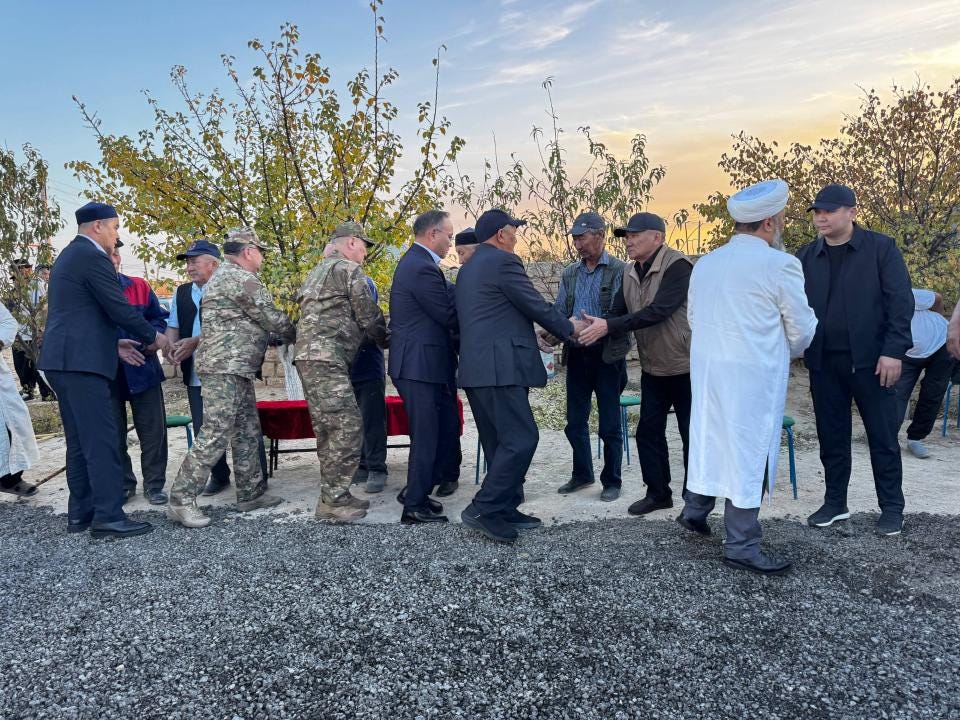 Caspian tragedy forces Kazakhstan’s army reckoning 29.09.2026 41mWe began this week’s edition of the CAPS Unlock podcast with the deaths of 14 Kazakh servicemen during a naval exercise on the Caspian coast. Seventeen men were swept into the sea during an amphibious landing, but only three survived. The Defence Ministry initially attributed the disaster to a sudden deterioration in the weather, but weather forecasters had already issued a warning. President Kassym-Jomart Tokayev later said the servicemen had not been properly equipped with life jackets. Five officers have been detained, Defence Minister Dauren Kosanov has been removed, and two commissions are examining both the incident and the wider condition of Kazakhstan’s armed forces. The tragedy has revived arguments over military safety, compulsory service and whether lessons were learned after a similar fatal exercise in 2015.Also, we considered Kyrgyzstan’s order for 10 freight locomotives from the U.S. company Wabtec. The purchase will renew almost a third of the national operator’s fleet and comes as Kyrgyzstan builds the China-Kyrgyzstan-Uzbekistan railway. Wabtec is American, but its regional manufacturing base is the LKZ factory in Astana, which it now owns outright. We trace that factory’s Kazakh, Russian and American history, and ask how the locomotive order fits alongside Chinese railway construction and Kyrgyzstan’s new transit-trade agreement with Pakistan. These projects reveal an emerging transport system built from American technology, Kazakh industry, Chinese infrastructure and access to South Asian ports.For our interview, recorded during ASIAC Days in Almaty, we spoke to Aleksei Chigadaev, a doctoral candidate in political science at Freie Universität Berlin. His ongoing research treats Chinese e-commerce as a form of infrastructural power. Chinese companies may supply not only a product but also the marketplace, payment system, warehouse, delivery network and data storage behind the purchase. This makes trade more efficient and easier to regulate, but it may also leave Kazakhstan dependent on commercial systems controlled elsewhere.Links* 14 Dead on the Caspian: What Questions Has the Tragedy Posed for Kazakhstan’s Army?, Informburo* Kazakhstan’s Tokayev Dismisses Defence Minister After 14 Die During Naval Exercise, Reuters* Bodies of Two Missing Caspian Servicemen Found; Search Operation Completed, Kazakhstan Ministry of Defence* Kyrgyzstan Will Purchase 10 Mainline Freight Locomotives from the United States, Kabar* How Kazakhstan Is Poised to Drive Wabtec’s Growth in Central Asia, Wabtec* Work Proceeds on Tunnels for the China–Kyrgyzstan–Uzbekistan Railway, Kyrgyz Ministry of Transport and Communications* Joint Statement by the Leaders of Pakistan and Kyrgyzstan, Pakistan Ministry of Foreign Affairs Get full access to Havli - A Central Asia Substack at havli.substack.com/subscribe
 -
 Why does gas-rich Kazakhstan need Gazprom? 22.09.2026 35mThis week, after an unplanned delay, we return to the podcast with a discussion of Kazakhstan’s seemingly growing reliance on Russian natural gas for its domestic needs.The country plans to buy around 11 billion cubic metres from Gazprom in 2026, almost three times last year’s volume, with another 9 billion under discussion for 2027. That sounds counterintuitive for a major oil-and-gas producer. The explanation lies less in the size of Kazakhstan’s reserves than in its ability to process the gas it extracts and turn it into marketable fuel. Disruptions at Tengiz, damage to the Russian processing plant serving Karachaganak and repeated delays to new processing capacity at Kashagan have squeezed supply just as household connections and industrial demand have expanded. Russian imports may address the immediate shortage, but the continued high volumes anticipated next year point to a more structural problem.In our other topic of discussion, we turn to the case of Mansur Movlayev, a 31-year-old Chechen dissident detained in Kazakhstan since May 2025. Russia seeks his extradition over an accusation that he financed extremist activity. Movlayev says the case is politically motivated and that Chechen security forces previously abducted and tortured him. Kazakhstan has refused him asylum and approved his extradition, although an interim-measures request from the UN Human Rights Committee calls on Kazakhstan not to remove him while it considers his complaint. After Kazakhstan’s Cassation Court upheld the refusal of asylum, Movlayev attempted to take his own life and reportedly made a second attempt while he received hospital treatment. His case tests Kazakhstan’s obligation not to return anyone to a country where they face a credible risk of torture.For our interview this week, we speak to Zebo Isakova, Doctor of Science in Economics at Kimyo International University in Tashkent. Her paper, “Corridors Without Coordination: Why Uzbekistan’s Digital Trade Reforms Have Not Yet Produced an Integrated Export System,” appears in The Argument, CAPS Unlock’s policy essay series.Isakova argues that Uzbekistan has invested heavily in roads, railways and digital trade procedures without fully connecting the agencies responsible for individual shipments. Exporters must still navigate separate systems, repeat information and wait for sequential approvals. Larger companies can absorb those costs; smaller businesses frequently cannot.Links* Corridors Without Coordination: Why Uzbekistan’s Digital Trade Reforms Have Not Yet Produced an Integrated Export System, by Zebo Isakova* Why Has Kazakhstan Started Deporting Political Activists?, by Temur Umarov* Russian Gas Supplies to Kazakhstan Could Triple to 11 bcm in 2026 — Deputy Minister, Interfax Kazakhstan* Россия захватывает газовую отрасль Казахстана? (Is Russia Taking Control of Kazakhstan’s Gas Industry?), Exclusive.kz* “I’m Tired of Injustice”: Chechen Activist Mansur Movlayev Attempted Suicide After Kazakhstan Denied Him Asylum, Bureau.kz* Остался только страх. Почему Казахстан отказывает в убежище уроженцу Чечни (Only Fear Remains: Why Kazakhstan Is Denying Asylum to a Chechen Native), Caucasus.Realities Get full access to Havli - A Central Asia Substack at havli.substack.com/subscribe
 -
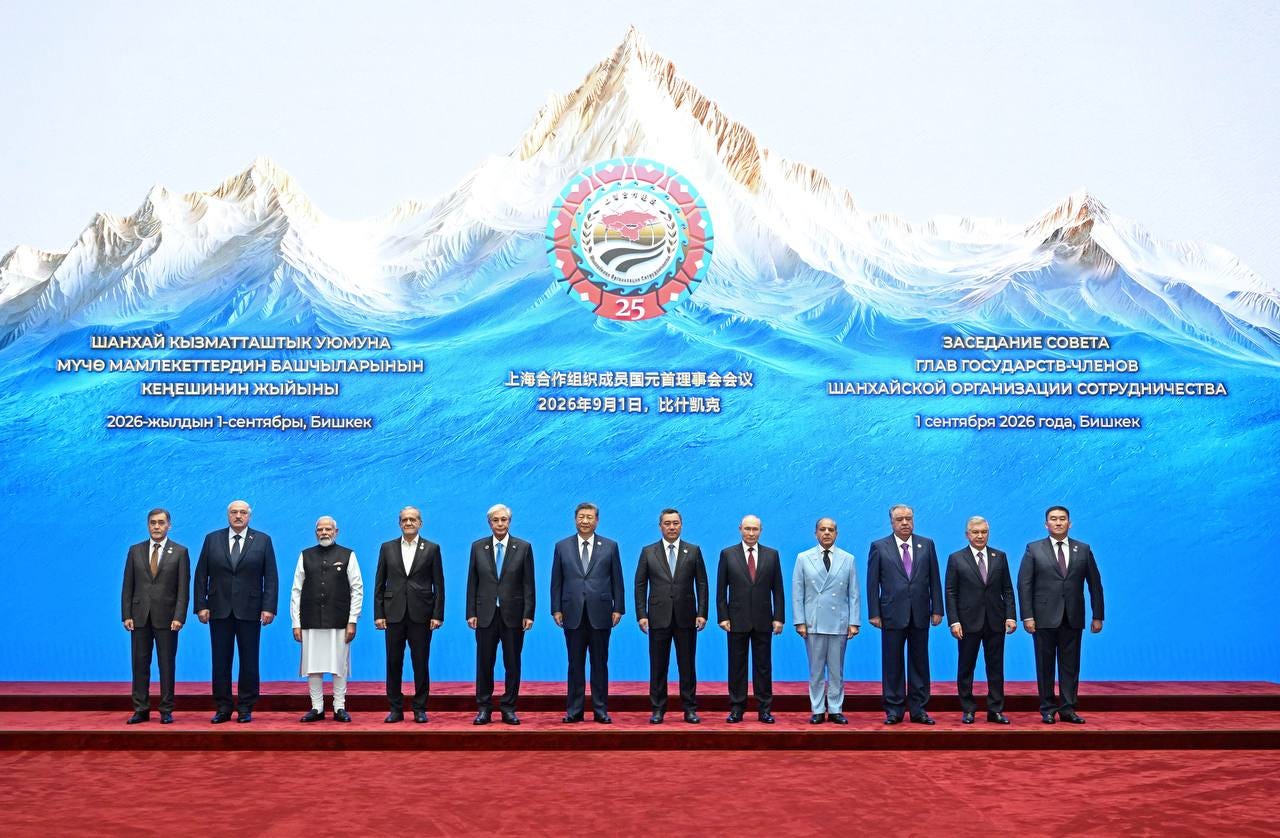 SCO’s future looking increasingly Chinese 01.09.2026 44mThis week, we begin in Bishkek, where leaders have gathered for a Shanghai Cooperation Organisation summit that marks 25 years since the group took its present institutional form. The prestige has come at a considerable cost for the host city, with road closures, commercial restrictions and severe disruption as Kyrgyzstan stages the summit alongside the World Nomad Games.We look back at the SCO’s origins as a forum created to settle borders and reduce tension between China, Russia and the newly independent Central Asian states. We then ask what the organisation has become as its membership and ambitions have expanded. China now dominates regional trade, supplies the manufactured goods Central Asia wants and buys many of its raw materials. Russia remains important through migration, security and inherited economic links, but it cannot match China’s manufacturing capacity. We also examine the China-Kyrgyzstan-Uzbekistan railway and Shavkat Mirziyoyev’s reported praise for “Chinese-style modernisation,” a revealing sign of China’s appeal as an economic, technological and increasingly political model.From Bishkek, we turn to Kazakhstan’s first election for its new 145-seat, single-chamber Kurultai. Adilet won 71.17 percent of the vote and 110 seats after it absorbed the former ruling party, Amanat. International observers said the election was technically well prepared but offered little genuine political choice. We consider whether Kazakhstan’s promised constitutional reset has produced anything substantially new, as well as the appointments of Yerlan Karin as vice president and Aibek Dadebay as speaker. We also look ahead to the new People’s Council and the succession speculation that now surrounds the 2029 presidential election.For our interview this week, we spoke with Ainagul Amatbekova, lead researcher for State of Youth Civic Engagement in Kyrgyzstan’s Shrinking Civic Space. The report challenges the idea that young Kyrgyz people have become apathetic. Civic participation has not disappeared, but has become quieter, safer and more local, with greater emphasis on volunteer work, mutual aid, education and online activity.Amatbekova explains how political pressure intersects with less visible barriers such as poverty, migration, gender and the divide between urban and rural communities. She also sets out what governments, civil society organisations and donors could do to make youth participation safer, more meaningful and more accessible.LinksState of Youth Civic Engagement in Kyrgyzstan’s Shrinking Civic Space — https://capsunlock.org/publications/state-of-youth-civic-engagement-in-kyrgyzstans-shrinking-civic-space/World Nomad Games: Did the Experiment Work? — https://capsunlock.org/world-nomad-games-did-the-experiment-work/Xinhua report on Xi Jinping’s meeting with Shavkat Mirziyoyev and “Chinese-style modernisation” - https://russian.news.cn/20260901/860d5d94ce8d4b43b4af0f52c0ddd52d/c.htmlOSCE/ODIHR, preliminary findings on Kazakhstan’s parliamentary election - https://odihr.osce.org/odihr/667167 Get full access to Havli - A Central Asia Substack at havli.substack.com/subscribe
 -
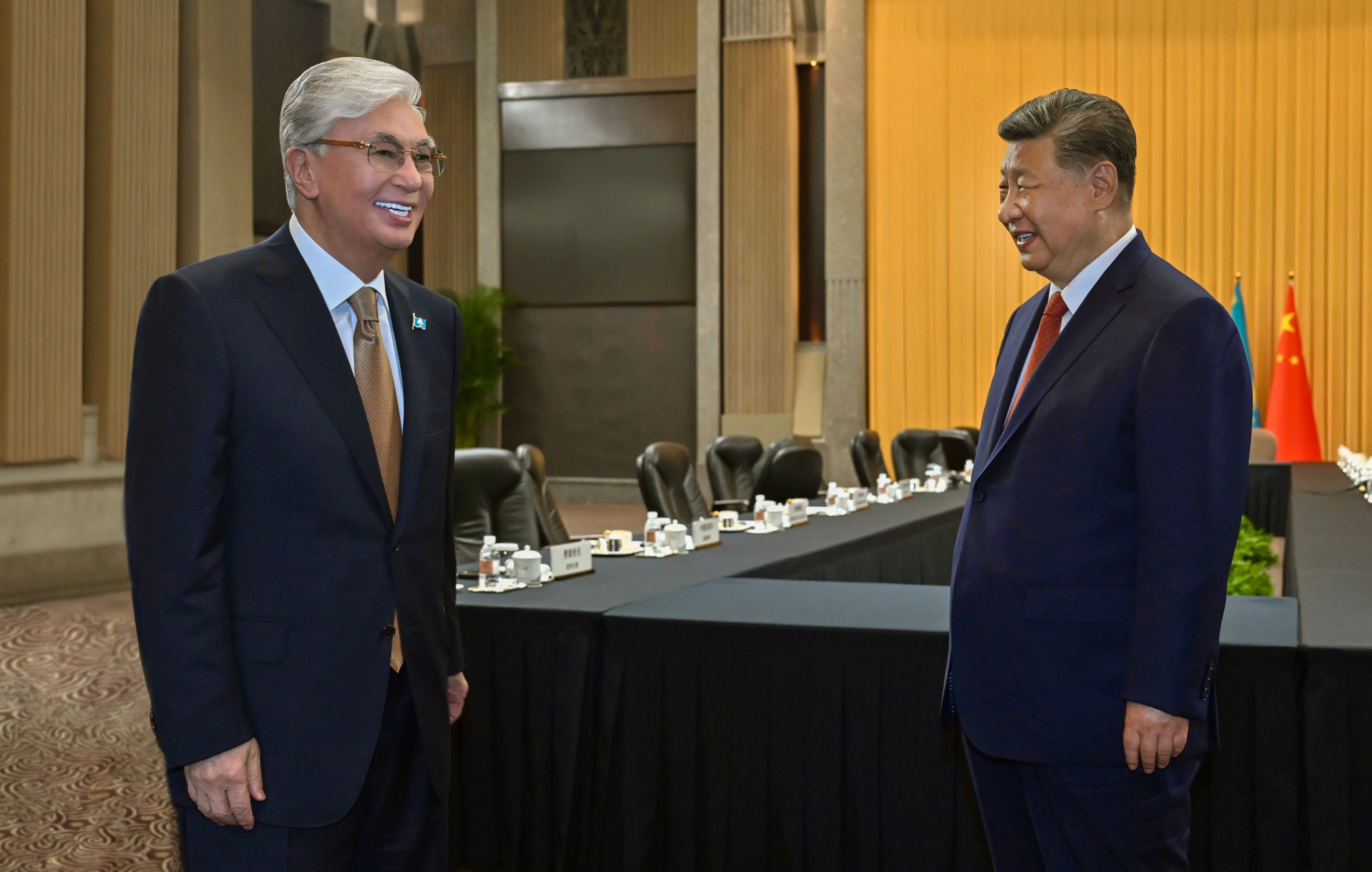 From population boom to AI diplomacy: Central Asia's next chapter 21.07.2026 38mCentral Asia is one of the world’s youngest and fastest-growing regions, but what do the latest demographic trends tell us about its future? This episode begins with new population figures from Kyrgyzstan, where the latest statistics point not only to continued growth but also to accelerating urbanisation. The discussion explores why Bishkek is expanding faster than the country as a whole, what falling fertility means for the region in the longer term, and why demographic change is becoming one of Central Asia’s defining policy challenges.The conversation then turns to Uzbekistan, where the country’s first population census in more than three decades revealed more than 810,000 additional residents compared with previous official estimates. We discuss what this means for measuring economic performance, labour markets and long-term development planning, and why the census may ultimately improve policymaking despite raising new questions about productivity and employment.In our interview section, Hugh McLean, Senior Adviser on Climate Change Education at CAPS Unlock, discusses an upcoming new policy discussion paper arguing that climate change education should become a compulsory element of education systems across Central Asia. Drawing on more than 1,000 contributions from young people through the Turn It Around Central Asia initiative, he explains why climate education should focus not only on environmental knowledge but also on agency, community action and preparing future generations for a changing climate.The episode concludes with a discussion of the World Artificial Intelligence Conference in Shanghai, where China outlined its vision for global AI governance. The hosts examine Kazakhstan’s participation, the creation of a new international AI cooperation organisation, Central Asia’s increasingly important role in global technology diplomacy, and the opportunities and risks that accompany growing dependence on foreign AI ecosystems.LINKSTurn It Around project - https://capsunlock.org/projects/tia-central-asia-cards-eng/Kyrgyzstan population news - https://24.kg/obschestvo/381849_naselenie_kyirgyizstana_prevyisilo_74milliona_chto_pokazala_novaya_statistika/Uzbekistan population surpasses 39 million - https://www.gazeta.uz/ru/2026/06/30/population-uzbekistan/ Get full access to Havli - A Central Asia Substack at havli.substack.com/subscribe
 -
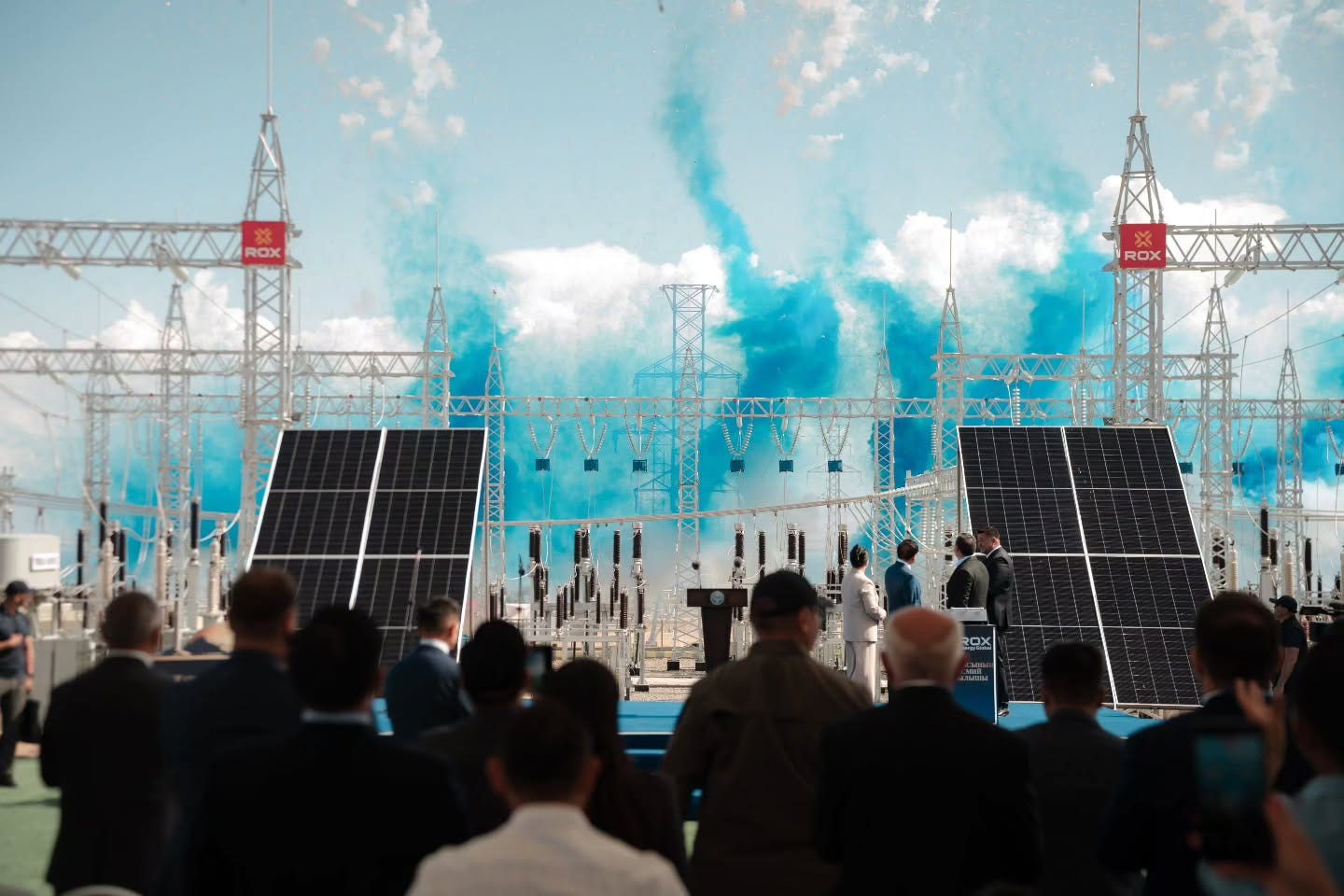 Kazakhstan’s uranium bargain with China 14.07.2026 38mCentral Asia’s electricity systems are under growing strain. Kyrgyzstan expects to import more than 4 billion kilowatt-hours of electricity this year as rising demand collides with its heavy dependence on hydropower and low water levels at the Toktogul Reservoir. Tajikistan faces a similar problem: reduced inflows into the Nurek Reservoir have cut power generation and forced the government to curb electricity exports ahead of another difficult winter.Uzbekistan, meanwhile, has set a new record for summer electricity consumption as extreme heat drives greater use of air conditioning. The country has so far managed to match demand with production, helped by rapid growth in solar generation. But the wider regional problem remains unresolved: despite complementary power systems, electricity trade within Central Asia still accounts for only a small share of total demand.This week’s guest is Antoine Magnier, a master’s student in political science at McGill University who recently completed an internship with CAPS Unlock. His new paper, Kazakhstan’s Uranium Bargain: Trading Resources for Technology, examines the deepening nuclear relationship between Kazakhstan and China.China needs secure uranium supplies for its rapidly expanding fleet of nuclear reactors and wants foreign markets for its technology. Kazakhstan wants to move beyond the export of raw uranium and secure a larger role in fuel production, reactor construction and the wider nuclear supply chain. Magnier explains how Astana is attempting to trade access to its resources for technology, while avoiding excessive dependence on either China or Russia.The episode closes with a look at how false copyright complaints and coordinated reporting campaigns can turn social-media moderation systems into tools of extortion and political pressure against journalists, media outlets and election observers in Kazakhstan.LINKS* Antoine Magnier, Kazakhstan’s Uranium Bargain: Trading Resources for Technology - https://capsunlock.org/publications/kazakhstans-uranium-bargain-trading-resources-for-technology-2/* Uzbekistan’s record summer electricity consumption - https://www.spot.uz/ru/2026/07/11/electricity-summer/* Kyrgyzstan’s projected electricity imports for 2026 - https://24.kg/ekonomika/381062_bolee_4milliardov_kilovatt-chasov_elektroenergii_importiruetkr_v2026_godu/* Tajikistan’s winter electricity outlook and Nurek Reservoir levels - https://asiaplus.news/2026/07/13/predstoyashhej-zimoj-sveta-budet-bolshe-ministr-energetiki-tadzhikistana-dal-prognoz-na-otopitelnyj-sezon/ Get full access to Havli - A Central Asia Substack at havli.substack.com/subscribe
 -
 The rise of AI surveillance in Kazakhstan 07.07.2026 36mUzbekistan’s strategic outlook continues to evolve. This week we examine President Shavkat Mirziyoyev’s landmark state visit to Georgia, the first by an Uzbek president in more than two decades. Beyond the diplomatic symbolism, we discuss what was actually agreed: plans to deepen cooperation on the Middle Corridor, new logistics infrastructure centred on Georgia’s Black Sea ports, and a growing economic partnership that could reshape Uzbekistan’s access to European markets.We then turn to Kyrgyzstan, where former security chief Kamchybek Tashiyev has been convicted in the high-profile “Letter of the 75” case. We assess why the suspended prison sentence matters, what it says about the relationship between President Sadyr Japarov and his former ally, and whether the latest reshuffle of the country’s security apparatus represents genuine institutional reform or simply a redistribution of power.In our interview slot, we’re joined by Paolo Sorbello, editor of the English service of independent Kazakhstan news outlet Vlast.kz, to discuss his major recent investigation into the country’s rapidly expanding digital surveillance infrastructure. Drawing on extensive reporting, Sorbello explains how facial recognition, AI-powered CCTV, smart-city projects and large-scale data collection are becoming embedded in everyday life. We discuss the government’s case for these technologies, their role in policing and public services, and the broader questions they raise about privacy, accountability and political control.LINKS* Paolo Sorbello’s feature on Kazakhstan’s digital surveillance system (Vlast.kz) - https://vlast.kz/english/69775-kazakhstans-big-brother.html Get full access to Havli - A Central Asia Substack at havli.substack.com/subscribe
 -
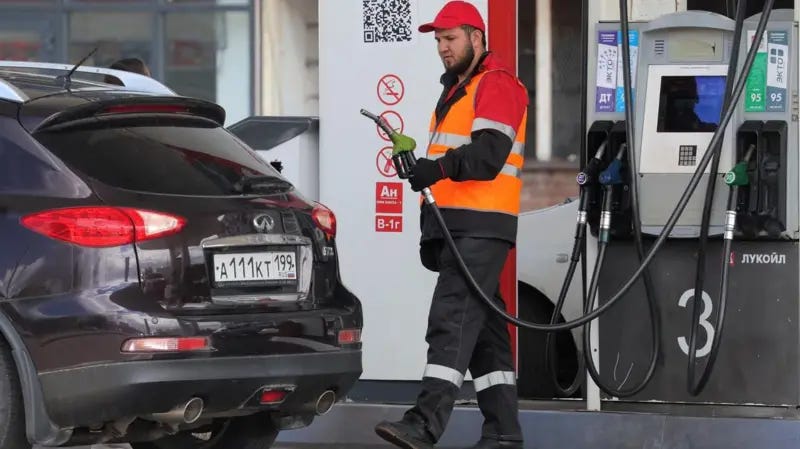 The long arm of Turkmenistan 30.06.2026 42mRussia’s fuel crisis is no longer just Russia’s problem. As Ukrainian strikes continue to disrupt refinery capacity, shortages are spreading across the country, forcing Moscow to manage supplies and raising difficult questions for its neighbours. We examine what this means for Kazakhstan, whose own refining capacity remains limited despite its vast oil reserves, and for Kyrgyzstan, which depends heavily on Russian fuel imports. We also look at how widening price differences have fuelled an extraordinary smuggling economy stretching across Central Asia.We then turn to President Kassym-Jomart Tokayev’s visit to Brussels. While headlines focused on the announcement of roughly $12 billion in commercial agreements, we ask whether the more consequential developments were political rather than financial. We discuss progress towards an EU-Kazakhstan visa facilitation agreement, new aviation arrangements, and what closer cooperation with European partners could mean for Kazakhstan’s long-term economic development and technological ambitions.In the interview slot, we speak with Hugh Williamson, director of the Europe and Central Asia division at Human Rights Watch, following the publication of the organisation’s major new report on Turkmenistan’s campaign against activists at home and abroad. The report documents imprisonment, enforced disappearances, surveillance of exiled dissidents, pressure on family members, passport restrictions and alleged forced returns from countries including Turkey and Russia. Williamson explains how Turkmenistan has expanded its methods of transnational repression, why September 2022 marked a turning point, and whether international pressure can realistically improve one of the world’s most closed political systems.Links* Human Rights Watch report on Turkmenistan’s transnational repression of activists - https://www.hrw.org/feature/2026/06/24/lives-destroyed-for-speaking-out-turkmen-activists-at-home-and-in-exile/the* Reuters report on Russia’s request to Kazakhstan for AI-92 gasoline supplies - https://www.reuters.com/business/energy/russia-asks-kazakhstan-gasoline-ease-shortages-sources-say-2026-06-24/* European Commission statement following President Tokayev’s visit to Brussels - https://ec.europa.eu/commission/presscorner/detail/de/statement_26_1436 Get full access to Havli - A Central Asia Substack at havli.substack.com/subscribe
 -
 What Central Asia teaches us about happiness 23.06.2026 41mThis week’s episode begins with Uzbekistan’s historic World Cup appearance, the first by any Central Asian country. The opening match against Colombia did not deliver the result Uzbek fans wanted, but it did produce the country’s first ever World Cup goal and a striking display of regional support. From fan zones in Bishkek to messages of solidarity from neighbouring countries, Uzbekistan’s campaign has become more than a football story. It has also offered a glimpse of how sport can shape identity, pride and regional feeling across Central Asia.The episode then turns to Kazakhstan, where the newly created Adilet party has merged with Amanat, the long-dominant pro-presidential party formerly known as Nur Otan. What initially looked like a potential shake-up of Kazakhstan’s managed political system now looks more like a rebranding exercise. The discussion looks at what the merger says about political engineering, elite management and the coming elections to Kazakhstan’s new single-chamber Kurultai.For this week’s interview, the focus shifts to a very different subject: happiness. Professor Shoirakhon Nurdinova of the Kimyo International University in Tashkent discusses her book Happiness and Life Satisfaction in Central Asia, the first major comparative study of subjective well-being across the region.The book asks how people in Kazakhstan, Kyrgyzstan, Tajikistan, Turkmenistan and Uzbekistan evaluate their own lives, and whether standard international measures of happiness capture what really matters in Central Asia. Nurdinova argues that income and GDP alone do not explain life satisfaction. Family trust, freedom of choice, informal support networks, health, employment patterns and local institutions such as the mahalla can matter just as much, and sometimes more.The conversation also explores why Western models of happiness may fail to capture Central Asian realities, and what policymakers should learn from looking beyond growth figures.LinksShoirakhon Nurdinova, Happiness and Life Satisfaction in Central Asia — https://link.springer.com/book/10.1007/978-981-95-3082-3 Get full access to Havli - A Central Asia Substack at havli.substack.com/subscribe
 -
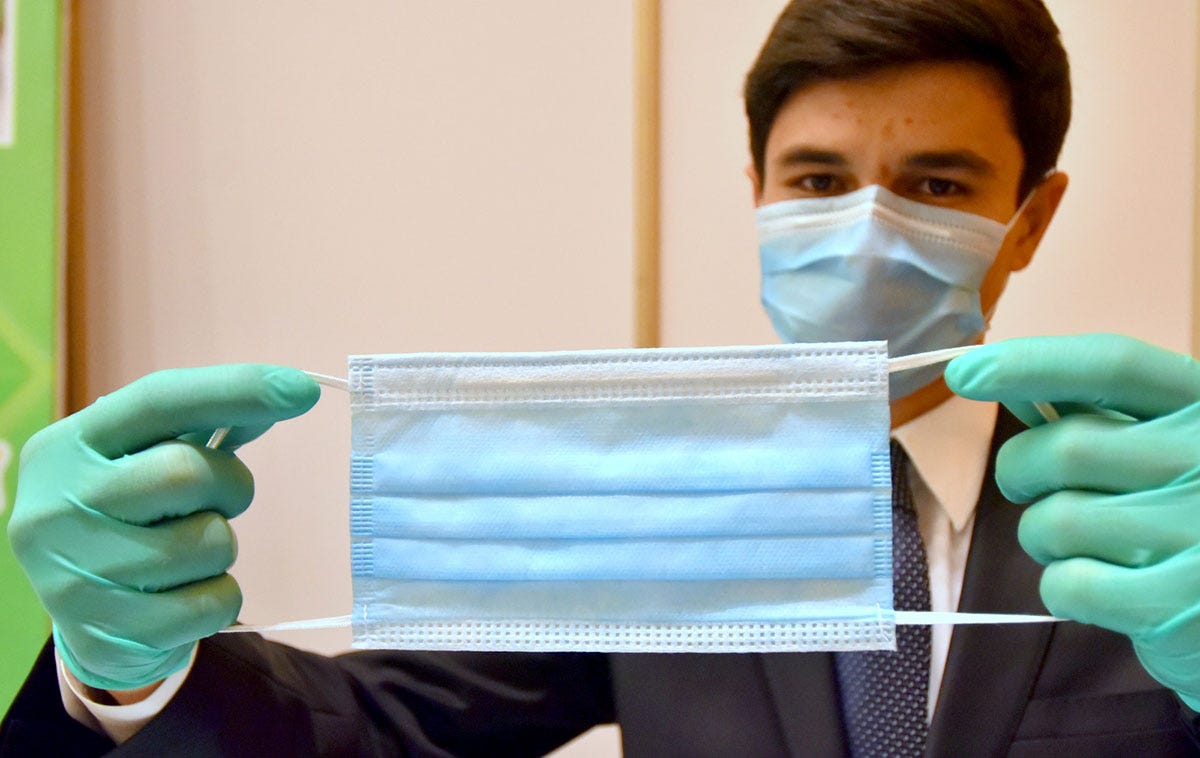 How COVID became a toolkit for control in Central Asia 16.06.2026 39mThis week’s episode of the CAPS Unlock podcast is devoted to a conversation with Luca Anceschi, Senior Lecturer in Central Asian Studies at the University of Glasgow, about his newly published book, Pandemic Politics in Central Asia.The book examines how three Central Asian governments, Kazakhstan, Turkmenistan and Uzbekistan, responded to the COVID-19 pandemic. Anceschi argues that the pandemic was not simply a public health emergency that these regimes struggled to manage. Under cover of crisis, governments expanded their control over travel, public information and dissent, while shielding politically connected elites and reinforcing existing patterns of authoritarian rule.The discussion looks at the blurred line between emergency rule and ordinary governance, the different ways Kazakhstan, Uzbekistan and Turkmenistan framed the pandemic, and why Turkmenistan’s refusal to acknowledge any COVID cases became one of the most striking examples of pandemic-era denialism anywhere in the world.We also discuss the longer history of crisis management in Central Asia, from Soviet-era disasters to post-Soviet emergencies, and how governments have often responded not by solving underlying problems, but by managing appearances, controlling data and suppressing alternative accounts.The episode also covers the role of journalists, activists and international organisations, including the World Health Organisation, in documenting or contesting official narratives.Links* Luca Anceschi, Pandemic Politics in Central Asia - https://www.routledge.com/Pandemic-Politics-in-Central-Asia-Authoritarian-Contagion/Anceschi/p/book/9789048562190* CAPS Unlock roundtable summary: The missing link in Central Asia’s energy transition - https://capsunlock.org/roundtable-the-missing-link-in-central-asias-energy-transition/* Aruzhan Meirkhanova’s report on Central Asia’s electricity grids - https://justclimate.fes.de/topics/energy-policy-fast-forward-to-renewables/powering-the-transition-rebuilding-central-asias-electricity-grids-for-regional-resilience.html Get full access to Havli - A Central Asia Substack at havli.substack.com/subscribe
 -
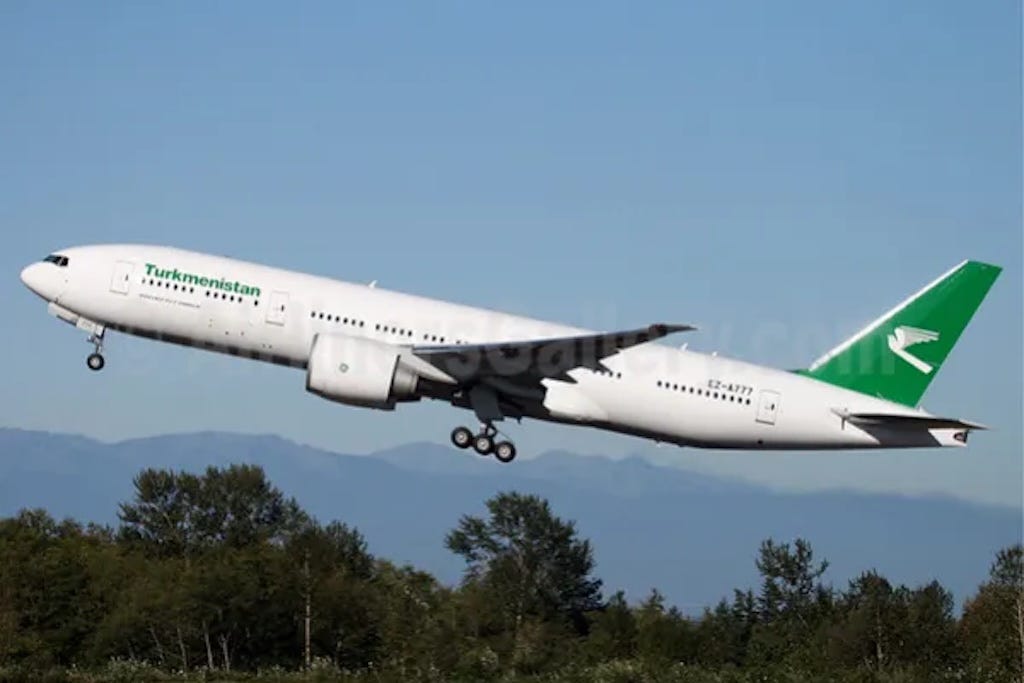 Turkmenistan’s migration trap 02.06.2026 32mThis week’s CAPS Unlock podcast does something different. Instead of our usual regional round-up, we devote the full episode to Turkmenistan, a country too often left at the margins of Central Asia analysis, or reduced to caricature.We speak with Gulshat Chmaisse, a PhD candidate at the Australian National University’s Centre for Arab and Islamic Studies, about her new paper, Turkmenistan’s migration policies: Reshaping economy and society, published as part of CAPS Unlock’s The Argument series.The paper centres on a striking paradox. Turkmenistan depends heavily on labour migration. Remittances sent home by citizens abroad help sustain household consumption, offset low wages and limited state support, and reduce pressure for domestic economic reform. Yet the state also obstructs migration through passport restrictions, opaque rules, exit bans, blacklists and informal payments.Rozyyeva explains why official data badly understate Turkmenistan’s dependence on remittances, how informal transfer networks and the black-market exchange rate shape household survival, and why Turkey has become the main destination for Turkmen labour migrants while Russia remains important for students.The conversation also explores the feminisation of Turkmen migration. As men face greater scrutiny at borders and through military-linked restrictions, women increasingly migrate independently and become primary earners abroad, especially in domestic and care work. That shift brings new economic agency, but also legal insecurity, family separation, exploitation and trafficking risks.Listeners can find Gulshat Chmaisse’s paper at CAPS Unlock’s website: www.capsunlock.org Get full access to Havli - A Central Asia Substack at havli.substack.com/subscribe
 -
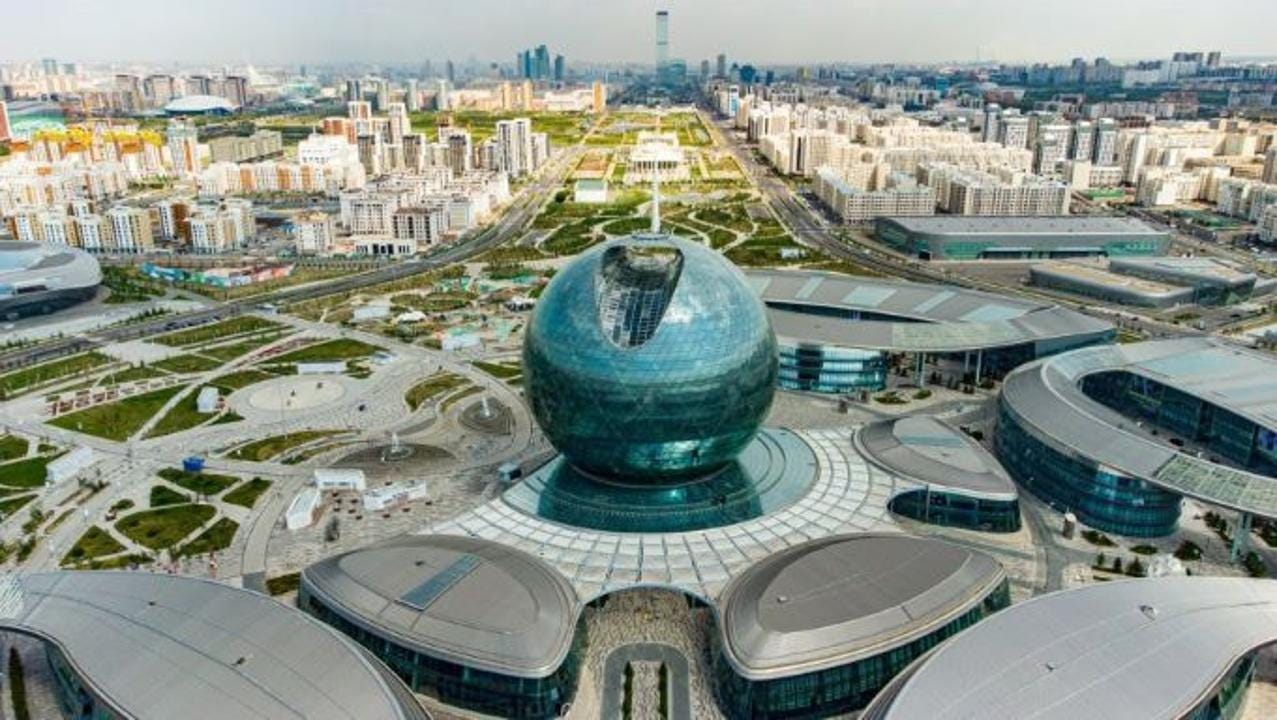 Central Asia tries to become a region 26.05.2026 33mThis week’s episode of the CAPS Unlock podcast begins with the legal and political dispute around Gazprom and Naftogaz in Kazakhstan. A court at the Astana International Financial Centre recognised a Swiss arbitration award of around $1.4 billion in favour of Ukraine’s Naftogaz against Russia’s Gazprom. But Kazakhstan’s justice minister later said the ruling would not be enforced, arguing that the dispute had no meaningful legal connection to Kazakhstan or the AIFC. We discuss why this matters, what the AIFC was created to do, and why the case exposes a tension between the centre’s international commercial-law ambitions and the Kazakh state’s political caution.We then turn to new figures from the Eurasian Development Bank showing that trade between Central Asian countries has nearly doubled since 2020, reaching $12.3 billion in 2025. Kazakhstan remains the largest intra-regional exporter, followed by Uzbekistan, while Turkmenistan’s role has grown sharply. The numbers are encouraging, but the baseline remains low. We discuss why intra-regional trade matters, how it differs from Central Asia’s raw-material exports to outside markets, and why barriers such as customs friction, poor infrastructure and border corruption still hold the region back.In our interview slot, we speak with Johan Engvall, Deputy Research Director at the Swedish Defence Research Agency, about his new report, Forming a New Central Asia: How Kazakhstan and Uzbekistan Build Regional Order Under Multipolar Pressure. We discuss the Kazakhstan–Uzbekistan axis, Uzbekistan’s post-2016 regional opening, the role of consultative meetings, the Middle Corridor, and whether Central Asia is becoming more capable of acting as a region rather than merely reacting to Russia, China and the West.LINKS* AIFC Court judgment in Naftogaz v Gazprom - https://court.aifc.kz/judgments/case-no-2-of-2026/* Eurasian Development Bank Telegram post on intra-regional trade - https://t.me/eabr_bank/1266* Johan Engvall’s report, Forming a New Central Asia - https://www.foi.se/en/foi/reports/report-summary.html?reportNo=FOI-R--5814--SE Get full access to Havli - A Central Asia Substack at havli.substack.com/subscribe
 -
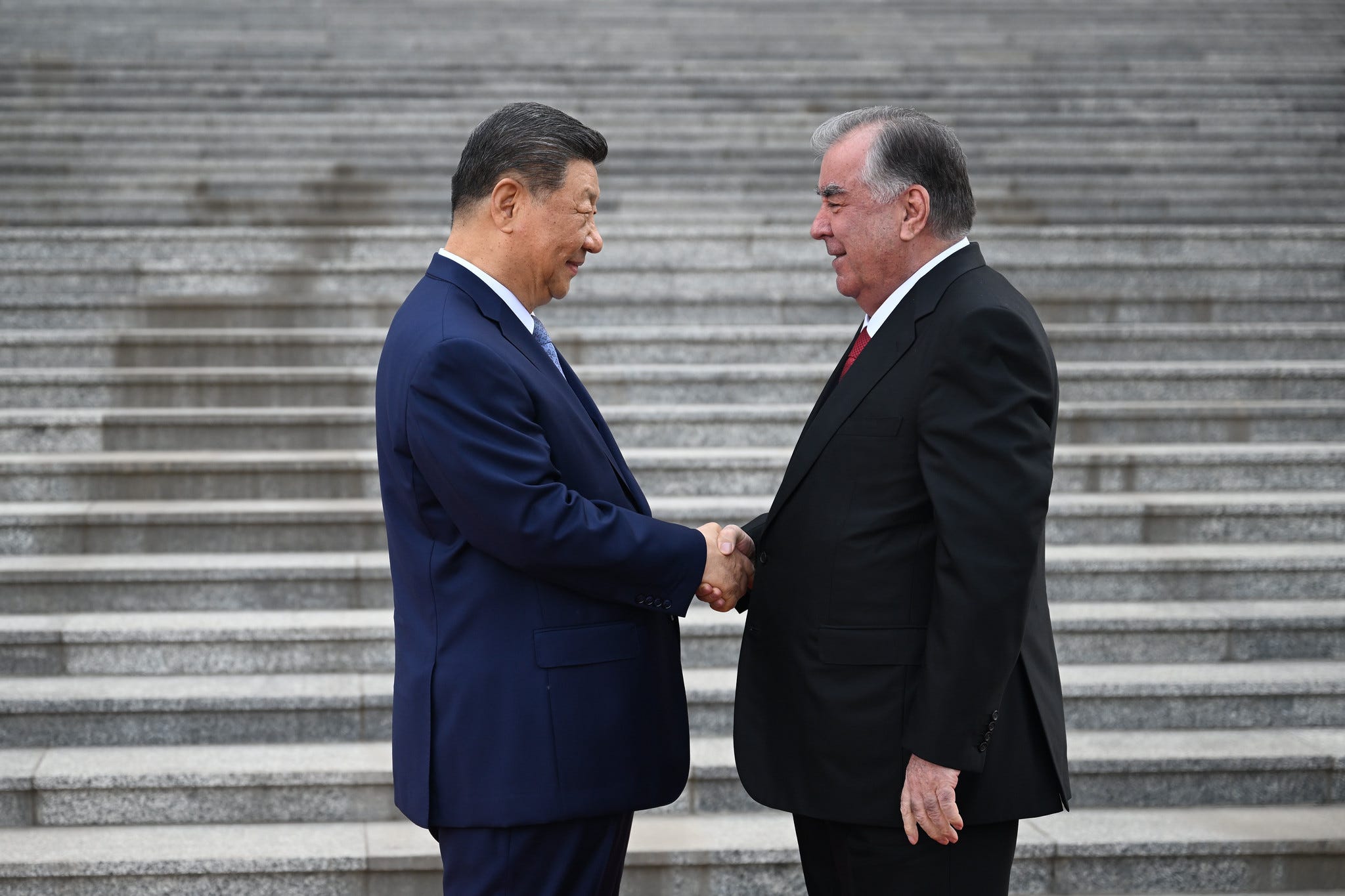 Why China cares so much about Tajikistan 19.05.2026 39mThis week’s episode begins with Tajik President Emomali Rahmon’s state visit to China, a trip that produced 31 agreements and a conspicuously grand treaty of “eternal friendship and good-neighbourliness.” The language was theatrical, but the substance was less silly. The visit showed how broad the China–Tajikistan relationship has become, spanning infrastructure, energy, artificial intelligence, education, media, party-to-party cooperation and regional security.The discussion focused on why Beijing invests so much political energy in Tajikistan, a small economy with relatively modest trade volumes compared with Kazakhstan or Kyrgyzstan. The answer lies less in market size than in geography. Tajikistan matters because of connectivity, its border with Afghanistan, and its role in China’s wider westward transport ambitions. A highway corridor through the Pamirs offers a concrete example: a difficult, strategically important route supported by Chinese financing and contractors, but also one exposed to violence along the Afghan border.The episode then turned to the informal summit of the Organization of Turkic States in Turkestan, Kazakhstan. Officially, the summit focused on artificial intelligence and digital development. More broadly, it raised the question of whether the OTS is evolving from a cultural forum into a more serious geopolitical platform. The Middle Corridor, Turkey’s regional ambitions, Russia’s irritation and the limits of security cooperation all featured in the discussion. The conclusion was cautious: the OTS is becoming more relevant, but its members still avoid choices that would force them into open alignment against Russia or China.For this week’s interview, Ablay Dosmaganbetov of the University of Central Asia discussed his paper, co-authored with Bakhytzhan Kurmanov, on the Extractive Industries Transparency Initiative. The paper asks whether transparency really creates accountability in authoritarian systems. Its answer is sceptical: in Kazakhstan, Kyrgyzstan and Tajikistan, EITI often works less as a watchdog mechanism than as a signalling tool that helps governments appear reform-minded without ceding real political control.LINKSAccountability, Civil Society, and Economic Growth: Exploring the Extractive Industries Transparency Initiative’s Adoption in Central Asia and Beyond, by Ablay Dosmaganbetov and Bakhytzhan Kurmanov - https://onlinelibrary.wiley.com/doi/10.1111/polp.70117?af=ROn Think Tanks - https://onthinktanks.org/China Daily coverage of Rahmon visit - https://www.chinadaily.com.cn/a/202605/12/WS6a02f2cca310d6866eb482f8.html Get full access to Havli - A Central Asia Substack at havli.substack.com/subscribe
 -
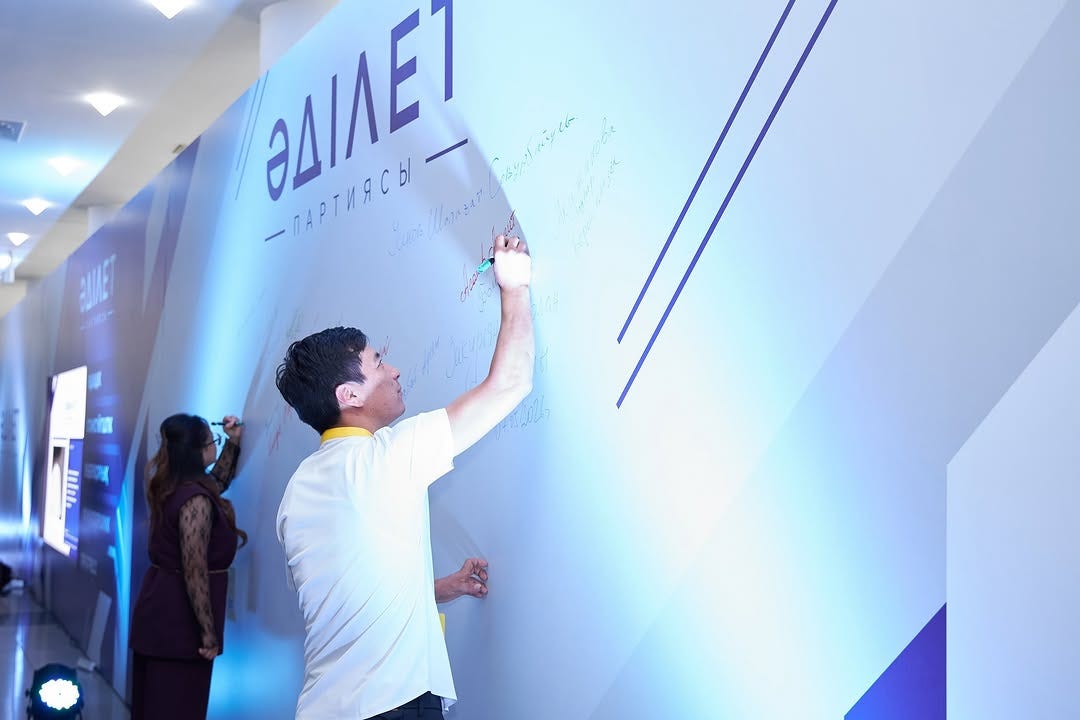 Kazakhstan’s AI future has a language problem 12.05.2026 39mThis week on the CAPS Unlock podcast, we begin in Kazakhstan, where a new political party has appeared just ahead of parliamentary elections expected later this year.The party is called Adilet, meaning “justice,” and its sudden emergence has already raised familiar questions about how political competition works in Kazakhstan. Its leader, Aibek Dadebay, was until very recently head of President Kassym-Jomart Tokayev’s administration, which makes it hard to treat Adilet as a spontaneous grassroots force. Its platform closely echoes Tokayev’s own language of order, progress, responsibility, patriotism and a “Just Kazakhstan”. The more interesting question may be what Adilet’s arrival means for Amanat, the long-dominant party of power formerly known as Nur Otan.We then turn to Victory Day and the politics of memory across Central Asia. Tokayev and Uzbekistan’s Shavkat Mirziyoyev attended the May 9 parade in Moscow, even as the event became more subdued and more politically charged because of Russia’s war in Ukraine. We discuss why Central Asian leaders still travel to Moscow for this commemoration, how their own domestic speeches increasingly stress national contributions to the Soviet victory, and why Russia’s framing of the war as an overwhelmingly Russian triumph remains so contentious.The conversation also looks at Kyrgyzstan, where a Victory Day concert in Karakol featuring Russian performers drew criticism after it incorporated symbols and rhetoric linked to Russia’s current war in Ukraine. That controversy showed how easily historical memory can slide into present-day propaganda.In this week’s interview, we spoke with Zhannat Bubekbayeva, author of Two Languages, Two Standards: AI and Linguistic Inequality in Kazakhstan’s Public Services. The paper is the first edition of The Argument, CAPS Unlock’s new monthly policy paper series.Bubekbayeva tested Kazakhstan’s eGov AI assistant in Kazakh and Russian and found serious disparities. Kazakh-language users often received less complete, less accurate and less natural responses than Russian-language users. We discussed what this says about digital modernisation, procurement standards, language equality and whether Kazakhstan’s AI-powered public services are really serving citizens equally.Links:* Two Languages, Two Standards: AI and Linguistic Inequality in Kazakhstan’s Public Services — Zhannat Bubekbayeva - https://capsunlock.org/publications/two-languages-two-standards-ai-and-linguistic-inequality-in-kazakhstans-public-services/* Adilet party platform - https://adilet-partiyasy.kz/* Fergana article on how Central Asian leaders framed Victory Day - https://fergana.agency/news/146708/ Get full access to Havli - A Central Asia Substack at havli.substack.com/subscribe
 -
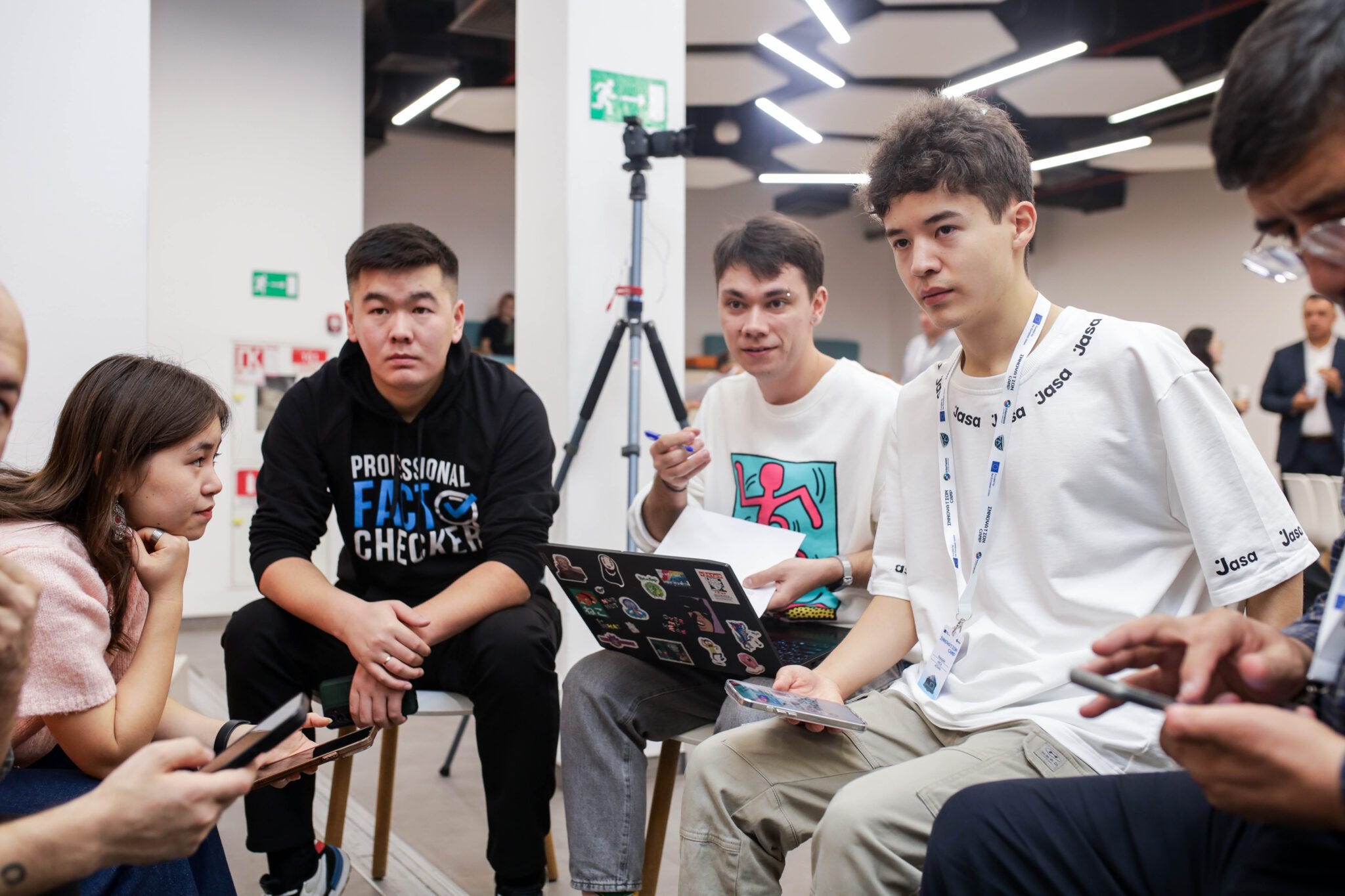 Kyrgyzstan's sanctions headache, Kazakh permits, and information manipulation 28.04.2026 34mIn this week’s episode of the CAPS Unlock podcast, we begin with a novelty in the European Union’s sanctions campaign toward Russia. For the first time, Brussels has applied what it calls an anti-circumvention mechanism at the level of an entire country: Kyrgyzstan.The measure is narrow but consequential. It targets specific categories of industrial equipment and financial channels that the EU believes have enabled sanctioned goods to be rerouted into Russia. Bishkek firmly rejects these claims. While the immediate economic impact may be limited, the reputational implications are harder to dismiss. The move sets a precedent: third countries risk direct restrictions if they are seen as transit hubs in sanctions evasion. At the same time, contrasting treatment of Tajik banks, recently removed from the sanctions list, raises questions about how technical these decisions really are.We then turn to Kazakhstan, where confusion over residence permit rules triggered unnecessary alarm.Reports suggested applicants might need advanced Kazakh language proficiency at B2 level. That interpretation proved incorrect. The government later clarified that requirements have not broadly tightened, but instead become more selective. Highly skilled professionals in priority sectors are now exempt from language and scoring requirements, while controls for others are becoming more structured. The episode highlights a recurring issue: policy communication remains uneven, even when the underlying direction is relatively clear.In this week’s interview, we look at foreign information manipulation and interference (FIMI) in Central Asia with Shairbek Dzhuraev, executive director of Crossroads Central Asia. Drawing on the European Neighbourhood Council’s report Information Under Pressure, we examine how external actors, primarily Russia and China, project narratives into local information spaces.These campaigns are sustained, coordinated, and adapted to national contexts. In Kazakhstan, messaging is locally calibrated; in Uzbekistan, it is more global and ideological. The conversation also explores a growing “resilience gap,” as pressure on independent media and civil society weakens the region’s ability to respond.Links* Report: Information Under Pressure (European Neighbourhood Council) - https://encouncil.org/wp-content/uploads/2026/04/CA_FIMI-Report.pdf* European Commission: EU 20th sanctions package announcement - https://ec.europa.eu/commission/presscorner/detail/en/ip_26_869* Interview with President Sadyr Japarov (Kabar) - https://ru.kabar.kg/news/intervyu-s-prezidentom-kyrgyzstana-sadyrom-zhaparovym/ Get full access to Havli - A Central Asia Substack at havli.substack.com/subscribe
 -
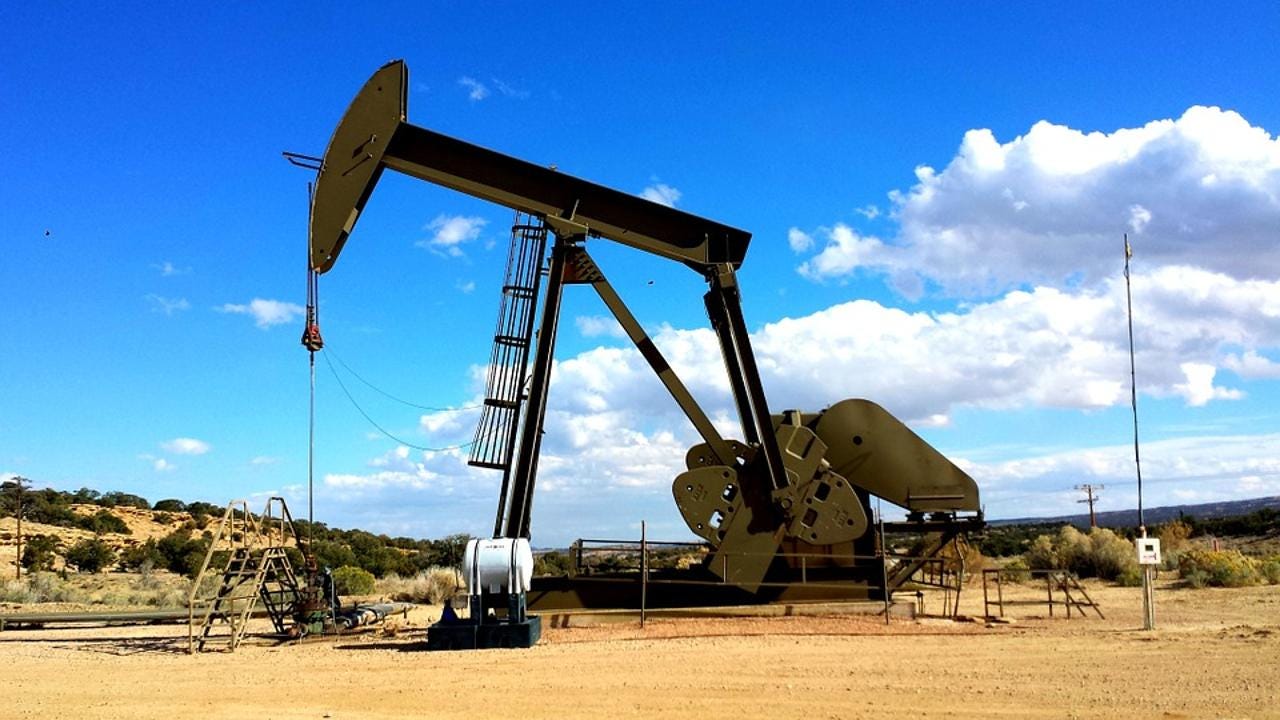 Kazakhstan’s oil shock, Kyrgyzstan’s crypto bet, and a new power broker 21.04.2026 36mThis week on the CAPS Unlock podcast, we examine two sharply different but ultimately connected economic stories from Central Asia, before turning to a revealing interview on Kazakhstan’s changing business landscape.We begin in Kazakhstan, where official data show a roughly 20 percent year-on-year drop in oil production in the first quarter. The decline reflects a convergence of disruptions: a fire at the Tengiz field that temporarily halted output, and repeated Ukrainian drone strikes on infrastructure linked to the Caspian Pipeline Consortium. Together, these episodes expose a structural vulnerability that is easy to overlook. Despite the fall in volumes, export revenues have held up, largely due to higher global oil prices. That apparent resilience masks a deeper problem: Kazakhstan remains heavily dependent on a single commodity, exported through infrastructure shaped by geopolitical risk.We then turn to Kyrgyzstan, where the government is attempting to position the country as a regional cryptocurrency hub. The scale of activity is striking, with transaction volumes far exceeding national GDP. But the reality is more limited than the headline numbers suggest. Most flows consist of simple currency conversions, often linked to cross-border transactions that bypass traditional banking channels. The government’s challenge is clear: can it transform this transit function into a genuine financial sector, or will it remain a conduit for external capital?Finally, we speak with journalist Chris Rickleton about his investigation into Shakhmurat Mutalip, a little-known businessman whose rapid rise places him at the centre of Kazakhstan’s strategic industries. Rickleton outlines what is known about Mutalip’s background, the role of the infrastructure giant Integra, and the significance of potential deals involving major mining firms. The discussion points to something larger than one individual: a possible reconfiguration of economic power in Kazakhstan, with implications for both domestic elites and foreign investors.LINKS* The Diplomat, Chris Rickleton & Ardak Bukeyeva, investigation on Shakhmurat Mutalip - https://thediplomat.com/2026/04/investigation-is-shakhmurat-mutalip-kazakhstans-new-chosen-one/* Radio Free Europe/Radio Ozodi – Tajikistan forced cotton cultivation report - https://www.ozodi.org/a/dehqonhoro-dubora-ba-kishti-pakhta-majbur-kardaand/33731032.html Get full access to Havli - A Central Asia Substack at havli.substack.com/subscribe
 -
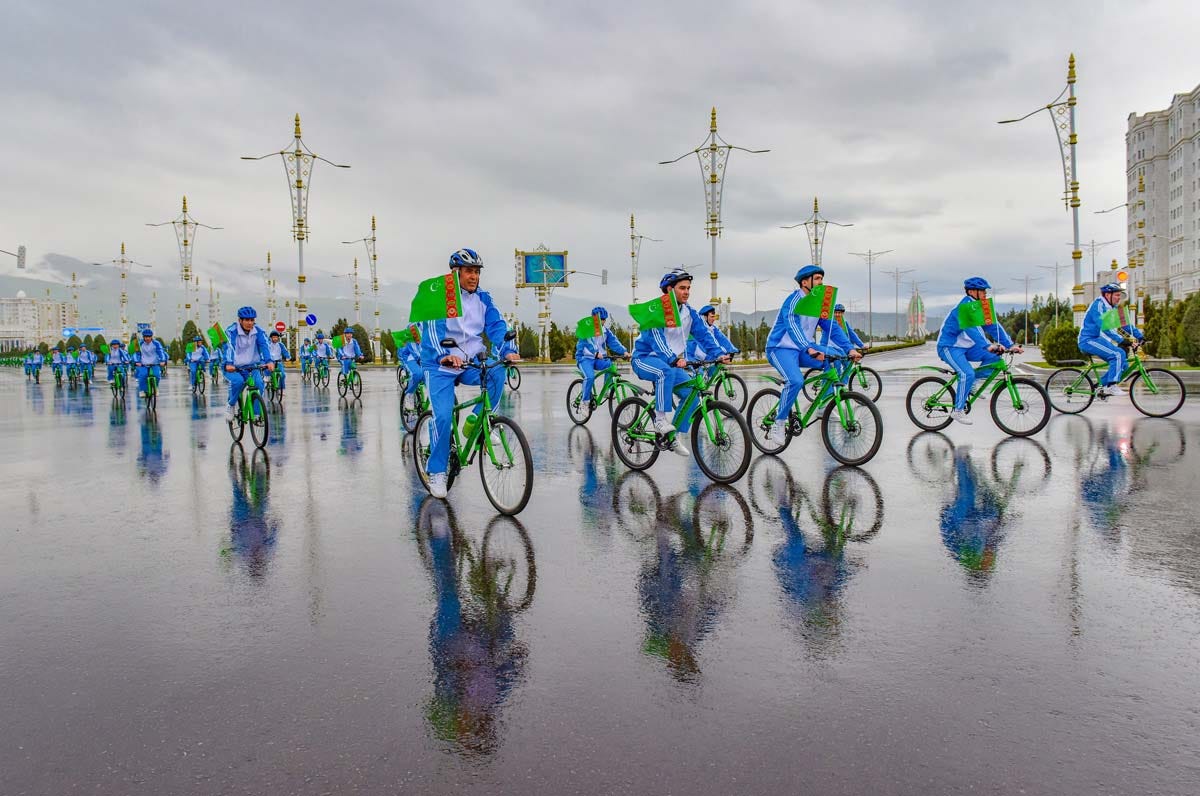 Who really rules Turkmenistan? 14.04.2026 44mIn this week’s edition of the CAPS Unlock podcast, we turned our attention to one country that rarely gets the scrutiny it deserves: Turkmenistan. Despite its strategic location, vast gas reserves, and sensitive position between Iran, Afghanistan, and the rest of Central Asia, it remains one of the hardest states in the region to read clearly. Access is limited, reporting is constrained, and much of what emerges does so in fragments.To help make sense of that opacity, this episode brought together two guests with sharply different but complementary perspectives. Galiya Ibragimova, an expert on Central Asia and Eastern Europe and a contributor to Carnegie Politika, discussed the strange and still unresolved power arrangement at the top of the Turkmen state. Since Serdar Berdymukhamedov formally became president in March 2022, his father Gurbanguly Berdymukhamedov, widely known as Arkadag, has remained a central political force, raising obvious questions about who really governs and how stable that balance is.The conversation also examined the external pressures shaping Turkmenistan’s options. Heavy dependence on gas exports to China, the uncertain prospects of alternative routes, and the fallout from instability in Iran and Afghanistan all leave Ashgabat exposed. Galiya walked through the recent and rather extraordinary episode of Arkadag’s trip to Florida, using it as a window into elite dynamics and the father-son relationship at the top of the regime.But the episode did not stay at the level of palace intrigue. Aynabat Yaylymova, founder of Saglyk and Progres Foundation, brought the discussion back to the realities of daily life inside Turkmenistan: corruption, weak institutions, poor access to healthcare, rising food prices, information controls, and the growing pressure on household budgets. Beyond the rumours surrounding intra-elite tensions, she argued, the more important fact is that ordinary Turkmens continue to pay the price for misrule.The result is a conversation that tries to connect the opaque politics of the Turkmen elite with the far more tangible pressures experienced by people on the ground.LINKS* Progres Foundation - https://progres.online/* Saglyk - https://saglyk.org/* Galiya Ibragimova’s author page at Carnegie Politika - https://carnegieendowment.org/russia-eurasia/people/galiya-ibragimova* Galiya Ibragimova’s article on the Serdar-Gurbanguly power struggle and the Florida episode - https://www.hronikatm.com/2026/04/serdar-vs-arkadag-who-controls-turkmenistan/* Galiya Ibragimova’s article on Turkmen gas exports and the fallout from the war in Iran - https://www.hronikatm.com/2026/03/pressurized-gas-how-the-wars-surrounding-turkmenistan-are-affecting-gas-exports/ Get full access to Havli - A Central Asia Substack at havli.substack.com/subscribe
 -
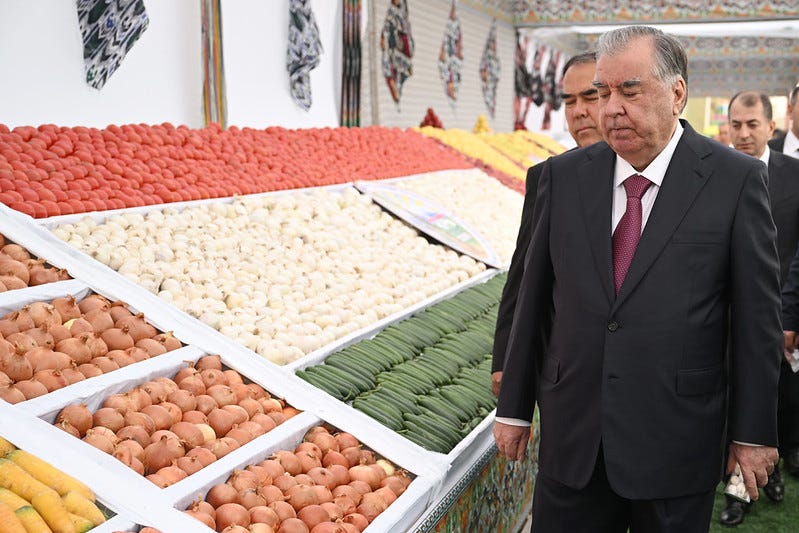 Central Asia between hunger, the atom and war 07.04.2026 38mThis week’s episode looks at two structural pressures shaping Central Asia’s future: food insecurity in Tajikistan and energy strategy in Kyrgyzstan, before turning to the wider regional impact of the war in Iran.We begin in Tajikistan, where President Emomali Rahmon has warned of unprecedented food price rises. His explanations point outward, to climate change and global instability, but the domestic picture complicates that narrative. At the same time as calling for food security, authorities continue to push farmers toward cotton production.Reporting suggests this is not voluntary: quotas and administrative pressure leave farmers little room to prioritize food crops. The result is a system that prioritizes exportable raw materials over local consumption.That trade-off looks increasingly untenable in a country where malnutrition remains widespread and infrastructure constraints, especially lack of storage, undermine food stability. The contradiction is stark: rising demand for food alongside policies that disincentivize its production.The second story turns to Kyrgyzstan, where officials have floated a referendum on building a nuclear power plant. There are no concrete plans yet, but the signal matters. Electricity demand has risen sharply, while generation has barely kept pace, leaving a widening deficit covered by imports. Hydropower still dominates the system, but its seasonal volatility and exposure to climate risks make it unreliable as a sole backbone. Nuclear is being framed less as a replacement than as a stabilizer, baseload capacity to smooth out fluctuations.In our interview slot, we speak with Shakhlo Kamaladinova, Central Asia Coordinator for the Bourse & Bazaar Foundation. She explains how the war in Iran is affecting Central Asia not geographically, but structurally. Trade routes through Iranian ports remain critical, and disruptions are already feeding into higher insurance costs, logistical uncertainty, and long-term strategic recalculations. While alternative corridors exist, they lack the flexibility to fully compensate. The result is a region increasingly aware of its exposure, but not yet equipped to escape it.Links· Shakhlo Kamaladinova’s article at the Bourse & Bazaar Foundation: · President Rahmon’s speech in Sughd: https://president.tj/event/news/55134· RFE/RL Tajik service report on Rahmon’s speech: https://www.azattyqasia.org/a/prezident-tadzhikistana-predupredil-o-bespretsedentnom-roste-tsen-na-prodovolstvie-v-etom-godu/33722989.html· Asia-Plus, April 2025, on farmers forced to destroy wheat for cotton: https://asiaplus.news/2025/04/18/v-rajonah-tadzhikistana-mestnye-vlasti-unichtozhayut-posevy-psheniczy-zastavlyaya-dehkan-sazhat-hlopok/· Asia-Plus, February 2025, on cotton coercion: https://asiaplus.news/2025/02/25/fermerov-tadzhikistana-zastavlyayut-sazhat-hlopok/· Avesta.tj, on cotton sowing campaign launch: https://avesta.tj/2026/03/27/v-kanibadame-nachalas-kampaniya-po-posevu-hlopka/· World Food Program, Tajikistan food security data: https://docs.wfp.org/api/documents/WFP-0000172887/download/· Eurasian Development Bank, warehouse infrastructure study: https://eabr.org/analytics/special-reports/warehouse-infrastructure-in-eurasia-the-opportunity-of-the-decade/· Interfax on Kyrgyzstan nuclear referendum proposal: https://www.interfax.ru/world/1081927· Rosatom, RITM-200N memorandum with Kyrgyzstan: https://rosatom-energy.ru/media/rosatom-news/rosatom-i-kirgiziya-dogovorilis-o-sotrudnichestve-v-sooruzhenii-atomnoy-stantsii-maloy-moshchnosti/ Get full access to Havli - A Central Asia Substack at havli.substack.com/subscribe
 -
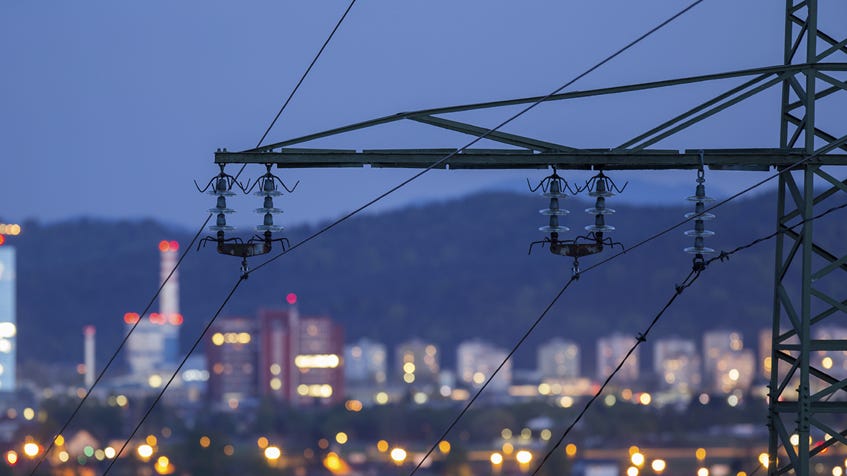 Kyrgyz political soap opera, Kazakhstan's media chill, and Central Asia's energy dilemma 31.03.2026 41mThis week, we return to the political soap opera unfolding in Kyrgyzstan in the wake of the February removal of security chief Kamchybek Tashiyev. The pressure on Tashiyev’s family continues to mount. His brother, Shairbek, who surrendered his parliamentary mandate after a first police interrogation earlier in March, has now been called back in for a second round of questioning.His son, Tai-Muras, is facing a subtler social media campaign highlighting the $6 million profit made by his company between 2020 and 2025, a figure that raises pointed questions, given that President Sadyr Japarov was publicly praising Tai-Muras’ business acumen as recently as 2024.Meanwhile, the former National Bank chairman Melis Turgunbayev has been drawn into the investigation into state oil and gas company Kyrgyzneftegaz, briefly detained and now released, but still facing possible prosecution.But the story has another side: the acquittal of the so-called Kempir-Abad defendants, activists and politicians arrested in 2022 for opposing a controversial border deal with Uzbekistan, has now been upheld on appeal. And the journalist Makhabat Tazhibek kyzy of investigative outlet Temirov Live has been released from pre-trial detention. Thaw or managed transition? We discuss.We then turn to Kazakhstan, where popular YouTube channel Airan, with its nearly 1.2 million subscribers, has abruptly shut down. The explanation given was carefully, conspicuously vague. We examine what its closure says about the structural impossibility of independent media in Kazakhstan, against a backdrop of several recent journalist arrests.For our interview this week, we spoke with Demir Kabylbayev, senior analyst and energy sector lead at the Eurasian Development Bank, and lead author of a new report on Central Asia’s power sector. We discussed the region’s acute energy challenge: surging demand, ageing Soviet-era infrastructure, and the difficult path toward renewables, and why a pragmatic middle path may be the only realistic option.LinkPower Sector of Central Asia: Modernization and Energy Transition - https://eabr.org/en/analytics/special-reports/power-sector-of-central-asia-modernization-and-energy-transition/ Get full access to Havli - A Central Asia Substack at havli.substack.com/subscribe
 -
 Silk Mirage: Joanna Lillis on Uzbekistan’s unfinished transition 24.03.2026 40mThis week’s episode of the CAPS Unlock podcast departs from the usual format for a single in-depth conversation with journalist Joanna Lillis, whose new book Silk Mirage: Through the Looking Glass in Uzbekistan draws on more than two decades of reporting to examine the country’s evolution since independence.Lillis traces Uzbekistan’s trajectory from the repressive system built under Islam Karimov to the more open but still contradictory era of Shavkat Mirziyoyev. Rather than a conventional political history, the book is constructed through individual stories, with former political prisoners, exiles, activists, and artists, and allows the lived experience of the system to take precedence over official narratives.A central theme of the discussion is the question of historical reckoning. Lillis argues that Uzbekistan’s failure to confront episodes such as the Andijan massacre continues to shape both public life and private memory. Without a clear account of past abuses, she suggests, reforms risk resting on unstable foundations, with old practices, whether in the justice system or restrictions on speech, reappearing in new forms.The conversation also examines the limits of reform. While the eradication of state-sponsored forced labour in the cotton sector stands out as a genuine success, deeper structural issues in agriculture and governance remain unresolved. More broadly, Lillis points to a pattern of selective liberalisation: greater openness in some areas paired with persistent red lines in politics, media, and civic life.Attention turns to culture and society, where change is more dynamic. Uzbekistan today displays a complex mix of liberalising and conservative currents, from the rise of religious influencers to a still-cautious creative sector shaped by residual fear and self-censorship. At the same time, the state’s effort to promote a polished international image through culture and heritage sits uneasily alongside continued repression at home.Across the discussion runs a consistent argument: that Uzbekistan’s future development, economic as much as political, depends not only on reform, but on a more honest engagement with its past.Links Silk Mirage: Through the Looking Glass in Uzbekistan - https://www.bloomsbury.com/uk/silk-mirage-9781350292468/ Get full access to Havli - A Central Asia Substack at havli.substack.com/subscribe
Similar podcasts


Popular in
The podcast also appears in the podcast charts of these countries.

