
The Times of Israel Daily Briefing
The Times of Israel
0
The Times of Israel Daily Briefing provides a daily update on key events in Israel, the Middle East, and the Jewish world. Each episode covers breaking news, analysis, and interviews with journalists and experts. The podcast aims to keep listeners informed about the most important developments in the region.
Episodes
-
 Shared grief, deep divisions: Israel marks October 7 08.10.2026 26mWelcome to The Times of Israel's Daily Briefing, your 20-minute audio update on what's happening in Israel, the Middle East and the Jewish world. News editor Ben Sales joins host Jessica Steinberg for today's episode. Following the various memorial ceremonies held this week to mark the third anniversary of October 7, Sales and Steinberg discuss the ongoing polarization in Israeli society, extending to the different days on which the Hamas massacre is commemorated. Looking ahead to the October 27 election, Sales talks about the democratic expectation of having a mandate once the votes are in, yet knowing it will only be the day after the election when the political maneuvering will start. As details about the lack of monitoring of foreign pilots continue to build after the flydubai attack, Sales reviews how the political opposition is using the opportunity to attack Prime Minister Benjamin Netanyahu ahead of the election. Finally, Sales briefly discusses some of the unexpected reactions to New York City Mayor Zohran Mamdani's statements about October 7 during a coexistence event. Check out The Times of Israel's ongoing liveblog for more updates. For further reading: A place ‘soaked with their dances, music and blood’: Nova victims remembered at scene of massacre ‘It’s bad’: In a polarized Israel, the likeliest election result is more uncertainty Will the flydubai attack save Netanyahu’s struggling campaign? ‘Traitor’: Anti-Zionist protesters rage at Mamdani at Oct. 7 coexistence event Subscribe to The Times of Israel Daily Briefing on Apple Podcasts, Spotify, YouTube, or wherever you get your podcasts. This episode was produced by Ari Schlacht.See omnystudio.com/listener for privacy information.
 -
 3 years to Hamas attack, Israel is both more secure and more vulnerable 07.10.2026 29mWelcome to The Times of Israel's Daily Briefing, your 20-minute audio update on what's happening in Israel, the Middle East and the Jewish world. Diplomatic correspondent Lazar Berman joins host Amanda Borschel-Dan for today's episode. The country is marking the passage of three years since the onset of the multifront war on October 7, 2023. We speak about the concept of memorializing what one is living through and why this third anniversary is different. Moving from border to border, Berman speaks about the military's operations on all fronts and whether the status on the ground is a stalemate or a new normal. We discuss Israel's geopolitical status, comparing what we thought we knew on October 6, 2023, to what we believe is true today. Next, we turn to the unresolved Iran arena and hear about recent Saudi alliance efforts to push back the Iran-backed Houthis from strategic ports in Yemen. And finally, we learn about Cpt. Amir Zur, who fell in battle at Kibbutz Kfar Aza three years ago today. Check out The Times of Israel's ongoing liveblog for more updates. For further reading: 3 years of war: Data shows IDF hit 100,000 targets as 31,500 projectiles fired at Israel Saudi-backed Yemeni forces expel Houthis from areas around key strait: officials Cpt. Amir Zur, 23: ‘You will always be our guardian angel’ Subscribe to The Times of Israel Daily Briefing on Apple Podcasts, Spotify, YouTube, or wherever you get your podcasts. Yitzhak Ledee filmed and edited this episode.See omnystudio.com/listener for privacy information.
 -
 Echoes of Oct. 7 in the failures exposed by flydubai near-disaster 06.10.2026 36mWelcome to The Times of Israel's Daily Briefing, your 20-minute audio update on what's happening in Israel, the Middle East and the Jewish world. Editor David Horovitz joins host Amanda Borschel-Dan for today's episode. The copilot who attempted to carry out a terror attack on a flydubai flight on Wednesday intended to crash the plane into Ben Gurion Airport, according to reports on Sunday. This is just one of the many details surfacing after the miraculous thwarting of the near-disaster that Horovitz unveils during today's program. However, alongside the saga of in-flight heroism, we have also learned of systemic failures which have exposed travelers flying in and out of Israel for years. Alongside the ministerial buck-passing, we hear sharp criticism from leading security figures, including the former head of Israel’s National Security Council, Eyal Hulata. The entrenched failure to protect Israelis has occurred as the nation is still mourning those who fell on October 7, 2023, and in the ensuing wars, and in the vacuum of a commission of inquiry into the breakdowns leading to the massacre of 1,200 in southern Israel. As the nation marks three years to the onslaught, Horovitz discusses how it is coloring the current election campaign and the spirit of the people of Israel. Check out The Times of Israel's ongoing liveblog for more updates. For further reading: Most Arkia and Israir flights use planes and crews leased from foreign airlines, in arrangement okayed by PM Flydubai terrorist said to tell investigators he intended to crash plane into Ben Gurion Airport Former NSC head pans Netanyahu’s ‘crooked’ flydubai probe, says buck stops with him At Oct. 7 ceremonies, PM vows to settle scores. Others urge accountability for massacre Subscribe to The Times of Israel Daily Briefing on Apple Podcasts, Spotify, YouTube, or wherever you get your podcasts. This episode was produced by Yitzchak Ledee.See omnystudio.com/listener for privacy information.
 -
 Will IDF's Oct. 7 lessons learned in blood be implemented? 05.10.2026 27mWelcome to The Times of Israel's Daily Briefing, your 20-minute audio update on what's happening in Israel, the Middle East and the Jewish world. Military correspondent Emanuel Fabian joins host Amanda Borschel-Dan for today's episode. An Israeli airstrike in Gaza City overnight Friday-Saturday targeted Ali al-Amoudi, the terror group’s de facto leader in the enclave, according to the military, with Palestinian media reporting five people killed, including a number of women. This morning, a Hamas official claimed that al-Amoudi has survived the strike. Fabian fills us in. The Israel Defense Forces on Thursday said it determined that 170 Palestinians in the Gaza Strip who were identified as journalists following their deaths were actually members of terror groups. We delve into the ways in which the IDF has determined these so-called journalists were linked to terror organizations and the problematic nature of reporting from the Gaza Strip. IDF Chief of Staff Lt. Gen. Eyal Zamir convened senior officers on Sunday for a conference on the lessons learned from the October 7 attack, three years on. During the conference, Zamir presented a certificate of appreciation to Chief Warrant Officer “Vav,” a member of the signals intelligence Unit 8200 — identified only by her first initial in Hebrew — who warned before October 7, 2023, that Hamas had a clear plan in place to attack Israel. Senior intelligence officers had dismissed and ignored her warnings. We delve into this painful saga. The IDF has established a new military school that aims to boost the combat training of combat support soldiers, preparing them for the day when they may have to put down the clipboard and pick up a gun. The commander of the school, a lieutenant colonel, told The Times of Israel that the new program “was established as part of the lessons of October 7.” Fabian explains how this school is a totally new concept for the IDF. Check out The Times of Israel's ongoing liveblog for more updates. For further reading: IDF strike on Hamas’s Gaza chief kills 5, including mother and daughter; his fate unclear IDF documents terror affiliations of 170 Palestinian journalists killed in Gaza war IDF chief honors officer whose Hamas invasion warnings were ignored by her superiors Lt. Col. Aryeh Amidror named as Gaza Division intel officer involved in Oct. 7 failures IDF steps up combat training for troops behind front lines after Oct. 7 exposes gaps Subscribe to The Times of Israel Daily Briefing on Apple Podcasts, Spotify, YouTube, or wherever you get your podcasts. This episode was produced by Ari Schlacht.See omnystudio.com/listener for privacy information.
 -
 In Bnei Brak, poverty, density and religious needs reshape real estate 04.10.2026 23mWelcome to The Times of Israel's Daily Briefing, your 20-minute audio update on what's happening in Israel, the Middle East and the Jewish world. Jewish world and real estate correspondent Zev Stub joins host Jessica Steinberg for today's episode. Following the fierce Shabbat protests in Bnei Brak in early September, Stub discusses the real estate market in the largest ultra-Orthodox city, and developments in the poor, dense city, including better public transport that draws businesses that pay higher tax rates and unusual residential requirements. After Rabbi Yitz Greenberg, an influential thinker of liberal Orthodox Judaism, updated decades-old essays about Israel and American Jewry, Stub reports on his interview with the 93-year-old rabbinic leader and his views that God's role in history changes over time. Stub also reviews two recent archaeological findings: the ritual baths discovered south of the Temple Mount, used by pilgrims arriving in Jerusalem for the pilgrimage holidays and an exploration of how wine was made 2,000 years ago. Check out The Times of Israel's ongoing liveblog for more updates.For further reading: In the Haredi city of Bnei Brak, real estate follows a different set of rules After Oct. 7, Rabbi Yitz Greenberg’s post-Holocaust theology faces its biggest test Ancient public mikveh complex, used for festival pilgrimage, uncovered at foot of Temple Mount How did ancient Israelites make wine? Scientists are stomping grapes to find out Subscribe to The Times of Israel Daily Briefing on Apple Podcasts, Spotify, YouTube, or wherever you get your podcasts. This episode was produced by Ari Schlacht. IMAGE: Jewish world, real estate and archaeology reporter Zev Stub appears on the Daily Briefing with host Jessica Steinberg (Flash 90)See omnystudio.com/listener for privacy information.
 -
 The Reel Schmooze on 'Ushpizin': An unforgettable homage to the most beautiful etrog of all 03.10.2026 38mWelcome to The Reel Schmooze with ToI film reviewer Jordan Hoffman and host Amanda Borschel-Dan, where we bring you all the entertainment news and film reviews a Jew can use. Last week, Borschel-Dan threw down a challenge: Can anyone suggest a Sukkot-themed film? Dozens of loyal listeners wrote in with 2004's "Ushpizin," directed by Gidi Dar. The unforgettable Israeli film -- which both of our Schmoozers had actually seen decades ago and blanked on -- explores the life of an unlucky ultra-Orthodox couple about to celebrate the Sukkot holiday. The couple, played by Shuly Rand (who also wrote the script) and his then-wife Michal Bat Sheva Rand, is fairly new to religion, but extremely devout. And so when their last shekel is spent, they pray fervently for a miracle. As they say, God works in mysterious ways, and so when their prayers are answered, a pair of reprobates made sure to stir the pot. Let’s hear who gave this film an “oy,” “meh” or the prized “not bad” this week on The Reel Schmooze. The Reel Schmooze is produced by Ari Schlacht and can be found wherever you get your podcasts.See omnystudio.com/listener for privacy information.
 -
 A Mandatory Listen - Micah Goodman: The one issue that unites America's radical left and right 02.10.2026 45mWelcome to "A Mandatory Listen," a new weekly podcast in which The Times of Israel deputy editor Amanda Borschel-Dan asks the big questions facing Israel and the Jewish people. For this second episode in the new series, who better to ask the big questions than a philosopher? We turn to author and public intellectual Micah Goodman for an in-depth conversation on the one burning issue that unites America's radical right and left. Spoiler: They hate Israel. But the reasons why the far left and the far right despise the Jewish state come from very different narratives, explains Goodman. Likewise, their "final solutions" for Israel would result in divergent conclusions. In the second half of the program, we turn the tables and ask: Are Israelis aware that the fate of the Jewish state is an election issue in the US? Why is this fissure in the essential US-Israel relationship trumpeted as a main existential issue on Israeli politicians' campaign trails? Israelis, says Goodman, need to wake up. But will they? A Mandatory Listen podcast episodes are available for download on Apple Podcasts, Spotify, YouTube, or wherever you get your podcasts. This episode was produced by Yitzchak Ledee.See omnystudio.com/listener for privacy information.
 -
 Alan Shatter: Palestine 'cult' endangers future of Irish Jews 02.10.2026 41mWelcome to The Times of Israel's Lazar Focus. Each Friday, join host diplomatic correspondent Lazar Berman for a deep dive into what's behind the news that spins the globe. It was a stormy week politically in Ireland. It wasn't over an attempted terrorist attack like we had here in Israel this week. It wasn't over the rising cost of energy or immigration, like elsewhere in Europe. It was a soccer match against Israel. That was enough to dominate the country's headlines. How did Ireland become so focused on Israel, and so hostile to the Jewish state? Alan Shatter, a leading Jewish figure in the country and former justice and defense minister, says a pro-Palestine 'cult' has taken over the country's politics. The country has always had a checkered past with its Jews, he said. The Provisional IRA had deep ties with Palestinian terrorists, and their political movement Sinn Fein 'contaminated' Irish politics by putting the Palestinian cause front and center. That obsessive focus has spread from politics across Irish society, Shatter lamented, and now trade unions, teachers, artists, and athletes have significant pro-Palestinian movements. The angst over the soccer match against Israel a new "level of complete and utter absurdity," he said. Now, he said, many Jews are asking whether they have a future in the country in the face of daily abuse online and a toxic environment around Israel. "There's a deep problem here," Shatter said. "It's one the government refuses to recognize. It's one the government is contributing to." Lazar Focus is available on all podcast platforms. This episode was produced by Gabriella Jacobs and video edited by Ari Schlacht.See omnystudio.com/listener for privacy information.
 -
 Flydubai attack becomes political fodder for candidates 01.10.2026 17mWelcome to The Times of Israel's Daily Briefing, your 20-minute audio update on what's happening in Israel, the Middle East and the Jewish world. Political correspondent Ariela Karmel joins host Jessica Steinberg for today's episode. As details trickled in regarding the attempted attack on the flydubai flight to Tel Aviv, Karmel discusses how the event became a political flashpoint, with less than a month before the October 27 election and the fast-approaching third anniversary of the October 7, 2023 Hamas terrorist attack. She reviews the political rhetoric from the government allies and the opposition, which created a split-screen reality. With the High Court of Justice holding hearings on the disqualification of Arab parties and candidates from the October 27 election, Karmel reviews the case of Balad chairman Sami Abu Shehadeh, which is expected to be upheld by the court in a rare occasion of consensus, in large part because of an article he wrote after October 7 in which he expressed support for Hamas. Check out The Times of Israel's ongoing liveblog for more updates. For further reading: Flydubai attack becomes election flashpoint as opponents draw Oct. 7 parallels Election panel disqualifies all Arab parties, in move likely to be overturned; Balad leader also barred AG: Disqualification of Balad leader from election ‘should be seriously considered’ Subscribe to The Times of Israel Daily Briefing on Apple Podcasts, Spotify, YouTube, or wherever you get your podcasts. This episode was produced by Ari Schlacht. IMAGE: Political correspondent Ariela Karmel appears on the Daily Briefing with host Jessica Steinberg (Flash 90)See omnystudio.com/listener for privacy information.
 -
 Israelis land safely in Saudi Arabia after suspected plane terror 30.09.2026 23mWelcome to The Times of Israel's Daily Briefing, your 20-minute audio update on what's happening in Israel, the Middle East and the Jewish world. Editor David Horovitz joins host Amanda Borschel-Dan for today's episode. Just ahead of recording today's episode, headlines began surfacing about the flydubai plane that signaled an emergency during its flight from Dubai to Tel Aviv and safely landed in Saudi Arabia. IAF fighter jets were scrambled and top Israeli leadership was given emergency briefings. Horovitz discusses what is known and still unknown this morning. (As this is a developing story, please check our live blog for real-time updates.) Prime Minister Benjamin Netanyahu on Tuesday condemned the massive overnight attack and riot by Jewish extremists in the West Bank the previous night. His call to prosecute the perpetrators “to the fullest extent of the law,” was joined by similar condemnations from Defense Minister Israel Katz and head of the Yesha settlement umbrella council Yisrael Ganz. All leaders, however, downplayed the attack as being perpetrated by a “small number” of people. Why the rare spate of condemnations? Also on Tuesday, Netanyahu claimed that there are concerns that “enemies” of Israel may attempt to attack it ahead of the October 27 election. By day's end, opposition leader Yair Lapid was briefed with details on the ostensible threat -- and subsequently dismissed them as fear-mongering. We hear more about the campaigns, four weeks until elections. Check out The Times of Israel's ongoing liveblog for more updates. For further reading: PM blames ‘small number’ of West Bank rioters as mass settler attack draws wide condemnation Over 100 settlers attack West Bank village, block Palestinian family’s return home Netanyahu claims indications of attack plot by ‘enemies’ ahead of election; Lapid, briefed, derides him Shin Bet won’t provide Eisenkot with security detail, despite earlier report to contrary Price at pump set to hit record high of NIS 8.27 per liter Subscribe to The Times of Israel Daily Briefing on Apple Podcasts, Spotify, YouTube, or wherever you get your podcasts. This episode was produced by Yitzchak Ledee.See omnystudio.com/listener for privacy information.
 -
 Board of Peace envisions transformation in Gaza, and Israel 29.09.2026 24mWelcome to The Times of Israel's Daily Briefing, your 20-minute audio update on what's happening in Israel, the Middle East and the Jewish world. US bureau chief Jacob Magid joins host Jessica Steinberg for today's episode. A Board of Peace official notes to Magid at the United Nations General Assembly that the organization envisions a de-radicalized Gaza as part of a broader end to war, suggesting that a similar transformation needs to happen in Israel as well, given talk amongst politicians of different stripes encouraging Palestinians to leave Gaza, a euphemism for forced displacement. As the Board of Peace unveils a six-month, $2.45 billion reconstruction plan for the Gaza Strip, Magid says that BOP's discussions with Israel have been complex given the upcoming election and work won't begin until well after the October 27 election, although they will exert pressure to begin implementing the plans. With the Norwegian government advancing legislation to outlaw trade with Israeli settlements, Magid reports on his interview with Norwegian Foreign Minister Espen Barth Eide, who says that Norway is trying to balance interests and doesn't want to boycott all of Israel. Finally, Magid discusses the ongoing confusion about the lack of a uniform response from the US regarding the UK-led settlement sanctions, as Israel wants a US reaction. He notes that US Ambassador to Israel Mike Huckabee offered a fiery response but US Secretary of State Marco Rubio's office didn't issue the same statement, leaving US President Donald Trump with a more apathetic reaction while at the recent United Nations General Assembly. Check out The Times of Israel's ongoing live blog for more updates. For further reading: Board of Peace official: Extremist views in Israel impeding effort to deradicalize Gaza Board of Peace unveils $2.4B Gaza recovery plan, but hurdles remain before implementation Norway says sanctioning settlements ‘the right thing to do,’ despite potential Israeli retaliation Trump shows apathy about UK-led settlement sanctions, ignoring Israel request for action Subscribe to The Times of Israel Daily Briefing on Apple Podcasts, Spotify, YouTube, or wherever you get your podcasts. Ari Schlacht produced this episode. IMAGE: US bureau chief Jacob Magid appears on the Daily Briefing with host Jessica Steinberg (AP)See omnystudio.com/listener for privacy information.
 -
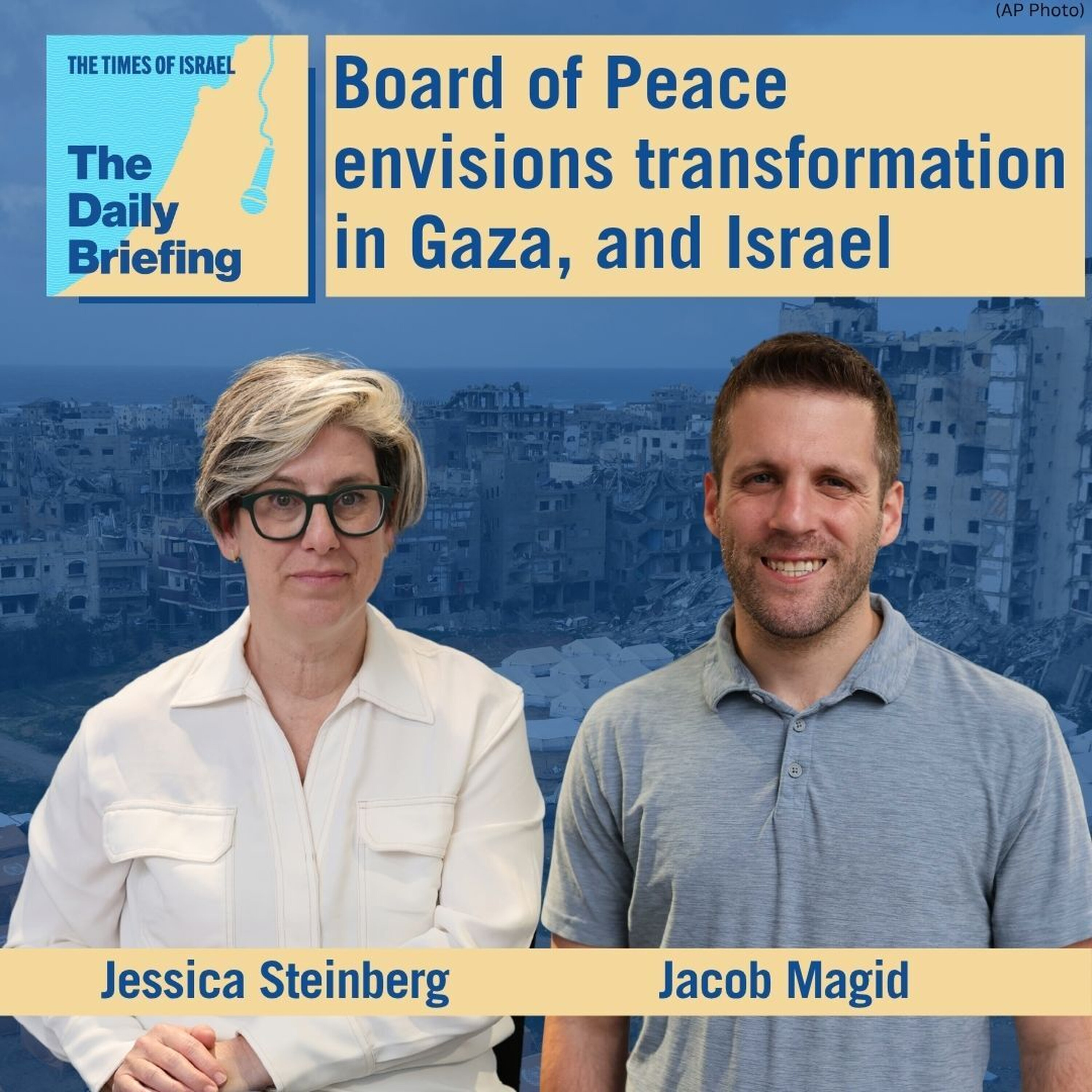 Board of Peace envisions transformation in Gaza, and Israel 29.09.2026 24mWelcome to The Times of Israel's Daily Briefing, your 20-minute audio update on what's happening in Israel, the Middle East and the Jewish world. US bureau chief Jacob Magid joins host Jessica Steinberg for today's episode. A Board of Peace official notes to Magid at the United Nations General Assembly that the organization envisions a de-radicalized Gaza as part of a broader end to war, suggesting that a similar transformation needs to happen in Israel as well, given talk amongst politicians of different stripes encouraging Palestinians to leave Gaza, a euphemism for forced displacement. As the Board of Peace unveils a six-month, $2.45 billion reconstruction plan for the Gaza Strip, Magid says that BOP's discussions with Israel have been complex given the upcoming election and work won't begin until well after the October 27 election, although they will exert pressure to begin implementing the plans. With the Norwegian government advancing legislation to outlaw trade with Israeli settlements, Magid reports on his interview with Norwegian Foreign Minister Espen Barth Eide, who says that Norway is trying to balance interests and doesn't want to boycott all of Israel. Finally, Magid discusses the ongoing confusion about the lack of a uniform response from the US regarding the UK-led settlement sanctions, as Israel wants a US reaction. He notes that US Ambassador to Israel Mike Huckabee offered a fiery response but US Secretary of State Marco Rubio's office didn't issue the same statement, leaving US President Donald Trump with a more apathetic reaction while at the recent United Nations General Assembly. Check out The Times of Israel's ongoing live blog for more updates. For further reading: Board of Peace official: Extremist views in Israel impeding effort to deradicalize Gaza Board of Peace unveils $2.4B Gaza recovery plan, but hurdles remain before implementation Norway says sanctioning settlements ‘the right thing to do,’ despite potential Israeli retaliation Trump shows apathy about UK-led settlement sanctions, ignoring Israel request for action Subscribe to The Times of Israel Daily Briefing on Apple Podcasts, Spotify, YouTube, or wherever you get your podcasts. Ari Schlacht produced this episode. IMAGE: US bureau chief Jacob Magid appears on the Daily Briefing with host Jessica Steinberg (AP)See omnystudio.com/listener for privacy information.
 -
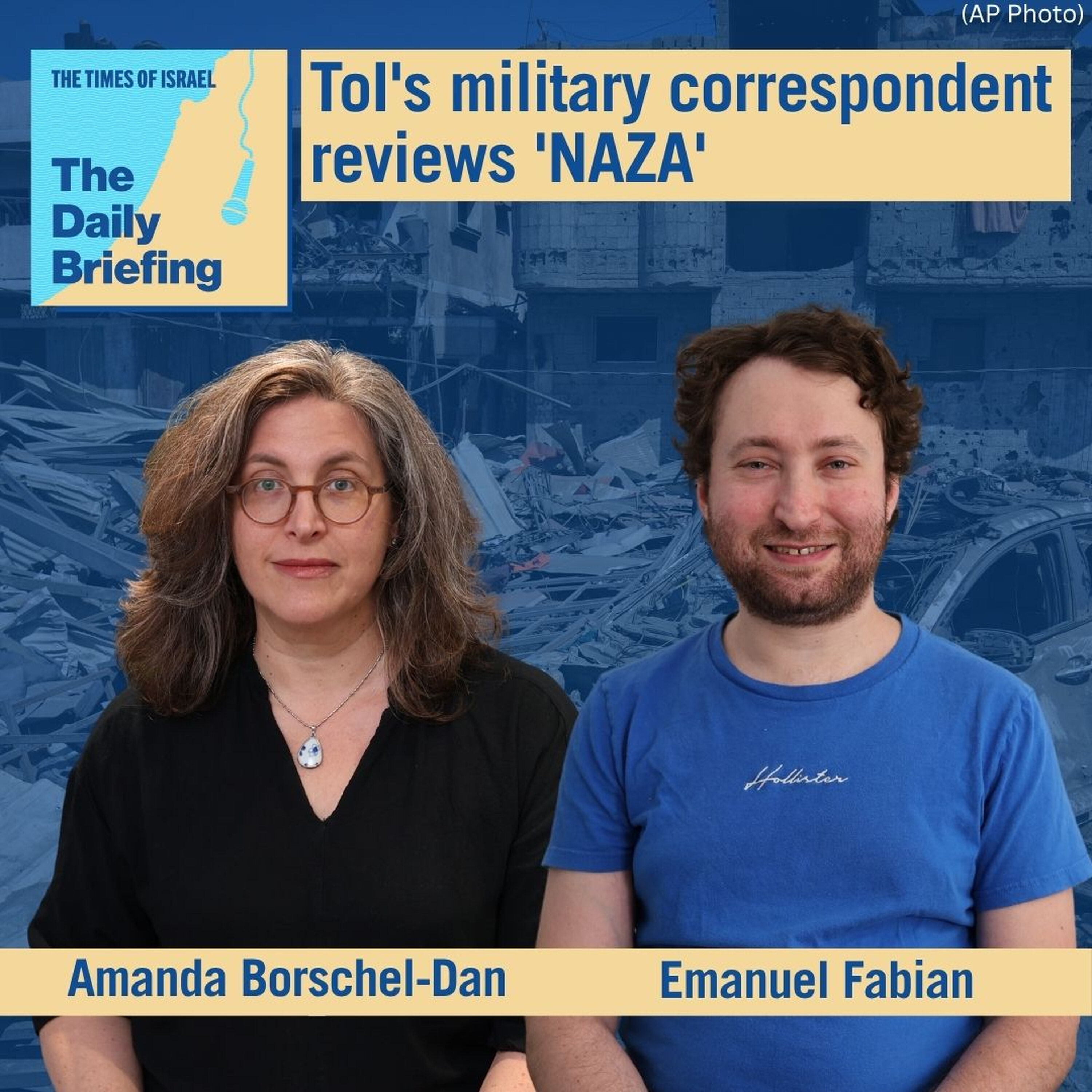 ToI's military correspondent reviews 'NAZA' 28.09.2026 29mWelcome to The Times of Israel's Daily Briefing, your 20-minute audio update on what's happening in Israel, the Middle East and the Jewish world. Military correspondent Emanuel Fabian joins host Amanda Borschel-Dan for today's episode. A Palestinian terrorist who took part in abducting Noa Argamani and Avinatan Or during the October 7, 2023, onslaught was killed in an Israeli strike in the Gaza Strip, the military and Shin Bet announced Sunday. Fabian fills us in on the strike, which was conducted by a special police unit. We discuss the renewed Hamas efforts to build up its forces and how it is using young children as weapons mules and human shields for operatives. Two years to the targeted killing of the former Hezbollah head Hassan Nasrallah, the terrorist group launched an explosive drone at Israeli troops operating in the southern Lebanon buffer zone Saturday night. We hear that the IDF keeps a list of targets to strike in response to Hezbollah drones during this ongoing fragile ceasefire. On Thursday, the Israeli filmmakers of the new controversial documentary "NAZA" (Collateral Damage) held a screening in Tel Aviv for local journalists, including from The Times of Israel, though the directors themselves were not present. Fabian weighs in on the experience of watching the film and the lack of journalistic practices exhibited in it. Also last week, Fabian boarded the INS Drakon — or Dragon — on the final leg of her maiden journey to the Haifa Naval Base from Germany. We hear about the IDF's plans to expand the Navy's capabilities and what it was like to submerge on this "beast of a machine." Check out The Times of Israel's ongoing liveblog for more updates. For further reading: Terrorist from abduction of Noa Argamani, Avinatan Or on Oct. 7 killed in strike – IDF Hezbollah fires explosive drone at troops, prompting strikes in response — IDF NAZA’s claims about IDF conduct in Gaza are grave. So are the film’s journalistic flaws Israel’s newest, largest submarine arrives, deepening Navy’s stealth capabilities Subscribe to The Times of Israel Daily Briefing on Apple Podcasts, Spotify, YouTube, or wherever you get your podcasts. This episode was produced by Ari Schlacht.See omnystudio.com/listener for privacy information.
 -
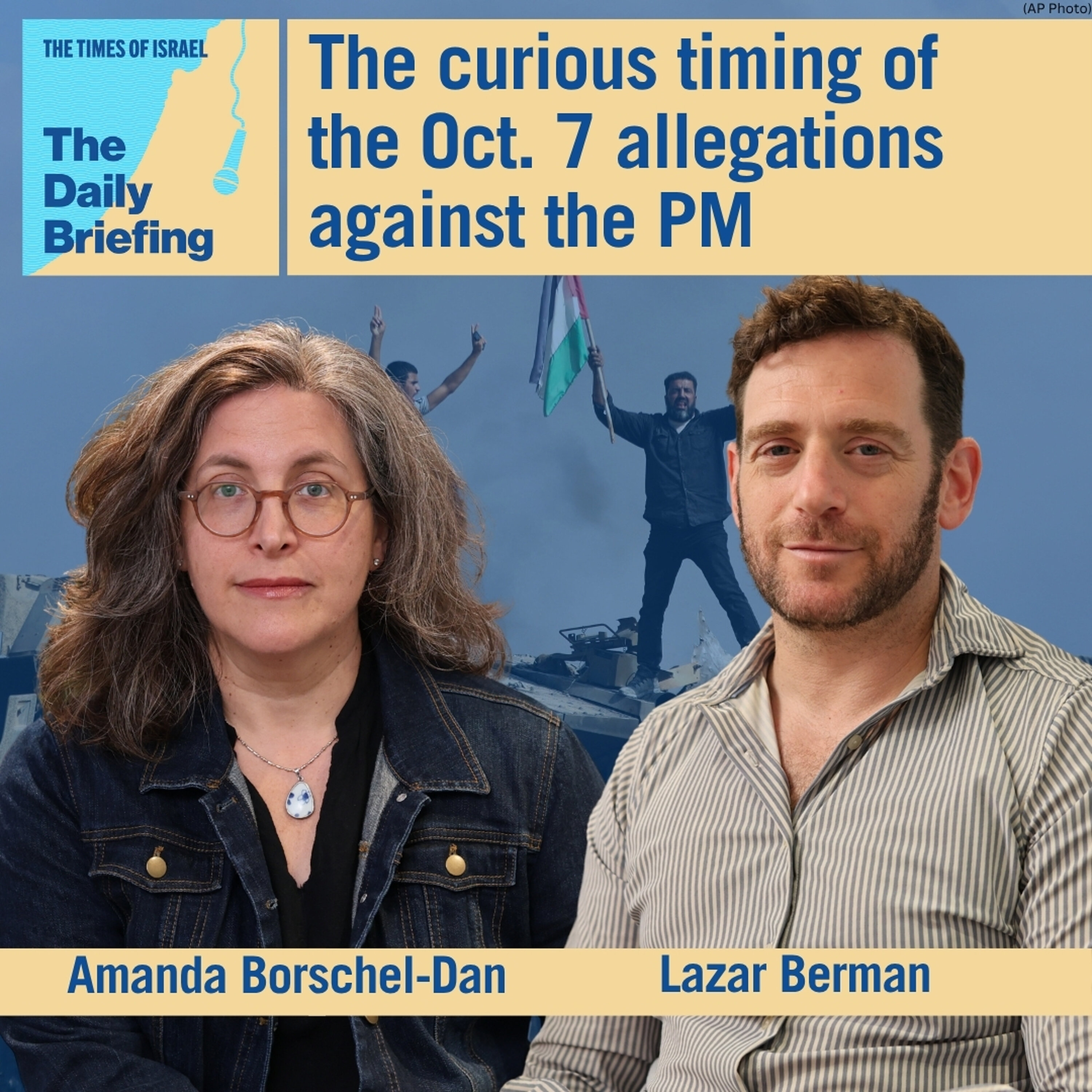 The curious timing of the Oct. 7 allegations against the PM 27.09.2026 23mWelcome to The Times of Israel's Daily Briefing, your 20-minute audio update on what's happening in Israel, the Middle East and the Jewish world. Diplomatic correspondent Lazar Berman joins host Amanda Borschel-Dan for today's episode. Berman, just back in Israel from the United Nations General Assembly, discusses how Prime Minister Benjamin Netanyahu’s 15th address to the hall on Thursday was in some ways a classic Bibi presentation -- and in many ways not. We hear what was said and unsaid during the 40-minute speech. A flurry of reports has come out in the past several weeks surrounding what the prime minister was briefed on ahead of the October 7, 2023, onslaught by Hamas on southern Israel, including a statement from former Defense Minister Yoav Gallant this morning. Berman unravels which seem credible and why. Finally, Iran stood firm Sunday on its conditions for reopening the Strait of Hormuz, after US President Donald Trump rejected its proposal. While the Iranian offer had created some optimism around the prospect of breaking the war stalemate, there's one ToI analyst who has long said that nothing will change in the near future. Berman explains why. Check out The Times of Israel's ongoing liveblog for more updates. For further reading: What Netanyahu didn’t say at the UN was as telling as what he did Days before Oct 7, PM ordered security forces to ‘minimize escalation’ in Gaza – report Former PA minister details Sinwar’s pre-Oct. 7 warning to Israel of coming ‘earthquake’ Despite pre-Oct. 7 warnings, PM reportedly opposed strikes on Hamas leaders, feared harming Saudi peace talks Iran vows not to back down after US rejects its Hormuz proposal Trump rejects Iranian ceasefire proposal, reportedly plans to renew strikes after midterms Subscribe to The Times of Israel Daily Briefing on Apple Podcasts, Spotify, YouTube, or wherever you get your podcasts. Yitzhak Ledee filmed and edited this episode.See omnystudio.com/listener for privacy information.
 -
 The Reel Schmooze on 'The Jazz Singer': How the world's first 'talkie' could not be more Jewy 26.09.2026 54mWelcome to The Reel Schmooze with ToI film reviewer Jordan Hoffman and host Amanda Borschel-Dan, where we bring you all the entertainment news and film reviews a Jew can use. Hoffman starts off with two quick Jangles -- news with a Jewish angle- before we devote the program to the original 1927 "The Jazz Singer" and a technicolor 1991 The Simpsons parody episode, "Like Father, Like Clown." Now in the public domain, a pristine digitally remastered version of the 99-year-old film can be viewed freely on YouTube. Although still primarily a silent film -- complete with hammy acting and text cards -- it features the world's first lines of synched dialogue and half a dozen songs. Hoffman recounts how the story was written especially for its star, Al Jolson, who was born to a rabbinical family in Lithuania that moved to the United States when he was five. The plot unfolds on the eve of Yom Kippur, the Jewish day of atonement, and pits a fifth-generation cantor father against his entertainer son. The film is bookended by the Kol Nidre service and its famous melody. Unfortunately, "The Jazz Singer" is likely best known for its controversial blackface scenes. In what is unimaginable today, Hoffman explains that Jolson's trademark act was incredibly popular in that era -- and especially among Black Americans. In the final section of our program, we turn to 1991 The Simpsons comic riff on the film. After Krusty the Clown's past comes to light, Bart and Lisa learn rabbinic literature to help mend bridges with his rabbi father. Let’s hear who gave this film and television episode an “oy,” “meh” or the prized “not bad” this week on The Reel Schmooze. The Reel Schmooze is produced by Ari Schlacht and can be found wherever you get your podcasts.See omnystudio.com/listener for privacy information.
 -
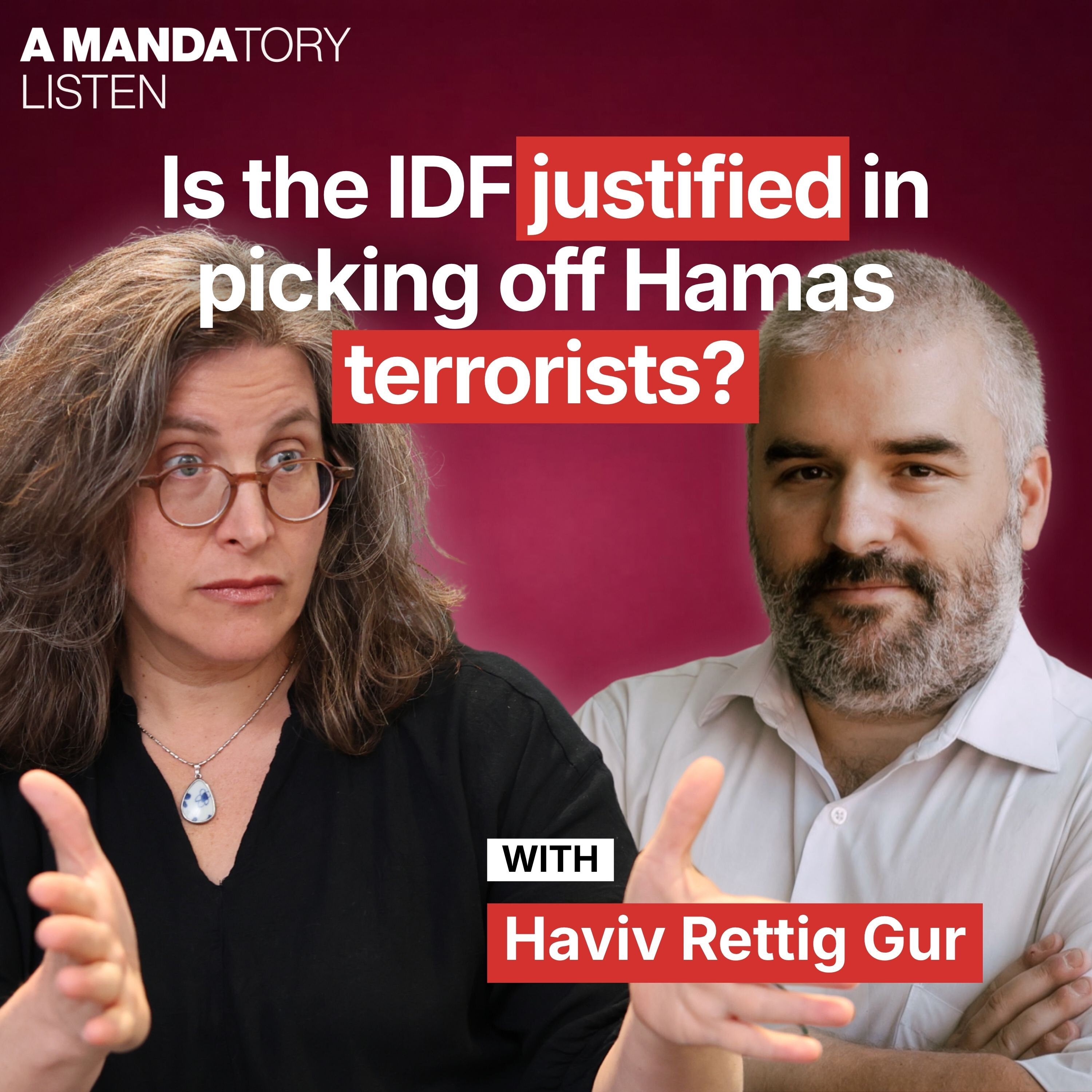 A Mandatory Listen with Haviv Rettig Gur: Is the IDF justified in picking off Hamas terrorists? 25.09.2026 58mWelcome to "A Mandatory Listen," a new weekly podcast in which The Times of Israel deputy editor Amanda Borschel-Dan asks the big questions facing Israel and the Jewish people. For this inaugural episode, who better to ask "Is the IDF justified in picking off Hamas terrorists?" than The Times of Israel's senior analyst Haviv Rettig Gur. Last week, as headlines roiled world media condemning the IDF following the screening of "NAZA," which alleges Israel is using AI to commit genocide in Gaza, Prime Minister Benjamin Netanyahu reiterated Israel’s determination to eliminate Hamas terrorists in the Strip. In the past several months, the IDF has conducted a series of strikes targeting Hamas operatives in Gaza. Since the October 2025 ceasefire in Gaza, the Hamas-run Health Ministry claims 1,400 Gazans -- without differentiating between Hamas operatives and civilians -- have been killed by the IDF. Rejecting the notion that “Hamas is protected” within the area it controls in Gaza, Netanyahu asserted that “we are settling accounts with these murderers who murdered our people, our daughters, our women and our children on October 7,” adding: “There are not many left because we are dealing with them.” But is this manhunt moral? Rettig Gur sets the stage for his answer with a deep dive into history and the ideological underpinnings of the Hamas terrorist organization still ruling the Gaza Strip. We then turn to what Borschel-Dan calls a "spillover" effect, in which this manhunt may allow a kernel of far-right extremist settlers to perpetrate violence against their Palestinian neighbors in the West Bank. How can Israel rid itself of what Rettig Gur labels "Jewish terrorism"? A Mandatory Listen podcast episodes are available for download on Apple Podcasts, Spotify, YouTube, or wherever you get your podcasts. This episode was produced by Ari Schlacht.See omnystudio.com/listener for privacy information.
 -
 The PM's speech: Fiery rhetoric, inside and outside the UN 25.09.2026 24mWelcome to The Times of Israel's Daily Briefing, your 20-minute audio update on what's happening in Israel, the Middle East and the Jewish world. US bureau chief Jacob Magid and NY correspondent Luke Tress join host Amanda Borschel-Dan for today's episode. Prime Minister Benjamin Netanyahu's combative speech at the United Nations General Assembly in New York on Thursday included expected themes, such as the threat Iran poses to the world and the Jewish people’s determination to stand up to antisemitism as well as attempts to annihilate them. Magid was inside the room where it happened. We delve into which props were employed this year and the surprising amount of time devoted to the prime minister's brother, Yoni Netanyahu. A few hours before Netanyahu's speech, Palestinian Authority President Mahmoud Abbas delivered recorded remarks in which he railed against the United States' decision not to issue visas for the Palestinian delegation. We learn the reasons behind this and the thrust of Abbas's condemnations of Israel. Tress has also had a busy week with over half a dozen protests for and against Israel outside the United Nations. He describes the multitudes that attended and how there was something for almost everyone. Check out The Times of Israel's ongoing liveblog for more updates. For further reading: In fiery UN speech, Netanyahu blasts Iran, Qatar, Turkey, slams Gaza genocide accusation Netanyahu’s UN speech: Israel prevented ‘the genocide Mamdani’s Hamas buddies would have done to us’ PA’s Abbas at UN: Israel trying to force Palestinians out with ‘genocidal war,’ ‘settler terrorism’ Anti-Zionist protesters put Netanyahu effigy in a noose outside UN headquarters NYC’s Chevalier, Susan Sarandon arrested at anti-Israel protest outside UN Subscribe to The Times of Israel Daily Briefing on Apple Podcasts, Spotify, YouTube, or wherever you get your podcasts. This episode was produced by Yitzchak Ledee.See omnystudio.com/listener for privacy information.
 -
 Did Israel just bar all Arab political parties from running? Not so fast 24.09.2026 24mWelcome to The Times of Israel's Daily Briefing, your 20-minute audio update on what's happening in Israel, the Middle East and the Jewish world. Editor David Horovitz joins host Amanda Borschel-Dan for today's episode. Israel’s Ambassador to the US Yechiel Leiter's son, Neria, is hospitalized in serious condition after a car-ramming attack mowed down the reservist soldier at a checkpoint in the central West Bank yesterday. This morning, Leiter updated reporters that doctors have stabilized Neria’s condition overnight. Horovitz tells us about the groundswell of support for the ambassador, who suffered the death of his son Moshe during the war in Gaza. Prime Minister Benjamin Netanyahu is set to address the United Nations General Assembly today at 9 pm Israel time. Horovitz describes the secrecy surrounding the premier's travel arrangements and what he is likely to focus on during his address. We also hear a sampling of the anti-Israel rhetoric and allegations from world leaders this week so far. The Central Elections Committee voted Wednesday in favor of petitions to disqualify the Joint List slate — made up of Balad, Hadash, and Ta’al — altogether as well as Mansour Abbas’s Ra’am party from running in the October 27 election, effectively barring all majority Arab parties from running in the election. Horovitz weighs in on whether any of these disqualifications could be upheld by the High Court of Justice next week upon appeal. It's only five weeks until the elections and Horovitz wonders: Why hasn't the Gadi Eisenkot campaign moved into high gear? Check out The Times of Israel's ongoing liveblog for more updates. For further reading: Son of Israel’s US envoy, a soldier, seriously hurt in car-ramming attack in West Bank; assailant shot dead Election panel disqualifies all Arab parties, in move likely to be overturned; Balad leader also barred Eisenkot does not have this election sewn up. So why is he barely campaigning? Subscribe to The Times of Israel Daily Briefing on Apple Podcasts, Spotify, YouTube, or wherever you get your podcasts. This episode was produced by Yitzchak Ledee.See omnystudio.com/listener for privacy information.
 -
 Religious Zionism doubles down on judicial revolution 23.09.2026 20mWelcome to The Times of Israel's Daily Briefing, your 20-minute audio update on what's happening in Israel, the Middle East and the Jewish world. Legal correspondent Jeremy Sharon joins host Jessica Steinberg for today's episode. After Bezalel Smotrich's far-right Religious Zionism party published a campaign platform calling for further, radical constraints on the judicial system, Sharon discusses the history and aspects of the finance minister's plans and his use of an AI-generated video to advertise the overhaul plan, depicting Supreme Court justices and Attorney General Gali Baharav-Miara getting dragged away from a protest rally. Following the approval of the purchase of Channel 13 by a philanthropic group, funded by a group of entrepreneurs headed by anti-government tech titan Assaf Rapaport, Sharon reports on Communications Minister Shlomo Karhi's reaction, after months of attempting to circumvent the sale that he deemed "unlawful," given Rapaport’s outspoken criticism of the government. Check out The Times of Israel's ongoing liveblog for more updates. For further reading: Religious Zionism launches plans for more radical judicial overhaul after election Coalition scored successes in judicial overhaul, but High Court, elections, will decide its fate Sale of Channel 13 to government critic approved; minister calls decision ‘unlawful’ Subscribe to The Times of Israel Daily Briefing on Apple Podcasts, Spotify, YouTube, or wherever you get your podcasts. This episode was produced by Yitzchak Ledee. IMAGE: Legal correspondent Jeremy Sharon appears on the Daily Briefing podcast with host Jessica Steinberg (Flash 90)See omnystudio.com/listener for privacy information.
 -
 Did muting Macklemore make his message louder? 22.09.2026 26mWelcome to The Times of Israel’s Daily Briefing, your 20-minute audio update on what’s happening in Israel, the Middle East and the Jewish world. News editor Ben Sales joins host Gabriella Jacobs for today’s episode. On Sunday afternoon, a terrorist opened fire near Neve Tzuf in the West Bank, resulting in the death of Netanel Shukrun, father of six, who was buried on Monday night. On the other side of the globe, an assailant opened fire outside an Ontario synagogue during prayers on Yom Kippur eve, leaving a police officer in critical condition. Sales updates us on these two recent attacks. The fallout from the cancellation of the pro-Palestinian rapper Macklemore from Ed Sheeran’s tour continues. Sales highlights that the amplification of Macklemore’s message following his removal exemplifies a puzzle that advocates for Israel are still struggling to figure out: how to quash anti-Israel invective without drawing even more attention to their opponents. Finally, what’s on the minds of Israeli voters and politicians? Sales notes that, though a recent poll put economics and the cost of living at the top of voters’ priorities, a cursory look at the candidates’ heated rhetoric makes it seem like the economy barely exists. We discuss why economic issues are rarely at the forefront of the political agenda in Israel and what politicians are doing to address them away from the political spotlight. Subscribe to The Times of Israel Daily Briefing on Apple Podcasts, Spotify, YouTube, or wherever you get your podcasts. This episode was produced by Yitzchak Ledee.See omnystudio.com/listener for privacy information.
Similar podcasts


Popular in
The podcast also appears in the podcast charts of these countries.


