
The Flying Frisby - money, markets and more
Dominic Frisby
0
Readings of brilliant articles from the Flying Frisby. Occasional super-fascinating interviews. Market commentary, investment ideas, alternative health, some social commentary and more, all with a massive libertarian bias.
Episodes
-
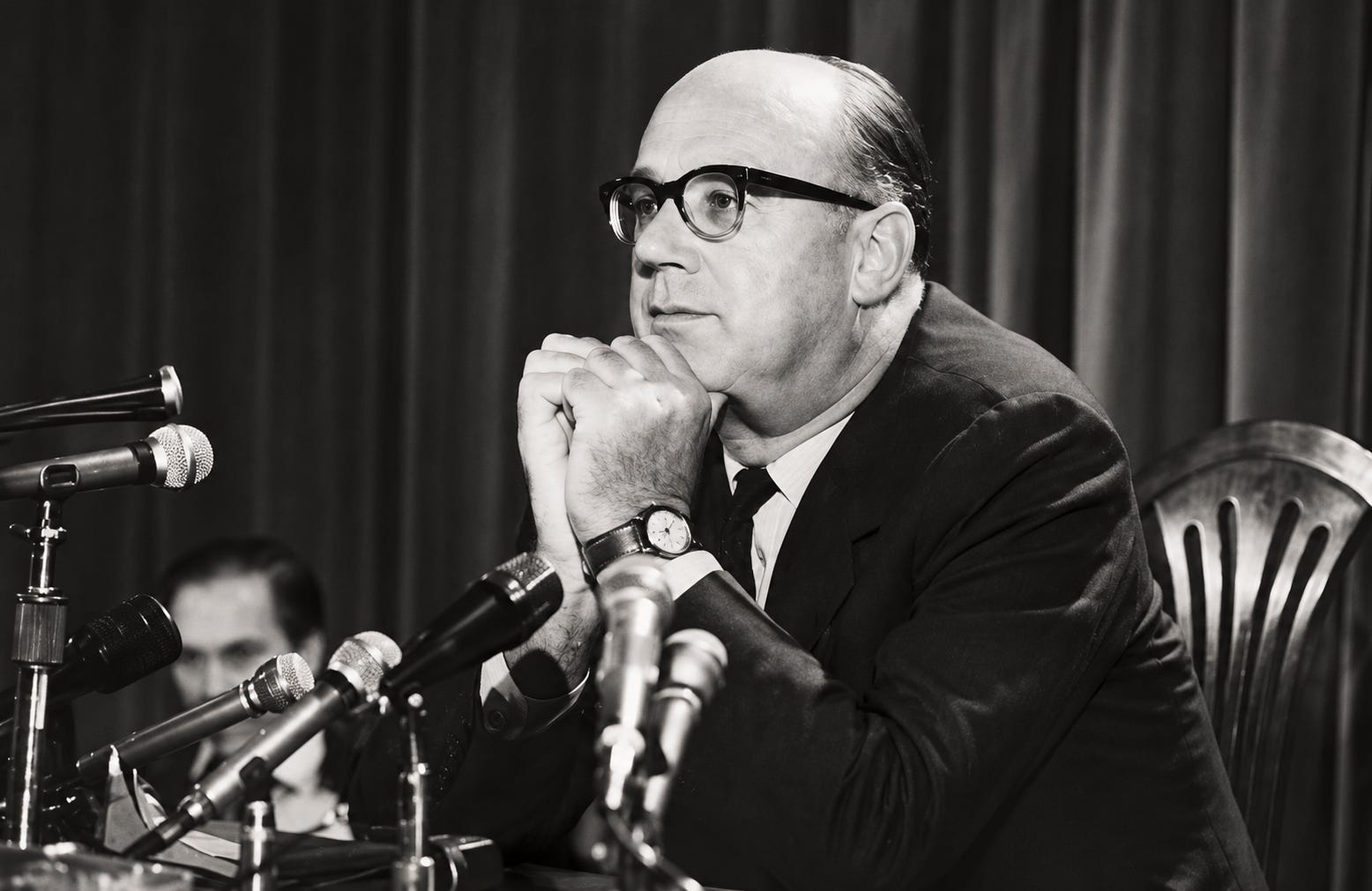 You're Poorer Than They Tell You 04.10.2026 13mThis is a free preview of a paid episode. To hear more, visit www.theflyingfrisby.comGood Sunday to you,I have a lot of charts for you today, and fascinating ones too, but we begin with a little story.John James Cowperthwaite was the financial secretary who oversaw Hong Kong’s extraordinary growth in the 30 or so years after World War Two. It was one of the greatest periods of economic expansion the world had ever seen. I’m not sure it has ever been equalled. In the span of little more than a generation, this tiny territory with no significant natural resources to speak of went from shanty town with a refugee problem and a GDP per capita below $300 to become the world’s busiest port, an international manufacturing and financial powerhouse, among the ten richest nations in the world with a per capita GDP above the US and the UK’s. Its population would grow by over ten times.Cowperthwaite was asked by an African president what poorer countries should do to turn their economies around, as Hong Kong had done. The first thing he said was ‘abolish the office of national statistics’.Cowperthwaite was an acolyte of Adam Smith: it is said he slept with a copy of Wealth of Nations by his bed - presumably because it got him off to sleep. And he despised government statistics, not just because they are so frequently flawed, but because he knew governments would use them to meddle. He was, in the words of his successor, Philip Haddon-Cave, a ‘positive non-interventionist’, who felt that (his words) ‘clumsy bureaucratic fingers’ should be kept out of the ‘sensitive mechanism’ of the economy - far better to rely on the ‘ hidden hand ’. ‘A multiplicity of individual decisions by businessmen and industrialists will . . produce a better and wiser result than a single decision by a Government or by a board with its inevitably limited knowledge of the myriad factors involved, and its inflexibility.’ John James CowperthwaiteWhen British officials came to find out why unemployment data was not being collected, he sent them back on the first available flight, and when his own Legislative Council demanded GDP figures he filibustered them away year after year. Such figures, ‘do not have a great deal of meaning,’ he said. ‘That other countries make use of them is not, I think, necessarily a good reason to suppose that we need them.’In 1962, Cowperthwaite came under such pressure to provide GDP numbers and other such statistics that he hired a professor to do the necessary research. He then declared that he had set up study to look at the feasibility of collecting the information. For seven years he sent back the poor professor ’s drafts: either something needed further clarification, or it needed investigation, or it needed development. By 1969, still no data was forthcoming. He explained that the professor was having difficulties coming to closure on how it should be collated. The poor academic had been set up to be a fall guy. I’ve always loved this line of his:‘ Due to our low tax policy, [government] revenue has increased.’John James CowperthwaiteTake note Andy Burnham. Take note John Healey.Right. Park that story for a moment as we turn our attention to thread two of this argument.If you want the full story of Cowperthwaite and Hong Kong’s breathtaking economic success, it is one of many you can read or listen to in my grand opus, Daylight Robbery: How Tax Shaped Our Past and Will Change Our Future. And that brings me to another of my opera, on the subject of gold. Long time readers/sufferers will know that gold is the great constant. “Neither rust nor moth devoureth it,” to use the words of some ancient Greek bloke. (Pindar). Gold been about since before our solar system was formed, never mind Planet Earth, and it’ll be around long after it’s gone, which can’t be too far off if we continue on this current trajectory. And in all that time it never changes, because it is inert. You can’t destroy it either, not by natural means anyway, so all that gold that has ever been mined still exists. Nothing is as constant as gold. It’s scarce too.That makes is both a wonderful store of value and a wonderful unit of account.What does change is the above ground supply: the more we mine, the more there is. Gold supply grows at just below 2% per year. For most of history the gold supply has grown at the same rate as the human population. It is Nature’s money.In fact, since 1850 and the various gold rushes, and the improved mining techniques which have followed, gold supply has grown marginally quicker than the human population, going from a historical average of roughly 2/5 oz per capita to 4/5 oz today, albeit gradually over a 175 year period. This is likely to continue as population growth has sunk to ~1%.As you know, money has three functions. To be:* A medium of exchange* A store of value* A unit of account.And it is the third, overlooked function that is our focus today.We use our national currencies - pounds, euros and dollars - as our unit of account because we must pay taxes in those currencies and we are obliged to account in them by law. But they are rotten units of account, because the unit of account changes all the time. A pound or a dollar today is not the same as a pound or dollar twenty years ago. Just since 2020 the pound has lost 40% of its value. Money supply growth around the world varies enormously between countries and periods, but ~7-8% is a reasonable average to use. That means the unit is increasing at ~7-8% annually, or doubling every 9 to 10 years. Gold makes a much better unit of account for all the reasons stated above: it is constant. Its physical supply cannot simply be expanded at the stroke of a government pen, so the unit itself does not get diluted. If we are trying to compare economic performance over long periods of time, that matters.If we are trying to reach the truth, then we should account in gold.So now we are going to take a proper unit of account to government statistics.Ever get the feeling that, despite the government telling you the economy is growing, and that, despite your income going up, you’re actually getting poorer? That’s because you are.I shall explain.Every year some government body will tell you what Gross Domestic Product (GDP) is. Really they should be leading with GDP per capita, as that is the more relevant figure, but they don’t. They want headline numbers that flatter them and with mass immigration, GDP will always grow, even if a flood of cheap workers from overseas pushes salaries down for locals. In the UK in 2023, for example, GDP grew slightly, while GDP per capita fell. Leading with GDP and not GDP per capita gives them a better number to boast about. Put bluntly, it enables them to lie. No wonder Cowperthwaite so loathed government statistics. What is worse is not just that they are used to lie and to meddle: the numbers that inform the policy (meddling) are flawed, which means the meddling/policy is inevitably misguided. How abominable the record of the UK’s statistical bodies such as the ONS and OBR is no surprise given the flawed nature of their methodology.if you are looking to appreciate the full scale of the clusterfook: this applies to all government policy everywhere when it is based on a flawed unit of account. It is literally all misinformed.Sorry I rarely use capitals or italics but I couldn’t help myself.If you are measuring GDP in a unit that is increasing at 7-8% per annum, then of course GDP will grow. Official growth figures are adjusted for inflation, but by the government’s own inflation measure, which understates how fast the currency is being debased (~3% vs ~7%).As I am fond of saying, gold tells the truth, however - and we are going to come to that in a moment.But first here is GDP in the UK and the US over the last 50 years. Wait, what? UK GDP has grown by more than US over the period. Is that a function of the sorry state of affairs in the UK in 1975 and therefore a lower starting point? In part. It might be a function of higher proportional immigration?No!It’s because we are comparing different units. The pound began 1975 at ~$2.40. Today it’s $1.32. It has almost halved over the period. In real terms US growth has been more impressive, but the UK’s growth look more impressive mostly because the pound was debased faster than the dollar. This is precisely my beef.Now here is GDP per capita over the same period. You can see that the increase in GDP per capita is much lower than the increase in GDP - which is why politicians tend to focus on GDP. Now here is GDP in gold.Oh, look. Measured in sound money, GDP has actually fallen - down 32% in the US and 44% the UK. That is a very different story to the official narrative. Must be all that outsourcing of manufacturing. (That does not necessarily mean the quantity of goods and services has fallen. It means the market value of those goods and services, expressed in gold, has fallen).And now here is GDP per capita in gold over the same period.Down 57% in the US and 55% in the UK.These are declines we can all sense, but cannot prove. Conventional economic measures conceal them, but they’re very real once you start using a proper unit of account. Just how radically the picture changes when you stop measuring economic progress in a currency whose supply can be expanded by governments and central banks.Gold tells the truth. If only governments and government bodies started using it. Cowperthwaite had the right idea. Don’t let governments anywhere near statistics. They produce them not because they are true but to justify what they want to do.For all you chart nerds out there, at the bottom of today’s article I’ll post charts for the above, which go all the way back to 1900. Interesting viewing.Here is this week’s commentary, in case you missed it: on the ongoing collapse in the government bond markets and what it means for your money. This is not just a UK problem, but worldwide. We could be in the early stages of a global sovereign debt crisis. Printer is coming.Thank you for being a subscriber to the Flying Frisby.Until next time,DominicIf you live in a third world country such as the UK, I urge you to own gold or silver. The pound will be further devalued, as will the euro and dollar. The bullion dealer I use and recommend is The Pure Gold Company. They deliver to the UK, the US, Canada and Europe. More here.Here are those charts:
 -
 Trying to make sense of everything 30.09.2026 3mThis is a free preview of a paid episode. To hear more, visit www.theflyingfrisby.comThe yields on 10-year US treasuries are rising. They’ve hit their highest level in nearly 20 years.What does that even mean? And more importantly what are the implications? A lot of people are getting their knickers in a twist.And why has gold’s promising little rally hit a wall?And what about UK gilts, they’ve rocketed slap bang in the middle of the Labour Party conference, when they’re all promising more spending.Make it make sense.If you live in a third world country such as the UK, I urge you to own gold or silver. The pound will be further devalued, as will the euro and dollar. The bullion dealer I use and recommend is The Pure Gold Company. They deliver to the UK, the US, Canada and Europe. More here.US Treasury yields are not just a US problem. They put upward pressure on the entire developed-world bond market, and the UK is particularly exposed because its own fiscal position is already so precarious.Today, the yield on a US 10-year Treasury is around 5.25%, the UK 10-year gilt hit 5.44% on Monday, its highest level since 2007. At Tuesday’s auction, the government paid an average yield of 5.38% to borrow for ten years, the highest yield at a UK 10-year gilt auction since 1999.Even a small increase in the cost of borrowing puts governments in trouble. Where are they going to find the money to pay the interest?They’ve either got to raise taxes, cut spending, let the deficit grow, pray for growth or all four – and in the case of the UK in time for the Healey budget on October 28.As US rates rise sterling comes under pressure against the dollar – it will no longer be propped up by the relatively high rates we have been offering - hence sterling’s recent declines. So we get higher inflation, especially energy, because of increased import costs.Investors around the world need a reason to hold a UK 10-year gilt. Previously the higher rates we were offering were a reason. If a US 10-year Treasury offers, say, 5.25%, why hold gilts and carry the sterling risk without a much higher rate to compensate? The US Treasury market effectively sets a large part of the global opportunity cost of capital.Higher US rates thus put upward pressure on UK interest rates. So debt gets even more expensive. Our fiscal position deteriorates. Higher rates hurt remortgaging, housing affordability, commercial property, corporate borrowing, infrastructure financing, private equity and so on.Another point to note: the UK 10-year gilt is now yielding 5.4%, despite the Bank Rate being only 3.75%. That gap is telling you that the bond market is pricing a considerably higher long-term cost of capital than the overnight policy rate alone would suggest.The really worrying configuration for Britain would be US real yields rising, US inflation expectations rising, sterling falling and UK gilt yields rising faster than Treasuries.How will all this impact Gold and bitcoin?
 -
 The 2.5% Deposit Trap 27.09.2026 7mThere are so many ways to bring down the cost of new build in the UK, chief among them reduced regulation, planning and taxation. So I was most disappointed, putting it mildly, to see Prime Minister Andy Burnham’s new initiative, Your First Home, which will give government-backed equity loans of 20% to first time buyers, who will now be able to buy new build property with just a 2.5% deposit. Initially, that 20% will be interest-free.This is just another means to saddle young people with debt. As if student loans weren’t bad enough. Unlike period property, new build struggles to keep its value. It’s often because people overpay for new build - the so-called new-build premium. You’re buying a brand new product and somebody, you, has to cover the developer's margin, marketing costs and all the other costs wrapped up in that shiny new flat. Meanwhile, there is no longer the buy-to-let investor to prop up the buy side. The government has already seen to that. The risk of in the inexperienced first-time-buyer overpaying is high and the likelihood of them falling into negative equity is immense. Look at the problems those who went down the Help To Buy route are now having with London flats, where prices are down 20-30%, with owners in negative equity, unable to sell without taking huge losses, and unable to move up the property ladder. Trapped.Help to Buy artificially inflated the prices of new-build flats. Developers knew buyers had government backing, so they charged a “new-build premium,” which effectively captured most of the subsidy. It handed money to people who already had it. Of course building companies will welcome Burnham’s scheme this time around. Now that the Help-To-Buy subsidy has ended, new buyers must purchase using normal mortgages, which has caused prices to “normalise”, ie fall 30%.Meanwhile, there are the problems of skyrocketing service charges and the fallout from the cladding scandal, both of which have also made flats hard to sell.The main people Help To Buy helped were the large building companies, and Andy Burnham’s new scheme will do just the same. It is yet another demand-side intervention in a market where the fundamental problem is that housing is too expensive to build. It is a terrible and misguided thing to do. Builders can (and will) overprice their deals, and trap buyers, who, as first-timers will be naive, in punitive leasehold deals. It is no more than a subsidy for building companies. It does not address the many causes of Britain’s unaffordable housing. It exacerbates them. You are creating more of what caused Britain’s affordability problem in the first place.This is new builds only. So happy days for the likes of Barratt Redrow, Vistry and Taylor Wimpey, never mind the cowboys, who will take the money and run, and leave you holding the bag of poor construction, leasehold and unsellability. Builders’ shareprices will rise on the back of this. Loads of people will be suckered into buying because of the easy affordability now, and thier desperation to own a property. “Oh, it’s better than renting” “Oh, we only have to pay this much.” But if you or anyone you know is tempted by this, I urge you or them to please avoid it at all costs. As a rule flats, particularly new build, are to be avoided because, there is so much beyond your control that you end up being financially responsible for, from basic repairs and maintenance, to problems in the actual build, such as cladding, only found years later, which have now become your unsellable asset.A 2.5% deposit is just too much leverage. It’s fine if you know what you are doing, but most don’t.You could overpay for your property by 5%, which is easily done when you have the carrot of easy affordability now being dangled in front of you. Prices could fall 10%. Or you lose your job. Heaven forbid prices should fall 20-30% as they have with Help to Buy. There are so many routes to negative equity. It is going to ruin people.Do our policy makers never learn? Never mind Help to Buy, what about the US subprime crisis? And then there is 1989-94 and the loose lending that preceded that crash. All the evidence of where this goes is right there in living memory, staring them in the face.There is also the issue that interest rates today are much higher than they were when Help To Buy was introduced.Yet again the government is addressing the problem of unaffordable housing by making it easier to borrow more money to buy unaffordable housing. In other words, it’s finding more ways to bring money into the system when the problem is too much money.This will absolutely screw people. And it’s all dressed in this great guy, true Northerner, trustworthy kids TV presenter, helping you out language with no mention of the risks. It is proper gaslighting. It’s like the friendly chap outside the school playground with the gateway drug. There are times when I think this country’s leadership and administration is just superlatively incompetent. There are times when I actually think Satan might be at work and this is one of them. And you wonder why I can’t stand governments!Share this article with a friend.If you’re interested in the subject of unaffordable housing, you might enjoy this classic from the archives Finally, but perhaps most importantly, here is this week’s commentary. I urge you to read it, if you haven’t already. Thanks for subscribing to the Flying Frisby.Until next time,DominicIf you live in a third world country such as the UK, I urge you to own gold or silver. The pound will be further devalued, as will the euro and dollar. The bullion dealer I use and recommend is The Pure Gold Company. They deliver to the UK, the US, Canada and Europe. More here.For my readers on the other side of the pond, let me also plug next month’s New Orleans Investment Conference, which runs from October 28-31. I’ll be there and there is an array of great speakers. This is a public episode. If you'd like to discuss this with other subscribers or get access to bonus episodes, visit www.theflyingfrisby.com/subscribe
 -
 They’re Coming for Your Money. Don’t Let Them Take It. 23.09.2026 8mThis is a free preview of a paid episode. To hear more, visit www.theflyingfrisby.comGood morning to you and a big welcome to the many new subscribers, both paid and unpaid, who have joined the Flying Frisby this week.We are now the Number One riser in Finance and Number Two in the UK, so we must be doing something right.If you have not yet received your Britain On Sale report, you can access it here. (Any issues getting hold of it, DM me or reply to this email - paid subscribers only).BTW the subscription price goes up at midnight tonight, so if you want to lock in the current rate, now is the time to upgrade.So to today’s piece, and an important one, I think, as this is going to be a big theme over the next few years. The government is coming for your money. You’ve earned it. They haven’t. Don’t let them confiscate it from you, is my advice. I’ll explain all.The same situation applies across the western world, but I am going to focus on the UK today.We begin with this Russell Napier interview with Peter McCormack. If you haven’t already watched/listened, I urge you to. It is well worth your time. Napier’s forecasts, which chime with my own, have grave implications and you are going to need to protect your capital.Napier is a market historian of the old guard, highly respected and, I might add, with good reason. He gets a lot of big calls right.He describes the situation in the UK and indeed most of the West, which we all know. Public sector finances are a mess: bloated, wasteful, deep in debt, an accident waiting to happen.To give you an idea how bad, here’s Dan Hannan, Director of the Institute of Economic Affairs:But before you go all out and despair about the decline of Britain, Napier also describes a private sector which is in good shape, lean and hungry. This is an observation we have also made on these pages and why we have been beating the drum that now is a good time to buy British stocks. Hence this report. Britain needs growth, if it is to get out of its mire of government debt, but is not going to get growth while taxes are high and regulation is heavy. All that is required is to unleash growth is government to get out of the way. But it is incapable of doing that. Indeed this current lot shows no sign of wanting to lower tax or lighten up on regulation, so we are caught. Nevertheless, there is this lean beast waiting to escape and that is a positive thing.Moreover, the country needs a huge amount of investment as it moves away from dependence on China for its manufacturing - which must happen for strategic and political reasons. The balance sheet is there in the private sector, says Napier, to make that investment.It might be that some kind of pragmatist comes to power or, more likely, that someone is forced to be pragmatic by the bond market. But we are not there yet.That’s the backdrop. Let’s come now to Napier’s forecast. Our current total debt, public and private sector, stands around 235% of GDP. We are bad but by no means the worst. (Napier is particularly bearish on France, by the way).There are five ways in which we can lower that debt: growth, default, austerity, repression or inflation.You’d need 4% growth which he sees as unlikely, even with the productivity boost that is coming from AI. Austerity is also unlikely because of the Labour backbenches and the numerous promises made and obligations it carries. Default would take too long to recover from (Napier uses the example of Greece). That leaves financial repression, with inflation doing much of the work. Repression and inflation is easiest solution, because it affects fewest people visibly. Visibly is the point. As we know, politicians always choose the path of least resistance.What does repression mean in practice? There are pots of wealth in savings, in insurance and life funds, and in pensions, and the government is coming for it. The biggest victims or targets of this will be old people, for the simple reason that they have the most money. That is where the capital is. Governments will go where the easy capital isI would also add houses to the mix as they are tapping that market too.This wealth grab is all happening quicker than we realise. Mansion taxes are coming, as we know, and word is the threshold will be now brought down from £2 million to $1.5 million. (Talk about mendacious language - anyone know where I can buy a mansion in London for £1.5 million? You can barely get a terraced house for that in Zone 2)Meanwhile, last week the Bank of England did not put up rates, as it should have, were it to honour its mandate to bring inflation down below 2%. Their measure of inflation is 3.1%!The Bank also announced that it will no longer sell the gilts it printed the money to buy through Quantitative Easing (the ones it started selling the day before the Liz Truss Kwasi Kwarteng budget) but instead hold them to maturity. This will considerably reduce selling pressure on the gilt market. If I were Liz Truss or Kwasi Kwarteng, I’d be fuming.But both moves mean yields payable - ie the cost of debt - will not properly affect real inflation or market forces. But who actually understands the sleight of hand that is taking place here?Napier uses the example of a French 50-year bond bought in 2021, as having lost more than 75% of its value. The debt was bought by pensions. The individuals that effectively owned it through their pensions don’t even know that they bought it because it’s hidden in balance sheets, locked out of reach. That’s how this particular raid can effectively be kept a secret.The government is going to force people to buy these bonds. Many will not even know they are doing it, as it will happen remotely via pension funds. Napier calls it “the power of the mandate”, a great term. The UK government already has this power to some degree, through changes to the regulatory framework which can influence what pension funds are permitted or encouraged to hold. (Governments elsewhere in the world that do not currently have this power will soon acquire it, don’t you worry).By forcing people to buy bonds, they keep interest rates down, and so the government will be less beholden to “the market” when it wants to borrow and spend.There is plenty of previous for this, bond sales during wars being a prime example. Some kind of regulation will be imposed that demands safe investments and of course bonds and gilts will be deemed safe.This repression will be enacted, effectively, by stealth, and governments will get away with it because it will happen, as both Keynes and Lenin famously observed, “in a manner which not one man in a million is able to diagnose.” Imagine a government that just cut taxes and spending instead. We can but dream. It’s all so dishonest. That’s what I hate about it.I was always taught that saving was a good thing, but saving will be villainised. This immediately makes me think of the US in 1933, a story which I cover in the book. When Roosevelt introduced the gold surrender programme, he villainis ed hoarding gold and blamed hoarders for America’s woes during the Great Depression. But hoarding gold was just saving and that’s what people do. Saving will be somehow villainised, and we will all be required to “play our part” as Andy Burnham put it when imposing illegal immigrant camps on rural villages which don’t want them. The subscription price goes up at midnight tonight. If you want to lock in the current rate, now is the time to upgrade.So what can you do? And how do you protect yourself? Where on earth do you put your money?
 -
 Odyssey, Bitcoin & the Three-Pinter 20.09.2026 4mGood Sunday to you,I finally went to see Odyssey last night. I’d been intending not to, after everything I’d read on X, but my daughter persuaded me, and I actually quite enjoyed it.Maybe not an A+ movie, but a pleasant enough way to spend a few hours. I didn’t feel violated by all the casting, in the way that purists were, although Helen should have been stunningly beautiful, which she wasn’t. To use the parlance of the incel rugby player, she was a three-pinter.And what people see in Zendeya, who plays Athena, remains a mystery to me. Given that Athena is the Goddess of Wisdom I would have advocated casting someone who at least looks like they might have a high IQ. If anything, the greater violation was the proliferation of American accents. I love an American accent as much as the next man. I want to live in the US. But to me, maybe I’m just biased, anything classical or mythological always sounds better in an English accent.During the first scene with Tiresias, the blind prophet of Thebes, I thought I was going to hate the film. I turned to my daughter and said as much. What’s the point of prophesying stuff if people can’t understand what you’re saying. But after that, it was OK.It’s amazing, though, that with the mightiness of modern sound, engineers often can’t get the mix right, so that spoken words, especially by actors with poor diction (eg Zendeya and whoever played Tiresias, though they were by no means the sole offenders), get lost. Even my daughter, whose hearing remains intact, complained that she couldn’t make out what they were saying.Note to actors: being natural does not mean being incomprehensible.I sound like my dad.In other news, bitcoin staged another welcome and unexpected rally this week, with the companies I mentioned last week seeing gains of 15-25% or more.A bitcoin bull market in which you don’t have a position is a deeply frustrating experience, and not one I recommend. So don’t miss this next one. I show you the easiest way to play it here, a way that avoids the complexities of cold storage and the bureaucratic rigmarole the FCA has imposed on UK investors.The jury’s still out on whether we get one more retest of the lows before the next bull market, but it’s looking increasingly unlikely. The next bull market may already have begun.In other news, in case you missed it, here is this week’s piece. It is a whopper of a report on gold miners and well worth a look if gold miners are your thing.It was very encouraging to see gold rebound in the wake of last week’s interest rate rises by the Fed. The inference, as far as I’m concerned, is that the lows for gold are now in, just below $4,000.We’re still in consolidation mode, and I doubt we see new highs before next year, but it looks like we now have a base.Turning to an ongoing theme on these pages, being the decline of Britain, how about these for some stats?The pound has lost 40% of its purchasing power since 2020 (partly due to Covid money printing), according to Truflation measures. With all that debasement and the increased money in circulation, the number of millionaires “should” have increased.But it has actually declined by ~60% since 2021, reaching its lowest level in 20 years.The wealth destruction taking place in this country is staggering.The US is growing its number of millionaires at 1,200 per day meanwhile, and has created over 1.6 million new millionaires since 2020. Americans are much better at debasing their currency.We must be the only country in history to have printed this much money and still seen declines in nominal wealth. I know I am mixing data sets but you get the point.Thank you for being a subscriber to the Flying Frisby.Until next time,Cheerio,DominicIf you live in a third world country such as the UK, I urge you to own gold or silver. The pound will be further devalued, as will the euro and dollar. The bullion dealer I use and recommend is The Pure Gold Company. They deliver to the UK, the US, Canada and Europe. More here.PS I appeared on the New Zealand Every Day Investor podcast this week. Here is the interview, if you fancy it. This is a public episode. If you'd like to discuss this with other subscribers or get access to bonus episodes, visit www.theflyingfrisby.com/subscribe
 -
 How to Play the Next Bitcoin Cycle 10.09.2026 4mThis is a free preview of a paid episode. To hear more, visit www.theflyingfrisby.comBitcoin is both volatile and cyclical. You get periods of extraordinary gains. But then you get periods of extraordinary losses. But …If you can buy during low points in the cycle, that volatility can work in your favour. And the house view is that we are within a month or two of the low point right here and now. It might be that the very low was on July 1st at $58,000. It might be that we need to give that price one more retest this autumn. Either way you want to be sure that by November-December, if you haven’t already, you have your long position in place, ready for the next run.There is nothing worse than watching others enjoy a bitcoin bull market while you’re on the sidelines.I have made many mistakes over the years, but I do get some things right, and last time around, in August 23, I wrote up Microstrategy, now Strategy (NDX.MSTR) close to the lows, and some readers made twenty times their money. It made me very popular. I am planning a similar coup this time.Today, I want to explain the bitcoin cycle, where I think we are in it and how I would get exposure.If you are one of those people who didn’t buy Bitcoin at $500 or $1,000 and have spent the years since telling people how you could have bought it, but missed out, now is your chance to move on from that story.And if you are one of those people who says, “I don’t understand it,” and uses that as a reason not to invest, I’m going to address that too.For the avoidance of doubt, I have some history here. In 2014 I wrote what was, as far as I am aware, the first book about bitcoin published by a mainstream publisher. I have been following this thing for a long time. “Read it and glimpse into the future,” said Sir Richard Branson. Though it’s not clear he did actually read it. Bitcoin: the Future of Money? by Dominic Frisby is available at all good bookshops.The audiobook, which had particularly good reviews, has now been re-released. UK version here. US version here.I have a target of $200,000 for the next cycle, perhaps 2.5x where we are today. (Bitcoin currently sits around $78,000But I am going to show you a simple way to play this where the returns could be much, much greater than 2.5x.So let’s get into it.The four stages of the Bitcoin cycleThe bitcoin cycle goes something like this* Quiet accumulation.* Rampant bull market and blow-off top.* Monster correction.* Frustrating consolidation.Then the process starts again.This cycle is remarkably consistent and quite easy to identify. I think we are currently somewhere between stages 4 and 1, and that is when you want to be getting positioned.The high came at $128,000 a year ago. Bitcoin was on the front cover of every paper. The US was going to adopt a bitcoin standard and fiat money was on its way out. Something like that. It duly crashed. Now it’s going to be destroyed by Quantum computing or something. All the talent has left bitcoin for AI. Nobody is talking about it any more. And now, with the Coldcard disaster followed by the Blockstream hack, we have had the requisite failures in major players which mark bear market lows. The great difficulty with bear markets is psychological. It is easy to buy when it is going up. You get sucked in. It is much harder to buy when everyone is telling you it is finished.Another simple, but eerily accurate way of playing the bitcoin cycle is the 500-day rule. Buy 500 days before the halving and sell 500 days after it.A bitcoin halving is when the rewards paid to miners reduces. This happens every four years, and the next one is due around April 2028. We are perhaps 580 days before the next halving.(One thing I have noticed is that when everyone knows about a cycle, they tend to come earlier, hence my alerting you to this one now and not in 80 days time). Again it means you want to be positioned before December.
 -
 When Time Stops 06.09.2026 8mOne of the best things you can do with your time is hire a boat that you can sleep on and float up a river for a few days.Time stops.Absorb the weather, whatever form it takes, but sunny is best. Breathe in the air. Sleep as the boat gently bobs up and down. Contemplate. Talk. Play games. Eat. Swim.Peace descends and nothing much matters any more.I’ve done this several times on the Thames and, having just spent a few days in Serbia, I now plan to do the same thing on the Danube. I just had a little taster. I flew out to Serbia because I was speaking and performing at Liberpulco, the European brother of Anarchapulco, an anarchy meet-up - I hesitate to call it a conference - held every year in Acapulco. The idea is that the European version should take place in Liberland.Wait! What? Where?Gornja Siga is a small area of river islands and floodplain in the Danube about three square miles in size (more when the river is low). For some context, it would be about the size of Gibraltar.The Danube forms the border between Serbia and Croatia. Following the break-up of Yugoslavia, there was no agreement as to who owned this floodplain. It was terra nulla.Enter Vít Jedlička, a Czech politician and entrepreneur, who declared the territory the Free Republic of Liberland and has been trying to establish his own micronation ever since. “We are building the greatest tax haven the world has ever seen,” I once heard him declare in a presentation.Jedlička is a wonderful speaker, a great publicist and highly entrepreneurial. For obvious reasons, the project appealed to alienated libertarians around the world.He began selling passports and citizenship. He appointed various ministers. The nation’s coffers were held in bitcoin. The nation even declares an annual profit.However, he needs another nation to recognise Liberland, which no one has yet done (despite, I gather, Argentine president Javier Millei being a citizen), and of course the idea has gone down like a bucket of sick at the UN.You also can’t currently access the island by boat from Serbia without running into the Croatian police. If you should attempt to dock your boat, the police will arrest you. I think the grounds are entering the EU illegally. I swam to within about 5 feet of depth but then lost my nerve as the Croatia police boat approached and swam back into deeper water. Keeping a boat permanently stationed there is costing the Croatian police millions. Most days nothing happens. The police just sit there bored. What a waste of a life.You can access Liberland from the Croatian side, and some settlers live there in tents. Might for fun for a bit, but probably not a long-term option except for the most dedicated.Jedlička has now bought a plot of land beside a lake in the nearby Serbian town of Apatin, called it Ark and declared a government in exile. They have built a campsite, a small conference centre and various other facilities. It feels as much like a holiday resort as a country.Here is your author by said lake giving his best salmon impersonation.I don’t know the ins and outs of the whole thing, but the project appeals to me if only because I find its sheer irreverence very funny. And because everyone wants to start their own nation. Who actually does?So that was what brought me to Serbia. And I am most grateful to the organizers for having me.Dogs and cigarettesWe flew into Belgrade, which itself is a tricky place to get to (try getting there from the south of France) and from there drove three hours to the town of Sombor and our hotel.I loved Sombor.I felt as though I had gone back in time to how European cities used to be: sleepy, friendly and safe. The country is 99% Christian Orthodox, and, from what little I experienced, both there and in Belgrade pretty monocultural. Serbs mostly seem to speak very good English. They are shy, polite, respectful, ambitious, hard working, driven and they take whatever they are doing very seriously.It’s not like many other countries I could mention where you get accosted everywhere you go. People mostly left you alone to get on with whatever you were doing. But if you needed anything, they couldn’t have been more helpful.In Belgrade, for example, taxis don’t seem to stop on the street and there is no Uber. It took me more than 24 hours to work this out. But randoms on the street were more than happy to stop, get their phones out and call a taxi for me. If I asked a random in London to call me a taxi, Lord knows where that would end up.The food was delicious. Lots of trout, catfish and pork. Not particularly cheap.People looked pretty healthy, I must say. No rampant obesity. Although there were plenty of older men who looked as though they had drunk their fair share of beer over the years.That was another thing that took me back in time. Everybody smokes. Lots of sitting around in cafés, smoking and presumably discussing existentialism. You go into restaurants and there is a smoking area and a non-smoking area, and the smoking area is often more crowded. I’m so used to non-smoking restaurants that I have to say I didn’t particularly like the smell.Belgrade was the same. Not particularly cheap. Some excellent food. As good a steak as I have ever eaten.Av ery high dog per capita ratio too. Everyone seems to own a dog and, what I liked, even in the capital many seemed to walk their dogs off a lead. Like the UK in the 1970s early 80s before pitbulls, health and safety arrived.Belgrade’s location where the Danube and Sava rivers meet means it has been enormously important strategically. How about this for a stat? It has been fought over in 115 wars and razed 44 timesLots of splendid Orthodox churches. Look at all that gold leaf.Quite a bit of graffiti too. I couldn’t understand what it said, but presumably something to do with the war. It has an unpopular and corrupt government that faces weekly protests. According to one taxi driver, always a reliable source of political opinion, it promises to join the EU and never does. Like somewhere else I could mention, the population is split 50:50 as to whether joining the EU is a good idea or not. A beautiful central park with a fortress that looks like Helms Deep. Lovely walks along the Danube. Lots of views. Here’s one of them.I managed to rupture a tendon in my knee playing pickleball a month back, and this gave me an unexpected insight into the Serbian healthcare system. My knee was hurting so I took to google and got an appointment that same day with an orthopaedic surgeon. The clinic was not in the centre of town so we got some insight into ‘the real Belgrade”. What struck me was the relationship between the doctors and their patients. It seemed so good. They all seemed to know each other. There was affection. They seemed to feel part of the same community. It was so good to see. I then had an MRI the following day, all for about a quarter of what I would have expected to pay in the UK. That was a good experience too.I liked Serbia and will go back. Next time I am going to get a boat and drift up the Danube for a few days. There is something about being on a river that strips life down to its essentials. For a few days at least, I will drift, gently sway, bob up and down and nothing much will matter any more.Here is this week’s commentary, in case you missed it.Until next time,Happy Sunday,DominicIf you live in a third world country such as the UK, I urge you to own gold or silver. The pound will be further devalued, as will the euro and dollar. The bullion dealer I use and recommend is The Pure Gold Company. They deliver to the UK, the US, Canada and Europe. More here. This is a public episode. If you'd like to discuss this with other subscribers or get access to bonus episodes, visit www.theflyingfrisby.com/subscribe
 -
 The Three Financial Storms on the Horizon 02.09.2026 9mYes, physical gold is a safe haven, but gold also attracts a lot of speculative capital, particularly the paper markets. Gold futures are among the most traded futures in the world, and there is nothing physical about them. So when there is a panic, gold tends to sell off along with everything else as liquidity dries up and everyone rushes to cash.The US dollar is actually the safe haven, except that it isn’t, because you are bleeding 7 or 8% of value every year to money supply growth.I am getting so many messages at the moment asking me what to do “when the collapse comes”, as though the collapse of fiat is a foregone conclusion. I don’t think it is. I think continued depreciation is more likely. Fiat could collapse, of course, but we are in a probabilities game and I’d give it perhaps a 25% probability, while continued depreciation I’d put at well over 50% likelihood.At present we have three financial storms on the horizon. Whether they actually reach us or not remains to be seen, but we should be aware of them nonetheless, so that we can be prepared if they do eventually close in.Nasty stock market correction ahead?They are, first, the fact that US markets are so leveraged to AI. You don’t even need the AI bubble to pop, you just need it to deflate a little bit, and it takes the S&P500 down with it.It’s not like I, and many others besides, haven’t mentioned this before, but it bears mentioning again: the Magnificent Seven, which are highly AI oriented, currently account for about a third of the combined market capitalisation of the S&P’s 500 companies. Ten years ago the equivalent concentration was around 15%, and that seemed like a lot.From an asset allocation perspective - particularly with so much passive investing - this is dangerous, to put it mildly. Concentration is fine when markets are going up. If you’re concentrated in the right sector you make a lot of money. But when things unravel you get your backside handed to you on a plate. Diversification spreads risk. The S&P500 “should” be diversified. It isn’t. Passive investing is supposed to be diversified. It isn’t.But this has been the case for a long time. It hasn’t mattered. It doesn’t matter until it does.Then there is the fact that every mid-term election years have a tendency to deliver autumn drawdowns. According to some sources, every year. If we get a significant drawdown in the S&P500, the safehaven that is gold will sell off too.Wobbly bondsThe second financial storm - is it even on the horizon any more? - lies in the government bond market. It’s worth remembering just how large the bond market is. The global value is estimated at around $145 trillion, so larger than the combined stock market which is closer to $130 trillion.You have probably seen headlines this week saying bond markets are “on fire” and that governments are “in hock to the bond market”. Government debt across the developed world - and deficits with it - have risen dramatically since Covid, and the bond markets are not so willing to finance that borrowing at the ultra-low rates of the previous decade. Investors want more yield for their risk. Can’t say I blame them.That basically translates as, “if I am to lend you money for ten years, you are going to have to pay me 5% interest, maybe more. 2% is no longer enough.”As yields rise, the cost of servicing debt rises with them. Just a small increase can add tens of billions to annual interest payments.The US has the enormous advantage of issuing the world’s reserve currency, but its huge structural deficits mean it is vulnerable. Japan, Britain, France and Italy are particularly at risk because they combine high debt burdens with fiscal or political problems.Higher yields mean higher interest payments, which make deficits larger, requiring governments to issue still more debt. Vicious circle time. Governments try to avoid this by issuing shorter-term debt, but that merely increases refinancing exposure. The US Treasury’s increasing reliance on shorter maturities is therefore a concern.Politicians might promise to spend more, but somebody has to buy their debt. If investors want a significantly higher return, governments may find that fiscal policy is increasingly dictated by the bond market rather than by politicians.You may see that as a good thing and it probably is. Government spending has to be reined in somehow. But higher interest rates will put pressure on real estate and equities, and they increase the likelihood of defaults, which tend to snowball. See 2008 for more details.Defaults should also increase demand for gold, because there is no liability or counterparty. But that doesn’t happen straight away, necessarily. The liquidity has to come out of the market first, and that means everything goes lower. Just gold doesn’t go down quite as much and it turns back up first.The reaction of governments to a debt crisis will of course be to print. And that too benefits gold.Which brings us to financial storm number three on the horizon, although this one is really a subset of two.The UK. It is a standout amongst all of this. Our interest rates are already high, which means greater pressure on the government (they are the main reason sterling has held up). We have a new Prime Minister, who is currently trying to buy popularity and who seems to think that the solution to many of the UK’s problems is more government spending, not less, and that will require more borrowing and higher taxes. But he has inherited a precarious fiscal position and a bond market that is already demanding a substantial return. Ten-year gilt e yields have risen above 5%, their highest level in 18 years, and longer-term borrowing costs have reached a 28-year high, with 30-year gilt yields closing down on 6%.The political situation is also awkward. The combined right-wing vote exceeds the Labour vote by some considerable distance, but it is split between the Tories, Reform and Restore. Does Burnham exploit this to call an early election? Will his backbenchers even let him if he wants to do this? Will an early election mean greater or less stability?On the other hand high rates are at least propping sterling up. I say propping up. On a purchasing power parity basis, the UK is actually cheap and sterling too. Doesn’t mean it can’t get cheaper. As UK nationals, we have inevitable exposure to sterling, but the prudent thing for a UK citizen to do is reduce sterling exposure. Hold non-government currencies is my advice: gold and bitcoin. I’ll have more on the la tter soon.BOLD.L might be the way. Most roads lead to gold at the moment but they are rocky roads.If you live in a third world country such as the UK, I urge you to own gold or silver. The pound will be further devalued, as will the euro and dollar. The bullion dealer I use and recommend is The Pure Gold Company. They deliver to the UK, the US, Canada and Europe. More here.Other mattersI have turned my Britain On Sale series of seven undervalued companies that could be taken out during the current takeover frenzy into a downloadable PDF report. Here it is.There is a real opportunity here right here and now. I cannot stress that enough. The UK is cheap and being bought up.And last but not least, The Secret History of Gold is now out in paperback in the UK, so get your copy now. It has had excellent reviews and has now reached best seller status, I’m delighted to report, with the audiobook especially popular. This is a public episode. If you'd like to discuss this with other subscribers or get access to bonus episodes, visit www.theflyingfrisby.com/subscribe
 -
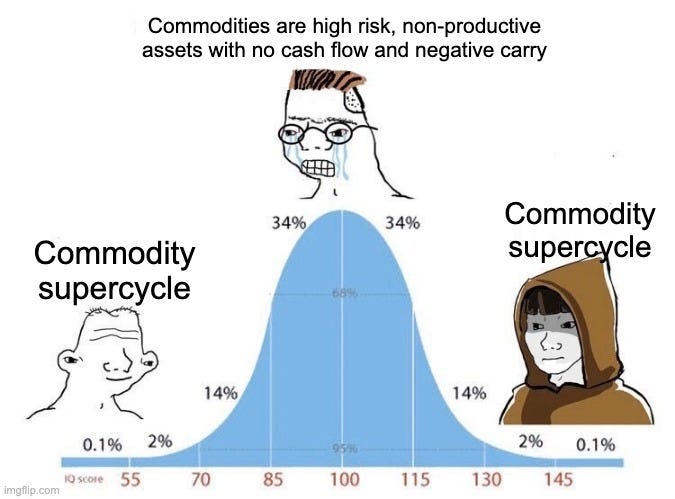 The Commodity Supercycle Has Begun 26.08.2026 6mToday’s post is short and simple.Investing is often best done that way.The short of it is this: a new commodities supercycle has begun. It’s going to last several years. You want to be long natural resources and natural resource companies.The declining purchasing power of national currencies muddies the waters, but I should say that the eventual price of commodities, metals, grains, meats, fossil fuels, softs such as coffee and cotton, is lower. This is especially the case if you measure them using a constant unit of account such as gold.Unless you subscribe to peak oil theories and the like - that there is a finite amount of something and the resource is running out (and I have some sympathy with these arguments) - the simple fact is that we are getting better at producing these things.As we get more productive, their price heads lower. Once we used manpower, picks and shovels to mine metals. Now we use huge great machines and robots. Grade may be declining, we may have to go to far-flung and inhospitable places to mine rock, just as demand is increasing, but human beings are also getting much better at mining.The same goes for farming. We are getting better at it.However, if prices fall too low, mines and farms close down. Investment dries up. This leads to shortages. Prices then go up to compensate, which leads to increased production, which leads to surfeits. Then prices fall again.Thus commodities are highly cyclical, even if the broader direction of travel is lower.Cycles tend to last many years. It takes a long time to get a mine producing. The last great commodity supercycle was the noughties. The one before that, in broad brush terms, was the 70s.We are in another one now.And the charts are confirming it.Exhibit AThis first chart shows the SPDR S&P Global Natural Resources ETF, which owns natural-resource equities rather than the commodities themselves: It’s a basket of resource companies, mining, energy and agricultural.There is a huge, 15-year saucer base from roughly 2011 to 2026.There was a breakout from the major resistance zone, followed by a fall back to the zone for a retest, to kiss it goodbye, as they say.It has now broken out to new highs. $65 is your line in the sand. A sustained move below that and the breakout has failed. That’s where to manage your risk to. Silver has done something similar, by the way, though over a much longer timeframe.This chart is so bullish I couldn’t not mention it.I’m always a bit hesitant with silver, as you know, but you absolutely must have some exposure in your portfolio, either to a miner or to some of the metal itself.You can start quoting silly numbers for silver, if you like - $200/oz and more. I wouldn’t blame you.If you live in a third world country such as the UK, I urge you to own gold or silver. The pound will be further devalued, as will the euro and dollar. The bullion dealer I use and recommend is The Pure Gold Company. They deliver to the UK, the US, Canada and Europe. More here.Exhibit BNext we have the ratio between the CRB, the Commodities Research Bureau Index, generally seen as a benchmark for commodities, and the S&P 500 over the last 3 0 years.When that chart is rising, commodities beat the S&P 500. When it is falling, the S&P 500 is the outperformer.Over the very long term there is a powerful downward bias for reasons described above - improved productivity. But there are periods when that trend reverses, most obviously during the noughties commodity bull market.But on a relative basis, it’s insane how historically depressed commodities have become. (Over a 50 year period the chart is even more remarkable).But the ratio has tested essentially the same low three times since 2020 and refused to break down. It is now making higher lows.Is that a W I see before me? Let’s zoom in and look at the last ten years.Again, you can see the clear line in the sand at around 0.0425. It went briefly below that during the insanity of Covid, when oil went negative. But to all intents and purposes, the red zone is the low.The ratio rallied hard in 2022, thanks in part to a certain invasion, then fell hard. But it never broke the 2020 low. It tested it and the retest held.This year’s pullback - which started with another war - held at around 0.0475 as well. We now have what looks very much like a major base, with a succession of higher lows.That is what I want to see.The bottom line is that I think we have several years of natural-resource outperformance ahead of us.It won’t always be thus. Nothing ever is.But this isn’t the bottom. The bull market has already started. What I see from the charts above is confirmation.Were I to compare this to the noughties bull market, I’d say we were somewhere around 2003-4 maybe. The secular low is behind us, some assets have already made enormous moves, but natural resources as a whole remain extraordinarily cheap relative to equities.There will be corrections. There will be scares. Some commodities will do considerably better than others. Wall of worry. But for now the big asset-allocation call is simple:Be long. Keep it simple.And keep an eye on 0.0425 on that CRB/S&P 500 ratio. A sustained break below there would tell me the thesis is wrong.My thanks go to all of you who filled out my survey last week. If you haven’t yet and have a spare three minutes, you can do that here. (Paying subscribers only please).Disclaimer:I am not regulated by the Financial Conduct Authority (FCA) or any other regulatory body as a financial advisor. Therefore, any information provided in this newsletter does not constitute regulated financial advice. It is solely an expression of opinion. Small-cap stocks are inherently risky. Please conduct your own due diligence and consult with a financial advisor, if you have any doubts. Remember, markets can both rise and fall, especially in the case of small and mid-cap stocks. I am not aware of your individual financial circumstances, so only invest money that you can afford to lose. This is a public episode. If you'd like to discuss this with other subscribers or get access to bonus episodes, visit www.theflyingfrisby.com/subscribe
 -
 Alasdair Macleod: Only A Gold Standard Can Stop The Currency Collapse 23.08.2026 39mGood Sunday to you,This week I’m talking to the goldbugs’ goldbug, Alasdair Macleod.I’m more of a continued decline, muddle through guy, but Alasdair, as you shall see, is very much in the outright collapse camp and he sees that outright collapse coming soon, as you shall hear - within the next 18 months!Alasdair has spent decades studying financial markets, monetary history and the role of gold, and his argument is uncompromising: gold is money; pounds, dollars and euros are credit. I could not agree more. Confidence in fiat currencies is approaching breaking point, he says, and any currency that hopes to survive will ultimately have to become a credible substitute for gold through a proper gold standard.We also look at the fragility of the bond markets, starling, Japan, China and what a 21st-century gold standard might actually look like. My thanks as ever go to The Pure Gold Company for making these interviews possible. If you live in a third world country such as the UK, I urge you to own gold or silver. The pound will be further devalued, as will the euro and dollar. The bullion dealer I use and recommend is The Pure Gold Company. They deliver to the UK, the US, Canada and Europe. More here.This is the last of the videos for a while, as we take stock and evaluate. Broadly speaking, most of you seem to like them, so that’s good.As always you watch the video above, or listen via the Substack app, Apple podcasts, Spotify et al.And if you want to follow Alasdair and read his immensely popular Substack, you can do that here: In other news, the latest edition of Charlie Morris’s Atlas Pulse is out now. It’s free, so get your copy here. Gold smells QE, he says. Well worth reading …And, finally, here is this week’s piece - not on gold, but on copper. It’s telling us something. Disclaimer:Nothing in this programme is intended as investment advice. It is an expression of opinion only. We do not know your financial circumstances. Do your own research. This is a public episode. If you'd like to discuss this with other subscribers or get access to bonus episodes, visit www.theflyingfrisby.com/subscribe
 -
 Copper Is Telling Us Something 24.08.2026 11mI have been banging the drum for copper for some time, but it is becoming increasingly difficult to ignore. Gold has the glamour, but many, including veteran investor Rick Rule, now see the greater opportunity in copper. In summer 2024, I highlighted three copper companies Amerigo Resources (ARG.TO) at around C$1.75 and Arizona Sonoran Copper (ASCU.TO) at C$1.36 and QCCU (QCCU.V) at 12c . Amerigo and Arizona Sonora both hit C$8 on Monday meaning gains of ~350% and ~500%. QCCU, on the other hand, is still at 12c. You can’t win them all.Back in May we noted that things were getting a little hot. The metal had just hit fresh highs; there was a plethora of investment bank supercycle notes and social media was full of predictions about imminent shortages. The long-term story is intact but don’t chase it, we suggested. Copper tends to be weaker over the summer and some consolidation could give you a better buying opportunity.We got a good opportunity in June but it did not last long, and here we are three months on with copper at ~$6.50/lb a couple of per cent below where we were in May.It doesn’t take a genius to work out which way the trend is going in that particular chart. The summer lull has been more of a pause than anything else.Meanwhile, beneath the surface, the fundamental copper story is getting stronger.Copper’s problem is not demand. It is supply.We covered the demand side extensively in May. AI needs copper. Data centres need it. Power grids need it. Electric vehicles, rearmament, reindustrialistation, India - they all need copper. This is not the usual China story by the way. If anythign China demand is lacklustre. Its imports of unwrought copper fell 11.5% year-on-year in July and industrial production there has been slowing. But, as RBC notes, the LME copper market had moved into its steepest backwardation since the 2021 squeeze. In other words, buyers are paying substantially more for copper now than for delivery later. That is a classic physical tightness indicator. Antofagasta has cut its 2026 production guidance after problems at Los Pelambres. Codelco has abandoned its 1.34 million tonne production target and now expects to produce less than it did last year.Meanwhile we have BHP’s latest results. Copper now accounts for 54% of its earnings (EBITDA). Its copper mines are extraordinarily profitable (70% EBITDA margin). Yet despite the obvious incentive to produce more, BHP’s copper production actually fell 3% last year. This is the largest mining company in the world, with some of the best copper assets, engineers and access to capital on the planet. If anyone can turn on the copper taps, so to speak, it should be BHP. Yet it is talking about a “persistent structural deficit” of as much as 10 million tonnes a year next decade. Demand from electrification, digitalisation, data centres and other newer uses, meanwhile, is expected to grow at around 6.5% a year.So it now aims to grow its copper production at ~5% a year, faster than the rest of its business. The requires an extraordinary amount of capital.In a recent video, Merlin Marr-Johnson, CEO of Fitzroy Minerals (FTZ.V) analyses BHP’s spending plans using Escondida, the world’s largest copper mine, as an example and concludes, “They’re spending $5 billion to stand still. And that is the copper industry in a nutshell.”Billions of dollars of investment don’t necessarily mean billions of dollars of new production. Mines get older. Grades decline. Pits get deeper. More rock has to be shifted to produce the same amount of metal. Processing plants wear out and have to be replaced. Sometimes you have to spend billions just to stop production falling.Which brings us to Rick Rule.Is copper now a better bet than gold?It could be.Rule argues that “The biggest copper mining companies in the world need to spend $250 billion to maintain current levels of copper production.” Note - to maintain, not increase. Not every one has $250 billion sitting around waiting to be spent. “The copper development boom that we absolutely have to see in the next 10 years will require vast amounts of capital.”“There’s nothing that we can do, nothing at all that we can do, to avert a shortage in copper,” he says. As a result, five years from now the copper price will be, “dramatically higher than it is today.”As you know, copper is an important strategic mineral. Citi recently looked at what might happen if countries start building national inventories. Global refined copper inventories, it estimates, currently sit around at around 3 million tonnes, equivalent to just 1.3 months of global consumption. If governments decided they wanted three months instead, they would need need to find another 4 million tonnes of copper.Where does it come from?To be accumulated over two years, Citi calculates, would require the copper price price to rise to over $10/lb to bring enough scrap into the market and destroy enough demand to balance things.That is not a forecast, by the way, it is a scenario. But governments are increasingly treating critical minerals as a matter of national security. The US has proposed a US$12 billion strategic commodities programme, the EU has allocated billions to critical-mineral security and there have been calls in China for increased copper stockpiling.So what do we actually buy? This is a public episode. If you'd like to discuss this with other subscribers or get access to bonus episodes, visit www.theflyingfrisby.com/subscribe
 -
 What Actual Gold and Silver Investors Are ACTUALLY doing 16.08.2026 35mGood Sunday to you,I am being impersonated again, so if you receive messages from someone that looks like it could be me, it isn’t. Please block and report. (Also feel free to message me so I can report them too.) Many thanks …We have another Money, Markets and More for you today with Joshua Saul, founder and CEO of The Pure Gold Company, who tells us what gold and silver investors are actually doing after one of the most extraordinary runs in precious metals in recent years.Joshua is in the unusual position of speaking directly to investors as they buy and sell, which gives him a good view of what is actually happening at the coalface. The frenzy we saw at the beginning of the year has subsided, but something interesting is happening underneath: the first-time buyers have largely disappeared, but value-driven investors have been buying into the correction. Is this the end of the gold bull market, or simply a pause before the next leg higher?You can watch the video above, or listen via the Substack app, Apple podcasts, Spotify et al.🥇 This video was made in association with The Pure Gold Company.If you live in a third world country such as the UK, I urge you to own gold or silver. The pound will be further devalued, as will the euro and dollar. The bullion dealer I use and recommend is The Pure Gold Company. They deliver to the UK, the US, Canada and Europe. More here.In other news, the paperback of the Secret History of Gold - Money, Myth, Politics and Power has just come out in the UK, so order yours now. 4.7* on Amazon. :)And, in case you missed it, here is this week’s piece:DisclaimerNothing in this programme is intended as investment advice. It is an expression of opinion only. We do not know your financial circumstances. Do your own research. This is a public episode. If you'd like to discuss this with other subscribers or get access to bonus episodes, visit www.theflyingfrisby.com/subscribe
 -
 Former Rothschild Banker Exposes China’s Obsession with Gold 09.08.2026 35mApologies for the double email this Sunday, but we have another Money Markets and More, in which I sit down with precious metals analyst and forecaster Ross Norman to discuss the precious, China and why he believes the forces driving the precious metals bull market are structural.You can either watch the video above, or listen via Apple Podcasts, Spotify et al.Ross has spent decades analysing the precious metals markets and has repeatedly won the LBMA’s annual gold forecasting competition. Few people know the mechanics of the physical gold market better, which makes his perspective on what China and the world’s central banks are doing particularly interesting.We also discuss whether gold could reach $7,000–$10,000 by the end of the decade, why Ross would favour silver with £100,000 to invest today, and his prediction that gold could once again become something people actually use as money.Follow Ross and Metals DailyThis video was brought to you by The Pure Gold Company: If you live in a third world country such as the UK, I urge you to own gold or silver. The pound will be further devalued, as will the euro and dollar. The bullion dealer I use and recommend is The Pure Gold Company. They deliver to the UK, the US, Canada and Europe. More here.📖 The Secret History of Gold: Money, Myth, Politics and Power. Nothing in this programme is intended as investment advice. It is an expression of opinion only. Do your own research.And if you missed today’s thought piece, here it is: This is a public episode. If you'd like to discuss this with other subscribers or get access to bonus episodes, visit www.theflyingfrisby.com/subscribe
 -
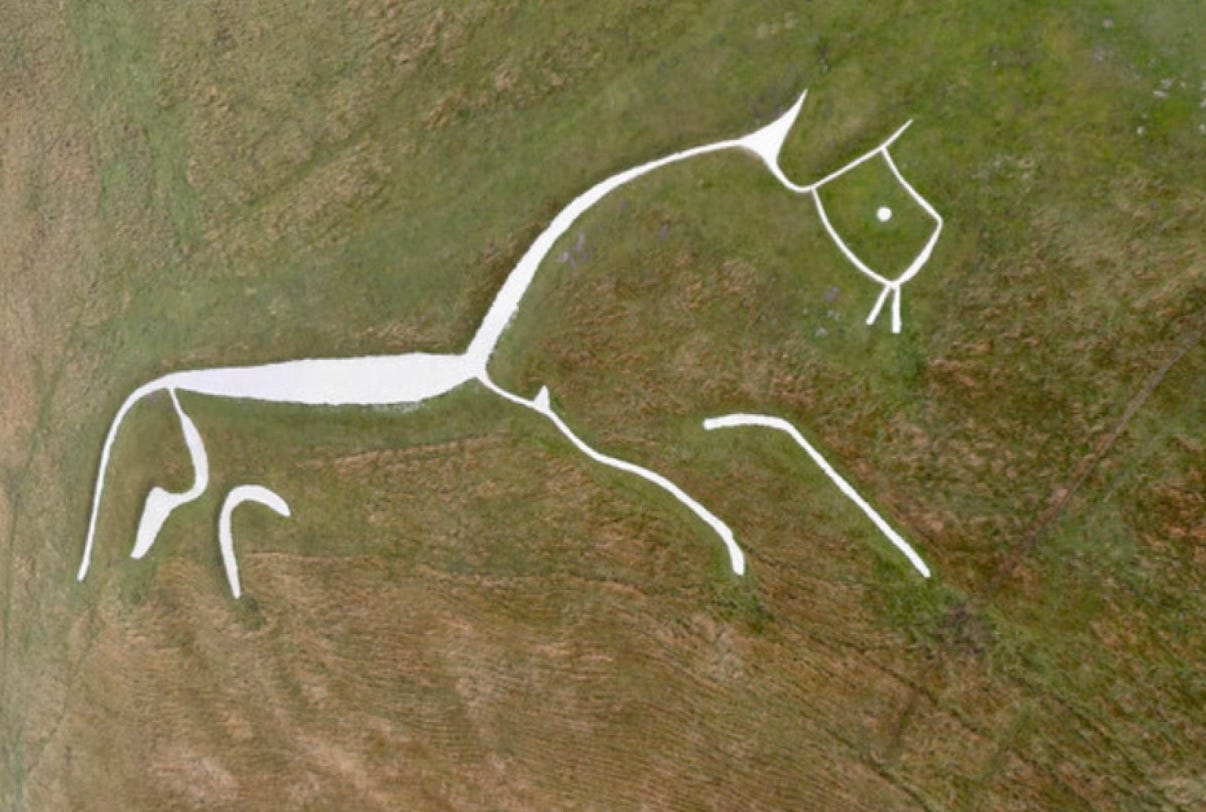 Is the Uffington White Horse Actually a Horse? And What Is It Doing There? 09.08.2026 4mLast week I walked some of Britain’s oldest path, the Ridgeway, which runs across south central England. It’s literally a ridge, and would once have been a vitally important path when the valleys on either side might have been impenetrable marsh or forest.I walked 56 miles in 4 days, starting in Avebury and ending in Goring.Lots of amazing views of Britain’s brown and pleasant land. Red kites galore. And, early on Day 1, I even saw a brown hare, something I hadn’t seen for many decades. At one point it sprinted (should say galloped?) through a field alongside and past me, quite the sight, but I was so busy admiring it I didn’t get the video.Lots of barrows and burial grounds. Lovely peaceful places. I was particularly taken with Wayland's SmithyThe path was pretty deserted - I only passed somebody every hour or so. Sometimes I went several hours without seeing anyone, excluding cyclists of which there were a few, especially towards Goring.So lots of time to think, and one of the things I thought about at great length was what to do with my largest position, something I’ll have more on soon. Gold stocks look, by the way, as though the summer consolidation is over, and are starting to pick up. Here’s to another bonanza 12 months …. But back to the matter in hand. Each evening I would walk down off the Ridgeway to one of the villages in the valley, then climb back up the hill the following morning. Lots of lovely churches and thatched cottages to be seen.One of the many landmarks on the trip is the famous Uffington White Horse, carved into the downs some 3000 years ago in the late Bronze Age. With the underlying chalk, it is bright and white, and locals have maintained it all these years. It almost looks modern: minimalist and abstract with clean, stylized lines conveying sweeping movement.But as I walked the mile or two up the hill that sunny morning, several things struck me. First, that the White Horse isn’t actually very visible from the valley below.If its creators wanted people in the valley to see it, surely they would have carved it into the side of the hill. But they didn’t. They carved it right on the lip.nor is visible from the Ridgeway just above. In fact, it’s not that visible from land at all and better seen from the air above.That immediately made me think of the Nazca Lines in Peru (see vid below), those ancient figures carved into a plateau which too best appreciated from the air.But that doesn’t quite work either. If the Uffington figure was intended to be viewed from above, why not put it on the plateau? (You can’t even see it from the Ridgeway itself) Why put it on the lip?3,000 years ago, much of the valley below would have been wooded or marshy, as I say, making the figure even harder to see from below. So who was supposed to see it? And from where?The final mystery of my day was this: is it actually a horse? Look at the head. Does that look like a horse to you?It has whiskers. Horses don’t have whiskers. Cats do though. Yours confused, DominicPS Here is the white horse pictured from the air. You do not get this view from the land … and there’s no way that’s meant to be a horse. I’m sure Jason Arday has the answers,In case you missed it, here is this week’s piece, the second part of my special report into the tidal wave of takeovers sweeping the UK at the moment as we sell ourselves off. One of these, WPP, moved 35% in two days.In other news, here is my talk on gold from CPAC the other day. Nothing you don’t already know, but I was pleased with the talk.And, finally, mining financier Simon Catt had me on his podcast, while I was walking the Ridgeway. Here it is on SpotifyAnd on Apple podcastsFinally, finally, here’s a little two minute doc on the Nazca Lines which I narrated many moons ago - of some relevance to today’s piece. It’s not a bad place to spend a couple of minutes. Until next time,DominicIf you live in a third world country such as the UK, I urge you to own gold or silver. The pound will be further devalued, as will the euro and dollar. The bullion dealer I use and recommend is The Pure Gold Company. They deliver to the UK, the US, Canada and Europe. More here. This is a public episode. If you'd like to discuss this with other subscribers or get access to bonus episodes, visit www.theflyingfrisby.com/subscribe
 -
 Toby Baxendale: Red Tape Nation 02.08.2026 47mGood Sunday to you, In the last of this series of interviews recorded at ARC, I sit down with retired (for now) businessman Toby Baxendale to discuss British industry, regulation, sound. money and why he believes Britain is making it increasingly difficult for entrepreneurs to succeed.Toby built a successful business in the meat and fish industries, employing hundreds of people before selling the company. He believes Britain’s long-term prosperity depends on creating an economy that rewards production, investment and entrepreneurship once again.Enjoy! (You can listen to the audio via Spotify et al)This interview was filmed in association with The Pure Gold CompanyIf you live in a third world country such as the UK, I urge you to own gold or silver. The pound will be further devalued, as will the euro and dollar. The bullion dealer I use and recommend is The Pure Gold Company. They deliver to the UK, the US, Canada and Europe. More here.In case you missed it, here is this week’s piece. There has been a spate of takeovers in the UK this last month, many at 60-80% premiums. We identify the companies that could be next. It is a must read. This is a public episode. If you'd like to discuss this with other subscribers or get access to bonus episodes, visit www.theflyingfrisby.com/subscribe
 -
 Steve Baker: Politics in a Nutshell - Tax, Borrow, Debase the Currency 29.07.2026 26mYour mid-week commentary will be later than usual this week. I have something quite special planned. In the meantime, here is another episode of Money Markets and More. Today, I sit down with former Conservative minister Steve Baker to discuss sound money, inflation, taxation, gold and why he believes Britain’s monetary system is fundamentally broken.You can either watch the video above or listen via Spotify, Apple Podcasts etcBefore entering politics, Steve served as an engineering officer in the Royal Air Force before working as an aerospace and software engineer. He later became one of Parliament’s leading advocates for free markets, lower taxes and sound money, giving him first-hand insight into how economic policy is made and why he believes Britain continues to repeat the same mistakes.This interview was filmed in 🥇 association with The Pure Gold Company.If you live in a third world country such as the UK, I urge you to own gold or silver. The pound will be further devalued, as will the euro and dollar. The bullion dealer I use and recommend is The Pure Gold Company. They deliver to the UK, the US, Canada and Europe. More here.⸻📖 The Secret History of Gold⸻Money Markets & More is the interview series from Dominic Frisby, exploring money, markets, gold, economics and the ideas shaping the world.Follow Steve Baker:https://x.com/stevebakerfrsahttps://www.stevebaker.info/https://www.instagram.com/stevebakerfrsahttps://www.facebook.com/FightingForAFreeFuture Nothing in this programme is intended as investment advice. It is an expression of opinion only. Do your own research. This is a public episode. If you'd like to discuss this with other subscribers or get access to bonus episodes, visit www.theflyingfrisby.com/subscribe
 -
 Does Britain Need A Financial Crisis To Change Course? 26.07.2026 28mGood Sunday to you,Today I talk to Toby Young, now Lord Young, journalist, author, and founder of the Free Speech Union discuss Britain: how it works, its economic outlook, inflation, the expanding state, free speech and whether the UK is heading towards a financial crisis.As a member of the House of Lords, Toby offers a unique perspective on the direction Britain is taking politically and economically. We finish by discussing where he’d invest one hundred grand today.As always you can watch the video above or listen via Apple Podcasts, Spotify et alThis interview was filmed at ARC 2026 in 🥇 association with The Pure Gold Company.If you live in a third world country such as the UK, I urge you to own gold or silver. The pound will be further devalued, as will the euro and dollar. The bullion dealer I use and recommend is The Pure Gold Company. They deliver to the UK, the US, Canada and Europe. More here.⸻In case you missed it, here is this week’s piece. There are three really good company investment ideas in here, a lot of pictures and a lot of insights into what happens on the ground in junior mining companies. It is considerably more substantial than my usual weekly commentary. ⸻Follow Toby Young:https://x.com/toadmeister https://dailysceptic.org/Follow The Free Speech Union:https://freespeechunion.org/joinhttps://x.com/SpeechUnion https://www.facebook.com/SpeechUnion https://www.youtube.com/c/TheFreeSpeechUnion Money Markets & More is the interview series from Dominic Frisby, exploring money, markets, gold, economics and more, and it is made possible by 🥇 the Pure Gold Company📖 The Secret History of Gold:Nothing in this programme is intended as investment advice. It is an expression of opinion only. Do your own research. This is a public episode. If you'd like to discuss this with other subscribers or get access to bonus episodes, visit www.theflyingfrisby.com/subscribe
 -
 Is Britain Following the Venezuelan Playbook? 19.07.2026 39mIn this latest Money Markets and More, I sit down with Francis Foster, co-host of Triggernometry and author of Uneducated: My Life as a Teacher and Why You Should Never Become One, to discuss Venezuela, socialism, inflation, the pound, and why he believes Britain is heading towards a financial crisis.You can also listen to this interview as a podcast in the normal way.Before becoming a comedian and broadcaster, Francis spent twelve years as a teacher. In fact, he wanted to call his book 12 Years a Teacher - a title I loved - but apparently his publisher vetoed it.From there, our conversation ranges from Britain’s education system to government debt, money printing, wealth taxes and the lessons Britain should be learning from Venezuela’s economic collapse. Drawing on his own family’s experience, Francis explains what happens when governments lose fiscal discipline—and why he fears the UK is heading down a similar path.This interview was filmed at ARC 2026 in association with The Pure Gold Company. If you live in a third world country such as the UK, I urge you to own gold or silver. The pound will be further devalued, as will the euro and dollar. The bullion dealer I use and recommend is The Pure Gold Company. They deliver to the UK, the US, Canada and Europe. More here.⸻ICYMI here is this week’s commentary⸻Francis Foster📚 Francis’s book Uneducated: My Life as a Teacher and Why You Should Never Become One: https://www.youtube.com/@Francisfosterpod https://www.instagram.com/francisjfoster/ https://x.com/francisjfoster https://www.youtube.com/c/Triggerpod⸻Money Markets & More is the interview series from Dominic Frisby, exploring money, markets, gold, economics and the ideas shaping the world.🥇 In association with The Pure Gold CompanyDisclaimerNothing in this programme is intended as investment advice. It is an expression of opinion only. Do your own research. This is a public episode. If you'd like to discuss this with other subscribers or get access to bonus episodes, visit www.theflyingfrisby.com/subscribe
 -
 Metals Exploration: Is It Time to Sell? 17.07.2026 1mThis is a free preview of a paid episode. To hear more, visit www.theflyingfrisby.comSorry for the delay with this week’s piece, I have been travelling.But our Summer of Gold continues today with what is, for me and many readers, our biggest position: Metals Exploration (MTL.L). It has also been one of our biggest winners.However, this year the shares have gone nowhere. Today they trade in the 13-14p range, having touched 19p earlier in the year. They came down as the fizz came out of gold and silver more generally.Its Runruno mine in the Philippines, the company’s main cash cow, is near depletion, just as construction of the company’s new La India mine in Nicaragua nears completion, with first gold pour expected later this year. New mines are hard to make work. Sometimes they never do. Plenty reach first gold only to disappoint investors for months afterwards, even years. Taking advantage of the excitement that often precedes production is frequently the right move. Is that the case here? Is it time to sell Metals Exploration?Or is it time to buy more?
 -
 Liv Boeree: Humanity's Big Bet 15.07.2026 51mIn this next episode of Money, Markets and More, I sit down with Liv Boeree to discuss AI, risk, poker, game theory, incentives, state power and better decision-making. I thought this was a terrific interview and I hope you enjoy it.You can either watch the video above, or listen to the interview as a podcast in the normal way.Liv argues that, while AI could bring huge breakthroughs in health, drug discovery, efficiency and human flourishing, thi same technology can also be used to cause serious harm. We discuss regulation, bad incentives inside AI companies, state surveillance, privacy, human atrophy, automation versus augmentation, and why Liv believes poker is a better model for life than chess: imperfect information, luck, risk, emotion and long-term decision-making.This interview was filmed at ARC 2026 and made possible by The Pure Gold Company.If you live in a third world country such as the UK, I urge you to own gold or silver. The pound will be further devalued, as will the euro and dollar. The bullion dealer I use and recommend is The Pure Gold Company. They deliver to the UK, the US, Canada and Europe. More here.📖 Read The Secret History of Gold⸻Follow Liv Boeree on X or here on Substack:⸻Nothing in this programme is intended as investment advice. It is an expression of opinion only. We do not know your financial circumstances. Do your own research.And, in case you missed it, here is episode 1 with Luke Gromen This is a public episode. If you'd like to discuss this with other subscribers or get access to bonus episodes, visit www.theflyingfrisby.com/subscribe
Similar podcasts


Popular in
The podcast also appears in the podcast charts of these countries.
