
Business Daily
BBC World Service
2
The daily drama of money and work from the BBC.
Episodes
-
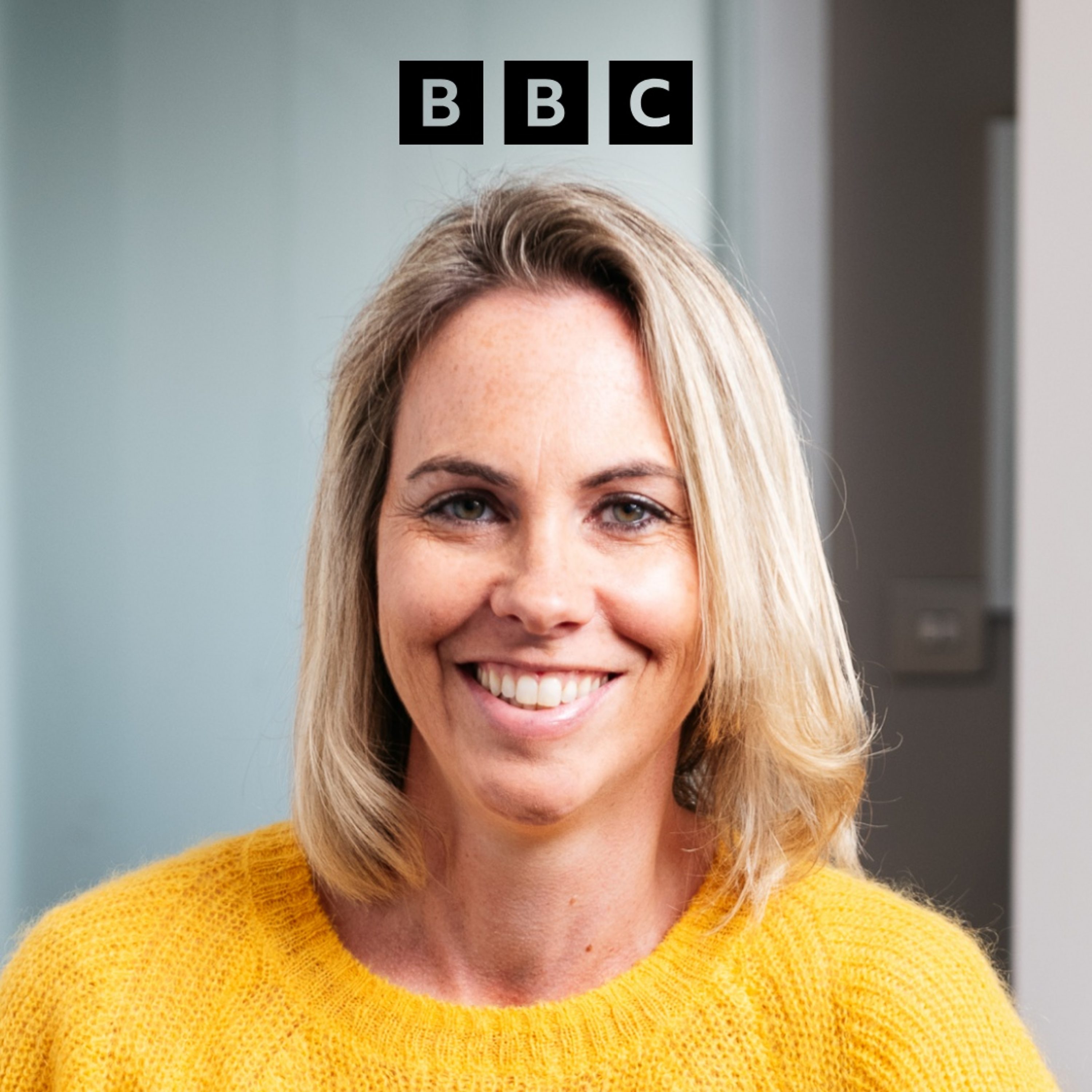 Founders: Olio CEO Tessa Clarke's fight against food waste 20.10.2026 17mTessa Clarke is the co-founder and CEO of Olio, the food-sharing app helping millions of people reduce waste by sharing food and household items with their neighbours. She explains how a simple idea grew into a global movement, the challenges of convincing investors to back it, and why changing human behaviour may be key to tackling climate change. Presenter: Leanna Byrne Producer: Barbara George You can email the team: [email protected](Picture: Tessa Clarke. Credit:Annabel Staff)
-
 Follow the Money: The cost of sending money home 19.10.2026 17mSome economies are increasingly dependent on migrants sending money home to their families. But how much does it cost, and who's making money from a business worth around $900 billion a year? Sam Fenwick follows a transfer from a housekeeper in London to her family in the Philippines, tracking the money every step of the way. We talk to one of the world's biggest transfer companies about the fees involved, and to a remittances expert who argues that while costs have fallen, they still need to come down further.Producer: Gideon LongIf there’s something you pay for and you’d like to know where the money goes, tell us. It could be on a future Follow the Money episode. You can email us: [email protected](Picture: A delivery worker in Manila, Philippines. Prices have been rising in the country this year, which receives remittances from many of its citizens living abroad. Credit: ROLEX DELA PENA/EPA/Shutterstock)
-
 What China's solar panel obsession means for the world 18.10.2026 17mChina's latest trade data show another huge surplus, putting the country on course for what could be a record $1.5 trillion trade surplus this year. In the first of two episodes examining China's export machine, we look at the country's massive solar panel industry. We hear from the so-called Sun King, Dr Jerry Shi, China's first solar billionaire, about the rise of solar power in China. Ed Butler also examines how solar power and other green technologies have helped drive the global response to climate change, while critics raise concerns about oversupply and its impact on industries and economies around the world.Presenter/producer: Ed ButlerYou can email the team: [email protected](Picture: Workers are seen at a production line manufacturing solar photovoltaic components at a factory in Huzhou, Zhejiang province, China. Credit: Lin Yunlong/Zhejiang Daily via Reuters)
-
 Taking Stock: Who owns Space? 15.10.2026 26mFrom Elon Musk and Jeff Bezos, to China and India, companies and countries are pouring billions of dollars to get ahead in the space industry.It's not just about interplanetary exploration, huge investment is going into satellites, defense systems and location technology.Rahul Tandon speaks to Carissa Bryce Christensen, Founder and CEO of BryceTech and Professor of Space Security, Dr Namrata Goswami to discuss who winning the race and who might be coming up from behind.Producers: Amber Mehmood and Matt Lines Editor: Stephen RyanPHOTO: The planet Mars is shown in this NASA Hubble Space Telescope view taken May 12, 2016. NASA/Handout via Reuters
-
 Power players: How did VW go off track? 14.10.2026 25mCompetition from China, weaker sales and a slower-than-expected shift to electric vehicles have left Volkswagen facing its biggest challenge in decades. VW says up to 100,000 jobs could go, with some of its biggest German plants facing closure. Rahul Tandon, Michelle Fleury and Will Bain look at whether VW can turn things around, and whether its troubles reflect wider problems in Germany's economy. (Photo: Volkswagen's main German plant in Wolfsburg, Germany, 17 September, 2026. Credit: Liesa Johannssen/Reuters)You can email the team: [email protected]: Matt Lines
-
 Listen again: The supermarket billionaire, John Catsimatidis 13.10.2026 17mGreek-born billionaire John Catsimatidis rose from working in a New York grocery store to build the Gristedes supermarket chain and a wider business empire after leaving university before graduating. Now head of the Red Apple Group, with interests spanning real estate, energy, aviation and media, he remains a prominent figure in US business and politics, regularly discussing business with President Trump, despite setbacks including a collapsed airline venture and an unsuccessful run for New York mayor.Presenter: Leanna Byrne Producer: Amber MehmoodYou can email the team: [email protected][This episode was first broadcast on 17 June 2026](Picture: John Catsimatidis attends the Economic Club of New York in New York City, U.S., May 28, 2026. Credit: REUTERS/Jeenah Moon)
-
 Follow the money: Why is diesel so expensive? 12.10.2026 17mThe war in the Middle East has pushed up crude oil prices this year and that's had a knock-on effect on the price of refined oil products like diesel. But after months of conflict, the Gulf's oil-producing nations are now getting most of their exports out, so why hasn't the price of diesel come down? And will it fall now that Donald Trump has reached a deal allowing Russia to export diesel again? The BBC's Sam Fenwick traces the journey of a barrel of oil from the Middle East to the petrol pump, looking at the rising costs along the way.(Photo: A worker fills a lorry with diesel in London on 2 October 2026. Credit: Yui Mok/PA)You can email the team: [email protected]: Gideon Long
-
 A global baby bust: why are birth rates falling? 11.10.2026 17mBirth rates are falling across much of the world, raising questions about how economies will cope as populations age rapidly. Rob Young examines why people are having fewer children, from the financial pressures facing couples in the US to changing social attitudes. He also looks at government efforts to reverse the trend, including Finland's generous family support system and Hungary's costly incentives for larger families.Presenter/producer: Rob YoungYou can email the team: [email protected](Picture: A newly born baby in a maternity ward at the Royal Gloucestershire Hospital in the UK. Credit: BBC)
-
 Listen again: Power Players - Why are young Indians joining the Cockroach protests? 10.10.2026 24mA chance to listen again as Will Bain and Rahul Tandon are joined by the BBC's India Business Correspondent Arunoday Mukherjee to look at the rise of the 'Cockroach movement'. They discuss the economic concerns of young people and the difficulties getting well paid jobsProducer: Rebecca SmyllieEditor: Stephen RyanImage description: Supporters of the Cockroach Janta Party (CJP) take part in a protest demanding the resignation of Chief Election Commissioner Gyanesh Kumar in New Delhi, India, 10 October 2026. Thousands of security personnel were deployed across the Indian capital as demonstrators gathered to demand electoral reforms and the resignation of the chief election commissioner following allegations surrounding the Special Intensive Revision (SIR) of voter lists. CJP protest demanding resignation of Chief Election Commissioner Gyanesh Kumar, New Delhi, India - 10 Oct 2026
-
 Taking Stock: Is Gen Z the first generation to be worse off than their parents? 08.10.2026 24mYoung people in France are protesting over schooling conditions, whilst in Spain they have taken to the streets over housing. We ask if there is hope them, and how we can make a better future. Also, we unpack the deal for Paramount Skydance to officially take over Warner Bros Discovery in a $110bn merger. Connecting the time zones this week are Rahul Tandon in Salford, David Kuo in Malaysia and Emily Peck in New York to unpack the week's biggest business stories.(Photo: Student protests over school conditions spread across France, Montpellier - 08 Oct 2026 Credit: EPA/Shutterstock)Presenter: Rahul Tandon Producer: Matt Lines
-
 Power Players: Are these the most economy-focused US mid-terms ever? 07.10.2026 20mWith less than a month to go until the US mid-term elections, voters are preparing to head to the polls with the economy high on the agenda.From the cost of living, interest rates and tariffs, how much will economic concerns shape the result?Rahul Tandon, Michelle Fleury and Will Bain look at whether the economy could prove to be the defining issue of these mid-terms.
-
 Founders: The first black woman to own a billion-dollar company 06.10.2026 17mWe meet Janice Bryant Howroyd, founder of ActOne Group. She arrived in Los Angeles with just $900 borrowed from her mother and went on to build a multi-billion-dollar business, becoming the first Black woman to own and run a billion-dollar company.But Janice says the foundations of her success were laid much earlier, growing up as one of 11 children in the segregated American South. So, how did those early experiences shape the entrepreneur she would become?Presented by Leanna Byrne Produced by Bisi Adebayo and Barbara George(Picture: Janice Bryant Howroyd)
-
 Follow the money: Why does chocolate cost so much? 05.10.2026 17mThe El Nino in 2023 had a detrimental impact on the cocoa harvest in West Africa, prices quadrupled and businesses reacted. Chocolate prices skyrocketed around the world, chocolate makers were reducing their cocoa content and in some cases making their products smaller. Since then cocoa prices have come back down, but the cost of chocolate products hasn't followed, Hannah Mullane takes a look at why. Now, the 2026 El Nino threatens to repeat history, cocoa prices have already started rising again as bad weather is expected to impact the next harvest. Farmers, wholesalers, and chocolate makers explain how the volatile market is impacting them. (Photo: A large machine mixing molten chocolate. Credit: Olivia Richwald)Presenter: Hannah Mullane Producer: Gideon Long
-
 Listen again: Bonds, heroes or villains? 04.10.2026 17mWith the cost of government debt reaching its highest for several decades, we're giving you another chance to hear our exploration of how the world became so dependent on bonds, those IOUs from governments and firms that helped build the modern economy. Bonds are often dismissed as a dull corner of finance, but behind the scenes they have played a central role in major economic dramas around the world.We hear about their history, how they have shaped companies and countries, and why some fear the bond market could trigger the next global meltdown.If you'd like to get in touch with the programme, our email address is [email protected]: Rob Young Producer: Gideon Long[This episode was first broadcast on 12 Jan 2026](Photo: A bond issued in 1648 by a Dutch water board to finance improvements to a local dike system. The bond, written on vellum, is held at Yale University Beinecke Library and is believed to be one of the oldest in the world that still pays interest. Credit: Yale University)
-
 Taking stock: How evicting an 87-year-old woman in Spain disrupted the debate on housing 01.10.2026 25mProtests in Spain about 87-year-old Mariacarmen Abascal's eviction from social housing reignited the housing affordability debate globally, as inflation ticks up and career prospects for the young have been impacted by the rise in AI. We head to Nigeria, India and the UK to take stock on the issue.Elsewhere, what can sliding sales at the world's largest automaker tell us about how drivers feel about big purchases?We get the view from Jennifer Pak China and Professor Justin Wolfers in the US, where former MAGA fans are up in arms about the rising cost of diesel amid the war in Iran.(Photo: Demonstrators protest demanding political action to stop evictions and address the housing crisis, following the eviction of an 87-year-old woman from her home, in Madrid, Spain, 30 September, 2026. Credit: Violeta Santos Moura/Reuters)Presenter: Rahul Tandon Producer: Josh Martin
-
 Power Players: Can AI really regulate itself? 30.09.2026 22mThe AI race is speeding up: and so are the warnings about where it could lead. After President Trump met AI leaders to discuss how to make the technology safer without slowing America's progress, Michelle, Will and Rahul ask: can the AI industry really regulate itself?Producer: Rebecca SmyllieYou can email the team: [email protected](Photo: US President Donald Trump speaks with Meta CEO Mark Zuckerberg at the White House driveway following a luncheon for tech leaders in the East Room, in Washington, D.C., US, September 29, 2026. Credit: REUTERS/Kevin Lamarque)
-
 Founders: From blogger to billionaire, Canva's co-founder on what failures taught him 29.09.2026 20mWho studies law but then forgets to apply for any graduate jobs because they've started blogging about web design and JavaScript? Cameron Adams, the billionaire co-founder of design app Canva. He did eventually land a coveted job at Google (thanks to that blogging), but failure on its Google Wave project ’ led to an introduction to Melanie Perkins and Cliff Obrecht, whose vision for making design accessible to everyone became Canva. In this interview, Cameron Adams reflects on the twists, setbacks and connections that shaped his entrepreneurial journey, and why he doesn't fear AI in the design process. Presented by Leanna Byrne. Produced by Victoriya Holland and Huma Shah.
-
 Follow the money: Why does an Oktoberfest beer cost €16? 28.09.2026 18mA litre of beer at Munich’s Oktoberfest costs nearly €16; almost four times what a litre cost in 1991 after adjusting for inflation.We follow the money behind the famous Maß, from the Munich brewery that supplies it, through the tent and the servers who sell it, to the City of Munich that runs the festival.Who gets the biggest share, who carries the financial risk, and how much does Oktoberfest really make for the city?Presenter: Sam Fenwick Producer: David Cann(Picture: Visitors pose for a photograph in traditional Bavarian clothing during the world’s largest beer festival Oktoberfest in Munich, Germany, September 26, 2026. Credit: Reuters)
-
 Can Route 66 towns survive on nostalgia? 27.09.2026 18mWe're heading west along America's famed Route 66. As the road celebrates its 100th birthday, Victoria Craig finds out whether the pull of neon-drenched nostalgia is still attracting visitors and whether new investment can secure the future of the towns that depend on it. Presenter/producer: Victoria CraigYou can email the team: [email protected](Photo: A sign celebrating 100 years of Route 66: Credit: Victoria Craig)
-
 The birth of India's call centre industry 26.09.2026 10mIn 1997, after years working abroad, Pramod Bhasin returned to India and spotted an opportunity that would help transform his country's economy.Despite major telecommunications challenges, he went on to set up India's first call centre, laying the foundations for a new outsourcing industry.In 2019, he told Rebecca Kesby how he overcame unreliable phone lines, scepticism and technical hurdles to turn an ambitious idea into reality.Witness History is a short BBC World Service podcast about history that takes you inside big moments from the past through first-hand testimony and archive. Each weekday, in around nine minutes, we revisit one moment that helped shape the world and hear it through the voice of someone who was there. Scientists, artists, campaigners, soldiers, leaders and everyday people tell their true stories.When you subscribe to Witness History, you’ll be taken inside turning points in world affairs from West Africa’s fight back against Boko Haram in 2015 to the behind-closed-doors talks that led to the US-Cuba “thaw” and the surprise announcement of restored relations.You’ll discover what it was like to experience disasters and how people recovered from them, including the Tabasco floods in Mexico, Portugal's worst train disaster, and the huge clean-up after the Chernobyl nuclear disaster.You’ll explore culture and ideas too: Sweden’s Expedition Robinson, often credited as the first modern reality TV game show; the friendship between The Beatles’ George Harrison and Indian sitarist Ravi Shankar; and the night a tiger attack brought Las Vegas superstars Siegfried and Roy’s show to a sudden end.And if you’re curious about inventions, we’ll tell you how air fryers, BlackBerry, YouTube, Alexa, GPS, superglue, the shopping cart (shopping trolley) and bubble tea were created.If you’re new to Witness History, the appeal is simple: real voices, one strong true story, and a fresh way to understand today through events from history – all in the time it takes to enjoy a cup of tea or a walk around the block. Join millions of BBC World Service podcast listeners around the globe and enjoy the insight, context and detail Witness History will bring you.(Photo: A call centre in New Delhi in 2003. Credit: Ravi Raveendran/AFP via Getty Images)
Radio station

Similar podcasts


Popular in
The podcast also appears in the podcast charts of these countries.
-
 Tajikistan
-
 Cambodia
-
 Sierra Leone
-
 Singapore
-
 Burkina Faso
-
 Armenia
-
 Thailand
-
 Sri Lanka
-
 Jordan
-
 Luxembourg
-
 Myanmar
-
 Greece
-
 North Macedonia
-
 Kenya
-
 South Korea
-
 Guyana
-
 Jamaica
-
 Hong Kong
-
 Rwanda
-
 Angola
-
 Botswana
-
 Hungary
-
 Moldova
-
 Democratic Republic of the Congo
-
 Ukraine
-
 Venezuela
-
 Bahrain
-
 Morocco
-
 Azerbaijan
-
 Philippines
-
 Mongolia
-
 United Arab Emirates
-
 Lithuania
-
 Nicaragua
-
 Albania
-
 Cyprus
-
 Bulgaria
-
 Mauritania
-
 Trinidad and Tobago
-
 Indonesia
-
 Finland
-
 Madagascar
-
 Tanzania
-
 Qatar
-
 Slovenia
-
 Chad
-
 Croatia
-
 Mali
-
 Zimbabwe
-
 Costa Rica
-
 Kuwait
-
 Malawi
-
 Bermuda
-
 Iceland
-
 Ghana
-
 Panama
-
 Kazakhstan
-
 Namibia
-
 Peru
-
 Yemen
-
 Nigeria
-
 Cabo Verde
-
 India
-
 Maldives
-
 Romania
-
 Niger
-
 Turkey
-
 Montenegro
-
 Colombia
-
 Saint Vincent and the Grenadines
-
 Malaysia
-
 Suriname
-
 Argentina
-
 Seychelles
-
 Cayman Islands
-
 Mozambique
-
 Oman
-
 Laos
-
 Liberia
-
 Nepal
-
 Poland
-
 Tunisia
-
 Mauritius
-
 Uzbekistan
-
 Algeria
-
 Vietnam
-
 Belize
-
 Malta
-
 Papua New Guinea
-
 Kyrgyzstan
-
 Zambia
-
 Estonia
-
 Saudi Arabia
-
 Egypt