
Human Nature Odyssey
Alex Leff
1
Human Nature Odyssey is a narrative audio documentary that blends history, mythology, philosophy, ecology, and cinematic storytelling to explore the myths, systems, and stories shaping our unraveling world. Hosted by documentary filmmaker Alex Leff, the show uses the past to understand the present and the possible futures we are creating. It invites listeners on a journey through civilization, collapse, meaning, and myth, offering clearer ways to experience the world we inhabit.
Episodes
-
 REWIND - Against Leviathan: An Anarchist Fairytale of the Origin of Civilization 01.10.2026 41mThis episode originally aired in October of 2024. Gather around the campfire for a ghost story about the most destructive monster in history: civilization itself. In this episode, we delve into the countercultural writings of Fredy Perlman, whose strange 1983 book "Against His-Story, Against-Leviathan"—riddled with grammatical errors and misspellings—blends myth and history to explore the nature of power, subjugation, and the struggle between the rulers and the ruled. Our journey takes us back to ancient Sumer, where egalitarian hunter-gatherer communities transformed into peasants and slaves bound by a mysterious force even the rulers couldn't control. We trace the rise of the first Lugals, the original kings of Mesopotamia, from Urukagina of Lagash, whose reforms sowed the seeds of his downfall, to Sargon of Akkad, who conquered all of Sumer only to become part of the Leviathan's vast machinery. Together, we'll explore how power and control first took root in the world's earliest cities—and how those ancient systems still shape our world today. This is a spooky episode. The hair on the back of your neck might stand up. But we can stay seated and relax. It is just a story after all. A fairytale, as Fredy would call it. CITATIONS Against His-Story, Against Leviathan [book] by Fredy Perlman (1983) Sargon of Akkad [article] by Joshua J. Mark (2009) Assyrian and Babylonian Chronicles [book] by Albert Kirk Grayson (1975) Akkadian Empire victory stele circa 2300 BC from Louvre Museum If you'd like to support Human Nature Odyssey, please subscribe wherever you enjoy your podcasts and leave us a review. Join us on Substack and get exclusive access to audio extras, writings, and notes. For full episode transcripts and additional context, visit: resilience.org/human-nature-odyssey-podcast Theme Music is "Celestial Soda Pop" (Amazon, iTunes, Spotify) by Ray Lynch, from the album "Deep Breakfast." Courtesy Ray Lynch Productions © Ⓟ 1984/BMI. All rights reserved. . Amazon: Celestial Soda Pop https://amazon.com/music/player/albums/B000QQXURI 2. iTunes: https://music.apple.com/us/album/celestial-soda-pop/3242445?i=3242425 3. Spotify: https://open.spotify.com/track/2THDVIVytLuGX7S7UghuC1?si=20ea63807bba401f Additional Credits Vanhan ajan sota, taistelu, miekkailu / Ancient, old time battle, combat, horses snorting and galloping, men shouting and barking, fencing, swords clanging, mix by YleArkisto -- https://freesound.org/s/258207/ -- License: Attribution 4.0
 -
 26 - Can Games Save The World From Bureaucracy? With C. Thi Nguyen 03.09.2026 57mHow did humans go from living in small-scale communities where everyone knew each other to building a massive civilization filled with billions of strangers? And what the heck holds those societies together? In this episode, philosopher C. Thi Nguyen, author of The Score: How to Stop Playing Somebody Else's Game, joins the odyssey to explore the strange relationship between games, bureaucracy, and large-scale society. We explore why bureaucracies are so inescapably powerful, what they can—and can't—see, and whether large-scale institutions are doomed to lose sight of nuance and local context. Does the flexibility and experimentation of games offer clues for designing better ways of organizing society? This is a conversation about civilization, bureaucracy, social organization, community, games, human nature, and the possibility of changing the rules of the game we're all playing. CITATIONS The Score: How to Stop Playing Somebody Else's Game by C. Thi Nguyen C. Thi Nguyen's blog Objectionable If you'd like to support Human Nature Odyssey, please subscribe wherever you enjoy your podcasts and leave us a review. Join us on Substack and get exclusive access to audio extras, writings, and notes. For full episode transcripts and additional context, visit: resilience.org/human-nature-odyssey-podcast Theme Music is "Celestial Soda Pop" (Amazon, iTunes, Spotify) by Ray Lynch, from the album "Deep Breakfast." Courtesy Ray Lynch Productions © Ⓟ 1984/BMI. All rights reserved.
 -
 25 - The Forest and the Forager 06.08.2026 29mYou might think that you are not a forager. But what if no matter our lifestyle or job title, we are forever hunter gatherers in this world: of food, of love, of meaning. In this immersive episode, join Alex on a walk through an ancient forest as you explore what it means to live life as a forager. It's a journey through the Garden of Eden grocery store, a wrestling with the gods, and a coming home to feast and famine. CITATIONS Changes in the Landscape by William Cronon If you'd like to support Human Nature Odyssey, please subscribe wherever you enjoy your podcasts and leave us a review. Join us on Substack and get exclusive access to audio extras, writings, and notes. For full episode transcripts and additional context, visit: resilience.org/human-nature-odyssey-podcast Theme Music is "Celestial Soda Pop" (Amazon, iTunes, Spotify) by Ray Lynch, from the album "Deep Breakfast." Courtesy Ray Lynch Productions © Ⓟ 1984/BMI. All rights reserved.
 -
 24 - Stories That Create or Destroy: Myth, Death, and Animism with Sophie Strand 09.07.2026 59mWhat if the crises of our time are not just ecological or political, but also mythological? Poet and author Sophie Strand joins Human Nature Odyssey for a wide-ranging conversation about stories, illness, ecology, and transformation. Drawing from mythology, religion, folklore, and her own experience living with chronic illness, Sophie explores how the stories we inherit shape our relationship to the living world—and what happens when those stories no longer serve us. Together, we discuss death and rebirth, animism, the power of storytelling, and the art of composting old narratives so that something new can grow. From Jesus of Nazareth to One Thousand and One Arabian Nights to the ancient Greek epic of Odysseus, we explore stories not as relics of the past, but as living companions for navigating an uncertain future. This conversation asks what it would mean to truly live in an animate world—to encounter plants, animals, rivers, and landscapes not as resources or scenery, but as relatives. At a time when many of our cultural myths are unraveling, Sophie offers a vision of belonging rooted in reciprocity, relationship, and participation in the wider community of life. CITATIONS Sophie Strand's Substack: Make Me Good Soil Sophie Strand's Instagram: @cosmogyny Thank you to Blindspot for sharing their original music. Check out Blindspot on Bandcamp and Spotify. If you'd like to support Human Nature Odyssey, please subscribe wherever you enjoy your podcasts and leave us a review. Join us on Substack and get exclusive access to audio extras, writings, and notes. For full episode transcripts and additional context, visit: resilience.org/human-nature-odyssey-podcast Theme Music is "Celestial Soda Pop" (Amazon, iTunes, Spotify) by Ray Lynch, from the album "Deep Breakfast." Courtesy Ray Lynch Productions © Ⓟ 1984/BMI. All rights reserved.
 -
 23 - What Is Human Nature Odyssey? 04.06.2026 30mYou, me, and everyone we know were born on the Titanic. Some are warning of icebergs. Some are shoveling coal into the furnaces. Some are jamming out while the band plays louder than ever. In this special episode beginning Year Four of Human Nature Odyssey, Alex gathers friends together in a living room for a live-recorded podcast potluck conversation exploring civilization, collapse, climate change, community, and the strange experience of trying to live a meaningful life while the world feels increasingly unstable. Drawing from Lord of the Rings, the Titanic, Daniel Quinn's Ishmael, ecological philosophy, and the first three years of Human Nature Odyssey, this episode becomes both a reflection on the journey so far and an exploration on what it means to "come home" to the living world. Come join us in the living room. There's still space on the couch. CITATIONS Lord of the Rings by J.R.R. Tolkien Ishmael by Daniel Quinn If you'd like to support Human Nature Odyssey, please subscribe wherever you listen, leave a review, and join us on Substack for exclusive audio extras, writings, and notes. For full episode transcripts and additional context, visit: resilience.org/human-nature-odyssey-podcast Music: Celestial Soda Pop By: Ray Lynch From the album: Deep Breakfast Courtesy Ray Lynch Productions © Ⓟ 1984/BMI All rights reserved.
 -
 Hajar Tazi: Weaving Our Way Back Home 14.05.2026 1h 20mToday Hajar Tazi joins us on our odyssey. Hajar is a poet, writer, facilitator, and self-described "ecosystem weaver." Our conversation is part of a new five-episode miniseries from Resilience that I'm hosting in collaboration with the Omega Resilience Awards. It's called In the Rising Tide and it brings together conversations with five people from around the world, exploring the interconnected unfolding crises of our time—and how each of them is responding within their own communities. Across the series, I speak with a chef and farmer from the Philippines, an Indigenous water defender in Chile, a young organizer in Uganda resisting mega oil projects, and a narrative practitioner in India. I wanted to include this conversation with Hajar here on Human Nature Odyssey because it touches many of the themes we've been exploring here on the podcast. Hajar has been deeply influenced by the scholar and activist Joanna Macy, and facilitates something called the "Great Weaving Game," which draws on Macy's framework of the Great Unraveling and the Great Turning to help people imagine new possibilities for the future. If you want to learn more about Joanna Macy's work, you can check out the recent Human Nature Odyssey episode with Jess Serrante. Today, Hajar and I explore many things: neurodivergence, eco-villages, the IMF and World Bank, surfing, political polarization, and the art of coming home. In The Rising Tide was made with support from a grant from Omega Resilience Awards, a project of the nonprofit Commonweal. Find out more at ORAwards.org You can learn more from Hajar at her substack Remembering the Future. If you'd like to support Human Nature Odyssey, please subscribe wherever you listen, leave a review, and join us on Patreon for exclusive audio extras, writings, and notes.
 -
 22 - Earth Abides (Part 2): Future Animists 23.04.2026 53mOkay, it's been fifty years since the sudden collapse of civilization - why isn't everything back up and running already? In the 1949 sci-fi novel Earth Abides, Isherwood Williams tries and tries to teach the next generation about law, economics, and geometry but these dang kids would rather explore the streams that flow over abandoned boulevards and overgrown shopping malls. In Part 2 of this two-part series, Alex and astrophysicist Tom Murphy explore the unexpected evolution of life after the fall—when civilization fades into myth, and a new way of seeing the world begins to take root. It's been decades since airplanes filled the skies, since stadiums roared with crowds, since global supply chains stitched continents together. The children born after the Great Disaster have never known that world. To them, skyscrapers wrapped in vines are normal. Mountain lions at the edge of the cul-de-sac are normal. The quiet is normal. And as they grow up, they begin to tell different stories. Stories not of dominance, progress, or control—but of relationship, mystery, and a living world they are part of, not apart from. You don't need to have read the book to enter this world—this episode is an experience in itself. This episode is for listeners interested in societal collapse, critiques of progress, and the big questions about the future of humanity on planet earth. CITATIONS Earth Abides [book]] by George R. Stewart (2026) Tom Murphy's Do The Math blog If you'd like to support Human Nature Odyssey, please subscribe wherever you listen, leave a review, and join us on Patreon for exclusive audio extras, writings, and notes. For full episode transcripts and additional context, visit: resilience.org/human-nature-odyssey-podcast Music: Celestial Soda Pop By: Ray Lynch From the album: Deep Breakfast Courtesy Ray Lynch Productions © Ⓟ 1984/BMI All rights reserved.
 -
 21 - Earth Abides (Part 1): Life After Civilization 09.04.2026 49mYou ever go on a little trip, to just get away from it all — only to come home and find all of civilization collapsed while you were gone and you might be the last person left on earth? Well then you could totally relate to George R. Stewart's 1949 science-fiction novel, Earth Abides. Earth Abides is not your typical post-apocalyptic tale. It challenges some of our core notions on progress, human happiness, and civilization itself. It's a study of how our built infrastructure crumbles in our absence and becomes home to nonhuman life. It's about how human communities organize without the enforcement of the state, and how culture changes over time—taking us from the immediate aftermath of civilization's sudden collapse to a distant future when the last generation, known only as the Americans, leaves behind a people who barely remember what the United States once was. In this two-part series, Alex is joined by astrophysicist, writer, and friend of the show Tom Murphy to retell and explore this science fiction classic, unpacking its radical ideas about collapse, resilience, and what it means to live a meaningful life. This episode is for listeners interested in societal collapse, critiques of progress, and the big questions about the future of humanity on planet earth. CITATIONS Earth Abides [book]] by George R. Stewart (2026) If you'd like to support Human Nature Odyssey, please subscribe wherever you listen, leave a review, and join us on Patreon for exclusive audio extras, writings, and notes. For full episode transcripts and additional context, visit: resilience.org/human-nature-odyssey-podcast Music: Celestial Soda Pop By: Ray Lynch From the album: Deep Breakfast Courtesy Ray Lynch Productions © Ⓟ 1984/BMI All rights reserved.
 -
 20 - Joanna Macy & The Great Turning — with Jess Serrante 05.03.2026 58mHow do we live through wild times? Legendary scholar, activist, and systems thinker Joanna Macy named the moment we are living through the Great Unraveling—a time when our ecological, political, economic, and social systems destabilize to the point of no return. And yet, she also insisted that we stand on the threshold of a Great Turning: a profound transition toward a more just and sustainable world. Before Joanna's death in 2025, climate activist Jess Serrante recorded a series of intimate and insightful conversations with her. In this episode, Alex sits down with Jess, weaving in clips from those recordings to explore the questions Joanna devoted her life to asking: How do we live with meaning as civilization unravels? How do we turn toward the grief of this moment—and transform it into action? And how do intergenerational relationships help us become elders for the future - when wisdom is needed most? CITATIONS We Are The Great Turning [podcast] If you'd like to support Human Nature Odyssey, please subscribe wherever you listen, leave a review, and join us on Patreon for exclusive audio extras, writings, and notes. For full episode transcripts, essays, and additional context, visit: resilience.org/human-nature-odyssey-podcast Music: Celestial Soda Pop By: Ray Lynch From the album: Deep Breakfast Courtesy Ray Lynch Productions © Ⓟ 1984/BMI All rights reserved.
 -
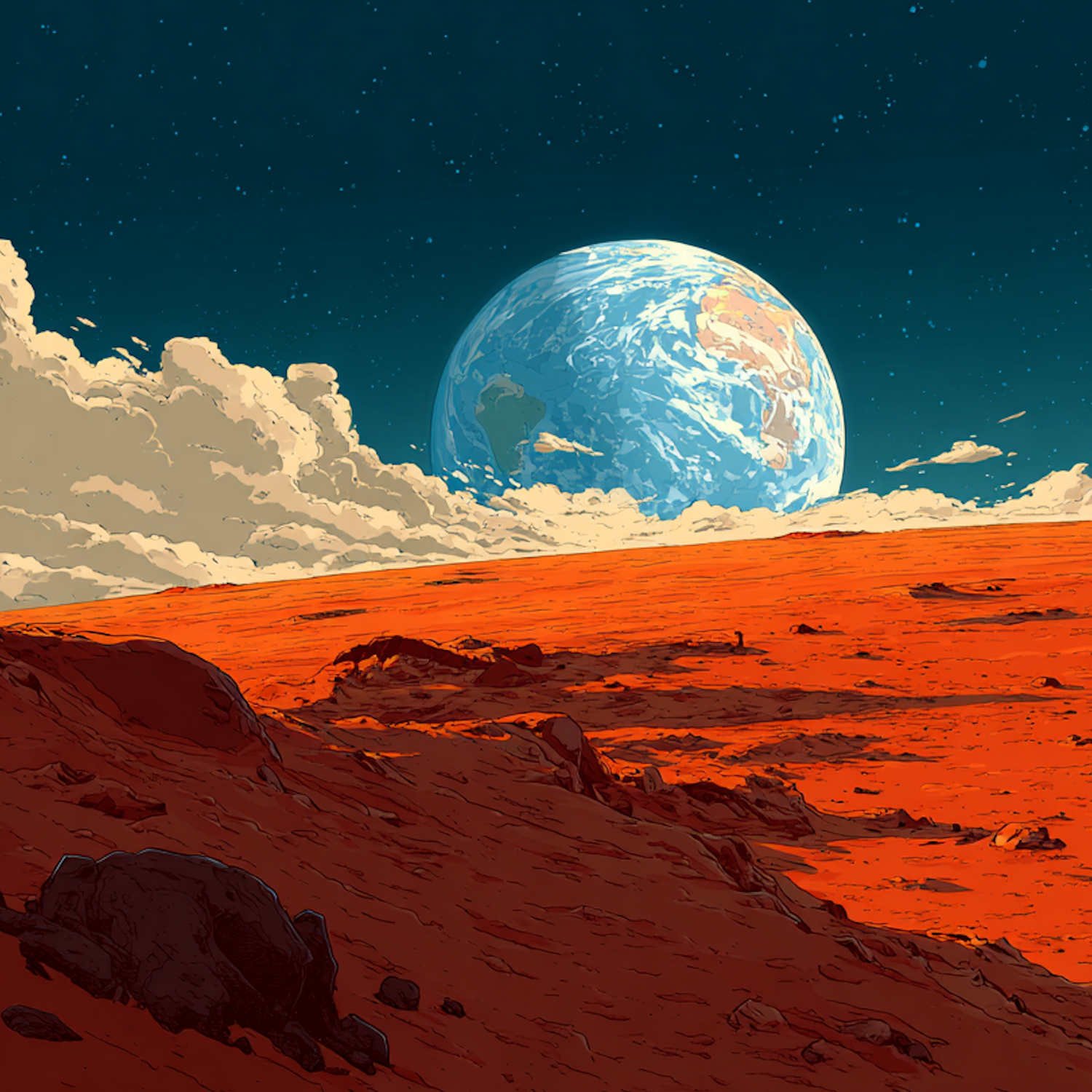 19 - Modern Myths: Flat Earth, Space Colonization, and the Stories We Tell to Escape Reality 22.01.2026 1hAt first glance, believing the earth is flat and dreams of colonizing Mars couldn't seem further apart. But both are built on the same story — that reality can be escaped if we just think big enough. This episode looks at two beliefs that seem opposite — flat earth and space colonization — and asks what they reveal about our urge to escape reality rather than reckon with it. One is the belief that humans could, and should, live in space: that we're destined to leave our planet behind and colonize the stars. The other is the belief that we're not on a planet at all—that the Earth is actually… flat. While one is held by fringe figures and the other by some of the most powerful men on the planet, both rest on the premise that humans are exceptional, unbound by limits, or somehow separate from the earth. To explore these modern myths, we're joined by two guests: astrophysicist Tom Murphy and documentary filmmaker Daniel J. Clark, whose film Behind the Curve follows prominent figures in the fringe—but growing—flat Earth movement. Together, we'll examine the stories we tell ourselves about the world we inhabit, how we determine what's real or possible, and what kind of world these stories create. CITATIONS Do The Math [blog] Behind the Curve [film] (2018) Return to Space [film] by (2022) If you'd like to support Human Nature Odyssey, please subscribe wherever you listen, leave a review, and join us on Patreon for exclusive audio extras, writings, and notes. For full episode transcripts, essays, and additional context, visit: resilience.org/human-nature-odyssey-podcast Music: Celestial Soda Pop By: Ray Lynch From the album: Deep Breakfast Courtesy Ray Lynch Productions © Ⓟ 1984/BMI All rights reserved.
 -
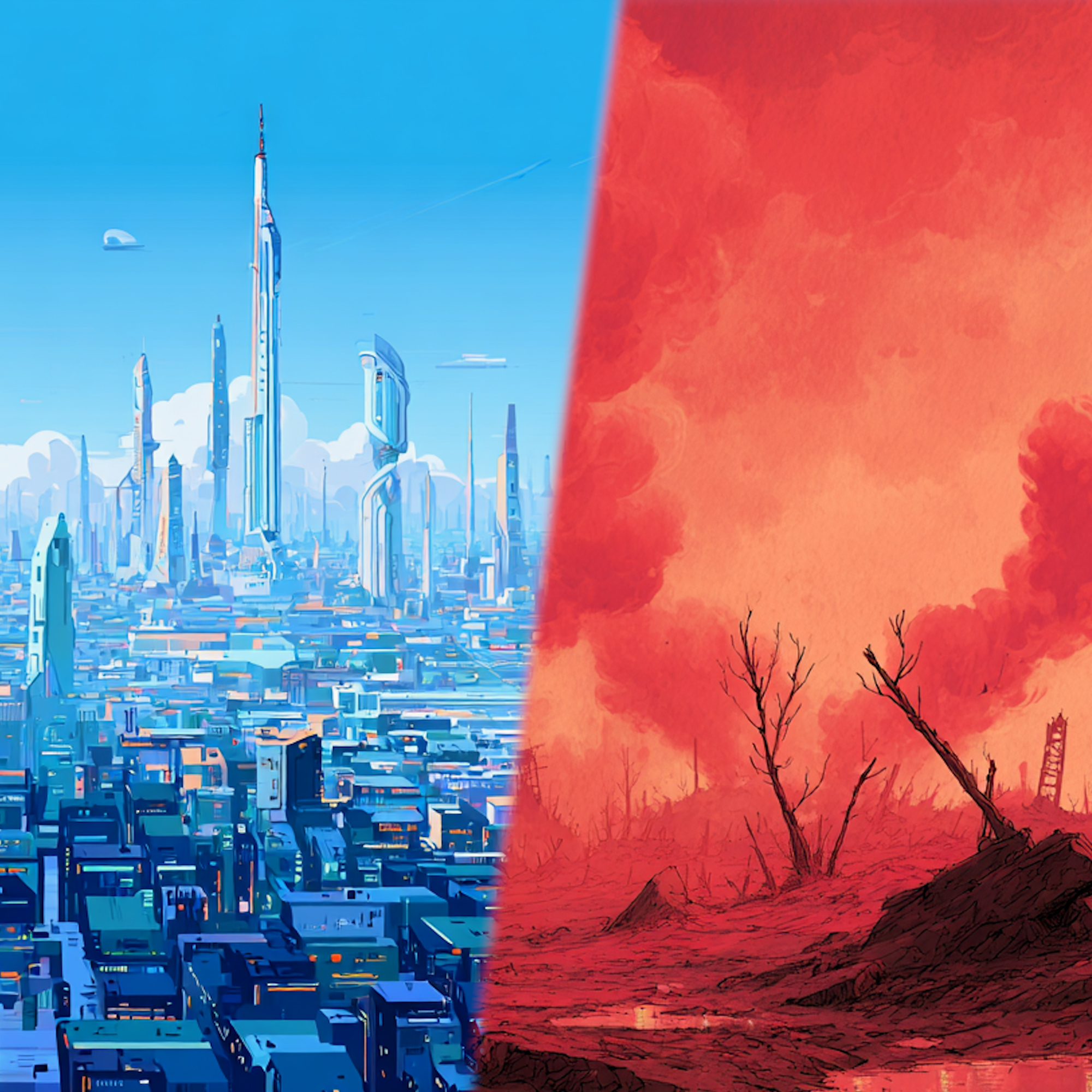 18 - Time Machine 2126 (Part 2): Techno-Utopia Or Apocalypse? 18.12.2025 56mPicture the future 100 years from now. What do you imagine? Flying cars? Space colonies? AI talking toasters? But if we can't sustain an endlessly growing economy - even with a transition to green energy - what does a realistic and positive future look like? Alex joins the hosts of Crazy Town to imagine life in the 22nd century: walking from our family farms into communal villages, living off the land in a low-energy lifestyle, taming our pet donkeys, and resisting our local warlords. It's not the future the movies told us to expect. But it might be a future we enjoy living in. CITATIONS Crazy Town podcast If you'd like to support Human Nature Odyssey, please subscribe wherever you listen, leave a review, and join us on Patreon for exclusive audio extras, writings, and notes. For full episode transcripts, essays, and additional context, visit: resilience.org/human-nature-odyssey-podcast Music: Celestial Soda Pop By: Ray Lynch From the album: Deep Breakfast Courtesy Ray Lynch Productions © Ⓟ 1984/BMI All rights reserved.
 -
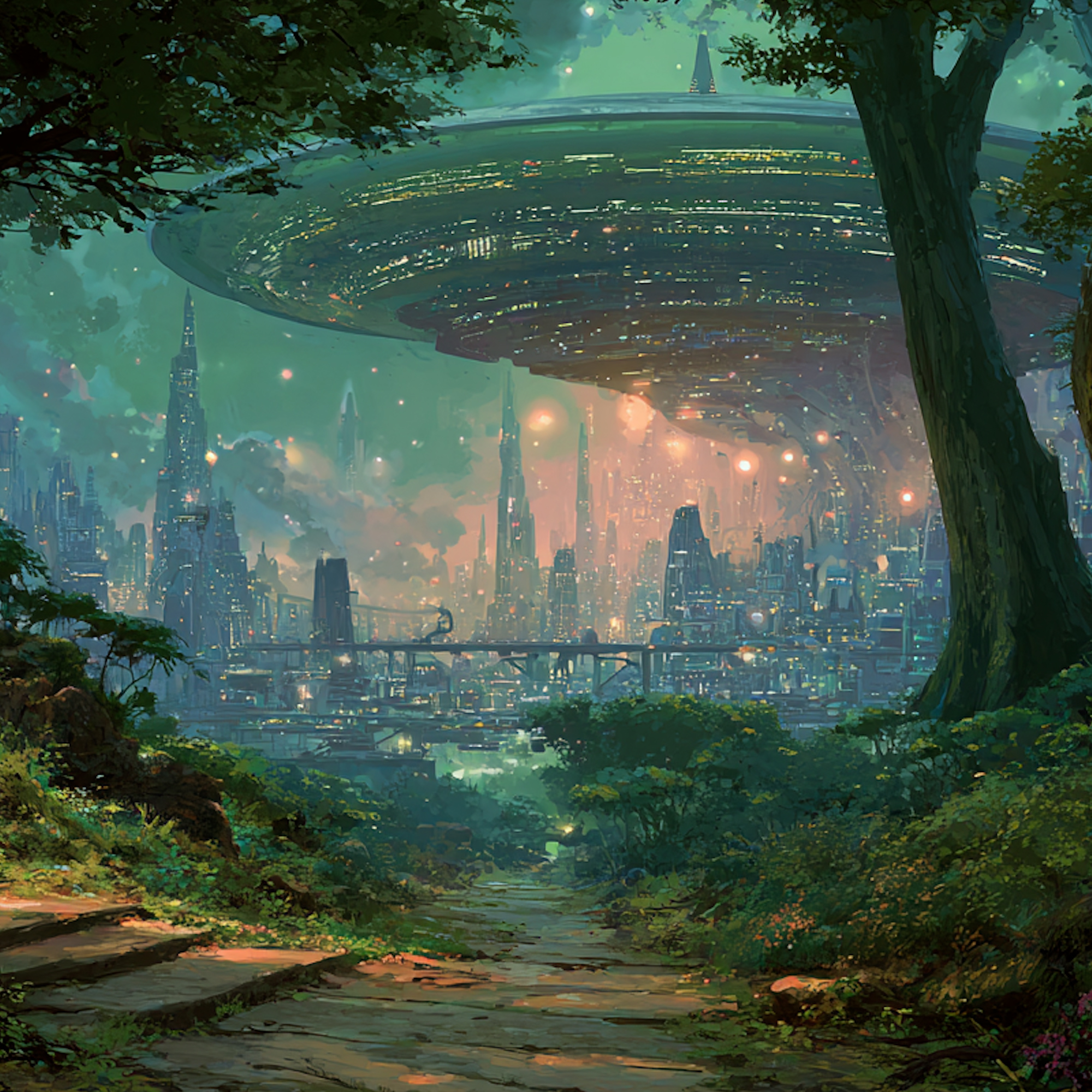 17 - Time Machine 2126 (Part 1): Has Green Energy Saved Us Yet? 04.12.2025 38mWhat does a livable future look like 100 years from now? If we unlocked unlimited green energy, what would we actually do with it? And are our dreams of a renewable-energy utopia sometimes just as delusional as the fossil-fueled drill baby drill mentality? In this two-part series, Alex is joined by the hosts of Crazy Town—Jason Bradford, Rob Dietz, and Asher Miller—a research biologist, ecological economist, and Executive Director of the Post Carbon Institute, who bring a depth of knowledge as well as dad jokes. Together, they explore the implications of exponential energy growth on a finite planet, the hard truths behind a renewable-energy future, and which expectations we need to rethink as we chart a path forward. Along the way, we encounter an Olympic athlete attempting to toast bread using a bicycle. We also step inside a billionaire's latest invention: a time-travel device promising to fling us ahead one hundred years. Will the future be a gleaming techno-utopia powered by infinite green energy? A scorched wasteland of collapse? Or something else entirely—a lower-energy world that future generations might actually enjoy living in? Stay tuned for Part 2 where we take the full leap into the time machine and imagine what life a century from now could really look like in a post high-energy future. CITATIONS The Toaster Challenge, Olympic Cyclist Vs. Toaster: Can He Power It?, 2015 Tom Murphy, Galactic-Scale Energy, Do the Math, 2011. Tom Murphy, Limits to Economic Growth, Nature Physics, August, 2022. Solar Freakin' Roadways, Indiegogo, 2014 Crazy Town podcast ADDITIONAL MUSIC Modified version of "Also sprach Zarathustra, Op. 30" by Strauss, from classicals.de — licensed under CC BY 4.0 If you'd like to support Human Nature Odyssey, please subscribe wherever you listen, leave a review, and join us on Patreon for exclusive audio extras, writings, and notes. For full episode transcripts, essays, and additional context, visit: resilience.org/human-nature-odyssey-podcast Music: Celestial Soda Pop By: Ray Lynch From the album: Deep Breakfast Courtesy Ray Lynch Productions © Ⓟ 1984/BMI All rights reserved.
 -
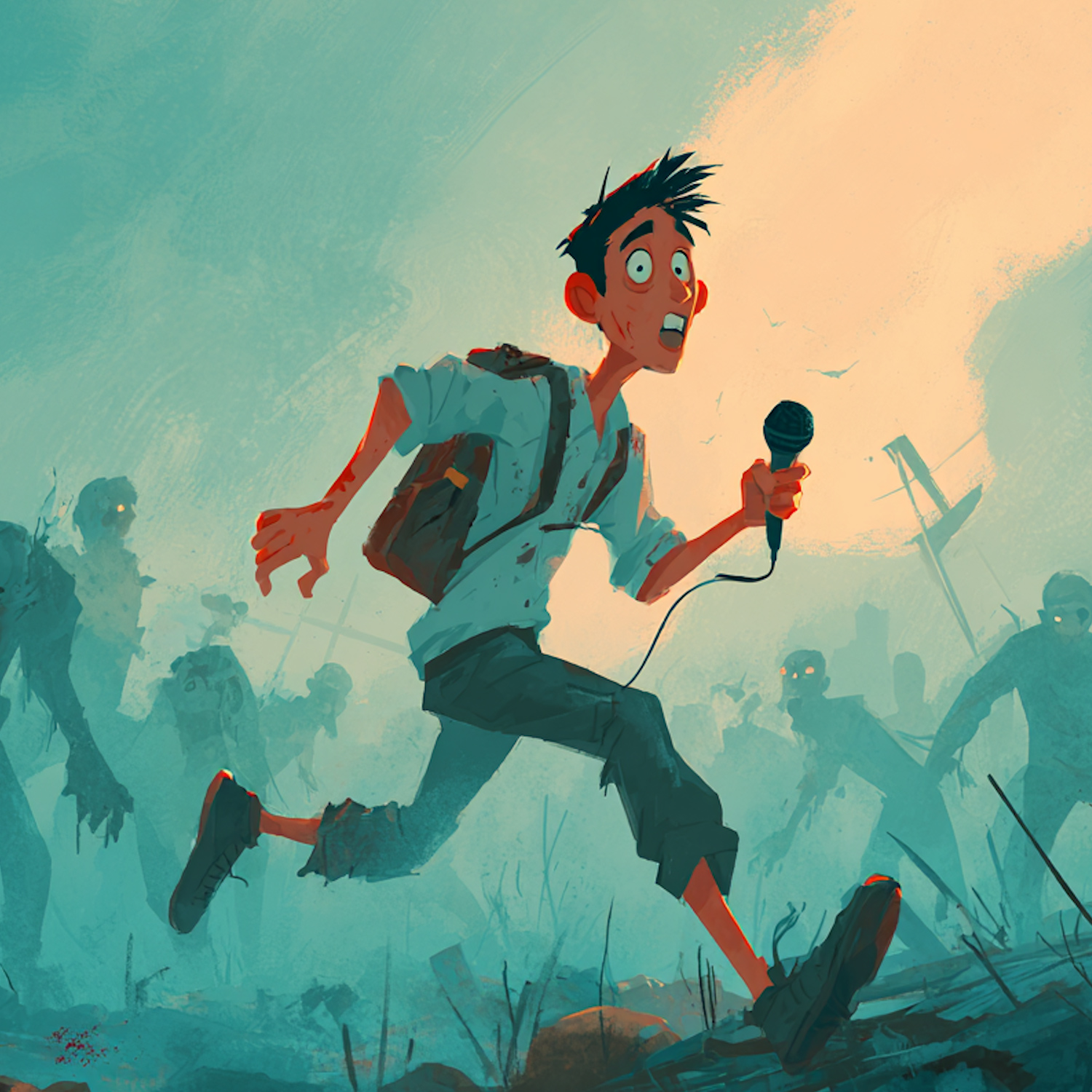 16 - How To Survive A Zombie Apocalypse 30.10.2025 43mA horrific zombie apocalypse has ravaged the world—but hardly anyone seems to notice. One lone podcast sets out to interview those navigating this strange new reality: from people attending mindful zombie retreats and binging zombie media, to those stockpiling shotguns and fortifying bunkers, to others disappearing into the woods to build something entirely new. This is an original script written by Alex Leff. VOICE ACTING CREDITS Jason Bradford Rob Dietz Jake Gibson Maia Kinney-Petrucha Jessie Lian Jake Marquez Asher Miller Maren Morgan Ray Tannheimer Maggie Weiler If you'd like to support Human Nature Odyssey, please subscribe wherever you listen, leave a review, and join us on Patreon for exclusive audio extras, writings, and notes. For full episode transcripts, essays, and additional context, visit: resilience.org/human-nature-odyssey-podcast Music: Celestial Soda Pop By: Ray Lynch From the album: Deep Breakfast Courtesy Ray Lynch Productions © Ⓟ 1984/BMI All rights reserved.
 -
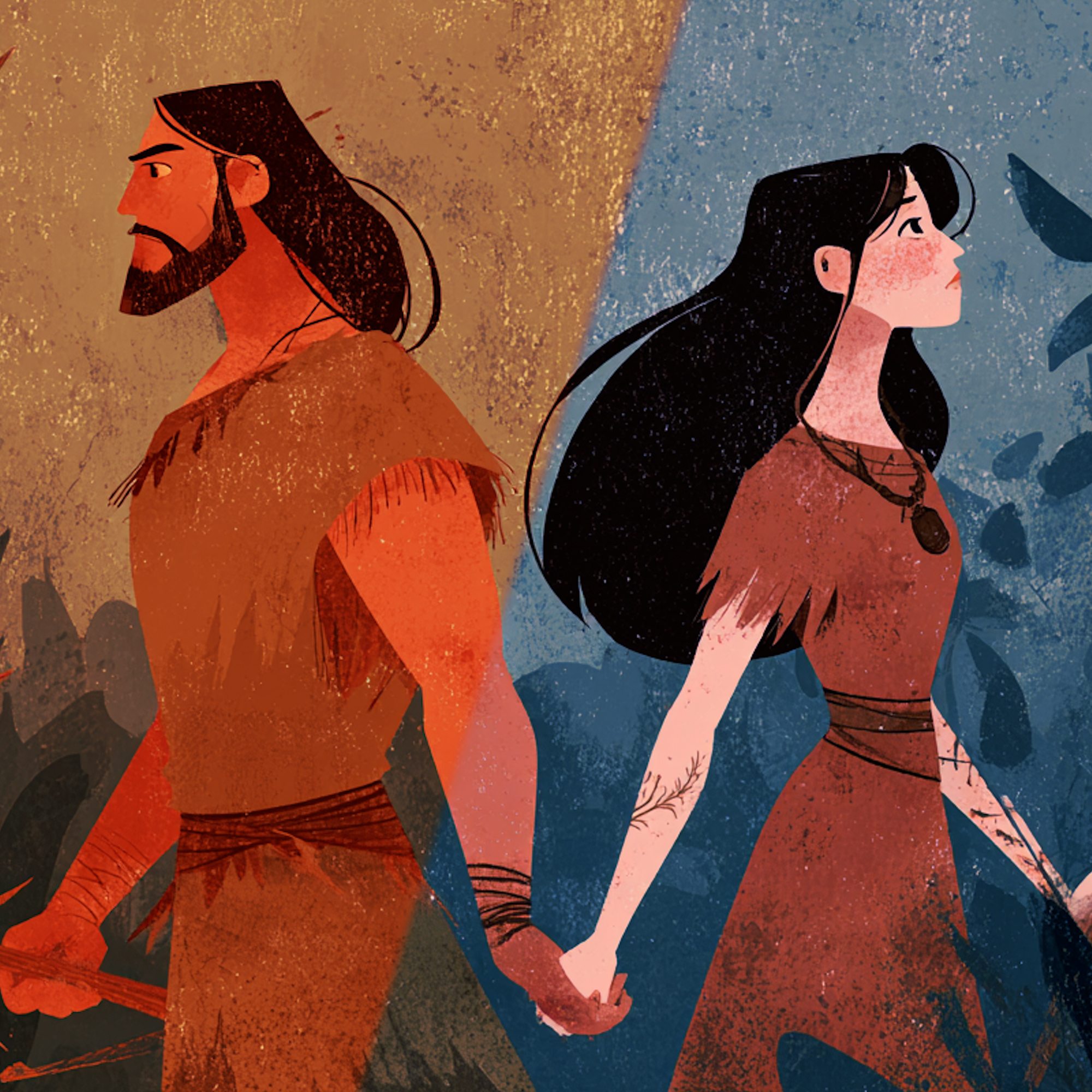 15 - Are Hunter-Gatherers Liberals or Conservatives? 25.09.2025 54mWhat insights can our ancient past shine on our political future? Were hunter-gatherers the ultimate traditionalists—or proto-communists? Is it possible hunter-gatherers lived with greater equality and more political freedom than most societies today? And why do both communism and capitalism, despite being sworn enemies, rest on the same assumption of endless growth? Psychologist Jonathan Haidt argues that humans are wired with both liberal and conservative tendencies—and that societies function best when those forces stay in balance. Where can we find the liberal and conservative elements in our hunter-gatherer past? And how might it reframe our political future? In The King Is Dead, Now What? we explored modern political history. Now we zoom out, connecting the dots to a much broader civilizational story. Plus, we're debuting a new segment: The State of Civilization, featuring our up-and-coming optimistic reporter Jeff Opolis, reporting on the fantastic news coming from civilization right now. Everything is great! Or… is it? If you'd like to support Human Nature Odyssey, please subscribe wherever you listen, leave a review, and join us on Patreon for exclusive audio extras, writings, and notes. For full episode transcripts, essays, and additional context, visit: resilience.org/human-nature-odyssey-podcast CITATIONS Haidt, Jonathan. "The Moral Roots of Liberals and Conservatives." TED, 2008. Fiddler on the Roof. Directed by Norman Jewison, United Artists, 1971. "Net Energy and Sustainability, or… The Story of the Overstuffed Strongman." Crazy Town podcast, Post Carbon Institute, 2021. Ryan, Christopher. Civilized to Death: The Price of Progress. Avid Reader Press, 2019. "Ken Burns." The Joe Rogan Experience, episode 1745, Spotify, 2022. Cronon, William. Changes in the Land: Indians, Colonists, and the Ecology of New England. Hill and Wang, 1983. Marx, Karl. Critique of the Gotha Programme, 1875. Hyde, Lewis. The Gift: Imagination and the Erotic Life of Property. Vintage, 1983. Kimmerer, Robin Wall. Braiding Sweetgrass: Indigenous Wisdom, Scientific Knowledge, and the Teachings of Plants. Milkweed Editions, 2013. Norberg-Hodge, Helena. Ancient Futures: Learning from Ladakh. Sierra Club Books, 1991. Ho, Fred. A World Where Many Worlds Fit. Big Red Media, 2008. World Health Organization. (2024, July 24). Hunger numbers stubbornly high for three consecutive years as global crises deepen. Colquhoun, P. A Treatise on the Police of the Metropolis. Elhacham, Emily, et al. "Global Human-Made Mass Exceeds All Living Biomass." Nature, vol. 588, no. 7838, 2020, pp. 442–444. Additional music for this episode by Adam Tell, from the albums Peripheries, This Time With Feeling, and Object Impermanence. Courtesy of Adam Tell. All rights reserved. Music: Celestial Soda Pop By: Ray Lynch From the album: Deep Breakfast Courtesy Ray Lynch Productions © Ⓟ 1984/BMI All rights reserved.
 -
 Sex at Dawn, Civilized to Death, and Tangentially Speaking with Christopher Ryan 28.08.2025 1h 12mChristopher Ryan joins the odyssey to discuss human nature - shouldn't be surprising - it's in the name! What's universal, what's cultural, and what's personal? Can we really change the culture we live in? And are some societies better suited to human well-being than others? Christopher Ryan is the New York Times bestselling author of Sex at Dawn: How We Mate, Why We Stray, and What It Means for Modern Relationships as well as the book Civilized to Death: The Price of Progress. He also hosts the long-running podcast, Tangentially Speaking," which has been downloaded over 30 million times. You can learn more about Christopher here. If you'd like to support Human Nature Odyssey, please subscribe wherever you listen, leave a review, and join us on Patreon for exclusive audio extras, writings, and notes. For full episode transcripts, essays, and additional context, visit: resilience.org/human-nature-odyssey-podcast Music: Celestial Soda Pop By: Ray Lynch From the album: Deep Breakfast Courtesy Ray Lynch Productions © Ⓟ 1984/BMI All rights reserved. 1. Amazon: Celestial Soda Pop https://amazon.com/music/player/albums/B000QQXURI 2. iTunes: https://music.apple.com/us/album/celestial-soda-pop/3242445?i=3242425 3. Spotify: https://open.spotify.com/track/2THDVIVytLuGX7S7UghuC1?si=20ea63807bba401f
 -
 14 - The King Is Dead, Now What? The 250-Year Struggle for Democracy (Part 3) 24.07.2025 1h 2mBreaking news: The Soviet Union has collapsed! The Berlin Wall has crumbled! Communism has fallen! Capitalism wins! USA! USA! But wait… what's this? Russia has been overtaken by oligarchs and an authoritarian dictator. Oh no… Well, at least that could never happen in the United States. Right? This is the climactic Part Three of our three-part series on the history of the left/right political spectrum. After the youth protests of the 1960s failed to topple governments, left-wing radicalism shifted its focus—from revolution to championing social equality through pop culture. But as culture wars raged, neoliberalism—liberalism and capitalism's love child—conquered the globe, fueling deregulation, rising corporate power, and deepening economic divides that hollowed out democracy itself. Just three decades after the Cold War, the old adversaries—Russia and the U.S.—found themselves on eerily parallel paths, ushering in a new era of oligarchy and a return to right-wing rule—like the one the French Revolution fought against all those years ago. Join us as we trace how the world drifted from dreams of liberation to authoritarian control—and how a new generation began planting the seeds of liberty and equality once again. If you'd like to support Human Nature Odyssey, please subscribe wherever you listen, leave a review, and join us on Patreon for exclusive audio extras, writings, and notes. For full episode transcripts, essays, and additional context, visit: resilience.org/human-nature-odyssey-podcast CITATIONS "Vietnam War." Encyclopaedia Britannica. "Vietnam War U.S. Military Fatal Casualty Statistics." National Archives. Thatcher, Margaret. Speech to the Conservative Women's Conference. May 21, 1980. Wong, Edward. "China's Black Cat, White Cat Diplomacy." Foreign Policy, July 10, 2009. Reagan, Ronald. Speech at Reagan-Bush Rally in Warren, Michigan. October 10, 1984. "Distribution of Household Wealth in the U.S. since 1989." Federal Reserve. Davidson, Amy. "Exploring Occupy Wall Street's Adbusters Origins." NPR, October 20, 2011. "Youth Voting in 2016 Primaries and Caucuses." CIRCLE, Tufts University. Kestenbaum, David. "How Shock Therapy Created Russian Oligarchs and Paved the Path for Putin." NPR, March 22, 2022. Steele, Jonathan. "How Football Conquered Russia." The Guardian, July 2, 2003. Harding, Luke. "Roman Abramovich: The Billionaire Oligarch with a Backstory Shrouded in Secrecy." The Guardian, March 21, 2022. Keats, Jonathon. "Design of Dissent." Forbes, October 28, 2019. Birnbaum, Michael. "Occupy Wall Street Protests Go Global." The Washington Post, October 15, 2011. Jojo Rabbit. 2019. Directed by Taika Waititi. Music: Celestial Soda Pop By: Ray Lynch From the album: Deep Breakfast Courtesy Ray Lynch Productions © Ⓟ 1984/BMI All rights reserved.
 -
 13 - The King Is Dead, Now What? The 250-Year Struggle for Democracy (Part 2) 26.06.2025 53mIn the The King Is Dead, Now What? we're exploring the history of the left / right political spectrum and the 250 year struggle for democracy. In Part 1 we started telling the story that began with the French Revolution of 1789, when those in favor of monarchy sat on the right wing of the national assembly room and those in favor of revolution sat on the left wing. In the wake of the 1848 revolutions, the struggle between left and right gave rise to three major political ideologies—conservatism, liberalism, and radicalism—each offering a distinct vision for society. These competing forces would ignite a global struggle for power. In this episode, we trace the ongoing clash between these ideologies, imagining them as bickering gods, each vying for control of the human realm. From the Russian Revolution and the collapse of monarchies after World War I to the rise of fascism, the global conflict of World War II, the Cold War standoff between the U.S. and Soviet Union, and the global youth protests of 1968, we explore how these powerful ideas collided, evolved, and continue to shape the struggle for power, equality, and freedom. If you'd like to support Human Nature Odyssey, please subscribe wherever you listen, leave a review, and join us on Patreon for exclusive audio extras, writings, and notes. For full episode transcripts, essays, and additional context, visit: resilience.org/human-nature-odyssey-podcast Articles Narewska, Elli. "Tsar Nicholas II Abdicates." The Guardian, March 3, 2017. Hoffmann, David L. "The October Revolution in Russia" Ohio State University Origins, 2017 "The Paris Riots of 1968, Part 1." CBC Radio, April 24, 2018. Keats, Jonathon. "Design of Dissent." Forbes, October 28, 2019. Baker, Peter. "CIA Helped Arrest Mandela." Time, February 2023. Statista. 2022. "Second World War: Share of Total Population Loss." BBC Bitesize. "The Vietnam War: Casualty Statistics." U.S. National Archives. "Vietnam War Casualty Statistics." ECPAT International. "How Many Vietnamese Died in the Vietnam War." Horner, Sam. "The Birth of the Soviet Union and the Death of the Russian Revolution." JSTOR Daily, 2021. YouTube "Days That Shook The World: Russia's Two Revolutions of 1917" Epic History. Mar 8, 2022 Films Jojo Rabbit. 2019. Directed by Taika Waititi. Music: Celestial Soda Pop By: Ray Lynch From the album: Deep Breakfast Courtesy Ray Lynch Productions © Ⓟ 1984/BMI All rights reserved.
 -
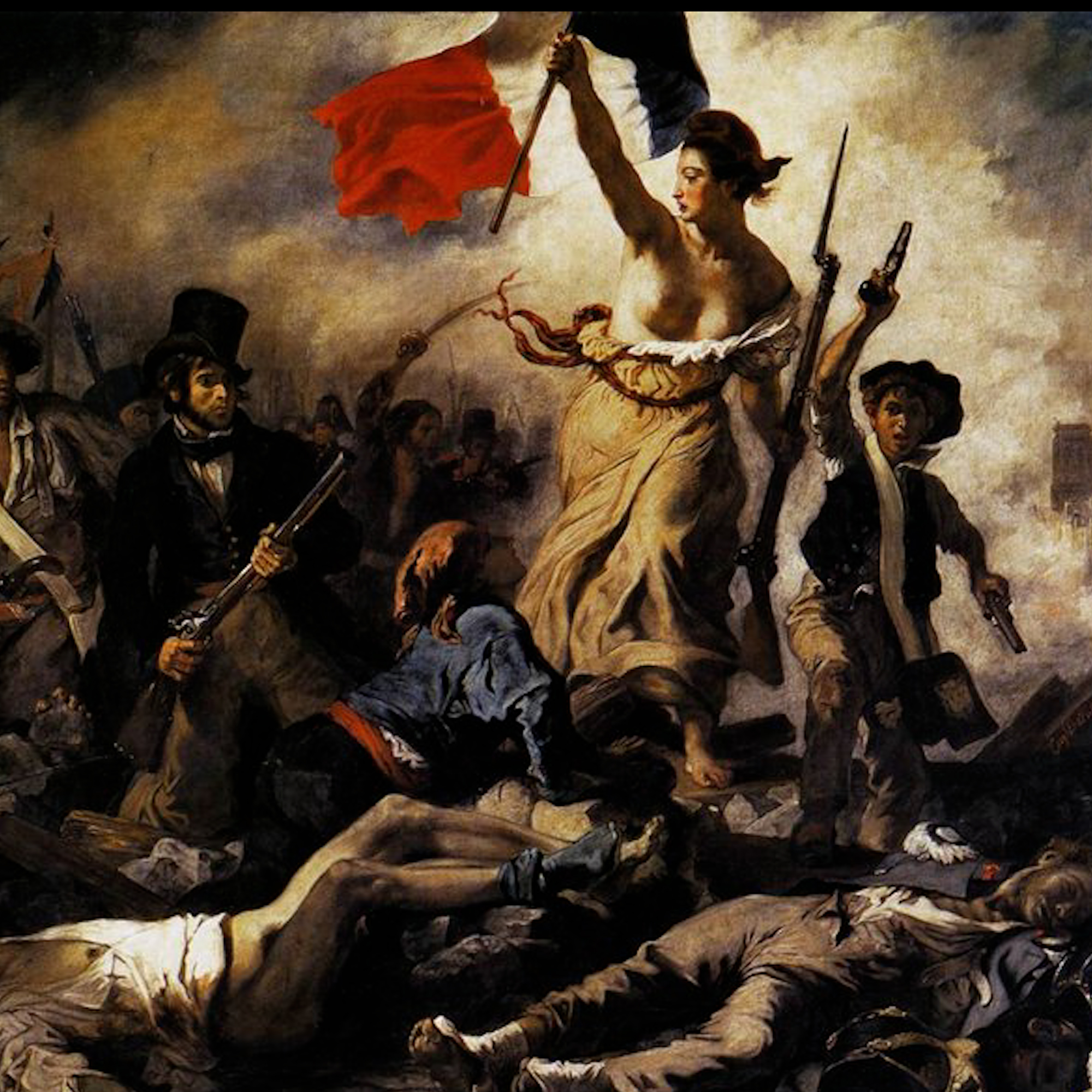 12 - The King Is Dead, Now What? The 250-Year Struggle for Democracy (Part 1) 22.05.2025 50mHow many people are happy with the way society is headed? There seems to be a general consensus - maybe the one thing we all agree on - that things are not right. But our different opinions on what's wrong and what directions could be better too often fall on either side of a left vs right political spectrum. Where did we get this idea of a left wing and a right wing anyway? How is it in a world of such diversity of languages and traditions and religions there's just two freakin' wings? What are we, a bird? Well, it all started… during the French Revolution. And if we want to expand our map and chart a better direction, that's where our story needs to begin. In this episode, we journey back to the French Revolution, where revolutionaries and monarchists first split into left and right wings—and the world has never been the same. Out of the chaos emerged ideals of liberty, the terror in the streets, and a fierce battle of ideas that spread across Europe, sparking revolutions from Sicily to Poland. The 1848 uprisings shook monarchies to their core, as liberals, conservatives, and radicals fought over society's future. Most of the revolutions were crushed—but none left the world unchanged. Join us for a deep dive into political ideologies, French accents, guillotines, and the struggle for democracy. If you'd like to support Human Nature Odyssey, please subscribe wherever you listen, leave a review, and join us on Patreon for exclusive audio extras, writings, and notes. For full episode transcripts, essays, and additional context, visit: resilience.org/human-nature-odyssey-podcast CITATIONS Websites and Articles Britannica. France: Peasant Insurgencies. Yale University Library. French Revolution Political Cartoons: The Guillotine. Fine Dining Lovers. 2022. "Dining with King Louis XVI." Chastain, James. The Two Sicilies. Ohio University. Statista. 2024. Global Elections in 2024. Hincks, Joseph. 2024. "More Voters Than Ever Will Vote in 2024." TIME. Reuters. 2024. "What Are the Key Issues in Mozambique's 2024 Elections?" World History Encyclopedia. French Republican Calendar. Britannica. Reign of Terror. Prothero, Stephen. 2016. "Culture War Is an American Tradition." Los Angeles Times, February 14. Chastain, James. The European Revolutions of 1848 and 1989: A Comparative Analysis. Tocqueville, Alexis de. "Speech to the French Chamber of Deputies, January 29, 1848." Speeches USA. Books Arasse, Daniel. 1987. The Guillotine and the Terror. Bussiek, Dagmar. 2002. Mit Gott für König und Vaterland: Die Neue Preußische Zeitung (Kreuzzeitung) 1848–1892. Münster: LIT Verlag, p. 18. Clark, Christopher. 2023. Revolutionary Spring: Europe Aflame and the Fight for a New World. Kirchner, Emil J. 1988. Liberal Parties in Western Europe. Marx, Karl, and Friedrich Engels. 1848. The Communist Manifesto. Terwecoren, Edouard. 1870. Collection de Précis historiques. J. Vandereydt, p. 31. Podcasts and YouTube The Rest Is History. 2023. "The Year of Revolutions: 1848." Podcast audio, April 30, 2023. Duncan, Mike. Revolutions podcast season 7 Green, John. Crash Course: European History #26. YouTube playlist. Additional Music Track: Symphony no. 41 in C 'Jupiter', K. 551 - I. Allegro vivace Music provided by Classical Music Copyright Free [https://tinyurl.com/visit-cmcf] Music: Celestial Soda Pop By: Ray Lynch From the album: Deep Breakfast Courtesy Ray Lynch Productions © Ⓟ 1984/BMI All rights reserved. 1. Amazon: Celestial Soda Pop https://amazon.com/music/player/albums/B000QQXURI 2. iTunes: https://music.apple.com/us/album/celestial-soda-pop/3242445?i=3242425 3. Spotify: https://open.spotify.com/track/2THDVIVytLuGX7S7UghuC1?si=20ea63807bba401f
 -
 Astrophysics for a New Stone Age with Tom Murphy 19.12.2024 58mWhat will happen to our scientific knowledge if civilization collapses? Will astrophysics survive a future stone age? In this episode, we rest from our journey to talk with astrophysicist Tom Murphy, who's been on an odyssey of his own—moving from academia to a growing concern about the collapse of civilization, to an ever expanding appreciation of the cosmos. Together we'll gaze at the grandeur of the stars and marvel at the complexity of one of our oldest cousins: the amoeba. If you're seeking a moment to marvel at the interconnectedness of life on Earth and the universe its interwoven with, this is the episode for you. Tom Murphy is an Emeritus Professor of Physics and Astronomy/Astrophysics at the University of California, San Diego. After a career studying colliding galaxies and testing General Relativity using lasers to the moon, Murphy retired early to shift focus onto Planetary Limits and the intrinsic incompatibility between modernity and ecological longevity. Creator of a textbook on energy, the Do the Math blog, and the Metastatic Modernity video series, his main plea is that you bypass these resources and read the book Ishmael, by Daniel Quinn. Join us on Patreon and get exclusive access to audio extras, writings, and notes. More from Tom: Do the Math blog Metastatic Modernity If you'd like to support Human Nature Odyssey, please subscribe wherever you listen, leave a review, and join us on Patreon for exclusive audio extras, writings, and notes. For full episode transcripts, essays, and additional context, visit: resilience.org/human-nature-odyssey-podcast Music: Celestial Soda Pop By: Ray Lynch From the album: Deep Breakfast Courtesy Ray Lynch Productions © Ⓟ 1984/BMI All rights reserved. 1. Amazon: Celestial Soda Pop https://amazon.com/music/player/albums/B000QQXURI 2. iTunes: https://music.apple.com/us/album/celestial-soda-pop/3242445?i=3242425 3. Spotify: https://open.spotify.com/track/2THDVIVytLuGX7S7UghuC1?si=20ea63807bba401f
 -
 11 - Capitalism & Monopoly: Why The Best Board Games Make The Worst Reality 26.11.2024 46mLooking for a game to play over the holidays? Why not try the real world global economy? Too late, you're already playing it! Have you ever noticed how the most popular board games just so happen to reflect core components of our civilization? Settlers of Catan involves the extraction of raw materials. Risk is the imperialism and war between nations. Monopoly demonstrates the pitfalls of capitalism. Now in the real world, I rarely celebrate resource extraction, imperialism, or capitalism. But the board game versions are so much fun. Maybe that's why we're all playing it at a global level. As horrible as the side effects of these things are, enough people are having so much fun playing. And not just those winning. Sure, winning is awesome. But don't count out how much fun it is to be down just enough to think if you keep trying you can get back in it. Your competitiveness takes over and you can't put the game down. And then for even more people, they have no choice in the matter, they have to play, even though there's no hope for winning, they're just trying to survive and stay in the game. At this point, most of the world has been roped into this game of conquering, exploitation, and finance. We're so convinced this is just normal life, most people don't even think they're playing a game. But unlike most board games, it doesn't come with an instruction manual. That is… until now. In this episode, we use sociologist Immanuel Wallerstein's seminal text, World-Systems Analysis, as our instruction manual to the game of colonization and exploitation. We explore how dominant countries rise and fall, the dance between capitalism and the state, and the unexpected truth about what real power looks like. Join us for a deep dive into empires, markets, mafias, and everyone's favorite Monopoly piece: the thimble. Macro-economics has never been this entertaining and fun for the whole family. If you'd like to support Human Nature Odyssey, please subscribe wherever you listen, leave a review, and join us on Patreon for exclusive audio extras, writings, and notes. For full episode transcripts, essays, and additional context, visit: resilience.org/human-nature-odyssey-podcast CREDITS Additional Writer ... Weslie Lechner Voice Acting ... Patrick Boylan and Weslie Lechner CITATIONS World-Systems Analysis: An Introduction [book] by Immanuel Wallerstein (2004) The Emergence of France [article] by Gabriel Fournier and John Frederick Drinkwater (2024) The secret history of Monopoly: the capitalist board game's leftwing origins [article] by Mary Pilon (2015) Music: Celestial Soda Pop By: Ray Lynch From the album: Deep Breakfast Courtesy Ray Lynch Productions © Ⓟ 1984/BMI All rights reserved. 1. Amazon: Celestial Soda Pop https://amazon.com/music/player/albums/B000QQXURI 2. iTunes: https://music.apple.com/us/album/celestial-soda-pop/3242445?i=3242425 3. Spotify: https://open.spotify.com/track/2THDVIVytLuGX7S7UghuC1?si=20ea63807bba401f
Similar podcasts


Popular in
The podcast also appears in the podcast charts of these countries.

