
Fempower Health: The Perimenopause and Menopause Channel
Georgie Kovacs
0
Fempower Health is a podcast dedicated to empowering women navigating perimenopause and menopause. It offers trusted, medically-backed information on symptom management, hormonal changes, and mental health impacts. The show features expert insights from doctors and researchers, along with real-life stories and actionable advice. It aims to help women advocate for quality healthcare and feel supported during this transformative stage of life.
Episodes
-
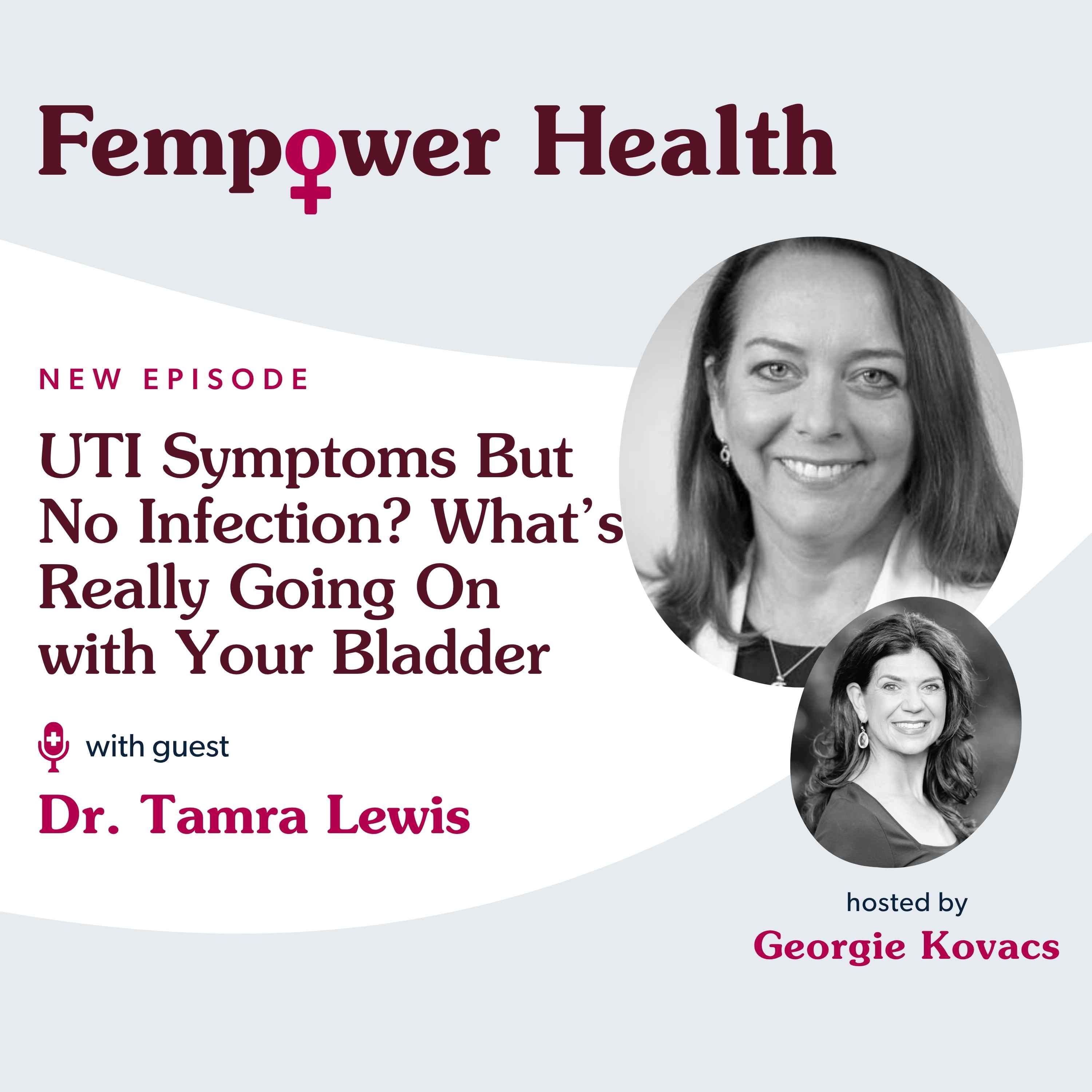 UTI Symptoms But No Infection? What’s Really Going On with Your Bladder | Dr. Tamra Lewis - Fempower Health | A Women's Health Podcast 18.11.2025 43mHonoring Bladder Health Month! Originally Published September 2024. In this episode of Fempower Health, Dr. Tamra Lewis, a board-certified urogynecologist, discusses bladder health, UTI misdiagnoses, and how pelvic floor dysfunction, menopause, and the microbiome impact bladder issues in women. Learn how to advocate for better care and understand your symptoms.Bladder Health Episode SummaryIn this episode of Fempower Health, we sit down with Dr. Tamra Lewis, a board-certified urologist specializing in female pelvic medicine and reconstructive surgery (also known as urogynecology). Dr. Lewis shares her expertise on common bladder health issues affecting women, many of which are frequently misdiagnosed as urinary tract infections (UTIs). We explore the importance of accurate diagnoses, the potential causes of bladder issues, and how women can better advocate for themselves in healthcare settings. This episode is essential listening for women seeking clarity on their bladder health and for clinicians looking to improve patient outcomes.Discussion Points:Why are so many women misdiagnosing themselves with UTIs?What are the common symptoms of bladder problems in women?How can women better describe bladder issues to their healthcare provider?What are the underlying causes of frequent bladder issues in women?How can you tell the difference between a UTI and other bladder problems?Why is it important to have a pelvic exam for bladder issues?How does pelvic floor dysfunction contribute to bladder symptoms?What are the most effective treatments for overactive bladder?How can you prevent recurring urinary tract infections?What role does menopause play in bladder health?What is the impact of the microbiome on bladder health and UTIs?Why should women advocate for more thorough evaluations from their doctors?"It's easier to treat a small problem than to let a small problem become a bigger problem." - Dr. Tamra LewisRelated to this Bladder Health episode:Learn more about Dr. Tamra Lewis and follow her on LinkedIn and InstagramCheck out Fempower Health resources on Pelvic Health🎧 Loved the episode? Here's how you can take action:1. Help others discover Fempower Health:Leave a quick review on Apple or Spotify. It’s the easiest way to support our mission and amplify women’s health voices.2. Stay connected:Follow us on LinkedIn, Instagram and TikTok, YouTube for real-time updates, expert insights, and relatable conversations.Or join our newsletter to get curated women's health content—on your terms, in your inbox.**Top 50 Health Podcast of 2024** Fempower Health Guest BioDr. Tamra Lewis holds board certification in Female Pelvic Medicine and Reconstructive Surgery. She practices in Lake, Kane, and Cook Counties, and her hospital affiliations include Advocate Good Shepherd Hospital, Ascension Saint Alexius, and Hoffman Estates Surgery Center.Dr. Lewis received her B.A. in Biology from Luther College in 1994, and she obtained her Medical Doctorate in 1999 from the University Of Iowa College Of Medicine. In 2005, Dr. Lewis completed her Surgical and Urology residencies at the University of Nebraska and then went on to complete a fellowship in Female Urology and Voiding Dysfunction at Metro Urology in Minneapolis/St. Paul, MN.Dr. Lewis’s professional interests include management of incontinence, voiding dysfunction, bladder prolapse, and urinary tract infections. She is a member of the American Urological Association, the Society for Urodynamics and Female Urology, the Society for Women in Urology, and The Chicago Urological Society, where she currently serves as President. Dr. Lewis has been an invited speaker or presenter for numerous events on topics including incontinence, overactive bladder, hematuria, and urinary tract infections.In her spare time, Dr. Lewis enjoys reading, traveling, and spending time with her family.**The information shared by Fempower Health is not medical advice but for informational purposes to enable you to have more effective conversations with your doctor. Always talk to your doctor before making health-related decisions. Additionally, the views expressed by the Fempower Health podcast guests are their own and their appearance on the program does not imply an endorsement of them or any entity they represent.****May contain affiliate links and I will be compensated if you make a purchase after clicking on my links**
 -
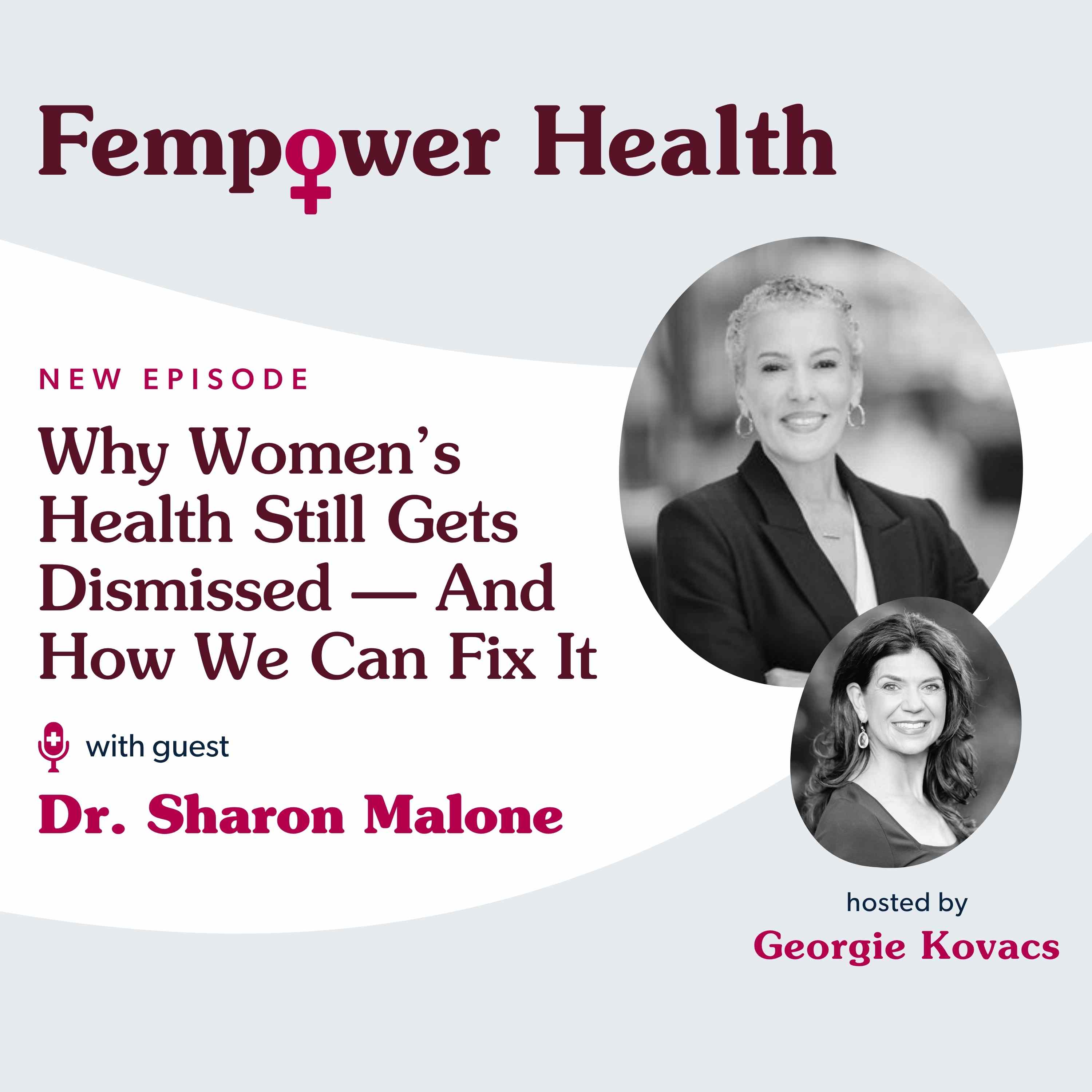 Why Women’s Health Still Gets Dismissed — And How We Can Fix It - Fempower Health | A Women's Health Podcast 11.11.2025 40mEpisode SummaryWhy does it still feel like women aren’t being heard in the doctor’s office? Dr. Sharon Malone joins Georgie Kovacs to unpack the structural, cultural, and economic forces that have eroded trust between women and their healthcare providers. From the loss of physician autonomy to outdated reimbursement systems and the chronic undervaluation of women’s health fields, this candid conversation reveals how the system got here—and what it will take to fix it. Together, Georgie and Dr. Malone explore solutions ranging from patient empowerment to digital health and the need for systemic reform in research, policy, and payment.ResourcesMalone S. Grown Woman Talk. 2024.NIH Data Book (2022): https://report.nih.gov/funding/categorical-spendingMarch of Dimes. Nowhere to Go: Maternity Care Deserts Report, 2023.Fitzgerald J., King L. Price and Prejudice: Reimbursement of Surgical Care on Male Versus Female Anatomies🎧 Loved the episode? Here's how you can take action:1. Help others discover Fempower Health:Leave a quick review on Apple or Spotify. It’s the easiest way to support our mission and amplify women’s health voices.2. Stay connected:Follow us on LinkedIn, Instagram and TikTok, YouTube for real-time updates, expert insights, and relatable conversations.Or join our newsletter to get curated women's health content—on your terms, in your inbox.**Top 50 Health Podcast of 2024** **The information shared by Fempower Health is not medical advice but for informational purposes to enable you to have more effective conversations with your doctor. Always talk to your doctor before making health-related decisions. Additionally, the views expressed by the Fempower Health podcast guests are their own and their appearance on the program does not imply an endorsement of them or any entity they represent.****May contain affiliate links and I will be compensated if you make a purchase after clicking on my links**
 -
 Metabolism Health and Menopause | Dr. Lara Briden - Fempower Health | A Women's Health Podcast 04.11.2025 42mOriginally Published June 2024. It's Diabetes Awareness Month and Metabolic Health is an important proactive measure!How are metabolism, health, and menopause linked? Listen as Dr. Lara Briden shares insights from her new book, Metabolism Repair for Women.Episode SummaryIn this episode, we hear from Dr. Lara Briden, naturopathic doctor and celebrated author of “Period Repair Manual.” Dr. Briden joins Fempower Heath to discuss metabolic health in light of her newest book, "Metabolism Repair for Women." Known for her thorough and research-based approach to women's health, Lara shares her expertise on the often misunderstood topic of metabolic health—particularly its significance during the perimenopausal and menopausal stages of a woman’s life.Discussed in this episode:The connection between metabolic health, general health, mental health, and women's hormonesWhy metabolism health is not just about weight loss but about overall energy and well-beingHow hormonal changes during perimenopause and menopause can lead to insulin resistance How hormonal birth control can have different metabolic effectsWays to manage and improve metabolic health during perimenopause and menopauseThe potential metabolic benefits of a low-carb diet and its role in reducing cravings for carbohydrates"What's happening metabolically in the brain at menopause is potentially going to have long-term consequences." - Dr. Lara BridenRelated to this episode:Resources on Perimenopause and MenopauseCheck out Dr. Lara Briden’s books: Period Repair Manual, Hormone Repair Manual, and Metabolism Repair for WomenLearn more about Dr. Lara Briden and follow her on Instagram🎧 Loved the episode? Here's how you can take action:1. Help others discover Fempower Health:Leave a quick review on Apple or Spotify. It’s the easiest way to support our mission and amplify women’s health voices.2. Stay connected:Follow us on LinkedIn, Instagram and TikTok, YouTube for real-time updates, expert insights, and relatable conversations.Or join our newsletter to get curated women's health content—on your terms, in your inbox.**Top 50 Health Podcast of 2024** Guest BioLara Briden is a naturopathic doctor and the bestselling author of the books Period Repair Manual, Hormone Repair Manual, and Metabolism Repair for Women. She currently has consulting rooms in Christchurch, New Zealand, where she treats women with PCOS, PMS, endometriosis, perimenopause, and many other hormone- and period-related health problems**The information shared by Fempower Health is not medical advice but for informational purposes to enable you to have more effective conversations with your doctor. Always talk to your doctor before making health-related decisions. Additionally, the views expressed by the Fempower Health podcast guests are their own and their appearance on the program does not imply an endorsement of them or any entity they represent.****May contain affiliate links and I will be compensated if you make a purchase after clicking on my links**72p2wf9u8iAY5BmkAThE
 -
 Why Healthcare Gets Progesterone Wrong — And How to Get the Right Care | Dr. Jerilynn Prior & Dr. James Simon 28.10.2025 46mEpisode Summary:Progesterone and progestins sound alike — but they act very differently in a woman’s body. This episode breaks down how that confusion took root and what it means for hormone therapy, contraception, and women’s health research. Endocrinologist Dr. Jerilynn Prior and gynecologist Dr. Jim Simon join Georgie Kovacs to explore evidence, controversy, and the systemic forces that keep women in the dark about their options.Highlights:Key biological differences between progesterone and synthetic progestinsWhat the latest menopause guidelines actually sayWhy Mirena protects the uterus but may not provide systemic progesterone effectsHow underfunded research skews labeling and careQuestions to ask your clinician before starting hormone therapyAbout the Guests:Dr. Jerilynn Prior – Founder, Centre for Menstrual Cycle & Ovulation Research (CeMCOR).Dr. Jim Simon – Clinical Professor, GWU OB-GYN; President, ISSWSH.Resources:Learn about the Centre for Menstrual Cycle and Ovulation Research (CeMCOR) Learn about the International Society for the Study of Women's Sexual Health (ISSWSH)Check out The Menopause Society position statements, which address clinical issues in women's midlifeAction Steps:Learn your hormone terminology.Discuss individualized options with your clinician.Share this episode to help others get informed.🎧 Loved the episode? Here's how you can take action:1. Help others discover Fempower Health:Leave a quick review on Apple or Spotify. It’s the easiest way to support our mission and amplify women’s health voices.2. Stay connected:Follow us on LinkedIn, Instagram and TikTok, YouTube for real-time updates, expert insights, and relatable conversations.Or join our newsletter to get curated women's health content—on your terms, in your inbox.**Top 50 Health Podcast of 2024** **The information shared by Fempower Health is not medical advice but for informational purposes to enable you to have more effective conversations with your doctor. Always talk to your doctor before making health-related decisions. Additionally, the views expressed by the Fempower Health podcast guests are their own and their appearance on the program does not imply an endorsement of them or any entity they represent.****May contain affiliate links and I will be compensated if you make a purchase after clicking on my links**
 -
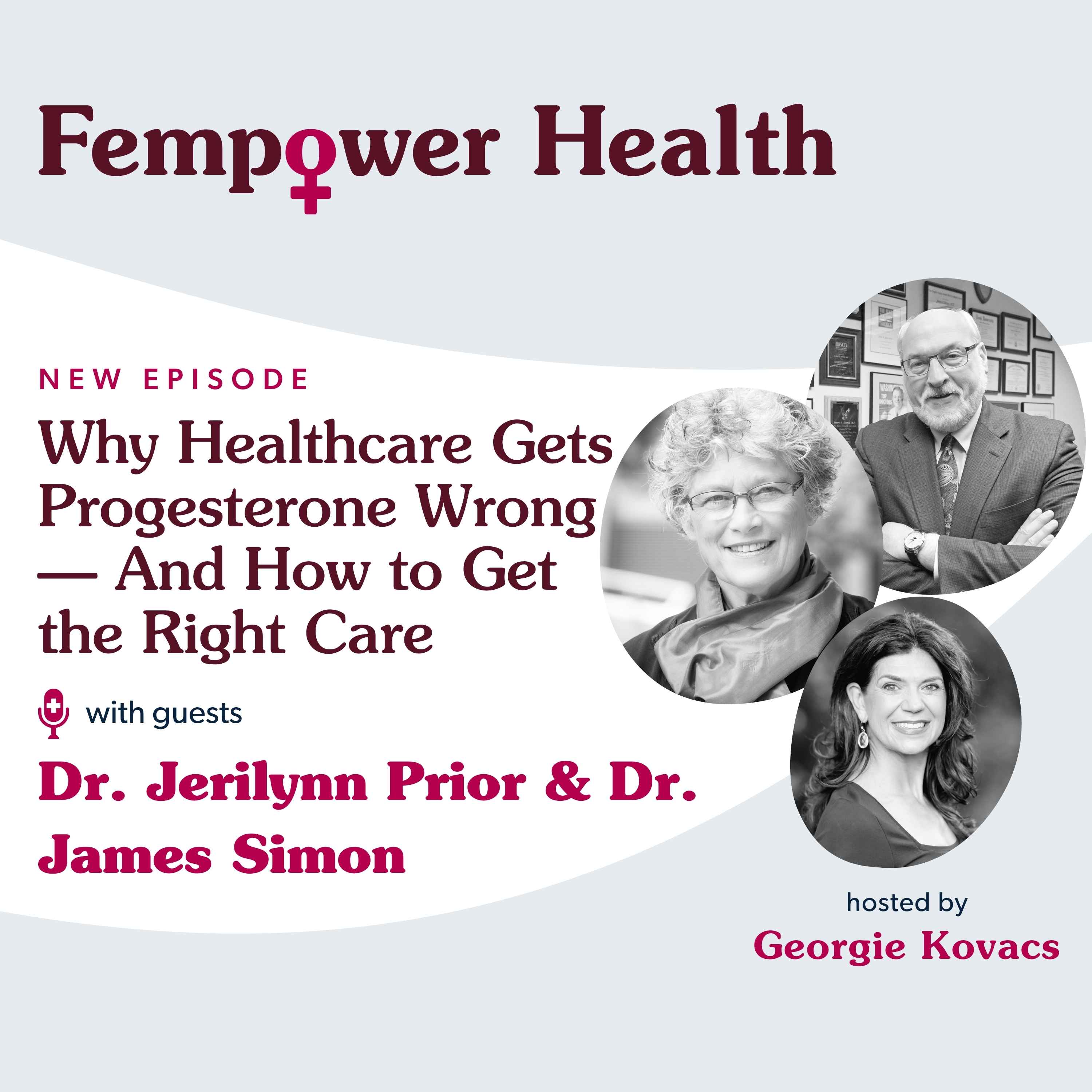 Why Healthcare Gets Progesterone Wrong — And How to Get the Right Care | Dr. Jerilynn Prior & Dr. James Simon - Fempower Health | A Women's Health Podcast 28.10.2025 46mEpisode Summary:Progesterone and progestins sound alike — but they act very differently in a woman’s body. This episode breaks down how that confusion took root and what it means for hormone therapy, contraception, and women’s health research. Endocrinologist Dr. Jerilynn Prior and gynecologist Dr. Jim Simon join Georgie Kovacs to explore evidence, controversy, and the systemic forces that keep women in the dark about their options.Highlights:Key biological differences between progesterone and synthetic progestinsWhat the latest menopause guidelines actually sayWhy Mirena protects the uterus but may not provide systemic progesterone effectsHow underfunded research skews labeling and careQuestions to ask your clinician before starting hormone therapyAbout the Guests:Dr. Jerilynn Prior – Founder, Centre for Menstrual Cycle & Ovulation Research (CeMCOR).Dr. Jim Simon – Clinical Professor, GWU OB-GYN; President, ISSWSH.Resources:Learn about the Centre for Menstrual Cycle and Ovulation Research (CeMCOR) Learn about the International Society for the Study of Women's Sexual Health (ISSWSH)Check out The Menopause Society position statements, which address clinical issues in women's midlifeAction Steps:Learn your hormone terminology.Discuss individualized options with your clinician.Share this episode to help others get informed.🎧 Loved the episode? Here's how you can take action:1. Help others discover Fempower Health:Leave a quick review on Apple or Spotify. It’s the easiest way to support our mission and amplify women’s health voices.2. Stay connected:Follow us on LinkedIn, Instagram and TikTok, YouTube for real-time updates, expert insights, and relatable conversations.Or join our newsletter to get curated women's health content—on your terms, in your inbox.**Top 50 Health Podcast of 2024** **The information shared by Fempower Health is not medical advice but for informational purposes to enable you to have more effective conversations with your doctor. Always talk to your doctor before making health-related decisions. Additionally, the views expressed by the Fempower Health podcast guests are their own and their appearance on the program does not imply an endorsement of them or any entity they represent.****May contain affiliate links and I will be compensated if you make a purchase after clicking on my links**
 -
 Menopause, Estrogen & the FDA: What Experts Say Needs to Change | Dr. James Simon 14.10.2025 43mEpisode SummaryThe FDA held a rare public hearing to reconsider the safety labels on vaginal estrogen—a pivotal moment for menopause care.In this episode, Dr. James Simon, a leading menopause specialist and clinical researcher, joins Georgie Kovacs to unpack what the hearing revealed, why the current labeling may do more harm than good, and what it means for millions of women experiencing genitourinary syndrome of menopause (GSM), recurrent UTIs, painful sex, and incontinence.Together, they explore how outdated warnings, lack of education, and systemic biases continue to shape women’s access to treatment—and what both women and clinicians need to know as change finally takes shape.Discussion PointsWhy is the FDA reconsidering the vaginal estrogen warning label now?What does genitourinary syndrome of menopause (GSM) actually mean—and how common is it?How do current black box warnings limit women’s access to safe and effective therapies?What’s the real risk of vaginal estrogen and breast cancer—and what does the evidence say?How can updated labeling improve care for UTIs, painful sex, and incontinence?What steps can clinicians take to confidently prescribe vaginal estrogen?What role does the media and misinformation play in perpetuating fear around menopause care?How can women advocate for themselves if their doctor is hesitant to prescribe?What’s next for the FDA—and how could this hearing reshape menopause treatment in the U.S.?🎧 Loved the episode? Here's how you can take action:1. Help others discover Fempower Health:Leave a quick review on Apple or Spotify. It’s the easiest way to support our mission and amplify women’s health voices.2. Stay connected:Follow us on LinkedIn, Instagram and TikTok, YouTube for real-time updates, expert insights, and relatable conversations.Or join our newsletter to get curated women's health content—on your terms, in your inbox.**Top 50 Health Podcast of 2024** About Dr. James SimonDr. James A. Simon is a board-certified Ob/Gyn, and reproductive endocrinologist. He is Clinical Professor of Obstetrics and Gynecology and Reproductive Endocrinology and Infertility at The George Washington University School of Medicine in Washington, DC. Dr. Simon also holds certifications as an AASECT-Certified Sexuality Counsellor, an ISCD-Certified Clinical Bone Densitometrist, and a Menopause Society-Certified Menopause Specialist. He has an active private practice, IntimMedicine Specialists®, in Washington, DC focused on complicated gynecology, sexual medicine for both men and women, and menopause. Dr. Simon has received numerous awards including: “Top Washington Physicians,” “America’s Top Obstetricians and Gynecologists,” “Super Doctors of Washington DC-Baltimore-Northern Virginia,” and “The Best Doctors in America.” He is the only physician to serve as President of both The Menopause Society and the International Society for the Study of Women’s Sexual Health. Nicknamed “The Menopause Whisperer,” by Washingtonian Magazine, Dr. Simon is an established researcher and author--completing more than 450 research trials, and more than 800 published articles, abstracts, chapters, and the paperback book: Restore Yourself: A Woman’s Guide to Reviving Her Sexual Desire and Passion for Life. Dr. Simon loves riding the best rollercoasters in the world, collecting fountain pens and wristwatches, and freshwater fishing. He is a five- time Master Angler of Manitoba (Canada).**The information shared by Fempower Health is not medical advice but for informational purposes to enable you to have more effective conversations with your doctor. Always talk to your doctor before making health-related decisions. Additionally, the views expressed by the Fempower Health podcast guests are their own and their appearance on the program does not imply an endorsement of them or any entity they represent.****May contain affiliate links and I will be compensated if you make a purchase after clicking on my links**
 -
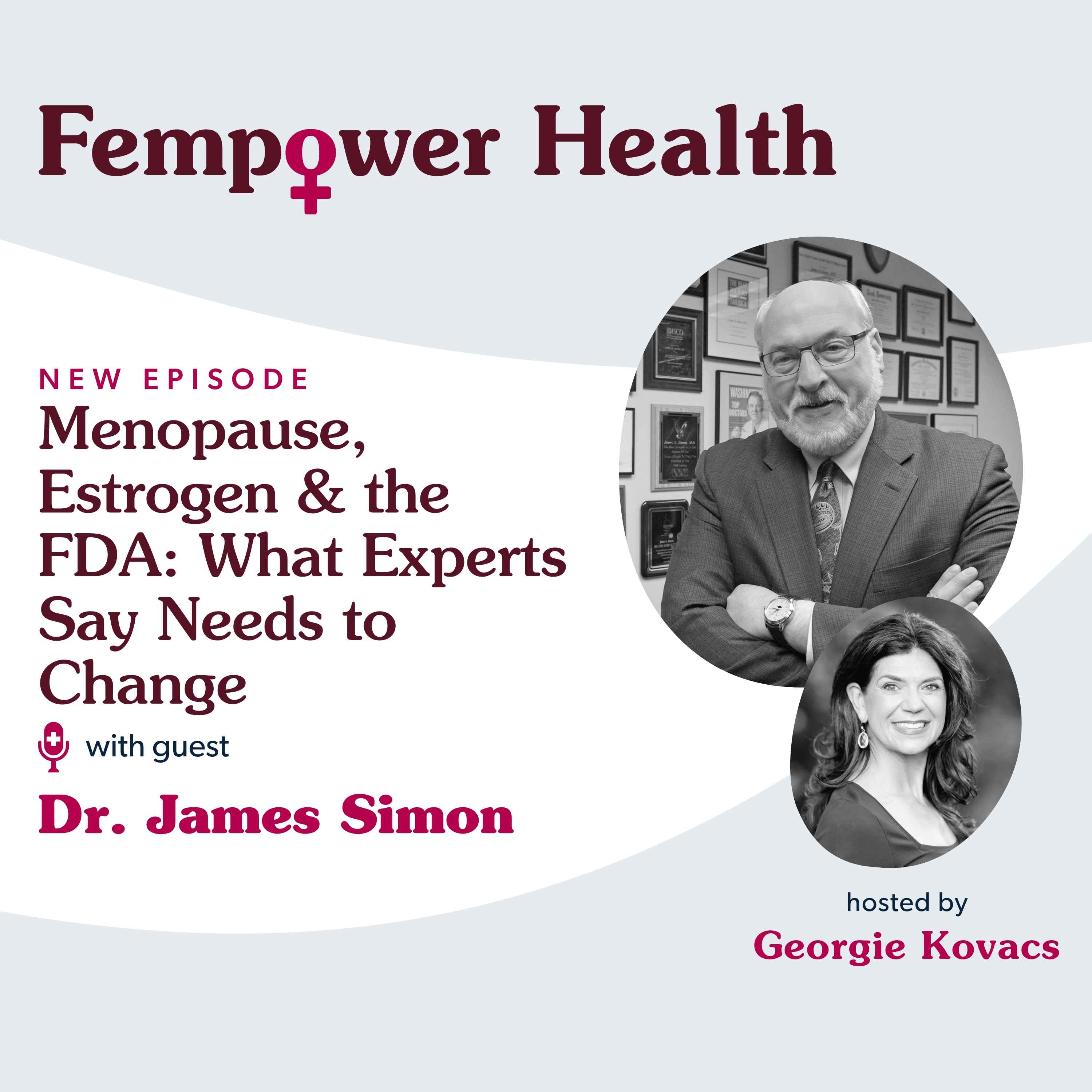 Menopause, Estrogen & the FDA: What Experts Say Needs to Change | Dr. James Simon - Fempower Health | A Women's Health Podcast 14.10.2025 43mEpisode SummaryThe FDA held a rare public hearing to reconsider the safety labels on vaginal estrogen—a pivotal moment for menopause care.In this episode, Dr. James Simon, a leading menopause specialist and clinical researcher, joins Georgie Kovacs to unpack what the hearing revealed, why the current labeling may do more harm than good, and what it means for millions of women experiencing genitourinary syndrome of menopause (GSM), recurrent UTIs, painful sex, and incontinence.Together, they explore how outdated warnings, lack of education, and systemic biases continue to shape women’s access to treatment—and what both women and clinicians need to know as change finally takes shape.Discussion PointsWhy is the FDA reconsidering the vaginal estrogen warning label now?What does genitourinary syndrome of menopause (GSM) actually mean—and how common is it?How do current black box warnings limit women’s access to safe and effective therapies?What’s the real risk of vaginal estrogen and breast cancer—and what does the evidence say?How can updated labeling improve care for UTIs, painful sex, and incontinence?What steps can clinicians take to confidently prescribe vaginal estrogen?What role does the media and misinformation play in perpetuating fear around menopause care?How can women advocate for themselves if their doctor is hesitant to prescribe?What’s next for the FDA—and how could this hearing reshape menopause treatment in the U.S.?🎧 Loved the episode? Here's how you can take action:1. Help others discover Fempower Health:Leave a quick review on Apple or Spotify. It’s the easiest way to support our mission and amplify women’s health voices.2. Stay connected:Follow us on LinkedIn, Instagram and TikTok, YouTube for real-time updates, expert insights, and relatable conversations.Or join our newsletter to get curated women's health content—on your terms, in your inbox.**Top 50 Health Podcast of 2024** About Dr. James SimonDr. James A. Simon is a board-certified Ob/Gyn, and reproductive endocrinologist. He is Clinical Professor of Obstetrics and Gynecology and Reproductive Endocrinology and Infertility at The George Washington University School of Medicine in Washington, DC. Dr. Simon also holds certifications as an AASECT-Certified Sexuality Counsellor, an ISCD-Certified Clinical Bone Densitometrist, and a Menopause Society-Certified Menopause Specialist. He has an active private practice, IntimMedicine Specialists®, in Washington, DC focused on complicated gynecology, sexual medicine for both men and women, and menopause. Dr. Simon has received numerous awards including: “Top Washington Physicians,” “America’s Top Obstetricians and Gynecologists,” “Super Doctors of Washington DC-Baltimore-Northern Virginia,” and “The Best Doctors in America.” He is the only physician to serve as President of both The Menopause Society and the International Society for the Study of Women’s Sexual Health. Nicknamed “The Menopause Whisperer,” by Washingtonian Magazine, Dr. Simon is an established researcher and author--completing more than 450 research trials, and more than 800 published articles, abstracts, chapters, and the paperback book: Restore Yourself: A Woman’s Guide to Reviving Her Sexual Desire and Passion for Life. Dr. Simon loves riding the best rollercoasters in the world, collecting fountain pens and wristwatches, and freshwater fishing. He is a five- time Master Angler of Manitoba (Canada).**The information shared by Fempower Health is not medical advice but for informational purposes to enable you to have more effective conversations with your doctor. Always talk to your doctor before making health-related decisions. Additionally, the views expressed by the Fempower Health podcast guests are their own and their appearance on the program does not imply an endorsement of them or any entity they represent.****May contain affiliate links and I will be compensated if you make a purchase after clicking on my links**
 -
 PPD & Postpartum Psychosis: Support for Women and Families | Dr. Theresa Costales 07.10.2025 1hHonoring Mental Illness Awareness Week. Originally published October 2023. Although not as common as postpartum depression, postpartum psychosis is a real condition that can have devastating consequences on women and families. In this episode of Fempower Health, we discuss this critical and often misunderstood condition. Joined by the knowledgeable Dr. Theresa Costales, we explore the facts, experiences, and potential interventions surrounding postpartum depression and postpartum psychosis. We talk about how the brain changes during the postpartum period, how to spot early warning signs, and what to do to get help. From the complexities of the healthcare system to the importance of mental health support networks, we uncover some challenges and solutions for women at risk of postpartum psychosis. Listen to learn about postpartum mental health and the importance of increasing awareness in healthcare today. Find solutions and support mothers in their mental well-being. Dr. Teresa Castales is a board-certified psychiatrist serving as the Arizona Medical Director for Connections Health Solutions, an organization that accepts all individuals experiencing mental health crises, regardless of the cause.Discussed in this episode:Brain changes in postpartum womenSigns to look out for with postpartum depression What is postpartum psychosis?Potential long-term effects and risks of postpartum psychosis (PPP)Pre-existing risk factors for developing PPD and PPPTragic cases of misunderstood postpartum psychosis left unaddressed (Andrea Yates)How families and loved ones can offer support during a postpartum mental health crisisThe importance of primary care providers and OBGYNs knowing about postpartum mental disordersChallenges women face when seeking mental health care during the postpartum periodWays to manage mental health during and after pregnancy with the help of reproductive psychiatrists “This is a treatable illness. It’s an episode, although it doesn’t feel like it at the time. And you can’t think your way out of it. It requires early treatment.” - Dr. Theresa CostalesRelated to this episode:Resources and episodes on Mental Health Resources and episodes on Pregnancy & Motherhood Read the Article: Postpartum Psychosis: Improving the Likelihood of Early InterventionRelated Book: Beyond the Baby Blues: Anxiety and Depression During and After Pregnancy by Dr. Rebecca Fox StarrPostpartum Support International: www.postpartum.net Connections Mental Health Support: www.connectionshs.com National Suicide & Crisis Line: 9-8-8🎧 Loved the episode? Here's how you can take action:1. Help others discover Fempower Health:Leave a quick review on Apple or Spotify. It’s the easiest way to support our mission and amplify women’s health voices.2. Stay connected:Follow us on LinkedIn, Instagram and TikTok, YouTube for real-time updates, expert insights, and relatable conversations.Or join our newsletter to get curated women's health content—on your terms, in your inbox.**Top 50 Health Podcast of 2024** **The information shared by Fempower Health is not medical advice but for informational purposes to enable you to have more effective conversations with your doctor. Always talk to your doctor before making health-related decisions. Additionally, the views expressed by the Fempower Health podcast guests are their own and their appearance on the program does not imply an endorsement of them or any entity they represent.****May contain affiliate links and I will be compensated if you make a purchase after clicking on my links**
 -
 AI Won’t Fix Healthcare if It Ignores Women | Dr. Nikita Patel 30.09.2025 1hEpisode SummaryAI is everywhere — from apps on our phones to tools shaping clinical care. But what does it really mean for women’s health? Could AI finally close the health gap — or will it reinforce the same frustrations women already face in the doctor’s office?In this episode of Fempower Health, Georgie Kovacs sits down with Dr. Nikita Patel, a pharmacist, biomedical engineer, and healthcare innovation leader with 15 years of experience across biopharma, digital health, and AI. Nikita has held leadership roles including Director of Clinical Research & AI at Function Health, and she brings a multidisciplinary perspective on how data, diagnostics, and emerging technologies can transform health and human performance.Together, Georgie and Niki unpack what’s misunderstood about AI in healthcare, why women’s health needs its own data lens, and how clinicians and patients alike can use AI responsibly today.Discussion PointsWhat is AI in healthcare really doing behind the buzzword?Why is women’s health data missing — and how does this bias impact AI tools?How can women use AI to better advocate for themselves in doctor visits?Can AI improve clinical trials and drug development for women?What privacy risks should women and clinicians know about when using AI apps?How can healthcare providers evaluate whether an “AI-powered” tool is credible?What’s the future of personalized care — could digital twins and AI change everything?Who is responsible for setting standards for AI in women’s health?🎧 Loved the episode? Here's how you can take action:1. Help others discover Fempower Health:Leave a quick review on Apple or Spotify. It’s the easiest way to support our mission and amplify women’s health voices.2. Stay connected:Follow us on LinkedIn, Instagram and TikTok, YouTube for real-time updates, expert insights, and relatable conversations.Or join our newsletter to get curated women's health content—on your terms, in your inbox.**Top 50 Health Podcast of 2024** **The information shared by Fempower Health is not medical advice but for informational purposes to enable you to have more effective conversations with your doctor. Always talk to your doctor before making health-related decisions. Additionally, the views expressed by the Fempower Health podcast guests are their own and their appearance on the program does not imply an endorsement of them or any entity they represent.****May contain affiliate links and I will be compensated if you make a purchase after clicking on my links**
 -
 AI Won’t Fix Healthcare if It Ignores Women | Dr. Nikita Patel - Fempower Health | A Women's Health Podcast 30.09.2025 1hEpisode SummaryAI is everywhere — from apps on our phones to tools shaping clinical care. But what does it really mean for women’s health? Could AI finally close the health gap — or will it reinforce the same frustrations women already face in the doctor’s office?In this episode of Fempower Health, Georgie Kovacs sits down with Dr. Nikita Patel, a pharmacist, biomedical engineer, and healthcare innovation leader with 15 years of experience across biopharma, digital health, and AI. Nikita has held leadership roles including Director of Clinical Research & AI at Function Health, and she brings a multidisciplinary perspective on how data, diagnostics, and emerging technologies can transform health and human performance.Together, Georgie and Niki unpack what’s misunderstood about AI in healthcare, why women’s health needs its own data lens, and how clinicians and patients alike can use AI responsibly today.Discussion PointsWhat is AI in healthcare really doing behind the buzzword?Why is women’s health data missing — and how does this bias impact AI tools?How can women use AI to better advocate for themselves in doctor visits?Can AI improve clinical trials and drug development for women?What privacy risks should women and clinicians know about when using AI apps?How can healthcare providers evaluate whether an “AI-powered” tool is credible?What’s the future of personalized care — could digital twins and AI change everything?Who is responsible for setting standards for AI in women’s health?🎧 Loved the episode? Here's how you can take action:1. Help others discover Fempower Health:Leave a quick review on Apple or Spotify. It’s the easiest way to support our mission and amplify women’s health voices.2. Stay connected:Follow us on LinkedIn, Instagram and TikTok, YouTube for real-time updates, expert insights, and relatable conversations.Or join our newsletter to get curated women's health content—on your terms, in your inbox.**Top 50 Health Podcast of 2024** **The information shared by Fempower Health is not medical advice but for informational purposes to enable you to have more effective conversations with your doctor. Always talk to your doctor before making health-related decisions. Additionally, the views expressed by the Fempower Health podcast guests are their own and their appearance on the program does not imply an endorsement of them or any entity they represent.****May contain affiliate links and I will be compensated if you make a purchase after clicking on my links**
 -
 Pain Relief for Endometriosis | Dr. Allyson Shrikhande 23.09.2025 29mOriginally Published May 2024. Re-sharing in honor of Chronic Pain Awareness MonthAre there ways to find pain relief for endometriosis? Listen as Dr. Allyson Shrikhande shares her expert insights on a whole-person approach to pain management. Episode SummaryIn this episode of Fempower Health, Georgie Kovacs hosts Dr. Allyson Shrikhande, a specialist in pelvic rehabilitation medicine. They explore the important topic of managing pelvic pain associated with endometriosis. Dr. Shrikhande discusses the complex symptoms and challenges of diagnosing endometriosis, which often go beyond typical menstrual discomfort and can even affect areas such as bladder function and sexual health. They discuss innovative, non-surgical approaches to pain management, incorporating targeted treatments and lifestyle modifications. Listen to gain insights into holistic, patient-centered methods that make significant relief possible for those battling chronic pelvic pain.Key Discussion Points:The diverse and often misunderstood symptoms of endometriosisEndometriosis’ impact on the menstrual cycle, bladder, bowel functions, and pain during intercourseNon-surgical methods for pelvic pain management when living with endometriosis Why detecting endometriosis early can change the course of treatment and potentially lessen the need for invasive proceduresNerve and muscle rehabilitation treatment options that provide relief without the complications associated with surgeryBenefits of a whole-person approach to managing endometriosis, which includes nutritional support, behavioral health, and physical therapyDr. Shrikhande emphasizes the need for greater awareness and education about endometriosis among both healthcare providers and patients"There are a lot of myths about pain management. It’s not just about pain relief; it’s about restoring function and managing the disease holistically." - Dr. Allyson ShrikhandeRelated to this episode:Resources on Pelvic HealthRead Beating EndoTry Your Pace YogaLearn more about Pelvic Rehabilitation Medicine and follow them on Instagram.Stay in touch with Dr Allyson Shrikhande and follow her on Instagram and LinkedIn.🎧 Loved the episode? Here's how you can take action:1. Help others discover Fempower Health:Leave a quick review on Apple or Spotify. It’s the easiest way to support our mission and amplify women’s health voices.2. Stay connected:Follow us on LinkedIn, Instagram and TikTok, YouTube for real-time updates, expert insights, and relatable conversations.Or join our newsletter to get curated women's health content—on your terms, in your inbox.**Top 50 Health Podcast of 2024** Guest BioDr. Allyson Shrikhande is a board-certified Physical Medicine and Rehabilitation specialist, Chief Medical Officer of Pelvic Rehabilitation Medicine, and an expert in women’s and men’s health and sexual health. A leading expert on pelvic health and a respected researcher, author and lecturer, Dr. Shrikhande is a recognized authority on female and male pelvic pain diagnosis and treatment.Dr. Shrikhande is passionate about this cause and dedicated to helping women and men with pelvic pain who often suffer without anyone willing to listen, understand, or find the cause of their pain. That’s why she has traveled the world to work with expert gynecologists, urologists, physiatrists, and interventional pain physicians. Dr. Shrikhande has distilled this global expertise into an office-based, cutting-edge approach to the treatment of pelvic pain and pelvic floor muscle dysfunction.**The information shared by Fempower Health is not medical advice but for informational purposes to enable you to have more effective conversations with your doctor. Always talk to your doctor before making health-related decisions. Additionally, the views expressed by the Fempower Health podcast guests are their own and their appearance on the program does not imply an endorsement of them or any entity they represent.****May contain affiliate links and I will be compensated if you make a purchase after clicking on my links**
 -
 The Real Barriers to Women’s Health Innovation | Joanna Strober 16.09.2025 41mEpisode SummaryWomen’s health faces systemic challenges that too often leave women without answers — especially in midlife, when care becomes fragmented and reimbursement models make solutions hard to scale.In this episode of Fempower Health, Georgie Kovacs speaks with Joanna Strober, CEO and co-founder of Midi Health and a seasoned entrepreneur who previously founded Kurbo Health (acquired by Weight Watchers). Joanna shares her journey from personal struggles with perimenopause symptoms to building solutions that confront the structural barriers in women’s health.Together, we explore why women are left to self-navigate, how venture capital and philanthropy are shaping the field, and what it will take to close the gap between research and real-world care.If you’re a woman seeking answers about your health, or a clinician striving to better serve your patients, this episode will give you a candid look at the truth: the system isn’t designed for women — but with insight and bold action, change is possible.Discussion PointsWhy do midlife women often “fall out” of the healthcare system?How do insurance and reimbursement barriers prevent women-centered care from scaling?Why does it take an average of 17 years for clinical evidence to become standard practice?How should innovators responsibly use emerging research in women’s health?What role did Pivotal Ventures and Wellcome Trust’s $100M commitment play — and why isn’t it enough?How do venture capital investors view women’s health innovation — is it bias, or a need to show scale?What cultural factors lead women to tolerate suffering instead of pushing for better care?Where does Joanna Strober see hope for the future of women’s health innovation?🎧 Loved the episode? Here's how you can take action:1. Help others discover Fempower Health:Leave a quick review on Apple or Spotify. It’s the easiest way to support our mission and amplify women’s health voices.2. Stay connected:Follow us on LinkedIn, Instagram and TikTok, YouTube for real-time updates, expert insights, and relatable conversations.Or join our newsletter to get curated women's health content—on your terms, in your inbox.**Top 50 Health Podcast of 2024** About Joanna StroberJoanna Strober is a visionary healthcare leader and CEO/co-founder of Midi Health, the fastest-growing national telehealth clinic transforming how women navigate menopause and midlife. Since launching in 2021, Joanna has propelled Midi to serve tens of thousands of patients with insurance-covered, personalized care in all 50 states—filling a massive gap in women’s healthcare. Before Midi, she founded and scaled Kurbo Health, a digital platform tackling childhood obesity, which was acquired by WW in 2018.Recognized as a CNBC 2025 Changemakers and TIME100 Most Influential People in Health 2025, Joanna is a fierce advocate for women’s health equity. Her leadership has earned national honors—including a White House award for her groundbreaking campaign protecting women’s healthcare access—and sparked viral conversations that challenge the status quo, like forcing Noom to retract an ageist ad. Backed by visionary investors such as Sheryl Sandberg, Connie Britton, and Amy Schumer, Joanna is at the forefront of redefining care for women at midlife, driving real, systemic change in a historically neglected space.**The information shared by Fempower Health is not medical advice but for informational purposes to enable you to have more effective conversations with your doctor. Always talk to your doctor before making health-related decisions. Additionally, the views expressed by the Fempower Health podcast guests are their own and their appearance on the program does not imply an endorsement of them or any entity they represent.****May contain affiliate links and I will be compensated if you make a purchase after clicking on my links**
 -
 The Real Barriers to Women’s Health Innovation | Joanna Strober - Fempower Health | A Women's Health Podcast 16.09.2025 41mEpisode SummaryWomen’s health faces systemic challenges that too often leave women without answers — especially in midlife, when care becomes fragmented and reimbursement models make solutions hard to scale.In this episode of Fempower Health, Georgie Kovacs speaks with Joanna Strober, CEO and co-founder of Midi Health and a seasoned entrepreneur who previously founded Kurbo Health (acquired by Weight Watchers). Joanna shares her journey from personal struggles with perimenopause symptoms to building solutions that confront the structural barriers in women’s health.Together, we explore why women are left to self-navigate, how venture capital and philanthropy are shaping the field, and what it will take to close the gap between research and real-world care.If you’re a woman seeking answers about your health, or a clinician striving to better serve your patients, this episode will give you a candid look at the truth: the system isn’t designed for women — but with insight and bold action, change is possible.Discussion PointsWhy do midlife women often “fall out” of the healthcare system?How do insurance and reimbursement barriers prevent women-centered care from scaling?Why does it take an average of 17 years for clinical evidence to become standard practice?How should innovators responsibly use emerging research in women’s health?What role did Pivotal Ventures and Wellcome Trust’s $100M commitment play — and why isn’t it enough?How do venture capital investors view women’s health innovation — is it bias, or a need to show scale?What cultural factors lead women to tolerate suffering instead of pushing for better care?Where does Joanna Strober see hope for the future of women’s health innovation?🎧 Loved the episode? Here's how you can take action:1. Help others discover Fempower Health:Leave a quick review on Apple or Spotify. It’s the easiest way to support our mission and amplify women’s health voices.2. Stay connected:Follow us on LinkedIn, Instagram and TikTok, YouTube for real-time updates, expert insights, and relatable conversations.Or join our newsletter to get curated women's health content—on your terms, in your inbox.**Top 50 Health Podcast of 2024** About Joanna StroberJoanna Strober is a visionary healthcare leader and CEO/co-founder of Midi Health, the fastest-growing national telehealth clinic transforming how women navigate menopause and midlife. Since launching in 2021, Joanna has propelled Midi to serve tens of thousands of patients with insurance-covered, personalized care in all 50 states—filling a massive gap in women’s healthcare. Before Midi, she founded and scaled Kurbo Health, a digital platform tackling childhood obesity, which was acquired by WW in 2018.Recognized as a CNBC 2025 Changemakers and TIME100 Most Influential People in Health 2025, Joanna is a fierce advocate for women’s health equity. Her leadership has earned national honors—including a White House award for her groundbreaking campaign protecting women’s healthcare access—and sparked viral conversations that challenge the status quo, like forcing Noom to retract an ageist ad. Backed by visionary investors such as Sheryl Sandberg, Connie Britton, and Amy Schumer, Joanna is at the forefront of redefining care for women at midlife, driving real, systemic change in a historically neglected space.**The information shared by Fempower Health is not medical advice but for informational purposes to enable you to have more effective conversations with your doctor. Always talk to your doctor before making health-related decisions. Additionally, the views expressed by the Fempower Health podcast guests are their own and their appearance on the program does not imply an endorsement of them or any entity they represent.****May contain affiliate links and I will be compensated if you make a purchase after clicking on my links**
 -
 Hormone Repair After 40 | Dr Lara Briden - Fempower Health | A Women's Health Podcast 09.09.2025 46mDr. Lara Briden is a naturopathic doctor and author of the bestselling books Period Repair Manual and Hormone Repair Manual. She has more than 20 years’ experience in women’s health and currently has a consulting room in Christchurch, New Zealand, where she treats women with PCOS, PMS, endometriosis, perimenopause, and many other hormone- and period-related health problems. In this episode, Dr Briden covers: Stages of perimenopause and menopause Truths about HRT and why they are no longer called that Symptoms women tend to fear and solutions for each Why women can and should embrace this stage of life If you liked this episode and you're feeling generous, don't forget to leave a review on iTunes! Referenced in the podcast & related episodes: Period Repair Manual Hormone Repair Manual Dr Carissa | Managing Menopause Symptoms Jenn Salib-Huber | Perimenopause & Menopause Dr. Jaclyn Tolentino | The Optimal Way to Treat Hormone Imbalance Supplements and Over-the-counter products can be found in the Fempower Health store And be sure to: Follow Fempower Health on Instagram for updates and tips. Subscribe to the podcast and tell your friends! **The information shared by Fempower Health is not medical advice but for information purposes to enable you to have more effective conversations with your doctor. Always talk to your doctor before making health-related decisions. Contains affiliate links
 -
 Why Women Need a Different Approach to Longevity 02.09.2025 59mLongevity isn’t just about living longer — it’s about living better.In this episode of Fempower Health, host Georgie Kovacs sits down with Roma van der Walt, a sports scientist, women’s health strategist, and CEO of Vitelle, to unpack what longevity really means for women.Roma explains why the biohacking trend often overlooks female physiology, how wearables misinterpret women’s health data, and why prevention must go beyond annual checkups and symptom management. Together, they discuss AI’s role in women’s health, how clinicians can better support patients, and why building an integrated health intelligence infrastructure is the future of personalized care.If you’ve ever wondered:“Am I doing enough to stay healthy as I age?”“Why do wearables and trackers confuse me more than they help?”“How can I trust AI with my health data?”…this episode is for you.Discussion Points (SEO-Driven Questions)What is the difference between lifespan vs. healthspan, and why does it matter for women?How does the current longevity conversation overlook women’s unique physiology?Are wearables and fitness trackers accurate for women, or do they misinterpret the data?What are the four pillars of longevity every woman should focus on?How can AI and health intelligence infrastructure improve women’s healthcare?Why is prevention more important than biohacking for long-term women’s health?How can clinicians better support women navigating fragmented healthcare systems?What supplements and lifestyle factors can impact women’s biomarkers unexpectedly?How can women make sense of biometrics, wearables, and lab results without feeling overwhelmed?What role should personalized healthcare play in improving women’s outcomes?🎧 Loved the episode? Here's how you can take action:1. Help others discover Fempower Health:Leave a quick review on Apple or Spotify. It’s the easiest way to support our mission and amplify women’s health voices.2. Stay connected:Follow us on LinkedIn, Instagram and TikTok, YouTube for real-time updates, expert insights, and relatable conversations.Or join our newsletter to get curated women's health content—on your terms, in your inbox.**Top 50 Health Podcast of 2024** About Roma van der WaltRoma van der Walt is pioneering a new era of women's health. As a sports scientist and the founder of Vitelle, she's working on turning complex biological data into actionable insights for female longevity and performance.Her work sits at the intersection of sports science and the power of system design to address that the field of female health has been historically underserved. Roma’s mission is to close the persistent gap in how female physiology is supported across lifespan and high-performance settings. She does this by designing tools that unify fragmented data, moving beyond a one-size-fits-all approach to provide personalized, precise care.An outspoken advocate for data equity and better representation of diverse female voices, Roma's vision extends to ensuring that scientific research and digital tools accurately reflect the needs of all women. Her cross-disciplinary career, which includes work with the UN and collaborations with leading institutions like Monash University, has given her a unique perspective on how to innovate in health technology. Her work has been recognized by Women’s Health Magazine and other media outlets, where she speaks on the future of female performance and the next era of personalized care.**The information shared by Fempower Health is not medical advice but for informational purposes to enable you to have more effective conversations with your doctor. Always talk to your doctor before making health-related decisions. Additionally, the views expressed by the Fempower Health podcast guests are their own and their appearance on the program does not imply an endorsement of them or any entity they represent.****May contain affiliate links and I will be compensated if you make a purchase after clicking on my links**
 -
 Why Women Need a Different Approach to Longevity - Fempower Health | A Women's Health Podcast 02.09.2025 59mLongevity isn’t just about living longer — it’s about living better.In this episode of Fempower Health, host Georgie Kovacs sits down with Roma van der Walt, a sports scientist, women’s health strategist, and CEO of Vitelle, to unpack what longevity really means for women.Roma explains why the biohacking trend often overlooks female physiology, how wearables misinterpret women’s health data, and why prevention must go beyond annual checkups and symptom management. Together, they discuss AI’s role in women’s health, how clinicians can better support patients, and why building an integrated health intelligence infrastructure is the future of personalized care.If you’ve ever wondered:“Am I doing enough to stay healthy as I age?”“Why do wearables and trackers confuse me more than they help?”“How can I trust AI with my health data?”…this episode is for you.Discussion Points (SEO-Driven Questions)What is the difference between lifespan vs. healthspan, and why does it matter for women?How does the current longevity conversation overlook women’s unique physiology?Are wearables and fitness trackers accurate for women, or do they misinterpret the data?What are the four pillars of longevity every woman should focus on?How can AI and health intelligence infrastructure improve women’s healthcare?Why is prevention more important than biohacking for long-term women’s health?How can clinicians better support women navigating fragmented healthcare systems?What supplements and lifestyle factors can impact women’s biomarkers unexpectedly?How can women make sense of biometrics, wearables, and lab results without feeling overwhelmed?What role should personalized healthcare play in improving women’s outcomes?🎧 Loved the episode? Here's how you can take action:1. Help others discover Fempower Health:Leave a quick review on Apple or Spotify. It’s the easiest way to support our mission and amplify women’s health voices.2. Stay connected:Follow us on LinkedIn, Instagram and TikTok, YouTube for real-time updates, expert insights, and relatable conversations.Or join our newsletter to get curated women's health content—on your terms, in your inbox.**Top 50 Health Podcast of 2024** About Roma van der WaltRoma van der Walt is pioneering a new era of women's health. As a sports scientist and the founder of Vitelle, she's working on turning complex biological data into actionable insights for female longevity and performance.Her work sits at the intersection of sports science and the power of system design to address that the field of female health has been historically underserved. Roma’s mission is to close the persistent gap in how female physiology is supported across lifespan and high-performance settings. She does this by designing tools that unify fragmented data, moving beyond a one-size-fits-all approach to provide personalized, precise care.An outspoken advocate for data equity and better representation of diverse female voices, Roma's vision extends to ensuring that scientific research and digital tools accurately reflect the needs of all women. Her cross-disciplinary career, which includes work with the UN and collaborations with leading institutions like Monash University, has given her a unique perspective on how to innovate in health technology. Her work has been recognized by Women’s Health Magazine and other media outlets, where she speaks on the future of female performance and the next era of personalized care.**The information shared by Fempower Health is not medical advice but for informational purposes to enable you to have more effective conversations with your doctor. Always talk to your doctor before making health-related decisions. Additionally, the views expressed by the Fempower Health podcast guests are their own and their appearance on the program does not imply an endorsement of them or any entity they represent.****May contain affiliate links and I will be compensated if you make a purchase after clicking on my links**
 -
 A Woman's Guide to Intermittent Fasting | Dr Mindy Pelz - Fempower Health | A Women's Health Podcast 26.08.2025 42mDr. Mindy Pelz, D.C speaks about how women should incorporate intermittent fasting based on where they are in their cycle and over their life span of reproductive years, perimenopause, and menopause. Dr Mindy is a best selling author, keynote speaker, nutrition and functional medicine expert who has spent over two decades helping thousands of people successfully reclaim their health. In this episode, Dr Mindy covers: What intermittent fast is Benefits of intermittent fasting How a woman should fast in her reproductive years vs. perimenopause vs. menopause Her thoughts on drinking ketones If you liked this episode and you're feeling generous, don't forget to leave a review on iTunes! Referenced in the podcast & related episodes: The Menopause Reset by Dr Mindy Pelz Hormone Repair Manual by Dr Lara Briden Dr Lara Briden | Hormone Repair After 40 Dr Carissa | Managing Menopause Symptoms Jenn Salib-Huber | Perimenopause & Menopause Dr. Jaclyn Tolentino | The Optimal Way to Treat Hormone Imbalance New England Journal of Medicine (NEJM) Article on the Science Behind Intermittent Fasting Supplements and Over-the-counter products can be found in the Fempower Health store And be sure to: Follow Fempower Health on Instagram for updates and tips. Follow the podcast and tell your friends! Dr. Mindy Pelz, D.C is a best selling author, keynote speaker, nutrition and functional medicine expert who has spent over two decades helping thousands of people successfully reclaim their health. She is a recognized leader in the alternative health field and a pioneer in the fasting movement, teaching the principles of a fasting lifestyle, diet variation, detox, hormones, and more. Her popular YouTube channel combines the latest science with practical lifestyle tools every person can use to reset their health. She is the host of one of the leading science podcasts, The Resetter Podcast, and the author of three best-selling books; The Menopause Reset, The Reset Factor, and The Reset Kitchen. **The information shared by Fempower Health is not medical advice but for information purposes to enable you to have more effective conversations with your doctor. Always talk to your doctor before making health-related decisions. Contains affiliate links
 -
 Banned for Talking About THIS? | Saundra Pelletier on #SayVaginaMonth 19.08.2025 30mEpisode OverviewTikTok banned my anatomy quiz. The reason? I showed an anatomically correct clitoris model and asked people to guess what it was. No explicit words. No graphic content. Just science.This is exactly why Saundra Pelletier, CEO of Evofem Biosciences, launched #SayVaginaMonth —a movement to fight censorship, challenge stigma, and normalize medically accurate conversations about women’s bodies.What You’ll Hear in This EpisodeWhy female anatomy gets censored while male terms don’tHow stigma in language leads to silence in the exam roomWhy even doctors avoid sexual health—and how to change thatWhy naming body parts correctly is critical for safety, consent & careWhat you can do to join #SayVaginaMonth and push back against bansWhy This MattersIf we can’t say vagina or clitoris without fear of being banned, how can we expect healthcare, policy, or research to serve women properly? Words shape awareness. Awareness shapes care. Silence keeps us in the shadows.Resources & LinksConnect with Saundra Pelletier on LinkedIn, Instagram and TikTok🎧 Loved the episode? Here's how you can take action:1. Help others discover Fempower Health:Leave a quick review on Apple or Spotify. It’s the easiest way to support our mission and amplify women’s health voices.2. Stay connected:Follow us on LinkedIn, Instagram and TikTok, YouTube for real-time updates, expert insights, and relatable conversations.Or join our newsletter to get curated women's health content—on your terms, in your inbox.**Top 50 Health Podcast of 2024** **The information shared by Fempower Health is not medical advice but for informational purposes to enable you to have more effective conversations with your doctor. Always talk to your doctor before making health-related decisions. Additionally, the views expressed by the Fempower Health podcast guests are their own and their appearance on the program does not imply an endorsement of them or any entity they represent.****May contain affiliate links and I will be compensated if you make a purchase after clicking on my links**
 -
 Banned for Talking About THIS? | Saundra Pelletier on #SayVaginaMonth - Fempower Health | A Women's Health Podcast 19.08.2025 30mEpisode OverviewTikTok banned my anatomy quiz. The reason? I showed an anatomically correct clitoris model and asked people to guess what it was. No explicit words. No graphic content. Just science.This is exactly why Saundra Pelletier, CEO of Evofem Biosciences, launched #SayVaginaMonth —a movement to fight censorship, challenge stigma, and normalize medically accurate conversations about women’s bodies.What You’ll Hear in This EpisodeWhy female anatomy gets censored while male terms don’tHow stigma in language leads to silence in the exam roomWhy even doctors avoid sexual health—and how to change thatWhy naming body parts correctly is critical for safety, consent & careWhat you can do to join #SayVaginaMonth and push back against bansWhy This MattersIf we can’t say vagina or clitoris without fear of being banned, how can we expect healthcare, policy, or research to serve women properly? Words shape awareness. Awareness shapes care. Silence keeps us in the shadows.Resources & LinksConnect with Saundra Pelletier on LinkedIn, Instagram and TikTok🎧 Loved the episode? Here's how you can take action:1. Help others discover Fempower Health:Leave a quick review on Apple or Spotify. It’s the easiest way to support our mission and amplify women’s health voices.2. Stay connected:Follow us on LinkedIn, Instagram and TikTok, YouTube for real-time updates, expert insights, and relatable conversations.Or join our newsletter to get curated women's health content—on your terms, in your inbox.**Top 50 Health Podcast of 2024** **The information shared by Fempower Health is not medical advice but for informational purposes to enable you to have more effective conversations with your doctor. Always talk to your doctor before making health-related decisions. Additionally, the views expressed by the Fempower Health podcast guests are their own and their appearance on the program does not imply an endorsement of them or any entity they represent.****May contain affiliate links and I will be compensated if you make a purchase after clicking on my links**
 -
 Ovaries, the Brain, and Aging: A Longevity Connection | Dr. Jennifer Garrison - Fempower Health | A Women's Health Podcast 12.08.2025 41mWith new conversations on longevity coming up, I wanted to bring back this interview so you can revisit (or hear for the first time) the key insights that are still shaping how we think about women and aging.Originally Published October 2023The ovaries play a key role in overall health, not just reproduction. More scientific findings are revealing that the ovaries even influence mood, behavior, and longevity. In this episode, Dr. Jennifer Garrison from the Buck Institute for Research on Aging explains the intricate relationship between the brain and reproductive organs. She covers topics including the science of aging, the “hypothalamus pituitary gonadal axis”, menopause and health, hormone replacement therapy, and the importance of understanding ovarian function.Dr. Jennifer Garrison is a PhD scientist and the head of a research lab at the Buck Institute, an independent institute dedicated to studying aging as a risk factor for diseases. Listen as Dr. Garrison explores how age is the primary risk factor for most chronic diseases including cardiovascular disease, cancer, and neurodegenerative diseases. Discussed in this episode:How the brain controls female physiology, including reproductive functionEarly menopause and POI/POF Menopause and how it relates to overall health The fascinating story women’s ovaries can tell us about aging Understanding hormones as messengers in the bodyThe impact of diet and exercise on aging and fertility How understanding the aging process can help target and treat age-related diseasesHormone replacement therapy for hormonal imbalances during agingPhysical and emotional symptoms associated with periods, motherhood, and menopause"If we can understand the mechanisms that underlie aging— what's causing it, what's driving it— then we can use that knowledge to target age-related diseases." — Dr. Jennifer GarrisonRelated to this episode:Related episodes: Primary Ovarian Insufficiency (POI) and Menopause | Dr. Mandy LeonhardtRelated episode: Women’s Health and the Ovulation Cycle | Dr. Jerilynn PriorDr. Garrison’s Lab at Buck Institute: www.buckinstitute.org/lab/garrison-lab Dr. Jennifer Garrison on Twitter and LinkedIn Find Global Consortium for Reproductive Longevity and Equality (GCRLE) on Twitter, Instagram, and LinkedInResources and episodes on Breaking Taboos Recommended Books on Hormones and Menstrual Health Resources and episodes on Perimenopause & Menopause and sign up for the Perimenopause and Menopause newsletter 🎧 Loved the episode? Here's how you can take action:1. Help others discover Fempower Health:Leave a quick review on Apple or Spotify. It’s the easiest way to support our mission and amplify women’s health voices.2. Stay connected:Follow us on LinkedIn, Instagram and TikTok, YouTube for real-time updates, expert insights, and relatable conversations.Or join our newsletter to get curated women's health content—on your terms, in your inbox.**Top 50 Health Podcast of 2024** **The information shared by Fempower Health is not medical advice but for informational purposes to enable you to have more effective conversations with your doctor. Always talk to your doctor before making health-related decisions. Additionally, the views expressed by the Fempower Health podcast guests are their own and their appearance on the program does not imply an endorsement of them or any entity they represent.****May contain affiliate links and I will be compensated if you make a purchase after clicking on my links**
Similar podcasts


Popular in
The podcast also appears in the podcast charts of these countries.
