
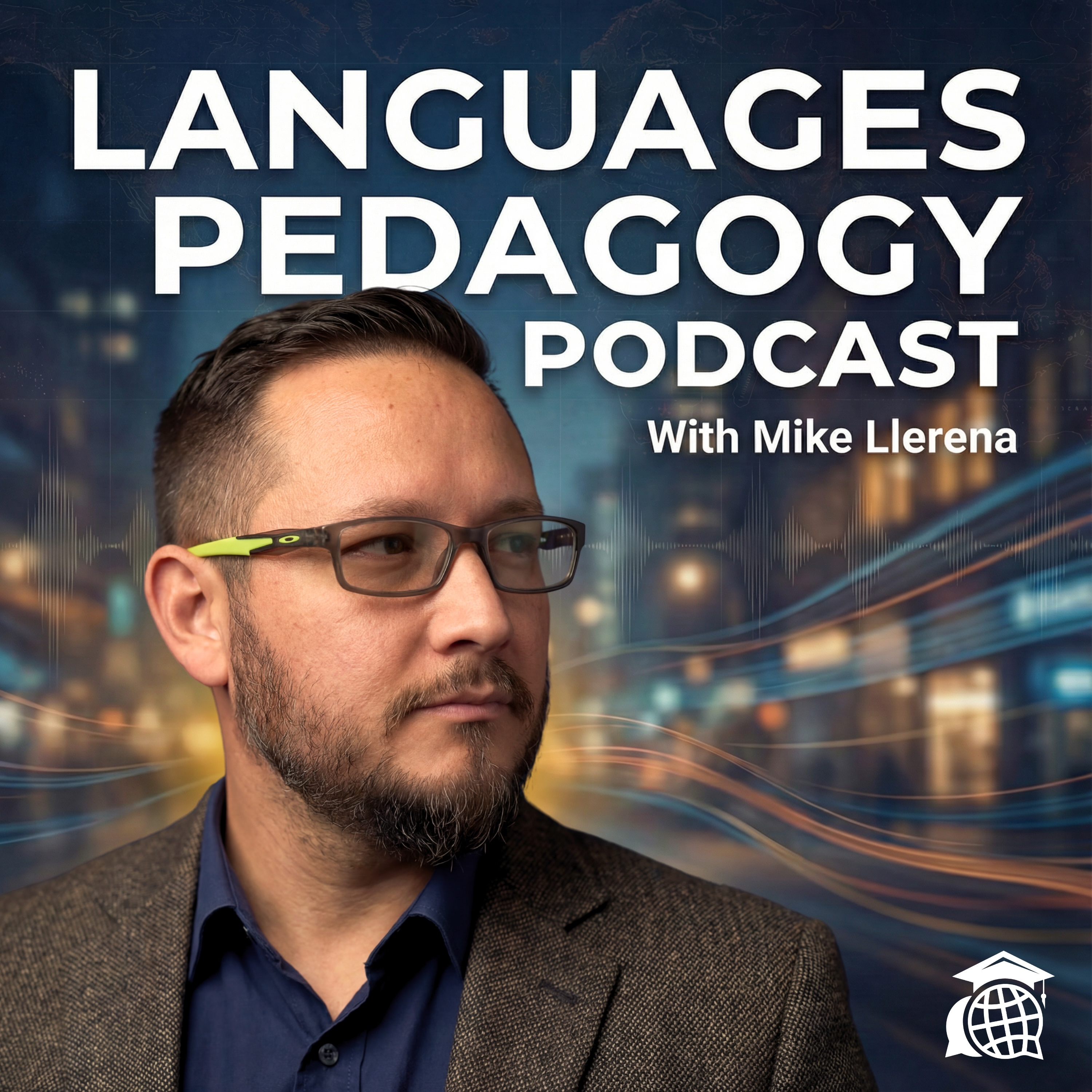
Languages Pedagogy Podcast
Mike Llerena
0
The Languages & Pedagogy Podcast is a resource for language educators and enthusiasts. It explores innovative teaching methods, offers tips for mastering new languages, and discusses trends in language education. The show features conversations with experts, practical advice, and inspiring stories from educators worldwide.
Episodes
-
 Ep254. ft. Amanda Boyce - Australian English Explained: Accent Training, Pronunciation & the Future of Speaking Clearly (Part 2) 15.10.2026 23mWhy does the Australian accent sound “difficult” to so many English learners?The answer may have less to do with Australia—and far more to do with what English you've been exposed to.In Part 2 of my conversation with Australian accent coach Amanda Boyce, we go deeper into Australian English, accent perception, pronunciation training and the rapidly changing world of AI-powered language learning.Amanda argues that Australian English isn't inherently difficult. Many learners simply spend years surrounded by American or British English through schools, textbooks, Hollywood, streaming platforms and online content.Then suddenly they hear authentic Australian English—and their listening system isn't prepared for it.We unpack fascinating differences between Australian, American, British, South African, New Zealand and Indian English, including:• Rhotic vs. non-rhotic English• Why Australians often don't pronounce the /r/• The Australian T-flap• Glottal stops• Australian vowel and diphthong patterns• Why pronunciation training improves listening comprehension• What learners should study before moving to Australia• Why exposure dramatically changes accent comprehension• Shadowing vs. reading aloud• Accent training without eliminating linguistic identityThen the conversation moves into the future.Amanda reveals that she is developing an Australian English pronunciation app, combining technology with her own authentic voice recordings and extensive learner testing.AI pronunciation tools can be powerful—but they cannot replace one essential ingredient:Real human speaking practice.Clear. Confident. Concise.That's Amanda's definition of great communication—and a fitting conclusion to this two-part conversation.Connect with Amanda through Aussie English with Amanda and explore her pronunciation coaching and free resources at aussieenglishwithamanda.com.🎙️ Connect with Amanda BoyceWant to improve your Australian English, pronunciation, and speaking confidence? Continue learning with Amanda Boyce from Aussie English with Amanda and discover more of her practical, real-world approach to English.🌐 Website: https://www.aussieenglishwithamanda.com/📸 Instagram: https://www.instagram.com/aussie.english.with.amanda📘 Facebook: https://www.facebook.com/aussie.english.with.amanda🎵 TikTok: https://tiktok.com/@aussieenglishwithamanda▶️ YouTube: https://www.youtube.com/@Aussie.English.With.Amanda💼 LinkedIn: https://www.linkedin.com/in/amanda-rajpoot-boyce/🎧 Listen to Episode 254 of the Languages Pedagogy Podcast.Explore BroadClub Education:www.broadclubeducation.com#australianenglish #englishpronunciation #accenttraining #englishfluency #aussieenglish #languagelearning #speakenglish #languagespedagogy
 -
Ep253. ft. Amanda Boyce - Why Pronunciation Matters More Than Grammar: The Truth About Speaking English with Confidence (Part 1) 13.10.2026 31mYou can know every grammar rule in English and still struggle to be understood.That’s the uncomfortable truth behind this conversation with Australian accent coach Amanda Boyce, founder of Aussie English with Amanda.In Part 1, we challenge one of the biggest priorities in traditional English education: the obsession with grammatical accuracy.Because real communication isn't simply about constructing the perfect sentence. It’s about whether another human being can actually understand you—and whether you have the confidence to open your mouth and speak.Amanda breaks down why intelligibility, pronunciation, intonation, rhythm, pace, and paraverbal communicationcan have a greater immediate impact on communication than perfect grammar.We explore:• Why excellent grammar does not guarantee effective communication• Why having an accent is NOT a problem• Intelligibility vs. sounding “native”• How pronunciation problems slowly destroy speaking confidence• Why learners become afraid of making mistakes• How first-language pronunciation patterns transfer into English• Why accent reduction may be the wrong goal• The six stages of pronunciation development• How self-correction becomes automatic speech• Why “native-like in 12 weeks” promises deserve serious skepticism• How small everyday conversations can build real speaking confidenceOne message stands above everything else:You don't need to erase your accent. You need to communicate clearly.If you're an English learner who understands the language but still hesitates when it’s time to speak—or an educator helping students develop genuine communicative competence—this conversation is for you.🎙️ Connect with Amanda BoyceWant to improve your Australian English, pronunciation, and speaking confidence? Continue learning with Amanda Boyce from Aussie English with Amanda and discover more of her practical, real-world approach to English.🌐 Website: https://www.aussieenglishwithamanda.com/📸 Instagram: https://www.instagram.com/aussie.english.with.amanda📘 Facebook: https://www.facebook.com/aussie.english.with.amanda🎵 TikTok: https://tiktok.com/@aussieenglishwithamanda▶️ YouTube: https://www.youtube.com/@Aussie.English.With.Amanda💼 LinkedIn: https://www.linkedin.com/in/amanda-rajpoot-boyce/🎧 Listen to Ep. 253 of the Languages Pedagogy Podcast.Discover more resources, teacher development, courses, and the Languages Pedagogy Podcast at:www.broadclubeducation.com#englishpronunciation #speakenglishconfidently #englishfluency #accenttraining #languagelearning #englishteachers #languagespedagogy #communication
-
 The Spotlight 1. ft. Arkady Zilberman - Why Polyglot Advice Fails Most Language Learners: The Science of How Fluency Really Works 10.10.2026 1h 4mYou know the grammar. You remember the words. So why do you still freeze when it’s time to speak?In the first episode of The Pedagogy Spotlight, Mike welcomes Arkady Zilberman, inventor of AnyLingo, to challenge a provocative idea: the advice that works for exceptional polyglots may fail many everyday language learners.Is the problem our methods, our expectations—or our understanding of how fluency develops?This conversation explores the gap between knowing a language and using it automatically, with direct questions about grammar instruction, memorization, implicit learning and individual cognitive differences.We discuss:• Why understanding grammar doesn’t always translate into confident speaking.• What shadowing, spaced repetition and immersion can realistically accomplish.• Whether exceptional polyglots correctly identify the reasons for their success.• What teachers should keep, stop and change.• How AnyLingo approaches language acquisition—and what evidence would support its claims.For teachers rethinking their lessons and learners tired of studying without speaking freely, this episode asks the questions that matter.Discover Arkady’s work and explore AnyLingo: visit his platform, watch his explanations and connect with him to continue the conversation.AnyLingo: anylingo.netLinkedIn: linkedin.com/in/anylingoYouTube: youtube.com/@AnyLingoFluencyX: x.com/bridge2englishPress play. Follow the Languages Pedagogy Podcast on Spotify or Apple Podcasts. Share this episode with a teacher or learner ready to rethink fluency.Explore teacher development courses and learning resources at BroadClubEducation.com#languagelearning #languagefluency #polyglot #languageteaching #teacherdevelopment #implicitlearning #anylingo #arkadyzilberman #thepedagogyspotlight #languagespedagogypodcast
 -
Ep252. ft. Patrice Thompson - Language Is Identity: Why Inclusion Must Become a Whole-School Responsibility (Part 2) 08.10.2026 27mWhat happens when a child learns that success requires hiding part of who they are?Part 2 goes deeper.Mike and Patrice Thompson move beyond classroom strategies to examine the psychological, cultural, and institutional consequences of language exclusion—and why genuine multilingual education requires much more than one passionate teacher.Students who feel pressured to suppress their home languages may also begin distancing themselves from culture, family, and identity. Patrice shares powerful examples from international education, including adults who later discovered they knew more about another country’s culture than their own.But this conversation is not only about what schools get wrong.It is about what they can change.Patrice explains why language inclusion must move beyond EAL, ESL or multilingual-learning departments and become a whole-school responsibility involving classroom teachers, leadership, families, and the wider community.They discuss leadership, teacher collaboration, family communication, language hierarchies, risk-taking, culturally responsive education, and the importance of allowing families to communicate with schools in languages they genuinely understand.And one statement captures the challenge:When language inclusion isn’t prioritised, it becomes optional. When it becomes optional, it becomes invisible.This is a conversation for educators who believe international education should be genuinely international—not merely English-medium education with international students.Want to continue learning from Patrice beyond this conversation?Patrice Thompson, M.Ed., MBA is an international educator, multilingual learning specialist, published author, and founder of Conex-Us Consulting, helping educators and schools move from simply celebrating multilingualism to intentionally designing learning that embraces students’ full linguistic identities.🔗 LinkedIn: https://www.linkedin.com/in/patricejthompson/🌐 Conex-Us Consulting: https://conex-usconsulting.com/🎓 The Translanguaging Mindset: https://learn.conex-usconsulting.com/translanguaging-course/🎥 The Translanguaging Teacher — YouTube: https://www.youtube.com/@the.translanguaging.teacher📚 Publications & Appearances: https://conex-usconsulting.com/publications-appearances/🧰 Translanguaging Guide: https://conex-usconsulting.com/translanguaging-guide/Follow Patrice’s work, explore her resources, and take the conversation from the podcast into your own classroom and school.🌐 Continue learning with the Languages Pedagogy Podcast at www.broadclubeducation.com#translanguaging #languageidentity #multilingualeducation #languageinclusion #schoolleadership #studentbelonging #inclusiveeducation #multilinguallearners
-
Ep251. ft. Patrice Thompson - Beyond English: Why Multilingual Students Need More Than an English-Only Classroom (Part 1) 06.10.2026 32mWhat if the language policy designed to help students learn is actually asking them to leave part of themselves at the classroom door?In Part 1 of this powerful conversation, Mike sits down with Patrice Thompson, founder of Connects Us Consulting and creator of The Translanguaging Teacher, to challenge one of education’s most persistent assumptions: that more English automatically means better learning.Patrice breaks down what translanguaging really means—and why it goes far beyond translation or simply helping English language learners.Together, they explore how students’ home languages can support deeper comprehension, academic vocabulary, confidence, identity, engagement, and belonging. Patrice also shares the story of a Chinese student who once rejected her own linguistic identity after experiencing bullying—and later became confident enough to publicly celebrate her language and culture.The conversation moves from theory directly into classroom practice: multilingual note-taking, language partners, multilingual processing, AI-supported materials, academic English, and practical strategies teachers can implement without creating an entirely new curriculum.They also confront a critical question for international schools:Can a school truly call itself international while operating through an invisible monolingual mindset?For teachers, school leaders, EAL/ESL professionals, multilingual educators, and anyone serious about language-inclusive education, this episode challenges you to rethink what belonging actually looks like.Want to continue learning from Patrice beyond this conversation?Patrice Thompson, M.Ed., MBA is an international educator, multilingual learning specialist, published author, and founder of Conex-Us Consulting, helping educators and schools move from simply celebrating multilingualism to intentionally designing learning that embraces students’ full linguistic identities.🔗 LinkedIn: https://www.linkedin.com/in/patricejthompson/🌐 Conex-Us Consulting: https://conex-usconsulting.com/🎓 The Translanguaging Mindset: https://learn.conex-usconsulting.com/translanguaging-course/🎥 The Translanguaging Teacher — YouTube: https://www.youtube.com/@the.translanguaging.teacher📚 Publications & Appearances: https://conex-usconsulting.com/publications-appearances/🧰 Translanguaging Guide: https://conex-usconsulting.com/translanguaging-guide/Follow Patrice’s work, explore her resources, and take the conversation from the podcast into your own classroom and school.🌐 Explore more from the Languages Pedagogy Podcast and professional education resources at www.broadclubeducation.com#translanguaging #multilingualeducation #languageinclusion #languagelearning #inclusiveeducation #multilinguallearners #teacherdevelopment #studentbelonging
-
Ep250. ft. Megan Nicholls - The Messy Truth About Being Multilingual: Code-Switching, Confidence & Language Loss (Part 2) 01.10.2026 28mBeing multilingual sounds impressive. Maintaining multiple languages? That’s where things get messy.You can know a word in three languages and suddenly forget it in your strongest one. Your Spanish improves while your French gets rusty. You code-switch without thinking. And the language you once spoke confidently can suddenly feel frustratingly distant.Welcome to the reality of multilingualism.In Episode 250 of the Languages Pedagogy Podcast, Mike continues his conversation with multilingual educator and language coach Megan Nicholls, moving beyond the fluency myth into what actually happens when several languages coexist inside one life.They unpack code-switching, language maintenance, language attrition, confidence, intentional learning, vocabulary strategies, business English, realistic language goals—and why maintaining every language at exactly the same level may be an unrealistic expectation.Megan also explains why she asks students who say “I want to become fluent” one critical question:Why?Because behind “fluency” there is usually a much more meaningful goal: getting promoted, communicating with colleagues, travelling confidently, connecting with people, building relationships, or creating a different future.This episode is for serious language learners—and teachers—who want a more realistic approach to multilingualism.🎙️ Want to continue the conversation with Megan Nicholls?If our conversation about multilingualism, confidence, fluency, and the messy reality of learning languages resonated with you, don’t let the conversation end with the episode.Connect with Megan Nicholls, founder of Mega Language Coach, and discover more of her work helping professionals communicate in English with greater confidence, clarity, and authenticity.🌐 Website: megalanguagecoach.com💼 LinkedIn: Megan Nicholls – Mega Language Coach📸 Instagram: @megalanguagecoach▶️ YouTube: @megalanguagecoachFollow Megan, explore her work, and keep challenging the idea that multilingualism requires perfection.Your languages don’t have to be perfect to be powerful.🌐 Continue your learning journey:www.broadclubeducation.com#multilingualism #languagelearning #codeswitching #polyglot #languageconfidence #languageeducation #businessenglish #languagelearners
-
Ep249. ft. Megan Nicholls - You Don’t Need to Be Fluent to Be Multilingual: The Fluency Myth (Part 1) 29.09.2026 31mWhat if “becoming fluent” is actually the wrong goal?For millions of language learners, fluency has become the finish line—the point where they finally feel qualified to say, “Yes, I speak this language.” But what if that mindset is holding learners back?In Episode 249 of the Languages Pedagogy Podcast, Mike sits down with multilingual educator and language coach Megan Nicholls to challenge one of the biggest myths in language learning: that you must reach an advanced or “native-like” level before you can legitimately call yourself multilingual.Megan shares her experiences with English, French, German, and Spanish and explains why communication, confidence, cultural understanding, and real-world language use matter more than chasing an abstract definition of fluency.They explore the native-speaker myth, CEFR levels, C1 and C2 qualifications, perfectionism, language-learning anxiety, cultural fluency, mistakes, fossilized errors, and why different languages can even unlock different sides of your personality.If you've ever thought, “My language level isn't good enough yet,” this conversation may completely change how you measure your progress.🎧 Stop waiting for permission to call yourself a language learner. Start using the languages you already have.🎙️ Want to continue the conversation with Megan Nicholls?If our conversation about multilingualism, confidence, fluency, and the messy reality of learning languages resonated with you, don’t let the conversation end with the episode.Connect with Megan Nicholls, founder of Mega Language Coach, and discover more of her work helping professionals communicate in English with greater confidence, clarity, and authenticity.🌐 Website: megalanguagecoach.com💼 LinkedIn: Megan Nicholls – Mega Language Coach📸 Instagram: @megalanguagecoach▶️ YouTube: @megalanguagecoachFollow Megan, explore her work, and keep challenging the idea that multilingualism requires perfection.Your languages don’t have to be perfect to be powerful.🌐 Explore more from Languages Pedagogy and BroadClub Education:www.broadclubeducation.com#languagelearning #multilingualism #languagefluency #polyglot #languageeducation #speakingconfidence #languageteaching #languagelearners
-
Ep248. ft. Dr. Paula Cushanick - The Missing Link in Multilingual Learning: Why the Brain Still Needs Human Connection (Part 2) 24.09.2026 32mWhat happens when technology removes the very struggle the brain needs in order to learn?In Part 2, Dr. Paula Cushanick takes the conversation deeper into memory, rehearsal, cognitive load, psychological safety, relationships and the human conditions multilingual students need to transform exposure into lasting learning.We explore why short-term knowledge does not automatically become long-term memory, why rehearsal and retrieval matter, and how excessive dependence on AI and digital tools may eliminate valuable opportunities for students to think, struggle, practise and produce language themselves.But this episode goes beyond cognitive science.Why can two students receive exactly the same resources and achieve completely different outcomes?Dr. Cushanick argues that relationships, confidence, belonging and low-stress opportunities to communicate can fundamentally change what students are willing and eventually able to produce.We discuss multilingual classrooms, the affective filter, language rehearsal, flexible learning environments, novice teacher development, student-teacher relationships and what a genuinely human-centred classroom could look like.And one principle runs through the entire conversation:Technology should support human learning—not replace it.For educators building the next generation of multilingual classrooms, this is where EdTech meets the science and humanity of learning.🎓 Want to go deeper into Dr. Cushanick’s work?If our conversation made you rethink the role of EdTech in multilingual education, don’t stop at the episode.Discover Dr. Cushanick’s resources, insights, social platforms, and work helping educators move beyond data and technology toward real language growth.👉 Connect with Dr. Cushanick and explore her work here:https://linktr.ee/Dr.CushanickBecause technology can support learning—but great pedagogy is what turns tools into transformation.Explore BroadClub Education at www.BroadClubEducation.com#multilingualeducation #scienceoflearning #languagelearning #cognitivescience #edtech #teachers #languageacquisition #education
-
Ep247. ft. Dr. Paula Cushanick - Why EdTech Isn’t Enough: What Multilingual Students Actually Need to Learn (Part 1) 22.09.2026 31mMore screen time does not automatically mean more learning. And for multilingual students, the difference can be enormous.In Part 1 of this conversation, Dr. Paula Cushanick joins the Languages Pedagogy Podcast to challenge one of education’s most expensive assumptions: that greater use of educational technology automatically produces better academic and language outcomes.Drawing from her doctoral research, classroom experience, and work with multilingual learners, Dr. Cushanick reveals a striking finding: students who spent dramatically different amounts of time using an online language platform did not show a statistically significant difference in language growth.So what is missing?We explore the science of learning, cognitive load, comprehensible input, language output, teacher training, human connection, and why EdTech implementation matters more than simply purchasing another platform.We also examine AI in education and the crucial distinction between using artificial intelligence to amplify great teaching and allowing technology to replace the very human interactions through which language develops.For teachers, school leaders, EdTech decision-makers, and anyone serious about multilingual education, this conversation asks a question every school should consider before buying its next platform:Are we investing in technology or investing in learning?🎓 Want to go deeper into Dr. Cushanick’s work?If our conversation made you rethink the role of EdTech in multilingual education, don’t stop at the episode.Discover Dr. Cushanick’s resources, insights, social platforms, and work helping educators move beyond data and technology toward real language growth.👉 Connect with Dr. Cushanick and explore her work here:https://linktr.ee/Dr.CushanickBecause technology can support learning—but great pedagogy is what turns tools into transformation.Explore more from Languages Pedagogy Podcast and BroadClub Education at www.BroadClubEducation.com #edtech #multilingualeducation #languagelearning #aiineducation #scienceoflearning #teachertraining #languageacquisition #education
-
Ep246. ft. Michelle Land - The Future of Multilingual Education: AI, Teacher Identity, and What Must Change (Part 2) 17.09.2026 33mAI can make teaching faster. But what happens when it starts making learners think less?In Part 2, Michelle Land goes deeper into the forces reshaping multilingual education—from leadership and professional identity to artificial intelligence, teacher burnout, student relationships, assessment, and the human connection no algorithm can replace.The conversation begins with a challenge for educators seeking leadership opportunities: find the issue you genuinely care about and build expertise around it. Michelle explains why leadership does not begin with a title—it develops through purpose, knowledge, consistency, and contribution.Then the conversation turns to one of education's biggest questions: AI.Can artificial intelligence genuinely improve language learning? Can it help teachers differentiate materials, adapt reading levels, and reduce planning time? Absolutely.But Michelle also raises difficult questions about overreliance, shortcuts, critical thinking, misinformation, environmental costs, and what happens when students outsource the cognitive struggle that learning requires.And beneath the technology debate lies something even bigger: human relationships.Michelle shares the story of a multilingual learner she once worried might struggle to make it through school—only to watch him eventually graduate from Rutgers, build a journalism career, and return to inspire younger multilingual students.That transformation captures the heart of this episode.Students are more than the version of themselves we see today. Great educators understand that their impact may not become visible until years later.This is a conversation about the future of language teaching—but also about what must remain profoundly human as education changes.🌐 Discover more at www.mikenglishonline.com#multilingualeducation #aieducation #languageteaching #tesol #teacherleadership #futureofeducation #eslteaching #multilinguallearners
-
Ep245. ft. Michelle Land - Beyond the Classroom: Why Multilingual Learners Need Teachers Who Advocate (Part 1) 15.09.2026 31mTeaching multilingual learners is never just about teaching English. It is about understanding rights, trauma, identity, belonging—and knowing when a teacher must become an advocate.In Part 1 of this powerful conversation, Mike sits down with multilingual educator and educational leader Michelle Land to explore the journey from classroom teaching to advocacy and leadership.Drawing on more than two decades of experience, Michelle shares how studying and teaching across the United States, Norway, and beyond shaped her understanding of language education. She discusses the realities multilingual learners may face when entering a new country, including cultural displacement, fear, trauma, and the challenge of learning while navigating uncertainty outside school.But this conversation goes further.What does effective teacher advocacy actually look like? Michelle argues that advocacy cannot rely on outrage alone. Teachers need to understand educational law, student rights, institutional responsibilities, and the evidence behind the positions they defend. Knowledge gives educators the credibility—and confidence—to challenge decisions when necessary.The conversation also explores leadership without micromanagement, the value of professional organizations such as TESOL, and why classroom teachers do not need an official title to become influential advocates.For serious educators, ESL professionals, bilingual teachers, and anyone committed to the future of multilingual education, this episode challenges us to think beyond instruction.Because sometimes the most important thing a teacher can give a student isn't another lesson. It's someone willing to stand beside them.🌐 Explore more from Languages Pedagogy Podcast and Mike's work: www.mikenglishonline.com#multilingualeducation #teacheradvocacy #tesol #bilingualeducation #educationalleadership #eslteaching #multilinguallearners #languageeducation
-
Ep244. ft. Leandro Paladino - AI, Multilingualism & the Future Skills Every Language Teacher Will Need (Part 2) 10.09.2026 37mAI is changing education faster than teacher training can keep up. So what should language teachers actually be learning now?In Part 2 with teacher educator Leandro Paladino, we move beyond professional development into a much bigger question:What will it mean to be a great language teacher in the future?AI literacy matters. Digital pedagogy matters. Critical thinking matters.But Leandro argues that education has become so complex that younger teachers can easily become overwhelmed by everything they are suddenly expected to master.AI. Green ELT. Decolonization. Digital citizenship. Intercultural citizenship. Multilingualism. Well-being. Inclusion.And somewhere inside all of that… teachers still have students sitting in front of them.This conversation explores why the future of teaching may require technological adaptation without abandoning the fundamentals that make education human.We discuss:• AI and the rapidly changing future of language education• Why predicting education 10 years ahead may already be unrealistic• Student well-being as a prerequisite for learning• The expanding responsibilities of modern language teachers• Native-speakerism and why being a native speaker does not equal being a qualified teacher• Protecting students’ home languages• Multilingual and translanguaging pedagogies• Creativity in the age of artificial intelligence• Why AI does not automatically mean the death of human creativity• Learning to receive criticism—even after decades in educationThe future teacher will need new tools.But perhaps the most important skill will remain the oldest:the willingness to keep learning.Discover more at www.mikenglishonline.com#artificialintelligence #teachereducation #languageteaching #elt #multilingualism #teachertraining #futureofeducation #languagelearning
-
Ep243. ft. Leandro Paladino - Why Great Language Teachers Never Stop Learning (Part 1) 08.09.2026 31mWhat if becoming a great teacher has less to do with knowing more and more to do with knowing when to step out of the spotlight?In Part 1 of this conversation, Mike sits down with teacher educator Leandro Paladino to challenge some of the assumptions shaping modern language education.Leandro shares one of the most important lessons of his career: the teacher is not the protagonist—the learner is.From teacher ego and student-centered learning to translanguaging, emergent language, professional development, and the realities facing novice educators, this episode examines what genuine teacher growth actually looks like.We explore:• Why experienced teachers learn to “disappear” from the center of the classroom• The difference between teaching a lesson and responding to learners• Why students’ home and earlier languages should be treated as resources• How translanguaging challenges traditional language-classroom assumptions• Why professional development needs to be strategic—not endless• The financial and professional barriers teachers face when pursuing CPD• How teachers can honestly assess where they are in their professional journey• Why collecting certificates does not automatically make someone a better educatorFor serious language teachers, teacher trainers, ELT professionals, and educators who refuse to become professionally stagnant, this conversation asks a fundamental question:Where are you as a teacher—and where do you want to go next?Explore language education, professional development, and learning opportunities at www.mikenglishonline.com#teachereducation #languageteaching #elt #professionaldevelopment #teachertraining #languagelearning #teachers #education
-
Ep242. ft. Paul Collin - Rebuilding School Culture: The Leadership Blueprint for Trust, Teachers & the Future (Part 2) 03.09.2026 29mGreat school culture cannot depend on one exceptional leader.Because if everything collapses when that person leaves, you never built a culture you built a dependency.In Part 2 of Mike's conversation with educational leader Paul Collin, the discussion moves from diagnosing the school culture crisis to answering the harder question:How do we actually rebuild it?Paul explains why sustainable transformation requires aligned leadership teams rather than “superhero” principals, and why the strongest leaders eventually stop trying to imitate leadership models and become comfortable leading authentically.But leadership authenticity is only the beginning.Teachers around the world are carrying enormous workloads, emotional pressure, administrative demands, changing technology, behavioral challenges, and increasing expectations.So what does genuine teacher support look like?Not another token wellness activity.Not another initiative.Not another inspirational email.Paul argues that great leaders listen, act, simplify, and create environments where teachers can speak without fear of judgment.Sometimes the most effective interventions are surprisingly small.Better systems.Better tools.Less unnecessary workload.More time spent doing what teachers actually do well.This conversation examines:• Why school transformation cannot depend on one charismatic principal• The difference between good leadership and high-performance leadership• Authentic leadership and institutional trust• How leaders can genuinely reduce teacher overwhelm• Why listening without action destroys credibility• The danger of endless educational initiatives• Teacher burnout and the future teacher recruitment crisis• How leaders decide which priorities truly matter• Why human connection will remain essential in an AI-driven world• The role of social media and technology in shaping young people• Why education may need to “unlearn” before it can evolve• How consistency turns leadership vision into lived school culturePaul leaves leaders with a powerful challenge:Ask ten people in your school what excellent behavior should look like.If you receive ten different answers, you don't have consistency yet.Because people cannot consistently deliver something they cannot clearly picture.This episode is for principals, teachers, administrators, educational coaches, policymakers, and serious educators thinking beyond today's problems toward the schools we need for the next decade.🎙️ Languages Pedagogy Podcast — Ep. 242 ft. Paul CollinContinue exploring conversations about education, language learning, leadership, pedagogy, and professional growth at:www.mikenglishonline.com#educationalleadership #schoolculture #teacherburnout #teacherwellbeing #schoolleadership #futureofeducation #educationreform #teachers
-
Ep241. ft. Paul Collin - The School Culture Crisis: Why Attendance, Discipline & Trust Are Breaking Down (Part 1) 01.09.2026 30mWhat if poor attendance, worsening behavior, and teacher burnout are not separate problems—but symptoms of the same broken school culture?And what if rebuilding a school starts with something as simple—and as difficult—as making people feel that they belong?In Part 1 of this powerful conversation, Mike sits down with educational leader, coach, and former headteacher Paul Collin to examine what is really happening inside schools struggling with attendance, discipline, trust, staff pressure, and disengagement.With 28 years in education, Paul brings a leadership perspective grounded in real school environments not leadership theory disconnected from reality.Together, they explore why some education systems become obsessed with test scores while neglecting school culture, why students begin emotionally checking out of education, and why data alone cannot explain what is happening behind the numbers.One of the most striking examples in this episode shows how a school improved attendance by changing something incredibly simple: leaders began standing at the entrance, greeting students personally, learning their names, and intentionally creating a better first experience of school.Because belonging is not a slogan.It is something students experience or they don't.The conversation also tackles the tension between discipline and compassion. Paul introduces the idea of a “warm-strict” approach: strong boundaries, clear expectations, human connection, and absolute consistency across the institution.And when consistency disappears?Students find the gaps.Teachers become frustrated.Leadership loses credibility.Culture slowly fractures.This episode explores:• The real causes behind school culture deterioration• Why attendance is often a belonging problem• The danger of allowing metrics to overshadow people• Discipline without dehumanizing students• Why behavioral expectations must be consistent schoolwide• How teachers and leaders unintentionally undermine each other• The relationship between connection, behavior, and engagement• How trust is built through repeated small interactions• Why leaders must sometimes publicly admit, “We got this wrong”• The enormous influence leadership has on institutional cultureThis is not a conversation about finding someone to blame.It is a conversation about rebuilding the conditions where teachers can teach, students want to attend, leaders can lead, and people trust one another again.For educators, principals, school leaders, teachers, policymakers, and anyone serious about the future of education, this conversation deserves your attention.🎙️ Languages Pedagogy Podcast — Ep. 241 ft. Paul CollinExplore more language learning, education, professional development, and teaching resources at:www.mikenglishonline.com#schoolculture #educationalleadership #teacherwellbeing #studentengagement #schoolleadership #educationreform #teachervoice #studentbelonging
-
Ep240. Season 6 Premiere - Education Is Changing. So Must We. 27.08.2026 21mEducation isn’t waiting for teachers to catch up. The classroom is changing and so is our role inside it.Episode 240 marks the beginning of Season 6 of the Languages Pedagogy Podcast, and this premiere asks one of the most important questions facing educators today: What does good education actually look like now?AI is transforming access to knowledge. EdTech is reshaping classrooms. Multilingualism is challenging outdated ideas about fluency and identity. Research into literacy, neuroscience, inclusion, pronunciation, and teacher development continues to change what we understand about learning.But technology alone will never create great education.In this Season 6 premiere, Mike Llerena explores the conversations ahead from artificial intelligence and teacher education to multilingualism, pronunciation, literacy, school culture, leadership, EdTech, and the evolving role of educators.Season 6 isn't about chasing trends. It's about questioning assumptions, examining evidence, challenging established practices, and rediscovering what makes teaching fundamentally human.Because experience without reflection can become repetition—and our students deserve educators who are still learning.🎧 Welcome to Season 6.🌐 Explore more from Mike Llerena and the Languages Pedagogy Podcast at www.mikenglishonline.com#languagespedagogy #languagelearning #teachereducation #education #edtech #artificialintelligence #multilingualism #teachers
-
Ep239. Season 5 Finale - What This Season Taught Us: The Conversations That Are Changing Education 25.08.2026 22mWhat happens when AI gets smarter, classrooms become more complex, and the definition of great teaching begins to change?Season 5 ends with one question bigger than any single episode: What kind of education are we building for the next generation?In Episode 239, Mike looks back at a remarkable season of the Languages Pedagogy Podcast and the conversations that challenged how we think about artificial intelligence, language learning, teacher identity, neurodiversity, ADHD, bilingual literacy, the reading brain, educational technology, creativity, and human connection.But this isn't simply a recap.It's a reflection on what these conversations collectively revealed about the future of education—and why teachers may become more important, not less, as AI transforms the classroom.From understanding that difference does not mean deficiency to recognizing teachers as architects of learning, this finale explores one central truth: technology may change how we teach, but wisdom, curiosity, empathy, and human connection will determine how well we teach.Season 5 ends here.The conversation doesn't.🌐 Continue learning and connect with Mike: www.mikenglishonline.com#languagelearning #languageeducation #futureofeducation #teachers #artificialintelligence #neurodiversity #education #multilingualism
-
Ep238. ft. Laura Morales - Beyond Native Fluency: What Great Bilingual Teaching Actually Requires (Part 2) 20.08.2026 35mSpeaking a language does not automatically qualify someone to teach it and holding a teaching certificate does not automatically guarantee that someone understands how children learn.Part 2 with Laura Morales goes much deeper.We move from the architecture of the reading brain into the systems surrounding it: bilingual teacher preparation, native-speaker assumptions, literacy knowledge, classroom management, student autonomy, professional training, teacher reflection, and educational responsibility.Laura explains why educators do not necessarily need to speak every student's home language but they do need enough linguistic knowledge to recognize when a reading difficulty comes from language transfer and when something deeper may be happening.We confront one of language education's most persistent misconceptions:Native fluency is not the same thing as literacy expertise—and neither automatically equals pedagogical competence.From there, the conversation expands into teacher training itself.Why do educators attend countless workshops yet still feel unprepared for the complexity of real classrooms?Why can disconnected professional development create cognitive overload instead of better teaching?Why does classroom discipline so often become confused with fear, compliance, punishment, or shouting?And what changes when students understand why expectations exist rather than simply being ordered to obey them?Laura shares remarkable stories from her own classroom—and from conversations with her son—that forced her to reconsider teaching, discipline, mistakes, independent learning, and the responsibility educators carry.This is not simply a conversation about literacy anymore.It is about what professional teaching actually demands.📚 Learn more about Laura Morales & LAJAM Education FoundationExplore their work in neurodidactics, literacy, educator development, and creating classrooms designed for lasting impact.🌐 lajameducation.org📩 [email protected]📖 Don’t Be a Master Teacher; Create a Master Classroom: From Theory to Impact — by Laura Morales🌐 Discover more at www.mikenglishonline.com#teachertraining #bilingualeducation #scienceofreading #teacherdevelopment #classroommanagement #neurodiversity #literacyeducation #languagelearning
-
Ep237. ft. Laura Morales - The Reading Brain: Why Some Children Struggle and What Teachers Need to See (Part 1) 18.08.2026 33mA child who struggles to read is not necessarily a child who cannot learn. Sometimes, the real problem is that we are looking at the struggle through the wrong lens.In Part 1 of this powerful conversation, psychologist, bilingual educator, and literacy specialist Laura Morales joins the Languages Pedagogy Podcast to unpack what actually happens inside the reading brain—and why understanding that process can completely change the way teachers respond to struggling learners.We explore the critical difference between speaking a language and being literate in it, why English and Spanish cannot simply be taught or assessed through direct translation, and how bilingual students can be misunderstood when educators lack knowledge of how their languages are structured.Laura also takes us inside the cognitive architecture of reading: phonological processing, decoding, semantics, attention, comprehension, automaticity, and higher-order thinking.The conversation becomes even more important when we examine dyslexia, ADHD, autism, neurodiversity, and reading difficulties. Instead of asking only, “Why can’t this child read?”, Laura challenges educators to ask a better question:Which part of the reading pathway needs support?And through one deeply emotional classroom story, we see what can happen when a child who believes she is “the problem” finally meets a teacher determined to find another way.For teachers, literacy specialists, bilingual educators, parents, and anyone serious about the science of reading, this episode challenges assumptions about what reading instruction should actually look like.📚 Learn more about Laura Morales & LAJAM Education FoundationExplore their work in neurodidactics, literacy, educator development, and creating classrooms designed for lasting impact.🌐 lajameducation.org📩 [email protected]📖 Don’t Be a Master Teacher; Create a Master Classroom: From Theory to Impact — by Laura Morales🌐 Explore more language-learning and educational content at www.mikenglishonline.com#readingbrain #bilingualliteracy #scienceofreading #neurodiversity #bilingualeducation #literacyinstruction #languagelearning #teacherdevelopment
-
Ep236. ft. Belen Albarracin - The AI Fluency Trap: Why Language Learners Still Need Human Teachers (Part 2) 13.08.2026 27mAI can make learners feel fluent. The dangerous question is whether that confidence survives a conversation with an actual human being.Part 2 of my conversation with Belen Albarracin moves beyond AI tools and into one of the biggest educational questions of our generation:What should humans refuse to outsource?We explore AI codes of conduct, responsible classroom use, cognitive offloading, critical thinking, speaking confidence, the illusion of fluency, frustration, classroom management, homework, AI tutors, textbooks—and why the human teacher remains irreplaceable.Belen explains why schools should stop pretending students are not using artificial intelligence and start creating explicit rules around when, why and how AI can be used.We also confront a major language-learning risk: AI can provide unlimited practice without embarrassment or judgment—but constant encouragement can create an inaccurate perception of ability.Eventually, every learner needs the reality check of genuine human communication.AI can support language acquisition.It cannot replace the social, emotional and pedagogical complexity of a great teacher.🎧 Listen to Part 2 and decide where the line between intelligent assistance and intellectual dependence should be drawn.🌐 Continue learning with me at www.mikenglishonline.com#aiineducation #languagelearning #elt #aitutors #criticalthinking #teacherdevelopment #languageteaching #futureofeducation
Similar podcasts


Popular in
The podcast also appears in the podcast charts of these countries.
