
Trying with Dr. Sasha Hakman
Dr Sasha Hakman
0
Dr. Sasha Hakman, a double board-certified OB-GYN and infertility specialist, hosts this podcast about reproductive health. Drawing from her own experience with infertility, she covers topics like IVF, PCOS, endometriosis, and perimenopause. The show aims to explain complex science in plain language through expert interviews and patient stories.
Episodes
-
 Dr. Mona Amin on Sleep Training, Co-Sleeping & Gentle Parenting (Part 2) 30.09.2026 1h 2mWhat does it actually take to raise emotionally resilient kids without losing yourself in the process? In Part 2 of my conversation with pediatrician and PedsDocTalk founder Dr. Mona Amin, we move from her personal journey into some of the most debated topics in modern parenting: sleep training, co-sleeping, gentle parenting, attachment, boundaries, emotional regulation, and the pressure to get everything "right." Dr. Mona explains why parenting is rarely as black and white as social media makes it seem. We talk about what the research actually says about sleep training and attachment, why parental sleep matters too, and how families can think about co-sleeping through the lens of risk reduction rather than judgment. We also unpack the difference between gentle, permissive, authoritative, and authoritarian parenting. Dr. Mona shares why validation alone isn't always enough, why some children actually become more dysregulated when parents over-explain their emotions, and how loving limits can give children both the connection and boundaries they need. Plus, we get into tantrums, hitting, whining, yelling, parental guilt, repairing after you lose your cool, and why modeling emotional regulation may be one of the most powerful tools we have as parents. This conversation is such an important reminder that no parent is going to get every moment right. What matters is building a relationship where your child knows they are loved, their emotions are safe with you, and they can always come back to you. In this episode → How Dr. Mona's own birth trauma changed the way she communicates medical and parenting information → What the research says about sleep training, attachment, and the Ferber method → Why there is no one-size-fits-all approach to infant and toddler sleep → Co-sleeping, bed sharing, safe sleep, SIDS risk, and the importance of risk reduction → Why a child's temperament and "cuddle quota" can completely change what works for their family → Gentle parenting versus permissive, authoritative, and authoritarian parenting → Why over-validating a child during a tantrum can sometimes make things worse → How to set firm boundaries without shaming or dismissing your child's emotions → What to do when your child hits, whines, screams, or becomes completely dysregulated → Why parents need to regulate themselves before they can help regulate their children → How apologizing after yelling or losing your temper can model accountability → Why repair matters more than being a perfect parent → How positive reinforcement helps shape behavior without creating shame → What emotional resilience actually looks like as children grow → Dr. Mona's approach to evidence-based medicine without fear mongering → The parenting myths she is most tired of correcting online → What she hopes her own children understand about their childhood when they're adults Follow Dr. Mona!Instagram: @pedsdoctalk Follow Dr. Sasha! TikTok: @sashahakmanmd Instagram: @sashahakmanmd @tryingpod YouTube: @sashahakmanmd Want to receive my weekly newsletter? Sign up at sashahakmanmd.com/newsletter for updates, Q&A answers and more! If you haven't already, please rate, review, and follow the podcast to be notified of new episodes every week. If you're interested in becoming a patient go to sashahakmanmd.com to learn more! Thank you to our sponsors! Go to https://olliesmile.com and enter code TRYING at checkout for 10% off your order! Learn more about your ad choices. Visit megaphone.fm/adchoices
 -
 Secondary Infertility After a C-Section: Dr. Mona's Journey to IVF 23.09.2026 54mWARNING: This episode includes detailed discussion of traumatic birth, a NICU stay, a newborn stroke and seizures, maternal sepsis, repeat surgeries, and fear of dying in childbirth. What happens when the birth experience you imagined becomes a medical emergency, and the journey to growing your family takes a turn you never expected? In this deeply personal episode of Trying, Dr. Sasha Hakman sits down for part 1 of 2 episodes with pediatrician and mother of two Dr. Mona Amin, known as Dr. Mona of PedsDocTalk, to discuss her journey through birth trauma, a NICU stay, secondary infertility, IVF, and the emotional work of healing after an unexpected birth experience. Dr. Mona shares the terrifying complications surrounding the birth of her son, including an emergency during her C-section, his neonatal stroke and seizures, and her own life-threatening postpartum complications. Despite being a physician herself, she describes what it felt like to have her symptoms dismissed and the importance of advocating for yourself when something doesn't feel right. When she and her husband decided to try for a second child, Dr. Mona discovered that scar tissue from her previous surgeries had caused a hydrosalpinx, a fluid-filled, blocked fallopian tube that complicated her ability to conceive. She takes us through the decision to pursue IVF, the emotional weight of having only one viable embryo, and the eventual birth of her daughter. Together, Dr. Sasha and Dr. Mona explore the grief that can accompany an unexpected birth experience, the impact of medical trauma on both parents, and why motherhood, bonding, and healing do not have to look the way we originally imagined. In this episode A C-section that turned into an emergency, and what her ER-doctor husband saw in the OR Spotting her newborn's seizures when staff first missed them Being dismissed as "dramatic" in the hospital where she worked Seeking accountability and protocol changes rather than a lawsuit Secondary infertility, hydrosalpinx, and choosing IVF Seven eggs, four fertilized, one blastocyst: her "miracle embryo" Why her second postpartum complication finally led to a diagnosis Deciding their family is complete Why doctor-patients may feel more fear, not less EMDR, therapy, and how both parents processed the trauma Naming grief as the loss of an expectation, and why bonding lasts a lifetime Follow Dr. Mona!Instagram: @pedsdoctalk Follow Dr. Sasha! TikTok: @sashahakmanmd Instagram: @sashahakmanmd @tryingpod YouTube: @sashahakmanmd Want to receive my weekly newsletter? Sign up at sashahakmanmd.com/newsletter for updates, Q&A answers and more! If you haven't already, please rate, review, and follow the podcast to be notified of new episodes every week. If you're interested in becoming a patient go to sashahakmanmd.com to learn more! Thank you to our sponsors! Go to https://olliesmile.com and enter code TRYING at checkout for 10% off your order! Use my link at thrivemarket.com/trying to get $20 off your first three orders — That covers your membership fee! Sign up now before this exclusive offer ends Support your cells and how you age with Mitopure® Gummies from Timeline.Visit timeline.com/SASHA and 20% off your Mitopure® Gummies. Learn more about your ad choices. Visit megaphone.fm/adchoices
 -
 Fertility Q&A: IVF, Luteal Phase Defects, Embryo Testing, Exercise & More 16.09.2026 48mIn this solo Q&A episode of Trying with Dr. Sasha Hakman, Dr. Sasha answers listener questions across fertility, IVF, embryo transfer, hormone health, pregnancy, exercise, and reproductive genetics. From adenomyosis treatment before embryo transfer and ways to support a short luteal phase to whole genome sequencing, balanced translocations, IVF in your 40s, male factor infertility, and exercise during treatment, Dr. Sasha breaks down what the evidence tells us, where the research is still limited, and why fertility care often needs to be highly individualized. As always, this episode is for general education and is not personal medical advice. In this episode, we cover: ➜ Adenomyosis, why it can affect implantation, and when Depo Lupron and letrozole may be considered before embryo transfer ➜ Using Inito to track FSH, LH, estrogen, and progesterone, confirm ovulation, and potentially identify a luteal phase defect ➜ Whole genome sequencing of embryos, polygenic risk scores, monogenic conditions, Juniper Genomics, Orchid, Nucleus, and the limitations of embryo genetic testing ➜ Persistent chronic endometritis after doxycycline, when additional antibiotics may be needed, and where EMMA/ALICE testing may have a role ➜ Resistance training, powerlifting, pelvic floor health, urinary incontinence, prolapse, and what researcher Margie Davenport's work suggests about exercise in pregnancy ➜ Balanced translocations, genetic counseling, untested embryos, embryo biopsy and re-freezing, and how maternal age can influence decisions around PGT ➜ Vaginal estrogen and the vaginal microbiome, Evvy testing, and using progesterone supplementation to support a short luteal phase ➜ Reproductive immunology after miscarriage or failed embryo transfer, plus when a rheumatologist or reproductive immunologist may be helpful ➜ ICSI for male factor infertility, high AMH, reproductive urology, varicoceles, hypothalamic amenorrhea, restoring ovulation, and trying to conceive after losing your period ➜ Fertility and IVF in your 40s, including the realities of egg quality, ovarian reserve, repeated IVF cycles, and when donor eggs may enter the conversation ➜ Pregnancy symptoms that deserve evaluation, including ocular migraines, shortness of breath, severe fatigue, low ferritin, and iron deficiency ➜ IVF add-ons including Neupogen, hCG washes, steroids, IV intralipids, and uterine PRP, and why limited evidence does not always stop patients with recurrent implantation failure from considering them ➜ Luteal phase ovarian stimulation, estrogen and testosterone priming, diminished ovarian reserve, follicle synchronization, and individualized stimulation protocols ➜ Exercise during ovarian stimulation and after frozen embryo transfer, plus microdose Lupron protocols, FSH stimulation, hCG triggers, and OHSS risk CHAPTERS 00:00 Solo Q&A and a reminder about general medical advice01:00 Adenomyosis treatment before transfer and tracking ovulation with Inito08:03 Whole genome sequencing, embryo genetics and chronic endometritis13:55 Resistance training, pelvic floor health, balanced translocations and untested embryos20:44 Vaginal estrogen, the microbiome and lengthening the luteal phase23:44 Reproductive immunology, ICSI and male factor infertility27:29 Hypothalamic amenorrhea and trying for another baby in your 40s30:34 Migraines in pregnancy, iron deficiency and IVF success in the mid to late 40s35:22 Neupogen, IVF add-ons and luteal phase stimulation39:06 Exercise during IVF and after embryo transfer, plus microdose Lupron protocols Episodes and experts mentioned: Whole genome sequencing with Juniper Genomics CEO Jeremy Greco IVF medications Follow Dr. Sasha! TikTok: @sashahakmanmd Instagram: @sashahakmanmd @tryingpod YouTube: @sashahakmanmd Want to receive my weekly newsletter? Sign up at sashahakmanmd.com/newsletter for updates, Q&A answers and more! If you haven't already, please rate, review, and follow the podcast to be notified of new episodes every week. If you're interested in becoming a patient go to sashahakmanmd.com to learn more! Thank you to our sponsors! Head to AquaTru.com now and get 20% off your purifier using promocode DRSASHA Go to Rula.com/ DRSASHA for quality therapy that’s covered by insurance. Head over to Superpower.com and use code DRSASHA for $50 off. After you sign up, they’ll ask you how you heard about Superpower, tell them Trying sent you to support the show. Learn more about your ad choices. Visit megaphone.fm/adchoices
 -
 Fetal Movement, Kick Counts & Stillbirth Prevention with Count the Kicks 09.09.2026 1h 3mStillbirth is a topic many expectant parents are afraid to talk about, but understanding your baby’s movement patterns can be an empowering tool during pregnancy. In this episode of Trying with Dr. Sasha Hakman, Dr. Sasha sits down with Karina Bennett, ambassador for Count the Kicks, a stillbirth prevention program created by Healthy Birth Day, Inc. Karina shares the story of losing her son to stillbirth and how that experience led her to advocacy, education, and a mission to help other families recognize changes in fetal movement before it is too late. Together, Sasha and Karina break down what kick counting actually looks like, when to start, what counts as movement, and why knowing your baby’s individual pattern matters more than comparing your pregnancy to someone else’s. They also discuss anterior placentas, decreased fetal movement, advocating for yourself when something feels wrong, the limitations of at-home Dopplers, and why seeking evaluation is never an overreaction. This conversation is not about creating fear. It is about giving pregnant women information they can use to feel more connected to their baby, more confident in what is normal, and more empowered to speak up when something changes. In this episode, we cover: → Karina’s personal experience with stillbirth and how losing her son led her to Count the Kicks and stillbirth prevention advocacy → Why talking about stillbirth does not have to be fear-based and how education can help expectant parents feel more empowered during pregnancy → What fetal movement can tell you about your baby’s well-being and why changes in your baby’s normal pattern deserve attention → When to begin tracking fetal movement in the third trimester and how recommendations may differ for higher-risk pregnancies → What actually counts as a “kick,” including jabs, rolls, swishes, and other movements → Why the goal is not simply reaching a universal number of kicks, but learning how long it typically takes your individual baby to reach 10 movements → How the free Count the Kicks app tracks movement patterns, timing, and movement strength over time → How tracking fetal movement may reduce anxiety, create reassurance, and help parents bond with their baby during pregnancy → What an anterior placenta can mean for your perception of fetal movement and why knowing your own baby’s pattern is still important → Why hearing a heartbeat with an at-home Doppler does not replace evaluation for decreased fetal movement or testing like a nonstress test → What to do when your baby’s movement pattern changes and why you should never worry about being a burden for asking to be evaluated → How to advocate for yourself if you feel dismissed by a provider, including seeking another provider or going to labor and delivery when something does not feel right → The ripple effect of pregnancy loss on mothers, fathers, siblings, grandparents, and entire families, and why partners need space and support to grieve too → Finding support after stillbirth through therapy, community, advocacy, creative outlets, and giving yourself space to process an unimaginable loss Learn more about Karina + Count the Kicks Count the Kicks is a free fetal movement tracking resource designed to help expectant parents learn their baby’s normal movement patterns during the third trimester. Instagram: @countthekicksusDownload the free Count the Kicks app on iOS or Android. Stay connected with Dr. Sasha Follow Trying with Dr. Sasha Hakman for honest, expert-led conversations about fertility, pregnancy, reproductive health, and everything that comes with trying to grow a family. Subscribe wherever you listen to podcasts and on YouTube @tryingpodwithdrhakman. Have a question or a topic you want Dr. Sasha to cover? Leave it in the comments or submit it for an upcoming episode. New episodes drop every Wednesday. Want more from Dr. Sasha? Join the newsletter for fertility education, reproductive health insights, episode updates, and more from Dr. Sasha. Interested in becoming a patient? Visit Dr. Sasha’s practice information to learn more about consultations and fertility care. Thank you to our sponsors! Machine Washable Rugs, Made Better. For a limited time only, our listeners get 10% off + free shipping at Tumbleliving.com/[DRSASHA]. Unlock your healthiest skin at OneSkin.co and use code DRSASHA for 15% off Learn more about your ad choices. Visit megaphone.fm/adchoices
 -
 OHSS: What You Need to Know Before IVF or Egg Freezing 02.09.2026 58mOvarian hyperstimulation syndrome, or OHSS, is a potential complication of ovarian stimulation that Dr. Sasha believes every patient going through IVF or egg freezing should understand. After seeing thousands of women comment that they wished they had known about OHSS before treatment, she knew it deserved a deeper conversation. In this solo episode, Dr. Sasha breaks down what OHSS actually is, why it happens, who is most at risk, and the steps fertility doctors can take to help prevent it. She explains the important role trigger shots play, the difference between mild and more serious cases, and the symptoms patients should know to look out for. She also opens up about her own experience with OHSS and shares what she’s learned from managing it in her patients. In this episode: What OHSS is and why it happens after ovarian stimulation Who may be at higher risk during IVF or egg freezing Why the HCG trigger can increase the risk of OHSS How fertility protocols can be adjusted to help prevent it What symptoms to watch for and when to contact your doctor Dr. Sasha’s personal experience with OHSS and what recovery can look like The biggest takeaway: OHSS shouldn’t be something you first learn about after it happens. The more you understand your risk factors and treatment options, the better equipped you are to have informed conversations with your doctor throughout your fertility journey. Follow Dr. Sasha! TikTok: @sashahakmanmd Instagram: @sashahakmanmd @tryingpod YouTube: @sashahakmanmd Want to receive my weekly newsletter? Sign up at sashahakmanmd.com/newsletter for updates, Q&A answers and more! If you haven't already, please rate, review, and follow the podcast to be notified of new episodes every week. If you're interested in becoming a patient go to sashahakmanmd.com to learn more! Thank you to our sponsor! Head to vitaclean.co and use code DRSASHA at checkout for 20% off your Starter Kits purchase Learn more about your ad choices. Visit megaphone.fm/adchoices
 -
 How to Get in Shape After Baby: Postpartum Fitness, Nutrition & Strength with Samantha Christine 26.08.2026 1h 7mGetting stronger after pregnancy is not about "bouncing back." It is about rebuilding your body, fueling it properly, and creating habits you can actually maintain. In this episode, Dr. Sasha sits down with certified personal trainer and nutritionist Samantha Christine to talk about postpartum body recomposition, strength training, nutrition, macros, GLP-1 medications, and what it really takes to feel strong and confident in your body again. Samantha also opens up about her own postpartum transformation, losing her period at a very low body fat percentage, and why she now encourages women to chase strength instead of a number on the scale. In this episode, we cover: → Samantha's postpartum transformation, how she lost 18% body fat through nutrition and progressive overload, and why meaningful body recomposition takes time → Why we need to move away from "bounce back" culture and give the body time to recover after pregnancy, birth, and breastfeeding → Where to start with postpartum nutrition, including adequate calories, protein, healthy fats, carbohydrates, fiber, whole foods, and why cutting calories too quickly can backfire → Body recomposition and progressive overload explained, plus why building lean muscle can completely change your body even when the number on the scale barely moves → How to start tracking macros without becoming overwhelmed, including Samantha's approach to protein intake and why calories alone do not tell the full story → Why some women may actually be undereating, what basal metabolic rate (BMR) means, and how chronically low calorie intake can interfere with energy, training, and body composition goals → GLP-1 medications, the rise of "skinny culture," and the potential consequences of using weight loss medications to become increasingly lean, including menstrual cycle loss and concerns about bone health → Samantha's experience losing her period for 13 months at approximately 11% body fat and why being smaller did not ultimately mean being stronger or healthier → How to balance cardio and strength training without sacrificing muscle, including the nutrition strategy Samantha used while training for a Half Ironman → Reverse dieting explained, why Samantha gradually increases calories for some clients who have been chronically undereating, and why eating more can sometimes be part of improving body composition → How busy women and moms can make fitness sustainable with simple 30 to 45 minute workouts, compound movements, at-home options, and realistic goals → Why consistency matters more than perfection, how long to give a new nutrition and fitness routine before judging your progress, and why the best plan is one you can still follow on your worst days → How motherhood can shift the motivation to exercise from simply changing your appearance to taking care of your children's mother and modeling healthy behaviors for your family Follow Samantha Christine! Instagram: @samcfit_ Listen to the EMPWR Podcast and find Samantha's Elevate fitness and nutrition app for more from Samantha. Follow Dr. Sasha! TikTok: @sashahakmanmd @tryingwithdrhakman Instagram: @sashahakmanmd @tryingwithdrhakman YouTube: @sashahakmanmd Want to receive my weekly newsletter? Sign up at sashahakmanmd.com/newsletter for updates, Q&A answers and more! If you haven't already, please rate, review, and follow the podcast to be notified of new episodes every week. If you're interested in becoming a patient go to sashahakmanmd.com to learn more! Thank you to our sponsors! Go to momcozy.com and use code TRYING for 10% off For anyone grabbing the Banch Basics Premium Starter Kit, you can get 15% off at BranchBasics.com with our code DRSASHA.Head to AirDoctorPro.com and use promo code DRSASHA and get up to $300 off ANY of their select AirDoctor models Learn more about your ad choices. Visit megaphone.fm/adchoices
 -
 The IVF Protocol No One Explains: What Actually Determines Your Results 19.08.2026 1h 16mIVF medication protocols can be one of the most confusing parts of fertility treatment. In this solo episode, reproductive endocrinologist Dr. Sasha Hakman explains how IVF medications actually work, why different patients may need different stimulation protocols, and how factors like AMH, ovarian reserve, age, previous IVF response, and risk of ovarian hyperstimulation syndrome (OHSS) influence treatment decisions. In this episode, we cover: How the hypothalamic-pituitary-ovarian (HPO) axis controls the menstrual cycle, including the roles of gonadotropin-releasing hormone (GnRH), follicle-stimulating hormone (FSH), luteinizing hormone (LH), estrogen, and progesterone How IVF medications recruit multiple follicles and why AMH, antral follicle count, and ovarian reserve influence your stimulation protocol and medication dose The main IVF stimulation medications, including recombinant FSH, human menopausal gonadotropin (hMG/Menopur), GnRH agonists, GnRH antagonists, and hCG How IVF trigger shots work, including Lupron vs. hCG, dual or co-triggers, double Lupron triggers, final egg maturation, and meiosis The antagonist IVF protocol, how Ganirelix and Cetrotide help prevent premature ovulation, and why this is one of the most commonly used IVF protocols Ovarian hyperstimulation syndrome (OHSS), how hCG and vascular endothelial growth factor (VEGF) contribute to risk, and why trigger selection matters for high responders The microdose Lupron flare protocol, who may benefit from it, and why Dr. Sasha often considers it for diminished ovarian reserve or a previous poor response to IVF stimulation The long Clomid protocol, Provera protocols, and mini IVF, including when lower-dose stimulation may make sense and why mini IVF does not automatically mean better egg quality IVF add-ons including letrozole, Clomid, and Omnitrope (growth hormone), what the research actually shows, and why letrozole may be useful for breast cancer, endometriosis, and other estrogen-sensitive conditions IVF priming with birth control, estrogen, testosterone or AndroGel, and growth hormone, plus why Dr. Sasha does not routinely recommend DHEA supplementation How estrogen priming and luteal-phase starts may help patients with diminished ovarian reserve (DOR) prevent early follicle recruitment and improve follicle synchrony Why a previous IVF cycle can provide valuable information for choosing your next protocol, and the surprising research on repeating the same IVF protocol vs. switching protocols after a poor response Why there is no single “best” IVF protocol and when individualized protocols may matter most, particularly for patients approaching or over 40, diminished ovarian reserve, poor egg maturity, or previous failed IVF cycles Episodes Dr. Sasha mentions: IVF 101: A foundational breakdown of IVF, follicle development, and the IVF process Dr. Sasha's IVF cycles at 32 and 37: Dr. Sasha shares the different medication protocols she personally used and how her blastocyst yield compared between cycles five years apart Quick terminology guide: HPO axis = hypothalamic-pituitary-ovarian axis | GnRH = gonadotropin-releasing hormone | FSH = follicle-stimulating hormone | LH = luteinizing hormone | AMH = anti-Müllerian hormone | hMG = human menopausal gonadotropin | hCG = human chorionic gonadotropin | OHSS = ovarian hyperstimulation syndrome | VEGF = vascular endothelial growth factor | DOR = diminished ovarian reserve Follow Dr. Sasha! TikTok: @sashahakmanmd @tryingwithdrhakman Instagram: @sashahakmanmd @tryingwithdrhakman YouTube: @sashahakmanmd Want to receive my weekly newsletter? Sign up at sashahakmanmd.com/newsletter for updates, Q&A answers and more! If you haven't already, please rate, review, and follow the podcast to be notified of new episodes every week. If you're interested in becoming a patient go to sashahakmanmd.com to learn more! Thank you to our sponsors! For a limited time only, our listeners get 10% off + free shipping at Tumbleliving.com/DRSASHA Support your cells and how you age with Mitopure® Gummies from Timeline. Visit timeline.com/SASHA and 20% off your Mitopure® Gummies. Use my link thrivemarket.com/TRYING to get $20 off your first three orders — That covers your membership fee! Sign up now before this exclusive offer ends. Visit Carawayhome.com/DRSASHA to take an additional 10% off your next purchase Head to AquaTru.com now and get 20% off your purifier using promocode DRSASHA Learn more about your ad choices. Visit megaphone.fm/adchoices
 -
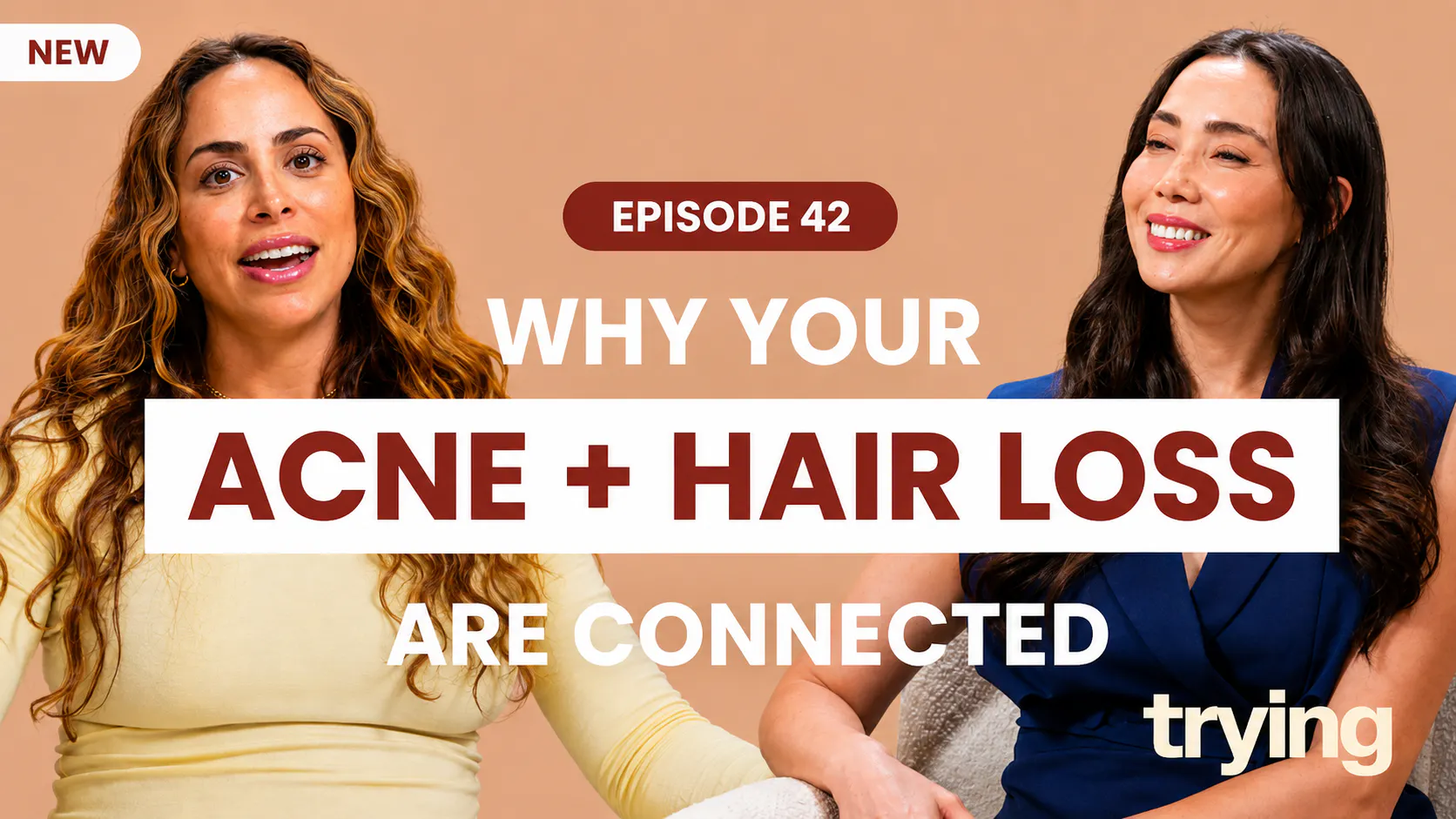 Dr. Mamina Turegano on Hormonal Acne, Hair Loss & Skincare That Works 12.08.2026 1h 4mWe share more with a reproductive endocrinologist than you'd think — hormones drive skin and hair just as much as fertility. In this episode, Dr. Sasha sits down with triple board-certified dermatologist Dr. Mamina Turegano to break down what's really behind hormonal acne and hair loss, the environmental factors quietly wrecking our skin, and the exact prescriptions, supplements, and skincare routines that actually work. In this episode, we cover: Why acne is so common (80-90%+ of women experience it) and why it's rising in adulthood The environmental theories behind the "acne epidemic" — diet, sugar, dairy, fiber intake, caffeine, microplastics, and endocrine disruptors Why chronic stress, poor sleep, and constant phone/screen stimulation are affecting our hormones and skin How to tell if your acne is truly "hormonal" — jawline breakouts, cystic bumps, and the testosterone-to-estrogen ratio (not the absolute number) that drives flares PMOS (formerly PCOS) and how androgen imbalances show up as cystic acne, hirsutism, and hair loss Dr. Turegano's diagnostic workup: history, hormone testing, functional medicine referrals, Dutch tests, and gut microbiome testing The acne treatment ladder — topical retinoids, spironolactone, isotretinoin (Accutane), and where supplements like omega-3s, zinc, pumpkin seed oil, vitex, and DIM fit in Why the type of progestin in your birth control can make acne better or worse — and the role of drospirenone (Yasmin) Coming off birth control or spironolactone without your skin spiraling Normal vs. abnormal hair shedding, telogen effluvium vs. androgenic alopecia, and why postpartum hair loss hits so hard The most common hidden cause of hair loss: iron deficiency (even without anemia) — plus the trick to actually absorbing your iron supplement Dr. Turegano's hair loss lab panel: thyroid (TSH, free T3/T4, antibodies), vitamin D, zinc, ANA, ferritin, and androgens Hair growth treatments ranked: topical and oral minoxidil, finasteride/dutasteride, spironolactone, and the supplements worth trying (Nutrafol, Viviscal Pro, biotin myths) The truth about biotin — why it can mask a real heart attack on lab testing Building a skincare routine: cleanser, moisturizer, sunscreen as the non-negotiable foundation, plus where retinoids and vitamin C serums fit in Dr. Turegano's personal AM/PM skincare routine and product picks Follow Dr. Mamina Turegano! Instagram/social: @dr.mamino Follow Dr. Sasha! TikTok: @sashahakmanmd Instagram: @sashahakmanmd @tryingpod YouTube: @sashahakmanmd Want to receive my weekly newsletter? Sign up at sashahakmanmd.com/newsletter for updates, Q&A answers and more! If you haven't already, please rate, review, and follow the podcast to be notified of new episodes every week. If you're interested in becoming a patient go to sashahakmanmd.com to learn more! Thank you to our sponsors! For a limited time, try OneSkin with 15% off using code DRSASHA at oneskin.co/DRSASHA Thousands of people are already using Rula to get affordable, high-quality therapy that’s actually covered by insurance. Visit Rula.com/DRSASHA to get started Use my link at thrivemarket.com/trying to get $20 off your first three orders — That covers your membership fee! Sign up now before this exclusive offer ends. Head to vitaclean.co and use code DRSASHA at checkout for 20% off your Starter Kits purchase. Learn more about your ad choices. Visit megaphone.fm/adchoices
 -
 Secondary Infertility Causes, Diagnosis & Treatment: Everything You Need to Know 05.08.2026 47mSecondary infertility affects millions of women — and yet it remains one of the most isolating diagnoses in the fertility space. You already have a child, so you feel like you can't complain. But the confusion, grief, and frustration are completely real. In this solo episode, Dr. Sasha Hakman breaks down exactly what secondary infertility is, why it happens, and what to do about it — including causes that will genuinely surprise you. If you've been pregnant before and are struggling to get pregnant again, this episode was made for you. In this episode, we cover: What secondary infertility actually is by definition — and why pregnancy loss counts too, even if you never brought a baby home Ovulatory dysfunction: why it's the #1 cause of secondary infertility, how PCOS, thyroid disease, and high prolactin play a role, and how postpartum weight changes can quietly shut down ovulation How to track your cycle and confirm ovulation at home — including Dr. Sasha's favorite tools (Inito, LH strips, and progesterone testing) The age factor no one talks about enough: what the statistics actually say about childless-not-by-choice rates for women 35–40 and 40+ Premature ovarian insufficiency (POI): why some women enter early menopause between babies — and why waiting too long between pregnancies can dramatically change your options Tubal disease and endometriosis: how tubes that were once open can become blocked between pregnancies, and what an HSG actually involves Uterine factors: fibroids, polyps, Ashman syndrome, and why a saline infusion sonogram catches what a regular ultrasound misses Male factor infertility: why "he already has kids" is not a reason to skip the semen analysis, and how sleep deprivation, weight gain, and lifestyle changes after baby can tank sperm quality Unexplained secondary infertility: why it's the most frustrating diagnosis, and how Dr. Sasha expands her workup to look for hidden endometriosis, insulin resistance, and sleep disruption C-sections and fertility: what a meta-analysis of 600,000 women found about C-section's impact on subsequent pregnancy and live birth rates Isthmocele explained: what it is, how a C-section scar defect can trap fluid and create a hostile environment for embryos, and how it's diagnosed and treated Why Dr. Sasha pursued a VBAC after her first C-section — and the fertility reasoning behind that decision The full diagnostic workup for secondary infertility: what your doctor should be evaluating and what to ask for if they're not Treatment options: from super ovulation with IUI to IVF, to surgical correction of structural issues — and how the approach depends entirely on what the workup reveals Why breastfeeding may be the simplest thing standing between you and your next pregnancy Follow Dr. Sasha! TikTok: @sashahakmanmd Instagram: @sashahakmanmd @tryingpod YouTube: @sashahakmanmd Want to receive my weekly newsletter? Sign up at sashahakmanmd.com/newsletter for updates, Q&A answers and more! If you haven't already, please rate, review, and follow the podcast to be notified of new episodes every week. If you're interested in becoming a patient go to sashahakmanmd.com to learn more! Thank you to our sponsors! If you're in the infant stage or know someone who is, check out the Momcozy Night Pro Bottle Warmer or the DeepClean Bottle Washer D8. They're offering 20% off if you go to momcozy.com and use code TRYING. For a limited time, our listeners get $20 off to unlock their new health intelligence. Head over to Superpower.com and use code TRYING for $20 off your $199 Superpower membership. Learn more about your ad choices. Visit megaphone.fm/adchoices
 -
 The Truth About Cycle Syncing, Fasted Training & Building Muscle After 40 29.07.2026 57mMost women have been told at some point that their menstrual cycle should dictate how they train, that fasted workouts are wrecking their hormones, or that muscle-building becomes nearly impossible after 40. In this episode, Dr. Sasha Hakman sits down with researcher and women's health expert Dr. Lauren Colenso-Semple to separate what the science actually shows from what the fitness industry is selling. They break down why cycle syncing isn't backed by the data, whether fasted training really matters, how much protein your body can actually use at once, and what's really true (and not true) about building muscle in perimenopause and menopause. If you've ever felt confused, discouraged, or like you needed to buy one more program to finally "get it right," this episode is for you. In this episode, we cover: Why the fitness industry profits from confusion — and how "cycle syncing" programs oversell the effect of hormones on your training Fasted vs. fed training: does it affect fat loss, muscle growth, or strength adaptations? (Spoiler: no) Low energy availability explained — who's actually at risk, and why it's different from simply training fasted The truth about the "anabolic window" and post-workout protein timing How much protein your body can actually use in one sitting, and why more isn't always better Why weight training under stable, loaded conditions beats unstable-surface or "functional" exercises for building muscle Understanding "the neighborhood of failure" — how close to failure you really need to train, and how to get started if you're intimidated by the weight room Rep ranges myths: why sets of 5 and sets of 25 can build the same amount of muscle Does the menstrual cycle affect training performance or adaptation? What the actual research says (not the extrapolated animal studies) Hormonal birth control, "brain changes," and exercise capacity — what's real and what's not Why so much of exercise science excluded women — and why that gap is closing faster than the internet gives it credit for Testosterone and muscle growth: why massive differences in testosterone levels between men and women don't translate to massive differences in ability to build muscle Can you make up for "lost time" if you didn't start lifting until your 40s, 50s, or later? Menopause and muscle: does estrogen decline really make it harder to build muscle, and does hormone therapy change that? Supplements that are actually worth your money — creatine dosing, why BCAAs are a waste, and why collagen is a poor protein source for muscle Whey vs. pea protein, jumping for bone health, and whether weighted vests actually do anything The single biggest myth stopping women from reaching their fitness goals Follow Dr. Lauren Colenso-Semple! Instagram: @drlaurencs1 Follow Dr. Sasha! TikTok: @sashahakmanmd Instagram: @sashahakmanmd @tryingpod YouTube: @sashahakmanmd Want to receive my weekly newsletter? Sign up at sashahakmanmd.com/newsletter for updates, Q&A answers and more! If you haven't already, please rate, review, and follow the podcast to be notified of new episodes every week. If you're interested in becoming a patient go to sashahakmanmd.com to learn more! Thank you to our sponsors! Use code DRSASHA at carawayhome.com for 10% off Head to https://airdoctorpro.com/ and use promo code DRSASHA and get up to $300 off ANY of their select AirDoctor models, plus you will get a 3-year warranty,absolutely FREE! All AirDoctor air purifiers come with a 30-day money back guarantee. Get this exclusive, podcast-only offer NOW at https://airdoctorpro.com/ Learn more about your ad choices. Visit megaphone.fm/adchoices
 -
 What IVF Protocol Did a Fertility Doctor Choose for Herself? 22.07.2026 49mYou asked for it, and here it is. In this solo episode, Dr. Sasha Hakman walks through her own two IVF cycles in full detail — the exact medications, doses, trigger decisions, lab outcomes, and the reasoning behind every choice she made. As a reproductive endocrinologist who has navigated IVF both as a clinician and a patient, she brings a level of transparency you rarely get from a doctor. From a purely elective embryo freeze at 32 to a second retrieval at 37, this episode breaks down what actually goes into building a family through IVF — and helps you understand your own protocol along the way. In this episode, we cover: Why Dr. Sasha chose to freeze embryos at 32 — before she was ready to have children — and the reasoning behind creating embryos vs. freezing eggs Her diagnosis of Non-Classical Congenital Adrenal Hyperplasia (NCAH), what it is, and how it contributed to her ovulatory dysfunction Her baseline fertility stats: AMH of 4 ng/mL and 30+ follicles — even while on continuous birth control pills Cycle 1 at age 32: antagonist protocol, 275 units of Gonal-F + 75 units of Menopur, and why she chose a combination Lupron + low-dose hCG trigger The OHSS she developed after her first retrieval — how bad it got, and how she managed it at home Why she got 26 eggs but only 11 were mature — and why she was so disappointed with that outcome Cycle 2 at age 37: what changed in her protocol, and what the data from cycle 1 taught her Final embryo outcome: 6 blastocysts, 3 euploid (1 male, 2 female), 3 aneuploid ICSI — why she chose it even without a male factor diagnosis, and the case for doing it even when sperm looks great Assisted hatching — what it is, why she opted in, and the small but real risk of monozygotic twinning PGT-A genetic testing — how it works and why she would never transfer an aneuploid embryo Delayed vs. immediate egg stripping — an inside look at embryology lab practices most patients never hear about What she did NOT add to her protocol — no growth hormone, no embryo glue — and why she kept it evidence-based and simple The future of IVF: personalized genetic protocols that could one day predict how your ovaries will respond before your first injection Pregnancy update: 23 weeks, scheduled for a fetal echo, and feeling every bit of the third trimester Follow Dr. Sasha! TikTok: @sashahakmanmd Instagram: @sashahakmanmd @tryingpod YouTube: @sashahakmanmd Want to receive my weekly newsletter? Sign up at sashahakmanmd.com/newsletter for updates, Q&A answers and more! If you haven't already, please rate, review, and follow the podcast to be notified of new episodes every week. If you're interested in becoming a patient go to sashahakmanmd.com to learn more! Thank you to our sponsors! Head to AquaTru.com now and get 20% off your purifier using promocode DRSASHA Thanks to today’s sponsor, Ogee: A higher standard for beauty. Go to ogee.com/DRSASHA and use code DRSASHA to get 20% off certified organic makeup that performs like luxury. Support your cells and how you age with Mitopure® Gummies from Timeline. Visit timeline.com/SASHA and 20% off your Mitopure® Gummies. That’s timeline.com/SASHA. Learn more about your ad choices. Visit megaphone.fm/adchoices
 -
 Does a Hysterectomy Cure Endometriosis? An Endo Surgeon Answers Your Top Googled Questions 15.07.2026 1h 11mEndometriosis affects at least 1 in 10 women, yet the average patient waits years for a diagnosis — often after being told their pain is normal. In this episode, Dr. Sasha Hakman sits down with board-certified OB/GYN and endometriosis surgeon Dr. Mallory Stuparich to break down what endometriosis actually is, why it's now understood as a systemic immune and neuro-inflammatory condition rather than a purely hormonal one, and how patients can push back when they're being dismissed. If you've ever been told your pain is "just part of being a woman," this episode is for you. In this episode, we cover: What endometriosis actually is — and why "endometrial-like tissue" outside the uterus is now understood as part of a systemic neuro-inflammatory and neuro-immune disorder, not just a hormonal one Why endometriosis so often overlaps with mast cell activation, POTS, Ehlers-Danlos syndrome, autoimmune conditions, and migraines The leading theories on what causes endometriosis, and why retrograde menstruation alone doesn't explain it Normal period pain vs. abnormal period pain — and the questions to ask yourself to know the difference Red flag symptoms beyond pelvic pain: GI issues (painful bowel movements, incomplete emptying, bleeding), bladder urgency, pelvic floor dysfunction, painful sex, and brain fog Why the amount of pain a patient feels doesn't always correlate with how much disease is actually present What a real diagnostic workup looks like, and why a "normal" ultrasound or MRI does not rule out endometriosis Post-surgical hormone therapy — why suppression after excision matters, and who isn't a candidate Adenomyosis explained: what it is, how it differs from fibroids, and treatment options including adenomyomectomy, uterine artery embolization, and microwave ablation The links between endometriosis, infertility, and miscarriage — including why 50% of women with endo do not experience infertility Recurrence after excision surgery, and why what looks like "recurrence" is often incomplete removal the first time around Lightning round: Is endometriosis genetic? Can you have it with completely normal labs and imaging? Does a hysterectomy cure it? Can it still affect you after menopause? Follow Dr. Mallory Stuparich! Instagram/social: @MalloryStuparichMD Follow Dr. Sasha! TikTok: @sashahakmanmd Instagram: @sashahakmanmd @tryingpod YouTube: @sashahakmanmd Want to receive my weekly newsletter? Sign up at sashahakmanmd.com/newsletter for updates, Q&A answers and more! If you haven't already, please rate, review, and follow the podcast to be notified of new episodes every week. If you're interested in becoming a patient go to sashahakmanmd.com to learn more! Thank you to our sponsors! Head to bioptimizers.com/drsasha and use code DRSASHA try OneSkin with 15% off using code DRSASHA at oneskin.co/DRSASHA Head to vitaclean.co and use code DRSASHA for 20% off Shower head Starter Kits Learn more about your ad choices. Visit megaphone.fm/adchoices
 -
 What Causes Miscarriage? A Fertility Doctor's Full Breakdown 08.07.2026 1h 9mPregnancy loss affects 15–25% of clinically recognized pregnancies, yet so many people are left without answers — or without hope. In this solo episode, Dr. Sasha Hakman breaks down everything you need to know about miscarriage and recurrent pregnancy loss: the five major causes, how each one is diagnosed, what treatment actually looks like, and which lifestyle factors are (and aren't) worth worrying about. If you've experienced a loss and are searching for answers, this episode is for you — and remember, it is not your fault. In this episode, we cover: Why miscarriage is so common, and how the definition of "recurrent pregnancy loss" has evolved to include biochemical losses Bucket 1 — Genetic/Chromosomal causes: why random chromosomal errors (like trisomy 16 and Turner syndrome) account for up to 75% of losses, the U-shaped age-risk curve, and when to test for balanced translocations via karyotype Bucket 2 — Anatomic causes: uterine septums, scar tissue (Asherman syndrome), fibroids, polyps, adenomyosis, and how they're diagnosed via saline infusion sonogram or HSG Bucket 3 — Immune/Autoimmune causes: antiphospholipid syndrome (APS), the antibodies involved, and why diagnostic criteria may lag behind clinical reality Bucket 4 — Endocrine causes: thyroid dysfunction, high prolactin, insulin resistance/diabetes, PCOS, and luteal phase defects The "5th bucket": unexplained pregnancy loss — and additional testing some REs order beyond ASRM guidelines (clotting disorders, chronic endometritis, vaginal microbiome) Treatment options by diagnosis, including PGT-SR, Lovenox + baby aspirin for APS, metformin, and surgical correction of uterine abnormalities Modifiable risk factors: smoking, alcohol, caffeine (the real data), weight/GLP-1 agonists, sleep, sedentary behavior, and why stress is often unfairly blamed The encouraging stats: a 70% live birth rate in the pregnancy following a loss, and how high-touch prenatal care can improve outcomes Follow Dr. Sasha! TikTok: @sashahakmanmd Instagram: @sashahakmanmd @tryingpod YouTube: @sashahakmanmd Want to receive my weekly newsletter? Sign up at sashahakmanmd.com/newsletter for updates, Q&A answers and more! If you haven't already, please rate, review, and follow the podcast to be notified of new episodes every week. If you're interested in becoming a patient go to sashahakmanmd.com to learn more! Thank you to our sponsors! Head to cozyearth.com and use my code DRSASHA for an exclusive 20% off. Use code DRSASHA at carawayhome.com for 10% off Subscribe, rate, and review if this episode helped you — and share it with someone who needs to hear it. New episodes drop every Wednesday. Learn more about your ad choices. Visit megaphone.fm/adchoices
 -
 Fertility After 40: Real Stats, Real Options, Real Talk 01.07.2026 1h 4mIn this solo episode, Dr. Sasha dives into one of the most requested topics on the podcast: trying to conceive and being pregnant after 40. She cuts through the noise of misleading celebrity headlines and online misinformation to give you a clear, honest, and compassionate look at the biology, statistics, and real options available to you. In This Episode, You'll Learn: Why more women are having babies in their 40s than ever before — and why that's a good thing The biology of egg aging: how quantity and quality decline, and what's actually happening at the cellular level (mitochondrial dysfunction, meiosis errors, chromosomal abnormalities) What your AMH level means after 40, and why high ovarian reserve can be a game-changer Natural fertility rates by age and when ASRM guidelines say to seek immediate care IVF success rates broken down by age: from 43% live birth rate under 35, all the way down to 3% over 42 Follow Dr. Sasha! TikTok: @sashahakmanmd Instagram: @sashahakmanmd @tryingpod YouTube: @sashahakmanmd Want to receive my weekly newsletter? Sign up at sashahakmanmd.com/newsletter for updates, Q&A answers and more! If you haven't already, please rate, review, and follow the podcast to be notified of new episodes every week. If you're interested in becoming a patient go to sashahakmanmd.com to learn more! Thank you to our sponsors! Save 20% Off Honeylove by going to honeylove.com/DRSASHA! #honeylovepod For a limited time, try OneSkin with 15% off using code DRSASHA at oneskin.co/DRSASHA. Head to AirDoctorPro.com and use promo code DRSASHA to get $250 off select AirDoctor air purifiers, including the 3500, 4000, and 5500 models New episodes of Trying with Dr. Sasha Hakman drop weekly. If this episode resonated with you, leave a review and share it with someone who needs a doctor they can trust in their corner. Learn more about your ad choices. Visit megaphone.fm/adchoices
 -
 The IVF Test That Could Finally Explain Your Failed Transfers with Jeremy Grushcow of Juniper Genomics 24.06.2026 1h 25mIf you've ever gone through a failed embryo transfer and wondered why , this episode is for you. Dr. Sasha sits down with Jeremy Grushcow, co-founder and CEO of Juniper Genomics, to break down a groundbreaking advancement in IVF: whole genome and transcriptome embryo testing. Jeremy holds a PhD in molecular genetics and cell biology from the University of Chicago, along with a law degree, and has published research in DNA repair, cancer, gene therapy, bioethics, and patent law. He's building the technology that could change the odds for IVF patients everywhere. In this episode, we cover: What whole genome sequencing actually is — and why IVF has lagged behind every other field of clinical medicine in adopting it The brilliant "books on a shelf" analogy that finally makes PGT-A vs. whole genome sequencing click Why failed embryo transfers are not your fault, your doctor's fault, or your lab's fault — and what the embryo's genetics have to do with it What the transcriptome tells us that the genome alone can't The difference between PGT-A, PGT-M, and Juniper's PGT-G testing How Juniper looks at both the embryo and the parents' DNA to identify where variants are coming from (egg or sperm?) The 6,000+ known genetic diseases — and why 10–15% of embryos being transferred today carry a detectable single-gene disorder that standard carrier screening missed Why "reduced viability variants" matter and how they impact IVF success rates The emotional and financial cost of failed transfers — and how more information can reduce both Pricing breakdown: what Juniper's PGT-A and PGT-G costs, how to make it more affordable, and how it stacks up against the cost of a failed transfer cycle Why patient autonomy in the US and Canada is driving better IVF outcomes globally Follow Dr Sasha! TikTok: @sashahakmanmd Instagram: @sashahakmanmd @tryingwithdrhakman YouTube: @sashahakmanmd Resources & Links: Juniper Genomics website: junipergenomics.com Instagram: @junipergenomics Want to receive my weekly newsletter? Sign up at sashahakmanmd.com/newsletter to receive updates, answers to Q&A and more !If you haven't already, please rate, review, and follow the podcast to be notified of new episodes every 2 weeks. If you're interested in becoming a patient go to sashahakmanmd.com to learn more! If this episode helped you, the best thing you can do is subscribe, rate, review, and share it with a friend. So many women deserve this information, help get it to them. Episodes drop every Wednesday. Learn more about your ad choices. Visit megaphone.fm/adchoices
 -
 The Truth About Women's Health, Medical Misinformation, and Advocating for Yourself 17.06.2026 40mWhat does it actually mean to try as a woman, as a patient, as a person navigating a healthcare system that wasn't built with you in mind? In this first solo episode of the newly rebranded Trying with Dr. Sasha Hakman, Dr. Sasha shares why she changed the name, what this podcast is really about, and who it's for. She opens up about the conversation that sparked the rebrand, the reality of practicing medicine in a field driven by IVF incentives, and why she started a podcast in the first place. She also shares a personal update (18 weeks pregnant with baby #3!) and answers one of the most frequently asked questions from her community: how do you know if you can actually trust your doctor? In This Episode, You'll Learn: Why Dr. Sasha rebranded from Trying to Conceive to Trying with Dr. Sasha Hakman What a Reproductive Endocrinologist actually specializes in beyond IVF How to know if your doctor's IVF recommendation is truly evidence-based or financially motivated The green flags to look for when choosing a fertility doctor or clinic How to read online reviews and pregnancy success rates without being misled What actually makes an exceptional doctor Follow Dr. Sasha! TikTok: @sashahakmanmd Instagram: @sashahakmanmd @tryingpod YouTube: @sashahakmanmd Want to receive my weekly newsletter? Sign up at sashahakmanmd.com/newsletter for updates, Q&A answers and more! If you haven't already, please rate, review, and follow the podcast to be notified of new episodes every week. If you're interested in becoming a patient go to sashahakmanmd.com to learn more! Thank you to our sponsors! head to http://www.bioptimizers.com/DRSASHA and use my exclusive code DRSASHA to get 15% off any order Use our exclusive link to save 20% off Honeylove at honeylove.com/DRSASHA Go to ogee.com/DRSASHA and use code DRSASHA for 20% off. New episodes of Trying with Dr. Sasha Hakman drop weekly. If this episode resonated with you, leave a review and share it with someone who needs a doctor they can trust in their corner. Learn more about your ad choices. Visit megaphone.fm/adchoices
 -
 Your Doctor Is Wrong About Exercise: What a Doctor of Physical Therapy Wants You to Know 10.06.2026 1h 3mAre you being told to stop exercising while trying to conceive or going through IVF? You're not alone and according to today's guest, you're also likely being given advice that isn't backed by science. In this episode, Dr. Shannon joins us for a conversation that is equal parts empowering and eye-opening. As both a physical therapist and a patient who exercised throughout her own fertility journey, she brings a rare dual perspective to the table. She and host Dr. Sasha take on the pervasive fear around exercise during fertility treatment, break down why the "rest and raise your legs" mentality is outdated (and potentially harmful), and share a practical, research-backed framework for building and maintaining muscle at every stage of the journey. Whether you're in the thick of fertility treatments, newly pregnant, postpartum, or just trying to understand your body better, this episode is packed with actionable guidance and a refreshing dose of truth. In This Episode, You'll Learn: Why most doctors tell patients to stop exercising during IVF — and why there's no evidence behind it How months of exercise restriction can harm your long-term recovery and postpartum body The REPS Framework: the four principles that actually build muscle while TTC or pregnant What "training to failure" really means — and why it's safe even during fertility treatment Why you need to train near failure just to maintain the muscle you already have How to choose exercises that actually target the right muscles (and why combo moves fall short) Protein targets for TTC and pregnancy, and how to realistically hit them When HIIT is okay to keep during TTC — and when it may be hurting your chances How to safely return to exercise postpartum without setting yourself back One simple trick to improve your form without a personal trainer Follow Dr. [email protected] @evlofitness Follow Dr Sasha!TikTok: @sashahakmanmdInstagram: @sashahakmanmd @tryingtoconceivepodYouTube: @tryingtoconceivepod Resources Mentioned: Evlo App (Dr. Shannon's fitness app) — Use code DRSASHA for 6 weeks free (first 2-week trial + 1 month at $0) American College of Obstetricians and Gynecologists (ACOG) — exercise contraindications list available on their website Want to receive my weekly newsletter? Sign up at sashahakmanmd.com/newsletter to receive updates, answers to Q&A and more!If you haven't already, please rate, review, and follow the podcast to be notified of new episodes every 2 weeks. If you're interested in becoming a patient go to sashahakmanmd.com to learn more! New episodes of Trying to Conceive with Dr. Sasha Hakman drop weekly. If this episode resonated with you, leave a review and share it with someone on their fertility journey. Learn more about your ad choices. Visit megaphone.fm/adchoices
 -
 A Reproductive Endocrinologist's Guide to Protecting Your Hormones 03.06.2026 1h 4mIn this solo episode, Dr. Sasha goes deep on one of her most-requested topics: endocrine disrupting chemicals (EDCs). What they are, where they're hiding, how they affect your hormones and fertility, and exactly what you can do about it. As a reproductive endocrinologist and infertility specialist, she brings both clinical expertise and personal practice to this conversation. This episode is grounded in evidence-based research, including a 136-page scientific statement from the Endocrine Society, and is designed to inform, not alarm. In This Episode, You'll Learn: What the endocrine system is and why hormones are the body's "keys and locks" The definition of EDCs and why exposure is considered a global public health crisis Why even tiny exposures can have outsized health impacts (it's not always dose-dependent) The major classes of EDCs to know: BPA/bisphenols, phthalates, PFAS (forever chemicals), parabens, glyphosate, heavy metals, and triclosan and where each one hides The 4 mechanisms EDCs use to disrupt your hormones - including epigenetic modification that can be passed down through generations Why in utero exposure is the most critical window, and what effects have been linked to fetal EDC exposure (including hypospadias, cryptorchidism, diminished egg reserve, and premature ovarian insufficiency) How EDC exposure impacts puberty, fertility, and the TTC window specifically - including the finding that phthalate metabolites were detected in the follicular fluid of 99% of women undergoing egg retrieval The link between EDC exposure and sperm count decline (down 50% in 50 years, per Dr. Shanna Swan's research) Health risks in adulthood: endometriosis, PCOS/PEMOS, diminished ovarian reserve, thyroid dysfunction, breast cancer, prostate cancer, and more The Tier 1 vs. Tier 2 framework for prioritizing what to eliminate first Why "BPA-free" is a marketing gimmick and what to look for instead Why "unscented" ≠ fragrance-free - and what that means for your products Why fragrance is banned entirely in IVF embryology labs (and what that tells us) A study showing BPA urinary levels drop significantly after just 3 days of cutting out heated plastic Follow Dr Sasha! TikTok: @sashahakmanmd Instagram: @sashahakmanmd @tryingtoconceivepodYouTube: @tryingtoconceivepod Want to receive my weekly newsletter? Sign up at sashahakmanmd.com/newsletter to receive updates, answers to Q&A and more! If you haven't already, please rate, review, and follow the podcast to be notified of new episodes every 2 weeks. Thank you to our sponsors! Head to AirDoctorPro.com and use promo code DRSASHA to get $250 off select AirDoctor air purifiers. Head to cozyearth.com and use my code DRSASHA for an exclusive 20% discount. New episodes of Trying to Conceive with Dr. Sasha Hakman drop weekly. If this episode resonated with you, leave a review and share it with someone on their fertility journey. Learn more about your ad choices. Visit megaphone.fm/adchoices
 -
 Sitting Down with My Husband: What IVF Really Looks Like from the Partner's Side 28.05.2026 1h 11mDr. Sasha Hakman is finally joined by her husband, Dr. Eryk Hakman. In this honest, funny, and surprisingly emotional episode, Sasha and Eryk sit down together for the first time to share the full story: how they met on labor and delivery, why Eryk almost didn't commit, and what it has really been like to navigate three rounds of IVF as a couple, including a failed embryo transfer that hit them both harder than either expected. Eryk opens up about feeling powerless in a process driven by his wife's expertise, what grief looked like from the partner's side, and what finally convinced him to say yes to baby number three. They wrap it all up with a fertility quiz that is equal parts educational and hilarious. In This Episode, You'll Learn: How Sasha and Eryk met during residency, why Eryk ghosted her, and the ultimatum that changed everything Why Sasha froze embryos early in their relationship and how it led to their first son, Remy What IVF felt like from Eryk's perspective as the non-REI doctor in the relationship The male side of fertility treatment: the semen collection experience, lifestyle changes, and feeling like a passenger How they conceived Rocky naturally after Sasha ovulated on her own for the first time post-IVF Why Eryk initially said they were done after two kids and what changed his mind Their decision to pursue gender selection for family balancing and what that process looked like The emotional weight of their failed embryo transfer: the biochemical pregnancy, the grief, and the delayed reaction Why Sasha chose a programmed cycle with progesterone in oil for the second transfer despite the pain and the disagreement it caused How two doctors with completely different approaches to data and uncertainty navigate fertility decisions together Eryk's fertility quiz results and the one lie Sasha told him about his own sperm Follow Dr Sasha! TikTok: @sashahakmanmd Instagram: @sashahakmanmd @tryingtoconceivepod YouTube: @tryingtoconceivepod Want to receive my weekly newsletter? Sign up at sashahakmanmd.com/newsletter to receive updates, answers to Q&A and more! If you haven't already, please rate, review, and follow the podcast to be notified of new episodes every 2 weeks. If you're interested in becoming a patient go to sashahakmanmd.com to learn more! Thank you to our sponsors: Go to aquatrue.com and use code DRSASHA for 20% off Go to bioptimizers.com and use code DRSASHA for 15% off Go to oneskin.co and use code DRSASHA for 15% off Learn more about your ad choices. Visit megaphone.fm/adchoices
 -
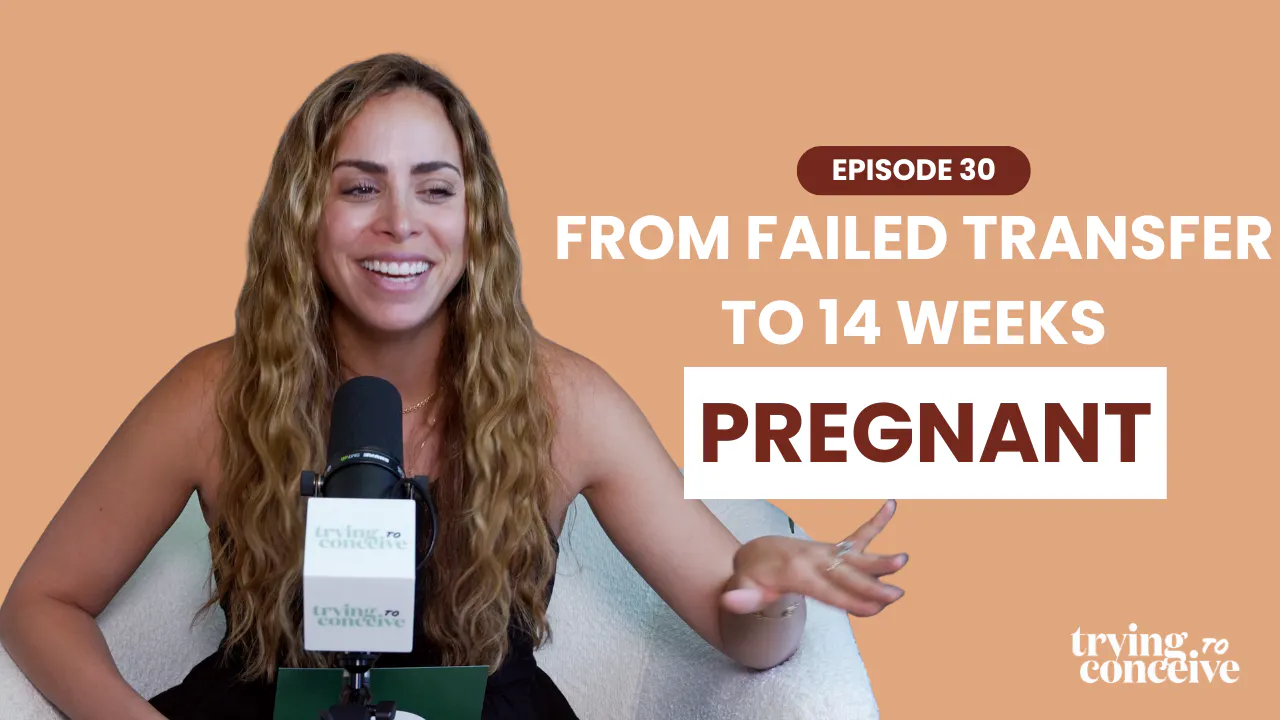 The Protocol That Got Me Pregnant: A Fertility Doctor's Honest Account of Her Own IVF Journey 20.05.2026 47mDr. Sasha Hakman goes solo to finally answer the question her community has been asking for weeks: what exactly did she do differently for her second embryo transfer, the one that worked? Now 14 weeks pregnant, Dr. Sasha walks through her full protocol in detail, from the switch to a programmed FET to every medication, supplement, and lifestyle change she made. She also opens up about the emotional rollercoaster of a failed transfer, a terrifying bleed at seven weeks, and what it's like to be a fertility doctor going through fertility treatment herself. This episode is one of the most personal and detailed she's ever shared, and it's been a long time coming. In This Episode, You'll Learn: Why Dr. Sasha switched from a modified natural cycle to a programmed FET, and what that actually means Her exact medication protocol: estrace, progesterone in oil, Prometrium suppositories, Ganirelix, and prednisone , with doses and timing What the antihistamine protocol is (prednisone + Pepcid + Claritin) and why she added it despite limited evidence How acupuncture became a non-negotiable addition to her second cycle Why she took a full week off work after transfer and what she did instead Her supplement stack, pescatarian diet, and why she stopped being so strict about sugar this time The emotional experience of home testing, a lighter line, spiraling, and what snapped her out of it Her beta number progression and what she was watching for The scary seven-week bleed, the subchorionic hematoma diagnosis, and how her colleague met her at the clinic at 8pm How she emotionally survived a failed transfer and built her "plan A through G" for what came next How she manages non-classical congenital adrenal hyperplasia (NCAH) and why it influenced every protocol decision Follow Dr Sasha! TikTok: @sashahakmanmd Instagram: @sashahakmanmd @tryingtoconceivepod YouTube: @tryingtoconceivepod Want to receive my weekly newsletter? Sign up at sashahakmanmd.com/newsletter to receive updates, answers to Q&A and more! If you haven't already, please rate, review, and follow the podcast to be notified of new episodes every 2 weeks.If you're interested in becoming a patient go to sashahakmanmd.com to learn more! Thank you to our sponsor Ogee Beauty. Go to ogee.com/DRSASHA and use code DRSASHA for 20% off Learn more about your ad choices. Visit megaphone.fm/adchoices
Similar podcasts


Popular in
The podcast also appears in the podcast charts of these countries.


