
The BrainFood Show
Cloud10
0
The BrainFood Show is a podcast by the team behind the popular TodayIFoundOut YouTube channel. Each episode dives deep into a variety of fascinating topics, providing interesting knowledge to feed your brain. The show covers a wide range of subjects, from history and science to pop culture and trivia.
Episodes
-
 So, like, How Do Porcupines Mate? And Other Bizarre Animal Mating Practices 09.10.2026 44mIn this episode of The Brain Food Show, we start by looking at whether or not male humans can get pregnant and carry a baby to full term naturally. (Spoiler- yes and yes. And even breastfeed too! It doesn’t even require fancy science or advanced medical techniques.) Moving on to the meat of today’s episode, we jump into a variety of bizarre animal mating practices, starting with the somewhat humorous mating practices of the giraffe, looking at how porcupines mate without serious injury, banana slugs, the evil that is the male duck, and more! Learn more about your ad choices. Visit megaphone.fm/adchoices
 -
 The Greatest Factory Ever Built 08.10.2026 37mFollowing December 7, 1941 surprise attack on Pearl Harbor, which finally drew the United States into the Second World War, the attack’s architect, Imperial Japanese Navy Admiral Isoroku Yamamoto, infamously lamented that: “I fear all we have done is to awaken a sleeping giant and fill him with a terrible resolve.” While in reality Yamamoto likely never said this, the sentiment proved shockingly prophetic, for almost overnight the outraged nation shifted its entire economy towards a singular goal: crush the Axis Powers. Factories which had once produced household goods like sewing machines, typewriters, and automobiles were converted over to churning out rifles, helmets, tanks, jeeps, aircraft, and other vital war weapons by the hundreds of thousands, while a huge force of non-combatant civilians - including record numbers of women - were hired to staff them. The result was a nigh-unstoppable “Arsenal of Democracy” that ultimately swamped the wartime economies of Germany, Italy, and Japan and guaranteed Allied victory. But one American wartime factory stood out among the rest: Air Force Plant 31 in Ypsilanti (ip-si-lan-tee) Township, Michigan - better known as Willow Run. At peak capacity in April 1944, a complete B-24 Liberator heavy bomber was rolling out this facility’s doors every single hour - a staggering feat of industrial production that has yet to be matched. This is the story of the greatest factory ever built. Author: Gilles Messier Host/Editor/Pilot: Daven Hiskey Producer: Samuel Avila Learn more about your ad choices. Visit megaphone.fm/adchoices
 -
 How to Survive Falling from a Plane Without a Parachute 07.10.2026 20mAccording to the Aircraft Crashes Record Office in Geneva, between 1940 and 2008 there were 157 people who fell out of planes without a parachute during a crash and lived to tell about it. A full 42 of those falls occurred at heights over 10,000 feet (above 3,000 meters), such as the tale of 17 year old Juliane Koepcke who not only survived an approximately 10,000 foot free fall, but also a subsequent 10 day trek alone through the Peruvian rain forest with no real supplies other than a little bag of candy. Now, while you might think surely nothing like that could ever happen to you, it turns out whether falling from 30,000 feet or a much more common 30, the same basic strategies apply. And for reference here, approximately 30 feet or about 9 meters is around the height at which you begin to be more likely to die from your injuries than survive. At heights as little as about 80 feet, only about 1 in 10 people survive and it pretty much all goes to hell from there. So what can you do to increase your chances of survival if you ever find yourself doing your best impression of Icarus? Authors: Karl Smallwood and Daven Hiskey Producer: Samuel Avila Learn more about your ad choices. Visit megaphone.fm/adchoices
 -
 Is the “Old Painless” Gun From Predator, the Matrix, Terminator 2 and Many Other Movies a Real Gun? 06.10.2026 35mIt is one of the most iconic cinematic weapons in history, on par with James Bond’s Walther PPK, Luke Skywalker’s lightsaber, and Indiana Jones’s bullwhip. Strap it to your back, and you instantly become an unstoppable one-man army, a bullet hose spitting hot lead at 6,000 rounds per minute and turning dense jungle into leaf mulch, cars into twisted scrap metal, and your enemies into piles of hamburger meat. It is, of course, the M134 Minigun AKA “Old Painless”, the blisteringly fast rotary-barrel machine gun wielded by the likes of Jesse “The Body” Ventura in Predator, Arnold Schwarzenegger in Terminator 2: Judgement Day, and Keanu Reeves in The Matrix. Unlike many other movie weapons, “Ol’ Painless” seems remarkably plausible, but does such a weapon really exist, and could you wield it the way it’s almost always shown in movies? Well, strap on your bullet proof vest, as we dive into how humanity went from the Gatling Gun, to the incredible M61 Vulcan which, in turn, birthed one of cinema’s most badass, and misunderstood, weapons. Author: Gilles Messier Host/Editor: Daven Hiskey Producer: Samuel Avila 0:00 Intro 1:06 Inventing the Gatling Gun 5:31 How Automatic Firearms Work and Aviation 15:49 Project Vulcan 19:10 The Incredible M134 "Minigun" 25:25 So, Is the “Ol’ Painless” Version of the Minigun From Movies Real? Learn more about your ad choices. Visit megaphone.fm/adchoices
 -
 Cold War Files- The Greatest Naval Espionage Mission in History, Embalming Communists and Much More 05.10.2026 2hIn today's compilation episode, we're looking at the greatest naval espionage mission in history, that time the moon nearly started World War 3, WTF is up with embalming communists and many other fascinating cold war stories. 0:00 Silent Seas: The Top Secret, Greatest Cold War Naval Espionage Mission 9:54 That Time the Moon Nearly Started World War 3 (and Other Silly Cold War Shenanigans) 19:09 Death by Blue Peacock: Britain’s Bizarre and Deadly Cold War “Rainbow Codes” 29:17 The Incredible Real Life Cold War Bond Villain Ice Lair 52:50 The Cold War's Most Pathetically Hilarious Air Battle 1:00:01 WTF is Up with Embalming and Displaying Communists? Learn more about your ad choices. Visit megaphone.fm/adchoices
 -
The Teenager Who was Executed Twice, a Year Apart for Something He Didn't Do 02.10.2026 56mApologies for my audio quality in this one. Adobe kept crashing on me, so we had to use the audio Simon was receiving which isn’t ideal. Also a bit under the weather and lost my voice before recording, so maybe for the best that I wasn’t coming through in pristine quality. Next episode will sound much, much better! In any event, in this episode of The Brain Food Show, we start by looking at the real story behind the song In the Air Tonight. Moving on to the meat of today’s episode, we jump into the fascinating story of one Willie Francis, a young man convicted for murder, executed, then executed again about a year later, despite the fact that it would very much seem as if he was innocent the whole time. Learn more about your ad choices. Visit megaphone.fm/adchoices
-
 New Zealand’s Pathetically Hilarious WWII Attempt to Build a Tank 01.10.2026 20mOn September 15, 1916, German troops defending towns in France’s Somme Valley heard a strange new sound above the usual boom of artillery and crack of rifle and machine gun fire: a deep, throaty rumbling, accompanied by a high-pitched metallic squeaking. Peering over the parapets of their trenches, they gasped as they beheld a terrifying sight: a line of giant, armour-plated vehicles, rolling on caterpillar treads and bristling with guns, heading straight for them. The tank had arrived on the battlefield. While the results of history’s first armoured assault were mixed, with nearly two-thirds of the British Mark I tanks deployed that day breaking down or getting stuck before they could reach their objectives, the psychological impact of the new vehicle was undeniable. By the end of the war, the technology had been greatly improved, with tanks playing a key role in the final Entente victories leading up to the Armistice. The tank soon became an integral part of modern warfare, with any nation unable to field armoured vehicles finding itself at a significant disadvantage. But tanks require a lot of money and industrial capacity to develop and mass-produce - resources many nations simply do not possess. Take New Zealand, which at the outbreak of the Second World War found itself cut off from outside sources of military equipment and facing imminent invasion by the Japanese. But where there’s a will, there’s a way, and determined to defend their islands, whatever the cost may be, the enterprising Kiwis cobbled together a home-grown armoured fighting vehicle which, while admittedly resourceful, was also hilariously inept, and still ranks as perhaps the worst tank ever built. This is the story of the Bob Semple Tank. Author: Gilles Messier Host/Editor: Daven Hiskey Producer: Caden Nielsen Learn more about your ad choices. Visit megaphone.fm/adchoices
 -
 WTF is Up with Silly Putty? 30.09.2026 19mSet it down and it flows like a liquid. Pull it slowly and it stretches like rubber. Hit it with a hammer and it shatters like glass. Throw it on the ground and it bounces higher than a rubber ball. It can help heal injuries, stabilize wobbly furniture, clean up dust and pet hair, and lift newsprint off the page, allowing comic-strip characters to be stretched into amusing shapes. It is on permanent display in the Smithsonian Museum and has even flown to the moon and back. It is, of course, that most classic and versatile of toys: the weird and wacky goo known as Silly Putty. For nearly eight decades, this strange rubbery substance in the plastic egg has enchanted children and adults the world over, finding a myriad of applications both amusing and practical. Yet like many other classic toys like the Slinky, Super Soaker, and Play-Doh, Silly Putty owes its existence and enduring popularity to an unlikely accident - and not a bit of clever marketing. This is the stretchy, bouncy, wacky history of one of the world’s favourite playthings. Author: Gilles Messier Host/Editor: Daven Hiskey Producer: Samuel Avila Learn more about your ad choices. Visit megaphone.fm/adchoices
 -
 What Ever Happened to Apollo 2-6? And What Would a Nuclear Explosion Look Like on the Moon? 29.09.2026 42mAs most know, on January 27, 1967, the Apollo Program, the United States’ first effort to land a man on the moon, was rocked by a horrific tragedy. During a “plugs-out” ground test of the brand-new Block 1 Apollo spacecraft, an electrical fault sparked a fire in the capsule. Fuelled by the pure oxygen environment in the cabin, the blaze spread rapidly, taking the lives of crew members Virgil I. “Gus” Grissom, Edward White, and Roger Chaffee. The Apollo 1 fire halted the nascent lunar program dead in its tracks, forcing NASA to step back, reevaluate its equipment and procedures, and make hundreds of changes to the Apollo spacecraft, spacesuits, and other systems. It was not until October 11, 1968 - 21 months after the disaster - that Apollo 7, just 7, not 2, finally blasted off, carrying astronauts Wally Schirra, Donn Eisle, and Walt Cunningham into low earth orbit. The mission was a success, proving the reliability of the redesigned Block II spacecraft and paving the way for more daring and historic missions: Apollo 8, the first to take men round the moon; Apollo 9, the first to test the Apollo Lunar Module in space; Apollo 10, a full dress rehearsal for the lunar landing; Apollo 11, the first to land men on the surface of the moon; and Apollos 12-17, which with one infamous exception all succeeded in landing men on the moon and exploring large areas of our closest celestial neighbour. And at this point you may not be wondering- why did the mission numbers skip directly from 1 to 7? What happened to Apollos 2-6? Well, here now is the story of the forgotten Apollo missions, and the valuable modifications they contributed to the program and helping humans set foot on the moon. Along the way we’re also going to be covering how before America decided to step foot on the moon, the initial plan was, instead, to blow it up because, sure, why not? As well as just what a nuclear explosion would look like on the moon, and how effective a nuclear bomb would be as a weapon in space, which is probably very different than what you might think on both of those. More on all that later. Author: Gilles Messier Host/Editor: Daven Hiskey Producer: Samuel Avila 0:00 Intro 3:41 The Pre-Apollo 1 Testing and Naming Scheme and Apollo 1-3 22:44 Why They Re-Named the Apollo Missions and Apollo 4 27:11 Apollo 5 29:24 Apollo 6 34:33 Carl Sagan and The United States' Plan to Nuke the Moon 36:32 What Would a Nuclear Explosion Look Like on the Moon? Learn more about your ad choices. Visit megaphone.fm/adchoices
 -
 The Past Was the Worst- QED 28.09.2026 2h 18mIn the episode today, we're going over a variety of reasons why the past was the worst and, while the world is far from perfect and MANY things to still improve upon, we are all lucky to be alive right now. And anyone who says otherwise should be smacked upside the head with a history book repeatedly until they see the error in their thinking. ;-) 0:00 That Time the U.S. Government Intentionally Poisoned and Killed Over 10,000 of Its Citizens 28:18 That Time the US Government Teamed Up with the Mafia to Defeat the Nazis 40:33 The Poison Squad – The Men Who Volunteered to Let the Government Poison Them 52:32 Forgotten History: The M247 Sergeant York and Its Propensity to Lock Onto Latrines Instead of Enemy Aircraft 1:04:07 Forgotten History: Walter Hunt and the Safety Pin 1:13:44 Alexander Graham Bell’s Forgotten Greatest Invention 1:19:51 The Largely Forgotten Airship Disaster That Helped Kill These Cruise Ships of the Sky 1:40:17 The Forgotten Plague During Prohibition 1:46:55 Forgotten History- The Battleship Built in Union Square 1:58:19 The Obscenely Successful Obsolete Sailing Ship and Its Daring Captain Who Terrorized the High Seas During WWI Learn more about your ad choices. Visit megaphone.fm/adchoices
 -
The Dumbest Murders that Resulted in the Trial of the Century 25.09.2026 1h 12mIn this episode of The Brain Food Show, we start by looking at how exactly Al Capone got the scars that got him the nickname “Scarface”. Moving on to the meat of today’s episode, we jump into the rather interesting story behind one of the many so called “trial of the century” of the 20th century. In this case involving a housewife and her lover and their plot to murder her husband. We also discuss the case of the first woman ever to be executed in an electric chair and one of the most iconic journalistic photos ever taken. In the Bonus Facts today, we look at the first two women ever to be sentenced to death via the electric chair, what they did to get that sentence, and how they both got off. Learn more about your ad choices. Visit megaphone.fm/adchoices
-
 Was the First Jet Plane Really Flown in 1910? 24.09.2026 19mIn October 1910, the city of Paris played host to a historic event: the Second International Aeronautical Exhibition, a grand showcase of the very latest in aviation technology. To the average visitor, the rickety canvas-and-wire flying machines lining the halls of the Grand Palais [“Grahn Pal-ay”] would have seemed exotic and cutting-edge. But one exhibit stood out among the rest. Set aside in a separate exhibition hall, the brick-red aircraft was unlike anything anyone had ever seen. Its sleek wings lacked the drag-producing bracing wires that festooned most contemporary aircraft, while its tail featured unique x-shaped stabilizers. But strangest of all, the odd contraption lacked a seemingly vital component: a propeller. Instead, the aircraft was propelled by an unusual barrel-shaped device mounted to its nose which its creator, Romanian-born Henri Coanda, dubbed a “turbo-propulsor” - the ancestor of the modern jet engine. Later in life, Coanda would claim that his creation was the first jet-powered aircraft to take to the air - a title traditionally claimed by the German-built Heinkel He-178 on August 27, 1939. But is this true? Did the first jet aircraft actually fly all the way back in 1910, barely seven years after the Wright Brothers’ pioneering flight? The answer is a lot more complicated than you might think, and depends a great deal on how you define the term “jet aircraft.” This is the controversial story of the Coanda 1910, a forgotten aircraft decades ahead of its time. Author: Gilles Messier Host/Editor: Daven Hiskey Producer: Samuel Avila Learn more about your ad choices. Visit megaphone.fm/adchoices
 -
 Prison Break- One of the Most Daring Aerial Missions in Military History 23.09.2026 33mAs the clocks struck noon on February 18, 1944, the citizens of Amiens, France, heard an ominous rumbling in the air and the crackling of anti-aircraft guns. Suddenly, from a blustery, overcast sky burst a flight of British de Havilland Mosquito light bombers. Roaring along at treetop level, the aircraft followed the long, straight Avenue de la Défence Passive towards their target: the looming brick and concrete hulk of Amiens Prison. A series of deafening blasts ripped through the air, and within minutes the aircraft were gone, leaving the prison walls a smoking ruin. In the ensuing chaos hundreds of prisoners, many of them members of the French Resistance, clambered out through the breaches and into the safety of the countryside, free to continue the fight against the occupying Nazis. Ramrod 564, better known as Operation Jericho, was one of the most daring air raids of the Second World War, dramatically showcasing the Royal Air Force’s ability to carry out pinpoint strikes and work in concert with allied resistance movements. But over the past 80 years the operation has become the subject of considerable controversy, with historians questioning whether it was worth the considerable collateral damage inflicted and even the motivations for the raid itself. This is the story of one of World War Two’s most contentious aerial operations. Learn more about your ad choices. Visit megaphone.fm/adchoices
 -
 What would REALLY Happen to You if You Were Exposed to the Vacuum of Space Without a Space Suit? 22.09.2026 33mIn the climax of the groundbreaking 1968 science fiction film 2001: a Space Odyssey, astronaut Dave Bowman, the sole survivor of an ill-fated mission to Jupiter, finds himself locked out of his spacecraft by the psychotic computer HAL-9000. Though temporarily safe inside his EVA pod, having forgotten to put a helmet on his spacesuit - whoopsie-doodle - Bowman cannot even use the emergency airlock and faces a slow, agonizing death from suffocation. But for Bowman, as for so many astronauts, failure is simply not an option, so he resorts to drastic measures to get back aboard his ship. After using the remote manipulators on his pod to open the airlock door, he backs the pod hatch up to the opening, takes a deep breath, and fires the hatch’s explosive bolts, launching himself into the vacuum of space. What follows is one of the most extraordinary sequences ever put to film as Bowman bounces weightlessly around the airlock, nearly drifting back out into space before finally grabbing hold of the control panel, closing the outer door, and re-pressurizing the compartment. Safely back aboard Discovery, he finds a spare helmet and makes a beeline for HAL’s central processor where, in yet another iconic scene, he methodically lobotomizes the computer as it begs for mercy and sings an eerie, distorted version of ‘Daisy Bell.’ The director and cowriter of 2001, Stanley Kubrick, was a notorious perfectionist, and went to great lengths to ensure that not only the moon landings looked real, including going so far as insisting they be filmed on location, but also that this sci-fi epic was as scientifically and technically accurate as possible. But could Dave Bowman have actually survived such an unprotected sojourn into outer space? Or would he have frozen solid, his blood boiled, or even his body exploded as gruesomely depicted in so many other films like Total Recall, Gravity, and Guardians of the Galaxy Vol. II? Well strap on your space suit, or don’t, you do you- as we explore what actually happens if you were to venture unprotected into the final frontier, which it turns out is VERY different from what most people think. Along the way we’re going to learn a lot of interesting things about breathing, airplane and fighter pilot oxygenation, including how to get your spouse to conk out in a plane if you’re the pilot, that time a NASA astronaut accidentally poked a hole in his suit while on a space walk and NASA’s humorous reaction, and in the end the surprisingly long time you can survive in space without a space suit with no long term damage. Author: Gilles Messier Editor/Host: Daven Hiskey Producer: Samuel Avila 0:00 Intro 3:00 Pressure and Breathing and the Armstrong Limit 7:42 Exposed to the Vacuum 13:31 Will Your Blood Actually Boil? 17:14 Could Duct Tape Work as a Space Suit? 21:41 Would You Freeze Solid? 24:45 Summing Up and How Long Could You Survive Without a Space Suit? Learn more about your ad choices. Visit megaphone.fm/adchoices
 -
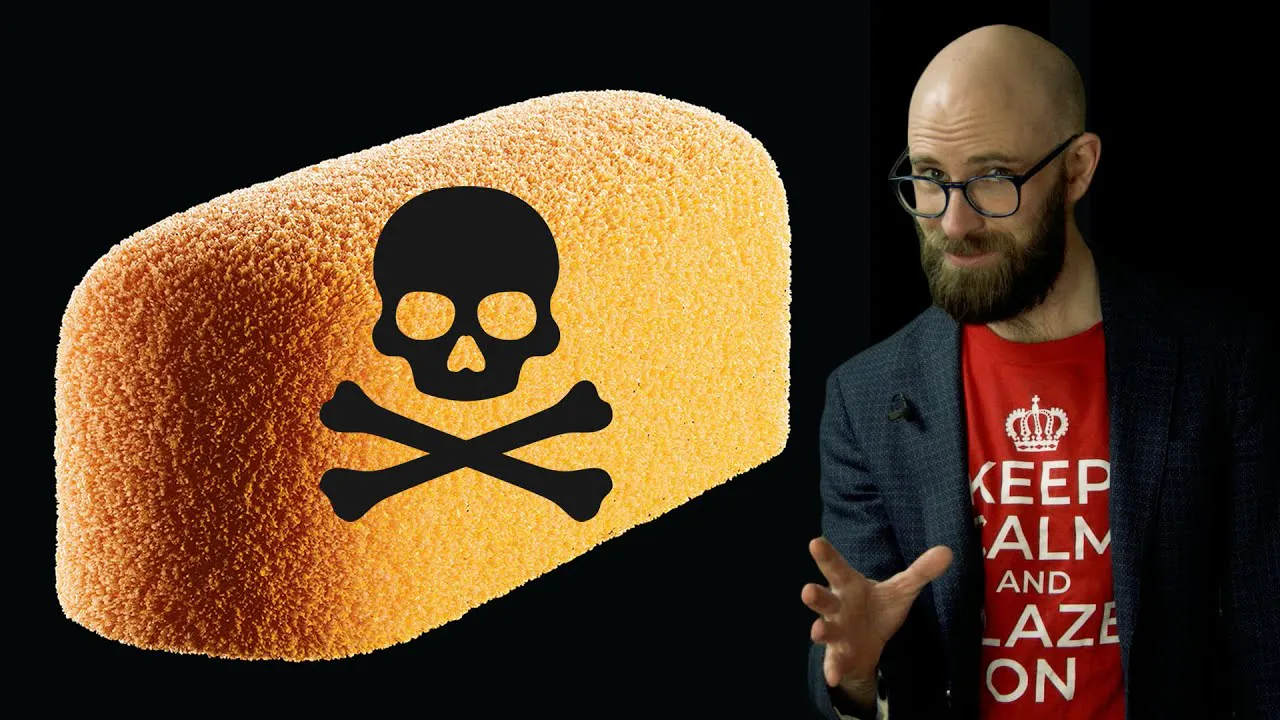 WTF is up with Twinkies? 21.09.2026 1h 42mIn this food themed compilation, we are diving into what Twinkies are actually made of and how long they last before going bad, if there is any cheese in cheeze whiz, is it safe to eat cheese rinds The Cheese in Cheez Whiz, the Difference Between “Regular”, Virgin and Extra Virgin Olive Oils, The Momentous Peanut Butter Hearings, Tapioca and Cyanide, The Truth About the Surprisingly Recent Invention of the Tea Bag, and the Women Who Really Invented It, What are the Black Spots on Corn Chips?, Thomas Jefferson, The “First Foodie” of America, The Russian Roulette of Food- Japan’s Deadly Delicacy, Why Fruits Change Color and Flavor as They Ripen, How Cap’n Crunch Gave the World the iPhone and the Surprisingly Heated Debate Over Whether He’s Really a Captain, The Curious Case of the Fruit That Transforms Sour to Sweet, and the story of Hulk Hogan, George Foreman, and a Lean Mean Fat-Reducing Machine. 0:00 WTF is Up with Twinkies? 12:57 Is There Any Cheese in Cheez Whiz? 20:19 Is It Safe to Eat Cheese Rinds? 23:49 The Difference Between Regular, Virgin, and Extra Virgin Olive Oils 28:26 The Momentous Peanut Butter Hearings 38:58 Tapioca and Cyanide 43:04 The Truth About the Surprisingly Recent Invention of the Tea Bag, and the Women Who Really Invented It 48:43 What are the Black Spots on Corn Chips? 49:49 Thomas Jefferson, The “First Foodie” of America 57:49 The Russian Roulette of Food- Japan’s Deadly Delicacy 1:09:29 Why Fruits Change Color and Flavor as They Ripen 1:15:58 How Cap’n Crunch Gave the World the iPhone and the Surprisingly Heated Debate Over Whether He’s Really a Captain 1:27:22 The Curious Case of the Fruit That Transforms Sour to Sweet 1:31:10 Hulk Hogan, George Foreman, and a Lean Mean Fat-Reducing Machine Learn more about your ad choices. Visit megaphone.fm/adchoices
 -
 You're Playing Monopoly Wrong and It's Making It Way Worse 18.09.2026 1h 12mIn this episode of The Brain Food Show, we start by looking at the interesting story behind where the Monopoly pieces came from. Moving on to the meat of today’s episode, we jump into the truth about who actually invented Monopoly, which is not the person who has long been given credit for it. That guy, it turns out, flat out stole it from someone else and then proceeded to get rich off it while the original creator mostly got nothing. We then move into the many, many ways everyone plays Monopoly wrong which is largely why it takes so long to play and lends itself to why it has a reputation for being a game sure to make everyone angry who plays it. If people would just read the rule book, turns out it’s a lot more fun when played the way it’s supposed to be played. Finally we discuss Simon and Daven’s favorite movies, as well as get around to answering the question of whether horses actually sleep standing up, or just seem like they do. Learn more about your ad choices. Visit megaphone.fm/adchoices
 -
 The Top Secret Mission to Steal Hitler's Radar 17.09.2026 1h 1mIn the summer and autumn of 1940, the skies above Southern England were filled with tangling white and black contrails, the roar of aero engines, and the rattle of machine guns as the island nation fought desperately for its very survival. Many factors contributed to the Royal Air Force’s legendary victory over the Luftwaffe in the Battle of Britain, from the brave pilots and ground crews of Fighter Command to the eagle-eyed spotters of the Royal Observer Corps and the fact that German escort fighters had only enough fuel to linger for thirty minutes over Britain. But one key factor stood out among all the others: radar. Known to the British as radio direction finding or RDF, radar allowed RAF Fighter Command to spot incoming German bombers the moment they left their bases in France and to direct fighter squadrons where they were most needed, making the most of scarce resources. But the British were not alone in the field of RDF, and soon German radar systems began inflicting atrocious losses on RAF bombers operating over the continent. If their strategic bombing offensive was to succeed, the British had to penetrate the secrets of German radar and develop effective countermeasures. So in early 1942, military leaders hatched a daring plan: a nighttime assault to snatch a German radar set and its operators from an isolated clifftop in Northern France. It was to be the baptism of fire for a fledgling unit that would soon go on to far greater glory - and infamy: the 1st Parachute Regiment AKA “The Paras”. This is the story of Operation Biting, the forgotten WWII raid to steal Hitler’s radar. Author: Gilles Messier Editor: Daven Hiskey Host: Simon Whistler Producer: Samuel Avila Learn more about your ad choices. Visit megaphone.fm/adchoices
 -
 How Long Can You Live After Death? 16.09.2026 41mPushing daisies. Kicked the bucket. Bought the farm. Six feet under. Crossed over. Passed away. Shuffled off this mortal coil. It is said that the more important - or taboo - a concept is to a society, the more euphemisms that society will have for it, and death is no exception. Death is central to the human experience, with every culture on earth having developed elaborate rituals to mourn the deceased and help them go gentle into that good night. But…what is death, anyway? How is it actually defined? Author: Gilles Messier Host/Editor: Daven Hiskey Producer: Samuel Avila 0:00 Intro 2:45 How the Ancients Determined Death and the Disturbing Frequency of Burying People Alive 6:21 Changing the Game WITH SCIENCE! 9:22 So Where Does That Leave Us with the "When are They Dead?" Question? 29:44 What Killed George Washington and the Last Minute Pitch to Re-Animate His Days Old Dead Body Learn more about your ad choices. Visit megaphone.fm/adchoices
 -
 What's the Difference Between Dynamite and TNT? 15.09.2026 29mEver wonder what the difference between dynamite and TNT is or how they were invented? Well, wonder no more! Despite what the likes of AC/DC and Wile E. Coyote might have you believe, dynamite and TNT are very different substances with distinct properties. So what’s the difference between TNT and Dynamite? And just who invented them? Well, let’s find out as we dive into the fascinating and destructive history of these high explosives, and along the way in the Bonus Facts we’re also going to look at the truth about why there is no Nobel Prize for mathematics, which is likely to be different from what seemingly every mathematics professor the world over will tell you because, well, they are mathematicians, not historians. But to begin with, for much of modern human history, the only practical explosive available was black gunpowder, a mixture of charcoal, sulphur, and potassium nitrate AKA saltpetre. As covered in our previous video Who Invented Gunpowder, this mixture was likely discovered in China around the 9th Century C.E, making its way west across the Middle East to Europe by the 13th. Initially used in fireworks, it did not take long for gunpowder to find military uses, leading to the development of artillery and handheld firearms. It was also packed into various closed casings to produce explosive charges such as hand grenades, buried mines for breaching the walls and doors of fortifications, ‘torpedoes’ for defending harbours against ships, and shells and bombs for cannons and mortars. But while gunpowder completely changed the face of warfare, quickly rendering - for example - castles and plate armour obsolete, it also suffered from several serious drawbacks. For example, burning gunpowder produced large quantities of thick, white smoke... Author: Gilles Messier Host/Editor: Daven Hiskey Producer: Samuel Avila Learn more about your ad choices. Visit megaphone.fm/adchoices
 -
 WTF is Up with Worcestershire Sauce? Is Honey Vegan? And Much More 14.09.2026 1h 13mIn the episode today, we're looking at the rather disgusting ingredients of Worcestershire sauce and how it's made. Whether honey is vegan. How Cereal became part of a complete breakfast. What started the cops eating doughnuts stereotype. Who invented the Food Pyramid. How Napoleon helped invent margarine. Why Asian nations use chopsticks. The difference between brown and white eggs. How people used to use frogs to keep milk from spoiling. The corrupt individual that gave us Monterey jack cheese. And finally the Cornell professor who gave the world the chicken nugget. 00:00 What is in Worcestershire Sauce and Why is It Called That? 04:44 Is Honey Vegan? 09:45 How Did Cereal Become “Part of a Complete Breakfast”? 23:43 What Started the “Cops Eating Doughnuts” Stereotype 27:01 Who Invented the Food Pyramid? 36:20 Napoleon and the Invention of Margarine 42:30 Why Do Asian Nations Use Chopsticks? 45:50 The Difference Between Brown and White Eggs 51:07 Frogs and Milk- How to Keep Milk from Spoiling Without Refrigeration 53:50 The Corrupt and Ruthless Californian Who Gave us the Name for “Monterey Jack” Cheese 01:01:31 The Cornell Professor Who Gave Us the Chicken Nugget Learn more about your ad choices. Visit megaphone.fm/adchoices
Similar podcasts


Popular in
The podcast also appears in the podcast charts of these countries.
